

Two-Part Hinge-and-Post Bottle Mold
| Categories | Ink Bottle |
| Material | Cast iron |
| Markings | See Narrative |
| Origin | United States |
| Date or Era | 1885 to 1910 |
| Measuring | 11 ½” long; 5” high |
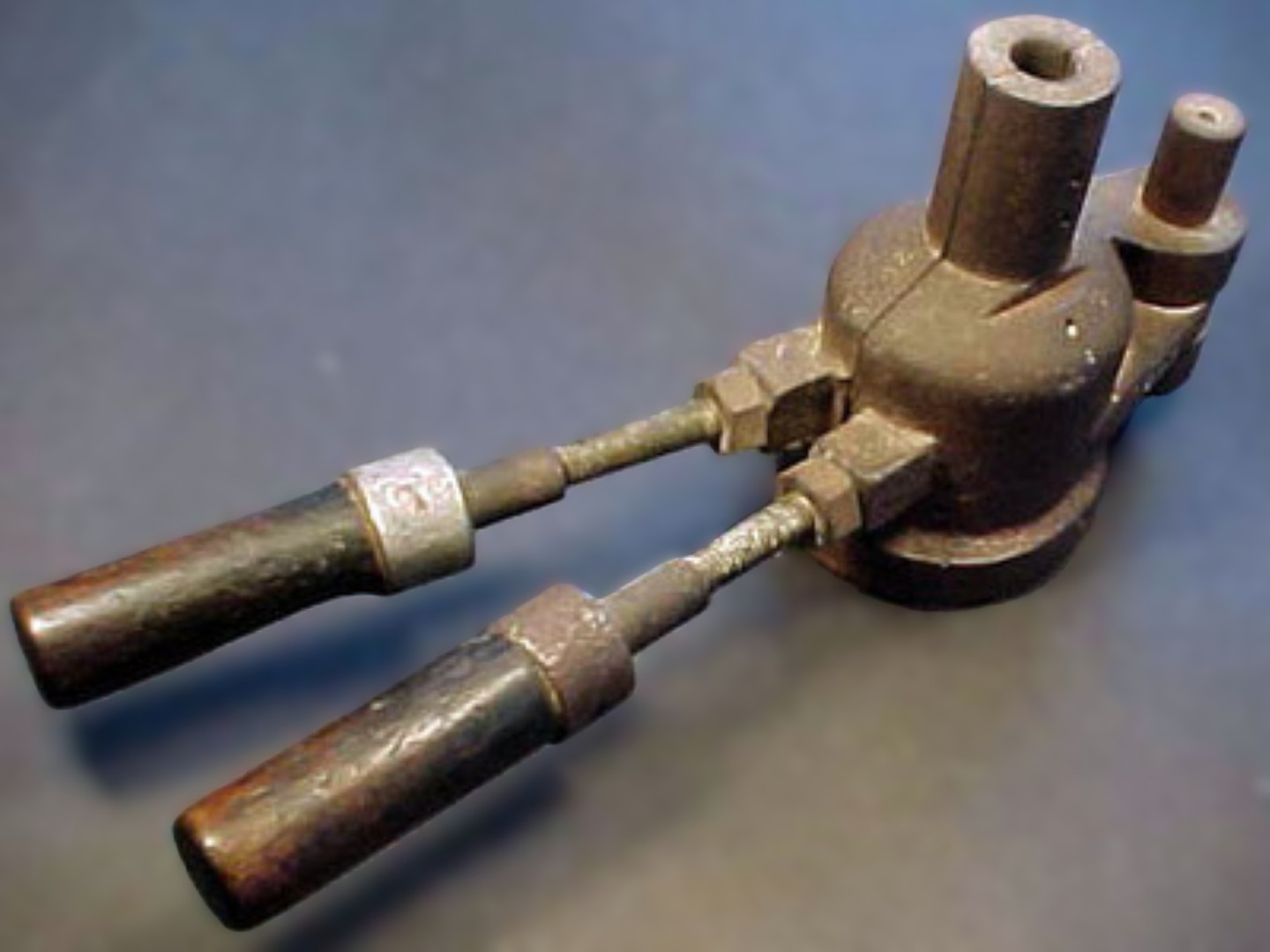
This piece is a classic two-part hinge-and-post bottle mold with a separate, drop-in post plate (base plate), designed specifically for mouth-blowing conical glass ink bottles.
Description
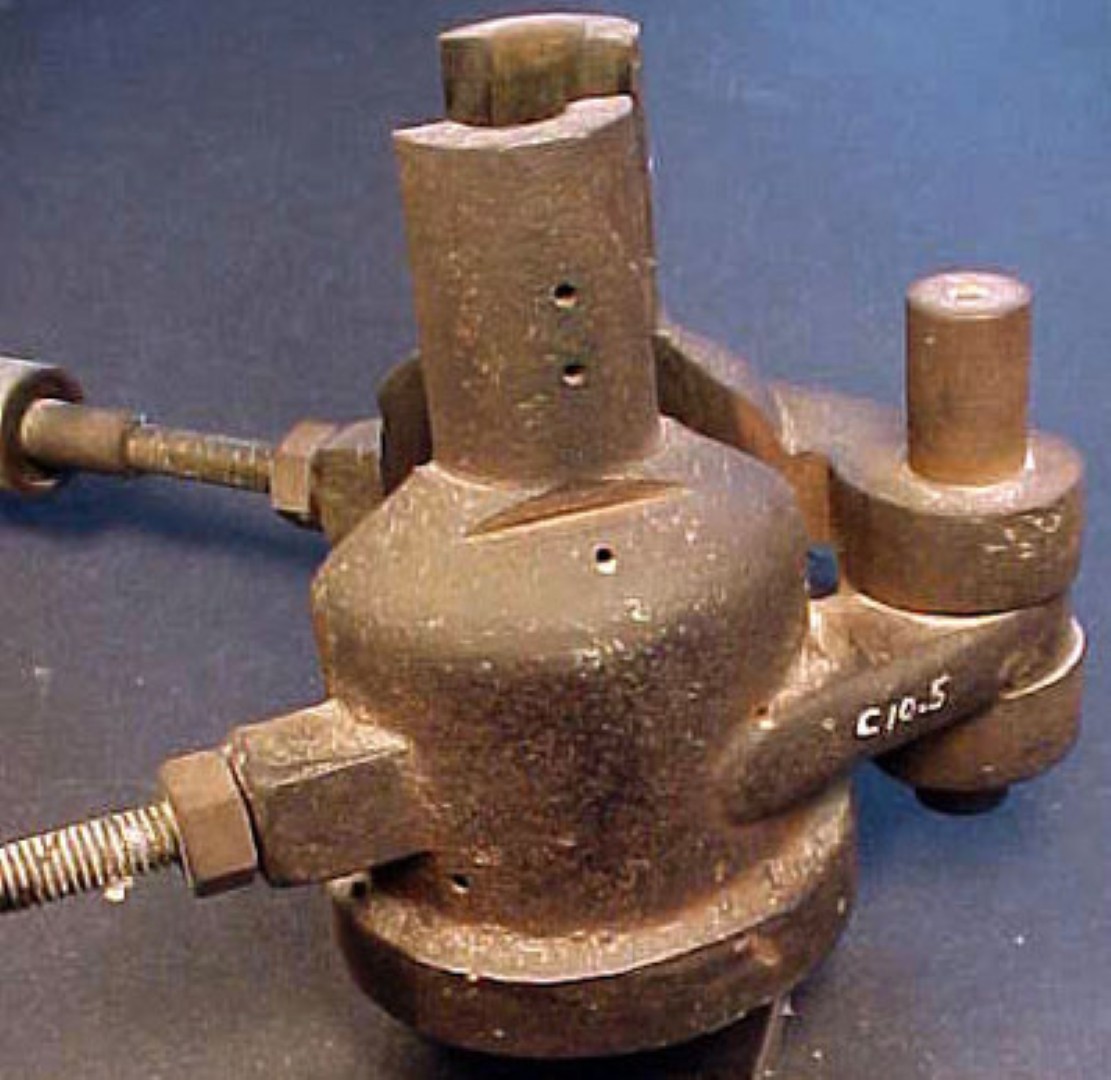
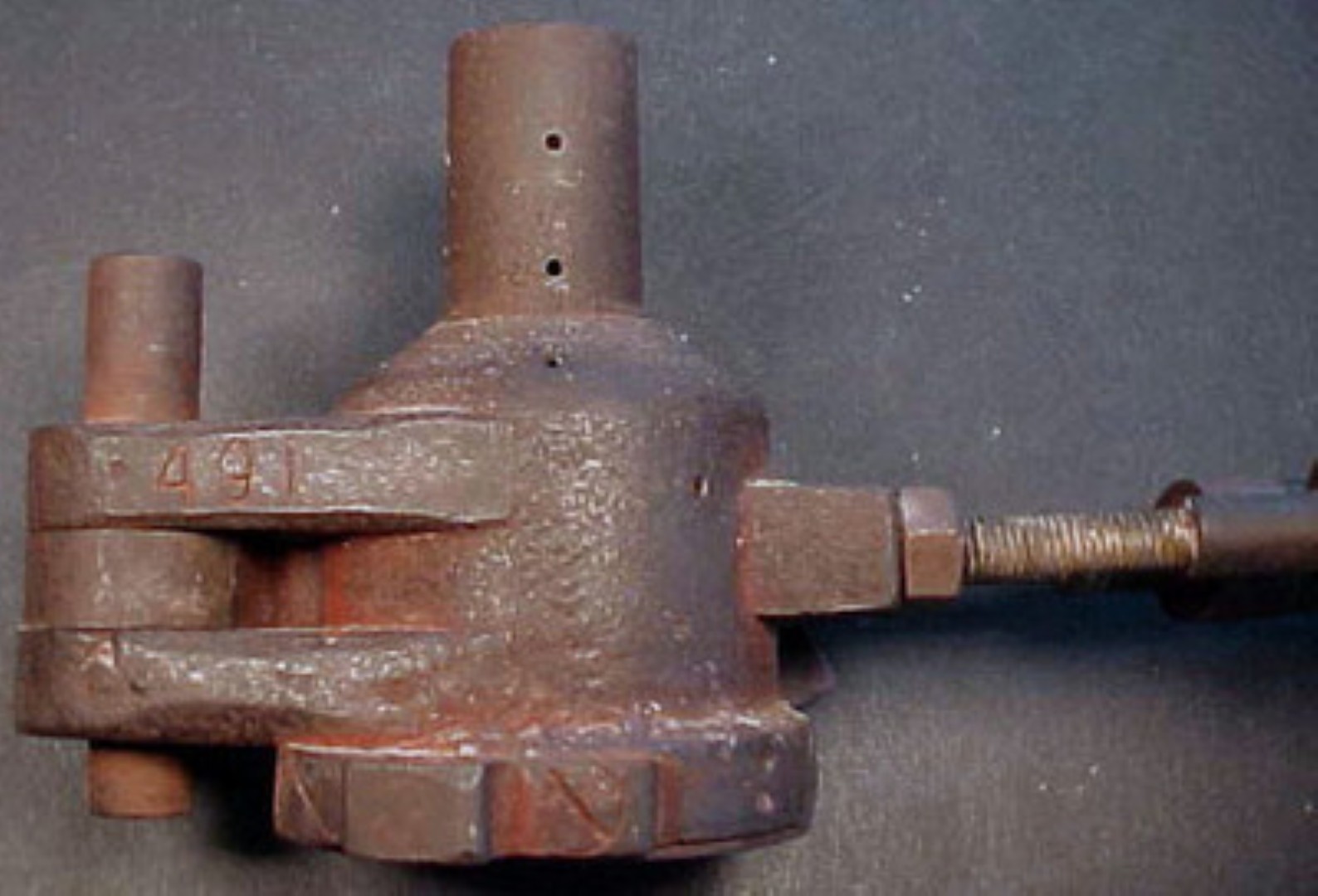
- Mold Structure & Hinge: The tool consists of two heavy cast-iron mold halves joined by a heavy vertical hinge pin on one side. The outer casting features high-relief mold numbers—specifically #491 stamped on the hinge arm—along with hand-inscribed inventory markings (C10.5).
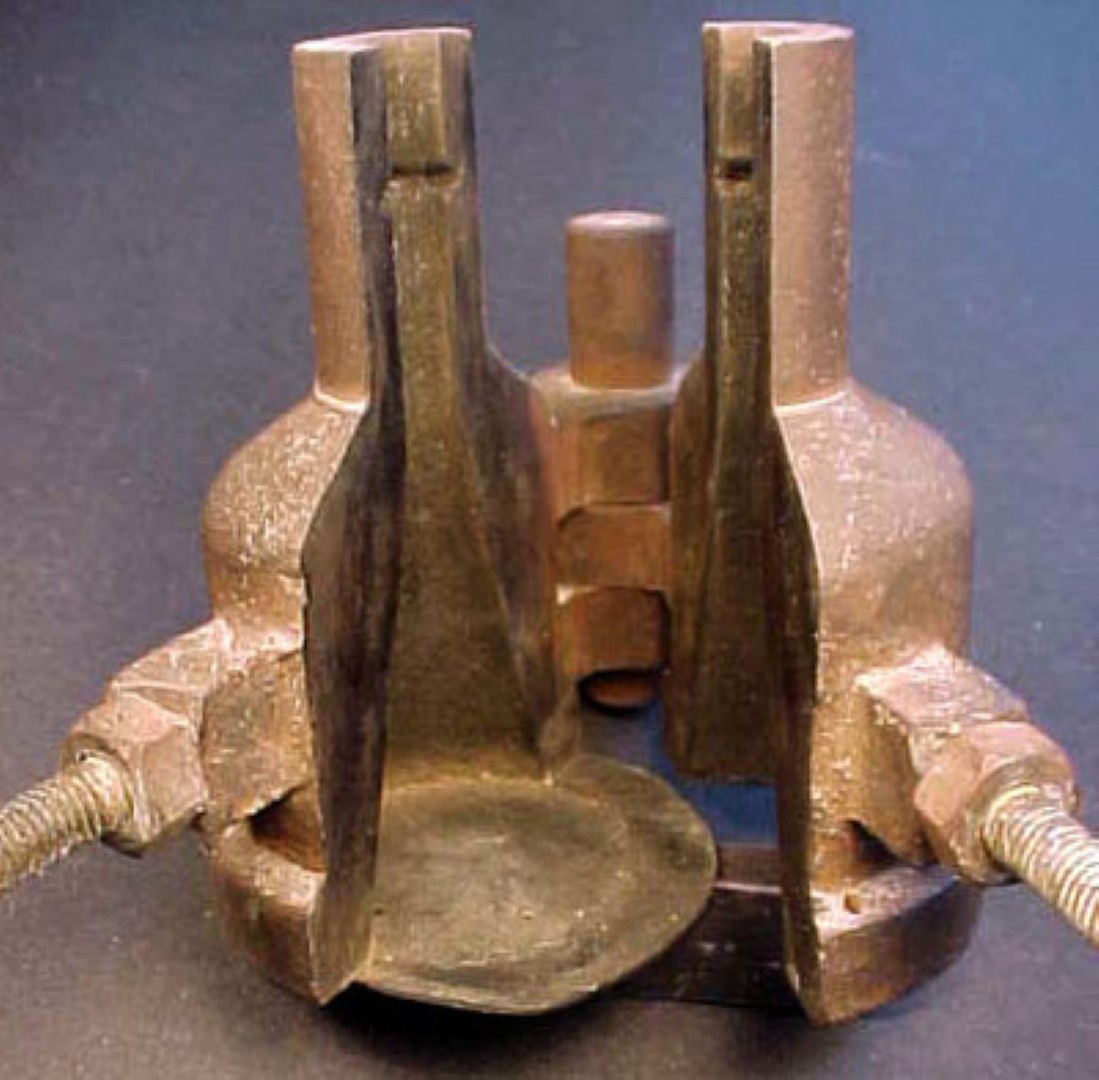
- Interior Cavity: Opening the mold reveals a smooth, carved internal cavity shaped as a classic conical (cone-style) ink bottle with a long, tapering neck and a flat, circular recessed base.
- Handles & Venting: Two threaded iron rods extend outward from the body, terminated with dark wooden handles so the glassblower or mold-boy could operate the hot mold safely. Small, deliberate pinhole air vents are drilled through the cast iron along the neck and shoulder to allow trapped air to escape during blowing, ensuring the molten glass expanded tightly against the inner walls without forming air pockets.
How This Mold Was Used
In a late 19th- or early 20th-century American glass house (such as Moore Bros. in Clayton, NJ), this tool was operated as part of a multi-person production shop (a “shop” consisting of a gatherer, blower, and mold tender):
- Preparation: The mold tender or blower held the mold closed by squeezing the two wood-handled arms together.
- Gathering & Insertion: The gaffer/blower gathered a small “gob” of molten glass on the end of a blowpipe, pre-shaped it slightly on a marver, and lowered the hot glass down through the open top collar of the closed mold.
- Blowing: The blower blew air into the pipe, expanding the molten glass outward until it conformed precisely to the conical interior of the cast-iron cavity. The small air holes allowed trapped pressure to vent so the bottle took on crisp, uniform shoulders and base lines.
- Release & Finishing: Once the glass chilled enough to set its shape, the mold tender swung the handles apart. The bottle, still attached to the blowpipe by its neck, was lifted free from the base plate. The pipe was cracked off, and the top finish/lip of the conical ink bottle was subsequently hand-tooled or sheared before going into the annealing lehr.
An annealing lehr (often spelled lear) is a long, temperature-controlled tunnel oven used in glassmaking to slowly cool freshly blown or molded hot glass objects.
Why It Is Used
When hot glass cools too rapidly or unevenly in open air, the outer surface cools and contracts much faster than the molten interior. This creates severe internal structural tension within the material. Without proper cooling, the finished glass piece would be extremely fragile and likely to shatter spontaneously from thermal shock or minor handling.
The process of controlled cooling—called annealing—relieves these internal stresses.
How It Works
- Transfer: Immediately after a glass object (such as a bottle, jar, or vase) is shaped, removed from its mold, and separated from the blowpipe, it is placed onto a continuous metal conveyor belt at the entrance of the lehr.
- Soaking: The lehr’s entrance is heated to the glass’s critical annealing temperature (typically between and / to , depending on the glass formula). This holds the entire piece at a uniform temperature, allowing internal strain to relax.
- Gradual Cooling Zone: The conveyor slowly carries the glass through a multi-zone tunnel that gradually decreases in temperature over several hours.
- Exit: By the time the glass reaches the cool end of the tunnel, it has safely passed below its strain point and can be handled at room temperature with high structural durability.
Estimated value: $225
Content disclaimer. The information posted is the owner’s best knowledge and may not have been vetted by the SOIC. We welcome comments, corrections, and additions, working to make our website information comprehensive and accurate.
Join the Society of Inkwell Collectors (SOIC) – it’s free!
Founded in 1981 as a non-profit organization,
we are documenting inkwells (and accessories).
We’re here to help and inform!