







Tunisian Ceramic Mosque Inkstand
| Categories | Middle East / Africa |
| Type | Buildings / Structures |
| Material | Earthenware |
| Markings | See Narrative |
| Origin | Tunisia |
| Date or Era | circa 1920 |
| Measuring | 7 ⅞” x 6 ⅝” x 10 ⅝” high |
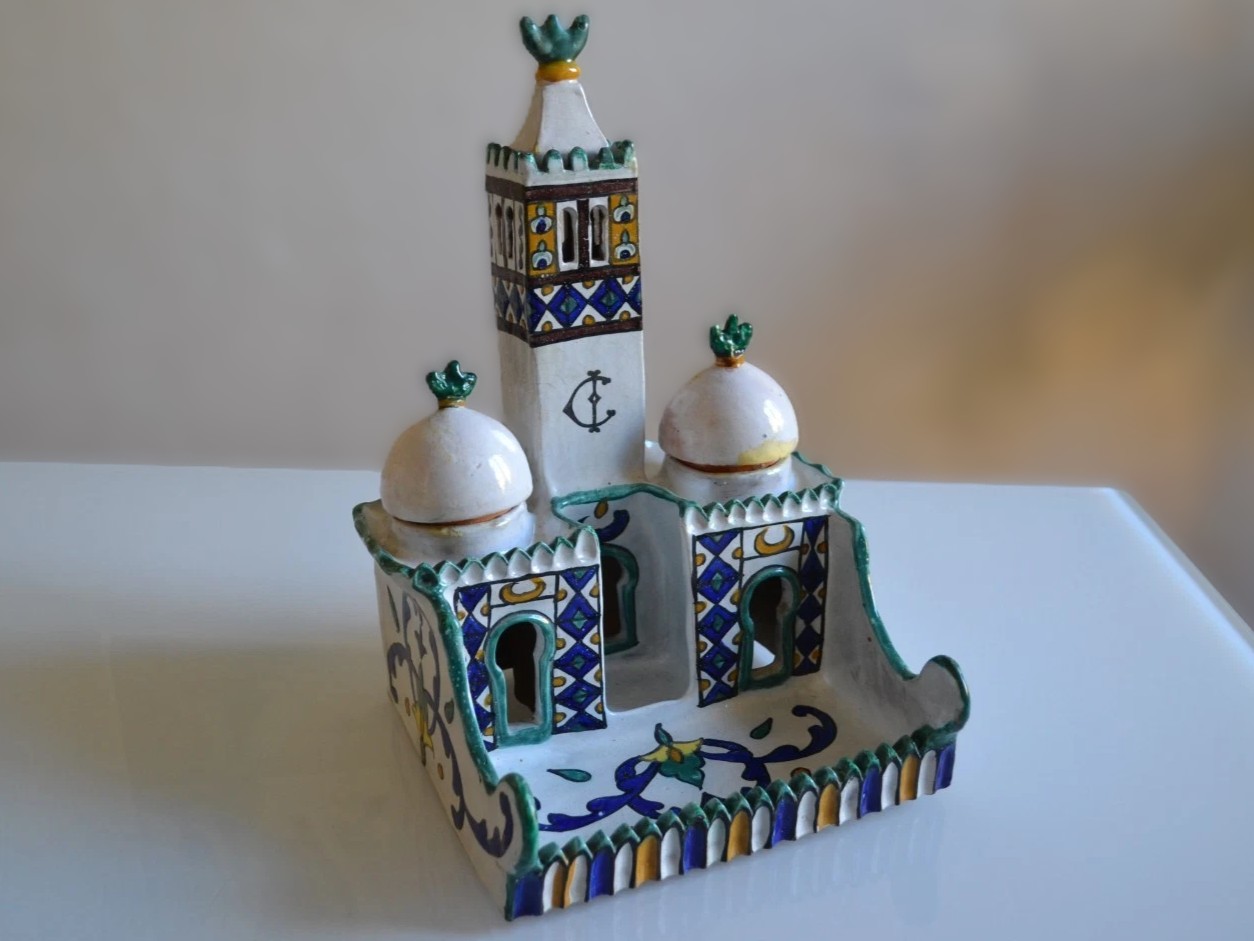
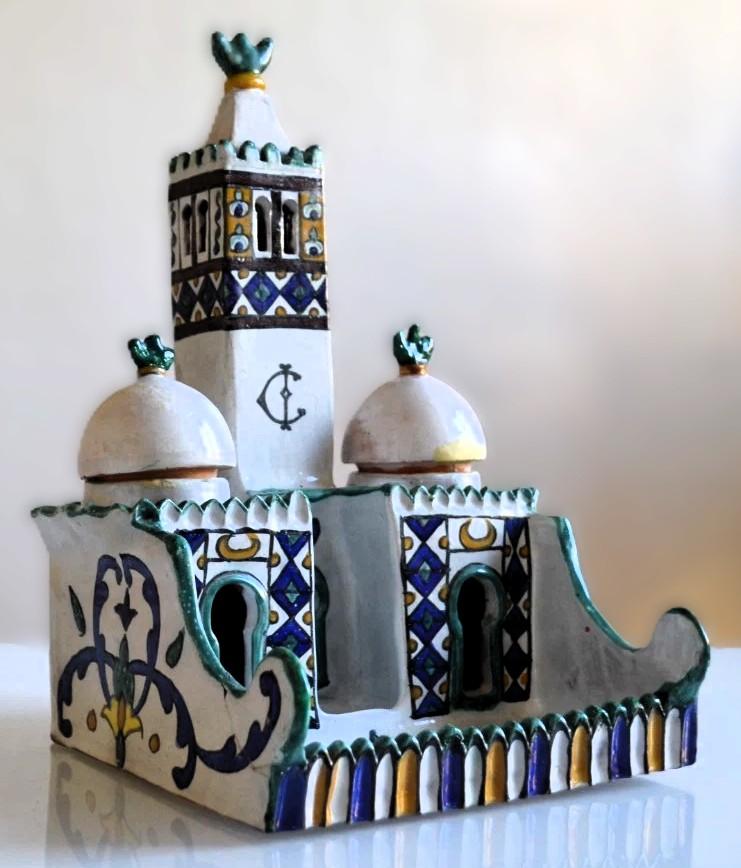
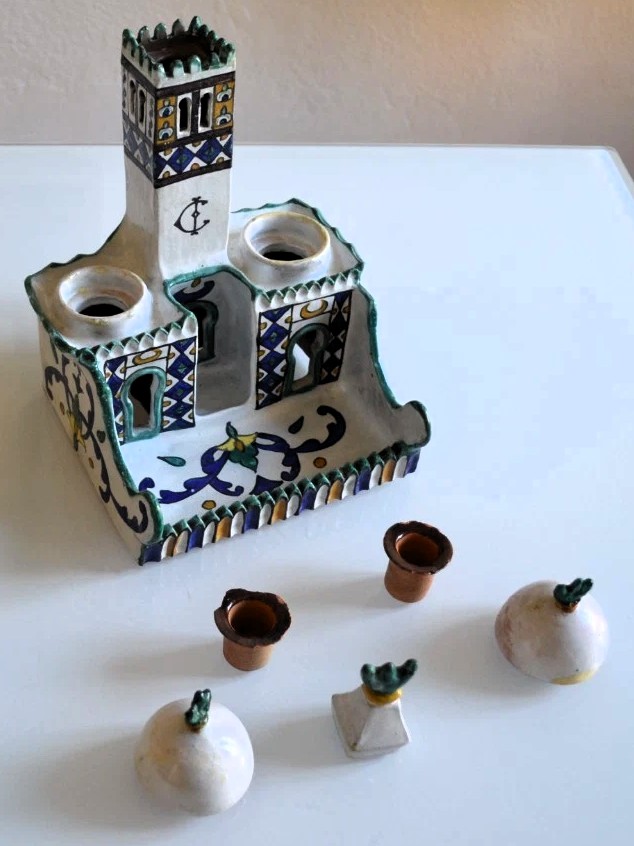
This piece is a traditional Tunisian architectural inkstand, known locally in Arabic as a mejma. It is a piece of art pottery from the French colonial era of Tunisian ceramics.
- Description of Parts & Representation
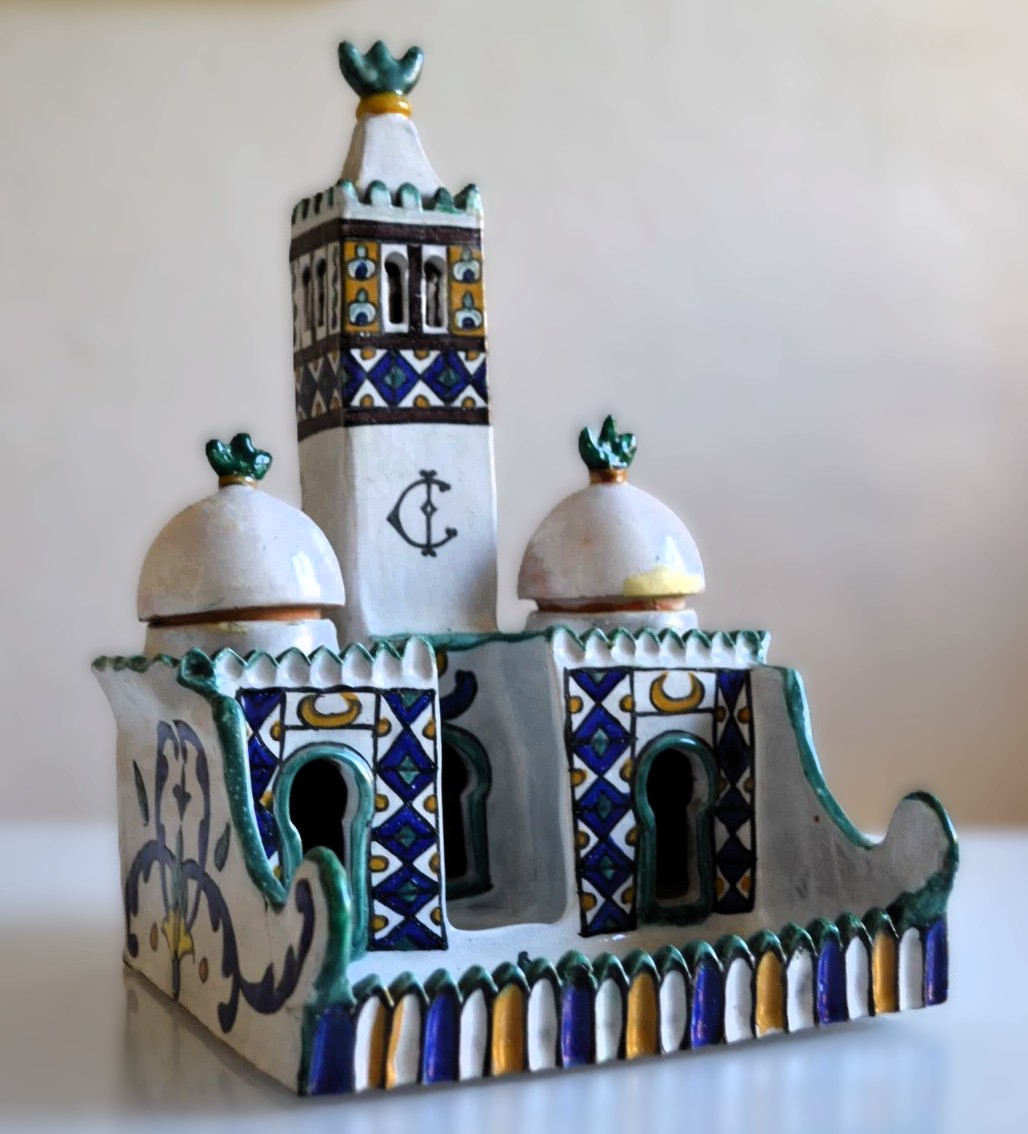
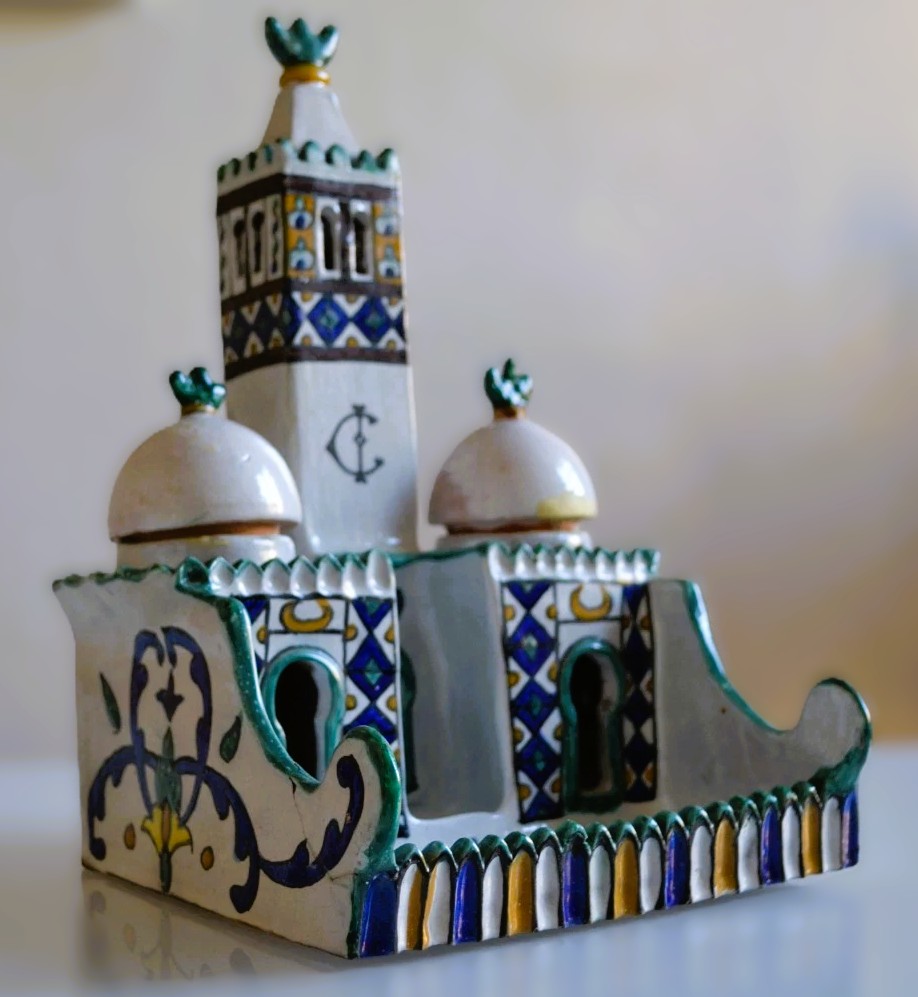
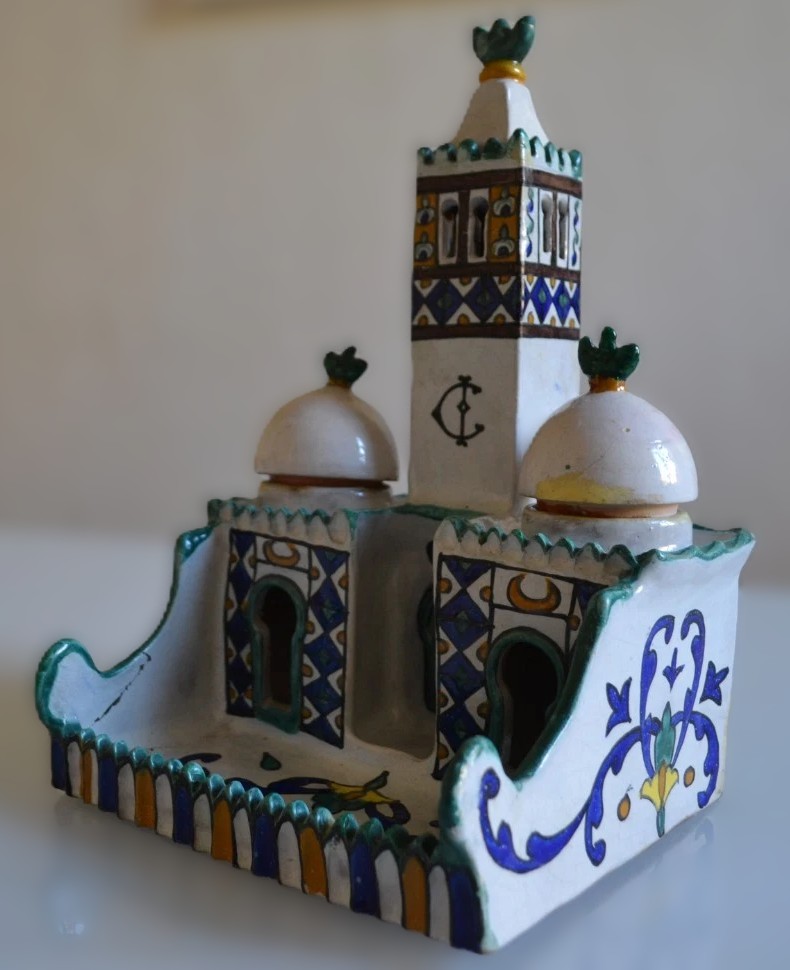
The inkstand is sculpted to represent a traditional Maghrebi (North African) mosque complex, blending religious architecture with a functional desk set.
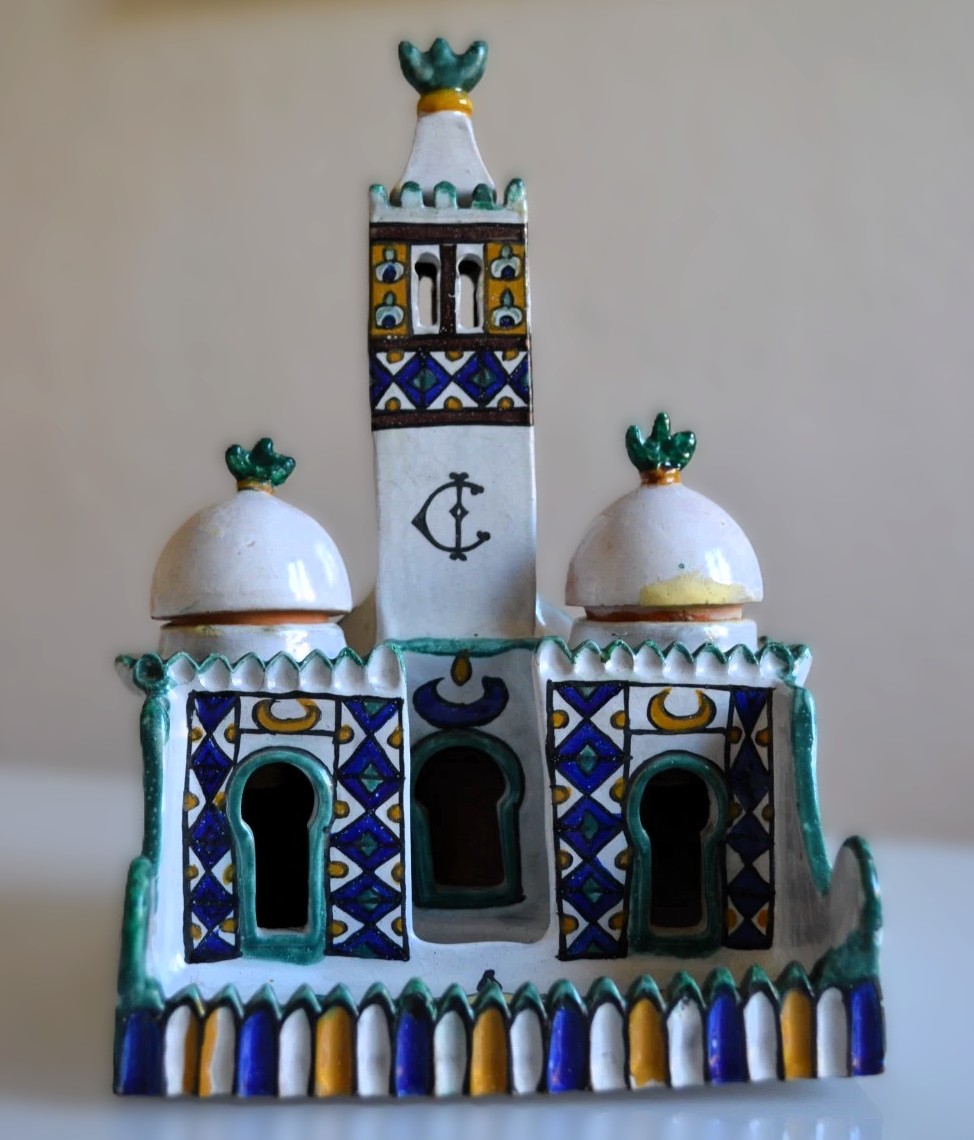
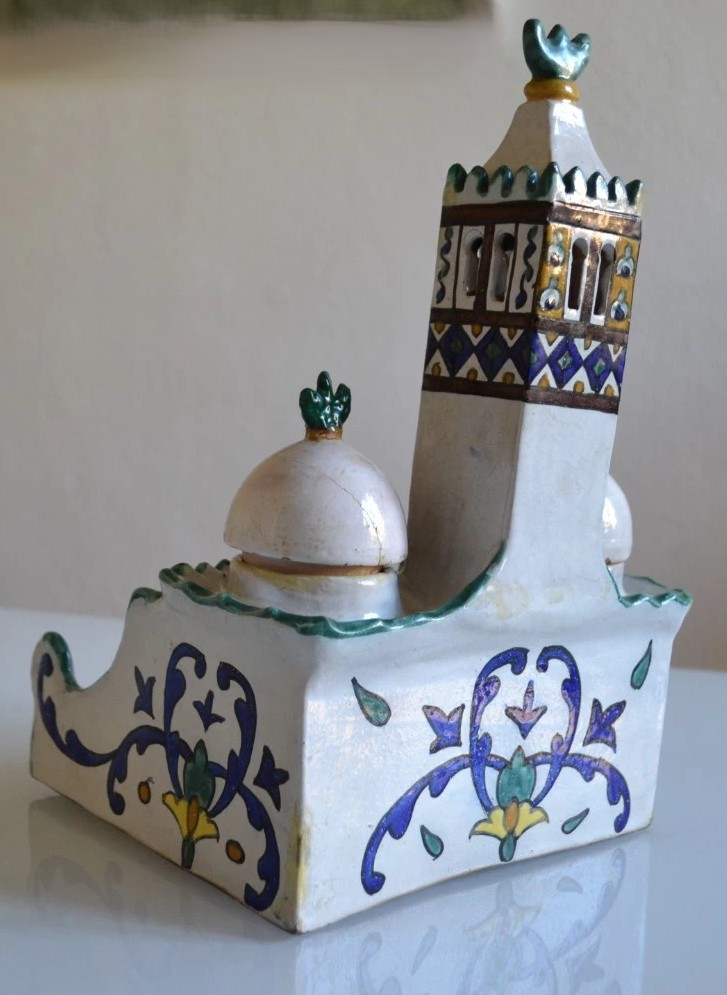
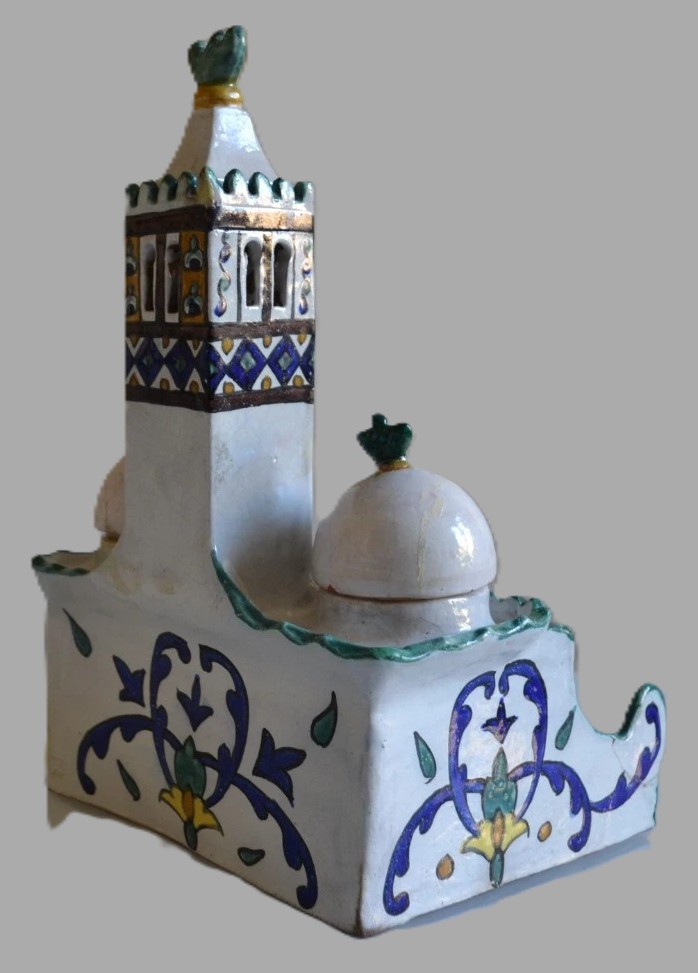
- The Minaret: The tall, square central tower dominates the structure, mimicking the distinct Almohad-style minarets common across Tunisia and Morocco. It features decorative faux arched windows near the top and is capped with a small spire.
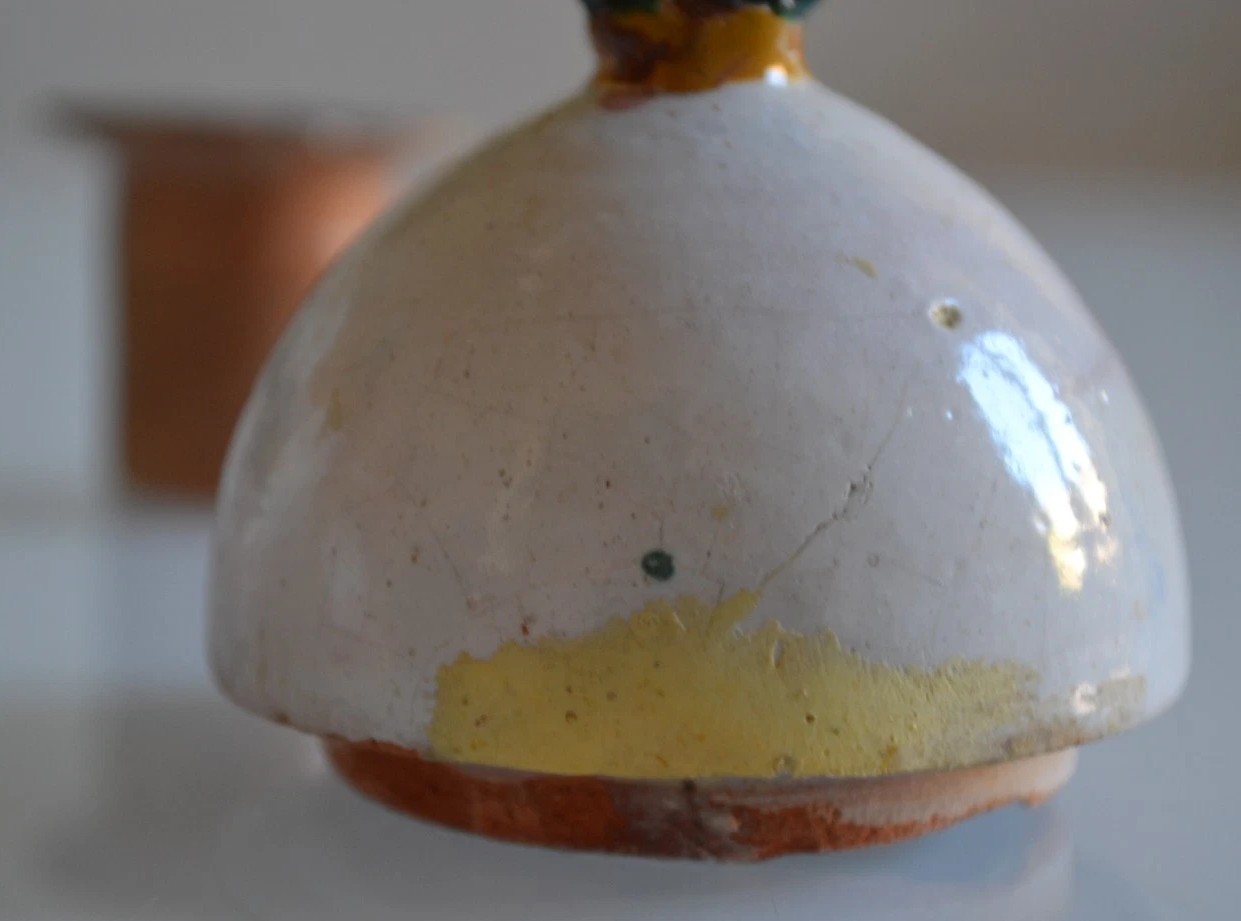
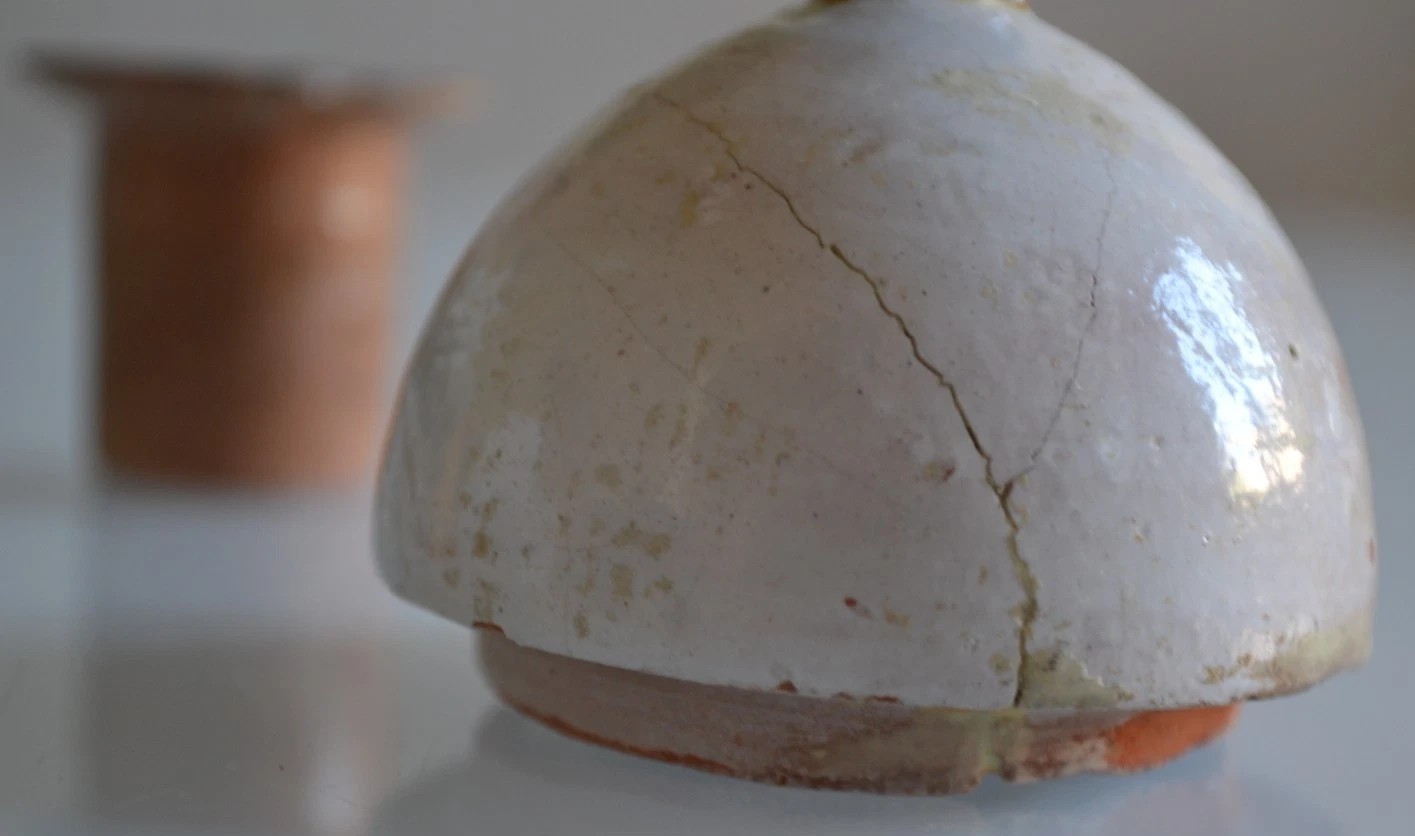
- The Domes (Godets Couverts): Flanking the central tower are two round, white-glazed domes that represent the roofs of the mosque or adjacent mausoleums (koubba). These domes act as removable lids. Underneath each lid is an opening housing a removable terracotta cup (godet) to hold the ink.
- The Pen Tray: The lower front section features a walled, open courtyard area with an inclined base, designed to serve as a reservoir or cradle for resting calligraphy pens or dip pens.
- Architectural Accents: The front face features horseshoe arches (keyhole arches) stylized as entryways, topped with painted yellow crescent moons—the universal symbol of Islam.
- Material & Production Method
- What it is made of: The entire piece is crafted from a coarse, porous terracotta / red earthenware clay.
- How it was made:
- Molding & Assembly: The complex architectural frame was likely pressed into a ceramic mold or assembled from slab-formed pieces of clay while leather-hard.
- Glazing (Majolica/Faience Technique): After its initial “biscuit” firing, the piece was coated in an opaque white tin glaze. Artists then hand-painted the vibrant geometric and floral patterns directly onto the unfired glaze using metallic oxides (cobalt blue, copper green, iron yellow/antimony, and manganese brown-black for outlines).
- The Firing: It was fired a second time, fusing the glaze and colors together into a glossy, vitreous finish. The distinct fine network of cracks across the white surface is called crazing, a natural aging characteristic of this type of low-fire earthenware glaze.
- Maker & Time Period
- The Time Period: This piece dates to the 1920s or 1930s (the Art Deco / interwar colonial period).
- The Maker (The Workshop): The front of the minaret features a prominent, hand-painted black monogram consisting of a stylized “C” intertwined with a “V”. This is the official signature of Pierre de Verclos (Les Poteries de Verclos), operating out of the famous pottery hub of Nabeul, Tunisia.
Historical Context:
In the early 20th century, French artists like Louis Tissier and Pierre de Verclos arrived in Nabeul and partnered with master local ceramicists—most notably the historic Chemla family workshops. They modernized the ancient local kiln techniques, introducing vibrant new formulas for glazes and exporting these exquisite “Tunisian Faience” pieces to Europe to satisfy the booming Western appetite for Orientalist art and decorative desk accessories.
Sold for $295 in May 2026
Content disclaimer. The information posted is the owner’s best knowledge and may not have been vetted by the SOIC. We welcome comments, corrections, and additions, working to make our website information comprehensive and accurate.
Join the Society of Inkwell Collectors (SOIC) – it’s free!
Founded in 1981 as a non-profit organization,
we are documenting inkwells (and accessories).
We’re here to help and inform!