

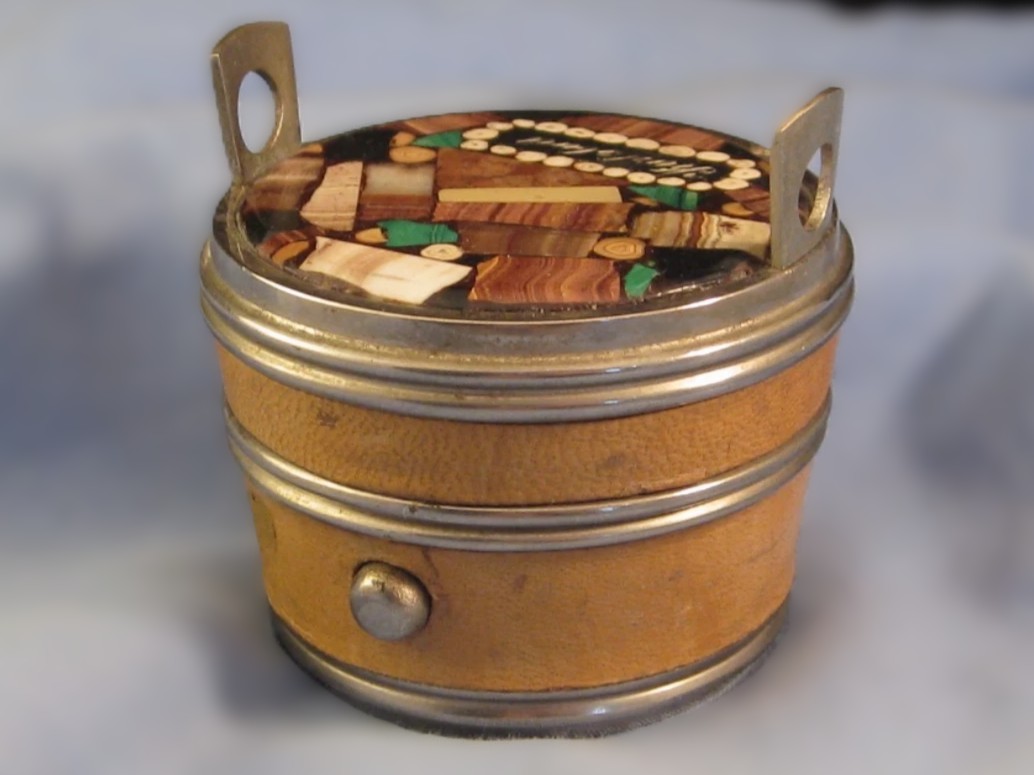

Traveling Inkwell with Stone Inlay
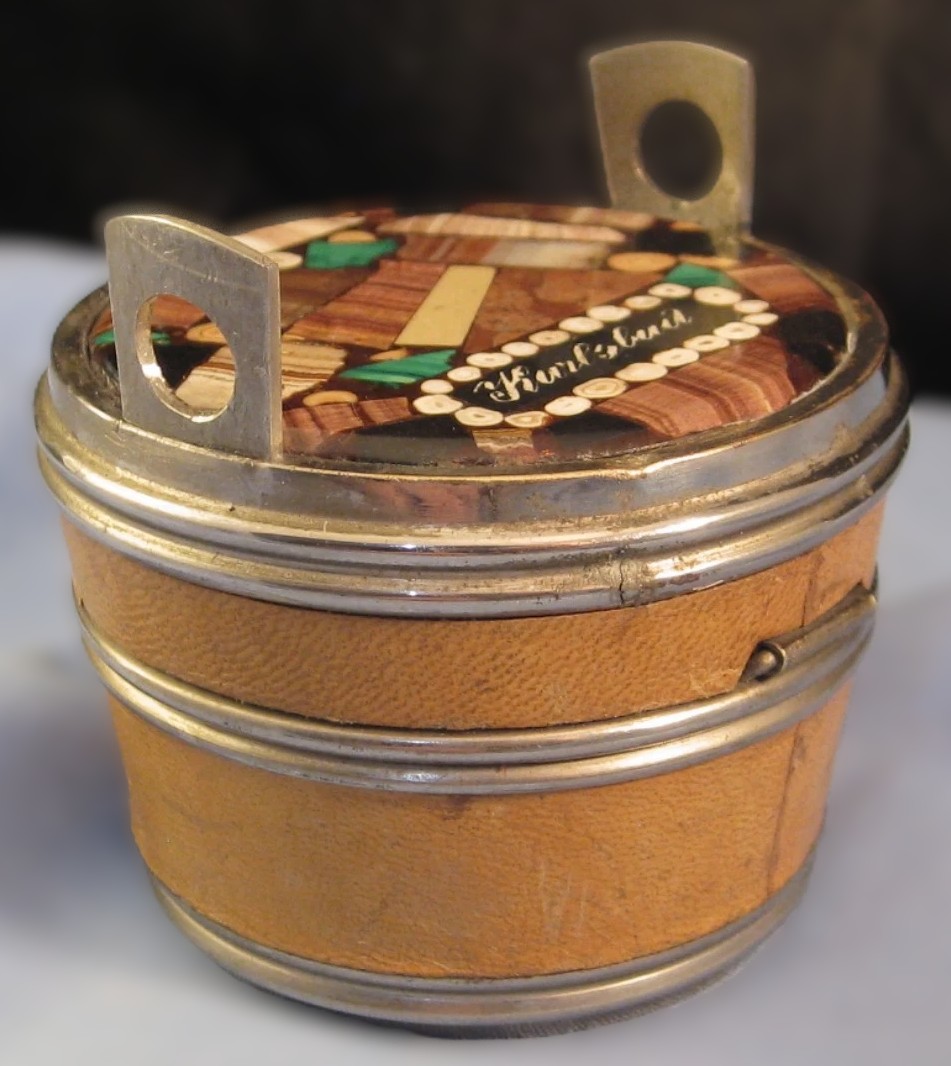
This late 19th-century traveling inkwell is a high-end souvenir from one of Europe’s most prestigious spa destinations.
Geography & History
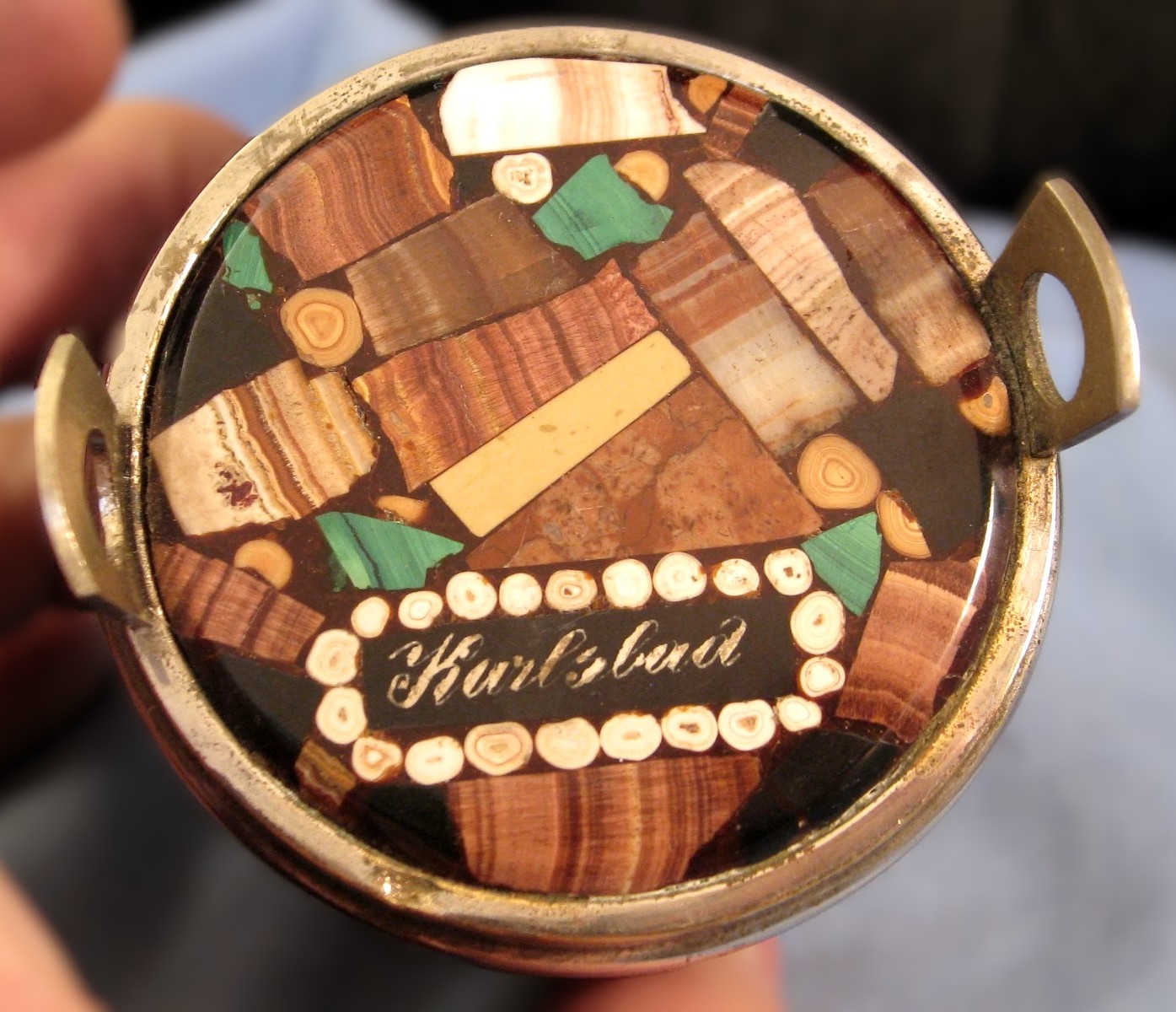
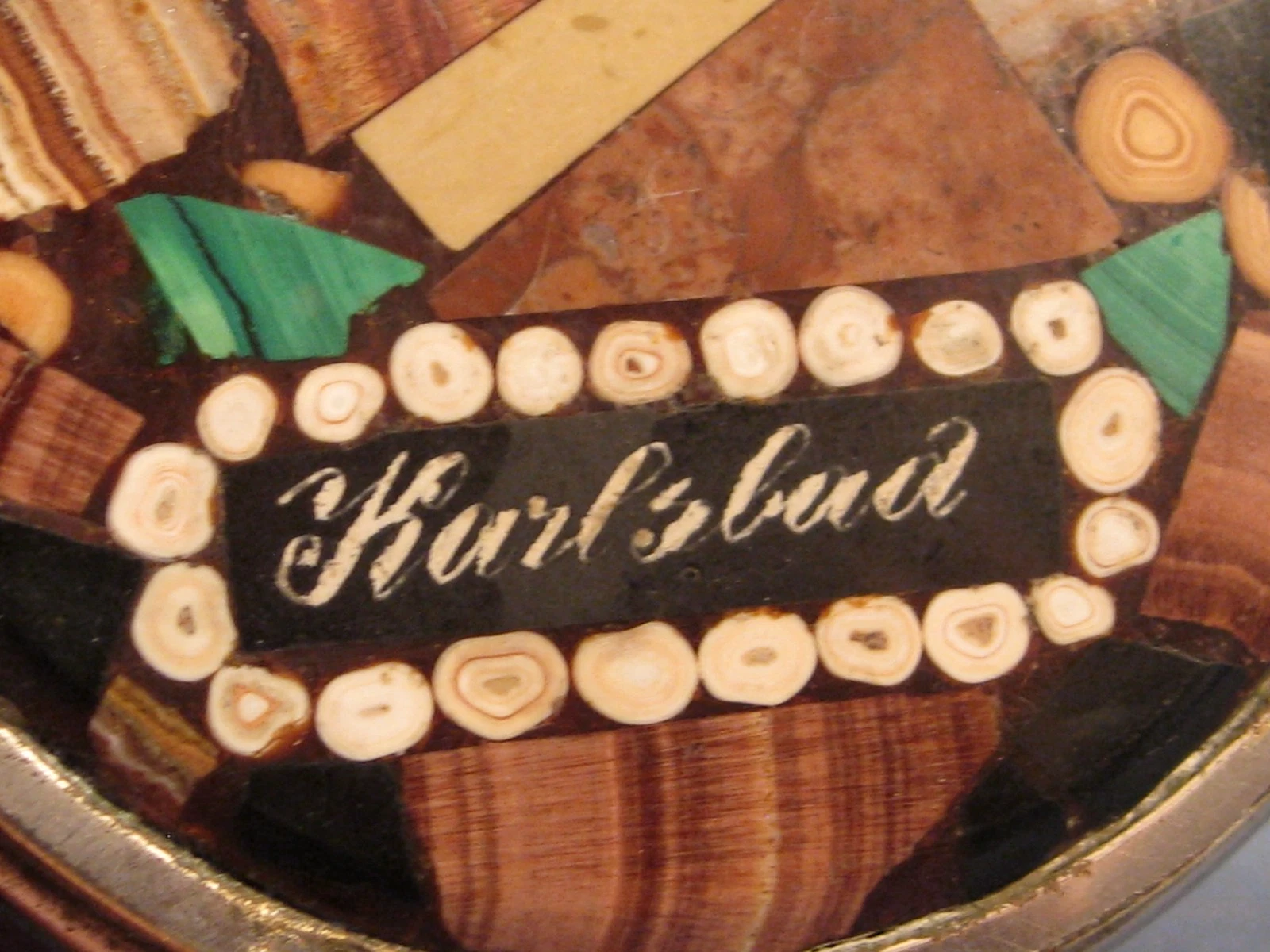
Karlsbad (or Carlsbad) is a historic spa town in what was then the Austro-Hungarian Empire. Today, it is known as Karlovy Vary and is located in the Czech Republic. During the Victorian and Edwardian eras, it was a “must-visit” destination for the global elite, including royalty and famous artists, who would purchase sophisticated mementos like this to bring home.
Anatomy & Terminology
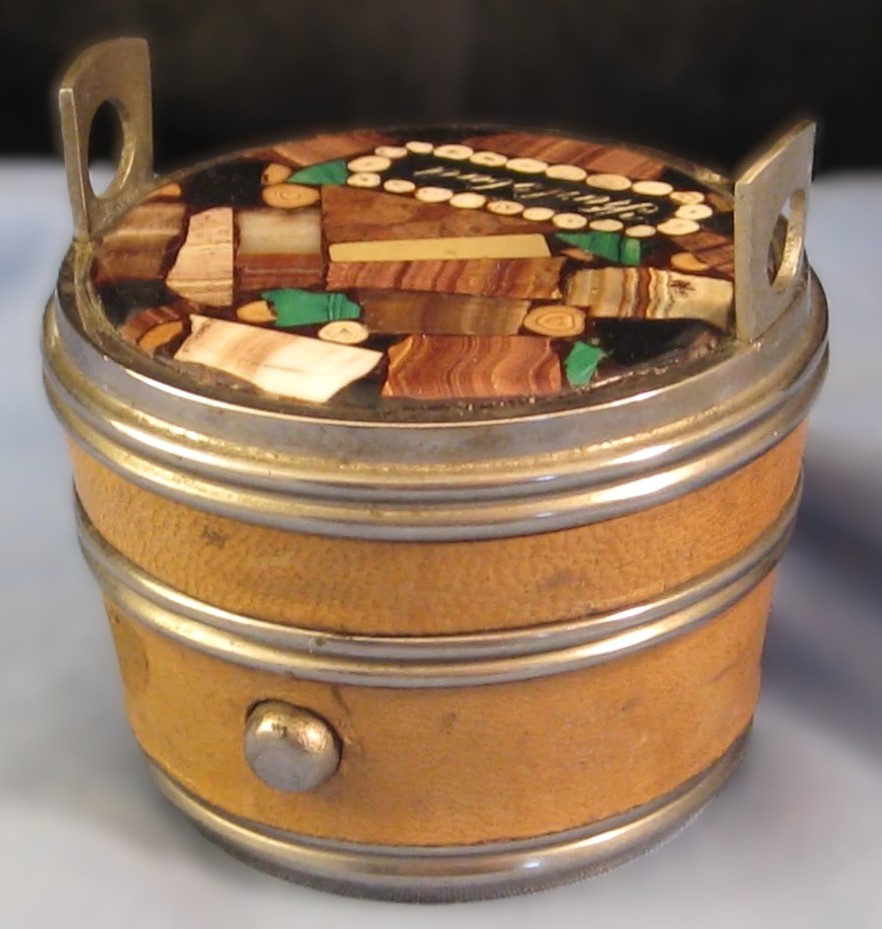
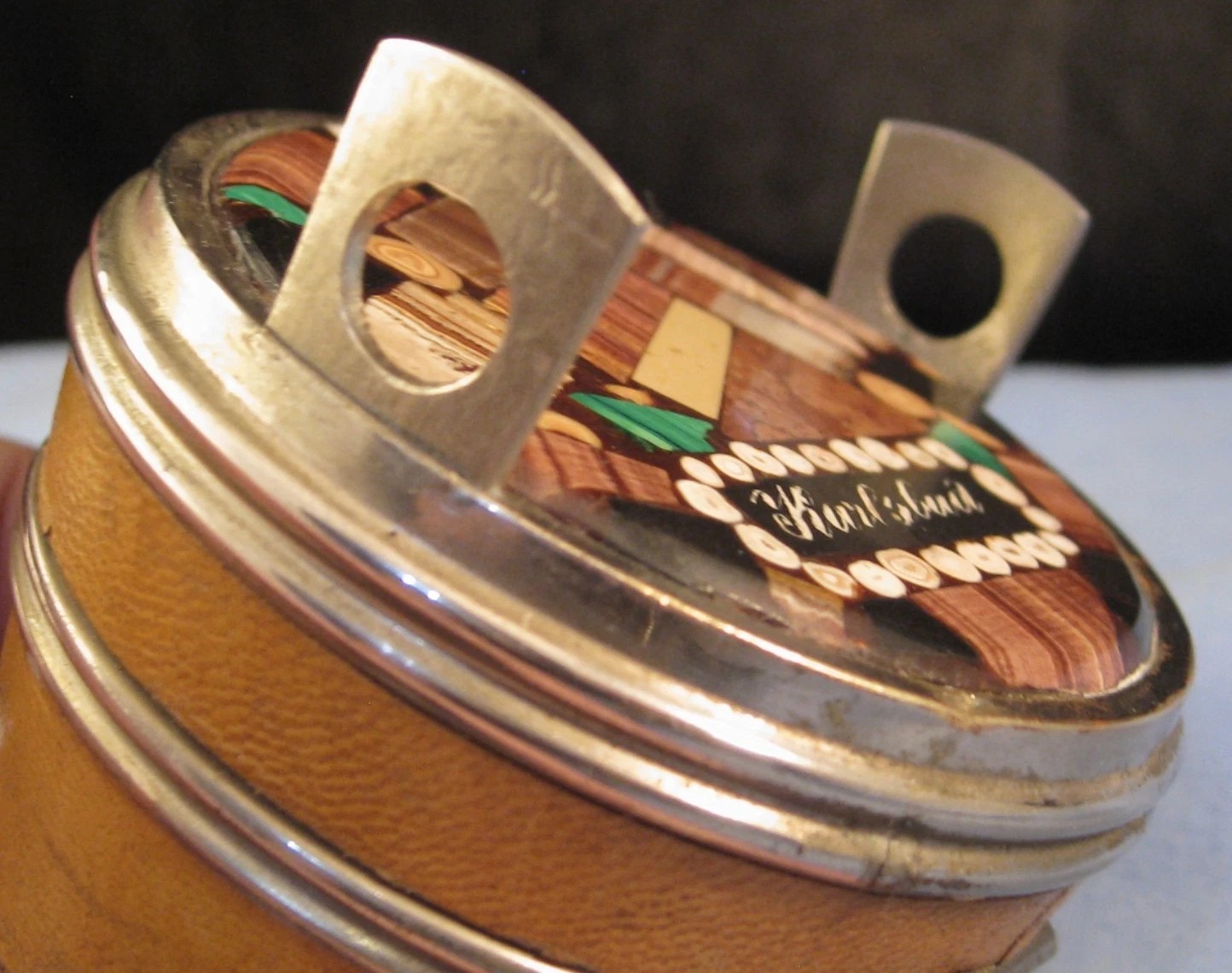
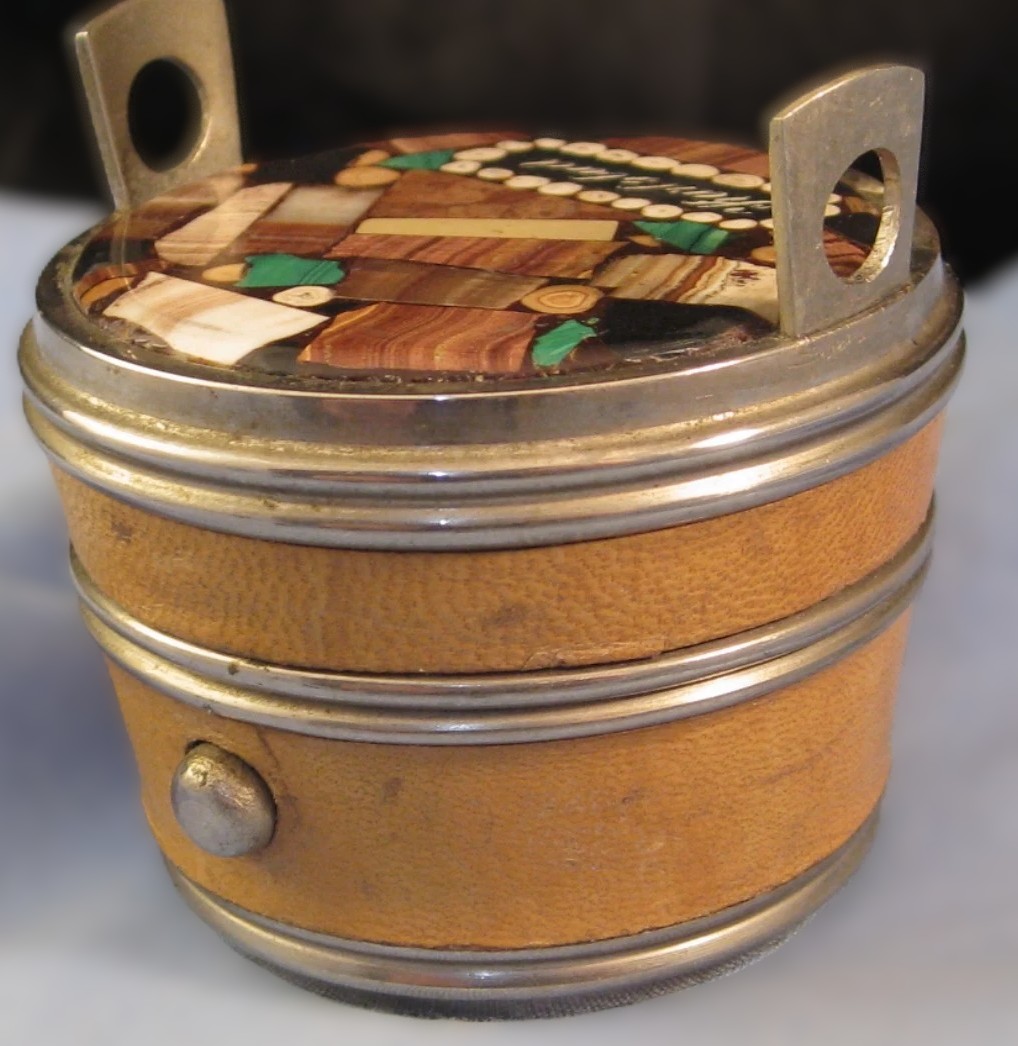
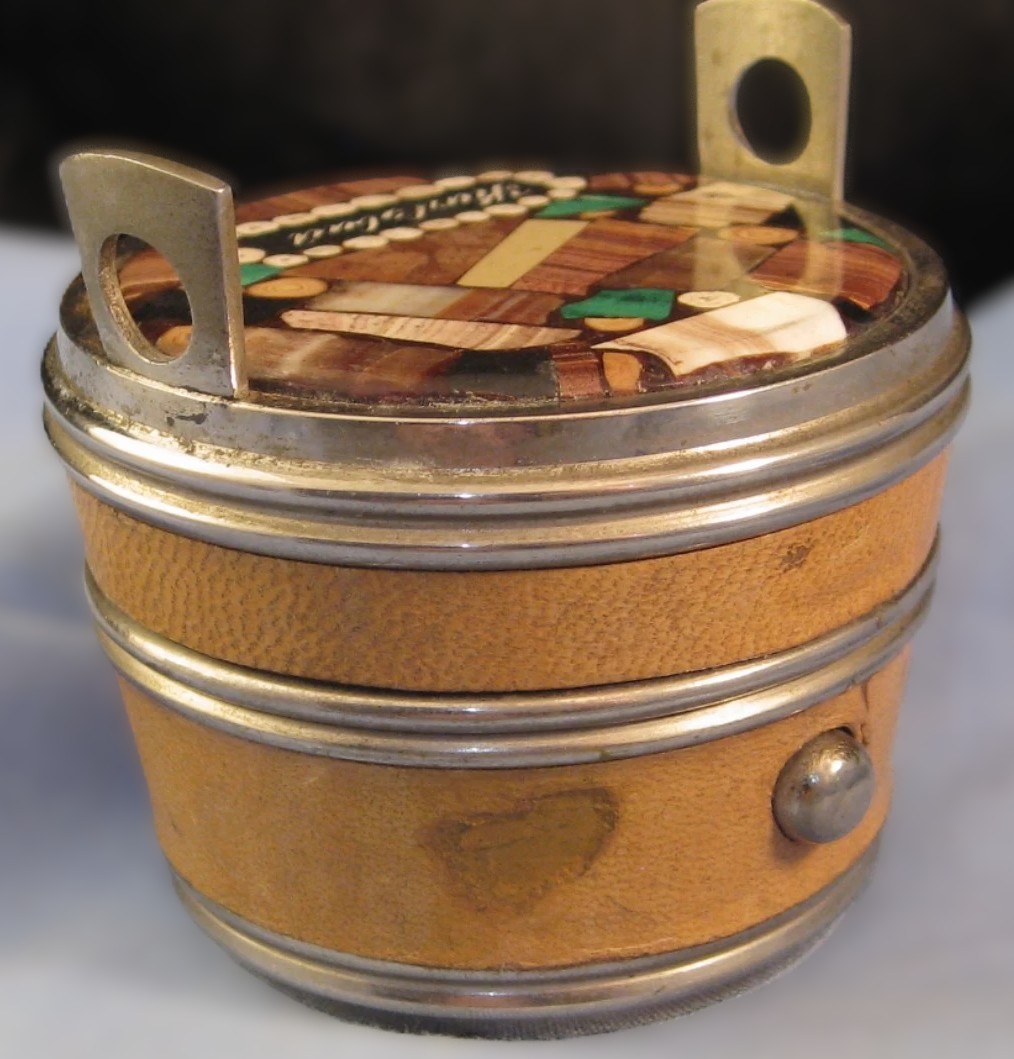
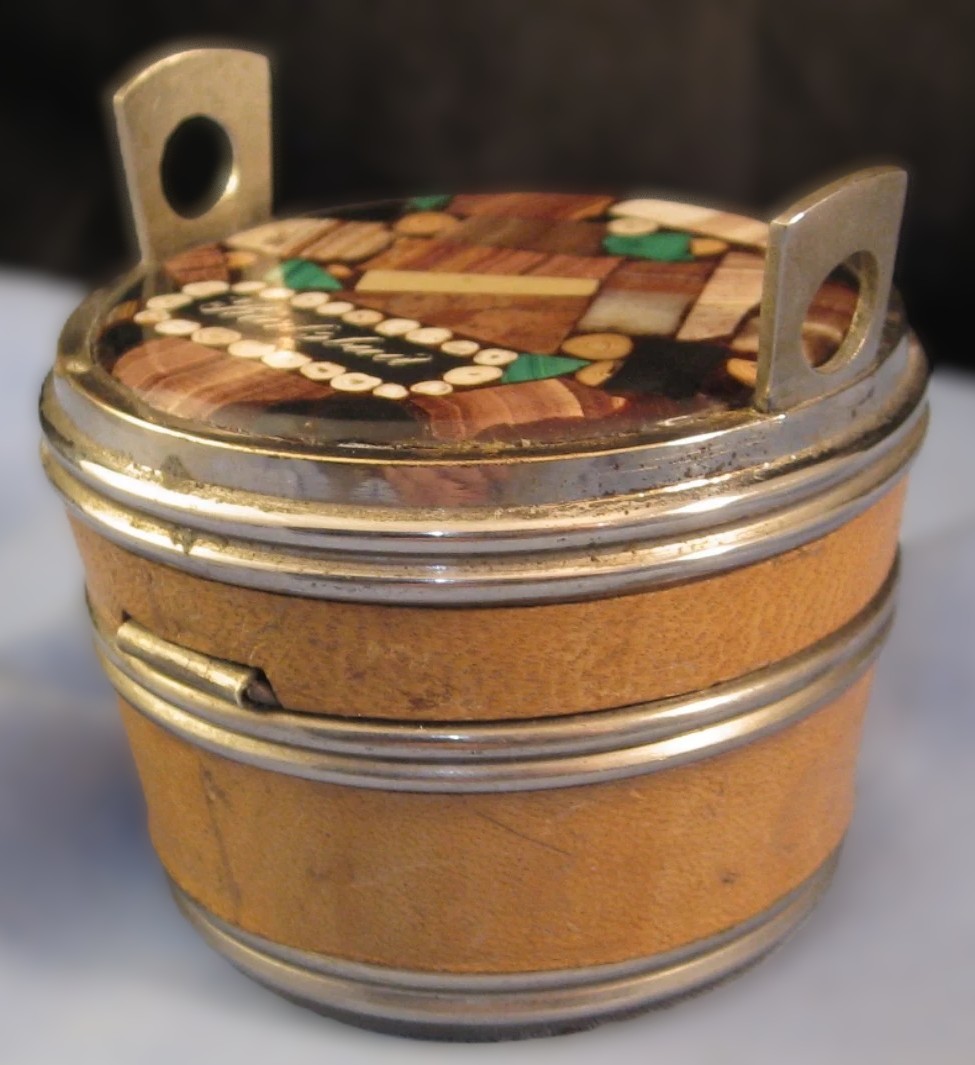
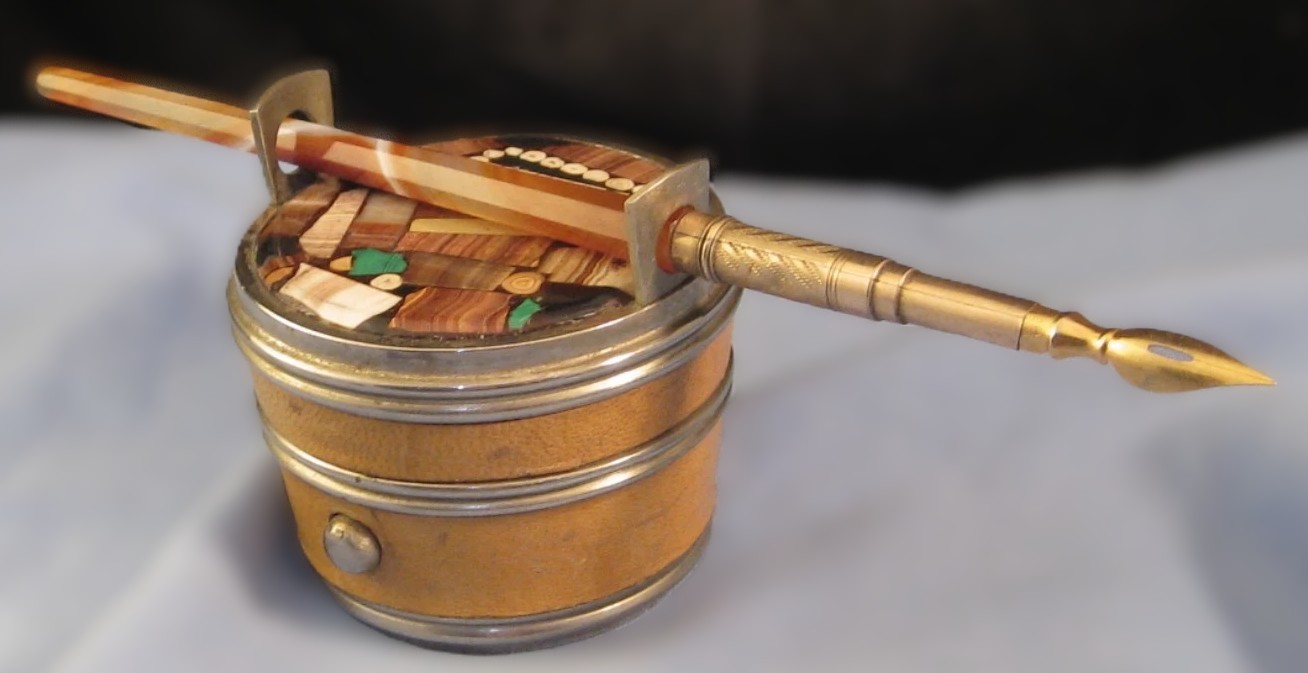
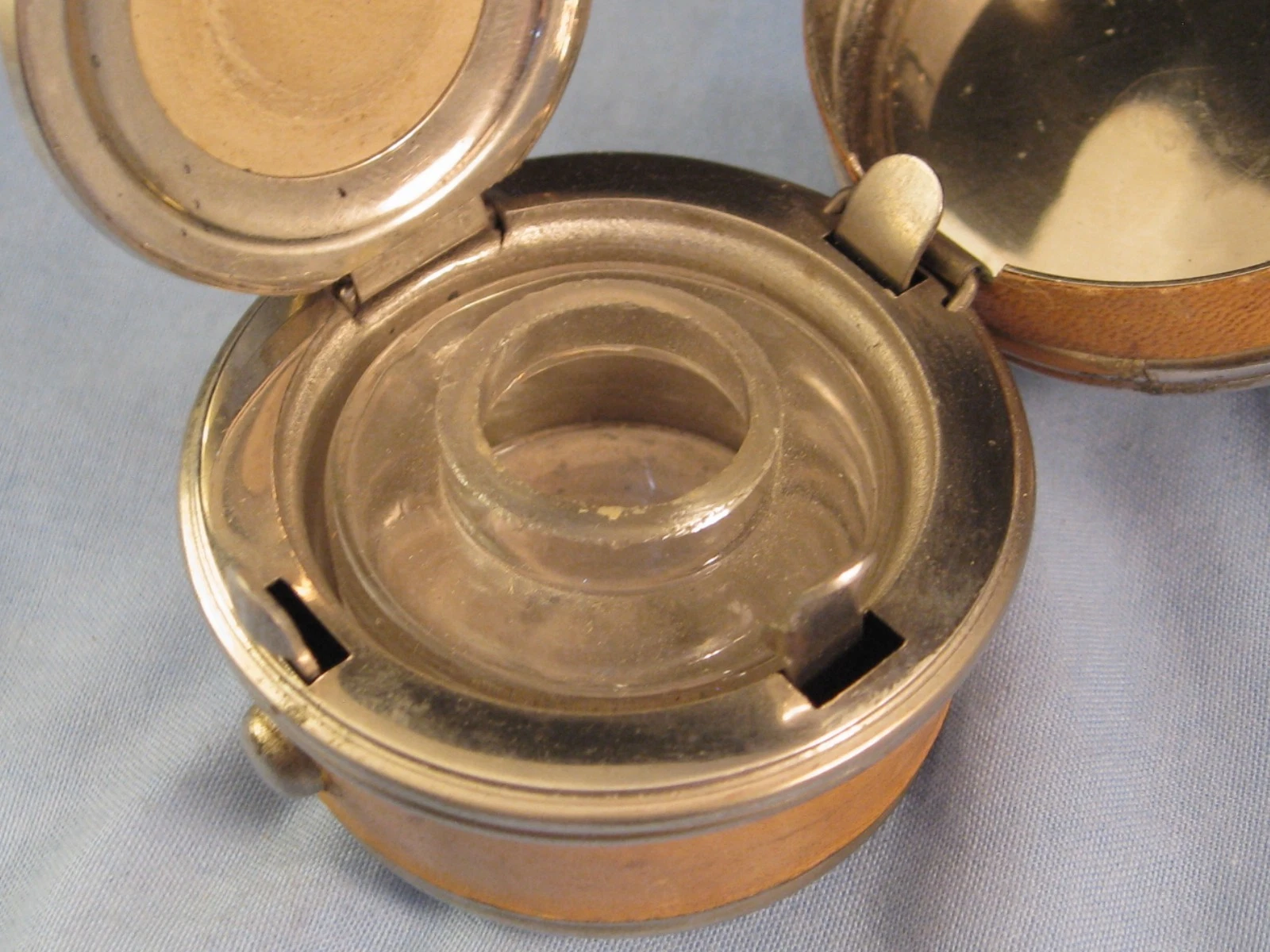
- Lugs or Pen Loops: They were designed to hold a traveling dip pen securely across the top when the set was in use.
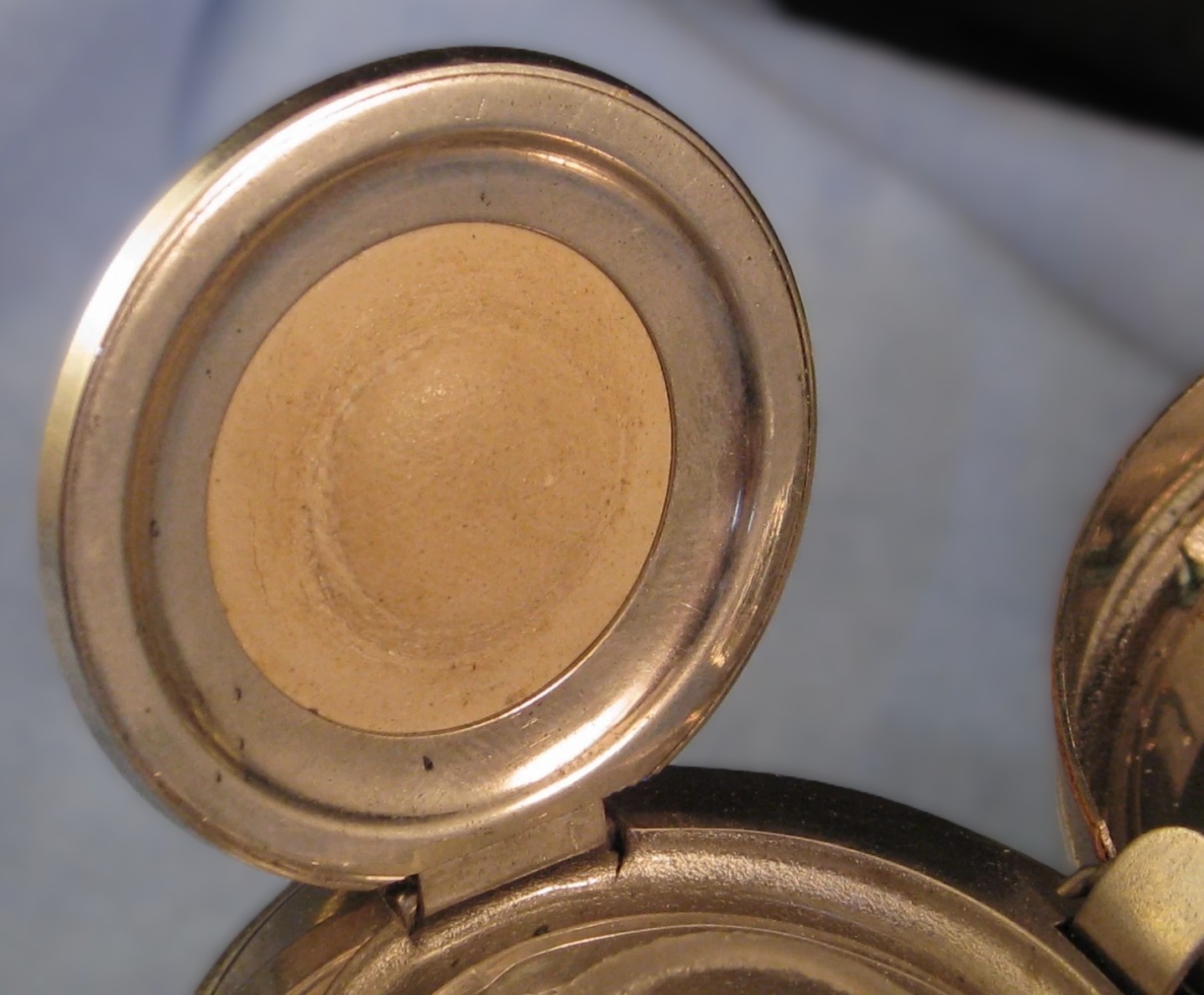
- The Lid (Stone Inlay): This is a specialized local craft known as “Karlsbad Mosaic.” The lid is made of Aragonite (specifically a variety called Sprudelstein or “thermal spring stone”), which is a mineral deposited by the town’s hot springs. The brown/tan banded sections are the Aragonite, while the vibrant green sections are Malachite. These were polished into a flat mosaic and often sealed with a clear resin or glass to protect the stones.
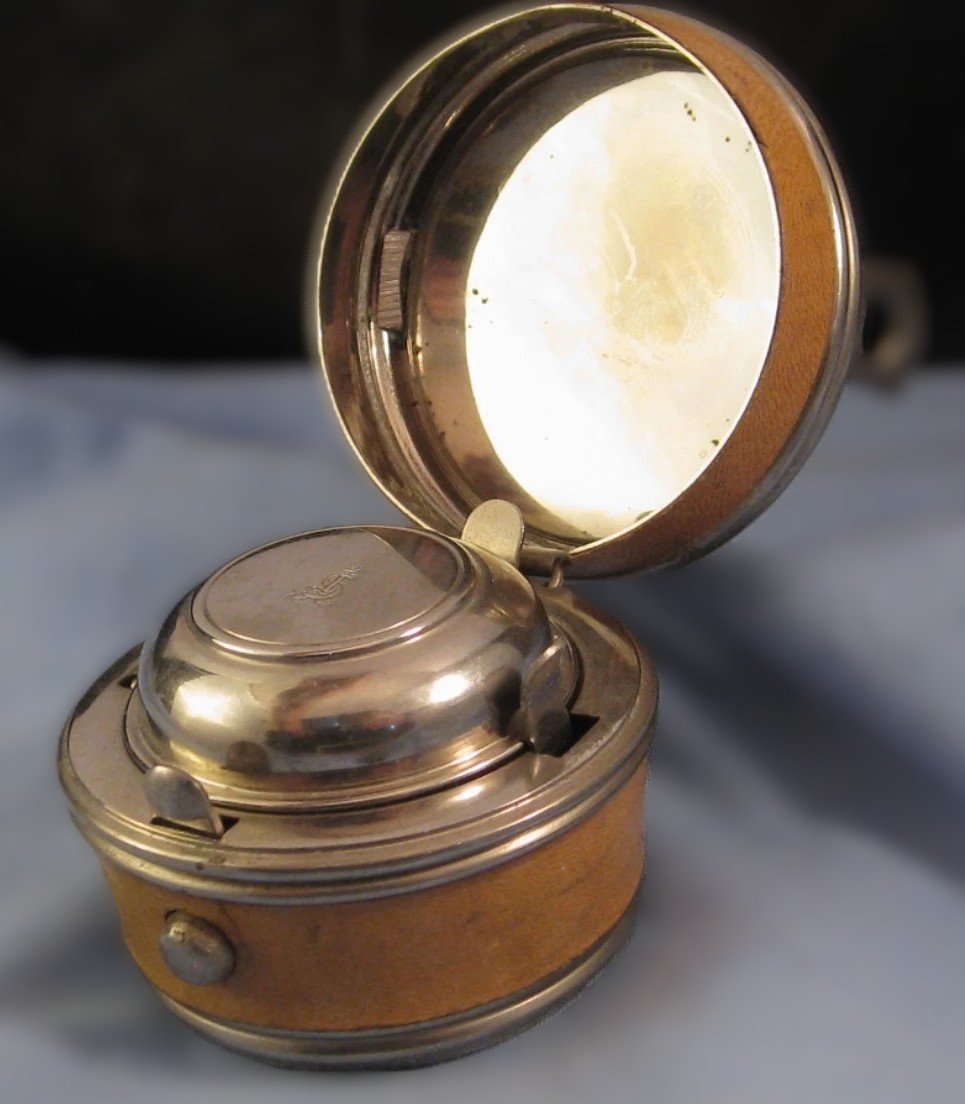
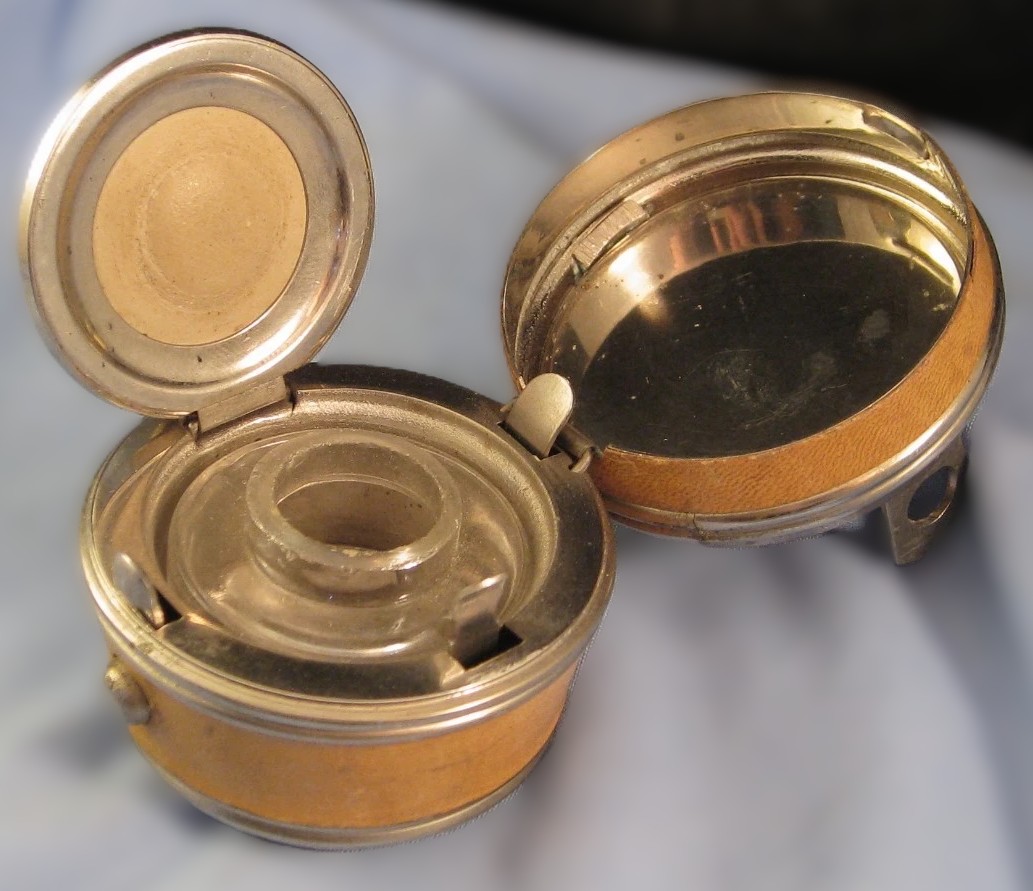
- The Mechanism: The button release and the inner lever-operated lid (with its leather “gasket” or stopper) identify this as a “Safety” inkwell. The leather seal was essential for travelers to prevent the ink from leaking out during the rough vibrations of carriage or rail travel.
The Manufacturer’s Mark
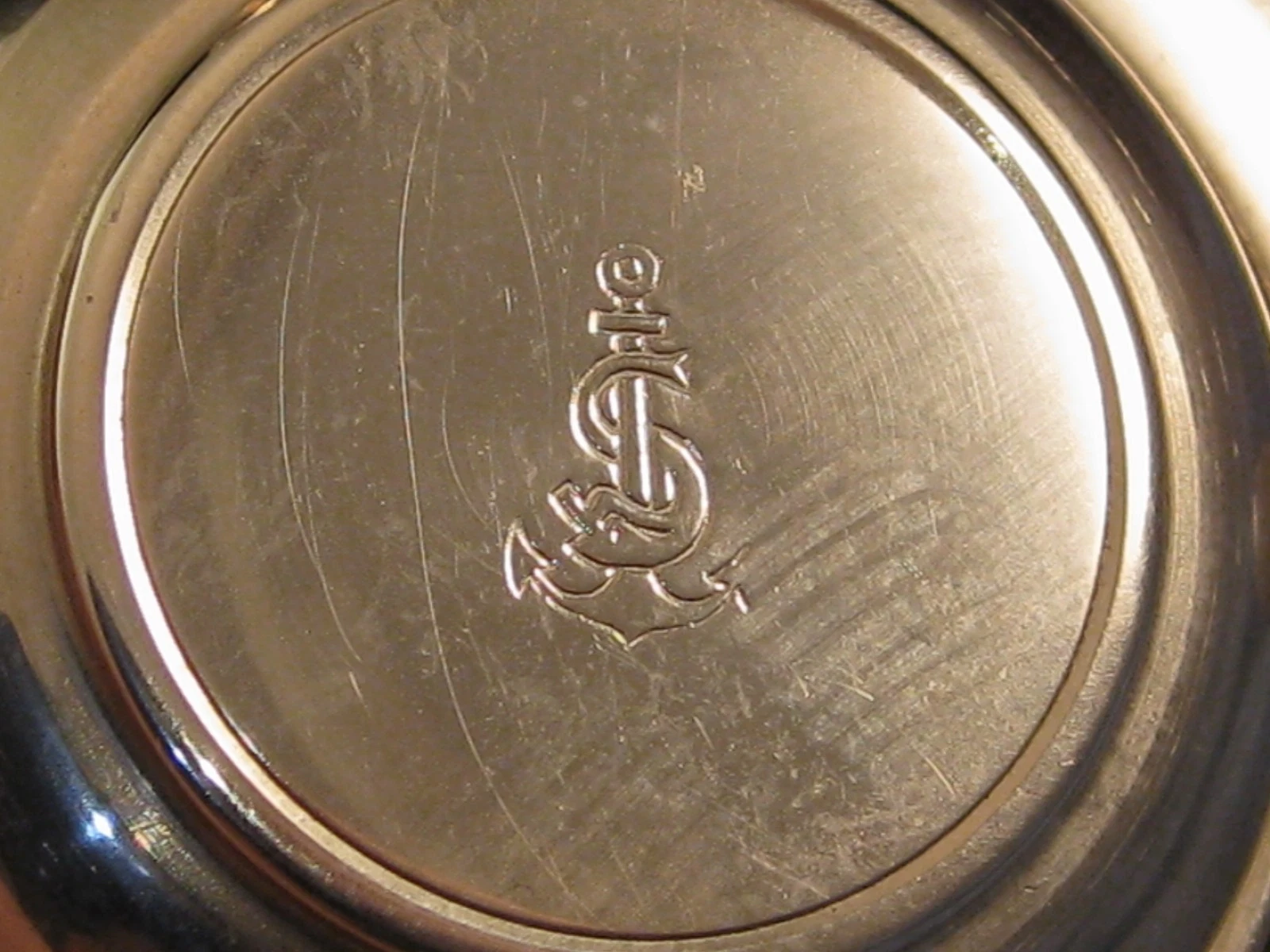
The anchor with the fish (often a stylized dolphin) entwined around it is a version of the “Aldine” mark.
- Origin: While originally the 15th-century mark of the printer Aldus Manutius, it became a popular symbol for the motto Festina Lente (“Make haste slowly”).
- Manufacturer: In the context of 19th-century writing equipment, this mark is most commonly associated with German or Austrian specialty metalware firms that produced “patent safety” goods. It is frequently found on items retailed by luxury houses like Goldsmiths & Silversmiths Co. or J.C. Vickery, though the actual manufacturer was often a specialized workshop in the Austro-Hungarian region.
Age
Based on the style of the script and the popularity of Karlsbad stone souvenirs, this piece dates to approximately 1890–1915.
Sold for $175 in February 2026
Content disclaimer. The information posted is the owner’s best knowledge and may not have been vetted by the SOIC. We welcome comments, corrections, and additions, working to make our website information comprehensive and accurate.
Join the Society of Inkwell Collectors (SOIC) – it’s free!
Founded in 1981 as a non-profit organization,
we are documenting inkwells (and accessories).
We’re here to help and inform!