

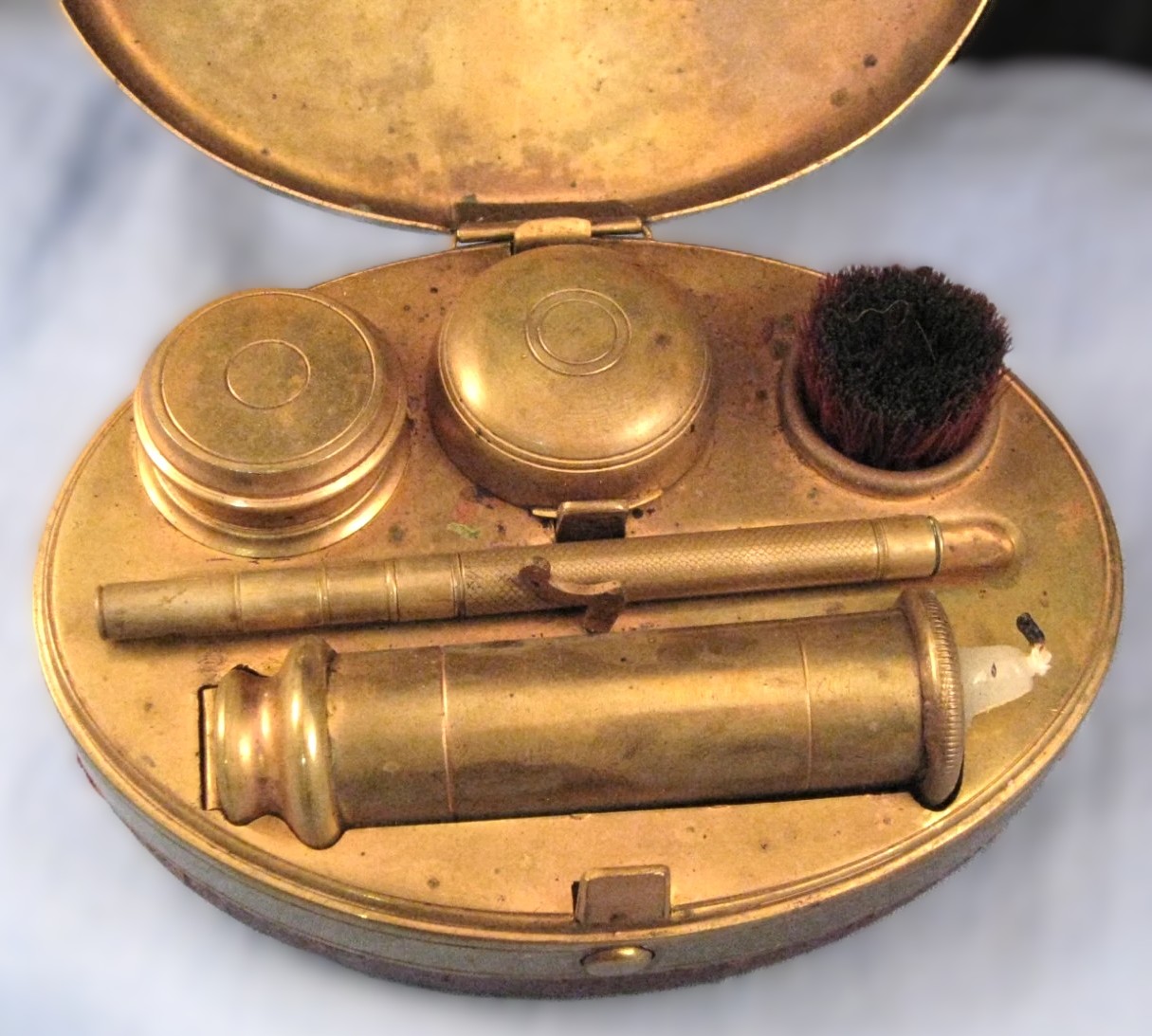
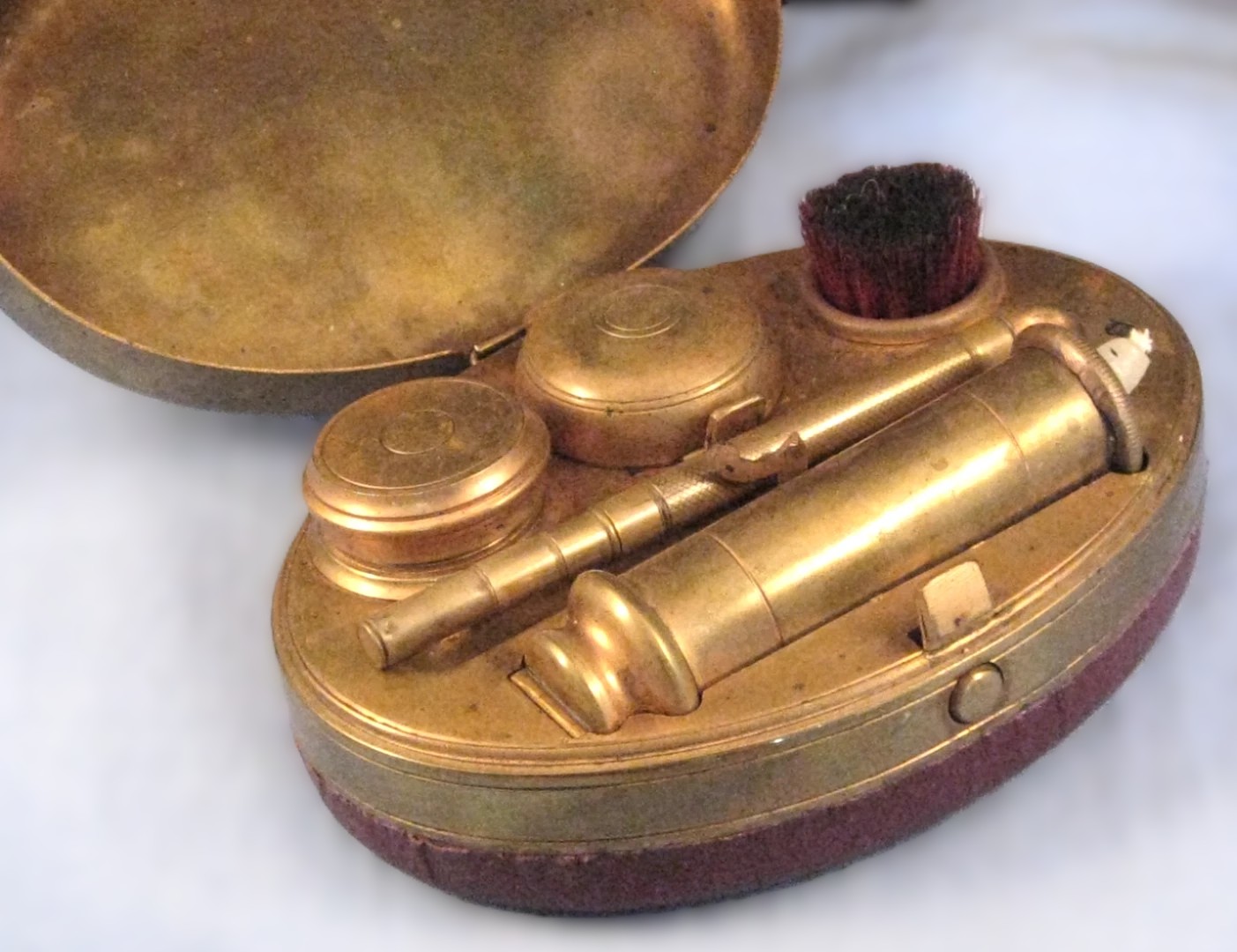
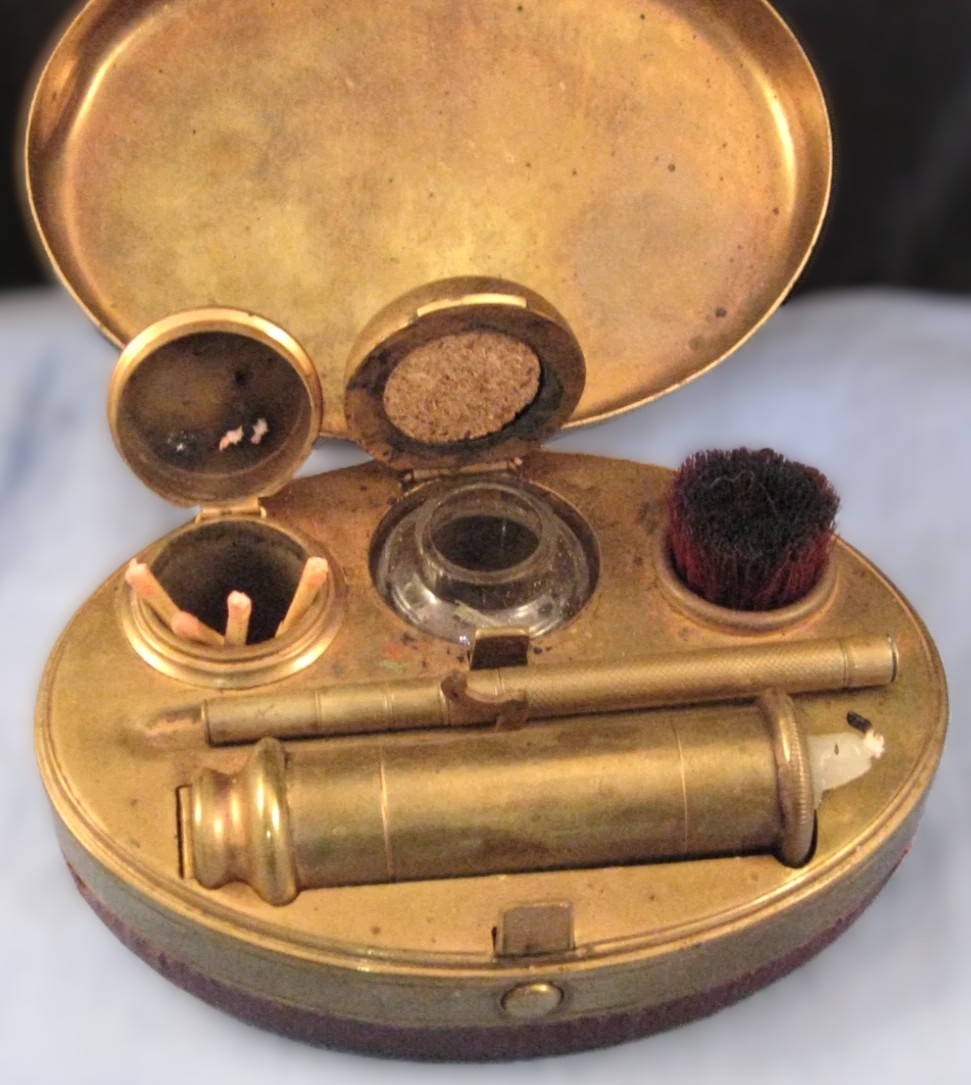
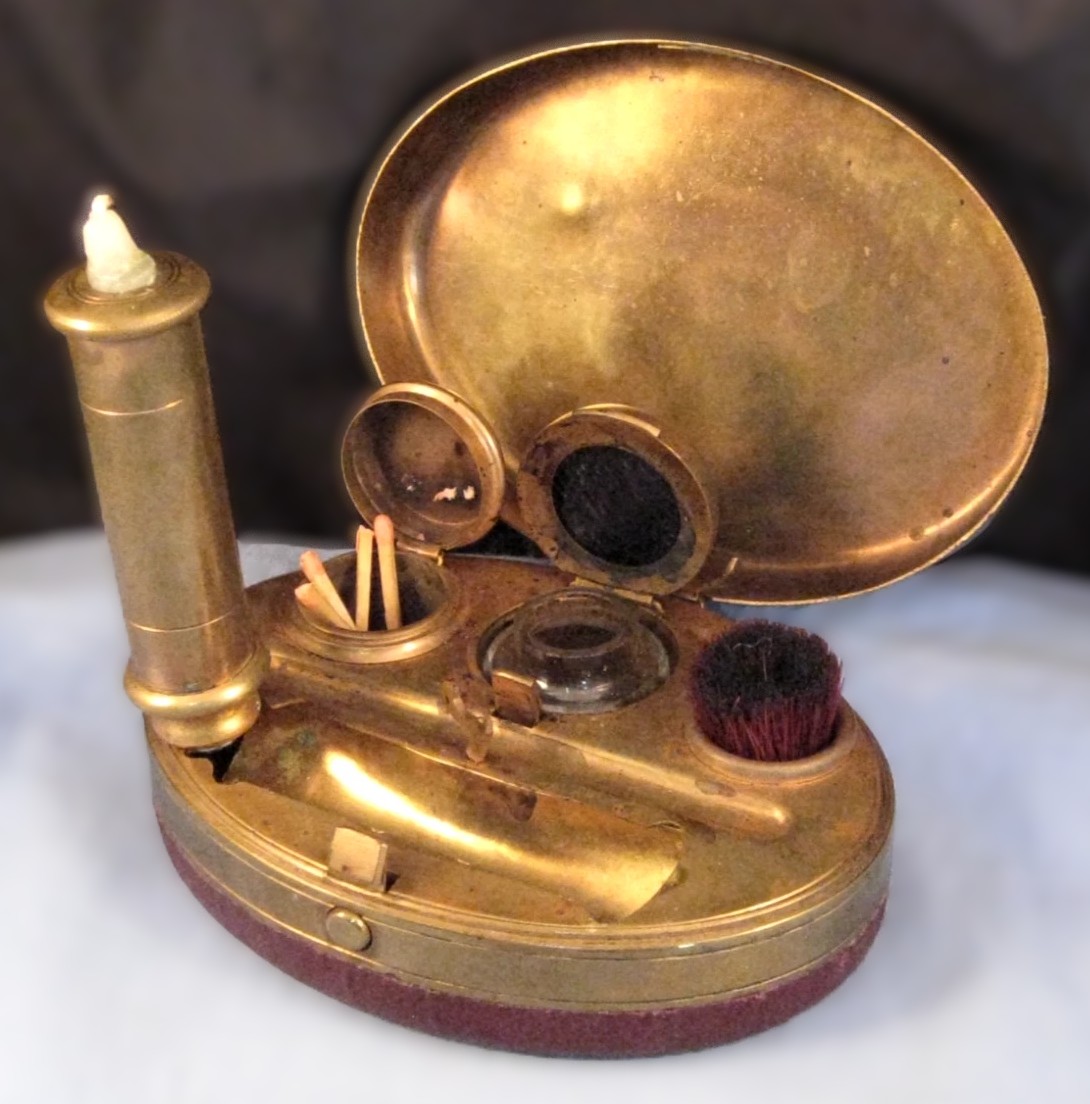
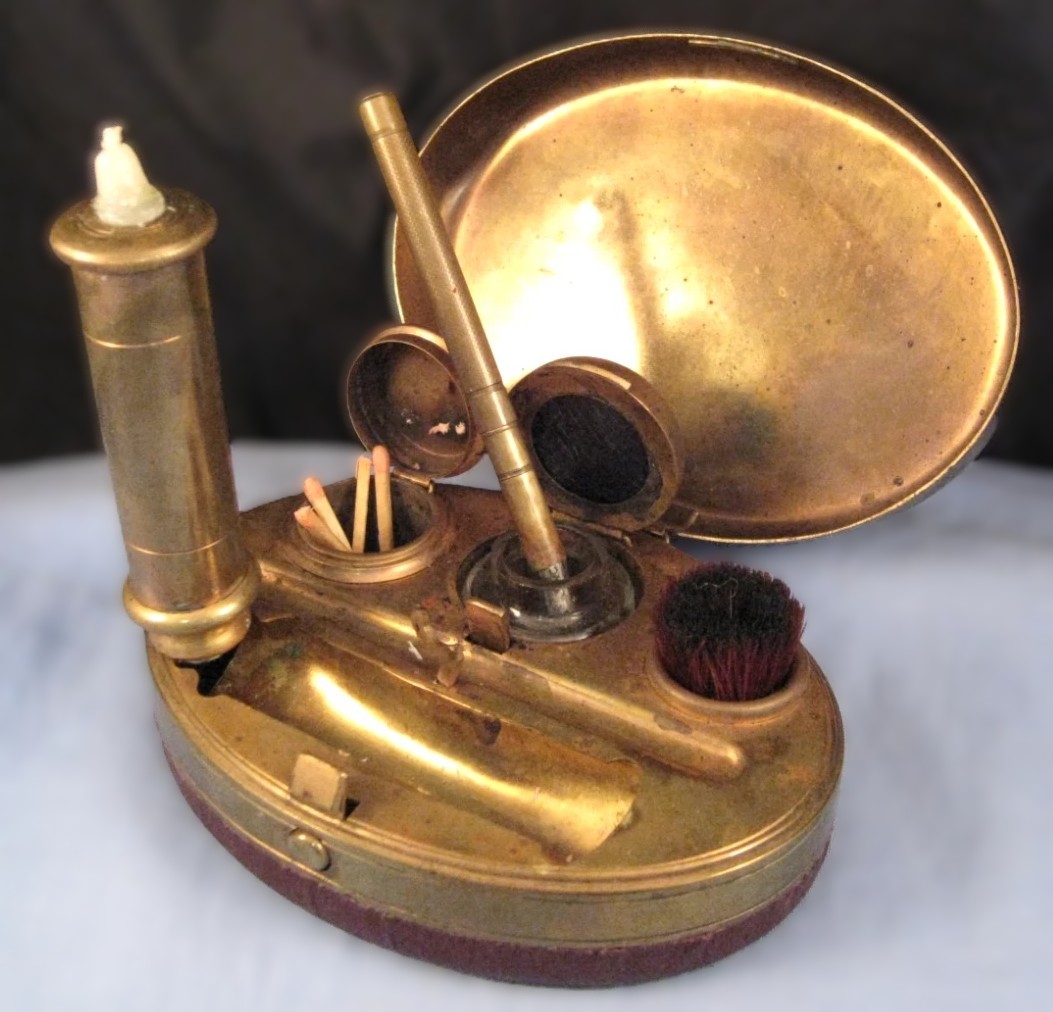
Traveling Inkwell with Candleholder and Pen Wipe
| Categories | Travel |
| Material | Brass, Glass, Leather |
| Markings | Unmarked |
| Manufacturer | Undetermined |
| Origin | England |
| Date or Era | circa 1890 |
| Measuring | 4 ¾” x 3 ½” x 1 ½” high |
Overview & Historical Attribution
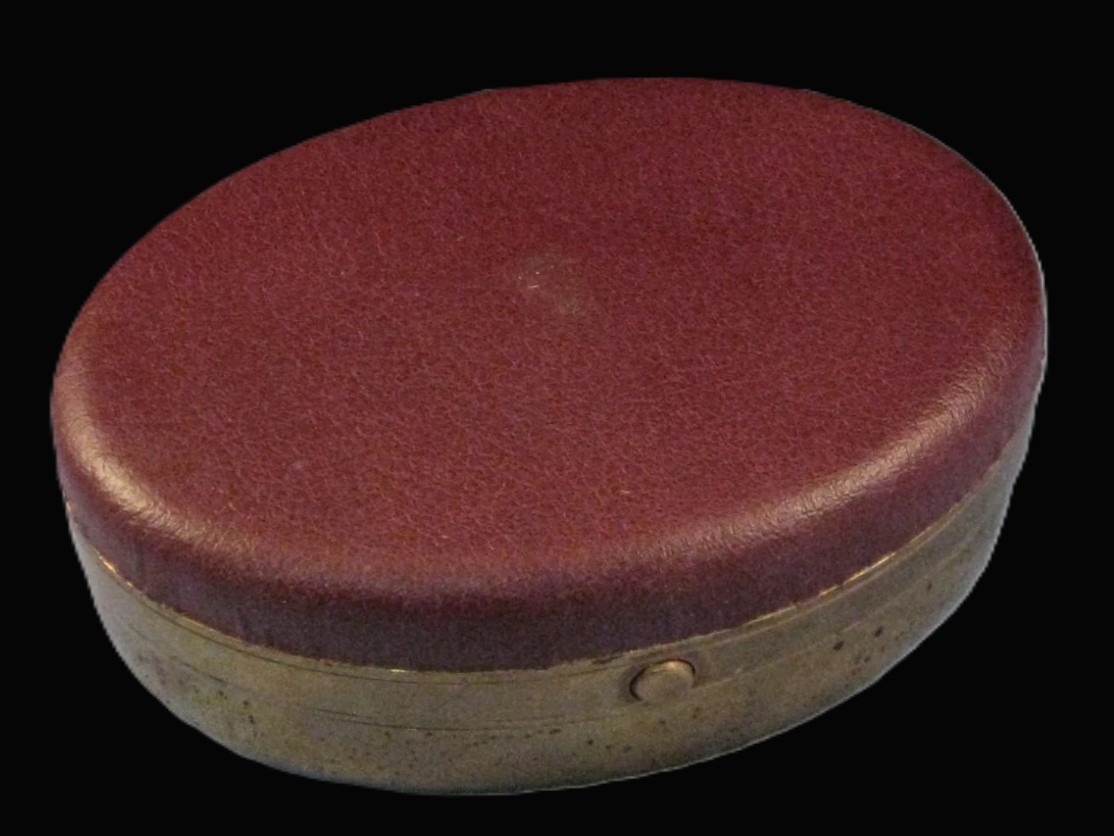
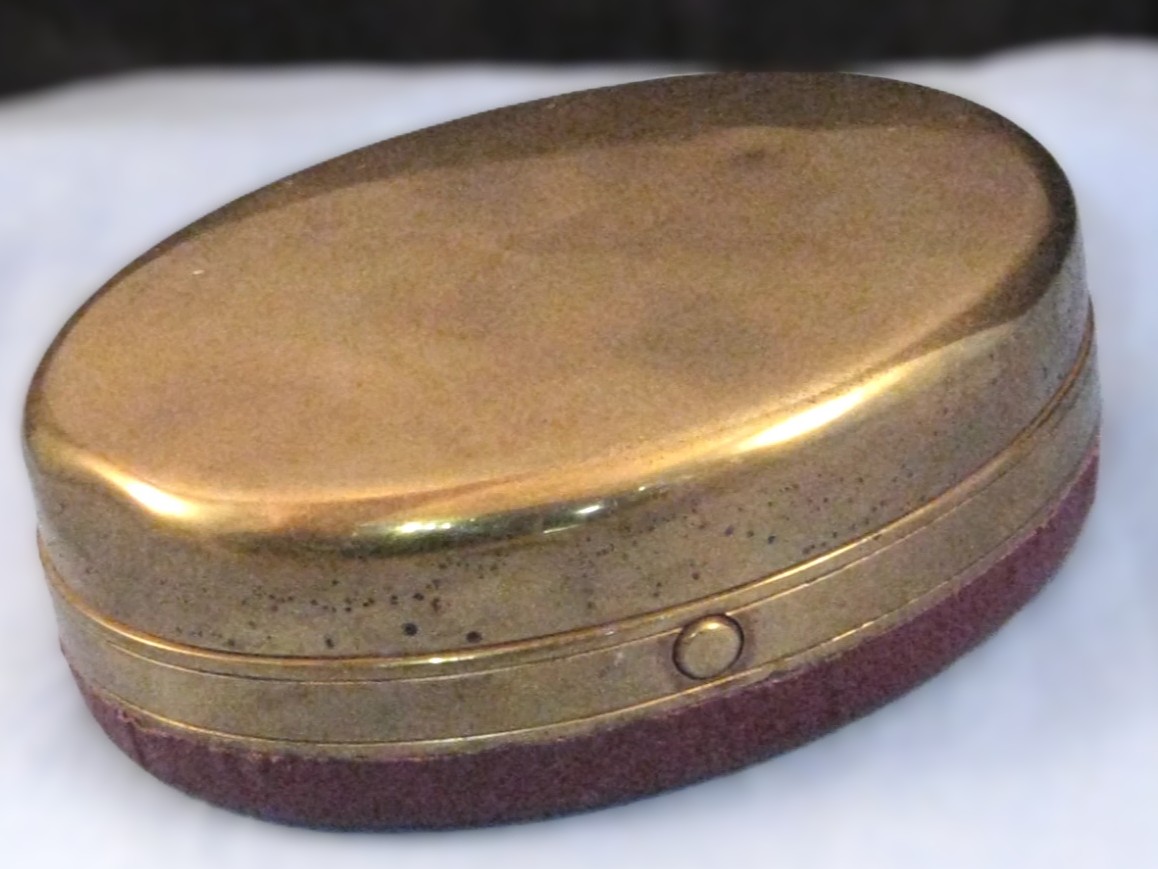
This is a Victorian pocket writing companion (traveling inkwell or “bachelor’s inkstand”), housed in a brass case with a textured, burgundy-leather-wrapped domed lid operated by a side push-button release.
- Age: Dating from the late 19th century, specifically circa 1885–1900.
- Origin: British (manufactured in England, where these compact, multi-functional campaign writing sets were popular for gentlemen travelers, military officers, and field diarists).
Description & Features
Measuring roughly 4 ¾” across, this pocket companion is an engineering marvel of utilitarian design, packing an entire desk’s worth of writing and lighting implements into a minuscule footprint:
- Exterior Housing
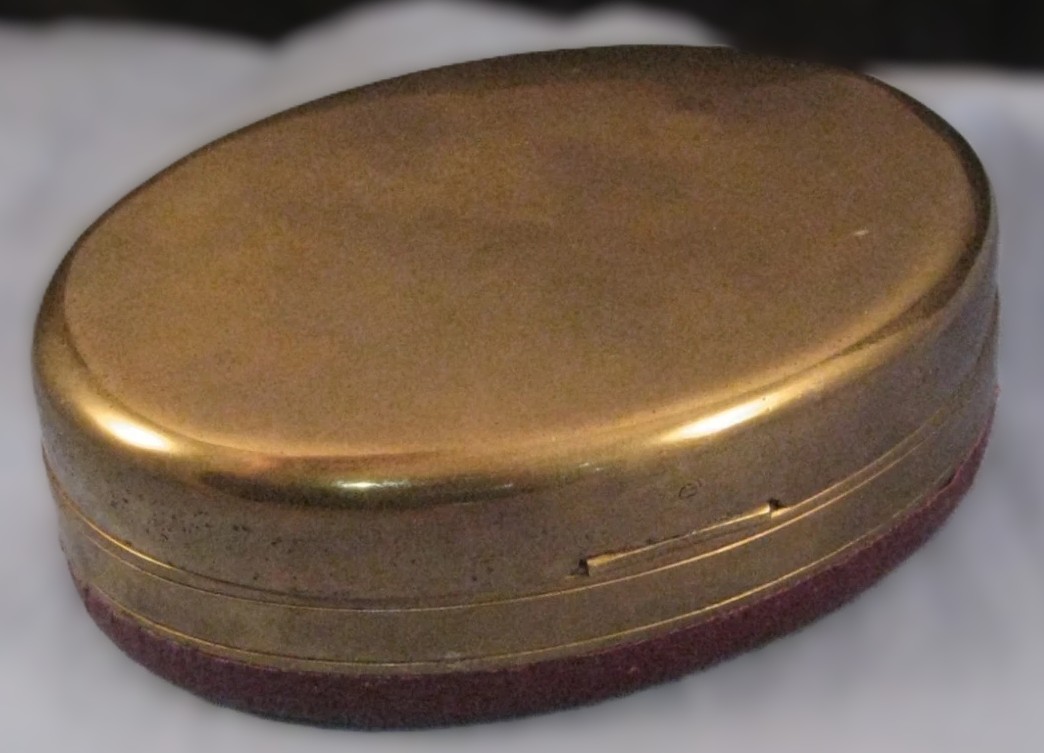
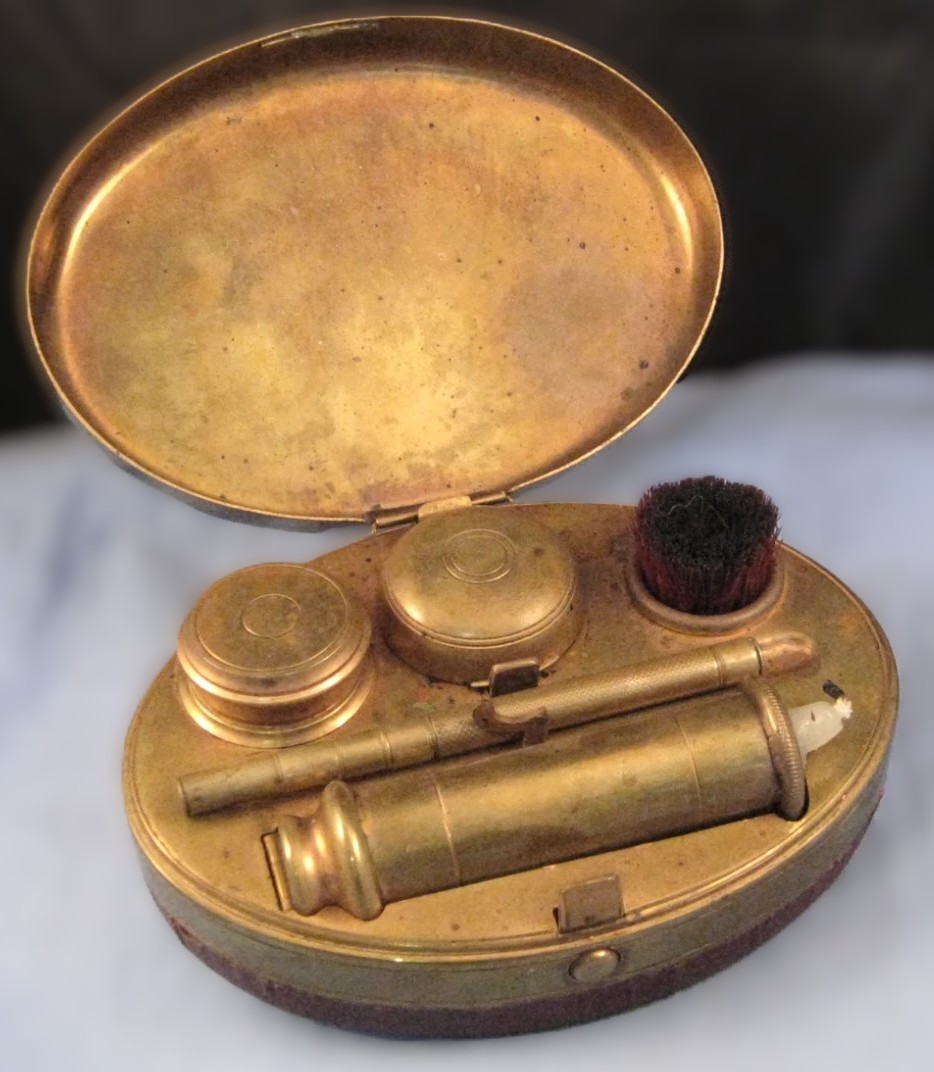
The oval brass body features a rich, burgundy grain-leather lid secured by a flush-mounted push-button side clasp. When depressed, the spring-loaded lid snaps open to reveal a neatly nested brass-lined interior.
- The Integrated Folding Candle Holder (“Go-to-Bed”)
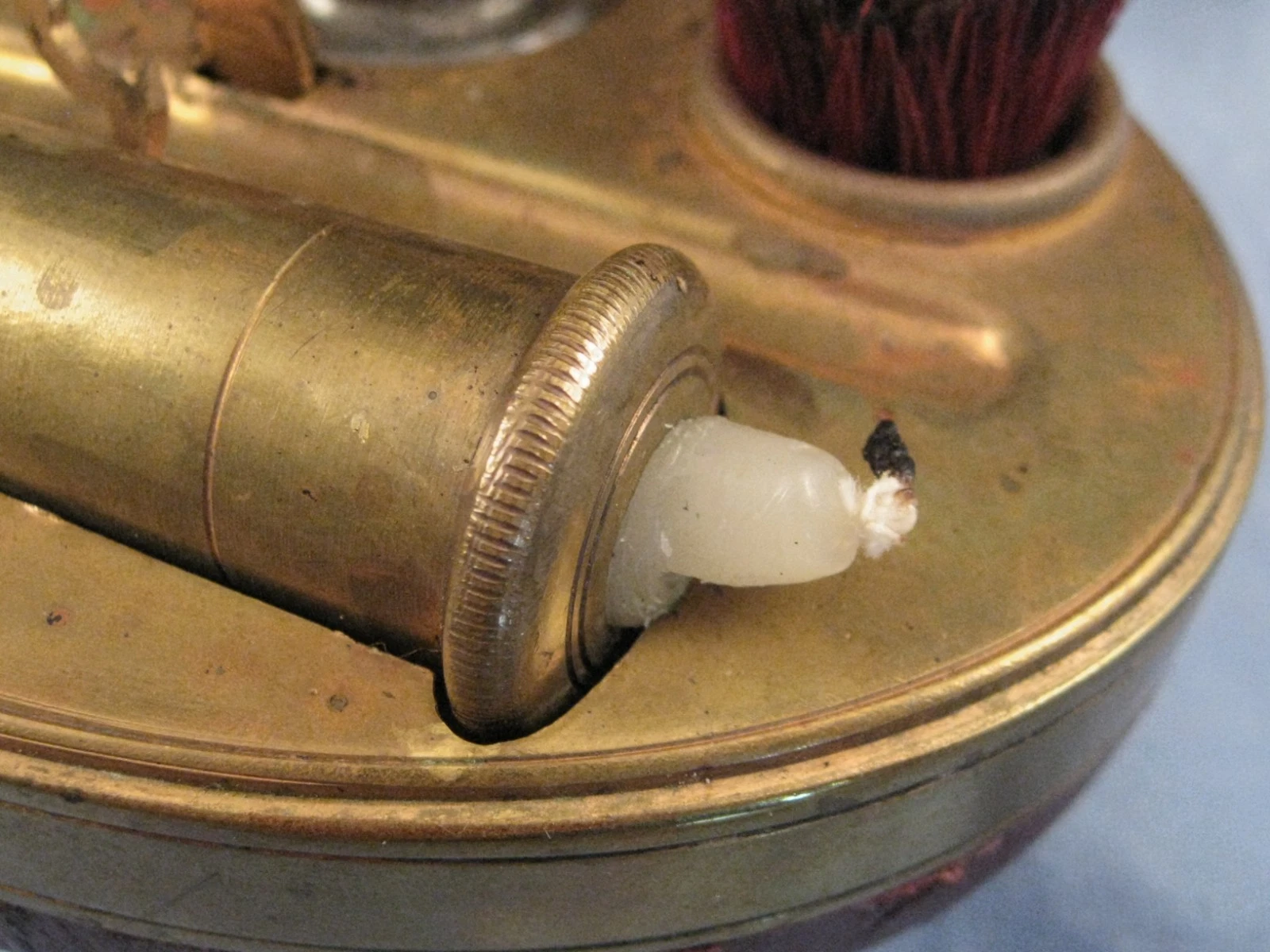
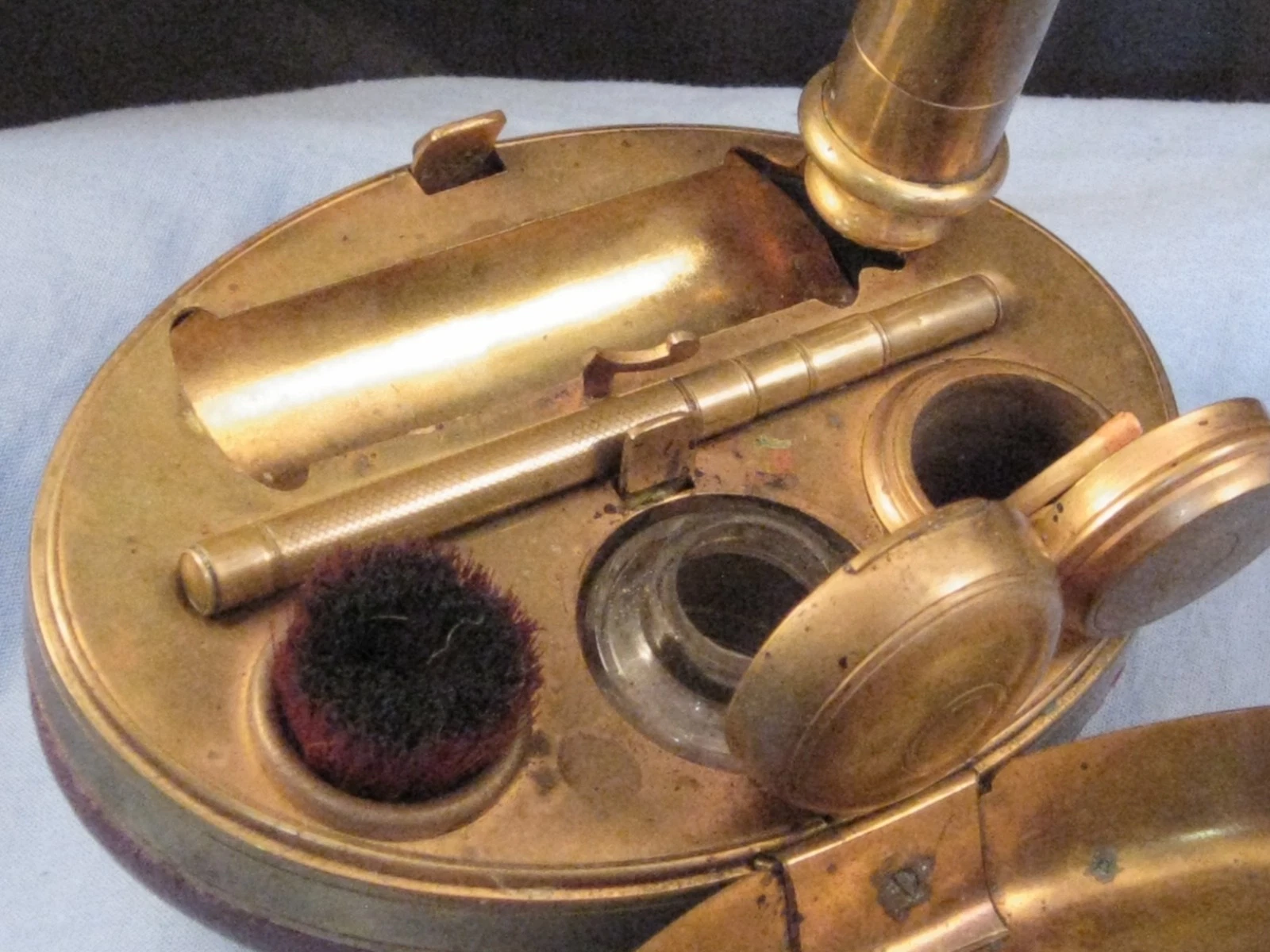
Dominating the floor of the kit is a clever, hinged taper candle holder.
- In transit, it folds flat into a tailored trough along the bottom edge.
- For use, it swings upright; the top unscrews to allow the user to replace or adjust the wax taper candle.
- These miniature candles (often called “go-to-bed” candles) were indispensable for melting sealing wax on correspondence or providing late-night illumination while traveling in dimly lit rooms.
- The Inkwell
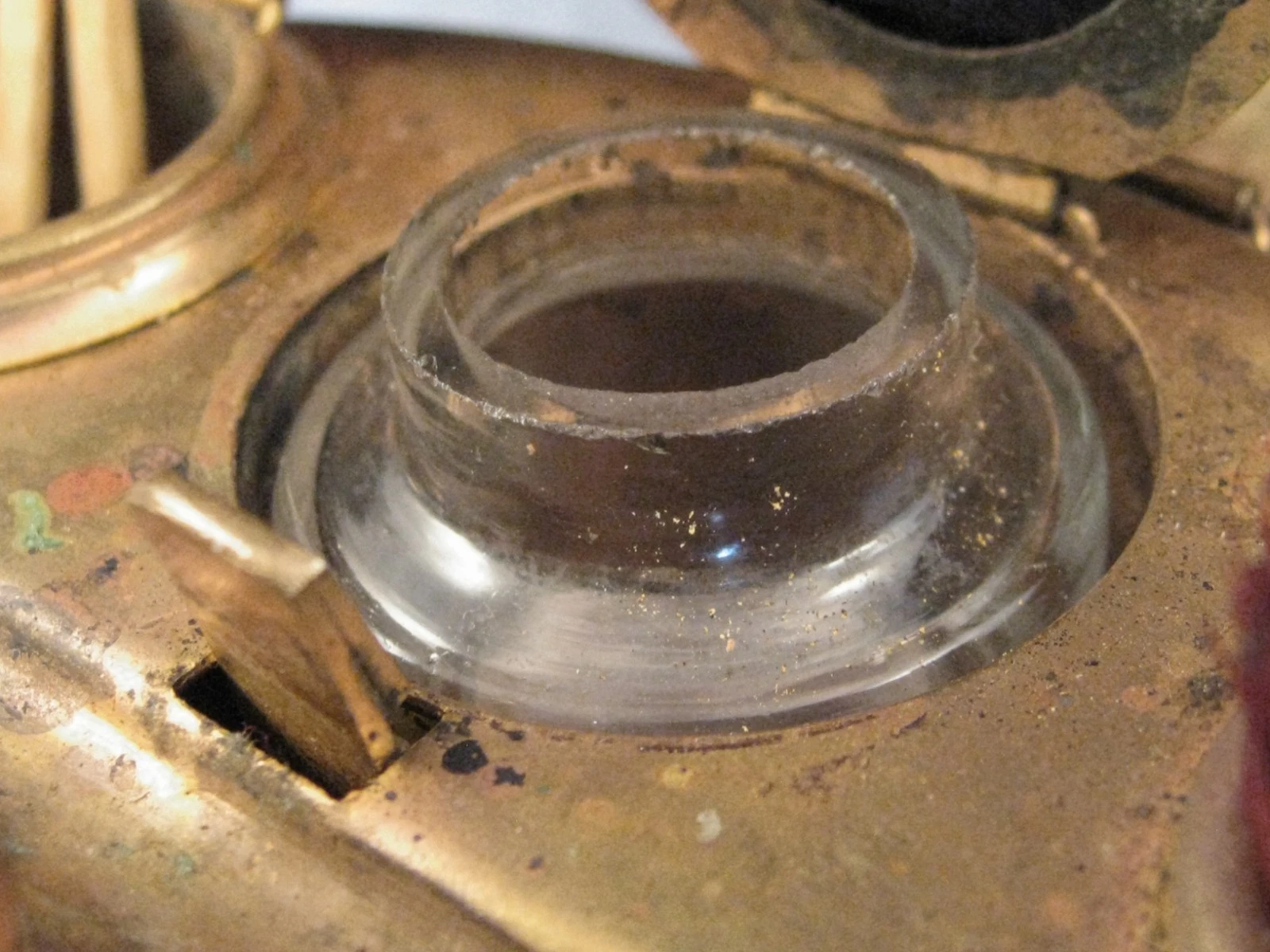
Nestled centrally is the original glass inkwell protected by a tight-fitting brass lid with a cork liner. Crucially, it features an integral threaded or stopper mechanism designed to create a leak-proof seal against the glass collar, preventing ink from migrating during transit.
- Auxiliary Compartments & Accessories
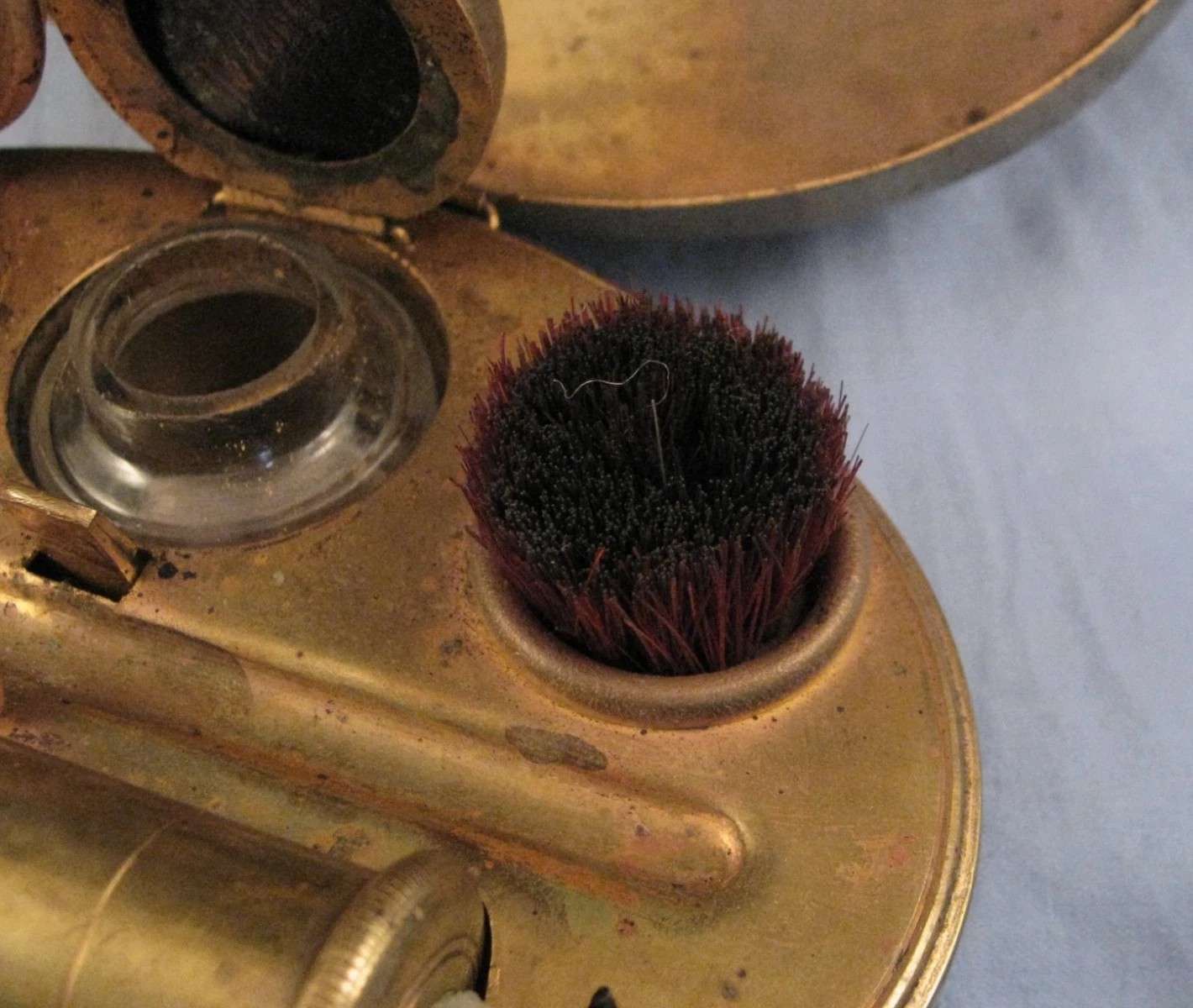
- The Nib Wipe: Positioned neatly on the right is a small, original cylindrical brush insert with stiff bristles (acting as a pen/nib cleaner).
- Vesta Compartment: To the left of the inkwell sits a lidded compartment housing short matches or wax vestas. (Wax vestas—wax-infused matchsticks invented in the mid-19th century—were preferred over wooden matches for their reliability in damp conditions).
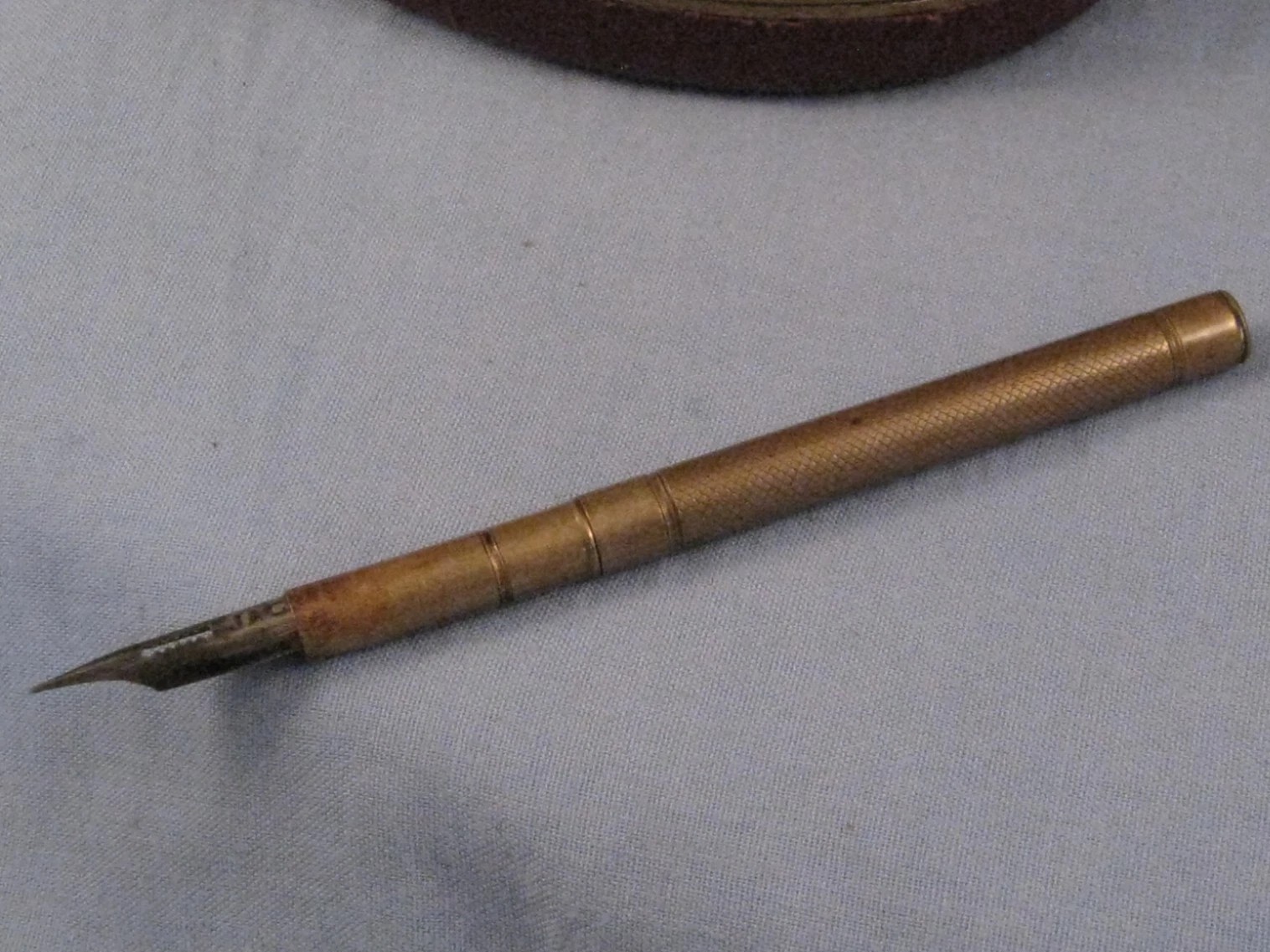
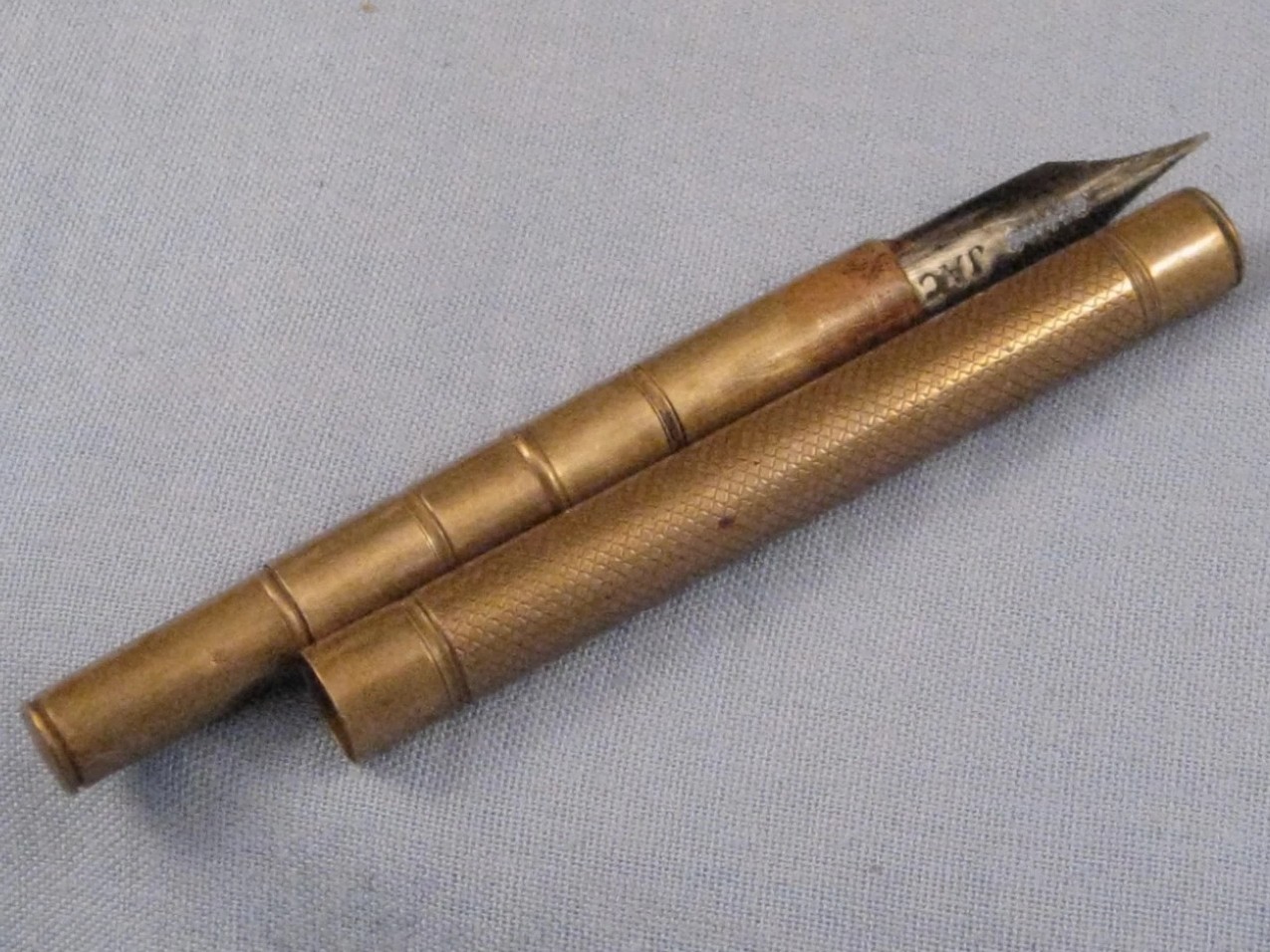
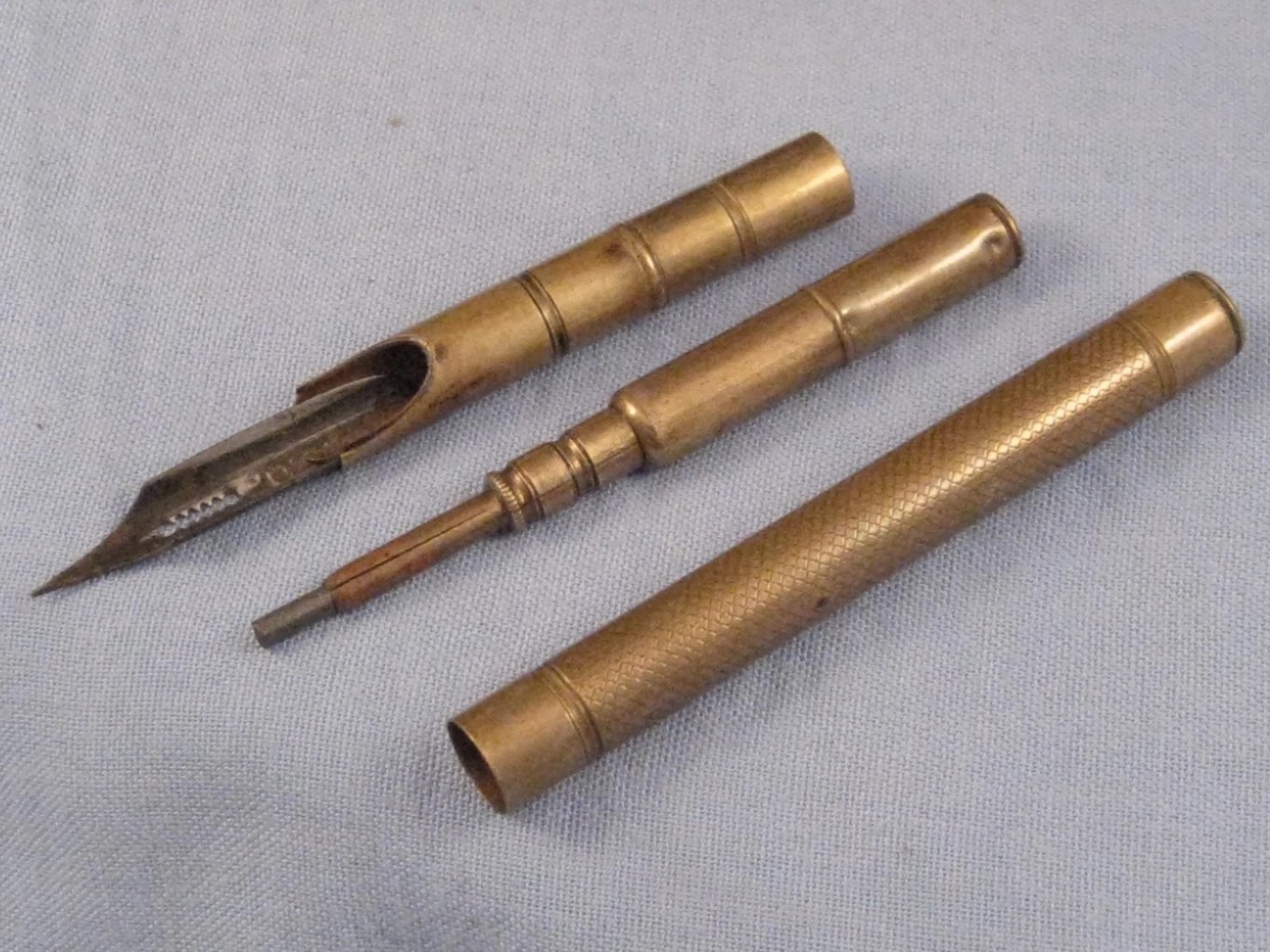
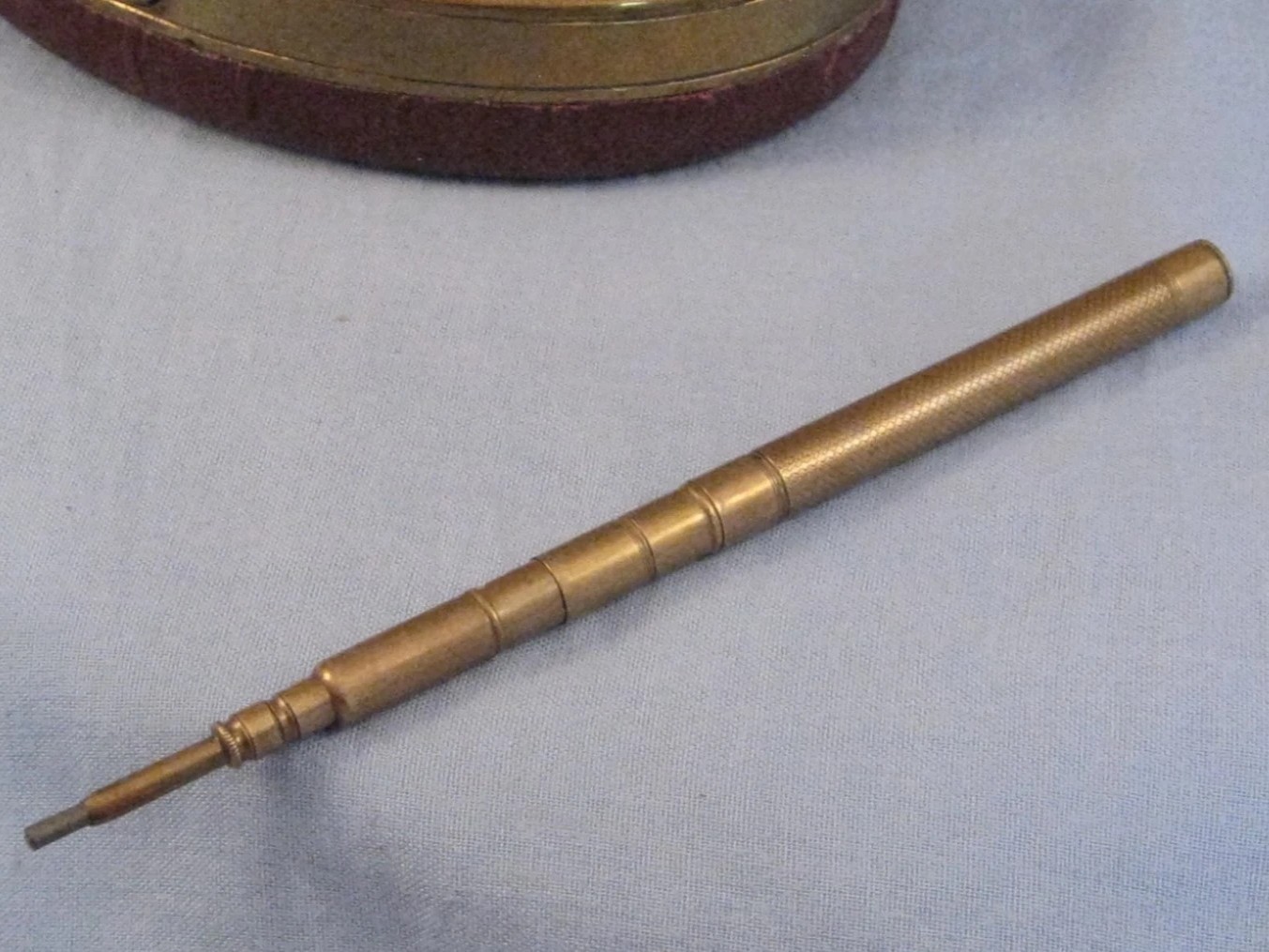
- Combination Dip Pen & Mechanical Pencil: Running horizontally across the center is a dedicated channel holding a multi-piece modular writing instrument. The knurled brass barrel disassembles into three threaded sections that screw together end-to-end to form a full-length pen on one end and a mechanical lead-propelling pencil on the other.
Sold for $370 in September 2026
Content disclaimer. The information posted is the owner’s best knowledge and may not have been vetted by the SOIC. We welcome comments, corrections, and additions, working to make our website information comprehensive and accurate.
Join the Society of Inkwell Collectors (SOIC) – it’s free!
Founded in 1981 as a non-profit organization,
we are documenting inkwells (and accessories).
We’re here to help and inform!