

Inkipedia
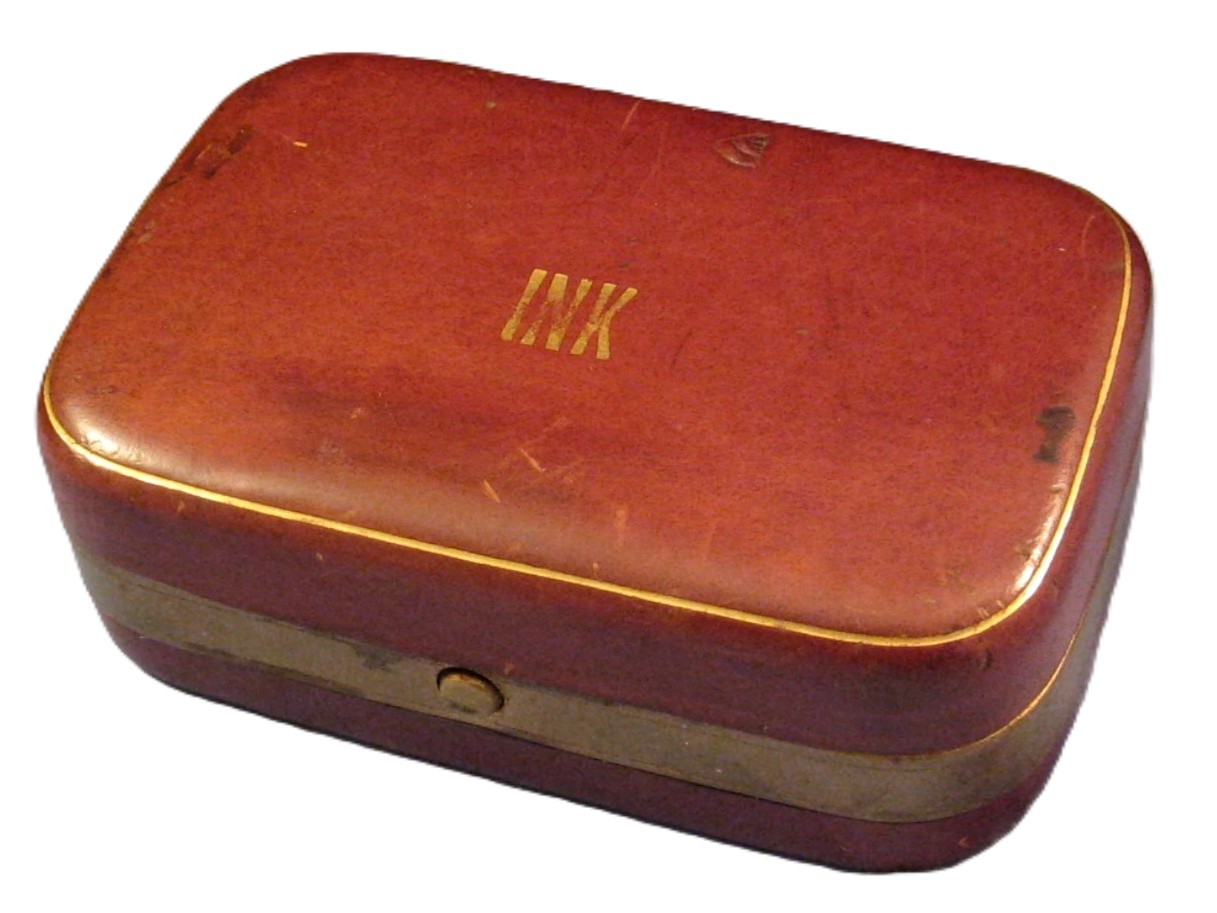
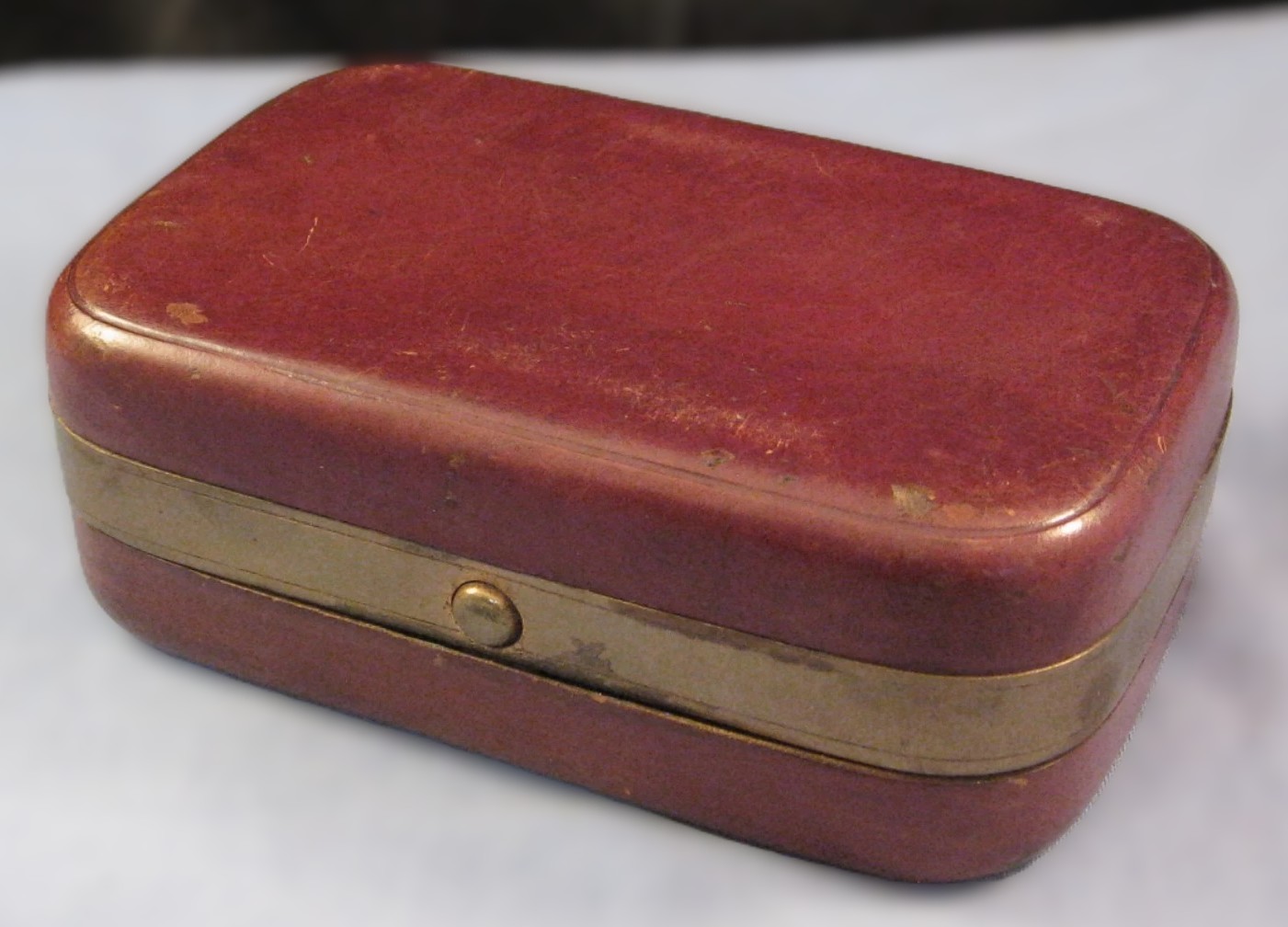
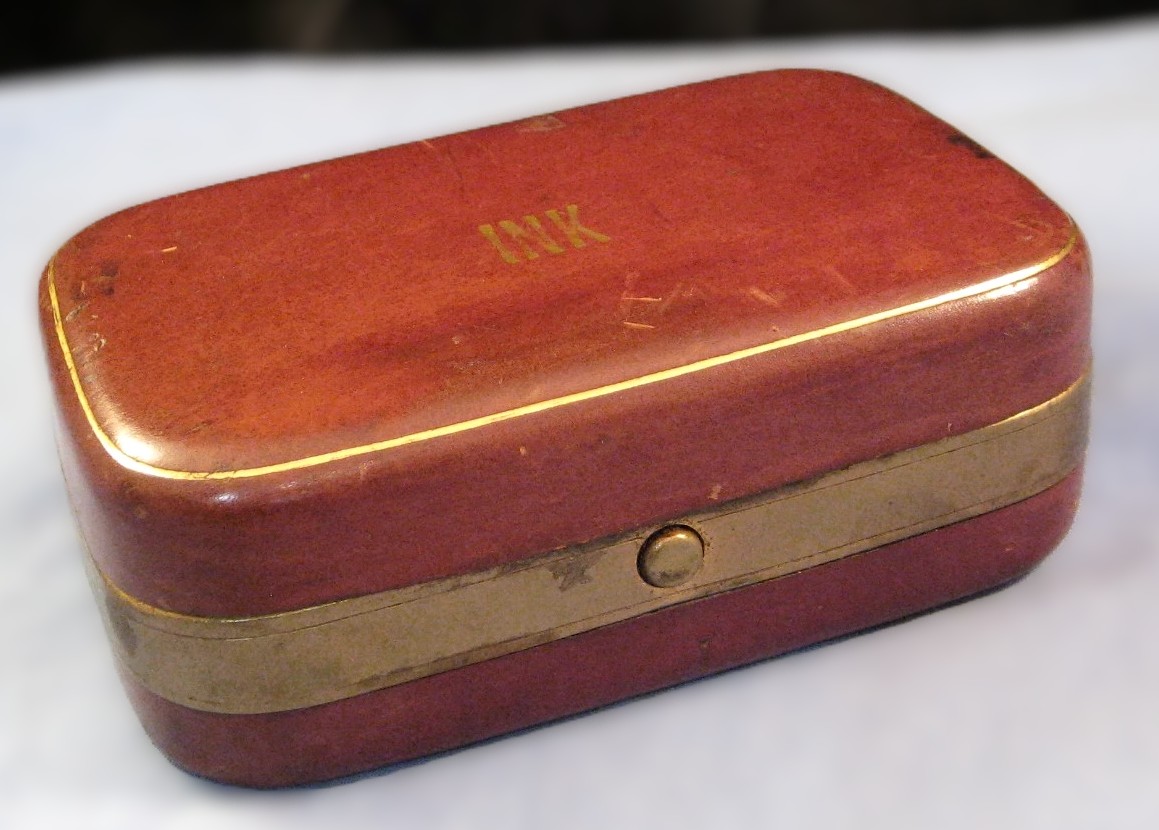
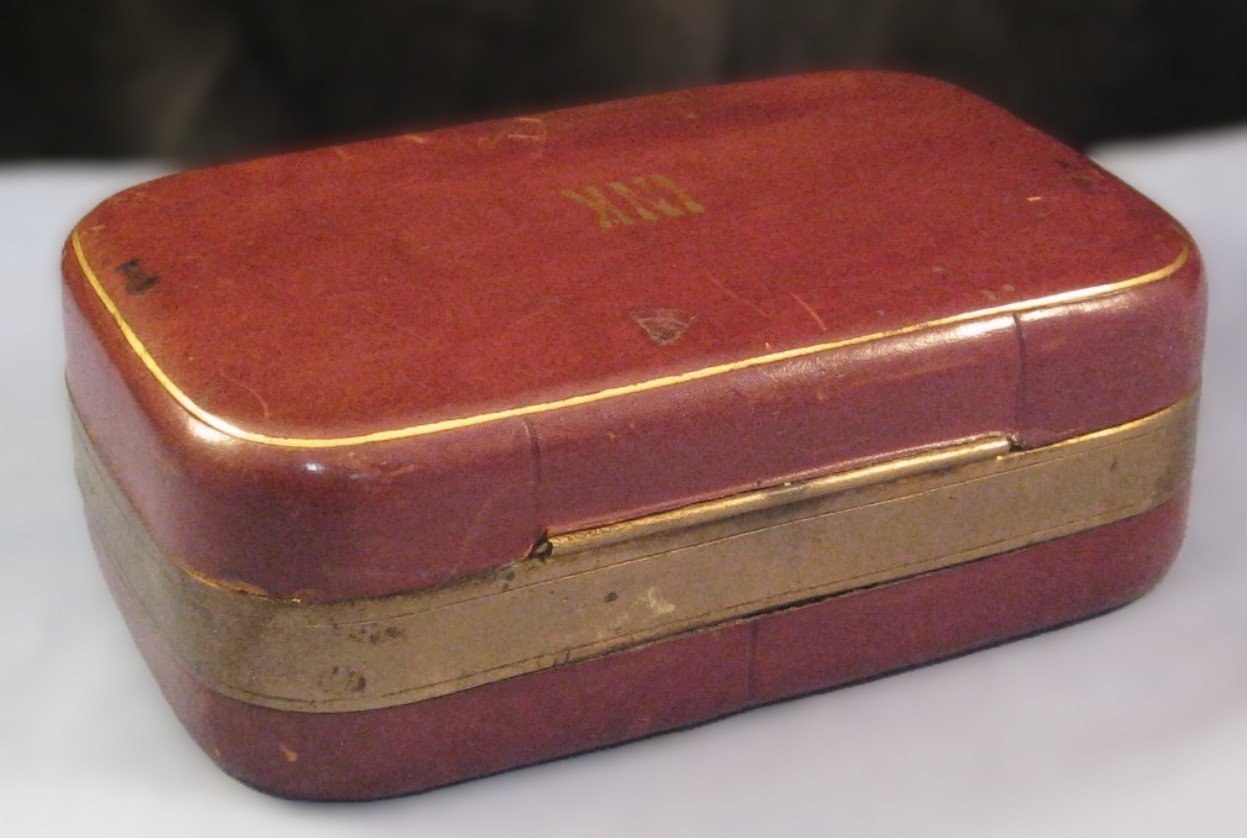
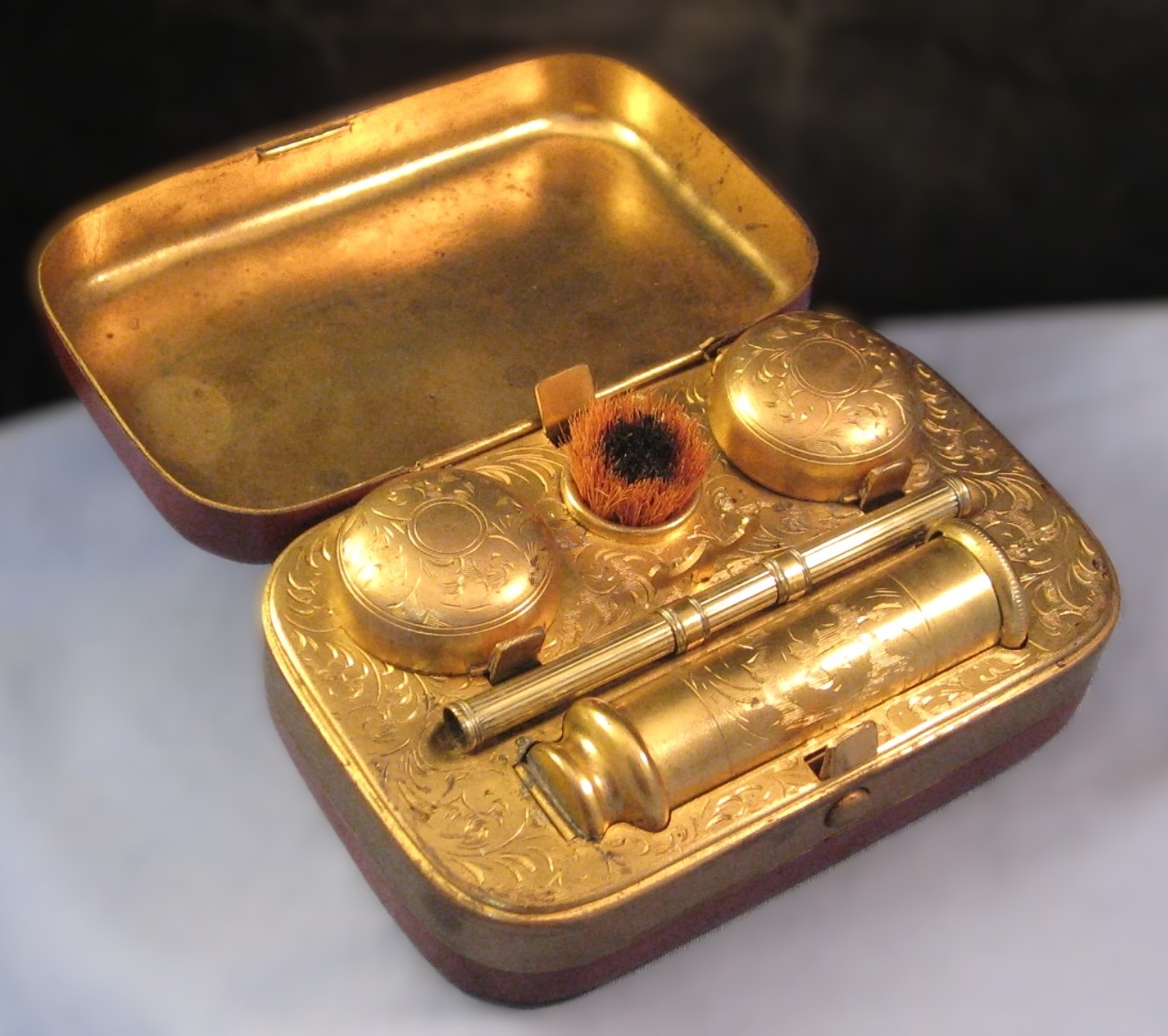
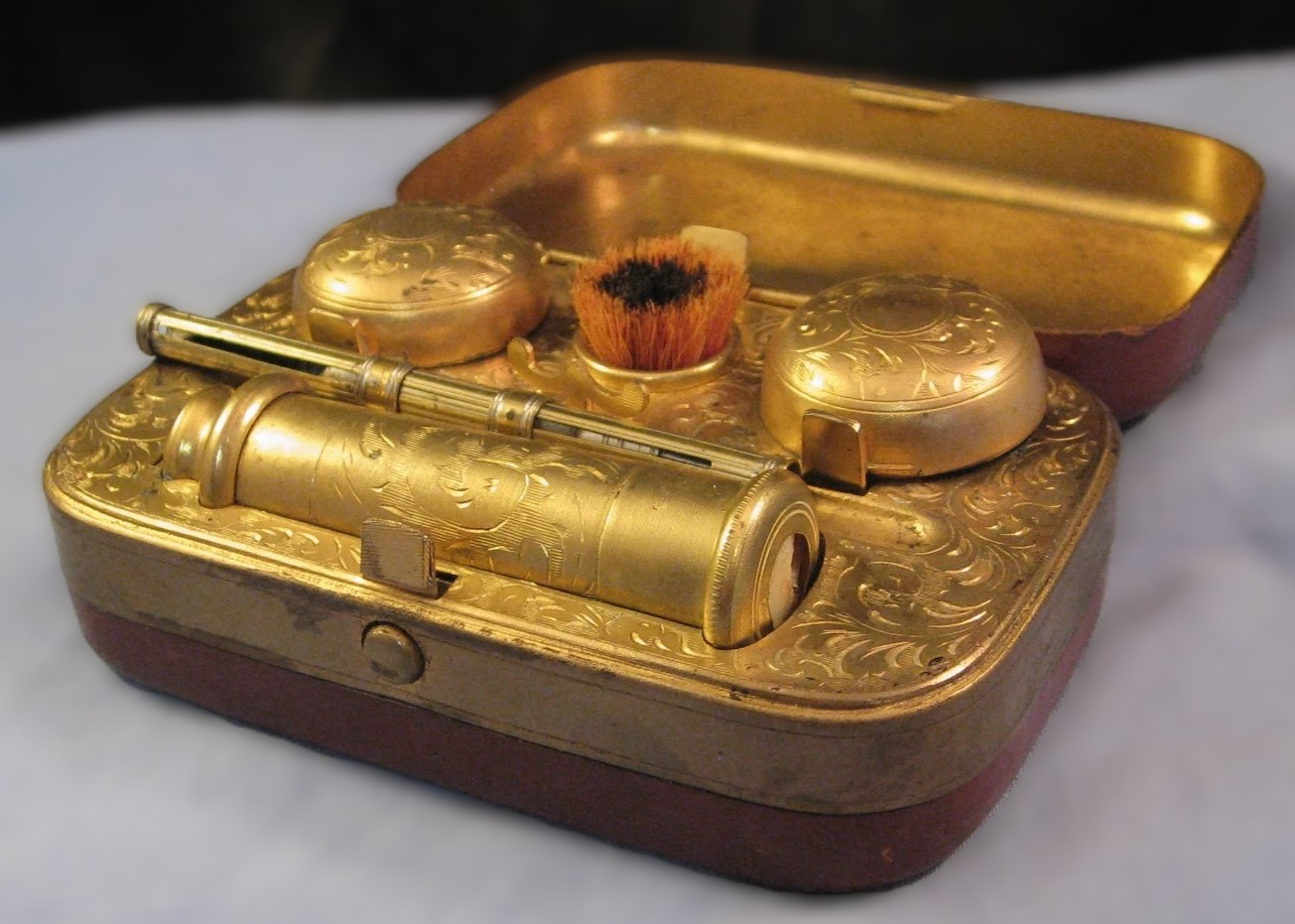
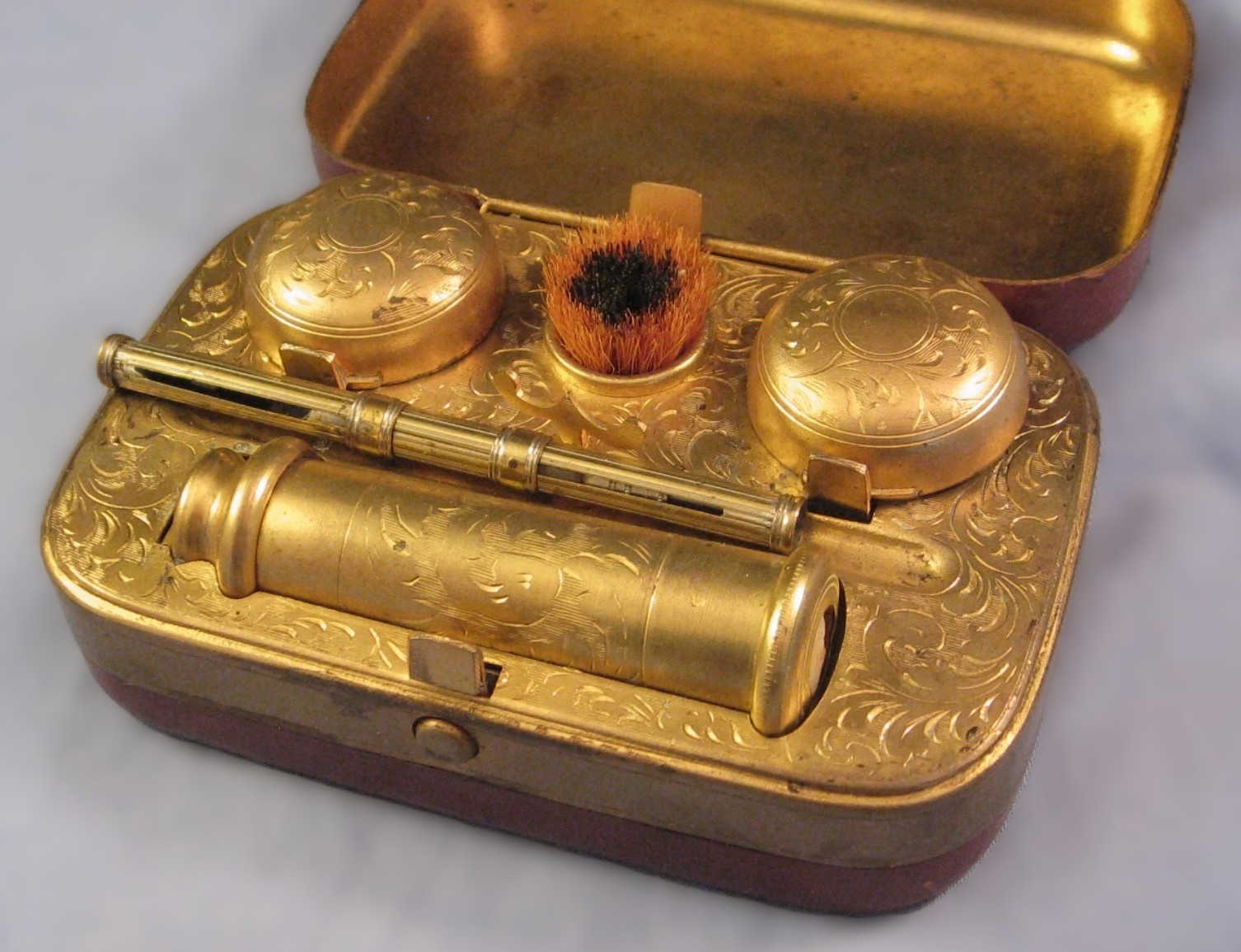
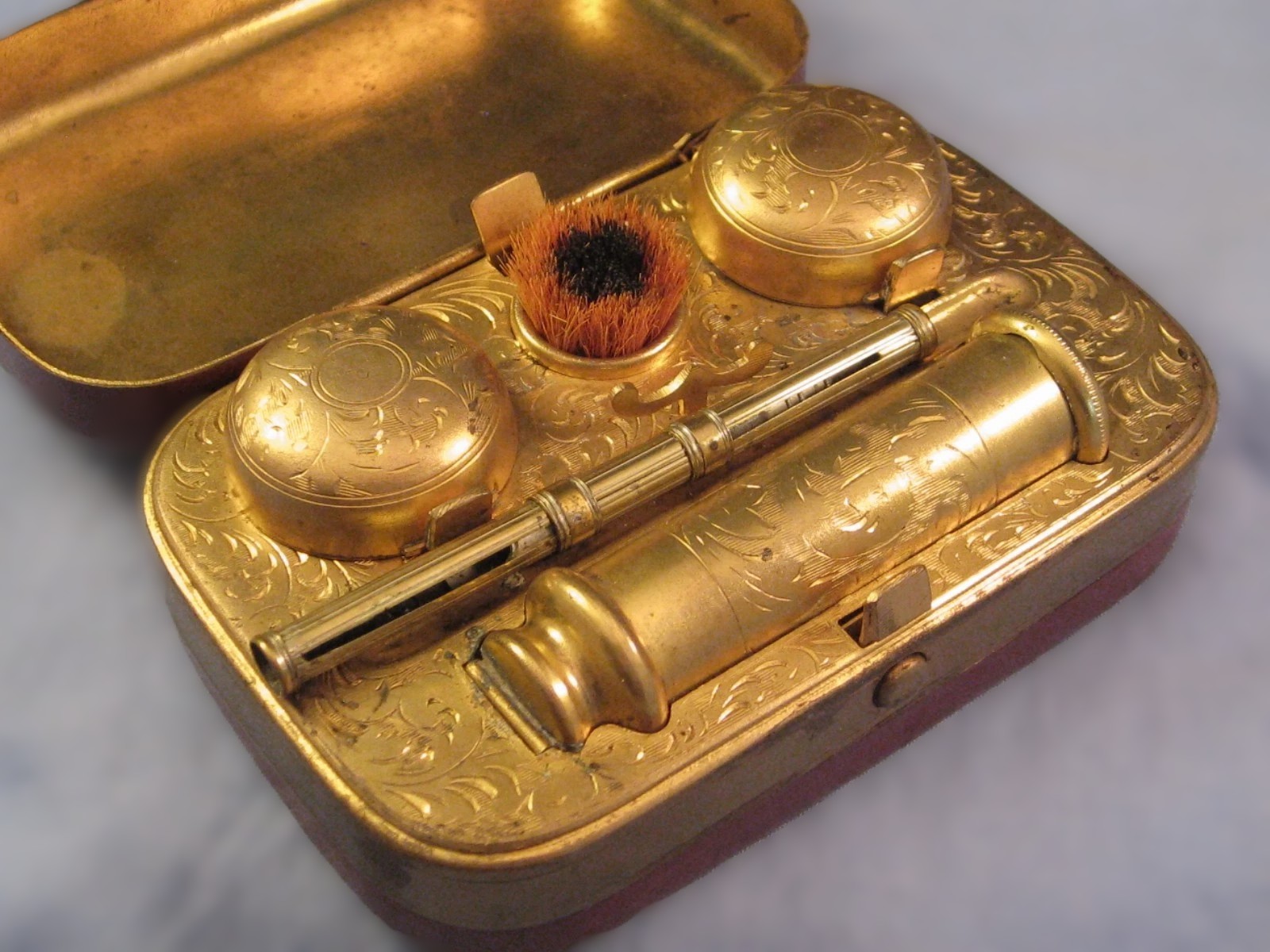
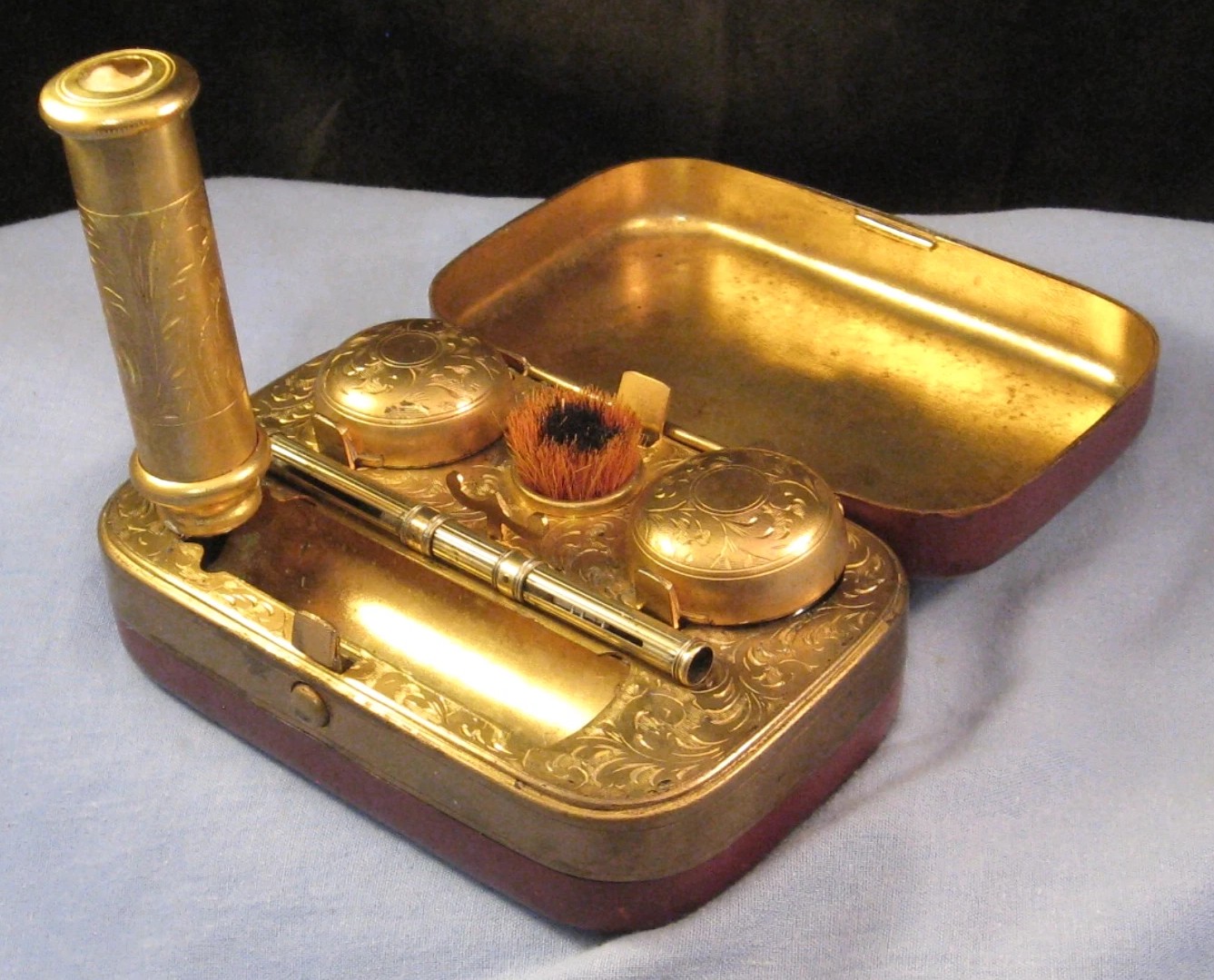
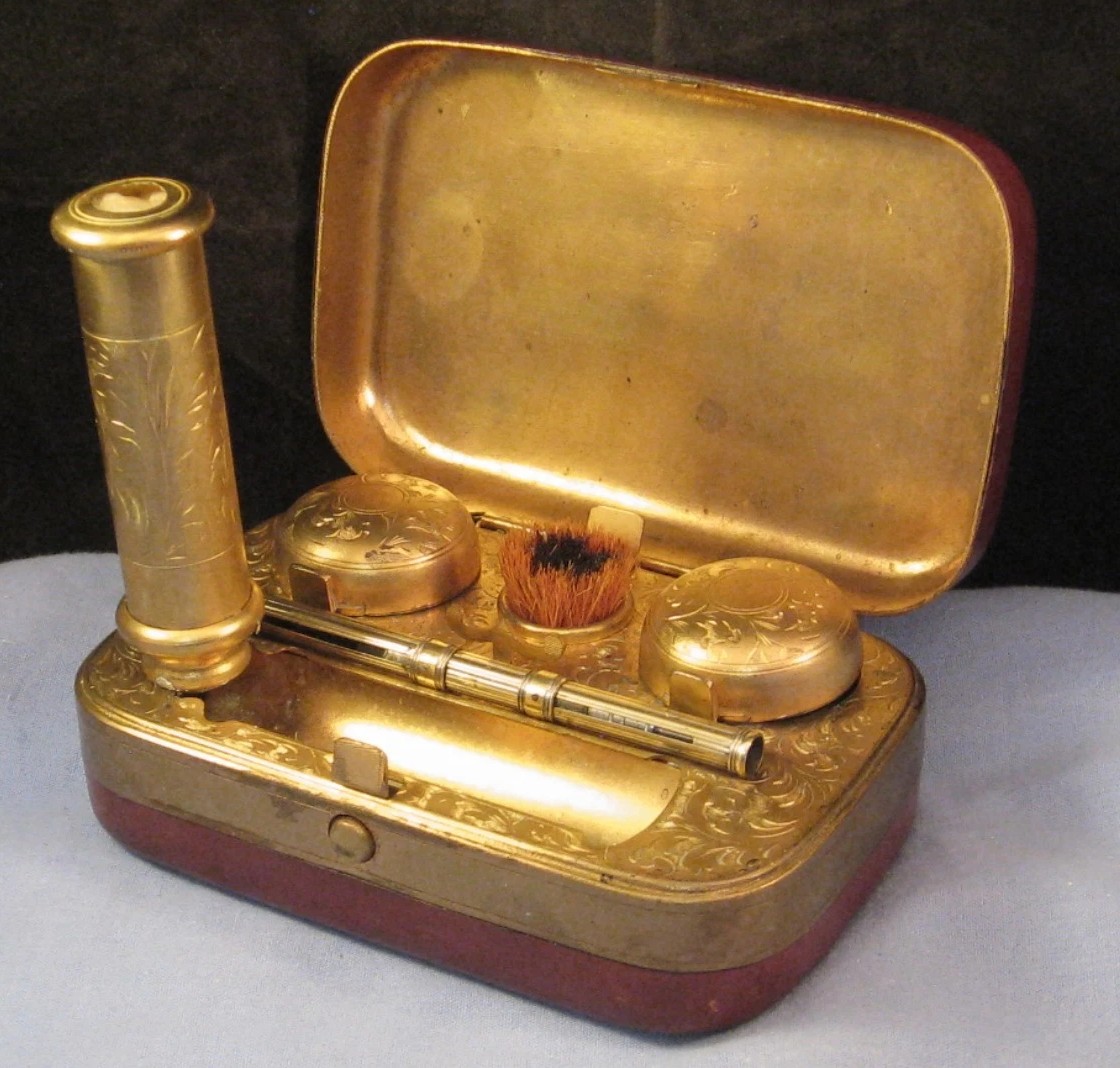
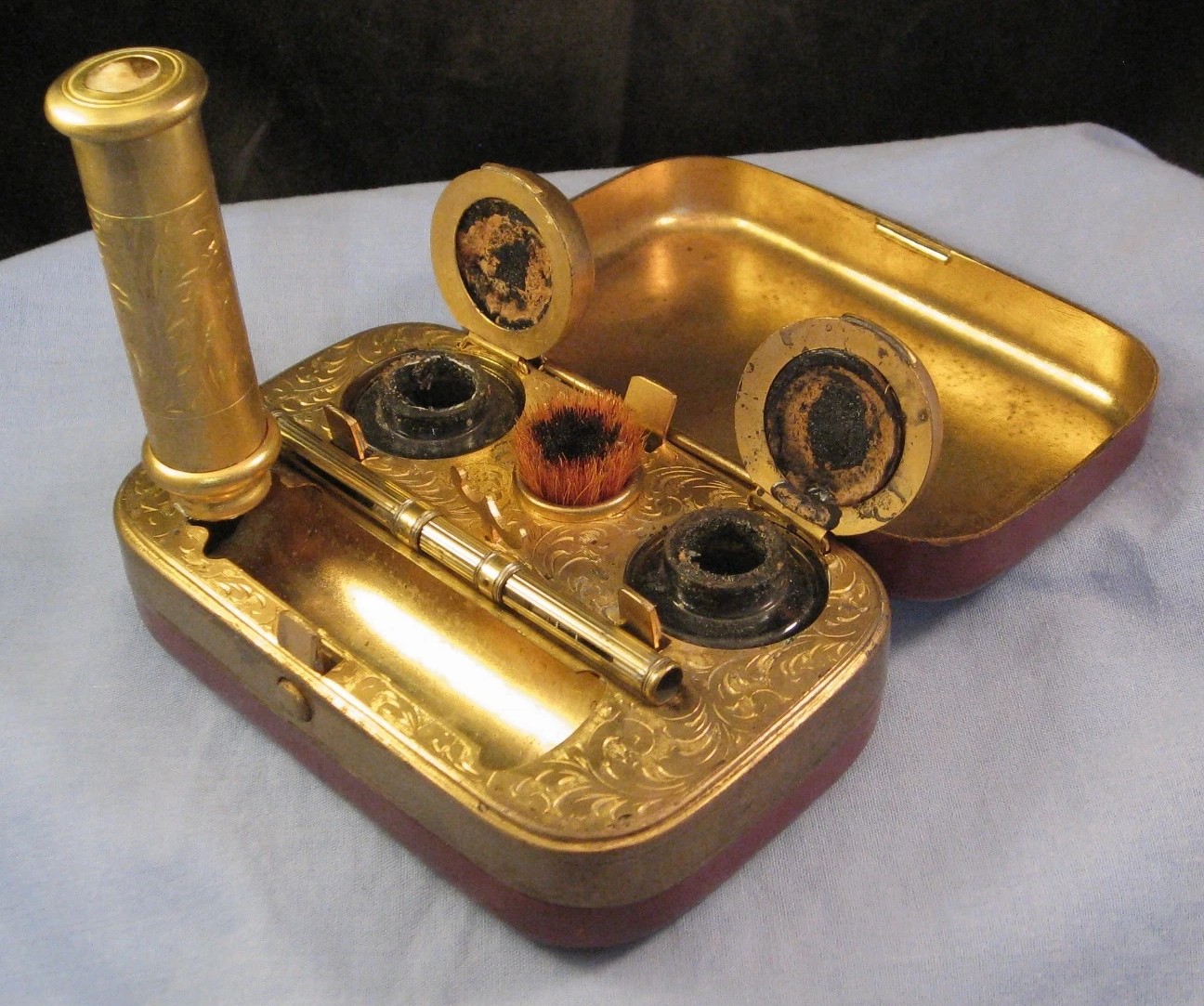
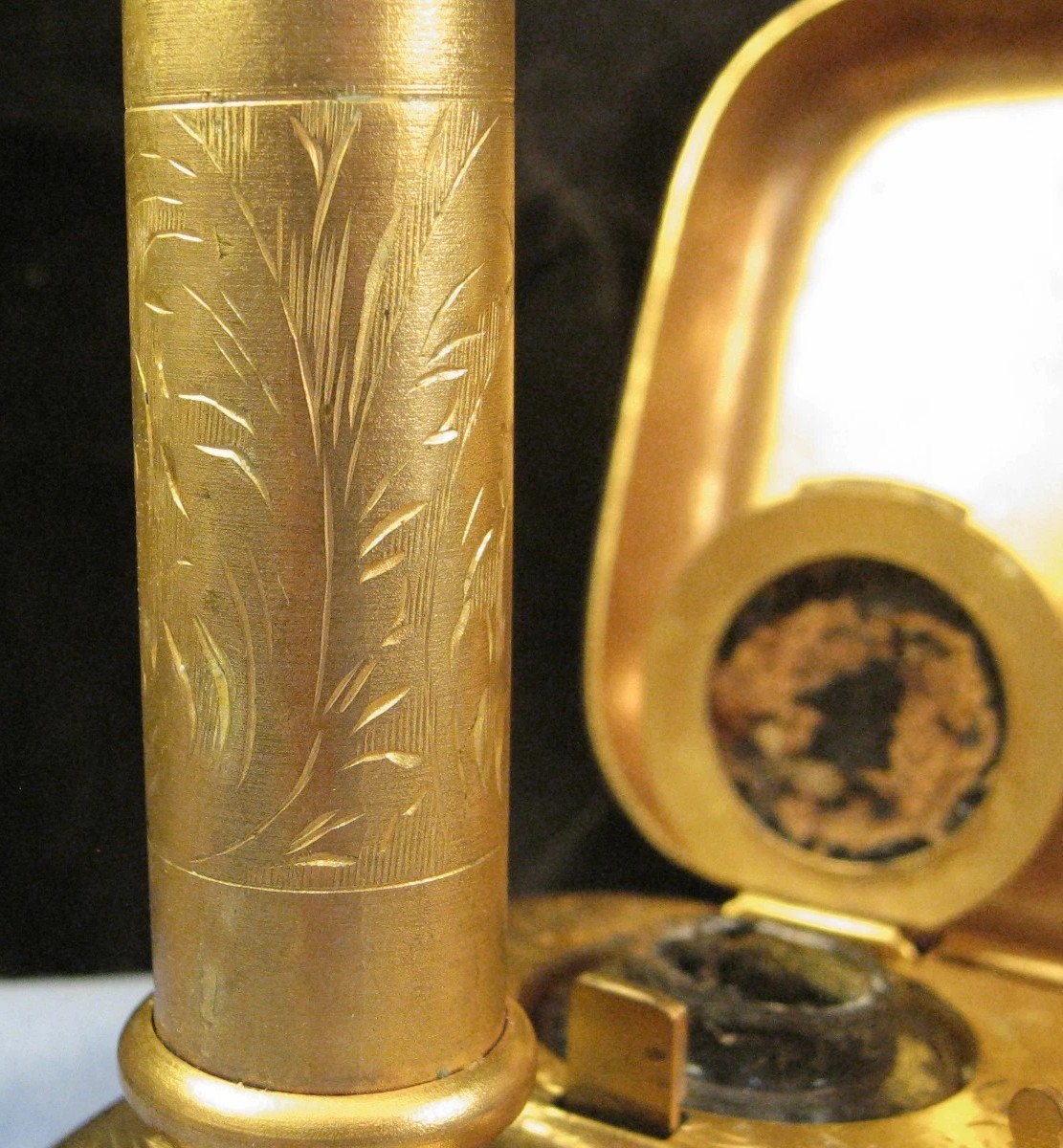
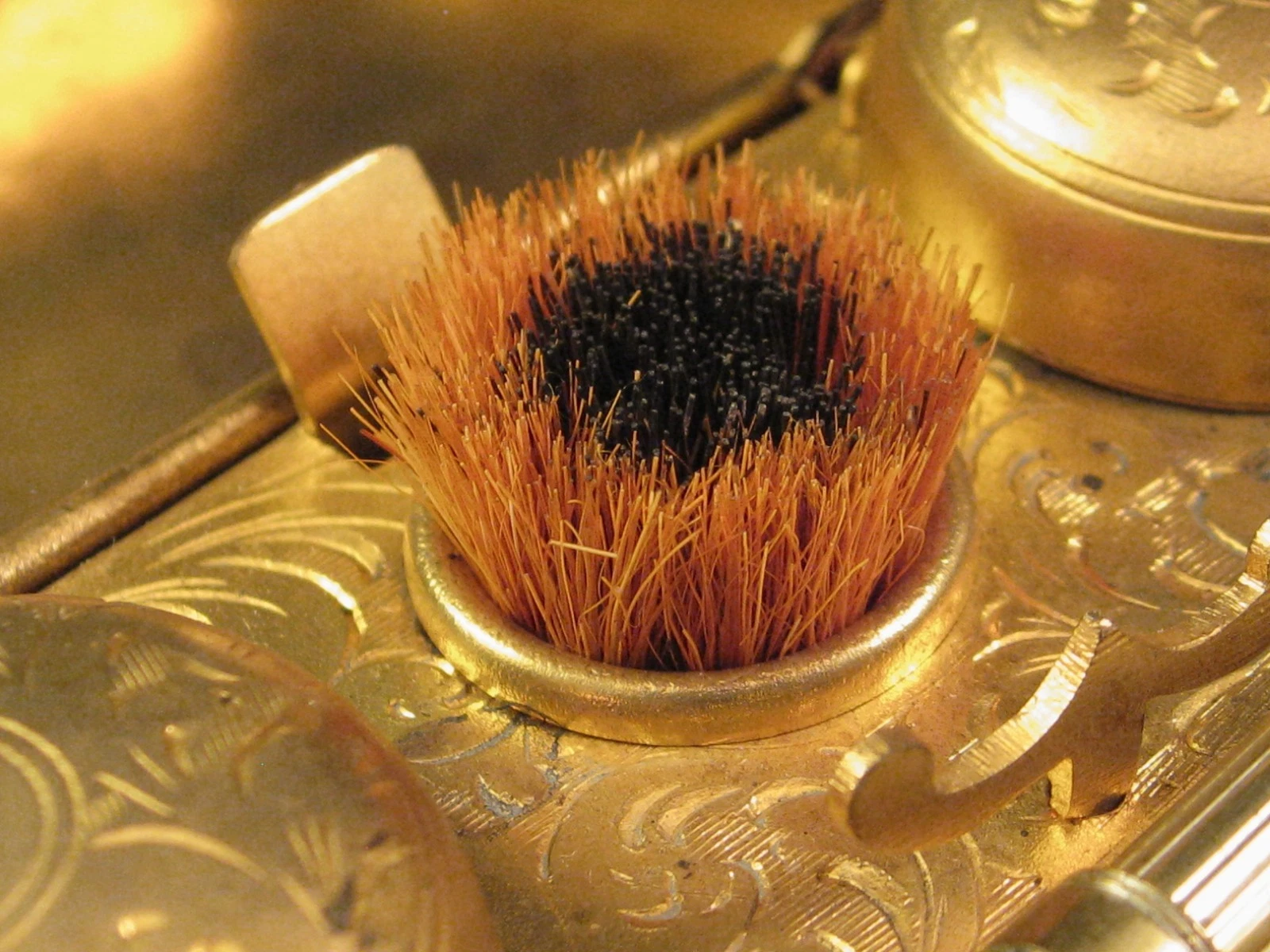
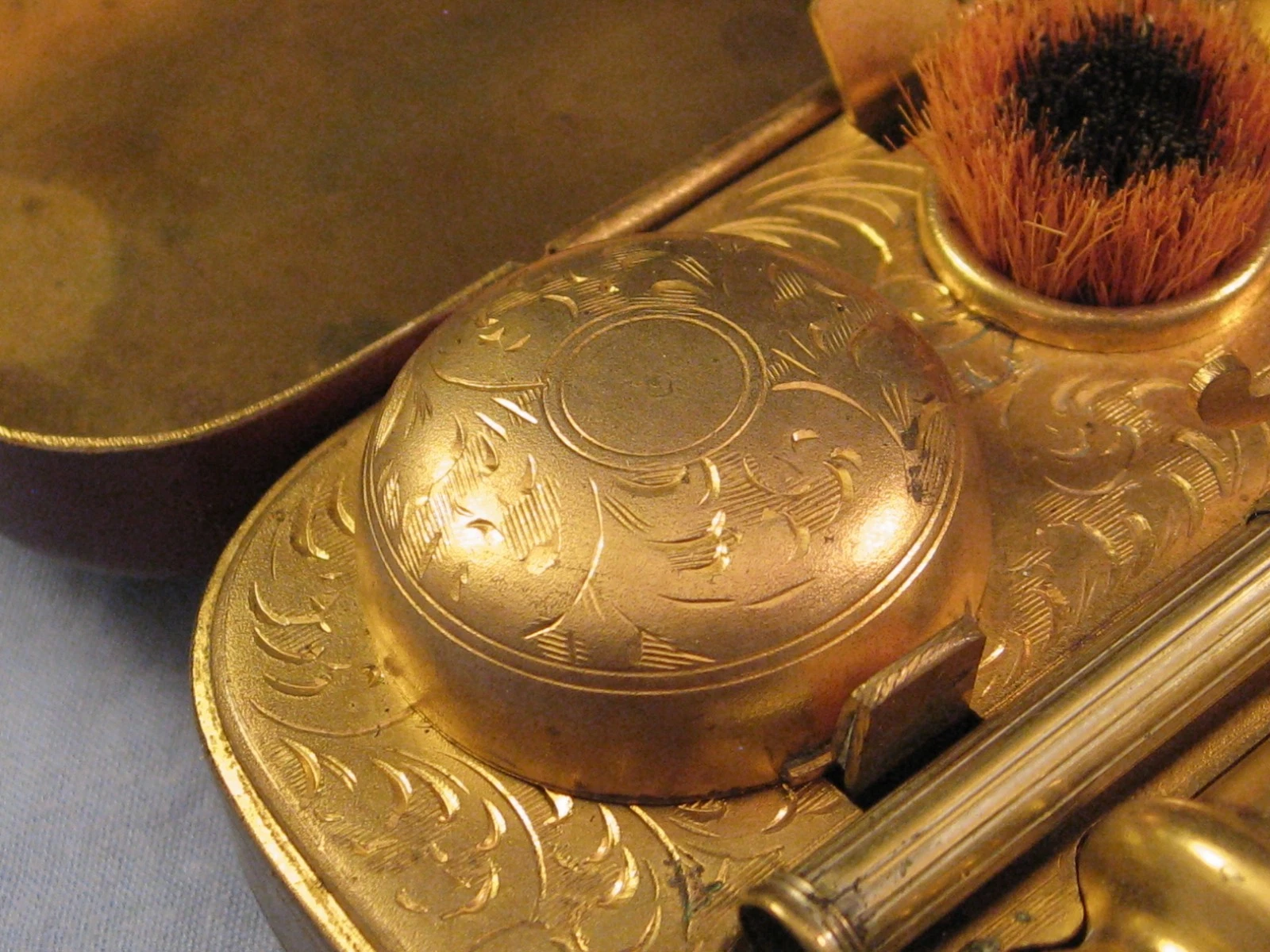
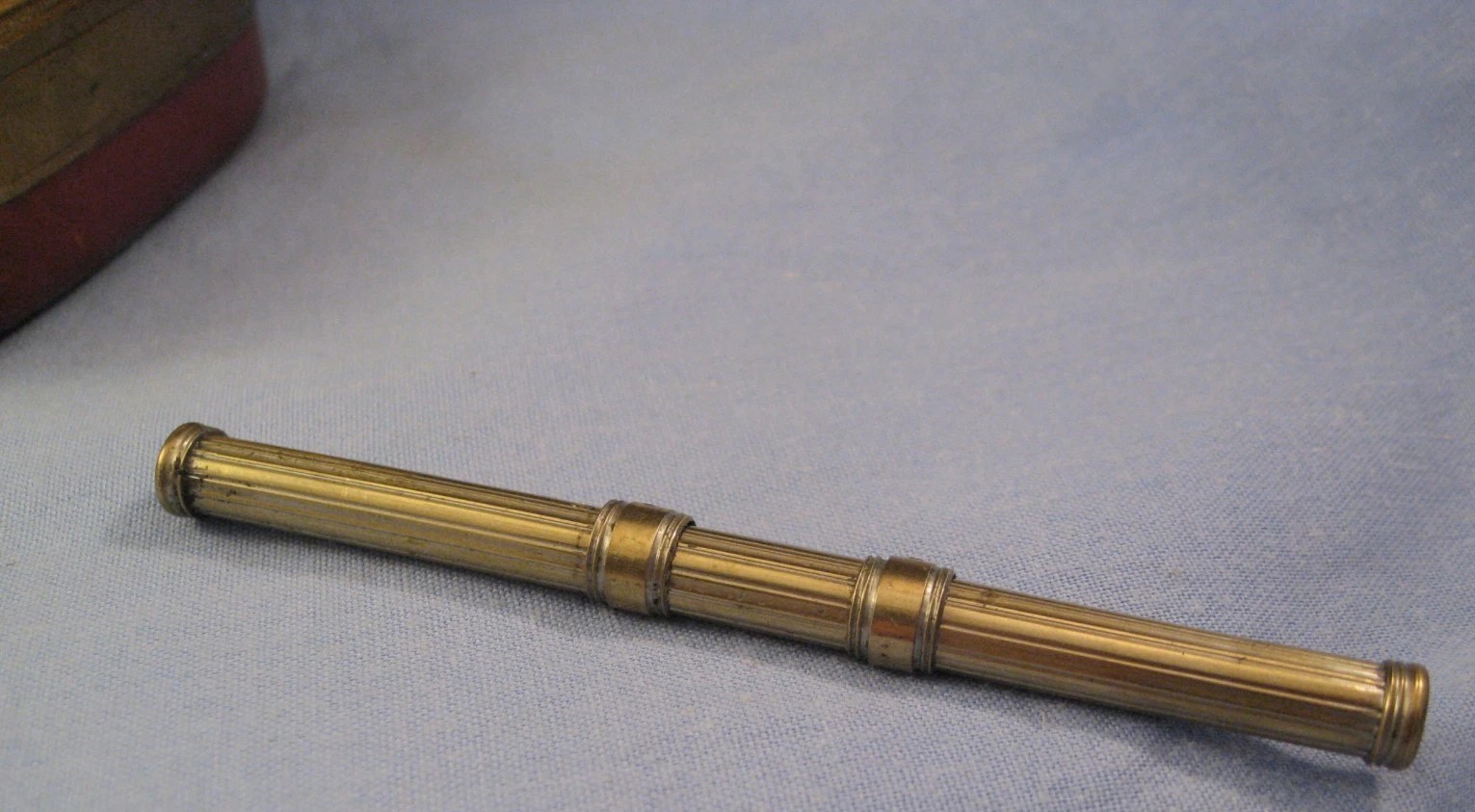
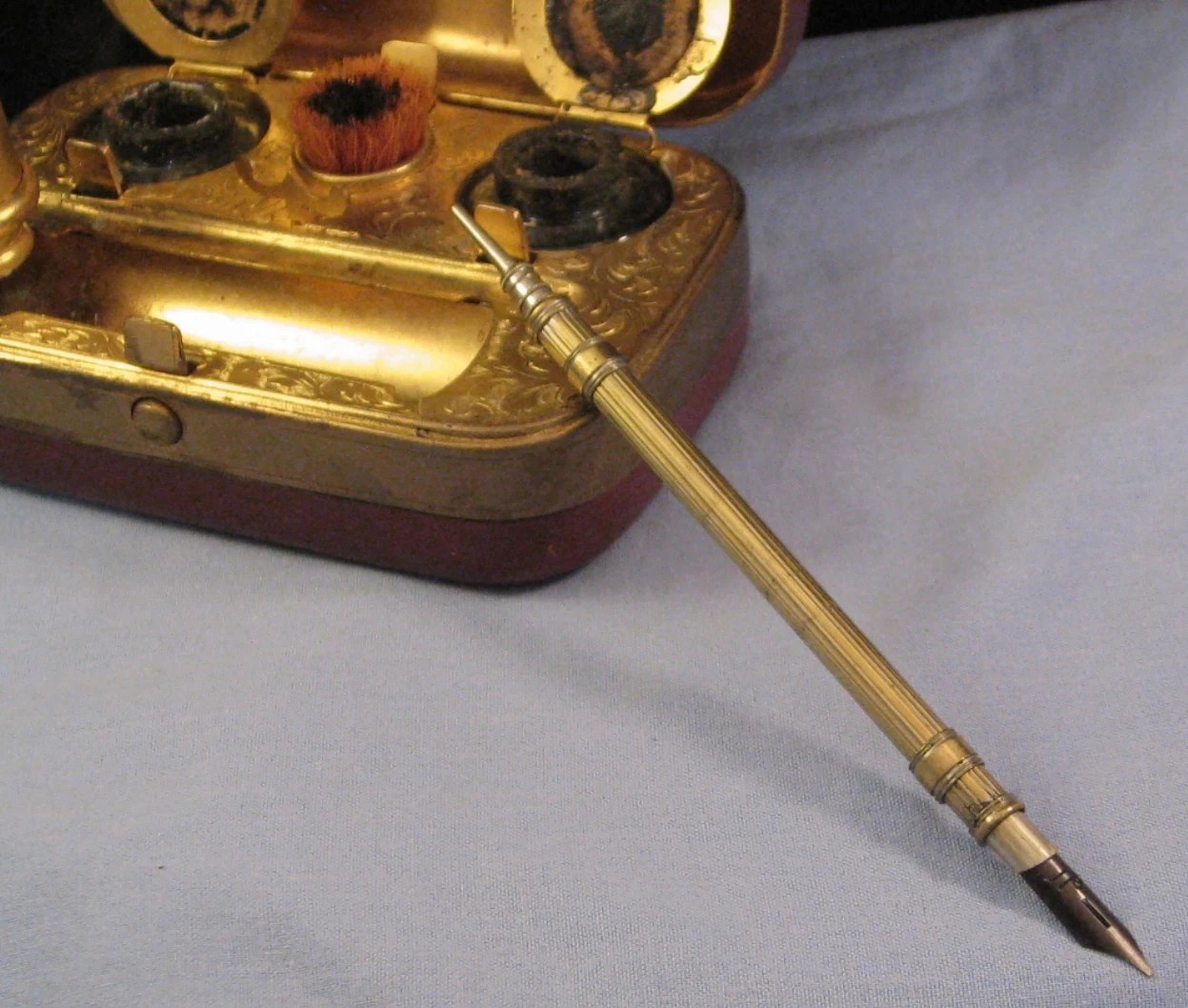
Traveling Compendium – Inkwells, Pen Wipe, Candleholder and Pen/Pencil
| Categories | Travel |
| Type | Compendium |
| Material | Brass, Glass, Leather |
| Markings | Unmarked |
| Manufacturer | Undetermined |
| Origin | England |
| Date or Era | circa 1880 |
| Measuring | 4 ½” x 3” x 1 ¾” high |
Origin, Maker, and Era
- Where it was made: This piece was manufactured in England, most likely in Birmingham or London, which were the primary hubs for high-end Victorian brass-work, luxury stationery, and leather goods.
- Who made it: These luxury travel compacts were rarely marked by the individual metalworkers; instead, they were typically commissioned and sold by high-end London “fancy goods” retailers and silversmiths, such as Walter Thornhill & Co., Leuchars, or Betjemann & Sons.
- When it was made: It dates precisely to the Late Victorian era, circa 1870–1890.
Material and Construction Notes
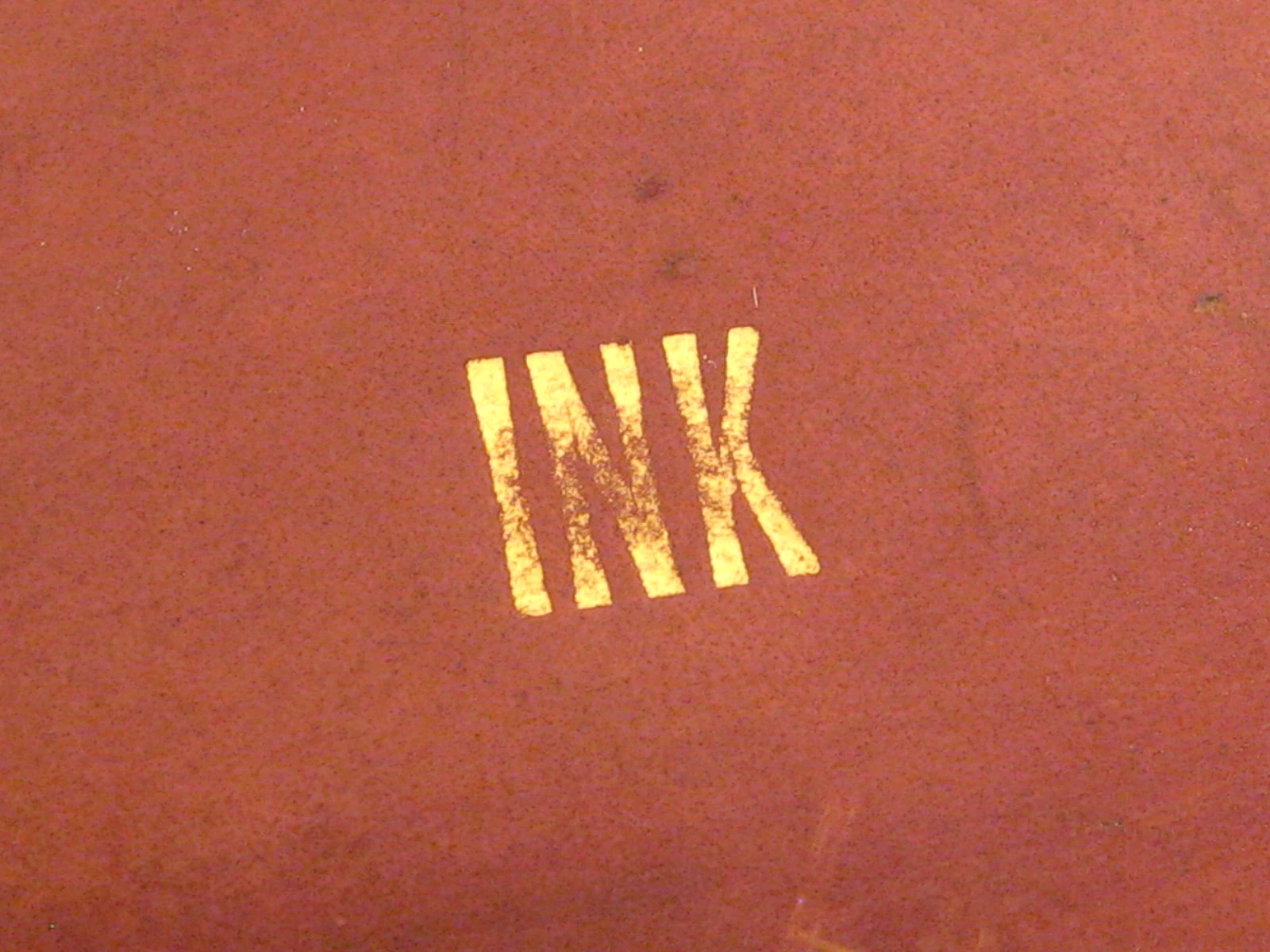
- Exterior: The outer case is bound in a fine, smooth-grained Morocco leather (typically goatskin, highly prized for its durability in travel items) featuring a clean, gilt-embossed “INK” logo on the lid.
- Interior Metalwork: The underlying metal is brass. The brilliant golden color on the interior is achieved via merchantly fire-gilding (gilt brass/vermeil). The top plate features beautiful, deeply chased/engraved foliate and scroll motifs typical of high-quality late 19th-century English craftsmanship.
How the Mechanical Features Operate
- The Main Outer Box Catch
- Mechanism: The push-button located on the front edge of the brass rim is a spring-loaded flush catch.
- Operation: Pressing this button releases an internal tension latch, allowing the spring-tensioned lid to pop up slightly so you can fully open the leather case.
- The Pop-Up Inkwell Lids
- Mechanism: The two domed inkwell covers operate on spring-loaded piano hinges triggered by the upright brass tabs (levers) positioned directly in front of each inkwell.
- Operation: When you push down or back on the small vertical tab lever, it disengages a tiny internal catch holding the domed lid shut. The internal torsion spring immediately snaps the lid wide open.
- The Seals: The leather pads on the underside of the lids are crucial. When the lids are pressed firmly shut until they “click,” these seals are compressed directly against the ground-glass rims of the inner ink bottles to form an airtight, leak-proof seal capable of withstanding the vibrations of a train or carriage ride.
- The Fold-Down Candle Holder
- Mechanism: The large cylindrical tube serves a dual purpose: it acts as a candle socket (often referred to as a “go-to-bed” light for sealing wax or late-night writing) and stores flat to save space.
- Operation: It sits on a heavy, friction-tight brass hinge. You simply lift the weighted cylinder upright until it stands at a 90-degree angle. The friction in the hinge keeps it perfectly steady while burning. When you are finished, it folds flush back down into its custom-contoured recess.
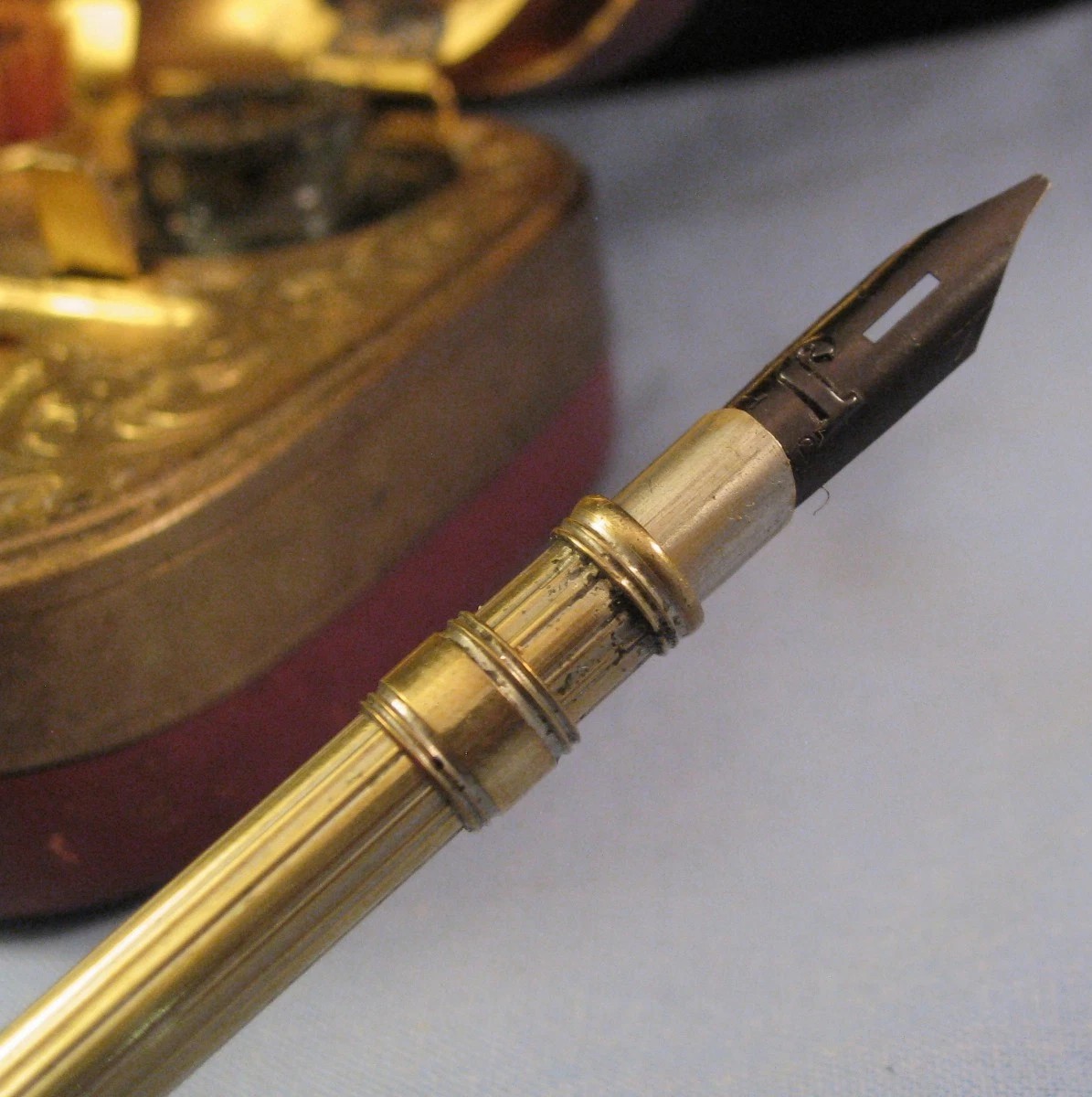
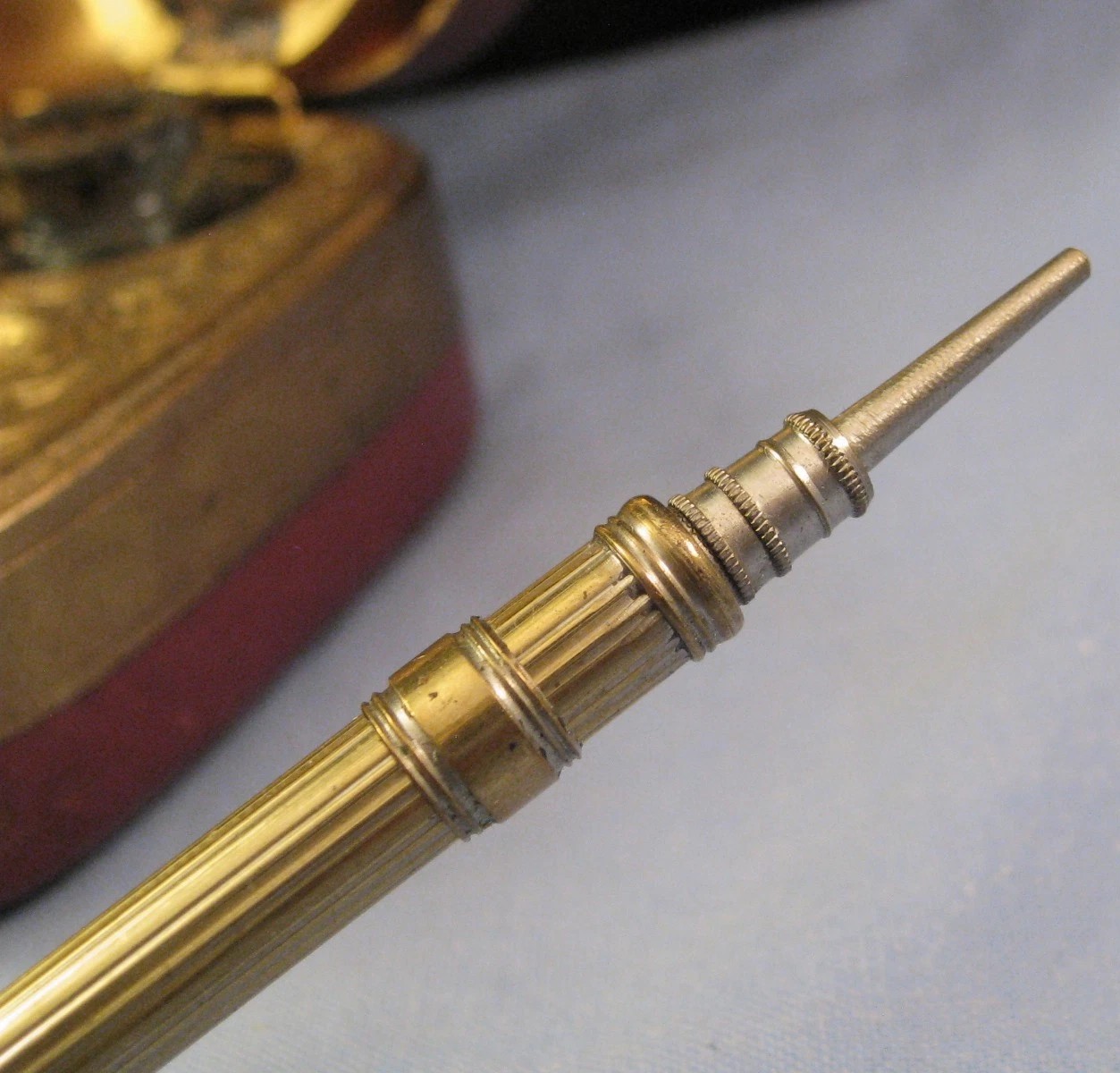
- The Combination Telescopic Dip Pen & Propelling Pencil
- Mechanism: This is a classic Victorian dual-ended mechanical writing instrument with a fluted or reeded barrel.
- Operation:
- Extension: The two ribbed ring sliders along the middle of the barrel are independent tracks. Pushing one slider toward the tip extends the steel dip pen nib holder from the internal housing. Pushing the opposite slider toward the back extends the mechanical pencil nozzle.
- Lead Propulsion: Once the pencil end is extended, turning or twisting the very tip of the nozzle activates an internal screw-drive mechanism (a spiral shaft) that pushes the solid graphite lead forward or retracts it.
Extra Details & Layout Clarifications
- The Central Brush: The stiff bristle brush in the center is a nib wiper. Dip pens frequently accumulated dried ink, paper fibers, and sediment; pushing the steel nib into these tight natural bristles cleanly wiped the nib without splashing ink or ruining a cloth.
- The Layout: The spatial efficiency here is masterful. Having two separate inkwells allowed the traveler to carry two different varieties of ink.
Sold for $230 in June 2026
Content disclaimer. The information posted is the owner’s best knowledge and may not have been vetted by the SOIC. We welcome comments, corrections, and additions, working to make our website information comprehensive and accurate.
Join the Society of Inkwell Collectors (SOIC) – it’s free!
Founded in 1981 as a non-profit organization,
we are documenting inkwells (and accessories).
We’re here to help and inform!