

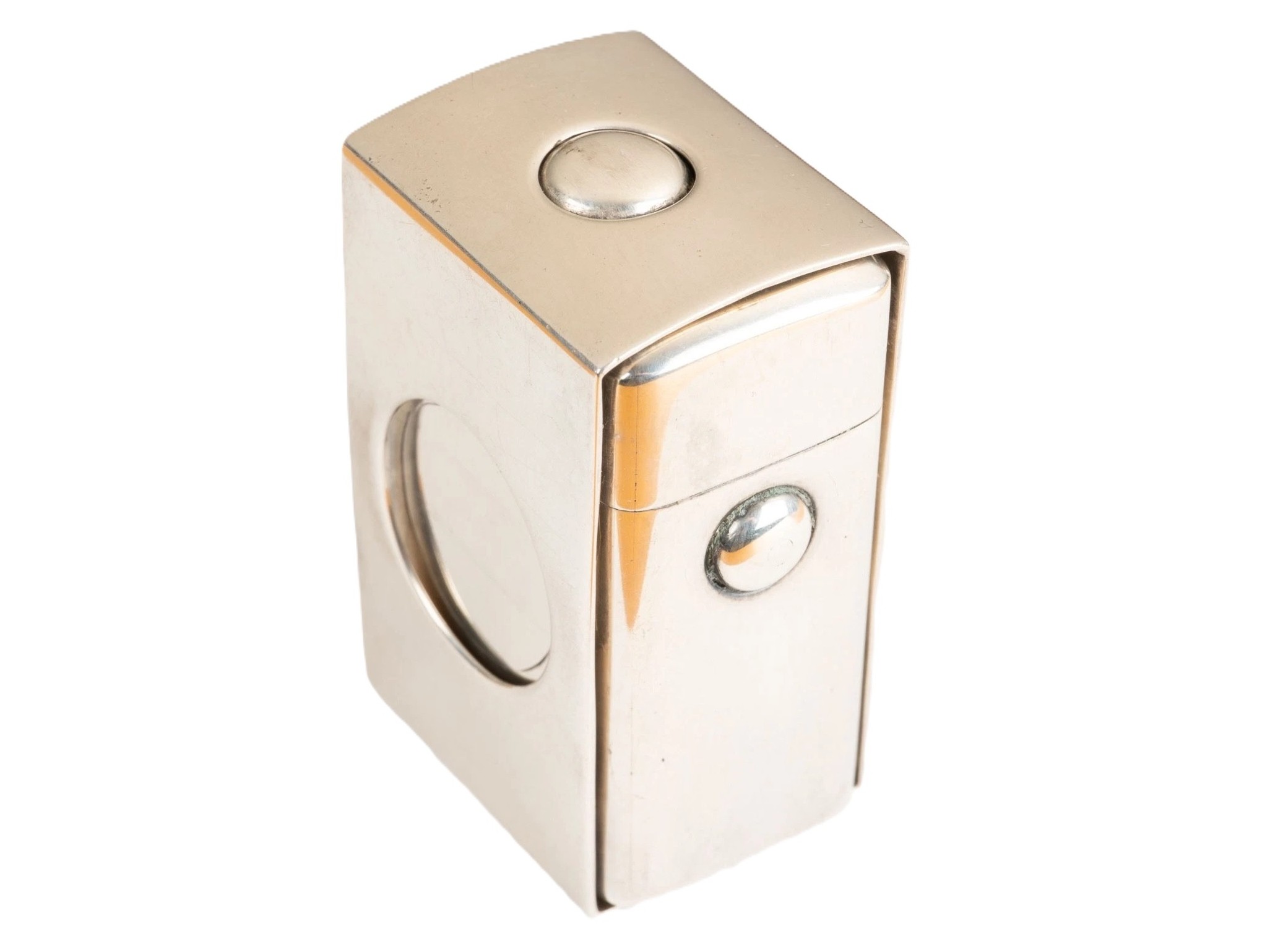
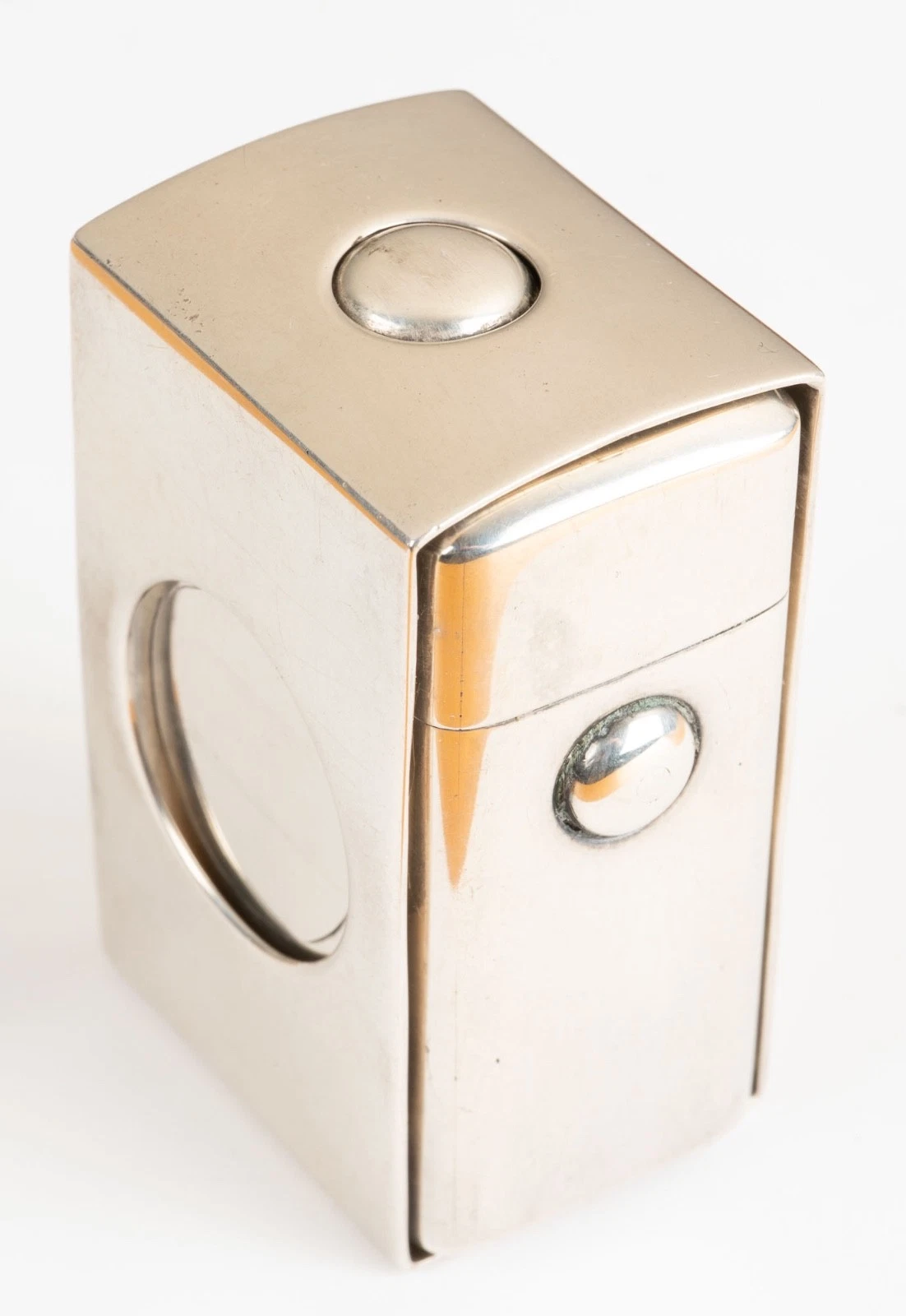
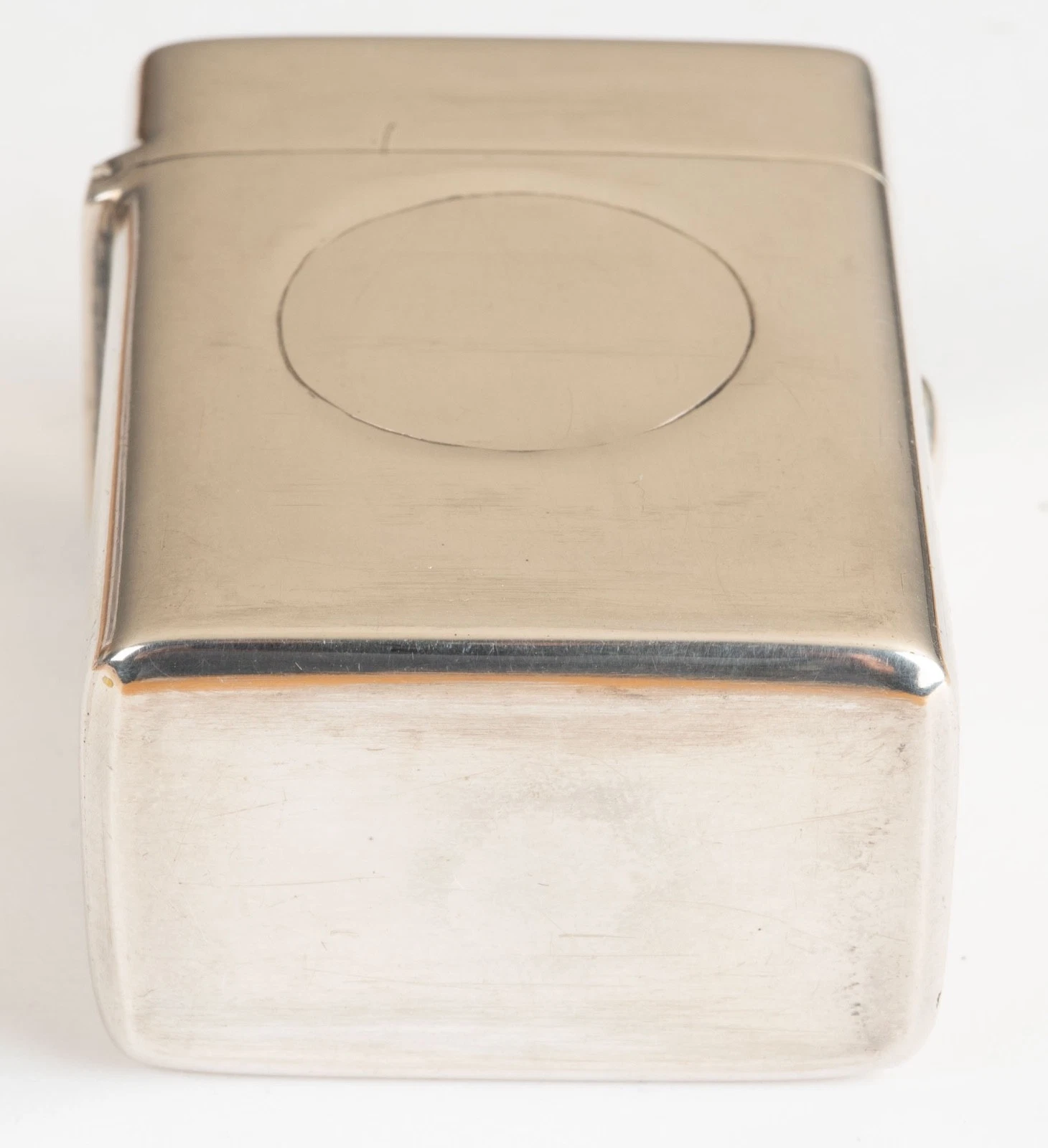
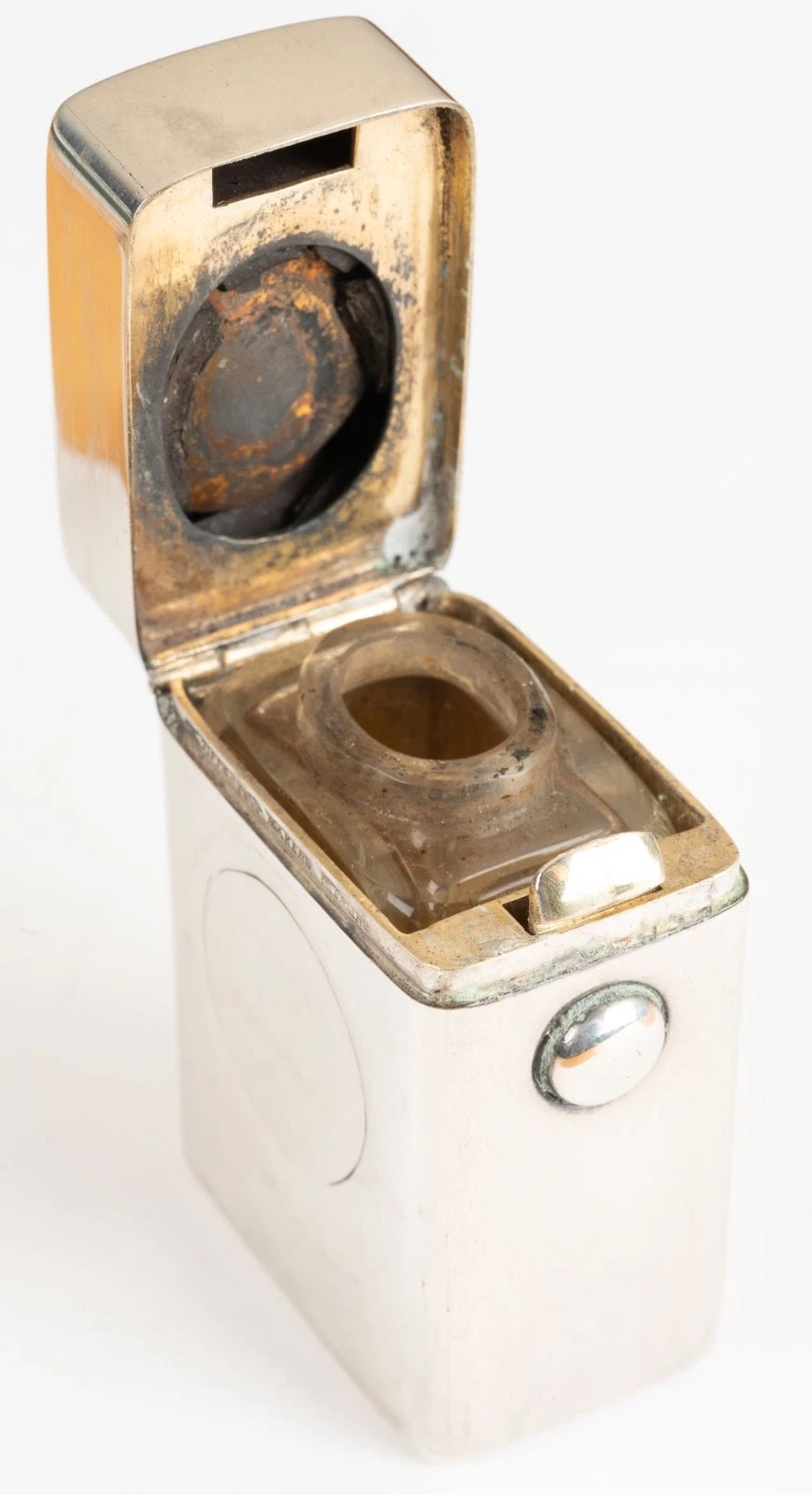
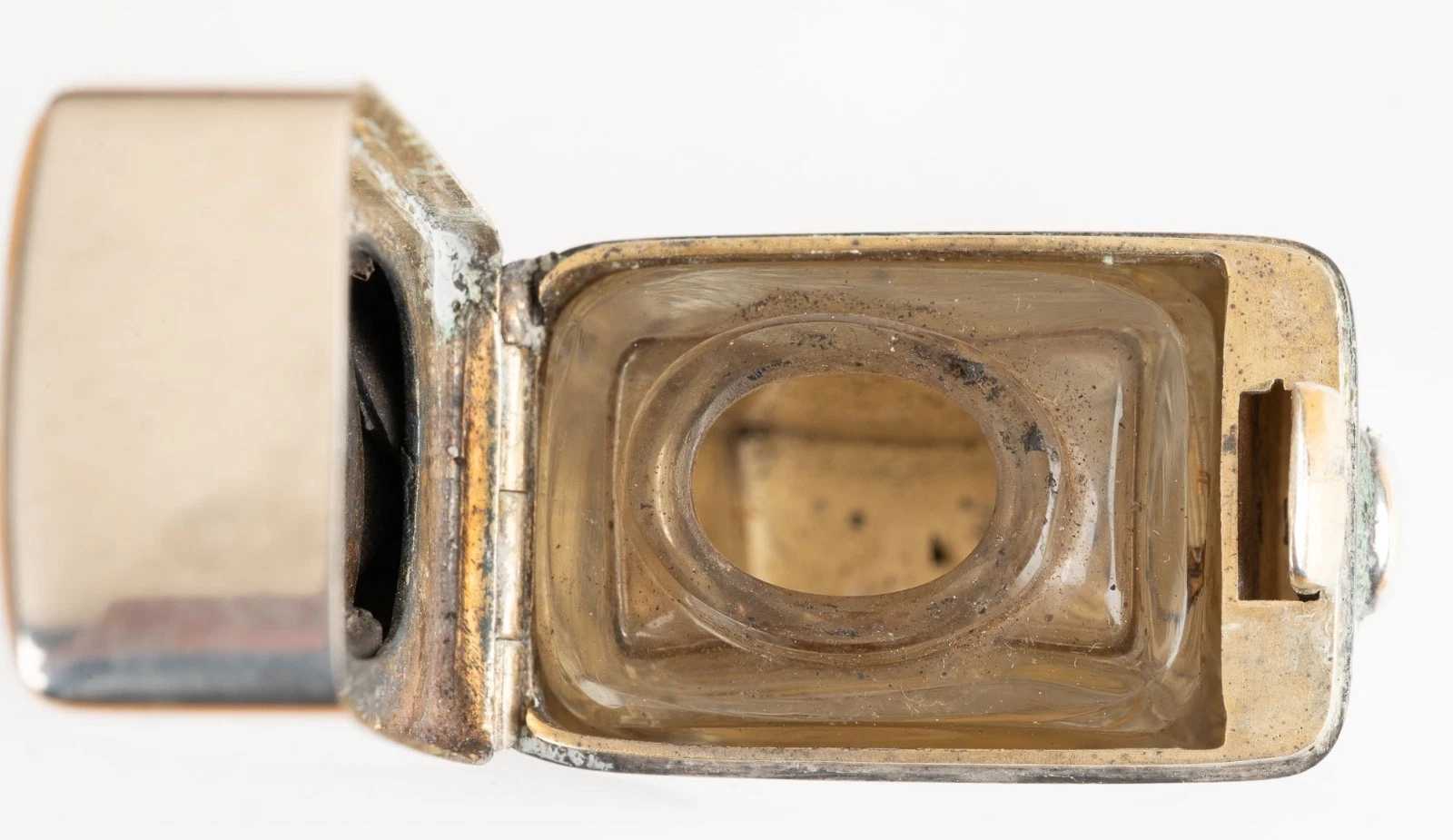
Tiffany & Co. Traveling Inkwell
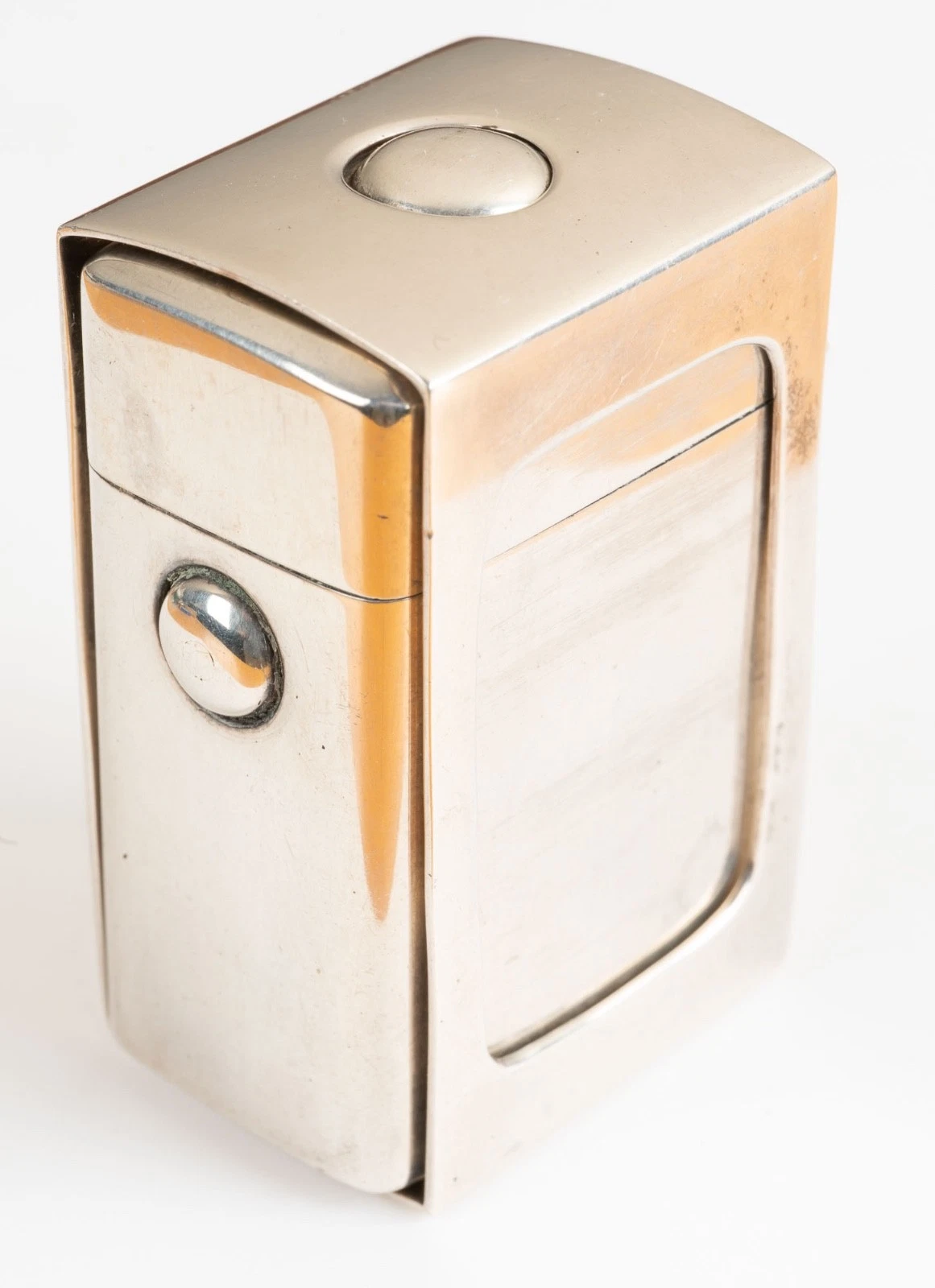
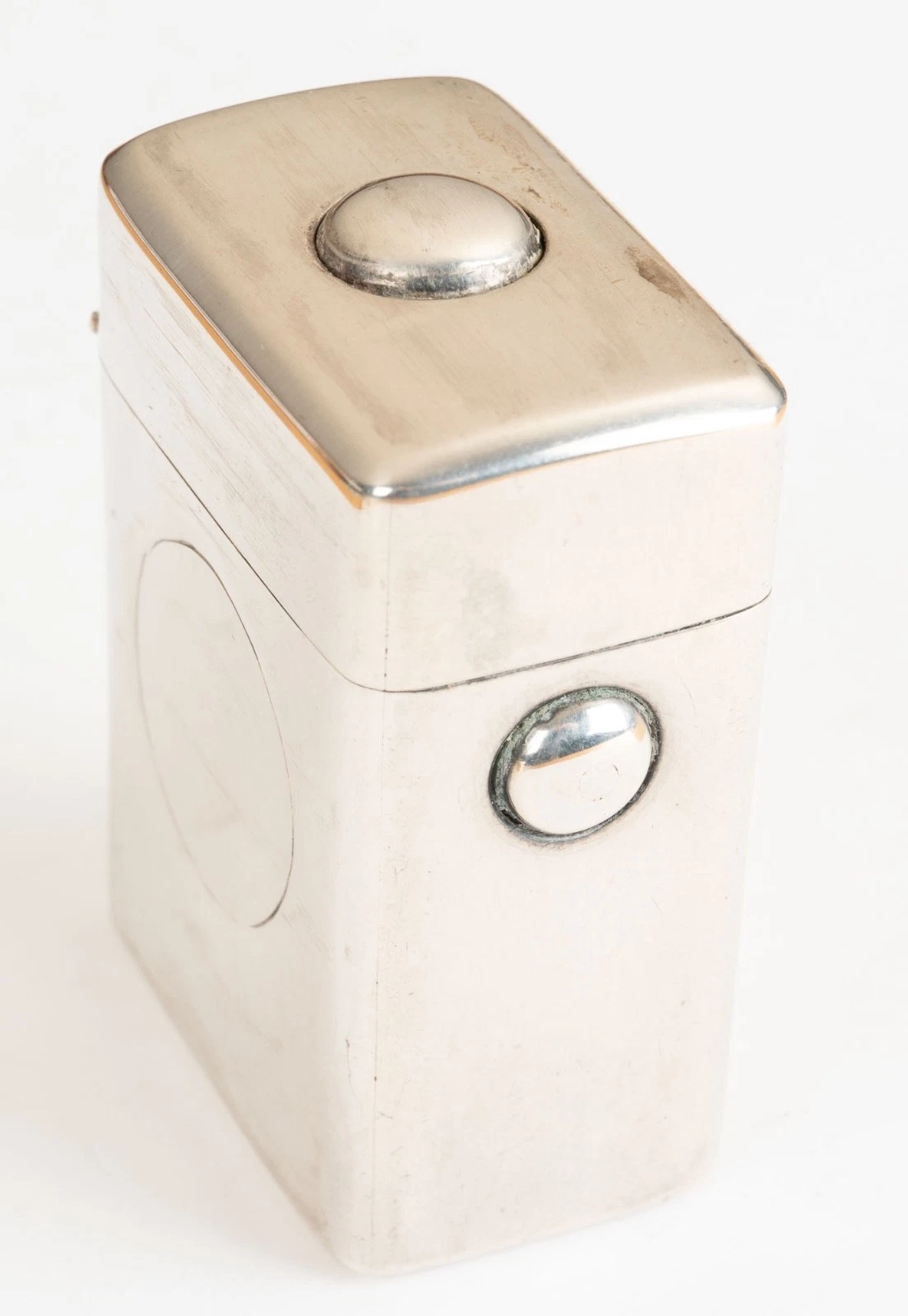
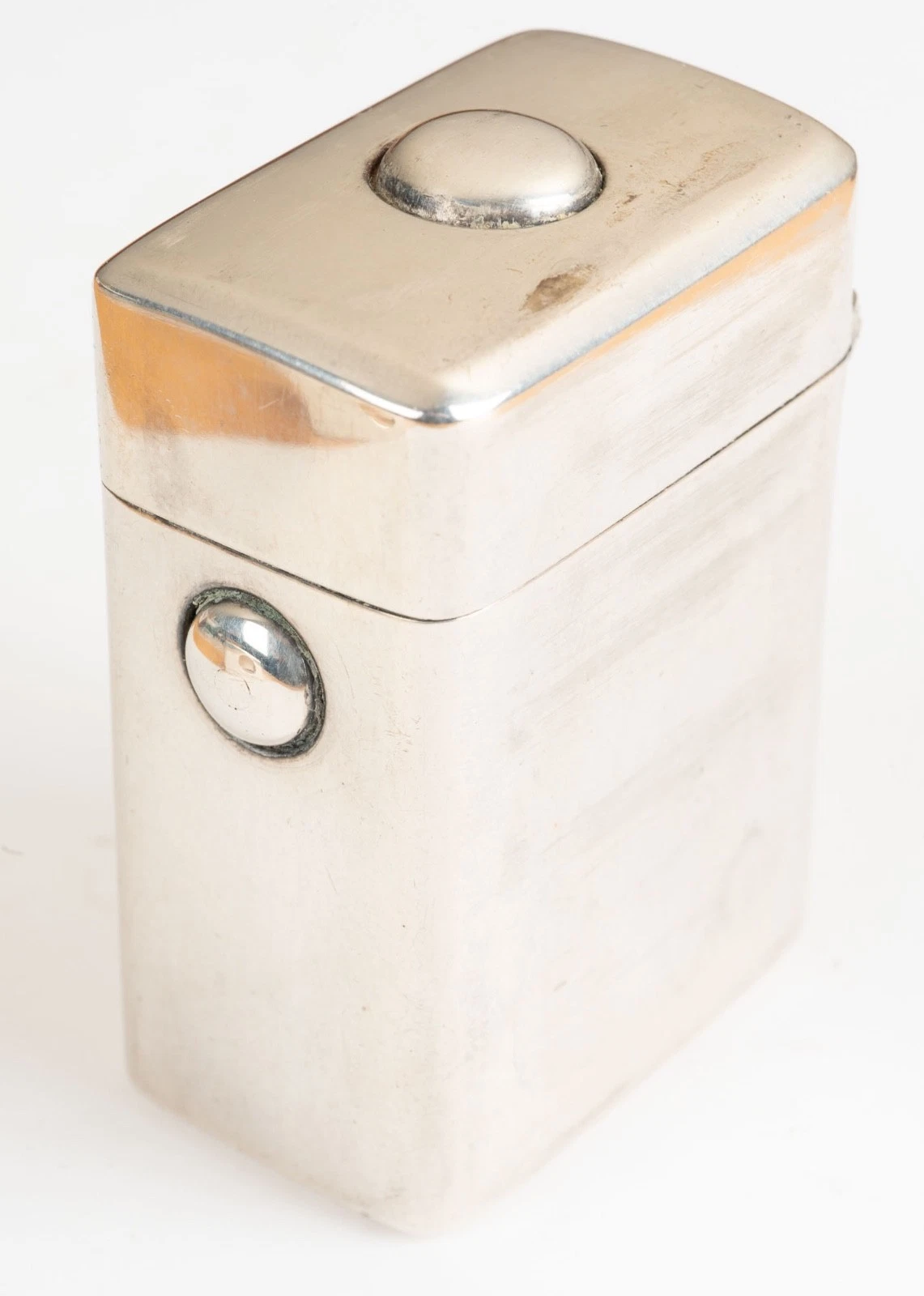
This piece is a classic early 20th-century sterling silver pocket/traveling inkwell, engineered for travelers who required a leak-proof, portable way to carry ink.
- Tiffany & Co.
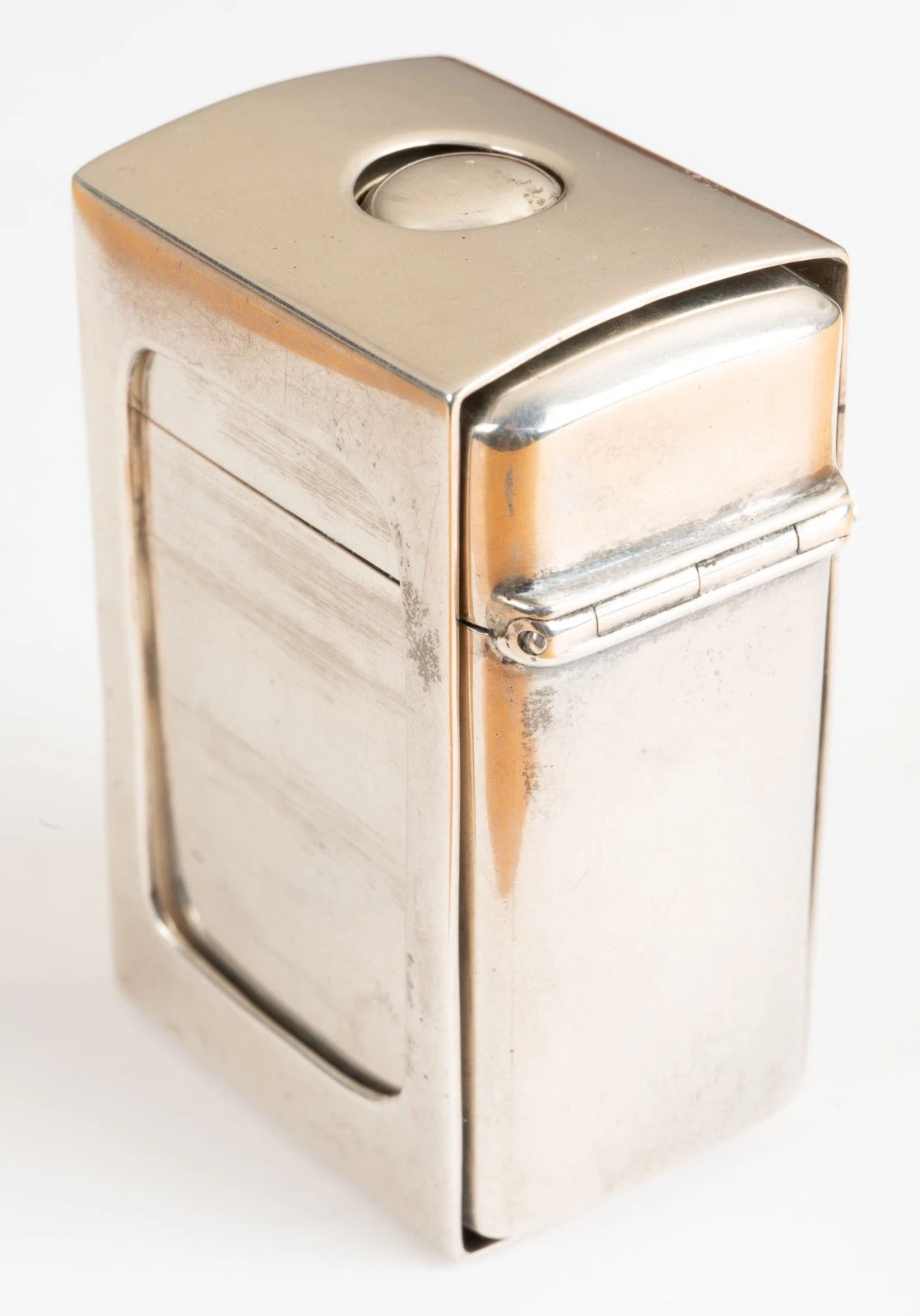
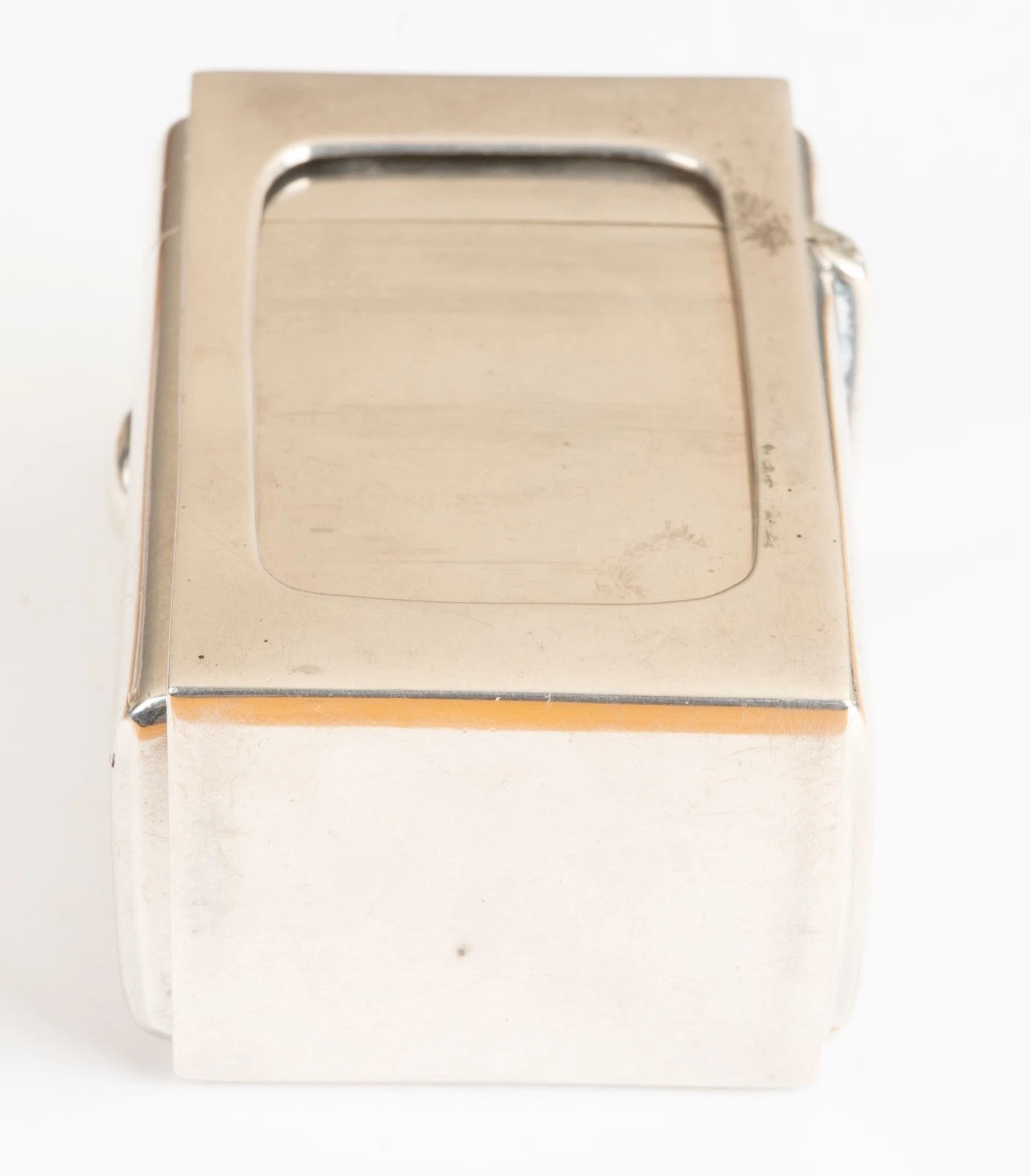
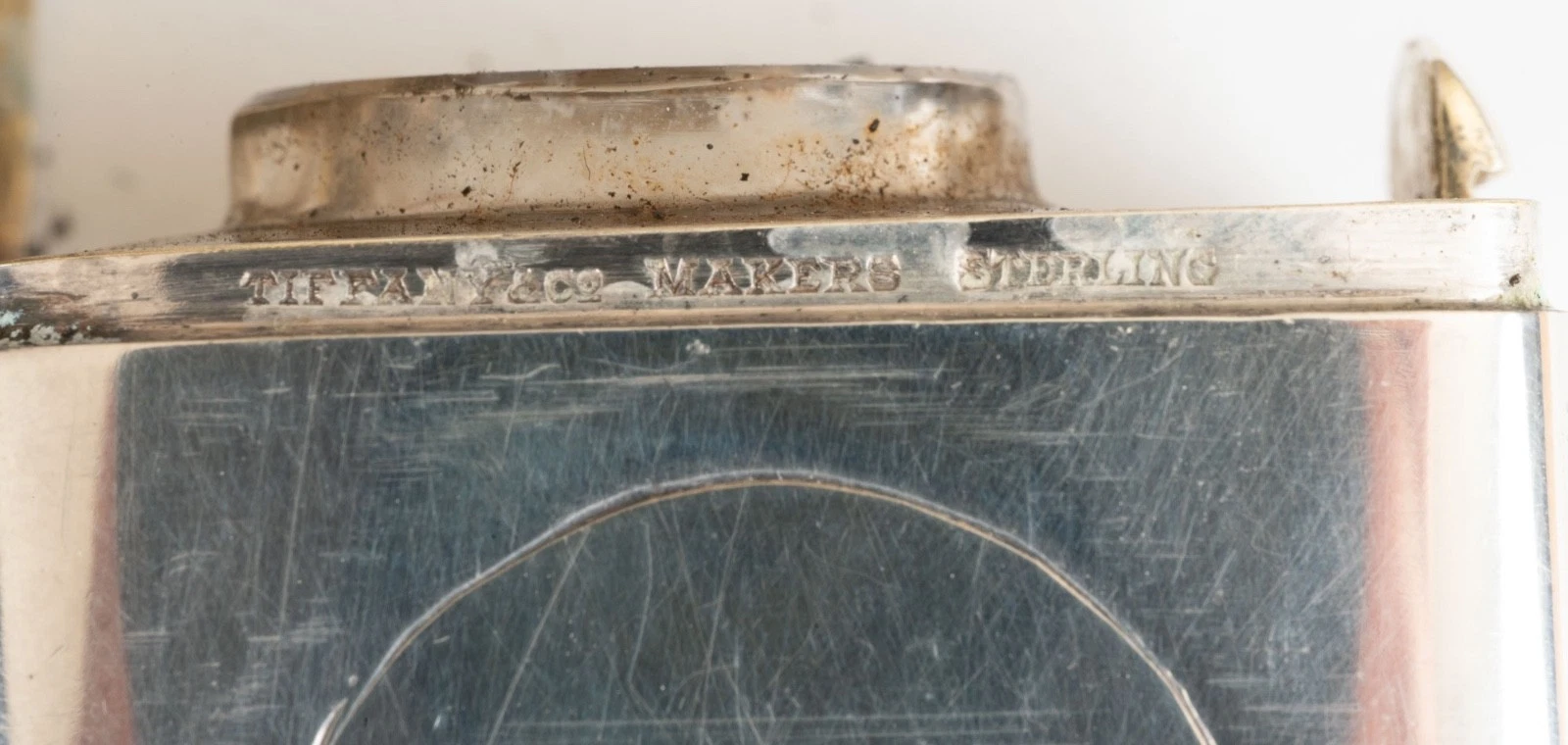
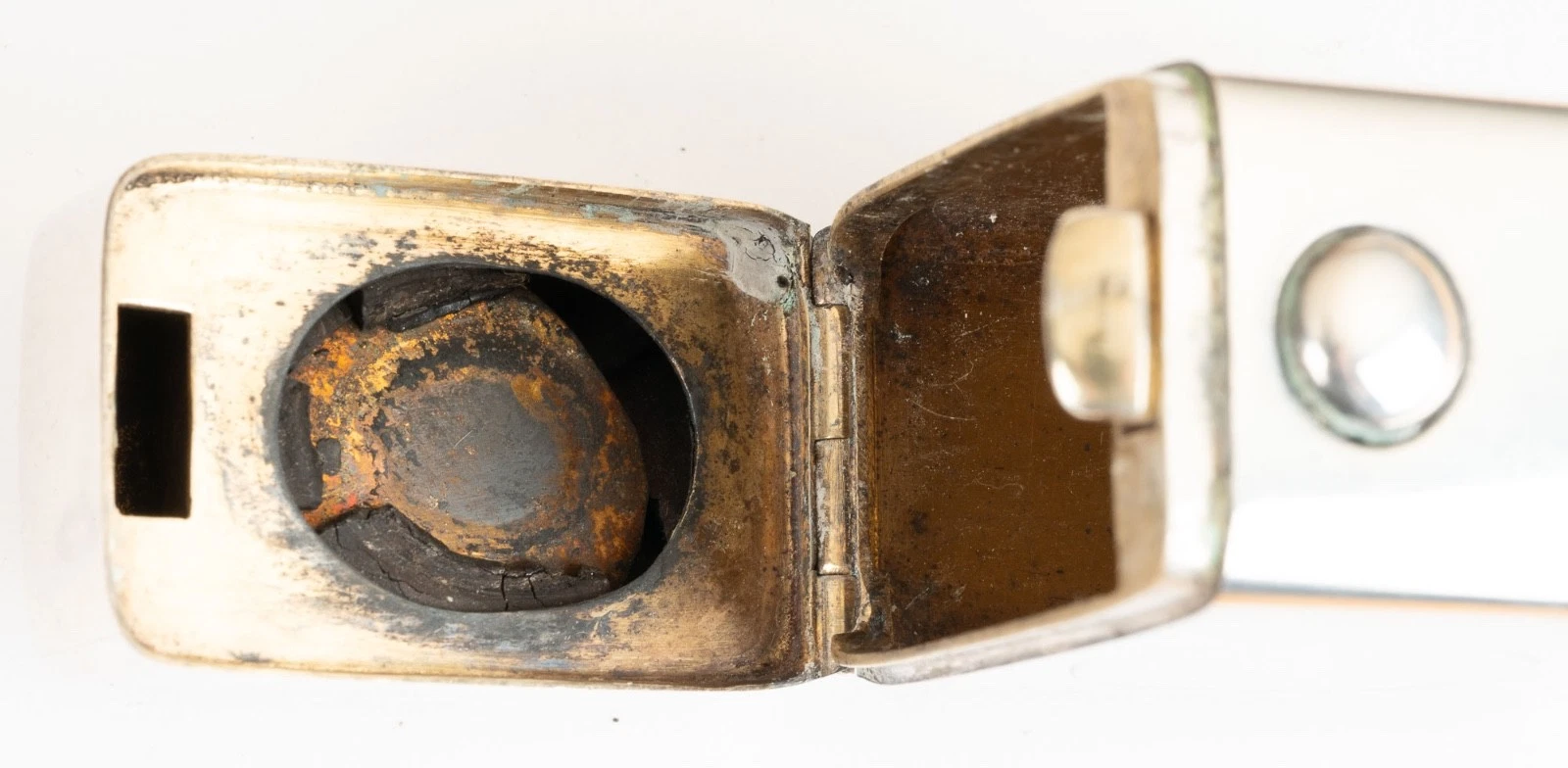
The stamping on the silver lip directly underneath the hinged lid confirms its authenticity:
TIFFANY & CO. MAKERS STERLING
The term “MAKERS” was used by Tiffany & Co. to designate items manufactured directly in-house at their silver workshops (rather than items imported or outsourced).
- When Was It Made?
- Date Range: Circa 1890s – 1910s.
- Context: During this era, travel accessories like pocket inkwells, sovereign cases, and vesta (match) boxes were popular luxury status symbols. Tiffany created streamlined, dense silver casings with spring-loaded mechanisms to withstand the rigors of travel without leaking.
- Parts & Mechanical Design
The inkwell uses a clever two-piece locking mechanism and a spring-assisted latch to ensure it remains airtight and tightly sealed when closed.
Key Components
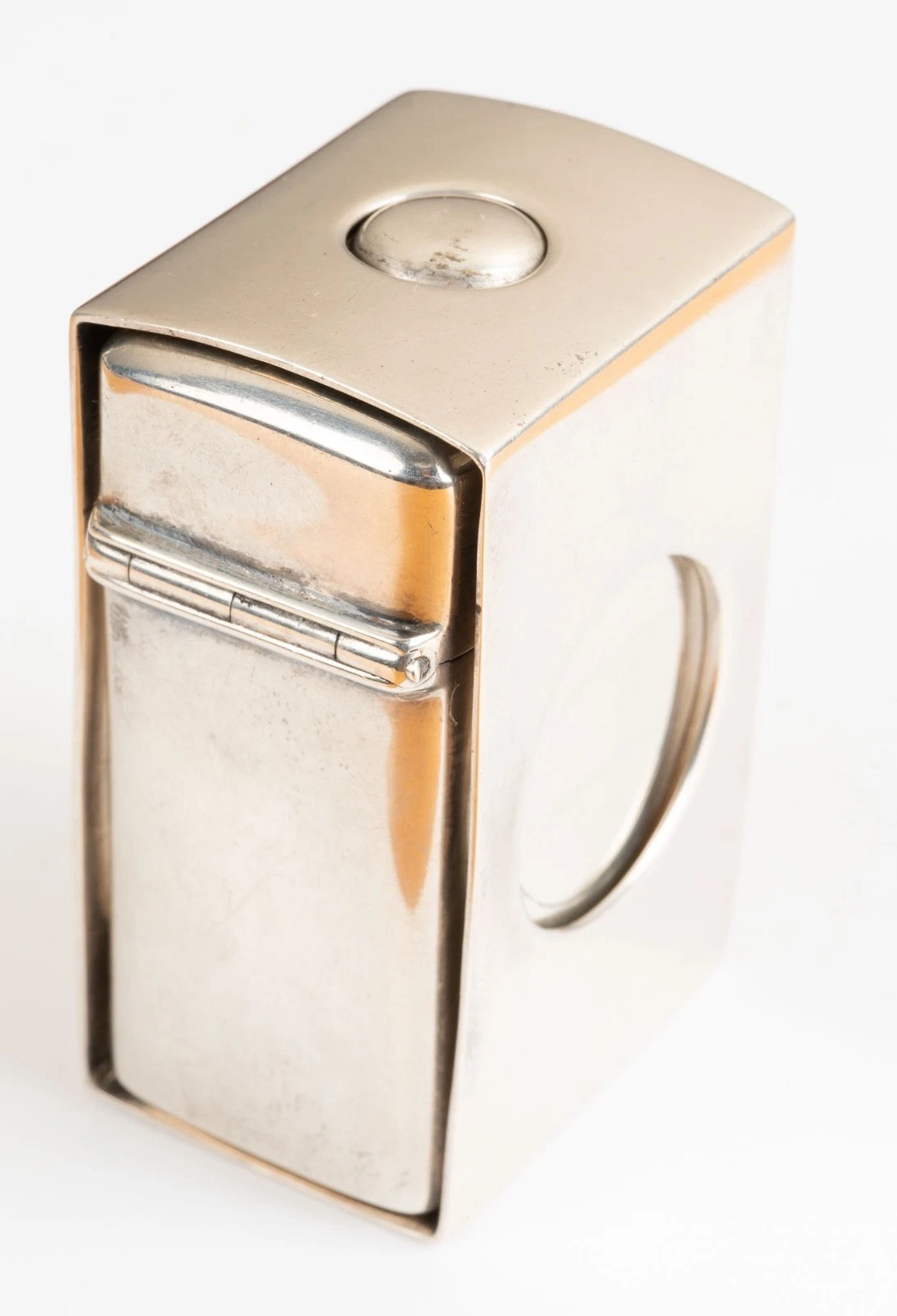
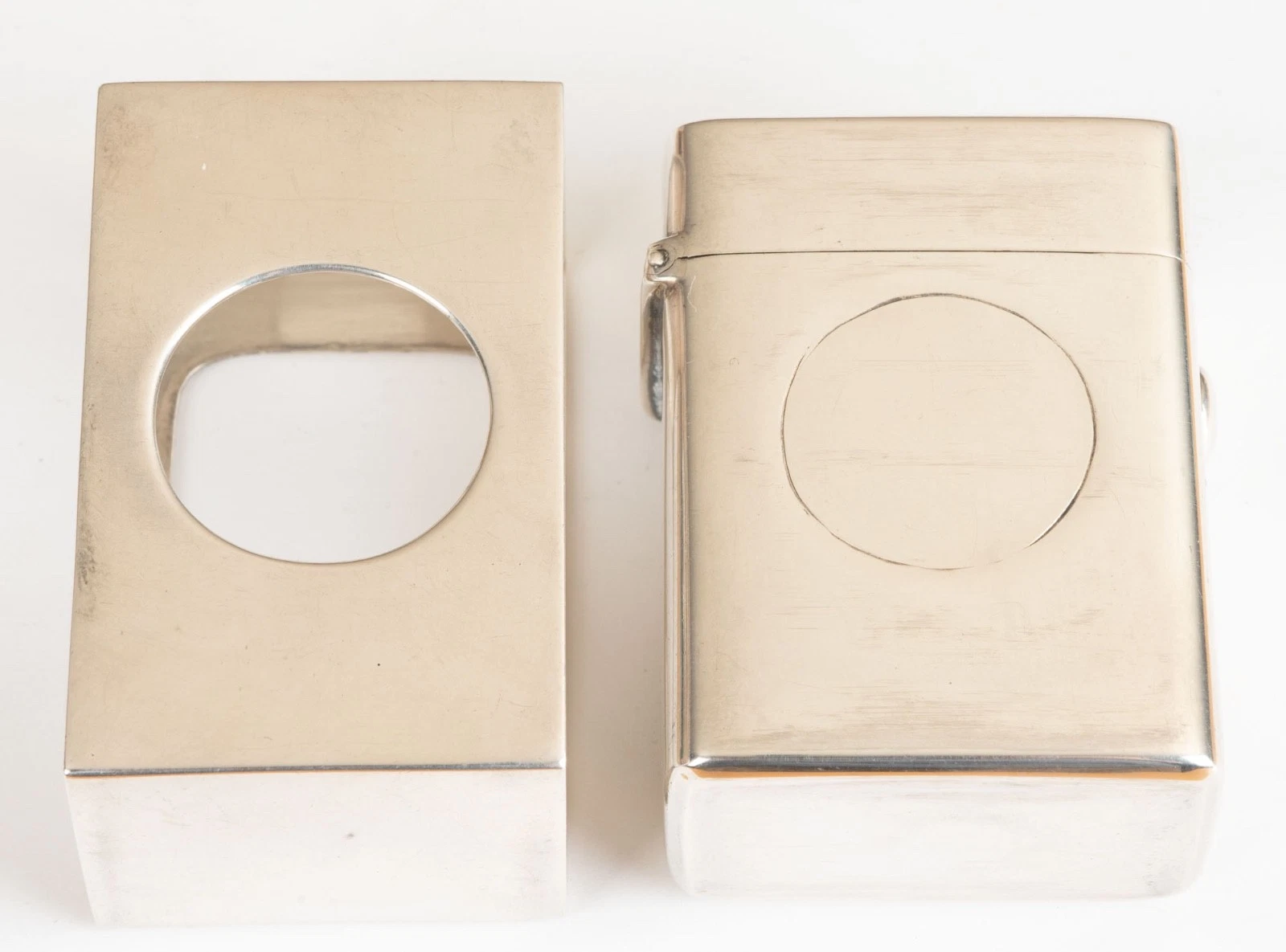
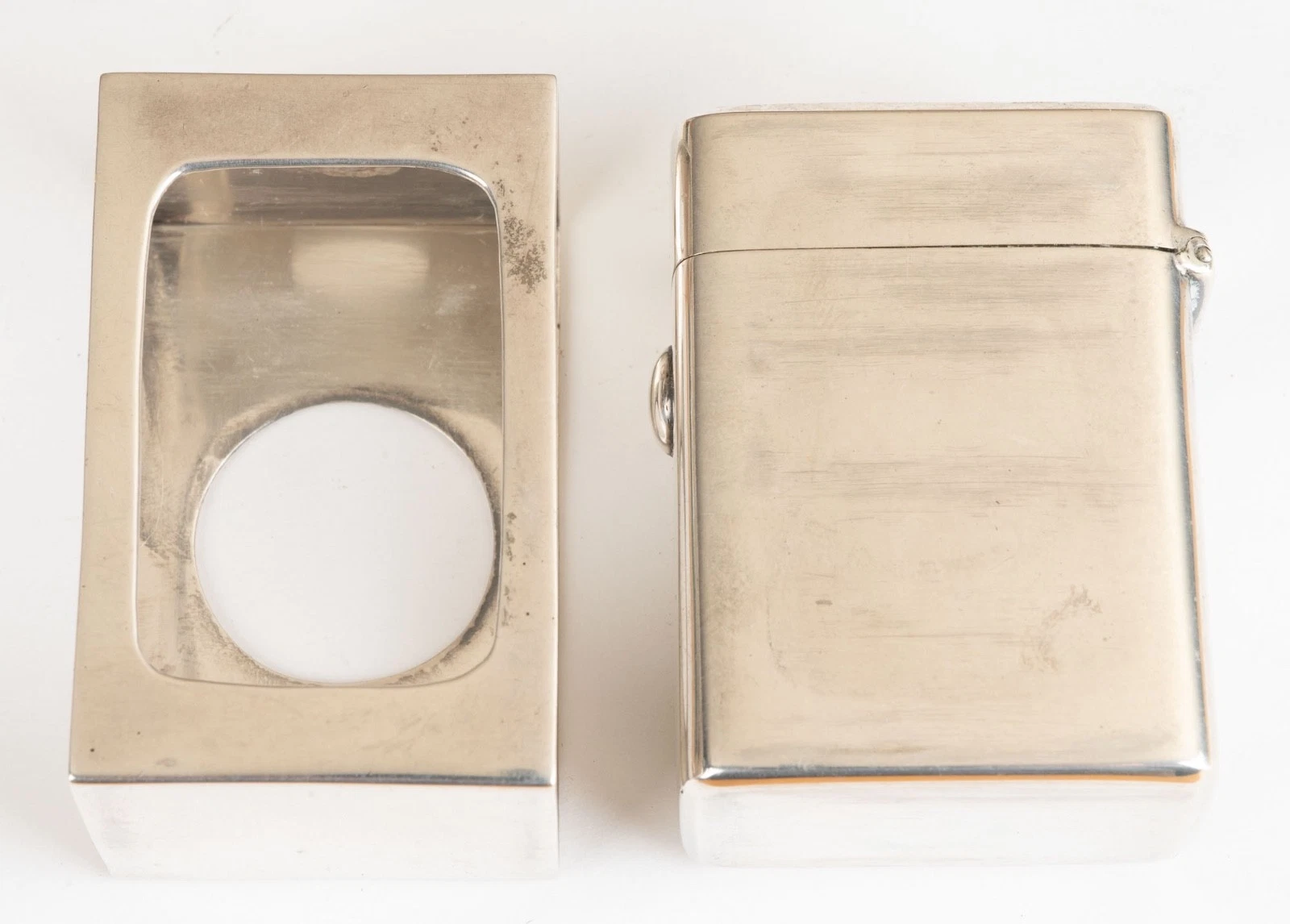
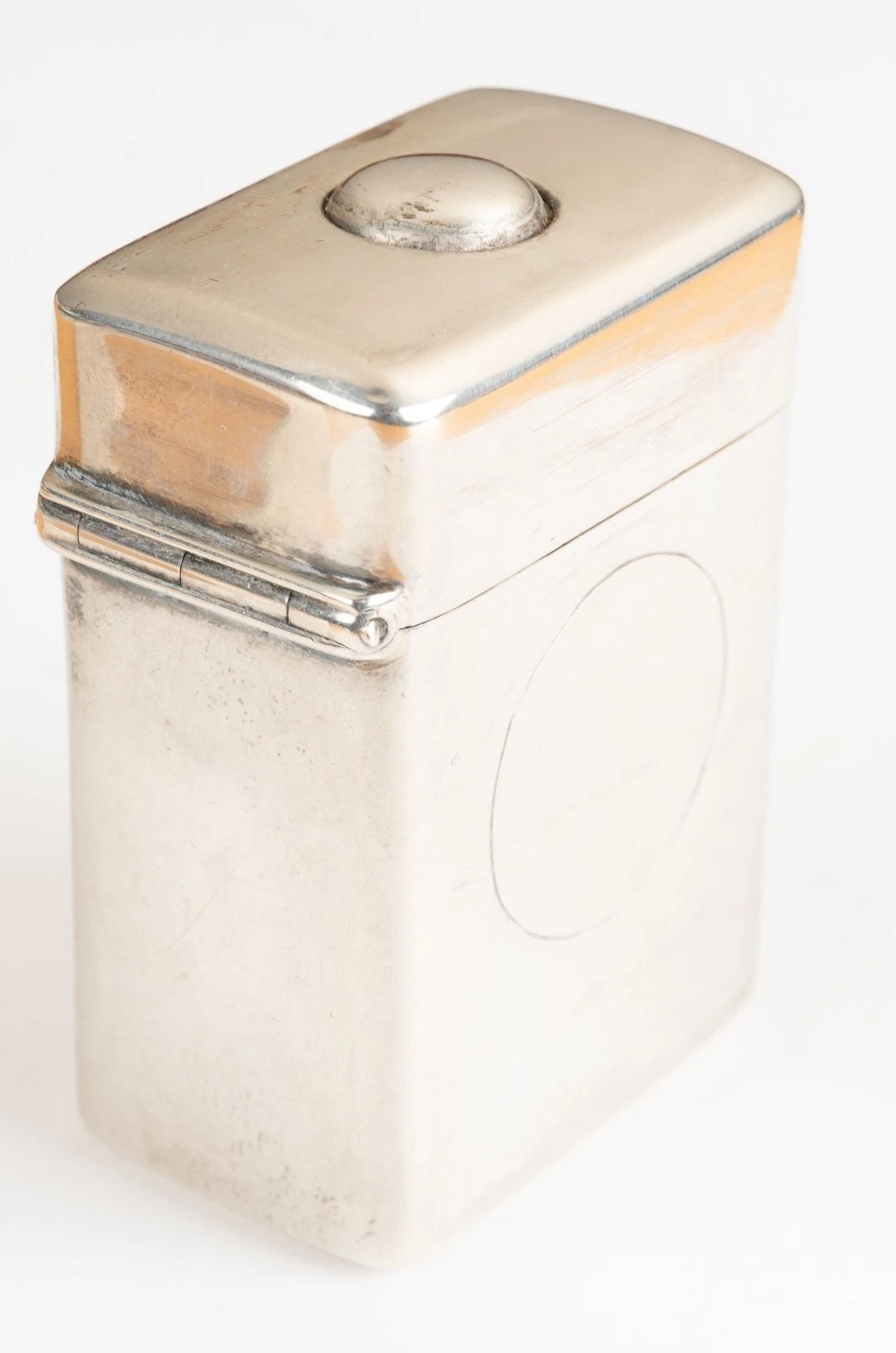
- Outer Protective Sleeve: A rectangular sterling silver sheath featuring cutout windows.
- Inner Body & Reservoir Casing: A heavy sterling silver box with rounded corners that slides snugly inside the outer sleeve.
- Spring-Loaded Push Button: A rounded dome button on the front of the inner body that releases the spring catch on the top lid.
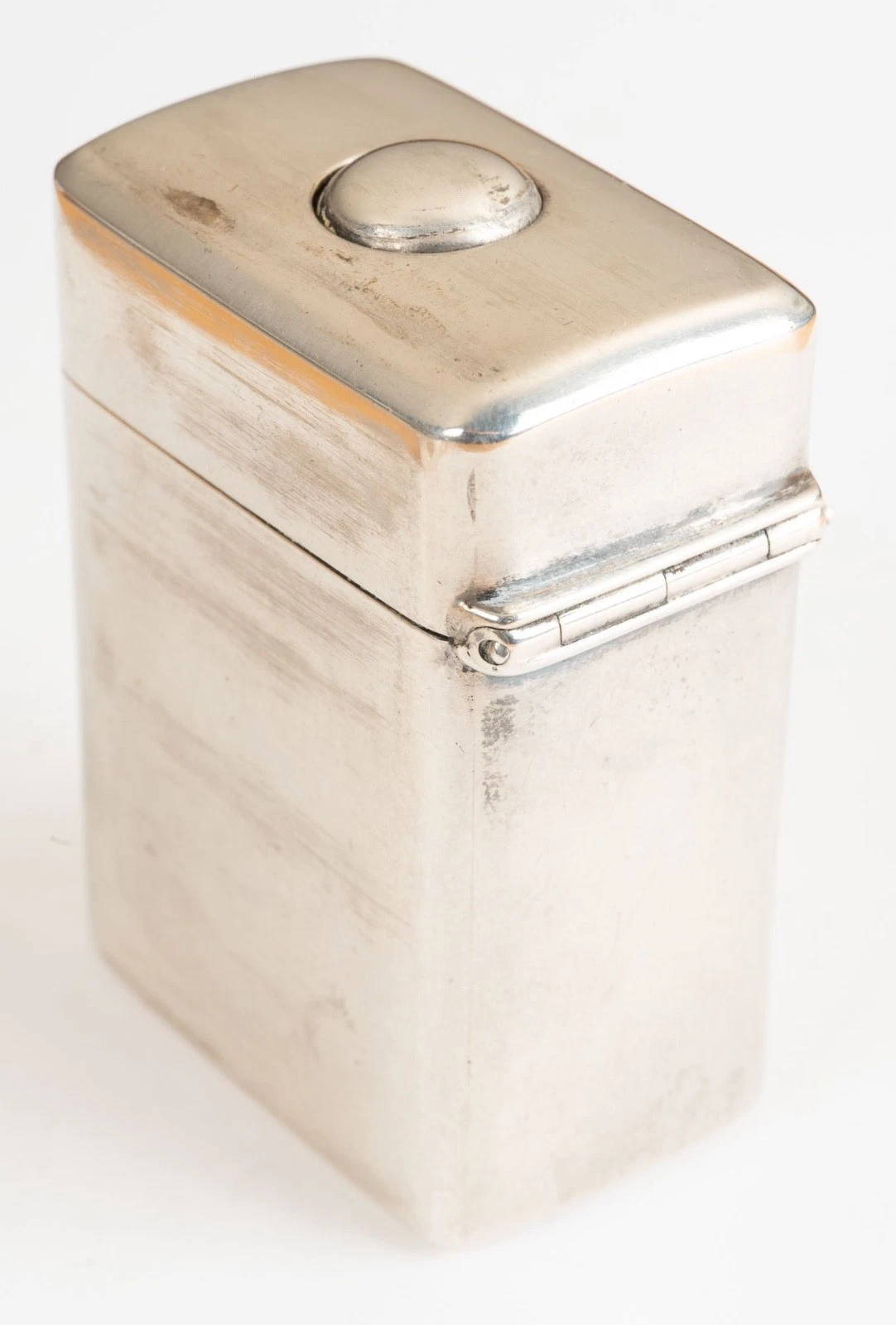
- Hinged Top Lid: A sturdy lid attached via a five-segment knuckle hinge.
- Interior Leather/Rubber Gasket: Mounted into the underside of the lid (showing historical wear/tarnish). When closed, this gasket presses firmly against the rim of the glass bottle to form a liquid-tight seal.
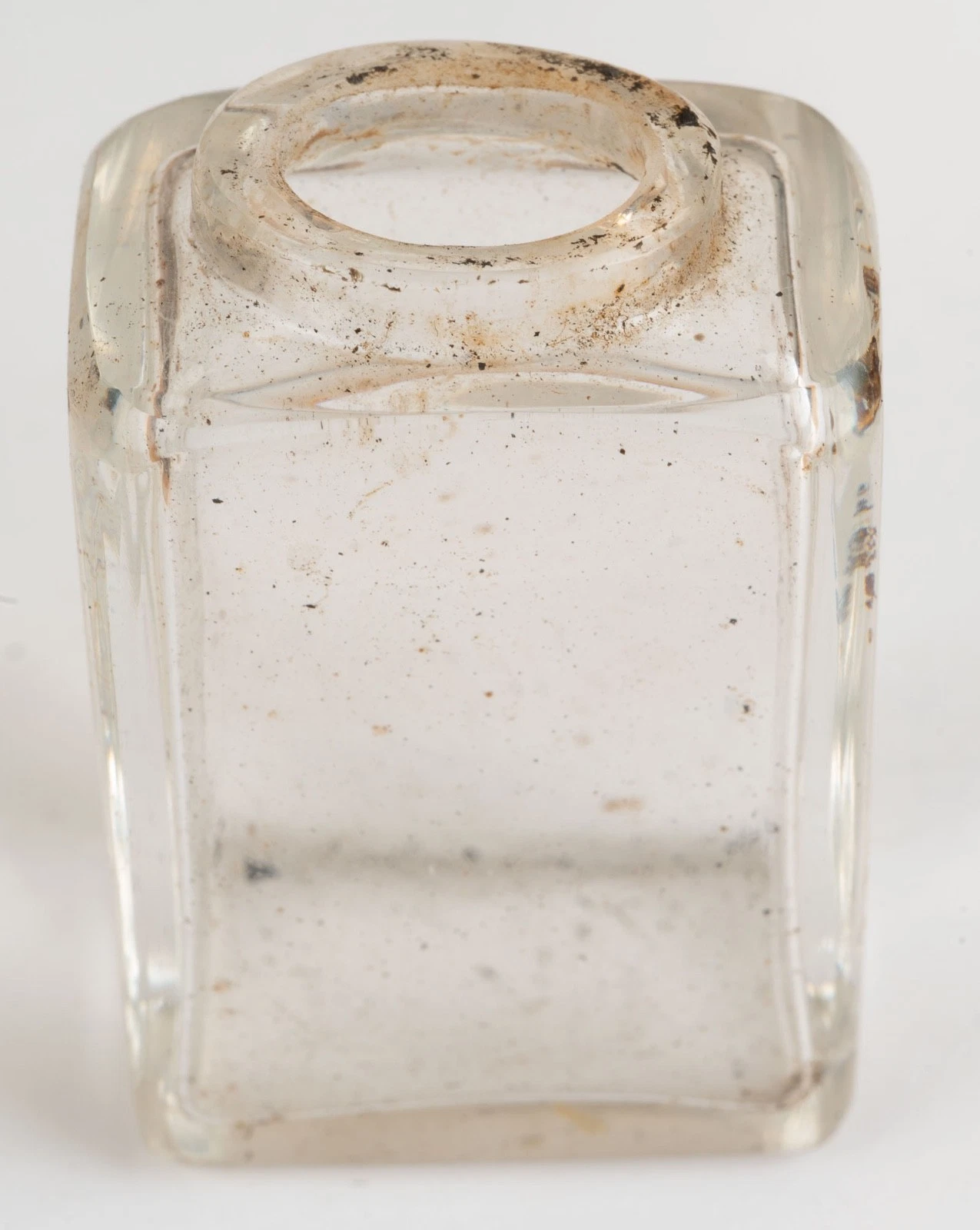
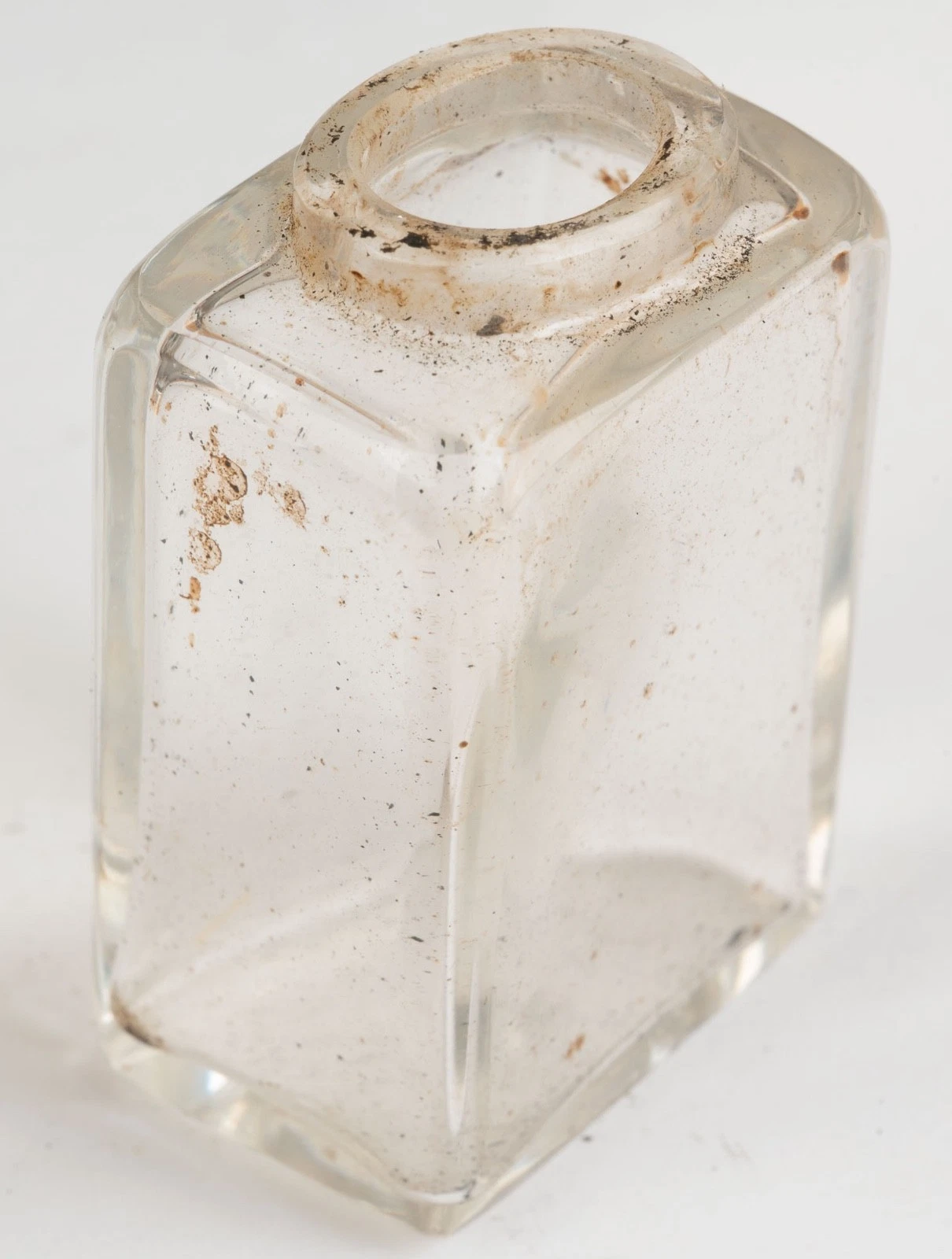
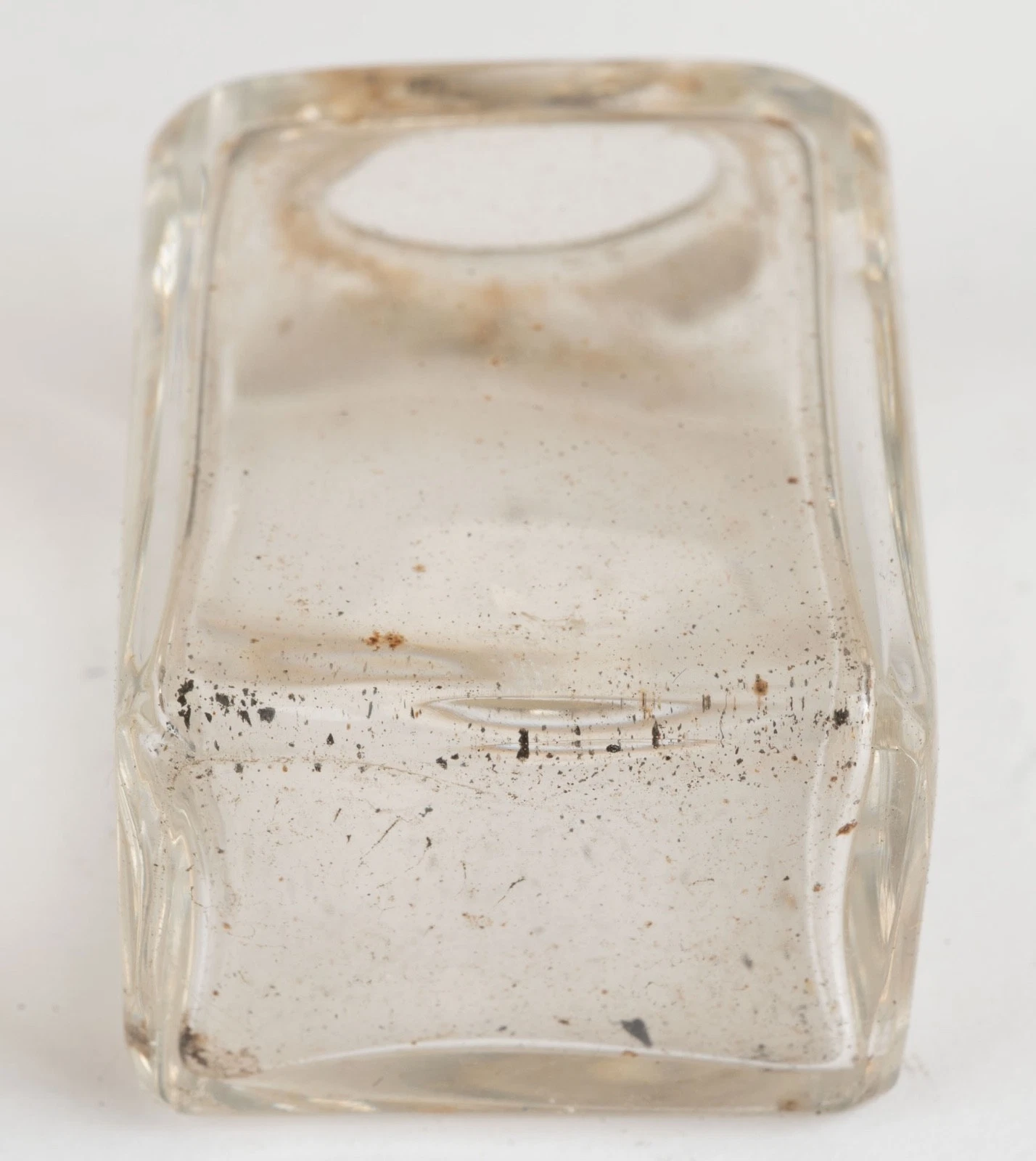
- Clear Glass Reservoir: A heavy, clear glass bottle with a square base and a smooth round collar rim that fits precisely inside the silver well.
- How It Works
- Unlocking the Body: The outer protective sleeve acts as a secondary safety guard. Sliding the inner body out of the sleeve exposes the release button and hinge.
- Opening the Lid: Pressing the rounded push button on the front releases the internal latch spring, causing the hinged cap to pop open.
- Removing the Reservoir: The glass bottle rests loosely inside the silver frame so it can be removed easily for cleaning or refilling without soiling the silver housing.
- The Leak-Proof Seal: When closed, the lid’s spring latch forces the fitted stopper/gasket down onto the ground mouth of the glass reservoir, maintaining a tight, pressurized seal that prevents ink from escaping while in transit.
Sold for $183 in June 2026
Content disclaimer. The information posted is the owner’s best knowledge and may not have been vetted by the SOIC. We welcome comments, corrections, and additions, working to make our website information comprehensive and accurate.
Join the Society of Inkwell Collectors (SOIC) – it’s free!
Founded in 1981 as a non-profit organization,
we are documenting inkwells (and accessories).
We’re here to help and inform!