




Thomas Whieldon Tortoiseshell Ware Inkwell (Circa 1750–1760)
| Categories | Ceramics/Porcelain "Named" Makers |
| Material | Earthenware |
| Markings | Unmarked |
| Manufacturer | Thomas Whieldon |
| Origin | England |
| Date or Era | circa 1750 |
| Measuring | 2 ½” Height; 3 ¾” Diameter |
Description
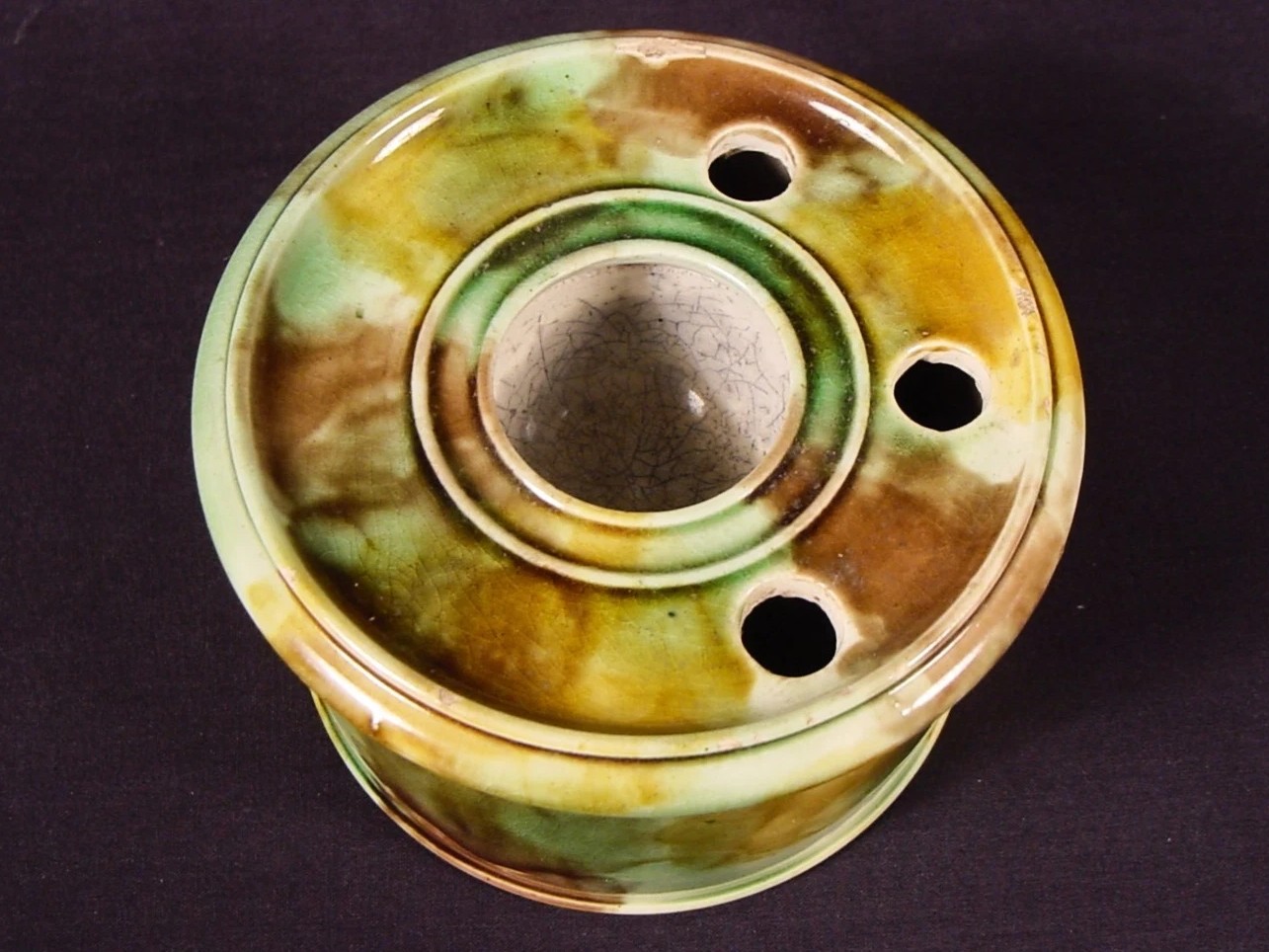
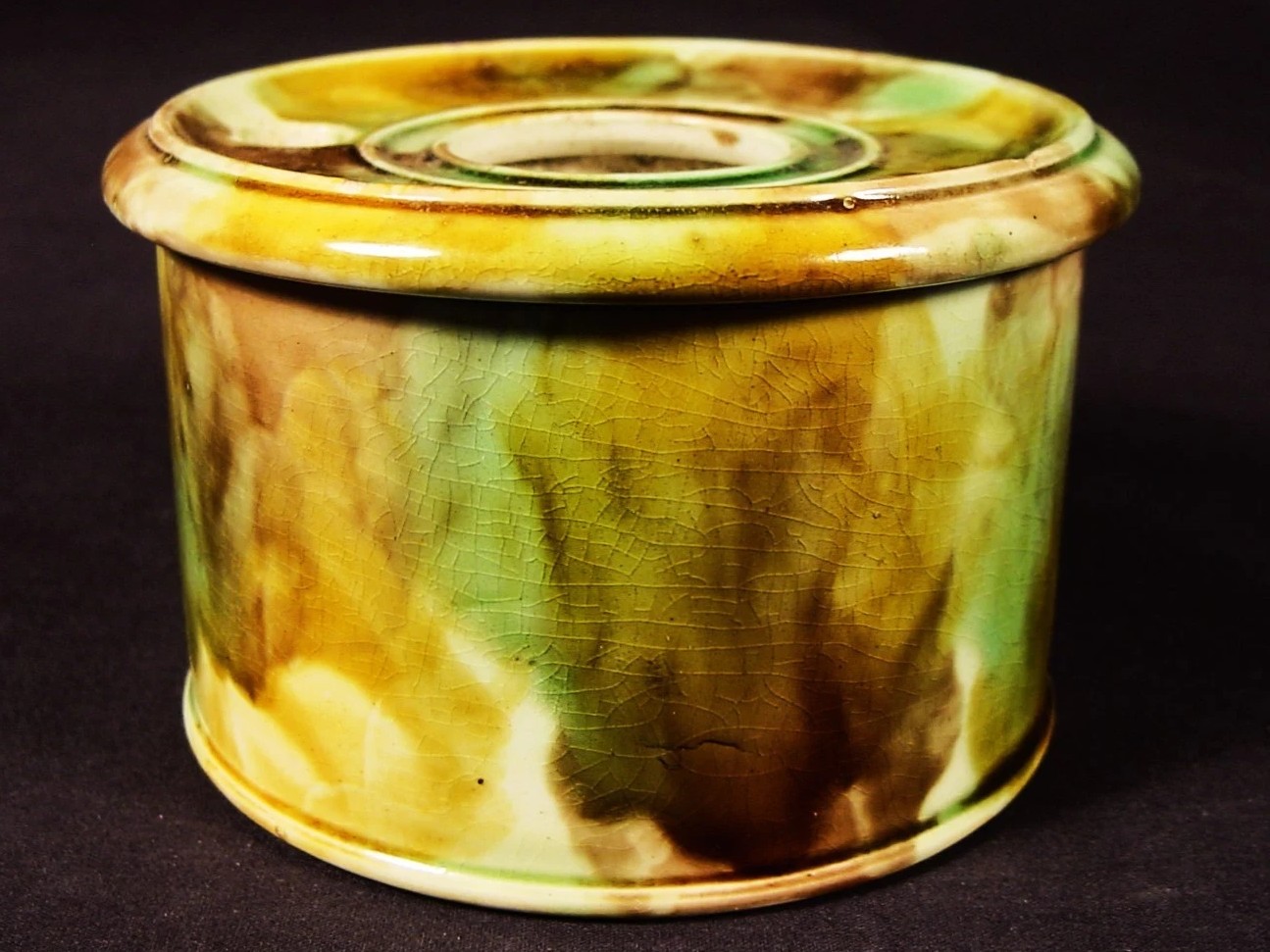
This rare, cylindrical inkwell is a masterclass in the “tortoiseshell” glazing technique. The body features a central recessed ink reservoir surrounded by a wide, flat rim. This rim is pierced with three circular apertures designed to hold quill pens upright.
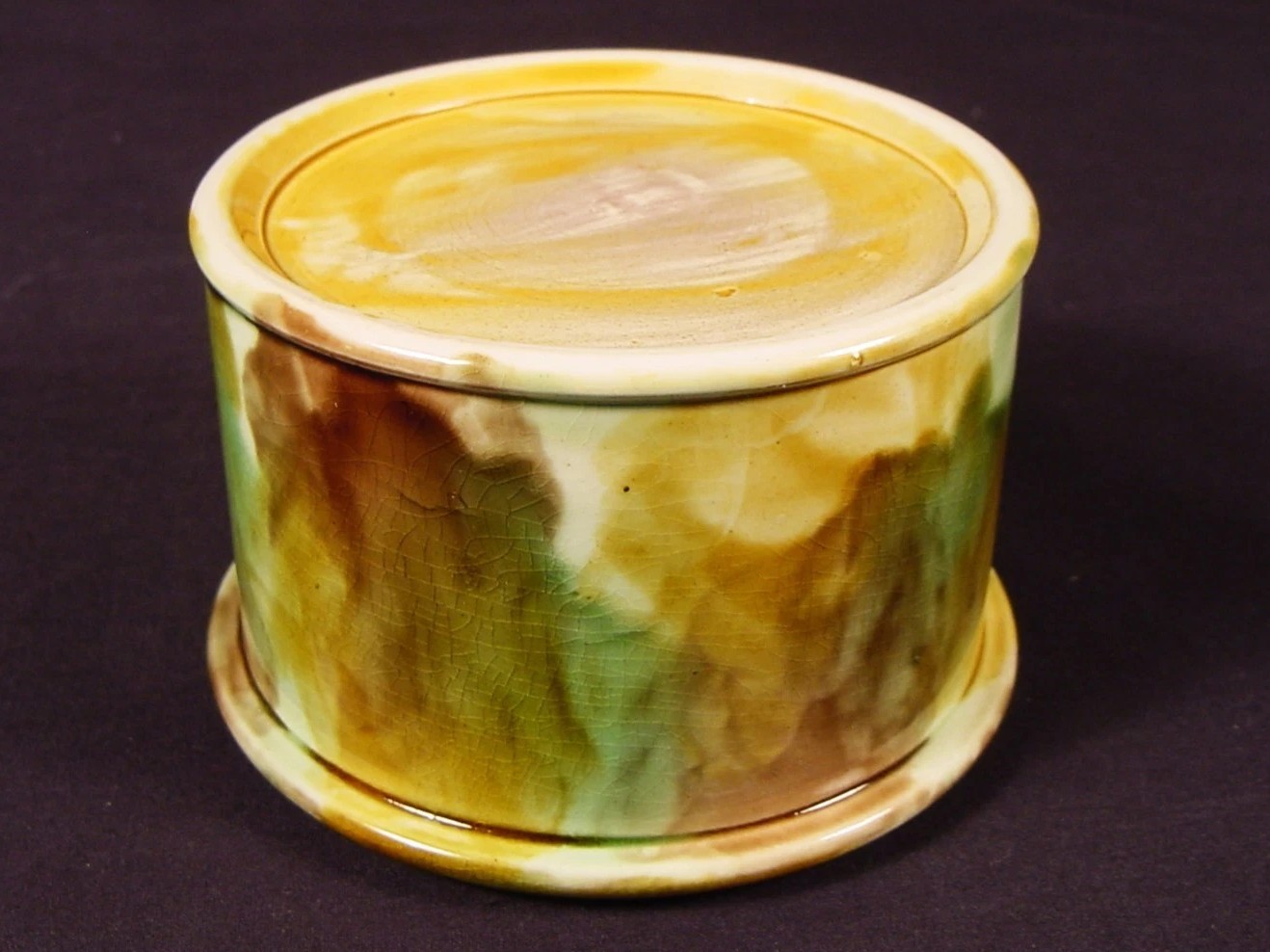
The piece is decorated with a sophisticated lead glaze, mottled with metallic oxides of manganese (brown) and copper (green) over a cream-colored earthenware body. The resulting “spatter” or clouded effect was intended to mimic expensive natural materials like tortoiseshell or agate. Fine age-related crazing is visible across the glaze, characteristic of 18th-century earthenware.
- Dimensions: 2 ½” Height; 3 ¾” Diameter.
- Condition: Near mint, exhibiting only a minor glaze flake to the rim—exceptional for a utilitarian object of this age.
The Maker: Thomas Whieldon (1719–1795)
Thomas Whieldon was perhaps the most influential figure in the “pre-industrial” era of Staffordshire pottery. Operating out of Fenton Vivian, he was known for the superior quality of his clay bodies and his creative glaze applications.
- The “Whieldon-Ware” Legacy: While many potters used mottled glazes, the term “Whieldon-ware” became the industry standard for high-quality tortoiseshell and cauliflower-themed pottery.
- A Mentor to Greatness: His partnership with Josiah Wedgwood (1754–1759) is critical. During their time together, they perfected the “Green Glaze” and various “Clouded” effects. Whieldon also trained other legendary potters, including Josiah Spode and William Greatbatch.
Historical Context & Use
In the 1750s, an inkwell of this type was a functional luxury. Because 18th-century ink was often acidic and corrosive, ceramic was an ideal material as it would not react with the liquid.
The three holes are specifically quill holders. Unlike modern pens, quills required frequent maintenance; a writer would often keep several at the ready. The wide base provided stability, preventing the ink from spilling.
Expert Note: Finding Whieldon pieces in this specific “drum” or cylindrical form is significantly rarer than finding his plates, teapots, or figural “image” toys. Its survival for over 275 years in this condition suggests it was a prized heirloom rather than a heavily abused office tool.
Confirmation of Facts
- Date: 1750 – 1760 confirmed. The style and glaze application are peak 1750s Staffordshire.
- Whieldon/Wedgwood Partnership: Confirmed. This piece likely dates to the very window when those two masters were collaborating.
- Rarity: High. While tortoiseshell plates are found in museums (such as the V&A or the Met), functional desk accessories like this are much harder to come by.
Sold for $225 in February 2026
Content disclaimer. The information posted is the owner’s best knowledge and may not have been vetted by the SOIC. We welcome comments, corrections, and additions, working to make our website information comprehensive and accurate.
Join the Society of Inkwell Collectors (SOIC) – it’s free!
Founded in 1981 as a non-profit organization,
we are documenting inkwells (and accessories).
We’re here to help and inform!