

Inkipedia


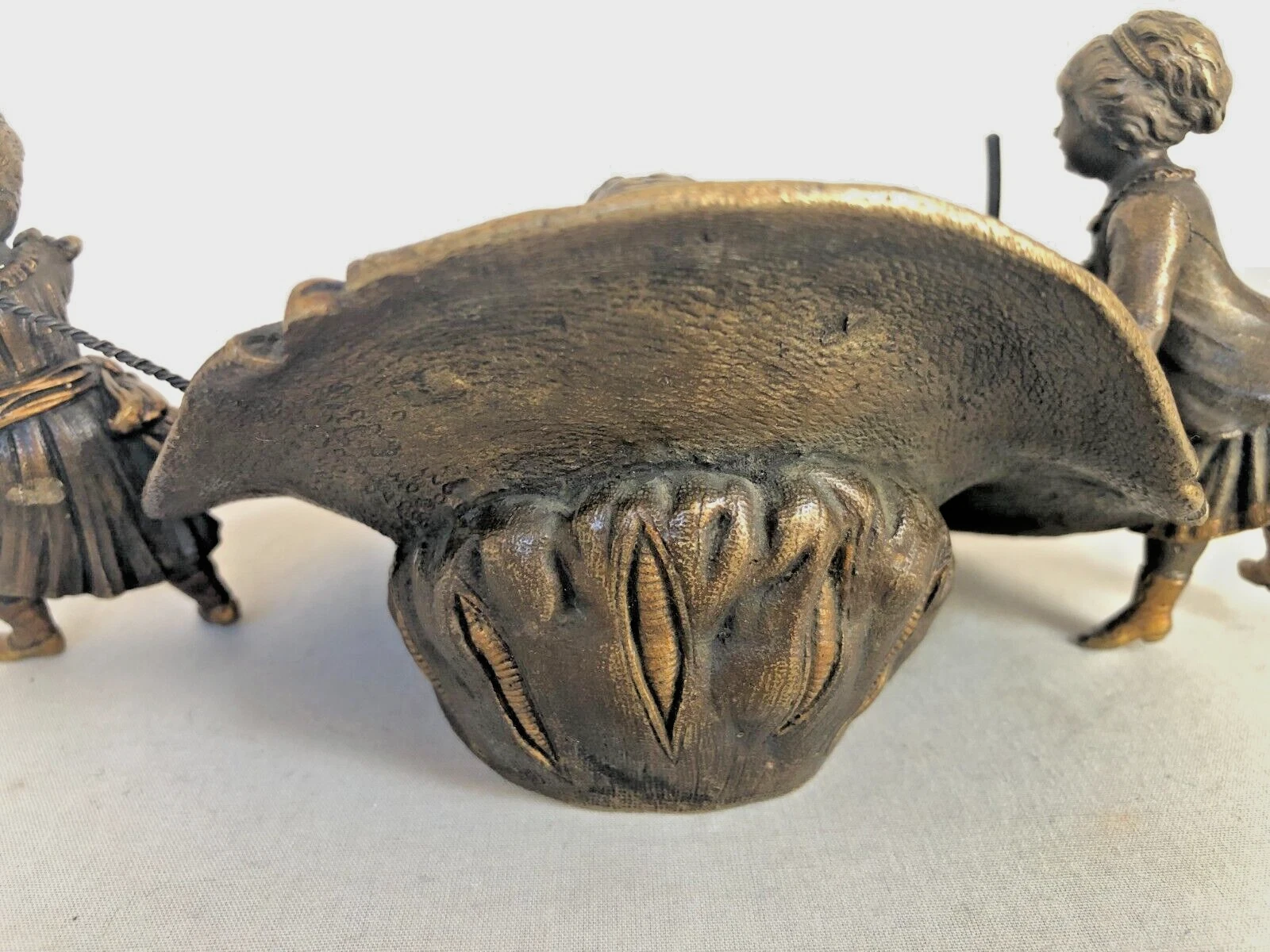





“The Bonnet Ride” with Girls and Pug
| Categories | Figural - Animals & Living Creatures, Figural - Persons |
| Type | Children, dog |
| Material | Bronze |
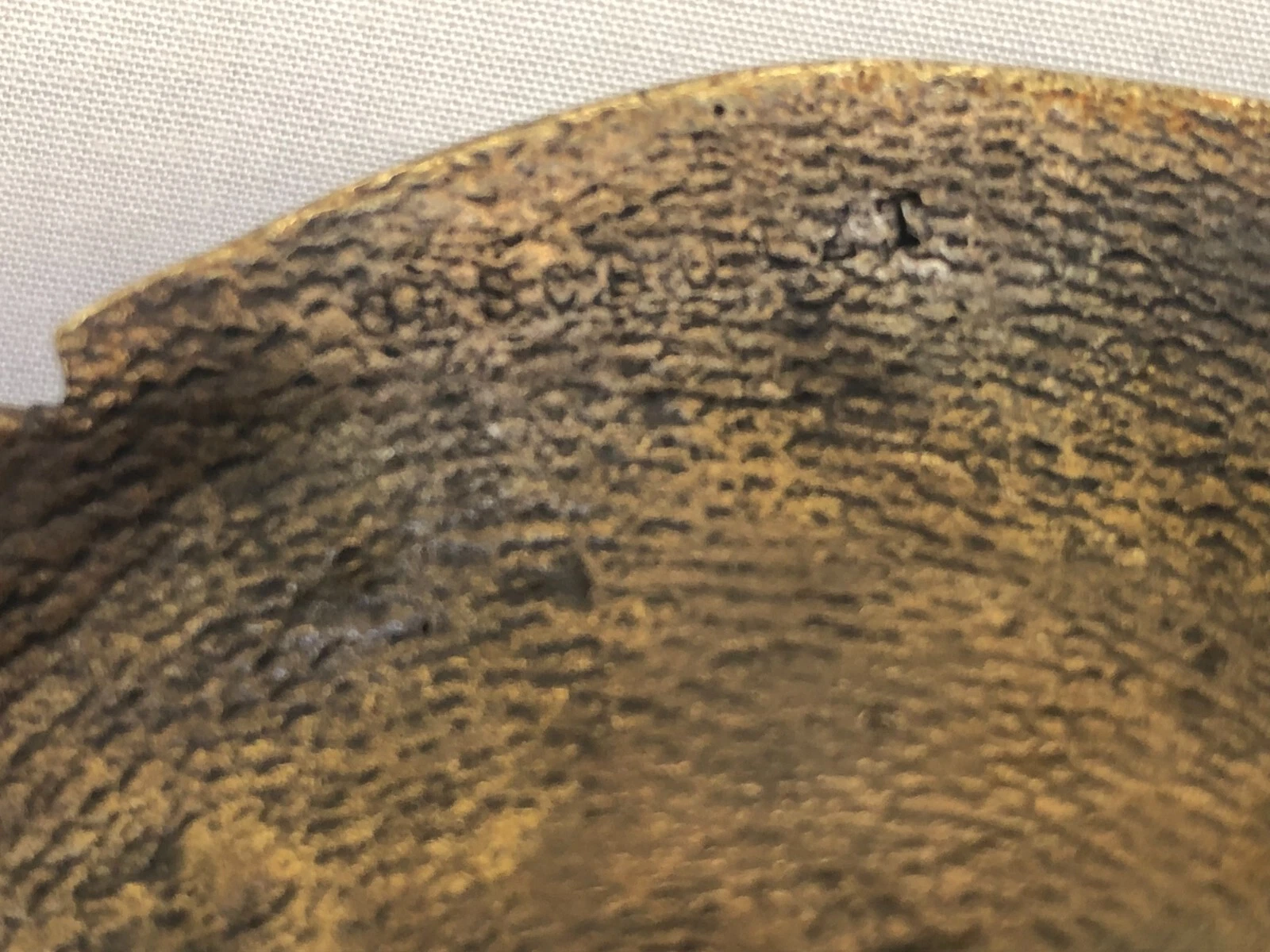
| Markings | "Geschützt" |
| Manufacturer | Undetermined |
| Origin | Austria |
| Date or Era | circa 1900 |
| Measuring | 7” across; 3” high |
This figural inkstand depicts a playful narrative full of late 19th-century humor and whimsy.
The Narrative: What is Happening?
The scene captures two mischievous young girls who have commandeered a lady’s large, elegant bonnet and turned it into a makeshift sled or cart.
- The Girl on the Right: Leaning forward with determination, she is pulling the hat using a twisted rope attached to the front brim.
- The Girl on the Left: Leaning into the movement from behind, she is pushing the heavy bonnet forward using a rod or stick.
- The Surrounding Elements: The large central structure is the upturned lady’s bonnet itself. The texture represents woven straw or fabric, complete with elegant, gathered folds and silk ribbons visible along the back and base.
The Dog & The Inkwell
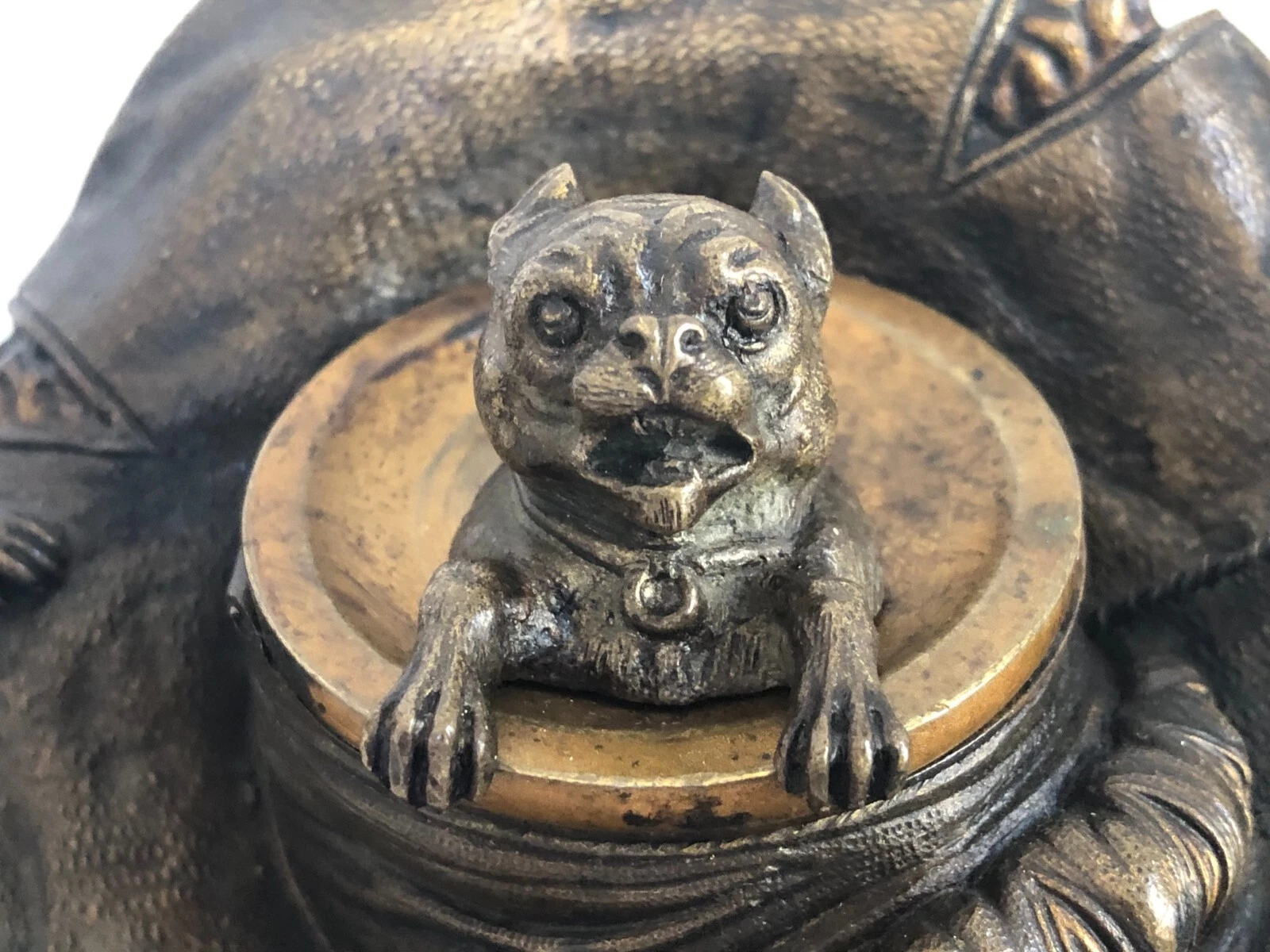
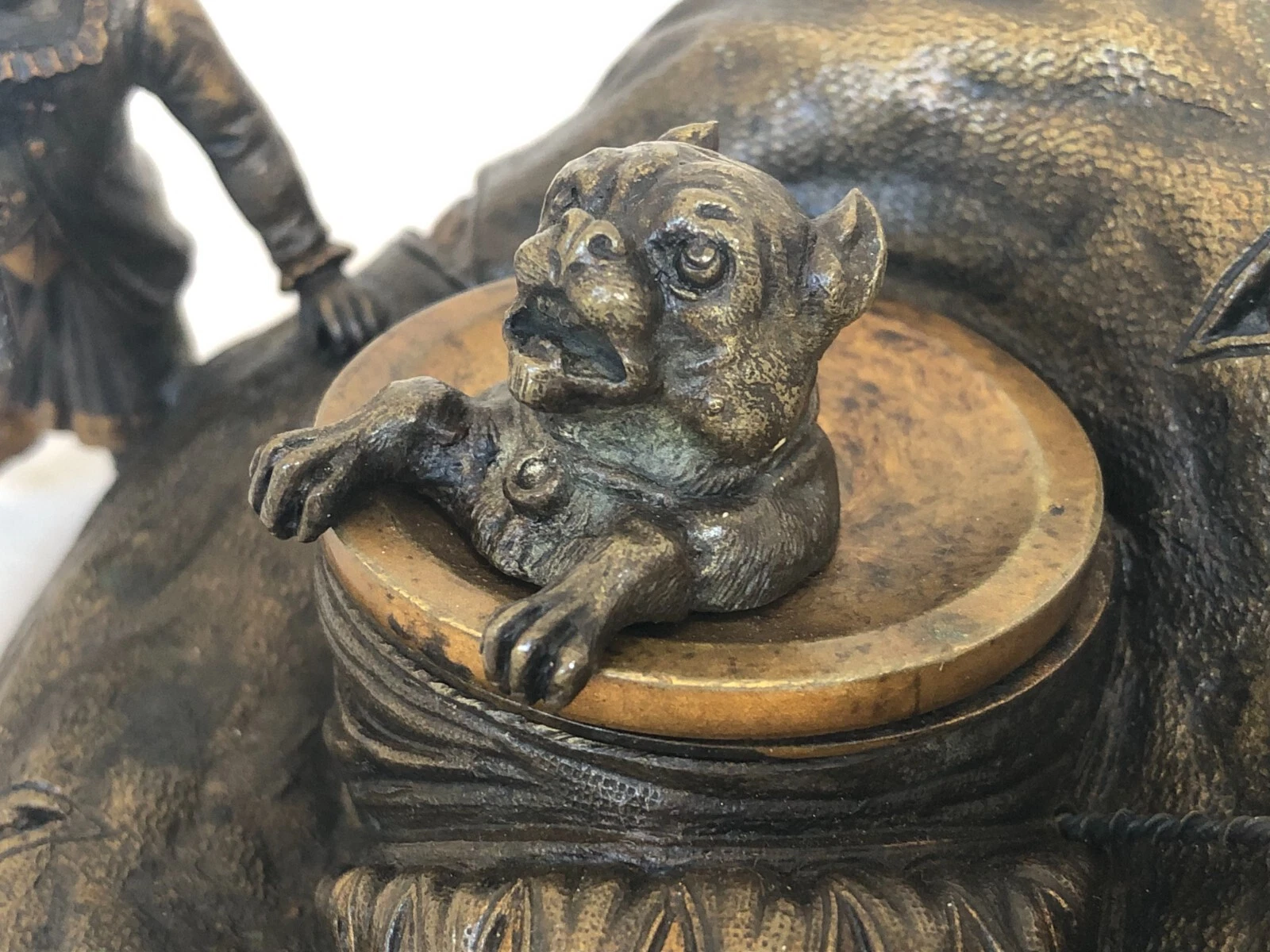
- The Breed: The dog sitting inside the hat is a Pug. Pugs were fashionable and beloved subjects in late 19th-century European decorative arts.
- The Scene: The clever dog has made itself entirely comfortable inside the crown of the bonnet. It rests its front paws over the edge of a muff or the rim of the hat’s inner opening, looking out with a comical, wide-eyed expression as if enjoying the ride.
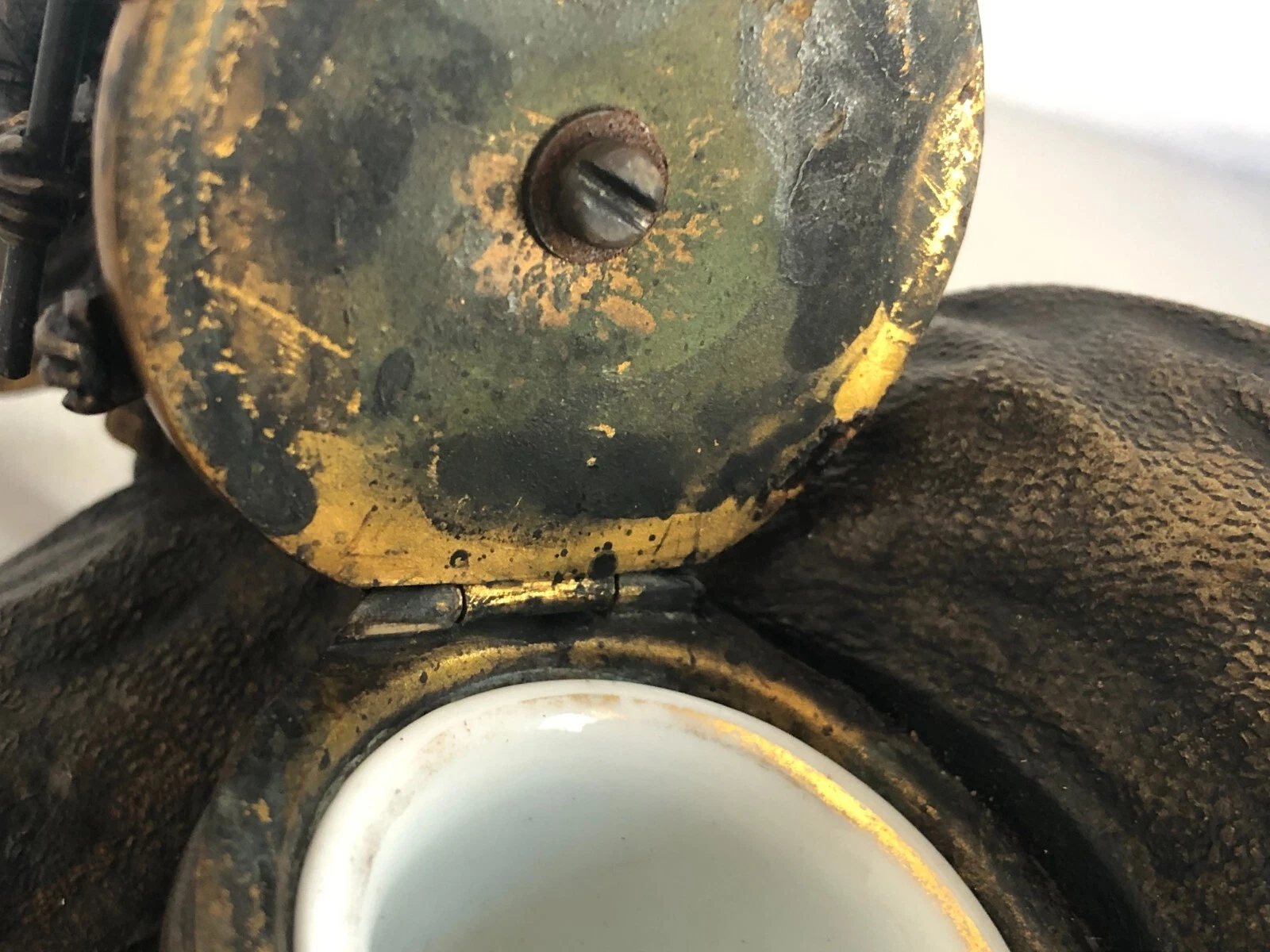
- The Function: The pug is attached to a hinged lid. When lifted by the dog’s head, it reveals a white ceramic insert.
When, Where, and Maker
- Origin: This piece is an authentic Austrian (Vienna) Bronze, produced in Vienna, Austria.
- Markings: The stamp “Geschützt” on the back is the German legal term for “Registered” or “Copyright Protected” (similar to Déposé in French), a stamp standard for high-quality Austrian and German foundries of the era.
- Date: It was manufactured during the late 19th century to the very early 20th century (circa 1890–1905), a period when Viennese foundries specialized in creating detailed, humorous, and narrative-driven desk accessories featuring children and animals.
- The proportions are completely skewed if we look at this with a realistic eye!
- The dramatic disproportion is a deliberate hallmark of 19th-century Viennese whimsical bronzes. Foundries frequently employed a playful, “Gulliver-esque” fantasy scale where children or animals interact with oversized, everyday household objects. You will often see Vienna bronzes featuring a cat sleeping inside a giant shoe, mice hauling a massive walnut shell, or, in this case, children treating a lady’s fashionable hat like a full-sized winter sled.
- By scaling the bonnet up to the size of a carriage, the sculptor transformed a mundane object into a fantastical piece of playground equipment, heightening the sense of childhood mischief and humor that buyers of these luxury desk toys loved.
Sold for $738 in May 2026
Content disclaimer. The information posted is the owner’s best knowledge and may not have been vetted by the SOIC. We welcome comments, corrections, and additions, working to make our website information comprehensive and accurate.
Join the Society of Inkwell Collectors (SOIC) – it’s free!
Founded in 1981 as a non-profit organization,
we are documenting inkwells (and accessories).
We’re here to help and inform!