


Sporting Dogs Inkstand – Signed
| Categories | Figural - Animals & Living Creatures |
| Type | dog |
| Material | Bronze |
| Markings | See Narrative |
| Manufacturer | Friedrich Gornik |
| Origin | Austria |
| Date or Era | circa 1900 |
| Measuring | 18” x 7” x 7” high |
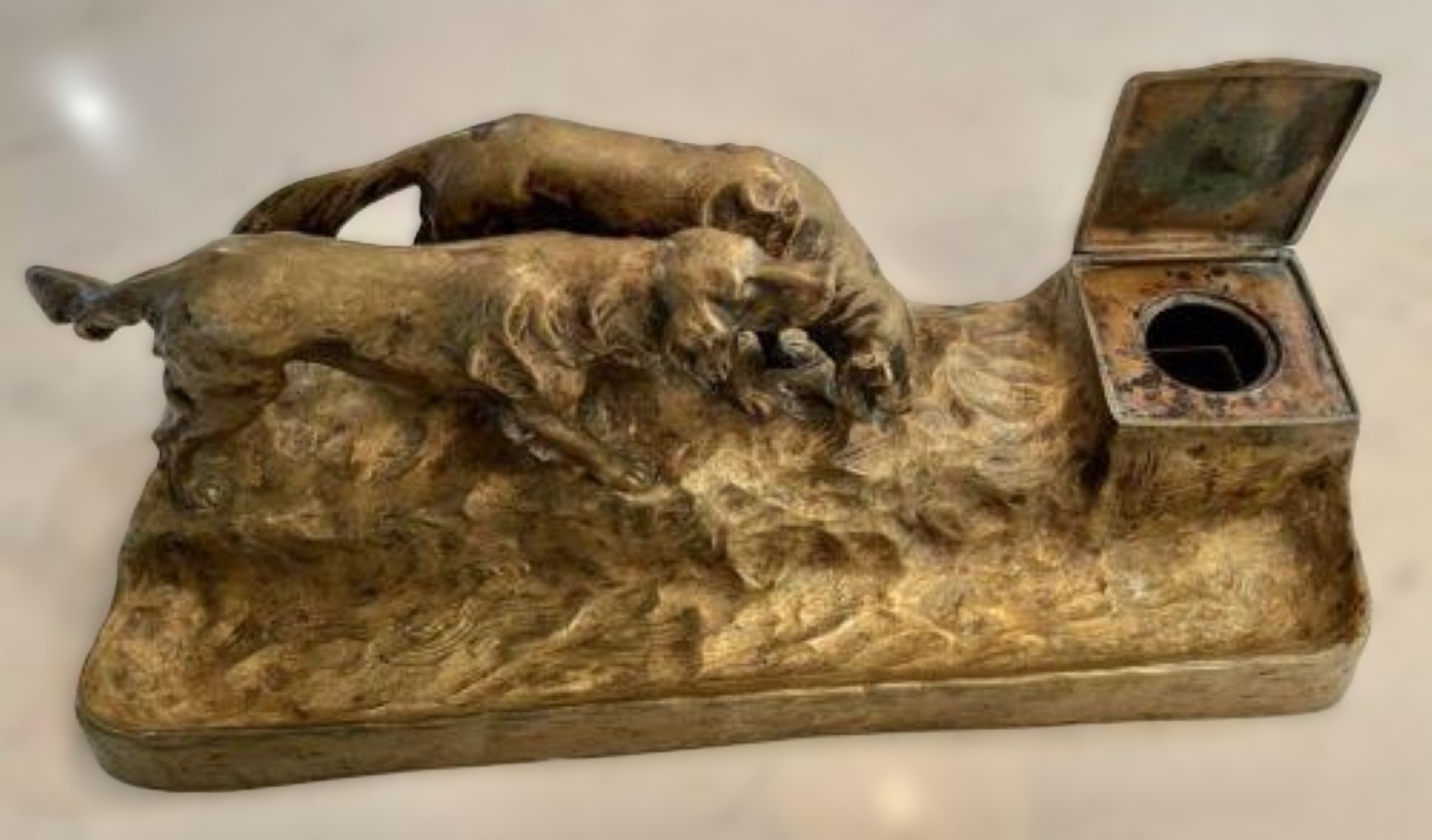
This detailed Vienna Bronze inkstand is a nice example of the animalier tradition, capturing the fluid, “psychological” realism that defined Friedrich Gornik’s work. Cast in the early 20th century, the piece serves as both a desk accessory and a narrative sculpture of sporting life.
Description
The Figures (Sporting Dogs)
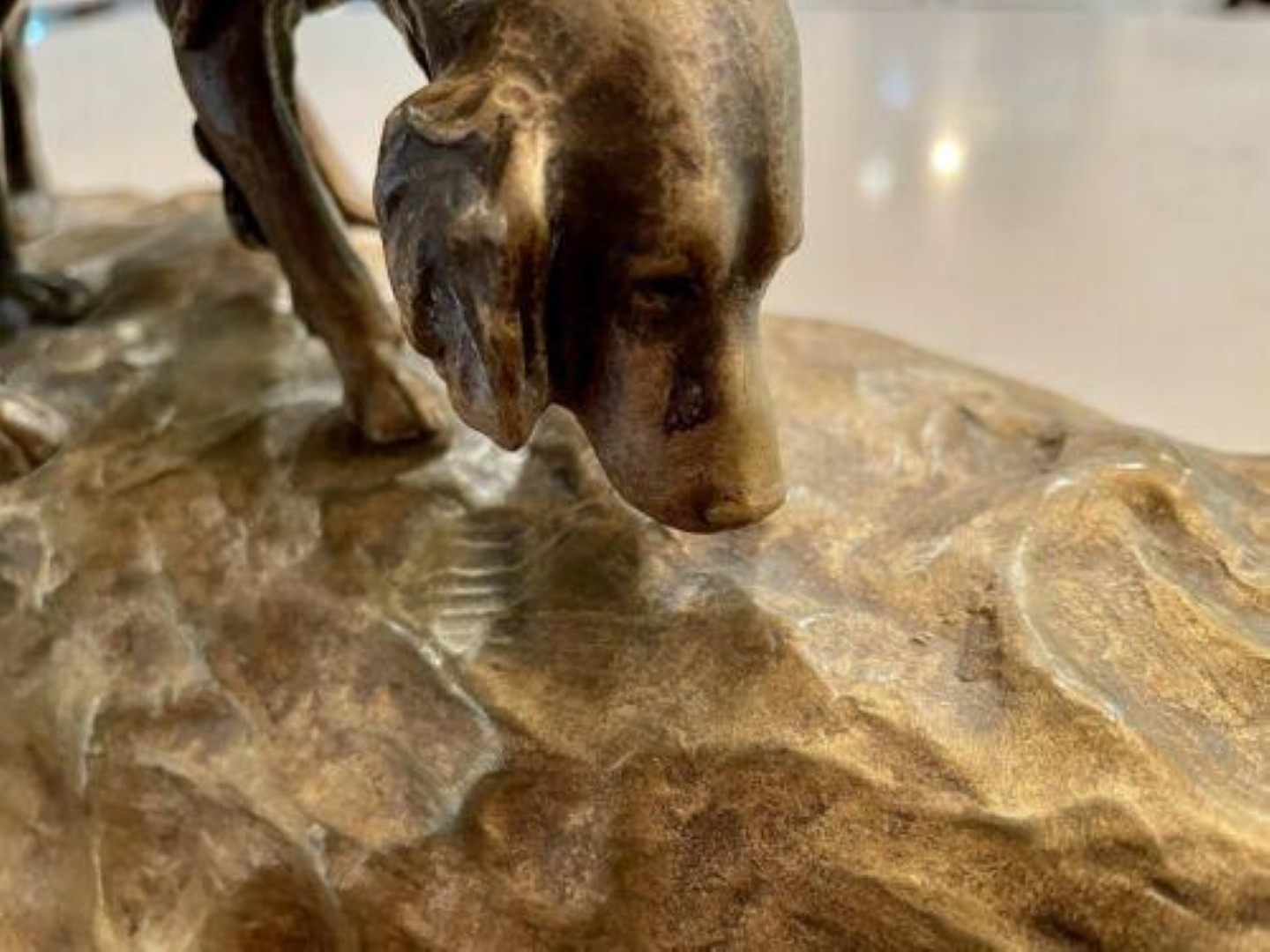
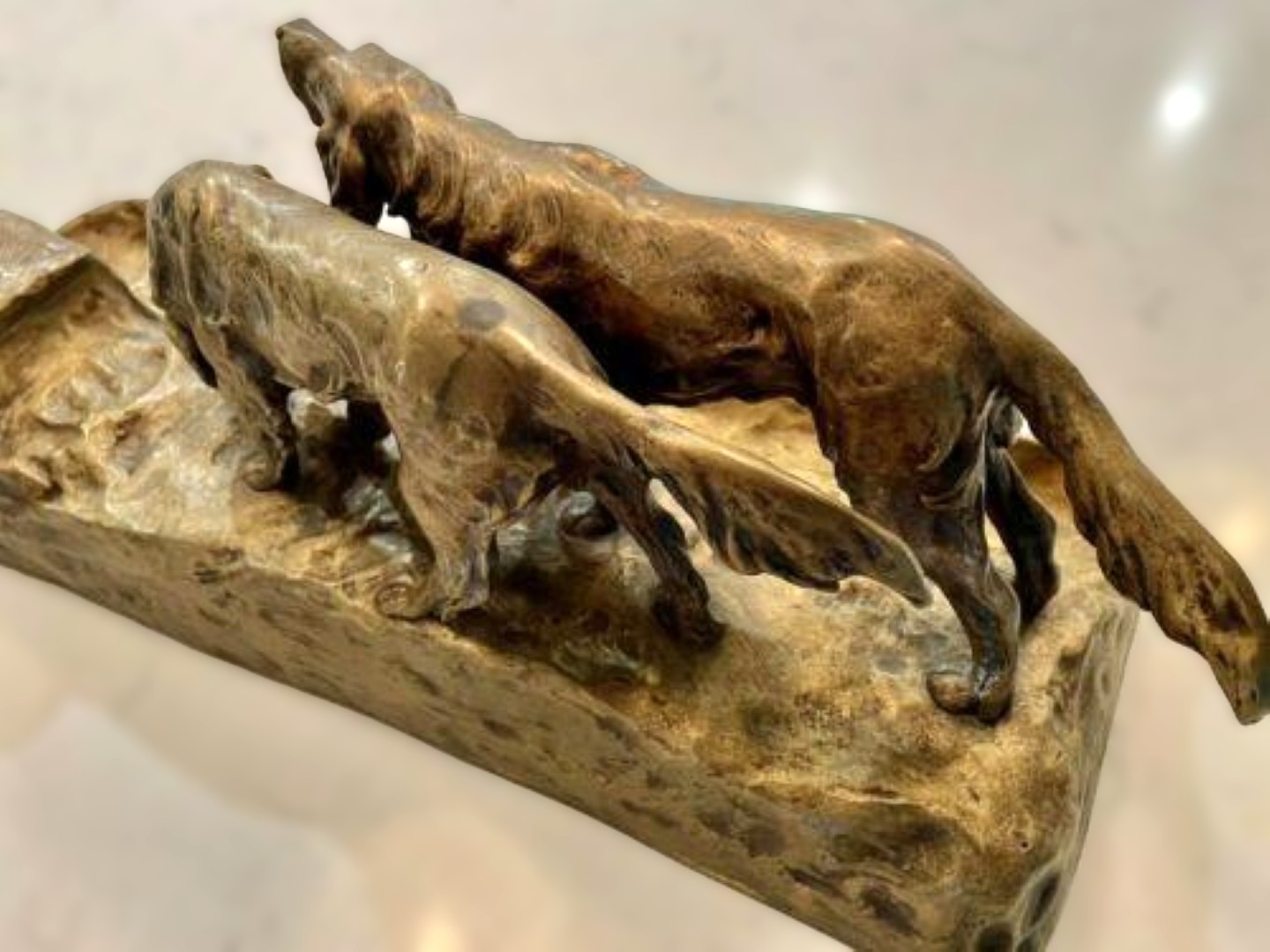
The centerpiece of the stand features two sporting dogs (retrievers or setters) traversing a rugged, craggy terrain. Gornik’s mastery of anatomy is evident in the tension of their musculature and the varied textures of their coats.
- The Lead Dog: Positioned on the left, this dog is in a high-alert “point” or scenting pose, with its head raised and ears slightly cocked, scanning the horizon.
- The Second Dog: Standing slightly behind and to the right, this figure is depicted with its nose to the ground, intensely tracking a scent.
The Base & Functionality
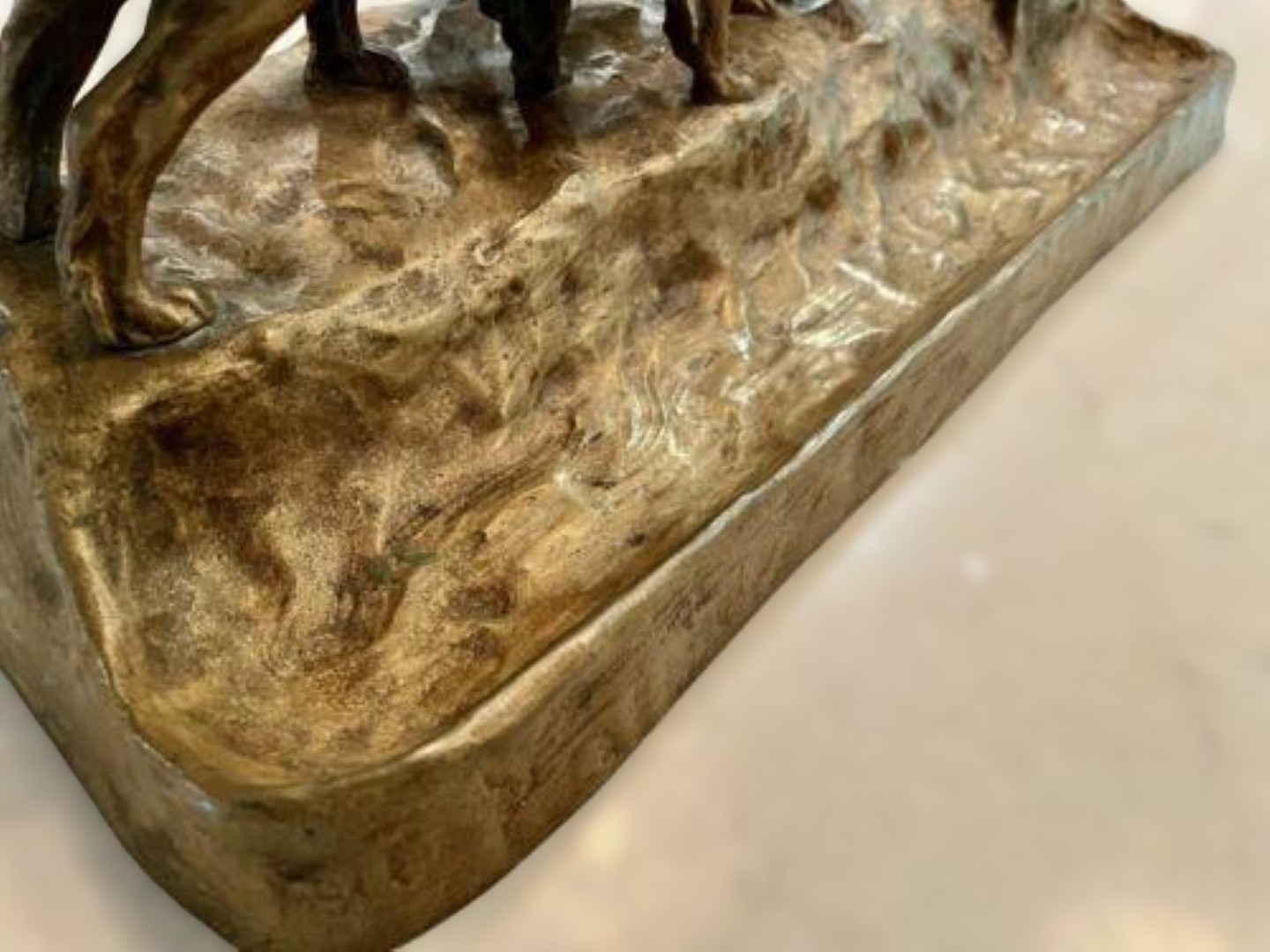
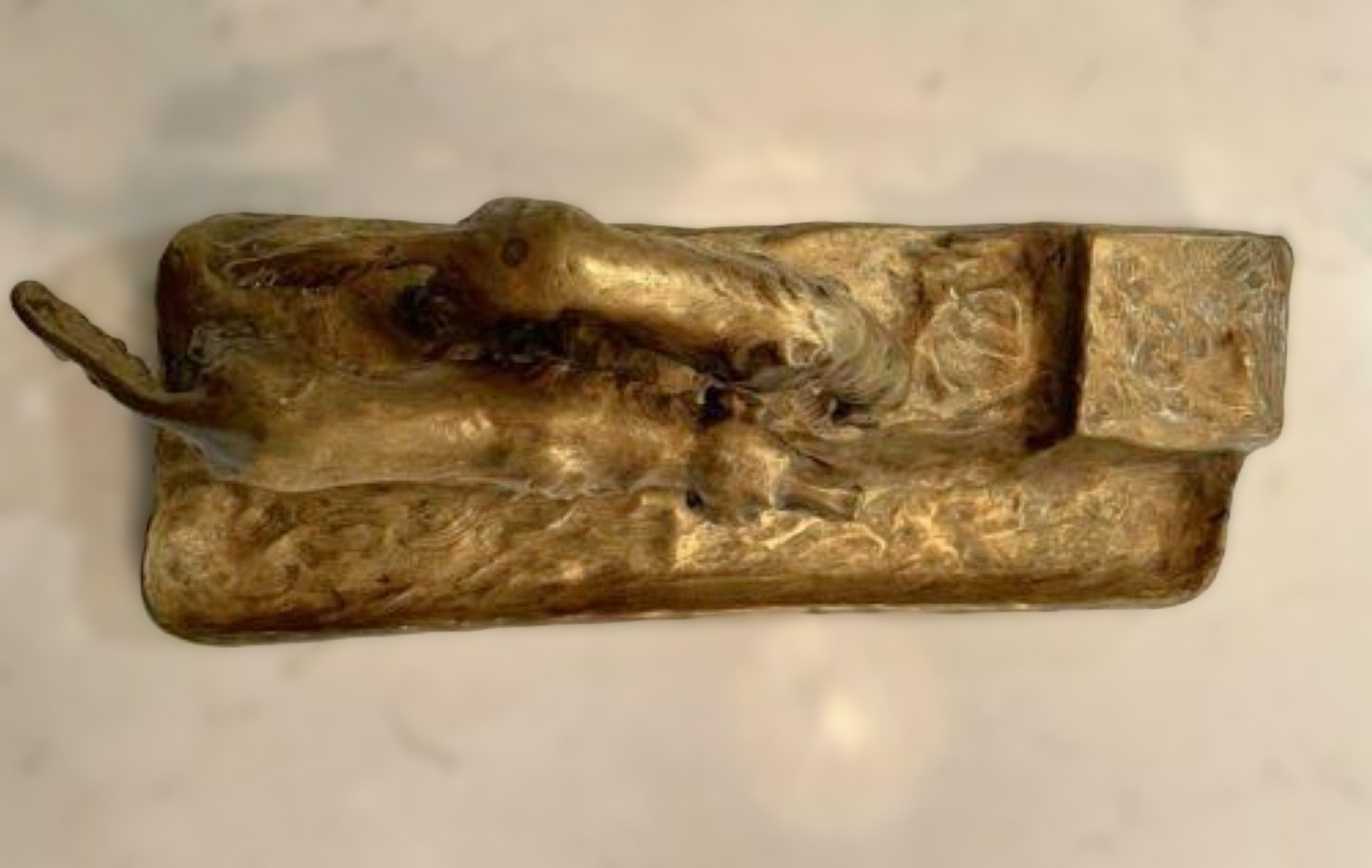
The entire base is sculpted to resemble a weathered, rocky outcropping, providing a naturalistic stage for the figures.
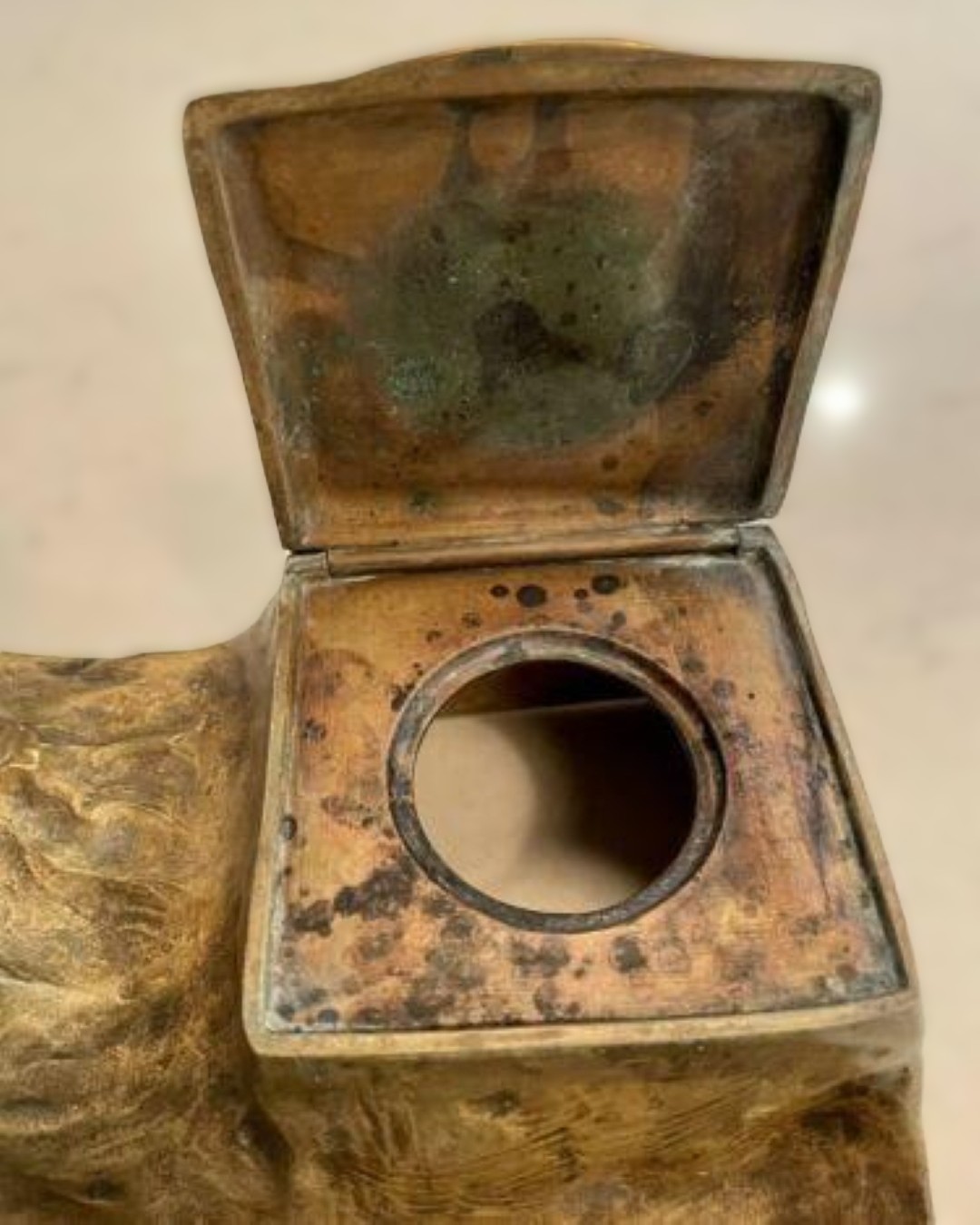
- The Inkwell: On the far right, a square, monolithic block seamlessly integrates into the rocky landscape. It features a hinged lid that opens to reveal a circular aperture designed to hold a glass or ceramic insert (missing here).
- The Pen Tray: Running along the entire front length of the base is a shallow, textured trough or “cradle” designed to hold dip pens, etc.
- The Patina: The bronze exhibits a rich, multi-toned brown patina with golden highlights on the raised surfaces, typical of high-quality Vienna casting, which emphasizes the “fur” and the uneven “rock” surface.
Markings & Authentication
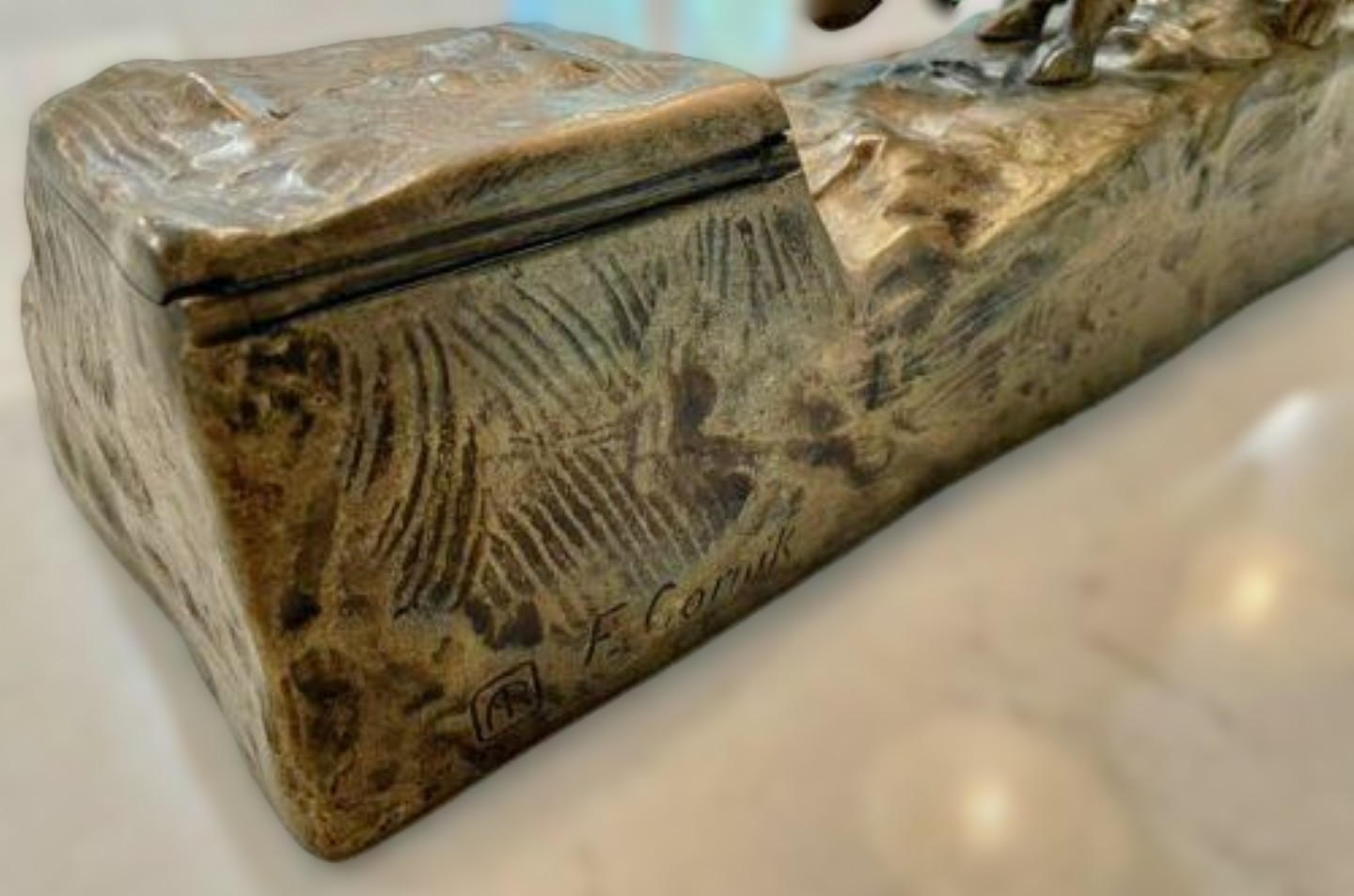
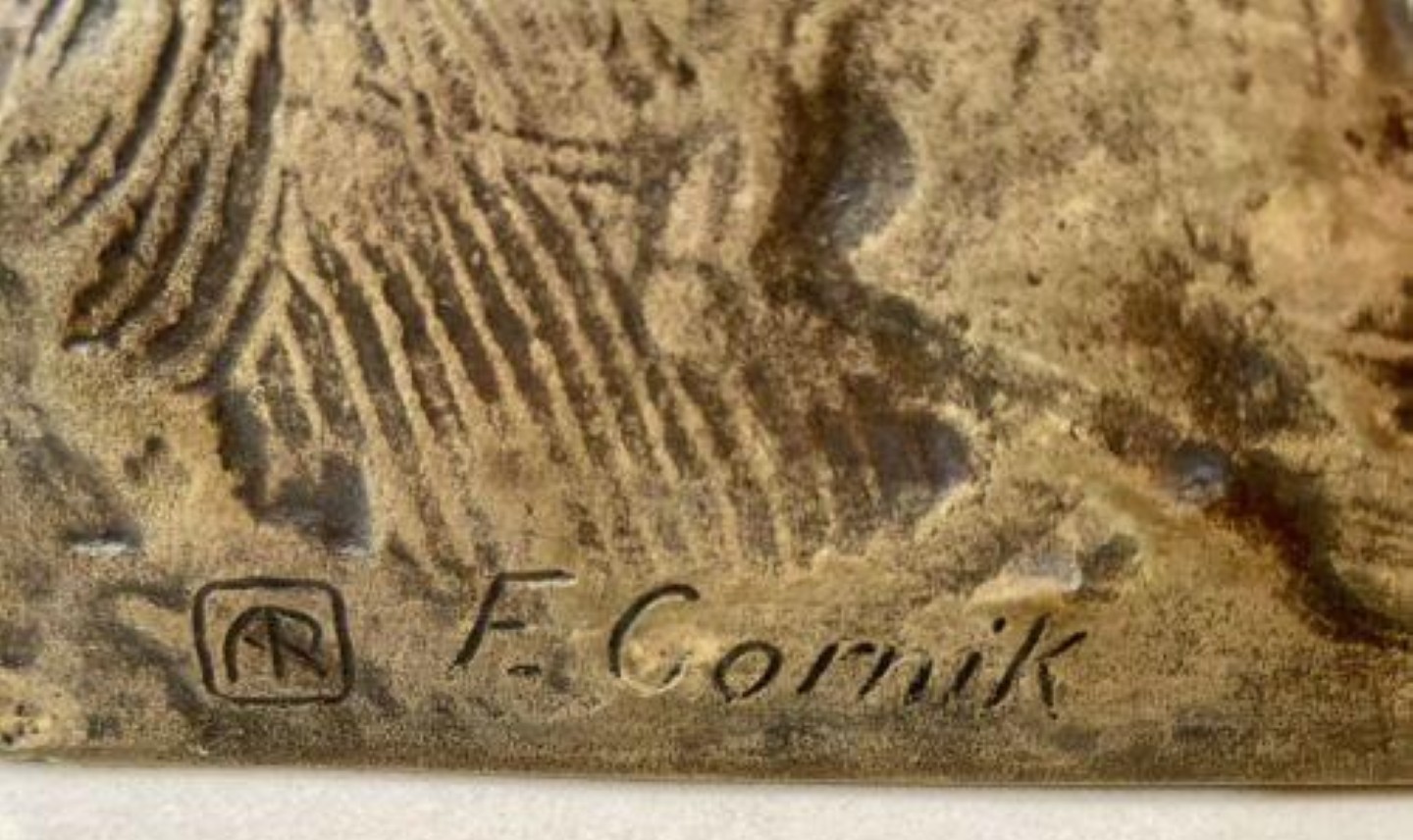
The piece bears two critical marks on the back vertical face of the base:
- Signature: “F. Gornik” is incised directly into the casting in a clean, legible script.
- Foundry Mark: Immediately to the left of the signature is the square “AR” mark within a recessed frame, confirming it was cast by the Arthur Rubinstein foundry.
Origin and Manufacture
| Detail | Description |
| Origin | Vienna, Austria |
| Date | Circa 1900–1915 |
| Foundry | Arthur Rubinstein Foundry. Known for specialized sand-casting, a technique that allowed for the precise preservation of Gornik’s original clay model textures. |
About the Artist
Friedrich Gornik (1877–1943)
Gornik was a pivotal figure in the Austrian animalier movement. Having studied under Arthur Strasser at the Vienna School of Arts and Crafts, he became renowned for moving away from the stiff, formal poses of the 19th century. Instead, he focused on “snapshots” of animal behavior. His collaboration with the Rubinstein foundry ensured that his intimate knowledge of animal psychology was translated into some of the most sought-after desk bronzes of the era.
Estimated Value: $325
Content disclaimer. The information posted is the owner’s best knowledge and may not have been vetted by the SOIC. We welcome comments, corrections, and additions, working to make our website information comprehensive and accurate.
Join the Society of Inkwell Collectors (SOIC) – it’s free!
Founded in 1981 as a non-profit organization,
we are documenting inkwells (and accessories).
We’re here to help and inform!