



Souvenir – Lake Okoboji, Iowa
| Categories | Souvenir |
| Type | Native American Indian |
| Material | Wood |
| Markings | See Narrative |
| Manufacturer | Undetermined |
| Origin | United States |
| Date or Era | circa 1920 |
Description
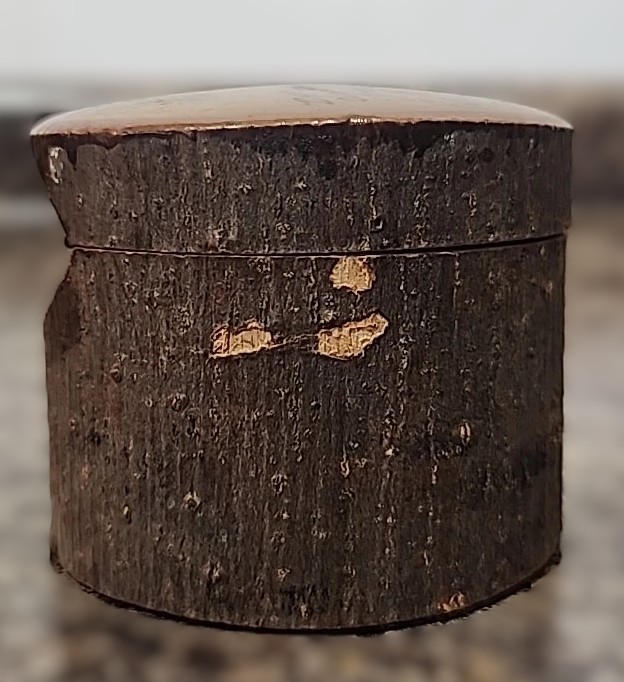
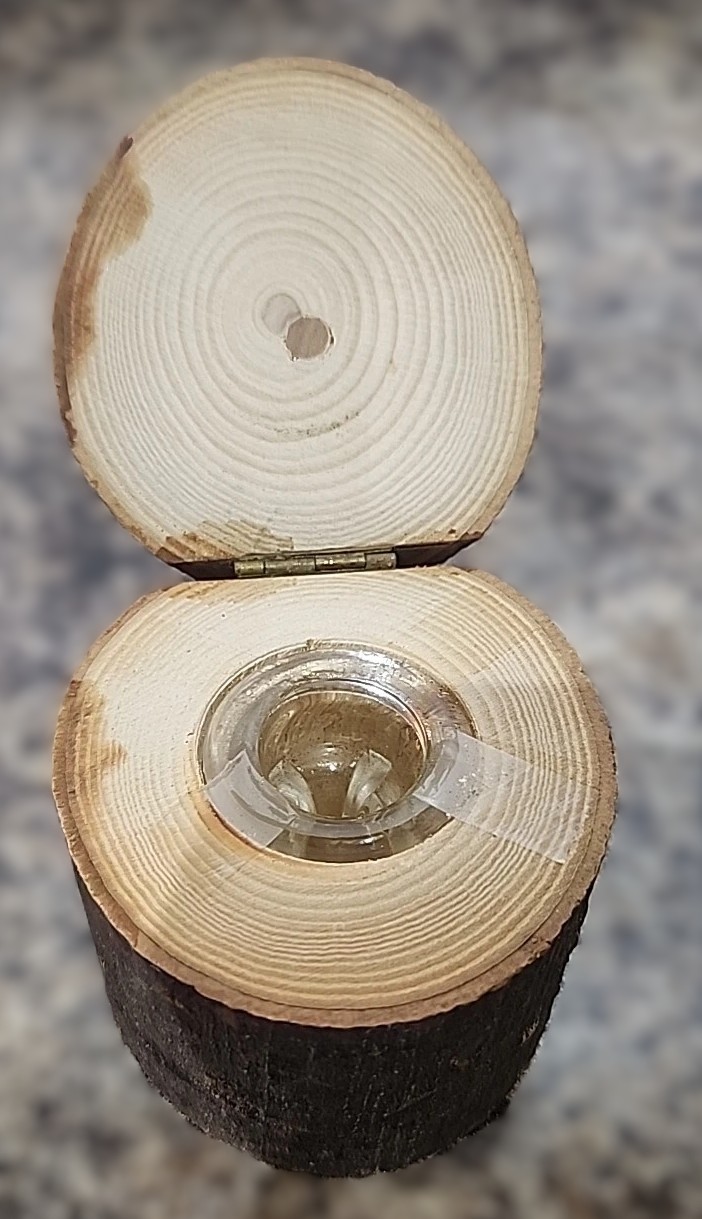
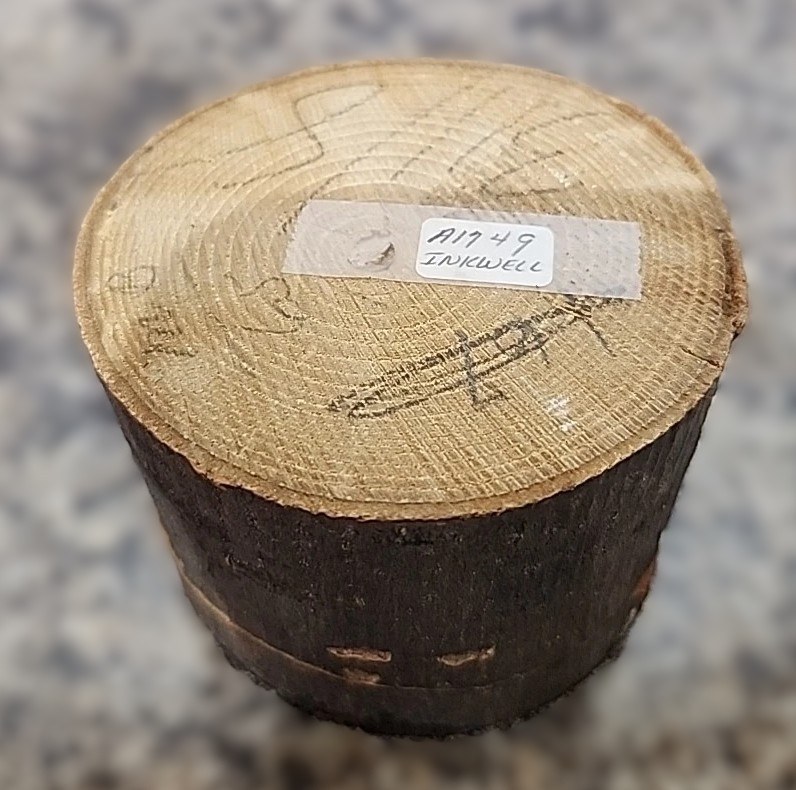
The item is a hinged cylindrical inkwell made from a cross-section of a tree limb.
- Exterior: The body and lid are covered in natural dark bark. The back features a small metal hinge set into a notched section of the wood.
- Interior: When opened, the growth rings of the wood are visible. A small glass ink reservoir is recessed into the center of the base.
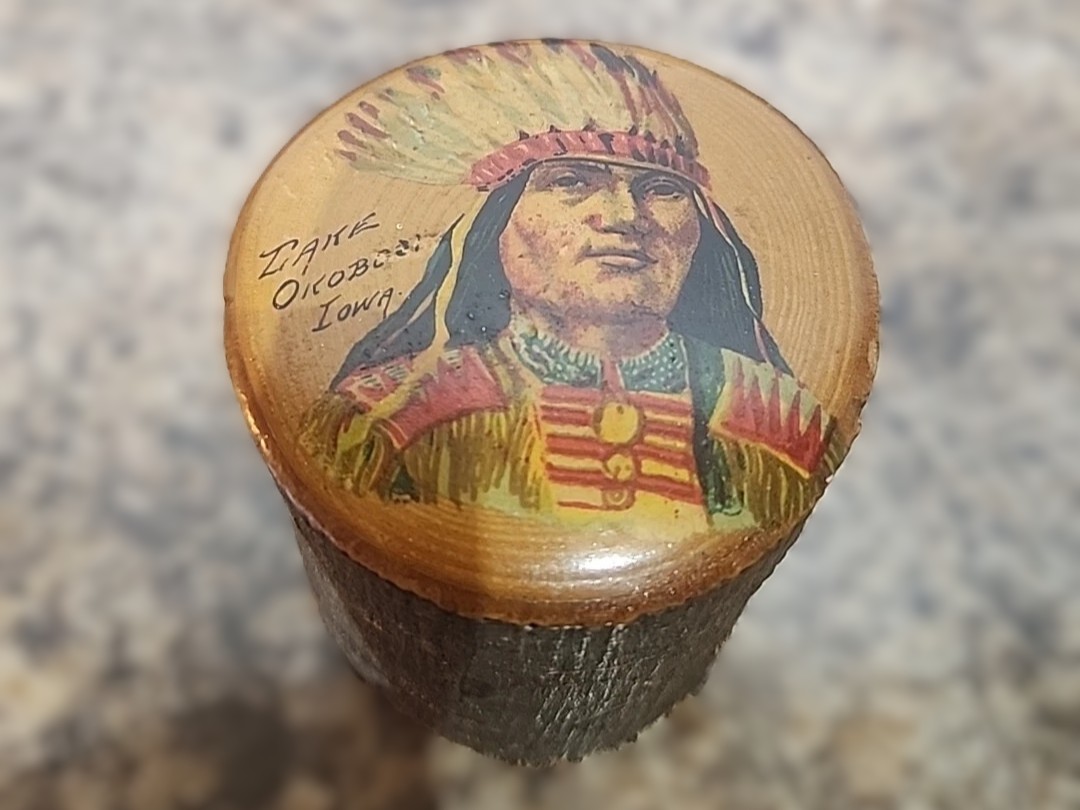
- Lid Decoration: The top surface is sanded smooth and polished to a high sheen. It features a colorful depiction of a Native American man in a feathered headdress, accompanied by the handwritten text: “Lake Okoboji, Iowa.”
Location
Lake Okoboji is located in Dickinson County, Northwest Iowa. It is part of the “Iowa Great Lakes” region.
- Souvenir Status: Since the late 19th century, Lake Okoboji has been one of the premiere vacation destinations in the Midwest. It is famous for its blue water (one of only three blue-water lakes in the world) and historical attractions like Arnolds Park Amusement Park (established in 1889).
- Context: In the early 20th century, “rustic” souvenirs made of local wood were incredibly popular for tourists visiting lakeside resorts, as they captured the “wilderness” spirit of the vacation.
Age and Production
Based on the hinge style, the font of the lettering, and the type of imagery used, this piece likely dates from the 1920s to the 1940s.
- Transfer Painting: The image of the Native American is a decalcomania (transfer) rather than a hand-painted portrait. This allowed for mass production of souvenirs. You can see the edges of the transfer film and the consistent, printed dot-pattern in the colors. After the transfer was applied, the wood was finished with a thick coat of clear lacquer or varnish to protect the image.
The Native American Imagery
The figure depicted is likely intended to represent Chief Inkpaduta or a member of the Wahpekute band of the Santee Sioux, who were the original inhabitants of the Spirit Lake/Okoboji region.
- Historical Significance: Lake Okoboji is the site of the “Spirit Lake Massacre” of 1857. While the history is somber, early 20th-century tourism often used romanticized or “noble” depictions of Native Americans to add a sense of historical mystique to the area.
- The Depiction: He is shown wearing a classic Plains-style eagle feather headdress and a decorated buckskin shirt with a beaded “v-neck” design. This specific image was a common stock illustration used on various souvenirs across the United States during this era; the “Lake Okoboji” text would be added specifically for that market.
Sold for $35 in January 2026
Content disclaimer. The information posted is the owner’s best knowledge and may not have been vetted by the SOIC. We welcome comments, corrections, and additions, working to make our website information comprehensive and accurate.
Join the Society of Inkwell Collectors (SOIC) – it’s free!
Founded in 1981 as a non-profit organization,
we are documenting inkwells (and accessories).
We’re here to help and inform!