

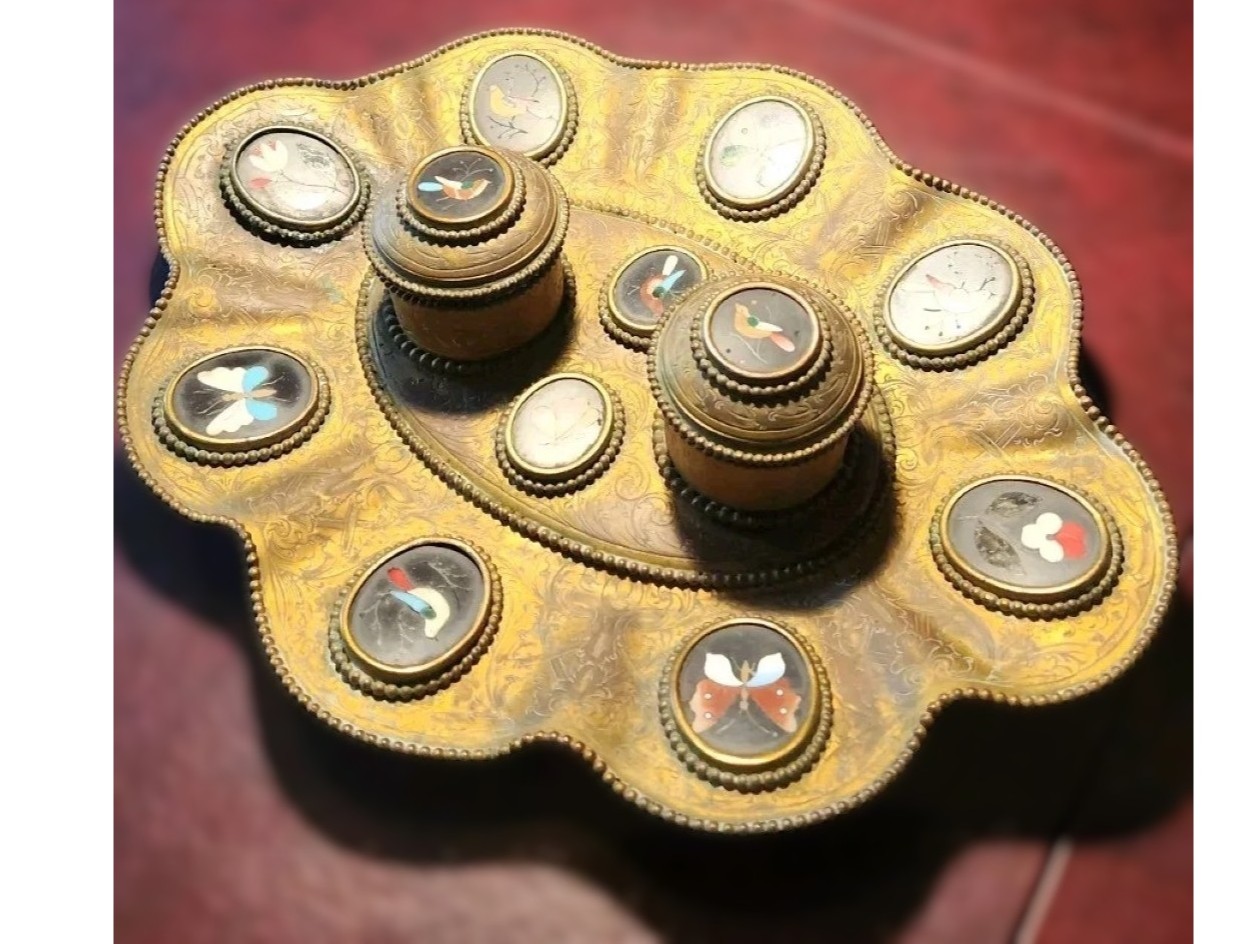
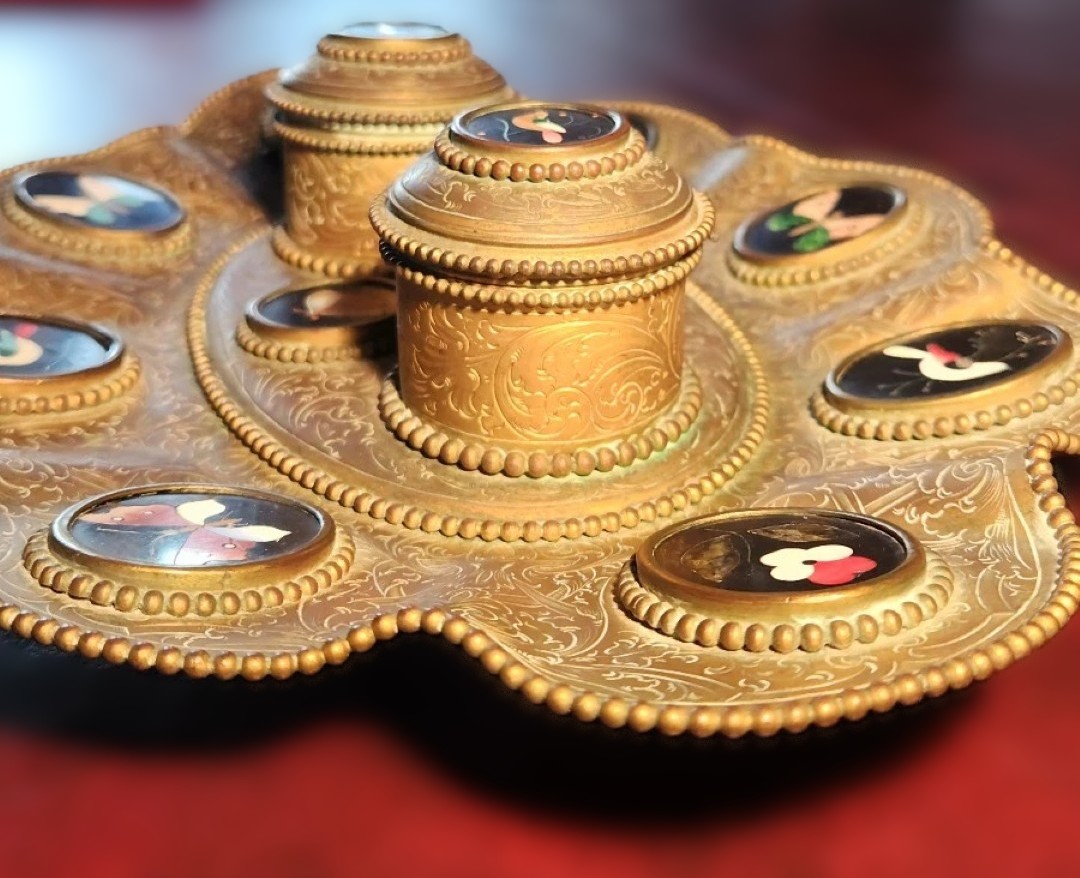


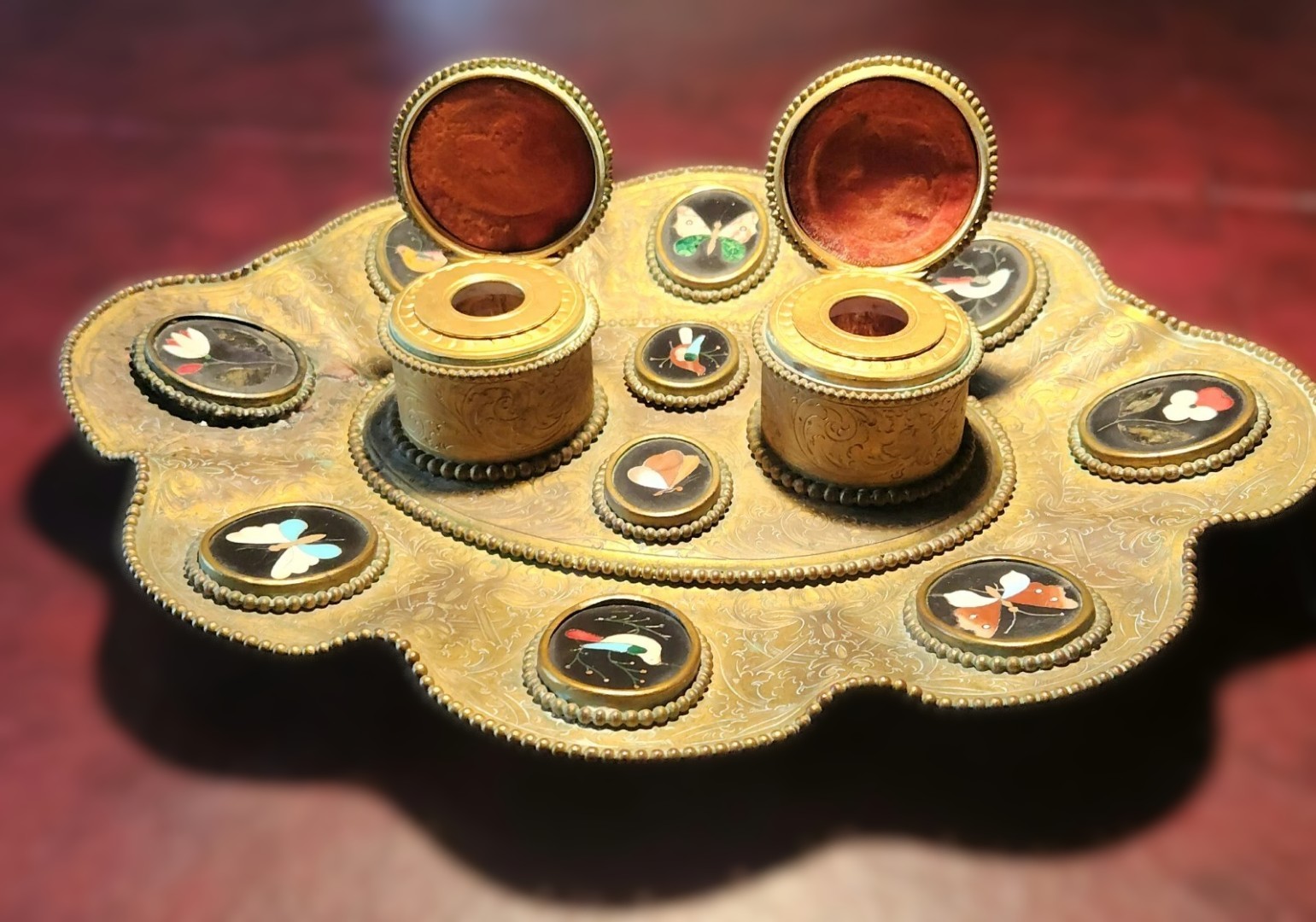
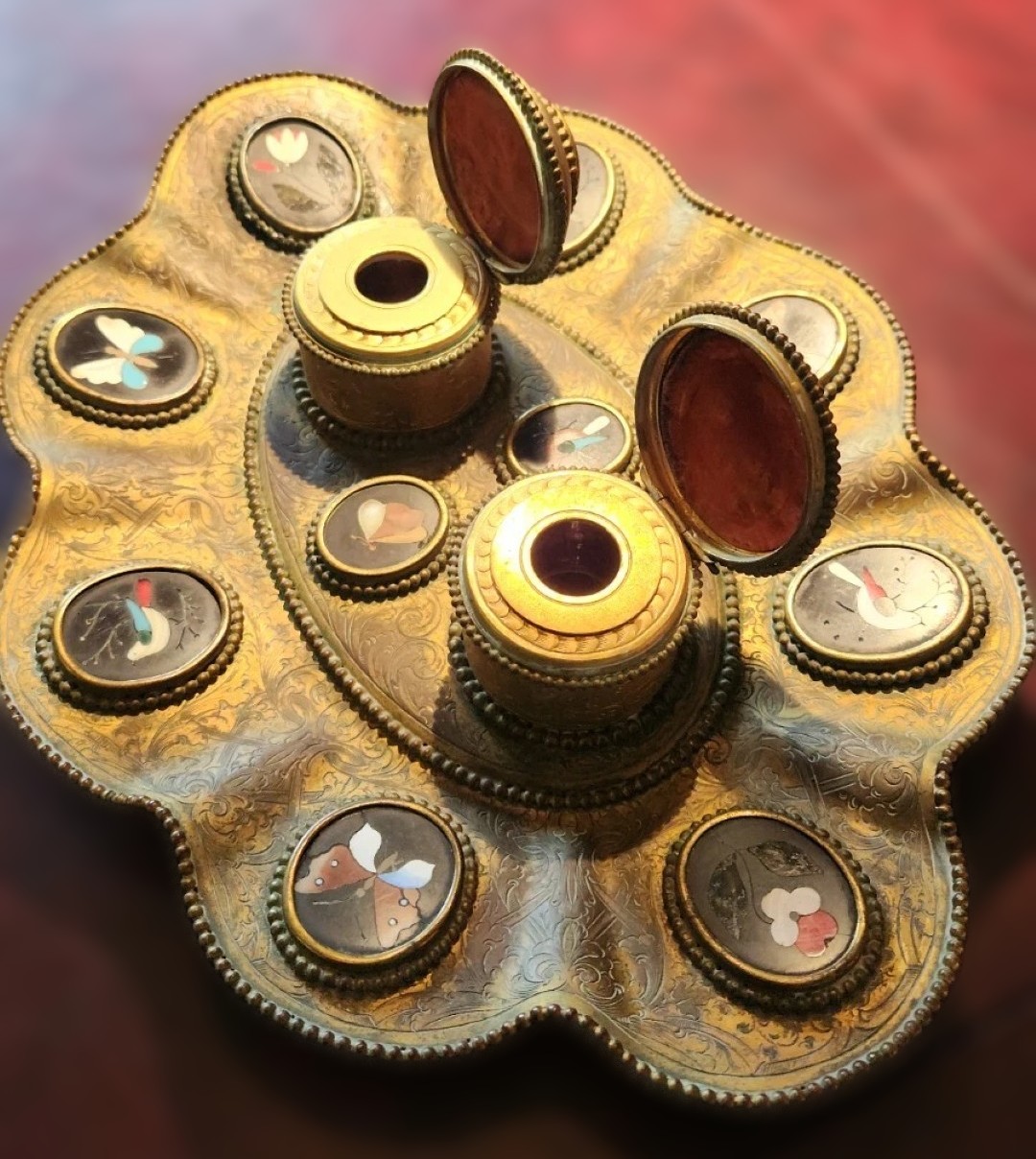

Double Bronze Inkstand with Pietra Dura Medallions
| Categories | Souvenir, Stone/Marble/Ivory/Bone/Hoof/Leather |
| Type | Grand Tour |
| Material | Bronze, Stone |
| Markings | Unmarked |
| Manufacturer | Undetermined |
| Origin | Italy |
| Date or Era | circa 1860 |
This is a remarkable example of 19th-century Italian craftsmanship. The inkstand is a “Grand Tour” souvenir, typically purchased by wealthy travelers visiting Italy—specifically Florence—to bring back a piece of the Mediterranean’s artistic heritage.
Description
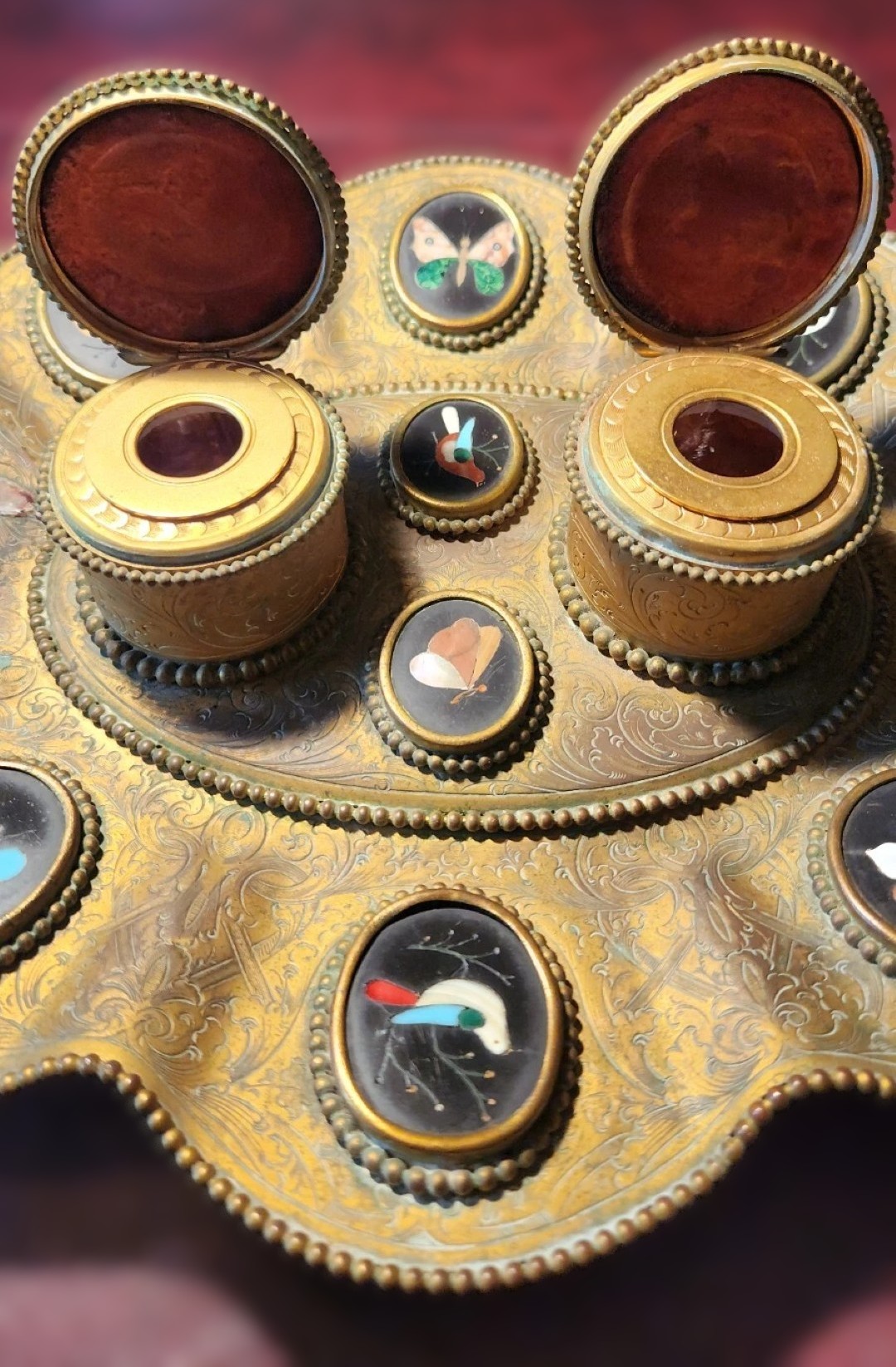
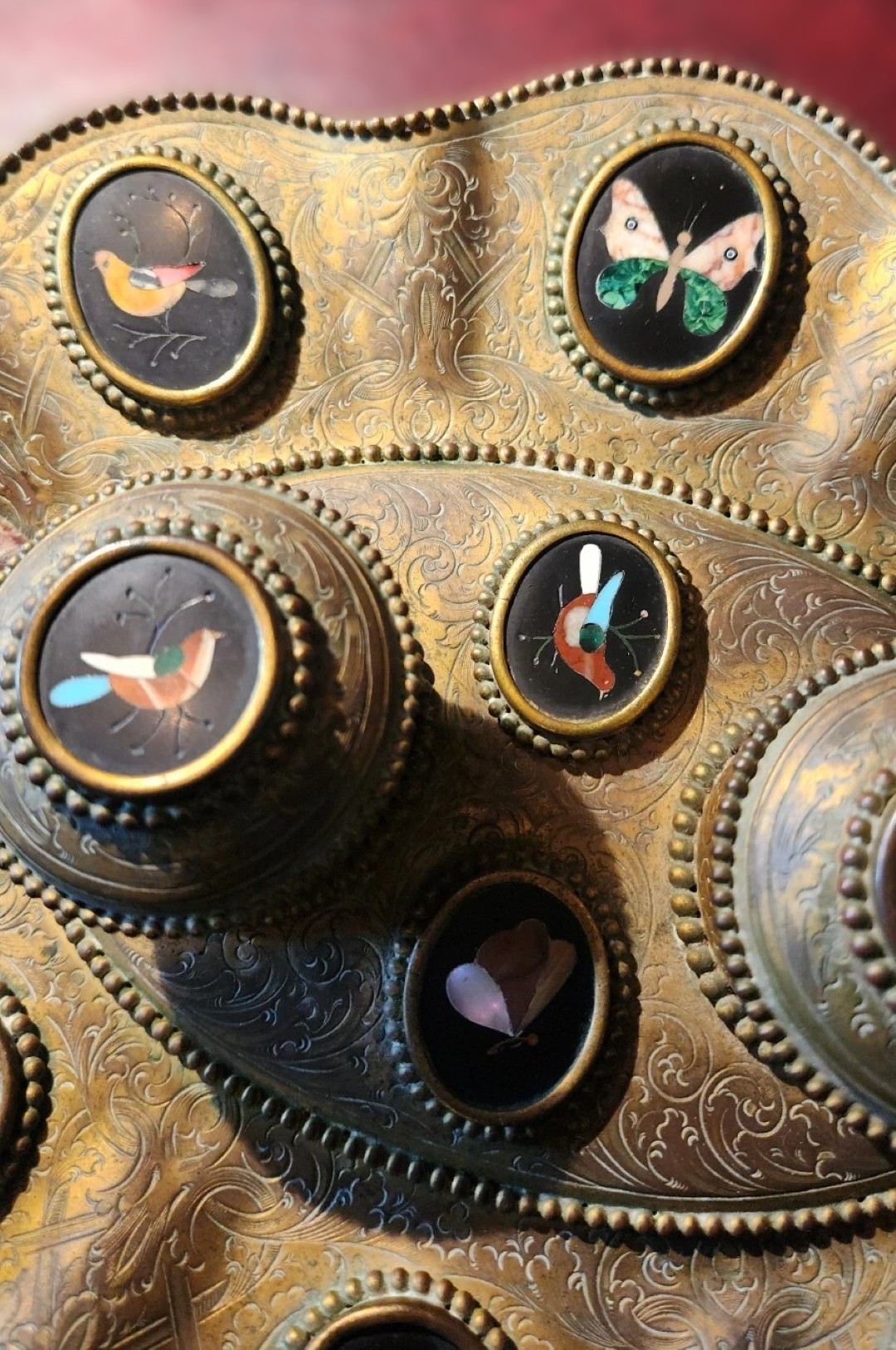
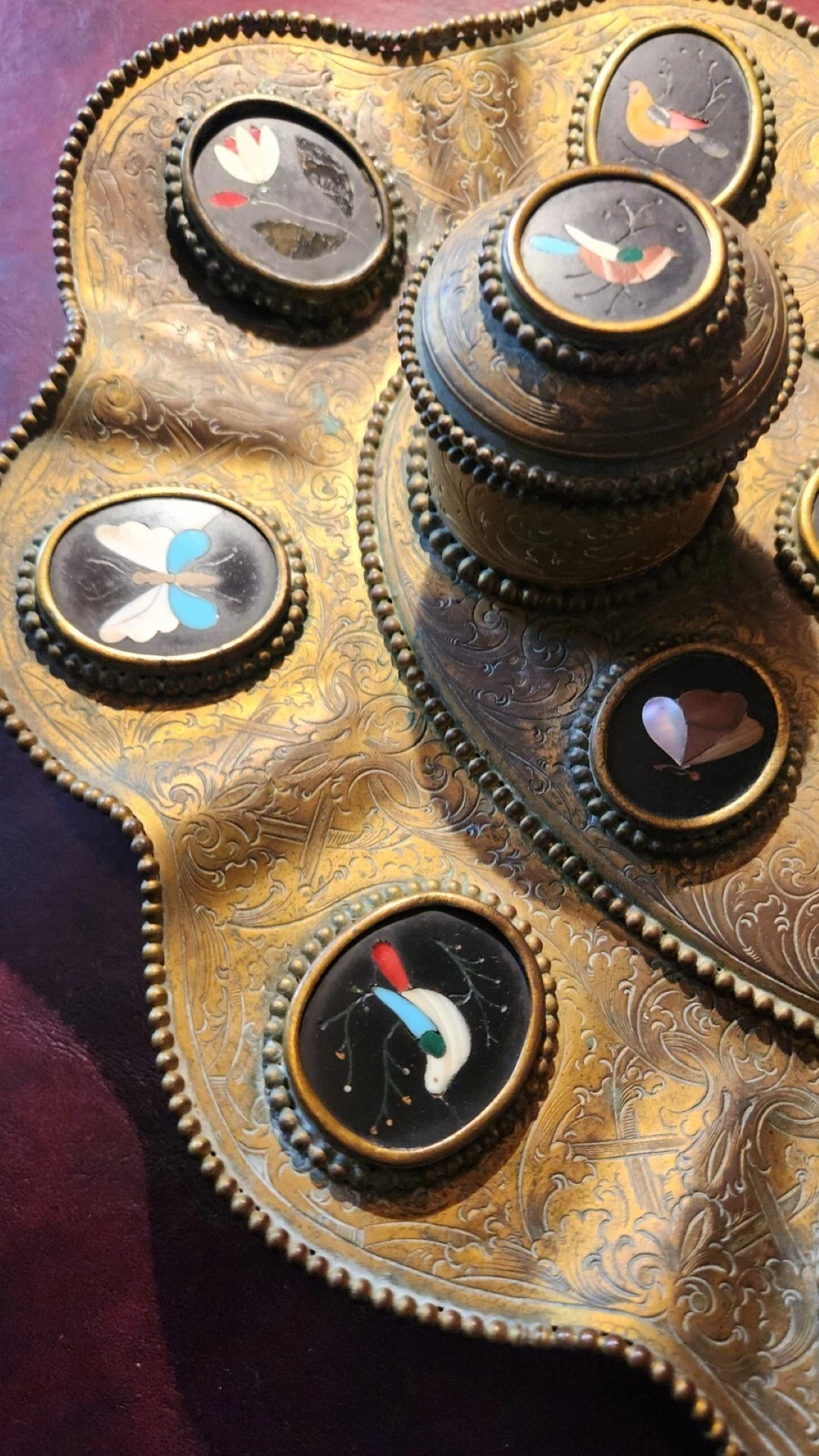
This double inkstand is crafted from gilded bronze (ormolu) and features a scalloped, tray-style base with a heavily chased foliate and scrollwork pattern. The gilded surface is rich with textured engravings, providing a luxurious backdrop for the colorful stone inlays.
- The Inkwells: Two cylindrical inkwells sit atop an oval central platform. The sides of the wells are decorated with swirling acanthus leaf patterns. The lids are hinged and, when closed, display central stone inlays.
- The Inlays: There are thirteen distinct Pietra Dura medallions in total.
- The Base: Eight oval medallions ring the outer scalloped edge, featuring a variety of butterflies, songbirds, and floral sprigs (including a white and red tulip or pansy).
- The Center: Three smaller oval medallions are placed between and in front of the inkwells.
- The Lids: Each lid features a circular medallion—one depicting a bird and the other a butterfly.
- The Border: Every stone inlay is framed by a beaded bronze border.
- The Underside: The tray is elevated on a solid, oval gilded base that continues the intricate floral chasing seen on the upper surfaces.
Understanding Pietra Dura
The term Pietra Dura (Italian for “hard stone”) refers to an inlay technique that uses cut and polished colored stones to create images. It is often described as “painting in stone.”
How it is Created:
- Selection: Craftsmen select semi-precious stones for their natural colors and “grain.” Common stones include lapis lazuli (blue), malachite (green), agate, jasper, and carnelian.
- Slicing: The stones are sliced into thin veneers.
- Cutting: Using a wire saw and abrasive paste, the artisan cuts the stones into precise shapes that fit together like a jigsaw puzzle.
- Inlaying: These pieces are then fitted into a “matrix” or base—usually black Belgian marble (as seen in this inkstand)—which has been carved out to receive the stones.
- Polishing: Once glued, the entire surface is polished until the seams between the stones and the marble base become almost invisible to the touch.
Historical Context & Origin
- Italian Made: While Pietra Dura was practiced elsewhere, the Opificio delle Pietre Dure in Florence was the world center for this art form. The specific style of these birds and butterflies is iconic to 19th-century Florentine workshops.
- How old is it? This piece likely dates to the mid-to-late 19th century (c. 1850–1880).
Sold for $640 in January 2026
Content disclaimer. The information posted is the owner’s best knowledge and may not have been vetted by the SOIC. We welcome comments, corrections, and additions, working to make our website information comprehensive and accurate.
Join the Society of Inkwell Collectors (SOIC) – it’s free!
Founded in 1981 as a non-profit organization,
we are documenting inkwells (and accessories).
We’re here to help and inform!