

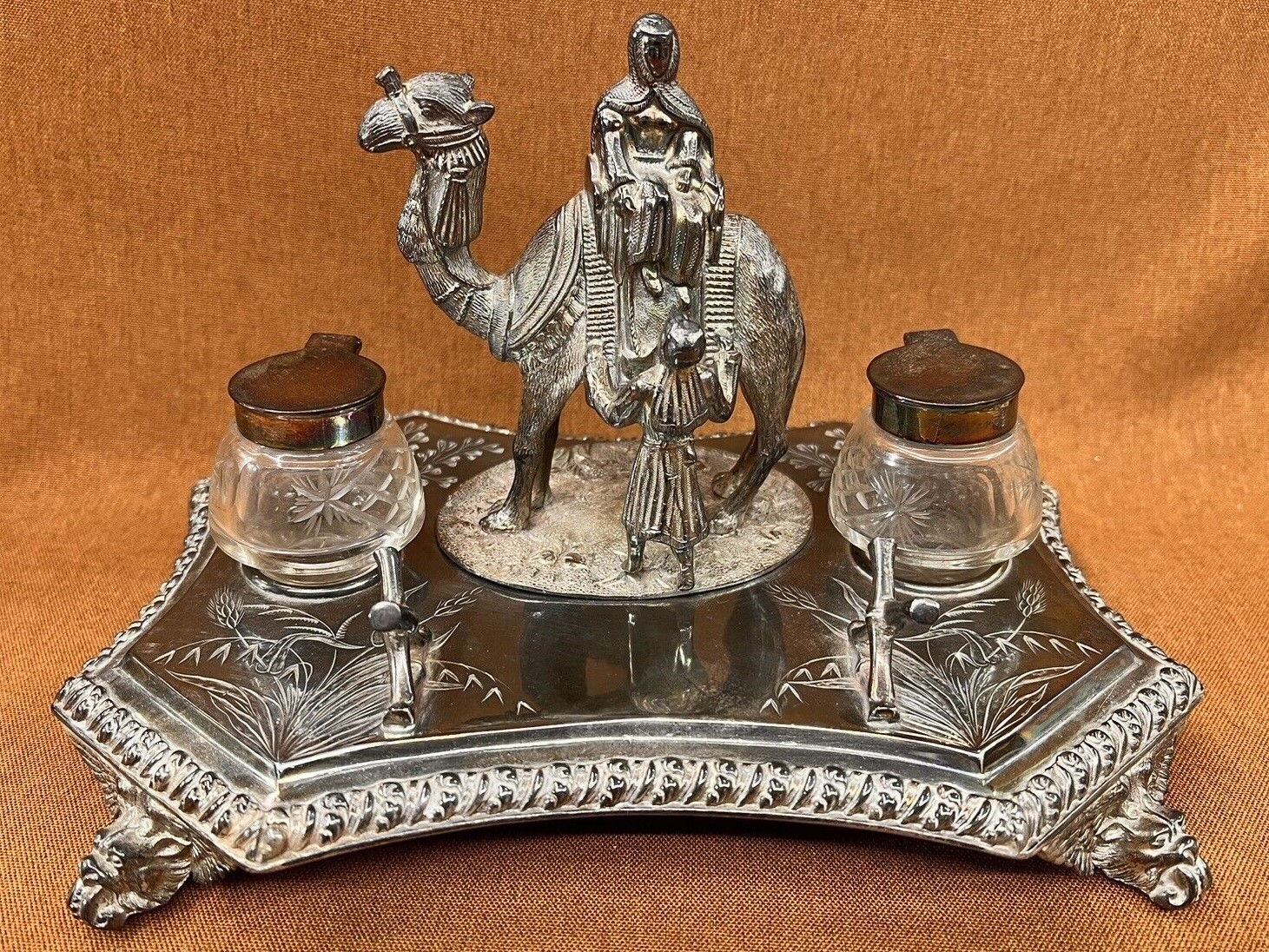
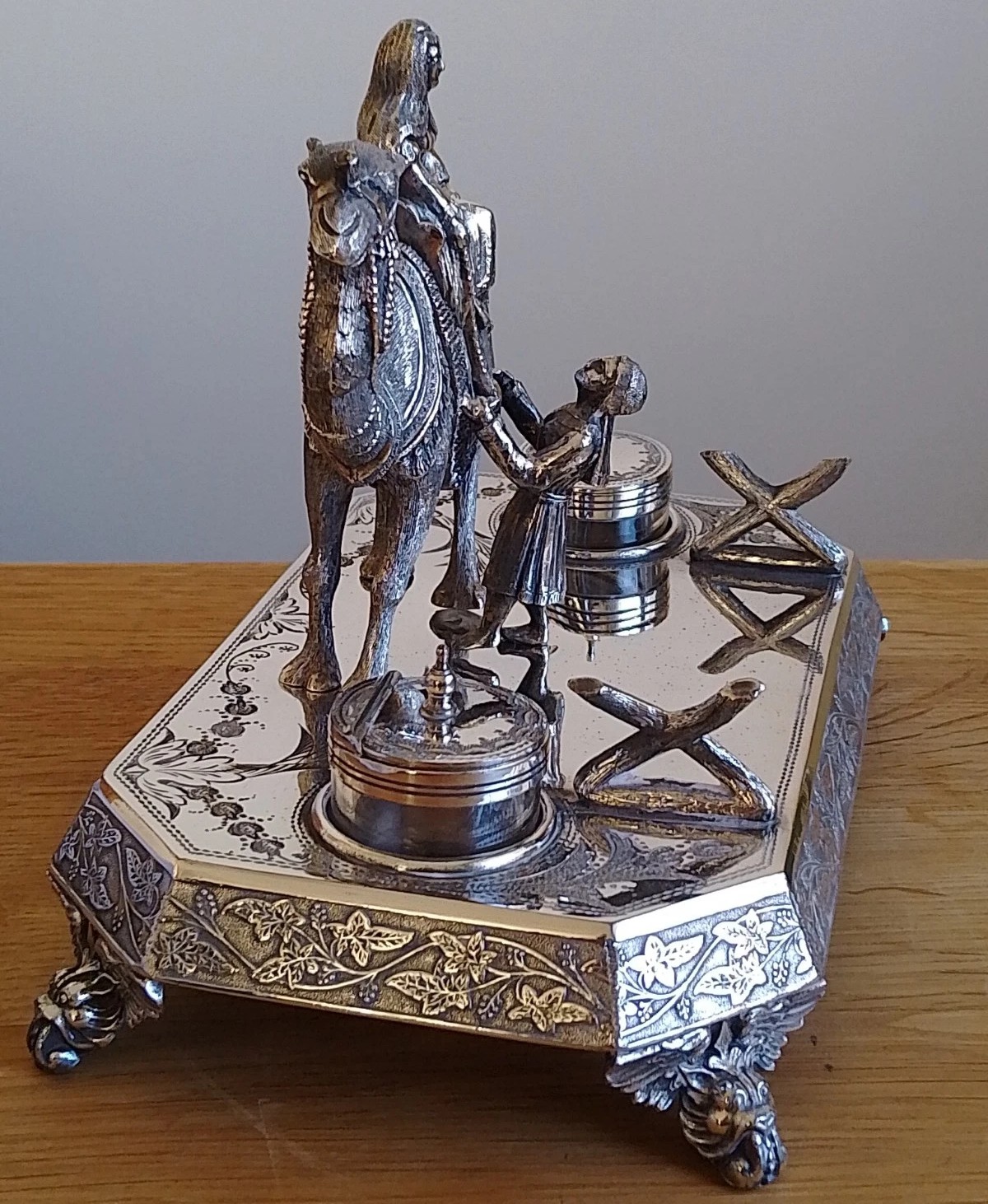
Silverplate Inkstand Featuring a Camel and Rider
| Categories | Figural - Animals & Living Creatures, Middle East / Africa |
| Type | Camel |
| Material | Silverplate |
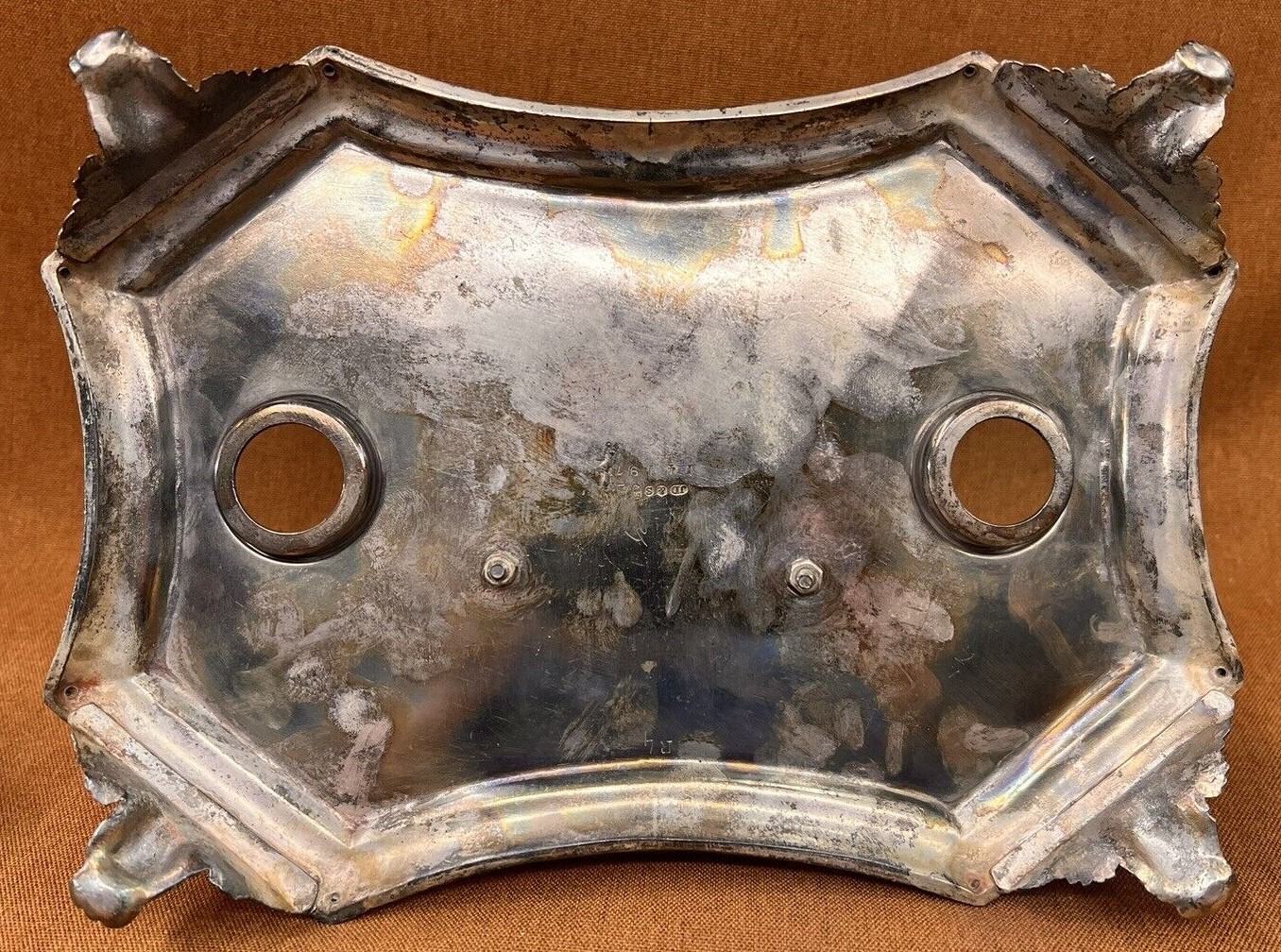
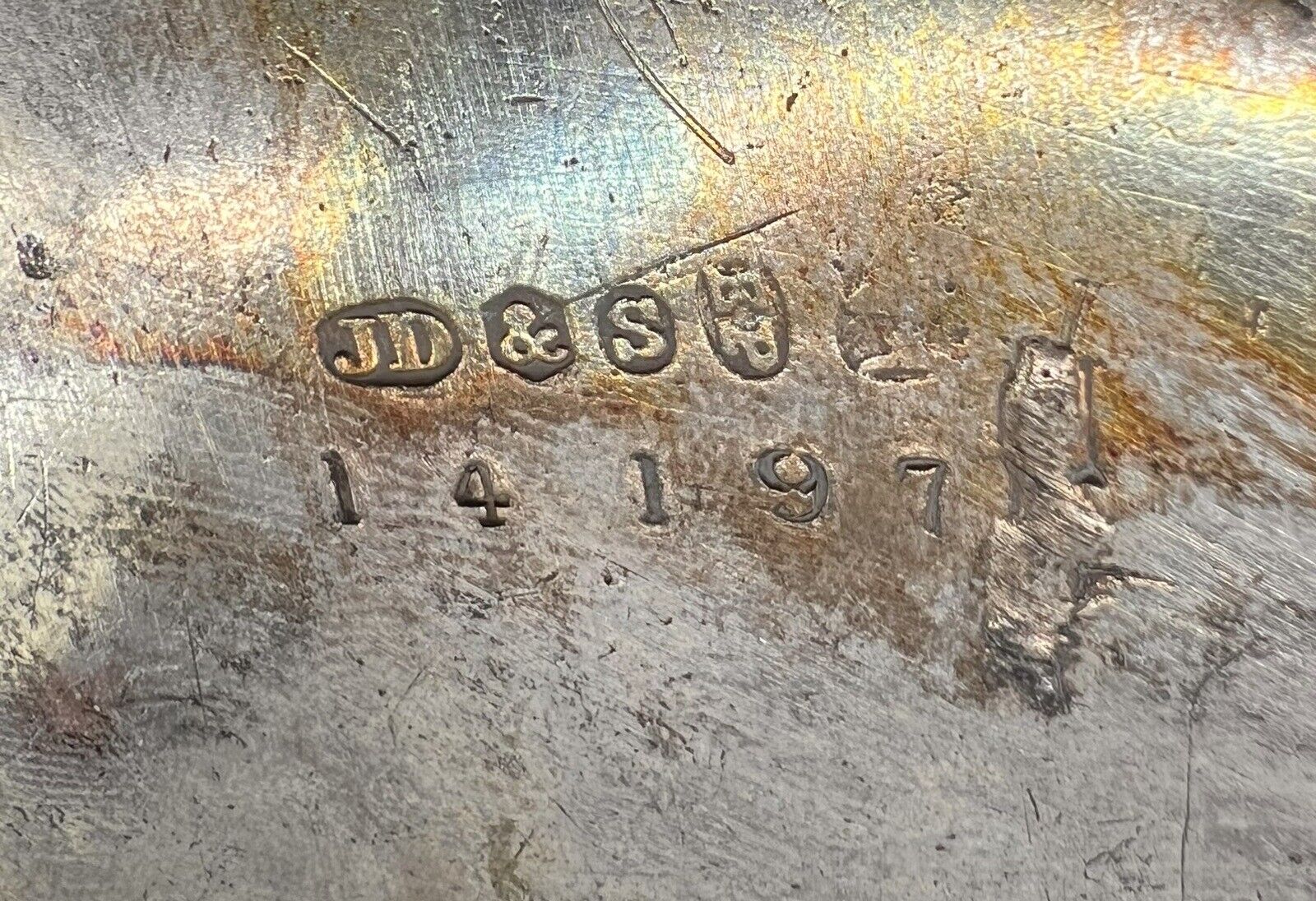
| Markings | See Narrative |
| Manufacturer | James Deakin & Sons |
| Origin | England |
| Date or Era | circa 1890 |
| Measuring | 9” x 5 ½” x 6 ⅝” high |
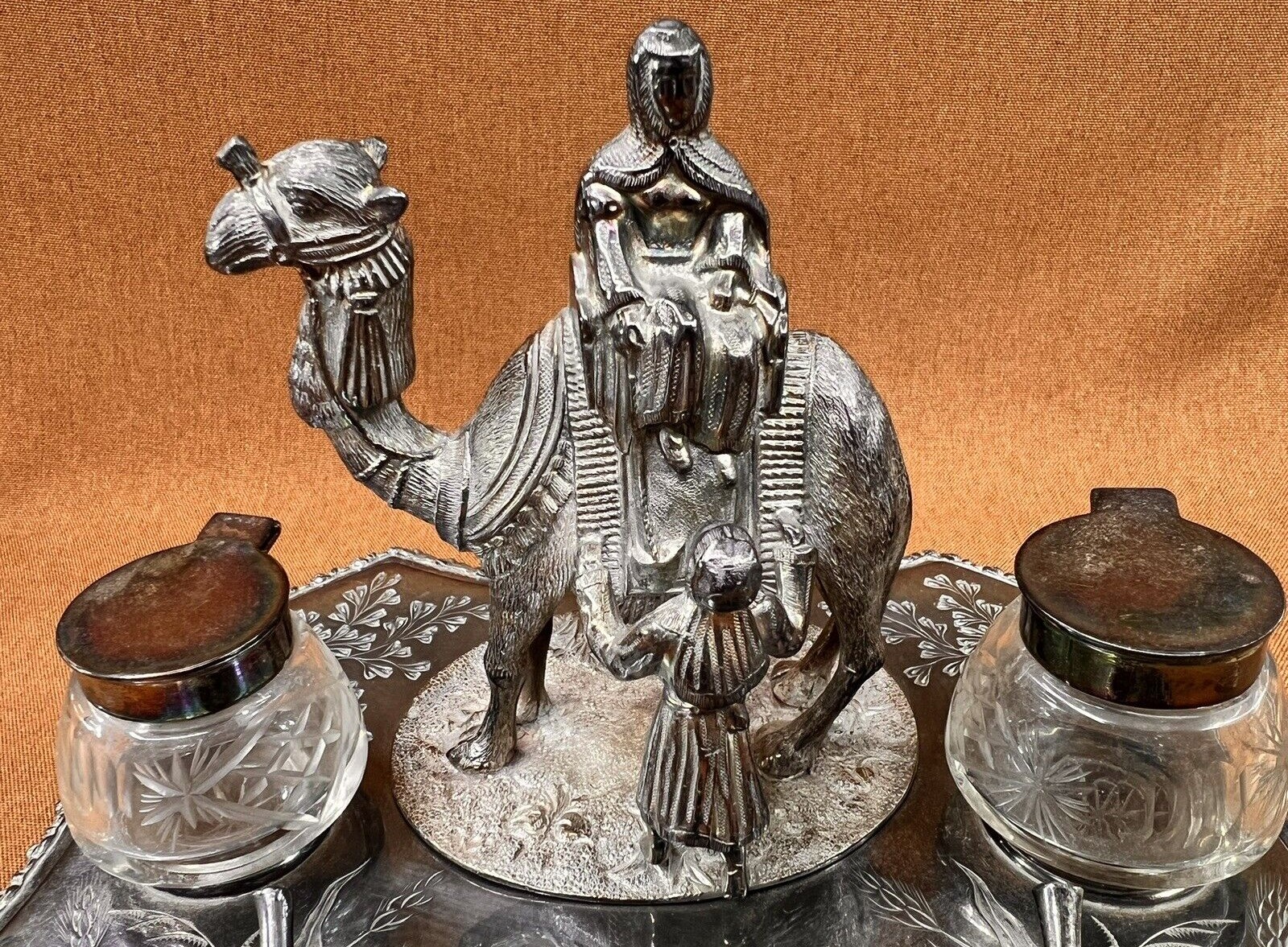
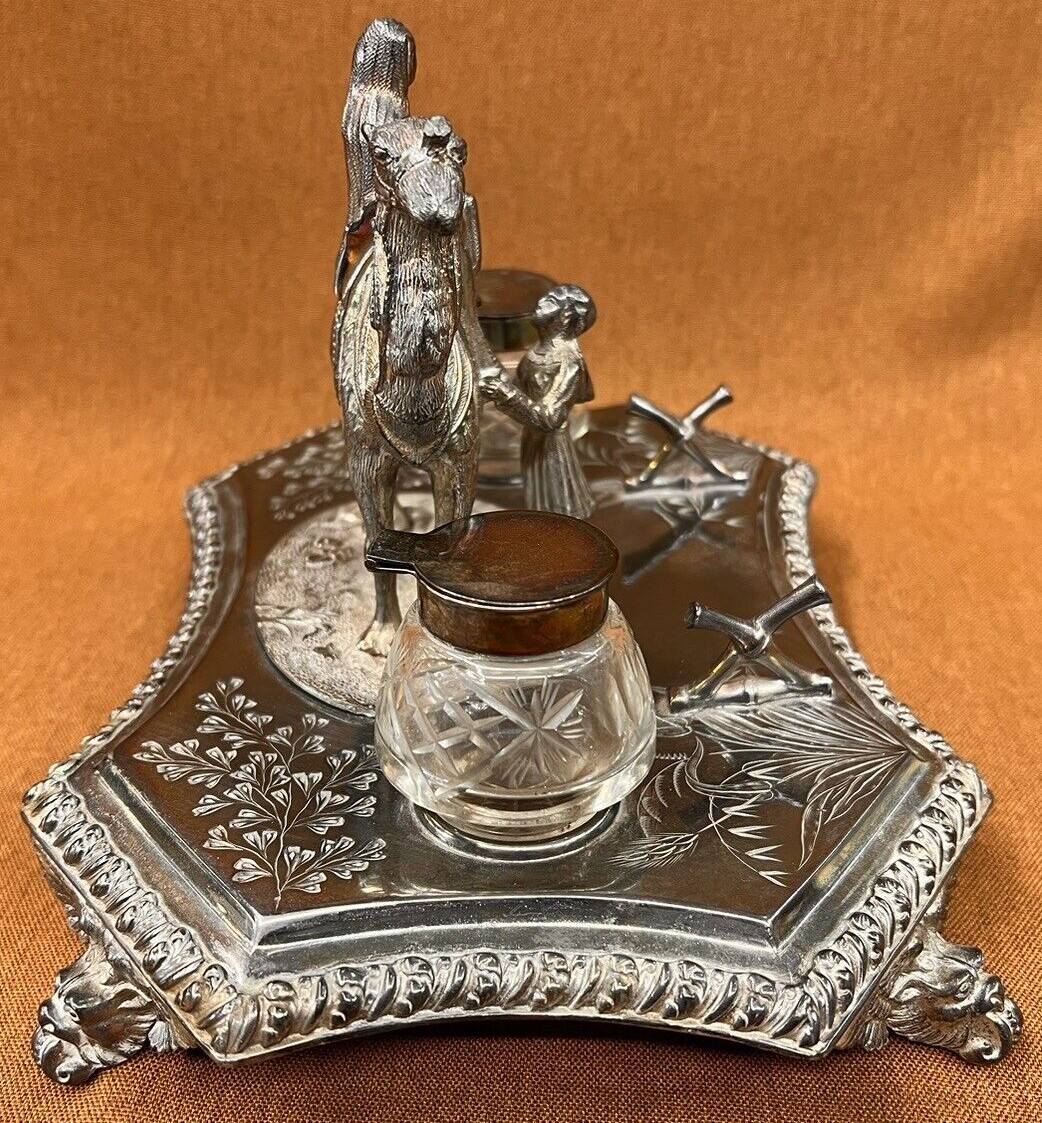
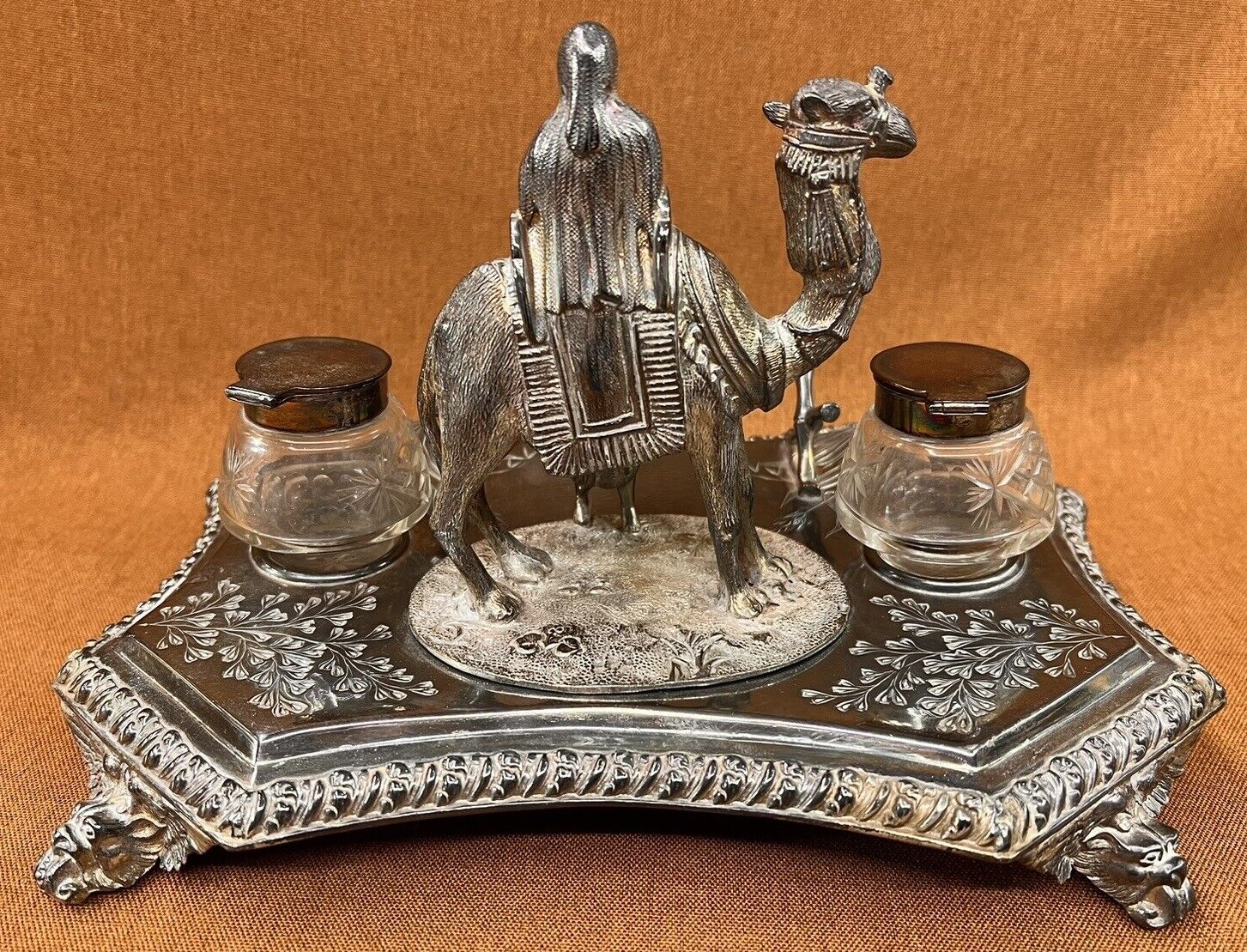
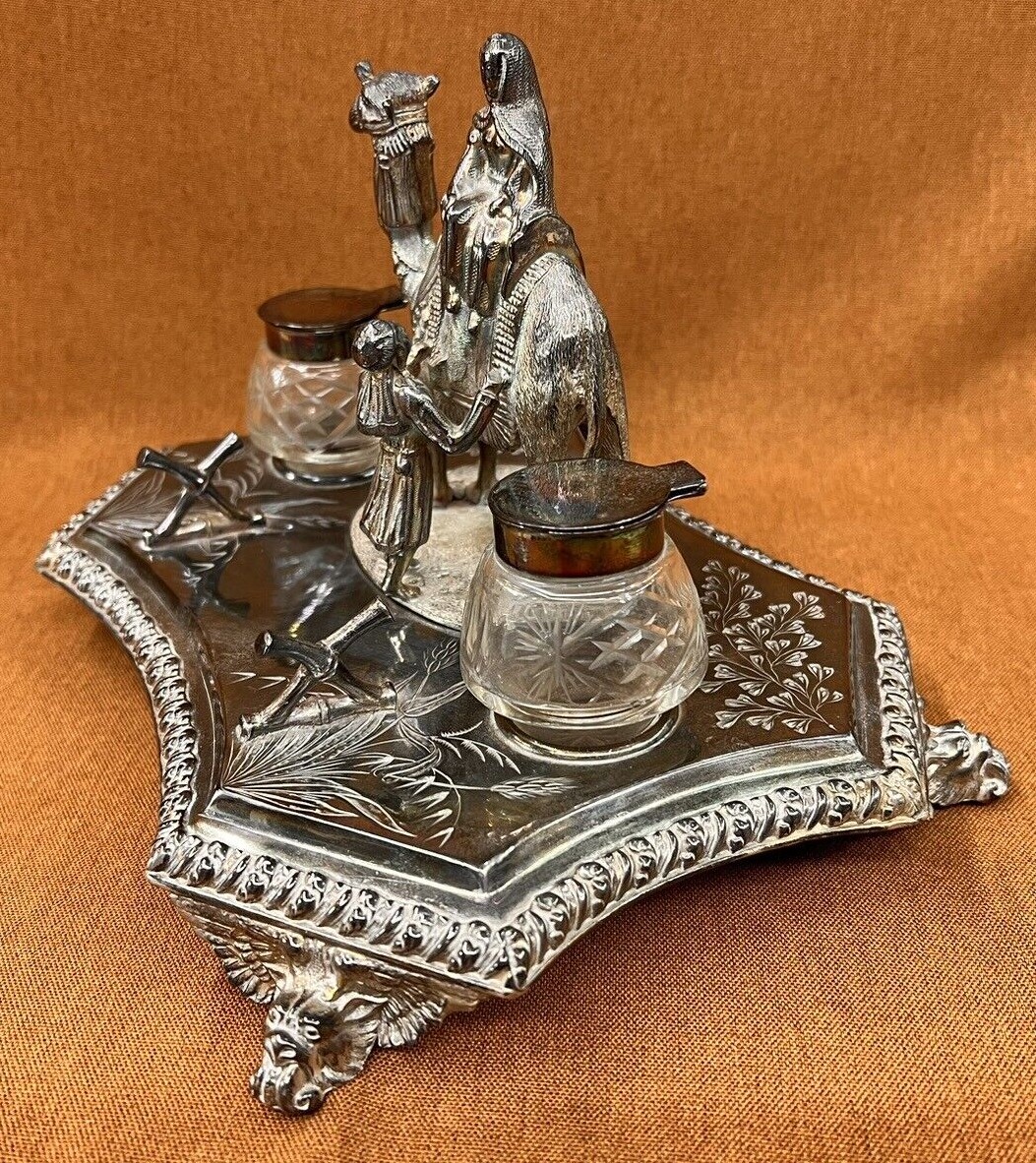
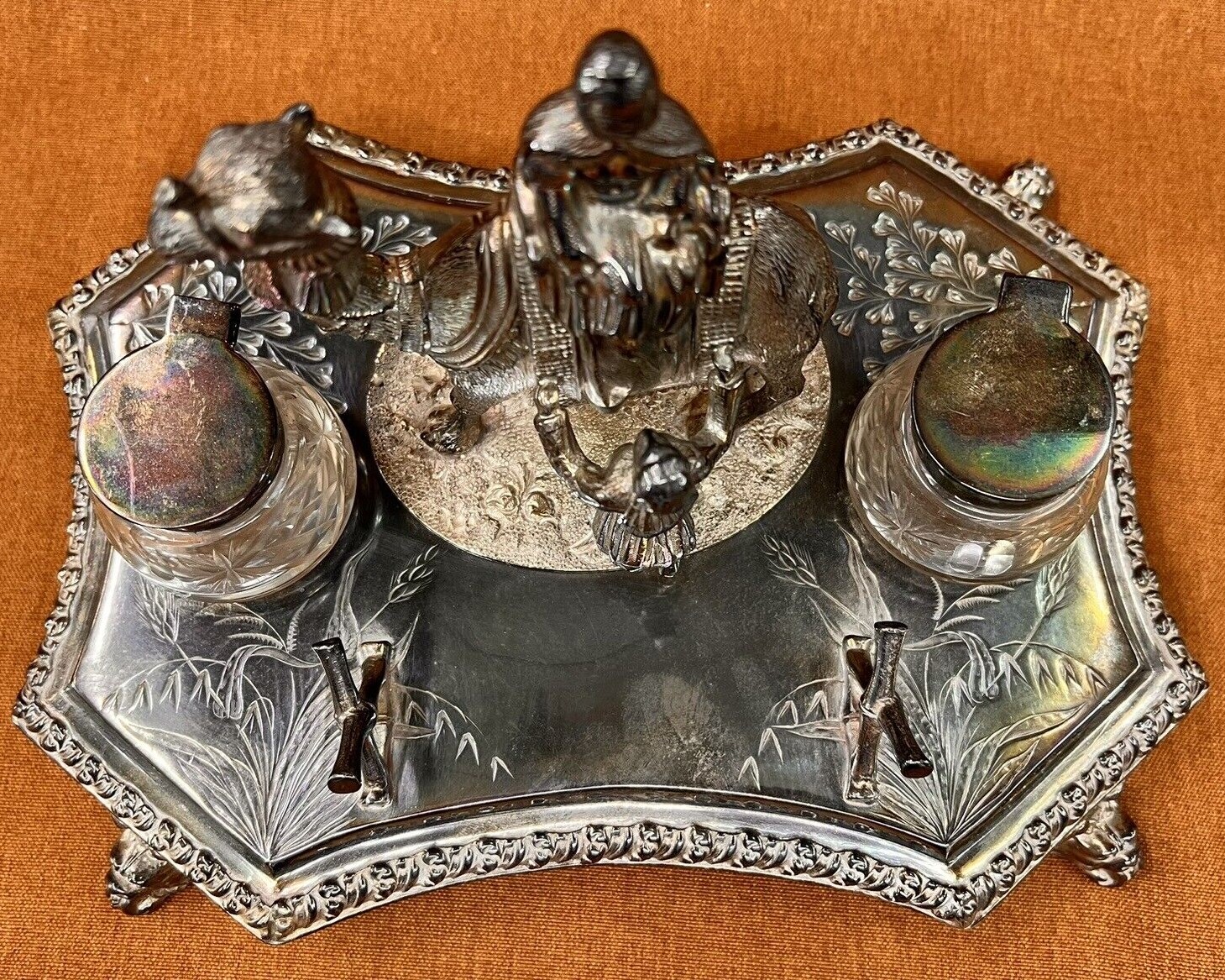
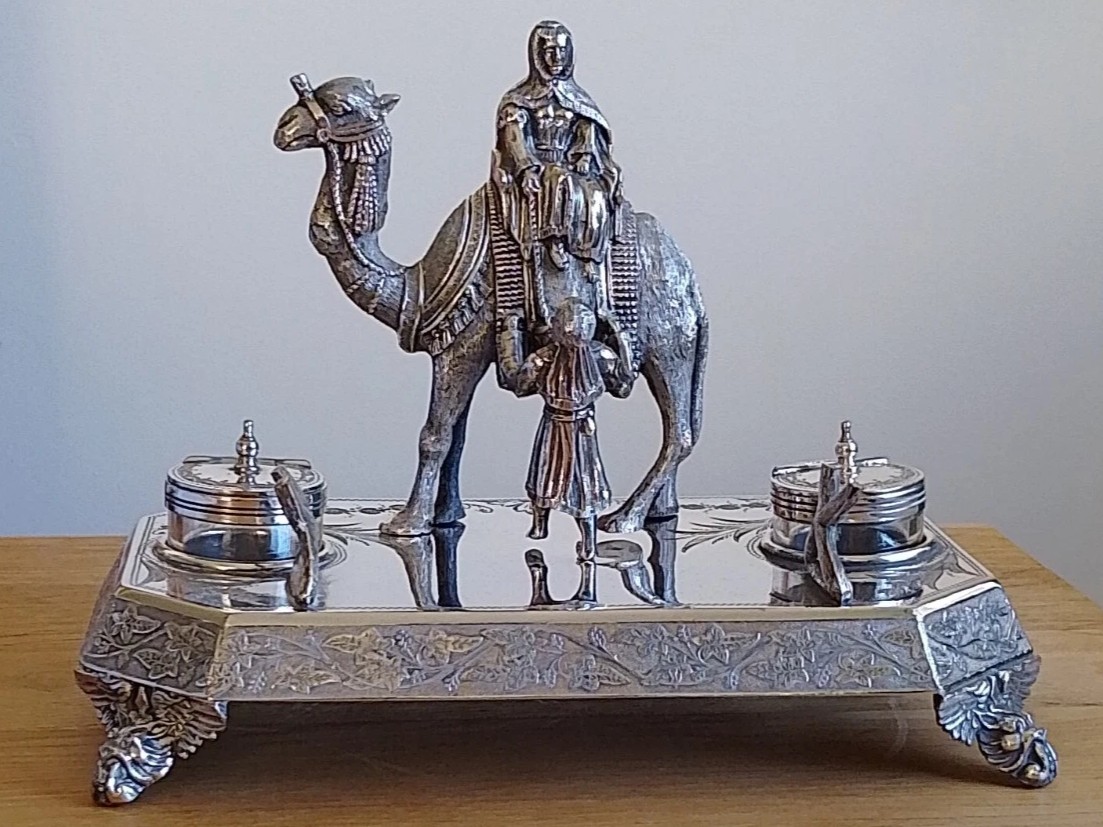
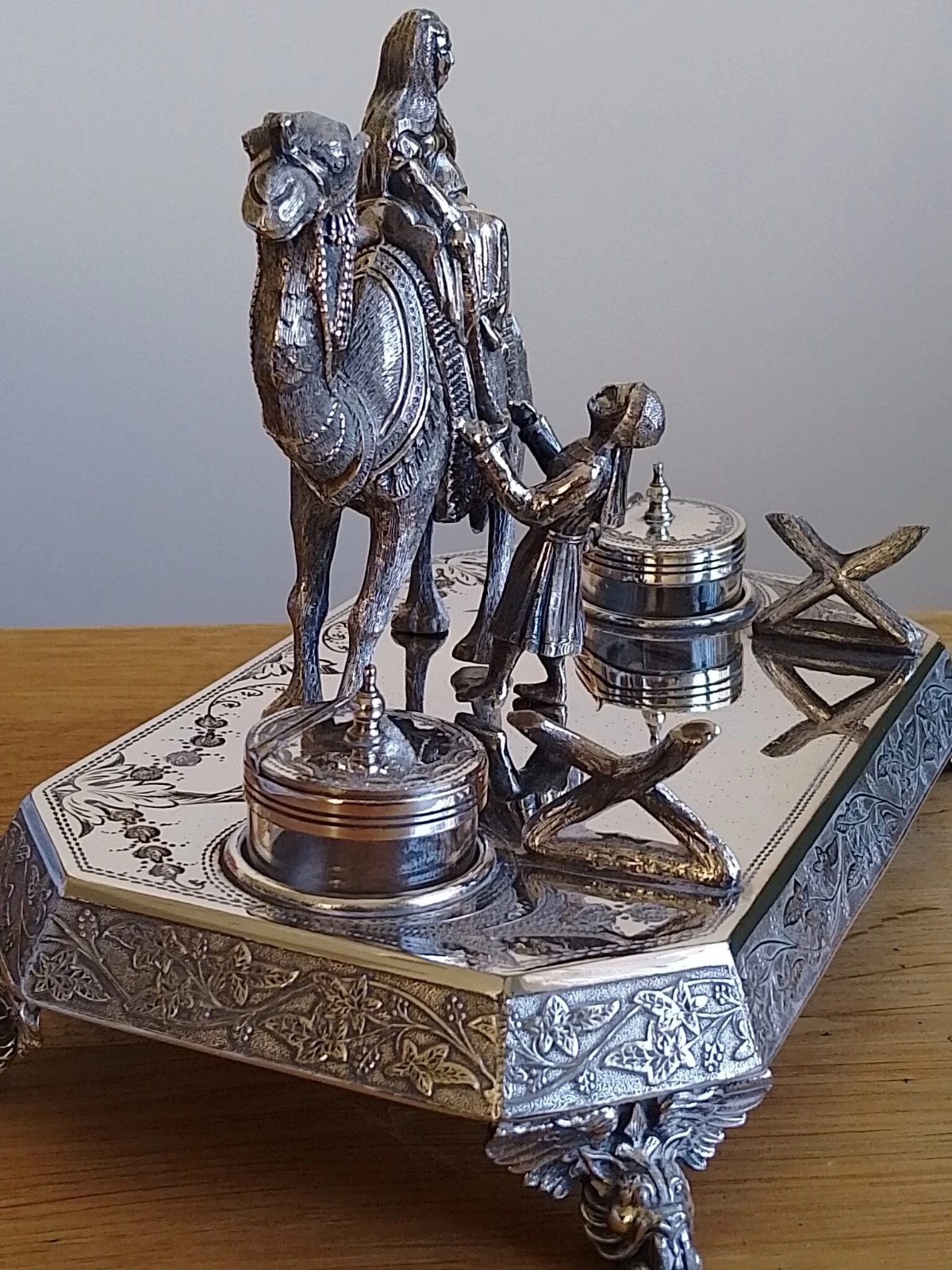
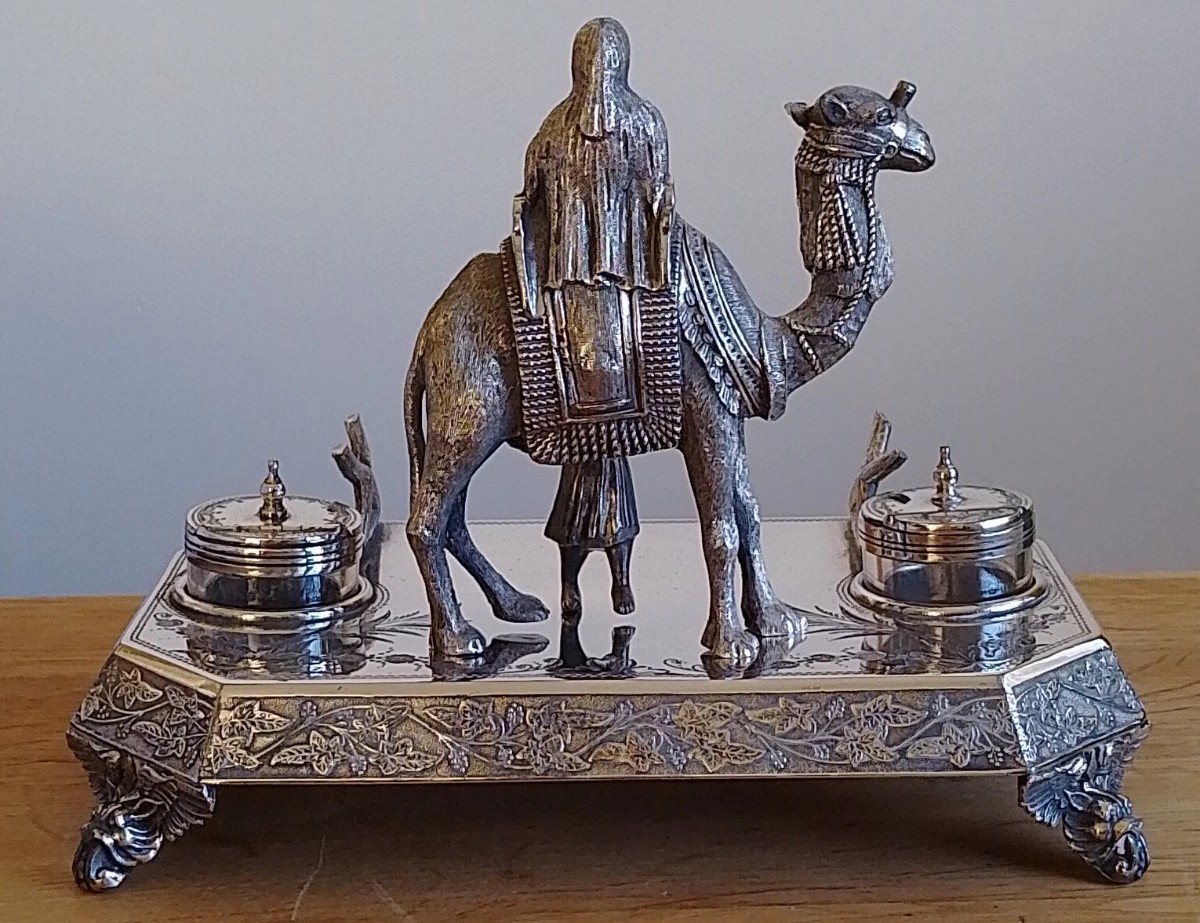
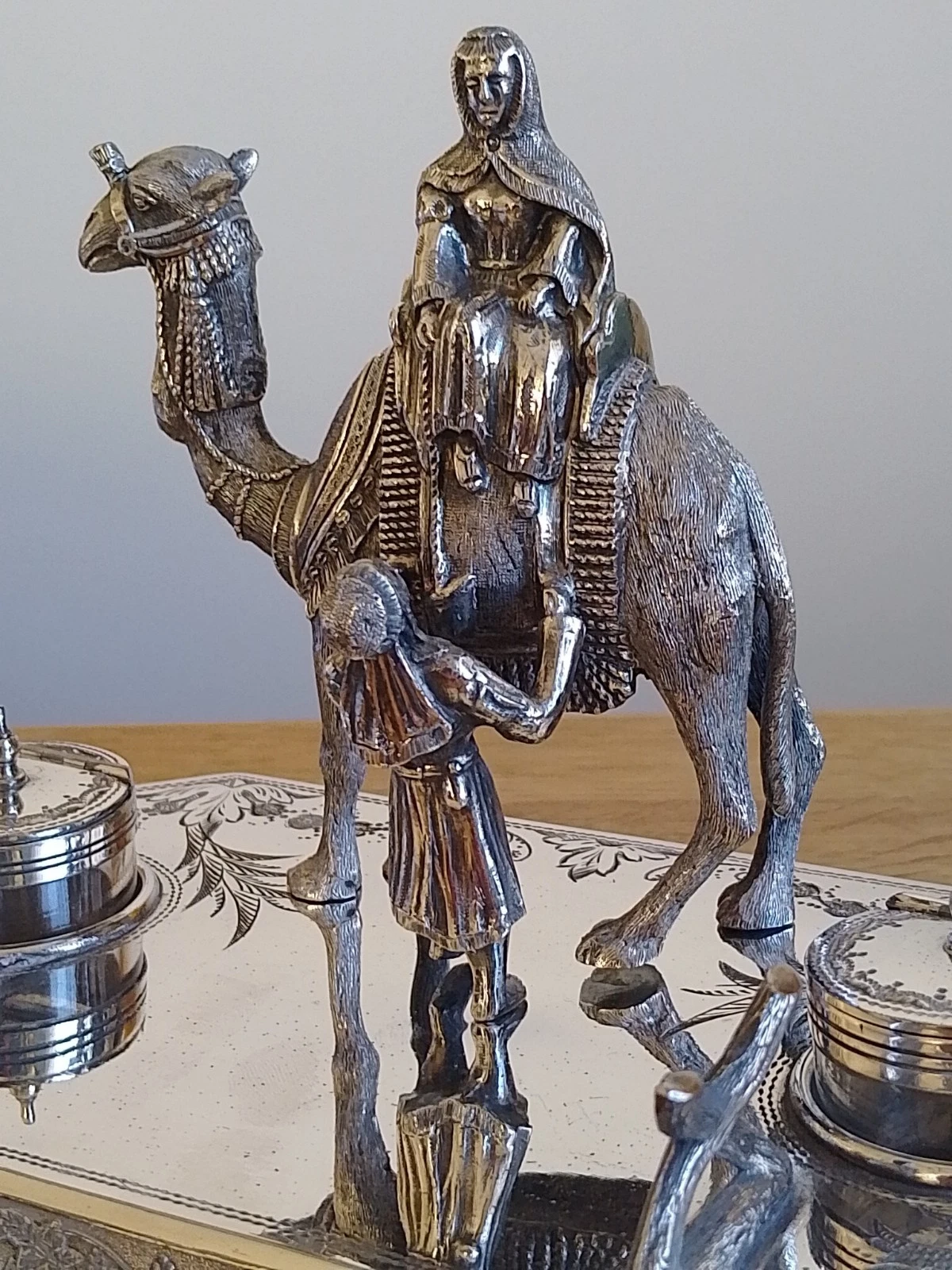
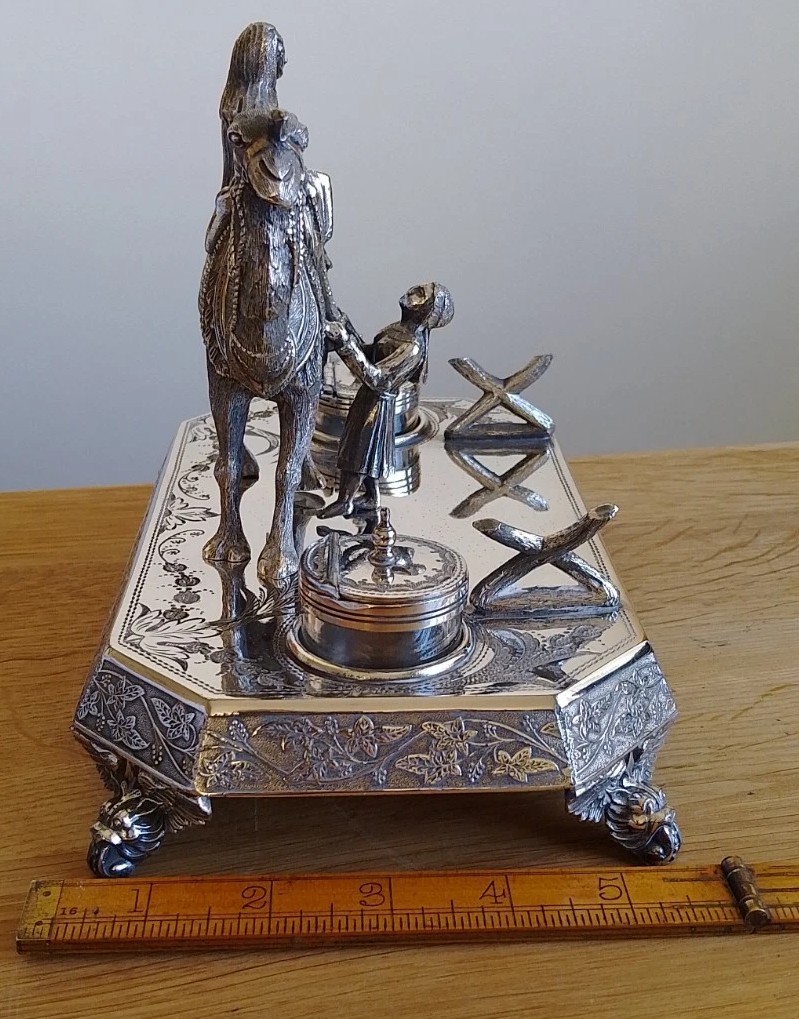
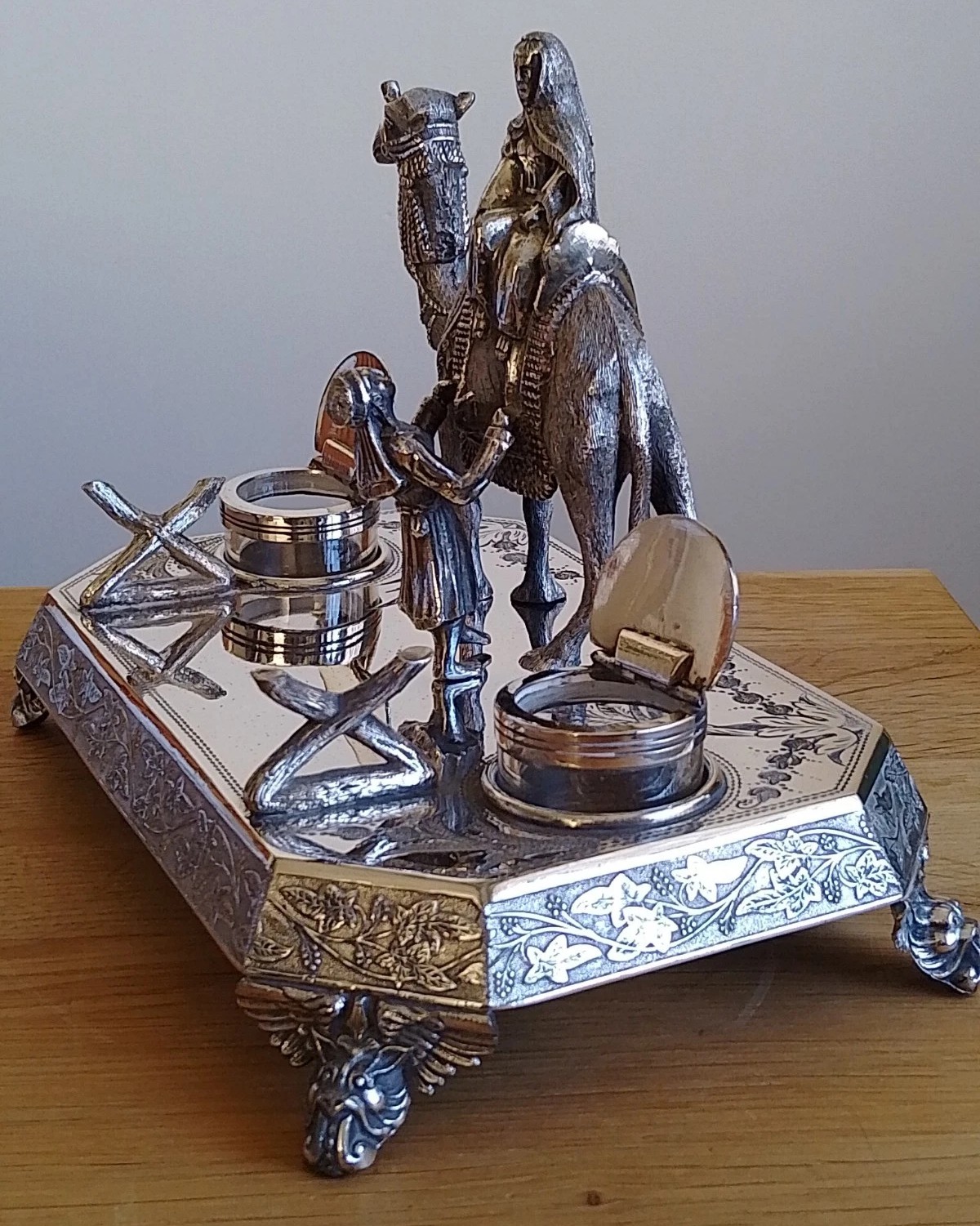
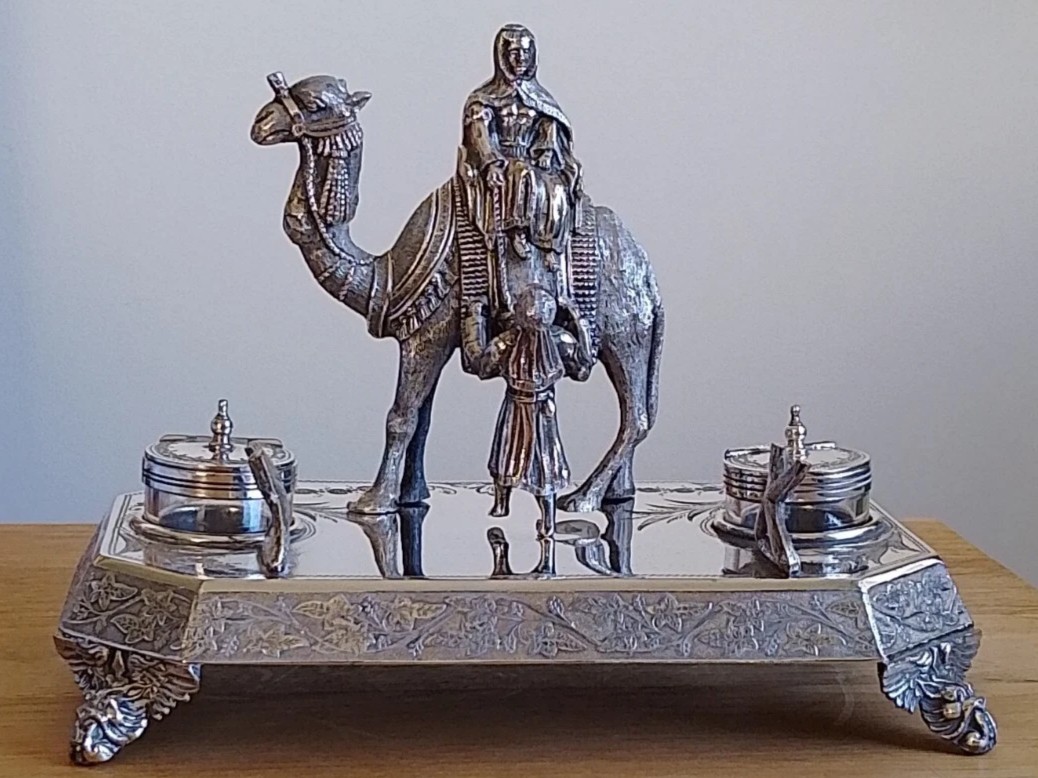
Pictured are two examples by the same maker of a silverplated inkstand showcasing the “Orientalist” style that was highly fashionable in Britain during the late 19th and early 20th centuries.
Description
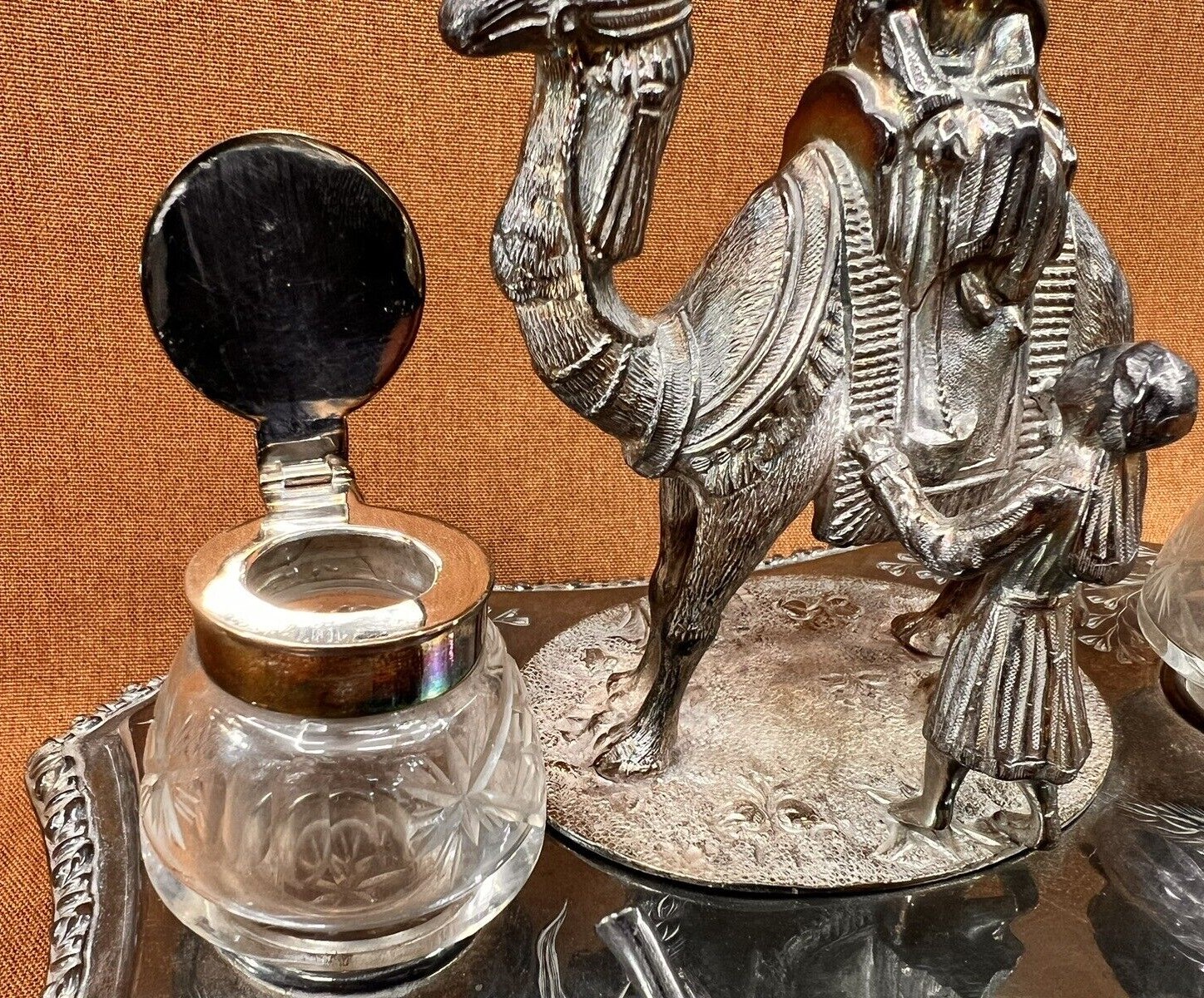
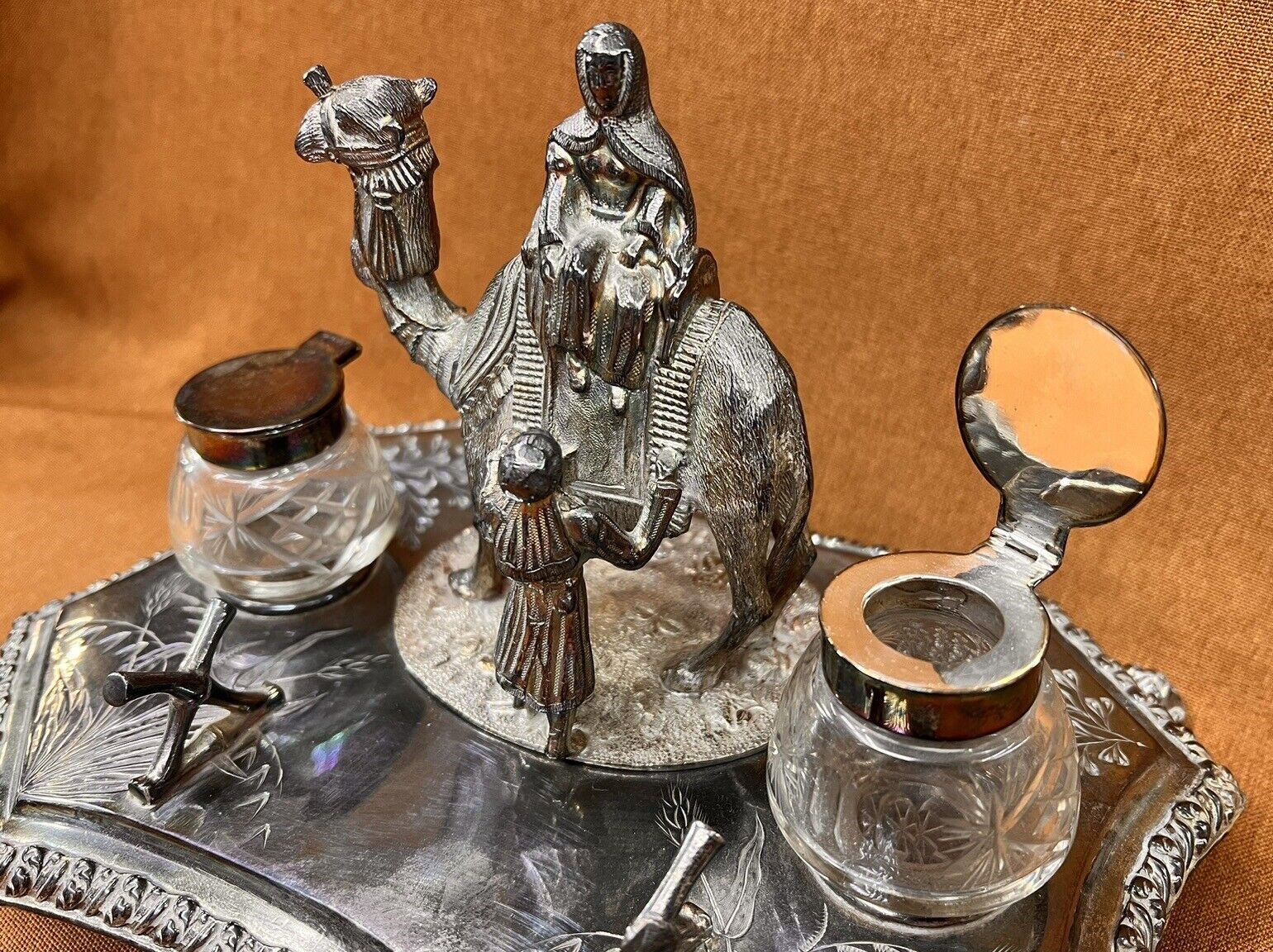
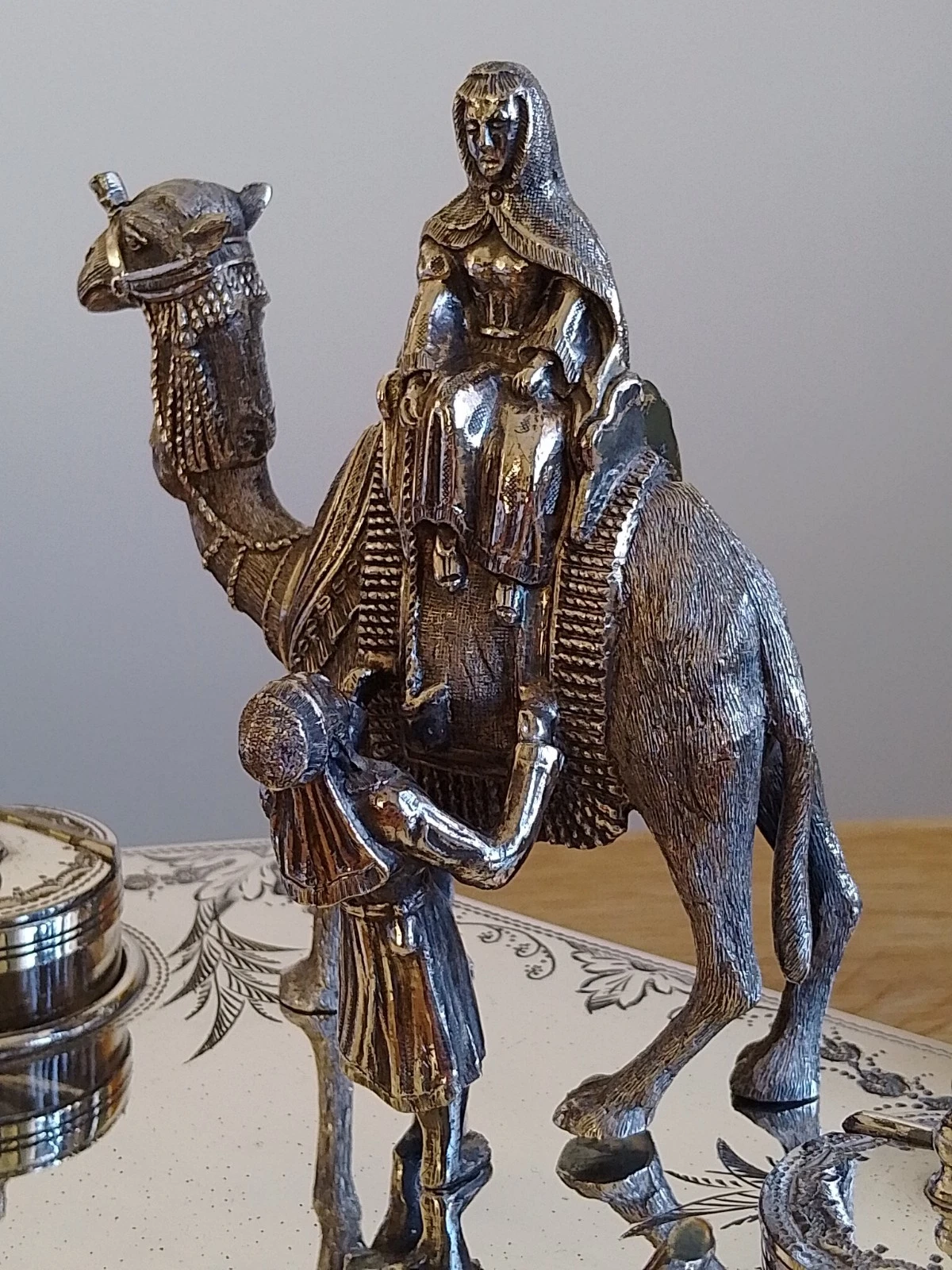
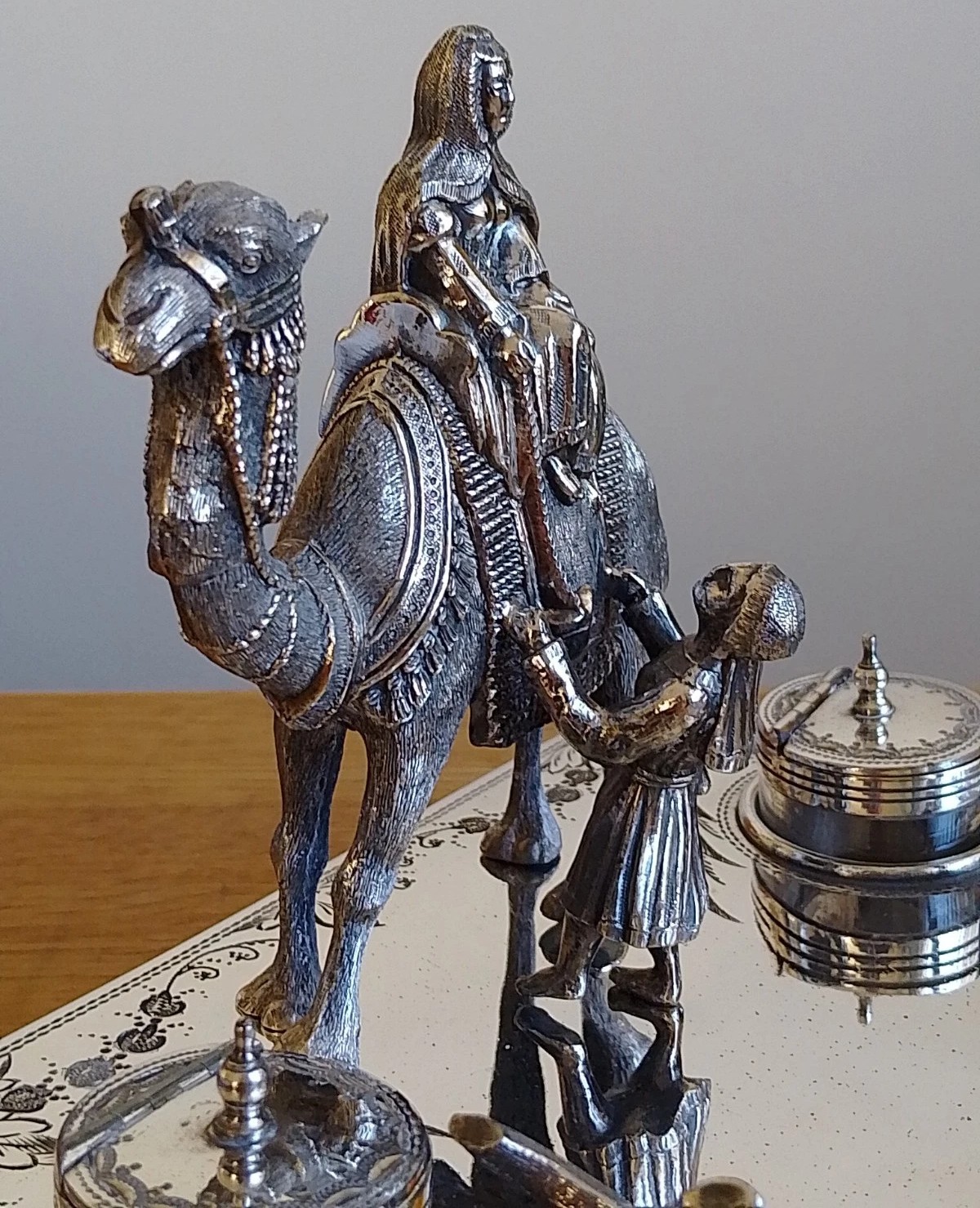
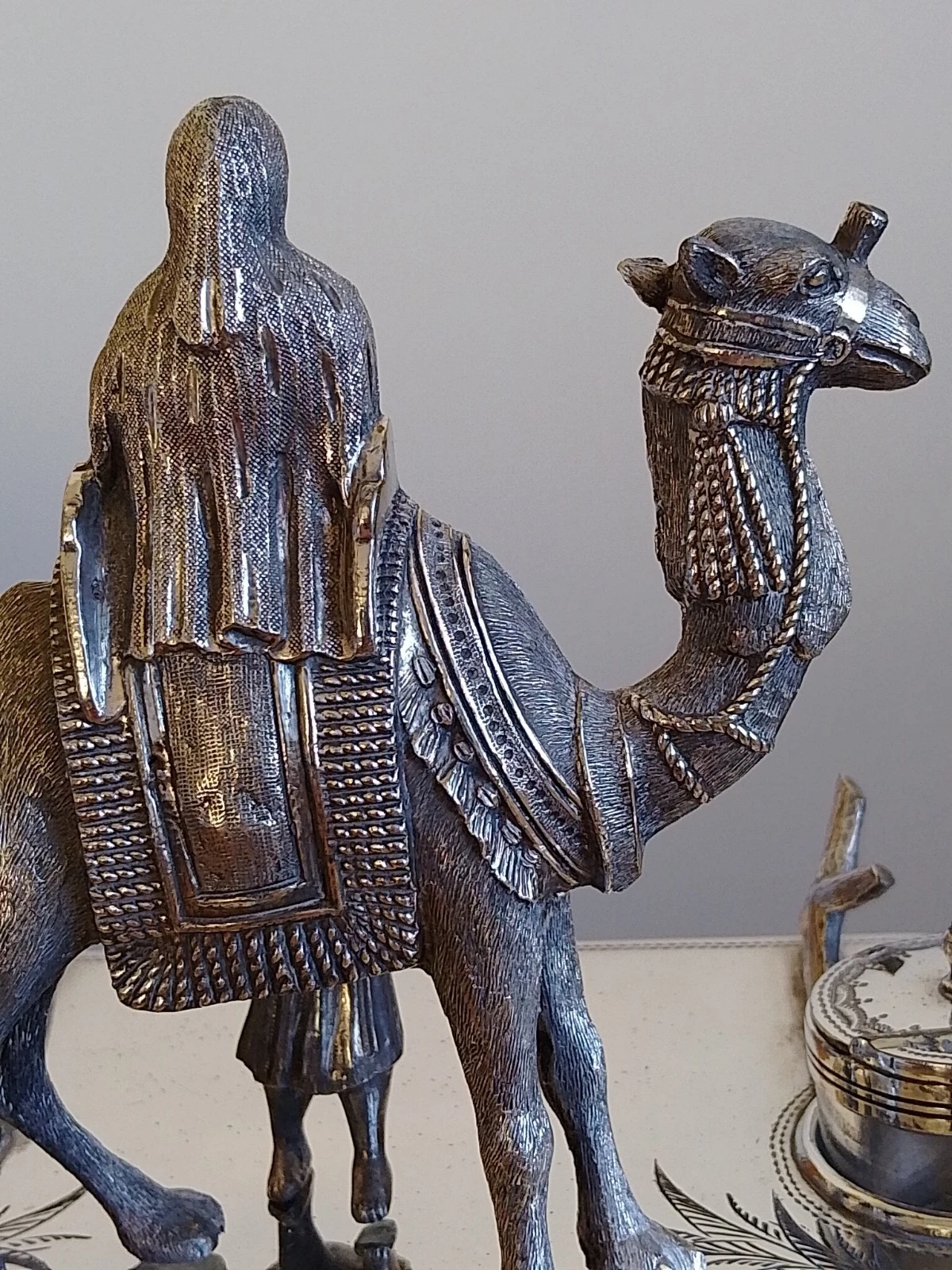
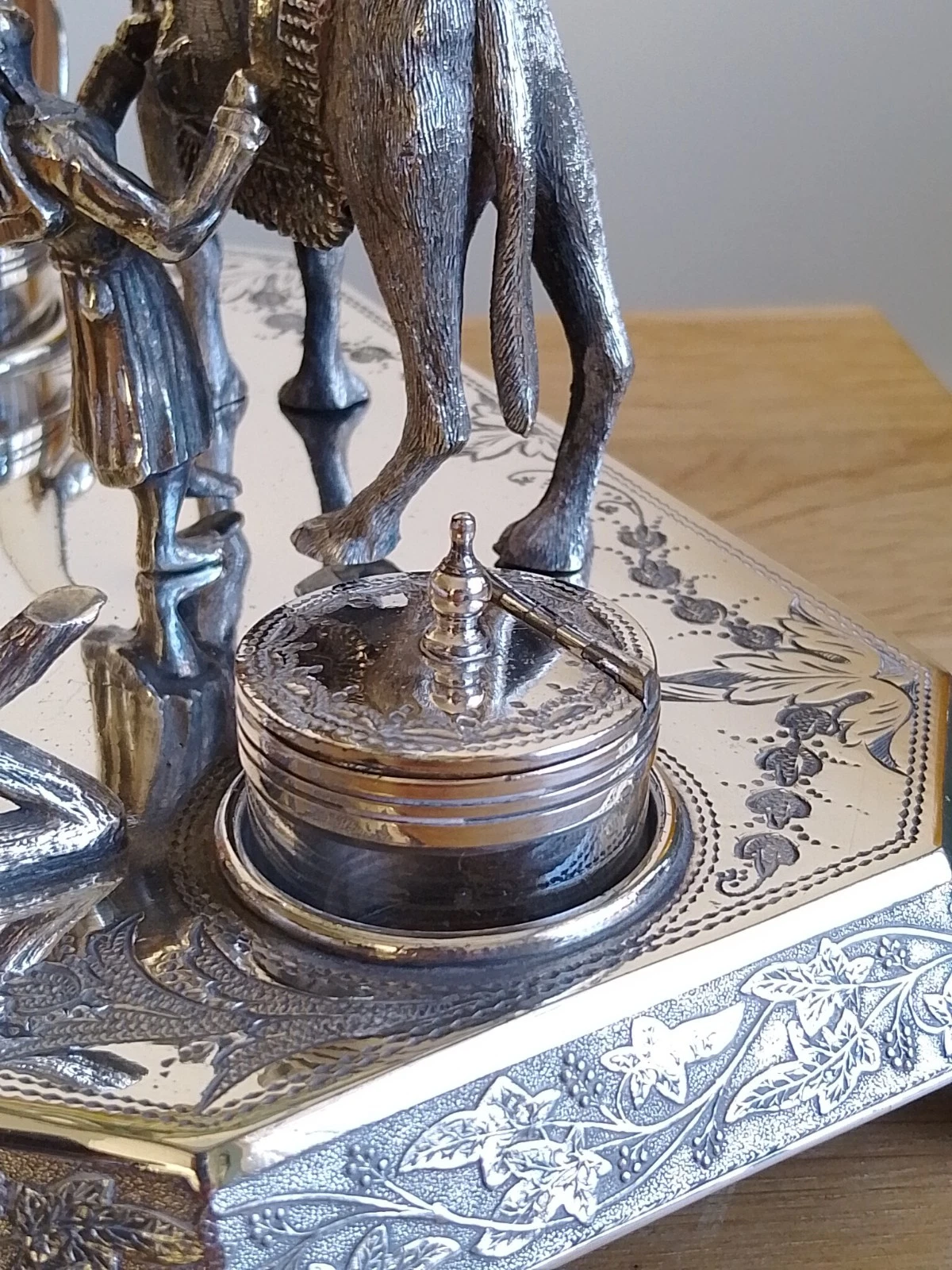
- The Figural Group: The centerpiece features a detailed, cast silverplate camel standing in a stationary pose. A rider, representing a Middle Eastern traveler or Bedouin, sits atop a traditional saddle. A second figure—an attendant or servant—stands beside the camel, reaching up to assist the rider. The textures of the camel’s fur, the draped clothing of the figures, and the decorative harness are finely rendered.
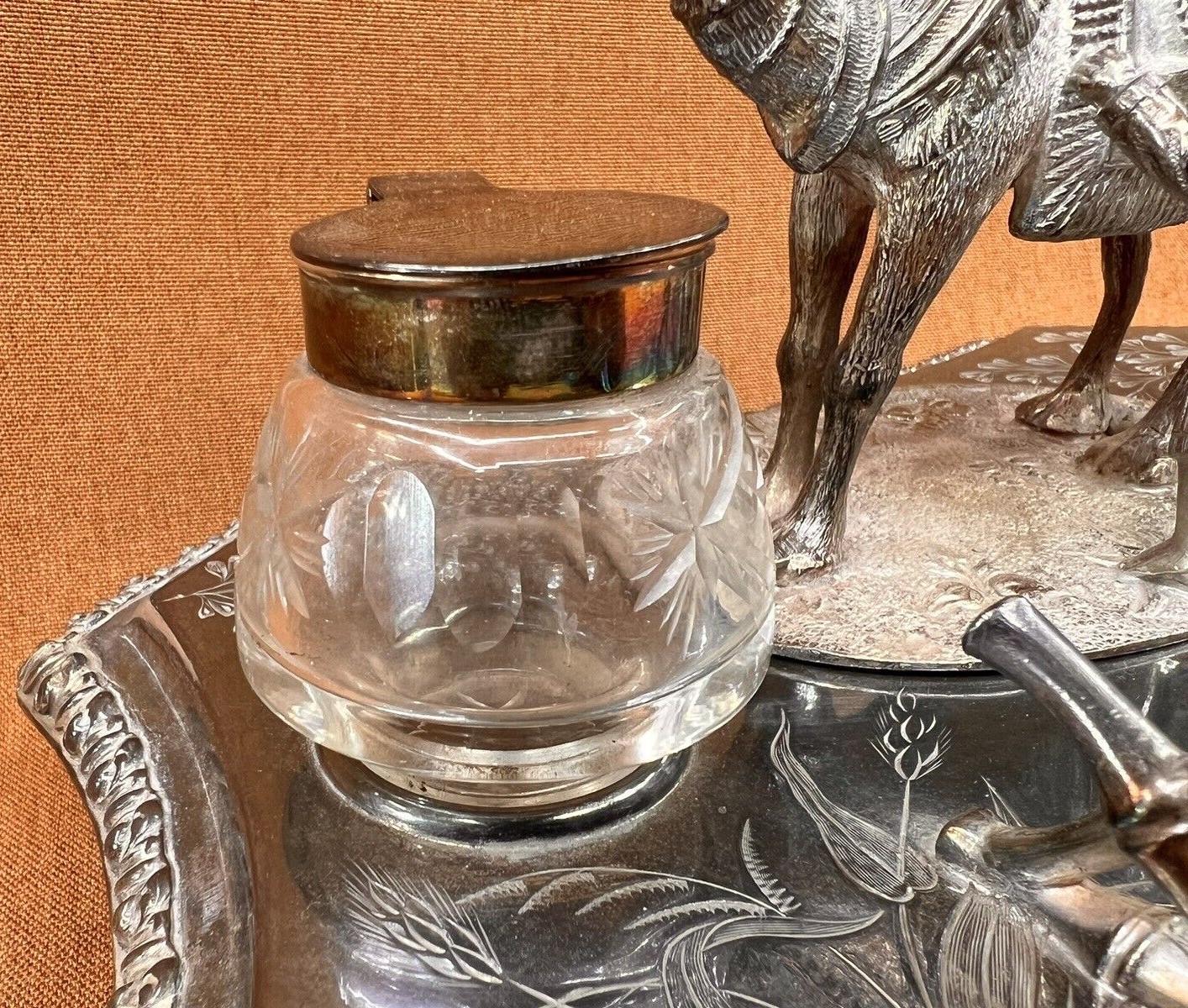
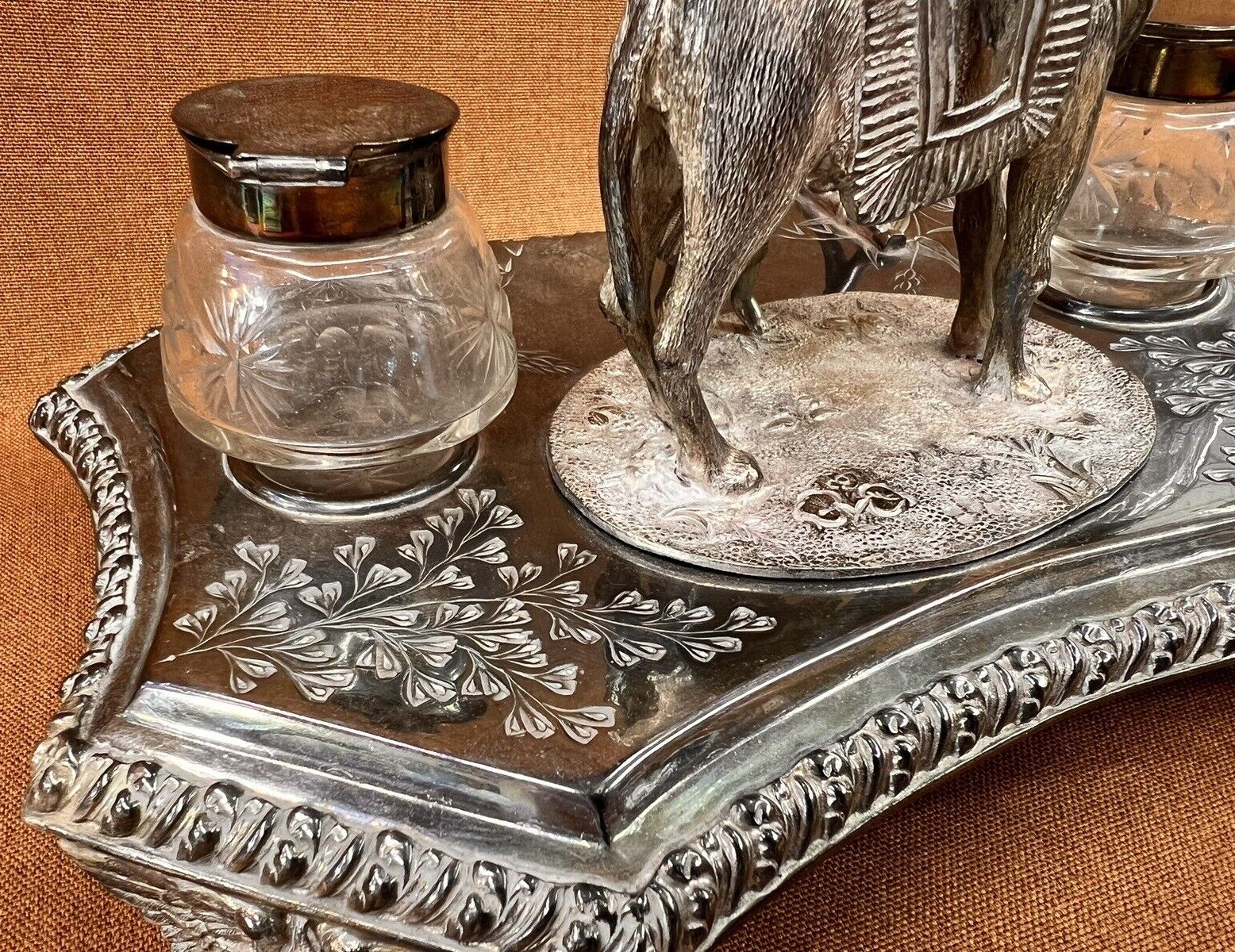
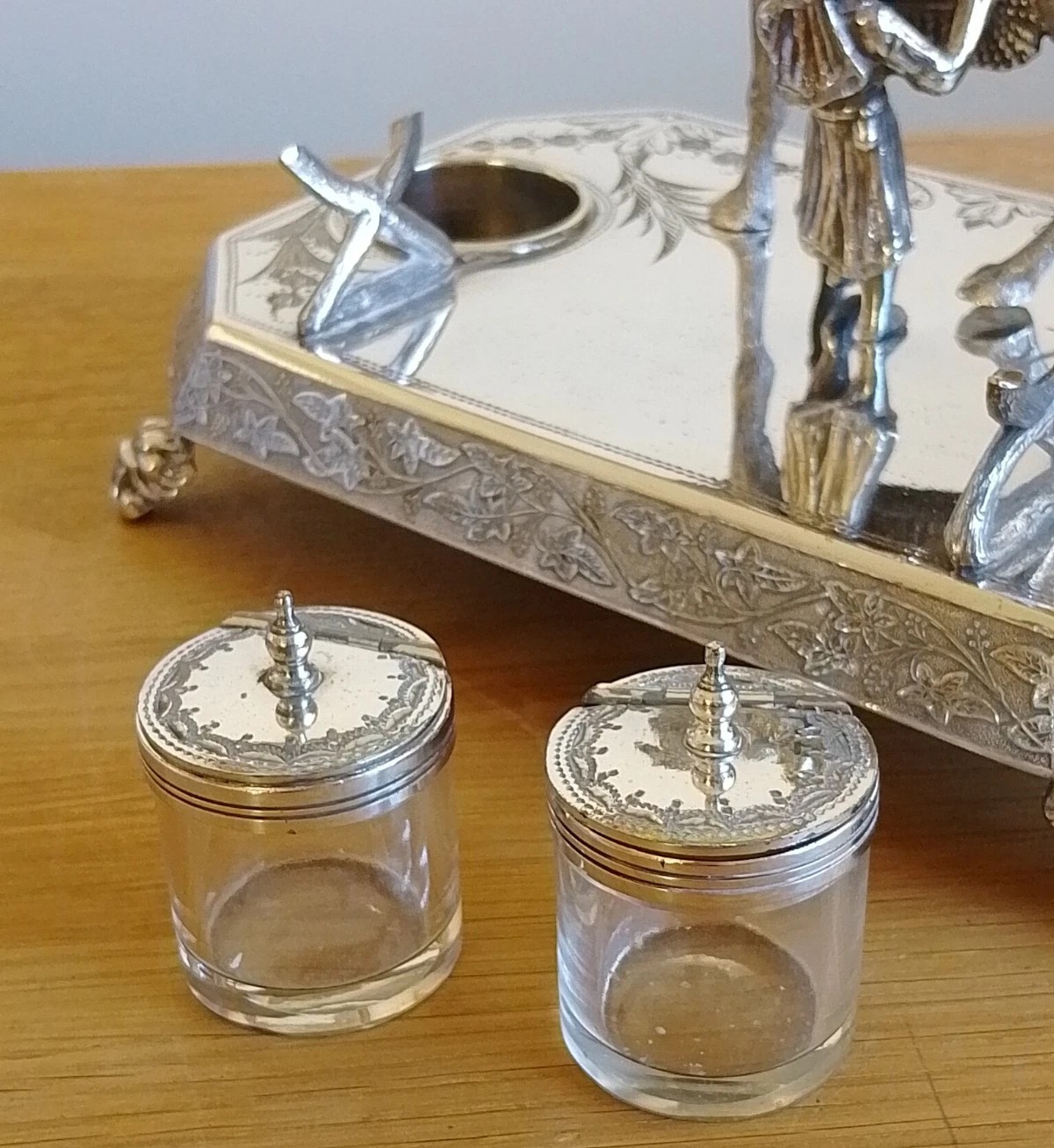
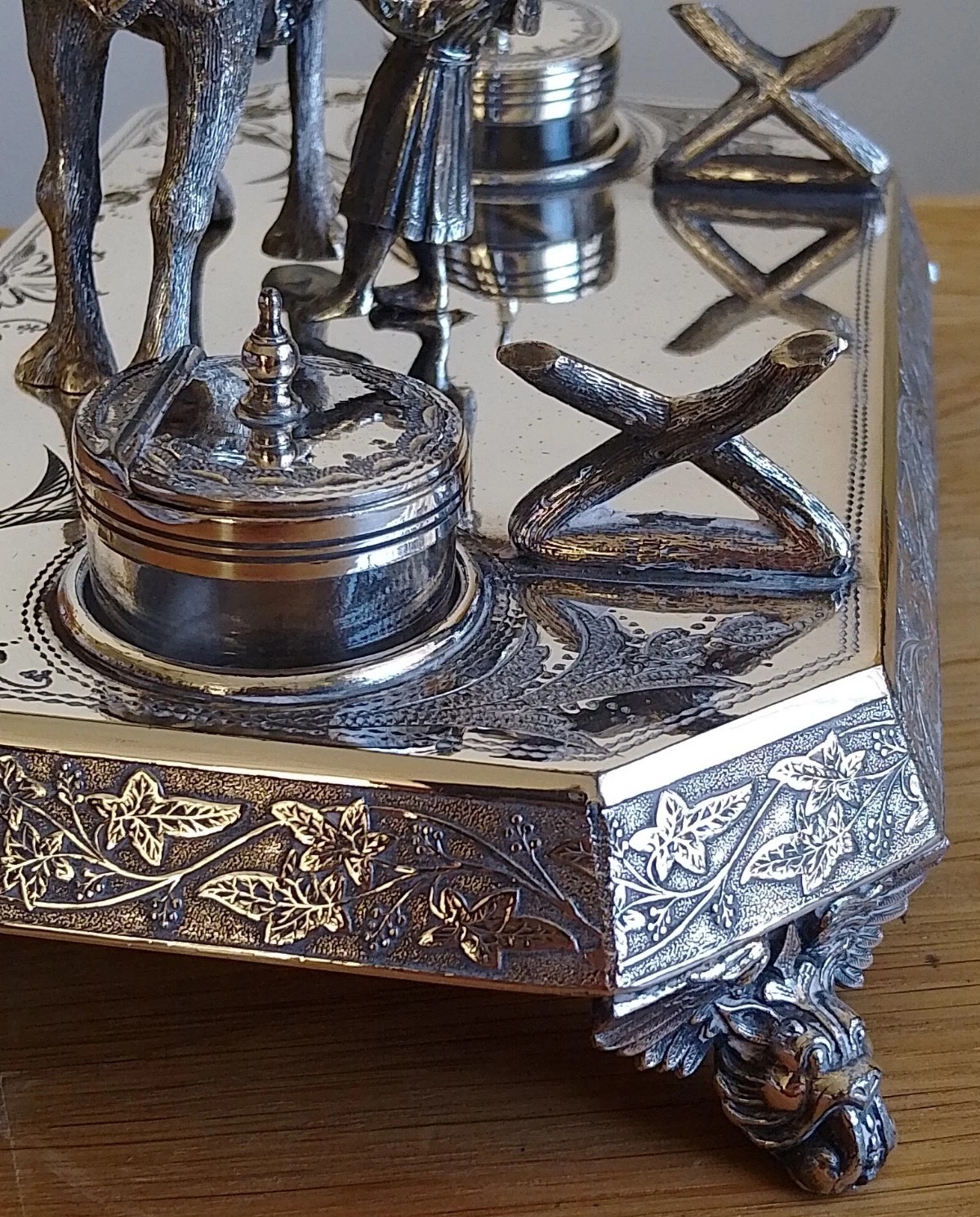
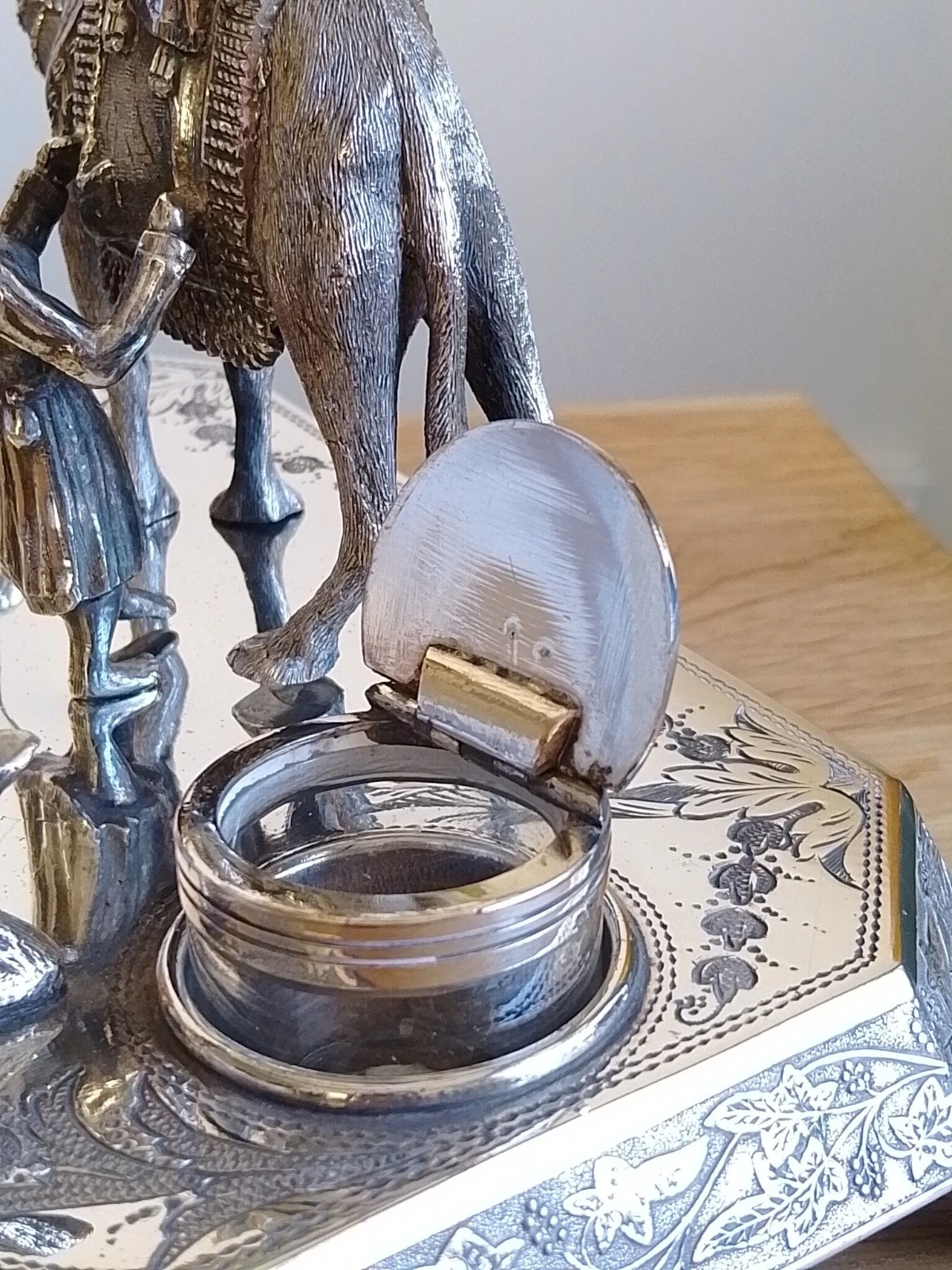
- The Inkwells: The set includes two circular, clear cut-glass inkwells. They are fitted with silverplate collars and hinged, domed lids. The lids feature delicate engraved scrollwork and are topped with small, tiered finials.
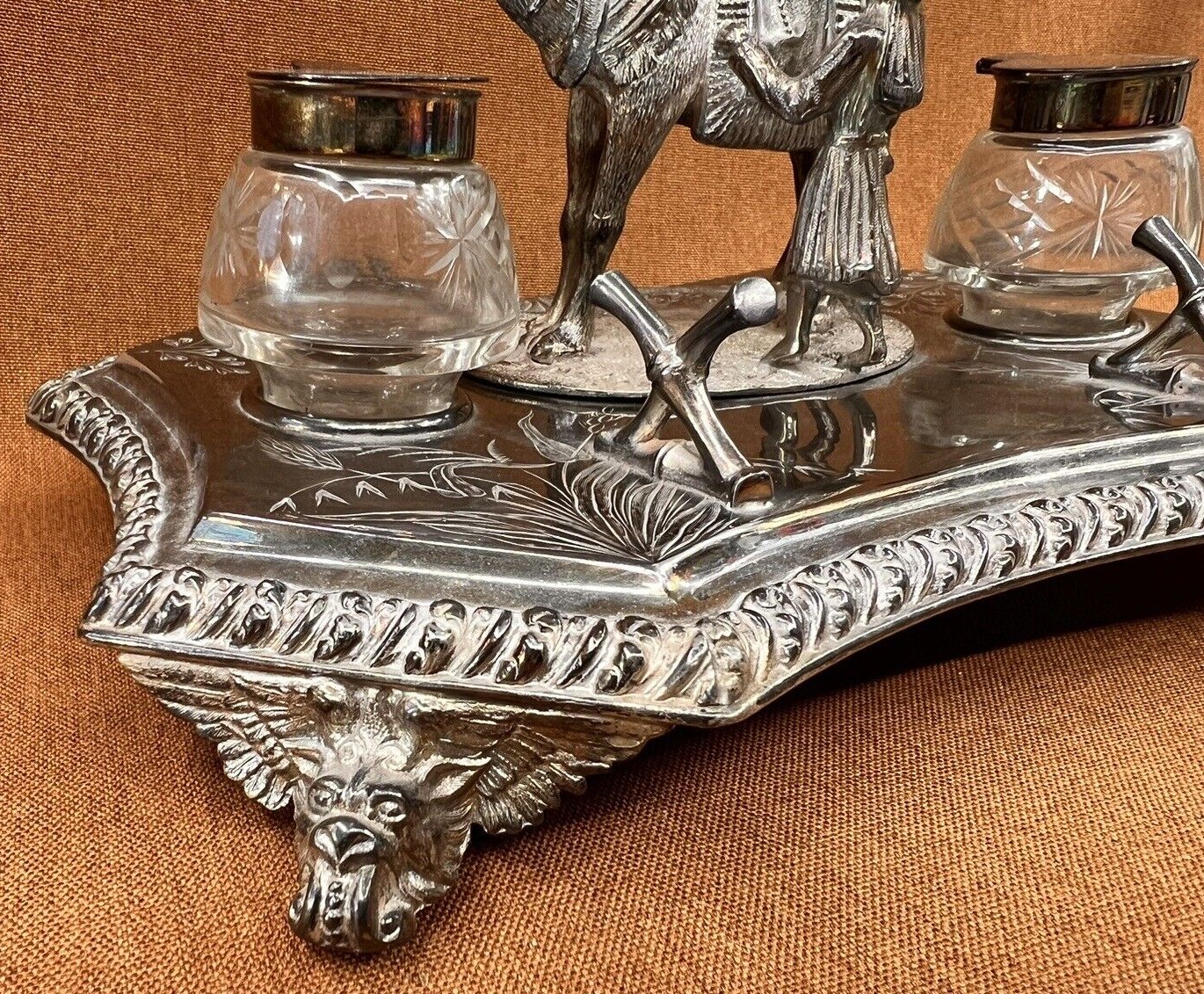
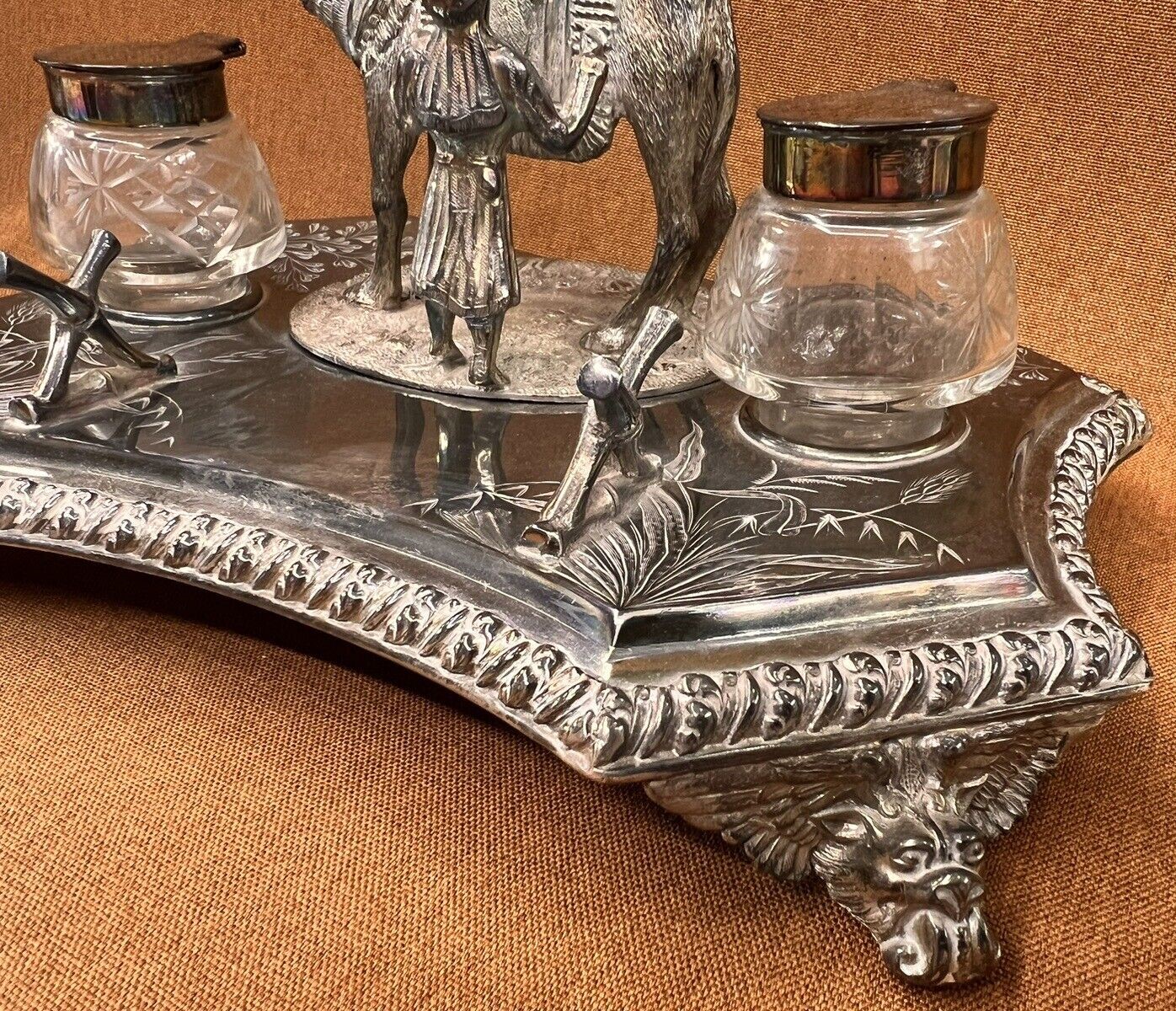
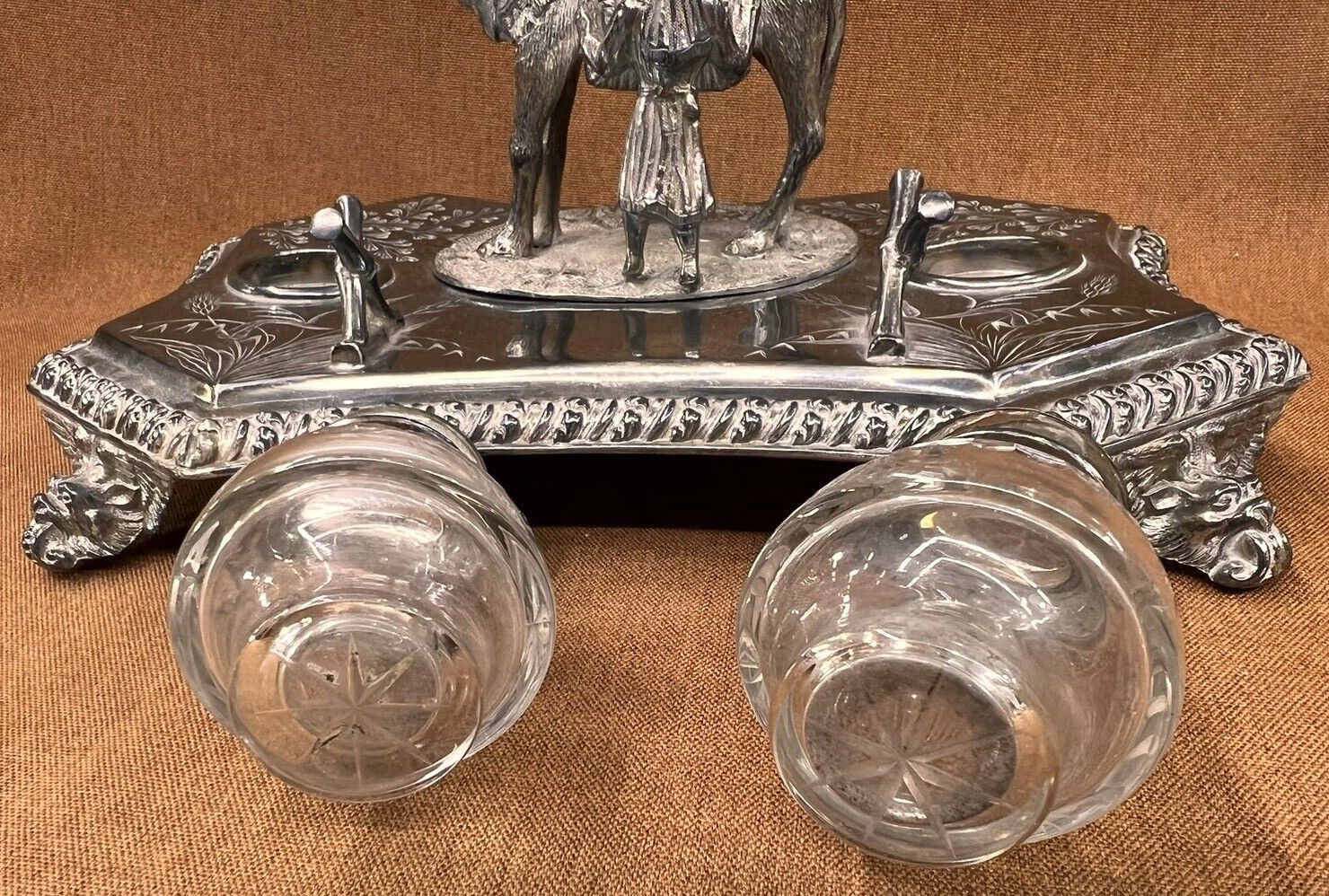
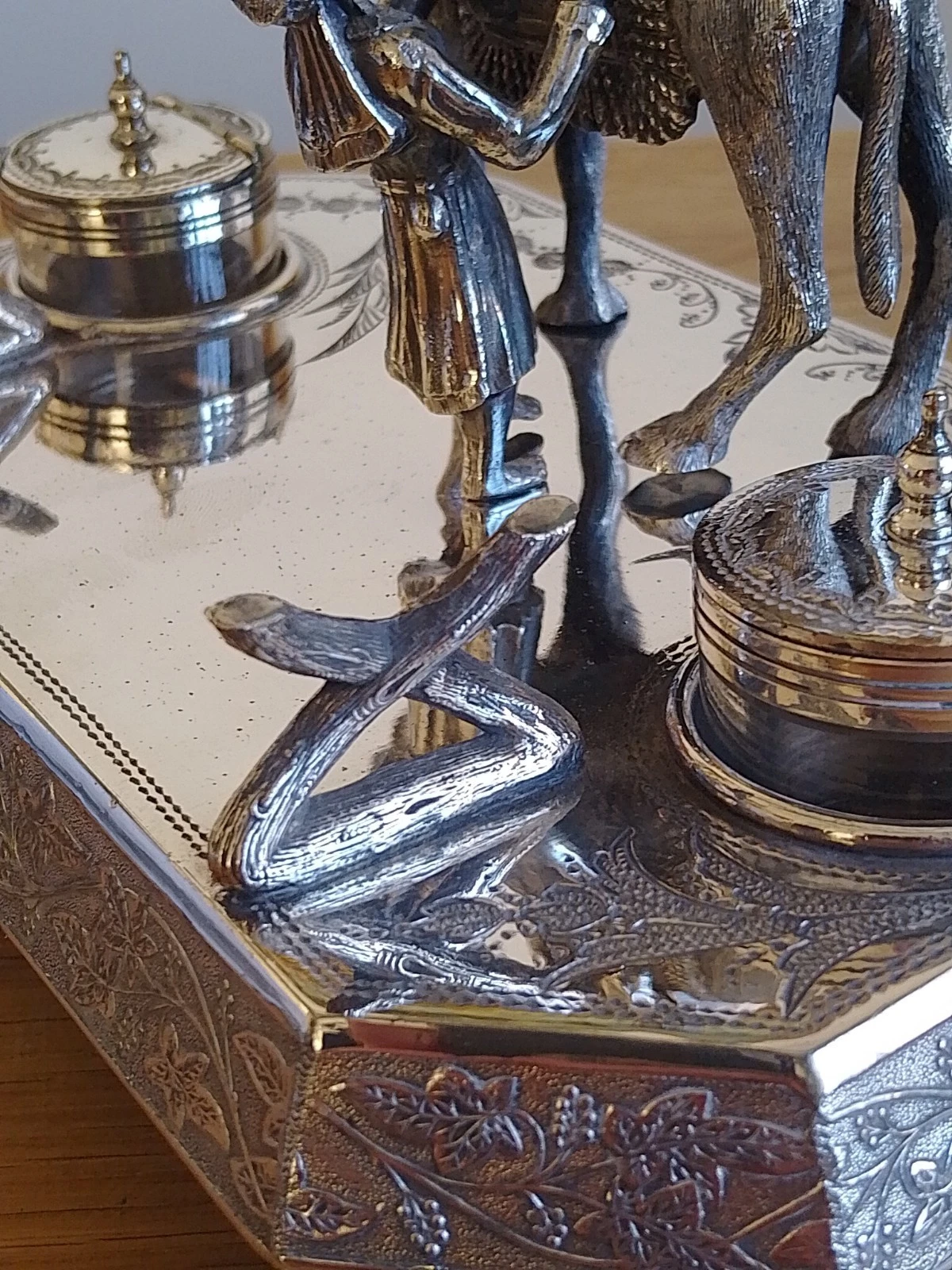
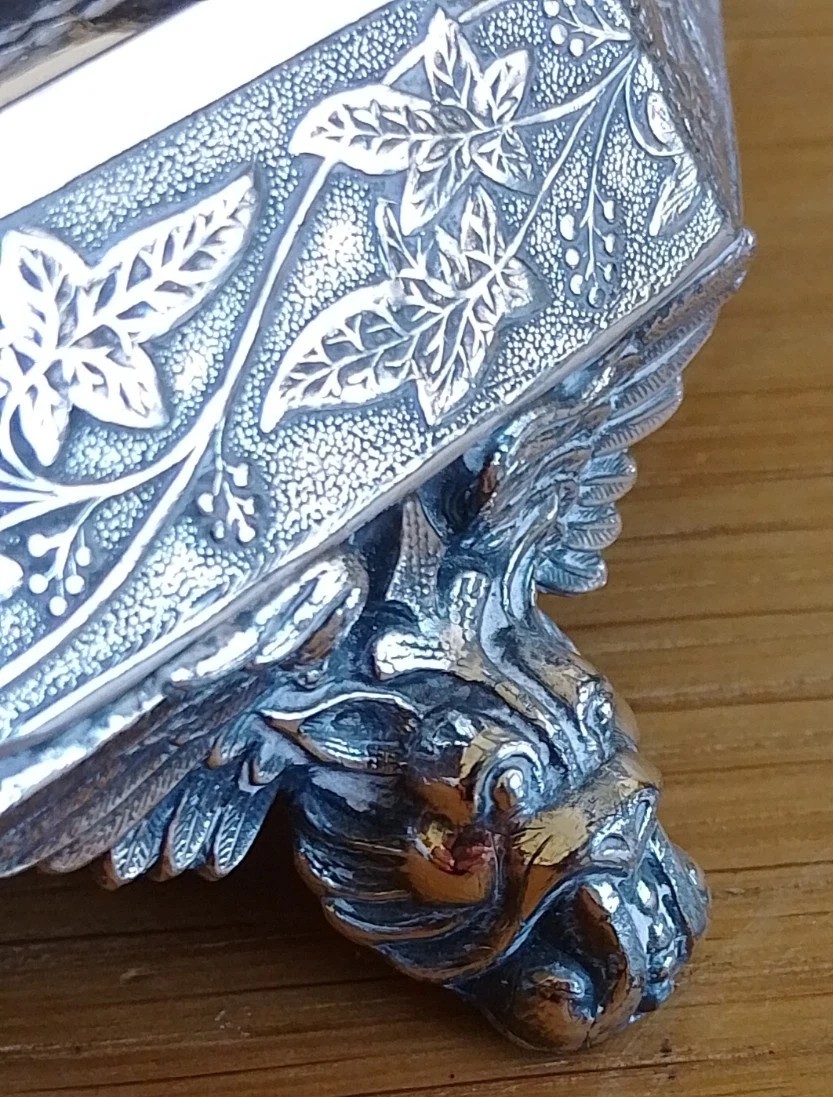
- The Base: The rectangular base has truncated corners and a highly reflective, polished top surface. It is bordered by an engraved floral and foliate pattern. The sides (aprons) of the base are decorated with a repoussé or chased design of ivy leaves and berries.
- Pen Rests: In front of each inkwell sits a “cross-branch” or “X-shaped” pen rest, designed to hold a dip pen horizontally across the stand.
- The Feet: The stand is supported by four ornate “winged” lion-head feet, which transition into scrolled or paw-like bases, giving the piece a sturdy and elevated profile.
Manufacturer: James Deakin & Sons
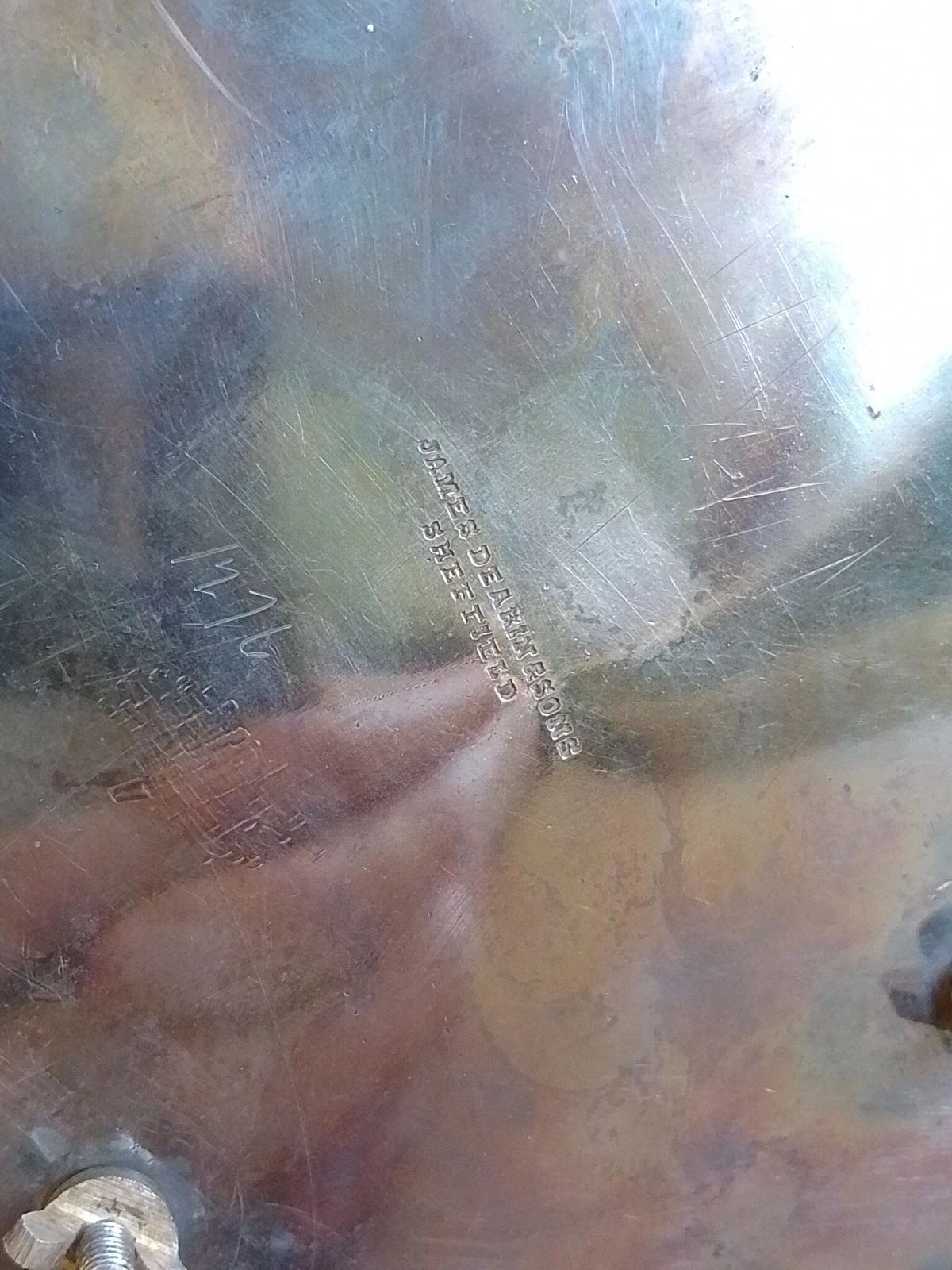
Based on the hallmark in your photos, this piece was produced by James Deakin & Sons, a prominent firm based in Sheffield, England.
- Founding: The company was founded in 1865 by James Deakin. By 1871, his sons (William, John, and Albert) joined him, leading to the name “James Deakin & Sons.”
- Reputation: They were renowned for high-quality silver, silverplate, and cutlery. They maintained a massive showroom in London (Holborn Viaduct) and several regional offices, including Glasgow and Belfast.
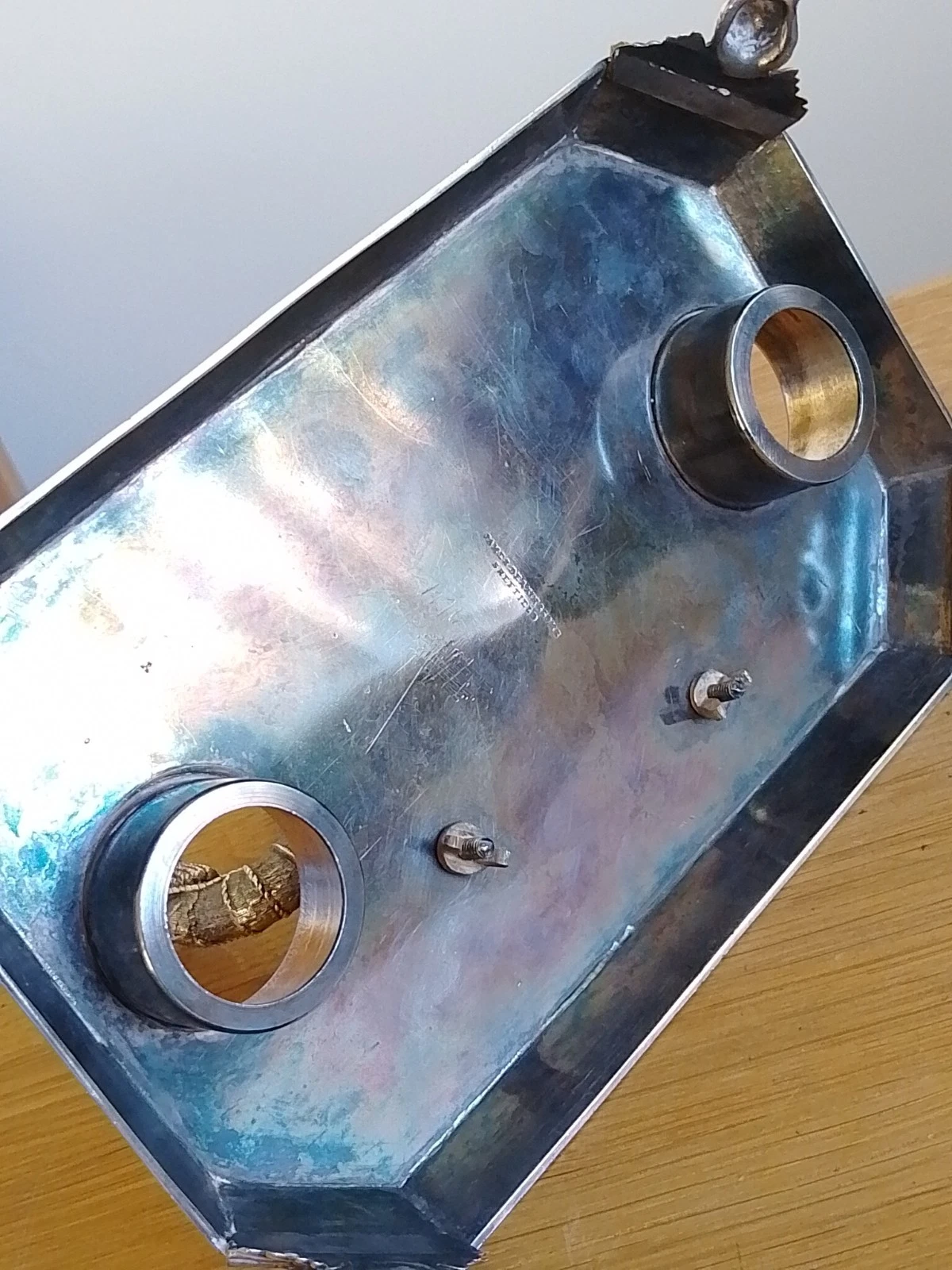
- The Markings: Marked on the underside is the “James Deakin & Sons / Sheffield” stamp. The “1276” is likely a pattern or catalog number, which was standard for tracking their vast inventory of designs.
Estimated Date of Manufacture
This piece was most likely made between 1890 and 1910.
The combination of the Orientalist subject matter (the camel and rider) and the specific “lion-head” feet and “ivy-leaf” apron are classic hallmarks of the Late Victorian or early Edwardian era. During this time, there was a significant fascination with the “Exotic East,” and James Deakin & Sons were well-known for producing elaborate, figural desk sets that served as both functional items and conversation pieces for wealthy Victorian households.
Example #1 sold for $500 in February 2024.
Example #2 sold for $350 in March 2026
Content disclaimer. The information posted is the owner’s best knowledge and may not have been vetted by the SOIC. We welcome comments, corrections, and additions, working to make our website information comprehensive and accurate.
Join the Society of Inkwell Collectors (SOIC) – it’s free!
Founded in 1981 as a non-profit organization,
we are documenting inkwells (and accessories).
We’re here to help and inform!