





Silver Traveling Inkwell with Screw-Down Lid
| Categories | Travel |
| Material | Glass, Silver |
| Markings | See narrative |
| Manufacturer | Douglas, Archibald |
| Origin | England |
| Date or Era | circa 1829 |
| Measuring | 2” x 1 ⅛” x 1 ½” high |
Description
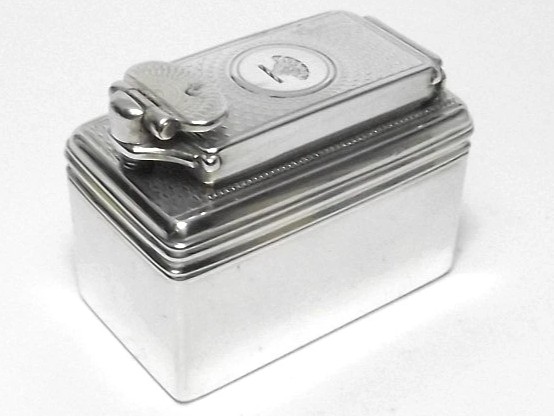
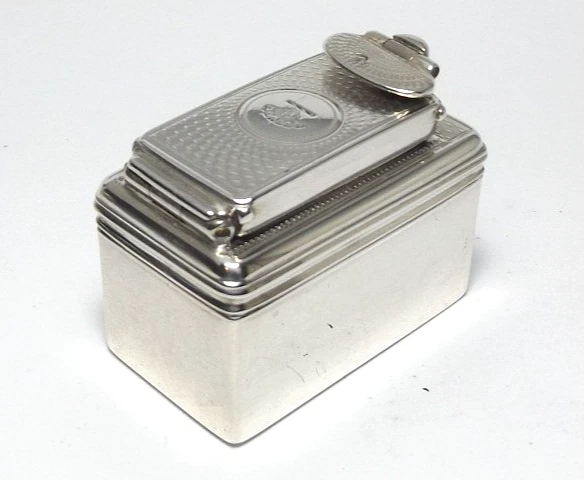
This solid silver inkwell is of rectangular form, characterized by its sturdy, compact design. The exterior is adorned with sophisticated engine-turned decoration (guilloché), a series of intricate, repetitive patterns engraved into the silver that provide a refined aesthetic.
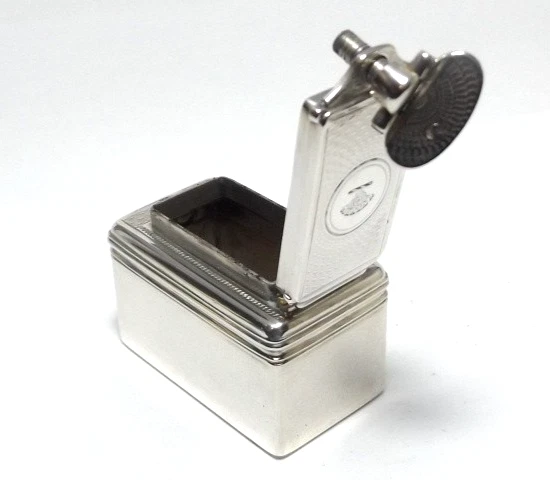
- The Lid: The top features a central circular cartouche containing an engraved motif that appears to be a wheatsheaf or a bouquet of flowers bound together—a common symbol of prosperity or “harvested” thoughts.
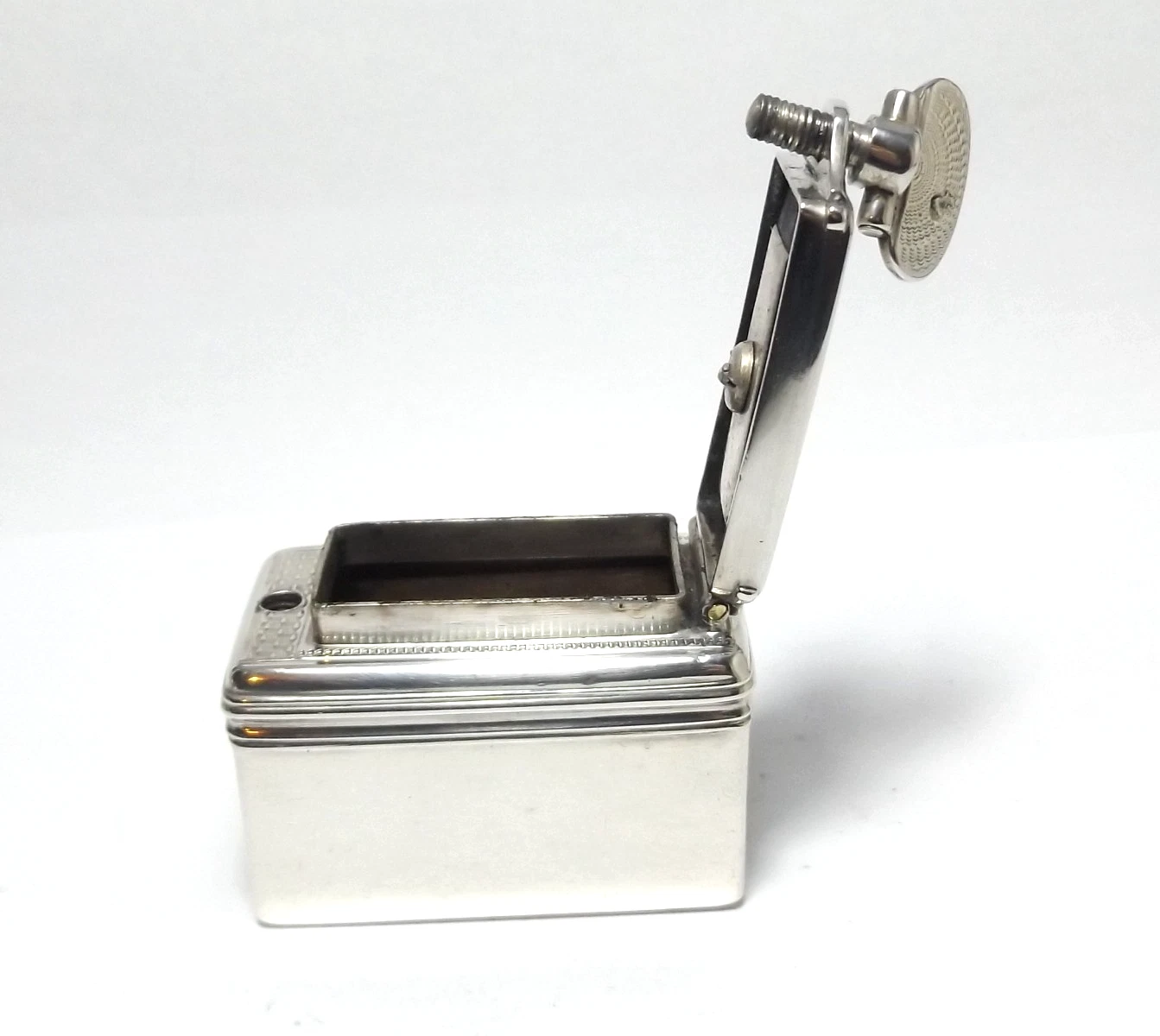
- The Handle: The hinged screw handle is also engine-turned with a radiating fan-like pattern.
- Retailer Mark: The base of the piece is stamped for the retailer: “G. R. PALMER, ST. JAMES’S ST.” St. James’s Street in London was, and remains, a prestigious hub for luxury goods and gentleman’s clubs.
Hallmarks & Authenticity
The piece is fully hallmarked on the interior rim, confirming its origin and quality:
- AD: The maker’s mark for Archibald Douglas, a noted London silversmith.
- Lion Passant: The “walking lion” certifying it is .925 sterling silver.
- Leopard’s Head: The assay office mark for London.
- King’s Head: The duty mark (depicting George IV), indicating the tax had been paid to the crown.
- Date Letter “o”: The specific stamp for the year 1829.
The Screw-Down Sealing Mechanism
For a traveling inkwell, the most critical feature was its ability to remain leak-proof while being jostled in a carriage or trunk. This piece utilizes a heavy-duty compression system:
- The Inner Plate: On the underside of the lid, there is a rectangular metal plate held in place by a central screw.
- The Seal: These plates press down on a thick leather or cork washer.
- The Compression: As you close the lid and turn the exterior handle, the threaded screw draws the lid tight against the raised rim of the ink reservoir.
This action creates an airtight and watertight seal by compressing the washer between the silver rim and the inner plate. Because the pressure is applied via a screw thread rather than a simple latch, the seal can withstand the changes in air pressure and the vibrations of 19th-century travel without the lid popping open or seeping ink.
Sold for $325 in March 2026
Content disclaimer. The information posted is the owner’s best knowledge and may not have been vetted by the SOIC. We welcome comments, corrections, and additions, working to make our website information comprehensive and accurate.
Join the Society of Inkwell Collectors (SOIC) – it’s free!
Founded in 1981 as a non-profit organization,
we are documenting inkwells (and accessories).
We’re here to help and inform!