


Sengbusch Self-Closing Inkstand
| Categories | Glass - Non-figural |
| Material | Glass |
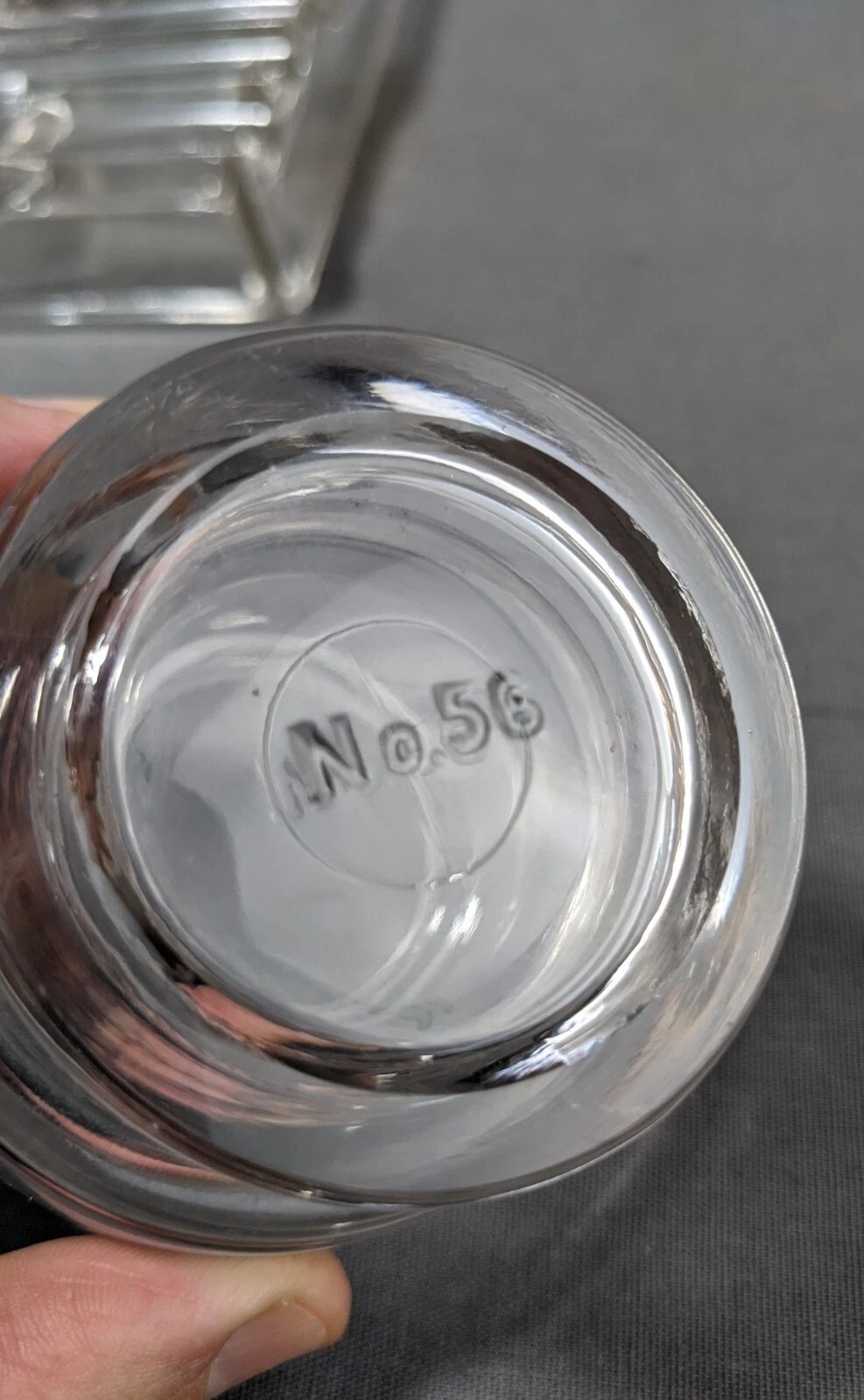
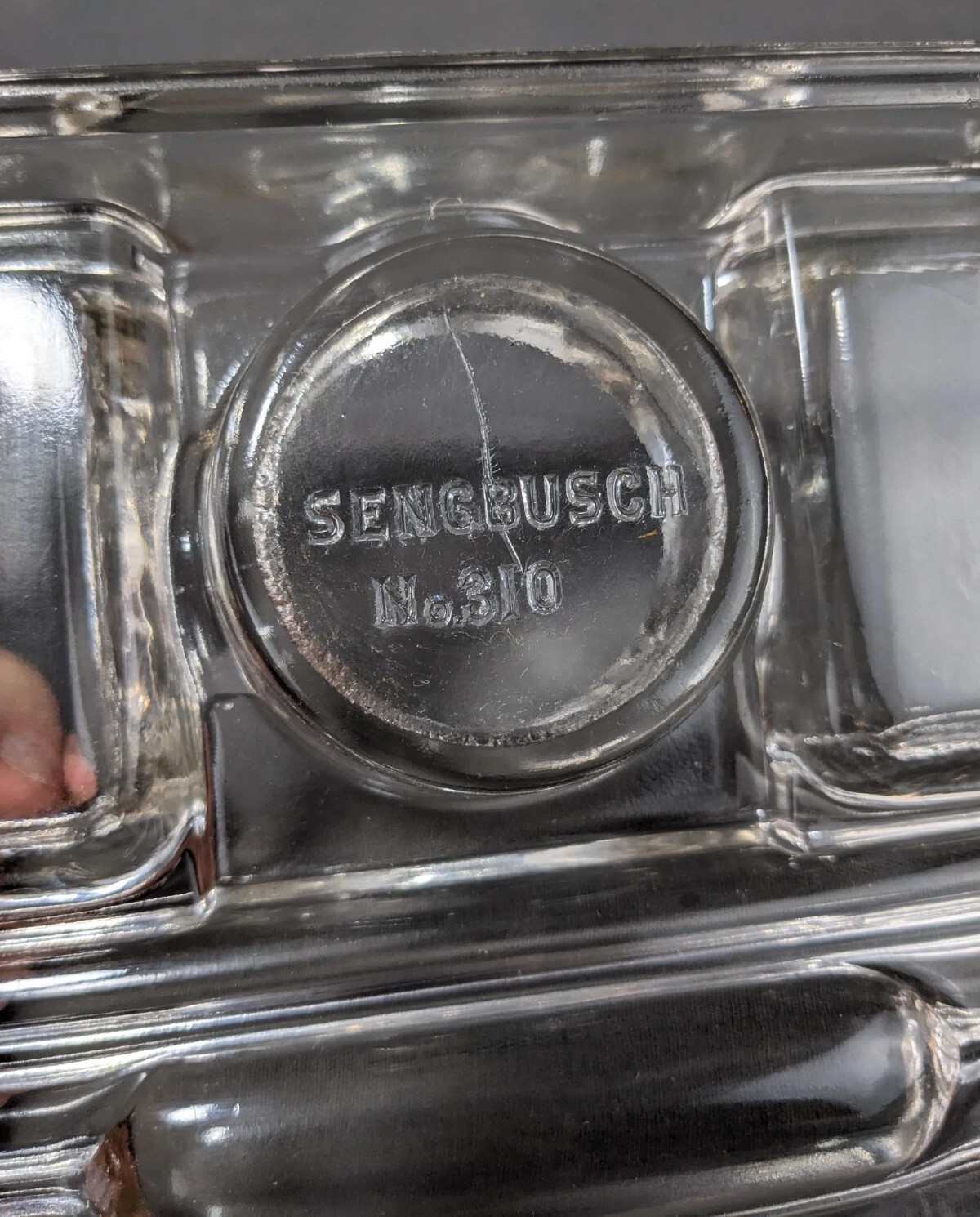
| Markings | See Narrative |
| Manufacturer | Sengbusch |
| Origin | United States |
| Date or Era | circa 1920 |
| Measuring | Base: 7 ¾” x 5 ¾” |
| Patent | See Narrative |
The Sengbusch Self-Closing Inkstand, specifically the No. 310 base with the No. 56 inkwell, is a classic example of early 20th-century industrial office desk ware.
Description
- The Base (No. 310): This is a heavy, molded glass tray designed to hold a single inkwell. It features two long, grooved channels in the front to act as a pen rest.
- The Inkwell (No. 56): The glass base is rectangular with a circular opening at the top to accommodate the glass inkwell.
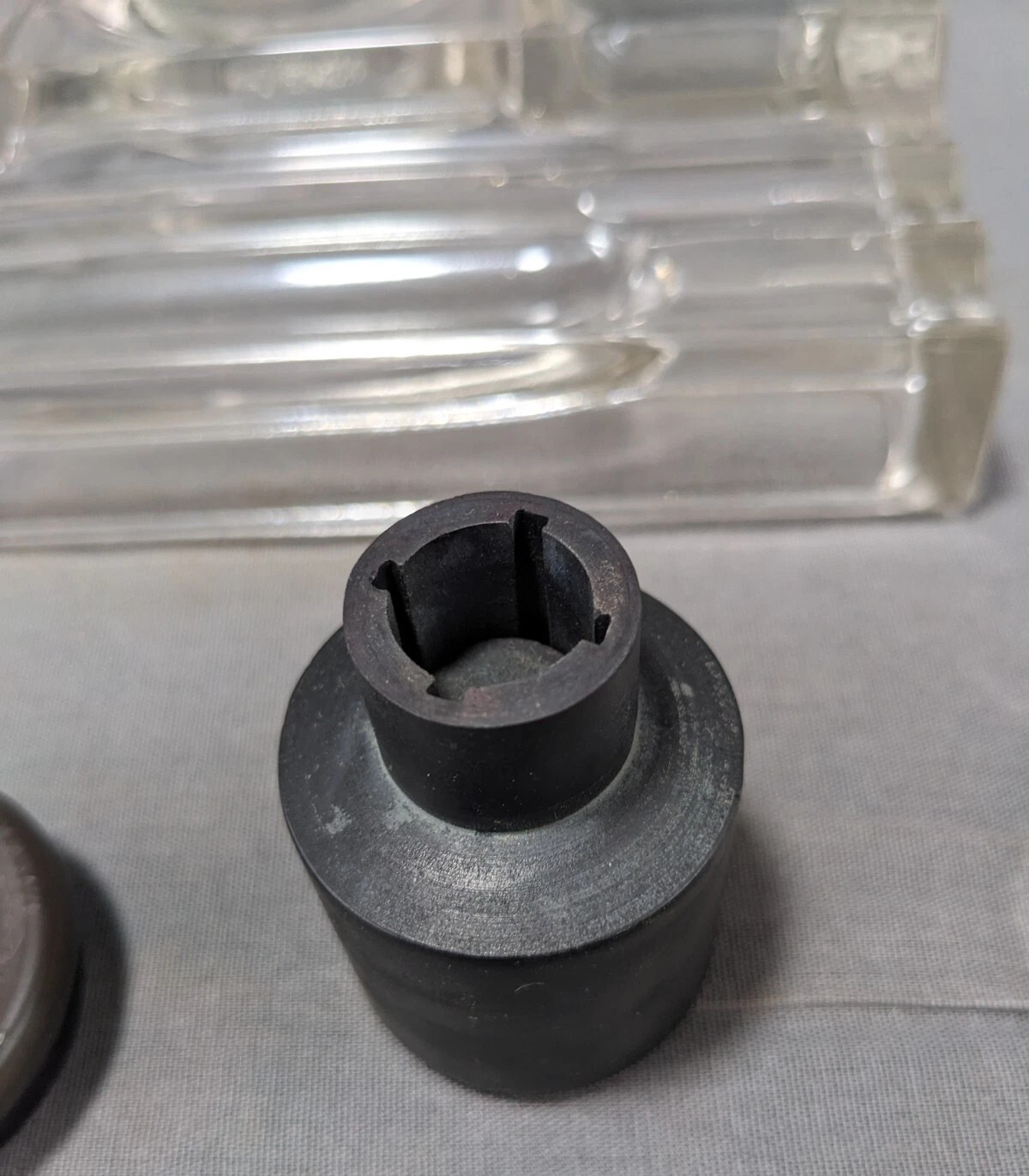
- The Material: The black top of the inkwell is made of vulcanite (also known as ebonite), which is a type of highly durable, acid-resistant hard rubber. This was the ideal material for inkwells because it did not corrode when exposed to the acidic inks of the era.
The “Self-Closing” Mechanism
The Sengbusch design was considered revolutionary because it prevented ink evaporation and kept the ink free of dust without requiring a manual lid.
- How it Works: Inside the hard-rubber top is a weighted float. When you dip your pen into the central opening, the weight of the pen depresses the float, allowing a small amount of fresh ink to rise around the nib.
- The Seal: As soon as the pen is withdrawn, the internal float immediately rises back into place, creating an airtight seal. This “self-closing” action ensured that the main reservoir of ink remained sealed at all times.
Embossed Writing and Patent Dates
The vulcanite tops for the No. 56 series feature a circular arrangement of text surrounding the pen opening. While specific stampings varied slightly by production year, this piece contains the following:
- Primary Text: “SENGBUSCH SELF-CLOSING INKSTAND CO. MILWAUKEE, WIS. U.S.A.”
- Common Patent Dates: The company relied on several patents, the most significant of which was issued on August 25, 1903. Other dates often visible on these tops include:
- JAN. 15, 1907
- AUG. 10, 1909
- FEB. 22, 1910
- See Sengbusch Self Closing Inkstand #51 – The Society of Inkwell Collectors (SOIC) for more detailed information on patents
Estimated Age and Origin
- Maker: The Sengbusch Self-Closing Inkstand Co., founded by Gustav J. Sengbusch.
- Date: Circa 1910–1925.
- Location: Milwaukee, Wisconsin.
The No. 310 base was often marketed for “Bank and Office” use because its heavy weight prevented it from sliding or tipping over on a busy desk.
Here are details about the Sengbusch No. 310 from early 20th-century stationery trade catalogs (such as those from Geyer’s Stationer or Horder’s Office Supplies).
Catalog Entry for Model No. 310
In catalogs from the 1915–1925 era, the No. 310 was marketed as a “Heavy Glass Desk Base” or “Glass Desk Caddy.”
- Official Description: “Single Glass Base, extra heavy, polished edges. Designed for use with the No. 56 or No. 57 Sengbusch Self-Closing Inkwell.”
- Functional Features: The base features three integrated pen slots and a central circular recess designed to perfectly fit the No. 56 inkwell.
- Dimensions: Approximately 7 ¾” wide by 5 ¾” deep.
- Historical Price: In 1918, the No. 310 base alone retailed for approximately $1.50, while the complete set with the No. 56 inkwell retailed for around $3.00.
Sold for $48 in December 2025
Content disclaimer. The information posted is the owner’s best knowledge and may not have been vetted by the SOIC. We welcome comments, corrections, and additions, working to make our website information comprehensive and accurate.
Join the Society of Inkwell Collectors (SOIC) – it’s free!
Founded in 1981 as a non-profit organization,
we are documenting inkwells (and accessories).
We’re here to help and inform!