


Salt-Glazed Pottery “Castle” Teakettle Ink Bottle
| Categories | Ink Bottle, Mechanical - Pump / Siphon |
| Type | Tea Kettle |
| Material | Stoneware |
| Markings | See Narrative |
| Origin | England |
| Date or Era | circa 1851 |
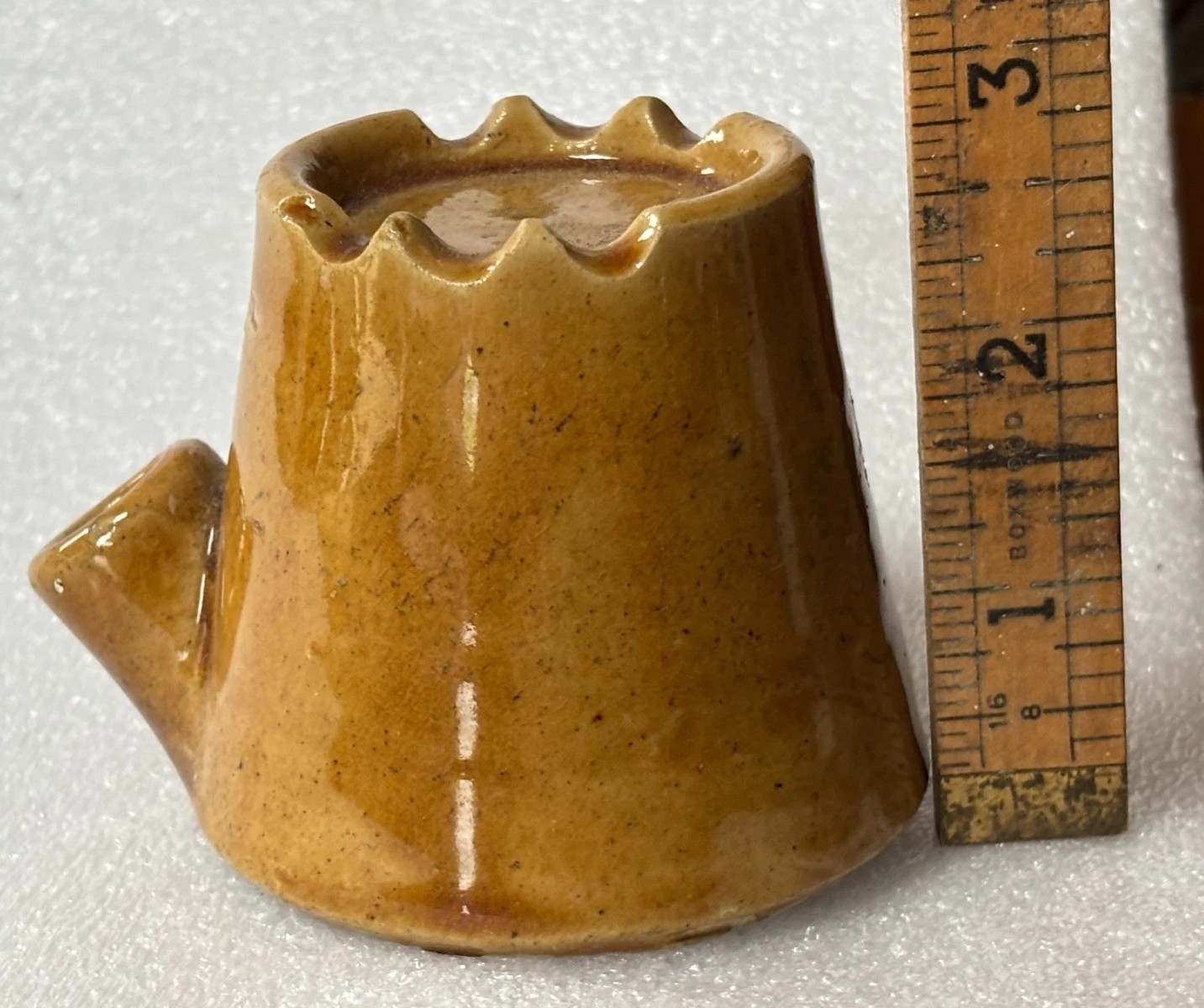
| Measuring | 2 ½” high |
Description
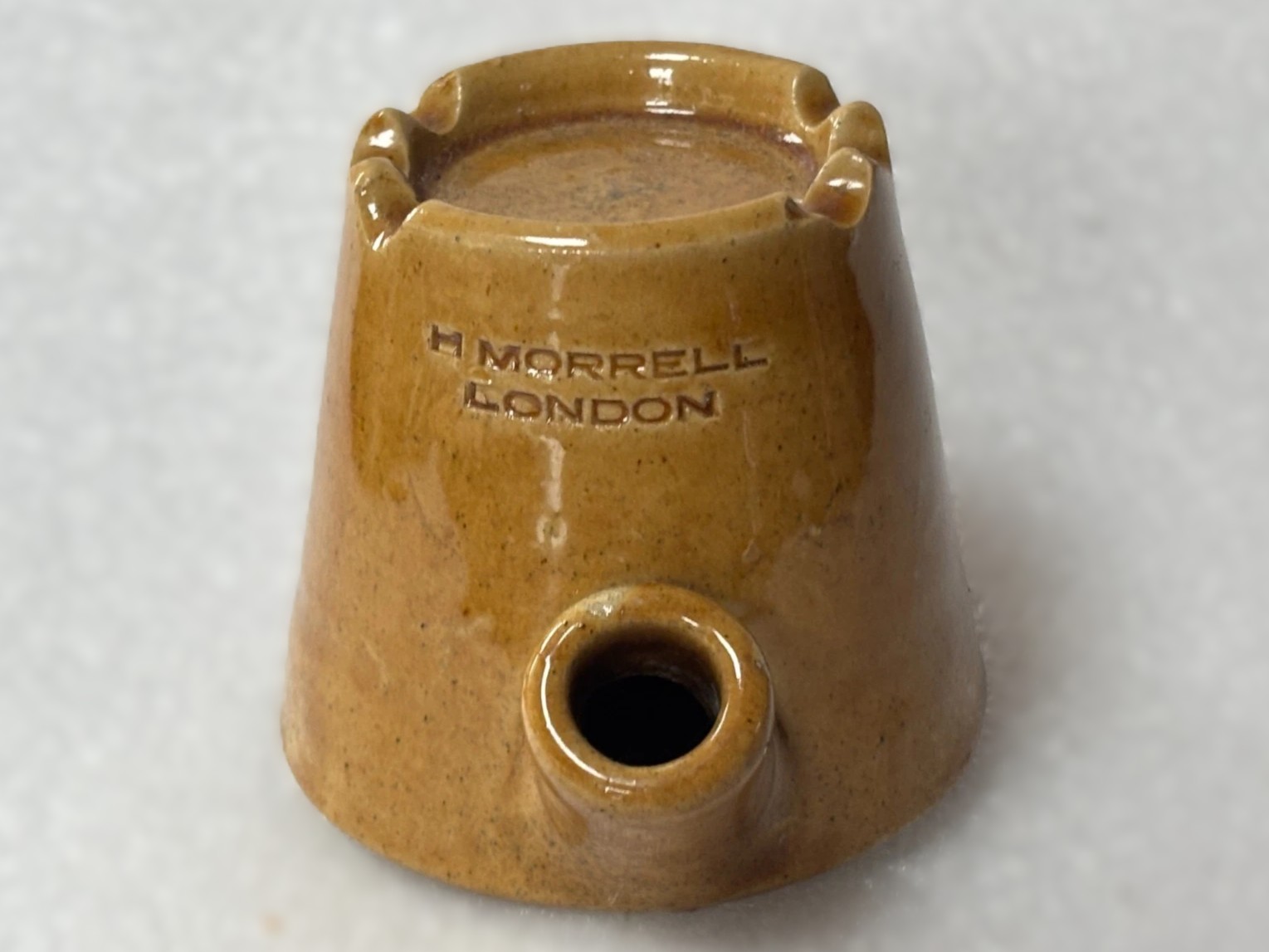
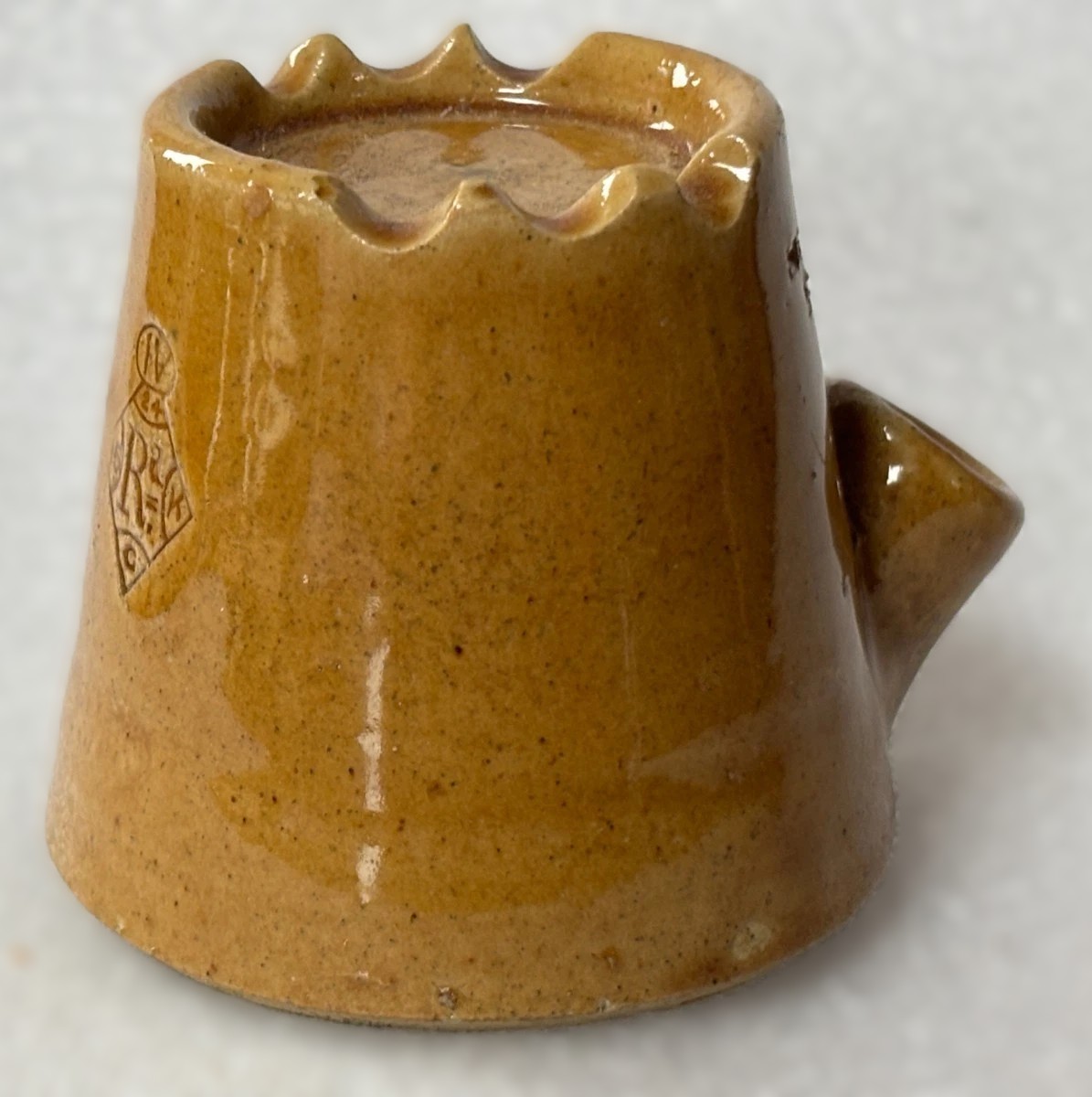
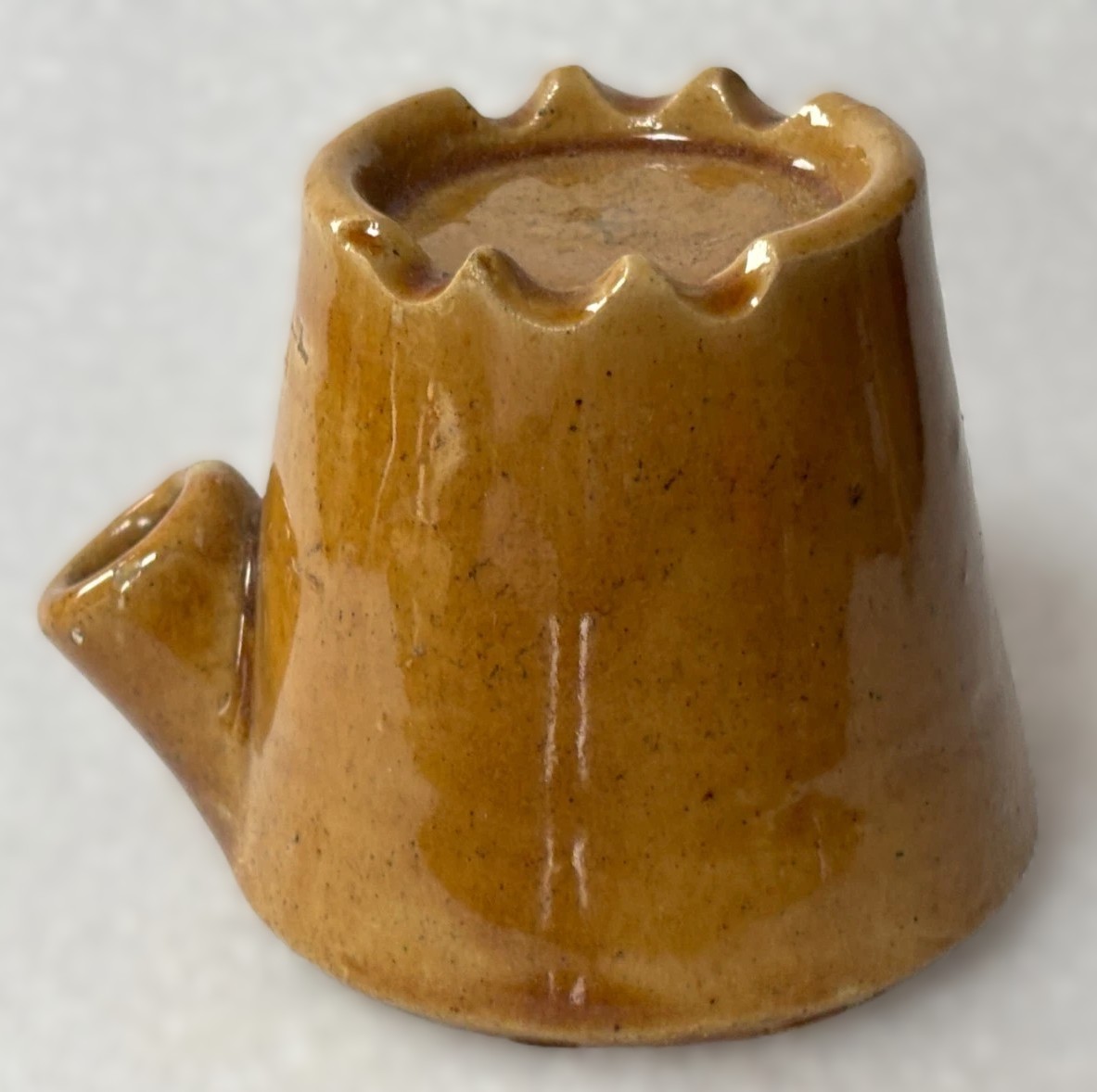
This is a Victorian-era “castle” or turret-shaped “teakettle” siphon inkwell. It is made of salt-glazed stoneware or earthenware pottery with a glossy, light brown/caramel slip glaze.
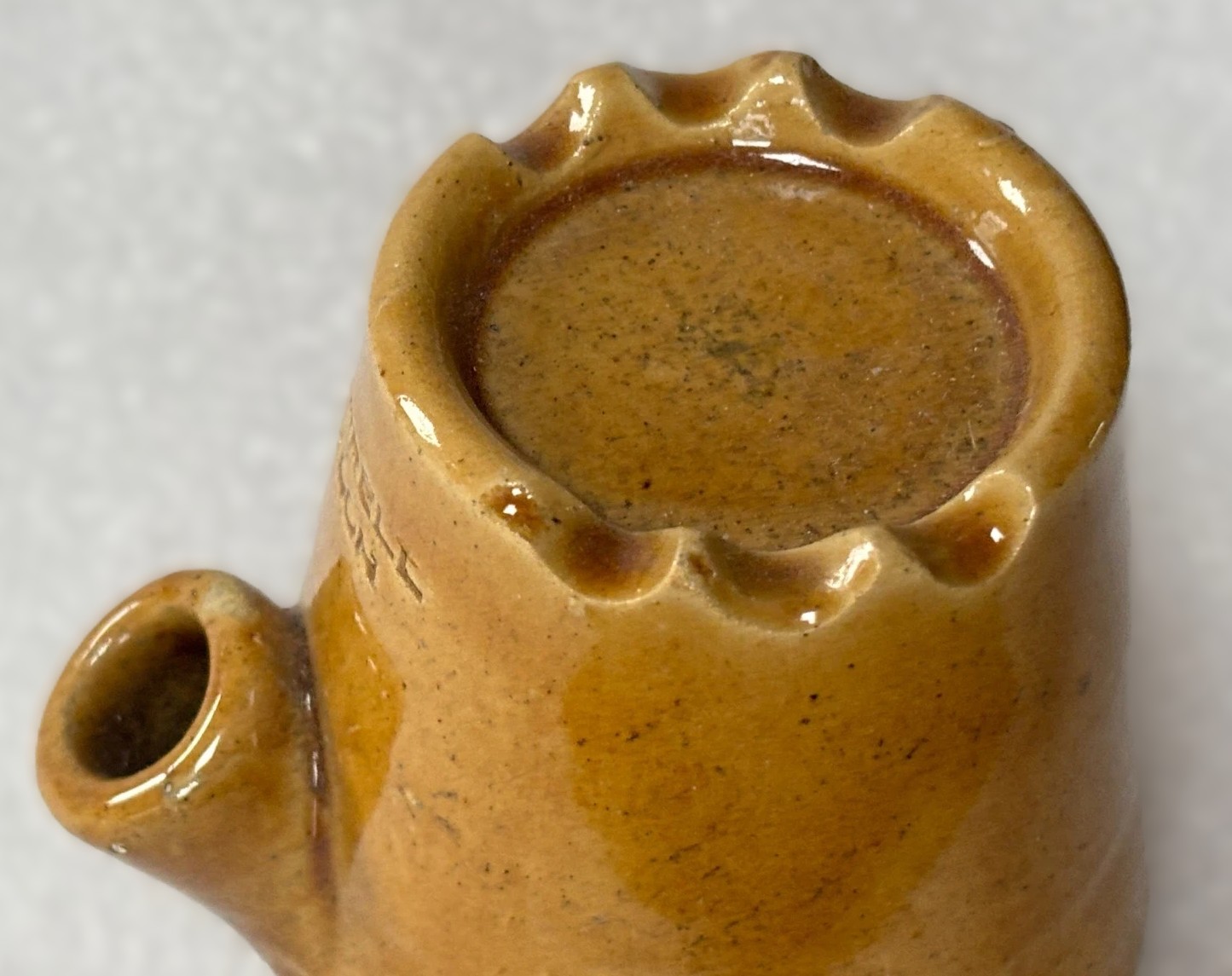
- Front: It features an impressed stamp reading “H MORRELL / LONDON”. Below the text is a single, low-lying dipping spout extending outward from the base.
- Top: The top rim is designed to mimic castle battlements (crenellations). The notches cut into this decorative rim serve dual purposes: they complete the castle aesthetic and function as convenient pen rests to cradle dip pens across the top.
Registry Hallmark Interpretation & Date
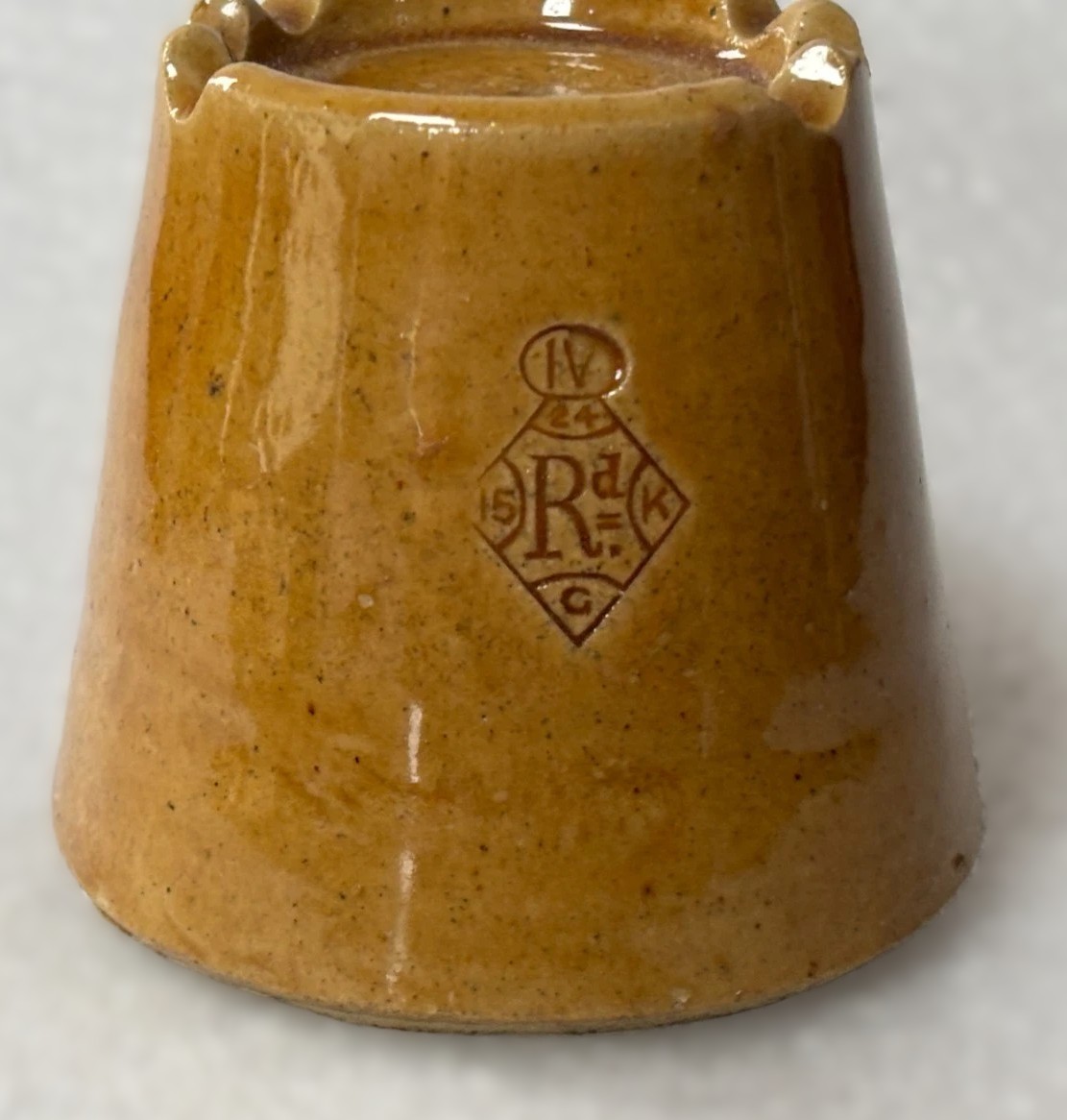
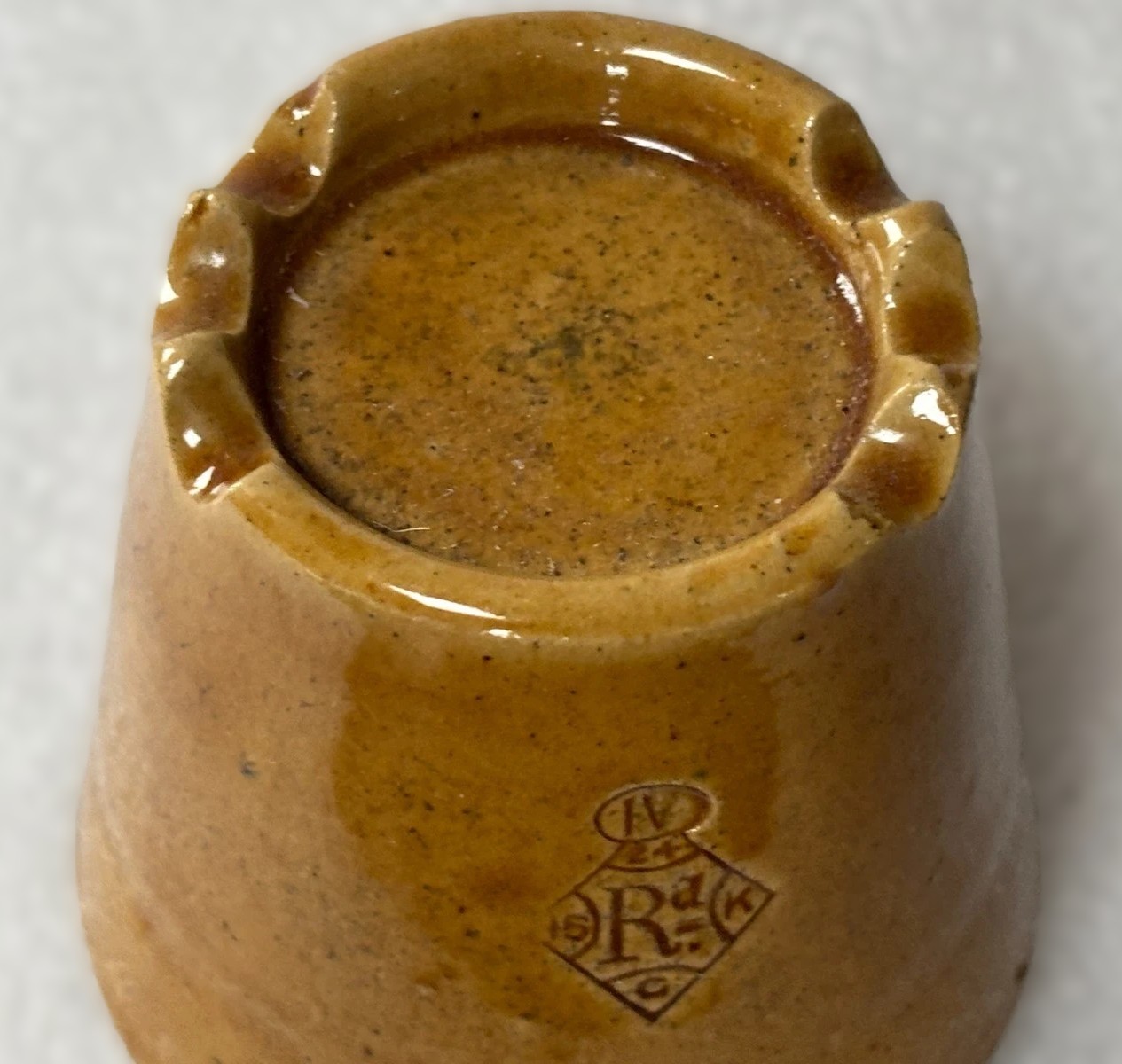
The back of the bottle features a British Registration Diamond Mark (used by the UK Patent Office to protect industrial designs).
By decoding the positions in this specific style (used from 1842 to 1867), we can find the exact registration date:
- Top Loop: IV — Class IV (Earthenware/Ceramics)
- Top Corner (Day): 24 — 24th day of the month
- Right Corner (Month): K — November
- Bottom Corner (Year): G — 1851
- Left Corner (Bundle): 15 — The specific parcel/bundle number for that day’s registrations
Exact Date of Registration: November 24, 1851
How this Siphon Inkwell Works
A “teakettle” or siphon inkwell utilizes basic physics—specifically atmospheric pressure and a partial vacuum—to provide a continuous supply of ink without overflowing or drying out rapidly.
- The Sealed Chamber: The main body of the pottery castle is completely enclosed and airtight at the top. The only opening to the outside world is the small dipping spout at the bottom.
- The Air Lock (Hydrostatic Equilibrium): When the inkwell is filled, ink fills the inner chamber. Because the top is sealed, gravity tries to pull the ink down and out of the spout, but doing so creates a partial vacuum (low pressure) in the empty airspace at the very top of the castle.
- Atmospheric Balance: The weight of the outside air pressing down on the exposed ink in the small dipping spout perfectly balances the weight of the ink inside the chamber combined with its internal vacuum. This prevents the ink from flooding out of the low spout.
- Self-Regulating Supply: As a writer dips their pen and uses up ink from the spout, the ink level drops slightly. This allows a small bubble of air to gulp up into the main chamber. That air bubble releases a tiny amount of internal vacuum, allowing just enough ink to flow down into the spout to restore the original level before sealing itself off again.
Sold for $170 in June 2026
Content disclaimer. The information posted is the owner’s best knowledge and may not have been vetted by the SOIC. We welcome comments, corrections, and additions, working to make our website information comprehensive and accurate.
Join the Society of Inkwell Collectors (SOIC) – it’s free!
Founded in 1981 as a non-profit organization,
we are documenting inkwells (and accessories).
We’re here to help and inform!