

Inkipedia
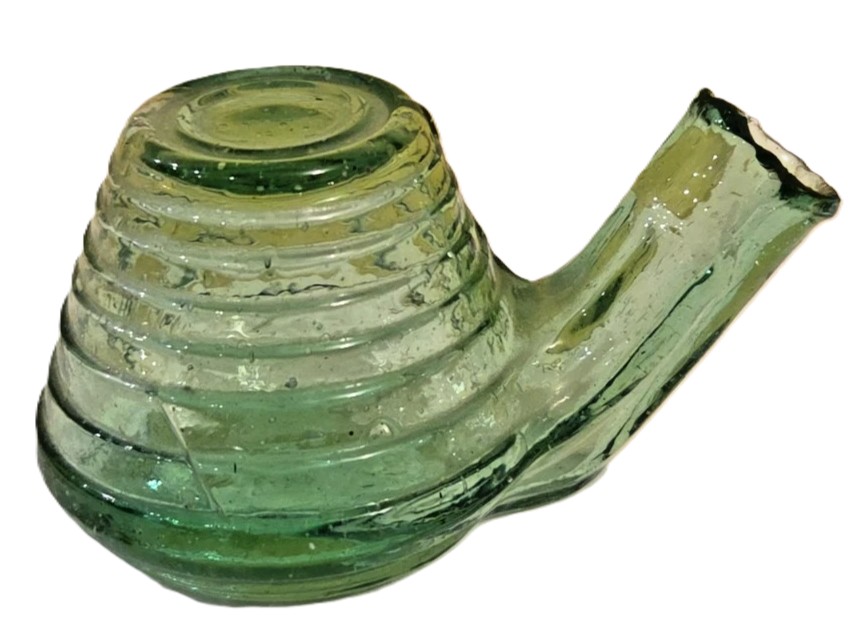
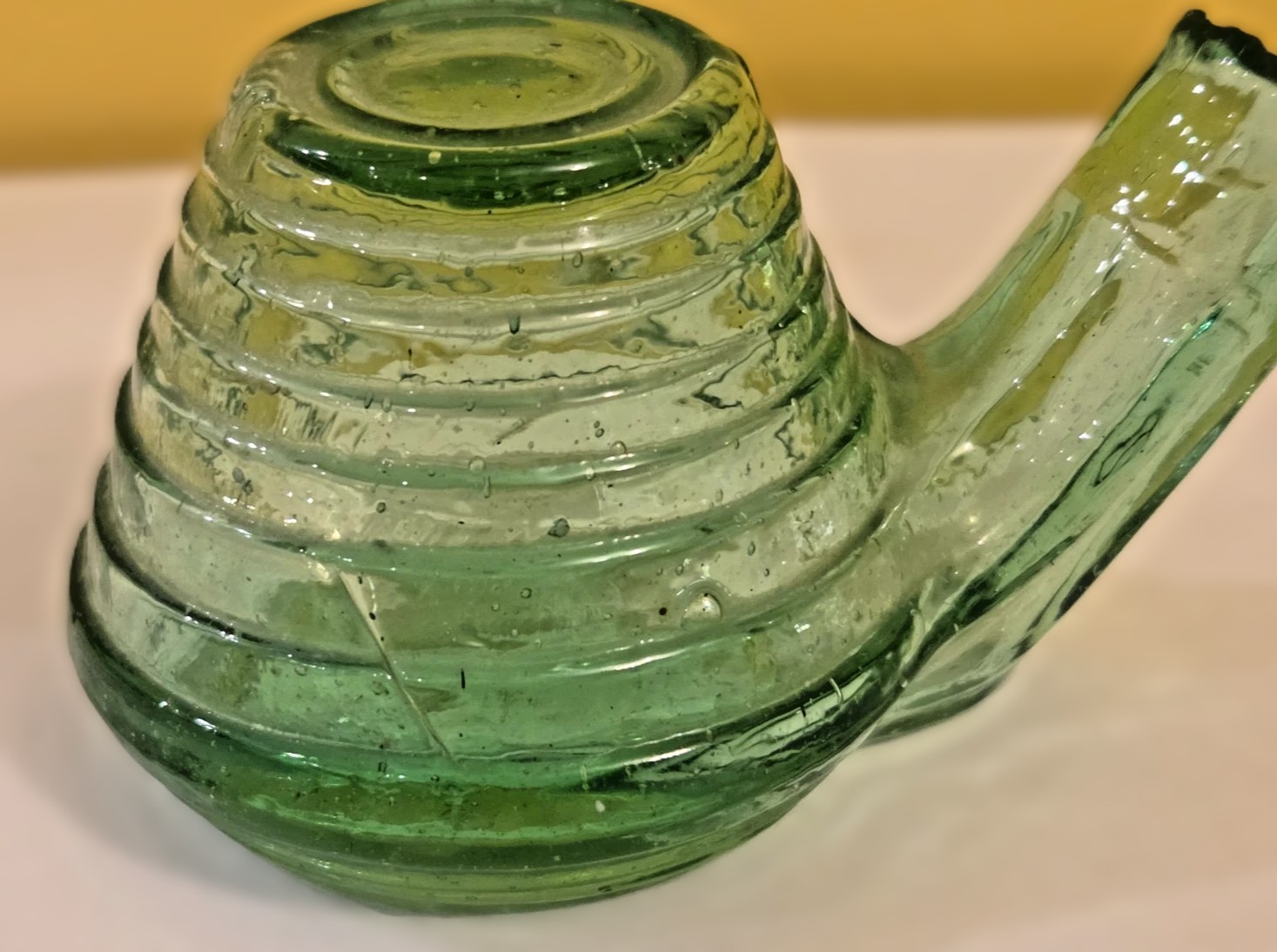
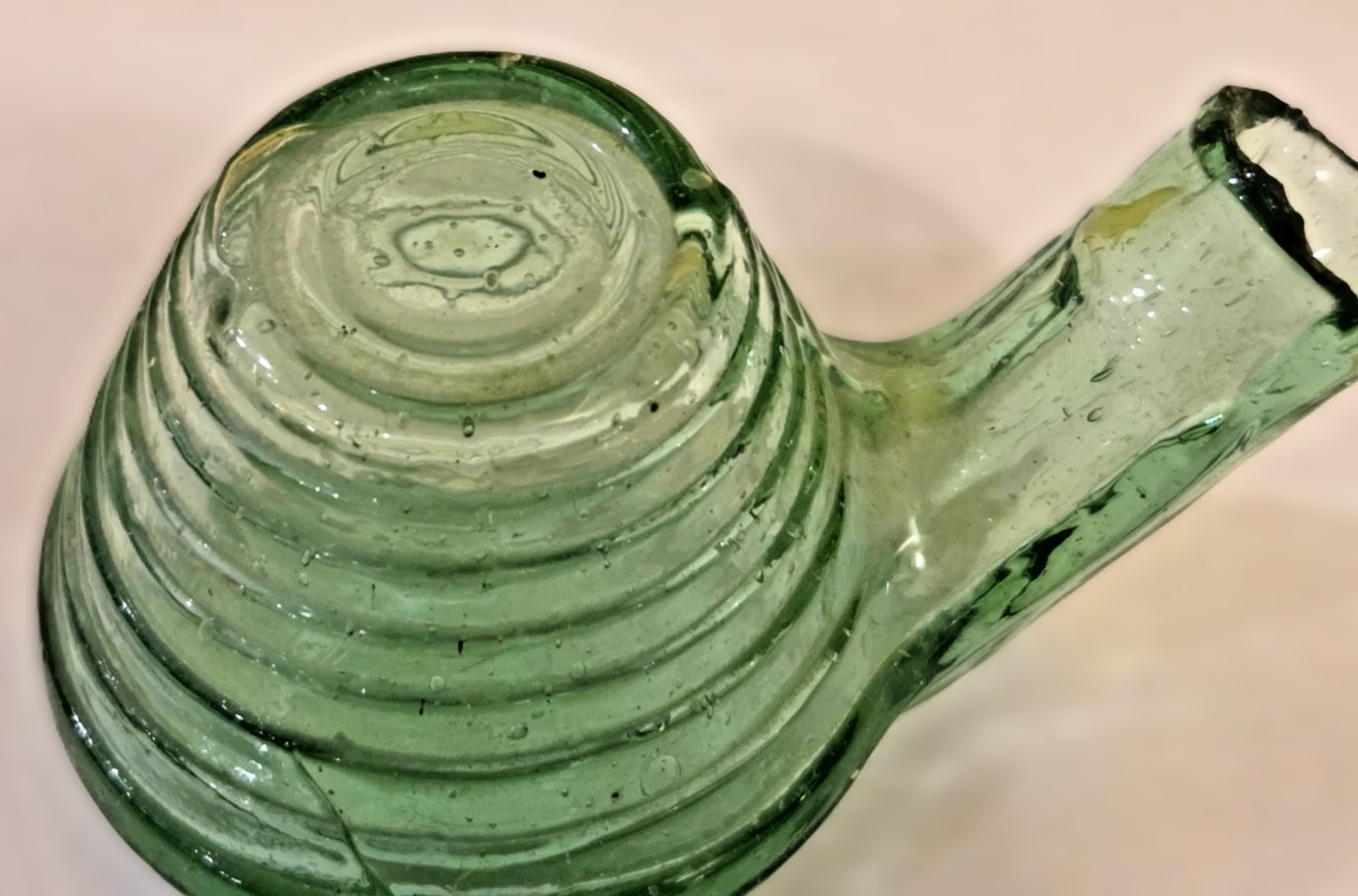
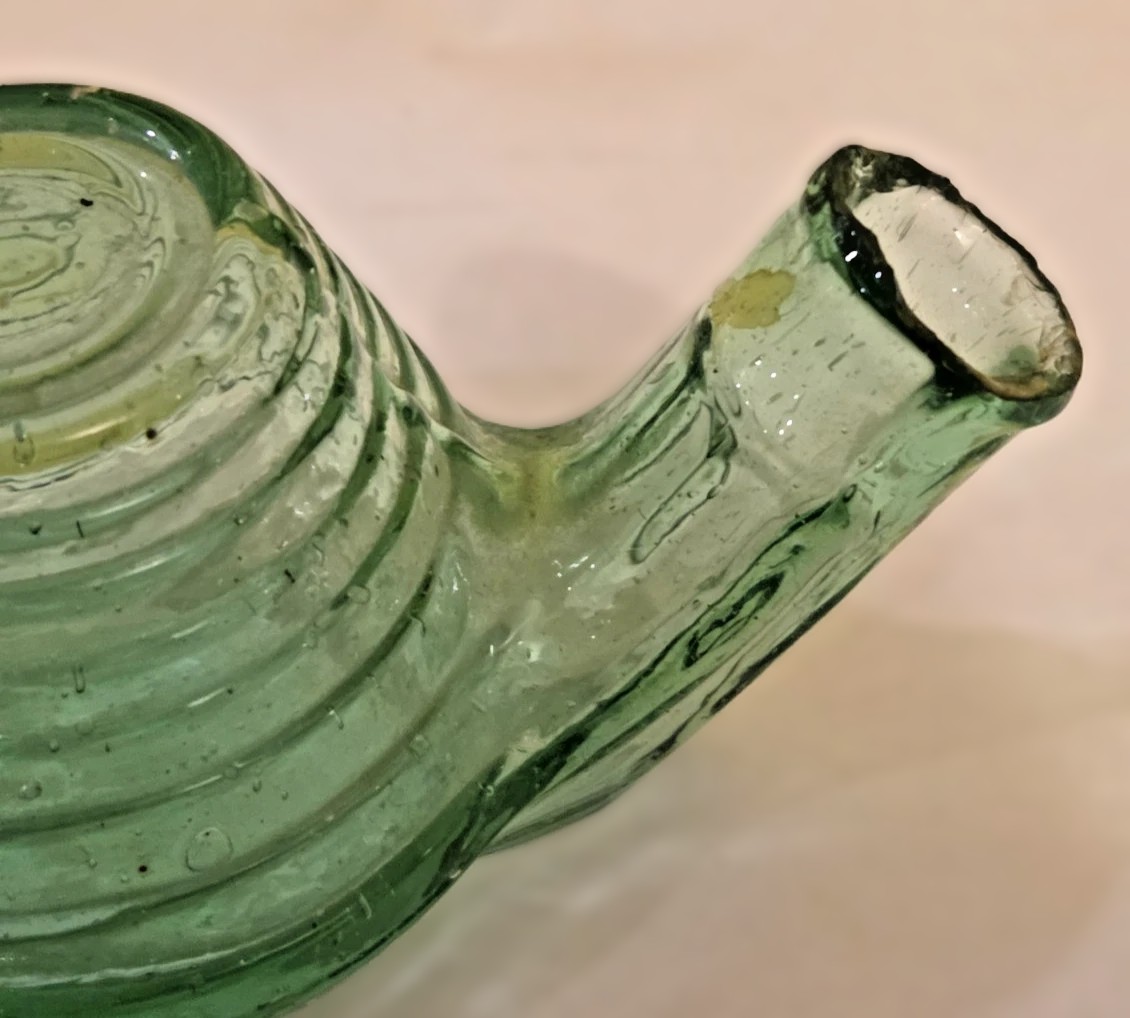
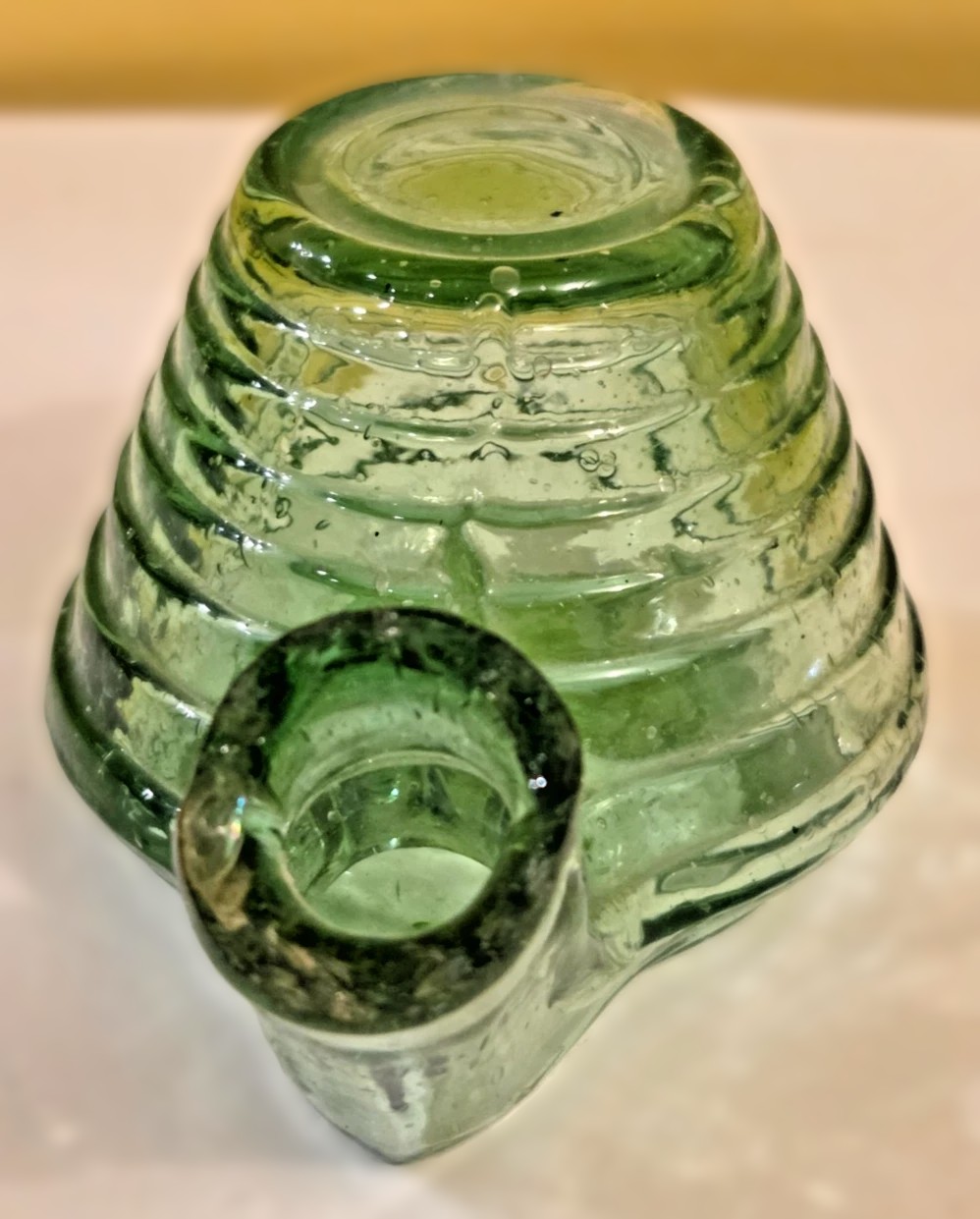
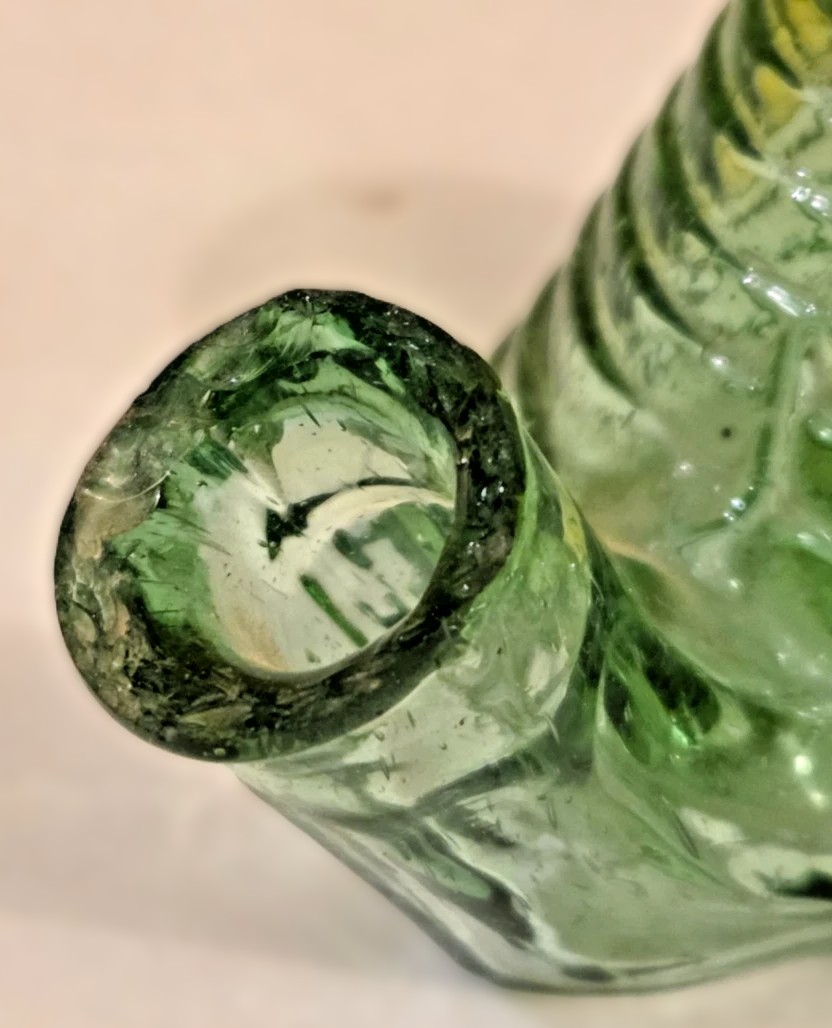
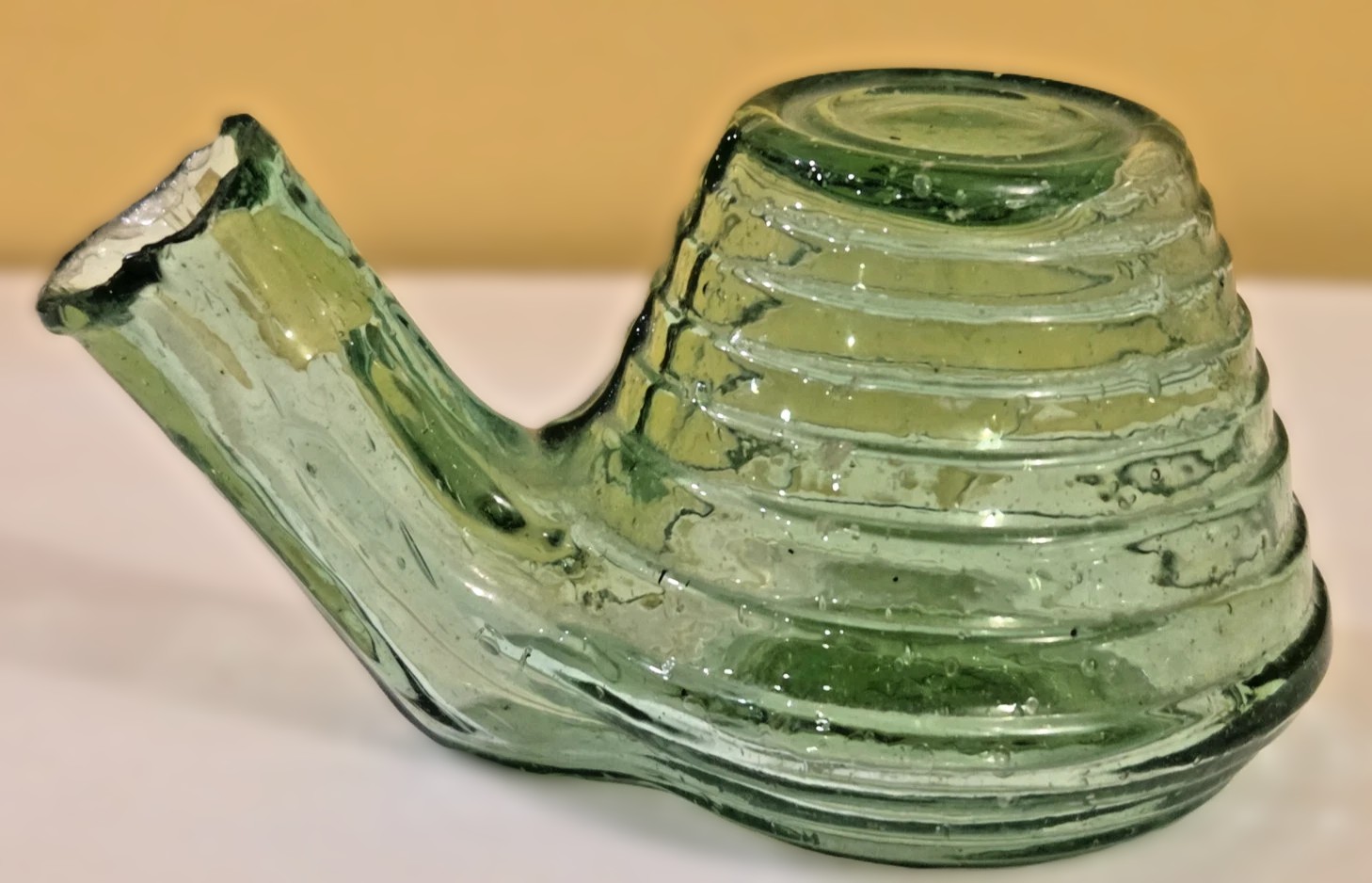
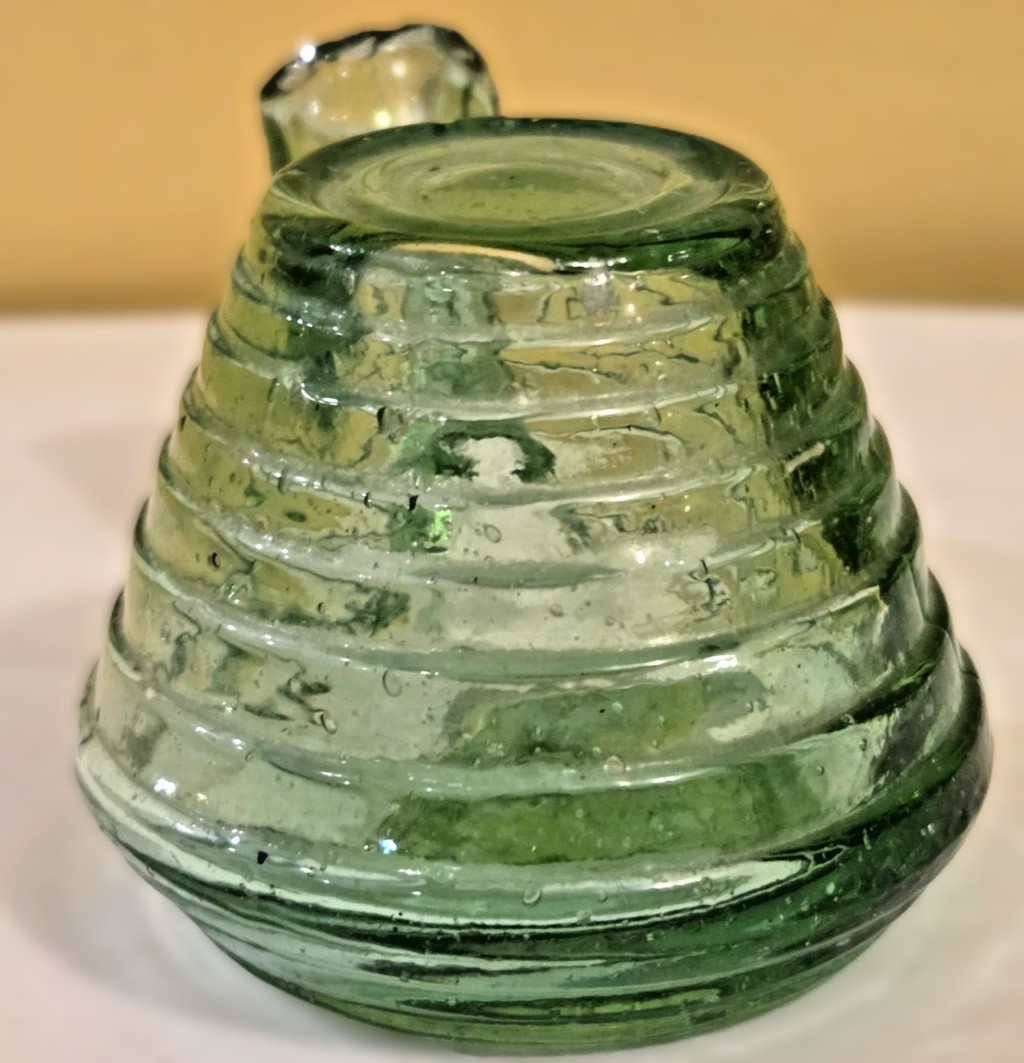
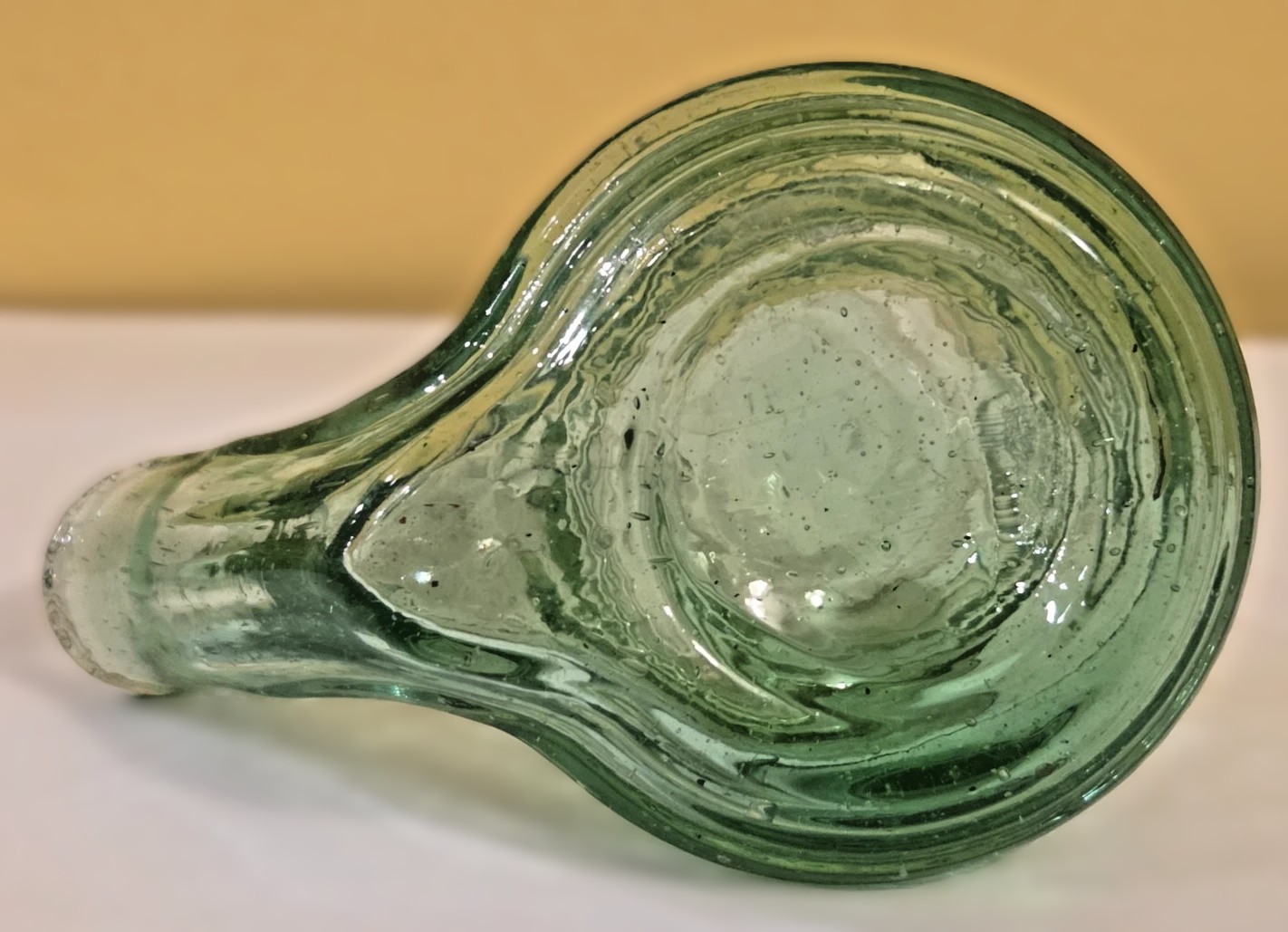
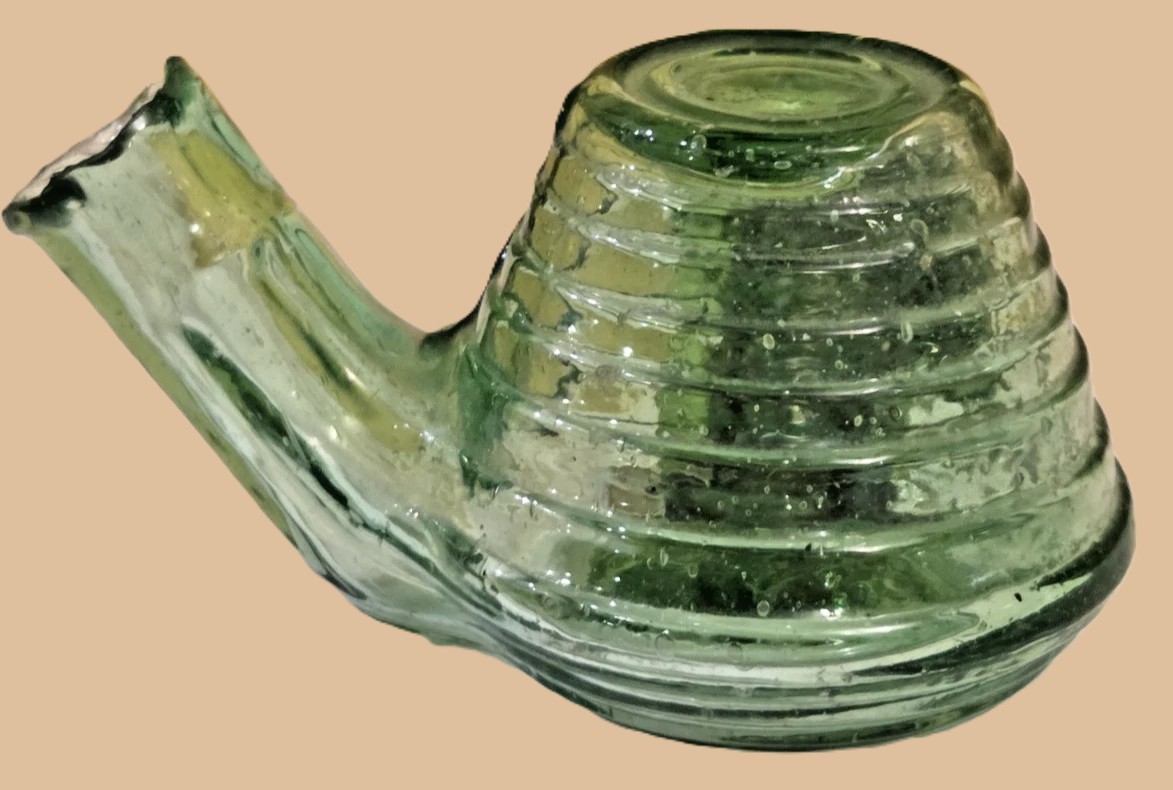
Ringed Beehive Teakettle Ink Bottle
| Categories | Ink Bottle, Mechanical - Pump / Siphon |
| Type | Tea Kettle |
| Material | Glass |
| Markings | Unmarked |
| Manufacturer | Undetermined |
| Origin | England |
| Date or Era | circa 1870 |
| Measuring | 2” high |
Description
- Form & Mold: Mold-blown “teakettle” fountain ink bottle featuring a classic tiered beehive (or bee skep) dome with continuous, rounded horizontal concentric rings. The offset angled spout served to maintain a constant ink level at the dip opening while shielding the main reservoir from air exposure.
- Color & Glass Character: Light aqua-green / sea-green bottle glass heavily populated with seed bubbles, elongated air inclusions, and slight slag/carbon specks typical of mid-19th-century utilitarian batch glass.
- Base & Seams: Smooth, slightly indented base showing vertical mold seam lines extending along the spout and body, indicating manufacture in a two-part hinged mold.
Manufacturing Context & Additional Details
- Origin & Dating: English, circa 1860s–1880s. While American and Continental glassworks commonly ground the mouths or added threaded brass/metal collars to teakettle inks, British glassmakers frequently produced economy “penny ink” variants blown with a simple burst/sheared lip.
- Lip Finish: The jagged, unfinished spout top is a quintessential burst lip (also referred to as a blow-over or sheared finish). The bottle was snapped off directly at the blowpipe without reheating, fire-polishing, or applying a tooled ring to minimize production costs.
- Original Closure: Sold strictly as commercial, disposable ink containers. The opening was plugged with a small, tapered cork driven flush and capped with red or black sealing wax, which the purchaser broke open with a penknife.
- Collector Classification: In reference catalogs such as Joe L. Mathews Jr.’s TeaKettle Ink Price and Reference Guide, banded and ribbed beehive variants fall under the JLM #M105 mold family and related British novelty patterns. Burst-lip examples in colored glass (greens, deep aquas, and amethysts) remain notably scarcer than standard smooth or octagonal inkwells due to the fragility of their unfinished spouts.
Sold for $496 in July 2026
Content disclaimer. The information posted is the owner’s best knowledge and may not have been vetted by the SOIC. We welcome comments, corrections, and additions, working to make our website information comprehensive and accurate.
Join the Society of Inkwell Collectors (SOIC) – it’s free!
Founded in 1981 as a non-profit organization,
we are documenting inkwells (and accessories).
We’re here to help and inform!