

Inkipedia
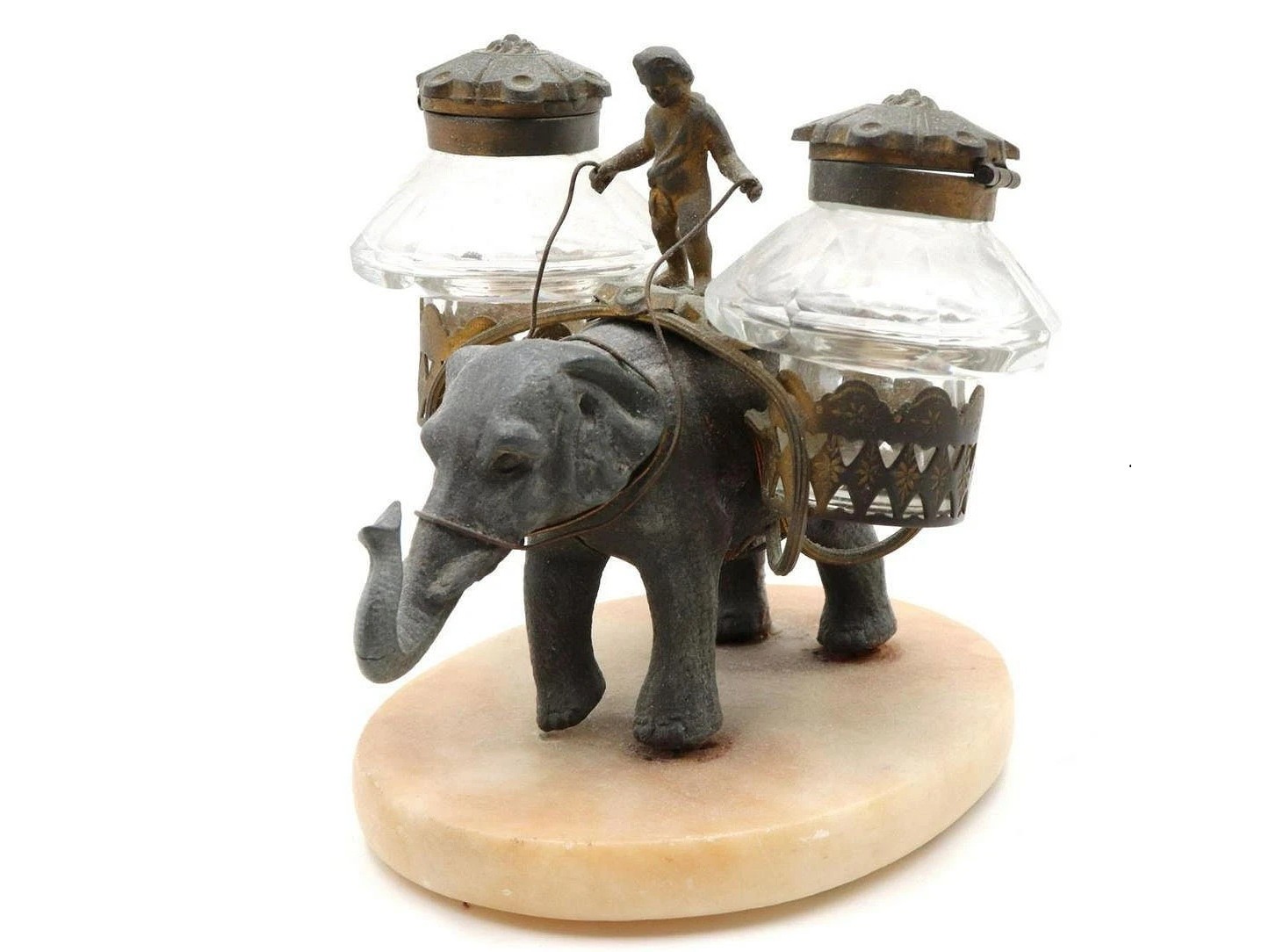

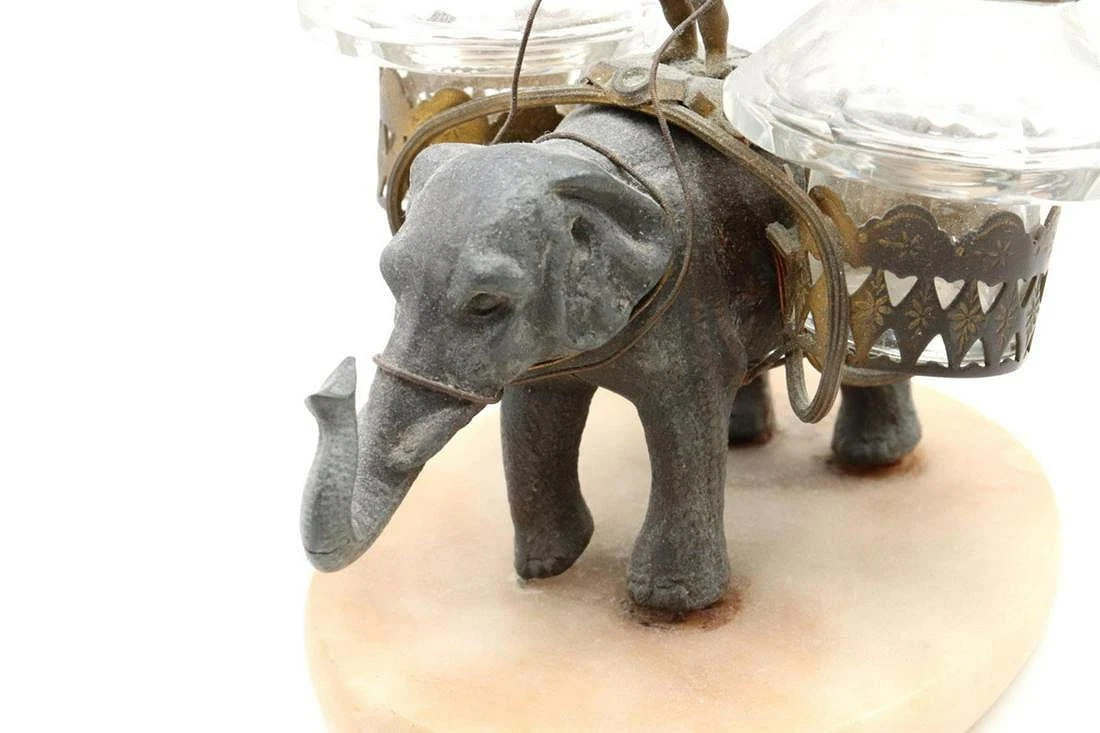

Riding Elephant Figural Inkstand
| Categories | Figural - Animals & Living Creatures |
| Type | Elephant |
| Material | Alabaster, Brass, White metal |
| Markings | Unmarked |
| Manufacturer | Undetermined |
| Origin | Undetermined |
| Date or Era | circa 1890 |
| Measuring | 5” across; 5” high |
Detailed Description
- Overall Form: A central, figural sculpture of an elephant carrying a figure and cargo is mounted on a base.
- Base: The elephant figure stands on a polished oval Alabaster base. Alabaster was a popular choice for the bases of figural desk sets in the late 19th century.
- The Elephant Figure: The elephant is made of a ‘white metal’ alloy, likely spelter (zinc alloy) or Britannia metal, finished with a patina or painted finish that gives it a dark, matte, lead-like appearance. The trunk is raised, often a sign of good luck.
- The Rider/Mahout: A small, naked figure, which resembles a Cherub or Putto, stands on the elephant’s back. This figure acts as the Mahout (elephant driver) and holds a wire that serves as the reins to guide the elephant.
- The Inkwells (The Cargo): The elephant carries two separate inkwells, one on each side, like panniers or cargo baskets.
- The Glass: The inkwells themselves are made of clear pressed glass, with a radiating or paneled pattern.
- The Metal Holders (Cargo Holders): The glass stems fit into separate, cylindrical metal holders secured to the elephant’s sides. These are called, in this specific context, Howdah (or palanquin) mounts, made of brass with a perforated, decorative geometric pattern.
- The Lids: Each inkwell is topped with a hinged, dome-shaped metal lid, held in place by a brass collar and a hinge mechanism.
Estimated Age and Origin
- Figural Inkwells: Figurative inkstands (like animals, people, or architectural models) were extremely popular during the second half of the 19th century.
- Materials: The combination of white metal (spelter/Britannia), brass mounts, pressed glass inkwells, and an alabaster base is characteristic of French, German, or American decorative arts from this period.
- Style: The exotic subject (the elephant) and the classical figure (the cherub) combined with the decorative pierced metalwork point to the aesthetic of the Late Victorian Era. Age Estimate: 1870 – 1900
Sold for $475 in October 2025
Content disclaimer. The information posted is the owner’s best knowledge and may not have been vetted by the SOIC. We welcome comments, corrections, and additions, working to make our website information comprehensive and accurate.
Join the Society of Inkwell Collectors (SOIC) – it’s free!
Founded in 1981 as a non-profit organization,
we are documenting inkwells (and accessories).
We’re here to help and inform!