

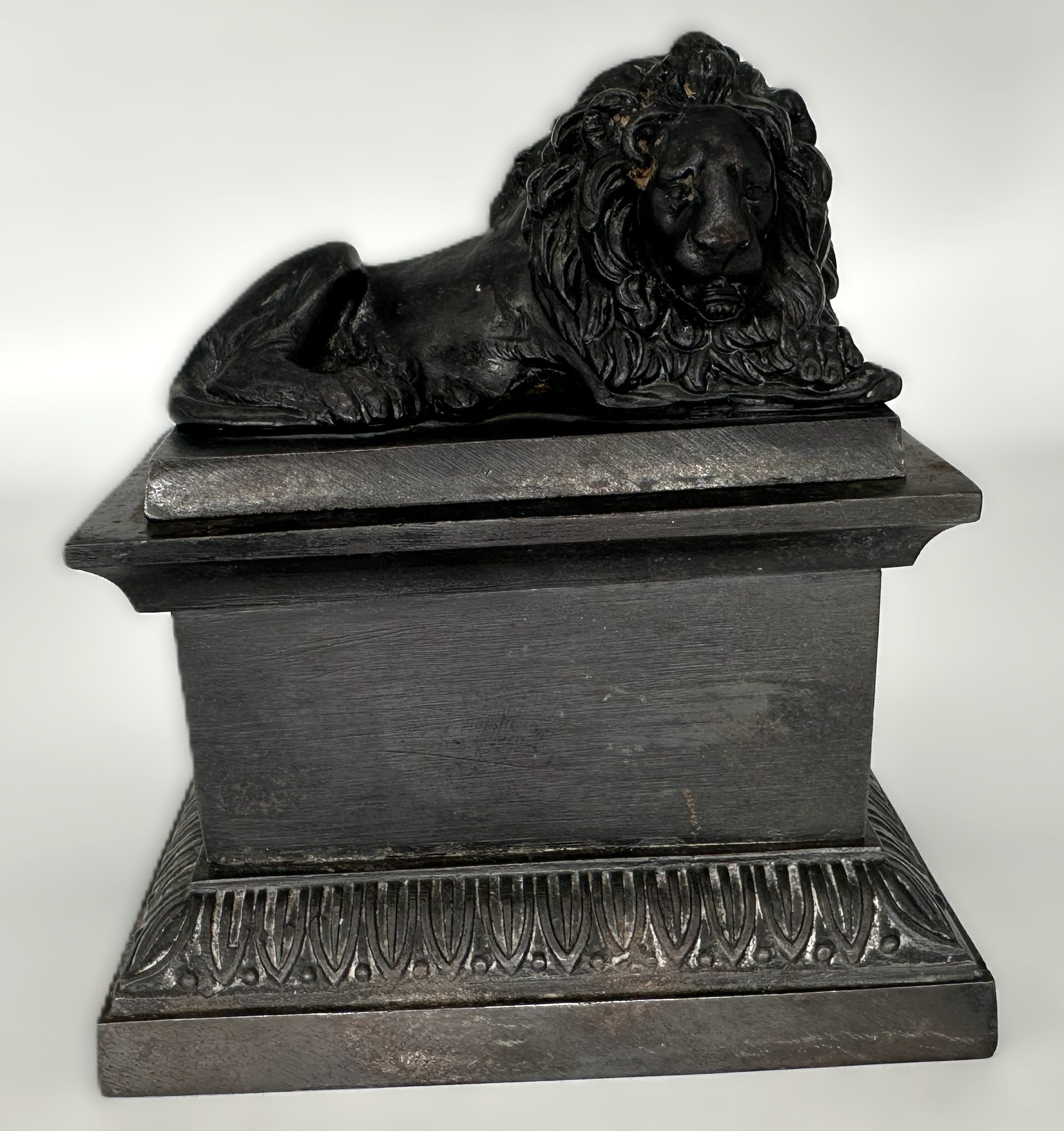
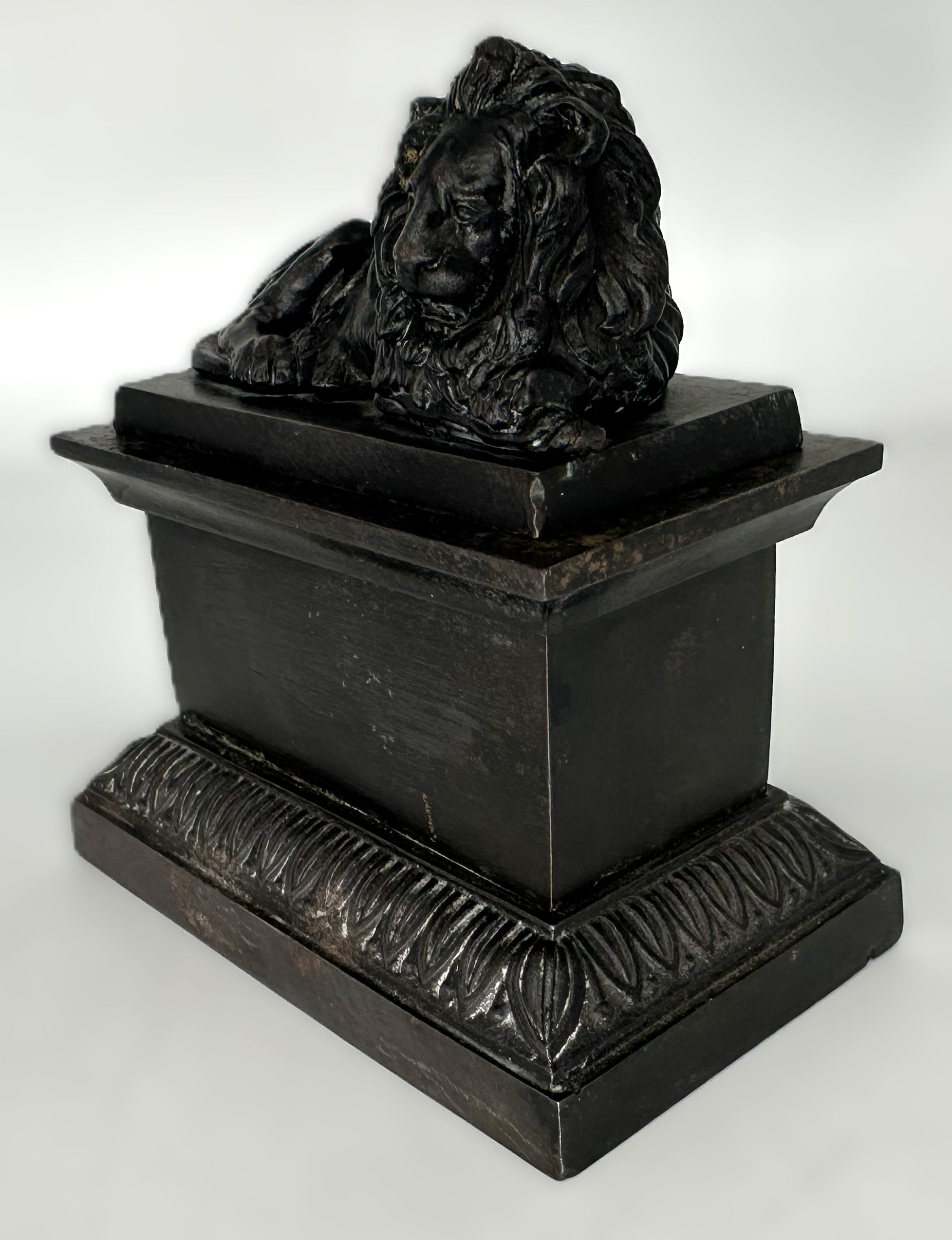
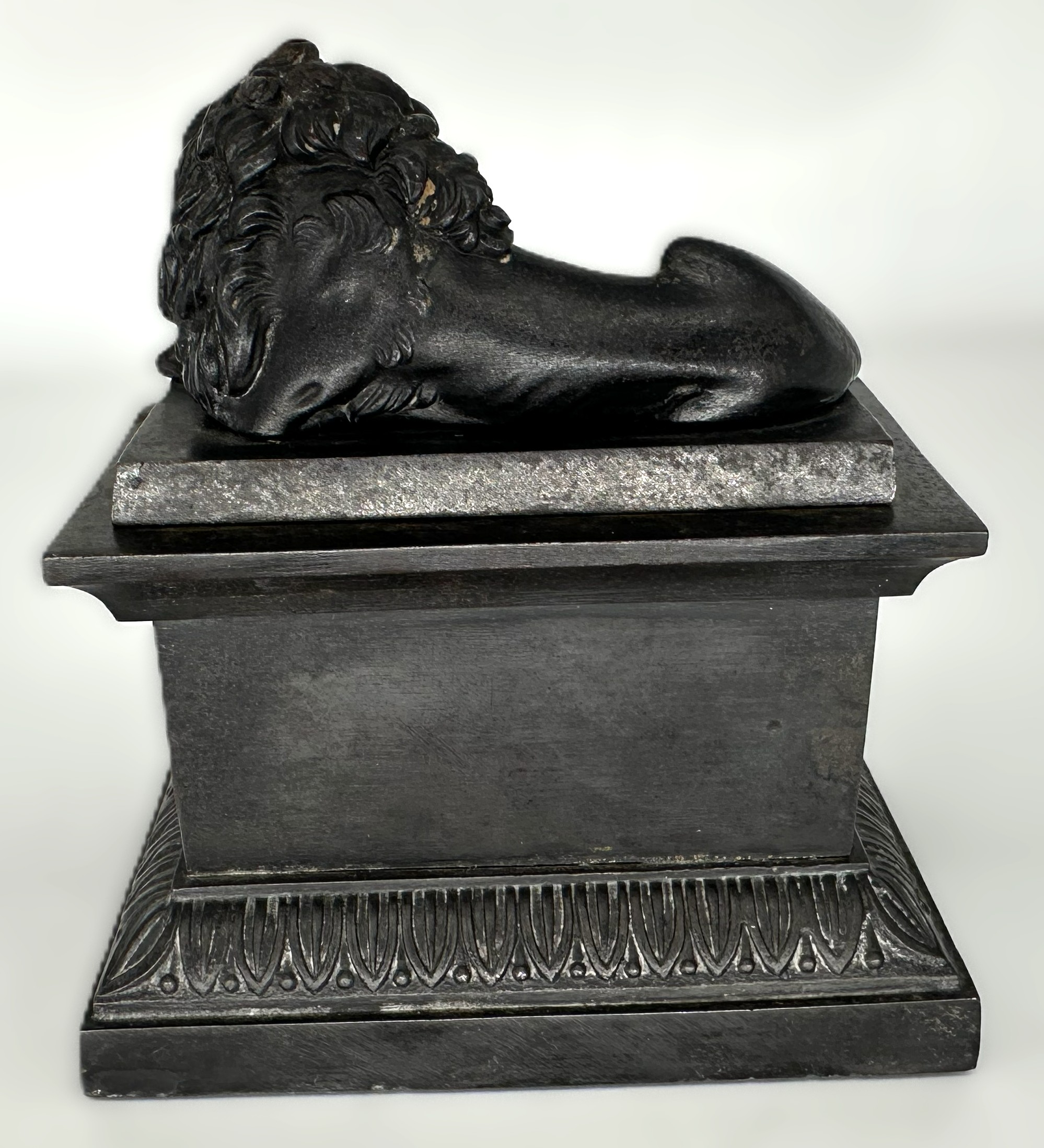
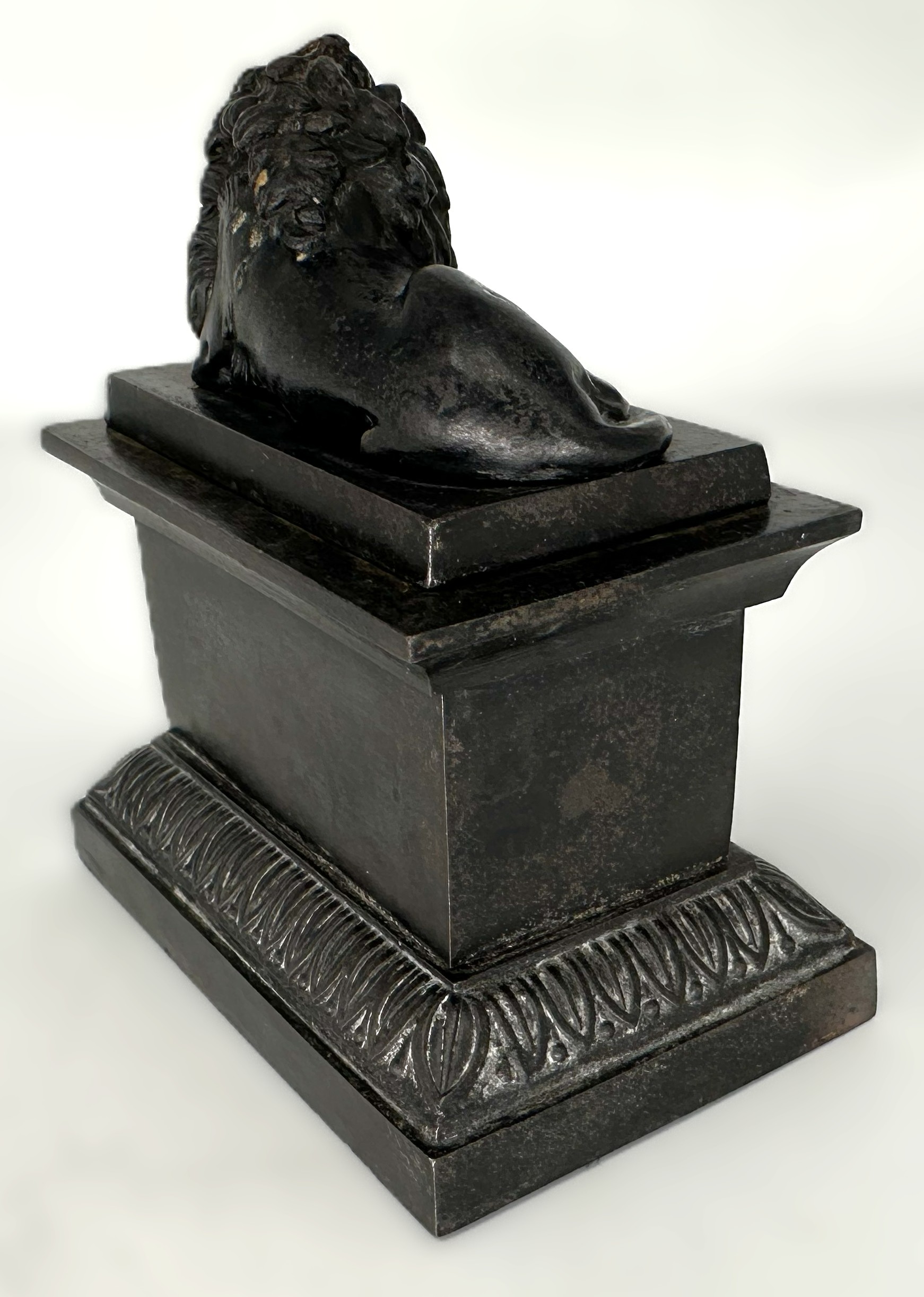
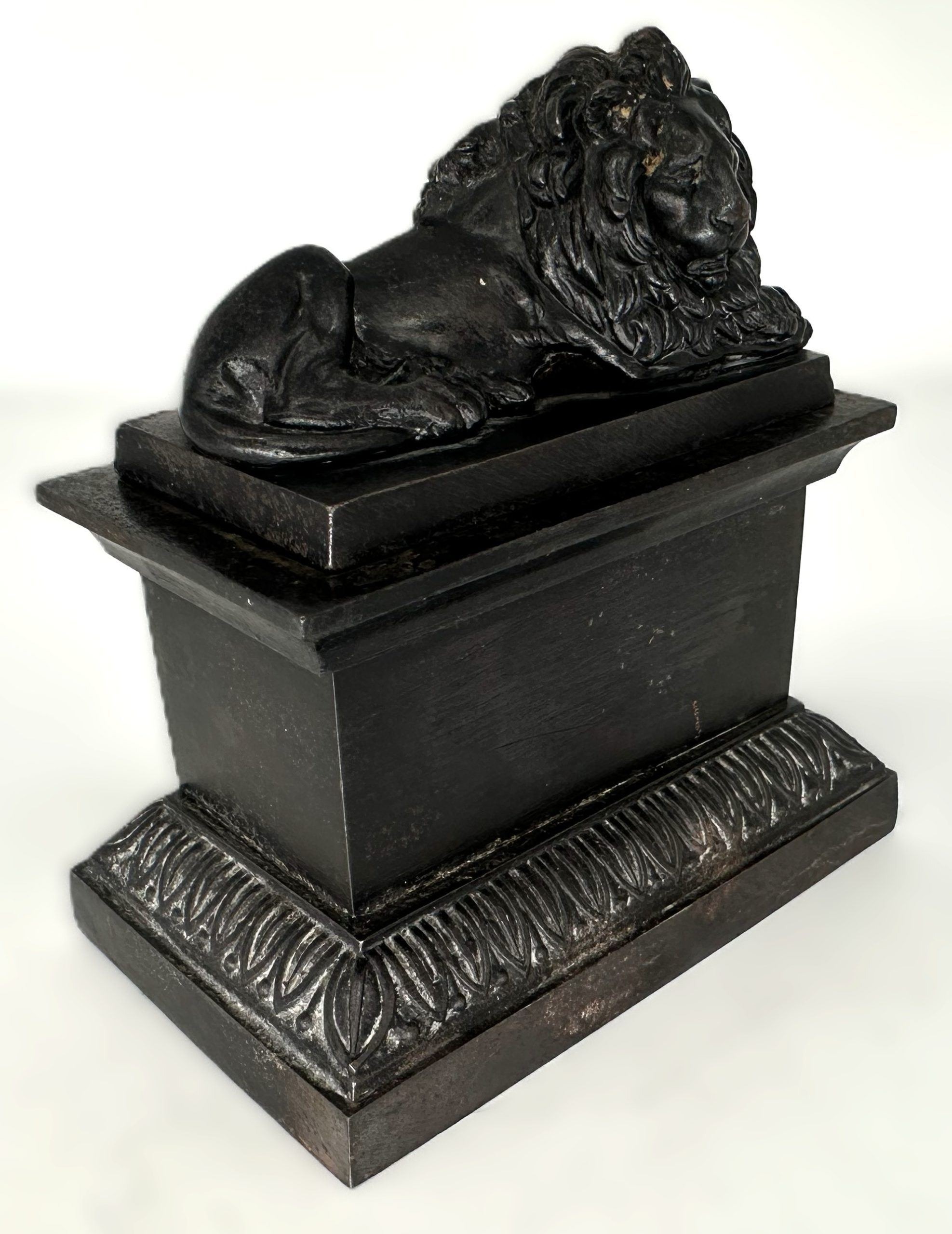
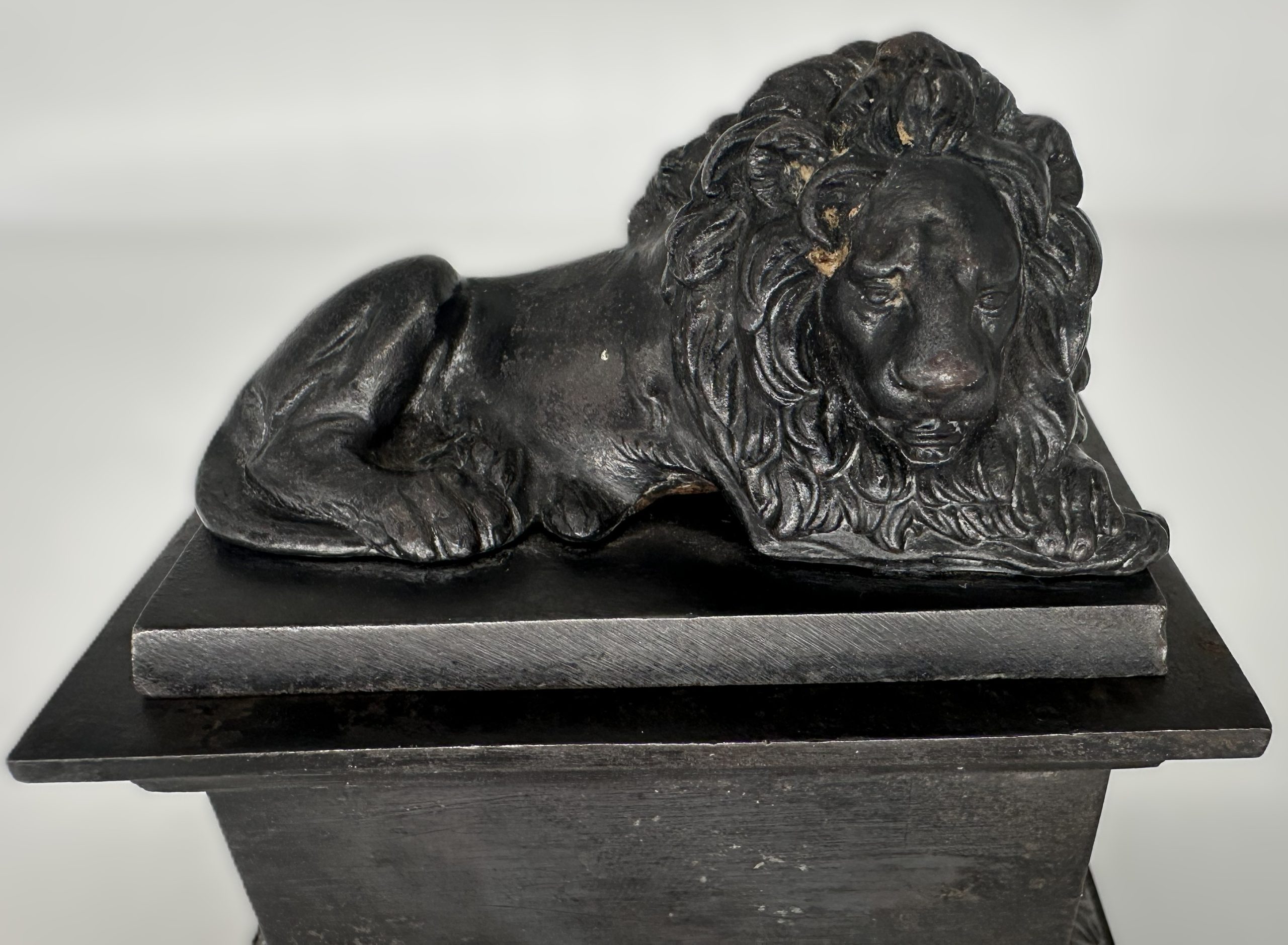
Recumbent Lion on a Plinth
| Categories | Figural - Animals & Living Creatures |
| Type | Lion |
| Material | Bronze, Cast iron |
| Markings | Unmarked |
| Manufacturer | Undetermined |
| Origin | France |
| Date or Era | Circa 1830 – 1840 |
| Measuring | Base: 4 ¼” x 2 ½” |
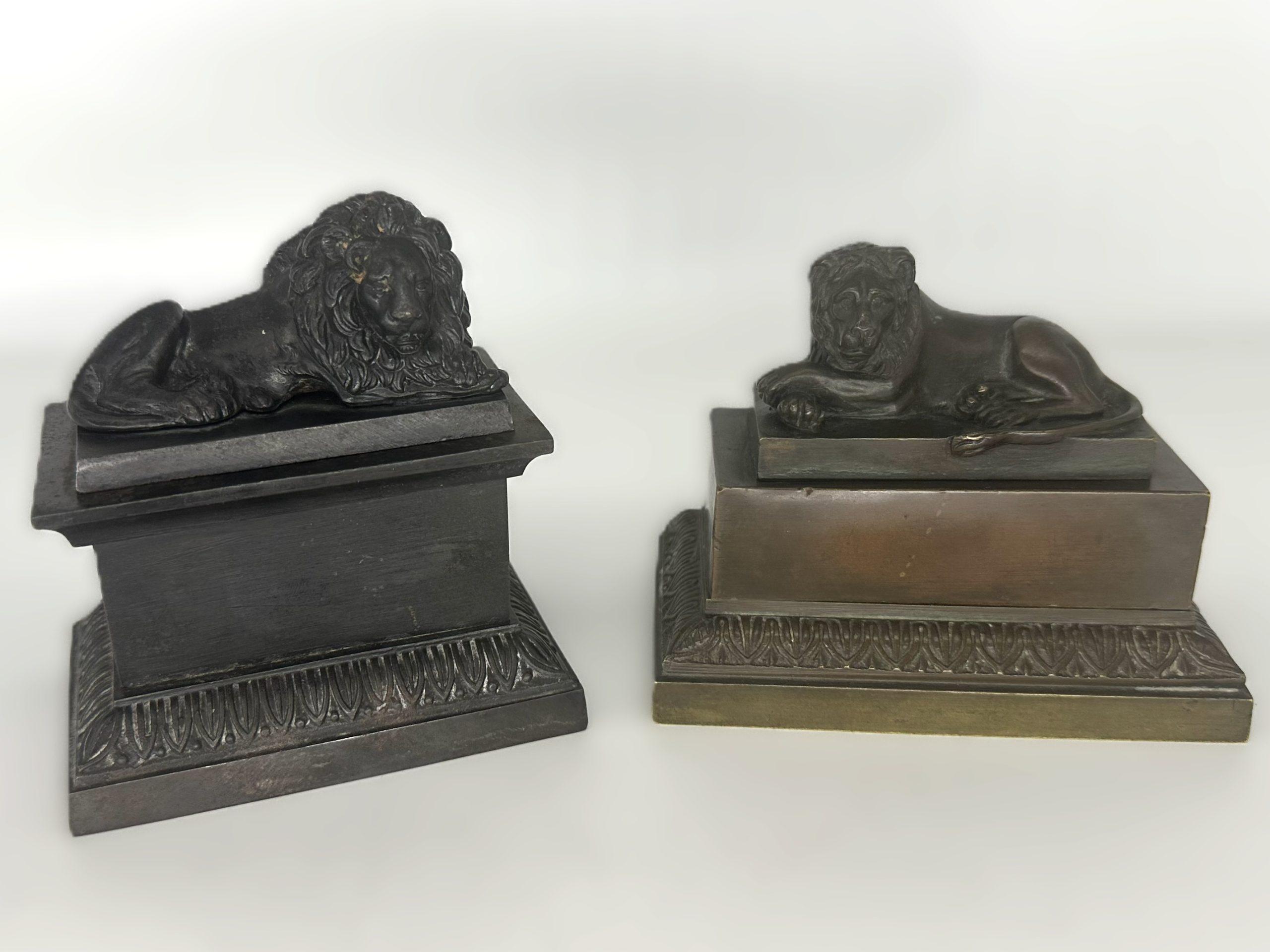
Two examples are pictured.
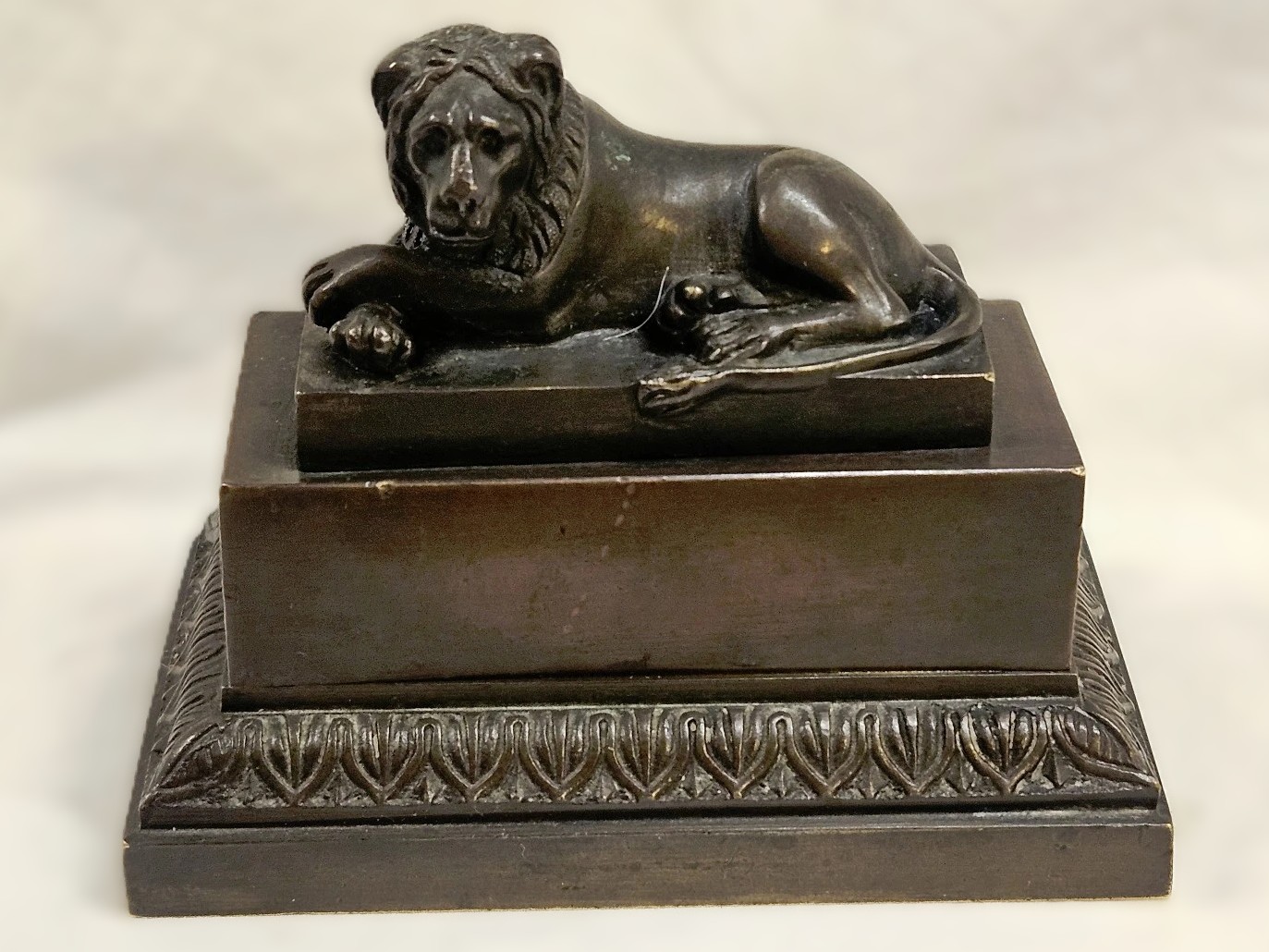
Overview – Lion #1
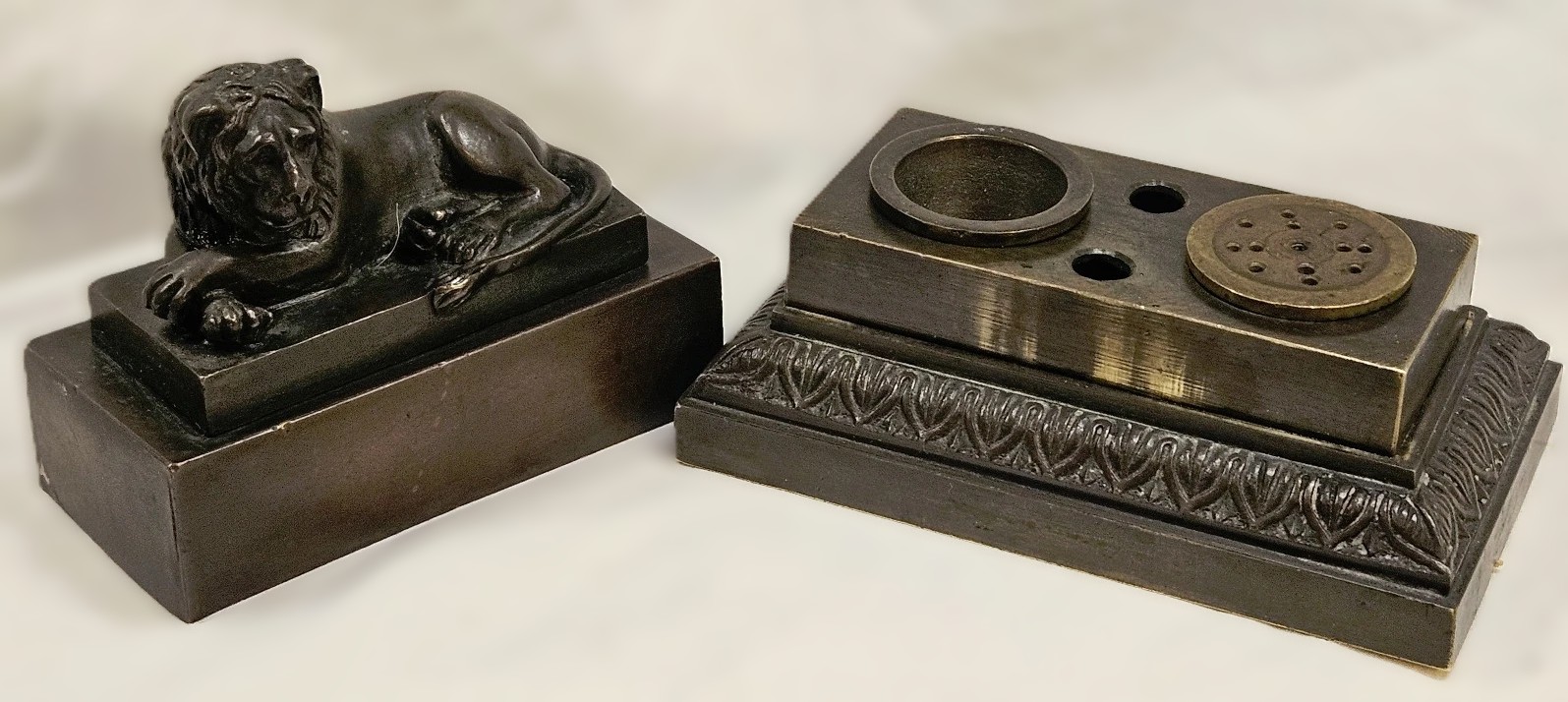
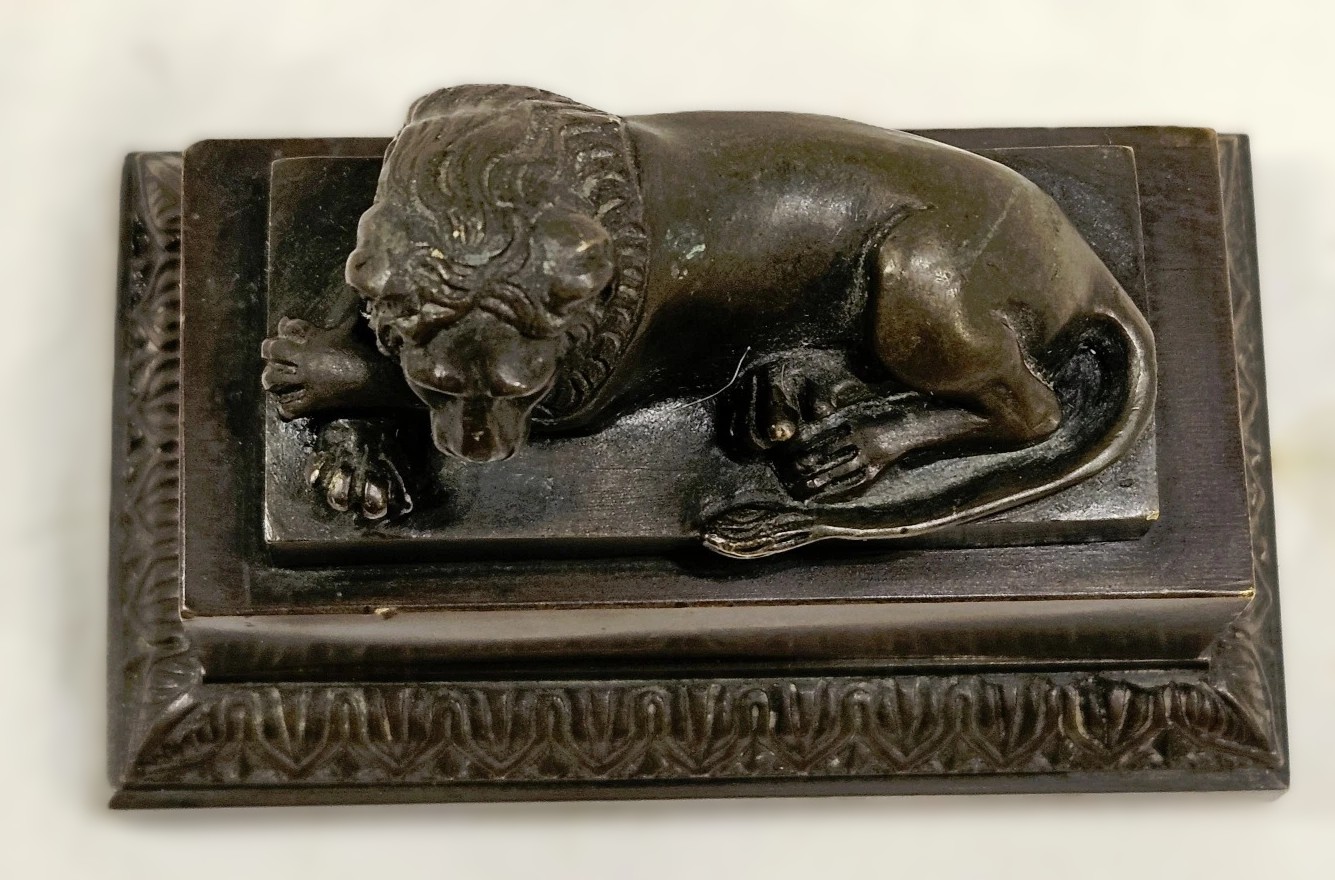
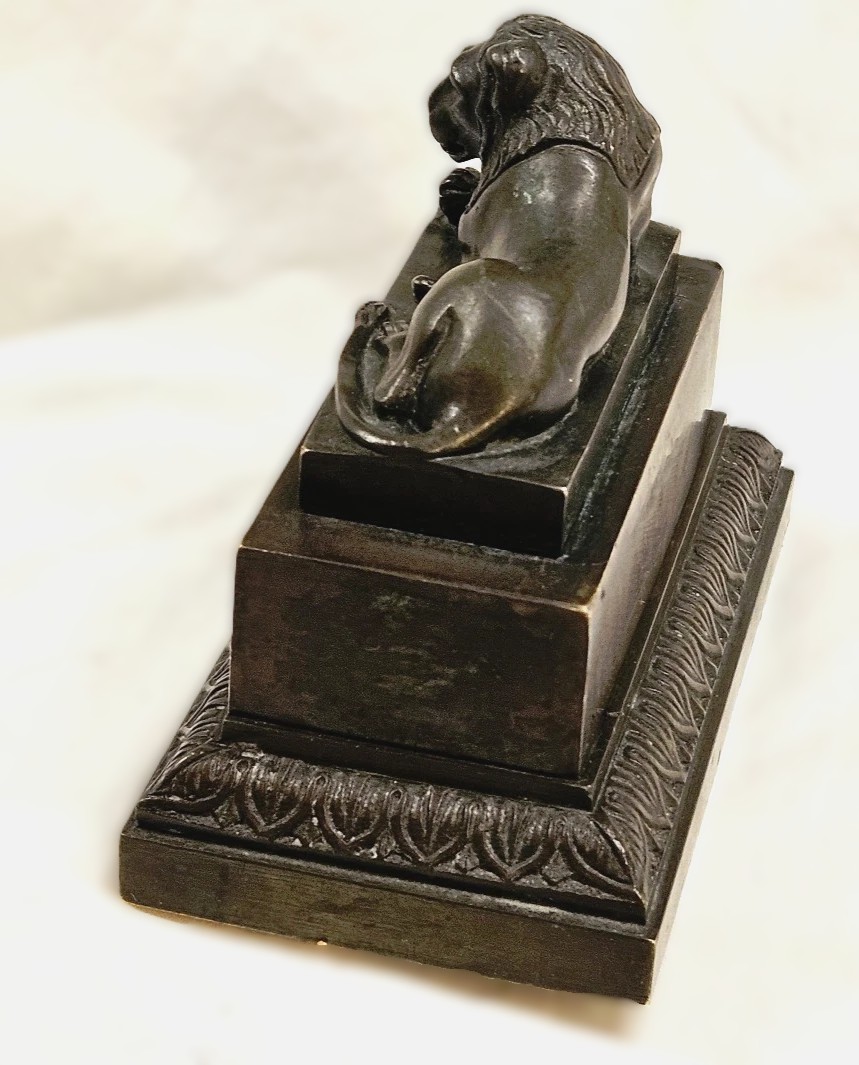
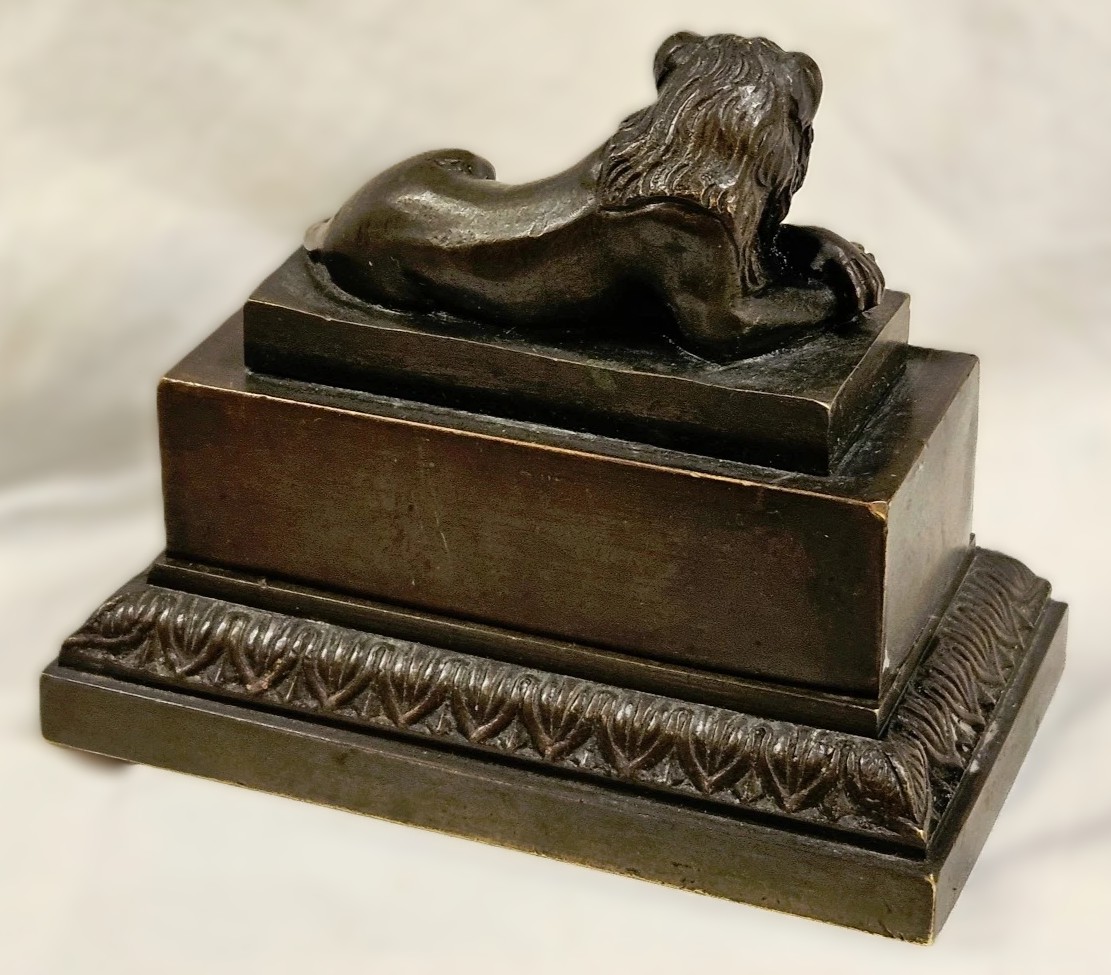
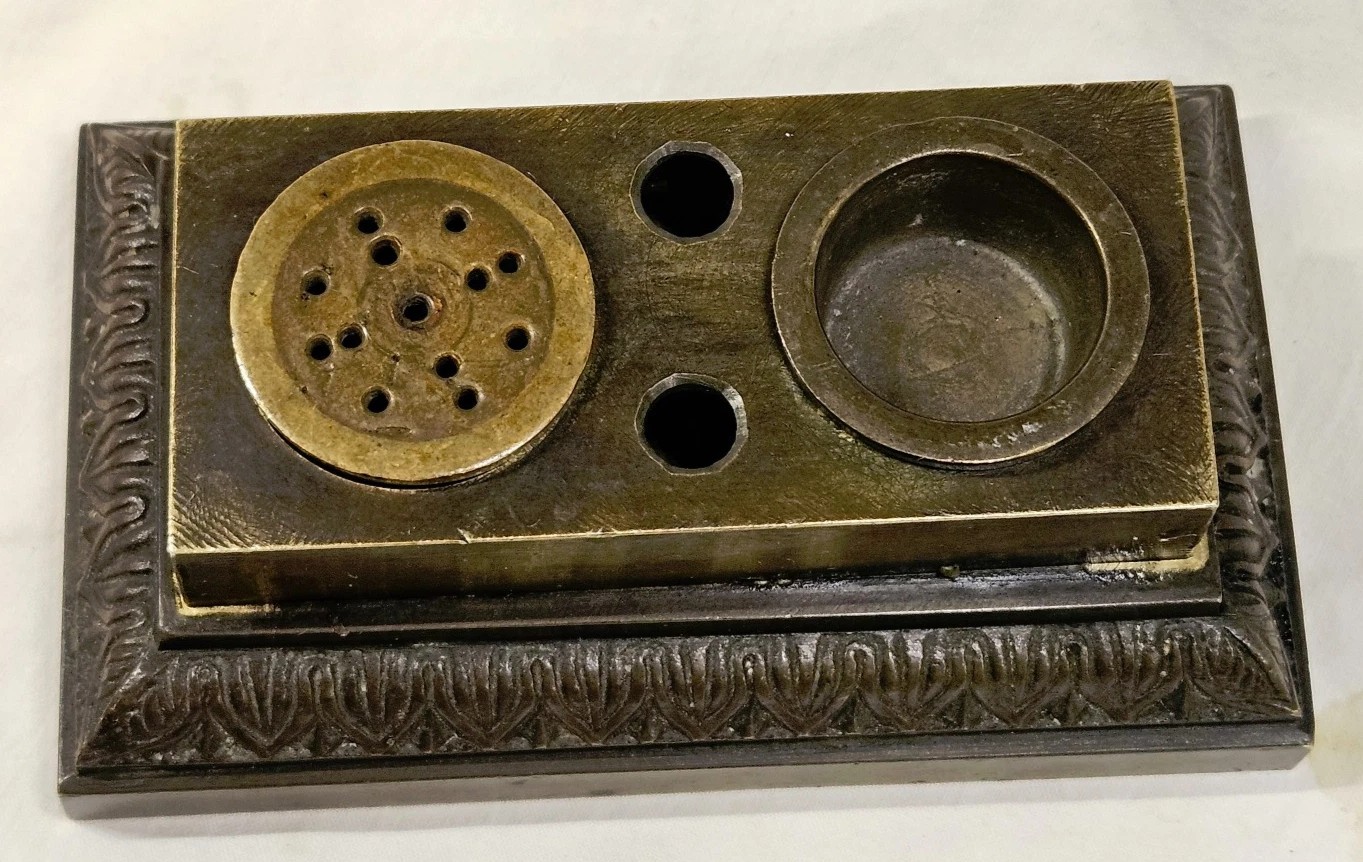
Surmounted by a patinated bronze figure of a recumbent lion after the celebrated model by Antonio Canova for the Clement XIII monument. The rectangular tiered cover lifts to reveal two central quill apertures flanked by original removable spun-brass ink and sand pounce wells. Raised on a stepped architectural plinth bordered by a chased anthemion frieze, retaining its original hand-fitted wood-core base and iron tie-rod construction. France, circa 1825–1830
Description – Lion #1
Date & Iconography
- Date: Circa 1820–1835 (Bourbon Restoration / Charles X period).
- Statue Replicated (Canova’s Reclining Lion): This recumbent lion directly replicates Antonio Canova’s famous Sleeping/Reclining Lion from the tomb monument of Pope Clement XIII in St. Peter’s Basilica, Rome (completed 1792). Canova paired a sleeping lion with a watchful one; this relaxed pose with paws crossed and head turned was widely reproduced in Grand Tour and Restoration decorative bronzes.
- Base Architecture: Neoclassical stepped geometry and a chased anthemion/palmette leaf frieze around the lower register.
Physical Description & Construction Details
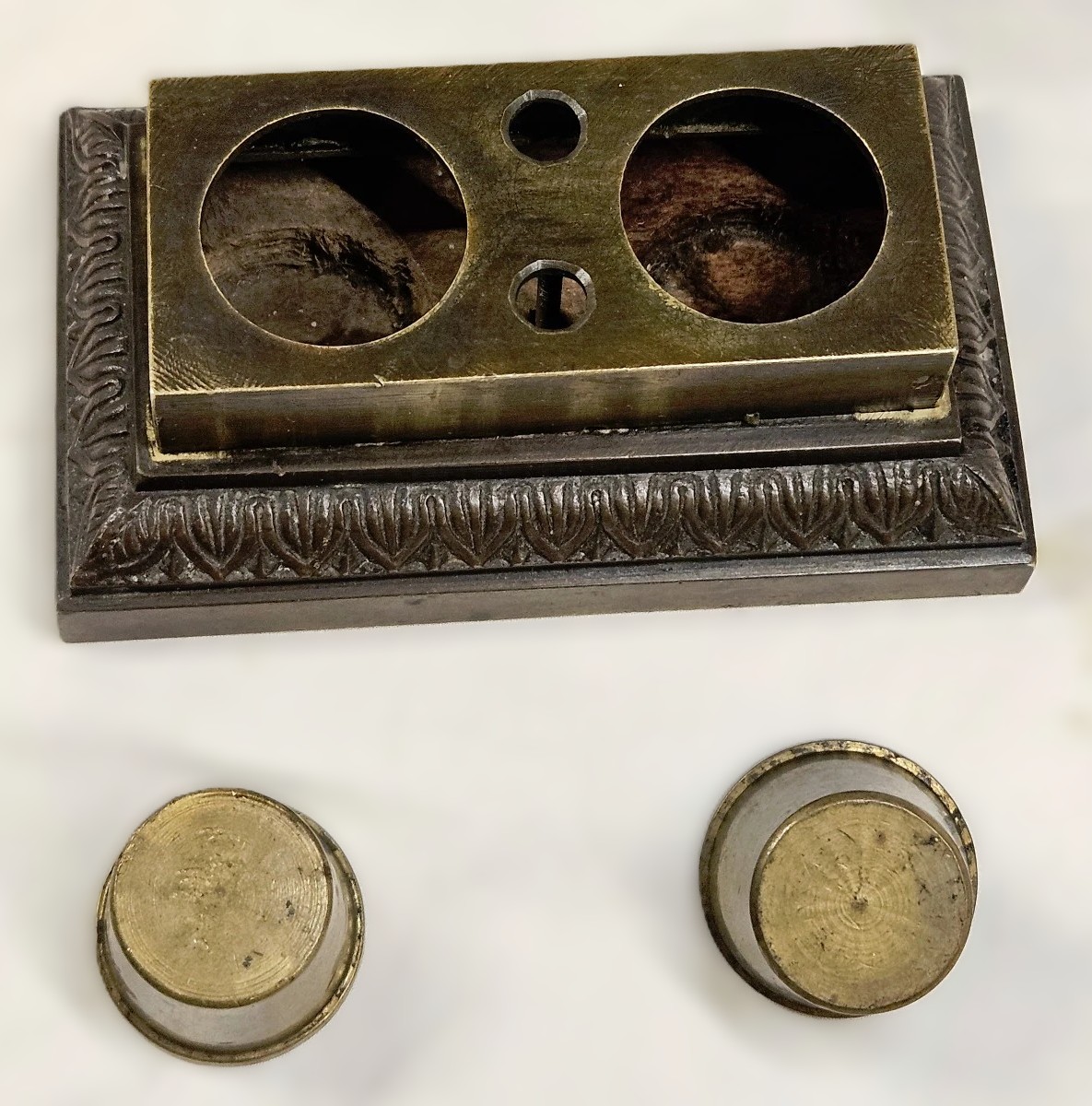
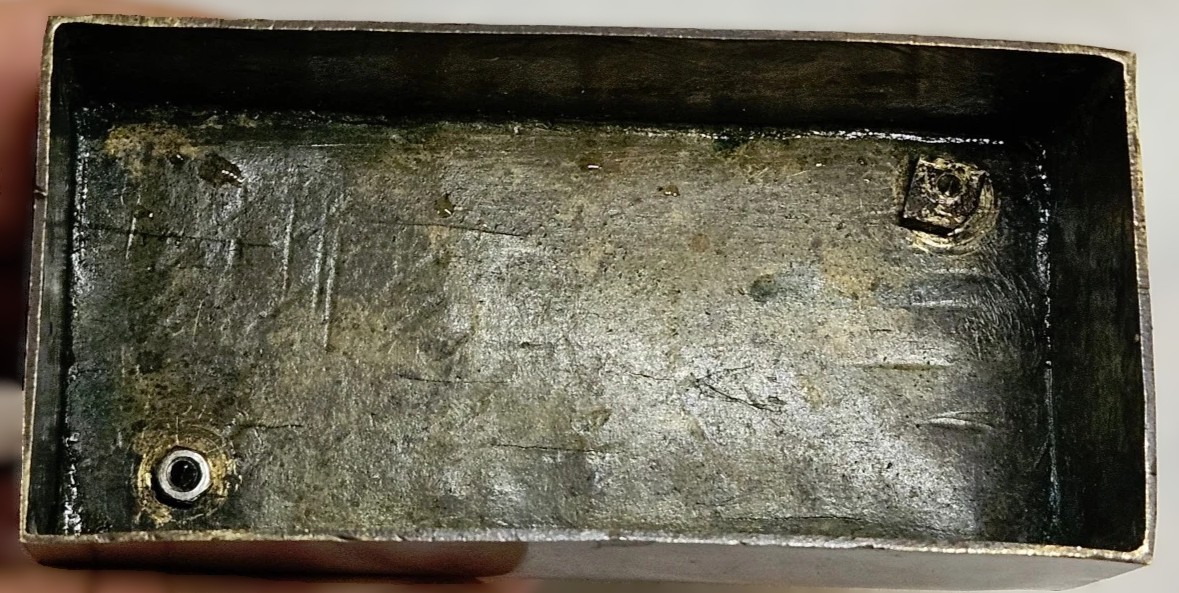
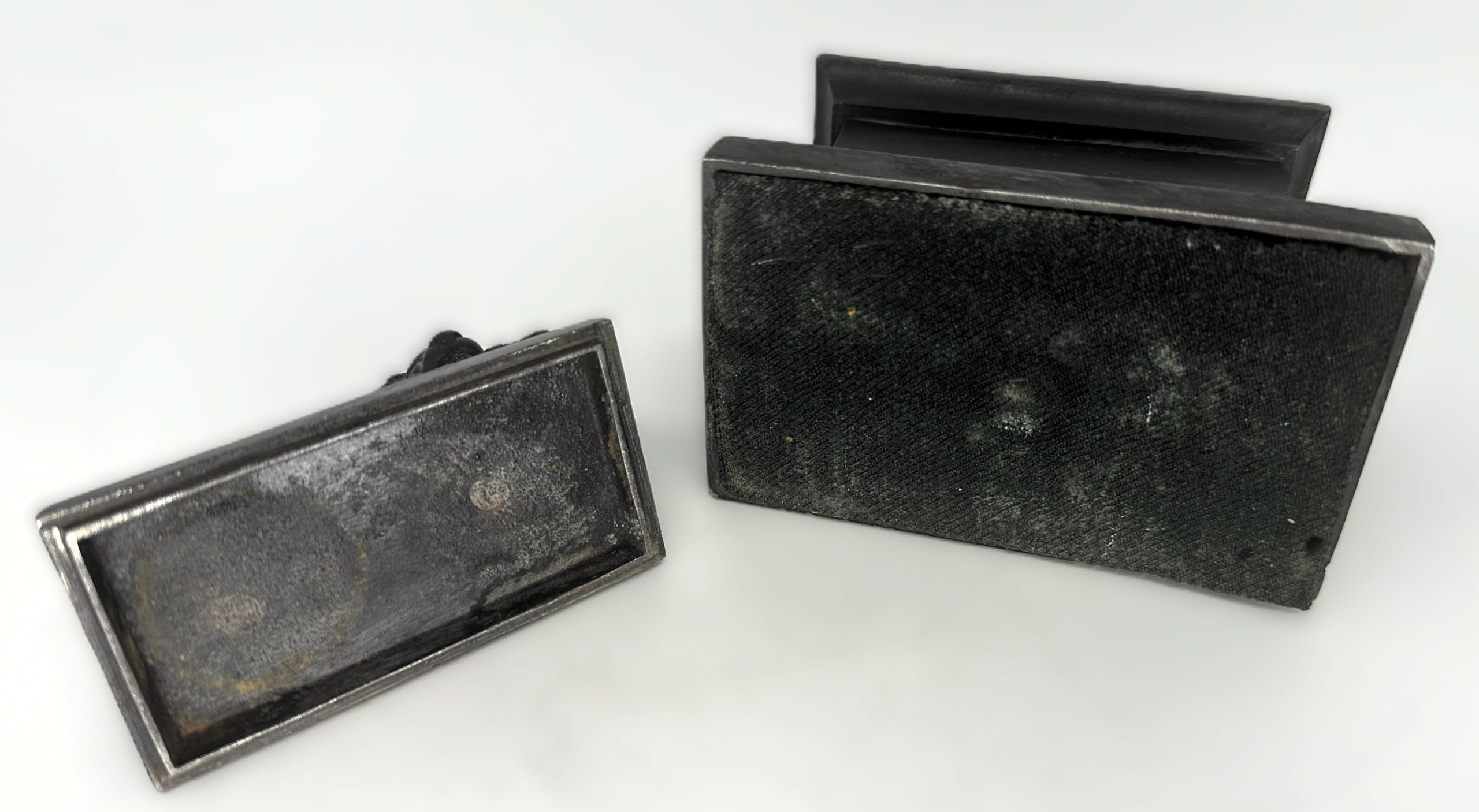
- Lid Construction: The dark patinated bronze lion is mounted to a stepped rectangular cover. The underside reveals two diagonal threaded rods secured with square hand-cut iron nuts, anchoring the sculpted lion firmly to the lid.
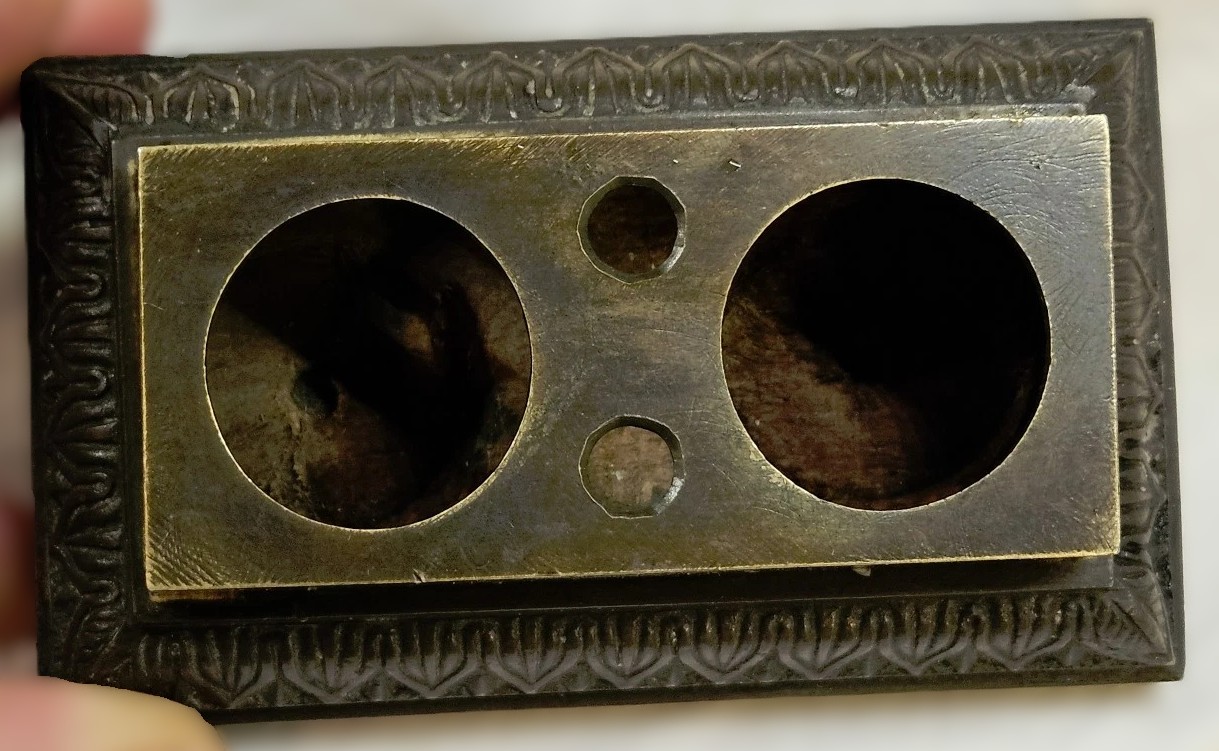
- Interior Reservoir Deck: The brass deck features two central bevel-cut apertures for quill pens, flanked by two wells fitted with original heavy-gauge spun-brass inserts: an open inkpot and a pierced sand pounce pot with a central finial.
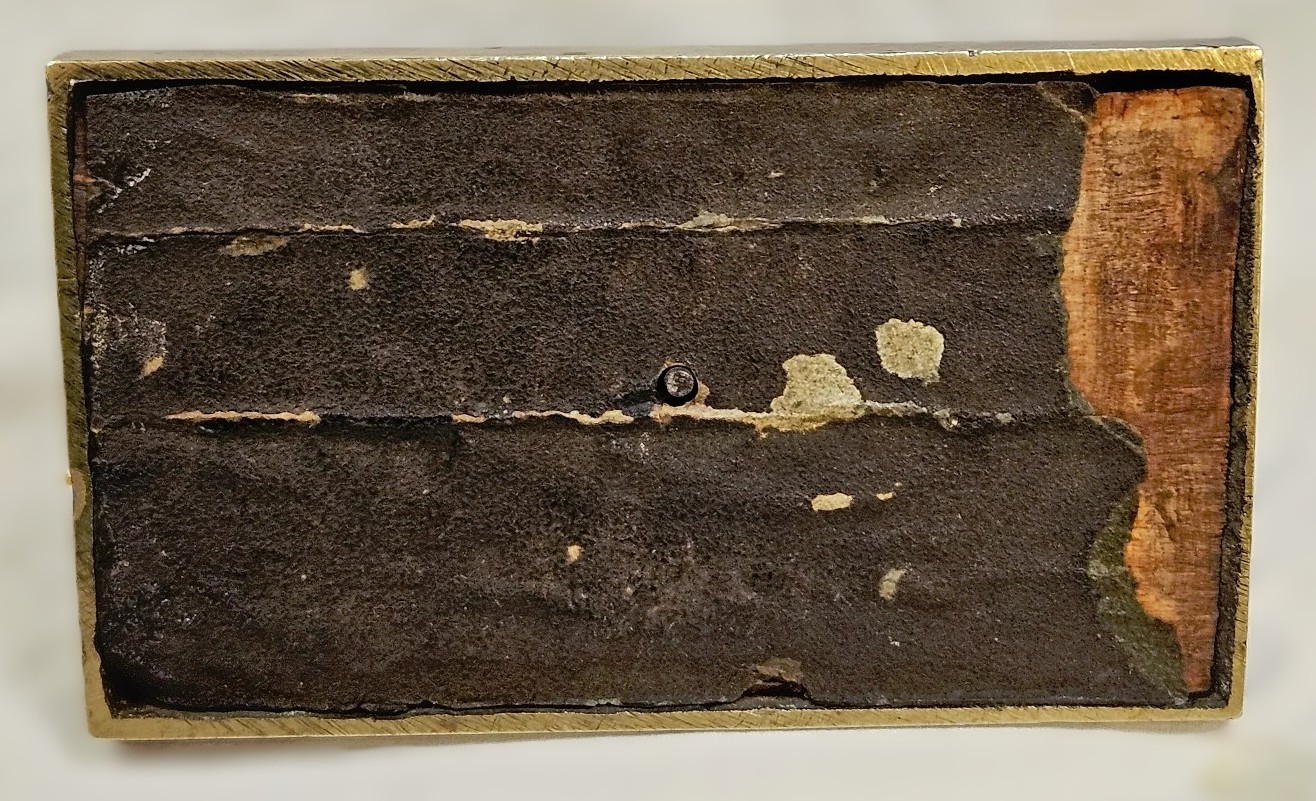
- Base & Core: The underside retains its original hand-hewn wooden block core with old paper/cloth lining and a central iron tie-rod assembly anchoring the entire standish.
Overview – Lion #2
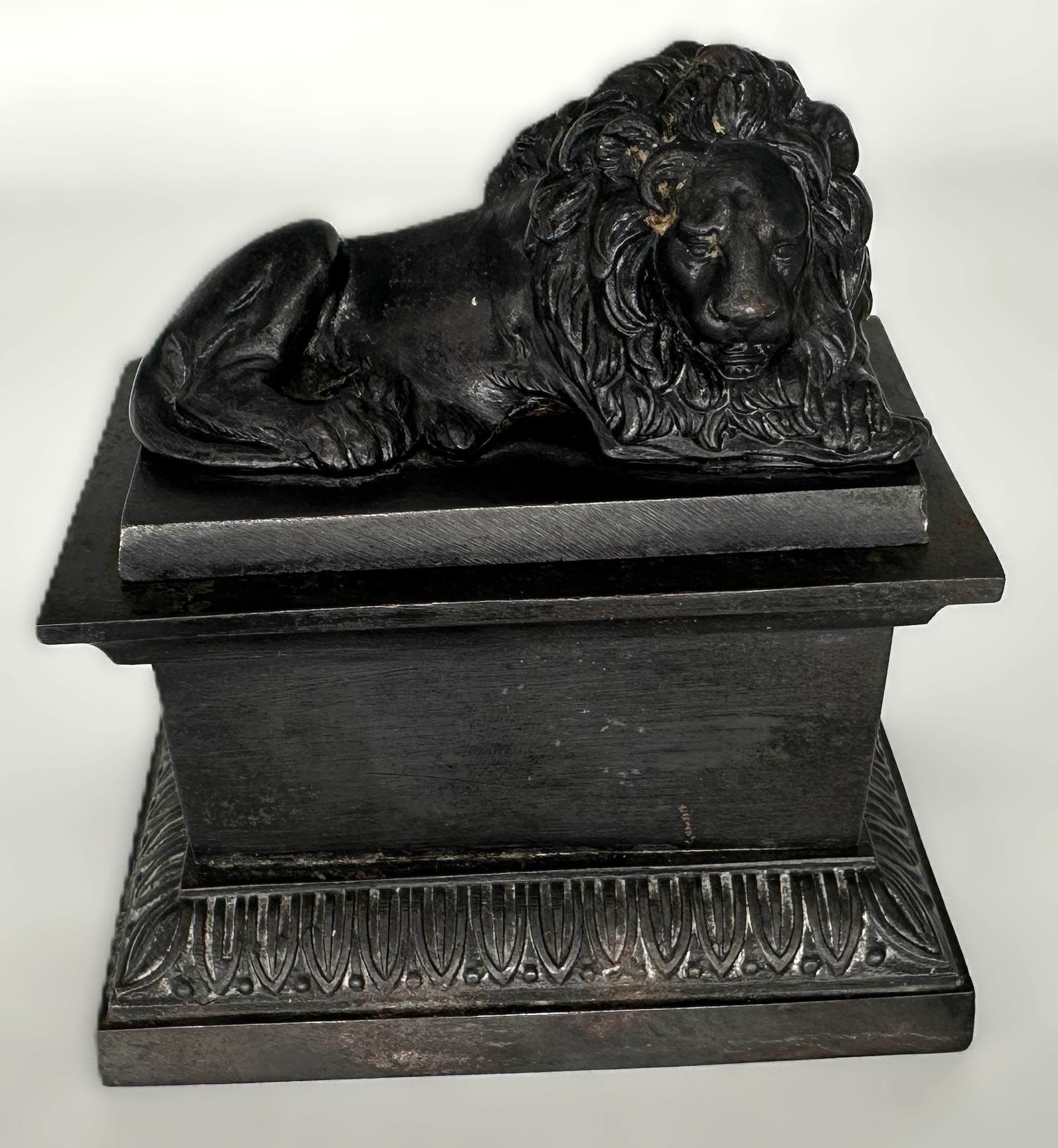
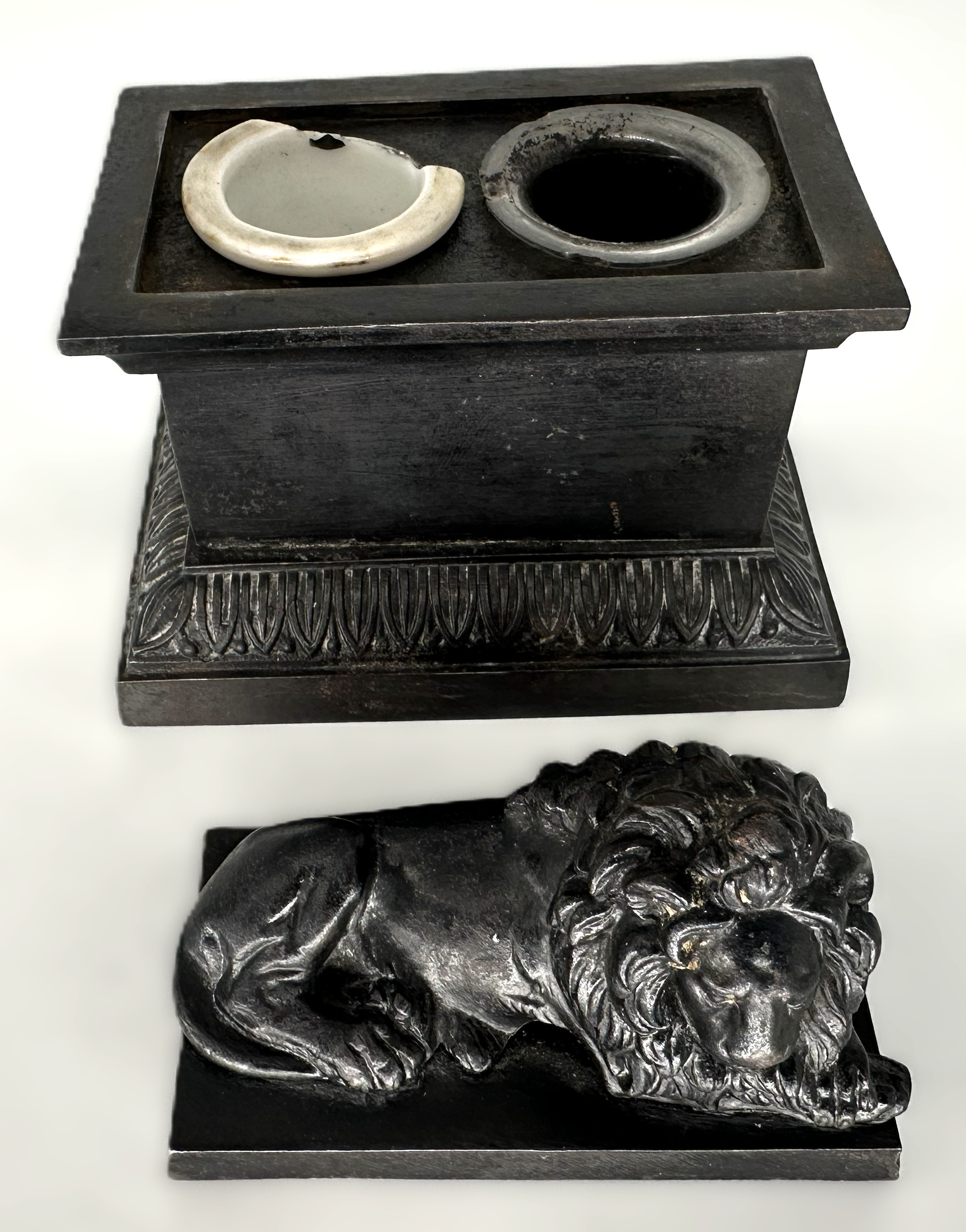
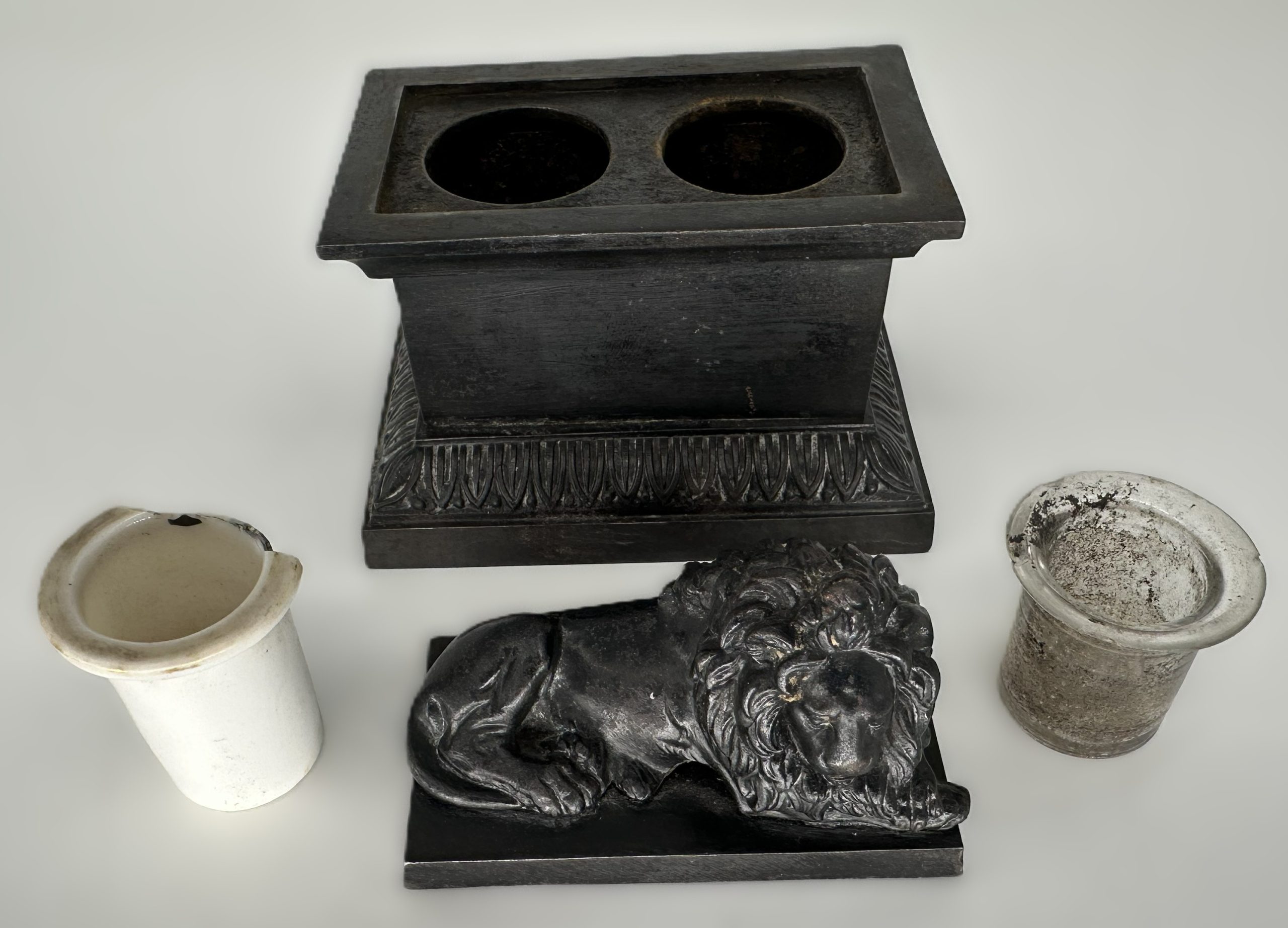
Cast in fine art iron (fonte d’art) with a uniform charcoal-black finish, surmounted by a recumbent sleeping lion modeled after Antonio Canova’s monument to Pope Clement XIII in St. Peter’s Basilica. The stepped cover lifts to reveal an interior fitted with dual wells holding white porcelain and molded glass liners. Raised on a classic architectural plinth bordered by a chased-style acanthus leaf molding.
Statue Origin & Material Analysis – Lion #2
- The Statuary Source (The Canova Sleeping Lion): The figure on the lid replicates the celebrated Sleeping Lion (Leone Dormiente) by Antonio Canova from the 1792 tomb monument of Pope Clement XIII in St. Peter’s Basilica, Rome. This casting features a heavy, dramatic mane draped forward over the paws and a bowed head, directly echoing Canova’s sleeping model.
- Material & Foundry Style: The “steel-like” dark grey/black metal is French cast iron / fonte d’art). During the 1820s–1840s, fine art casting in iron flourished across France (such as the Durenne or Val d’Osne foundries) as a sleek, matte-black neoclassical alternative to traditional ormolu and patinated bronze.
- Date: Circa 1830–1850 (late Restoration through the July Monarchy period).
Physical Details & Construction
- Lid & Cover: Cast as a single integrated iron unit (the lion and stepped terrace form a hollow under-lid casting.
- Interior Deck: Features a plain horizontal plate with two large apertures without pen holes. It has two inserts: one glazed white ceramic/porcelain ink cup and one molded clear glass well.
- Base: Fitted with an early black felt protective lining covering the underside, typical of iron decorative objects to protect desk surfaces.
See this Inkipedia listing for similar: Bronze Medici Lion Inkstand – The Society of Inkwell Collectors (SOIC)
Estimated value: $100 to $200
Content disclaimer. The information posted is the owner’s best knowledge and may not have been vetted by the SOIC. We welcome comments, corrections, and additions, working to make our website information comprehensive and accurate.
Join the Society of Inkwell Collectors (SOIC) – it’s free!
Founded in 1981 as a non-profit organization,
we are documenting inkwells (and accessories).
We’re here to help and inform!