

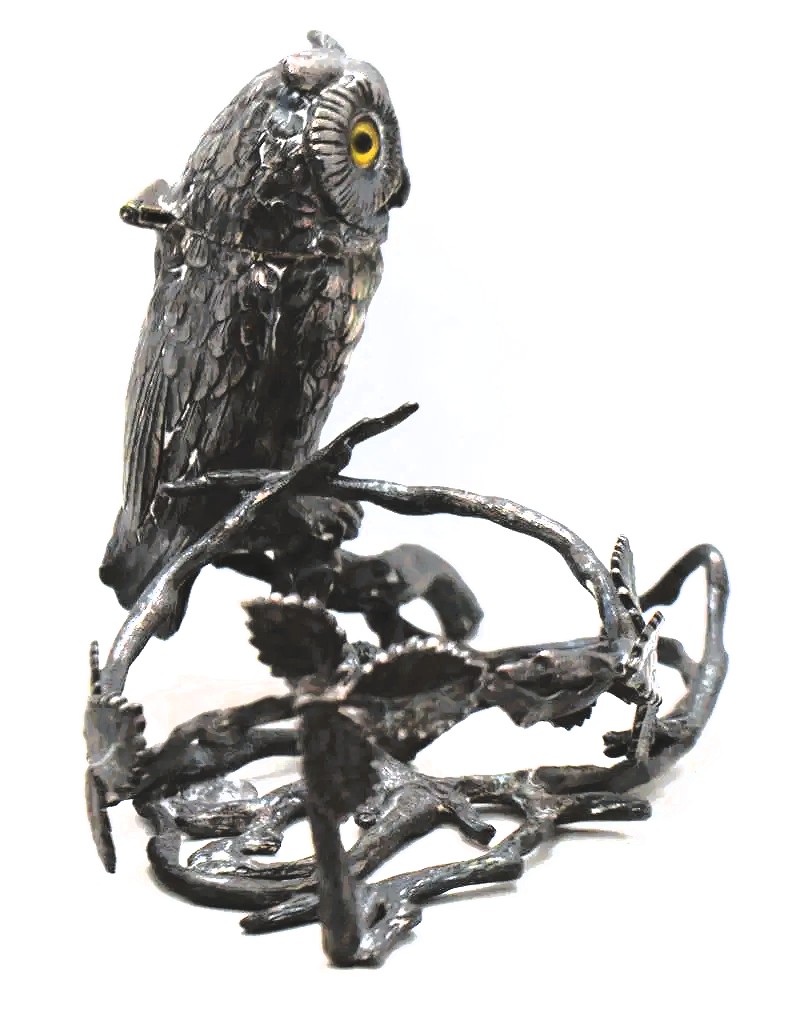


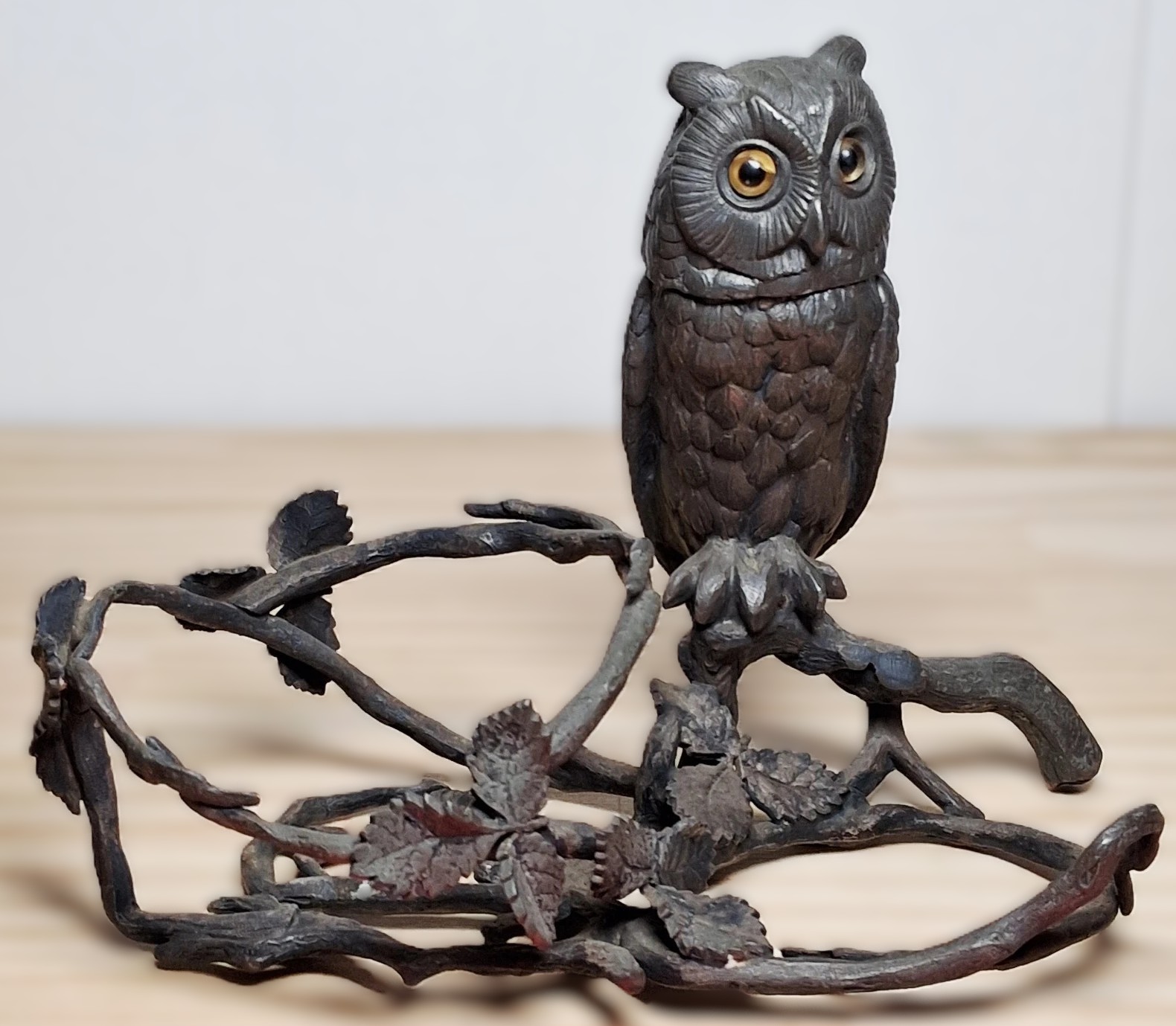
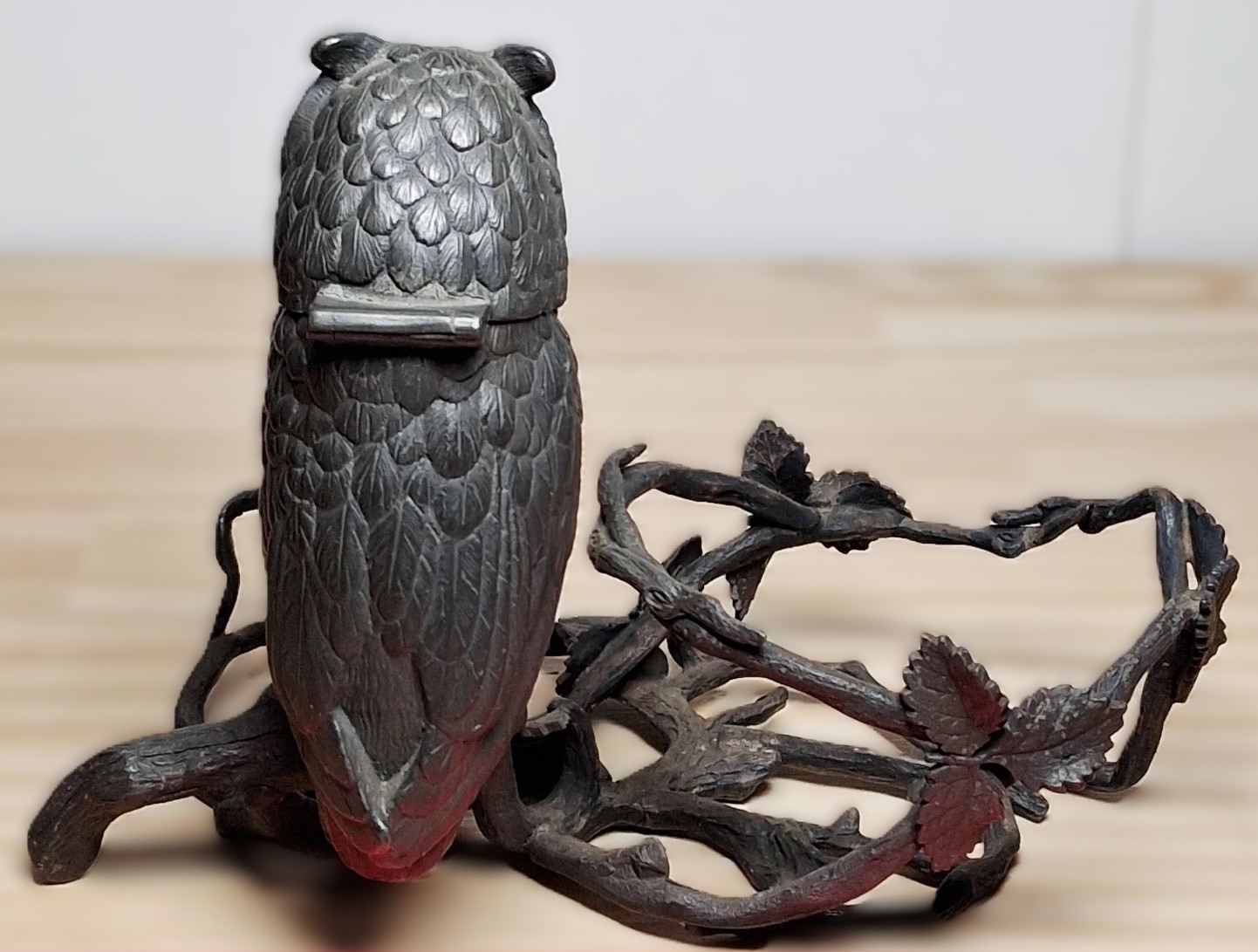
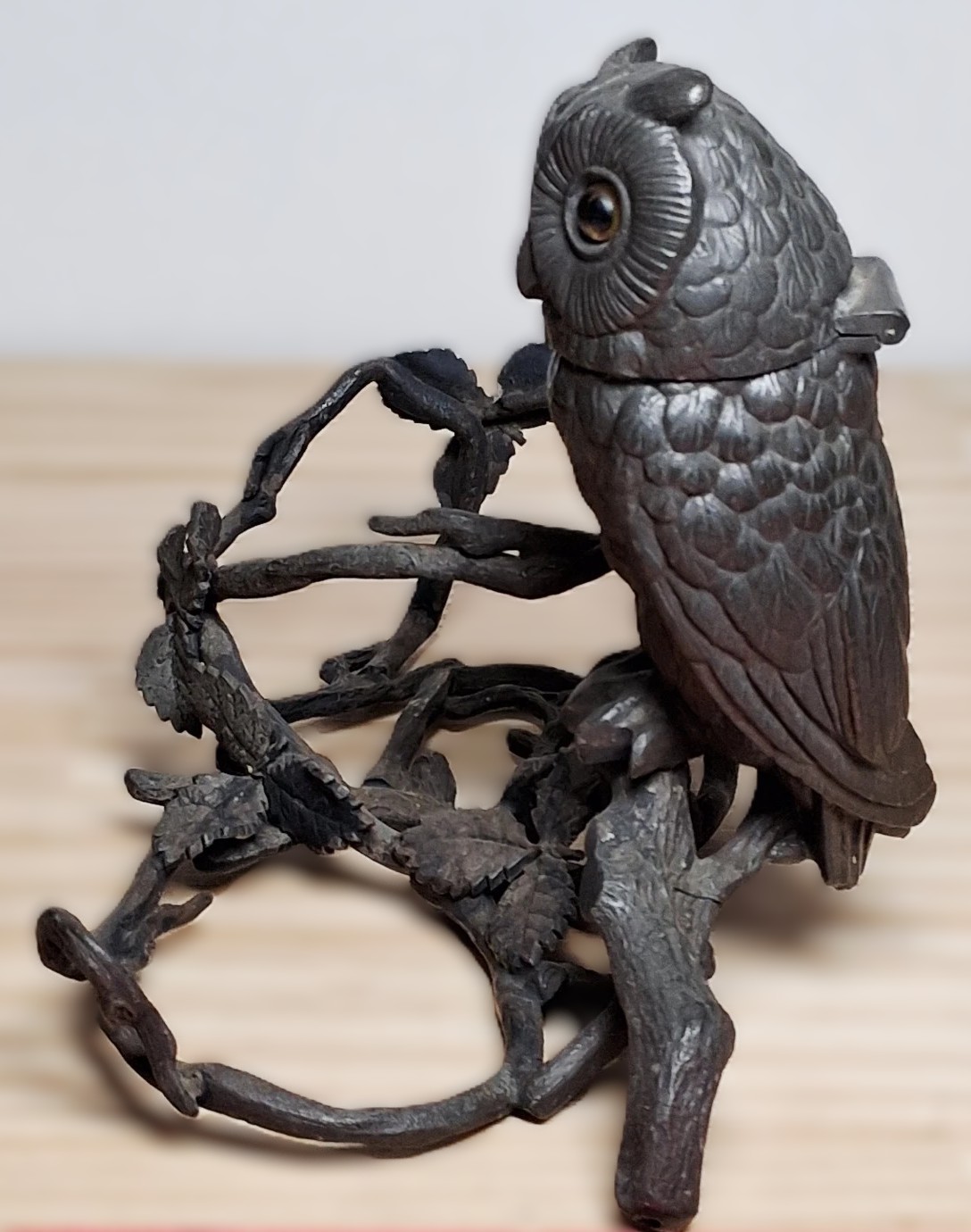
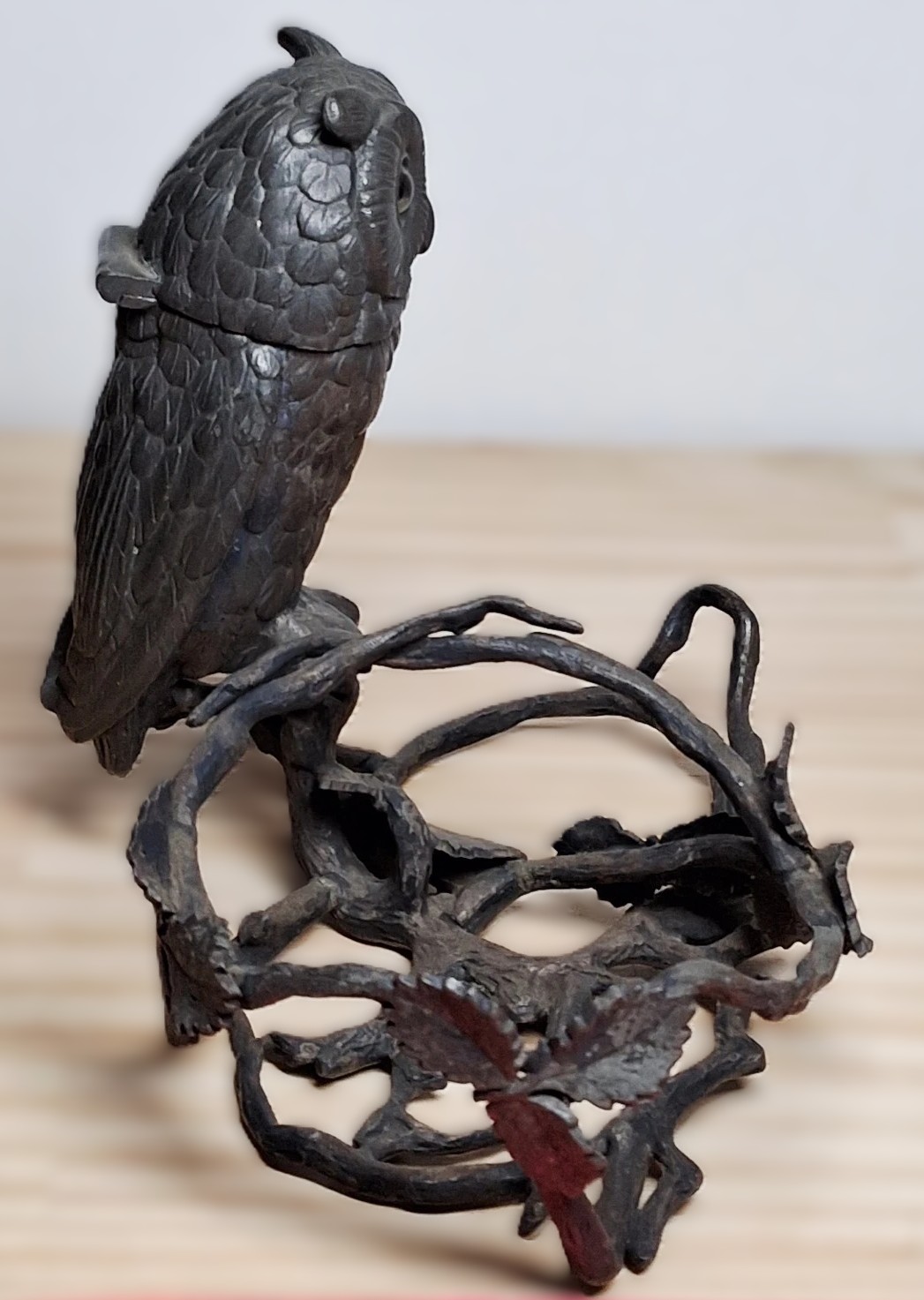
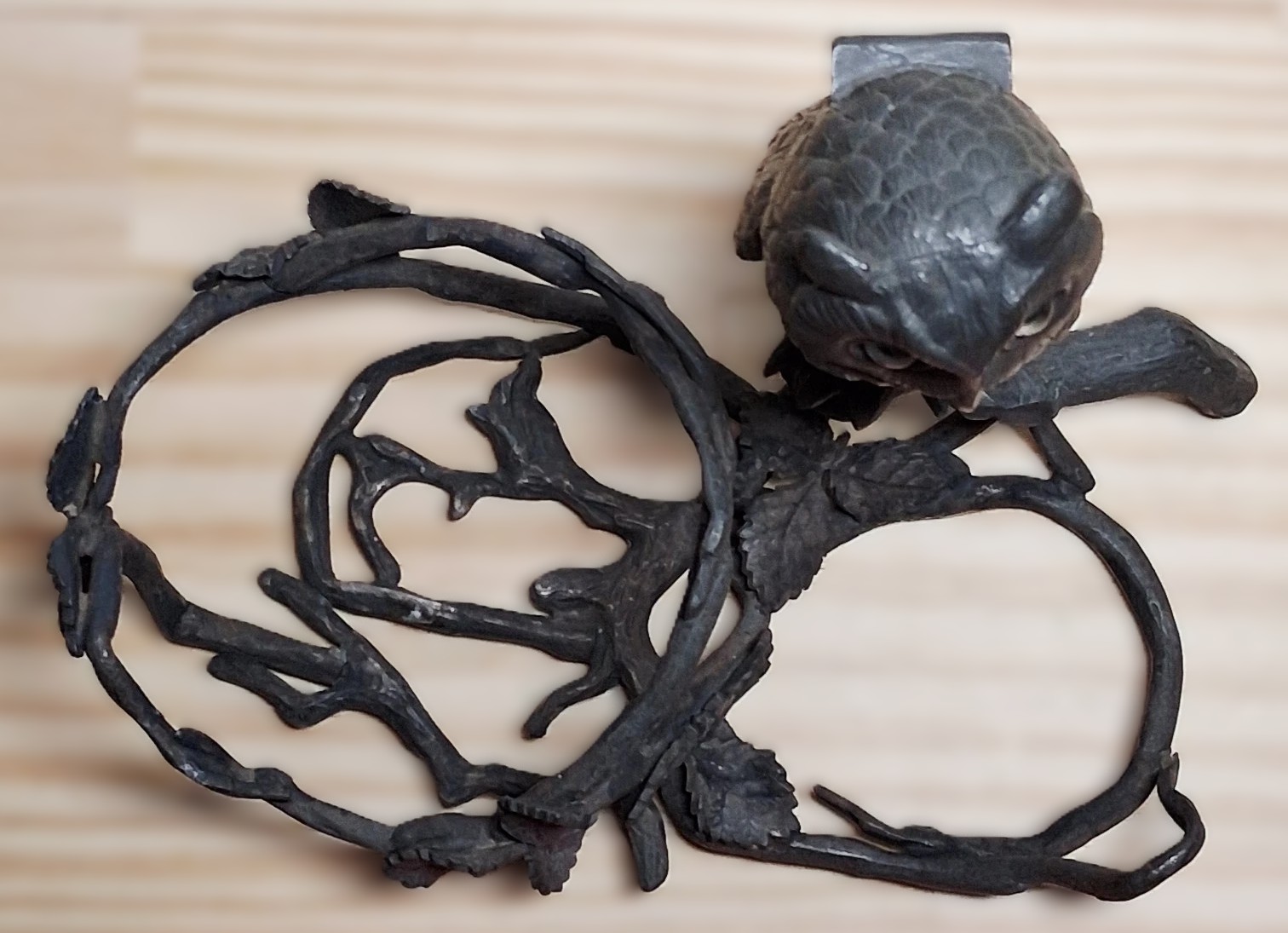
Quadruple Plate Figural Owl Inkstand
| Categories | Figural - Animals & Living Creatures |
| Type | Owl |
| Material | Silverplate |
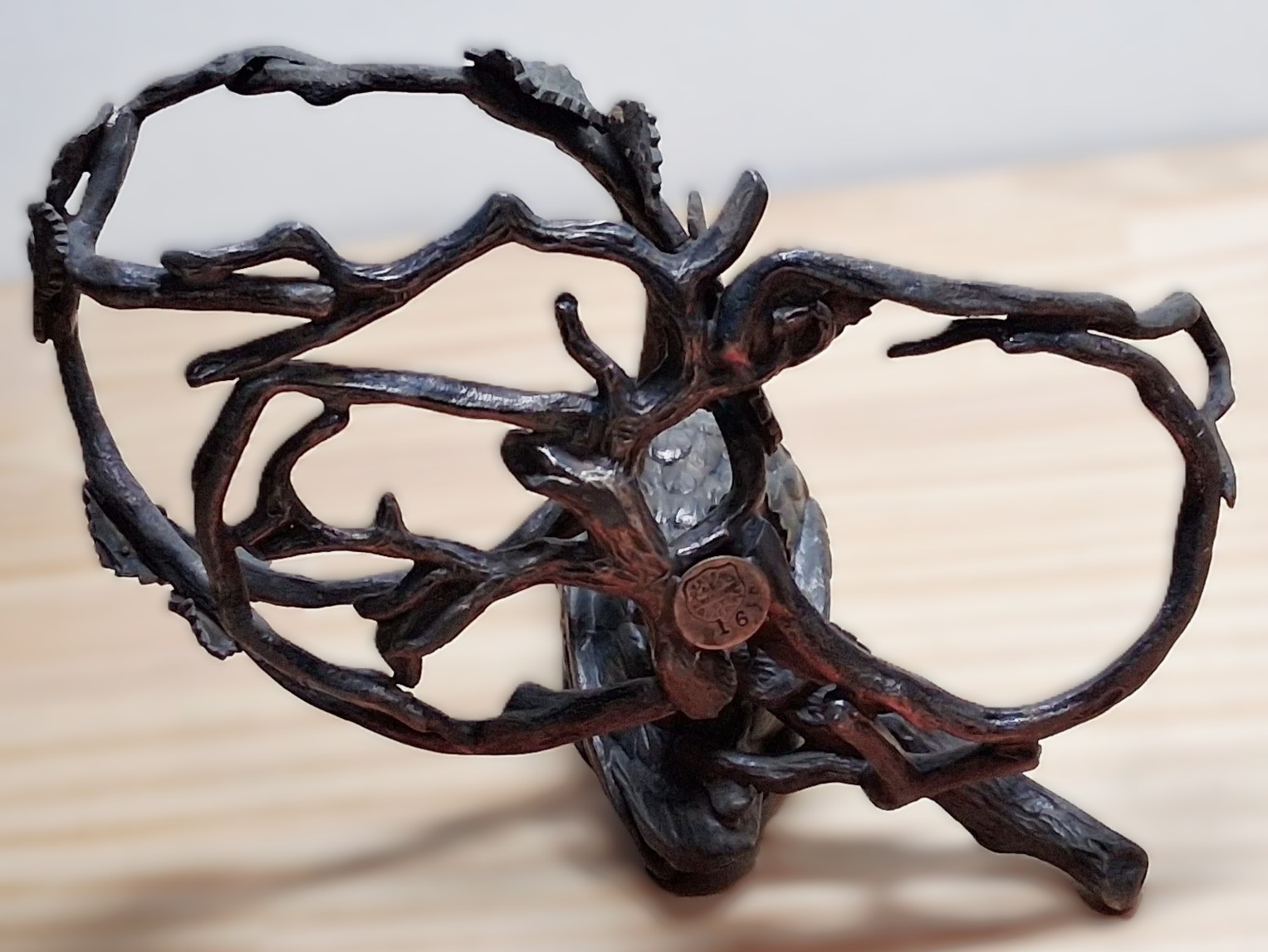
| Markings | See Narrative |
| Manufacturer | Meriden Silver Co. |
| Origin | United States |
| Date or Era | circa 1890 |
| Measuring | 7” across; 5” high |
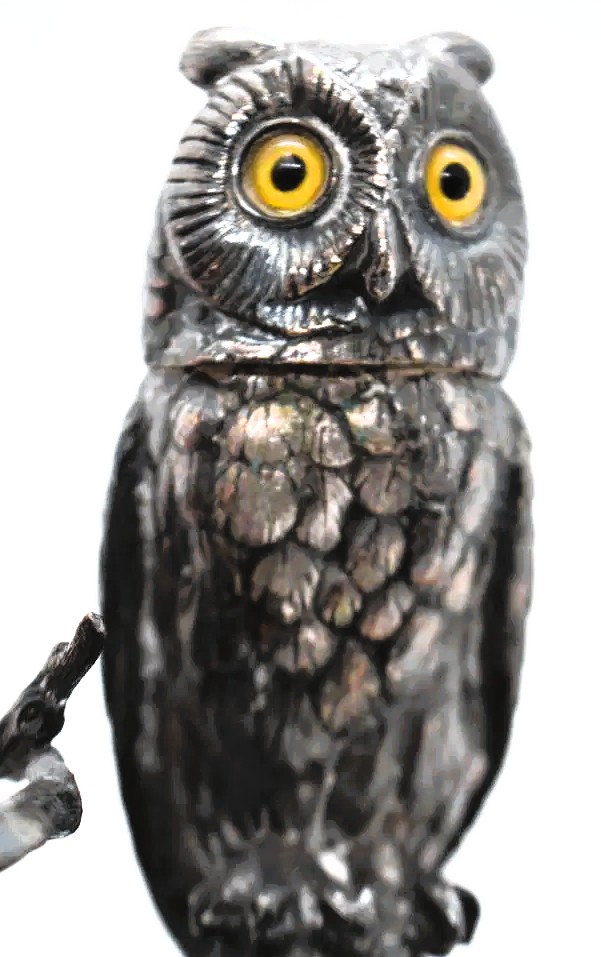
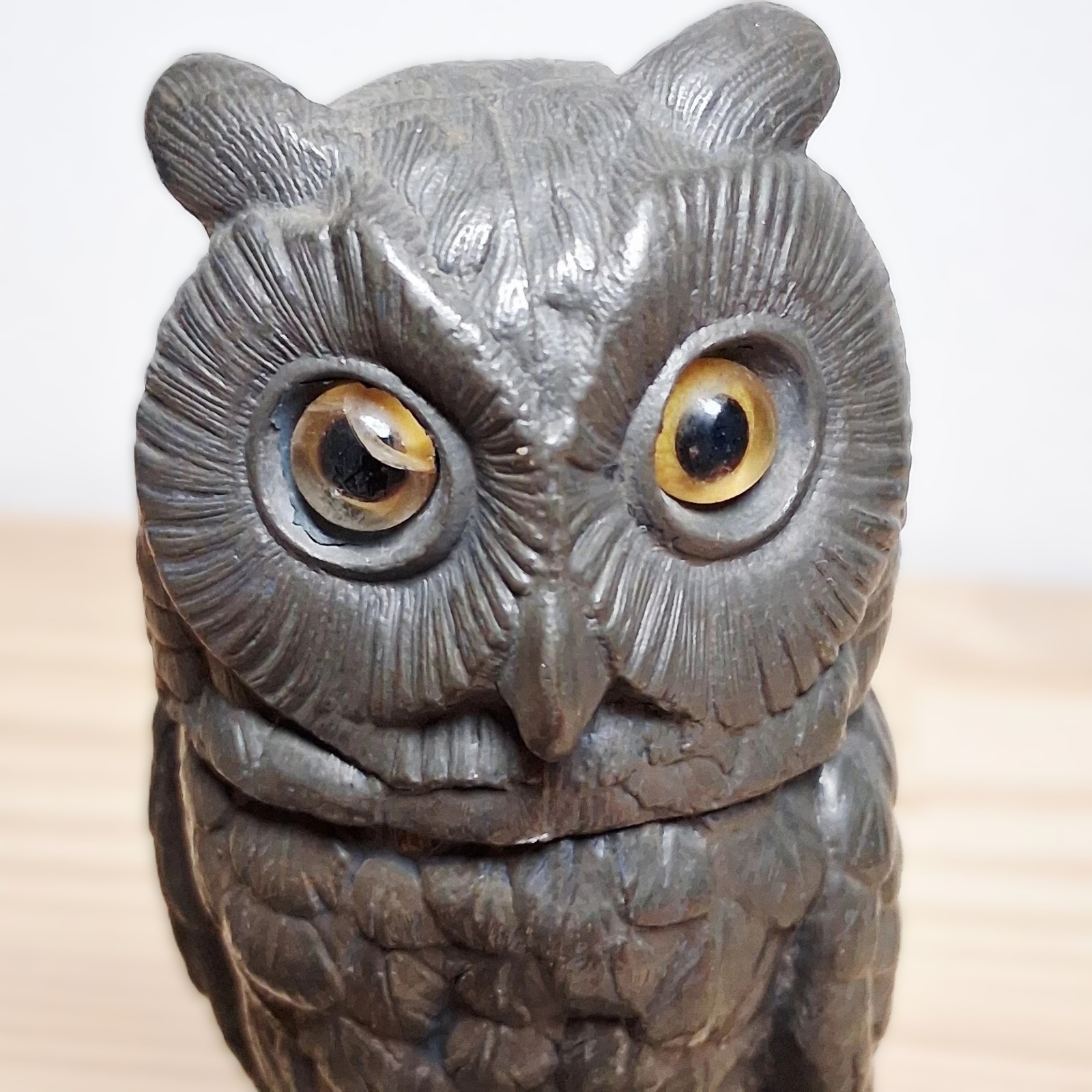
This is a figural inkstand in the shape of an owl among branches, dating from the late 19th century.
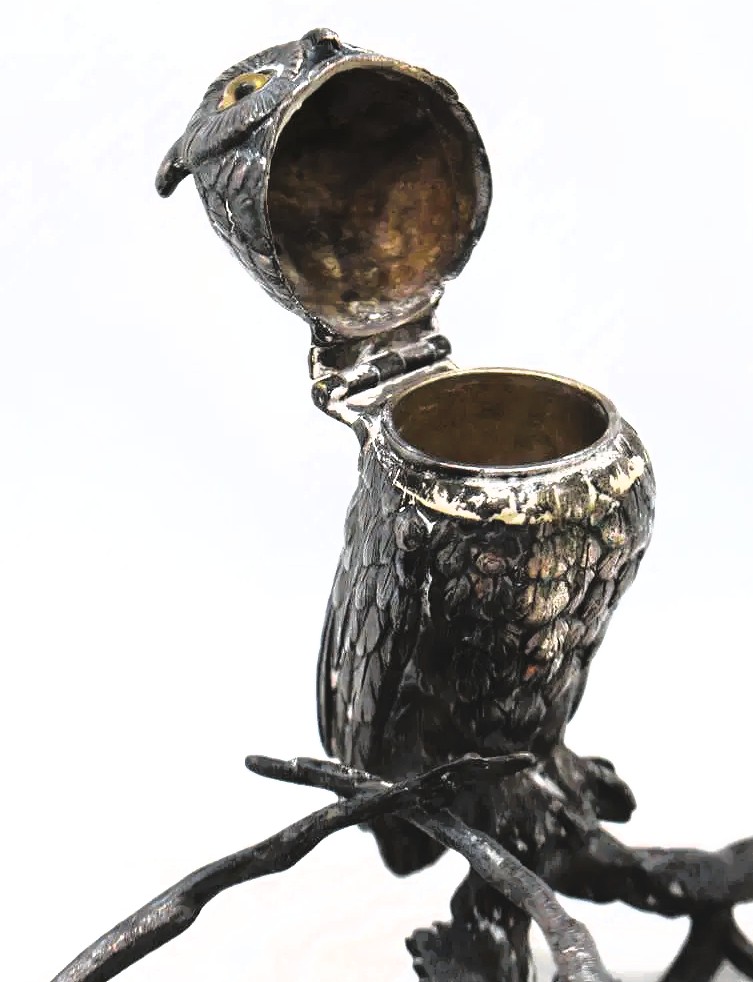
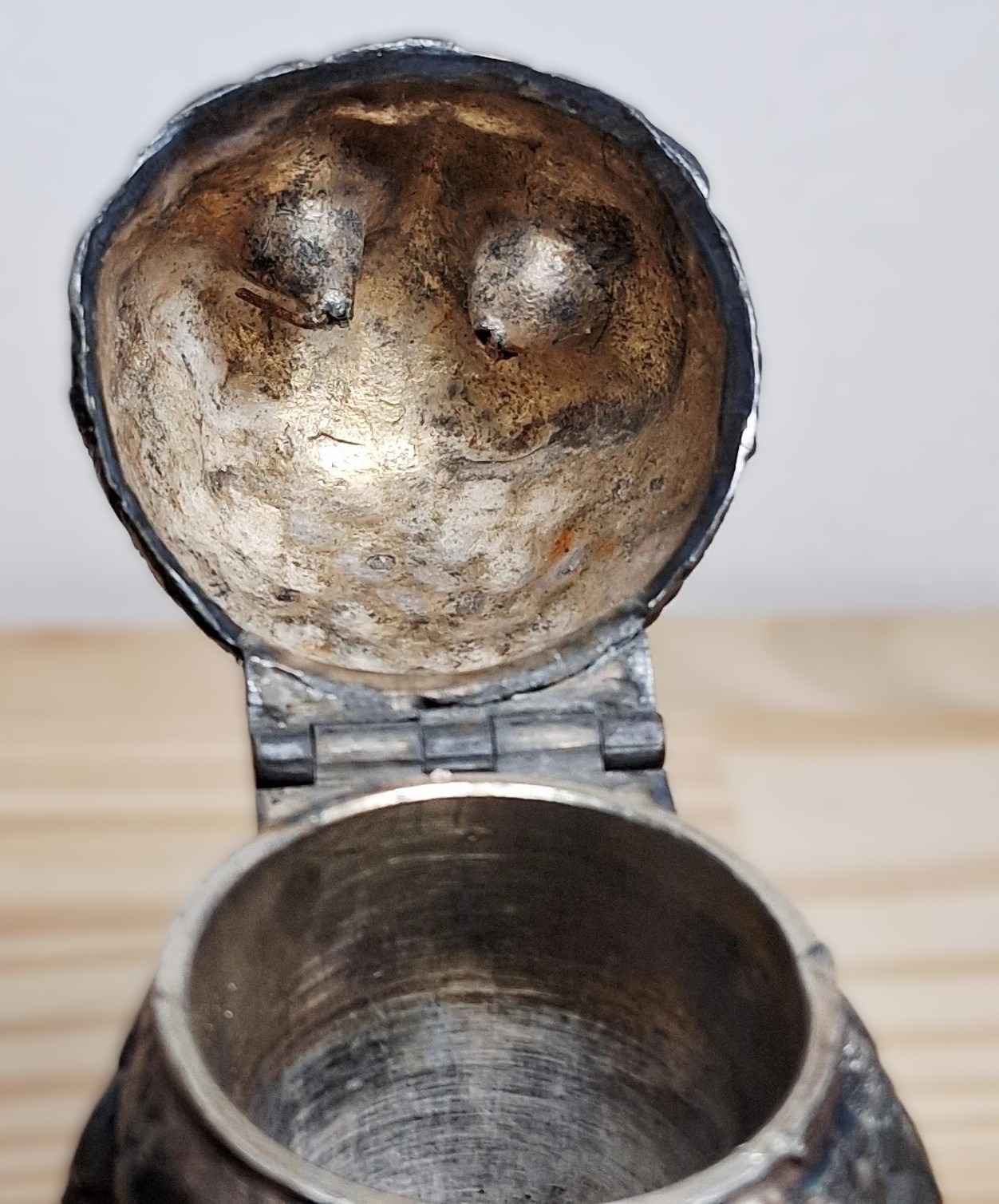
- Figural Design: The owl itself is a well-known motif in decorative arts from this period. The glass eyes and hinged head are common features in figural pieces, allowing for a realistic and functional, design.
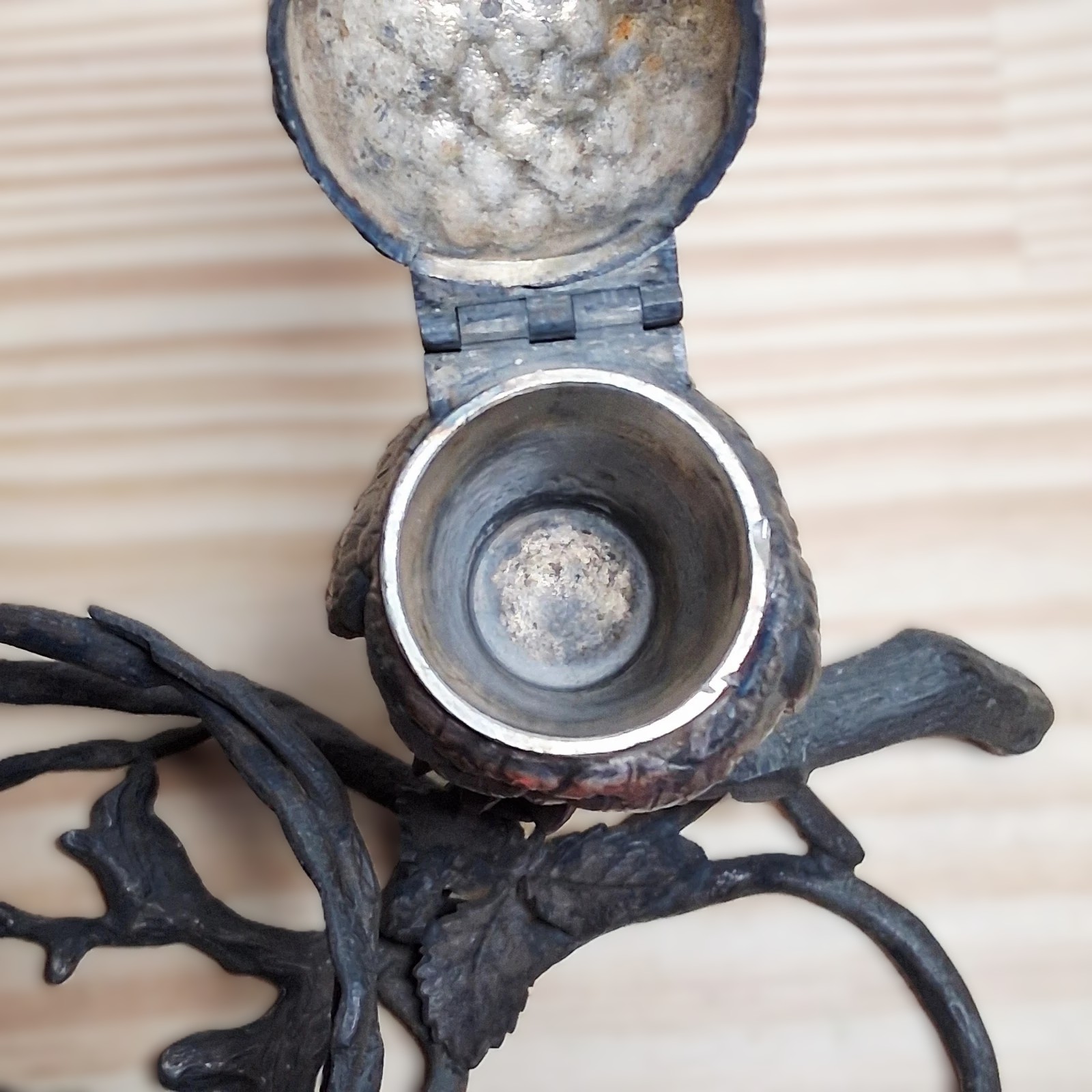
- Inkwell and Pen Rest: The hinged head opens to access the ink (insert missing here). Its tangle of branches is a classic design element from the Aesthetic Movement, which favored naturalistic and often asymmetrical forms. This area was designed to hold pens.
- “Quadruple Plate”: This marking is an indicator of quality for antique silver-plated items. It does not mean the piece was plated four times. Instead, it signifies that the manufacturer used four times the standard amount of pure silver in the electroplating process. For every 144 standard spoons, “quadruple plate” wares used 8 troy ounces of silver, compared to the 2 troy ounces used for “standard” items. This heavier plating made the piece more durable and resistant to wear.
About the Meriden B Company
The mark “Meriden B Company” refers to the Meriden Britannia Company, a major American silver-plating manufacturer.
- History: The company was founded in Meriden, Connecticut, in 1852. It quickly grew to become one of the largest silverware companies in the world. Meriden Britannia was a leading producer of a wide range of silver-plated goods, including tea sets, trays, hollowware, and decorative figural items like this inkwell.
- Reputation: The company was known for its high-quality electroplated wares and often won awards at major exhibitions, such as the 1876 Centennial Exposition in Philadelphia.
- Merger: In 1898, Meriden Britannia Company became a key part of the newly formed International Silver Company, a massive merger of several prominent American silver manufacturers. However, even after the merger, many pieces continued to be produced and marked under the Meriden Britannia name.
More on the Manufacturer
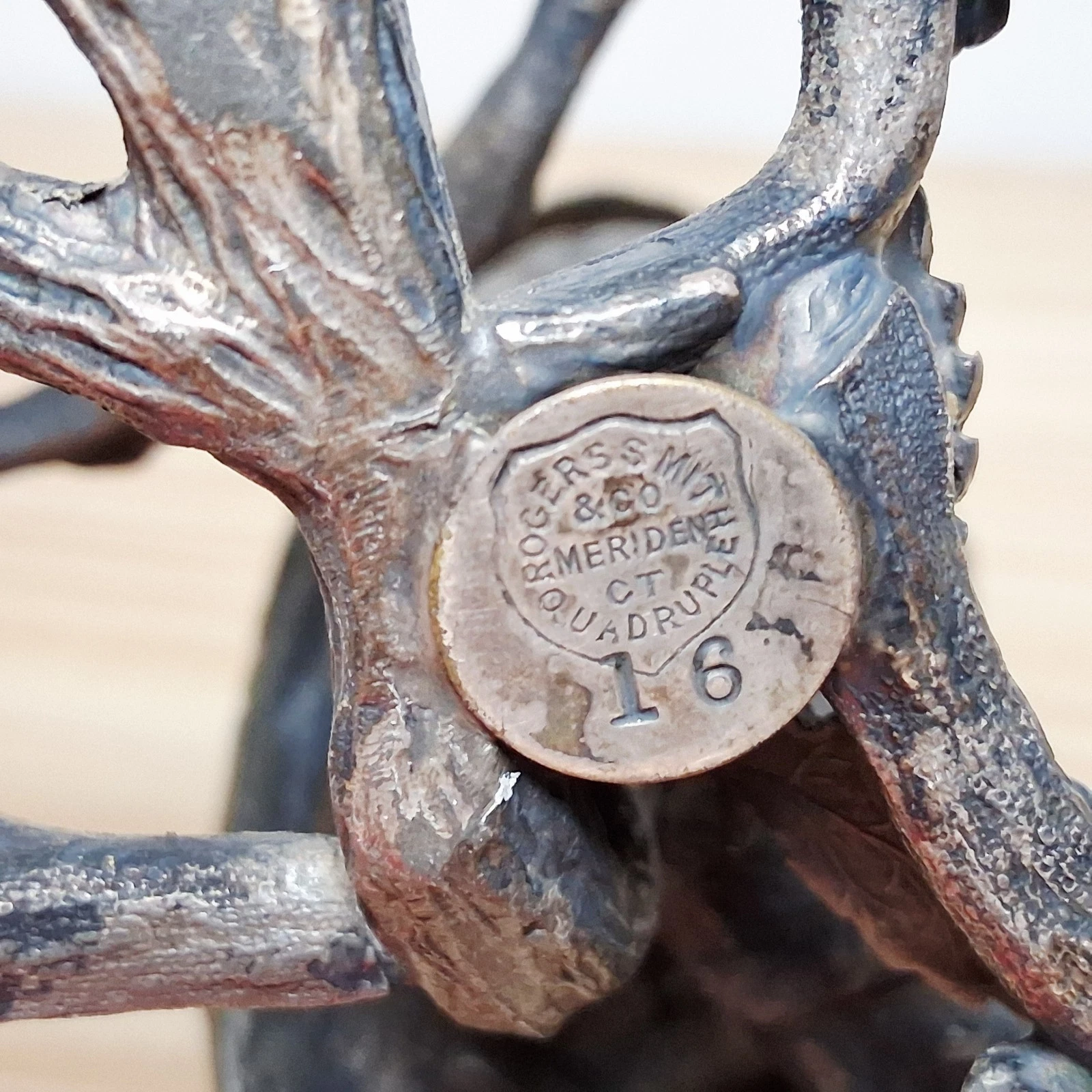
We found the same inkstand but with a different maker’s mark: Rogers Smith & Co Quadruple Meriden Ct. 16. Here is some history behind its manufacturing:
The “Meriden Cluster,” a group of silver companies in Meriden, Connecticut, were so tightly intertwined that they often shared designs, molds, and even management.
The Connection Between the Names
While the example for this owl inkstand lists the manufacturer as the Meriden Silver Plate Co. (or sometimes just Meriden Silver Co.), the second one pictured is marked Rogers Smith & Co. Both are correct for the following reasons:
- Shared Dies (Molds): In the late 1800s, producing the steel “dies” used to cast these figural pieces was extremely expensive. When companies merged or formed partnerships, they would share these dies. The “Wise Owl” was a highly successful design, so it was produced by multiple factories under the same corporate umbrella.
- The Rogers-Meriden Merger: Meriden Britannia Co. (the giant of the industry) purchased the tools and dies of Rogers, Smith & Co. as early as 1862. They continued to use the “Rogers Smith & Co.” name as a premium brand because of its high reputation, even though the items were often made in the same Meriden facilities as other brands.
- The 1898 Consolidation: In 1898, almost all of these competing Meriden companies—including Rogers Smith & Co., Meriden Silver Plate, and Simpson, Hall, Miller & Co.—merged to form the International Silver Company. After this merger, it was standard practice to use one mold to create a product but stamp it with different trademarks depending on which catalog or region it was being sold into.
Sold for $54 in July 2025 / Second example sold for $187 in April 2026
Content disclaimer. The information posted is the owner’s best knowledge and may not have been vetted by the SOIC. We welcome comments, corrections, and additions, working to make our website information comprehensive and accurate.
Join the Society of Inkwell Collectors (SOIC) – it’s free!
Founded in 1981 as a non-profit organization,
we are documenting inkwells (and accessories).
We’re here to help and inform!