

Inkipedia
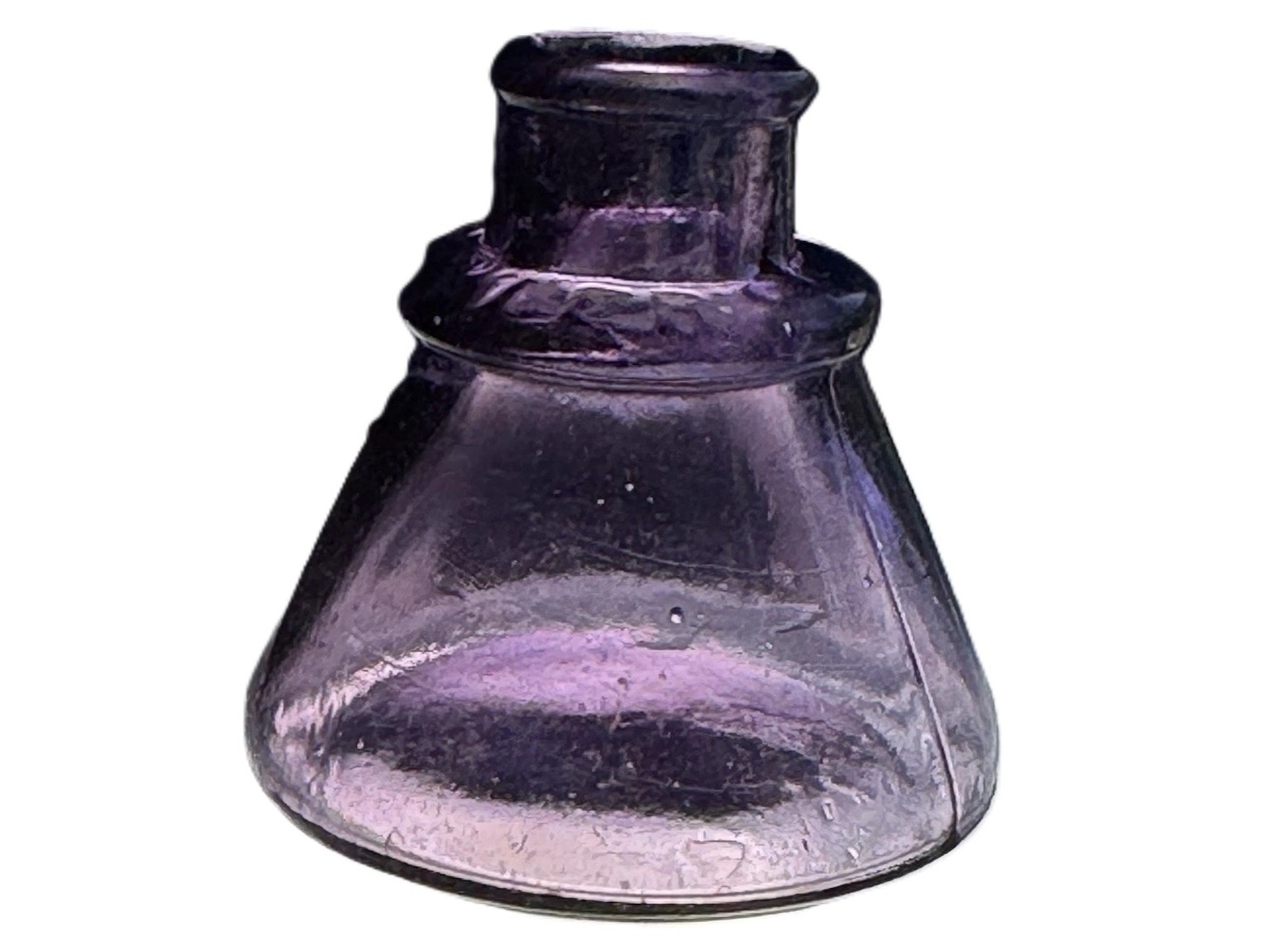



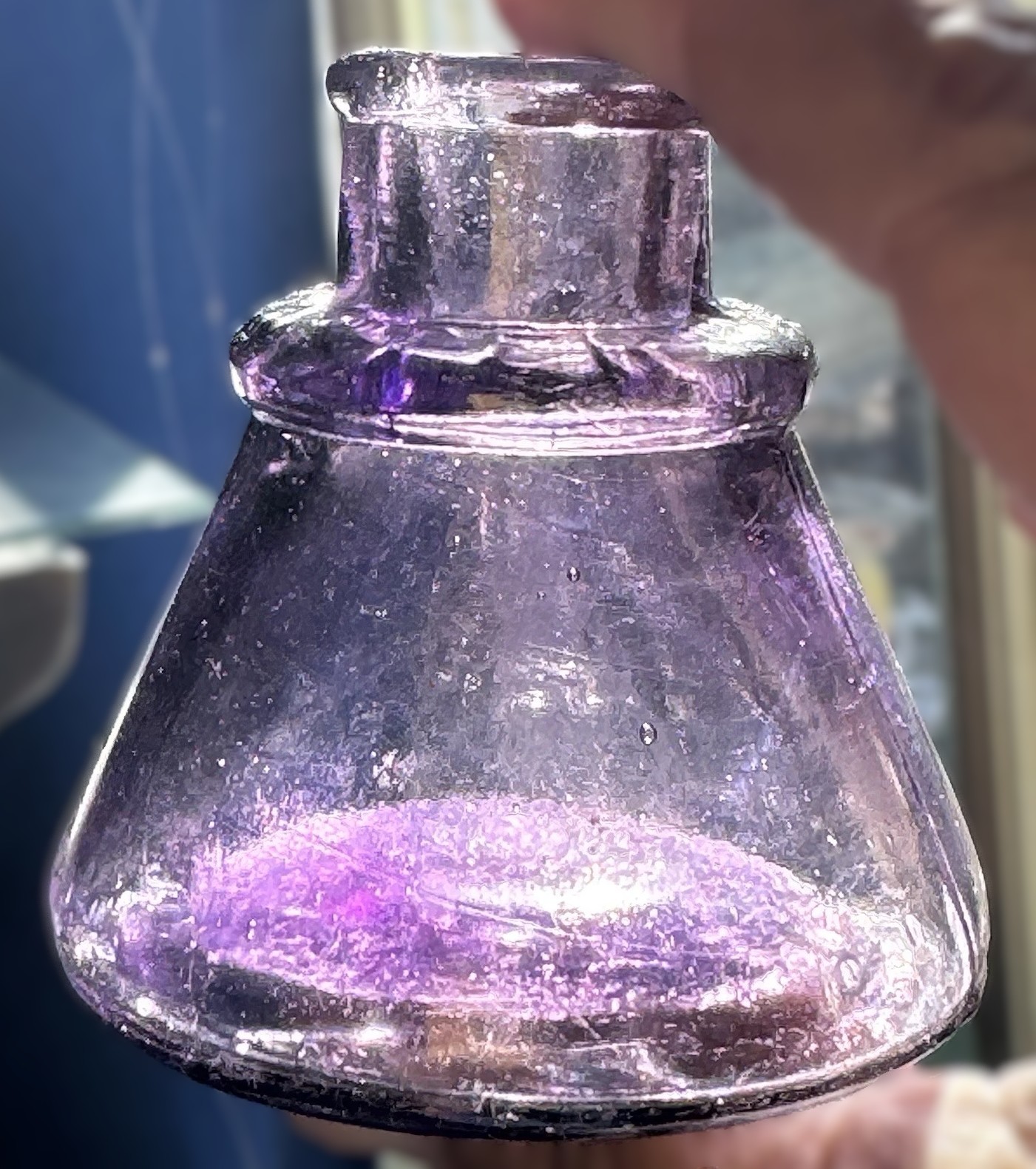

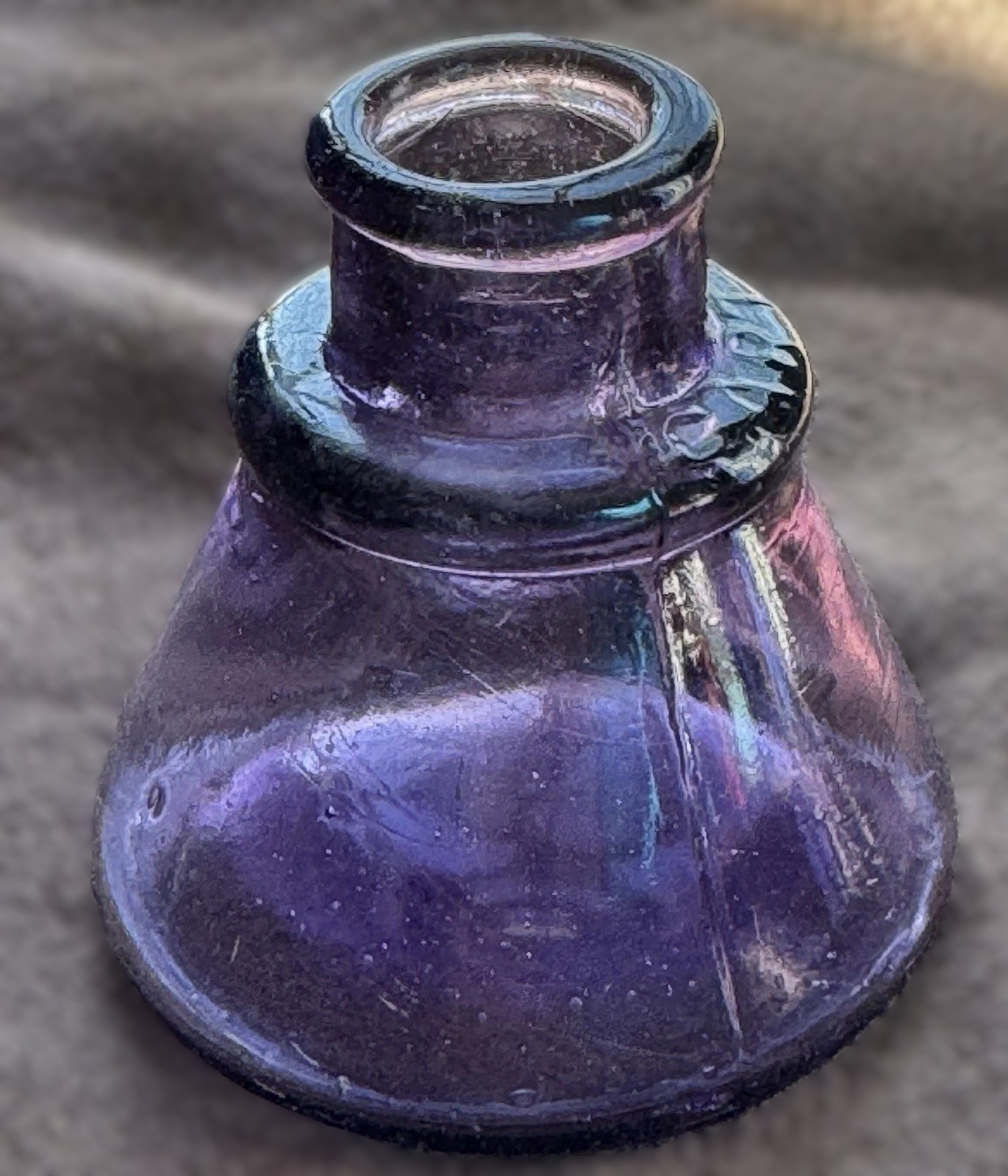


Purple Amethyst Cone Ink Bottle – Marked “CARTER’S”
| Categories | Ink Bottle |
| Material | Glass |
| Markings | CARTER'S |
| Manufacturer | Carter's Ink |
| Origin | United States |
| Date or Era | circa 1890 to 1905 |
| Measuring | 2 ½” diameter; 2 ½” high |
This rare purple amethyst cone ink bottle is a standout example of late 19th-century American glass, combining a highly desirable scarce branding variant with exceptional color saturation.
Form and Branding
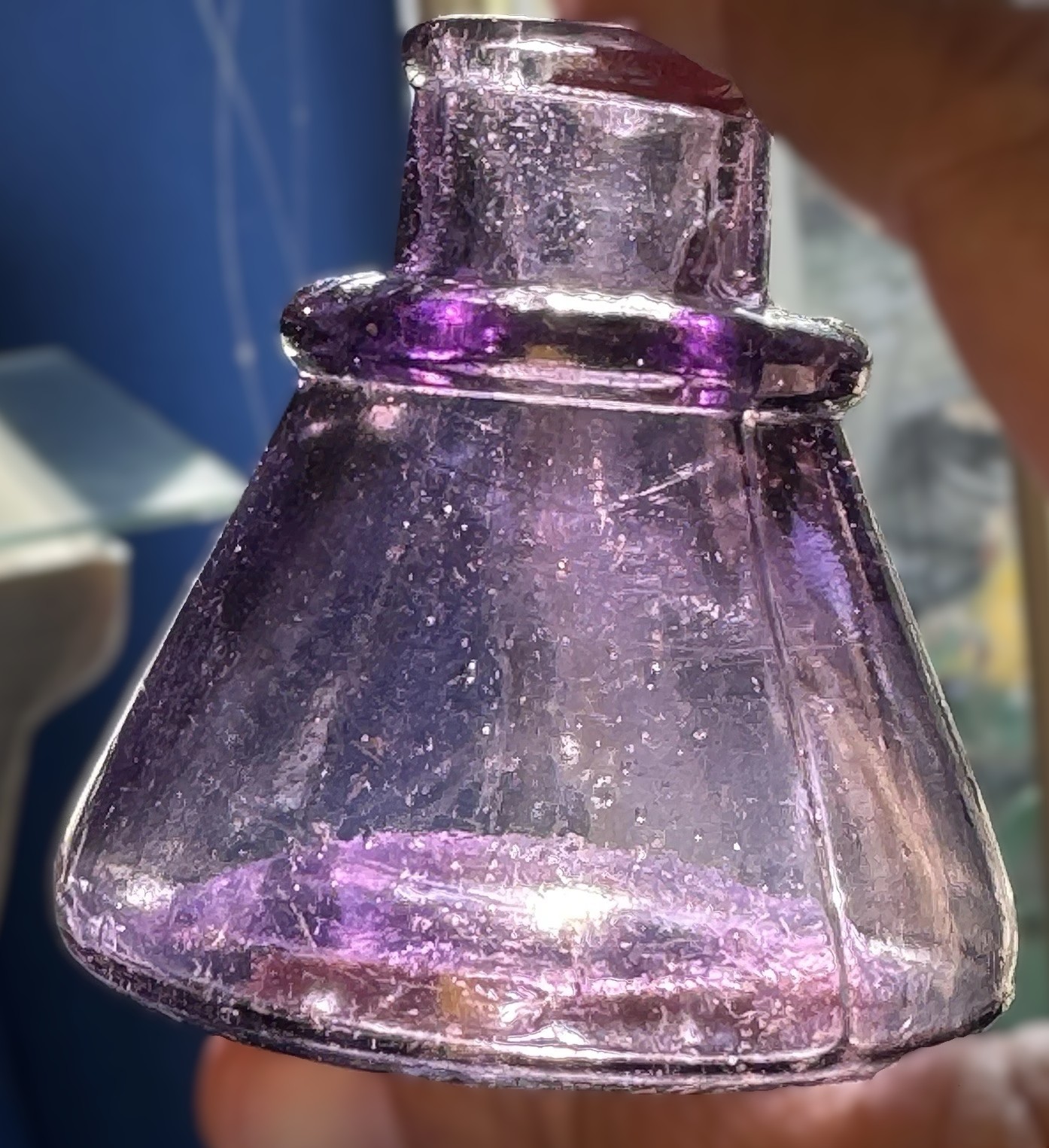
- The Cone Shape: This utilitarian bottle features the classic tapered cone form, specifically designed for desk stability.
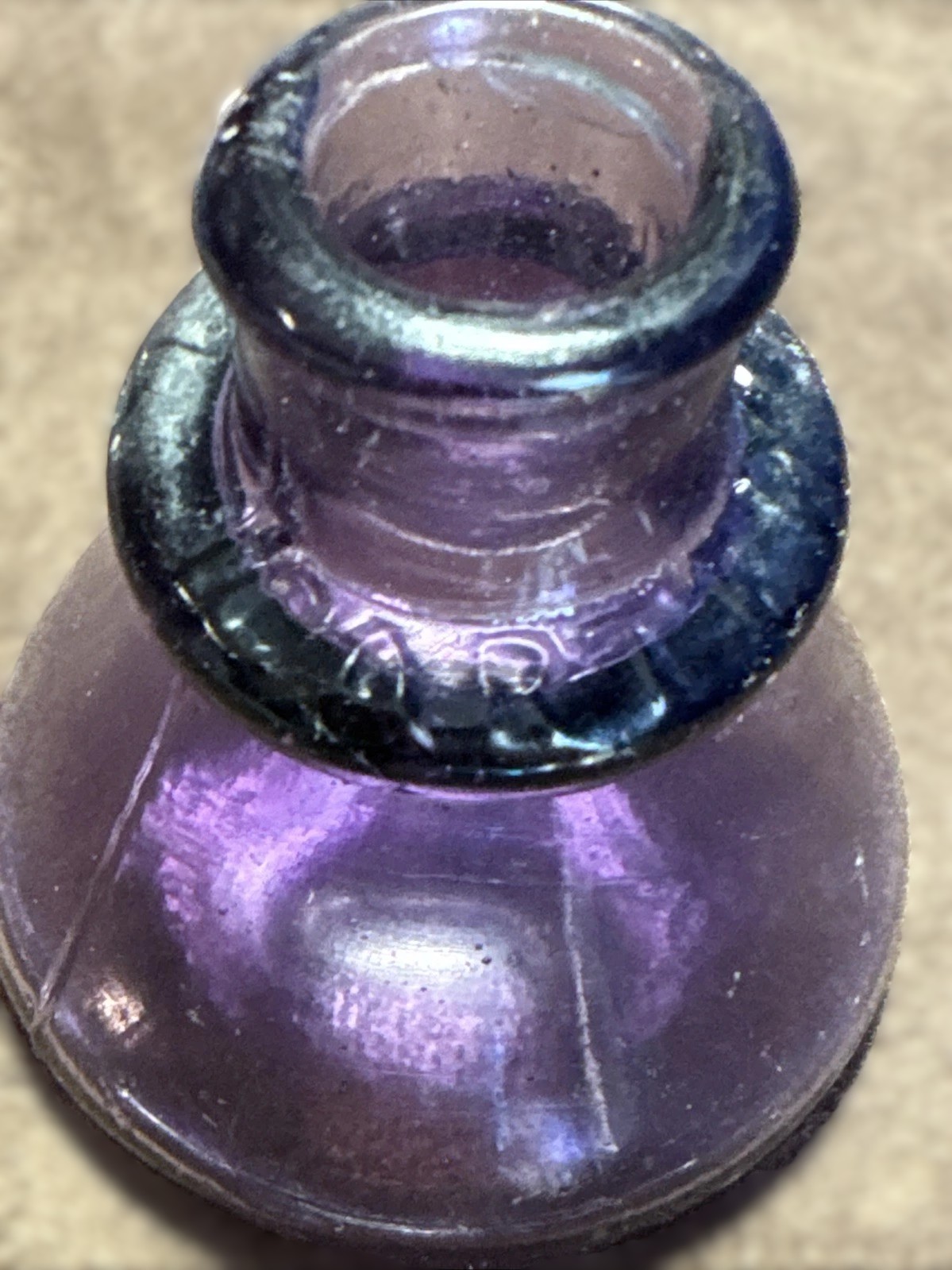
- Scarce Branding: The bottle is embossed with “CARTER’S” around the shoulder ring. Finding the Carter’s name on these smaller cone forms is considered a scarce variant, as many were left unbranded or only featured paper labels.
Manufacturing and Glass Character
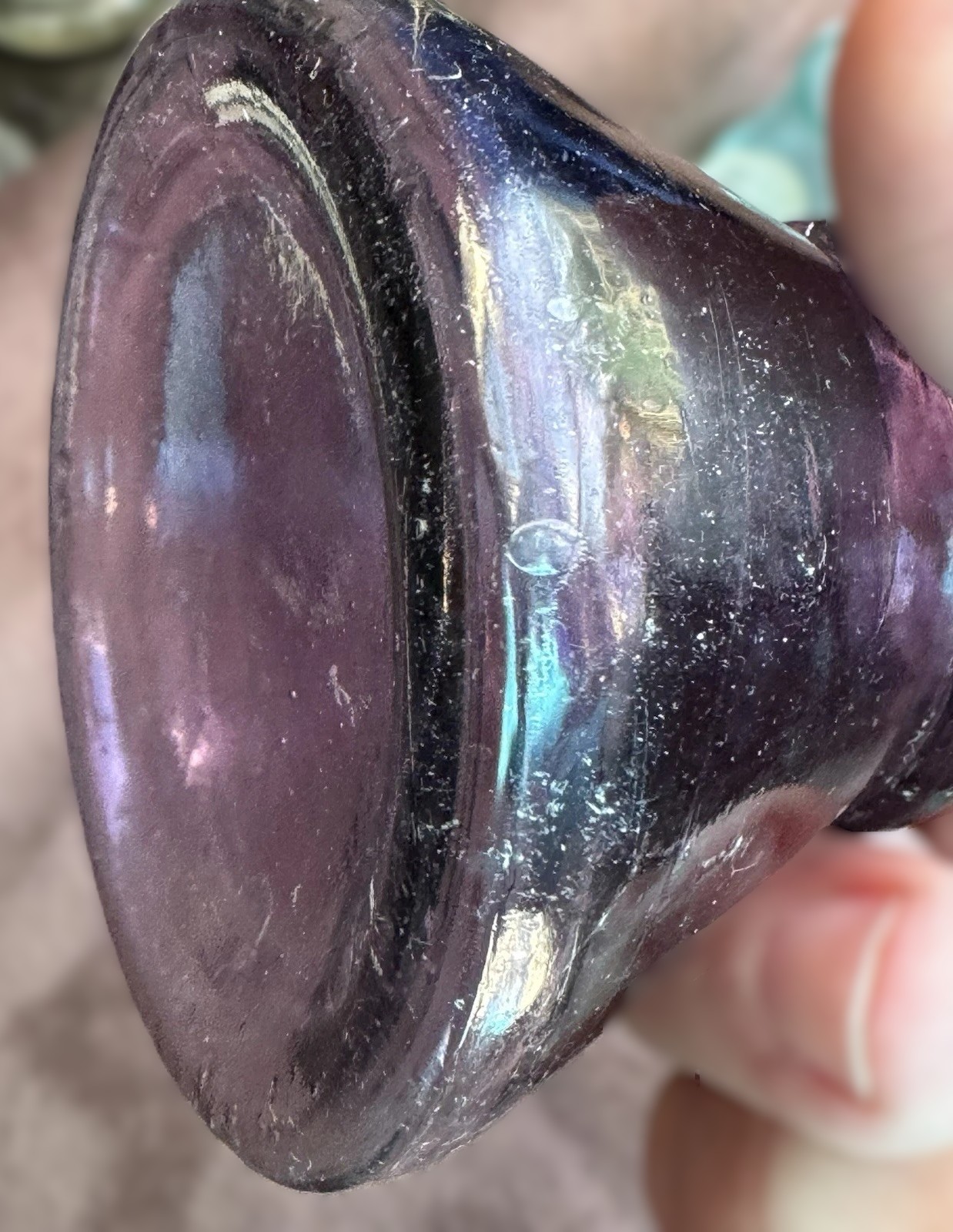
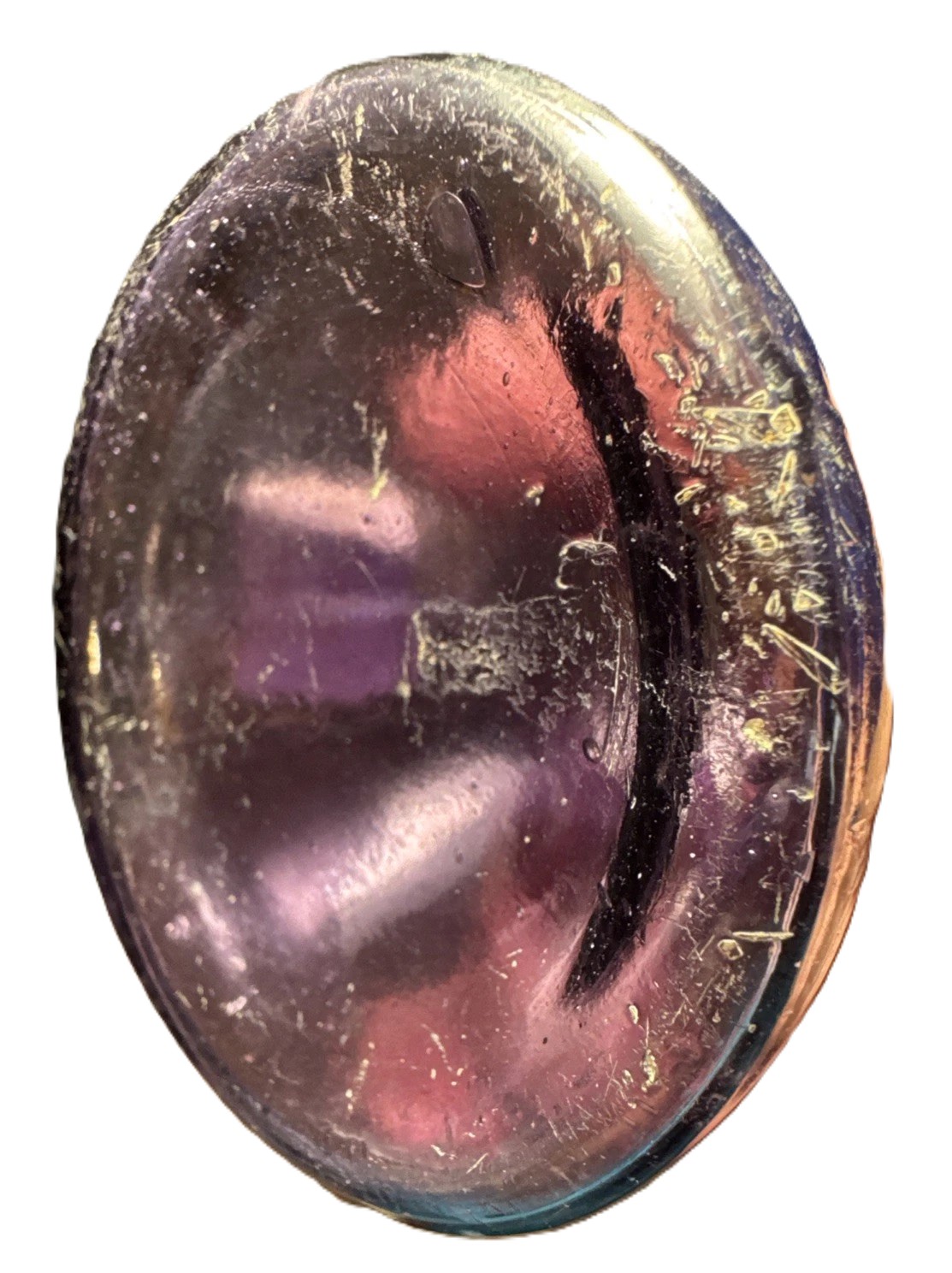
- Production Method: This piece was hand-blown in a mold, which is evidenced by the presence of tiny bubbles (“seeds”) and faint stretch marks within the glass.
- The Finish: It features a tool-finished collar and an applied ring. The ring shows a characteristic “drip” texture where the molten glass was wrapped around the neck during the manufacturing process.
- Base: The bottle possesses a 2.5-inch base, providing the low center of gravity necessary to prevent tipping when dipping a pen.
Exceptional Amethyst Coloration
- Manganese Reaction: The rich, deep amethyst hue is the result of a solarization process. Late 19th-century glass formulas used manganese as a decoloring agent to make glass appear clear; however, decades of exposure to UV sunlight cause a chemical reaction that turns the glass violet.
- Intensity: This specific bottle has achieved a natural deep violet tone, which is significantly stronger and more prized than the more common light lavender examples.
Condition Summary
- Integrity: The bottle is free of cracks or chips.
- Age Markers: It displays “honest age wear” and early-glass characteristics, including surface swirling and internal inclusions that confirm its authentic 19th-century origin.
Sold for $200 in December 2025
Content disclaimer. The information posted is the owner’s best knowledge and may not have been vetted by the SOIC. We welcome comments, corrections, and additions, working to make our website information comprehensive and accurate.
Join the Society of Inkwell Collectors (SOIC) – it’s free!
Founded in 1981 as a non-profit organization,
we are documenting inkwells (and accessories).
We’re here to help and inform!