

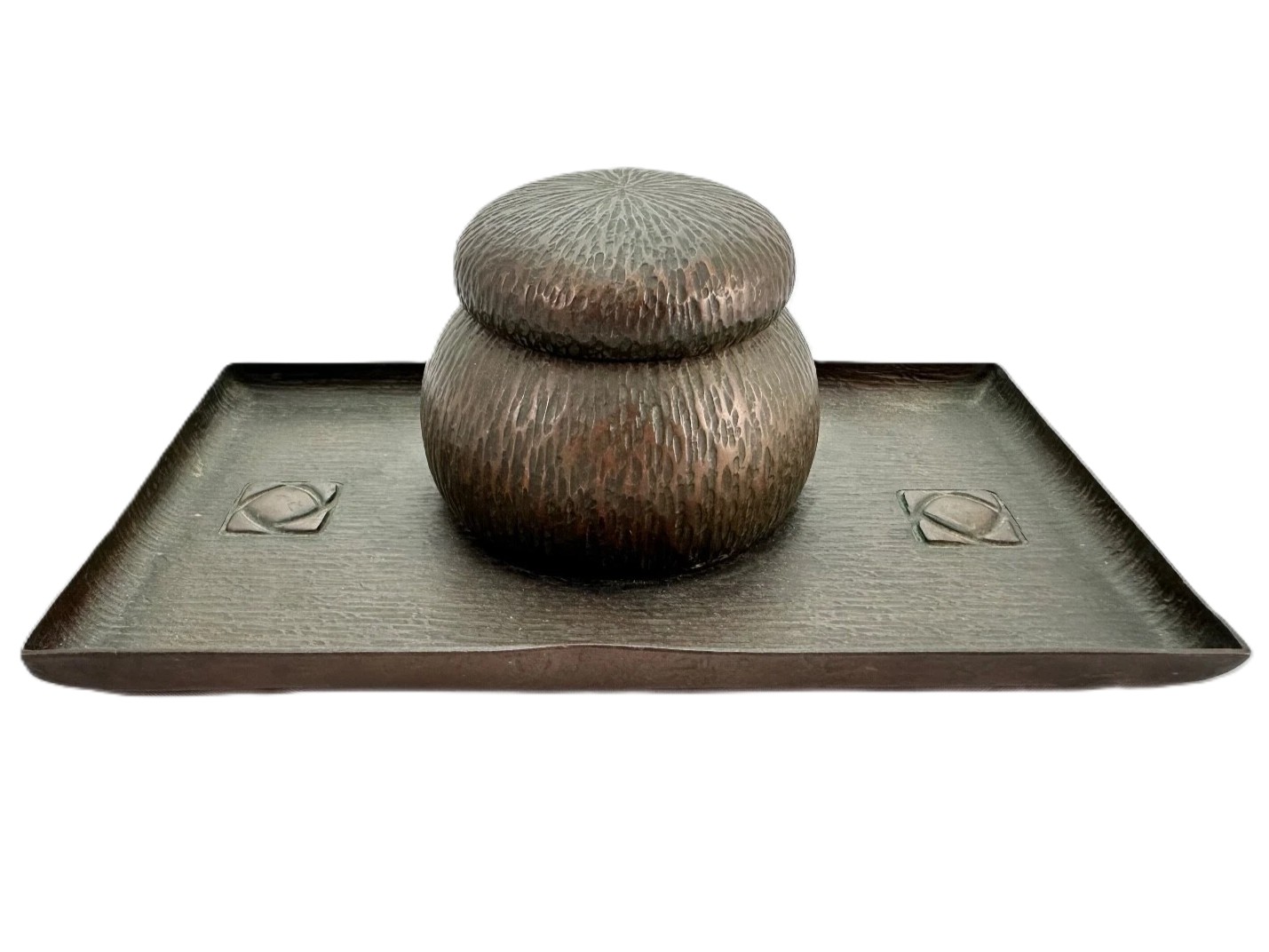
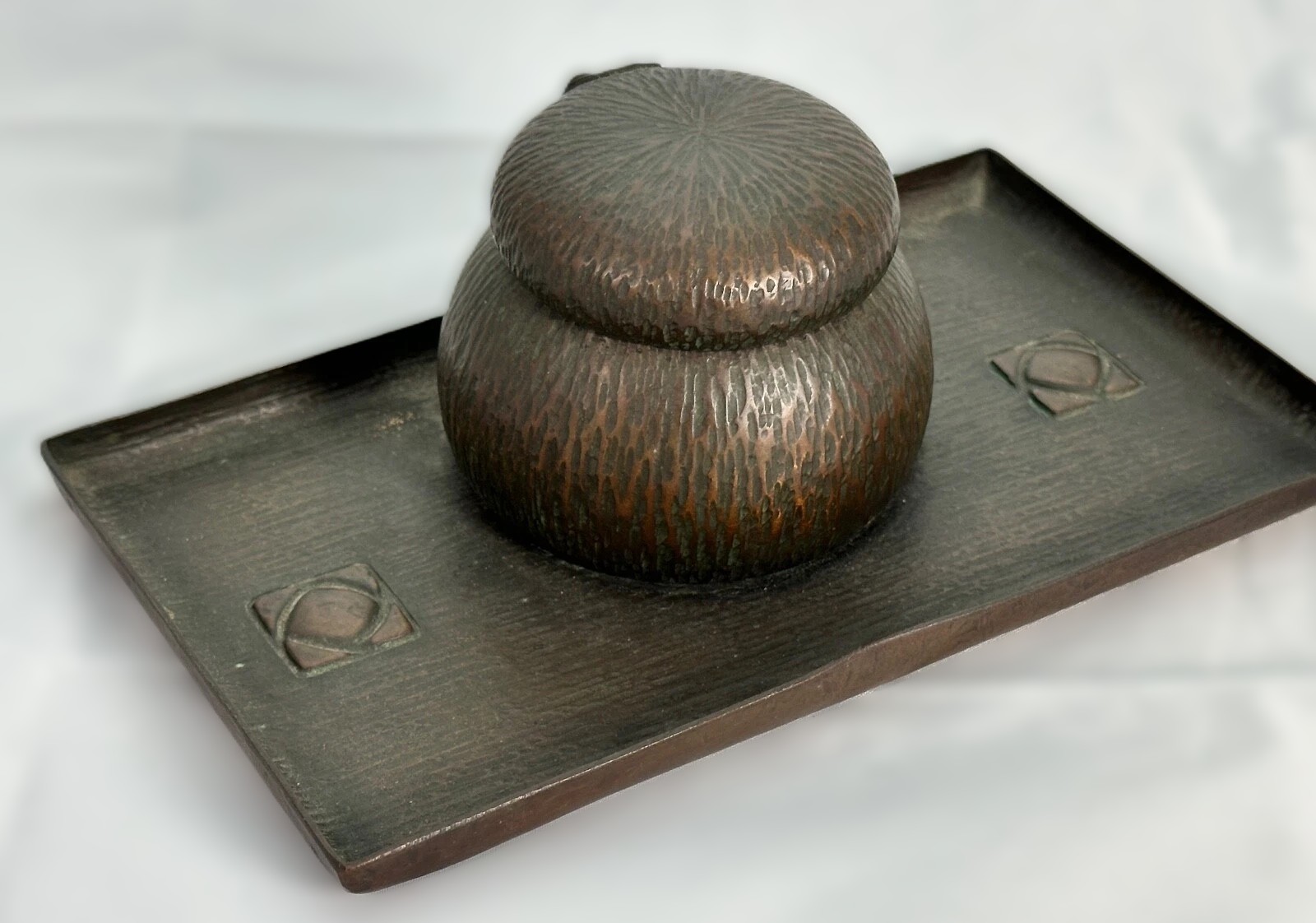
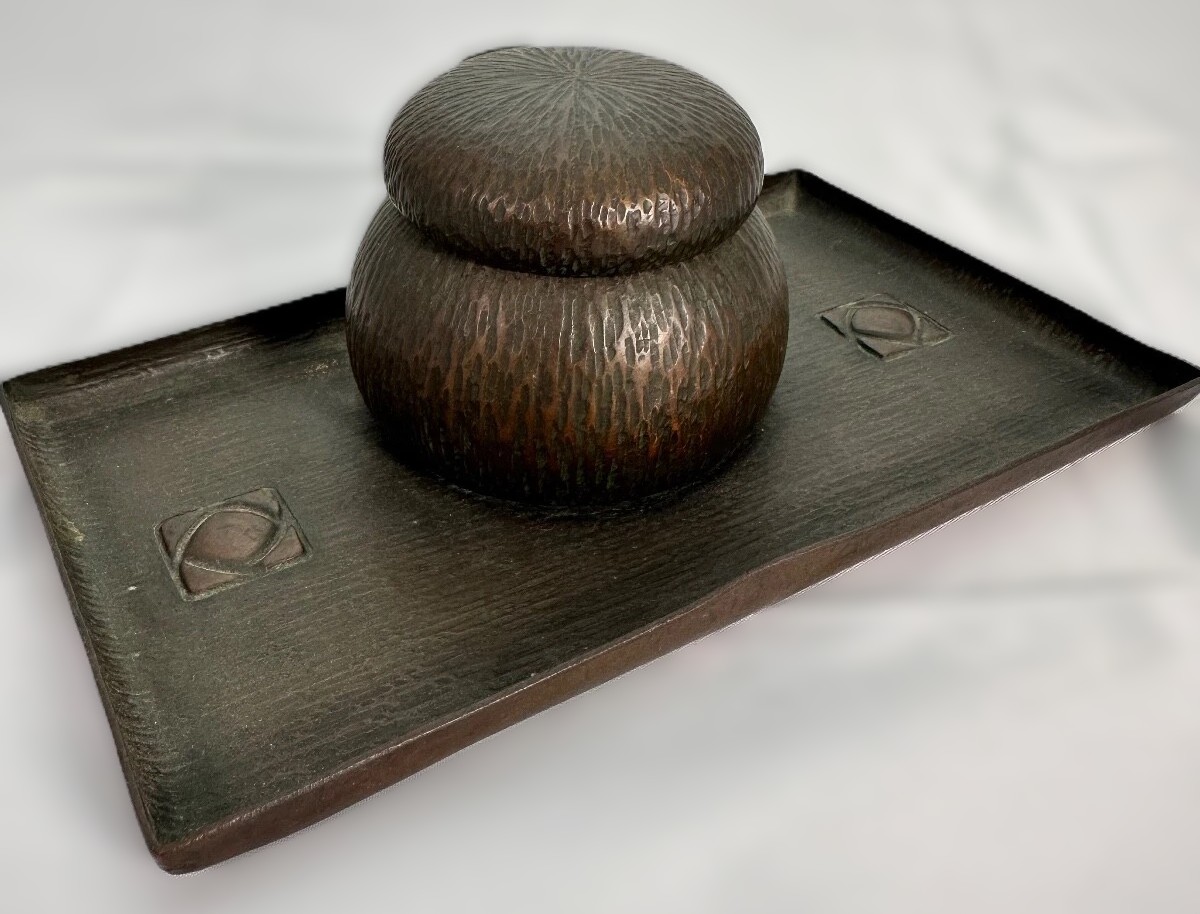
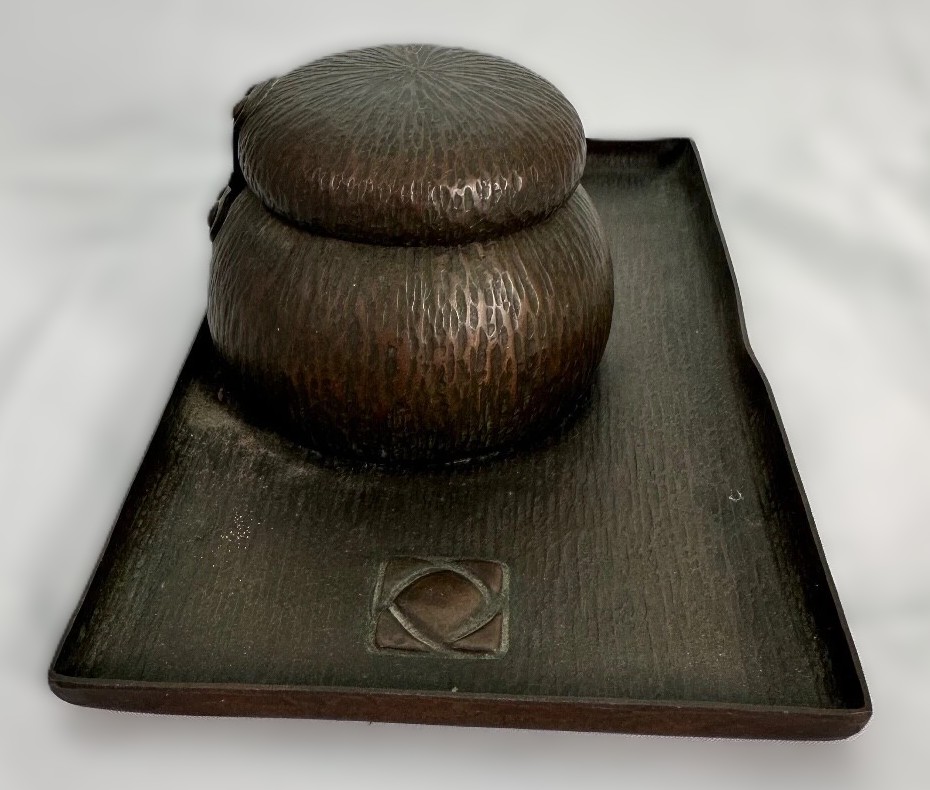
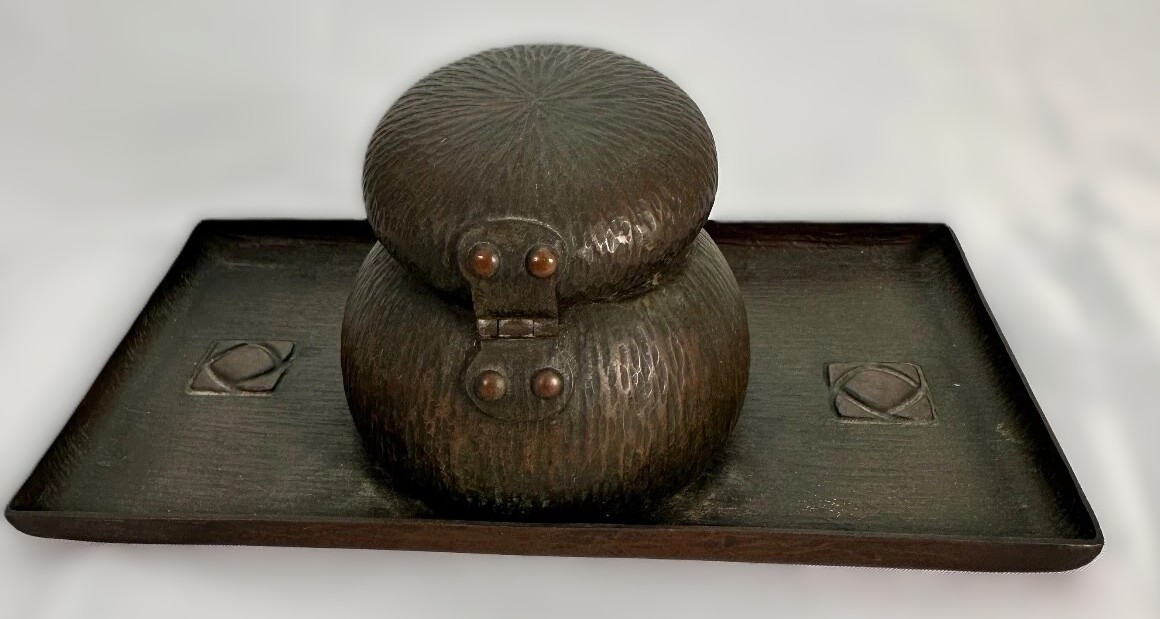
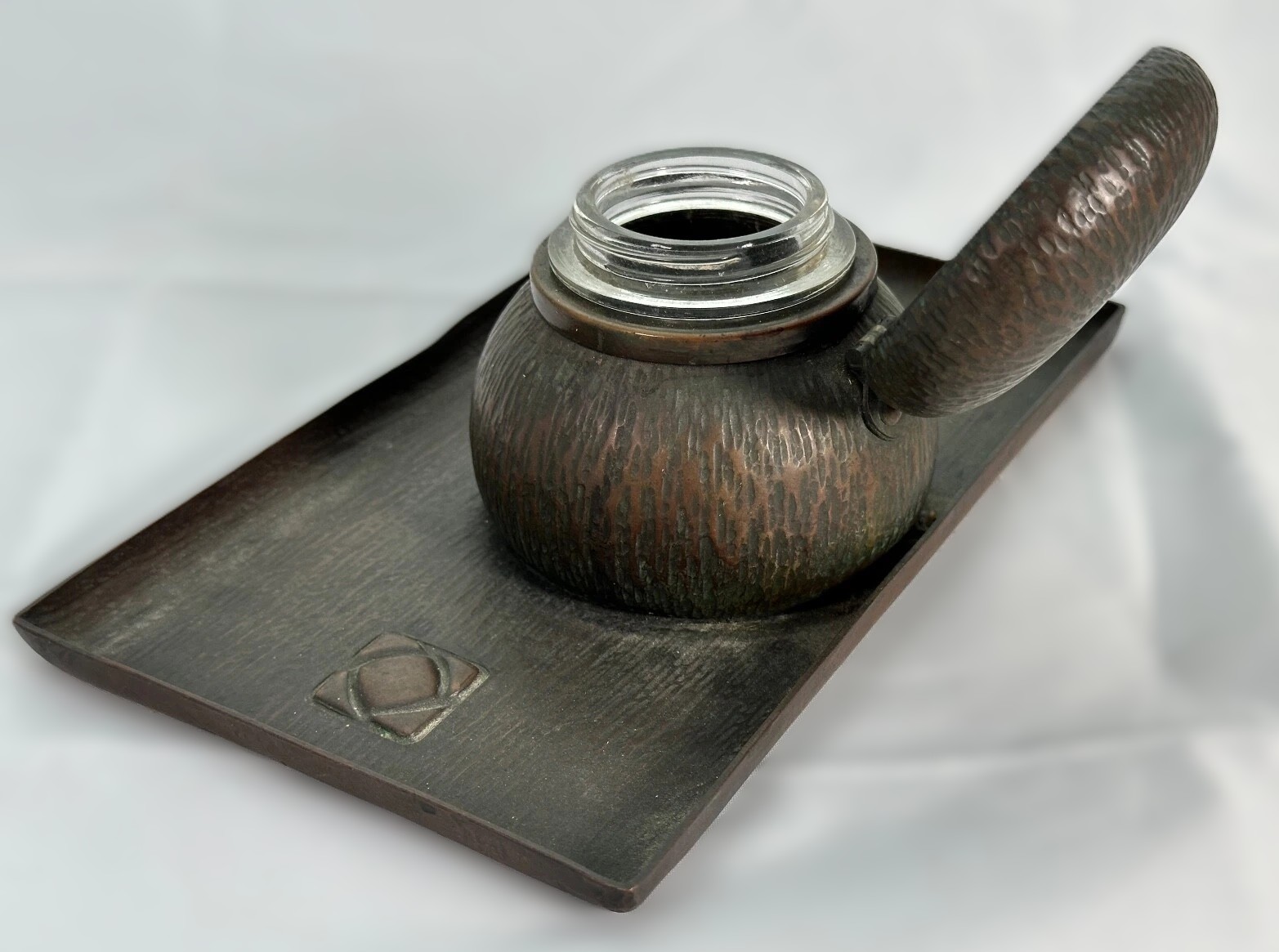
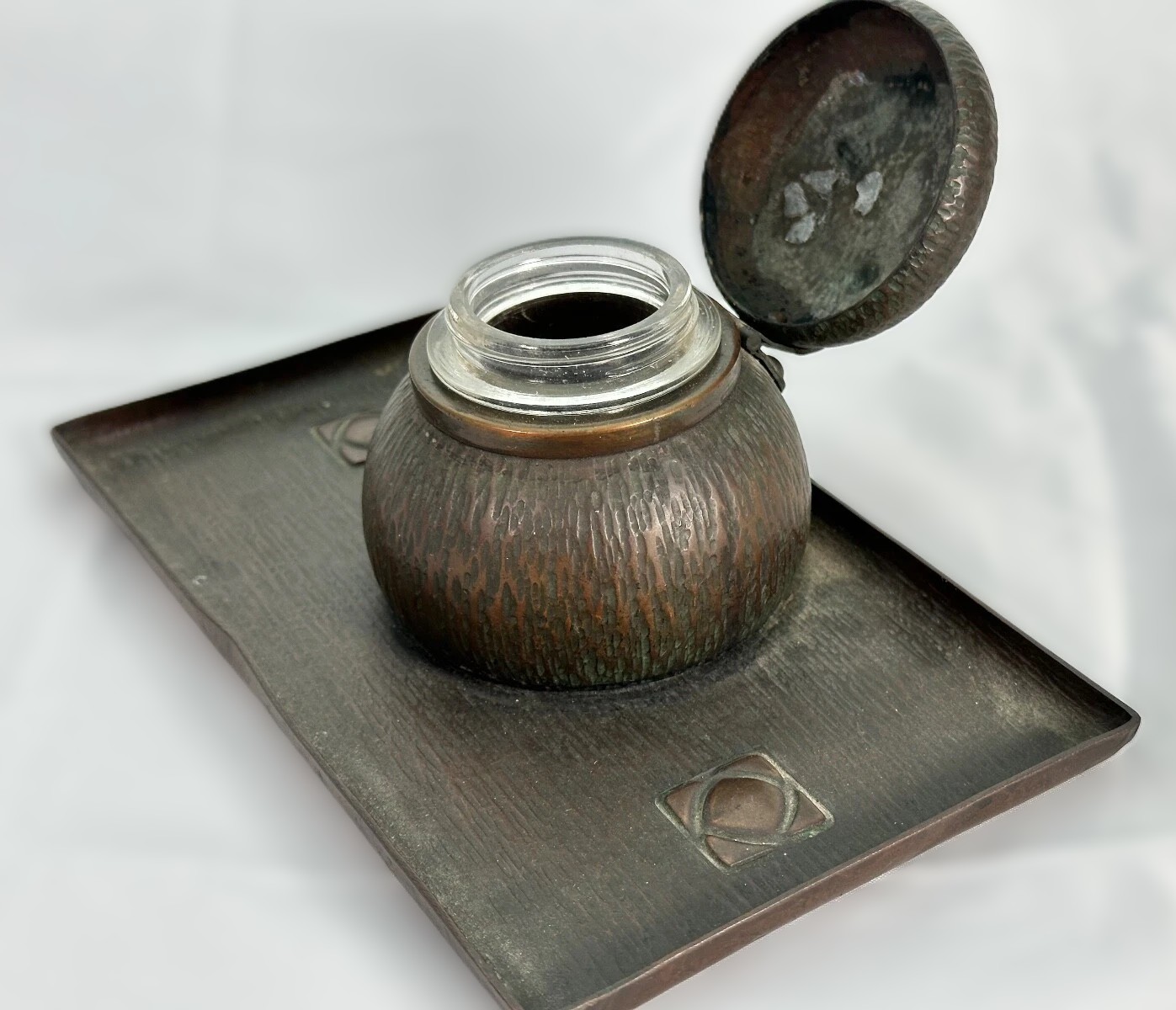
Pumpkin Form Hand-Hammered Inkstand
| Categories | Arts & Crafts |
| Material | Coppered metal |
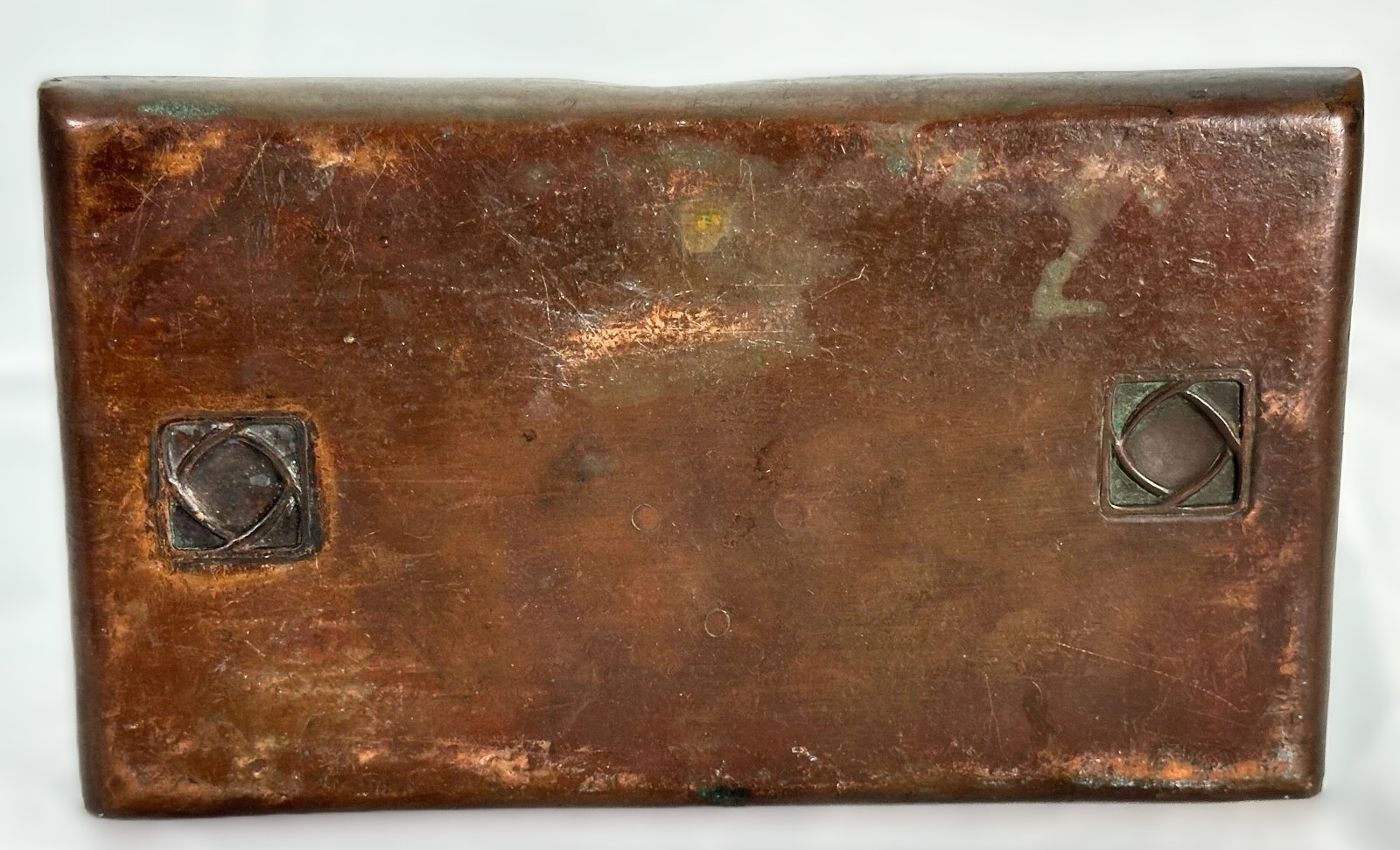
| Markings | Unmarked |
| Manufacturer | Undetermined |
| Origin | Undetermined |
| Date or Era | circa 1920 |
| Measuring | 7” x 4” x 2 ¼” high |
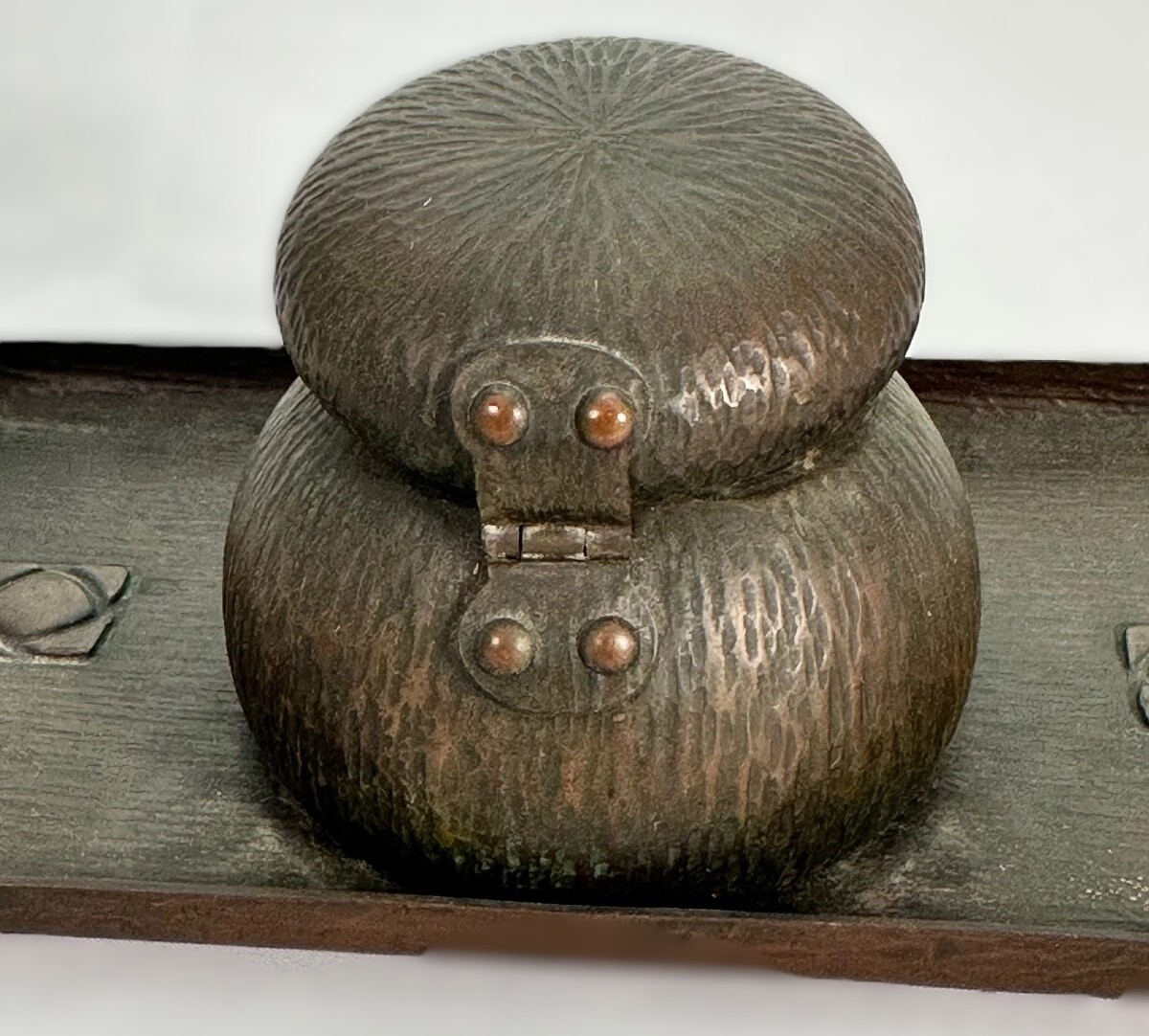
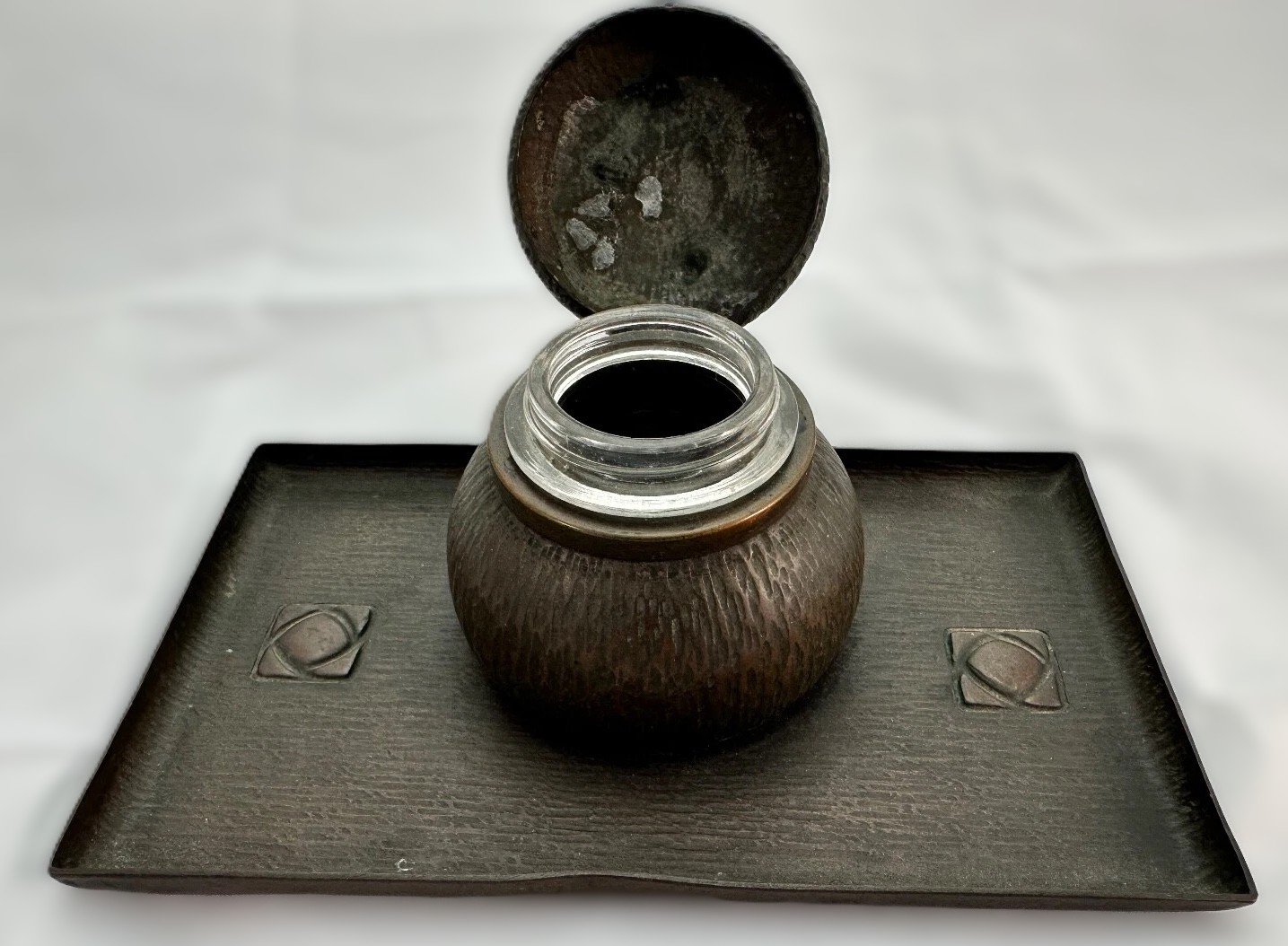
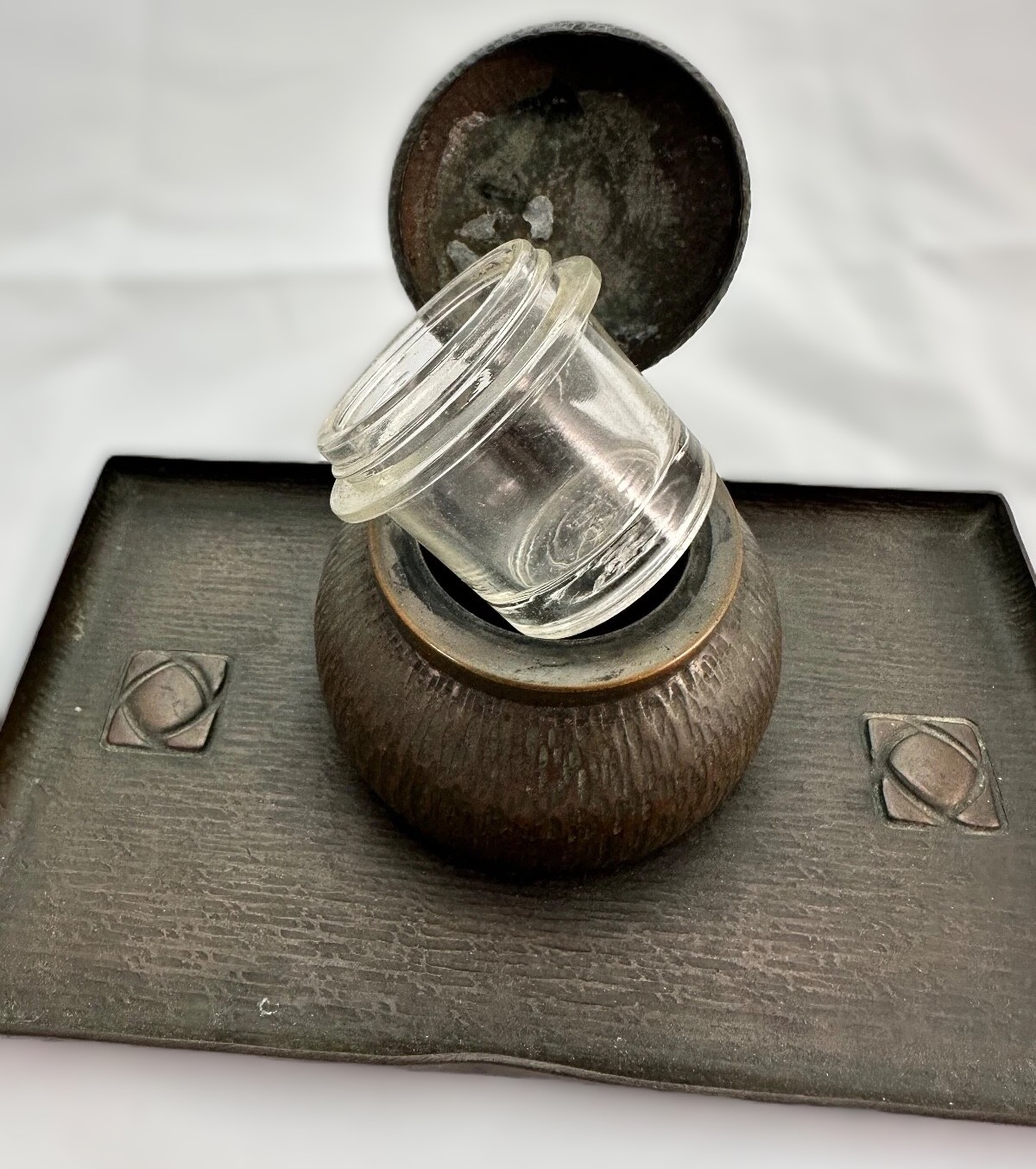
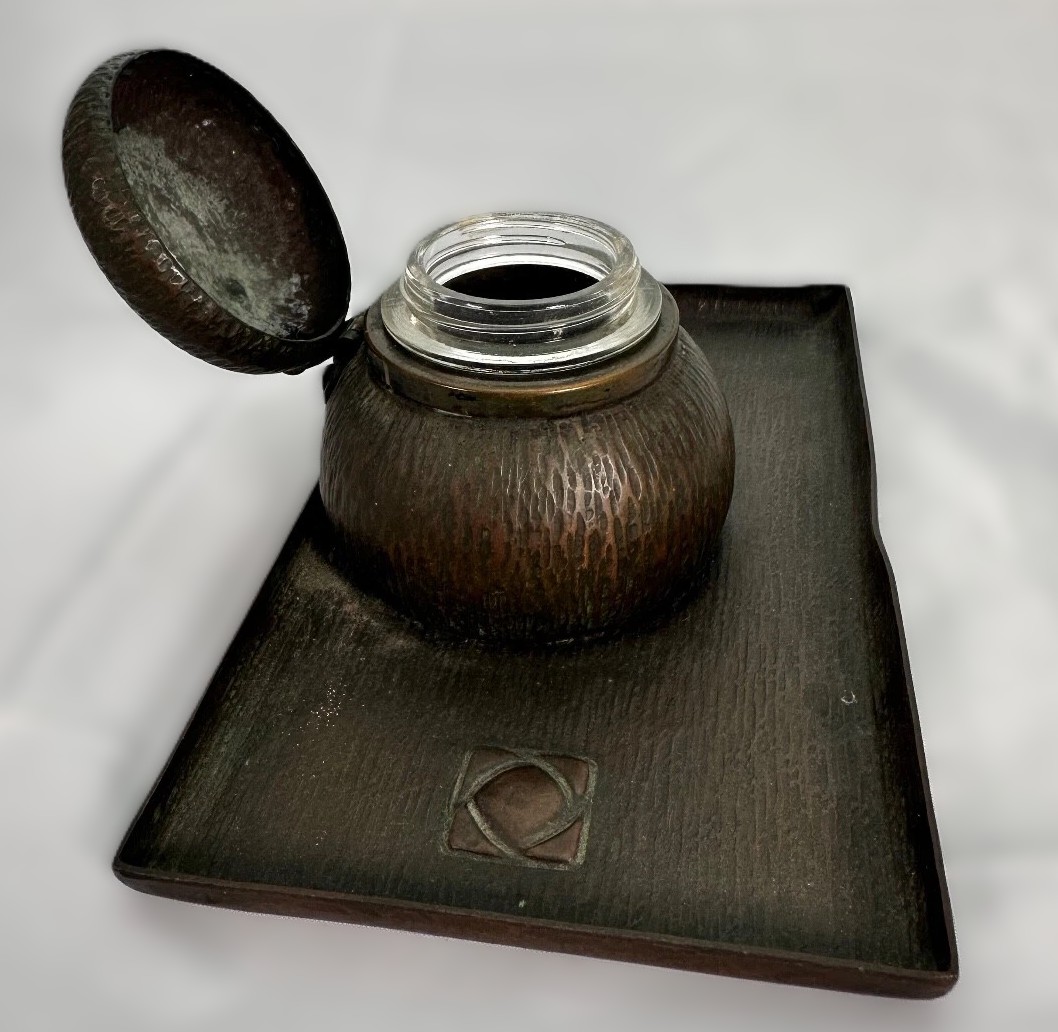
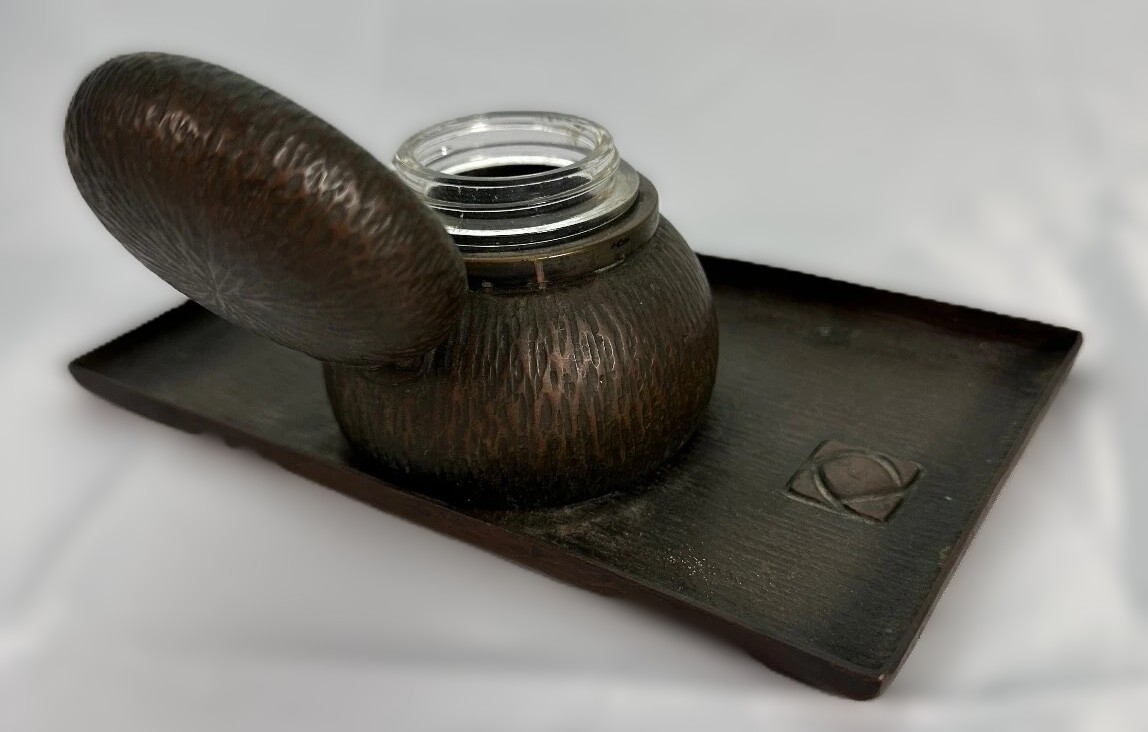
This hand-hammered Arts and Crafts period inkstand features a bulbous, pumpkin-form inkwell with a hinged domed lid, a removable glass insert, and a matching rectangular pen tray accented with stylized geometric corner motifs.
Overview & Description
- Object Type: Desk Inkstand / Inkwell with Matching Tray
- Period/Date: Early 20th Century (circa 1900–1920)
- Style: Arts and Crafts / Mission
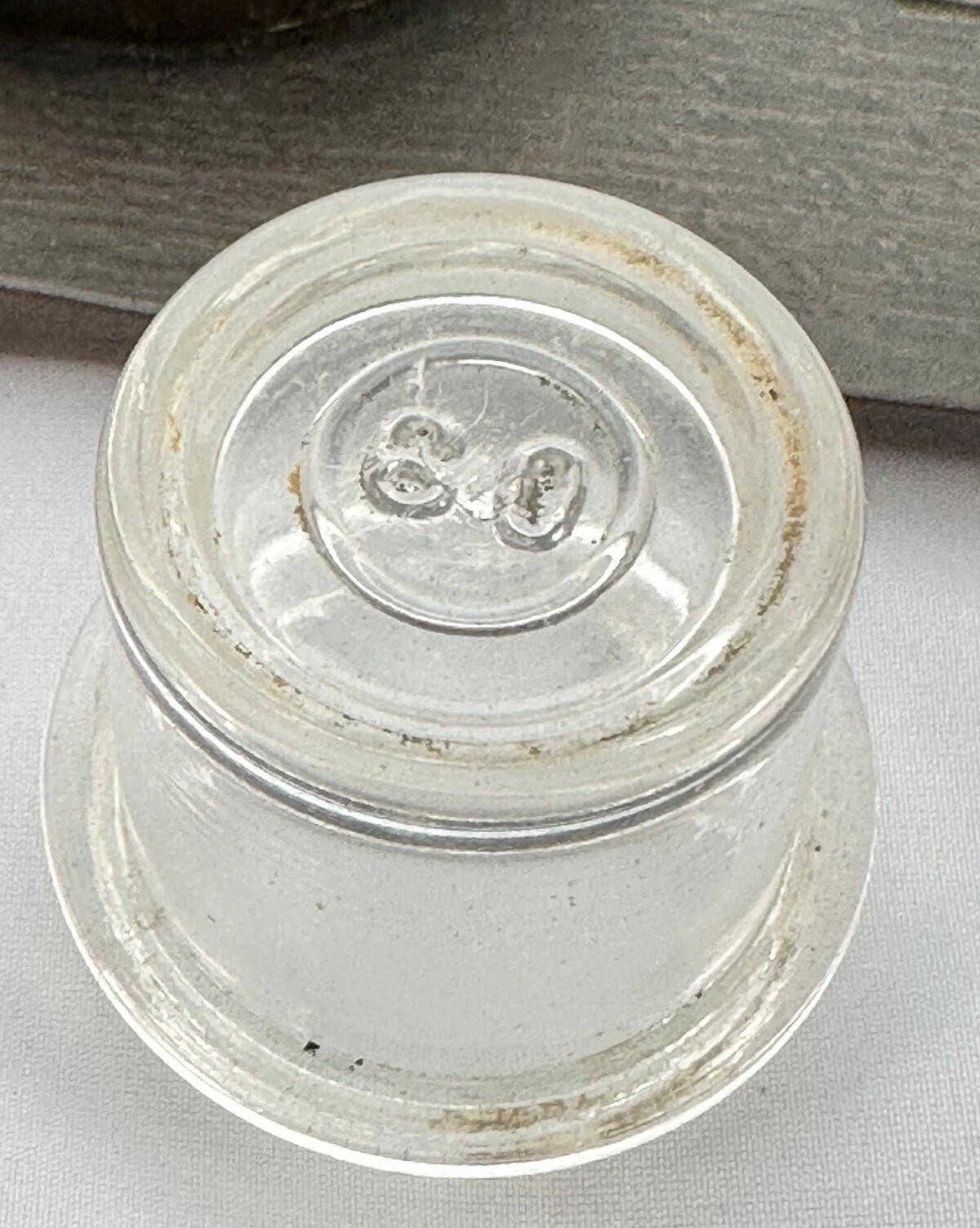
- Materials: Hand-wrought, heavy-gauge copper with a dark, warm patinated finish; blown/molded clear glass ink insert with a polished rim.
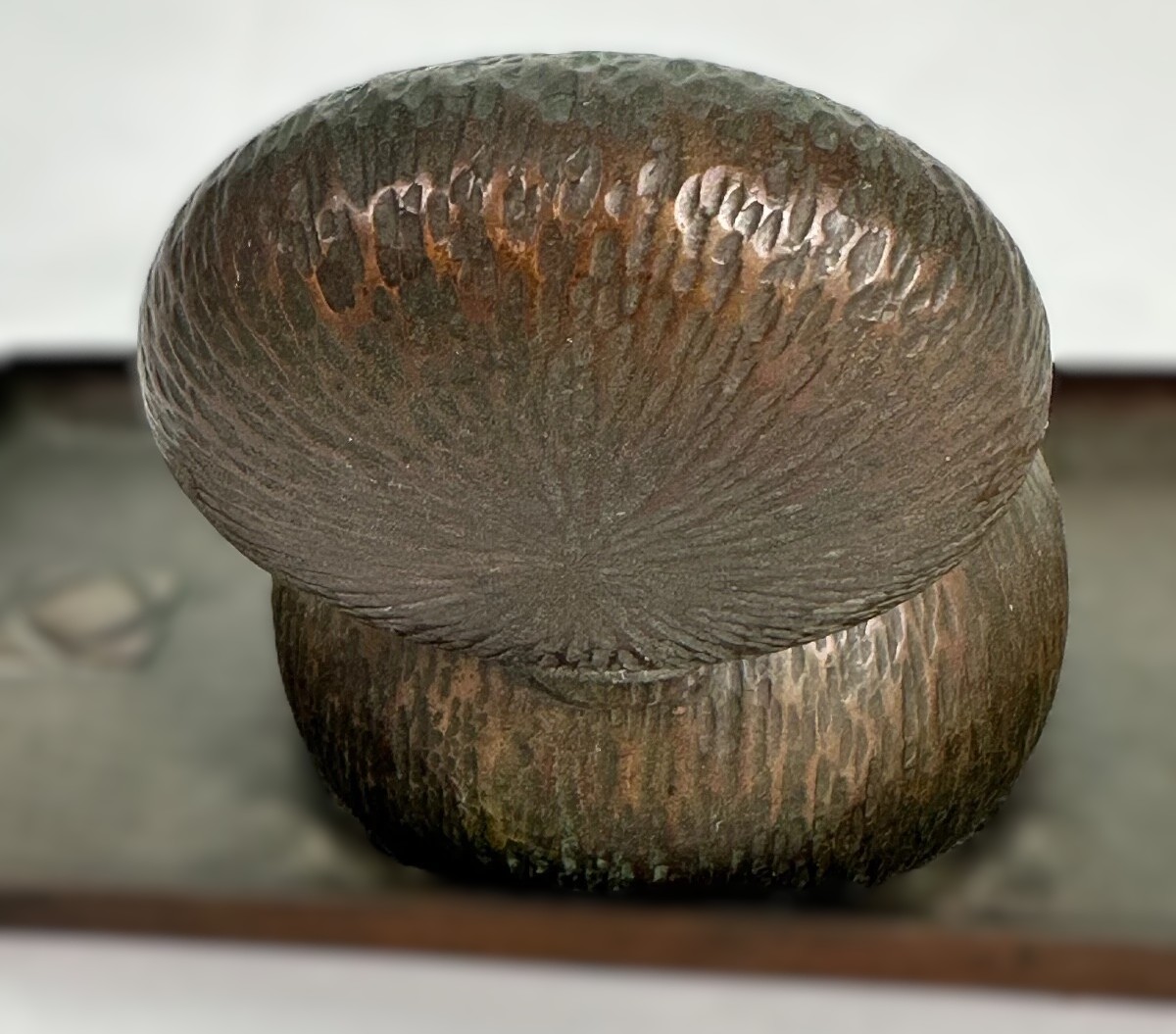
- Dimensions / Form: A rounded, spherical-lobed inkwell featuring radiating hand-chased texture across the domed lid and body, secured by a riveted copper strap hinge with four small copper pins. The inkwell rests upon a heavy rectangular tray with a subtle raised edge, flanked at opposite corners by recessed square panels.
- When was it made?
It dates to the early 20th century, specifically during the height of the Arts and Crafts movement (c. 1905–1920). The heavy emphasis on hand-wrought textures, visible hammering marks, and functional utility are hallmarks of this era’s metalwork design.
- Maker and Origin
- “Unmarked”: The piece is unmarked on the base or hardware, which is common for smaller independent metalshops, guild artisans, or contemporary studio coppersmiths of the period.
- Geographic Style: While American Arts and Crafts guilds (such as Roycroft in East Aurora, New York, or Dirk van Erp in California) produced fine hammered copper, the clean, architectural geometric motifs and specific patination also strongly echo British and European Arts and Crafts / Jugendstil metalwork (such as items produced by English copper mills like J. & F. Pool of Hayle, or continental workshops influenced by the Glasgow School and Vienna Secession). Without a maker’s stamp, it is safest to attribute it generally as American or British/Continental, early 20th Century.
- What are the symbols?
The embossed geometric symbols set into the diagonal corners of the tray are stylized modernist / Secessionist abstract motifs—frequently seen in early 20th-century design.
- They consist of a square frame enclosing a dynamic arrangement of intersecting circular arcs and diagonal lines (resembling a geometric eye or stylized lens shape).
- This kind of minimalist, linear geometry reflects the transition away from ornate Victorian floral designs toward clean, structural lines championed by early modern European and American designers.
Sold for $159 in August 2026
Content disclaimer. The information posted is the owner’s best knowledge and may not have been vetted by the SOIC. We welcome comments, corrections, and additions, working to make our website information comprehensive and accurate.
Join the Society of Inkwell Collectors (SOIC) – it’s free!
Founded in 1981 as a non-profit organization,
we are documenting inkwells (and accessories).
We’re here to help and inform!