

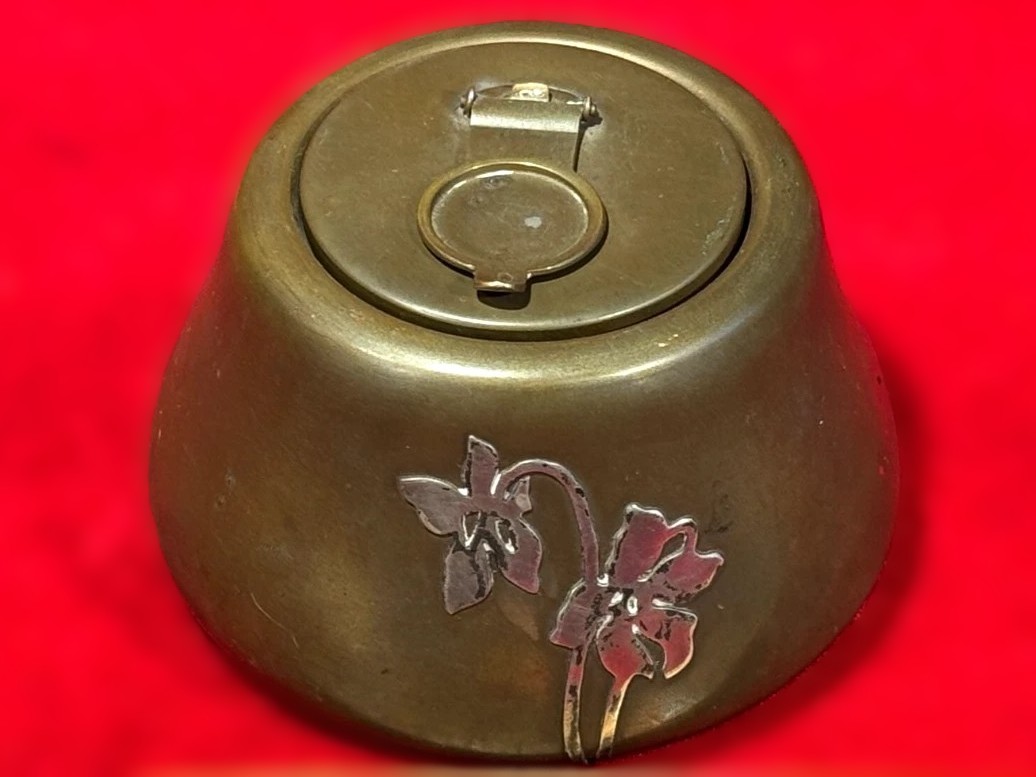
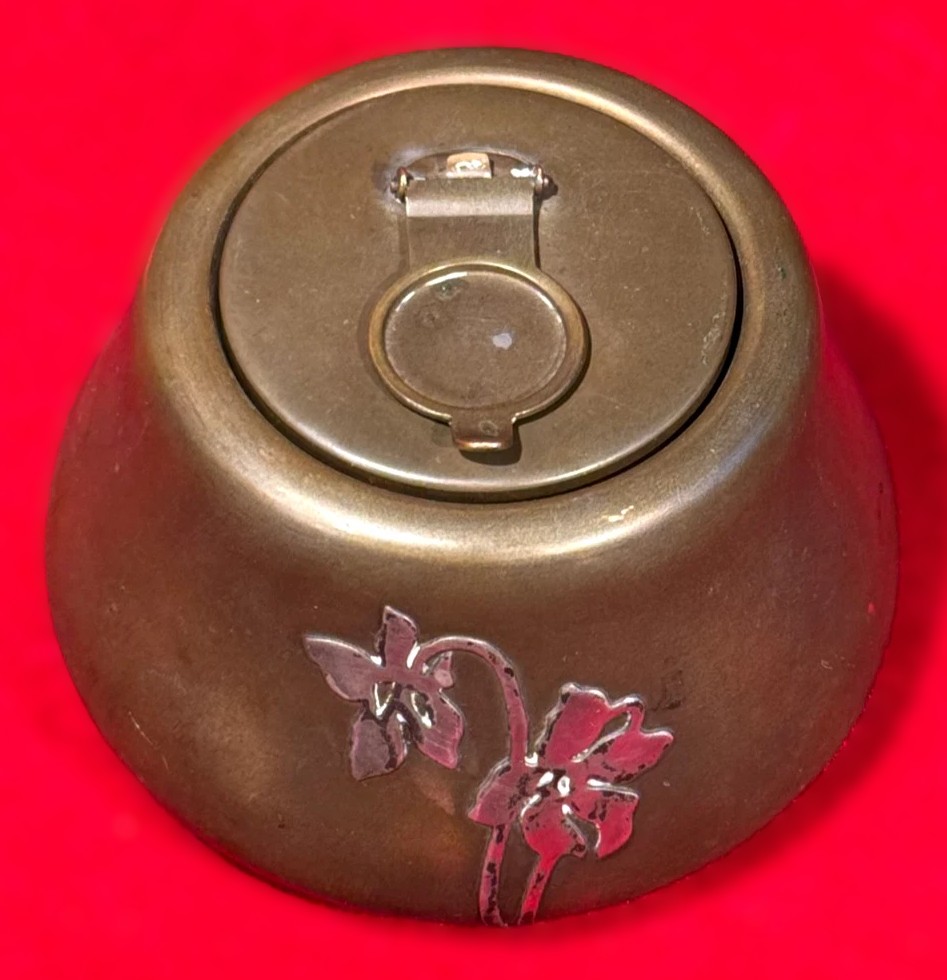
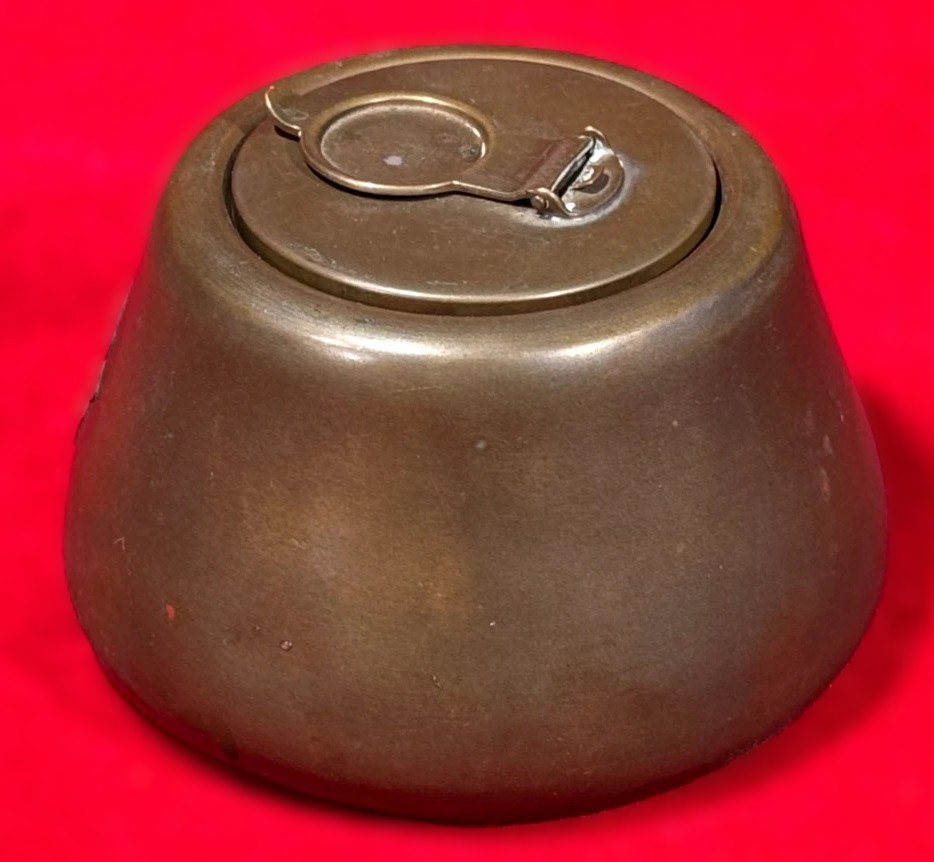
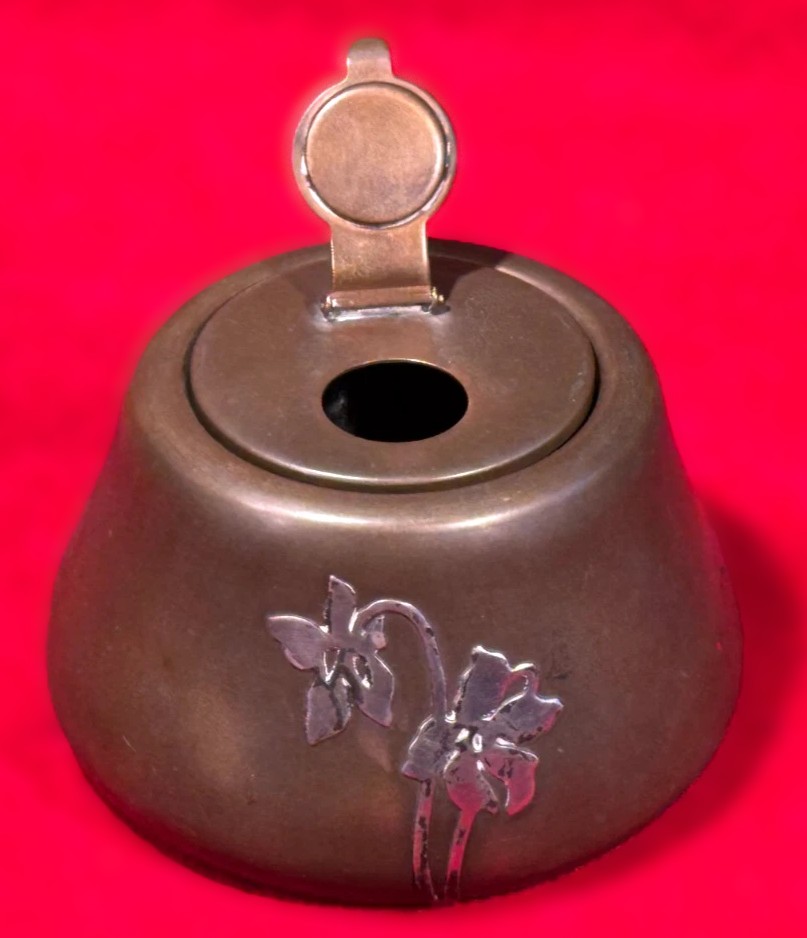
Heintz Art Metal Inkwell
| Categories | Arts & Crafts |
| Material | Silver on Bronze |
| Markings | Unmarked |
| Manufacturer | Heintz |
| Origin | United States |
| Date or Era | circa 1912 |
| Measuring | 3 ¼” diameter; 2 ¼” high |
| Patent | U.S. Patent No. 1,037,143, granted August 27, 1912 |
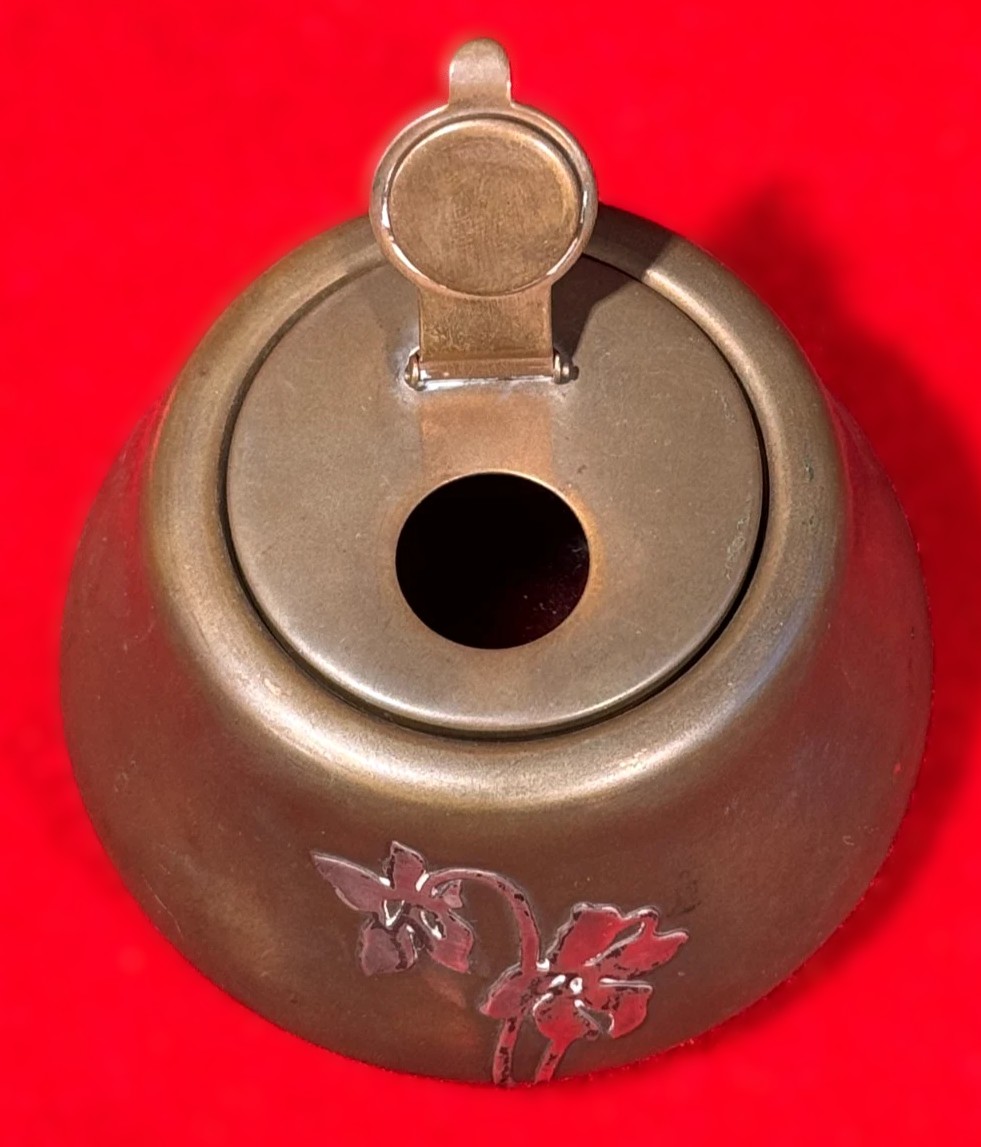
This simple Arts & Crafts period inkwell features a classic, rounded spun-bronze body with a smooth, warm brown patina.
Description
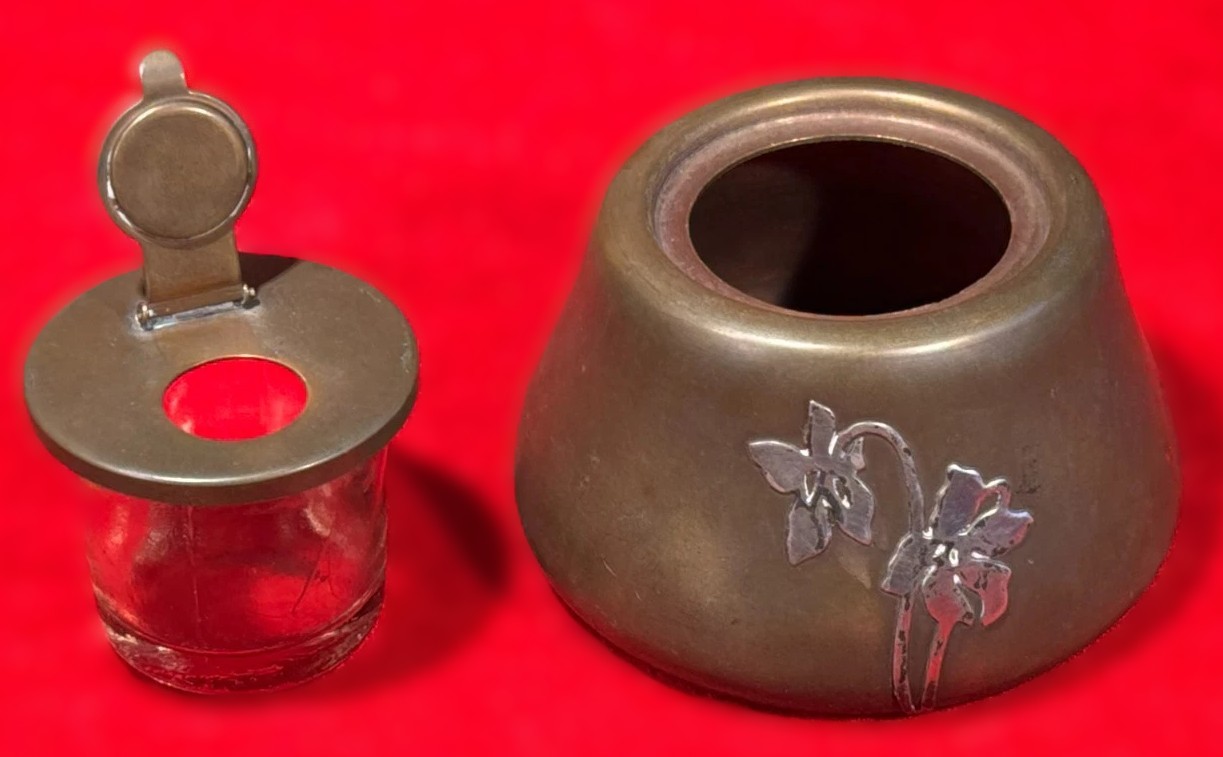
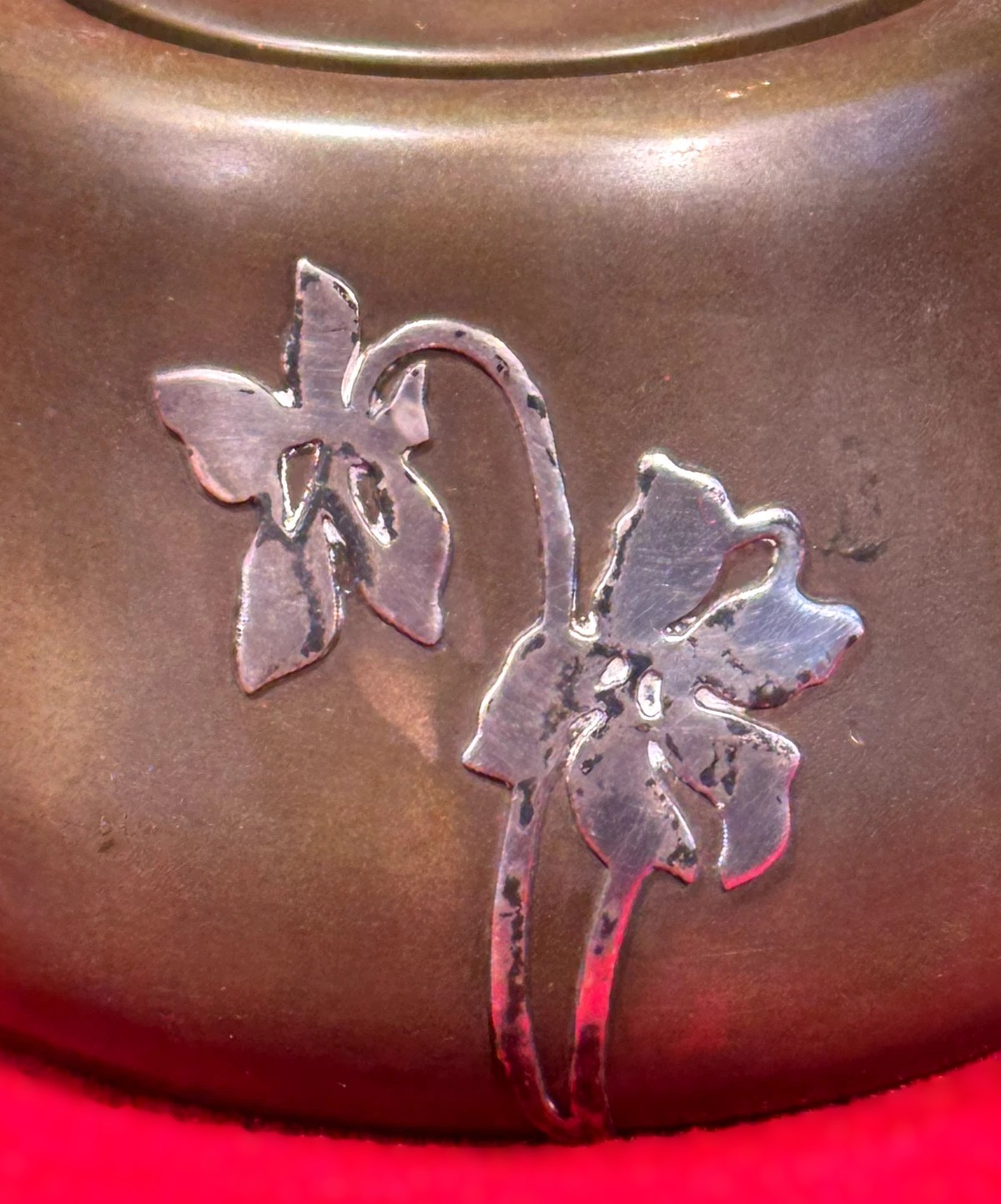
- Materials & Construction: The piece is made from bronze using Heintz’s signature lathe-spun method, accented with a sterling silver overlay applied directly onto the bronze without the use of visible solder.
- Motif: The base is adorned with a delicate sterling silver floral overlay depicting twin blossoms with arching stems, characteristic of the naturalistic designs favored by the shop.
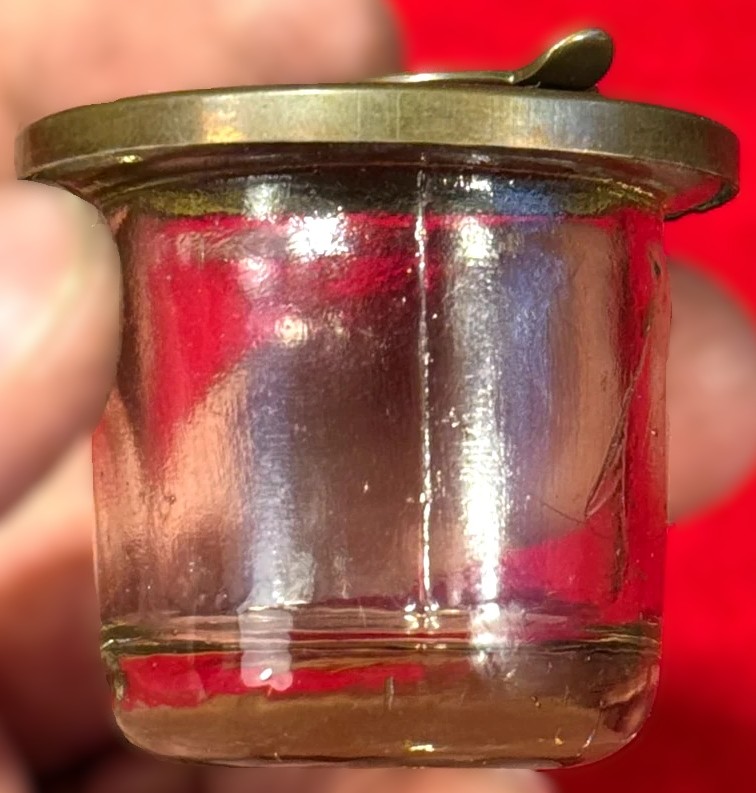
- Lid & Interior: It features a fitted top collar with a hinged, circular lid tab that opens to reveal the original removable clear glass ink insert housed inside.
History of the Company
- Origins: The enterprise was founded in 1902 by Otto L. Heintz in Buffalo, New York, initially operating under the name the Arts & Crafts Shop.
- Evolution: In its earliest years, the shop produced modest desk accessories and candlesticks decorated with applied colored enamel over textured copper surfaces.
- The Heintz Art Metal Shop: Around 1906, the company shifted away from enamel-on-copper and began focusing on bronze and brass forms (often shaped via lathe-spinning) accented with applied sterling silver overlays. Around this time, the business officially changed its name to the Heintz Art Metal Shop.
- Legacy: The shop became celebrated internationally for its distinct, chemical patinas (such as French Grey, Verde green, and deep red bronze) and its harmonious marriage of base metals with silver ornamentation. Production slowed and ultimately ceased following Otto Heintz’s death in the late 1910s/early 1920s.
The Patented Manufacturing Process
Before Otto Heintz’s innovation, applying silver directly to a bronze or copper base cleanly without visible solder lines or distortion was exceptionally difficult. Solder often melted unevenly, looked messy, or required excessive cleanup.
Otto Heintz solved this by inventing and patenting a specialized, solderless technique (U.S. Patent No. 1,037,143, granted August 27, 1912), as seen on the bottom of this inkwell:
- Alloy Composition: The bronze base was formulated to contain a precise mixture—specifically 80 to 95 percent copper and 5 to 20 percent zinc.
- The Role of Zinc: The inclusion of zinc in the bronze base acted as an internal temperature-moderating agent and flux.
- Controlled Fusing: A thin sheet or ornamental facing of silver was placed against the bronze base, often with a light layer of powdered borax flux between them. When heated to a specific temperature (just below the melting point of the bronze, but hot enough to partially melt the underside/inner back surface of the silver facing), the zinc in the bronze caused the silver to molecularly fuse and bond directly to the base.
- Preventing Distortion: Because the zinc kept the silver from melting completely or running wildly out of place, the delicate, intricate geometric silver overlay fused securely and cleanly onto the bronze without requiring messy solder or warping the artistic design.
Sold for $51 in August 2026
Content disclaimer. The information posted is the owner’s best knowledge and may not have been vetted by the SOIC. We welcome comments, corrections, and additions, working to make our website information comprehensive and accurate.
Join the Society of Inkwell Collectors (SOIC) – it’s free!
Founded in 1981 as a non-profit organization,
we are documenting inkwells (and accessories).
We’re here to help and inform!