


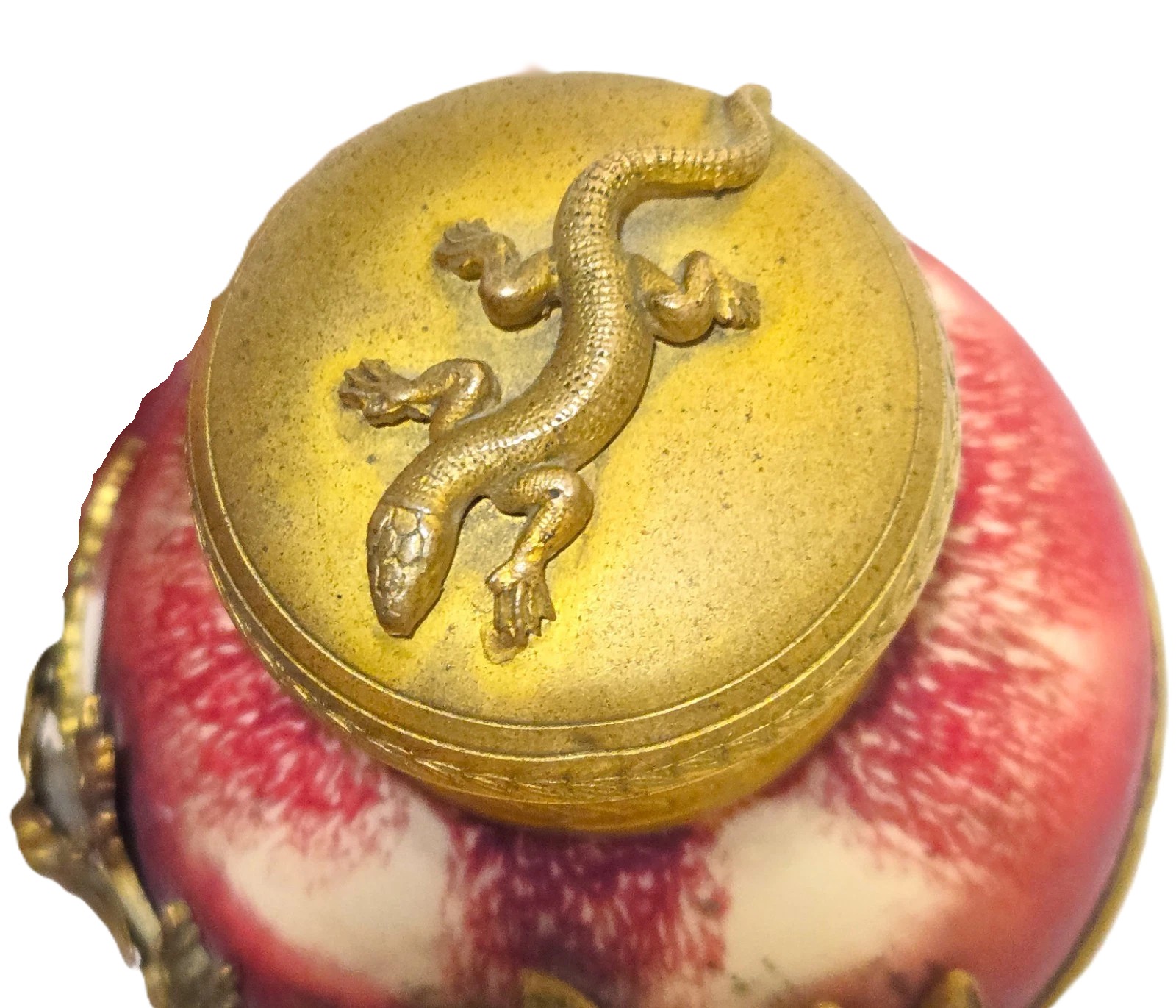


Porcelain and Gilt Bronze Inkwell
| Categories | Figural - Animals & Living Creatures |
| Type | Amphibian / Reptile, Insects |
| Material | Gold Gilt Finish, Porcelain |
| Markings | Unmarked |
| Manufacturer | Undetermined |
| Origin | France |
| Date or Era | circa 1890 |
| Measuring | 2 ½” diameter; 3 ⅛” high |
This inkwell is characterized by its deep monochrome glaze and ornate metalwork.
Porcelain Body and Glaze
- Form: The porcelain body has a bulbous, ovoid, or squat globular shape, resting on a flat base.
- Glaze Color: The porcelain is finished with a deep, uniform reddish-purple glaze. This rich color is produced by a complex process involving copper reduction firing.
- Sang-de-Bœuf (Ox-Blood) Identification: The glaze is an example of a Sang-de-Bœuf (French for “ox-blood”) or Flambé glaze. This term describes the intense, deep red to burgundy color achieved using a copper oxide formula fired in a reducing atmosphere. While the original technique is Chinese (known as jiˉhoˊng), European potteries, especially in France (Sèvres, etc.), mastered similar copper-red flambé glazes in the 19th and early 20th centuries, making the term “Sang-de-Bœuf” applicable to this piece.
Gilded Bronze Mounts (Monture)
The inkwell is enhanced by high-quality, elaborately detailed gilded bronze (ormolu) mounts, which are hallmarks of fine European decorative arts.
- Base/Stand: The porcelain sits securely in a detailed gilt bronze base or stand. The stand features naturalistic elements, specifically rose branches and foliage. A small, finely cast bee is depicted resting among the leaves or on the rose branches
- Lid and Hinges: A hinged metal collar is fitted to the rim of the porcelain. This holds the gilt bronze lid. The most prominent feature is the realistic, highly detailed finial placed atop the lid. Given the artistic and symbolic context of French Art Nouveau and Belle Époque decoration (the likely period), this creature, with its elongated body and limbs, is often interchangeably represented as a salamander or a lizard. The salamander is a powerful symbol in European mythology and heraldry, often associated with fire, and its presence provides a dynamic and eye-catching handle for the lid.
Conclusion
This inkwell is a fine example of a Late 19th to Early 20th Century French Desk Accessory. It showcases the luxurious combination of high-fired, monochrome Chinese-inspired glazes (Sang-de-Bœuf) with sophisticated, naturalistic European gilt bronze mounts, embodying the popular aesthetic of the period.
Sold for $86 in September 2025
Content disclaimer. The information posted is the owner’s best knowledge and may not have been vetted by the SOIC. We welcome comments, corrections, and additions, working to make our website information comprehensive and accurate.
Join the Society of Inkwell Collectors (SOIC) – it’s free!
Founded in 1981 as a non-profit organization,
we are documenting inkwells (and accessories).
We’re here to help and inform!