

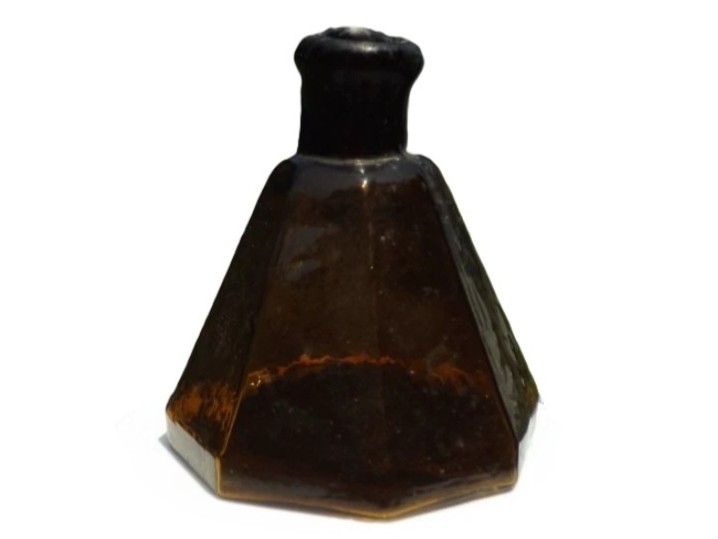
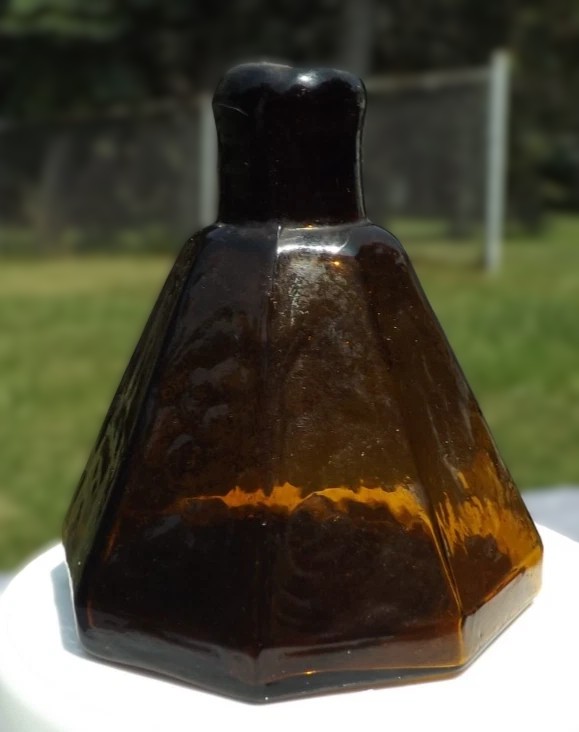
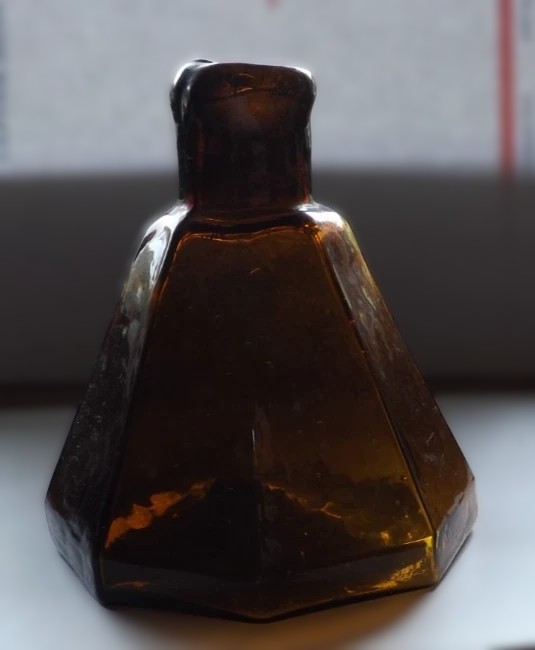
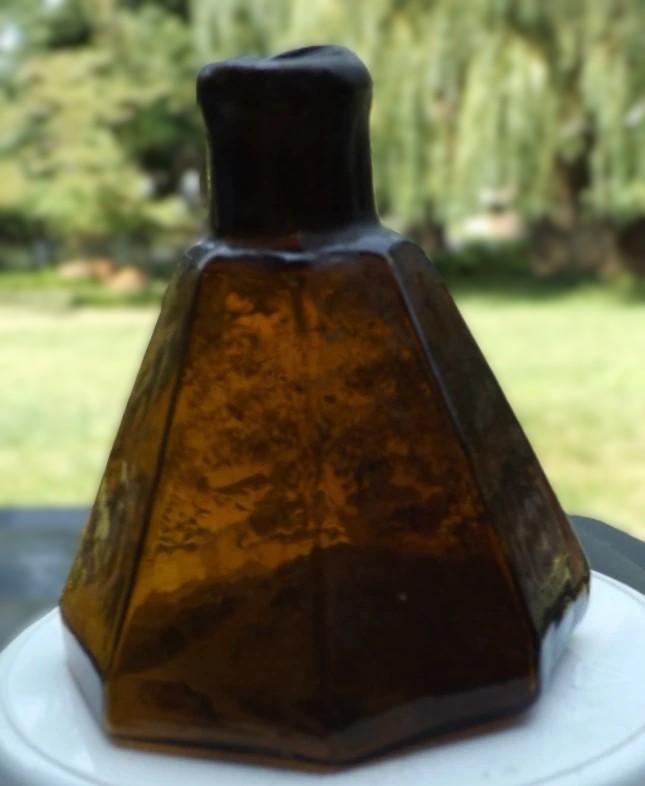
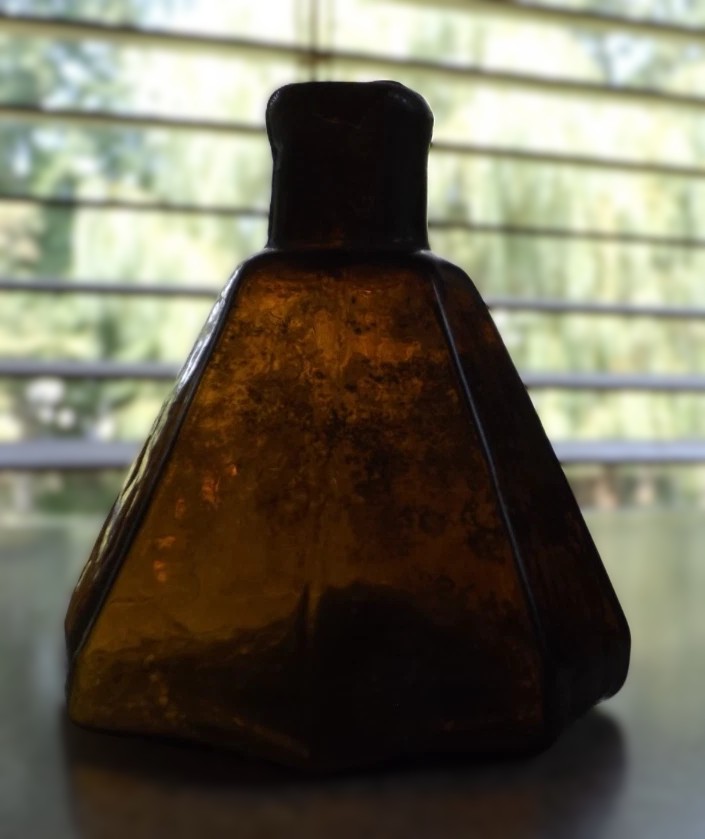
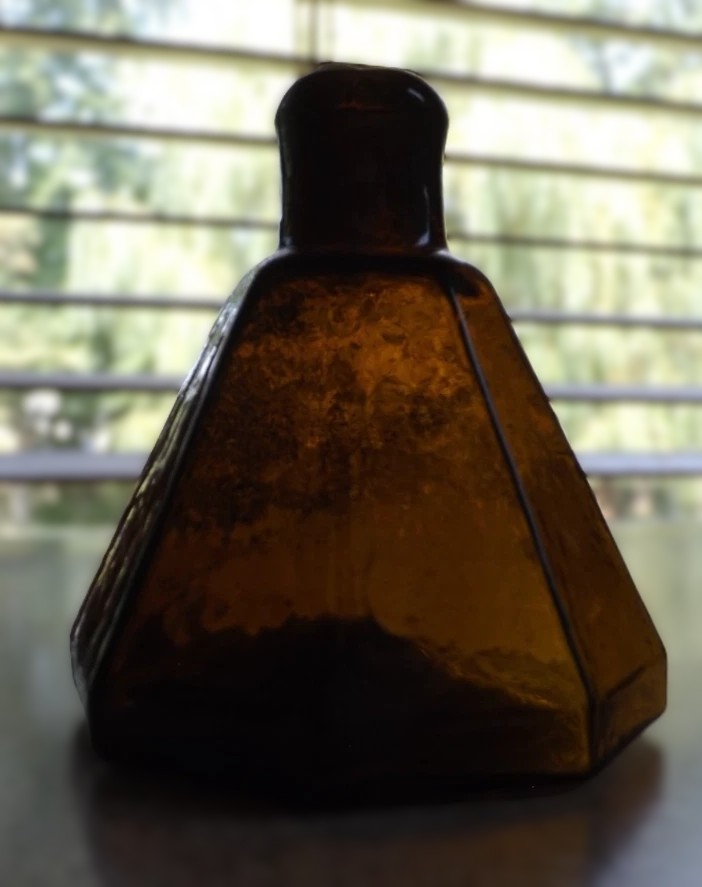
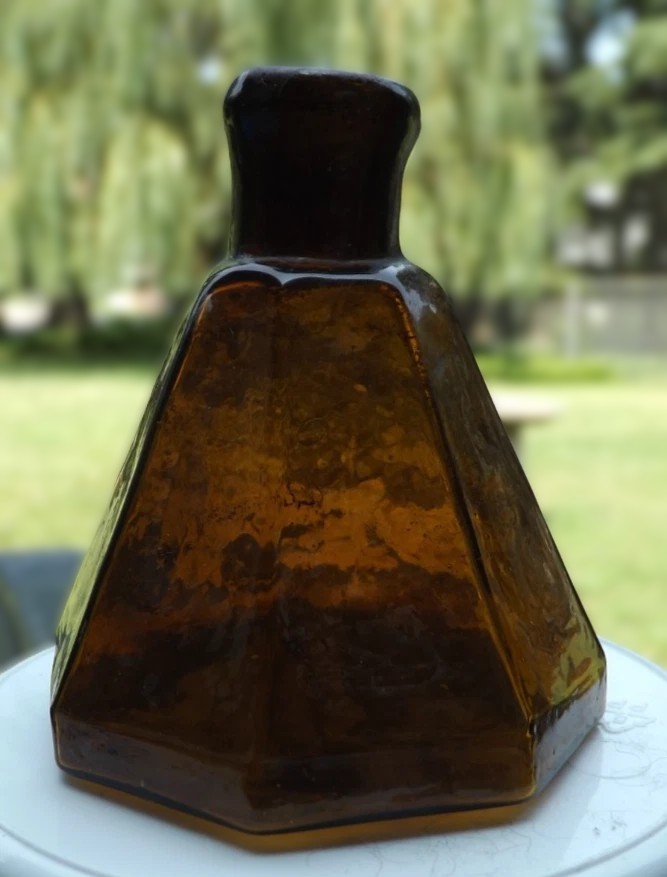
Pontiled Amber Umbrella Ink Bottle – Crude Mouth
| Categories | Ink Bottle |
| Material | Glass |
| Markings | Unmarked |
| Manufacturer | Undetermined |
| Origin | United States |
| Date or Era | circa 1850 |
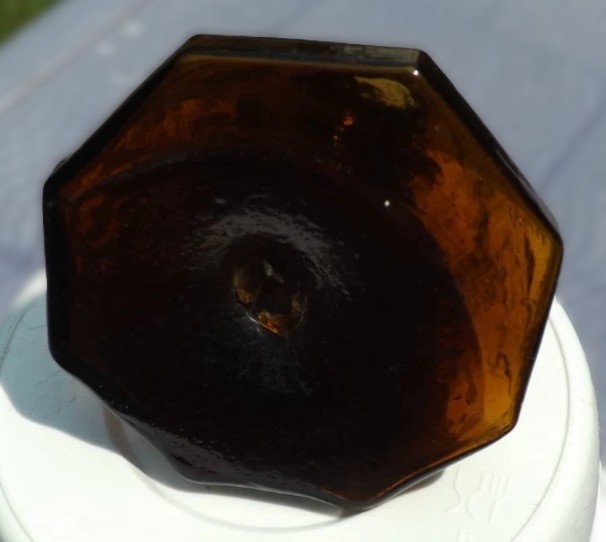
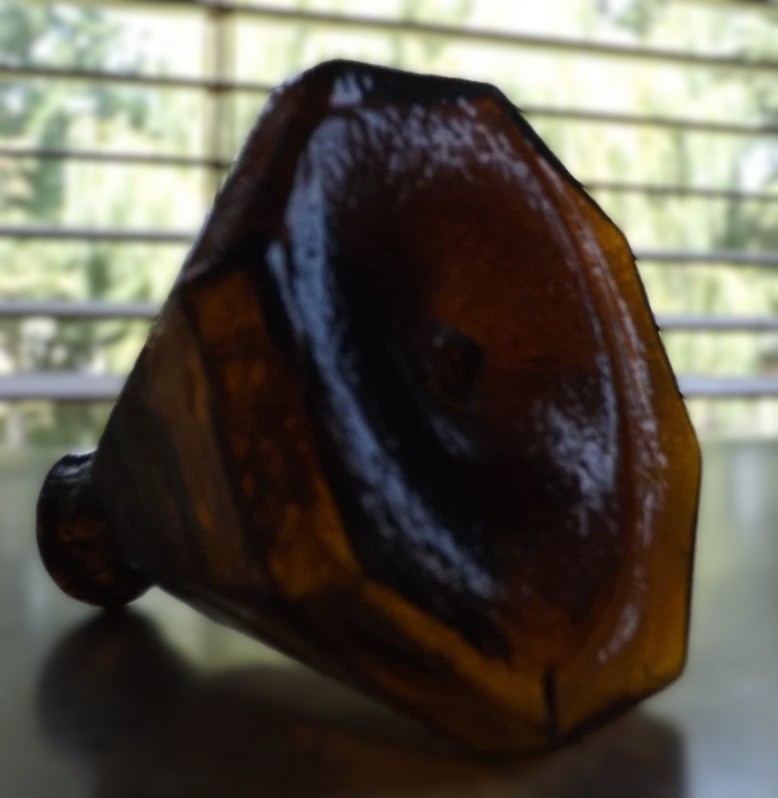
This is a classic umbrella-style ink bottle rendered in a rich amber (or honey-brown) hue. It features a hexagonal body with sloping, tapered panels that flare outwards to a flat base, a short cylindrical neck, and a crudely finished, hand-formed mouth. The base displays a clear, indented pontil mark (or blowpipe scar/rough pontil scar), which is characteristic of early blown-glass production.
Where was this made?
Umbrella ink bottles of this style and period were produced extensively by glassworks in the United States (such as factories in New England, New York, New Jersey, and the Midwest). Because unmarked utilitarian ink bottles rarely bore maker’s stamps or embossed factory names, pinning down an exact single plant is difficult without distinct cullet characteristics or provenance. However, they were ubiquitous commercial desk accessories produced by regional glass-houses supplying local stationery and mercantile markets.
How was this made?
This bottle was free-blown into a mold (specifically a dip mold or open-face multi-part mold) and finished by hand:
- Molding & Blowing: A glassblower gathered molten amber glass on a blowpipe, inserted it into a multi-part or sectional mold to form the distinct hexagonal shape and sloping umbrella silhouette, and blew it to expand the glass against the mold interior.
- Pontil Work: To finish the neck and mouth, the hot bottle was transferred from the blowpipe to a solid iron rod called a pontil or punty, which was attached with a dab of hot glass to the base. This left behind the rough, indented scar visible on the bottom when the pontil was snapped off.
- Hand Tooling / Crudeness: The uneven, asymmetrical rim and neck were shaped manually using shears and hand tools while still hot, accounting for the rustic, “crude” mouth profile.
How old is it?
This piece dates to the mid-19th century, typically spanning the 1840s to 1860s (the pre-automatic-machine era, prior to the widespread adoption of snap cases and fully automated bottle-making machines in the late 19th century). The combination of the heavy, crude lip finish, rich amber glass full of character, and the distinct pontil mark on the base firmly places it in the classic antique ink bottle era.
Sold for $549 in August 2026
Content disclaimer. The information posted is the owner’s best knowledge and may not have been vetted by the SOIC. We welcome comments, corrections, and additions, working to make our website information comprehensive and accurate.
Join the Society of Inkwell Collectors (SOIC) – it’s free!
Founded in 1981 as a non-profit organization,
we are documenting inkwells (and accessories).
We’re here to help and inform!