




Polar Bear on Ice
| Categories | Figural - Animals & Living Creatures |
| Type | Bear |
| Material | Silverplate |
| Markings | See Narrative |
| Manufacturer | Edward Ansell |
| Origin | Australia |
| Date or Era | circa 1920 |
| Measuring | 14” x 8” x 7” high |
Description
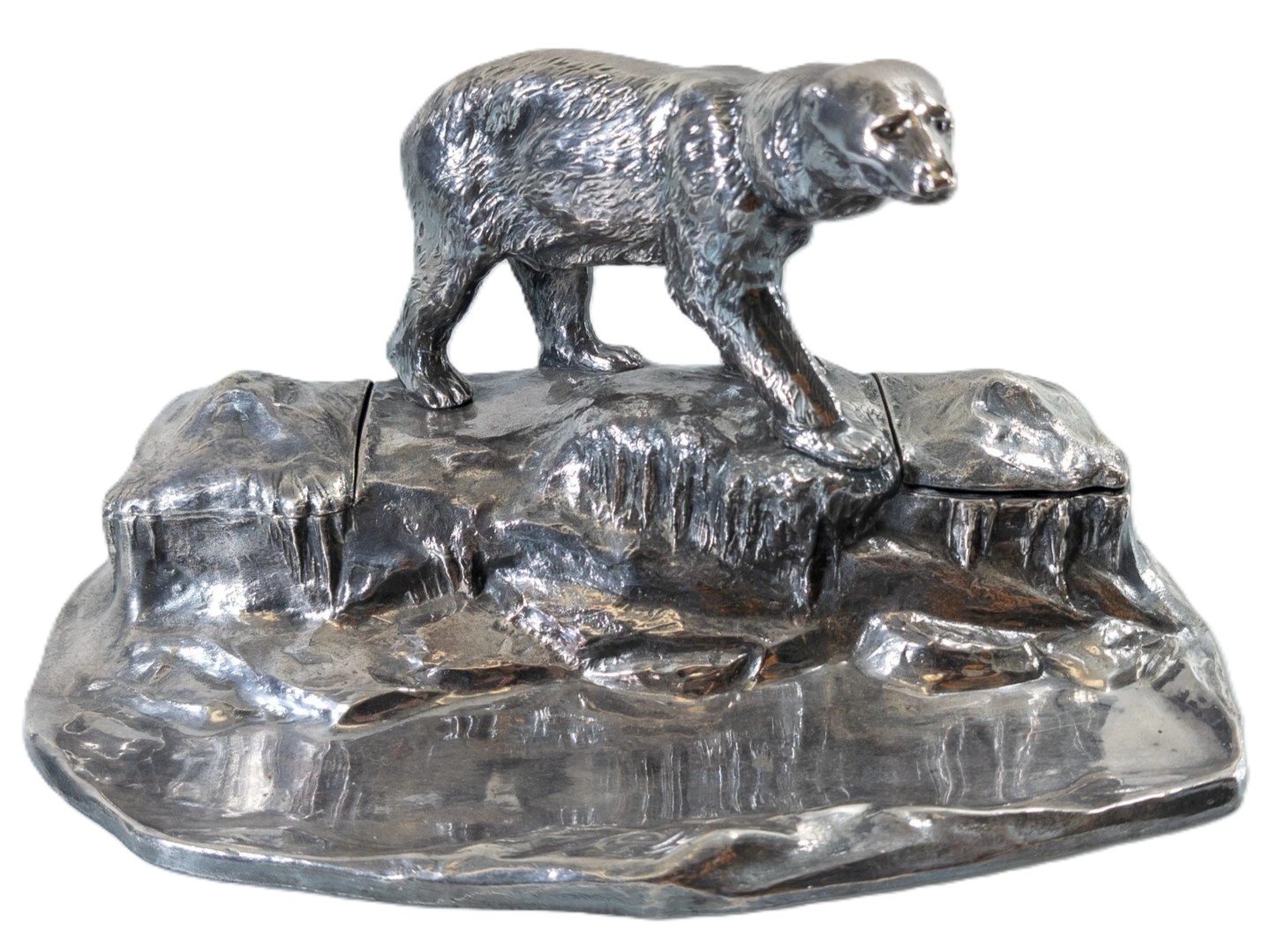
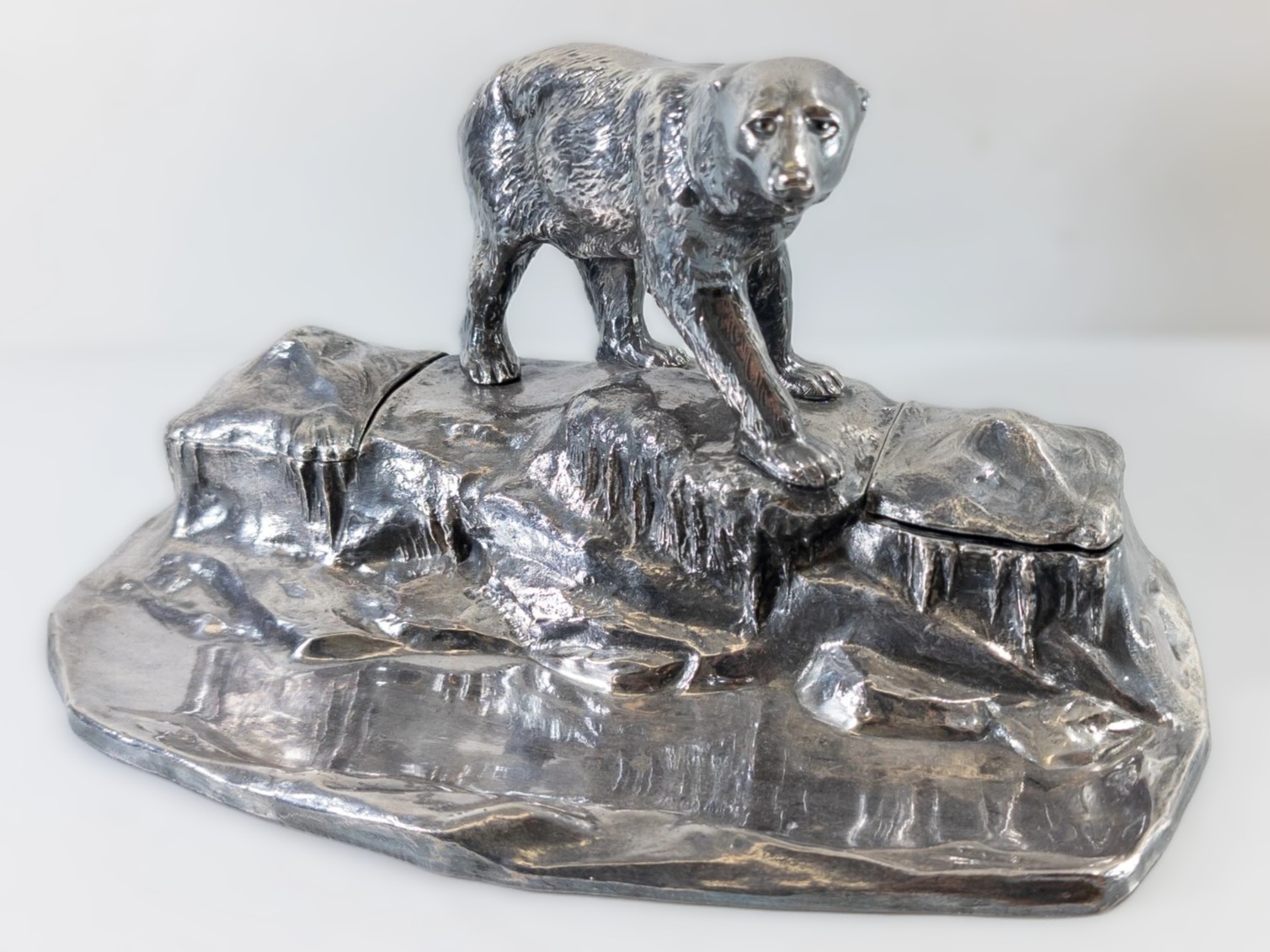
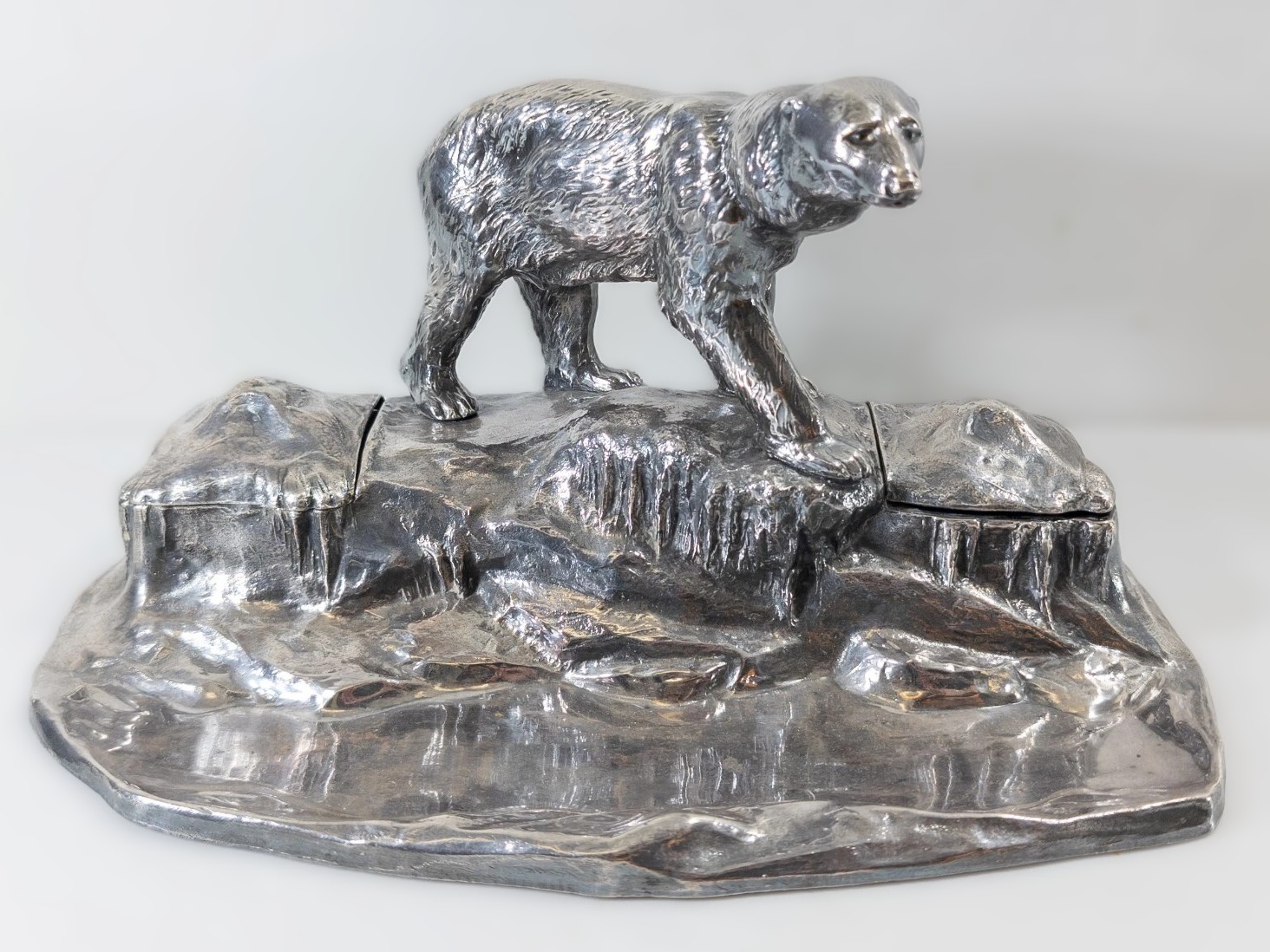
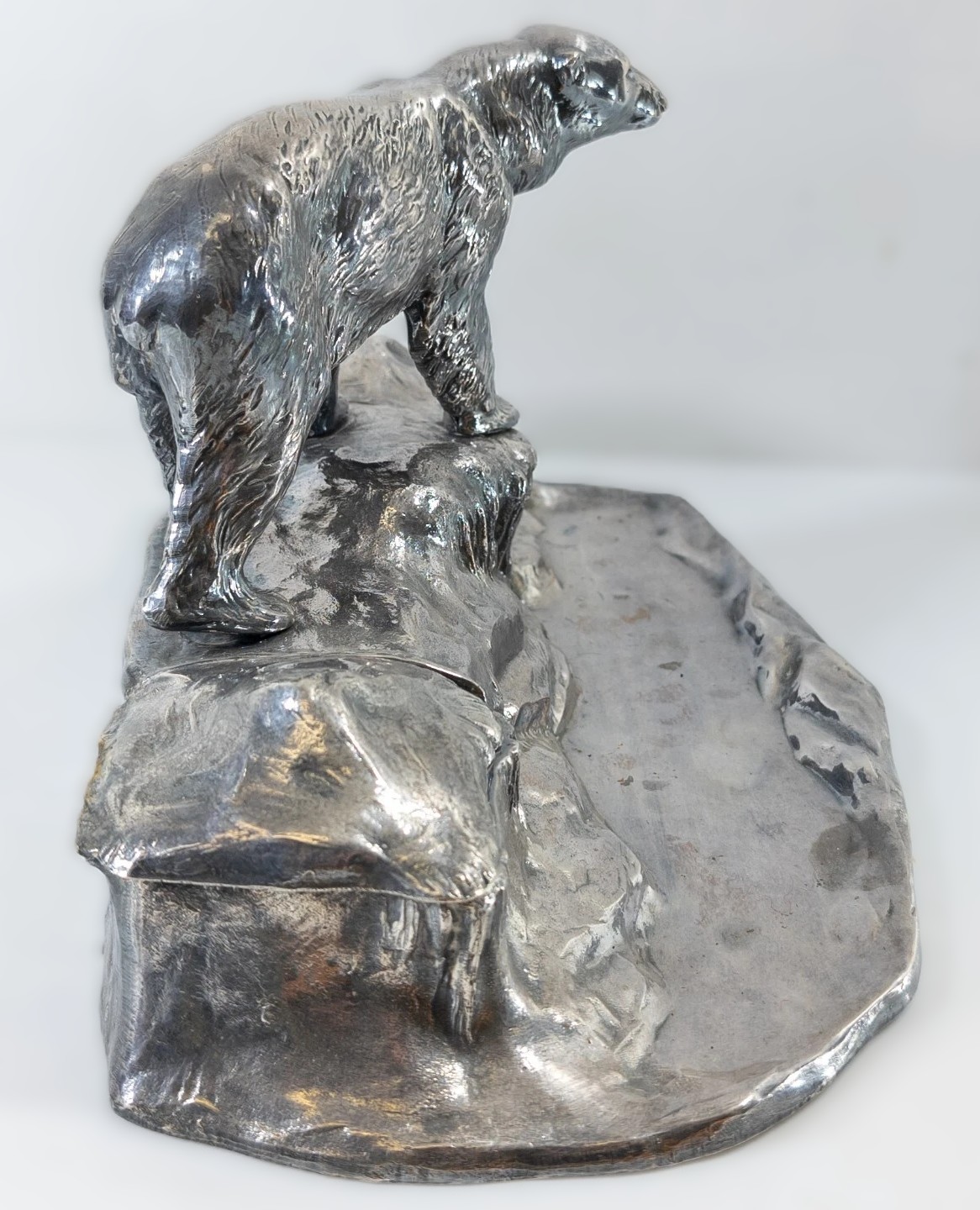
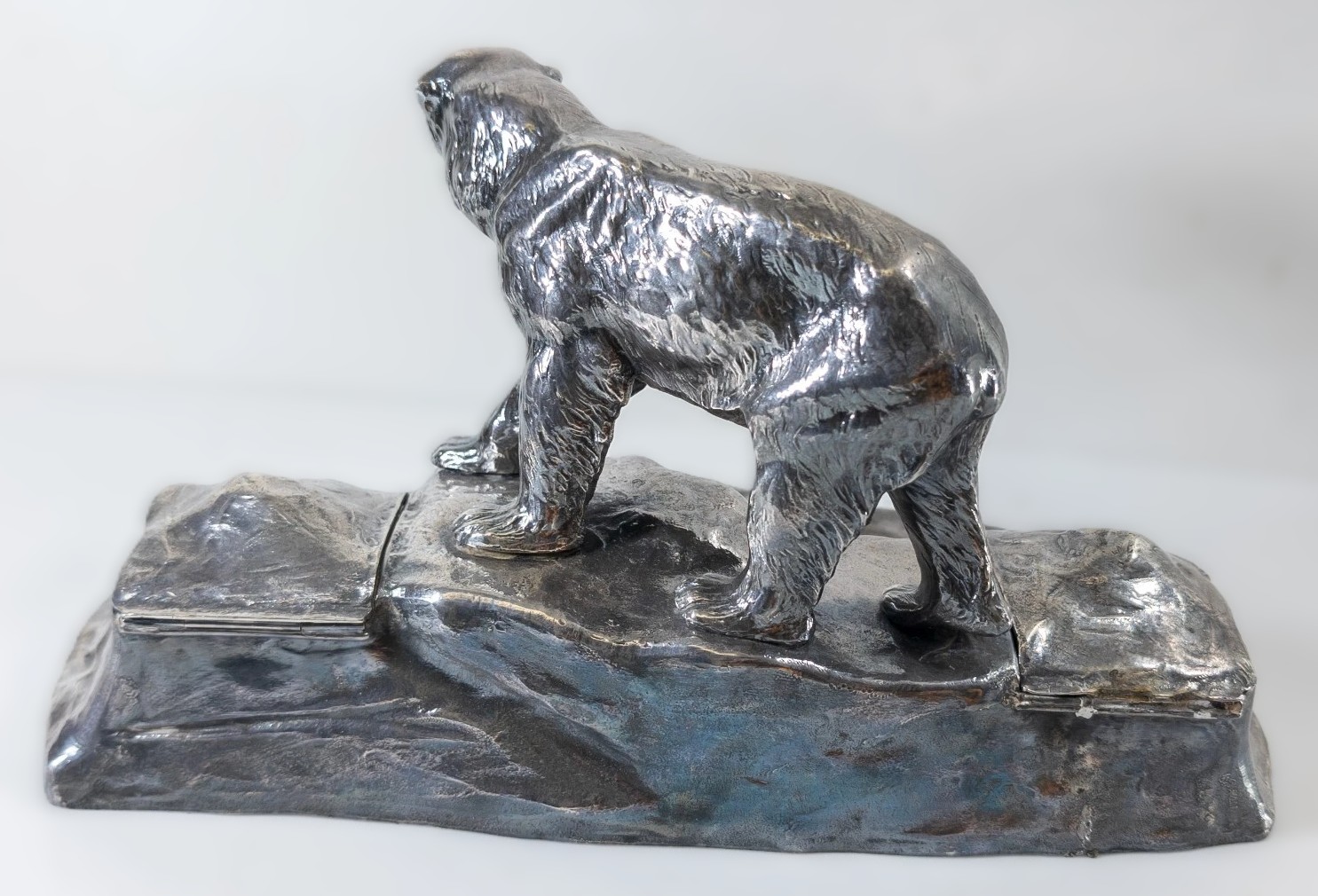
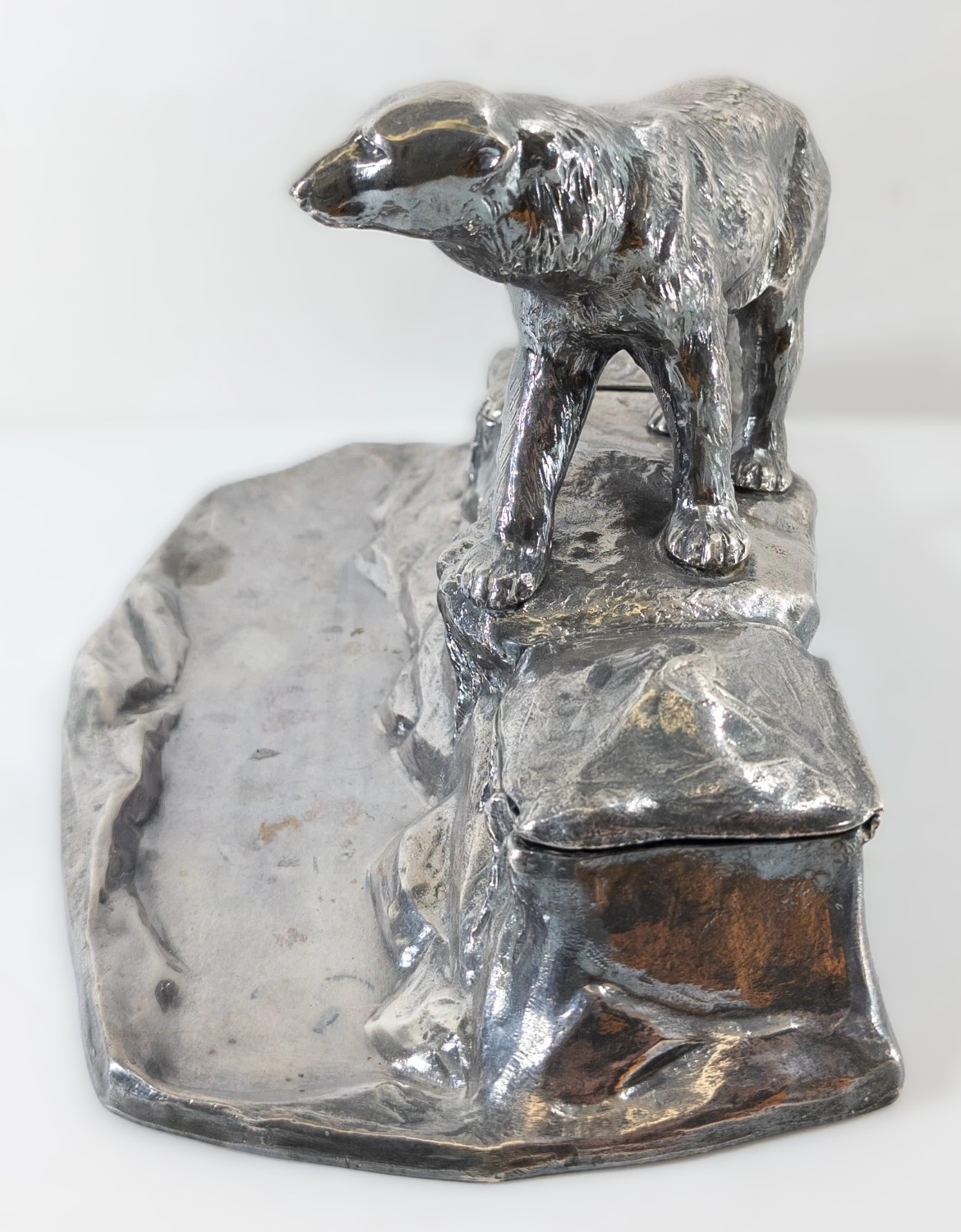
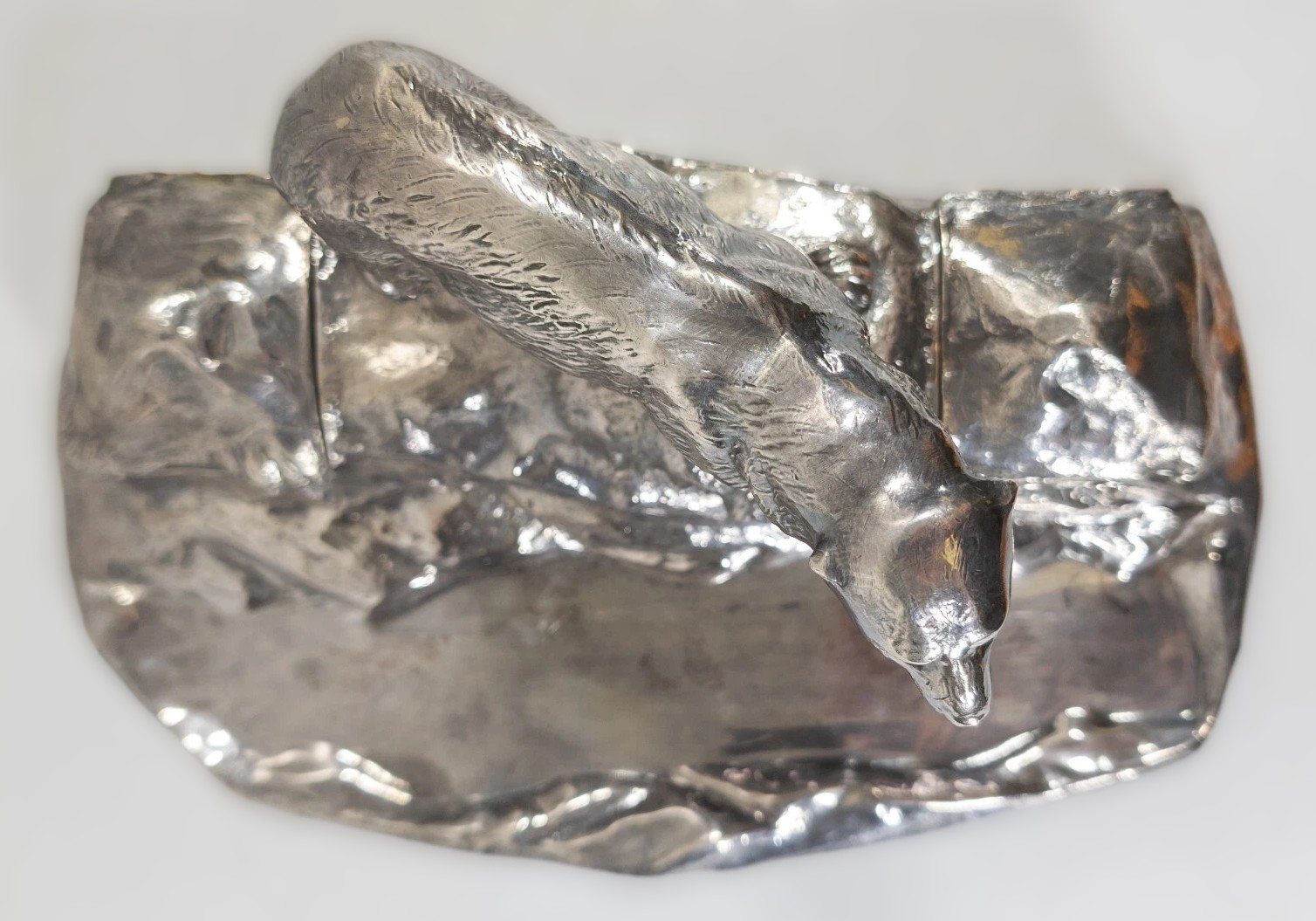
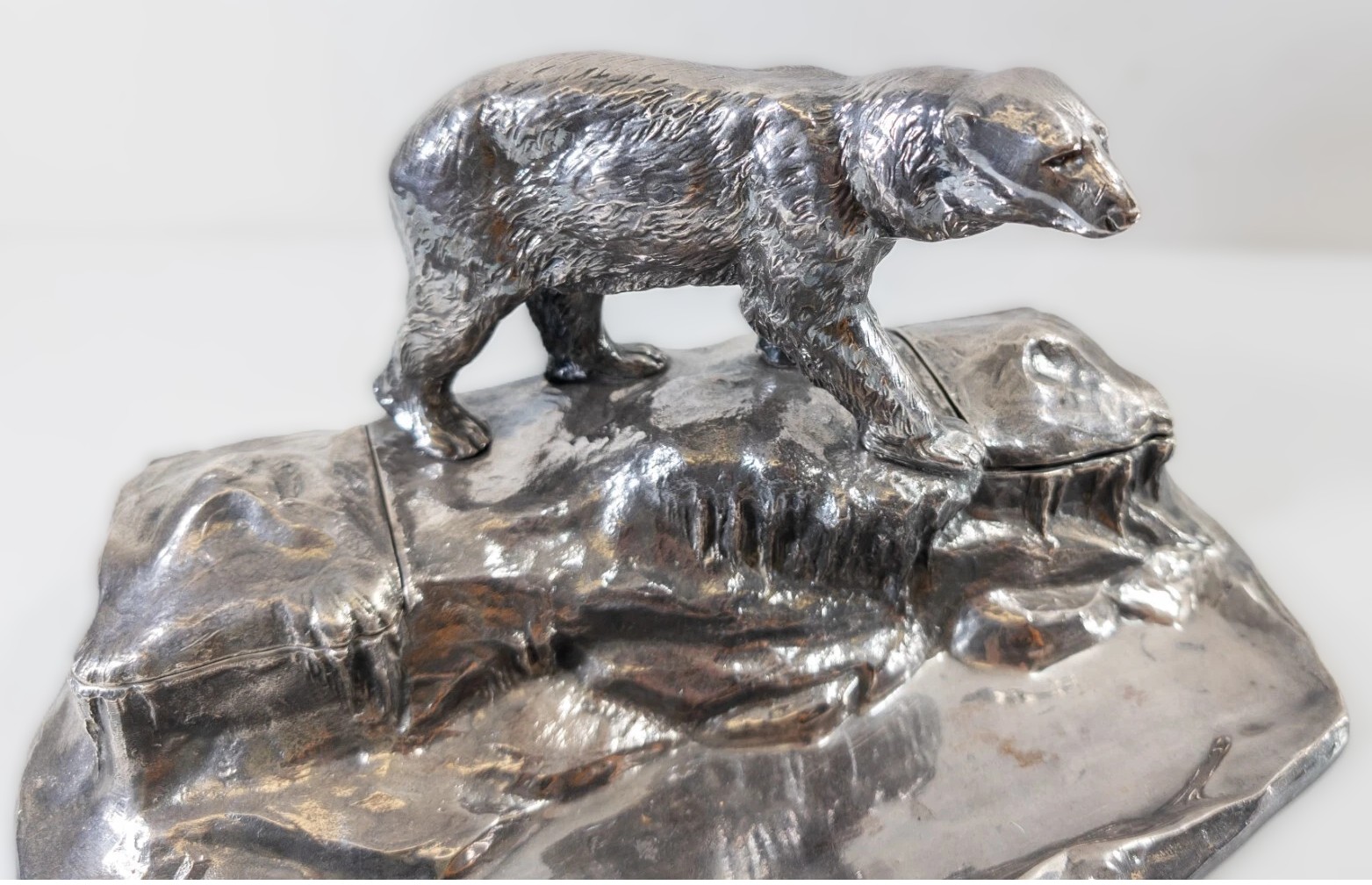
This Arctic-themed inkstand features a naturalistically cast polar bear standing atop a rocky outcrop designed to resemble a jagged ice floe.
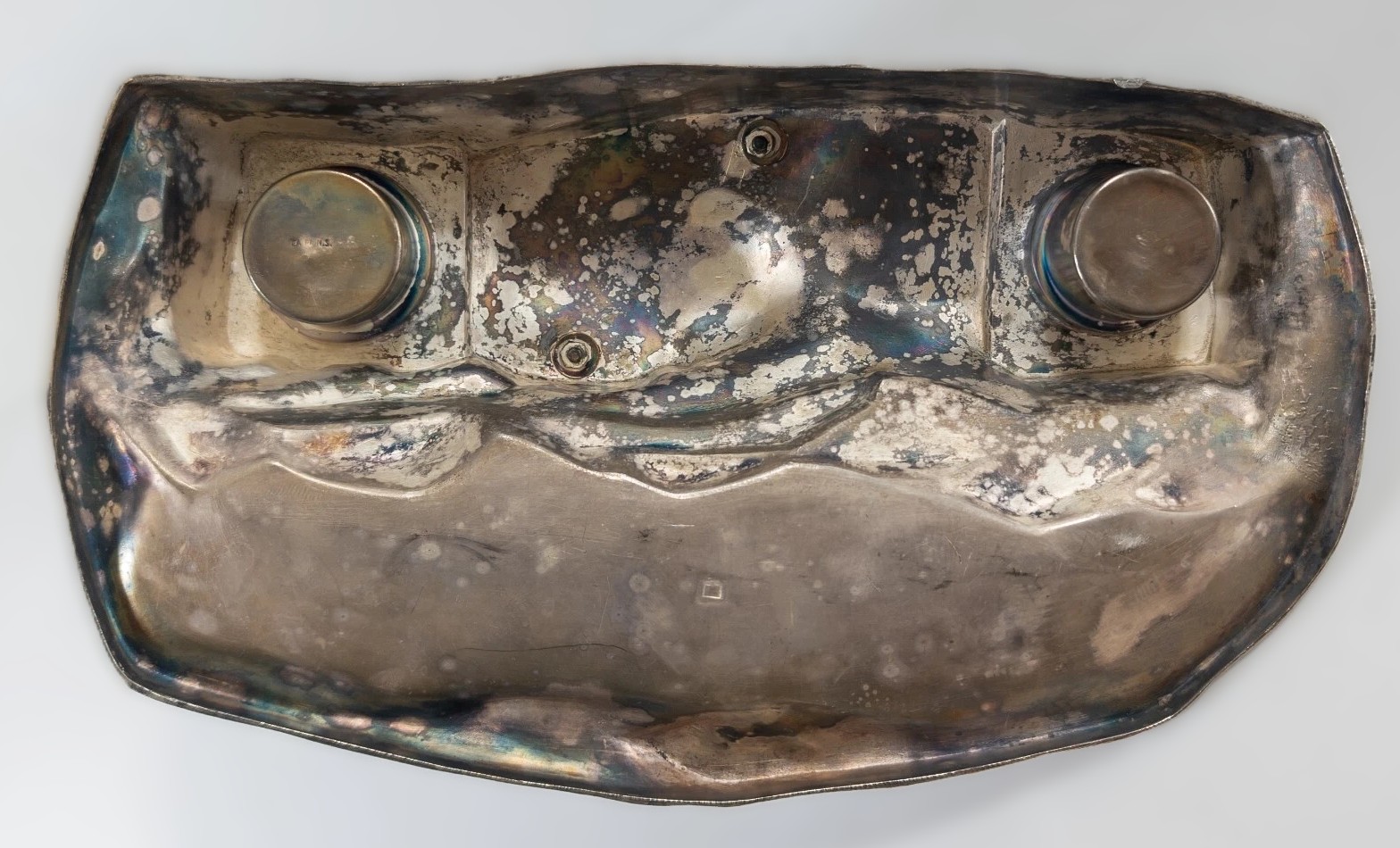
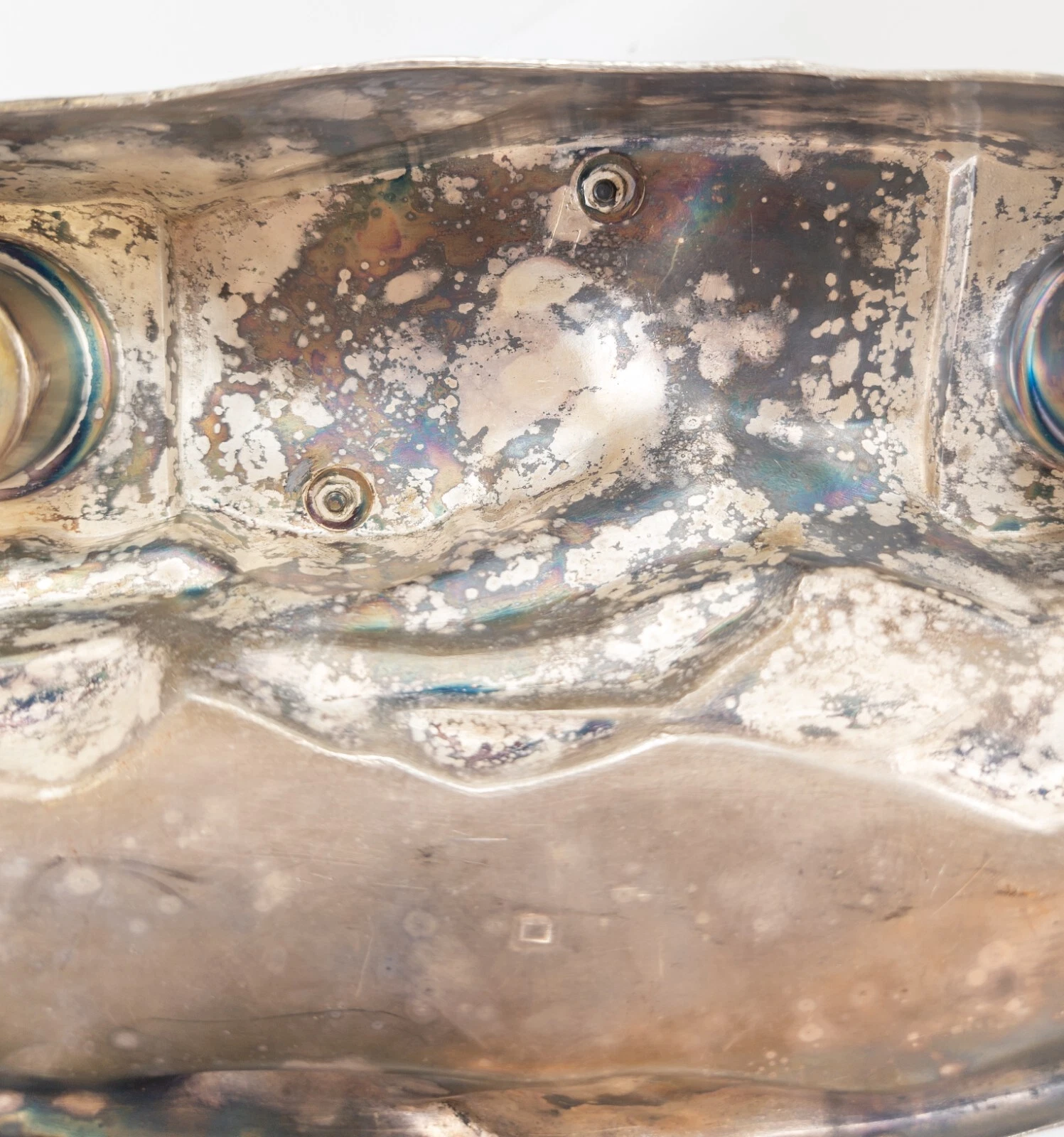
- Inkwells: The stand incorporates two lidded inkwells seamlessly integrated into the “snowy” mounds of the base. When the lids (the icy peaks) are lifted, they reveal the ink pots inside.
- Base: The forward section of the base is recessed and smoothed out, functioning as a pen tray (to hold a dip pen).
- Design Influence: The naturalistic yet stylized modeling of the bear is characteristic of the Art Deco period, which often used “exotic” animal motifs.
The Markings:
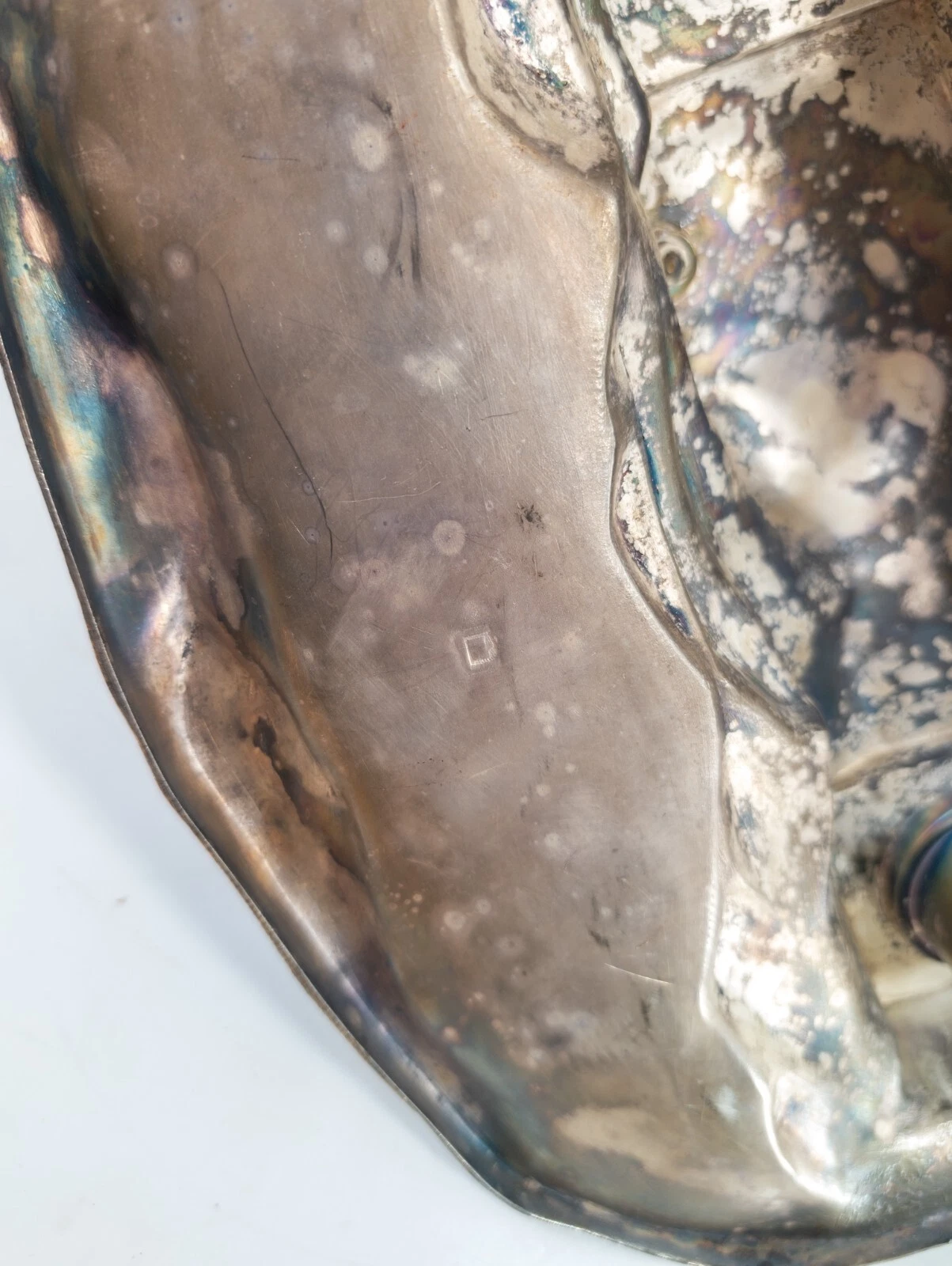
The marking on the underside is a standard way of identifying the manufacturer and the metal composition. It reads either: E.A. P.A. N.S. or E.A.P.A.N.S.:
- EA: This represents the maker’s initials. Given that this specific model appears frequently in Australian antique price guides (like Carter’s), it is highly likely the work of Edward Ansell (or his firm Edward Ansell & Sons). Ansell was a prominent manufacturing silversmith based in Sydney, Australia, active during the late 19th and early 20th centuries.
- P.A.N.S. (or PL N.S.): This identifies the material.
- N.S. (Nickel Silver): The base metal is an alloy of copper, nickel, and zinc (often called “German Silver” or “Nickel Silver”).
- P.A. (Plate Australian): In the Australian market, manufacturers often used “APNS” or similar abbreviations to denote Australian Plate Nickel Silver or Electro-Albata Plate.
- E.A.P.: Alternatively, this can stand for Electro-Albata Plate, a higher-quality type of silver plating.
Origin and Age
- Where was it made? Almost certainly in Australia (specifically Sydney), though some similar designs were retailed in the U.S. and U.K.
- Who made it? Likely Edward Ansell (as noted by the “EA” mark found on Australian novelty silverplate).
- How old is it? It dates to the Art Deco period, likely between 1920 and 1935. While Arctic themes were popular in the late Victorian era (following polar expeditions), the streamlined, blocky modeling of the ice and the specific manufacturing marks point to the early 20th century.
Summary Table
| Feature | Detail |
| Object Type | Novelty Desk Stand / Standish |
| Theme | Arctic / Polar Bear on Ice Floe |
| Maker | Likely Edward Ansell (Sydney, Australia) |
| Material | Silver-plated Nickel Silver (EPNS/APNS) |
| Era | Art Deco (c. 1920s–1930s) |
Sold for $350 in April 2026
Content disclaimer. The information posted is the owner’s best knowledge and may not have been vetted by the SOIC. We welcome comments, corrections, and additions, working to make our website information comprehensive and accurate.
Join the Society of Inkwell Collectors (SOIC) – it’s free!
Founded in 1981 as a non-profit organization,
we are documenting inkwells (and accessories).
We’re here to help and inform!