



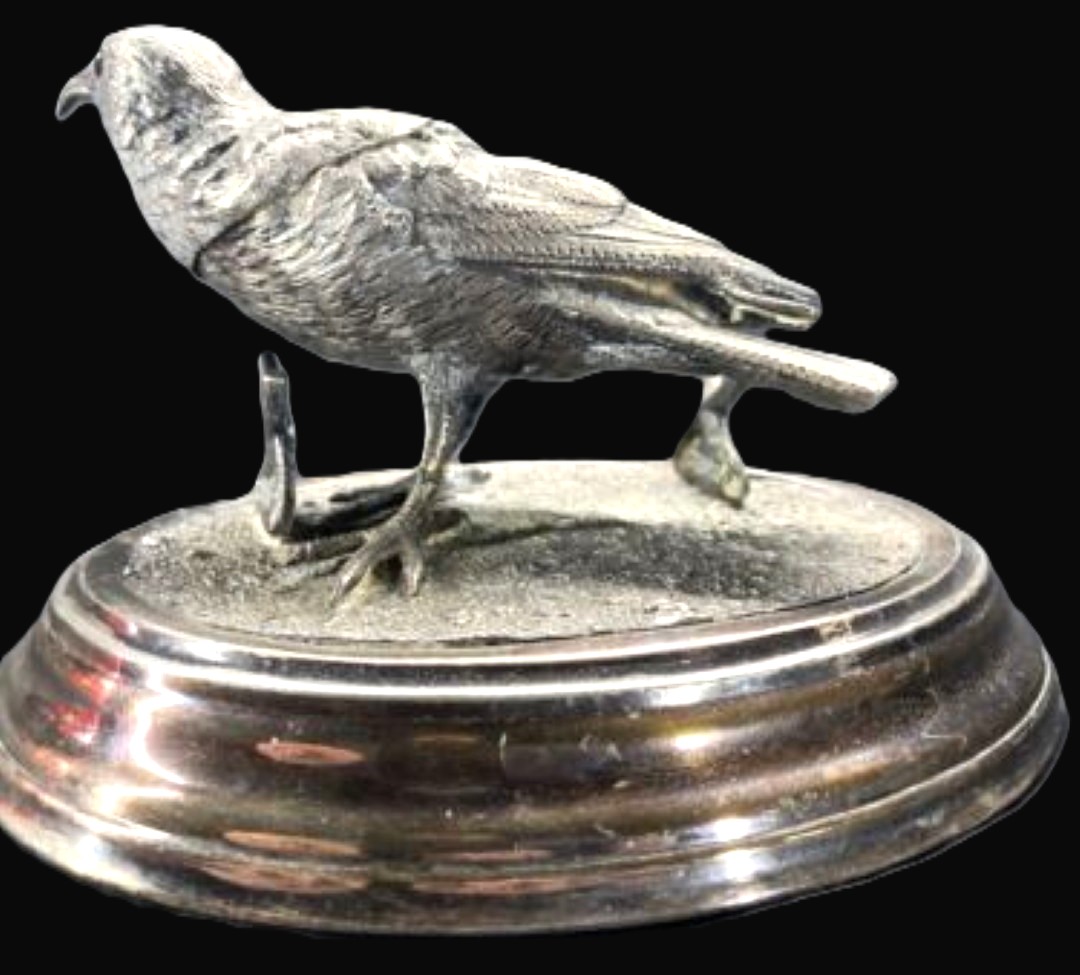



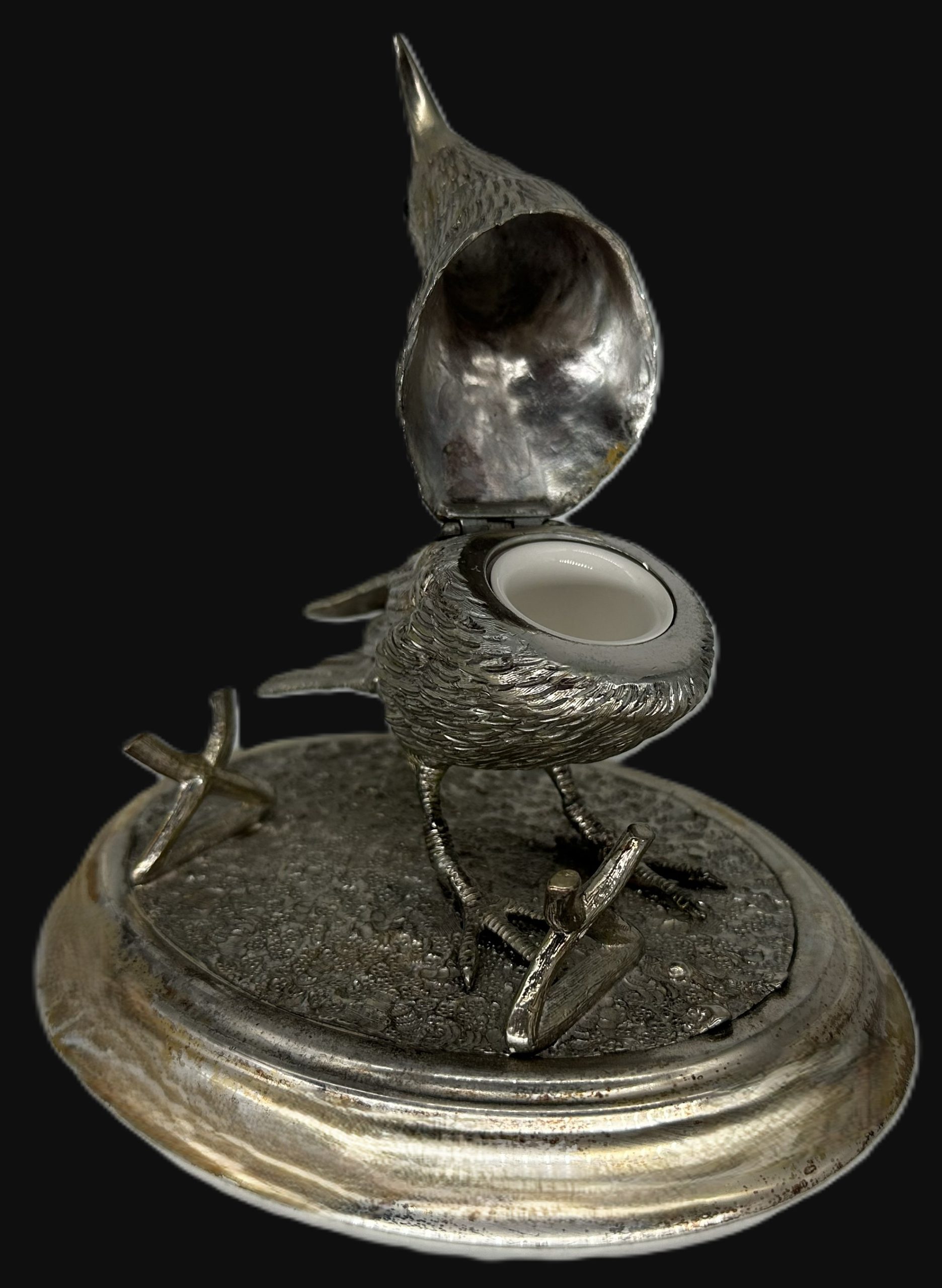


Perched Bird with Glass Eyes
| Categories | Figural - Animals & Living Creatures |
| Type | Bird |
| Material | Silverplate |
| Markings | See Narrative |
| Manufacturer | James Deakin & Sons |
| Origin | England |
| Date or Era | circa 1890 |
| Measuring | 7 ½” x 5 ½” x 6” high |
Overview
- Type: Figural Novelty Inkwell / Inkstand
- Subject: Realistic perched songbird with inset glass eyes
- Composition: Silverplated white metal (electroplate) with a removable white ceramic ink liner
- Maker: James Deakin & Sons, Sheffield, England
- Markings: Stamped on the underside: JAMES DEAKIN & SONS / SHEFFIELD / P7431
Detailed Description
Figural Bird & Casting
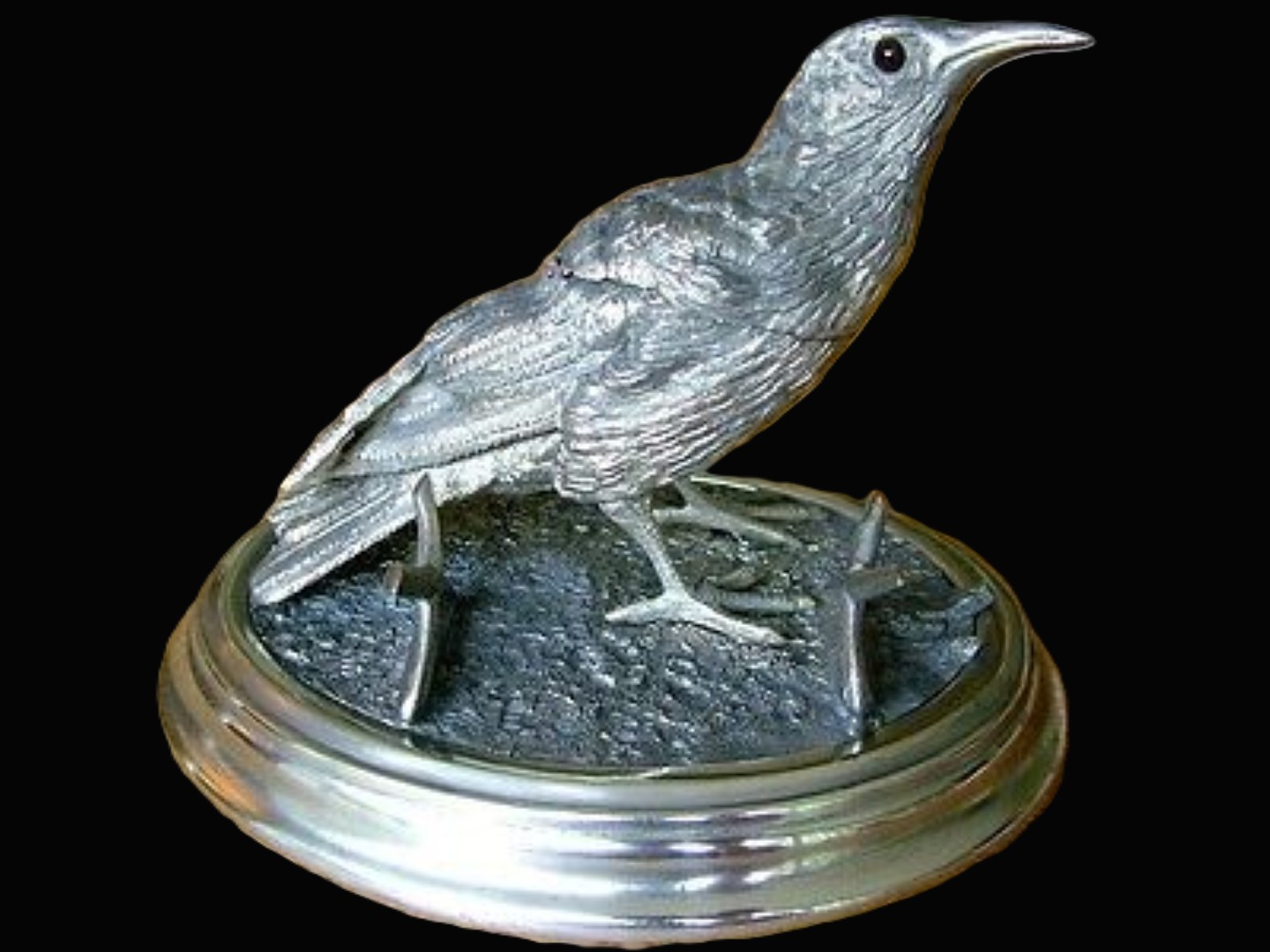
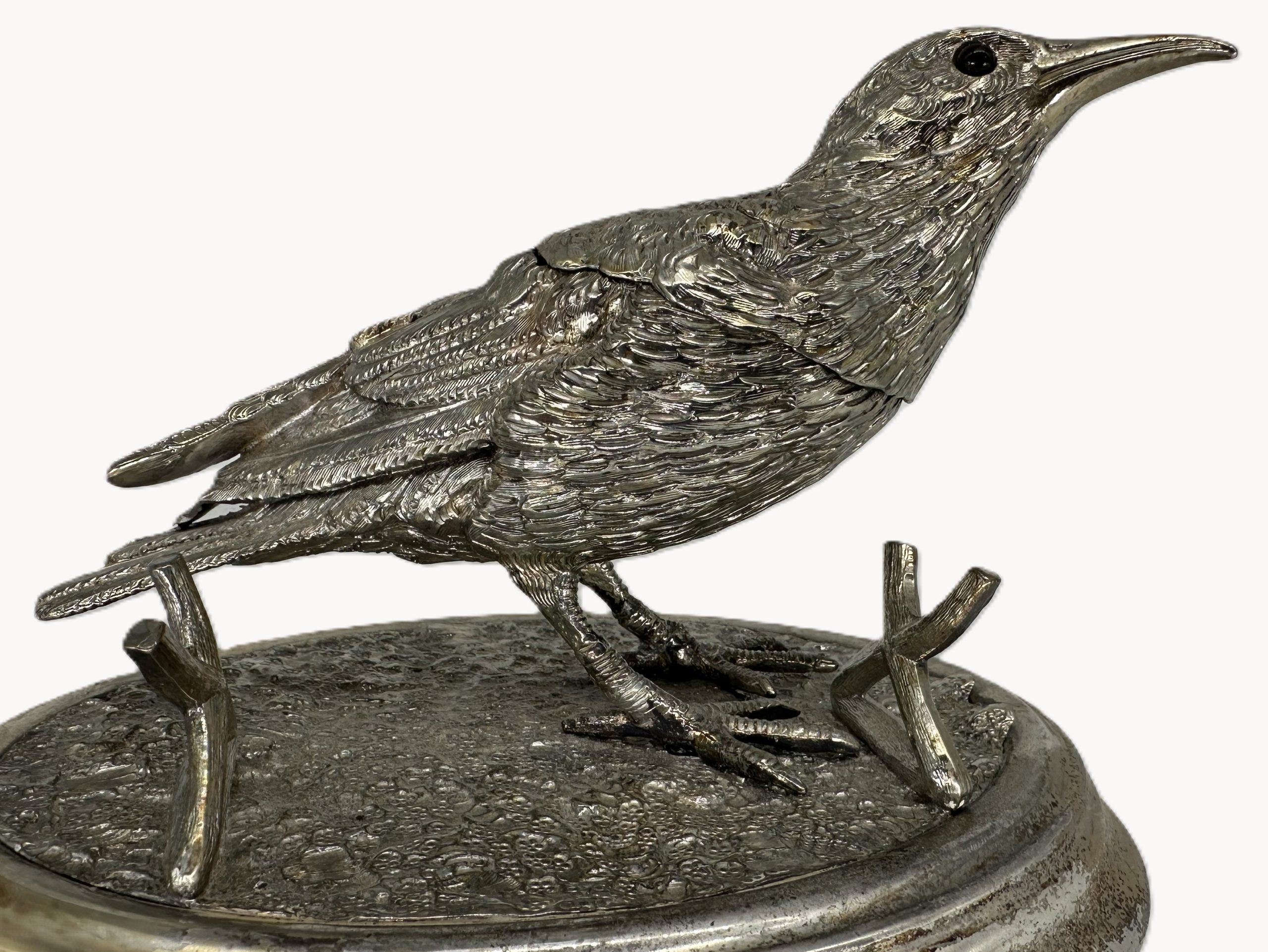
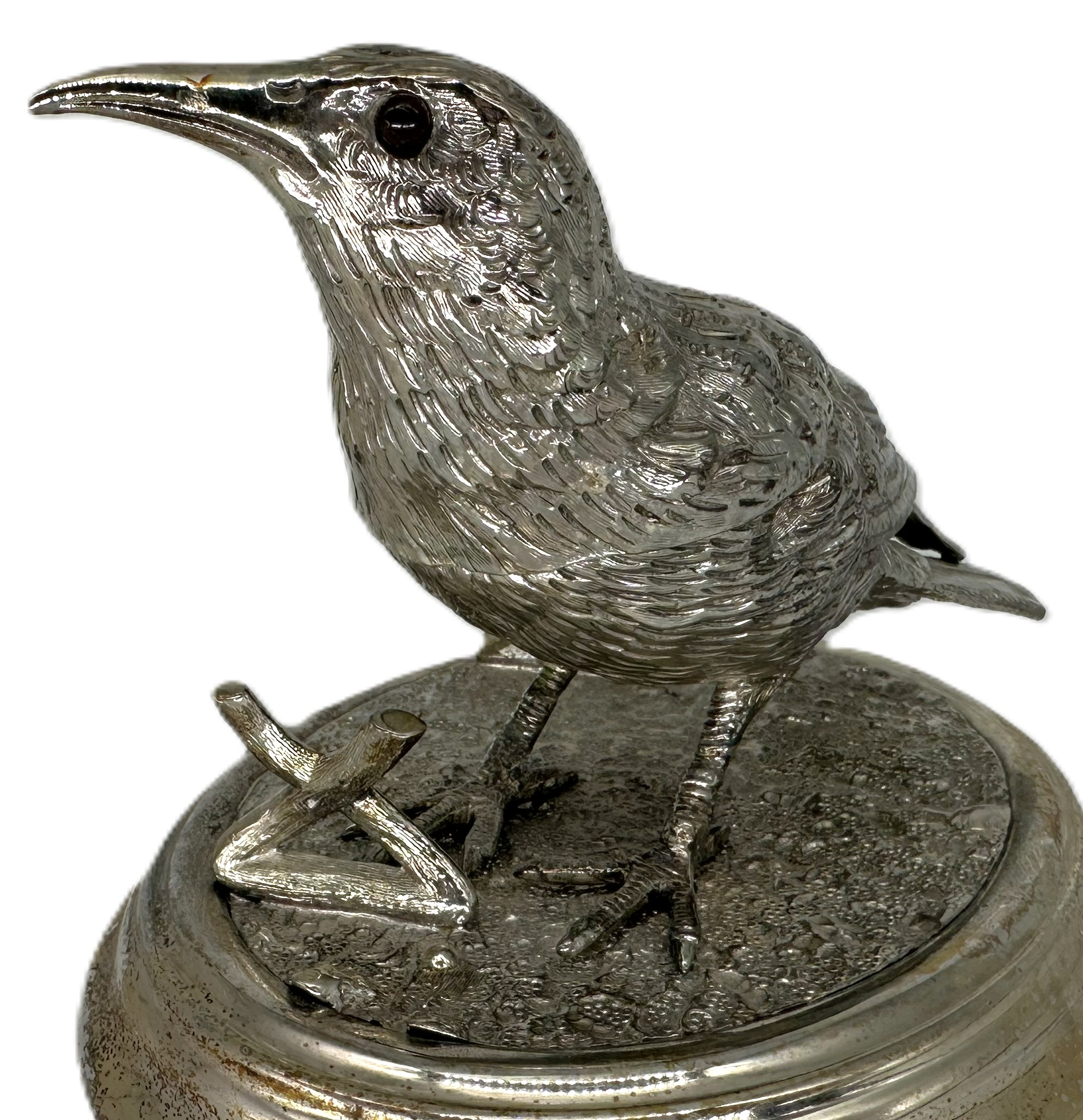
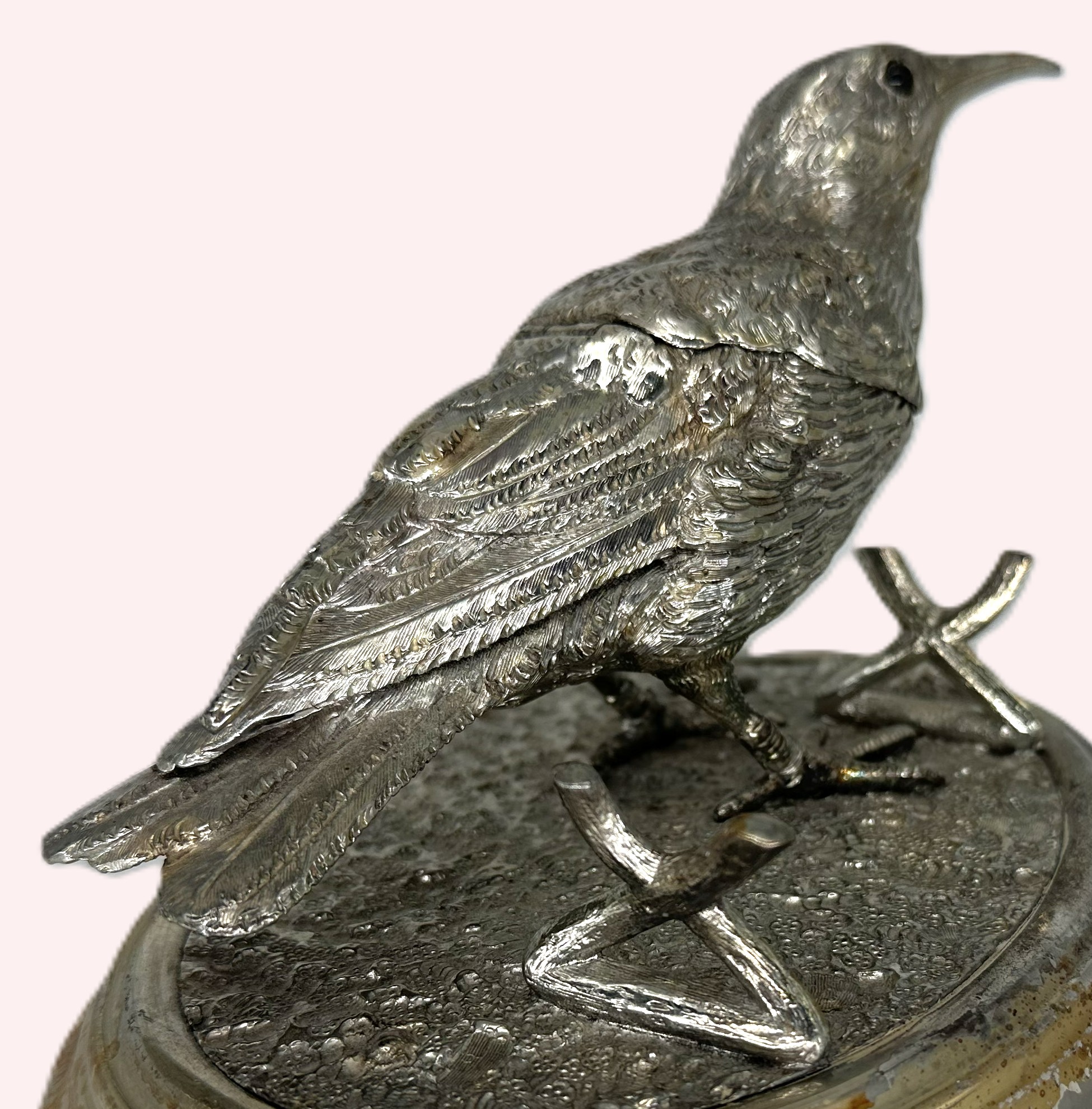
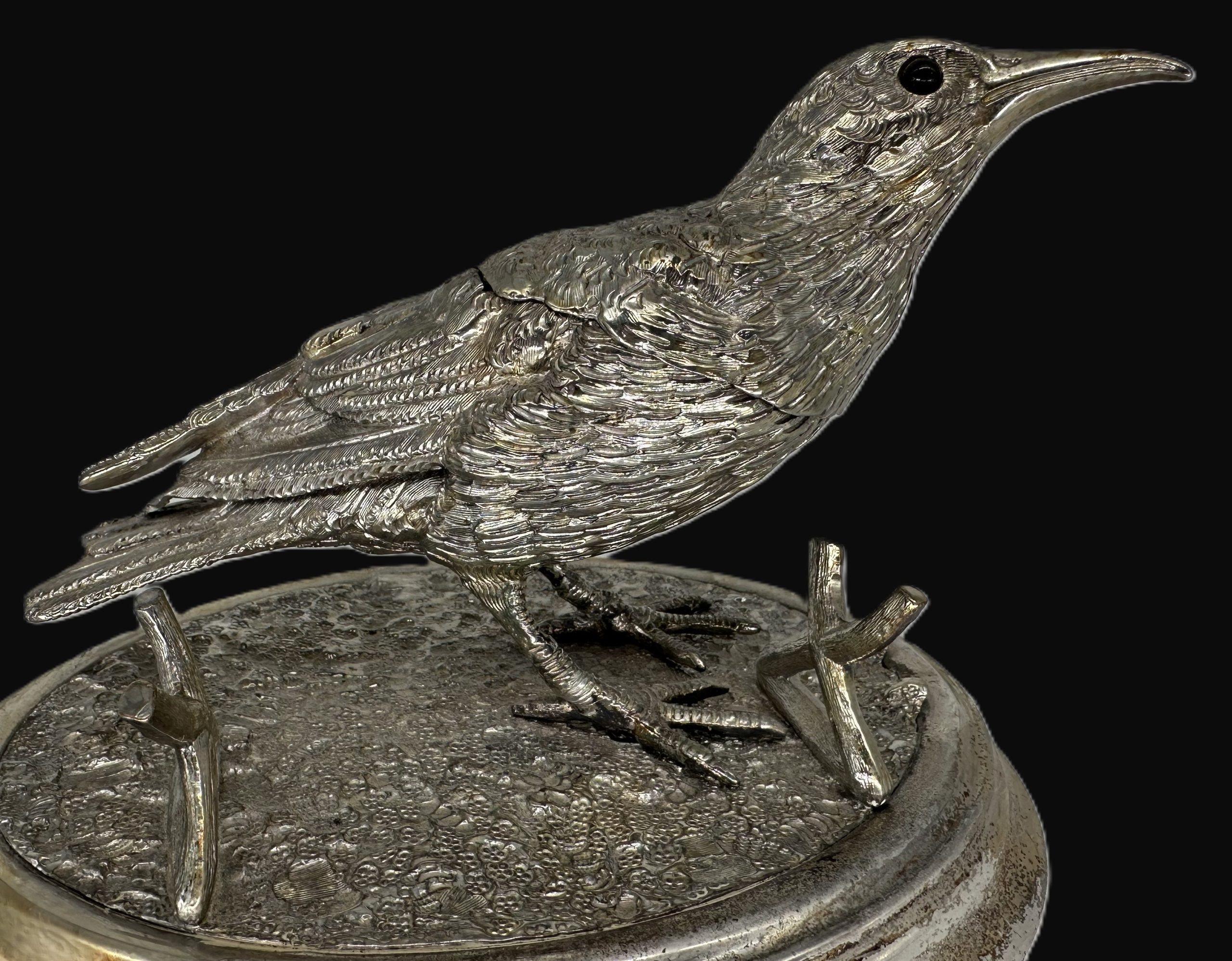
The centerpiece of this inkstand is a finely cast bird exhibiting an exceptionally alert and lifelike posture. The craftsmanship highlights the characteristic high standard of Sheffield metalwork from the period:
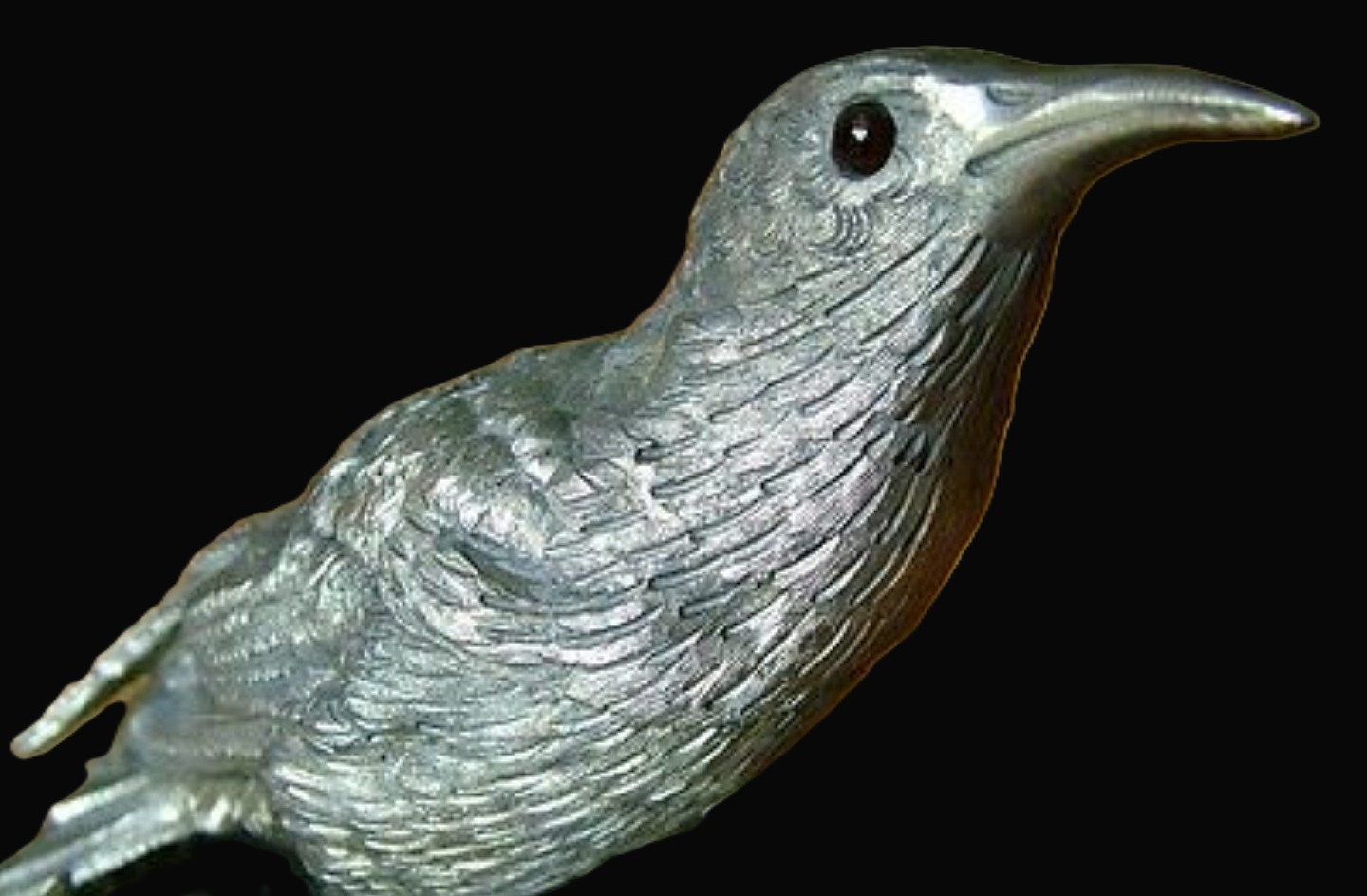
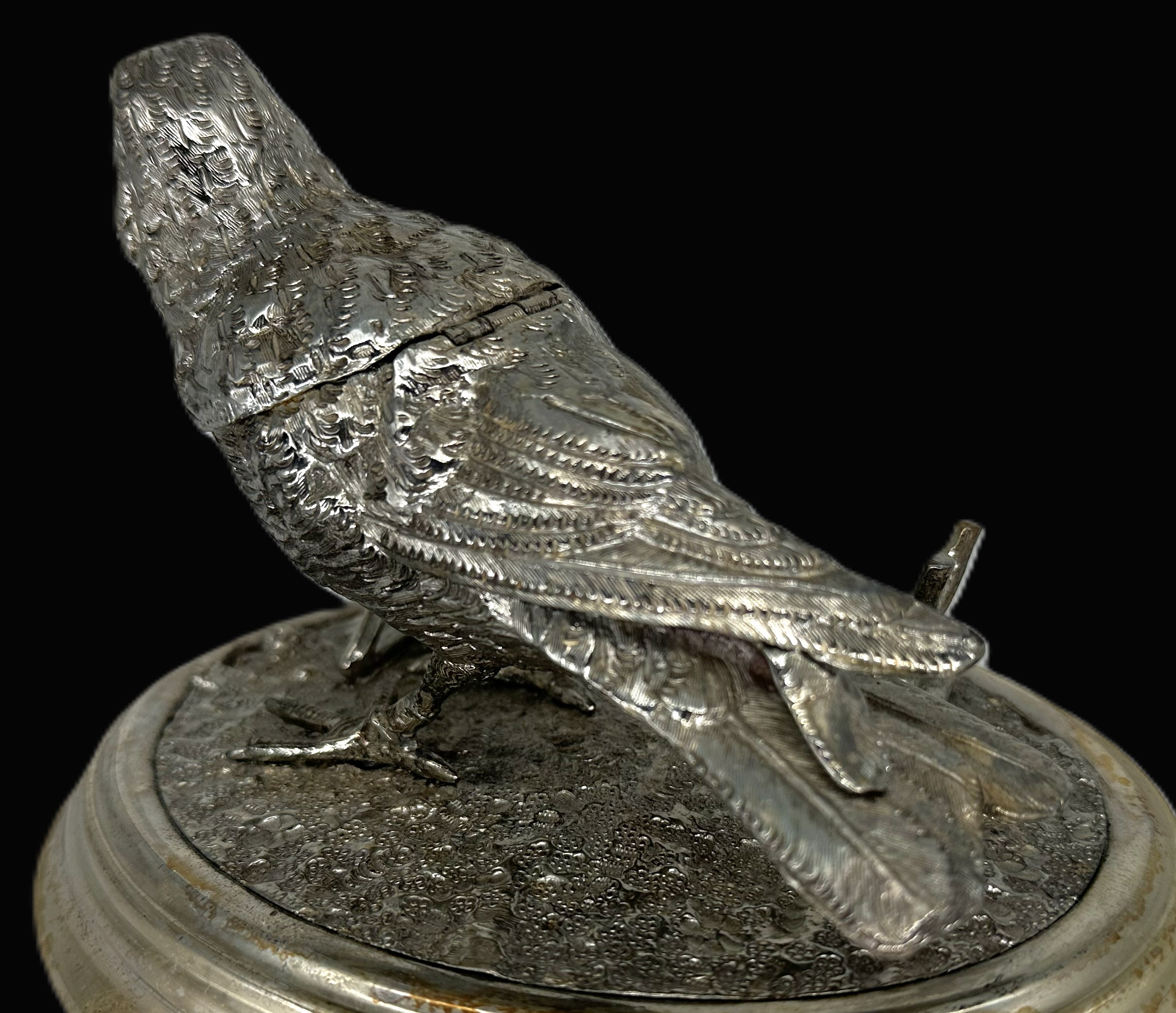
- Plumage: The chasing across the bird’s body is remarkably detailed. Each feather is individually textured, giving a layered, realistic depth to the wings, back, and breast.
- Features: The bird is styled with a slender, slightly down-curved beak and features inset dark glass eyes that catch the light, lending a brilliant, animated expression to the figure.
- Mechanism: The head is hinged seamlessly at the back of the neck. When flipped open, it reveals a flush-fitting, clean, removable white ceramic well liner designed to hold the ink.
Base & Pen Holder
The bird is mounted on a tiered, oval electroplated base that incorporates naturalistic Victorian design elements:
- Textured Ground: The surface directly beneath the bird’s claws is heavily chased and stippled to replicate an earthy, moss-covered, or rocky terrain.
- Twig Pen Rests: Flanking the bird are two rustic, cast “X”-shaped mounts textured to look like tree branches. These serve as a functional horizontal cradle to hold a dip pen.
- Underside Construction: The view of the base underside shows authentic Victorian manufacturing methods. The individual components—the bird, the textured ground plate, and the twig mounts—are securely attached to the hollow-domed base using original threaded rods and square nuts.
Dating & Manufacturer Provenance
We can date this piece with exceptional precision by examining the historical timeline of the maker’s stamp:
- The Partnership (1886): The firm was originally founded in Sheffield by James Deakin in 1866. However, it only adopted the specific name James Deakin & Sons in 1886 when his sons, John and Albert, officially joined the partnership.
- Incorporation (1897): In 1897, the business was converted into a limited liability company. From that point forward, their stamp was altered to include “Ltd” (James Deakin & Sons Ltd).
- Conclusion: Because this piece bears the mark JAMES DEAKIN & SONS without the “Ltd” designation, it can be confidently dated to a narrow eleven-year window in the late Victorian era: 1886 to 1897.
- Pattern Number: The identifier P7431 represents the specific design/pattern number from Deakin’s late 19th-century product catalog for their silverplated hollowware and desk novelty lines.
Sold for $920 in March 2025
Content disclaimer. The information posted is the owner’s best knowledge and may not have been vetted by the SOIC. We welcome comments, corrections, and additions, working to make our website information comprehensive and accurate.
Join the Society of Inkwell Collectors (SOIC) – it’s free!
Founded in 1981 as a non-profit organization,
we are documenting inkwells (and accessories).
We’re here to help and inform!