

Inkipedia
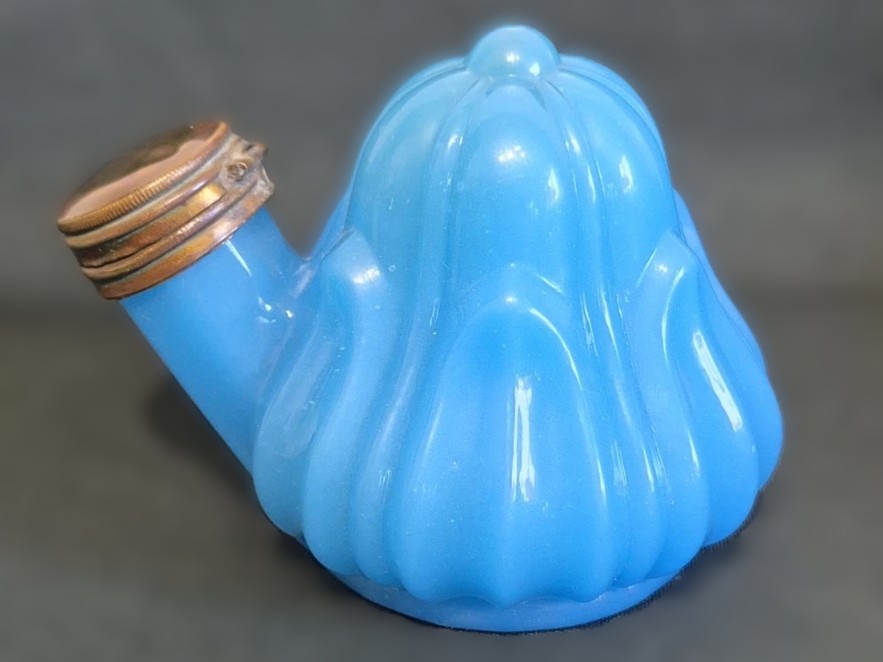
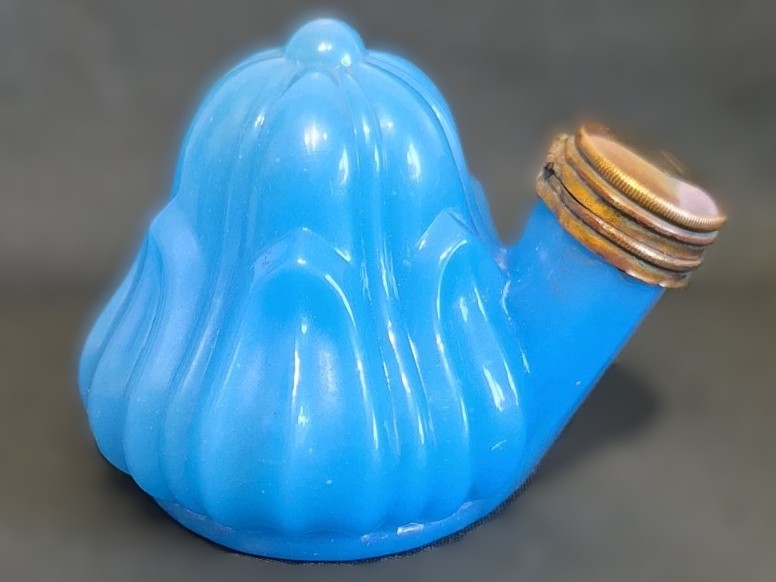


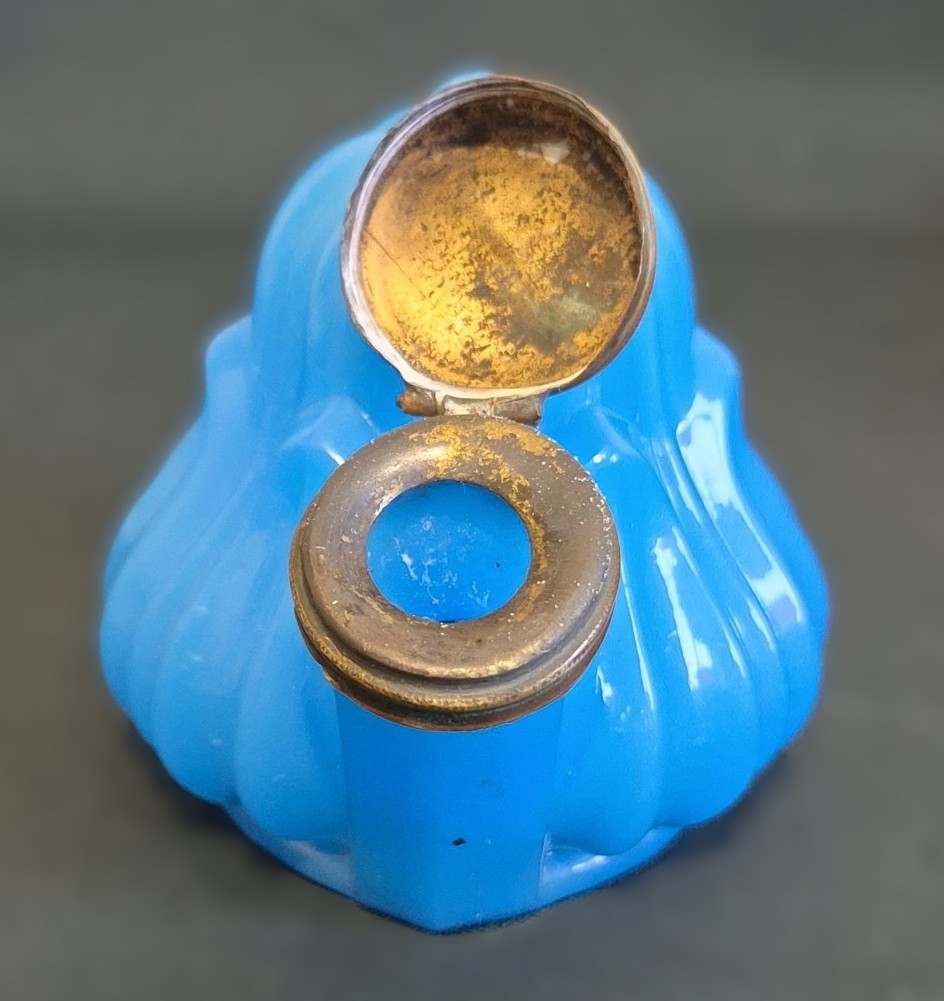

Opaline Blue Glass “Teakettle” Inkwell
| Categories | Ink Bottle, Mechanical - Pump / Siphon |
| Type | Tea Kettle |
| Material | Glass |
| Markings | Unmarked |
| Manufacturer | Undetermined |
| Origin | France |
| Date or Era | circa 1870 |
| Measuring | 3 ¾” across; 3” high |
Overview & Composition
- Type: “Teakettle” style utilitarian desk inkwell.
- Material: Vibrant opaline / opaque blue glass, often referred to in historical contexts as bleu céleste (heavenly blue) or turquoise opaline.
- Origin: Highly indicative of 19th-century French production (likely mid-to-late 19th century, circa 1860–1880), from renowned glassworks such as Baccarat, Saint-Louis, or Bercy, which produced luxury and utilitarian pressed opaline wares in this precise color palette.
Design & Mold Characteristics
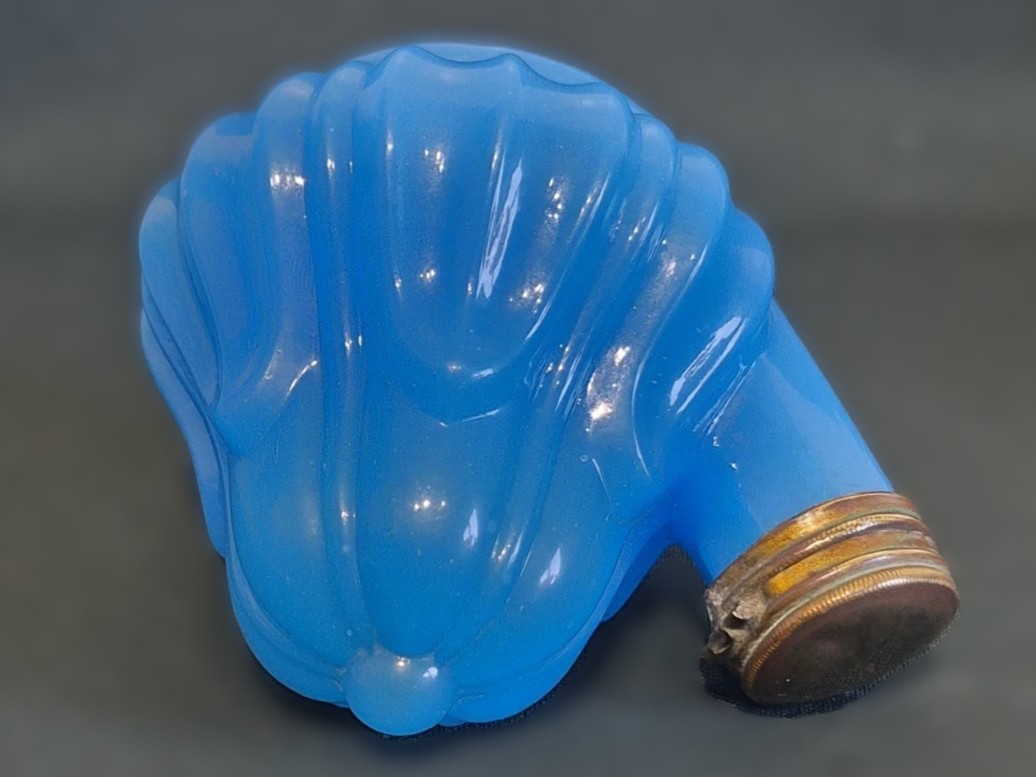
- Shape & Pattern: While reminiscent of a “Lotus Leaf” or stylized floral bud design, the mold features a highly structured, paneled, or lobed geometric pattern. The lower half is encircled by raised, overlapping gothic or teardrop-shaped arches/lobes that taper gracefully upward toward a ribbed, melon-form dome topped with a small, rounded finial.
- The Spout/Neck: A distinct, heavy, octagonal faceted spout projects at an upward angle from the main body.
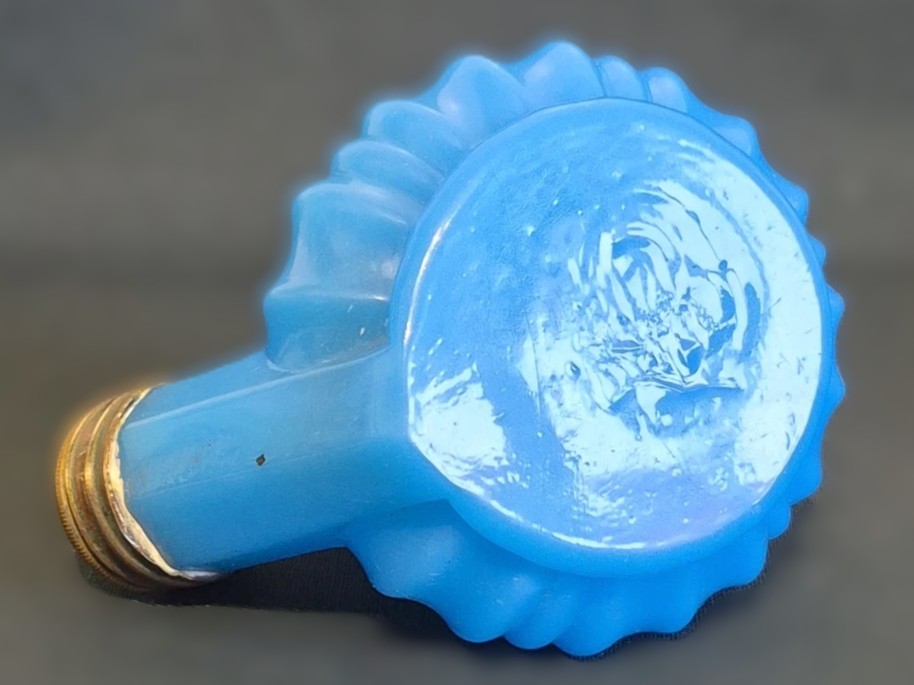
- Base: The base features a smooth, circular, slightly recessed contact ring. The texture within the ring reveals characteristic mold-marks and glass-swirl striations from the manufacturing process rather than a traditional snapped pontil, indicating a high-quality pressed or blow-molded technique.
Hardware & Condition
- Mounts: The inkwell retains its original, beautifully aged brass alloy hardware. It consists of a fitted collar/neck ring and a functional, hinged dome cap with a finely milled or knurled edge.
- Interior: When open, the hinge operates smoothly, exposing a classic wide aperture for a dip pen. The interior of the brass lid displays a natural, aged mustard-yellow and darkened patina from decades of ambient air and historical ink exposure.
- Dimensions: The inkwell stands approximately 7.5 to 8 cm (around 3 inches) in height from the base to the top finial, and spans roughly 9.5 cm (about 3.75 inches) from the back of the lobed body to the tip of the brass cap.
Refinements & Verifications
- Form Verification: In traditional American glass collecting, this category is definitively called a “Teakettle Inkwell.” The French variants elevated the form by using opaque opaline glass instead of the standard aqua, amber, or cobalt utility glass found in domestic models.
- Design Nomenclature: While “Lotus Leaf” captures the organic essence of the stylized lower lobes, auction houses and glass catalogs may also describe this rare pattern as “Gothic Arches,” “Melon-Lobed,” or “Palmette/Tulip Bud.”
- Condition Notes: The glass body shows a glassy fire-polish sheen with minimal surface wear. The brass hardware shows no major structural cracks, and the original pinning on the hinge remains stable and intact.
Sold for $140 in May 2026
Content disclaimer. The information posted is the owner’s best knowledge and may not have been vetted by the SOIC. We welcome comments, corrections, and additions, working to make our website information comprehensive and accurate.
Join the Society of Inkwell Collectors (SOIC) – it’s free!
Founded in 1981 as a non-profit organization,
we are documenting inkwells (and accessories).
We’re here to help and inform!