



Nippon – Pastoral Scene with Geese
| Categories | Far East / Oriental |
| Material | Porcelain |
| Markings | See Narrative |
| Manufacturer | Nippon |
| Origin | Japan |
| Date or Era | circa 1915 |
| Measuring | 2 ¾” x 2 ¾” x 2 ¼” high |
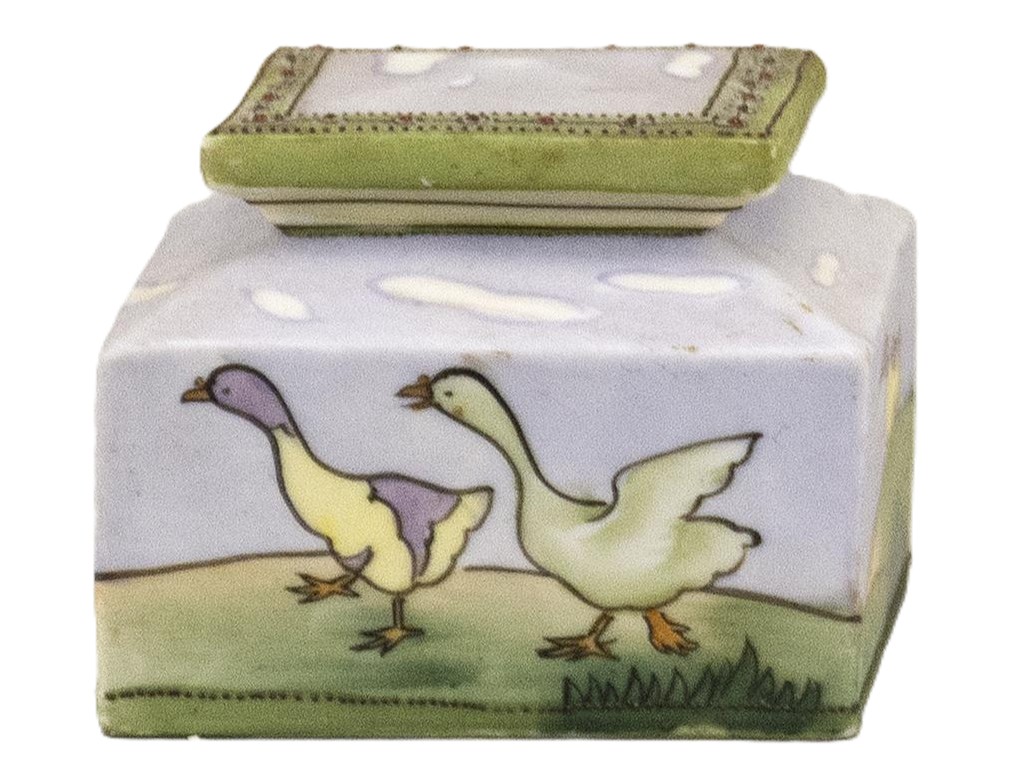
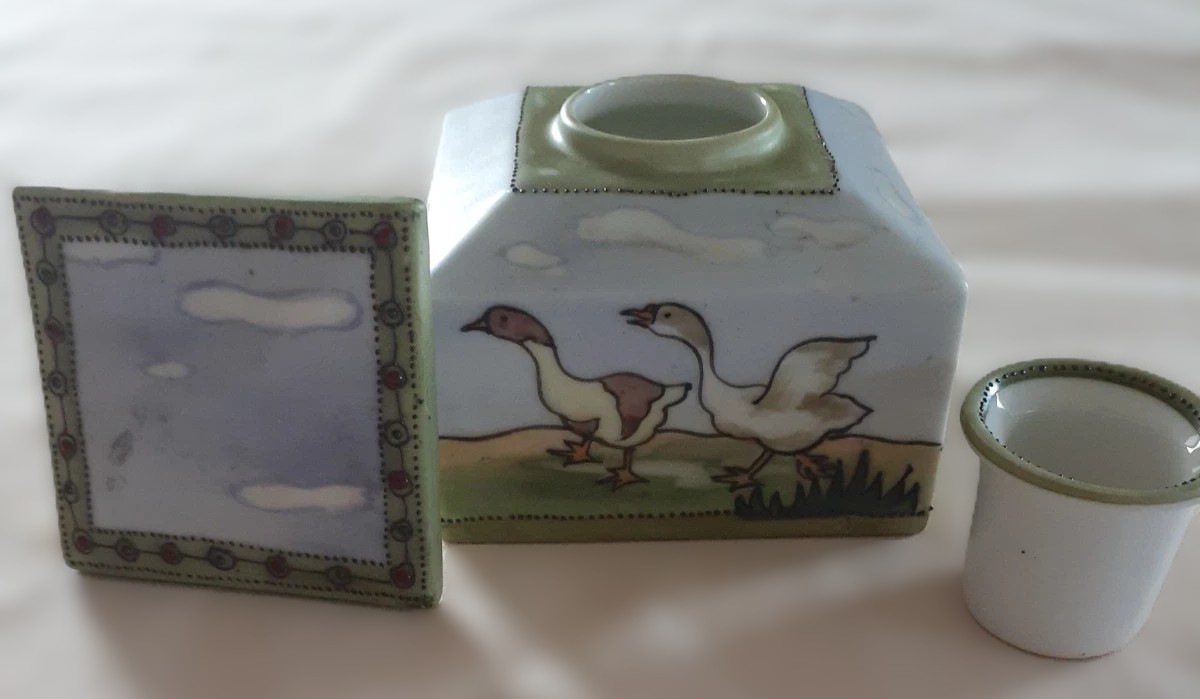
This hand-painted, porcelain, Nippon square inkwell features a pastoral scene of geese active in a rolling green meadow beneath a soft, cloudy sky.
Description
- Design & Motif: The body of the inkwell showcases a continuous hand-painted landscape featuring animated geese. One side displays two geese mid-stride with outstretched wings, while other sides show variations like a single goose calling out.
- Finish & Palette: The piece features a soft, non-reflective matte finish. The color palette relies on gentle, muted tones—soft lavender/blue for the sky, cream and light purple accents on the geese, and an earthy light green for the landscape.
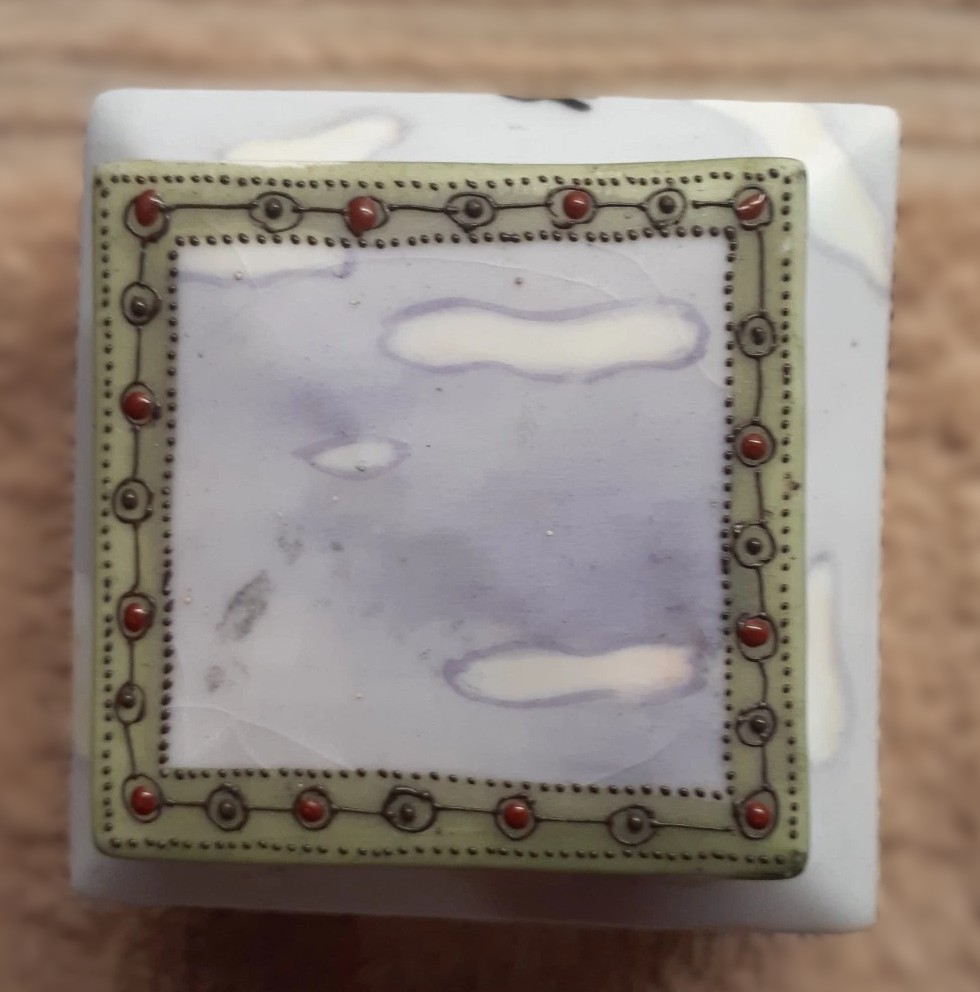
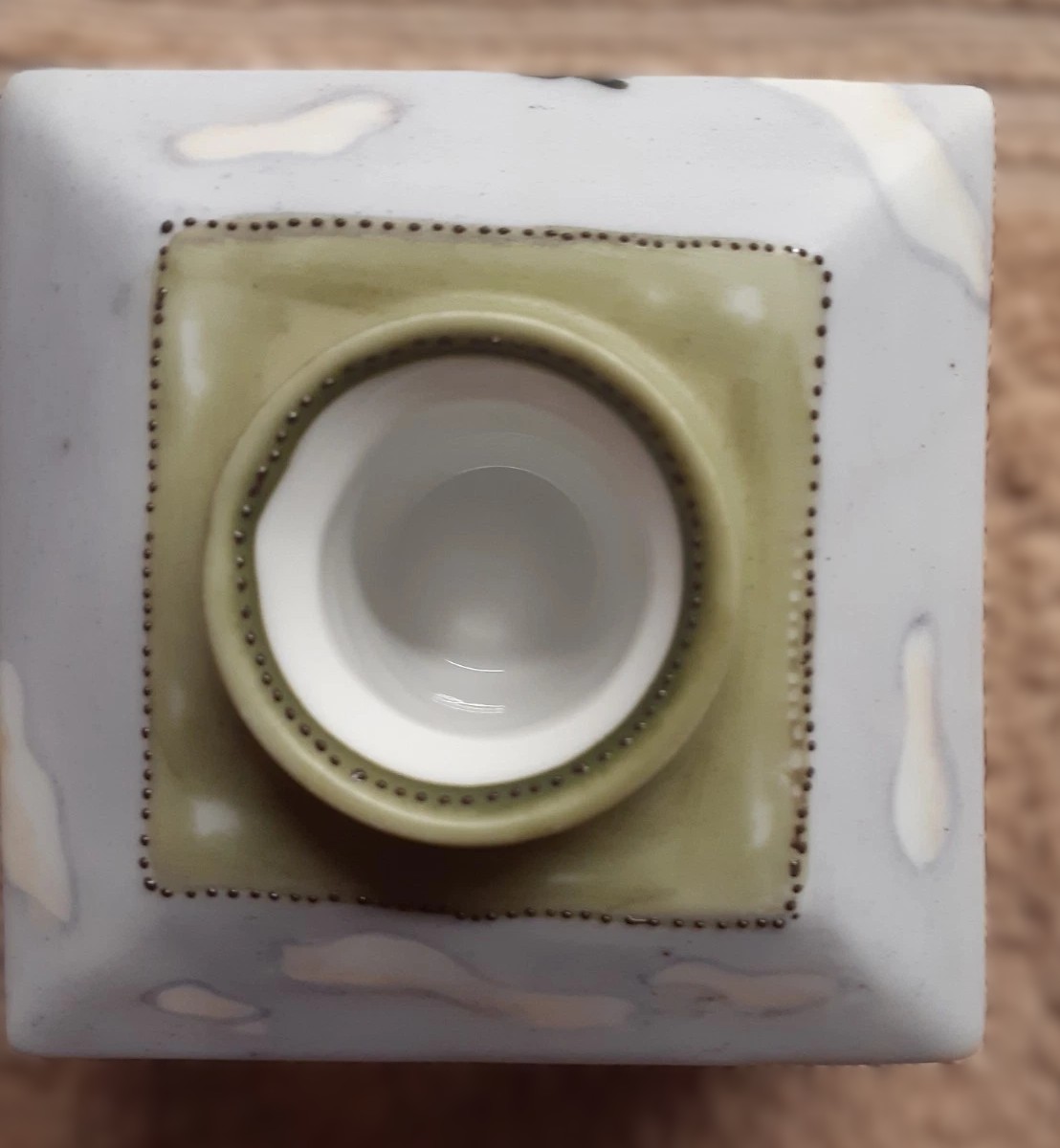
- Moriage Detail: Fine, delicate moriage (raised slip-clay decoration) lines the square borders of both the loose lid and the main inkwell opening. This trim is applied as a precise series of dark beaded lines punctuated by small, raised dots of red enamel jewel work.
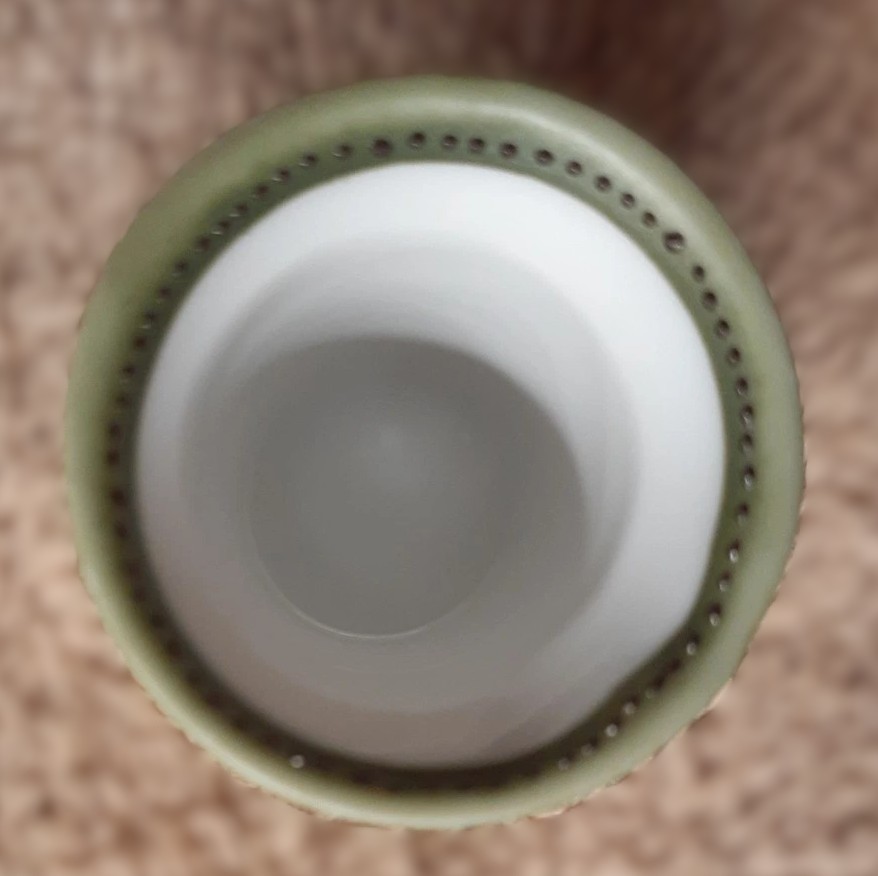
- Complete Assembly: The inkwell retains its three-piece configuration: the square outer body, the matching loose over-lid, and the separate white porcelain insert.
Maker & Historical Context
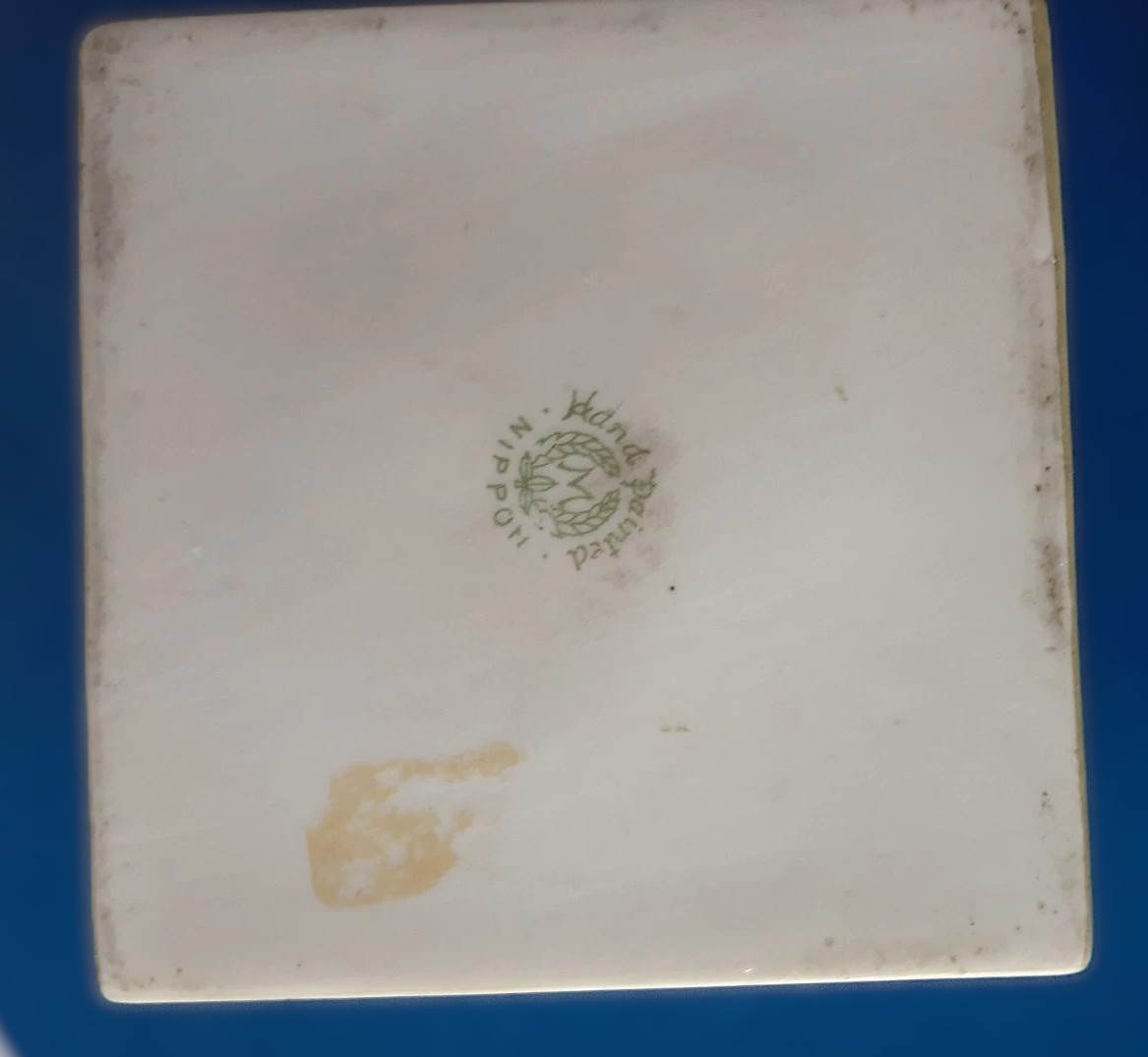
The bottom of the base bears the authentic green “M in Wreath” export mark under the glaze, surmounted by the words “Hand Painted” and anchored by “NIPPON”.
- The Importer: The “M” stands for Morimura Brothers (Morimura Bros.), the primary New York-based trading and import company that eventually evolved into the world-famous Noritake porcelain company. The wreath surrounding the letter is a stylized representation of the traditional Morimura family crest of wisteria blossoms.
- The Nippon Era: The McKinley Tariff Act of 1890 mandated that all imported goods to the United States clearly state their country of origin in English. Japanese manufacturers used “Nippon”—the literal Japanese word for Japan—from 1891 until 1921. In 1921, U.S. Customs officially ruled that “Nippon” was no longer acceptable and required “Japan” or “Made in Japan,” abruptly ending the use of this specific mark.
Pinpointing a More Exact Date:
While the overall “M in Wreath” mark was registered and utilized throughout the second half of the Nippon era (1911 to 1921), narrowing it down to a single exact year is challenging because the stamp remained standardized. However, historical and stylistic context offers a more precise window:
- The Manufacturing Peak (1911–1915): The factory responsible for these pieces, Nippon Toki Gomei Kaisha, achieved full massive-scale operational capacity right around 1911. Whimsical, illustrative animal/novelty scenes paired with earthy matte glazes and delicate geometric moriage borders peaked in popularity between 1911 and 1915.
- The Impact of World War I (1914–1918): European porcelain exports to the United States ground to a near-total halt during the First World War. This created a massive boom in demand for high-quality Japanese porcelain to fill American department stores and desk sets, making the mid-1910s the absolute zenith of production for items of this style.
Sold for $85 in May 2026
Content disclaimer. The information posted is the owner’s best knowledge and may not have been vetted by the SOIC. We welcome comments, corrections, and additions, working to make our website information comprehensive and accurate.
Join the Society of Inkwell Collectors (SOIC) – it’s free!
Founded in 1981 as a non-profit organization,
we are documenting inkwells (and accessories).
We’re here to help and inform!