


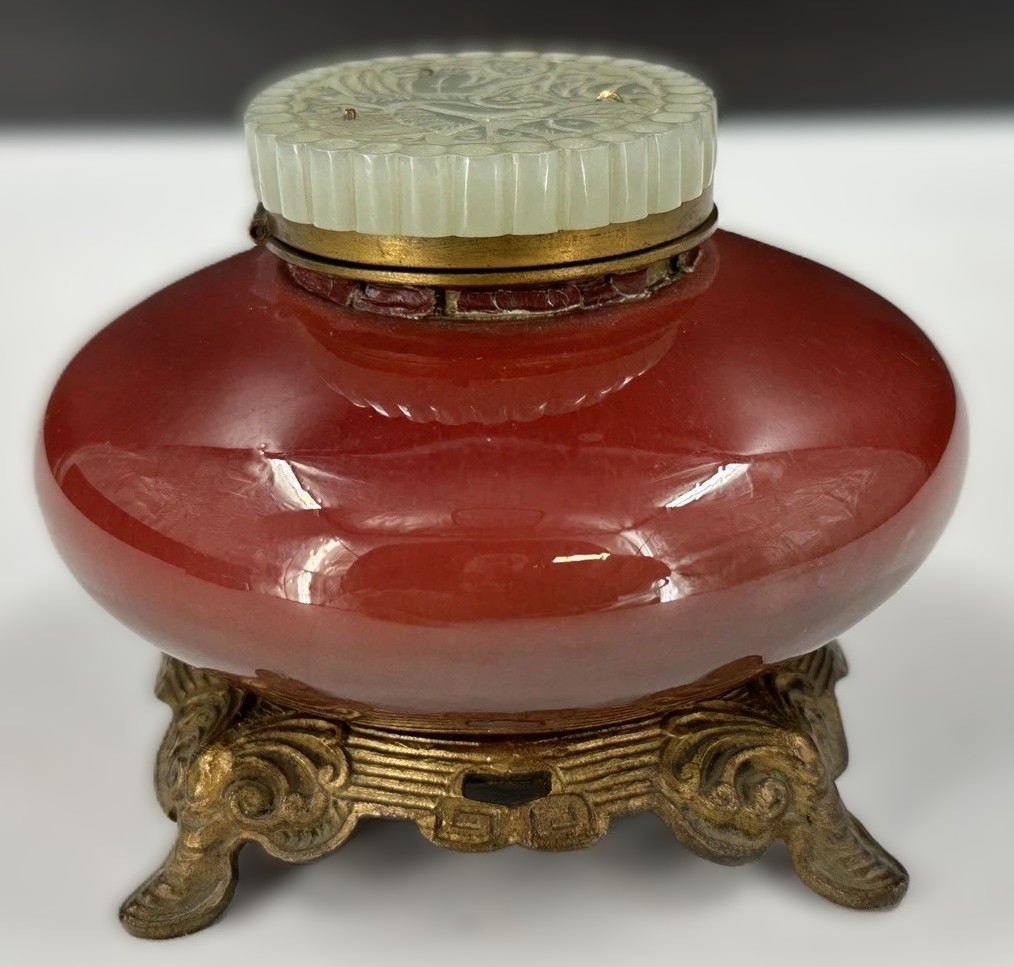
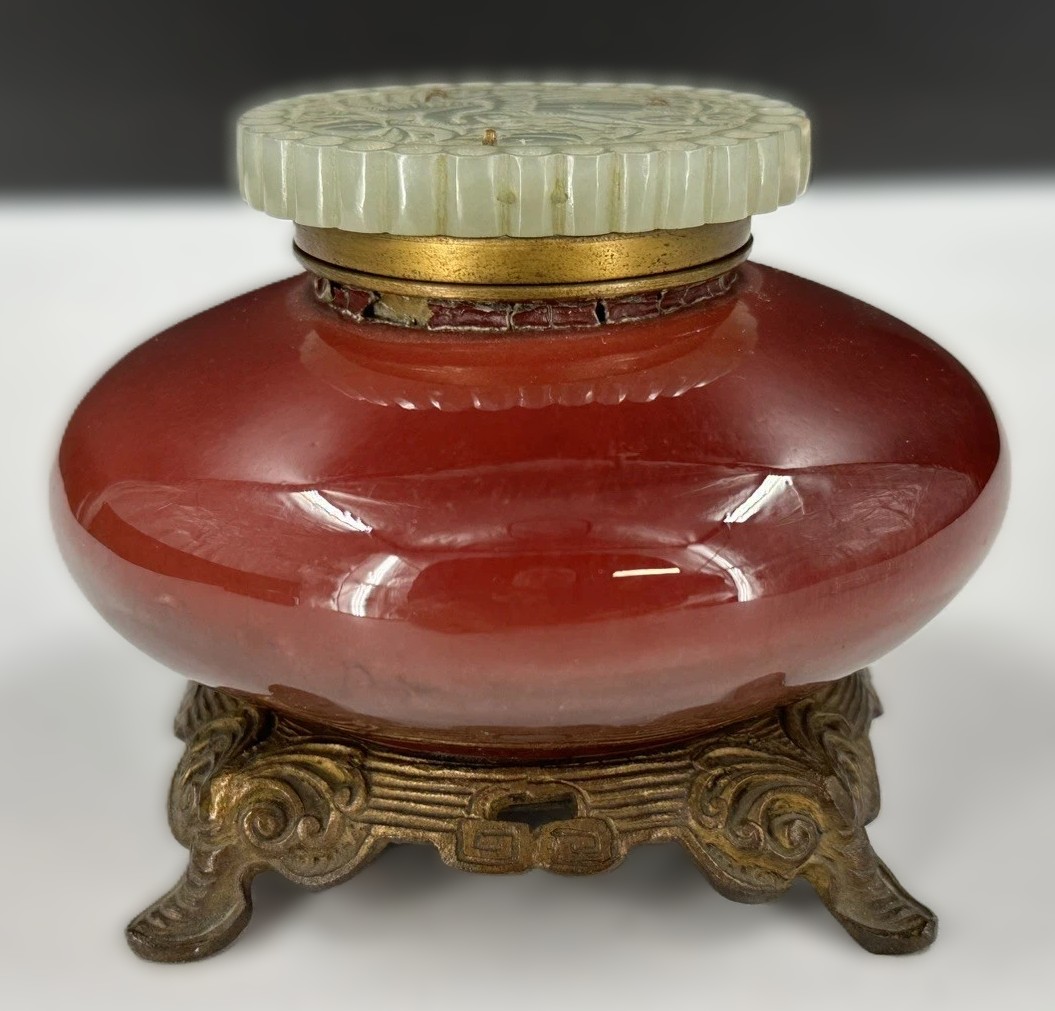
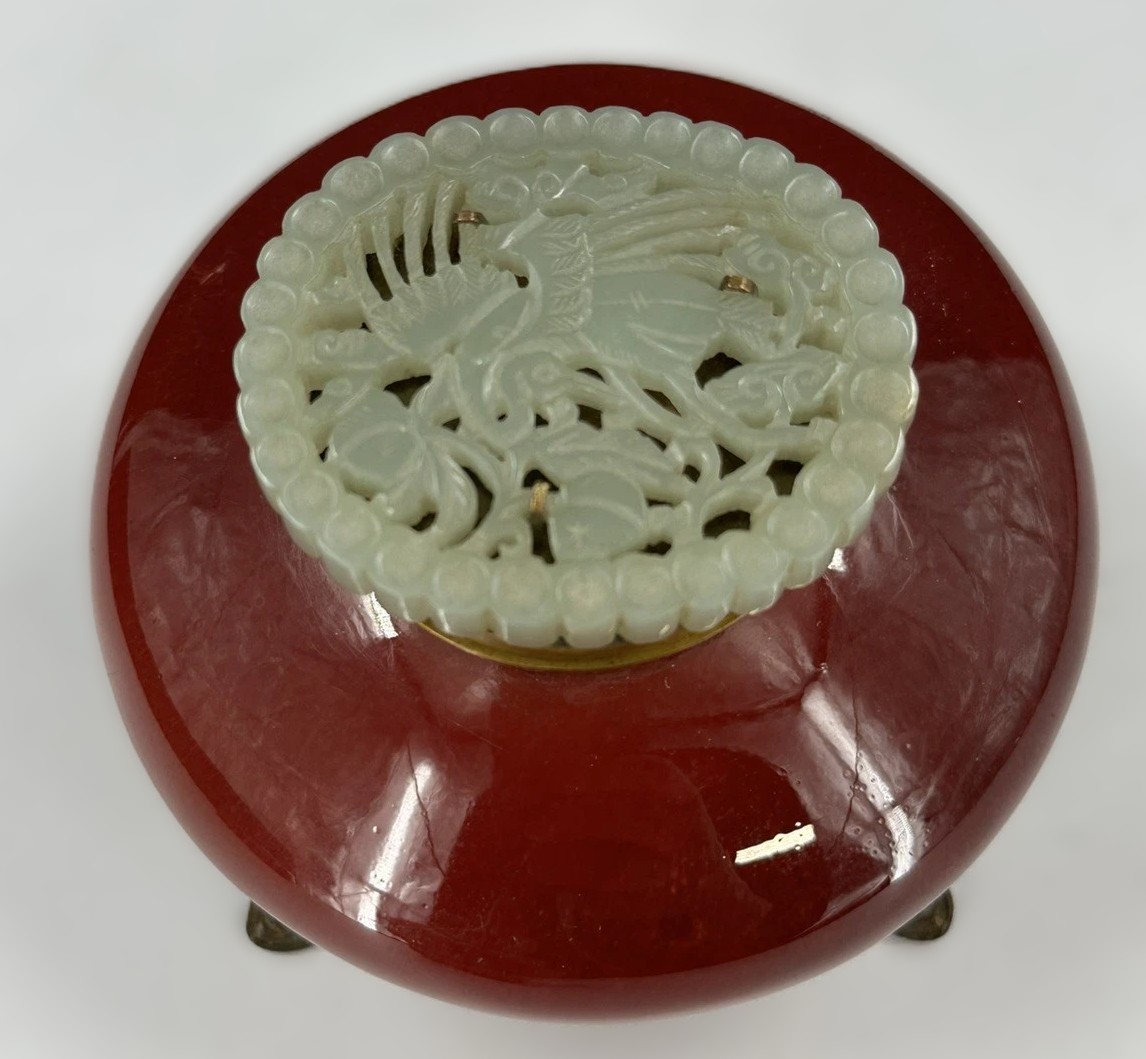

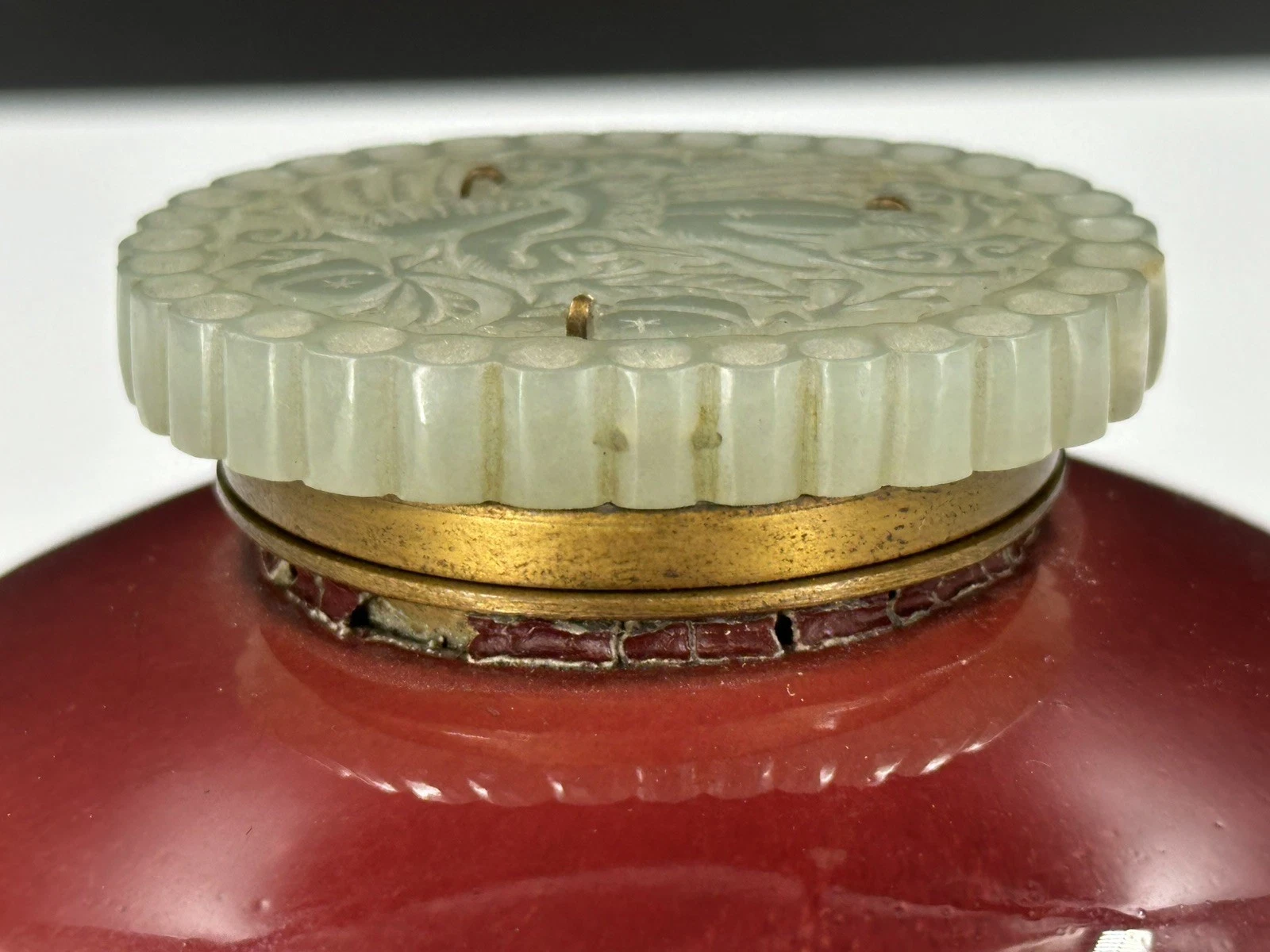

Chinoiserie Sang de Boeuf Porcelain & Jade Inkwell
| Categories | Far East / Oriental |
| Material | Brass, Jade, Porcelain |
| Markings | See Narrative |
| Origin | China |
| Date or Era | circa 1900 |
| Measuring | 4” diameter; 3” high |
- Who Made It? (The Maker)
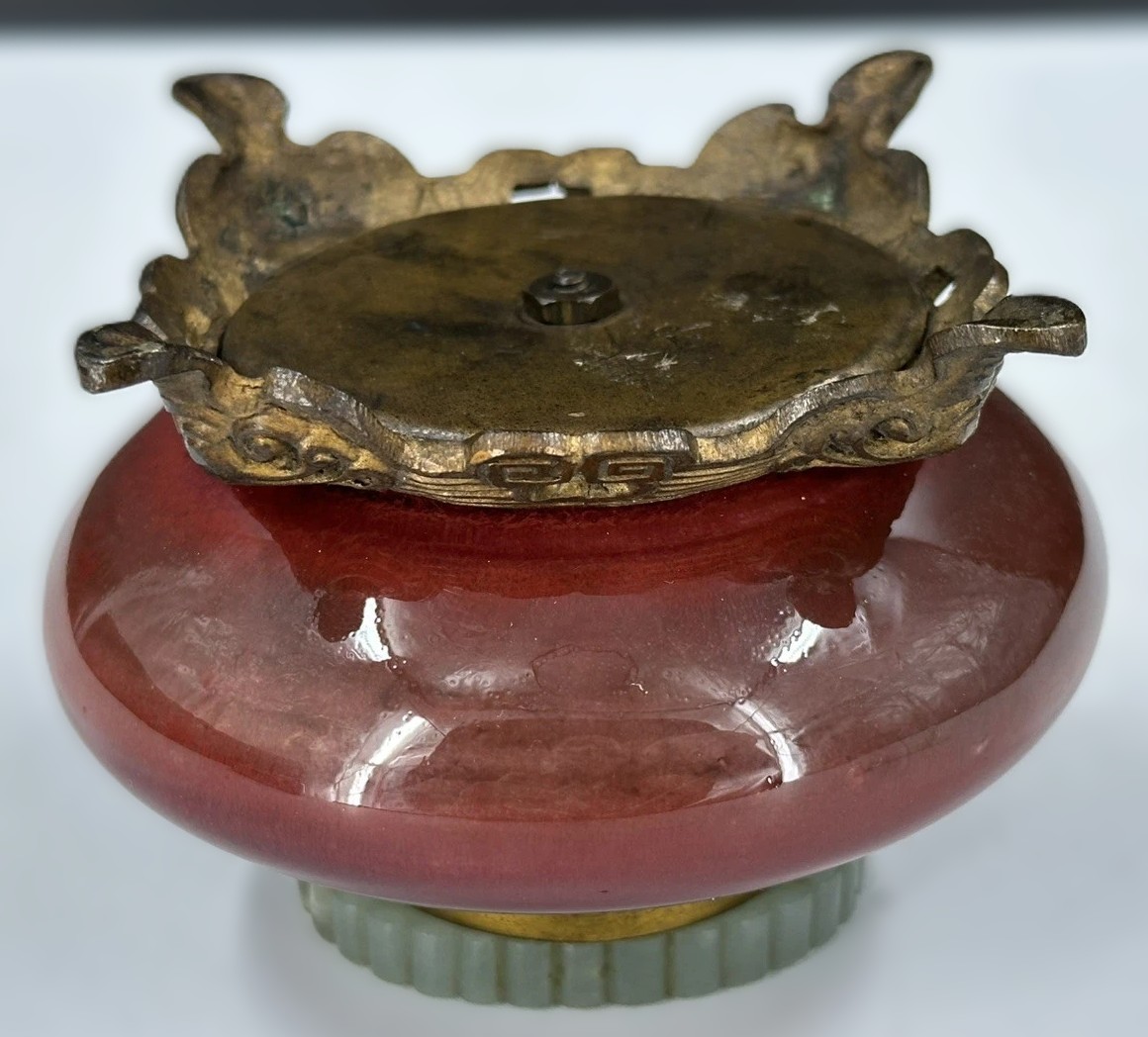
While the porcelain and jade components are Chinese in origin, the inkwell itself was assembled by a Western manufacturer—most likely French or American.
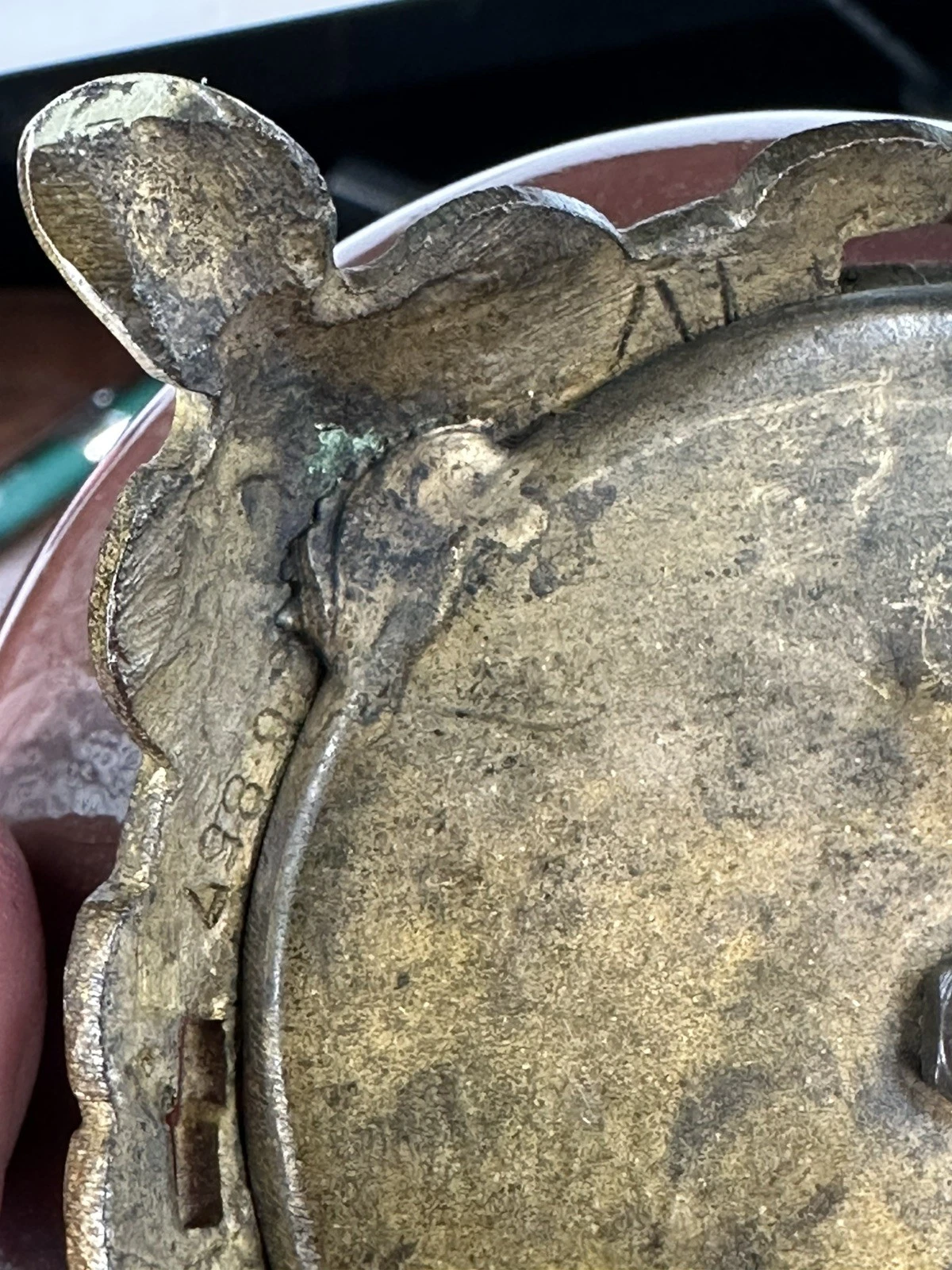
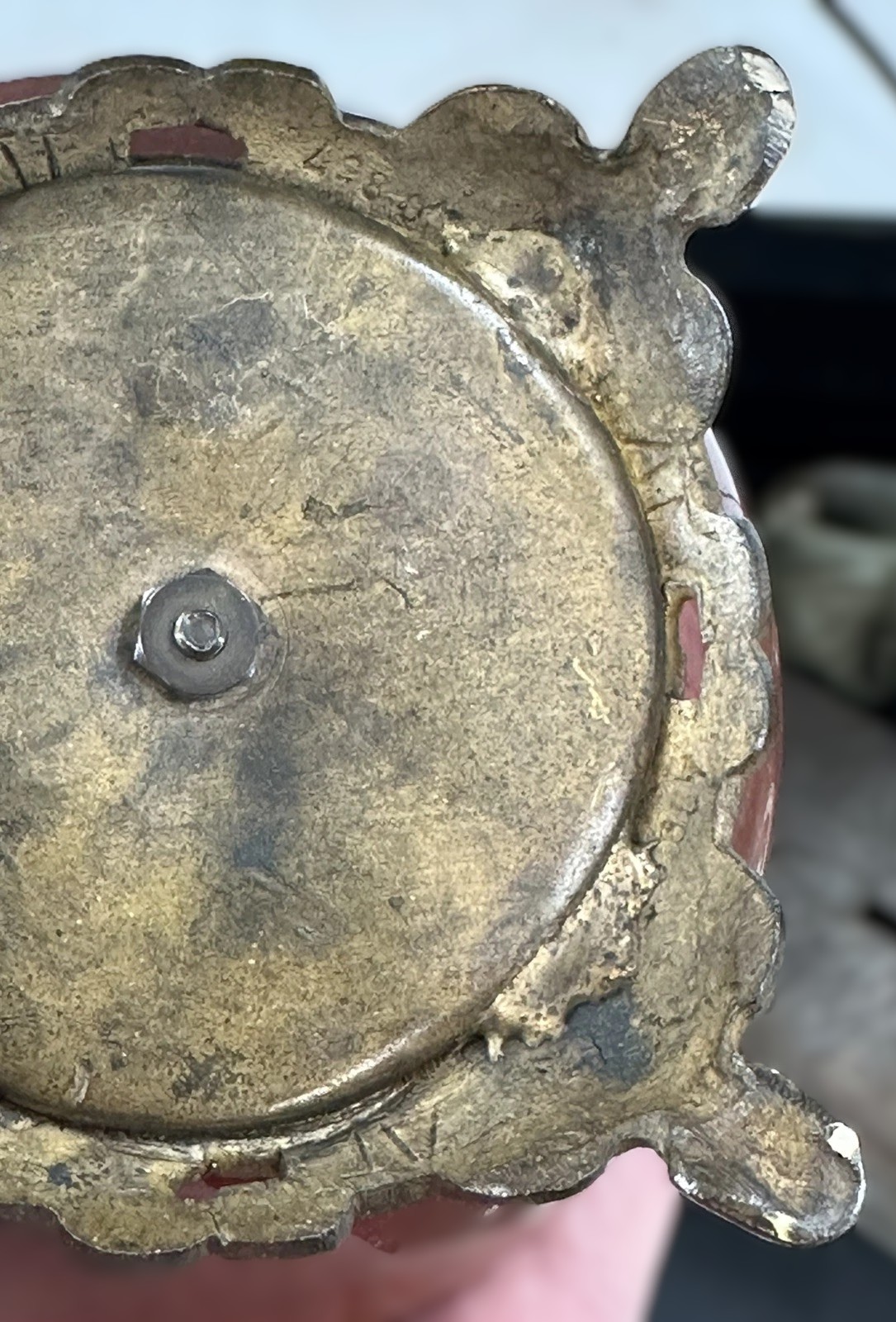
The telltale clue is on the underside of the brass base:
- Looking closely at the top rim of the base, one can see a stamped pattern or design number: 4989 and what appears to be the initials AT or a small foundry mark to the left.
- This style of cold-stamped, neat serif numbering on cast brass or bronze work is classic French export work or high-end American desktop manufacturers from the Beaux-Arts era (such as Edward F. Caldwell & Co. or similar New York firms that specialized in converting imported Asian art objects into luxury desk sets for wealthy Gilded Age estates).
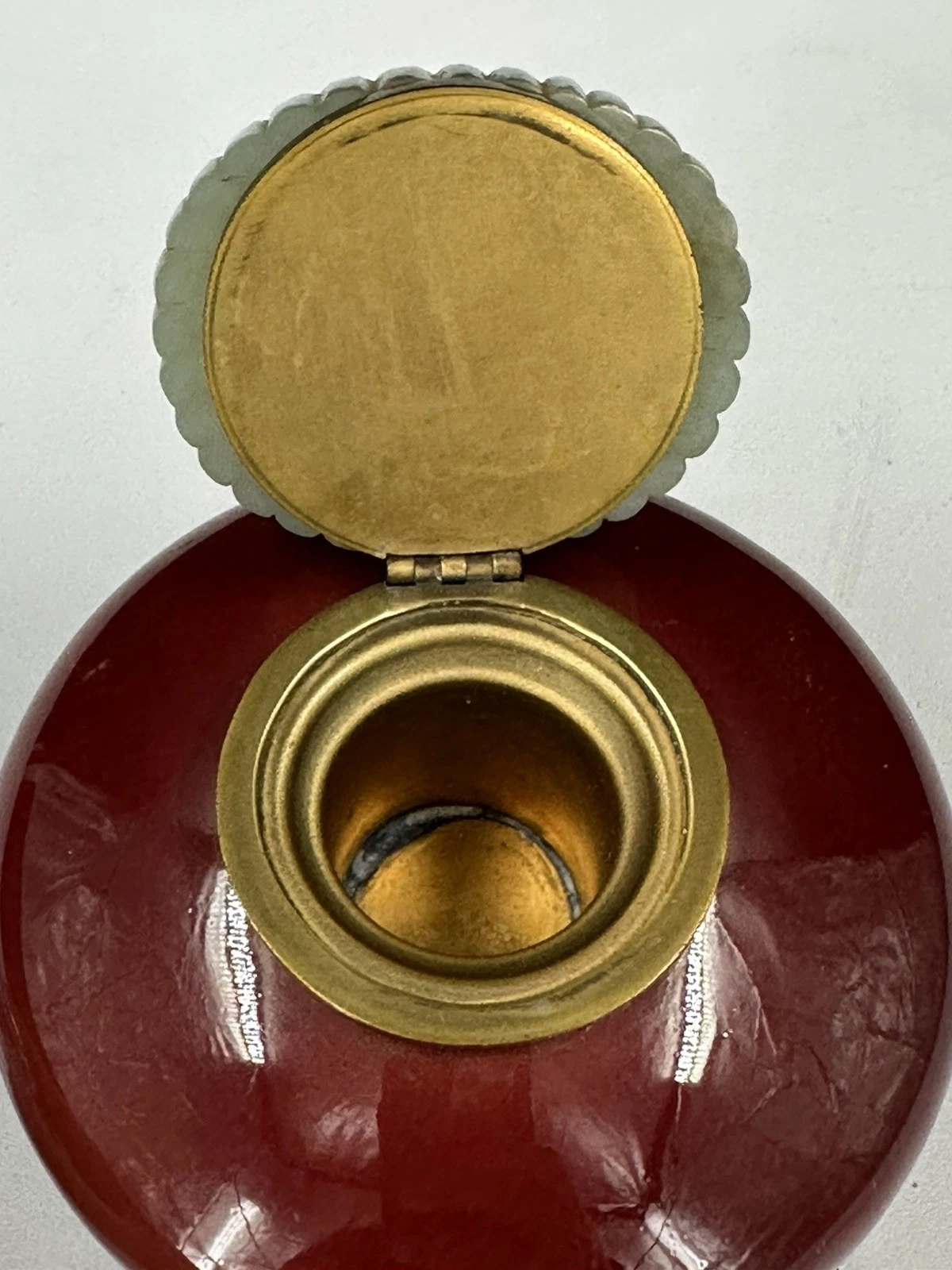
- The internal structure—a central threaded rod secured by a modern hex nut holding the base, porcelain, and well collar together—is standard Western assembly methodology for this period.
- How Old Is It? (The Dating)
The inkwell was compiled as a finished object around 1890–1910.
However, like many high-end decorative objects from this era, it is a composite of materials that have different individual ages:
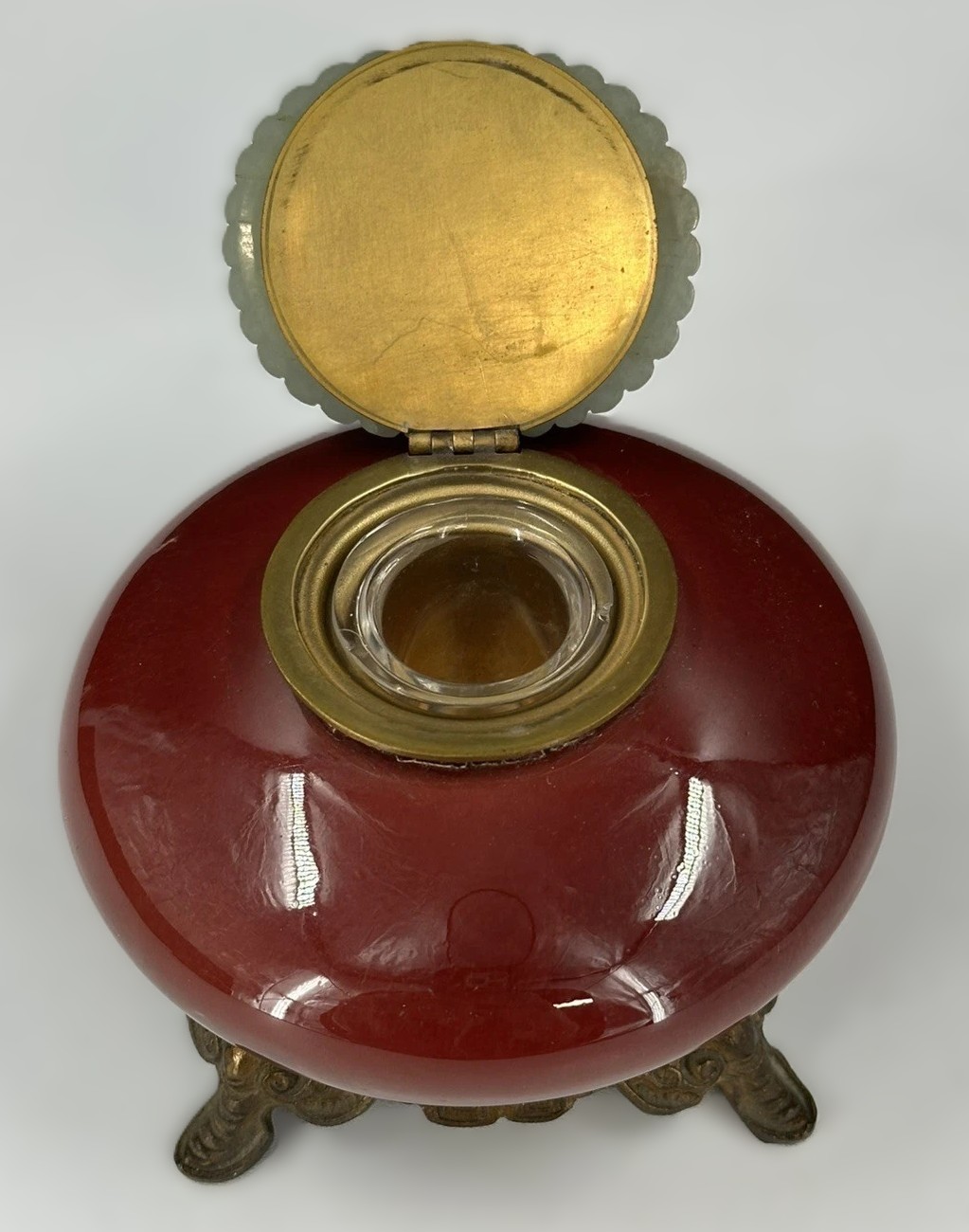
- The Porcelain Body (19th Century): The compressed globular body features a beautiful Sang de Boeuf (oxblood) copper-red glaze with a subtle orange-peel texture and fine crackle visible under the surface luster. The porcelain is late Qing Dynasty, likely 19th-century Chinese. It was originally crafted as a small water coupe, brush washer, or jar before being adapted for this luxury set.
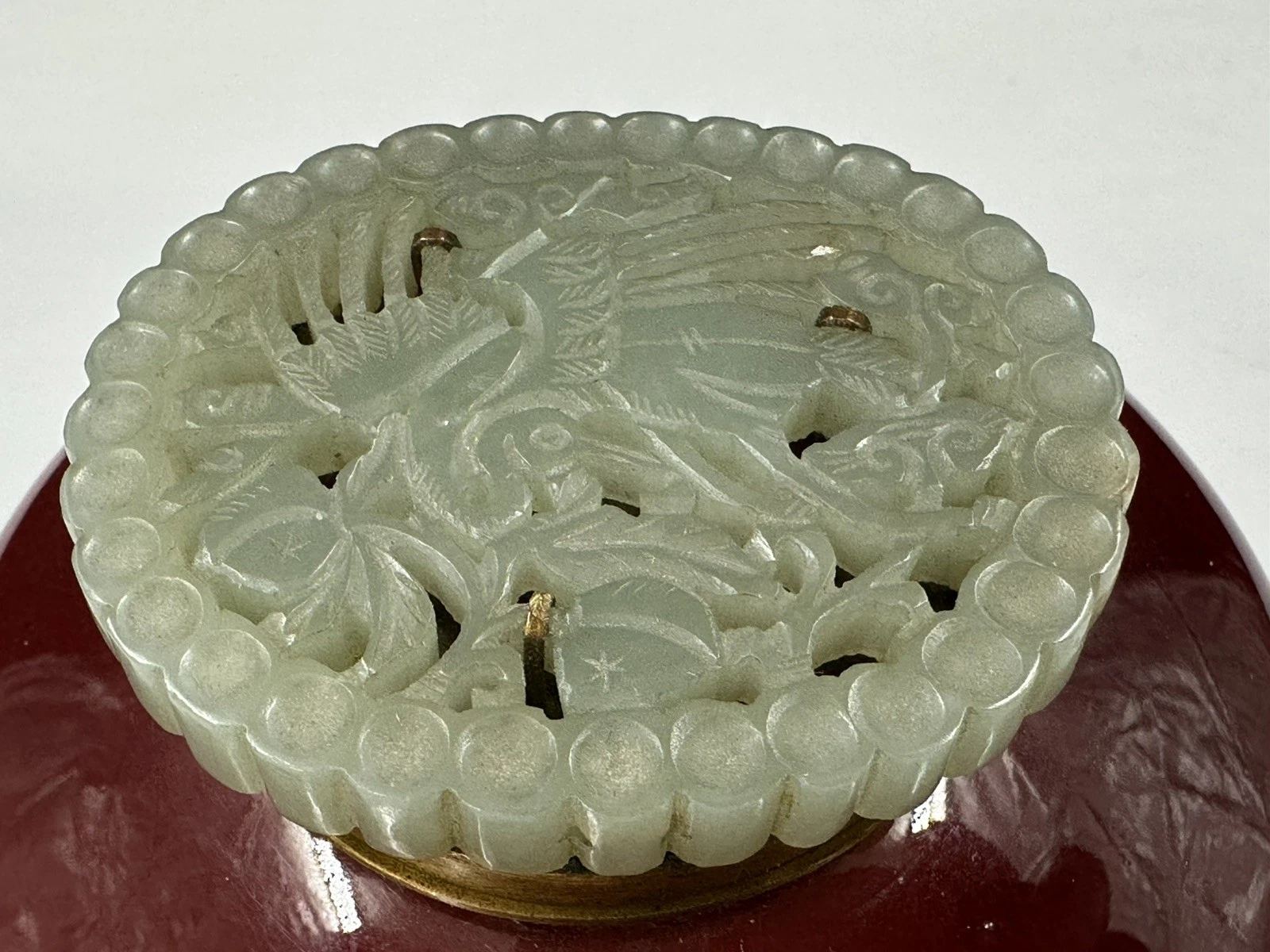
- The Jade Plaque (18th to 19th Century): The lid is inset with a gorgeous, translucent celadon jade plaque featuring a finely carved, reticulated (pierced) scene of a crane amidst foliage, surrounded by a distinct fluted or beaded “pie-crust” jade border. In Chinese art, the crane symbolizes longevity. These plaques were frequently harvested from older Chinese garments, headdresses, or scholars’ boxes to be repurposed by Western metalsmiths. The plaque likely dates to the 19th century or slightly earlier.
- The Metalwork (Circa 1900): The cast-brass footed base features a stylized Asian-inspired motif (Chinoiserie), incorporating scrolling clouds and traditional geometric key patterns to complement the porcelain body.
Summary Description
Gilded Age Chinoiserie Sang de Boeuf Porcelain & Jade Inkwell
- Origin: Porcelain and Jade elements are Chinese (Qing Dynasty); Brass mounts and assembly are Western (likely French or American).
- Date: Circa 1890–1910.
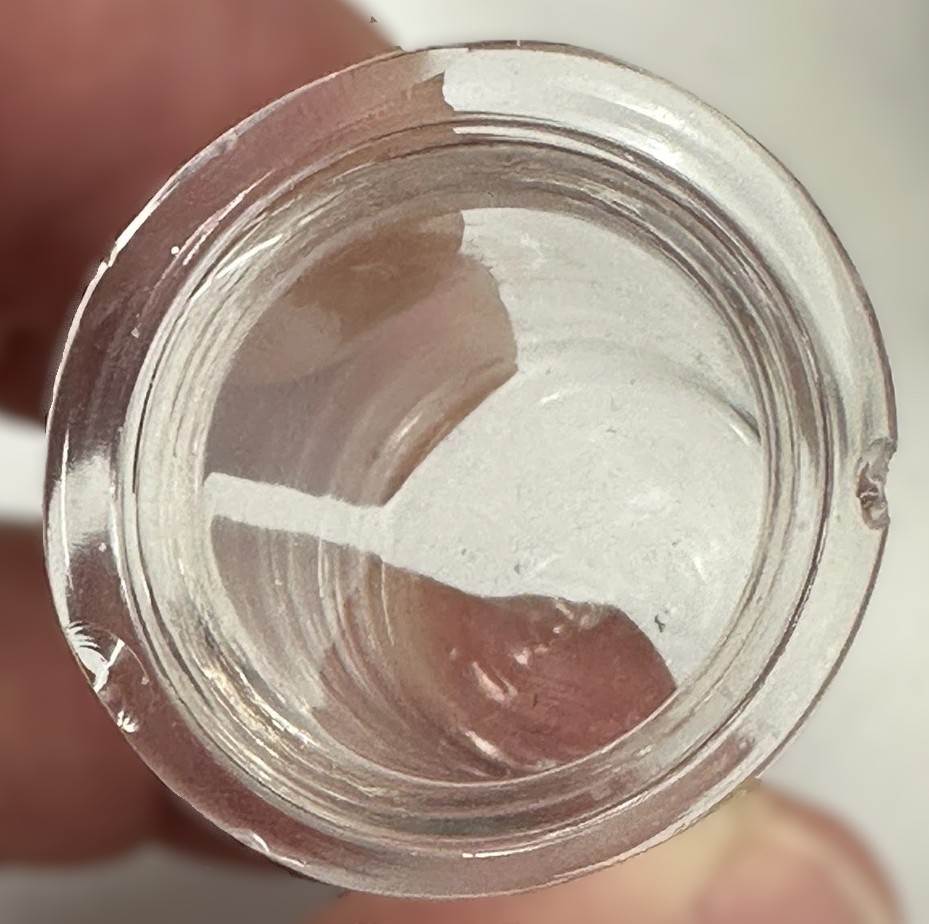
- Features: A rich, deep oxblood copper-red porcelain body fitted with a footed, cast-brass base bearing design stamp number 4989. The hinged lid features an exceptional, hand-carved reticulated celadon jade plaque depicting a crane (the traditional symbol of longevity) bordered by a matching scalloped rim. Complete with its original clear glass insert.
Sold for $662 in May 2026
Content disclaimer. The information posted is the owner’s best knowledge and may not have been vetted by the SOIC. We welcome comments, corrections, and additions, working to make our website information comprehensive and accurate.
Join the Society of Inkwell Collectors (SOIC) – it’s free!
Founded in 1981 as a non-profit organization,
we are documenting inkwells (and accessories).
We’re here to help and inform!