

Inkipedia
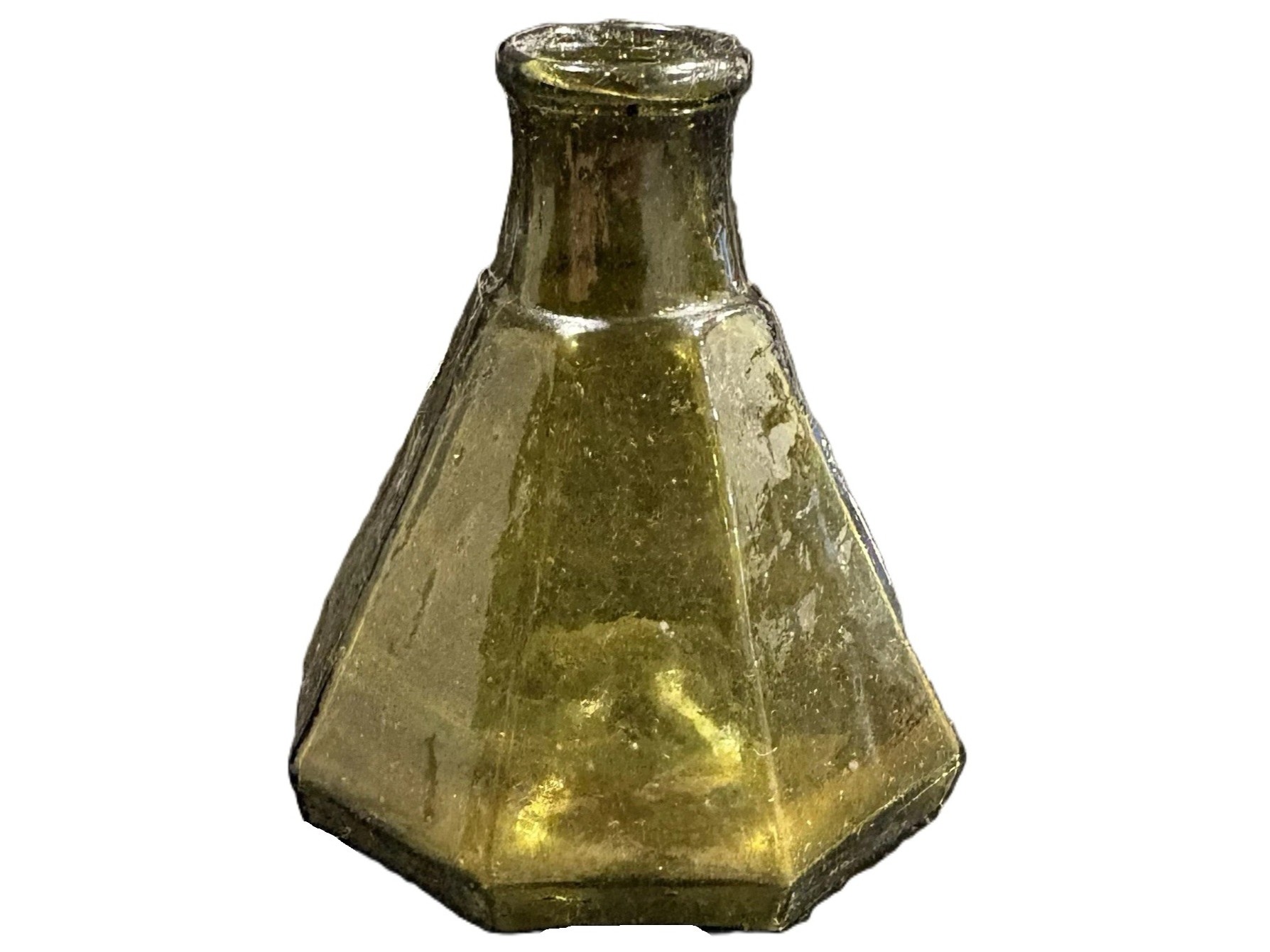
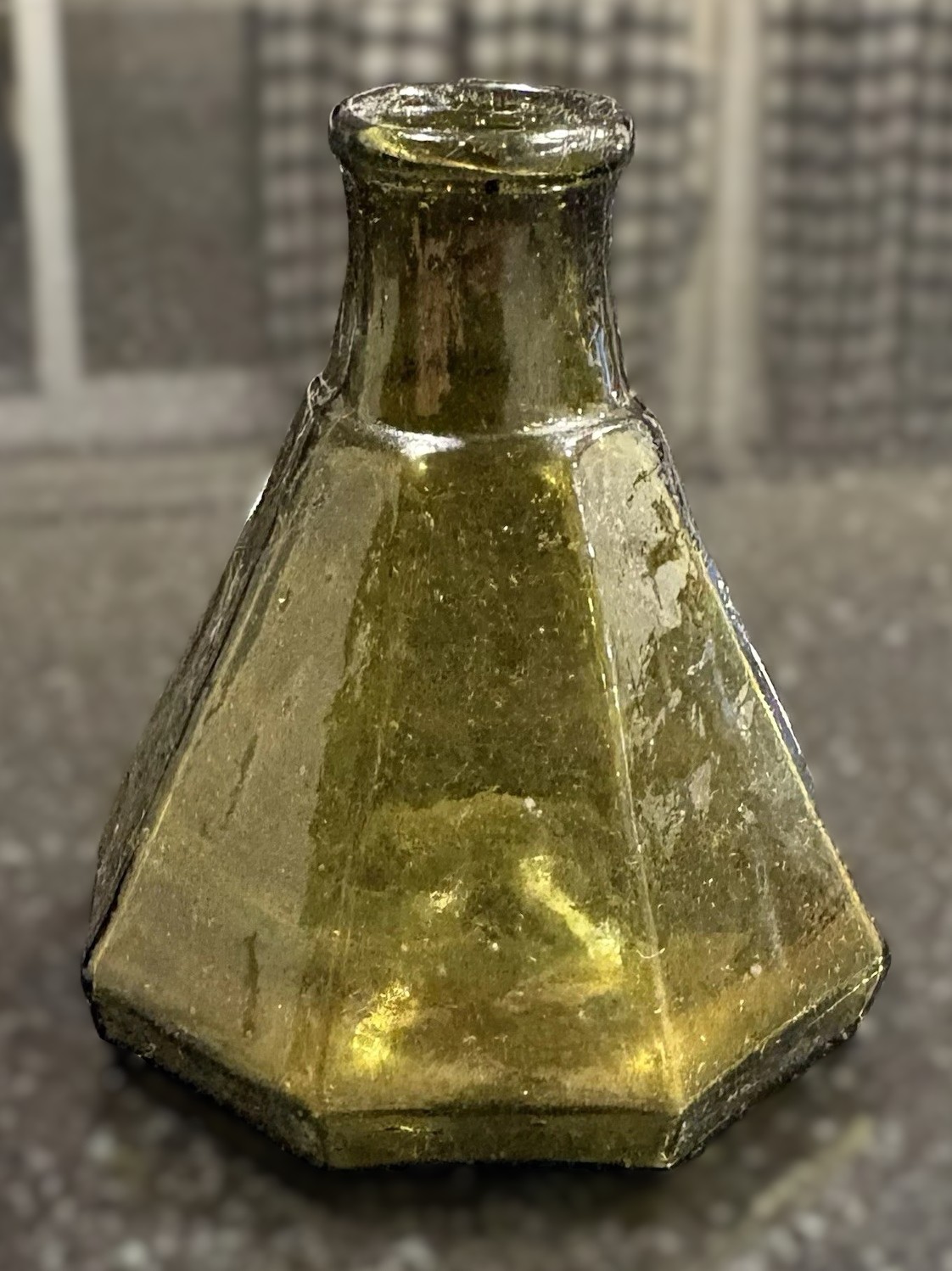
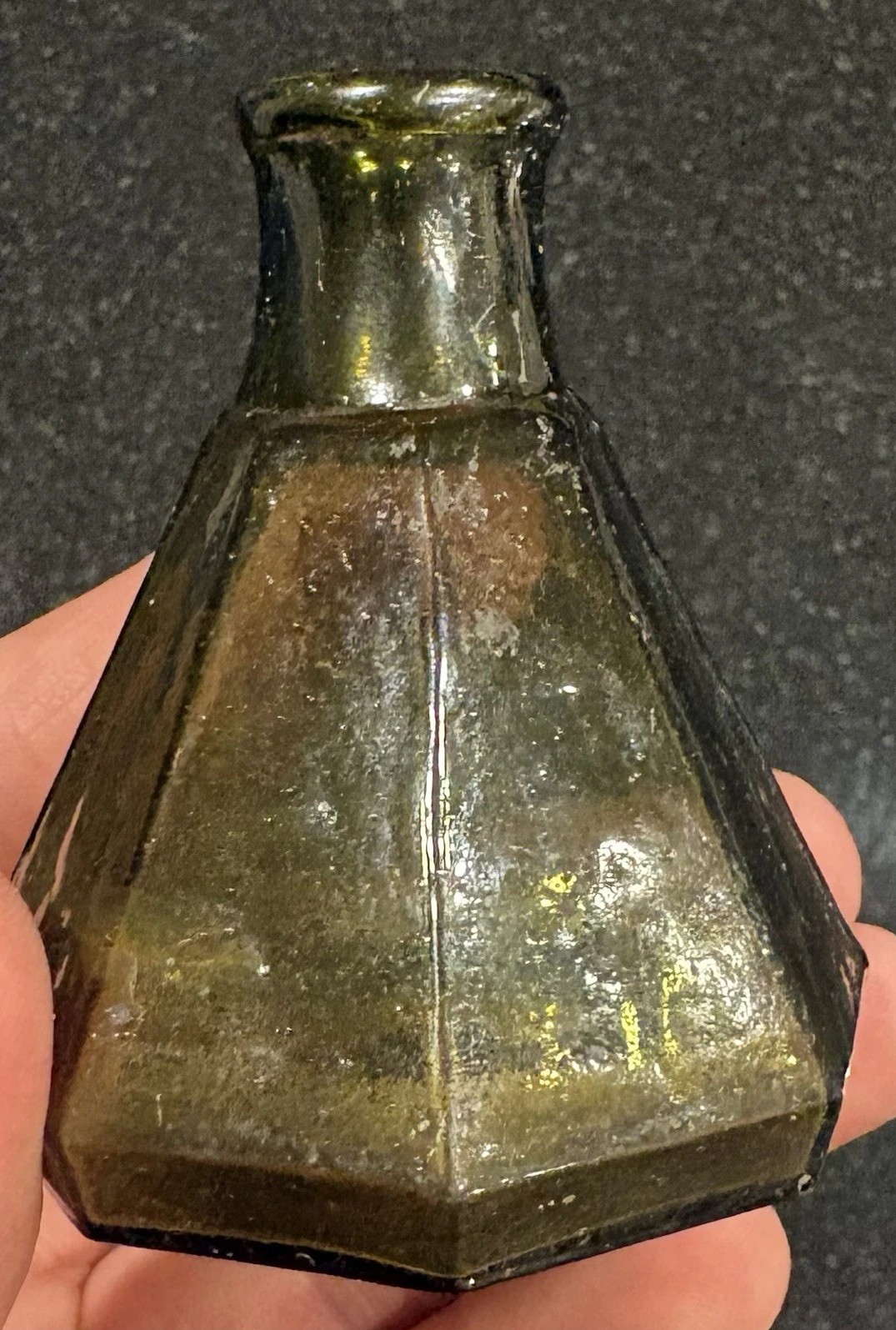
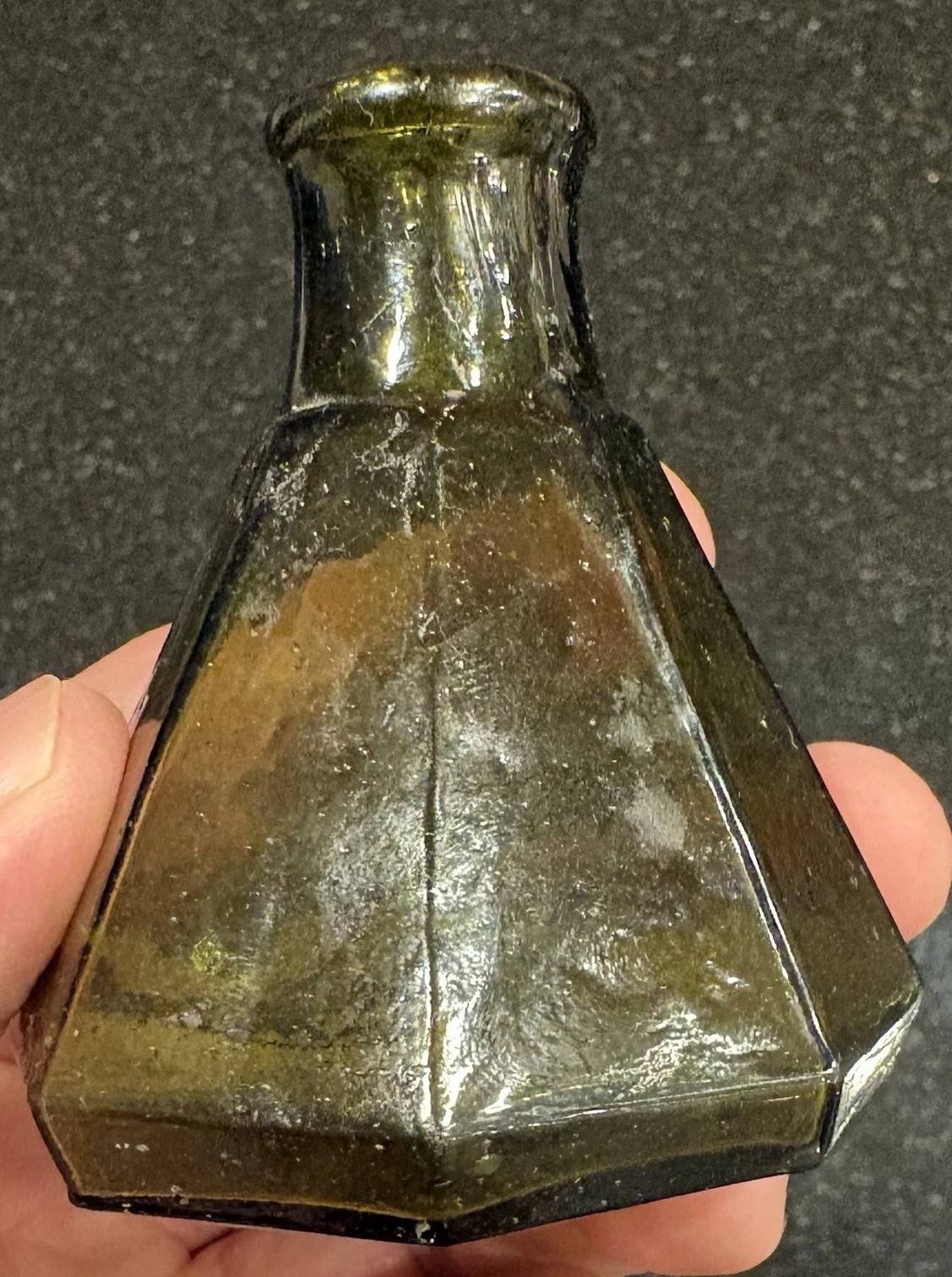
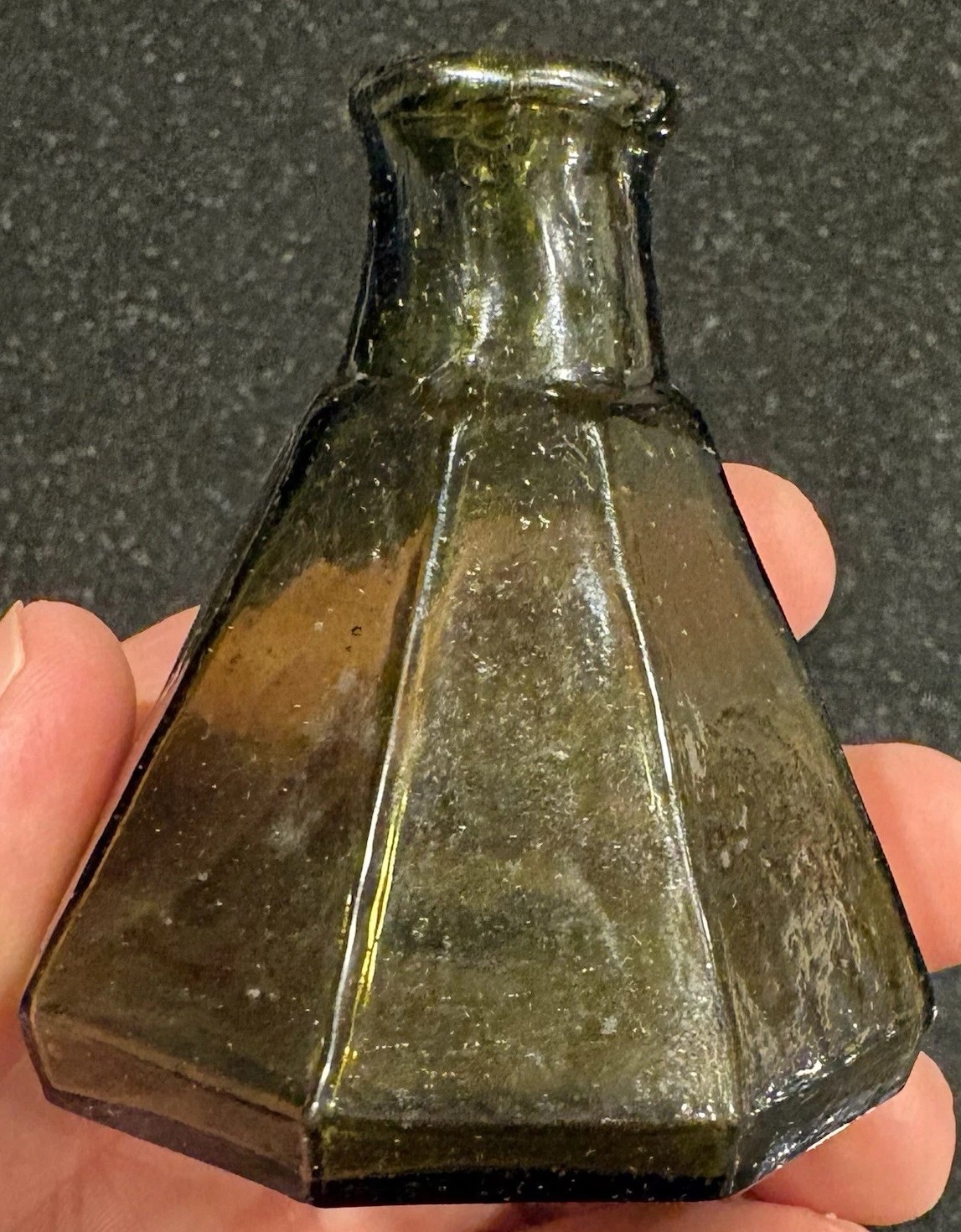
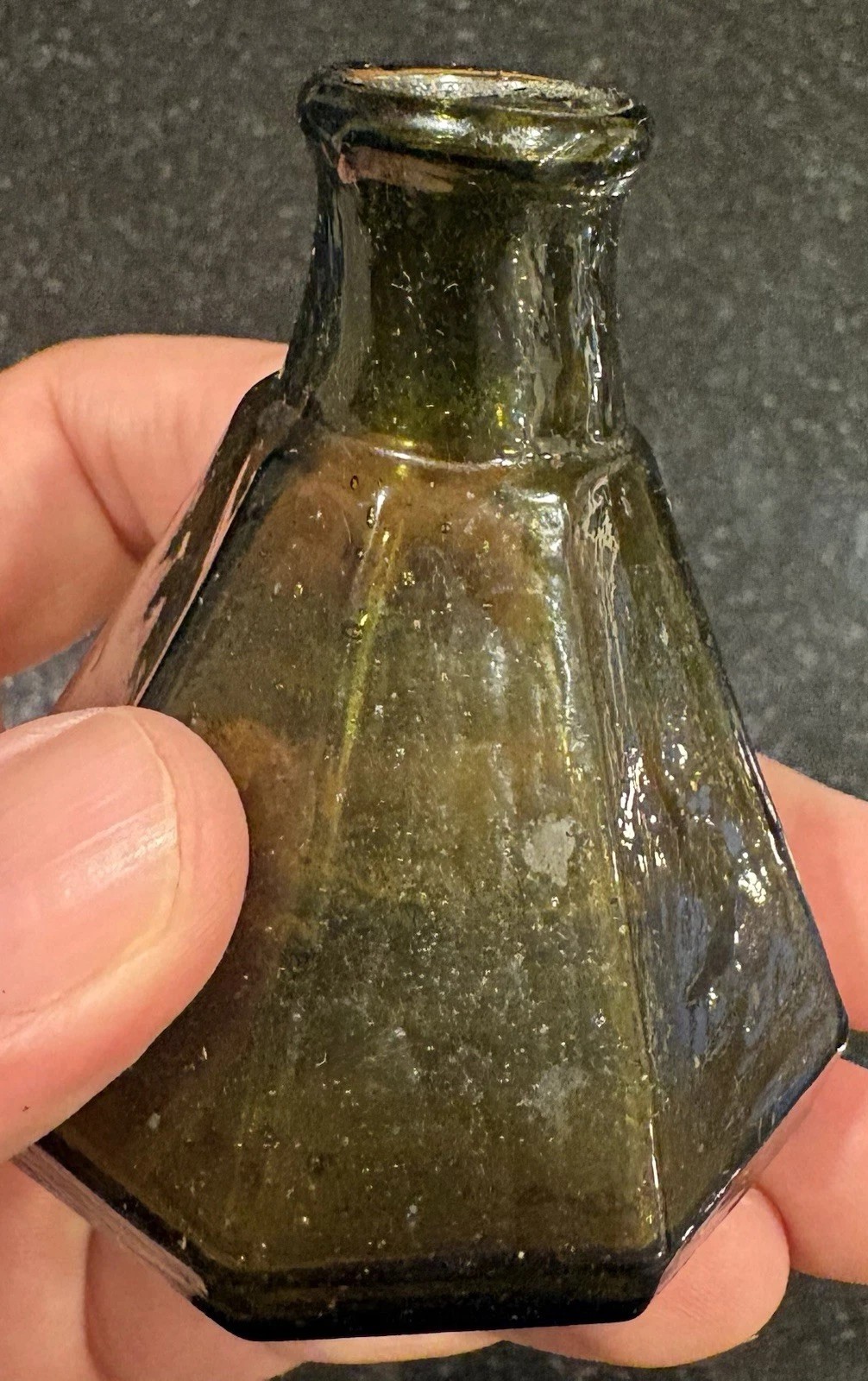
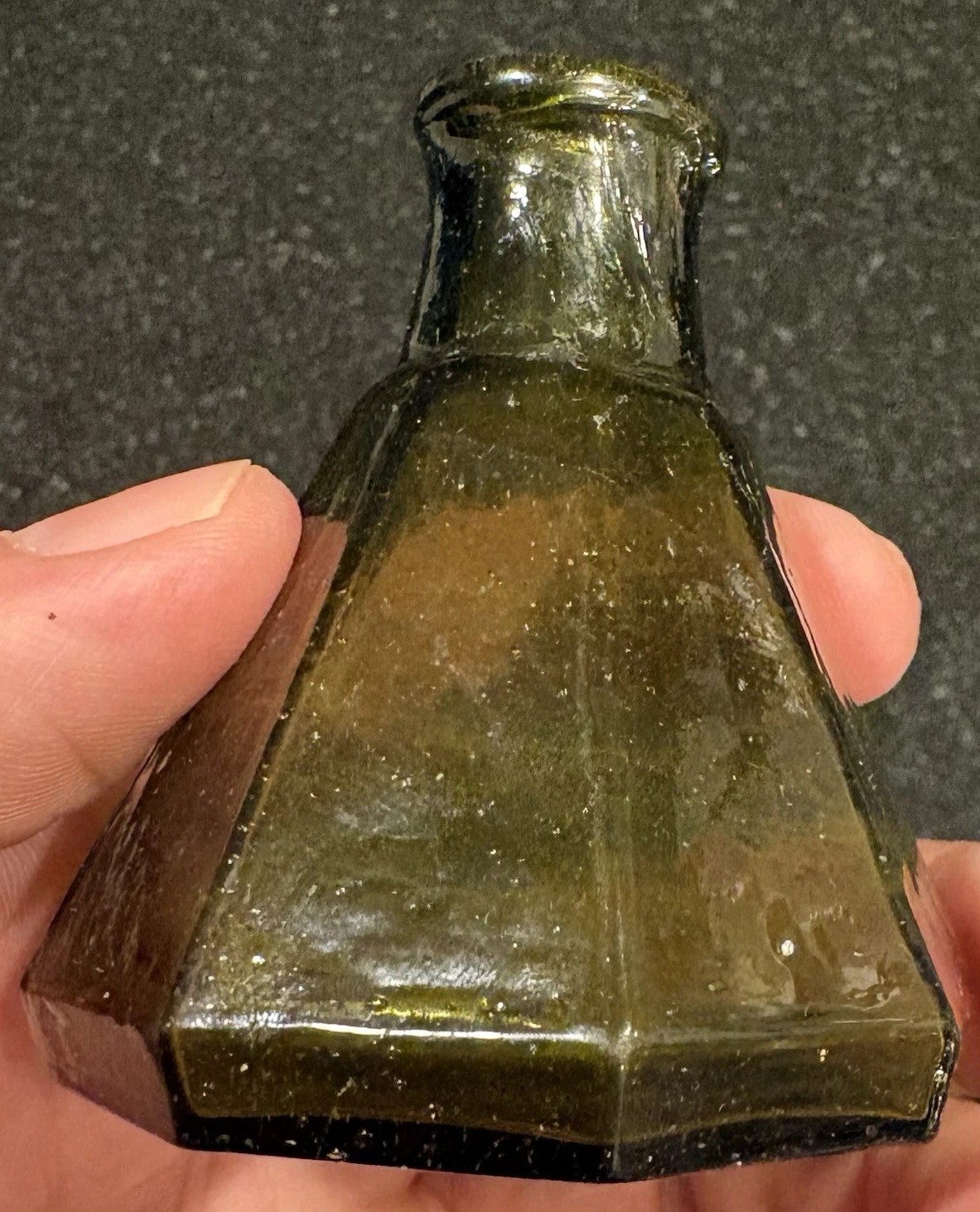
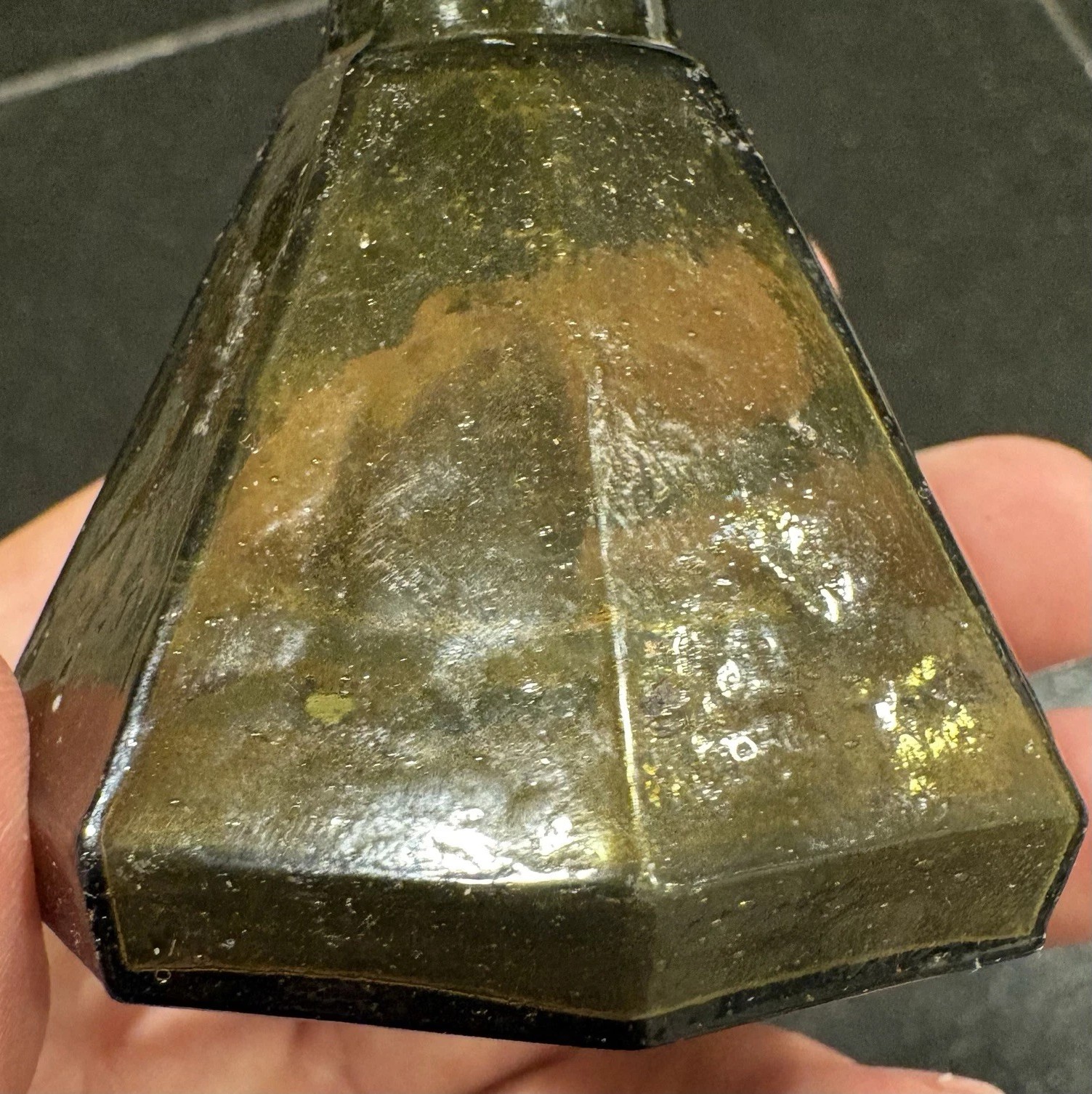
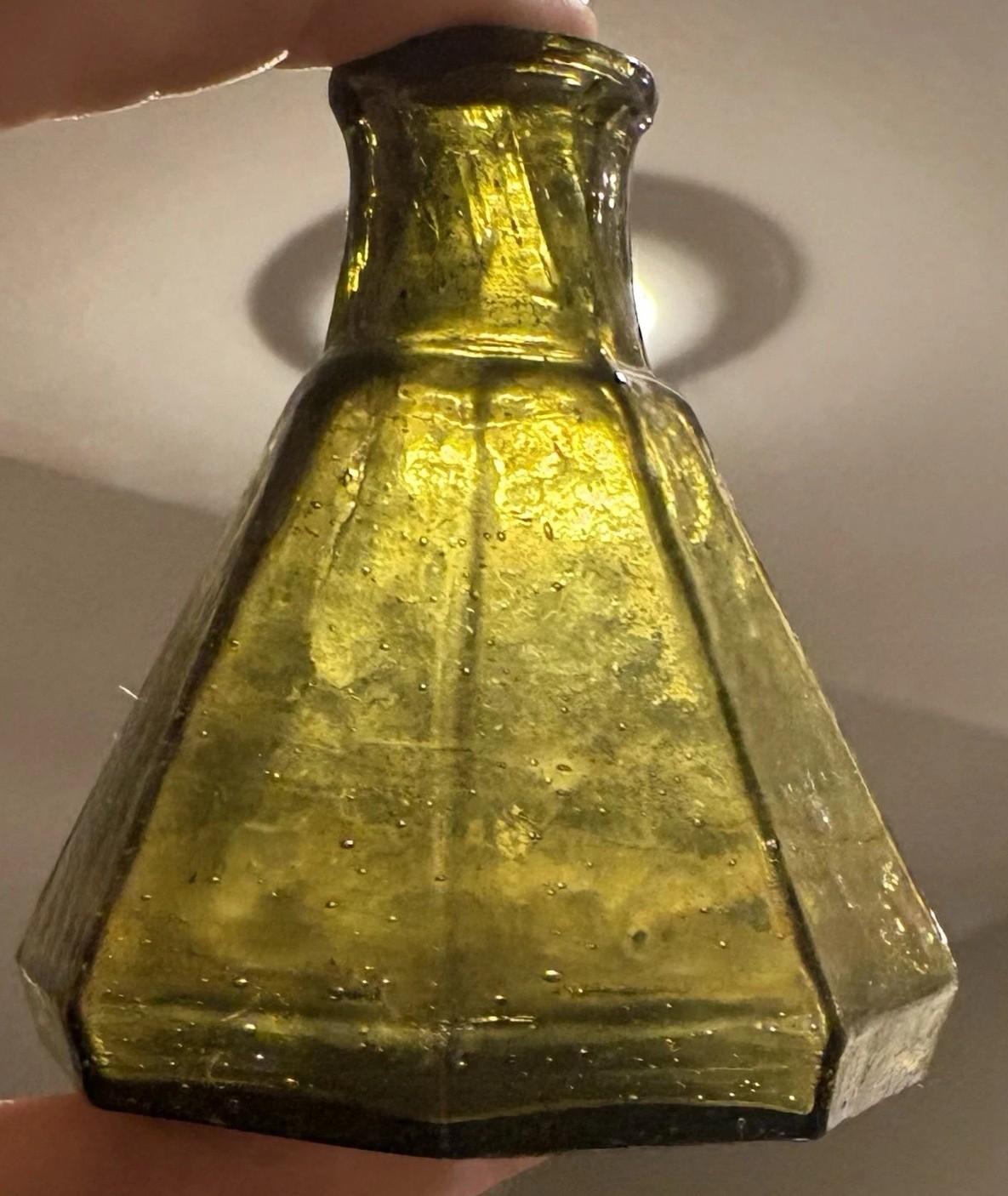
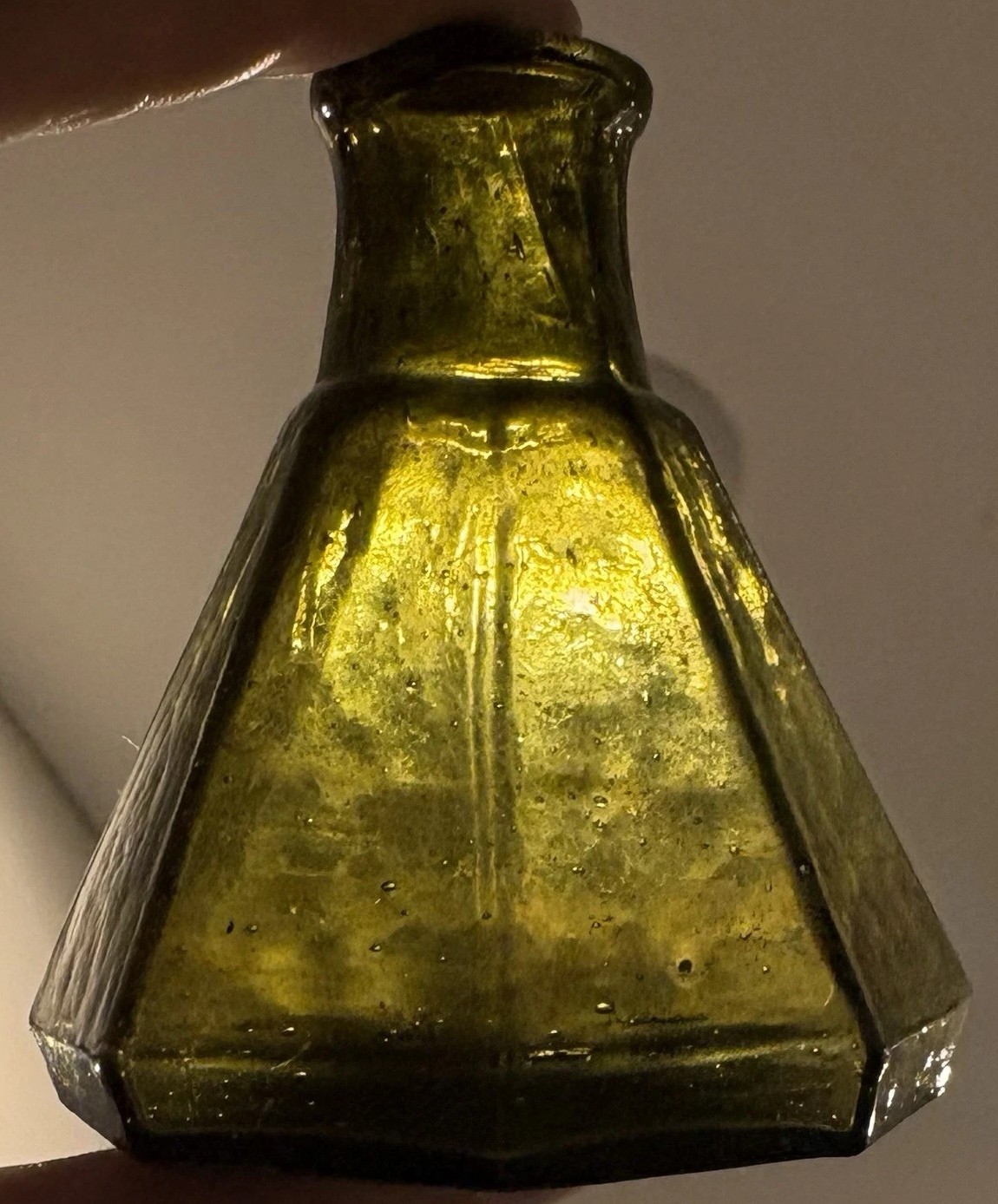
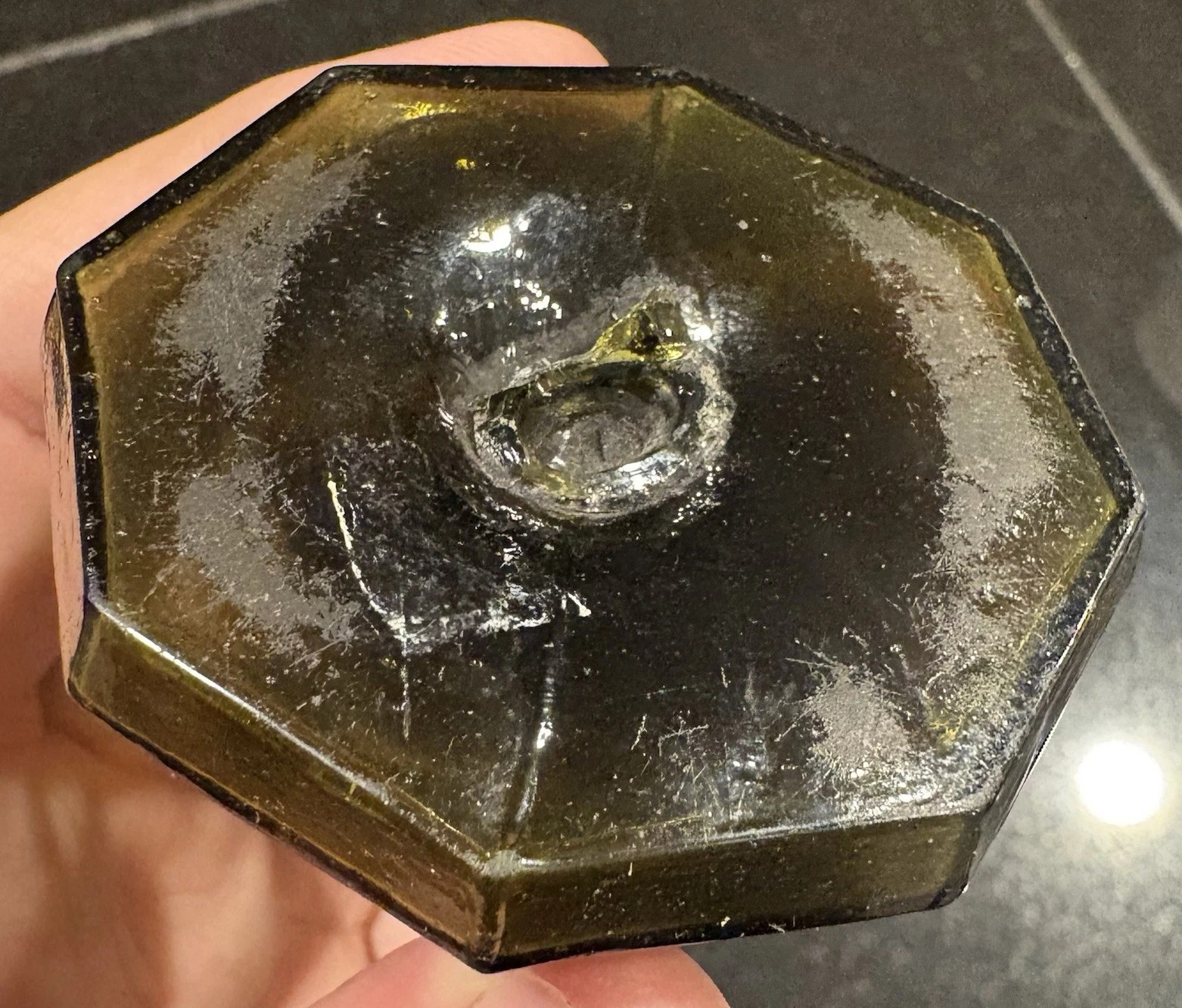
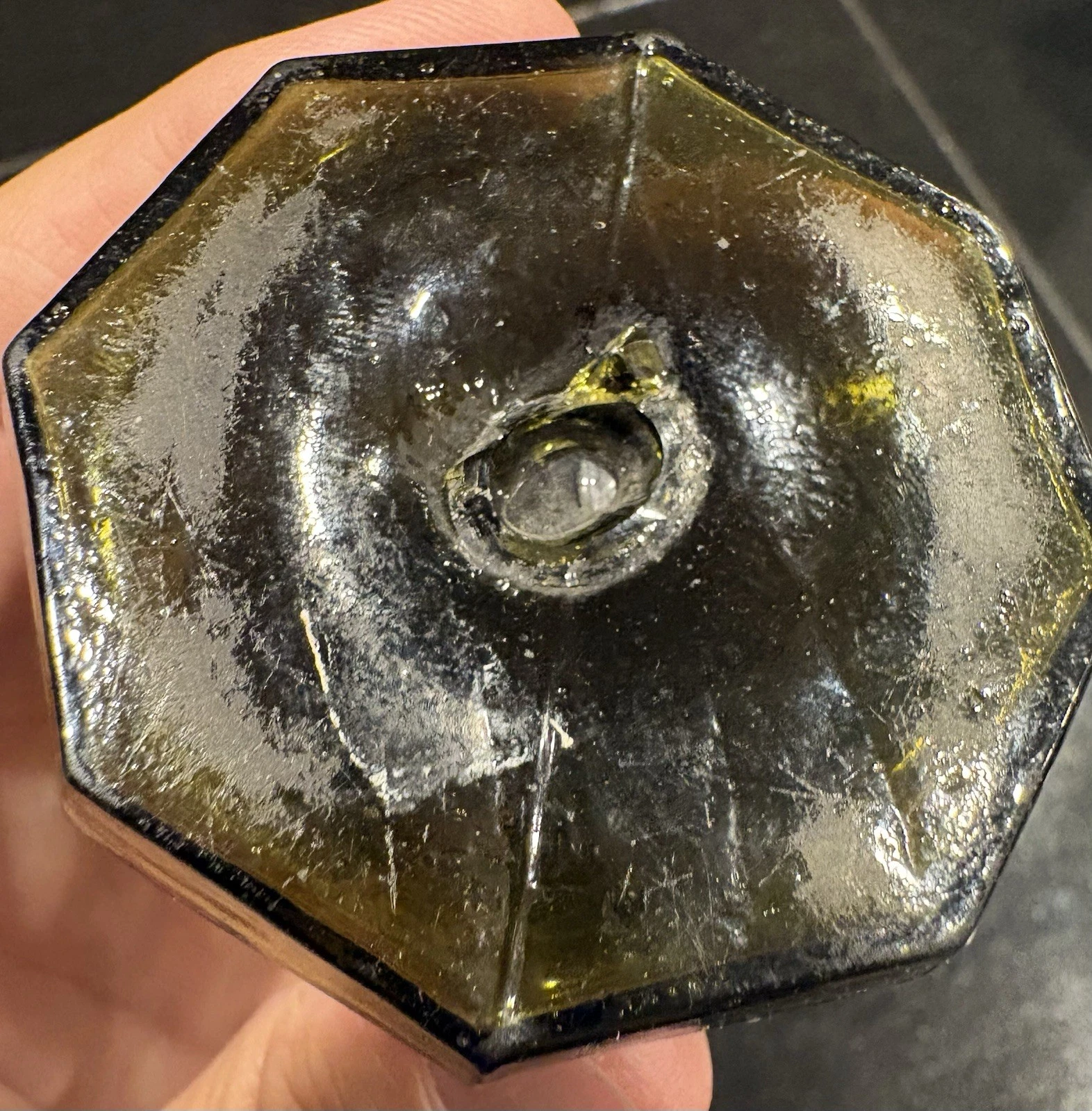
New England 8-Sided Umbrella Ink Bottle
| Categories | Ink Bottle |
| Type | Umbrella |
| Material | Glass |
| Markings | Unmarked |
| Manufacturer | Undetermined |
| Origin | United States |
| Date or Era | circa 1850 |
| Measuring | 2 ½” high |
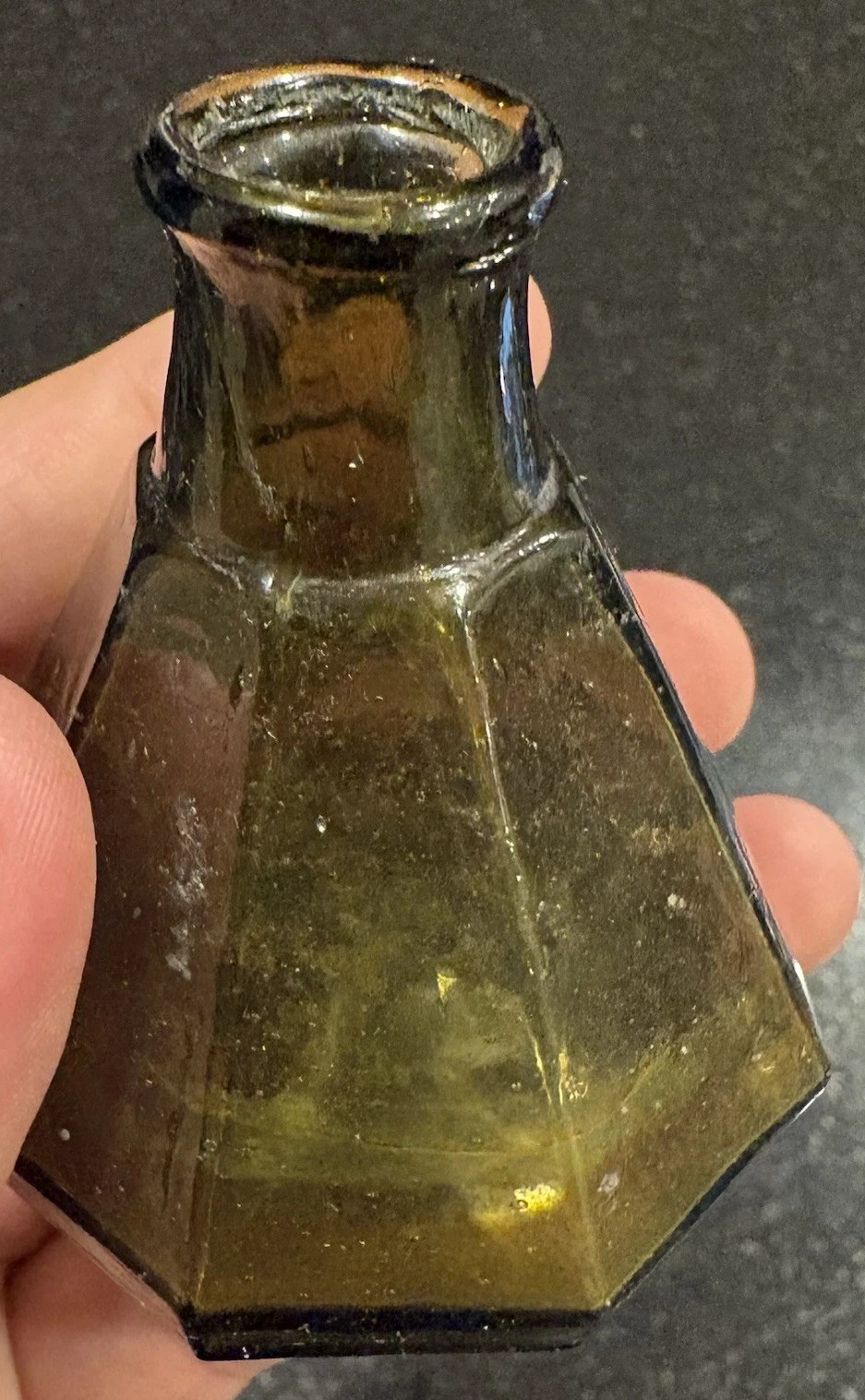
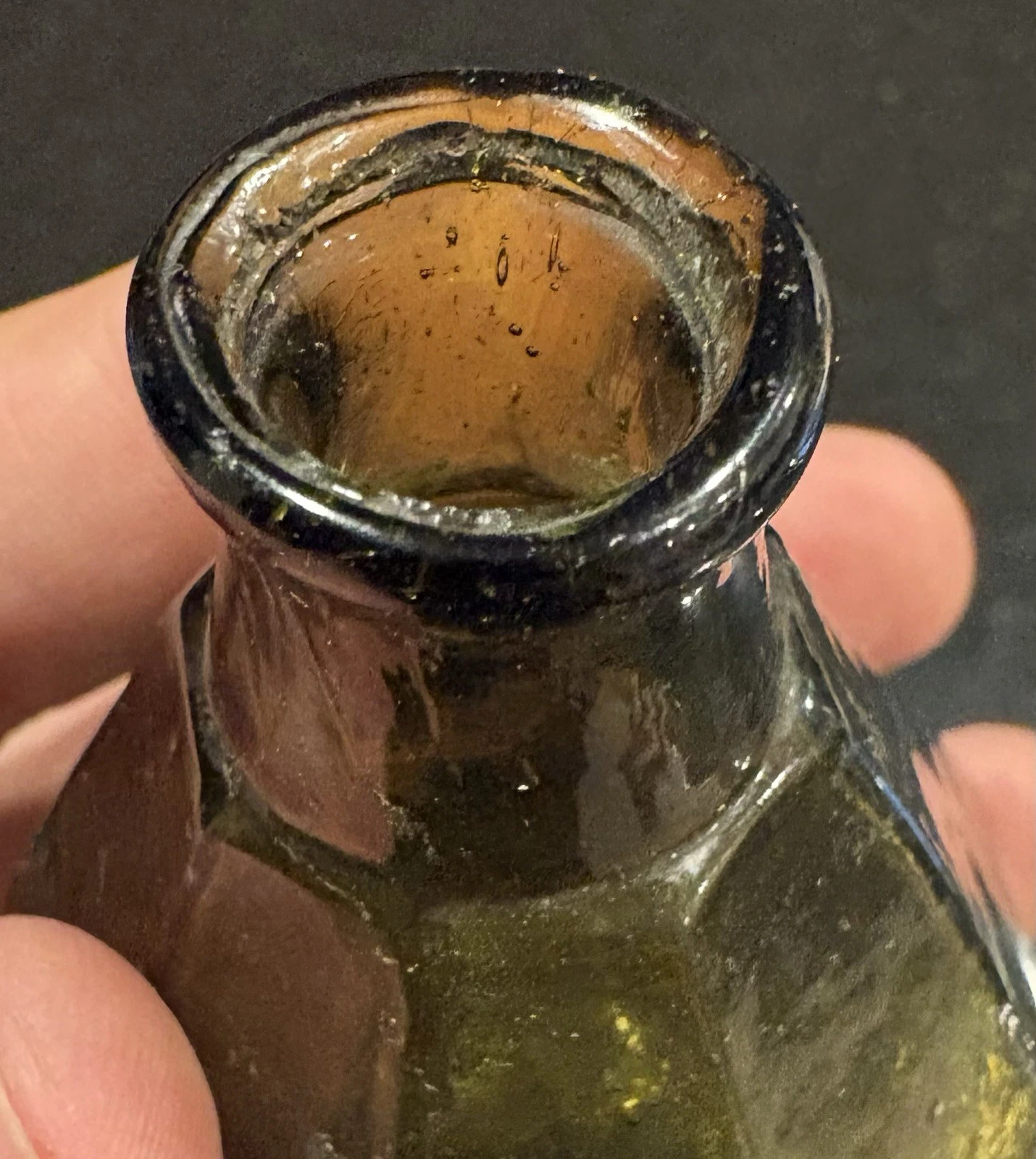
This New England 8-Sided “Umbrella” Ink Bottle in olive-amber/green-amber glass is a quintessential example of early American utilitarian glassmaking.
Description
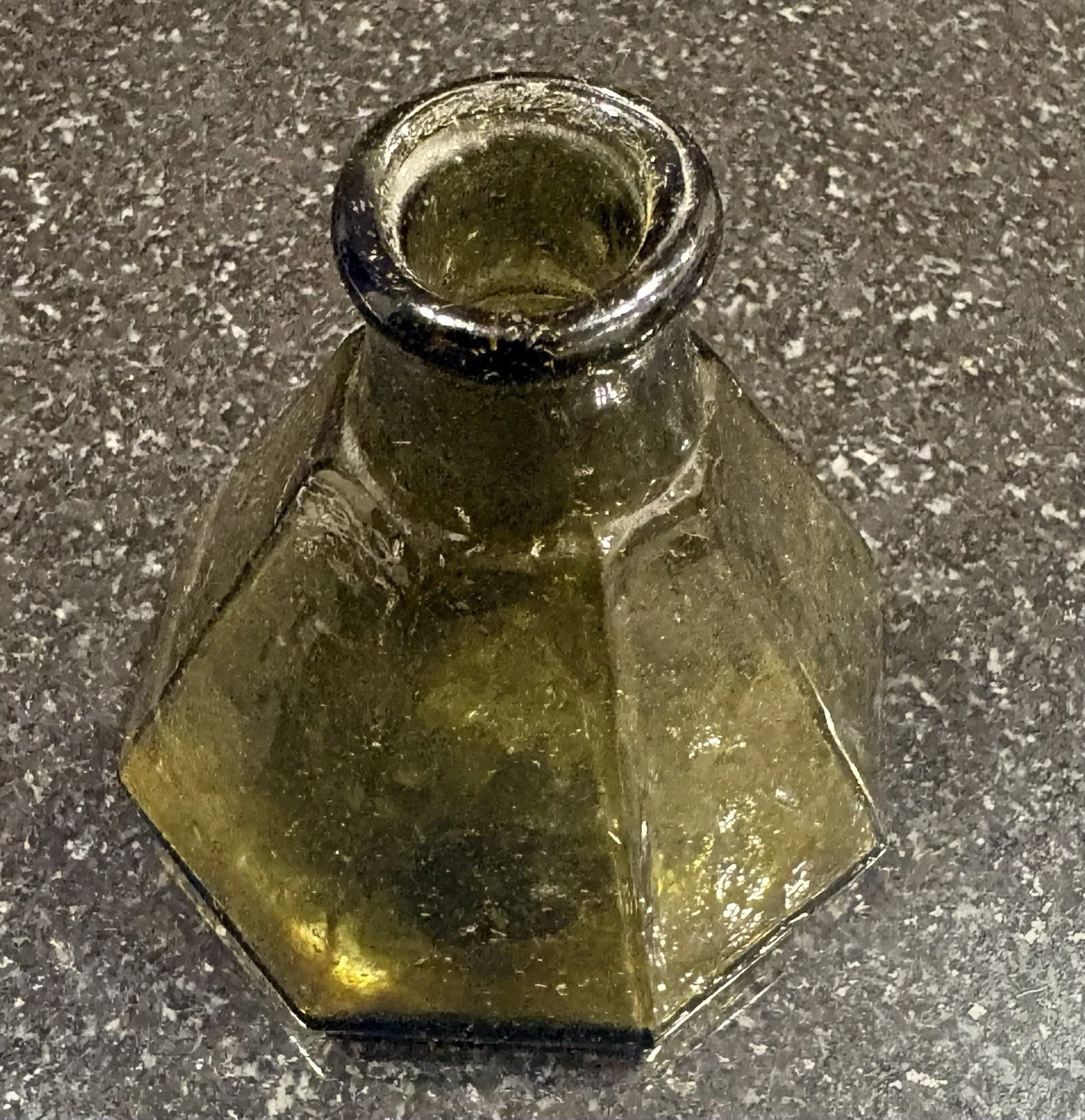
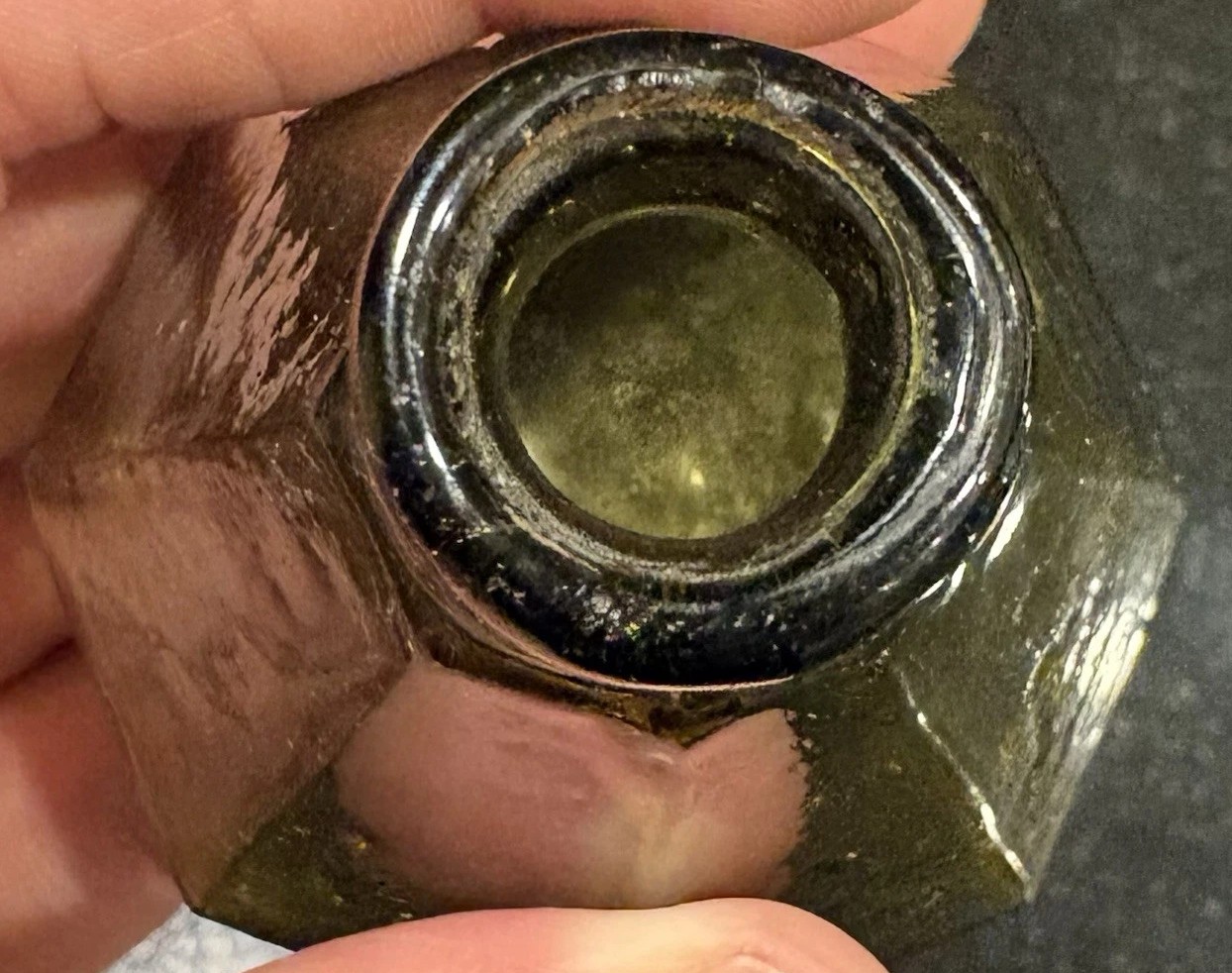
- Shape & Form: It features the iconic 8-sided “umbrella” (octagonal fluted cone) shape, tapering upward from a wide, flat base to a narrow neck.
- Lip / Finish: The bottle has an inwardly rolled / folded lip (common for dip-molded inkwell finishes of this period to provide a smooth, durable edge for dipping quills or pens).
- Color & Glass Character: The glass exhibits a rich, variable olive-amber / yellow-green tone full of character. Under transmitted light, seed bubbles (seedies), subtle whittling, and natural color striations are clearly visible, characteristic of 19th-century New England glasshouse batch mixes.
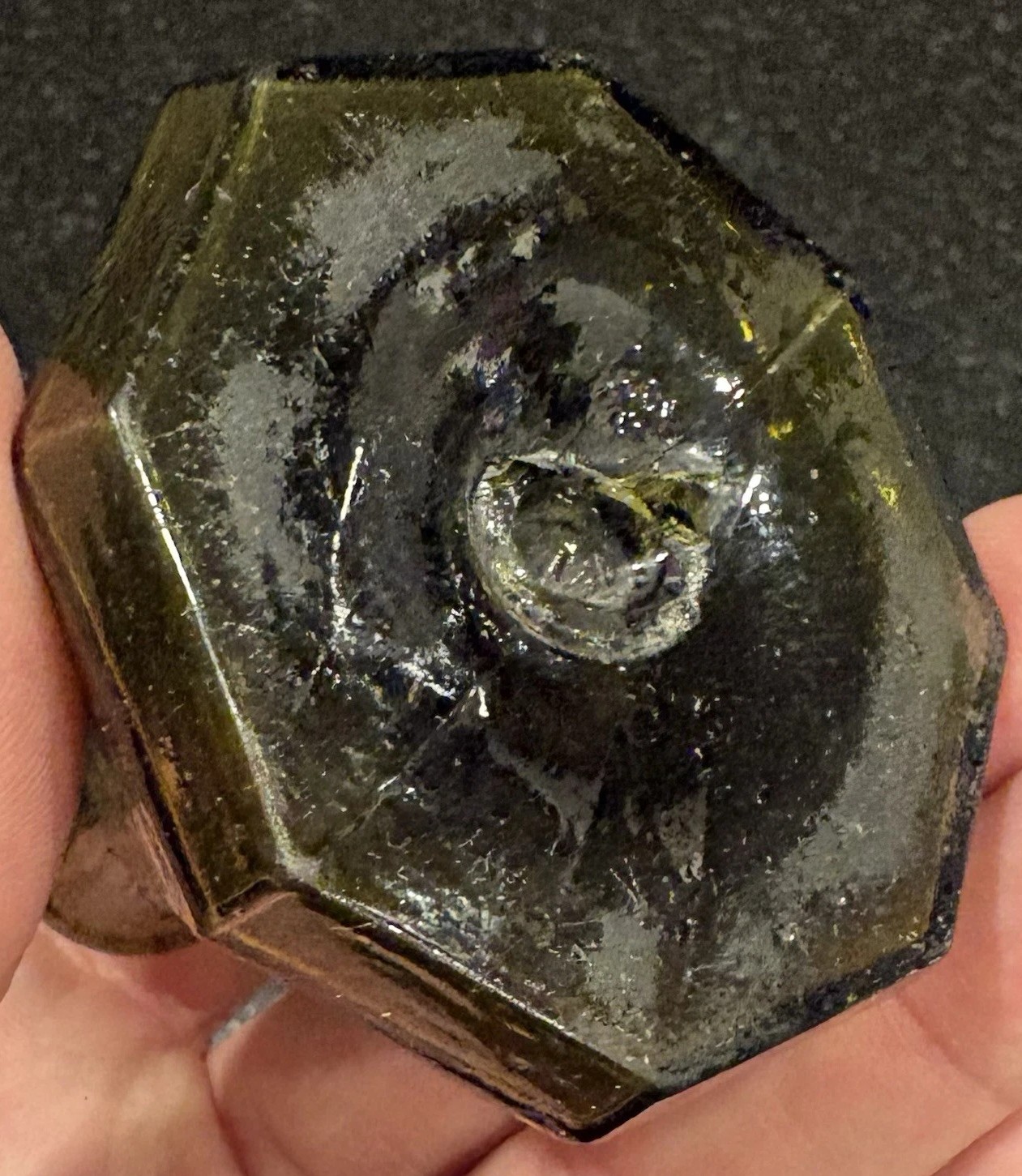
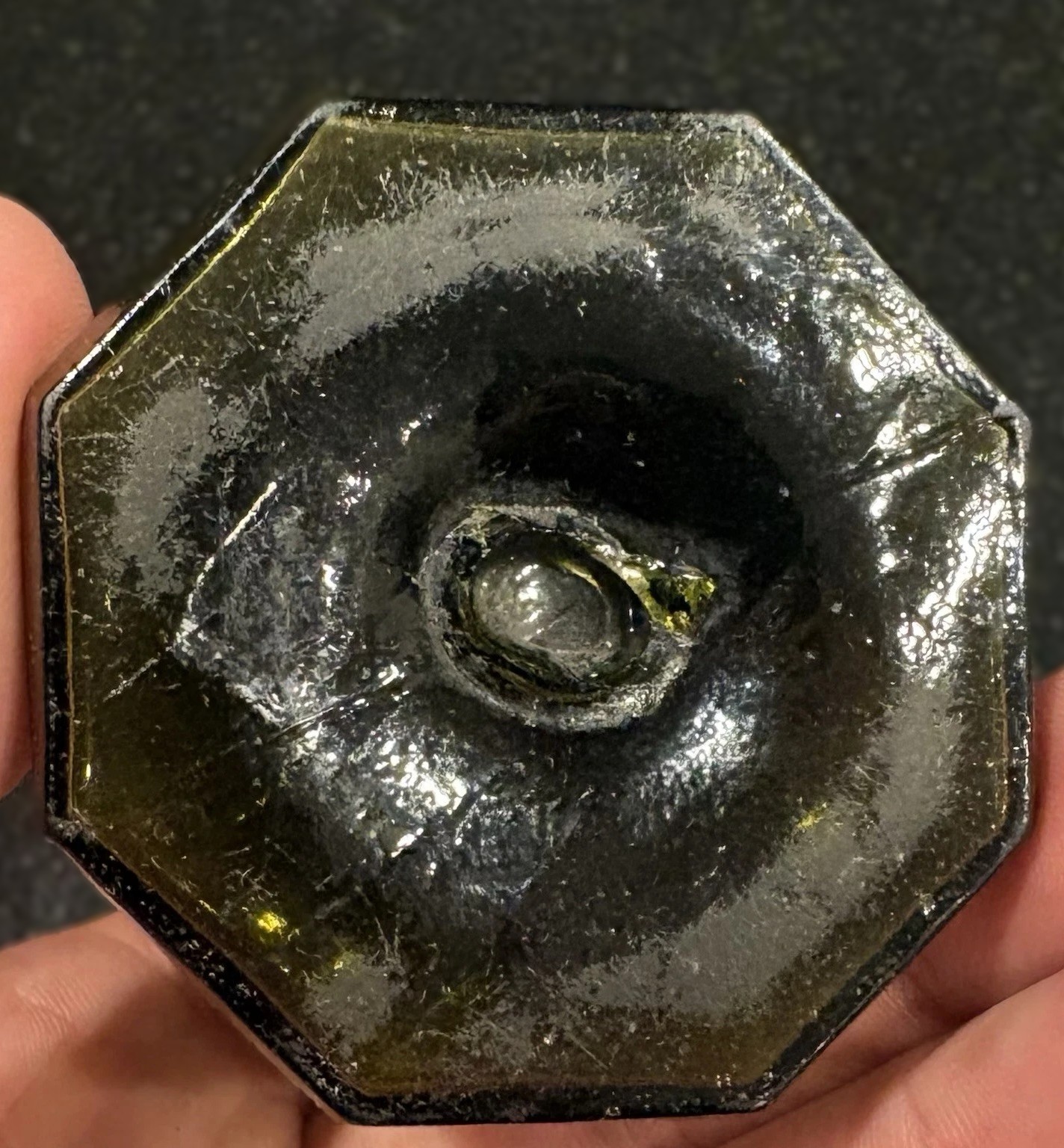
- Base & Pontil: The bottom reveals a deep, sharp open pontil scar (blowpipe pontil), showing where the blowpipe was attached to hold the piece while the neck and lip were finished.
- Condition Notes: The base displays authentic shelf wear (fine scratching around the outer bottom edge where it rested on desks and surfaces for decades). The interior exhibits mild glass sickness/haziness, typical for dug or long-stored utilitarian bottles. Overall, the bottle remains in solid condition with sharp panel lines and no major structural damage.
Age & Date of Manufacture
- Estimated Date: c. 1840 – 1850s (Early Victorian / Pre-Civil War Era).
- Glasshouse Origin: Blown at one of the prominent early New England glassworks—most likely a New Hampshire (e.g., Stoddard or Keene Glass Works) or Connecticut (e.g., Coventry or Willington) factory known for their rich olive-green and amber glass formulas.
Key Dating Indicators:
- Open Pontil Mark: Open (tubular blowpipe) pontil marks on American utilitarian bottles peak between the 1830s and mid-1850s. By the late 1850s and early 1860s, glasshouses transitioned to the “snap-case” tool, which held the bottle without leaving a rough, jagged pontil scar.
- Dip Mold Construction: The pronounced vertical mold seams stopping at the shoulder/neck indicate it was dip-molded before the lip was hand-turned and finished.
Sold for $433 in June 2026
Content disclaimer. The information posted is the owner’s best knowledge and may not have been vetted by the SOIC. We welcome comments, corrections, and additions, working to make our website information comprehensive and accurate.
Join the Society of Inkwell Collectors (SOIC) – it’s free!
Founded in 1981 as a non-profit organization,
we are documenting inkwells (and accessories).
We’re here to help and inform!