

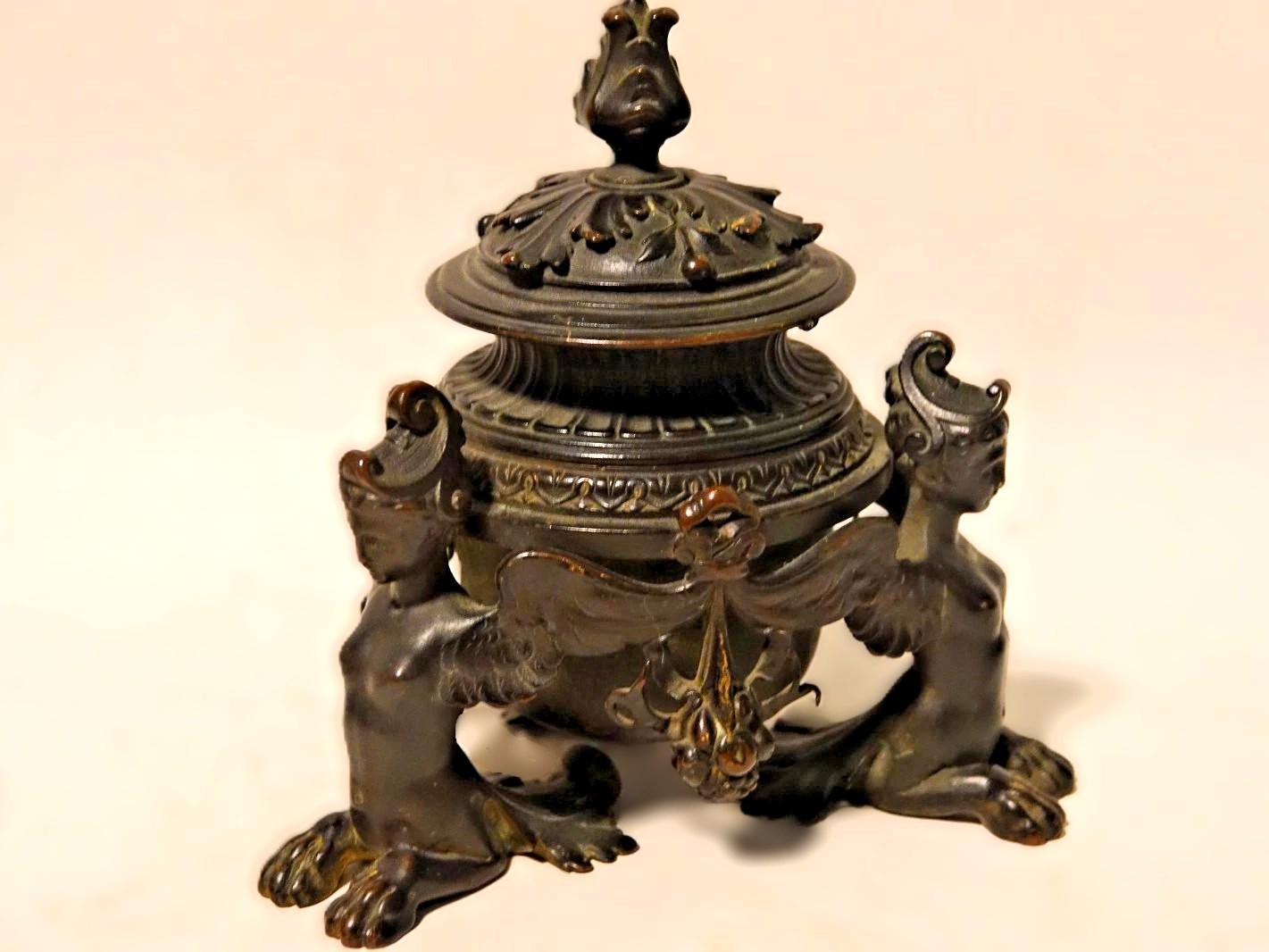
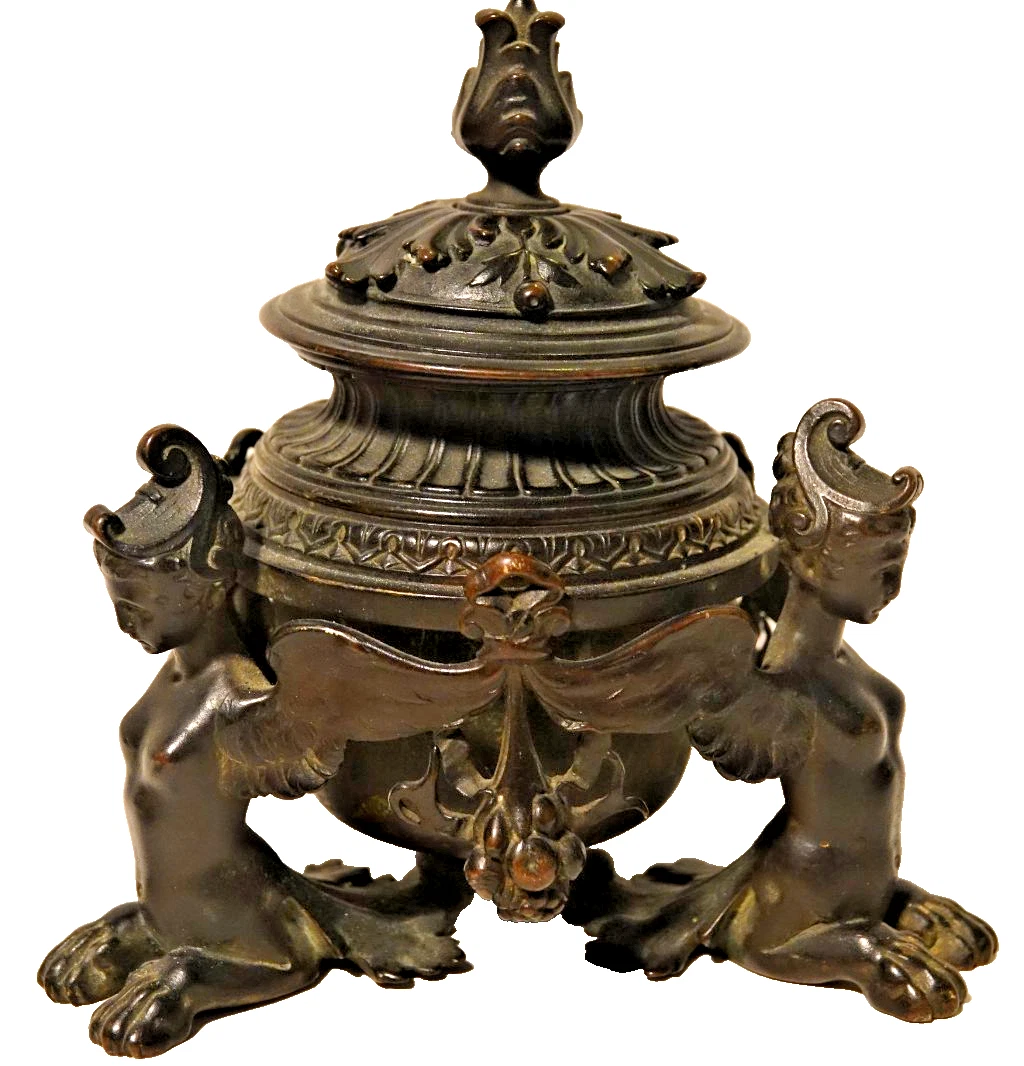



Neoclassical Bronze Inkstand – Grand Tour
| Categories | Souvenir |
| Type | Grand Tour |
| Material | Bronze |
| Markings | Unmarked |
| Manufacturer | Undetermined |
| Origin | Undetermined |
| Date or Era | circa 1870 |
| Measuring | 6” high |
This bronze inkstand is a classic example of Neoclassical design, heavily influenced by the “Grand Tour” style popular in the 19th century. These pieces were often purchased as high-end souvenirs by travelers exploring the cultural sites of Europe, particularly Italy and France.
Figures and Symbols
The design is rich with classical allegorical and decorative elements:
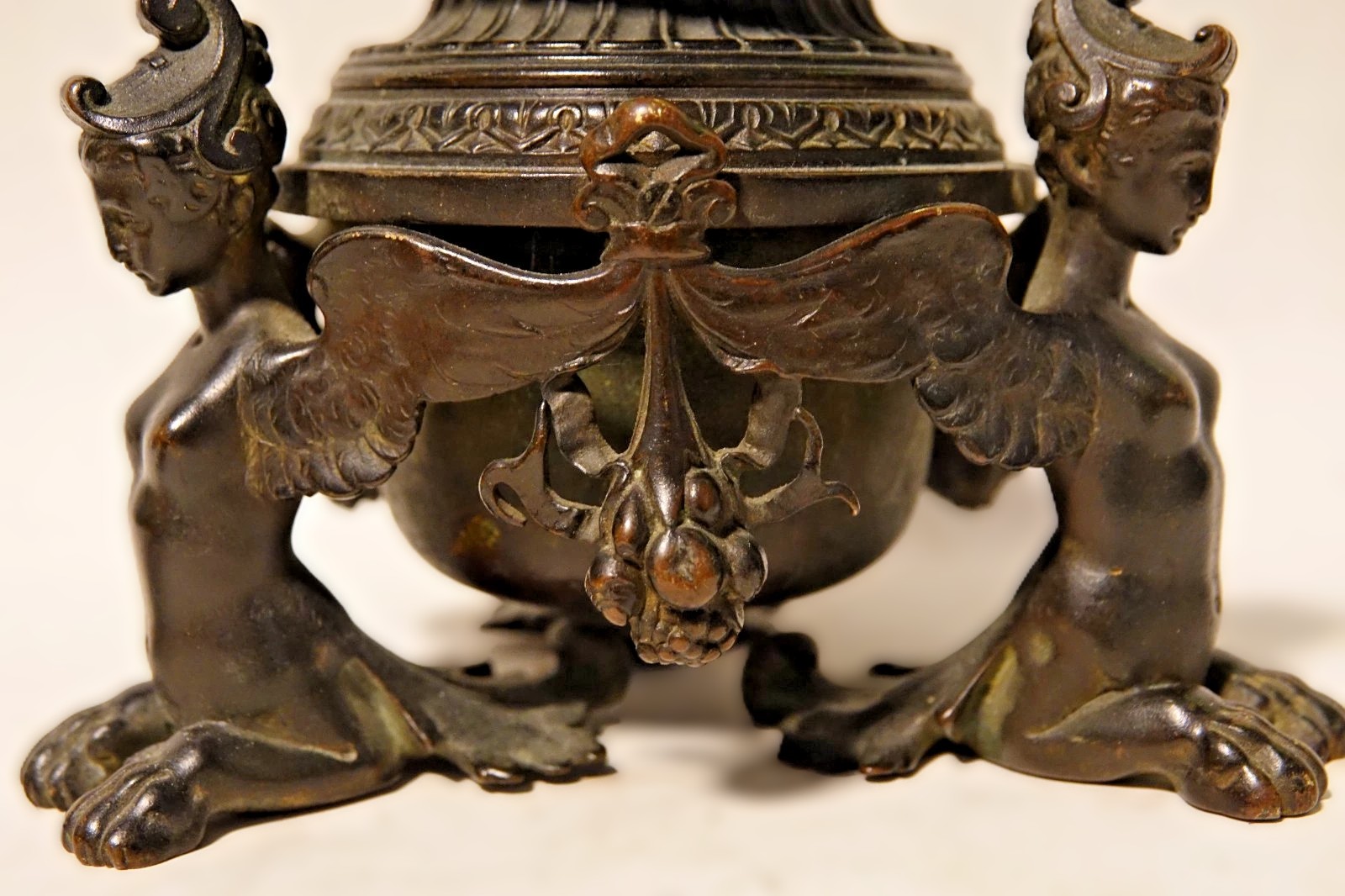
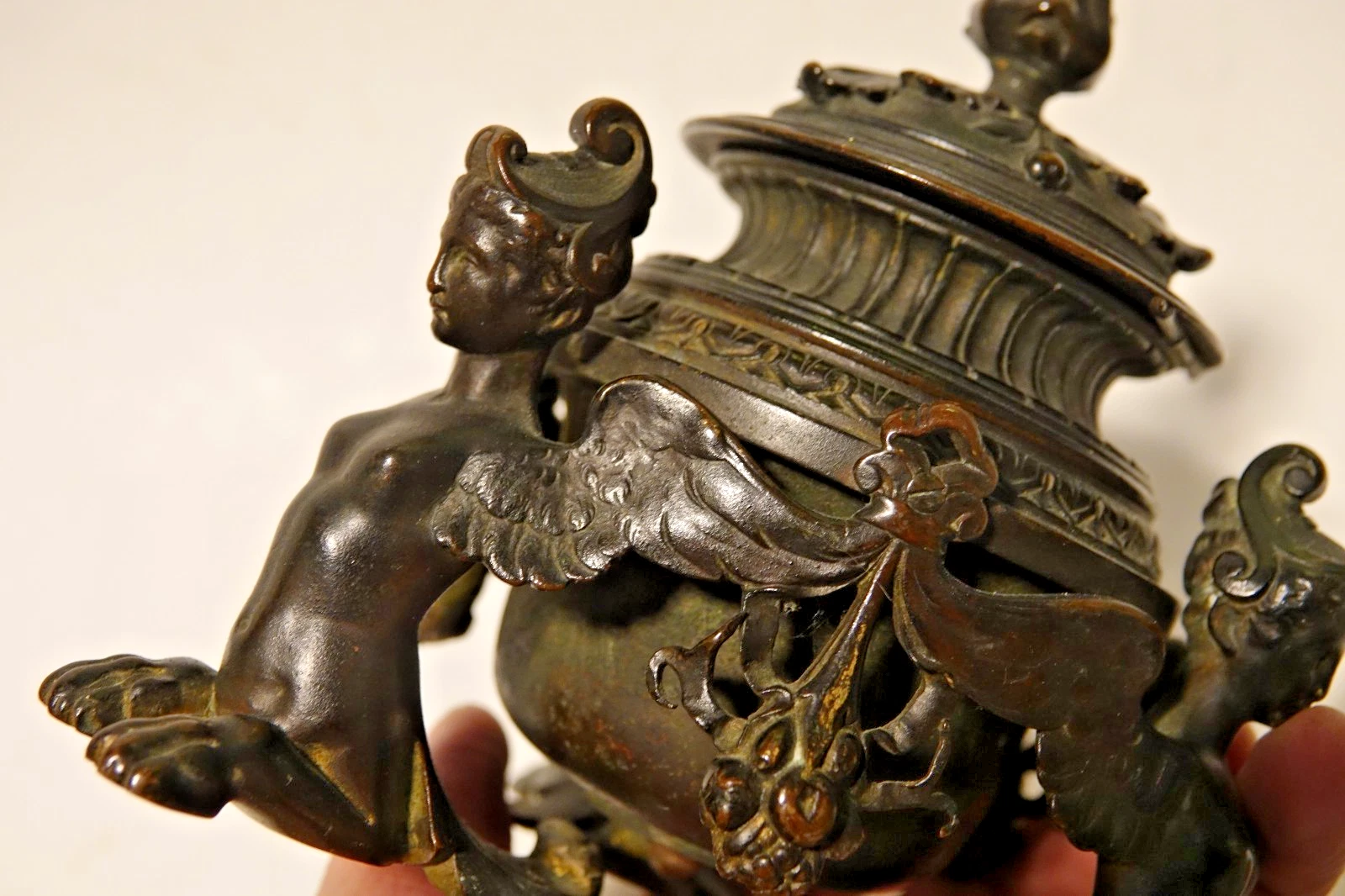
- Winged Sphinxes: The inkstand is supported by three, winged female sphinxes. In neoclassical art, these figures often symbolize mystery and wisdom. Their bodies transition from human torsos to lion-like legs with prominent claws.
- Festoons and Garlands: Draped between the sphinxes are heavy garlands or festoons. These appear to be decorated with clusters of grapes or possibly pinecones, both of which were ancient symbols of abundance, fertility, and hospitality.
- Acanthus Leaves: The lid and the lower portion of the urn feature stylized acanthus leaf motifs. This is one of the most common decorative elements in Greek and Roman architecture, representing enduring life.
- Bud Finial: The lid is topped with a finial shaped like a budding flower or fruit, providing a functional grip for the hinged cover.
Construction and Components
- Hinged Lid: The top opens on a hinge to reveal the interior well.
- Glass Insert: The piece retains its original frosted glass liner with a brass or bronze rim.
- Underside: The base shows a centralized screw assembly holding the tripod structure together, with the feet of the sphinxes resting on decorative leafy pads.
Origin and Age
- Estimated Age: Based on the casting quality and style, this piece likely dates to the mid-to-late 19th century (circa 1850–1880).
- Probable Origin: It was most likely manufactured in Italy (specifically Rome or Naples) or France. Italian foundries frequently produced these bronzes as “souvenirs” that mimicked the ancient artifacts being excavated at sites like Pompeii and Herculaneum during that era.
Sold for $275 in April 2026
Content disclaimer. The information posted is the owner’s best knowledge and may not have been vetted by the SOIC. We welcome comments, corrections, and additions, working to make our website information comprehensive and accurate.
Join the Society of Inkwell Collectors (SOIC) – it’s free!
Founded in 1981 as a non-profit organization,
we are documenting inkwells (and accessories).
We’re here to help and inform!