

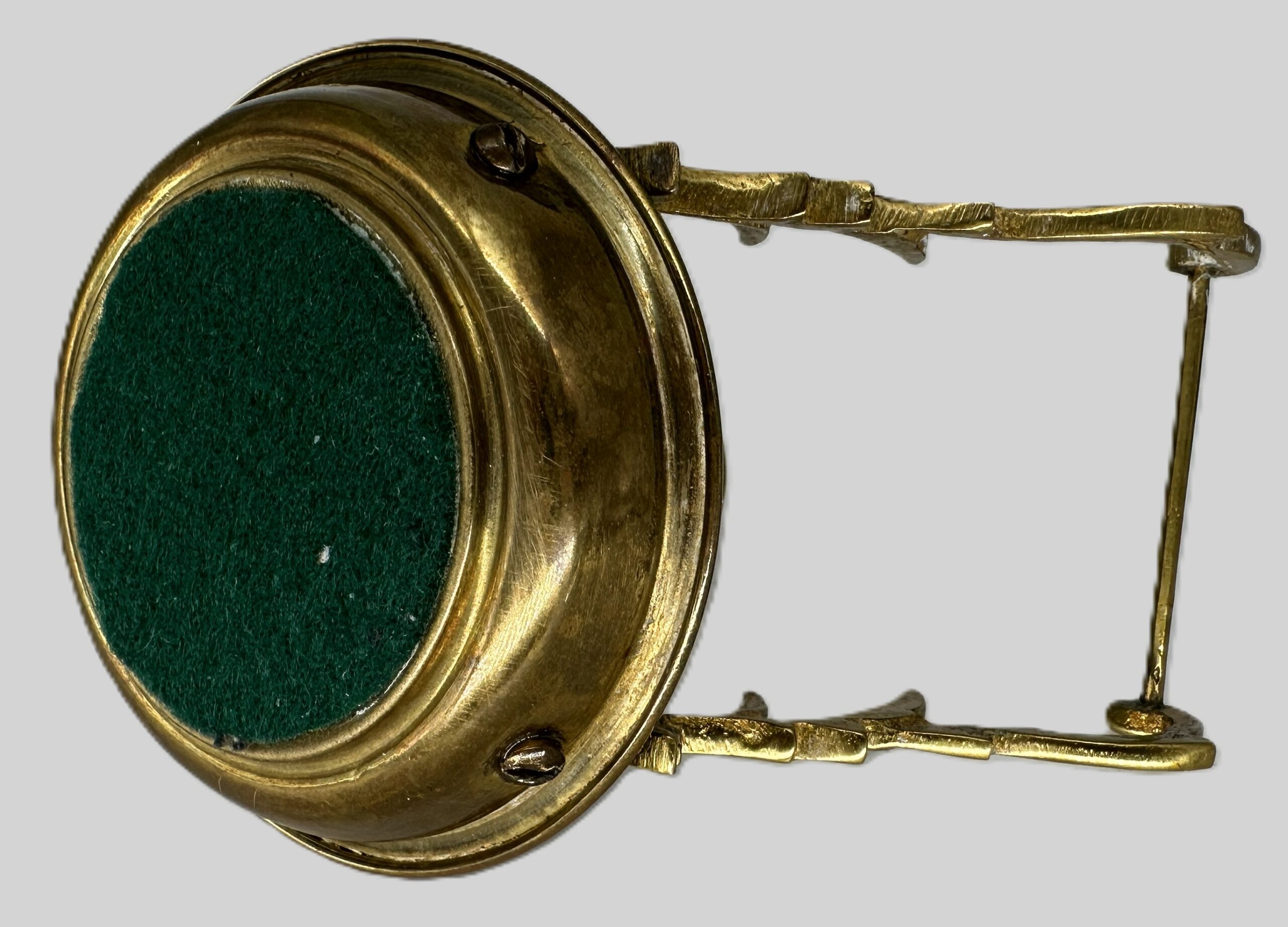

Miniature “Pump” Inkwell – Salesman’s Sample?
| Categories | Mechanical - Pump / Siphon |
| Type | Pump |
| Material | Brass, Porcelain |
| Markings | Unmarked |
| Manufacturer | Undetermined |
| Origin | France |
| Date or Era | circa 1880 |
| Measuring | 3” diameter; 2 ½” high |
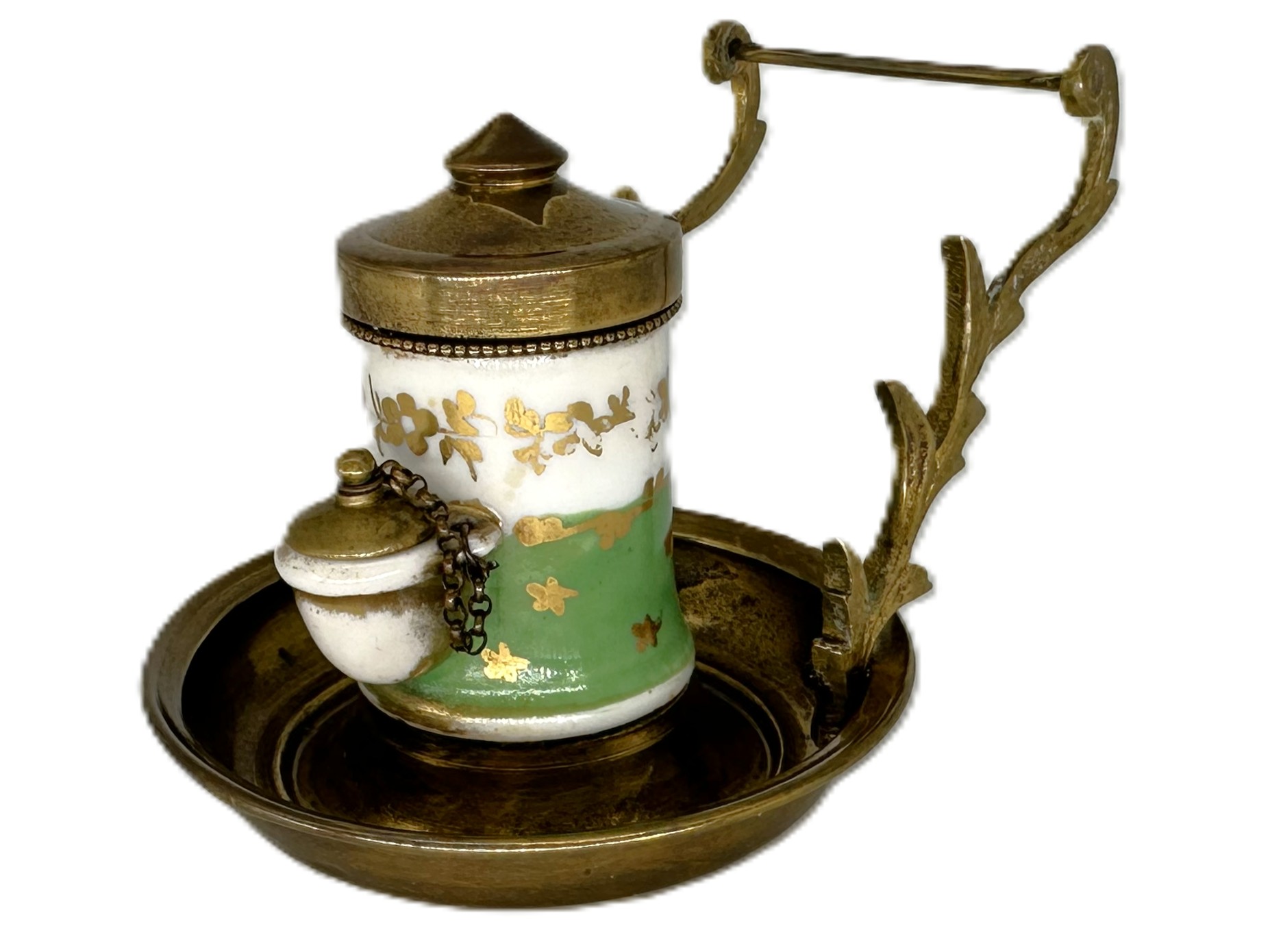
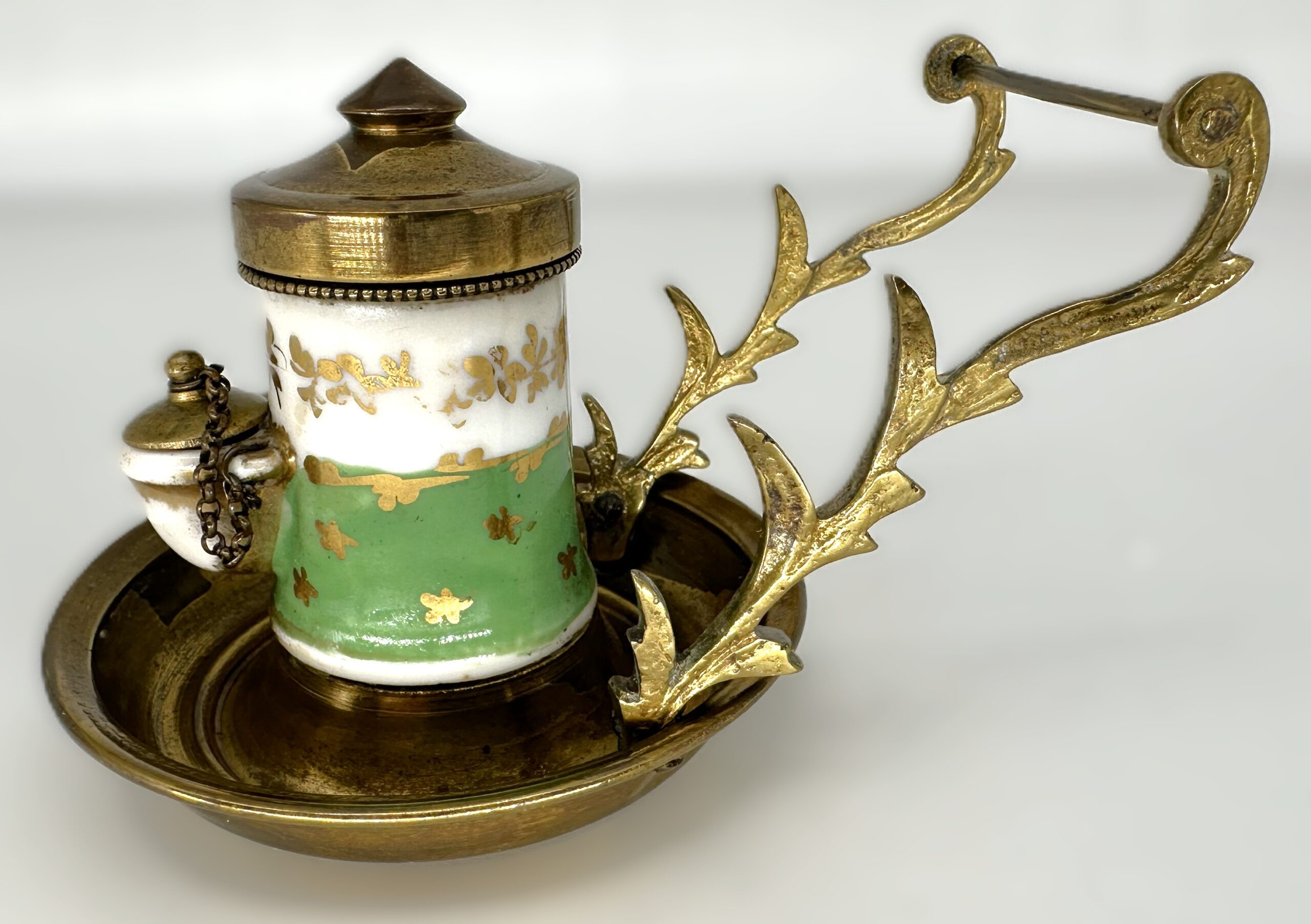
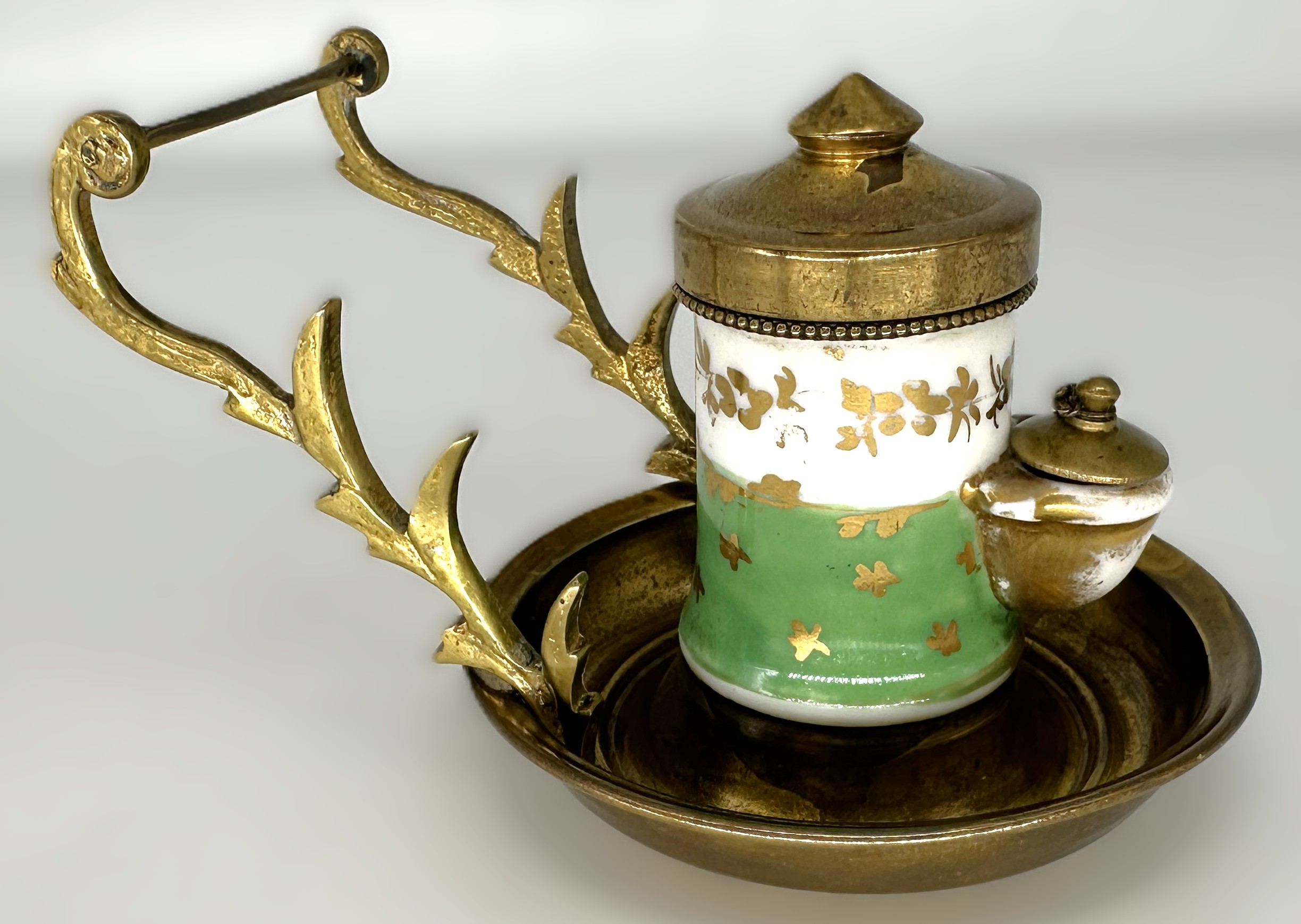
This miniature “pump” inkwell is a “tiny” version of the technical encriers à pompe produced in Paris during the late 19th century. Its diminutive size (3″ diameter base and 2 ½” height) makes it an example of a specialized category of antique miniatures.
Description & Mechanical Design
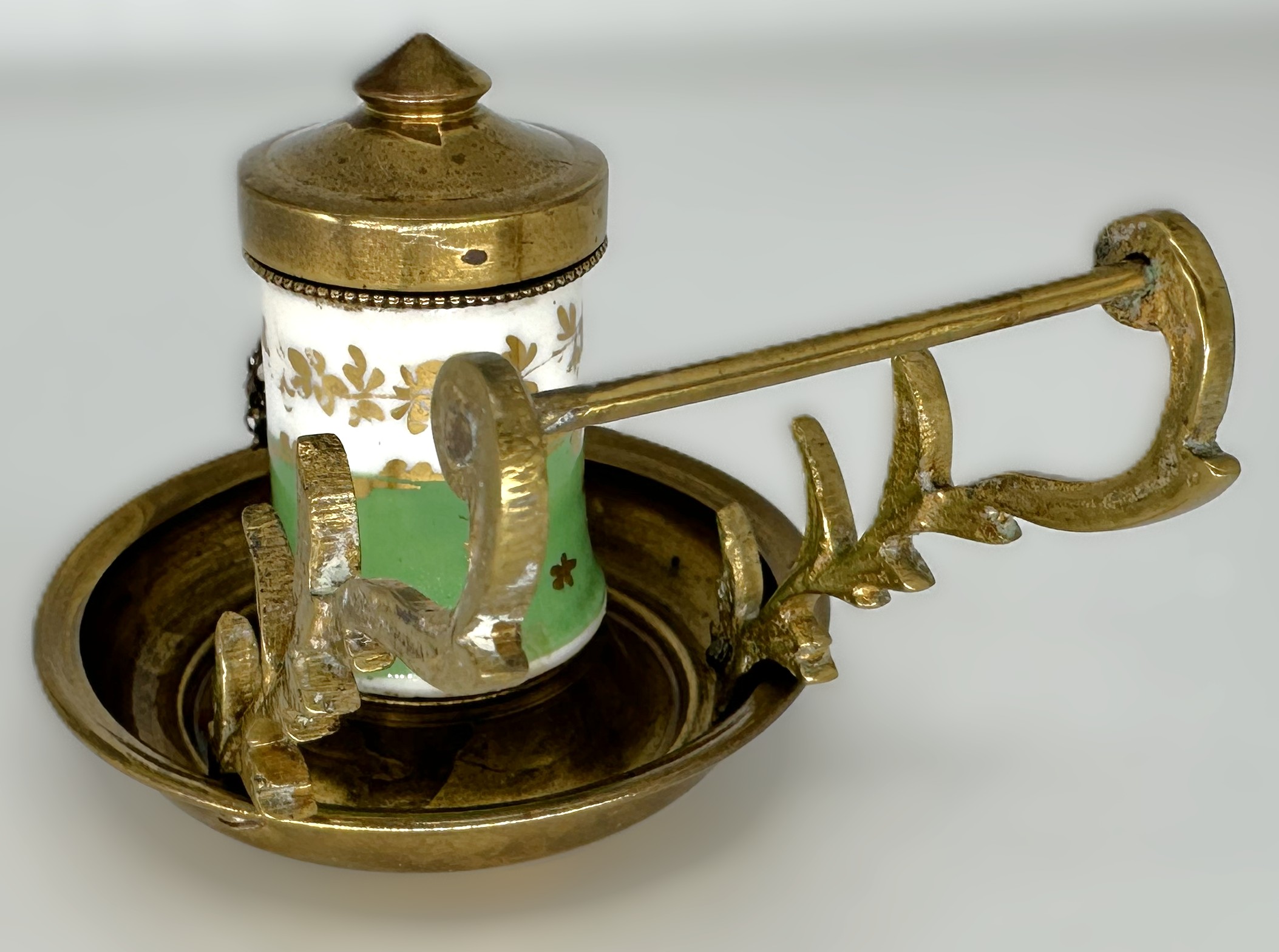
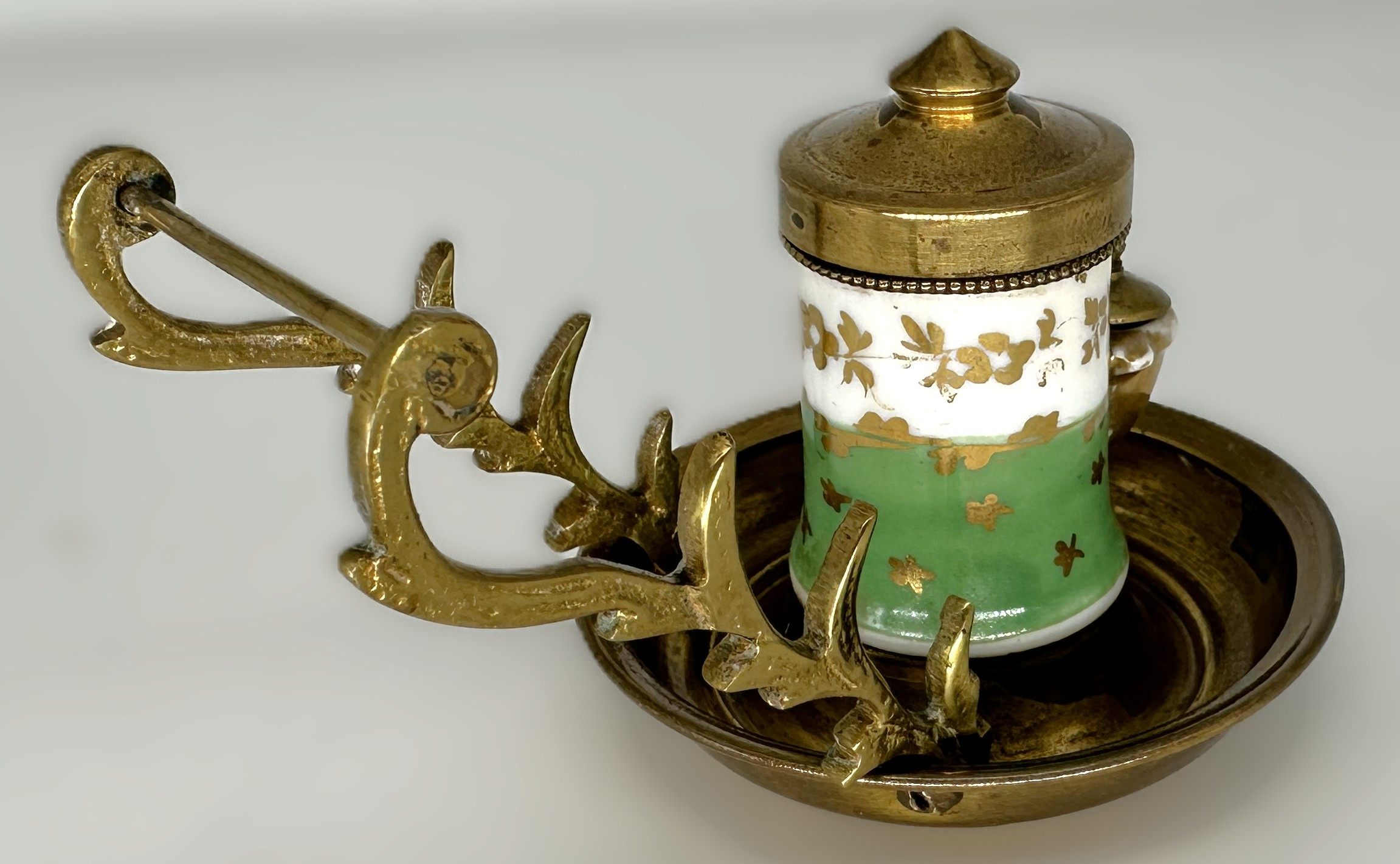
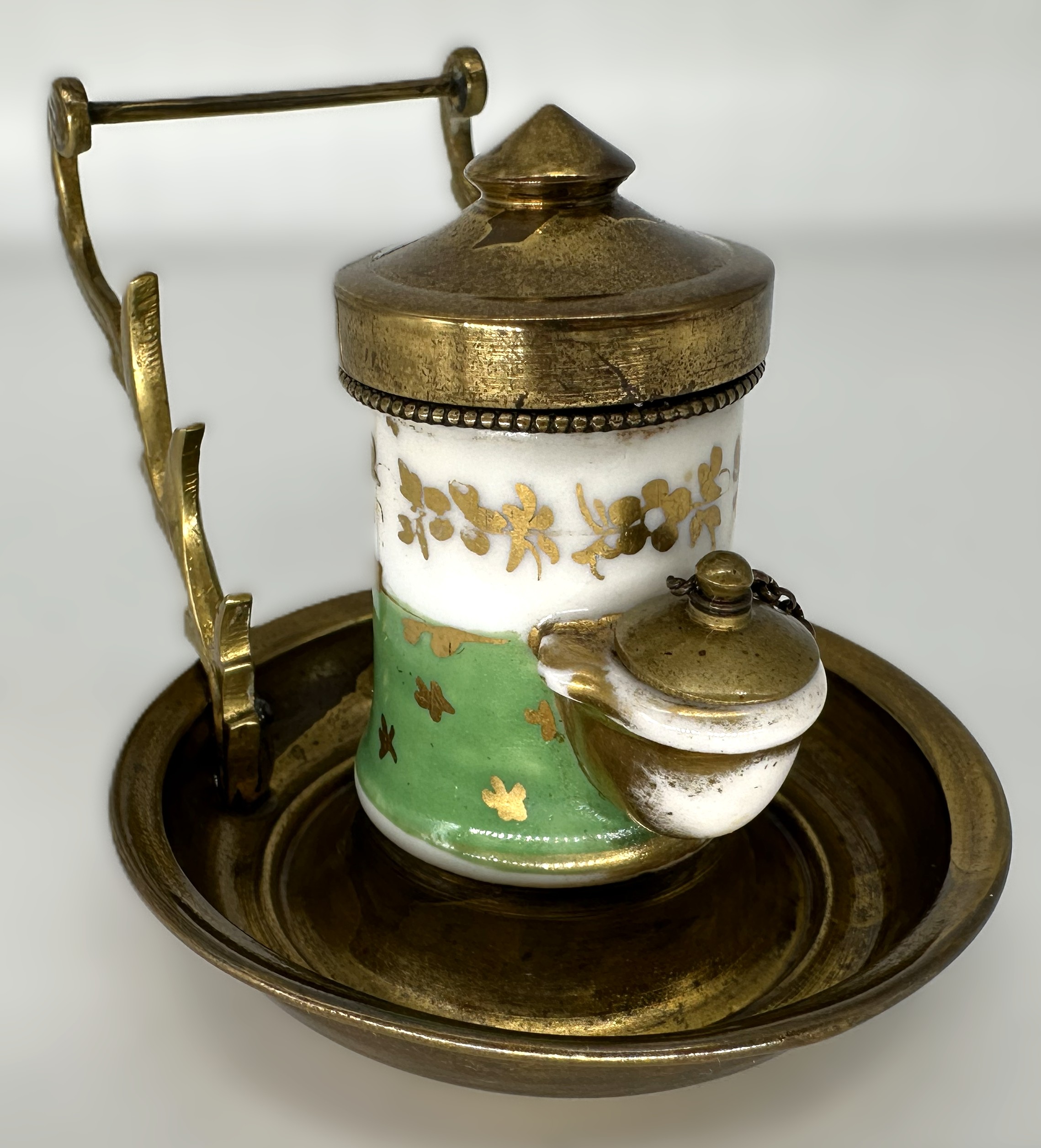
- The Porcelain Body: The central reservoir is a small porcelain cylinder decorated with an apple-green band and hand-painted gold gilt floral sprays.
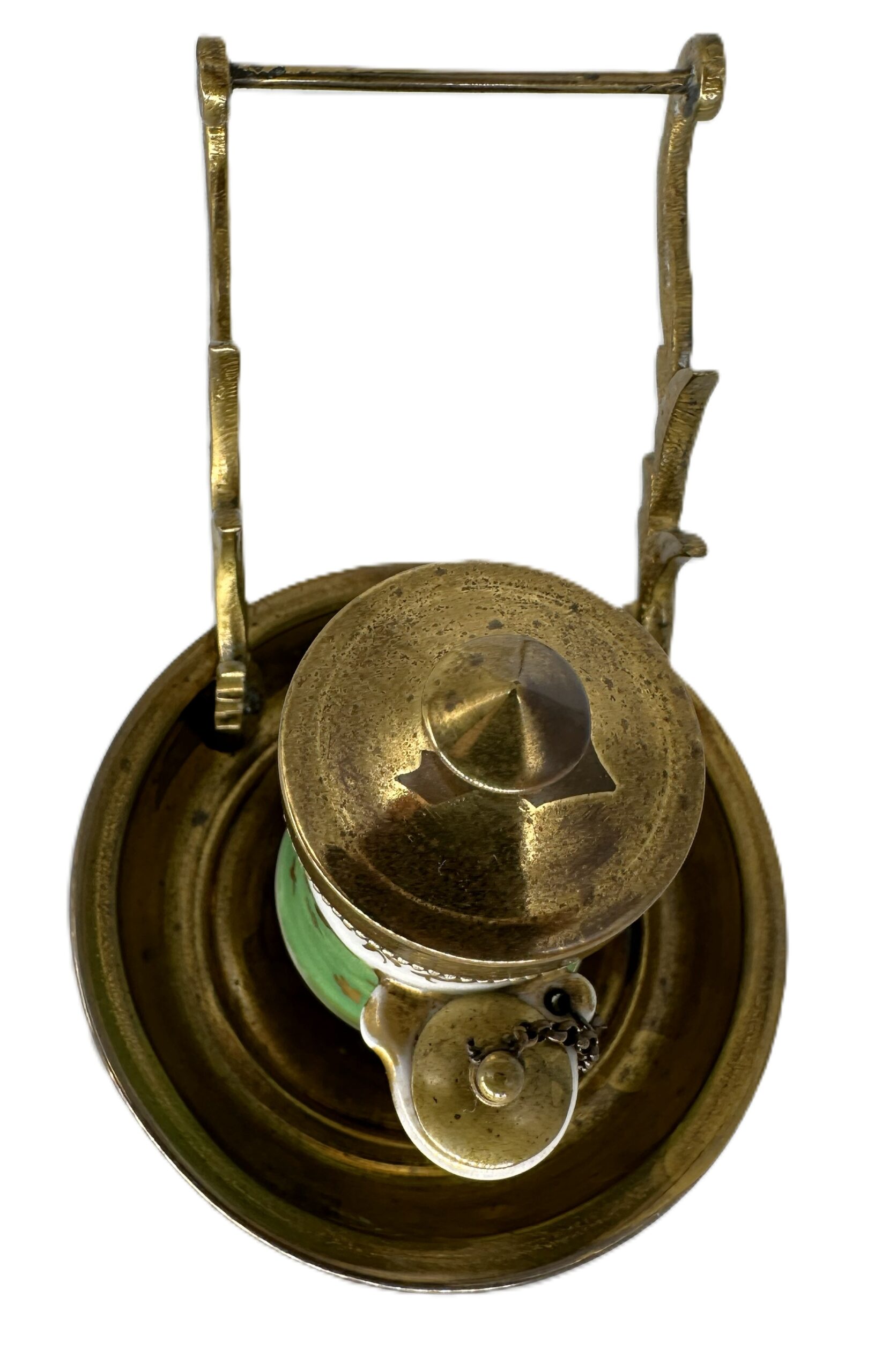
- The Mechanism: Unlike the functional models, this piece has a fixed brass knob at the top and is missing an internal plunger. On a full-sized version, this knob would rotate a screw to displace ink into the front font.
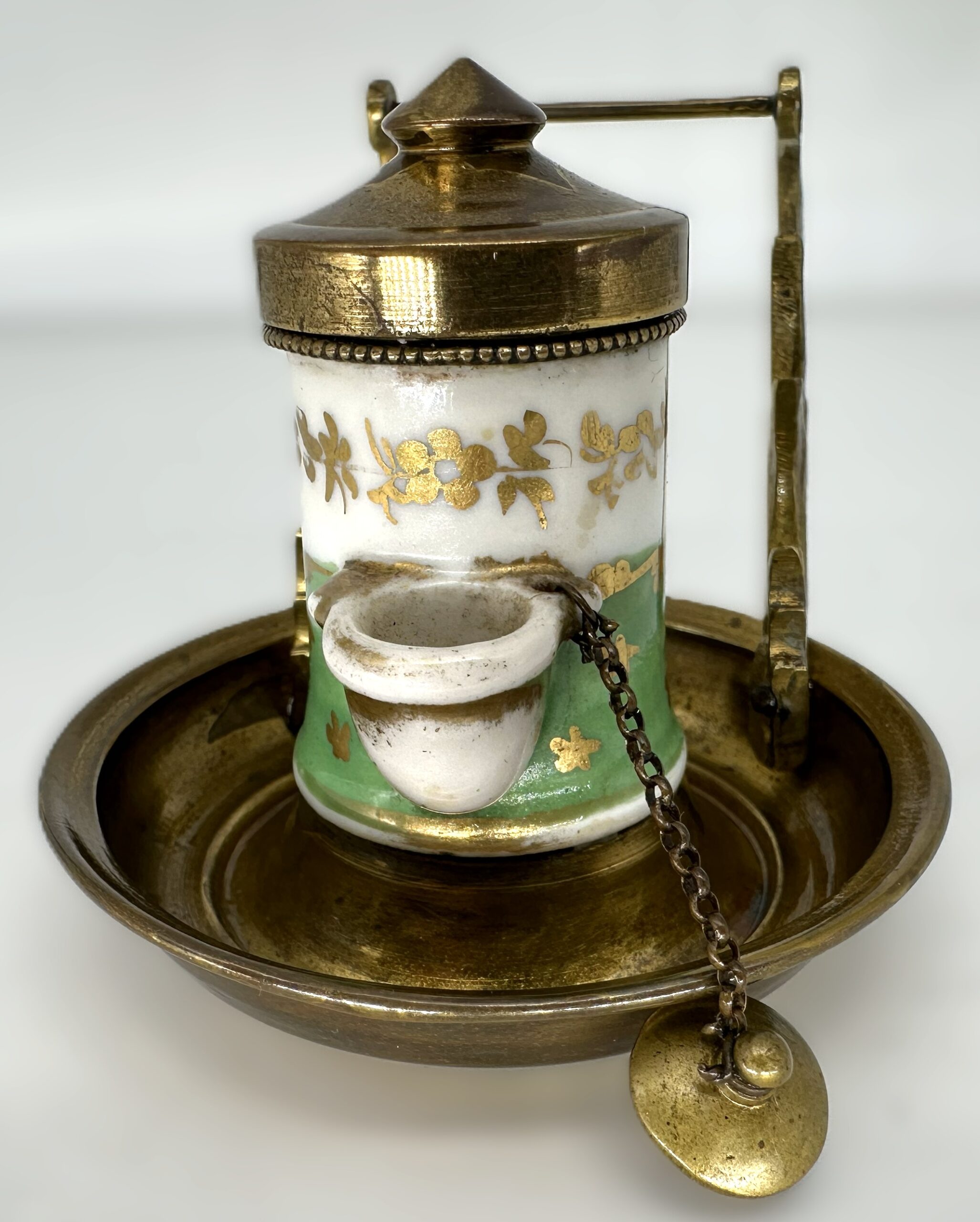
- The Front Font: It features a small, integrated porcelain font with a hinged brass lid secured by a safety chain.
- The Brass Frame: The inkwell is mounted on a shallow brass saucer with an ornate double-arm pen rack extending from the back.
Possible Origins:
Given the lack of a maker’s mark and its non-functional, fixed knob, there are three likely possibilities for its origin:
- A Salesman’s Sample: Manufacturers like the Journet or Haviland workshops often produced high-quality, non-functional “samples”. These allowed traveling salesmen to demonstrate the “look and feel” of a new line of desk accessories without carrying the weight and mechanical complexity of full-sized units.
- High-End Dollhouse Accessory: During the Belle Époque, “Poupee” (doll) culture in France was immense. Wealthy families commissioned “miniature realities” for elaborate dollhouses that included real porcelain and brass fittings. The fixed knob and light weight strongly suggest this was an ornamental accessory rather than a tool for a child.
- A Promotional Desk Novelty: Some firms produced “toy” versions of their patented inventions as paperweights or promotional gifts for loyal clients, maintaining the silhouette of the famous J.L. Bascule or T.H. Pompe designs in a pocket-sized form.
Similar examples of miniature pump-style inkwells are rare, as most surviving “pump” (or à pompe) models were full-sized professional tools for bookkeepers and writers. However, this piece belongs to a specialized category of 19th-century luxury miniatures produced in Paris and Limoges.
- The “Salesman’s Sample” Pump Inkwell
Small, non-functional versions of the “T.H. Paris” and “J.L. Bascule” models were sometimes produced as salesman’s samples.
- Design: These mimic the exact silhouette of the patented full-sized versions but often feature a fixed or stationary knob at the top.
- Purpose: Because the internal pump mechanism was expensive to manufacture, these “toy” versions were used by traveling representatives to showcase the porcelain patterns (like this green-and-gold gilt design) to retailers without the weight of the actual mechanical components.
- French Fashion Doll (Poupée) Desk Sets
In the mid-to-late 19th century, luxury doll makers in Paris, such as Jumeau or Bru, commissioned high-end desk accessories for their elaborate doll displays.
- The “J.L.” Connection: Some of these sets were crafted by the same brass foundries that supplied the frames for full-sized inkstands.
- Miniature Proportions: These are typically 2 to 3 inches tall, mirroring the exact dimensions of this piece. They often feature the same high-quality hand-painted porcelain (like this apple-green band) but lack the internal plunger as they were intended only for display.
- Fève and Novelty Porcelain Miniatures
Tiny porcelain inkwells were also produced as “Fèves” (small charms hidden in Epiphany cakes) or as commemorative trinkets from World’s Fairs.
- Style: While many are simple pots, some were modeled after more complex mechanical styles to reflect the technological “novelty” of the era.
- Construction: These are usually one solid piece of porcelain, though some “deluxe” versions incorporate brass lids and chains to mimic the real thing.
Key Comparisons for This Piece
| Feature | This Miniature | Full-Sized Professional |
| Height | 2 ½ inches | 5 to 7 inches |
| Knob | Fixed / Stationary | Rotating screw mechanism |
| Plunger | None (Empty Chamber) | Solid porcelain/glass piston |
| Origin | Unmarked | Marked |
Conclusion: This inkstand’s combination of high-quality brass work and a “non-working” mechanism suggests it was either a high-end salesman’s sample or a luxury accessory for a French fashion doll display. The green-and-gold floral pattern was a standard “Louis XVI” style used by Haviland and other Paris workshops between 1870 and 1890.
Estimated Value: $75
Content disclaimer. The information posted is the owner’s best knowledge and may not have been vetted by the SOIC. We welcome comments, corrections, and additions, working to make our website information comprehensive and accurate.
Join the Society of Inkwell Collectors (SOIC) – it’s free!
Founded in 1981 as a non-profit organization,
we are documenting inkwells (and accessories).
We’re here to help and inform!