






Military Presentation Inkstand
| Categories | Figural - Animals & Living Creatures, Presentation Piece |
| Type | Eagle, Military |
| Material | Brass, Glass |
| Markings | See Narrative |
| Manufacturer | Wm Tonks & Sons |
| Origin | England |
| Date or Era | circa 1888 |
| Measuring | See narrative |
| Patent | Design Registration: number 103270 |
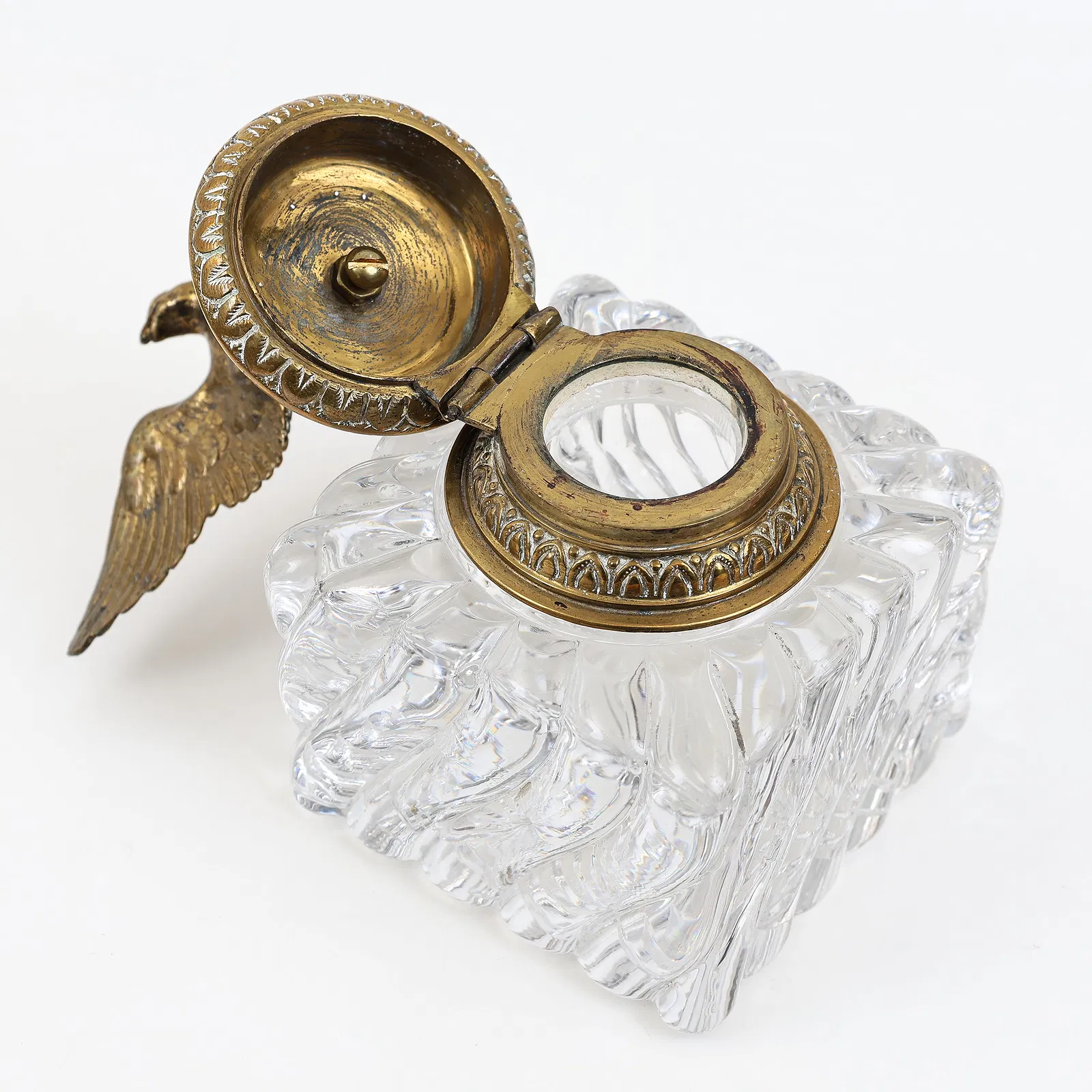
This military presentation inkstand provides a look into British regimental history.
Description of the Inkstand
The Undertray
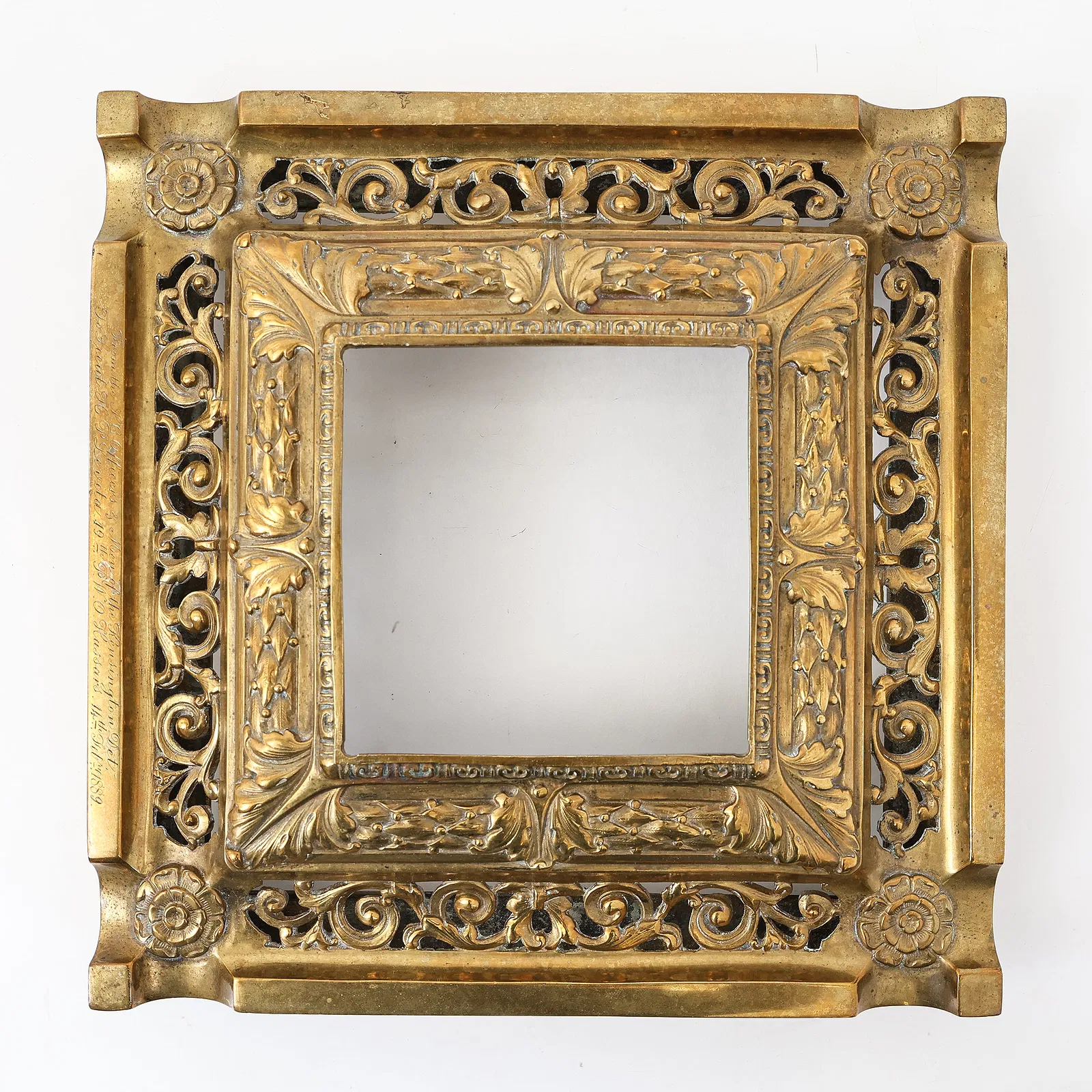
The square undertray, measuring 10″ x 10″ x 3.75″, is an ornate example of late Victorian bronze alloy casting. It features a heavy, neoclassical design with the following characteristics:
- Pierced Fretwork: The perimeter is decorated with a complex, openwork scroll and foliage border.
- Corner Bosses: Each of the four corners is anchored by a raised, circular floral medallion.
- Pen Troughs: Two long, recessed troughs for pens are integrated into opposing sides of the tray.
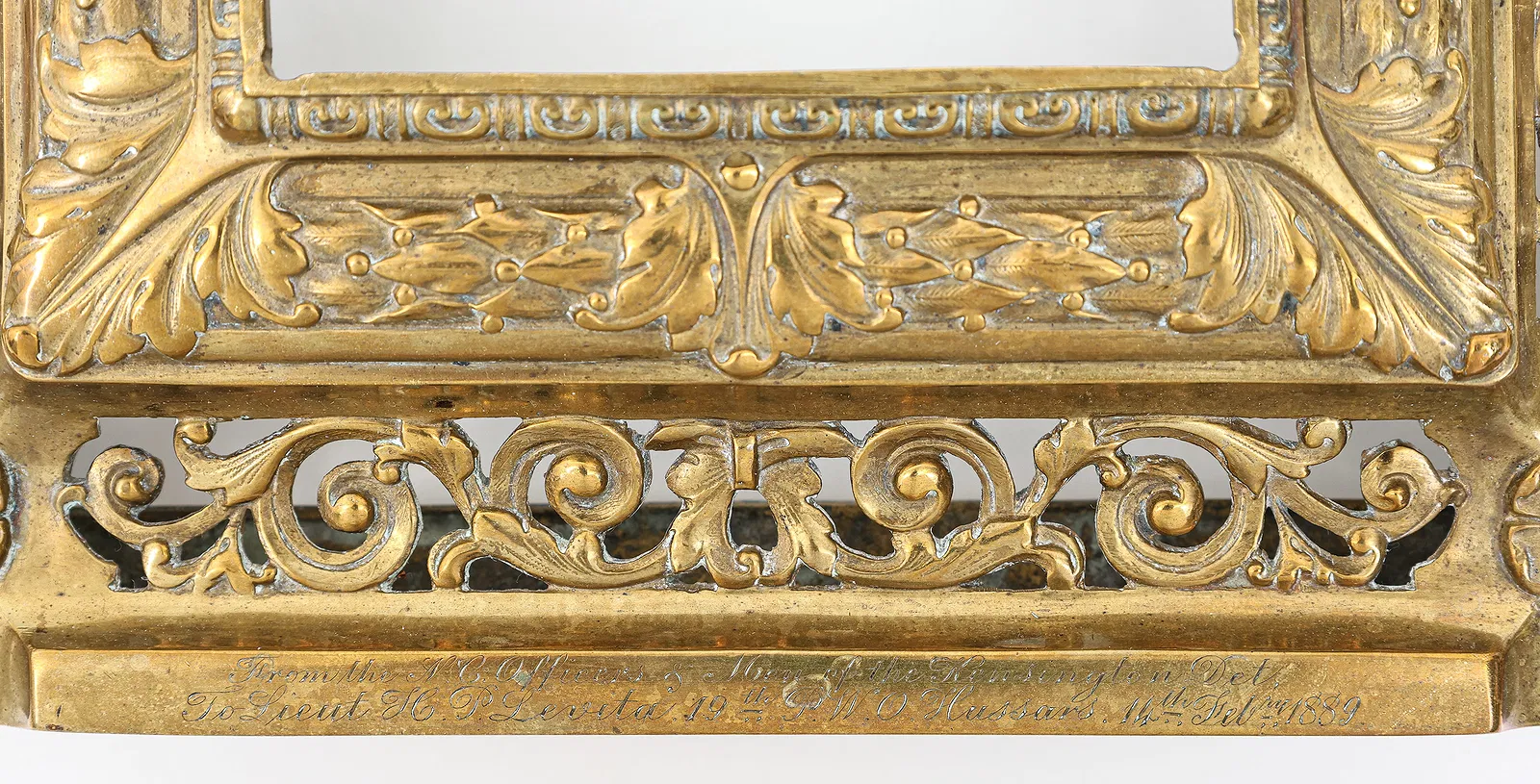
- Inscription: One edge is meticulously engraved:
“From the N.C. Officers & Men of the Kensington Det. To Lieut. H.P. Levita P.W.O. 19th Hussars, 14th Febry 1889”
The Inkwell
The central inkwell, standing 10.5″ tall when seated in the tray, consists of:
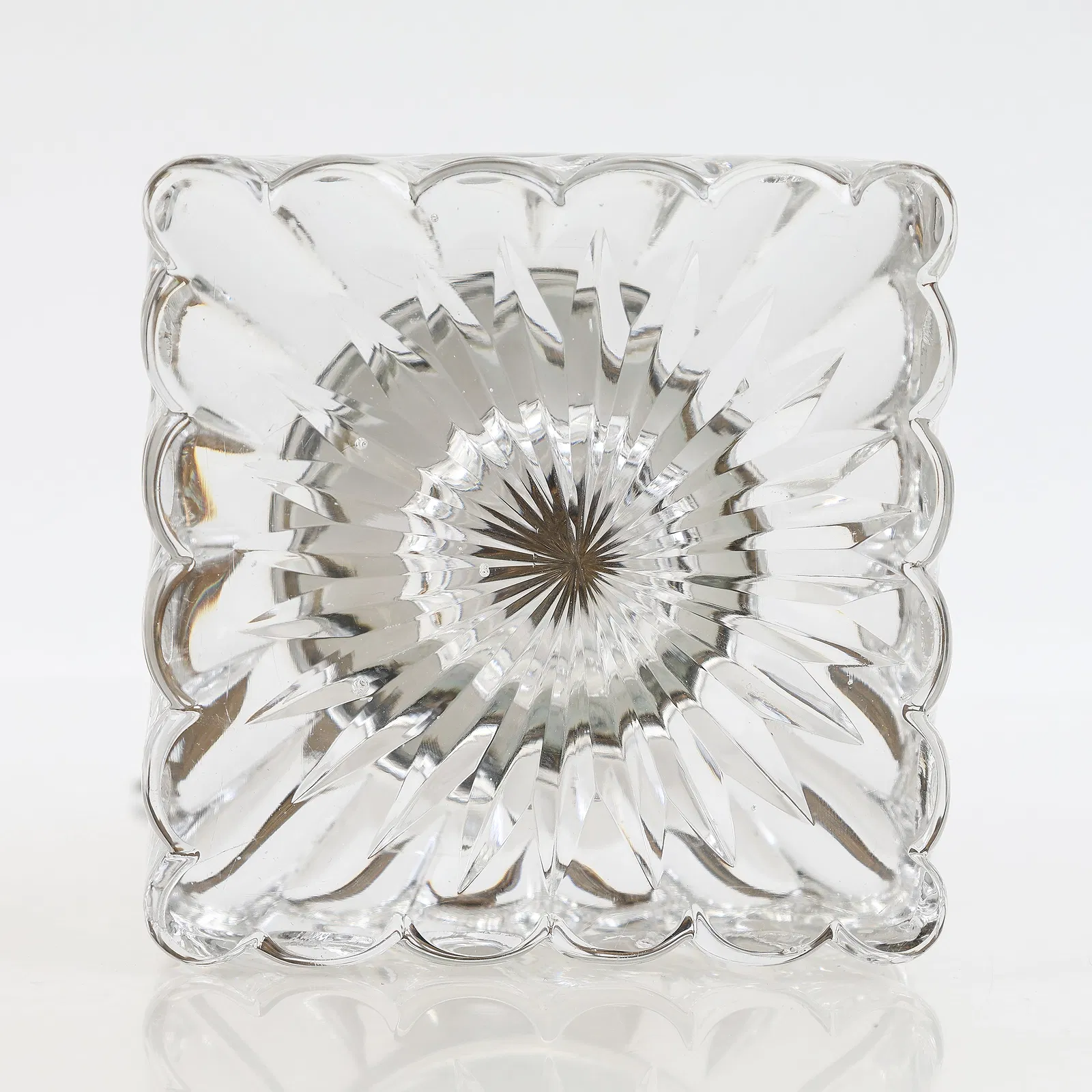
- Glass Body: A massive, square molded glass reservoir (4″ x 4″ x 8″) featuring a deep, diagonal swirl (ribbed) pattern that creates a dramatic light-refracting effect.
- Lid and Finial: A matching bronze alloy collar and hinged lid. The lid is surmounted by a cast eagle with wings spread, perched atop a domed base.
Manufacturer
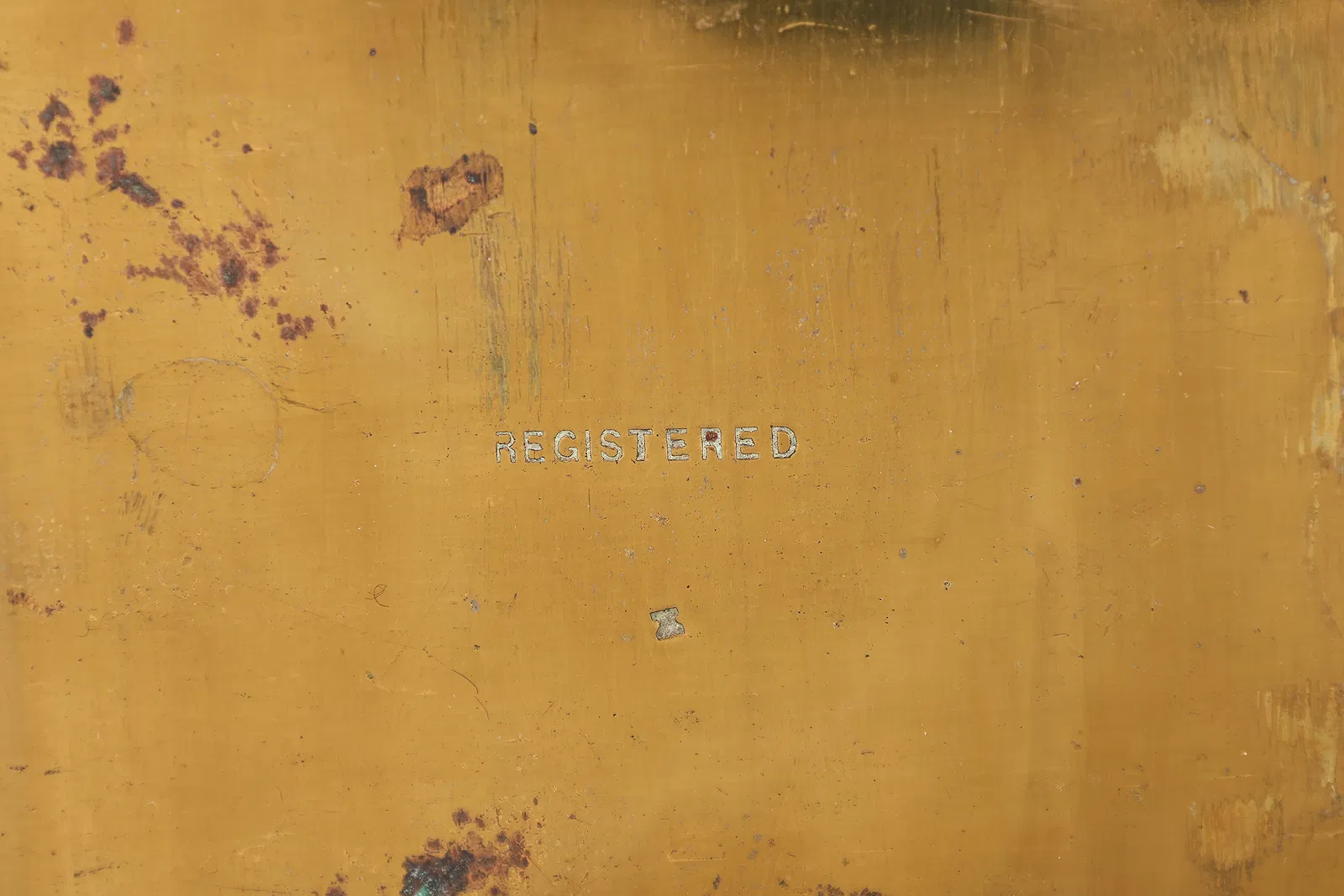
Based on the registration number and the distinctive markings on the base of the undertray, the manufacturer of this inkstand is William Tonks & Sons (also known as WT&S) of Birmingham, England.
Manufacturer Identification
There are two primary pieces of evidence for this attribution:
- The Trademark: There is a small stamped mark directly above the registration number. This appears to be the “Sun” mark (a face with rays), which was the official trademark of William Tonks & Sons.
- The Design Registration: The number 103270 falls within the high-volume design registration period for William Tonks & Sons. During the late 1880s, they were one of the most prolific manufacturers of high-quality “cabinet brass-foundry” and desk furniture in the British Empire.
Registry Date
The design was officially registered with the British Board of Trade in August 1888.
- Chronology: Since registry number 87,266 was assigned at the start of January 1888 and 116,648 at the start of January 1889, number 103,270 belongs to the late summer of 1888.
- Timeline: This registry date of August 1888 aligns perfectly with the presentation date engraved on the tray (February 14, 1889), as it indicates the design was a new and fashionable pattern at the time it was commissioned for Lieutenant Levita.
Design Context
William Tonks & Sons were renowned for their “bronze alloy” finishes (often called “English Bronze”). The heavy, square, diagonal-swirl glass pot was likely sourced from one of the major Stourbridge glasshouses (such as Stevens & Williams or Thomas Webb & Sons) who frequently supplied high-end glass pieces to the Birmingham metal trades.
Biography of Harry Plumridge Levita (1862–1919)
Harry Plumridge Levita was born into a prominent family; his father, Emile Levita, was a wealthy merchant and banker, and his brother, Sir Cecil Bingham Levita, later became Chairman of the London County Council.
Military Career
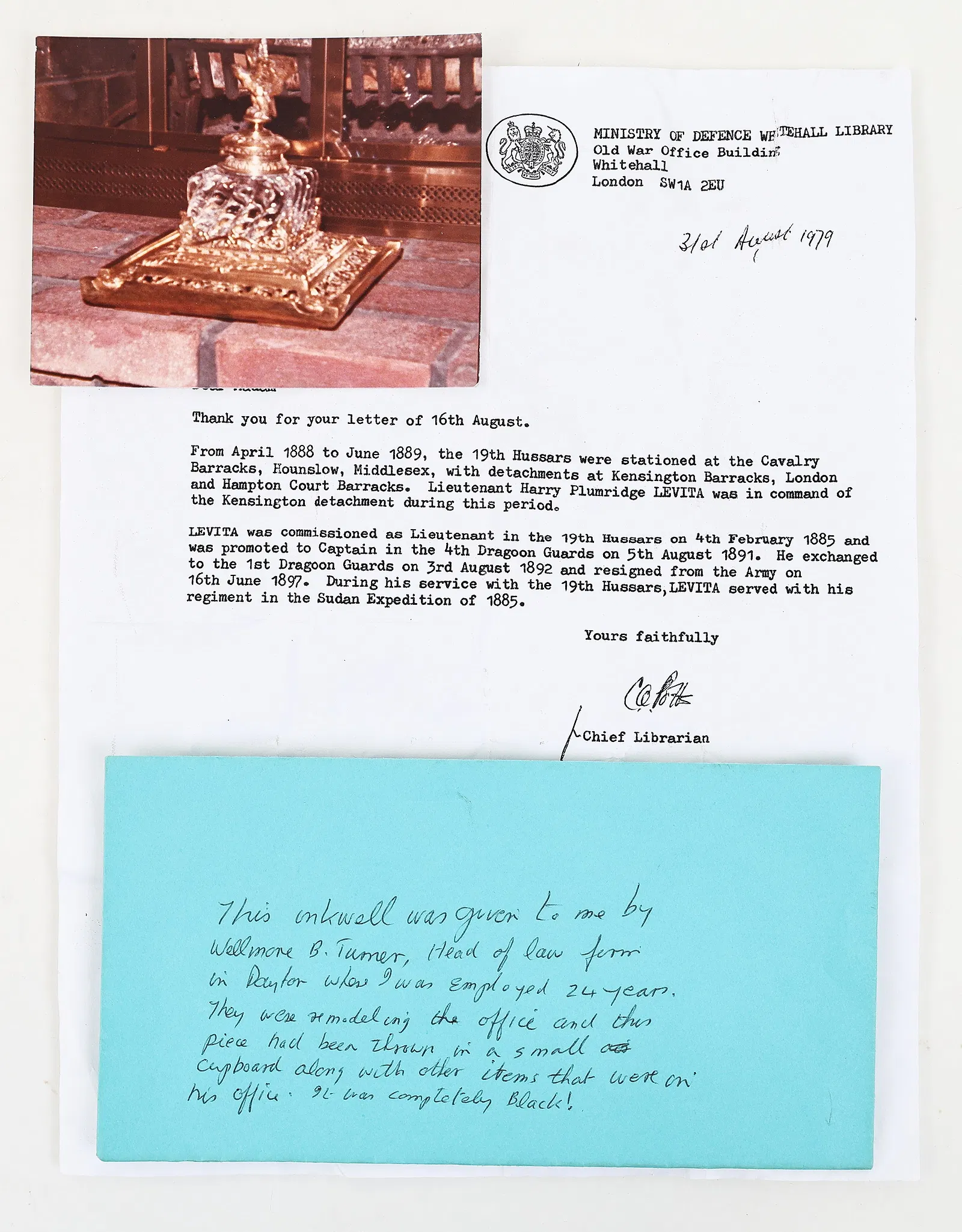
- Early Service: Levita was commissioned as a Lieutenant in the 19th (Alexandra, Princess of Wales’s Own) Hussars in February 1885.
- The Sudan Expedition: Almost immediately after commissioning, he served in the Sudan Expedition (1884–1885), a campaign famous for the attempt to rescue General Gordon at Khartoum.
- Kensington Detachment: From April 1888 to June 1889, Levita was in command of the Kensington detachment. The gift of this inkstand on February 14, 1889, was a formal gesture of respect and “Valentine’s Day” appreciation from the Non-Commissioned Officers and men serving under his command.
- Later Commissions: He was promoted to Captain in the 4th Dragoon Guards in 1891 before transferring to the 1st Dragoon Guards in 1892. He resigned from the regular army in 1897.
- The Great War: Despite having left the service years prior, he returned to duty for World War I. He reached the rank of Lieutenant Colonel and was noted in the London Gazette in 1918 as commanding the Eastern Command Depot.
Personal Life
Levita was a Fellow of the Zoological Society and a member of the elite Naval and Military Club. He died in 1919, leaving behind a legacy of service that spanned from the Victorian colonial wars to the first global conflict of the 20th century.
Sold for $455 in April 2026
Content disclaimer. The information posted is the owner’s best knowledge and may not have been vetted by the SOIC. We welcome comments, corrections, and additions, working to make our website information comprehensive and accurate.
Join the Society of Inkwell Collectors (SOIC) – it’s free!
Founded in 1981 as a non-profit organization,
we are documenting inkwells (and accessories).
We’re here to help and inform!