




Marble Inkstand with Gilded Bronze Lioness
| Categories | Figural - Animals & Living Creatures |
| Type | Lion |
| Material | Gilt Bronze, Marble |
| Markings | Unmarked |
| Manufacturer | Undetermined |
| Origin | France |
| Date or Era | circa 1890 |
| Measuring | 11 ½” x 7” x 4 ½” high |
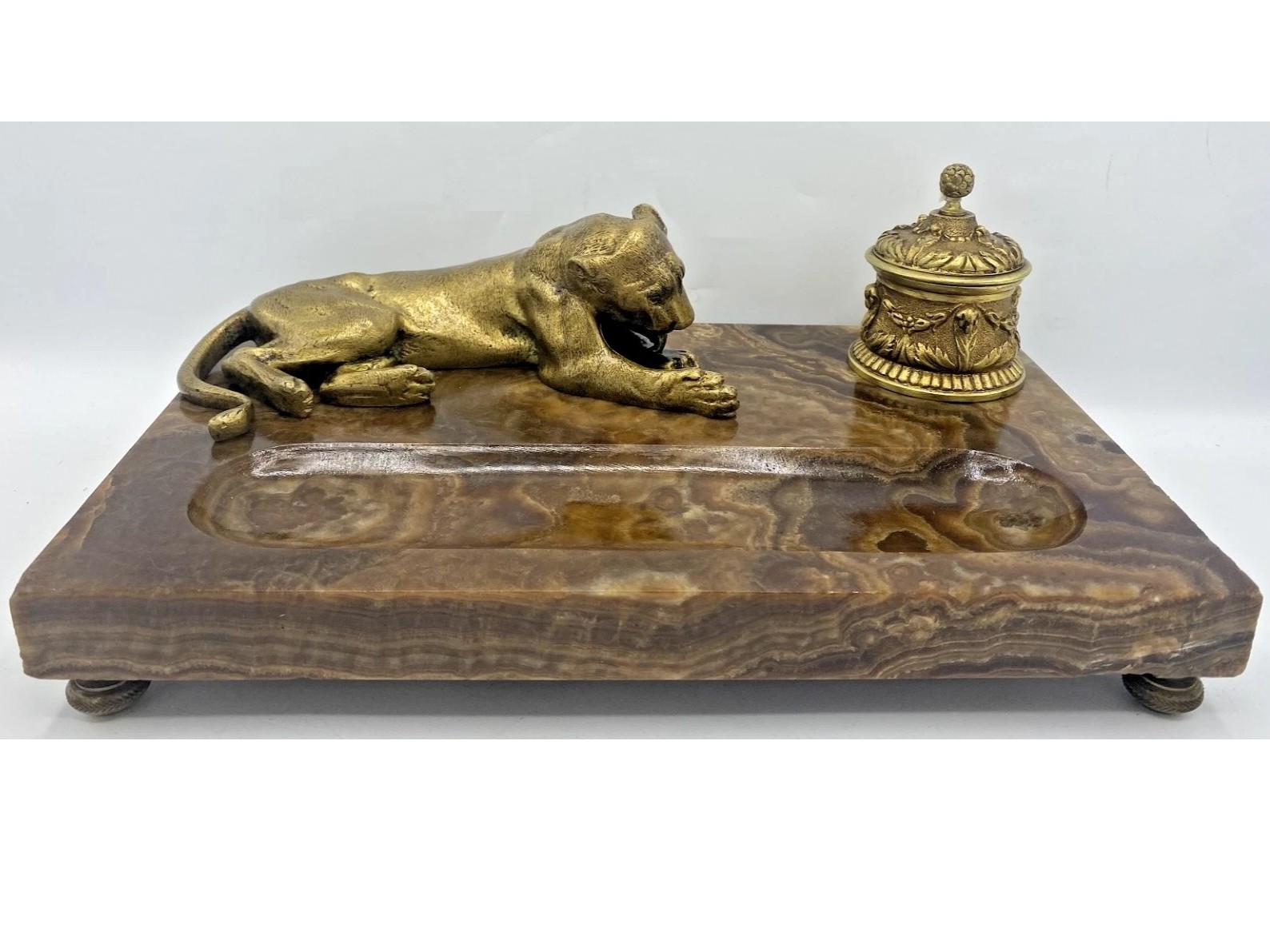
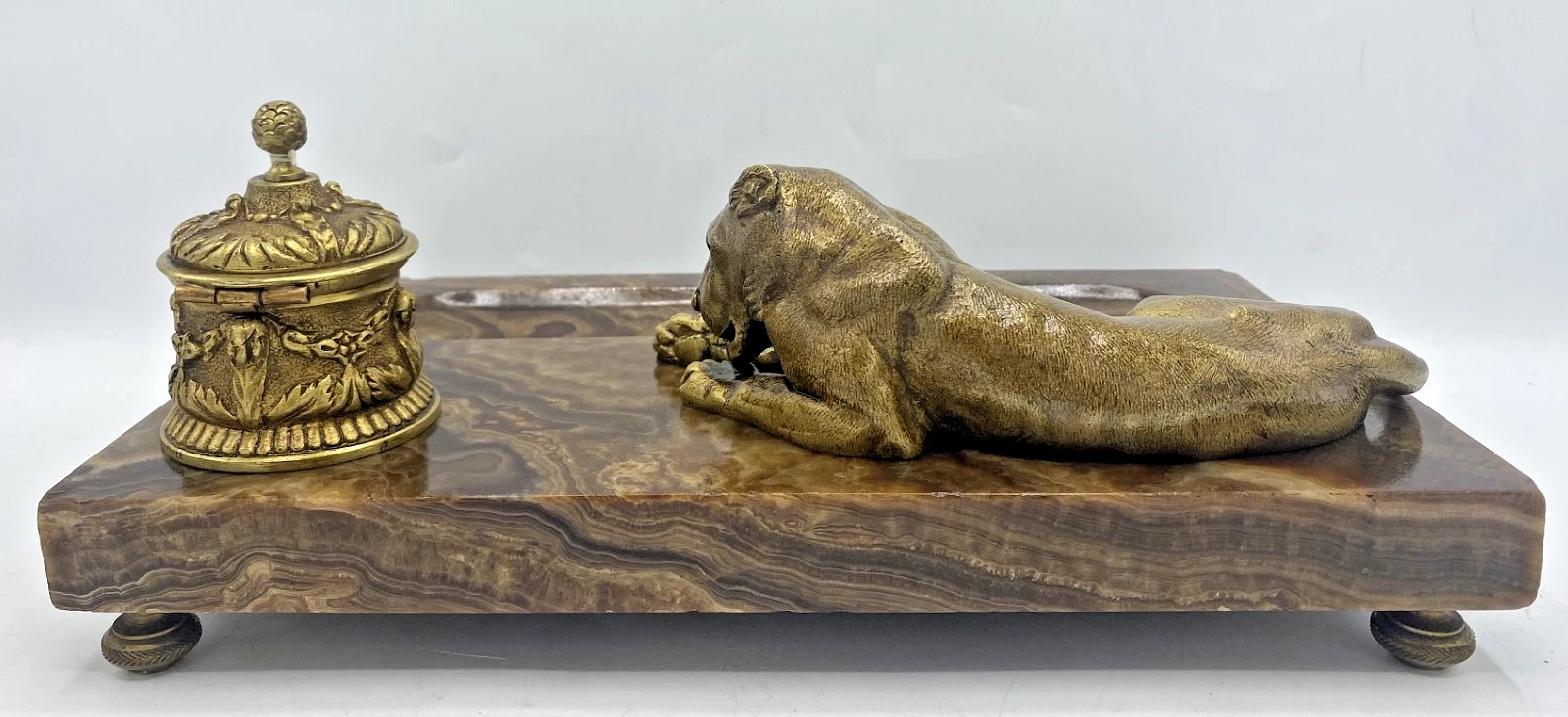
This is a sophisticated French late 19th-century inkstand composed of a heavy marble base and detailed gilded bronze lioness.
Description & Construction
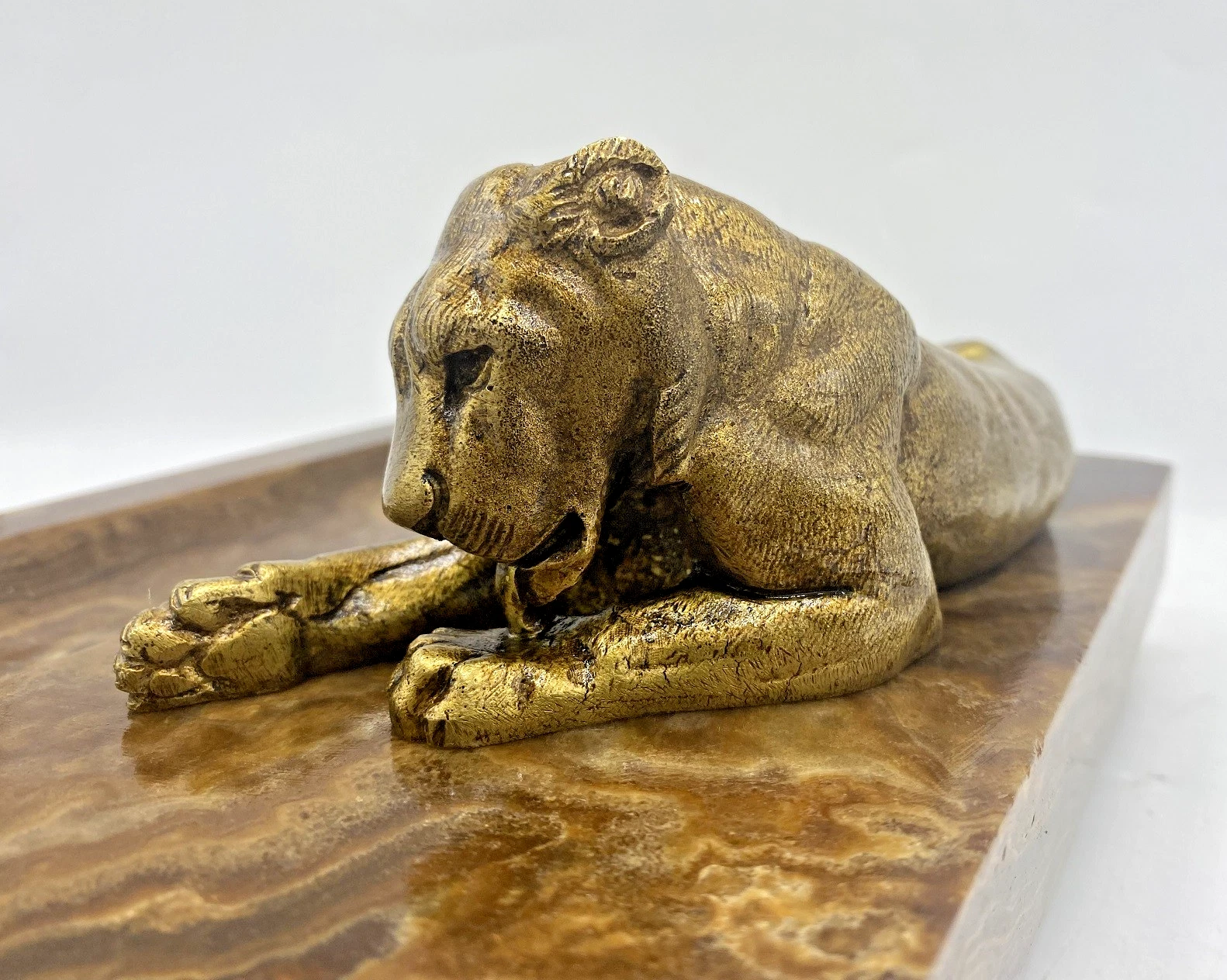
- The Figure: A fine gilded bronze lioness (or panther) is depicted in a naturalistic, reclining pose, appearing to groom its paw.
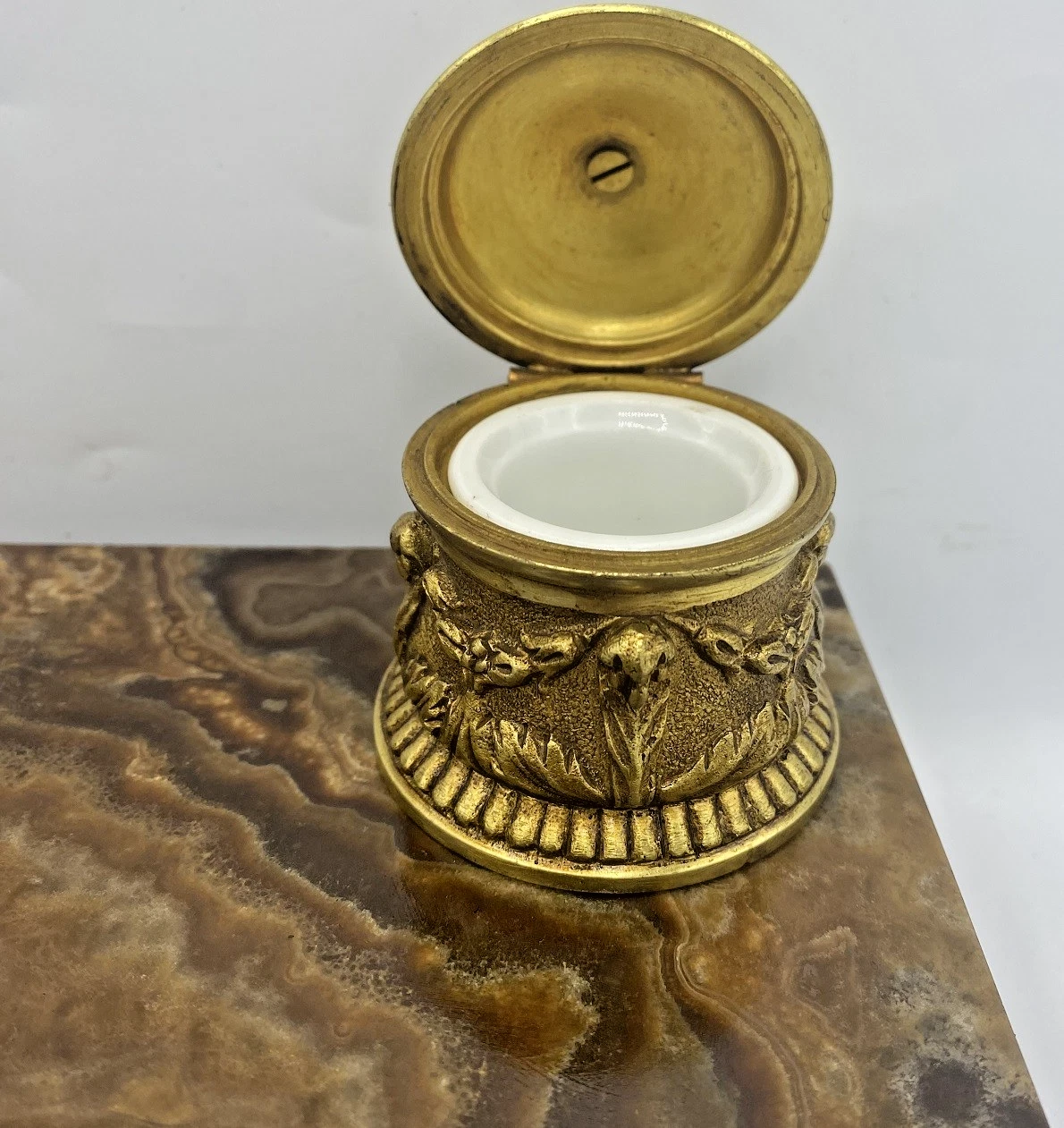
- The Inkwell: A single circular bronze inkwell sits to the right of the figure. It features a hinged lid with a pinecone or acorn finial and is decorated with classical wreath and garland motifs. It contains its original white ceramic porcelain liner.
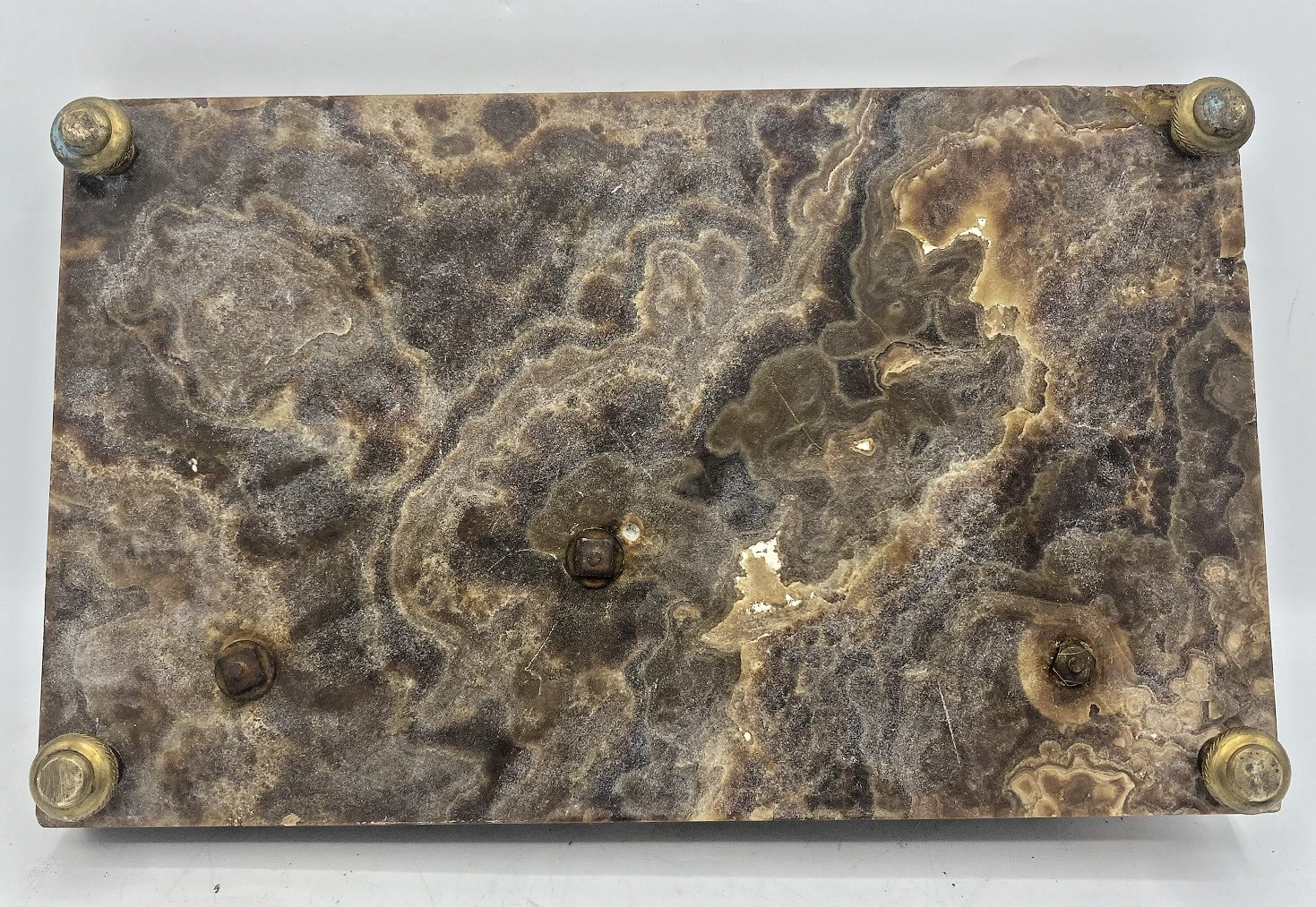
- The Base: The base is crafted from a thick slab of banded onyx (often referred to as Algerian or “onyx marble”), showing deep honey and brown veining. It has a deep, integrated pen tray carved directly into the stone.
- The Feet: The stand is elevated by four low, turned bronze bun feet with a textured or “knurled” finish.
Estimated Age
This piece dates to the late 19th century (circa 1880–1895). It is characteristic of the Beaux-Arts or Third Republic style in France, which favored high-quality “animalier” (animal-themed) bronzes paired with luxurious semi-precious stones.
Manufacturer & Attributions
While the provided images do not show a visible maker’s signature, several factors point to a Parisian foundry:
- Paris Foundries: In the late 1800s, specialized firms such as F. Barbedienne or Susse Frères were renowned for producing these types of desk sets.
- Sculptural Style: The detailed musculature of the lioness is reminiscent of the work of famous French “Animalier” sculptors like Antoine-Louis Barye or Christophe Fratin, whose models were frequently cast into decorative inkstands by high-end retailers.
Note: The underside shows the original threaded bolts and square nuts used to secure the heavy bronze figure to the marble, confirming the piece’s authentic 19th-century construction.
Sold for $499 in December 2025
Content disclaimer. The information posted is the owner’s best knowledge and may not have been vetted by the SOIC. We welcome comments, corrections, and additions, working to make our website information comprehensive and accurate.
Join the Society of Inkwell Collectors (SOIC) – it’s free!
Founded in 1981 as a non-profit organization,
we are documenting inkwells (and accessories).
We’re here to help and inform!