

Inkipedia
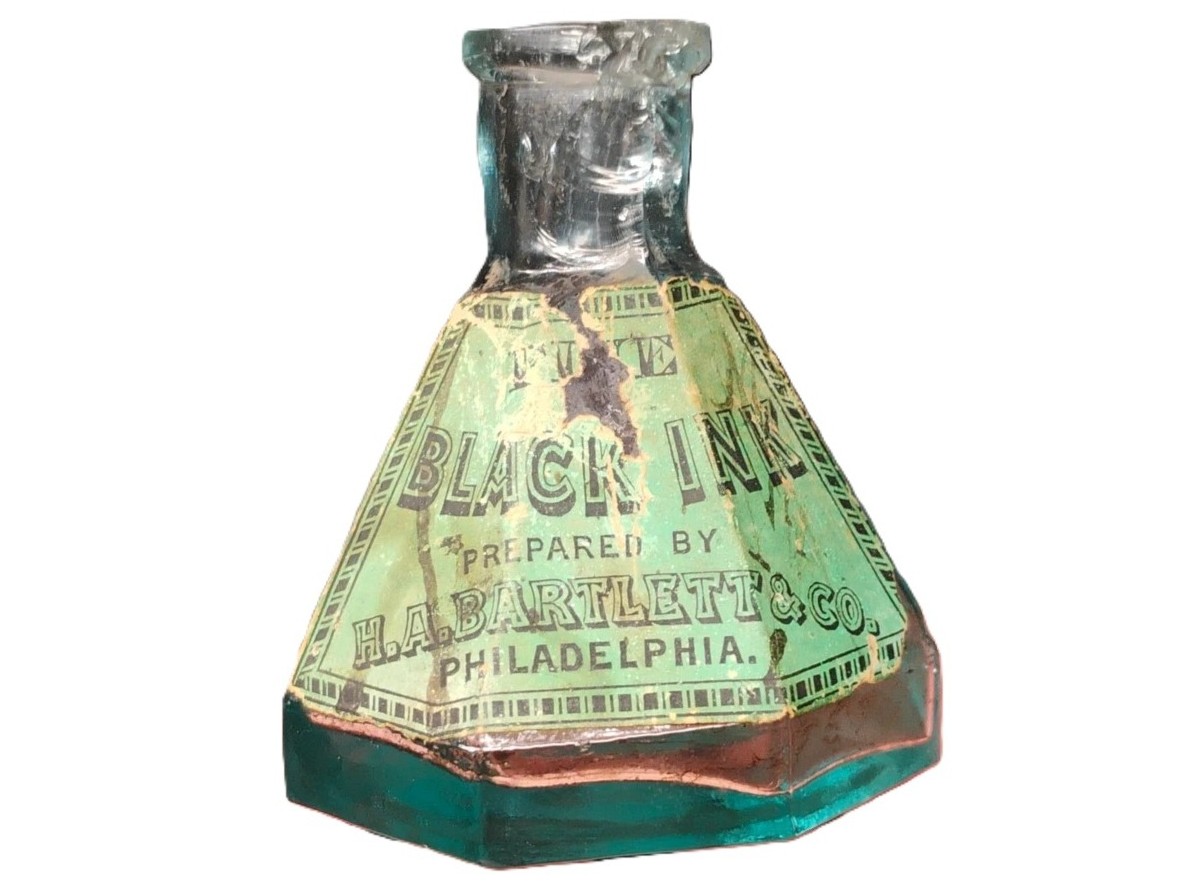
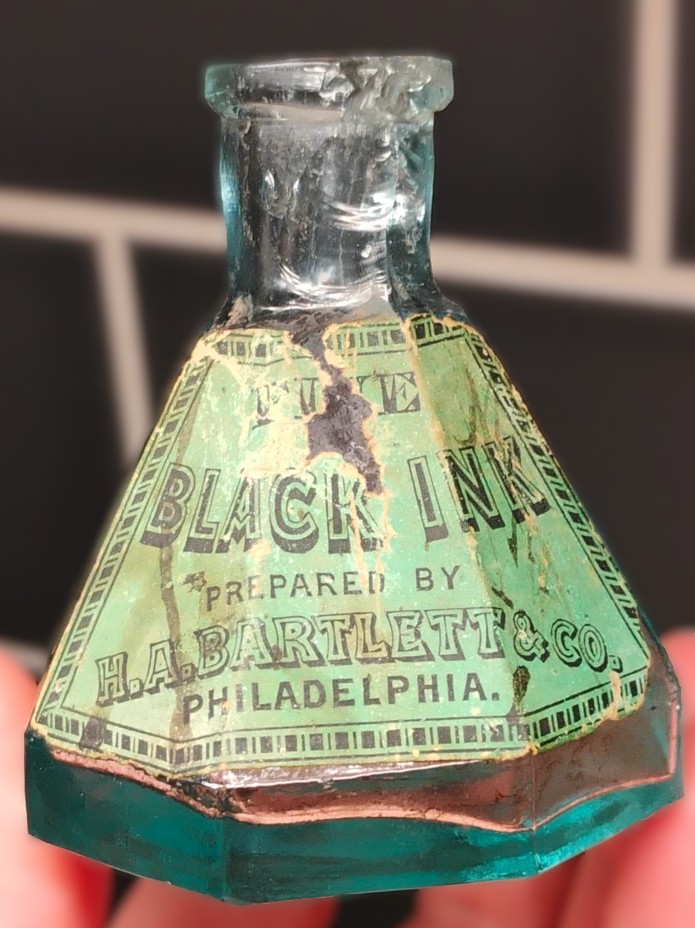
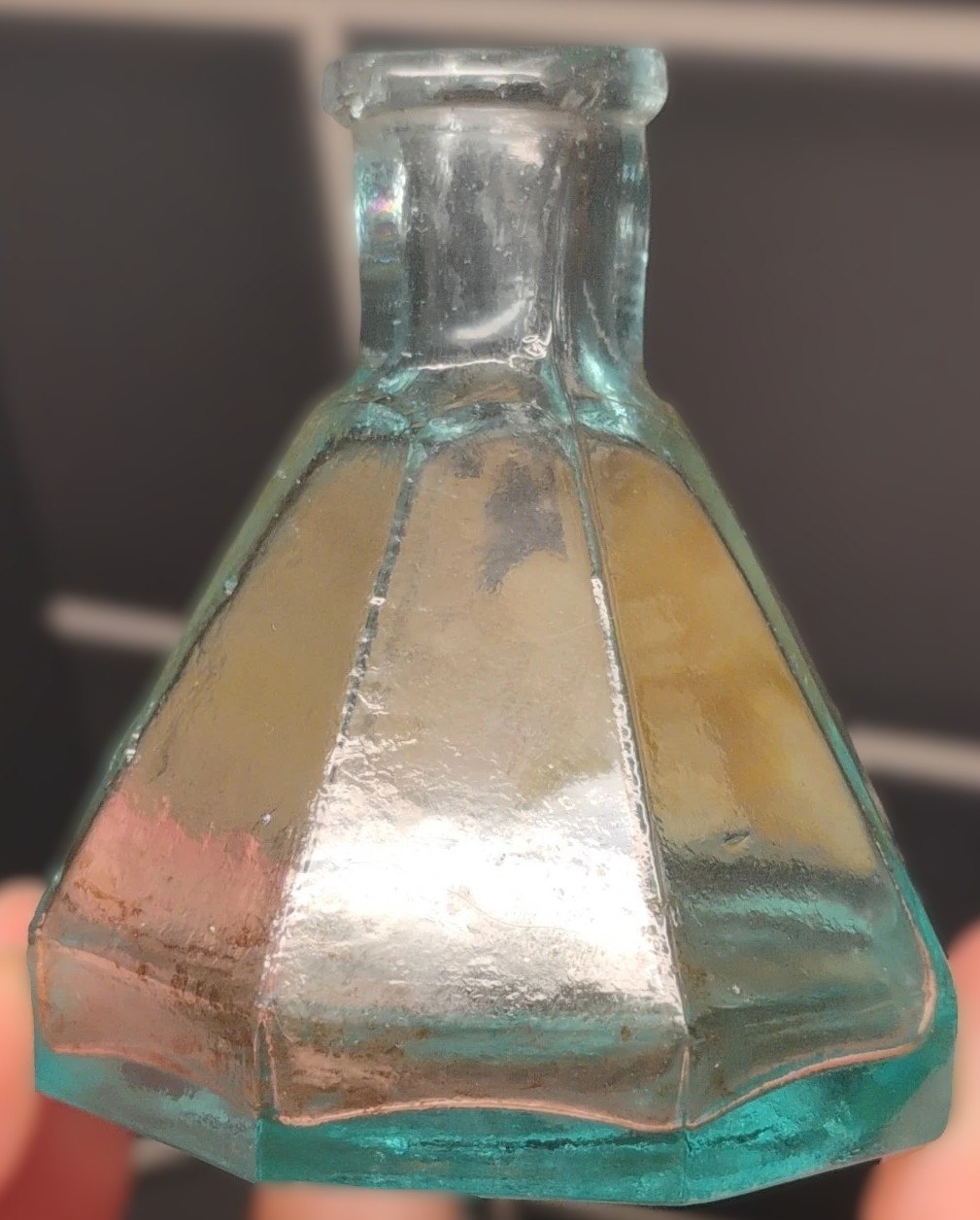
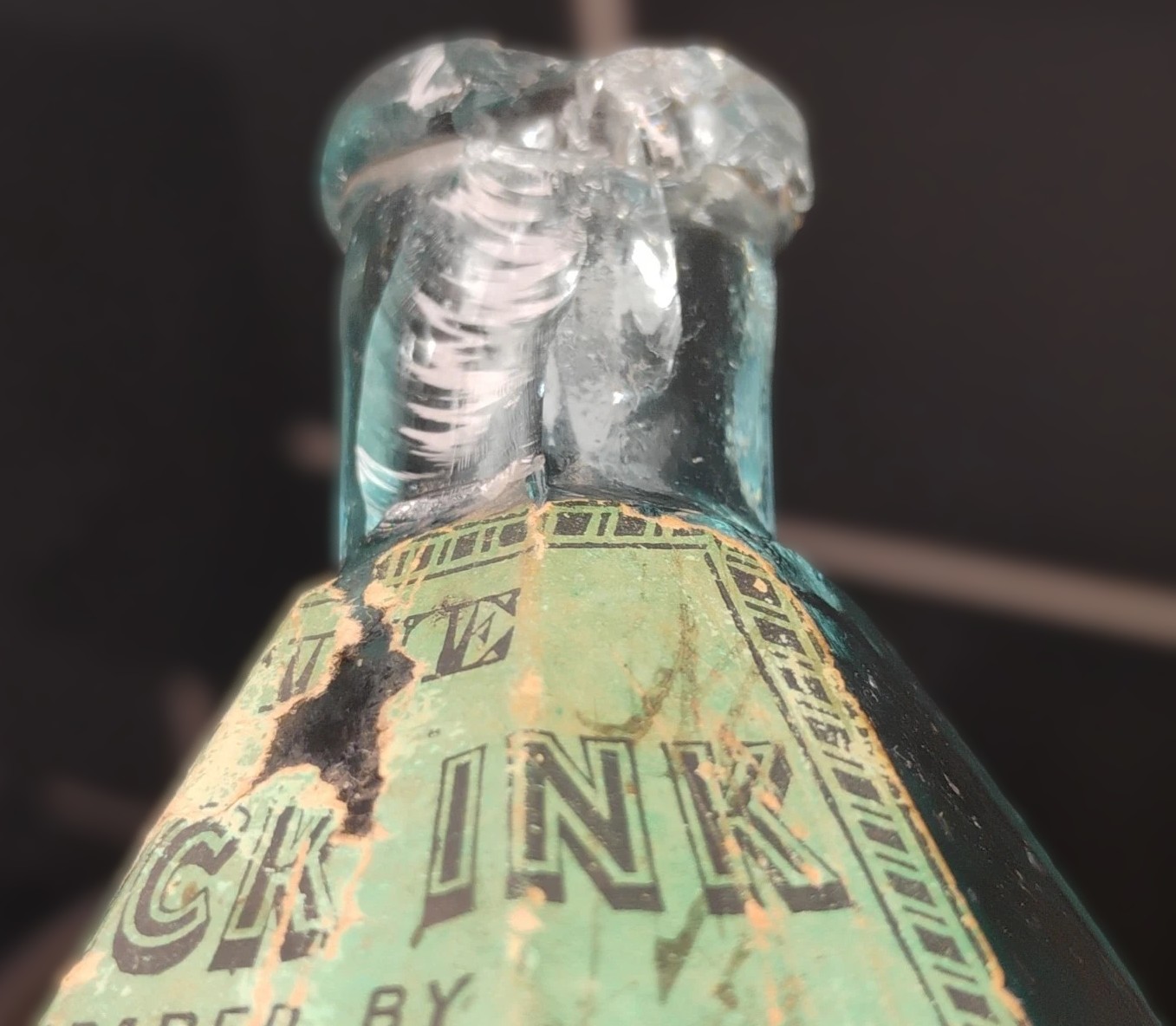
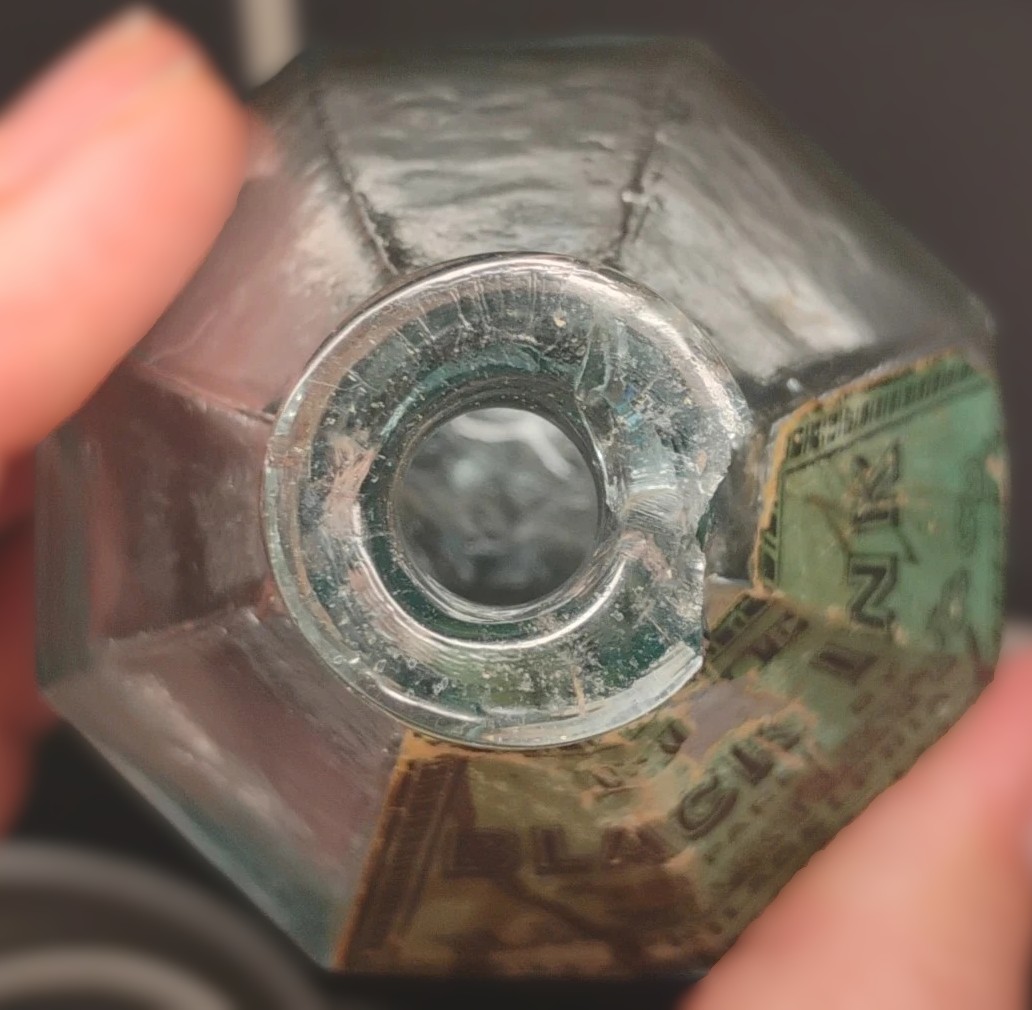
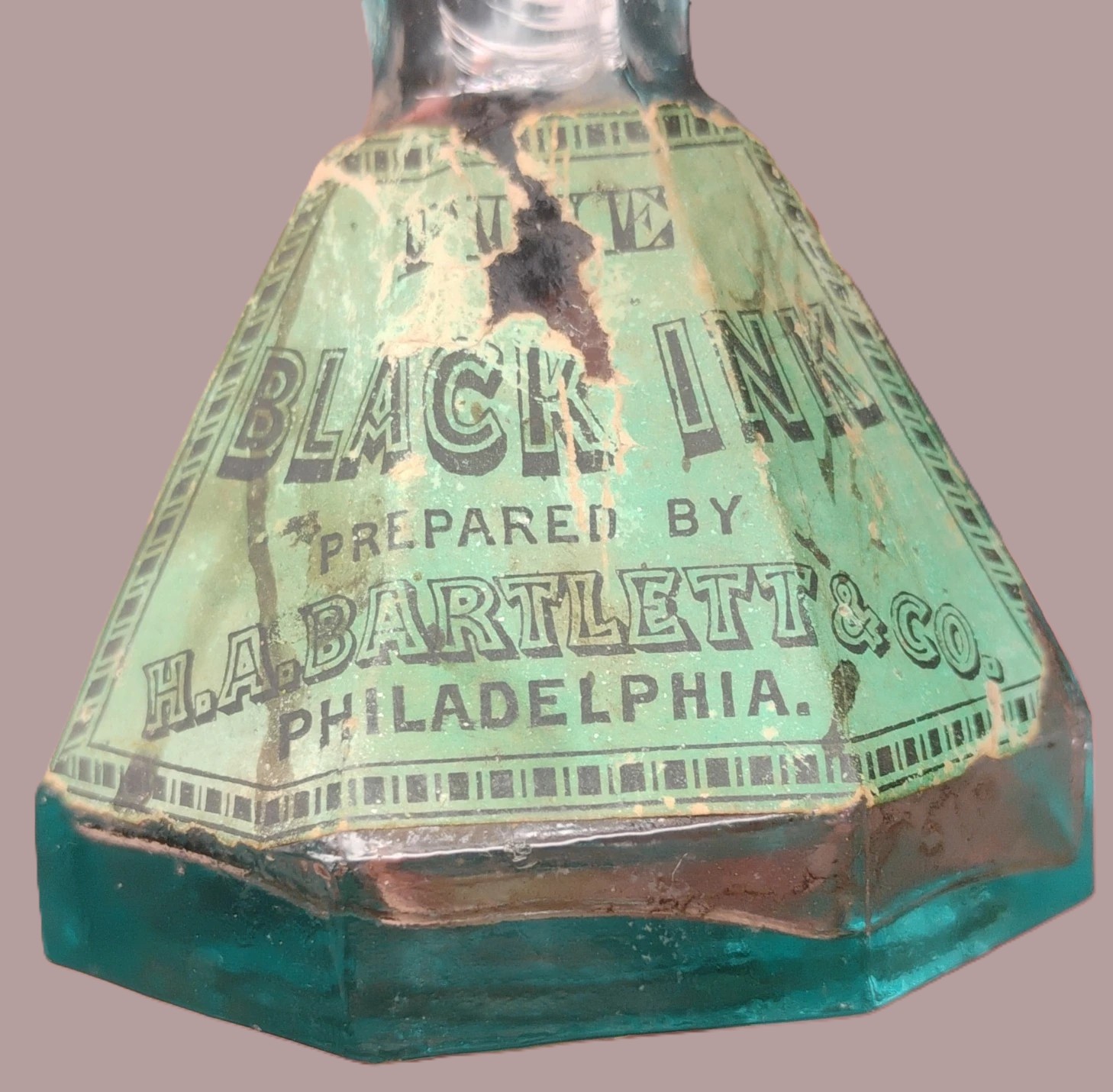
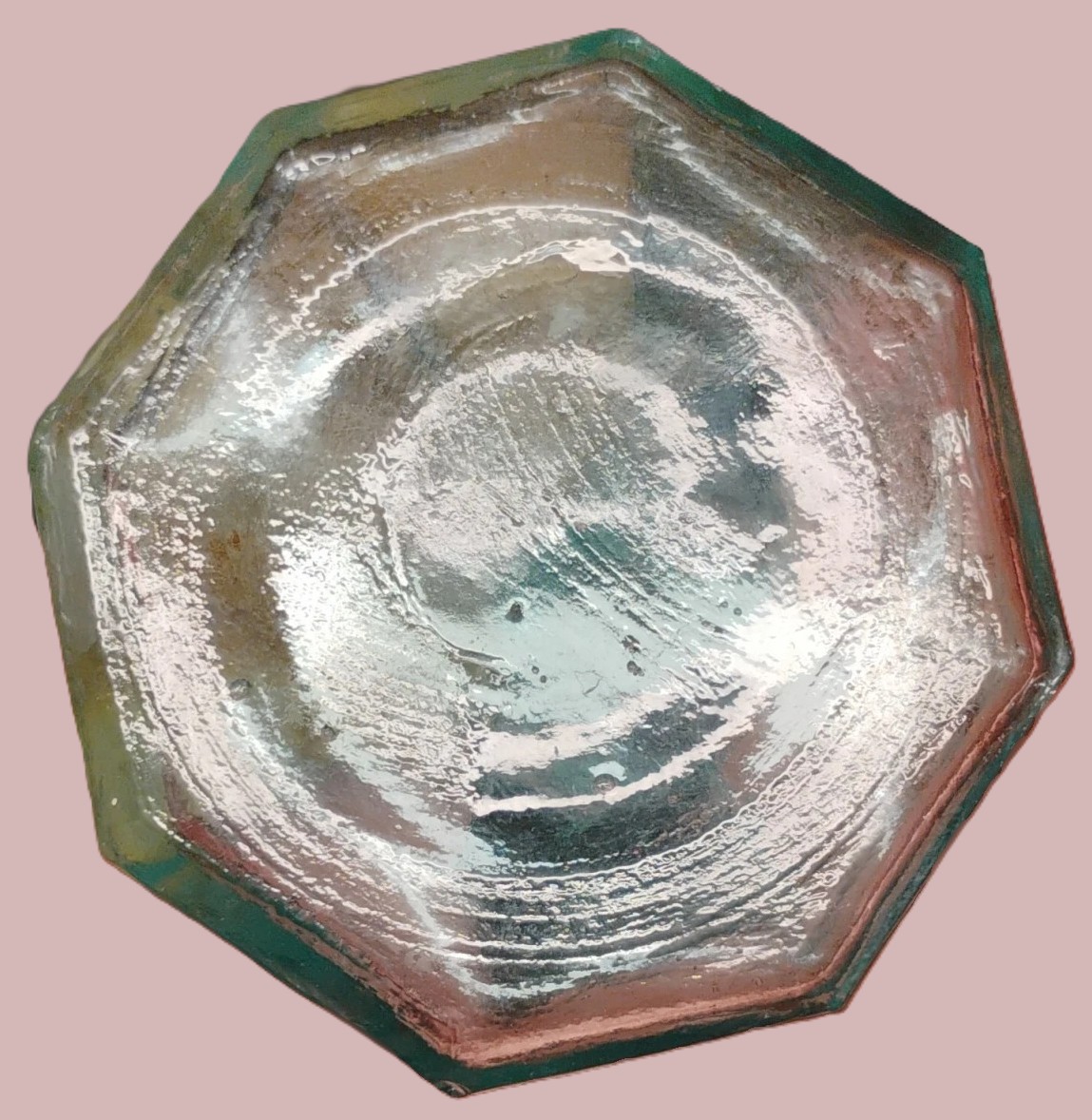
Labeled Octagonal Umbrella Ink – H. A. Bartlett & Co.
| Categories | Ink Bottle |
| Type | Umbrella |
| Material | Glass |
| Markings | See Narrative |
| Origin | United States |
| Date or Era | circa 1870 |
| Measuring | 2 ½” high |
Description
- Form & Construction: This is a classic American eight-sided (octagonal) “umbrella” ink bottle blown in a two-piece hinged mold. You can see the vertical mold seams running cleanly up opposite facet corners and stopping right at the base of the neck, indicating a hand-finished lip.
- Glass & Base: The bottle is made of light aqua (bluish-green) glass, typical of 19th-century utilitarian American bottle glass. The underside features a smooth, slightly recessed base with prominent concentric circular tool/cooling marks and no pontil scar (a “smooth base” or improved-pontil era base).
- Lip & Condition: It has a thick, applied or tooled ring/rolled collar lip. There is a significant impact chip on the top rim of the lip that extends downward as a shallow vertical flake/bruise along the side of the neck. Aside from that lip damage and light interior residue, the body panels remain glossy and intact.
- Original Paper Label: Wrapping across several of the tapered body facets is its original, period-printed green paper label with a decorative geometric border. Despite surface wear and a vertical tear near the top, the typography is legible:
- Top line (partially abraded): FINE (or PURE)
- Main arched banner: BLACK INK
- Lower text: PREPARED BY / H. A. BARTLETT & CO. / PHILADELPHIA.
Approximate Age: Circa 1865 – 1880 (specifically late 1860s to 1870s)
Several diagnostic features pin this bottle down tightly:
- Smooth Base (Post-1860): The absence of an open or iron pontil scar on the base places its manufacture after roughly 1860–1865, when American glasshouses transitioned to snap-case tools to hold bottles while finishing the lip.
- Tooled/Applied Lip & Mold Seams: The mold seams terminate at the shoulder/neck junction and the collar is hand-finished rather than machine-made, placing it squarely before the 1890s–1900s semi-automatic and automatic bottle machine era.
- Typography & Label Style: The shaded Victorian block lettering and green paper stock are textbook examples of post–Civil War / Centennial-era (1870s) American stationery packaging.
History of H. A. Bartlett & Co. (Philadelphia)
- Origins & Leadership: The firm was founded and led by Henry A. Bartlett in Philadelphia, Pennsylvania, operating primarily out of 118 North Front Street in the city’s historic commercial district. By the 1870s and 1880s, the company had expanded its distribution network to maintain an additional branch office in Boston.
- Product Line: Like many 19th-century chemical and household-goods compounders, Bartlett’s primary fame rested on shoe and boot blacking (Bartlett’s Blacking) and stove polish / stove gloss, alongside washing bluing and writing inks—all carbon-, iron-, or aniline-based liquid and paste preparations that shared similar raw ingredients and bottling operations.
- 1876 Centennial & Growth: H. A. Bartlett & Co. was active in Philadelphia during the height of the city’s industrial boom, exhibiting its blacking preparations at the 1876 Centennial International Exhibition in Philadelphia. Contemporary records (such as The Philadelphia Inquirer, January 1882) note formal partnership reorganizations to expand manufacturing of shoe blacking, stove polish, and related compounds, with Henry A. Bartlett serving as general partner.
- Advertising Ephemera: Today, H. A. Bartlett & Co. is especially well known to ephemera collectors for its vibrant 1860s–1880s chromolithograph posters and Victorian trade cards (many printed by Philadelphia lithographers such as Charles Reen). Surviving original labeled ink bottles from the firm are scarcer than their trade cards, making an example with an intact, readable label—even with neck damage—a notable piece of Philadelphia commercial history.
Sold for $182 in October 2026
Content disclaimer. The information posted is the owner’s best knowledge and may not have been vetted by the SOIC. We welcome comments, corrections, and additions, working to make our website information comprehensive and accurate.
Join the Society of Inkwell Collectors (SOIC) – it’s free!
Founded in 1981 as a non-profit organization,
we are documenting inkwells (and accessories).
We’re here to help and inform!