

Inkipedia
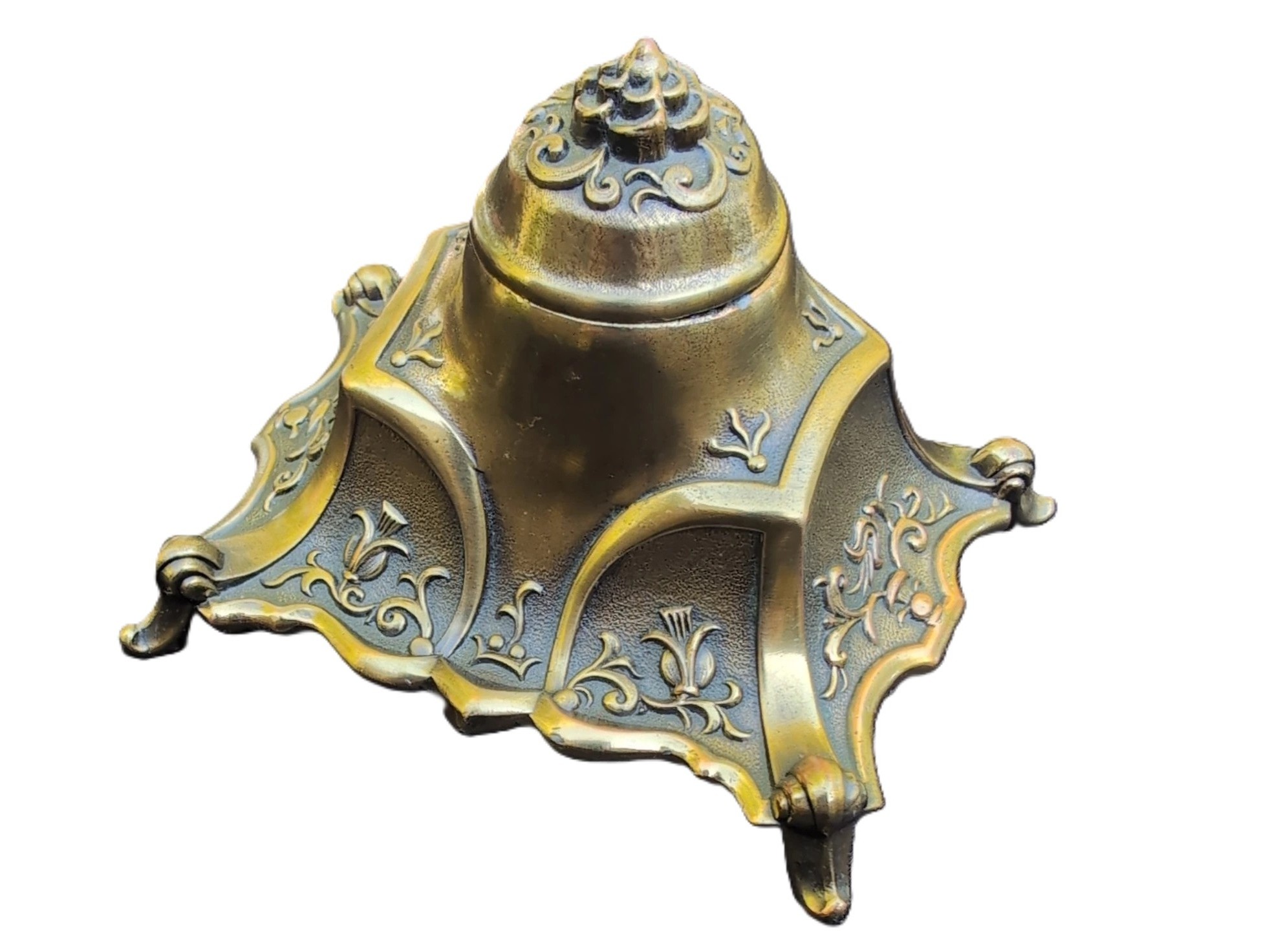
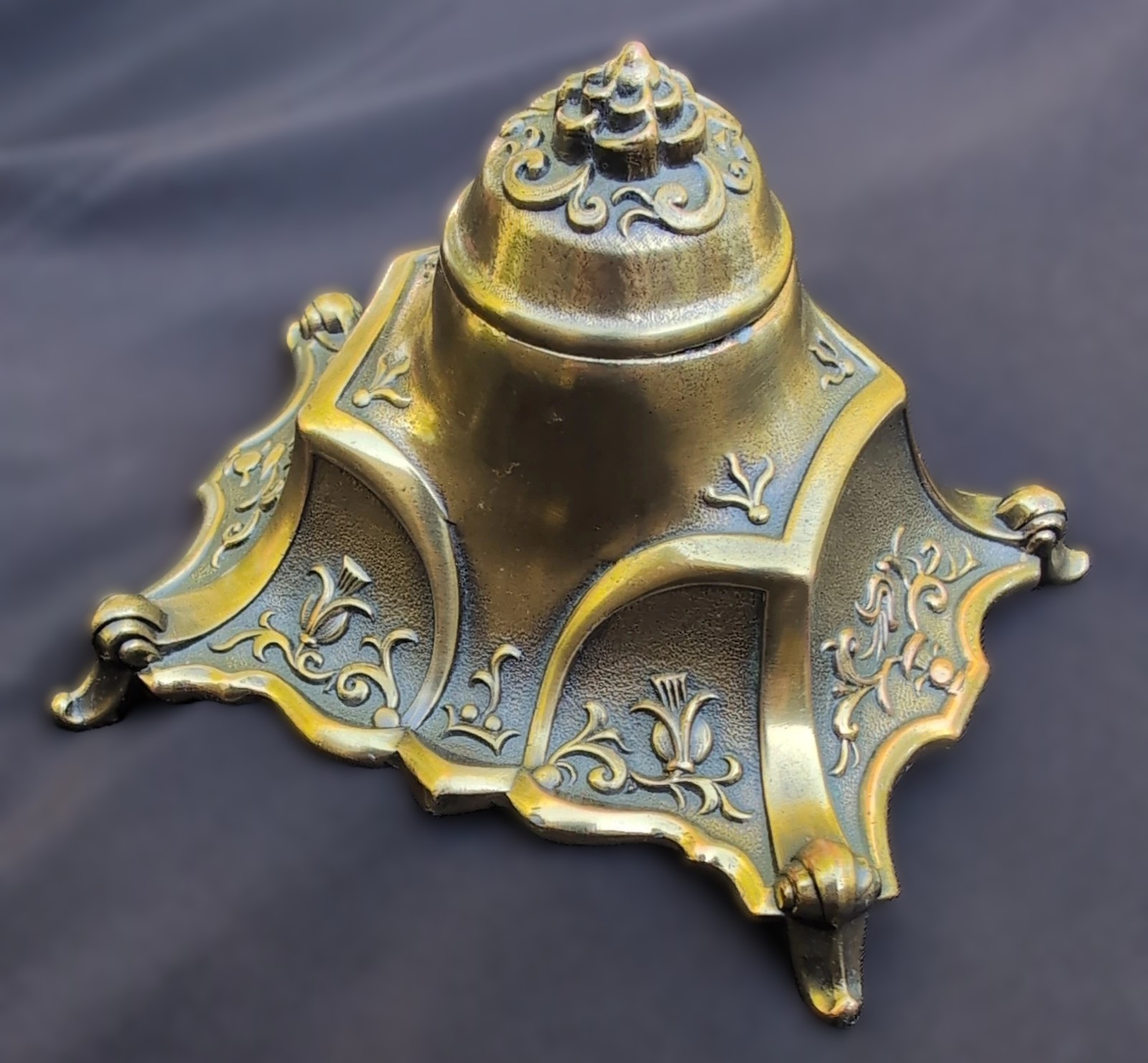
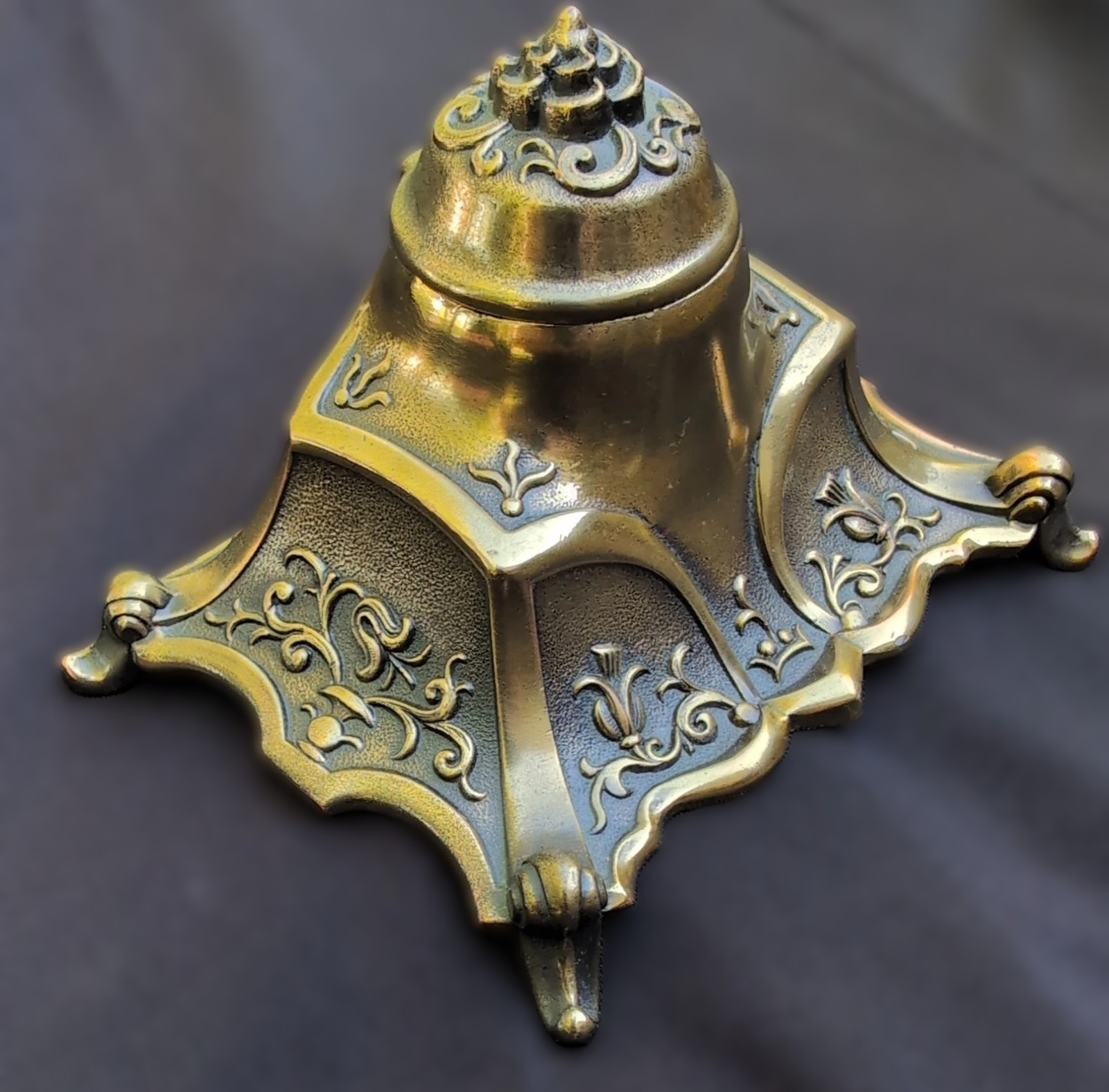
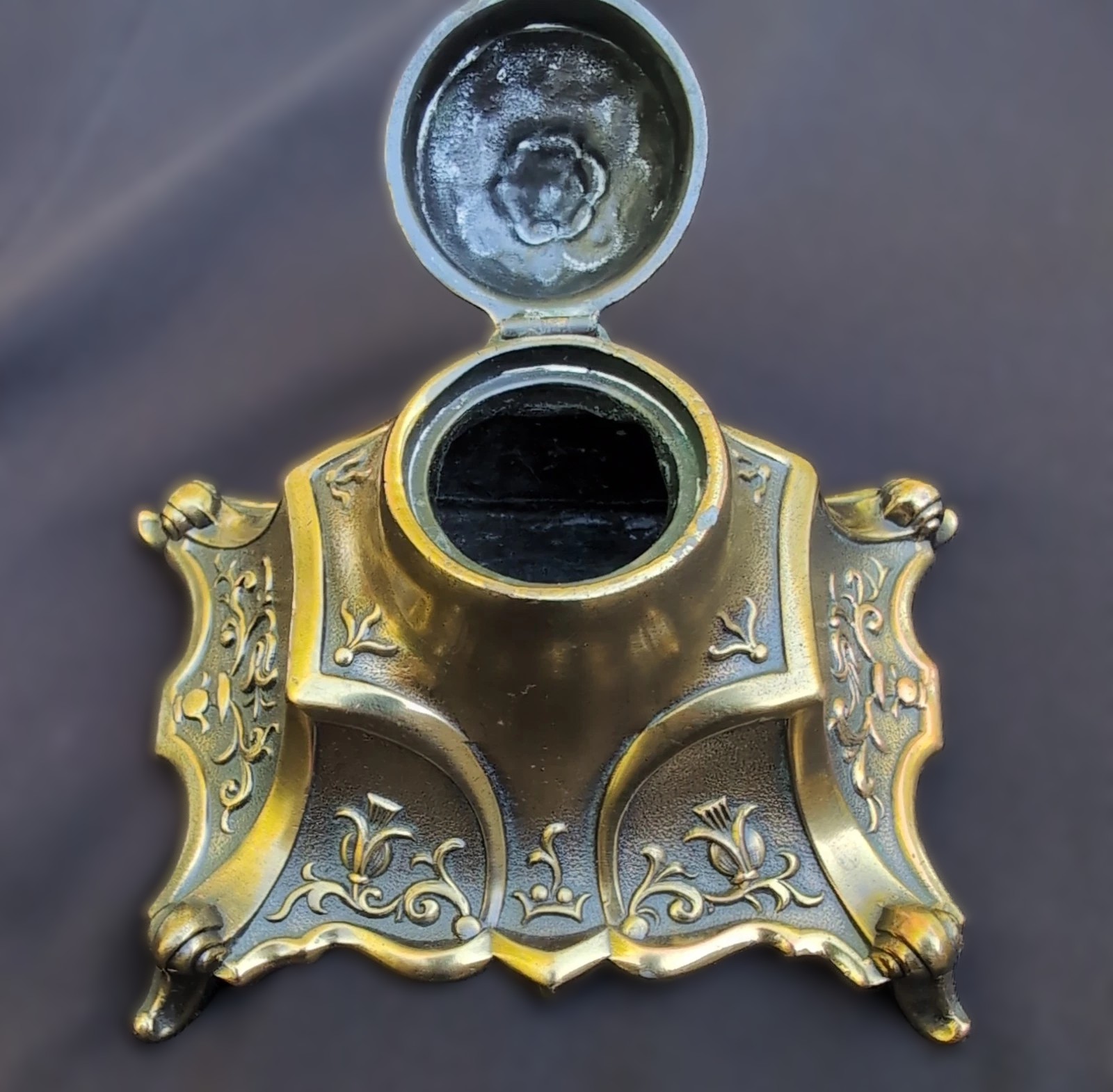
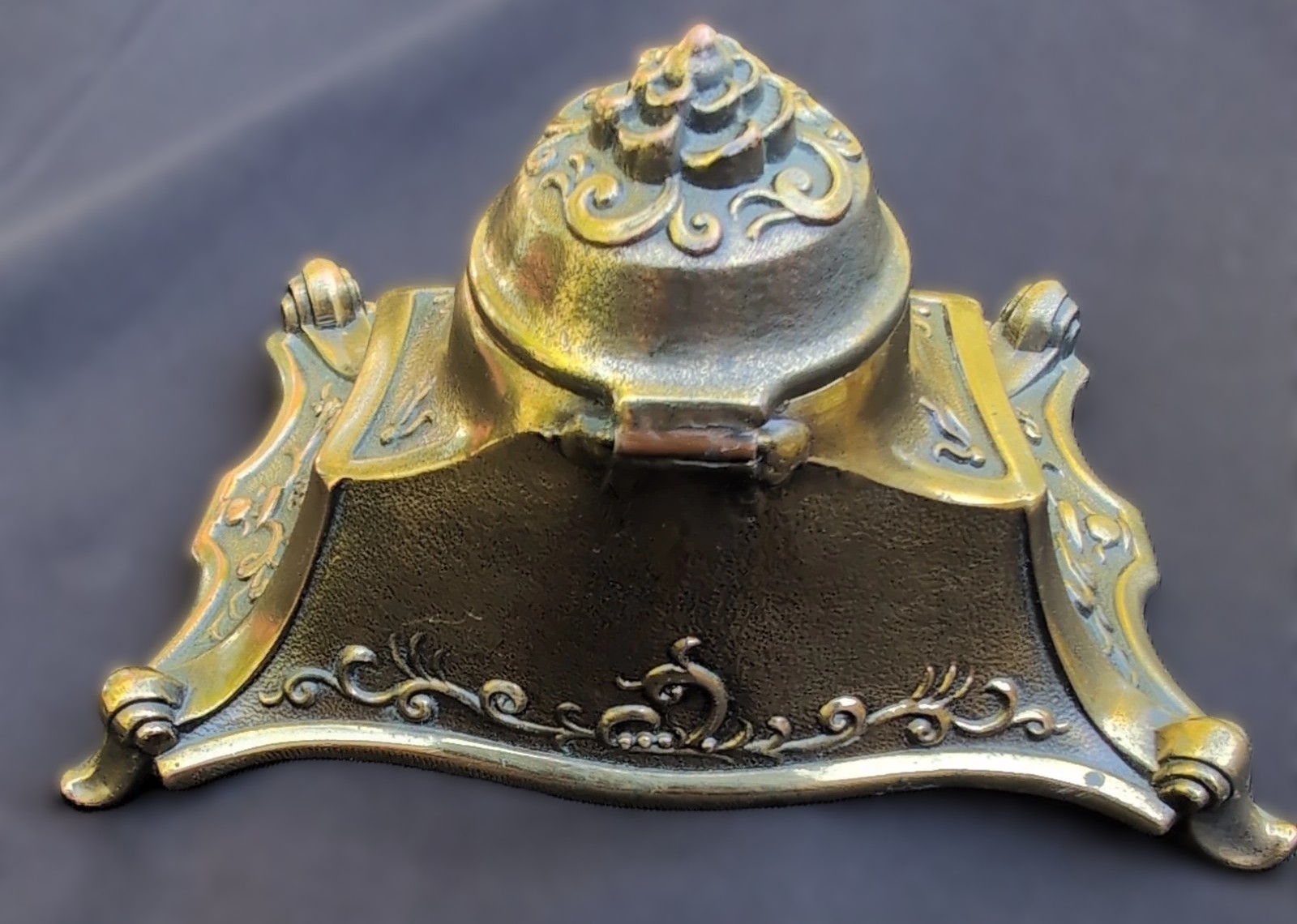
K&O Cast Brass Inkwell with Floral Relief
| Categories | Art Nouveau |
| Material | Brass |
| Markings | See Narrative |
| Manufacturer | K. & O. Novelties Company |
| Origin | United States |
| Date or Era | circa 1900 |
| Measuring | 5” x 3 ½” x 3 ½” high |
Description
- Form & Structure: A single-well inkwell cast in solid brass with a flared, four-sided pyramidal base resting on four splayed bracket feet.
- Ornamentation: Features a blend of late Victorian Rococo Revival and Art Nouveau aesthetics. The sloping side panels showcase raised foliate and stylized thistle scrolls set against a deeply stippled, darkened background, bordered by prominent polished architectural ribs.
- Lid & Well: A circular, domed hinged lid crowned with a tiered, scrolled finial in relief. Opening the lid reveals the interior well cavity designed to hold a removable glass insert (missing here).
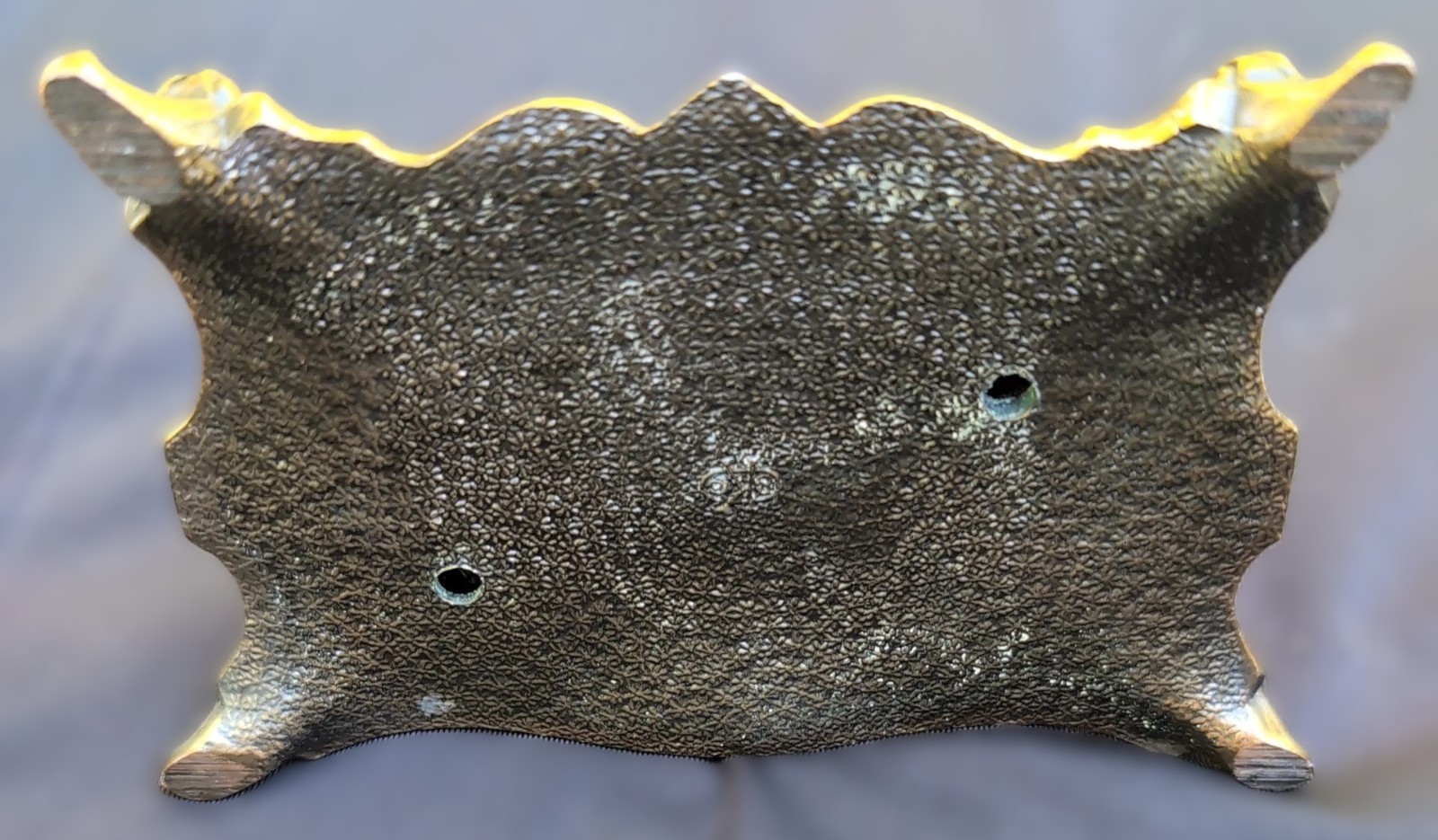
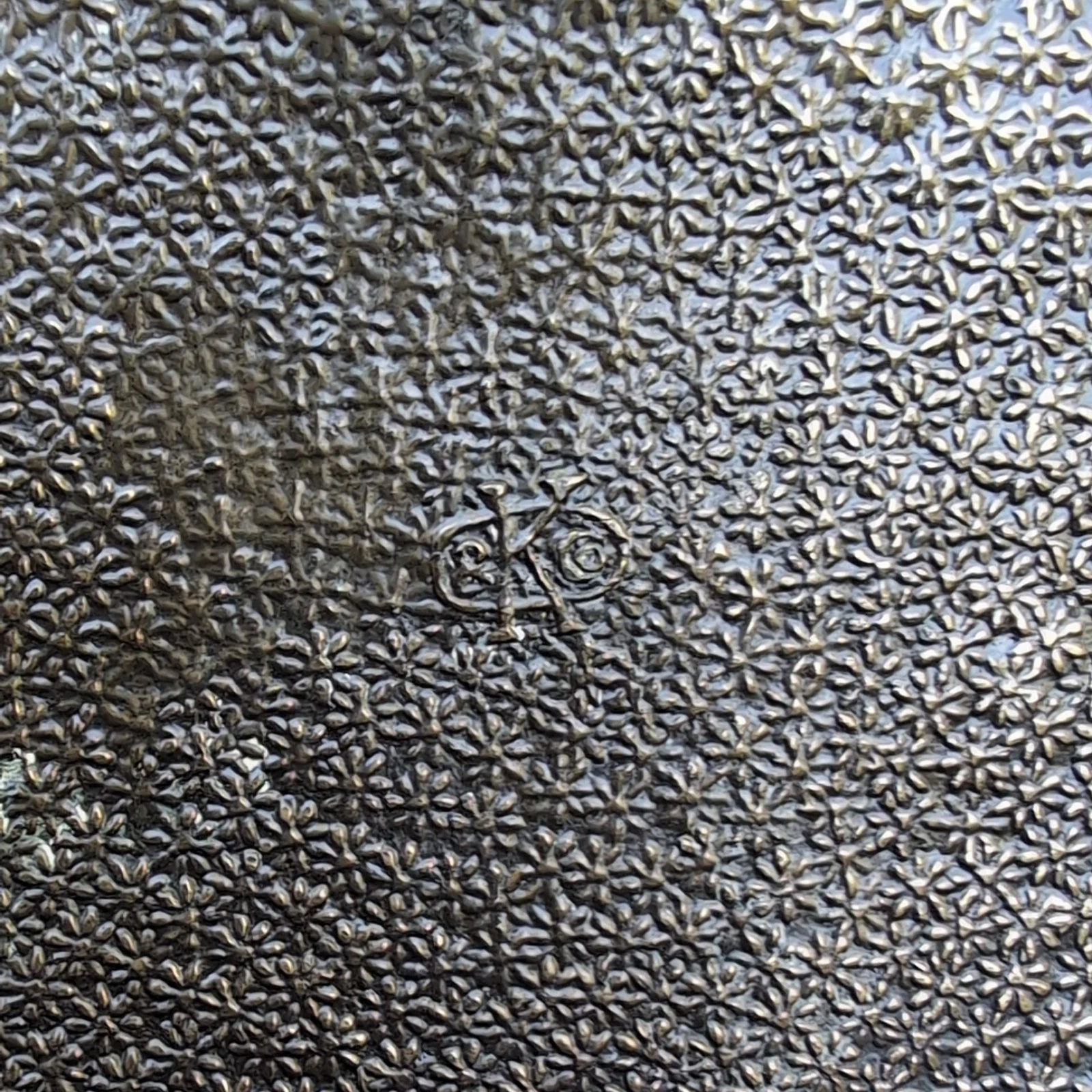
- Underside & Maker’s Mark: The bottom exhibits an all-over pebbled casting texture and is stamped at the center with the distinct interlocking K&O ribbon monogram. Two mounting/casting holes are visible on either side of the base.
Manufacturer History: Kronheimer & Oldenbusch (K&O)
- Founding: Established in 1899 in Brooklyn, New York, by Joseph Kronheimer and Ernest A. Oldenbusch.
- Production Focus: K&O specialized in decorative cast-metal novelties, high-grade desk accessories, inkwells, inkstands, pen trays, bookends, and vanity items, primarily cast in brass, bronze, and spelter (white metal) with electroplated or polychrome finishes.
- Artistic Period: Their peak creative output ran from roughly 1900 through the 1920s, transitioning from ornate Victorian and Art Nouveau motifs into Arts & Crafts and Art Deco styles.
- Closure: The firm operated as a prominent American decorative metalware producer until ceasing operations around 1939.
This inkwell was manufactured circa 1900–1910
Key Dating Indicators:
- Maker’s Mark: The interlocking ribbon-monogram K&O logo cast directly into the metal on the underside is the earliest trademark variation used by Kronheimer & Oldenbusch, dating from their establishment in 1899 through the 1900s. (Later pieces from the 1920s–1930s often used block-letter stamps such as K & O CO. or included explicit patent dates).
- Stylistic Cues: The piece represents the transition from Late Victorian Rococo Revival (heavy scrollwork, stippled textured panels, splayed bracket feet) into early Art Nouveau (stylized thistle/whiplash foliate motifs). By the 1910s and 1920s, K&O’s catalog shifted away from ornate floral relief work toward Arts & Crafts, Egyptian Revival, and eventually geometric Art Deco motifs.
- Desk Accessory Market: Heavy cast-brass individual inkstands of this footprint reached the height of their commercial popularity between 1900 and 1910, prior to fountain pens widely replacing open-well desktop dipping sets in the 1910s and 1920s.
Sold for $40 in July 2026
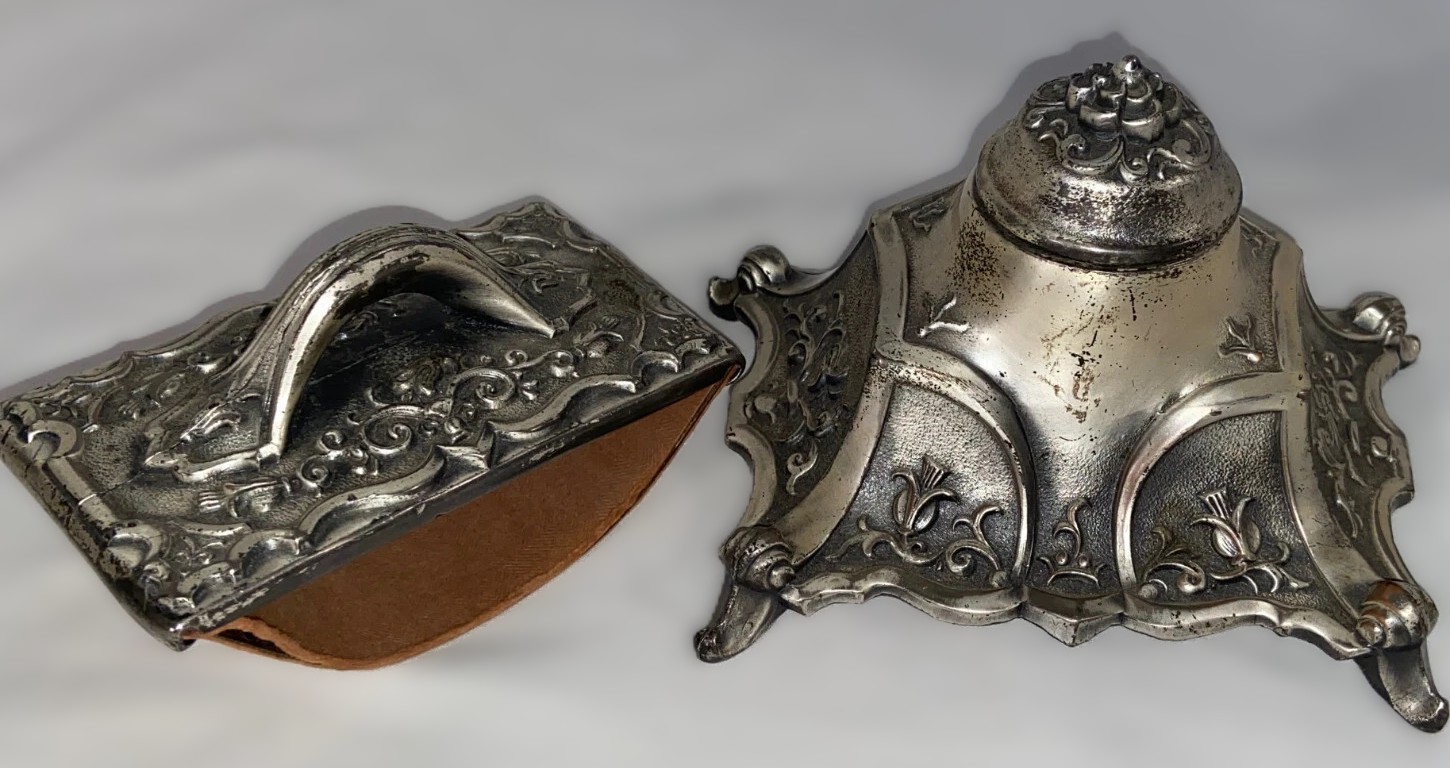
Inkwell & blotter sold for $99 in August 2026
Content disclaimer. The information posted is the owner’s best knowledge and may not have been vetted by the SOIC. We welcome comments, corrections, and additions, working to make our website information comprehensive and accurate.
Join the Society of Inkwell Collectors (SOIC) – it’s free!
Founded in 1981 as a non-profit organization,
we are documenting inkwells (and accessories).
We’re here to help and inform!