


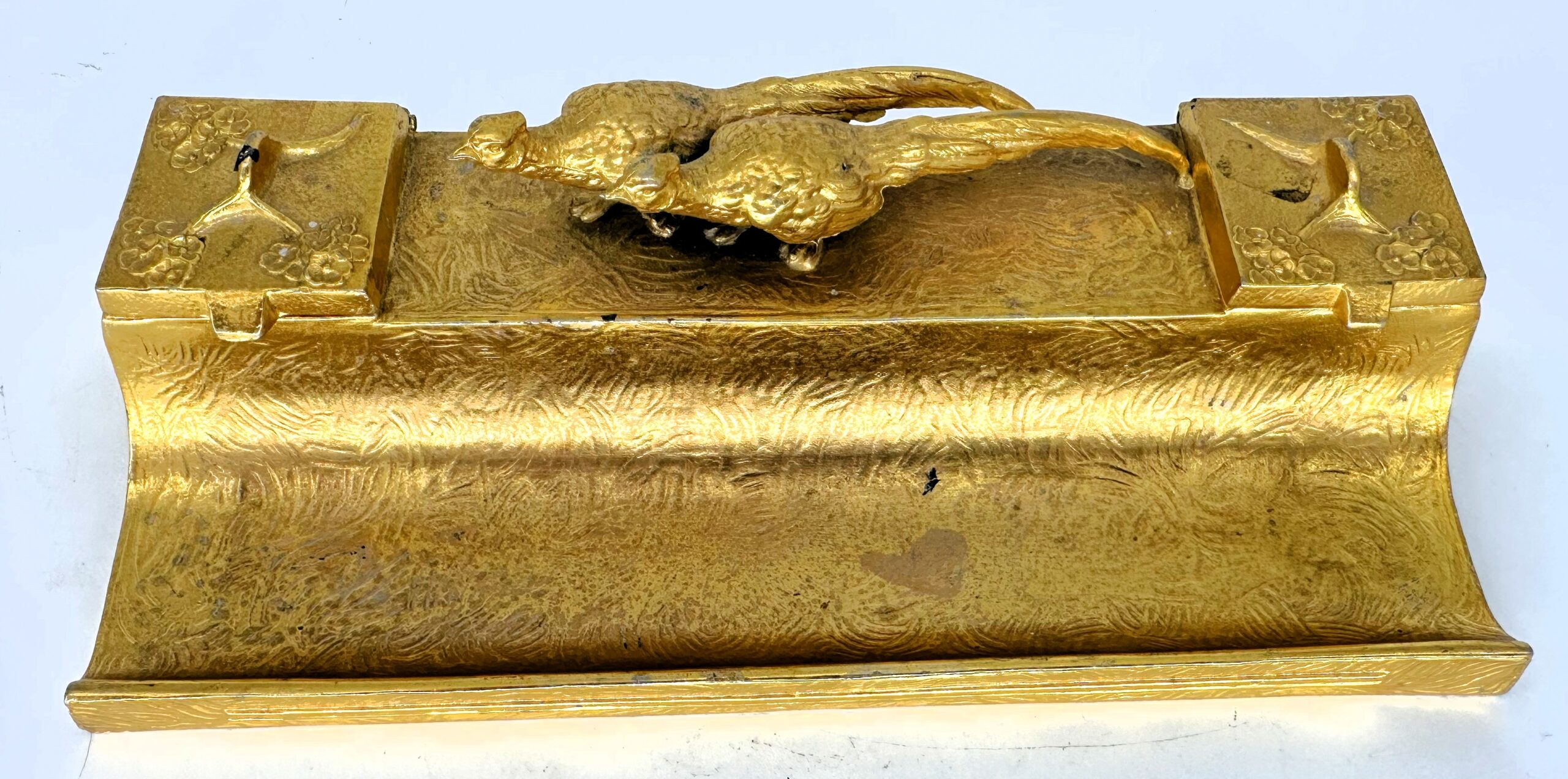

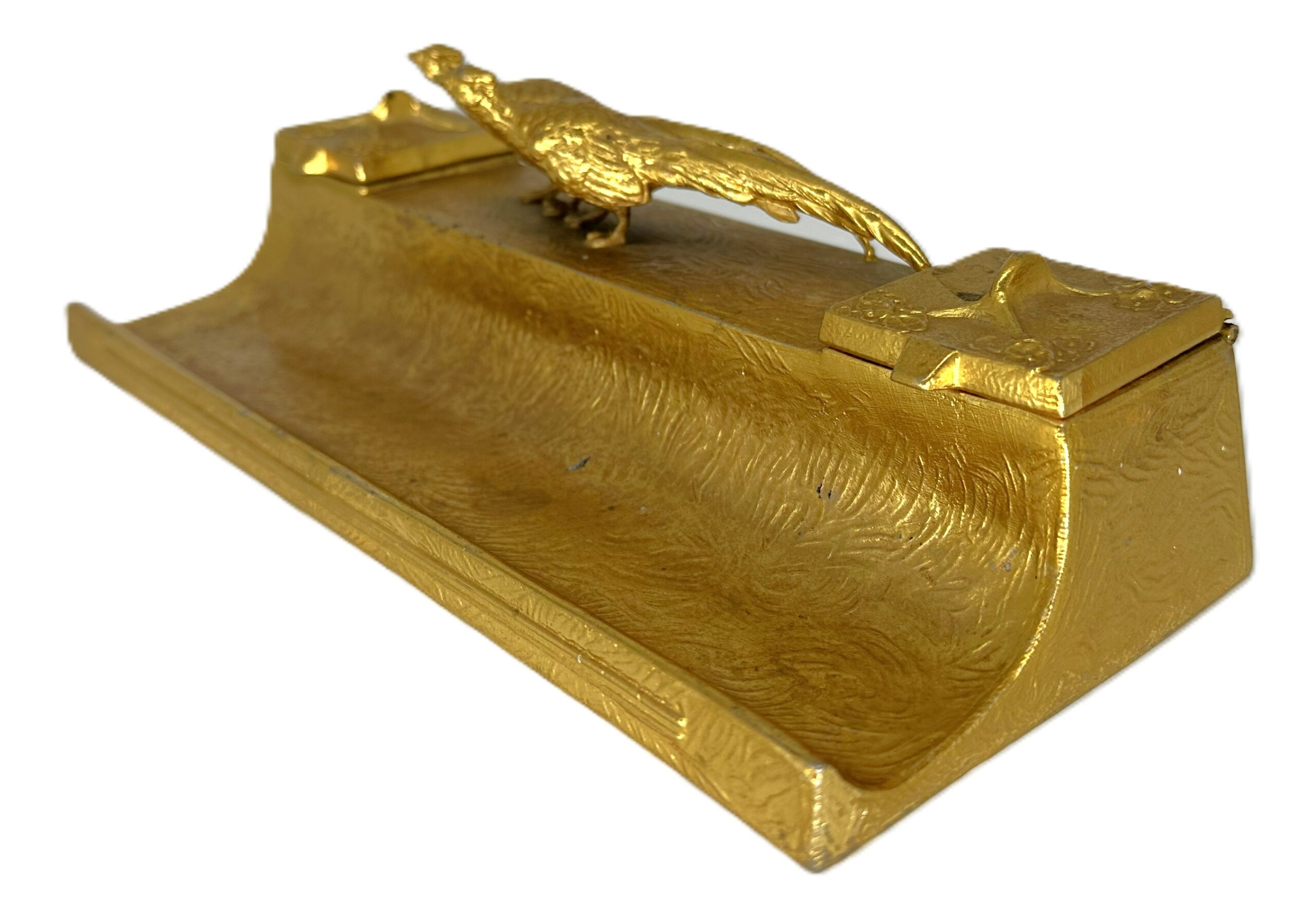
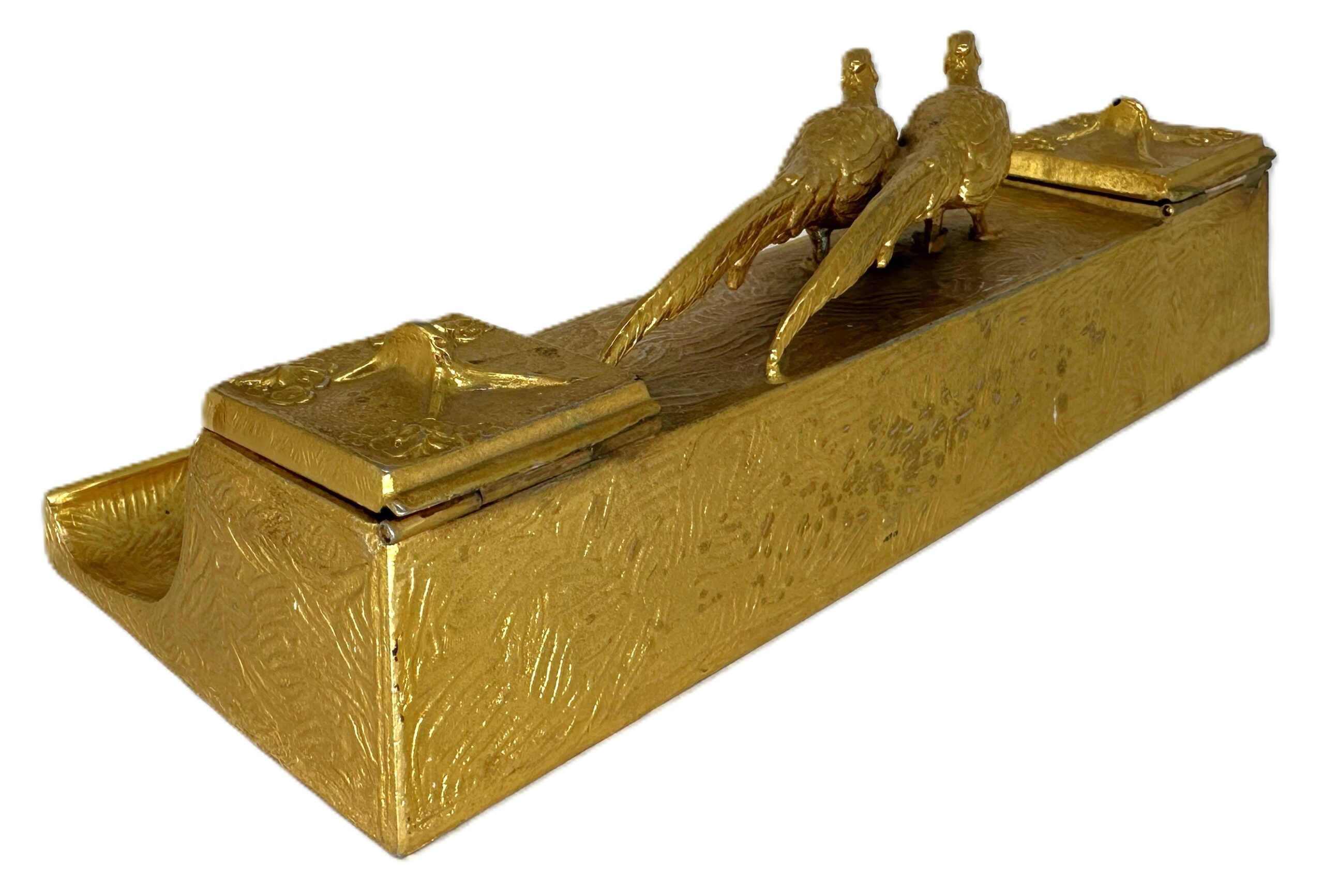
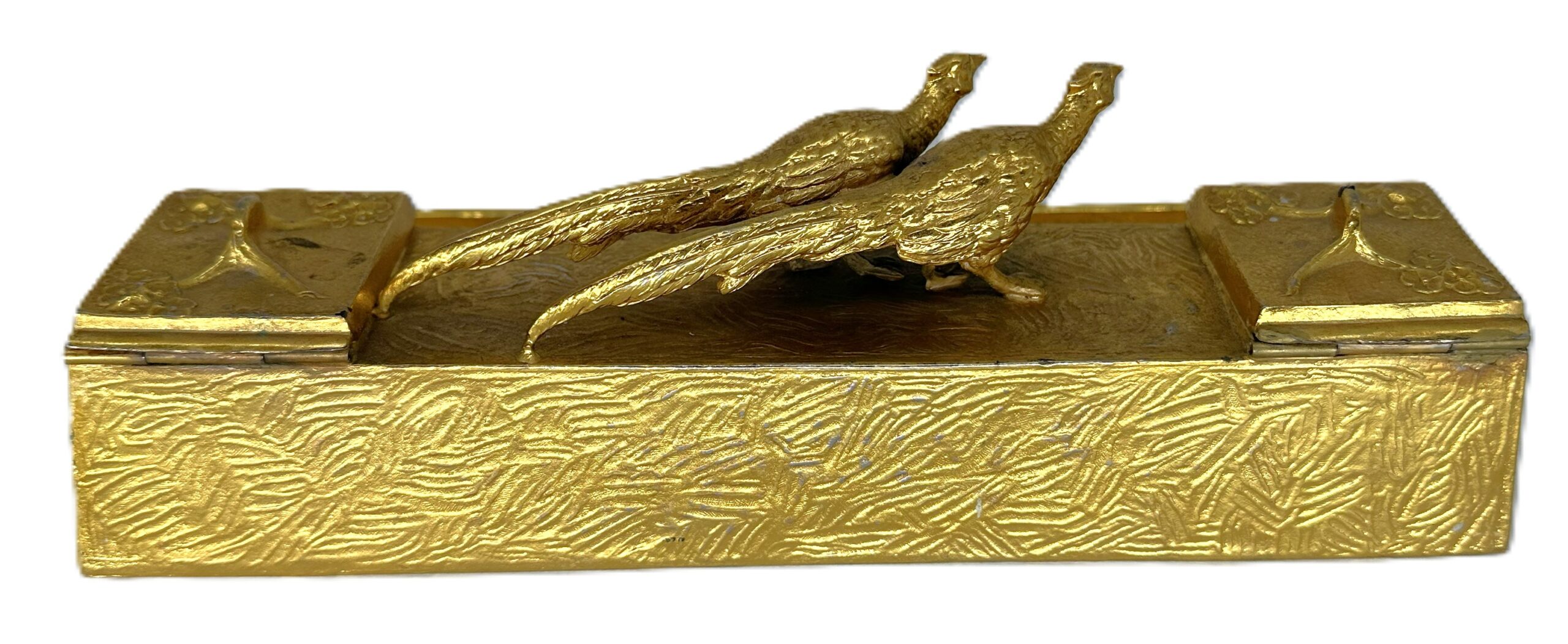
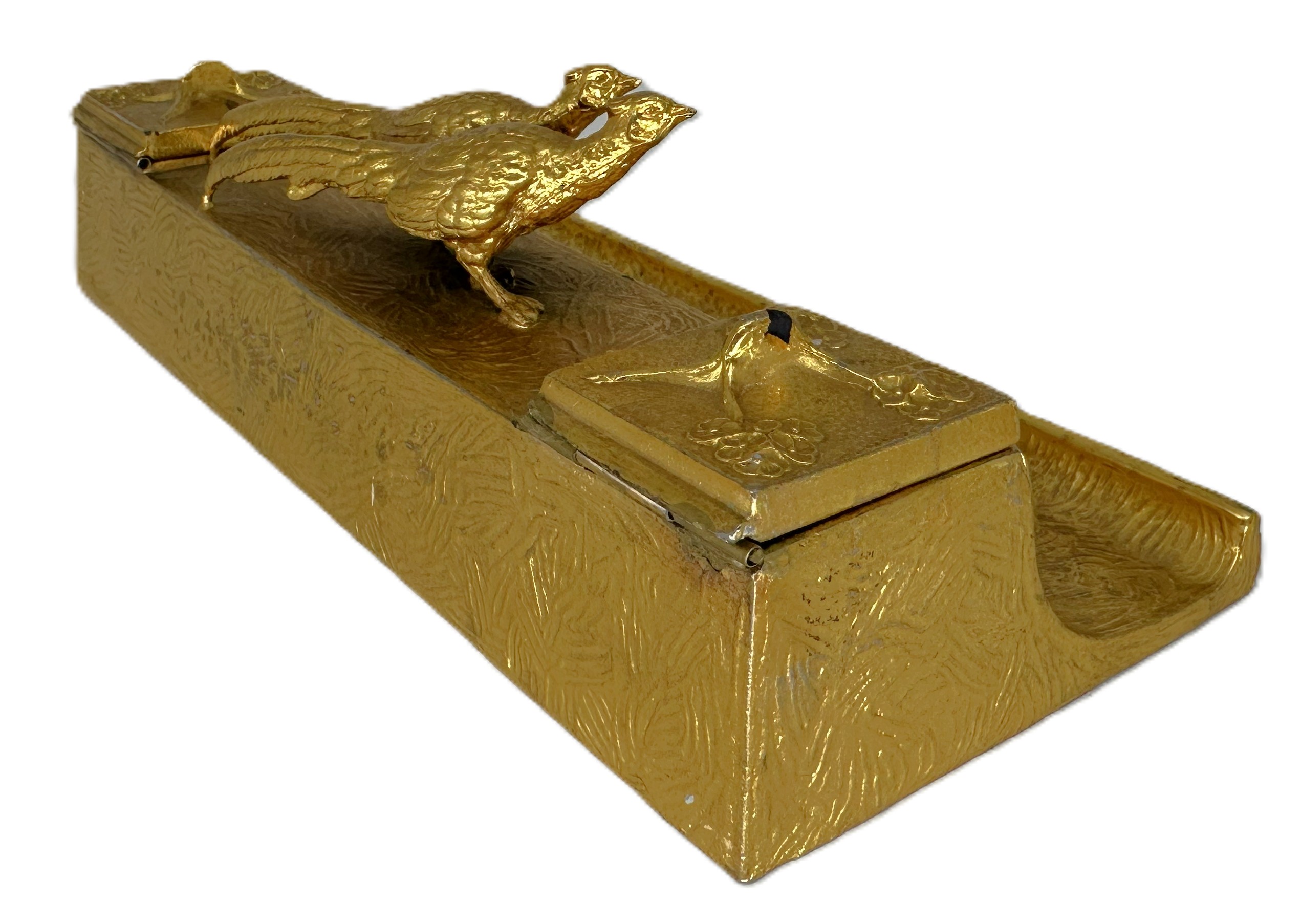

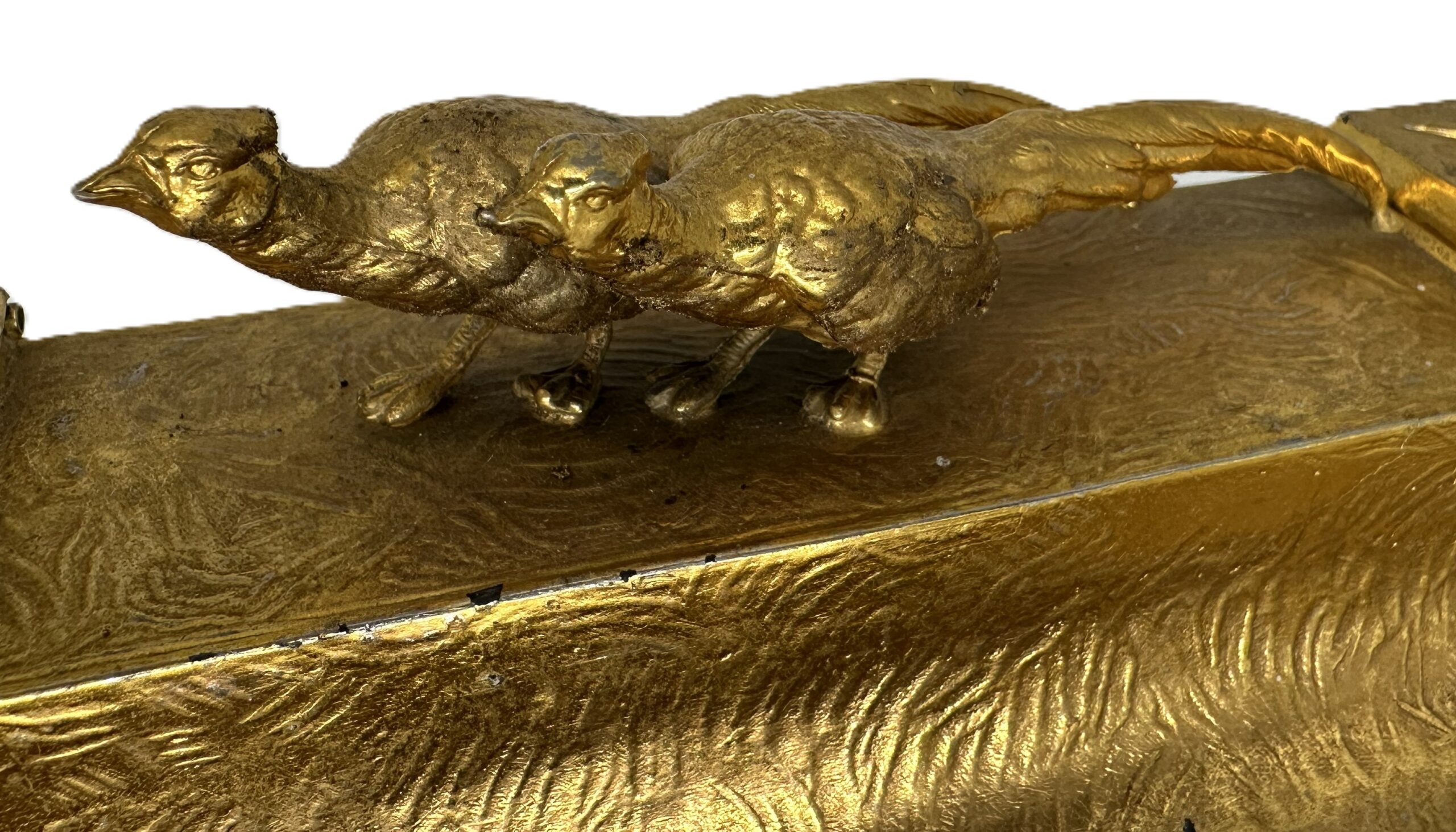
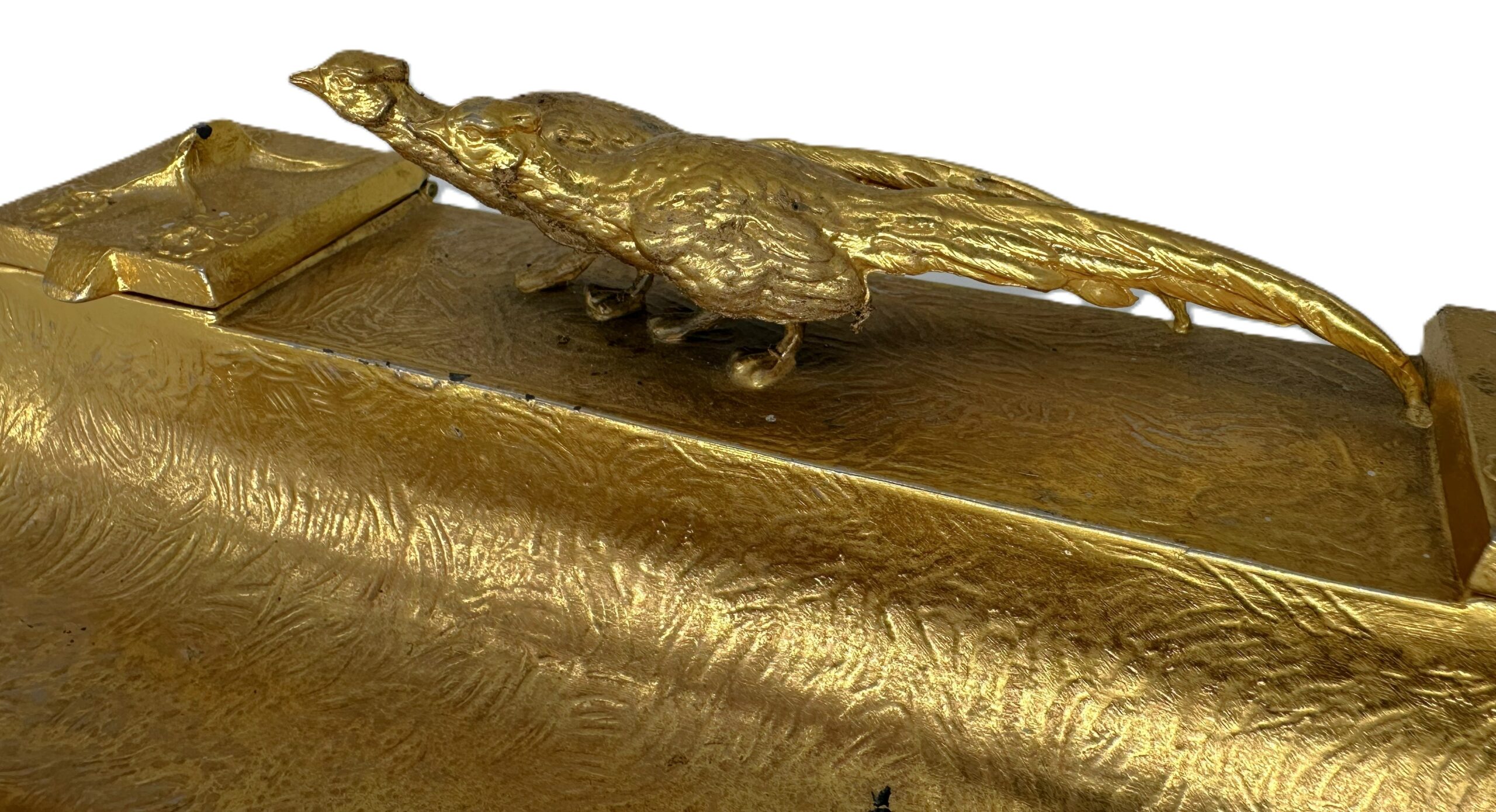
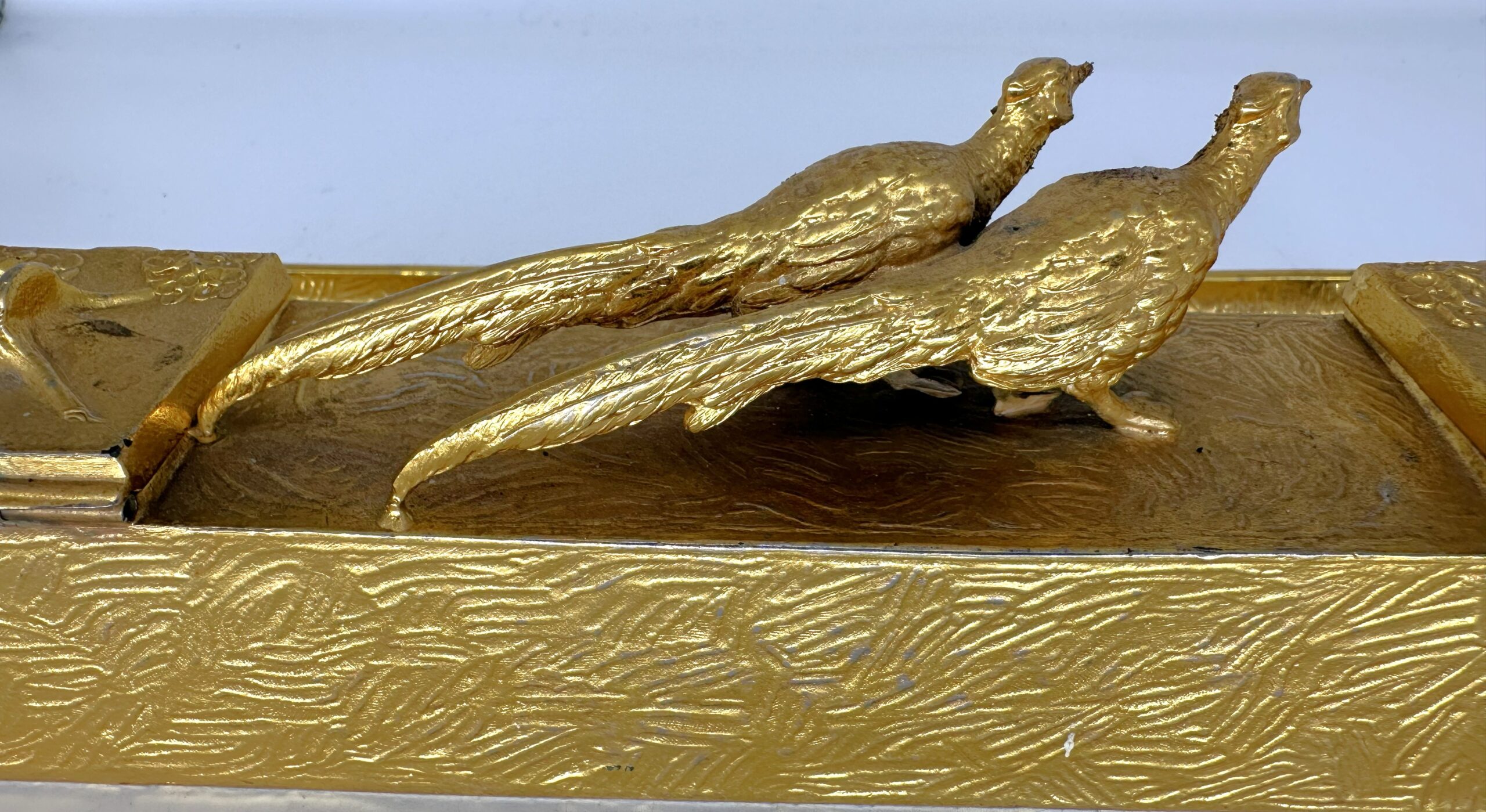
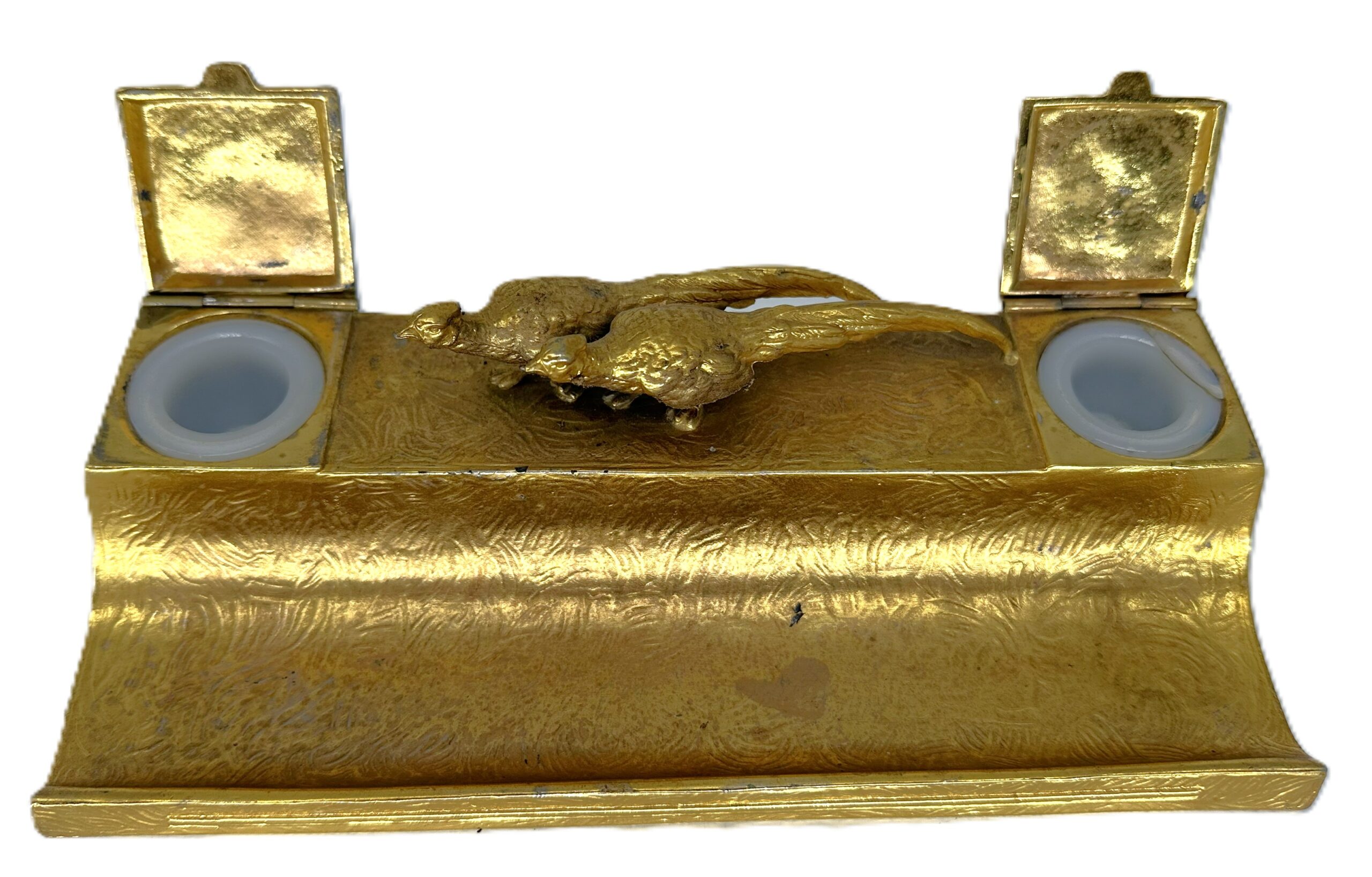

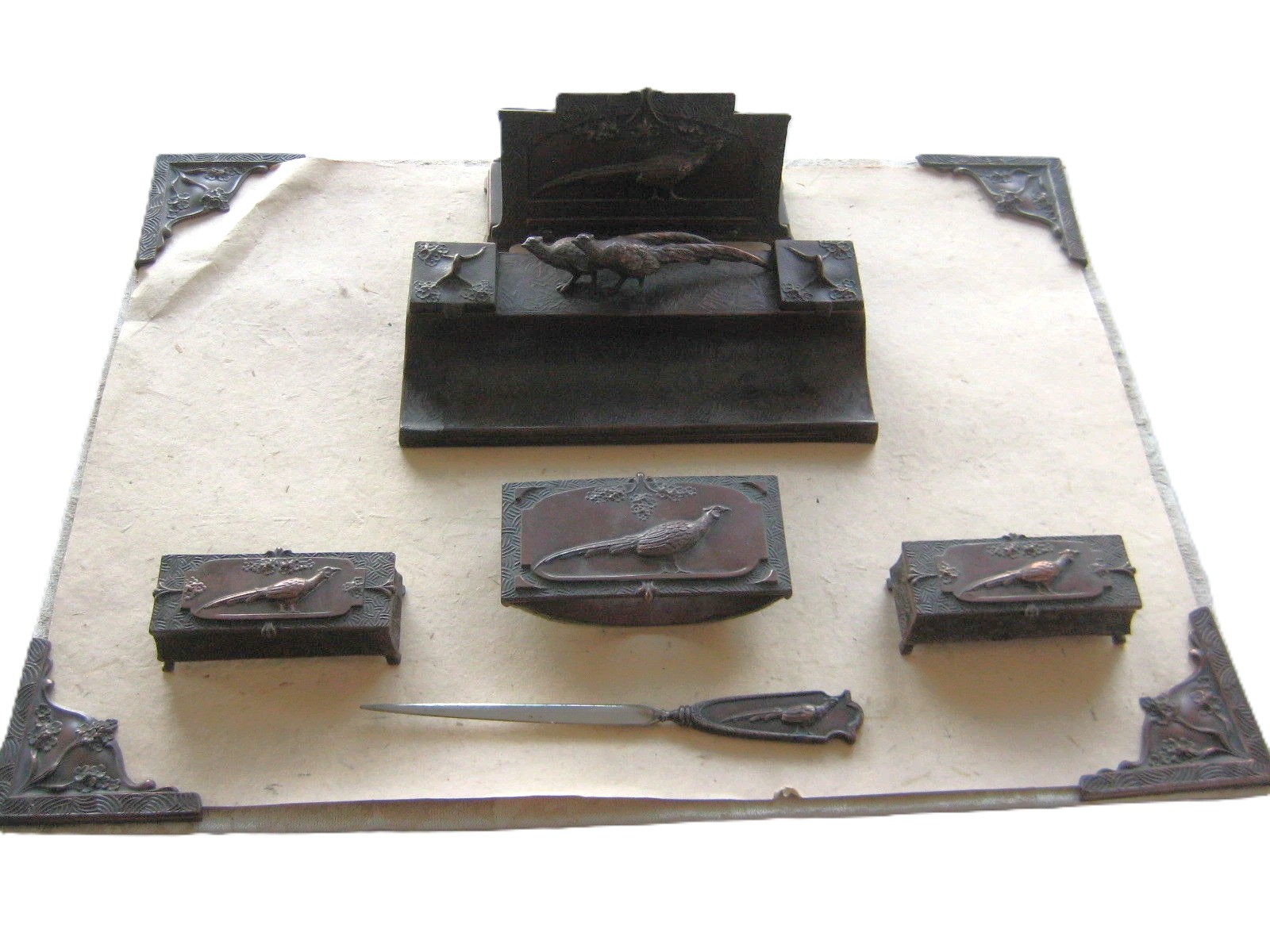
Inkstand with a Pair of Pheasants
| Categories | Figural - Animals & Living Creatures |
| Type | Bird, Pheasant |
| Material | Gold Gilt Finish |
| Markings | Unmarked |
| Manufacturer | Hugo Wurster - Neustadt (H.W.N.) |
| Origin | United States |
| Date or Era | circa 1915 |
| Measuring | 9 ¼” x 4” x 3 ¼” high |
Inkstand with a Pair of Pheasants (Desk Set No. 3590)
Primary Manufacturer (Base/Inkstand): Hugo Wurster, Neustadt (Black Forest, Germany)
Associated Manufacturer (Set Accessories/Finishing): Jennings Brothers, Bridgeport, Connecticut, USA
Markings: Base stamped with catalog/mold number 3590 (some variants stamped H.W.N. 3590); accompanying desk set pieces bear the J.B. trademark.
Circa: 1900–1910
Style: Jugendstil (German Art Nouveau) / Edwardian Naturalist
Material: Patinated Art Metal (Electroplated or bronze-finished white metal alloy/cast brass)
Description
This elegant double inkstand features a pair of beautifully detailed, expressively cast pheasants mounted on a raised, rectangular central platform. The gamebirds are depicted in a naturalistic pose, capturing the fine texture of their plumage and long tail feathers, characteristic of the sporting and hunting themes popular at the turn of the 20th century.
Flanking the central platform are two integrated, square-lidded inkwell compartments. The hinged lids open to accommodate circular glass or crystal ink inserts. The exterior surfaces of the lids are decorated in low relief with a sweeping, organic motif of stylized floral blossoms and delicate branches—a signature hallmark of the German Jugendstil movement. The front of the heavy base gracefully slopes forward into a wide, integrated, semi-cylindrical trough serving as a pen rest. The entire perimeter of the base and the pen tray features a highly stylized, combed texture designed to simulate natural grass, wind currents, or rippling water.
Collector’s Note & Provenance Research
For many years, this specific double-inkstand configuration confounded collectors due to a mix of American and European characteristics. While component pieces of this matching desk set (such as blotter corners or letter openers) frequently bear the “J.B.” (Jennings Brothers) trademark, the double inkstand base itself is consistently marked only with the mold/catalog number 3590.
Recent research and the discovery of identical matching bases stamped “H.W.N. 3590” have definitively solved this mystery. The primary inkstand base was designed and cast by the art metal foundry of Hugo Wurster in Neustadt (Black Forest, Germany).
The Universal Base & International Trade
The Hugo Wurster foundry utilized base mold No. 3590 as a versatile, “universal” platform to cater to different regional and thematic markets. By keeping the main Jugendstil floral-lidded base identical, the foundry could swap out the central figural group to appeal to different buyers:
-
The Pheasants: Tailored to the traditional European and Edwardian hunting, sporting, and rustic library aesthetic.
-
The Dachshunds: Created for the domestic German dog-loving market, where the Dackel was a beloved cultural symbol.
-
The Bulldog: Targeted toward British and American export markets, where the breed was highly fashionable.
The Jennings Brothers Connection
The presence of the “J.B.” mark on accompanying pieces of the set documents a common international trade practice of the era. The Jennings Brothers Manufacturing Company of Bridgeport, Connecticut—renowned for their exceptional metal electroplating and finishing techniques—frequently imported high-quality raw metal castings (“blanks”) from established European foundries to expand their catalog.
In this instance, Jennings Brothers imported the German-made Jugendstil No. 3590 inkstand bases, applied their signature high-quality bronze or brass plating, and paired them with domestically cast matching desk accessories from their own Connecticut foundry to retail as a complete luxury desk set in the American market. This cross-continental partnership explains how a distinctly German Black Forest casting came to be integrated into an American Jennings Brothers set.
In perfect condition this inkwell has sold for $400, but, generally, they sell in the $100 range.
Content disclaimer. The information posted is the owner’s best knowledge and may not have been vetted by the SOIC. We welcome comments, corrections, and additions, working to make our website information comprehensive and accurate.
Join the Society of Inkwell Collectors (SOIC) – it’s free!
Founded in 1981 as a non-profit organization,
we are documenting inkwells (and accessories).
We’re here to help and inform!