

Inkipedia
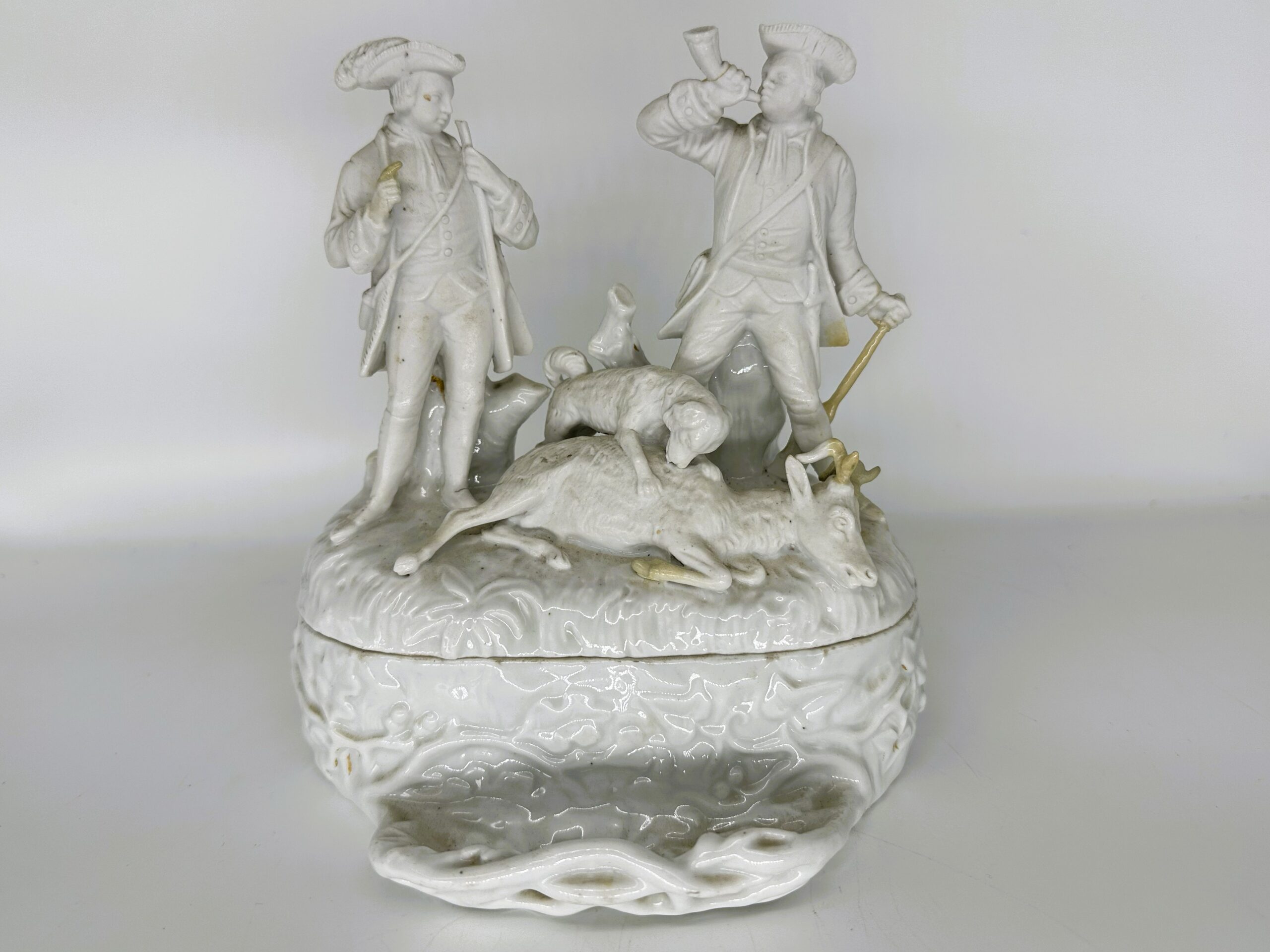

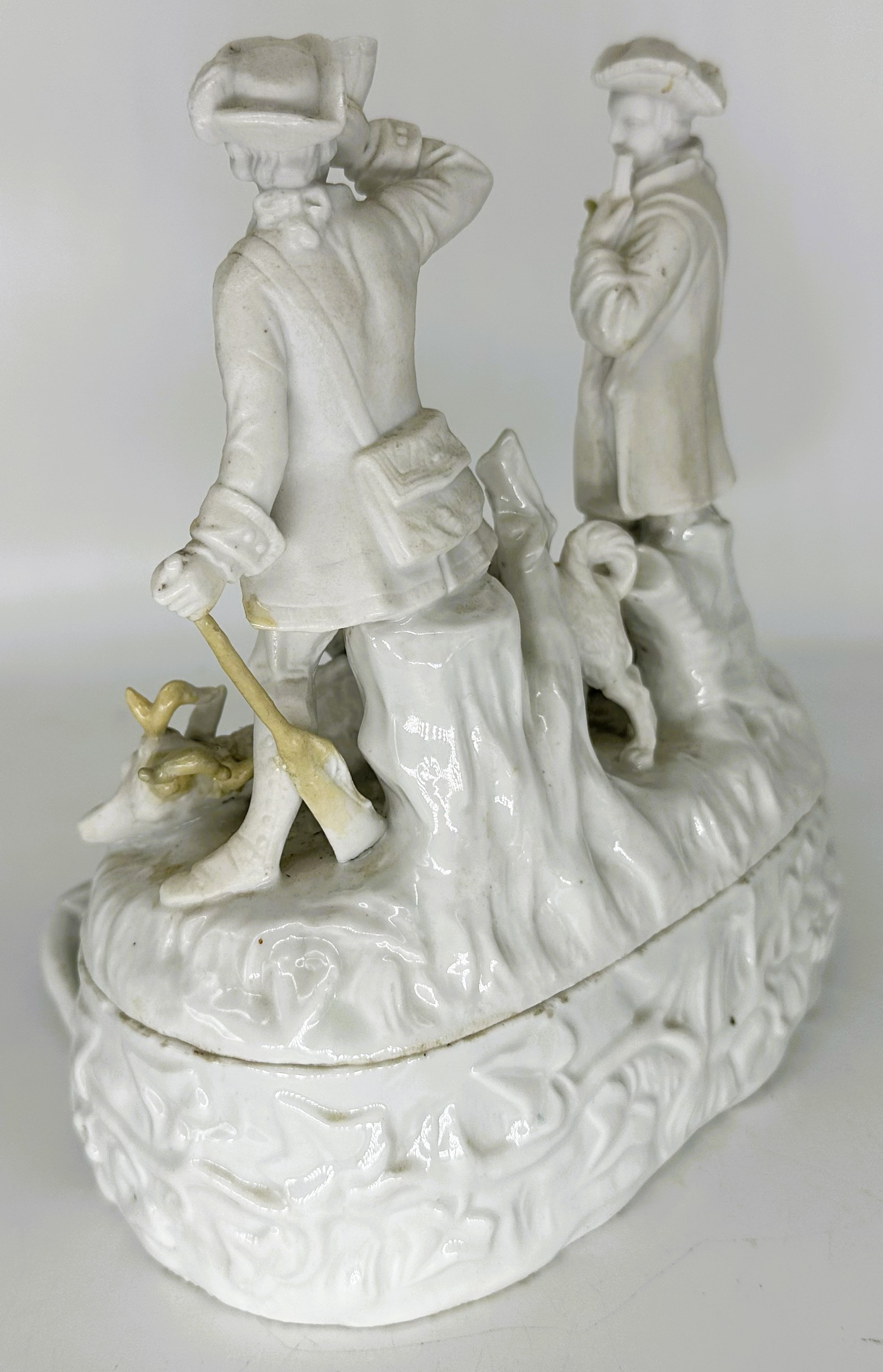
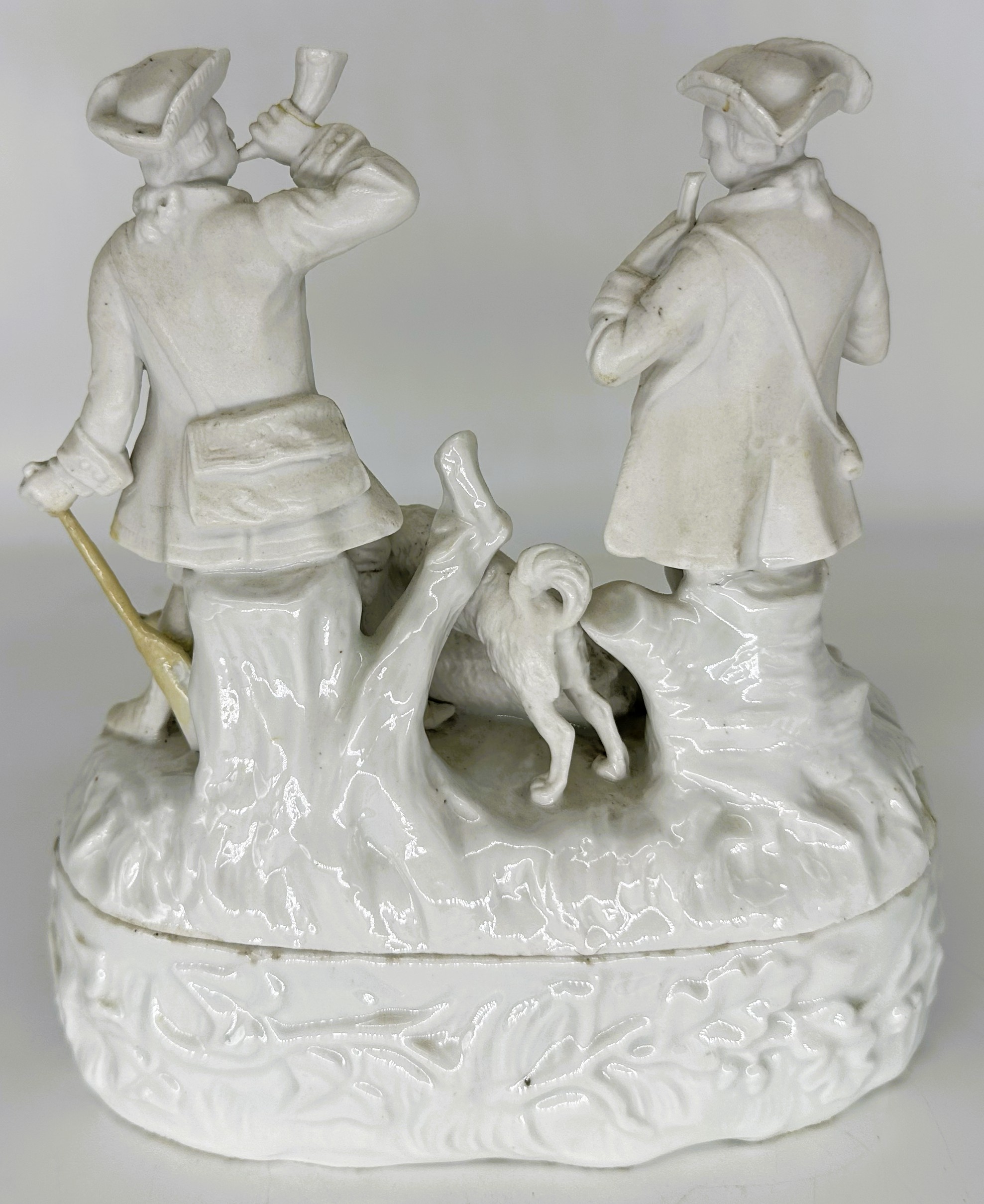


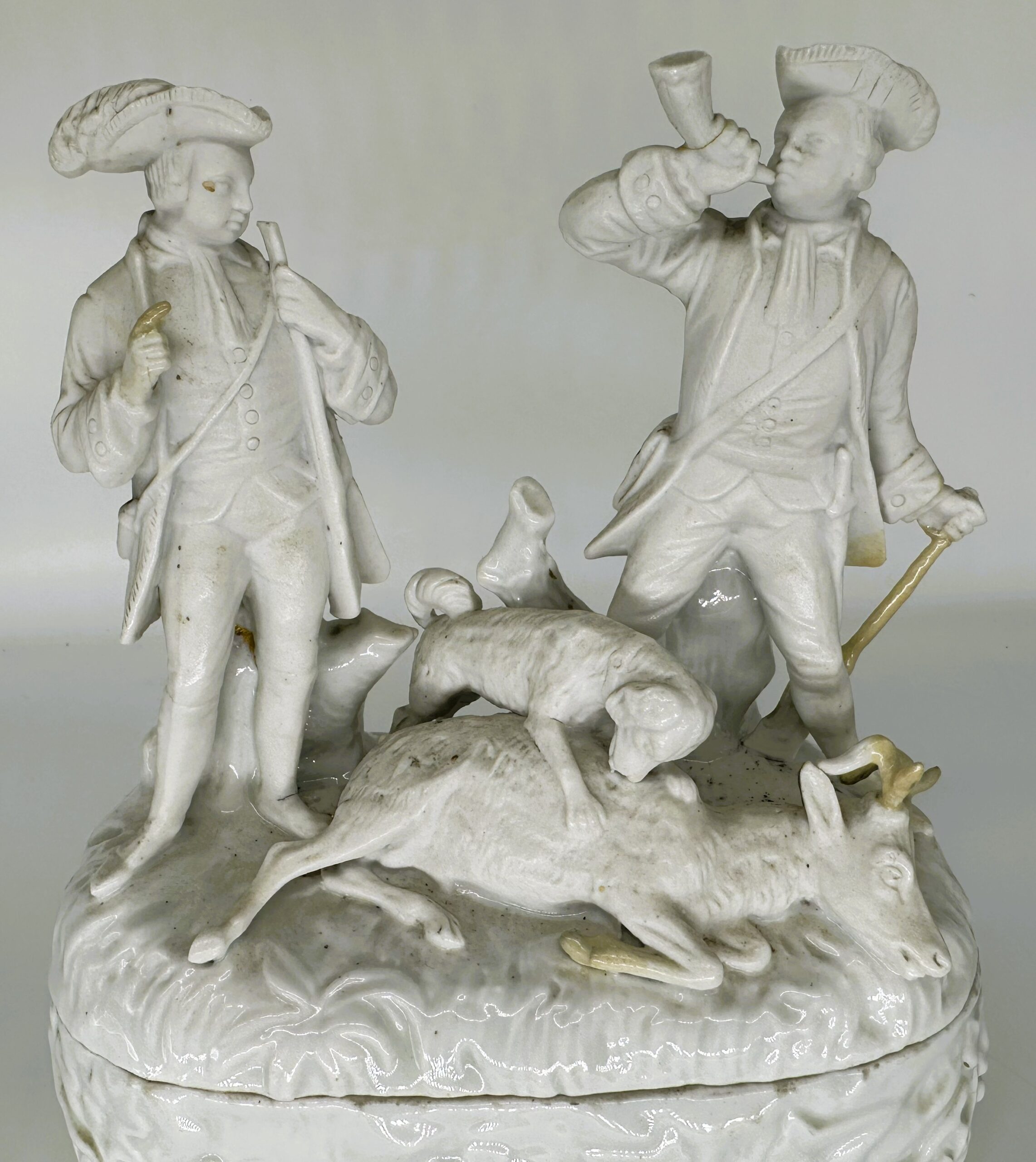

Hunting Scene Porcelain Inkstand
| Categories | Ceramics/Porcelain Figural, Figural - Animals & Living Creatures |
| Type | Stag/Elk/Reindeer, Hunting |
| Material | Porcelain |
| Markings | Unmarked |
| Manufacturer | Undetermined |
| Origin | Belgium |
| Date or Era | circa 1860 |
| Measuring | 6 ¾” x 5 ½” x 7 ½” high |
- Description and Construction
This piece is a large, ornamental desk accessory depicting a hunting scene, made of ceramic and constructed in two parts:
- The Subject: The figural top shows two hunters in period clothing (likely 18th century). One hunter is standing upright and blowing a hunting horn (signaling the end of the chase or a call for retrieval), while the other stands holding his rifle. At their feet is the dead stag (quarry), lying prone, with a dog actively positioned atop it, sniffing or guarding. The entire scene is molded atop a rocky, naturalistic base.
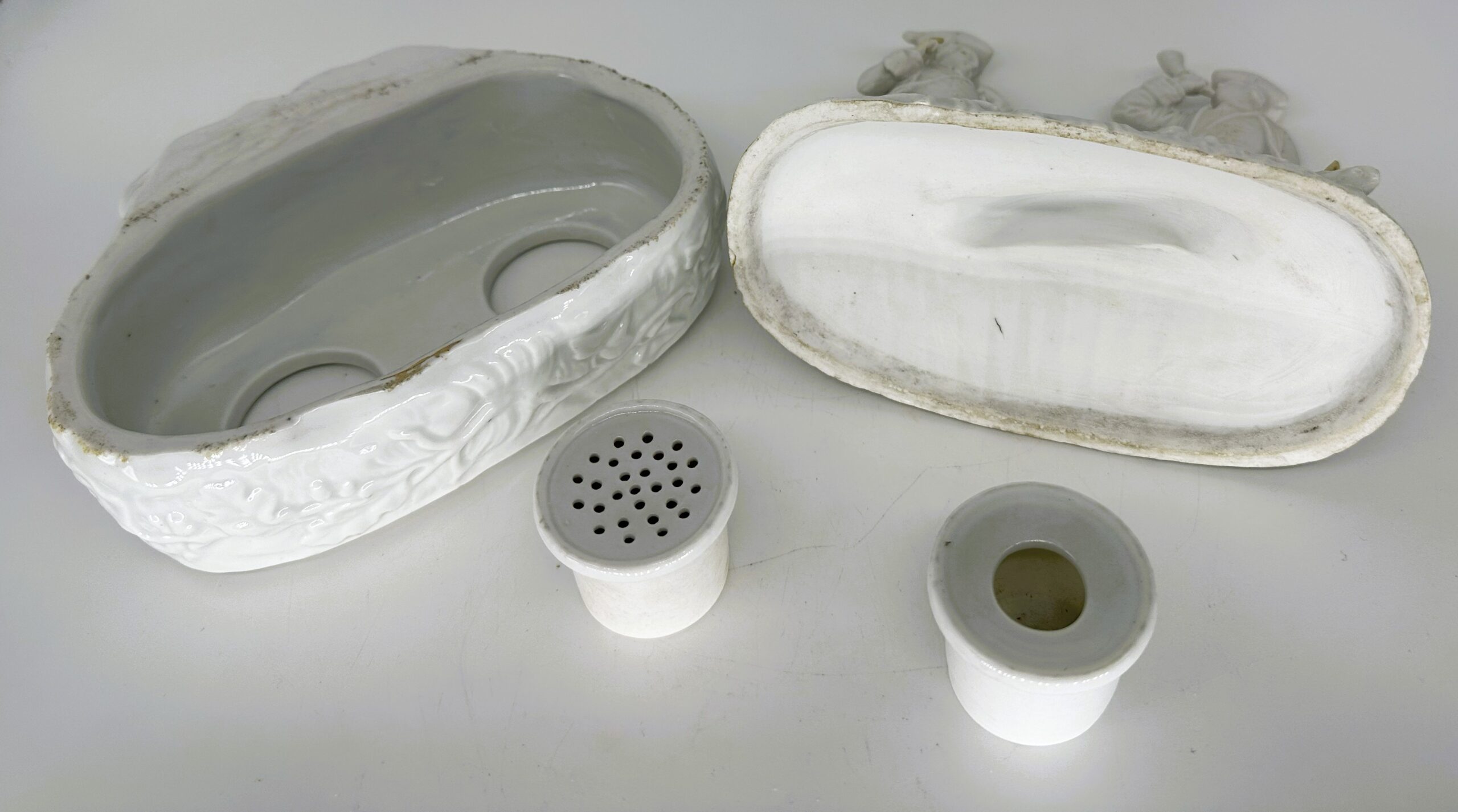
- Functionality: The detailed figural scene lifts off as a lid to access the inner inkwell and sander/pounce pot.
- Base: The base is a broad, oval platform with a molded lip that extends forward to form a functional pen rest area.
- Material and Finish Analysis
| Component | Finish | Material | Significance |
| Figural Top (Lid) | Bisque (Unglazed) | Porcelain or Fine Ceramic | Matte, sculptural finish designed to imitate marble. |
| Base (Bottom) | Glazed | Porcelain or Fine Ceramic | Shiny, protective finish characteristic of tableware and functional wares. |
| Color | Solid White (Unpainted) | Porcelain | The overall aesthetic emphasizes the quality of the molding and form. |
- The Bisque/Glaze Contrast: Factories across Europe (especially in Germany, France, and Belgium) often produced highly detailed figural pieces exclusively in unpainted white bisque or in white porcelain with minimal gilding. This was a deliberate artistic choice to:
- Emulate Marble: It capitalized on the 18th century taste for Neoclassical sculpture, giving the piece an elegant, art-like quality.
- Highlight Molding: The absence of color forces the viewer to focus on the intricate, sharp detail of the mold (the hunters’ clothes, the dog’s fur, the stag’s antlers).
- The Glazed Base: The fact that the base is glazed while the top is bisque strongly suggests a finished design choice, as the base needed the protective, easy-to-clean quality of a glaze for desk use, while the sculptural top was left matte for aesthetic reasons.
III. Tournai Attribution and Age
The attribution to the Tournai area of Belgium is plausible given the style and the material.
- Tournai Porcelain (Belgium): The city of Tournai had a very famous and successful porcelain factory (Manufacture de porcelaine de Tournai), which operated from 1750 until the mid-19th century.
- White Porcelain Specialization: Tournai was known for its high-quality white soft-paste porcelain, and its biscuit (bisque) figures were highly regarded.
- The Style: The composition of the scene—a highly dramatic, yet detailed, genre group (a moment from a hunt)—is typical of the Romantic and Victorian periods, where such themes were extremely popular.
- Assessment of Age: Based purely on the style of the figures, the functional design (inkwell/sander desk set), and the use of the bisque finish:
- Most Likely Period: Mid-19th Century (c. 1830s–1880s). This period covers both the high point of the bisque/Neoclassical aesthetic and the widespread production of elaborate Victorian desk sets.
Estimated value: $150
Content disclaimer. The information posted is the owner’s best knowledge and may not have been vetted by the SOIC. We welcome comments, corrections, and additions, working to make our website information comprehensive and accurate.
Join the Society of Inkwell Collectors (SOIC) – it’s free!
Founded in 1981 as a non-profit organization,
we are documenting inkwells (and accessories).
We’re here to help and inform!