


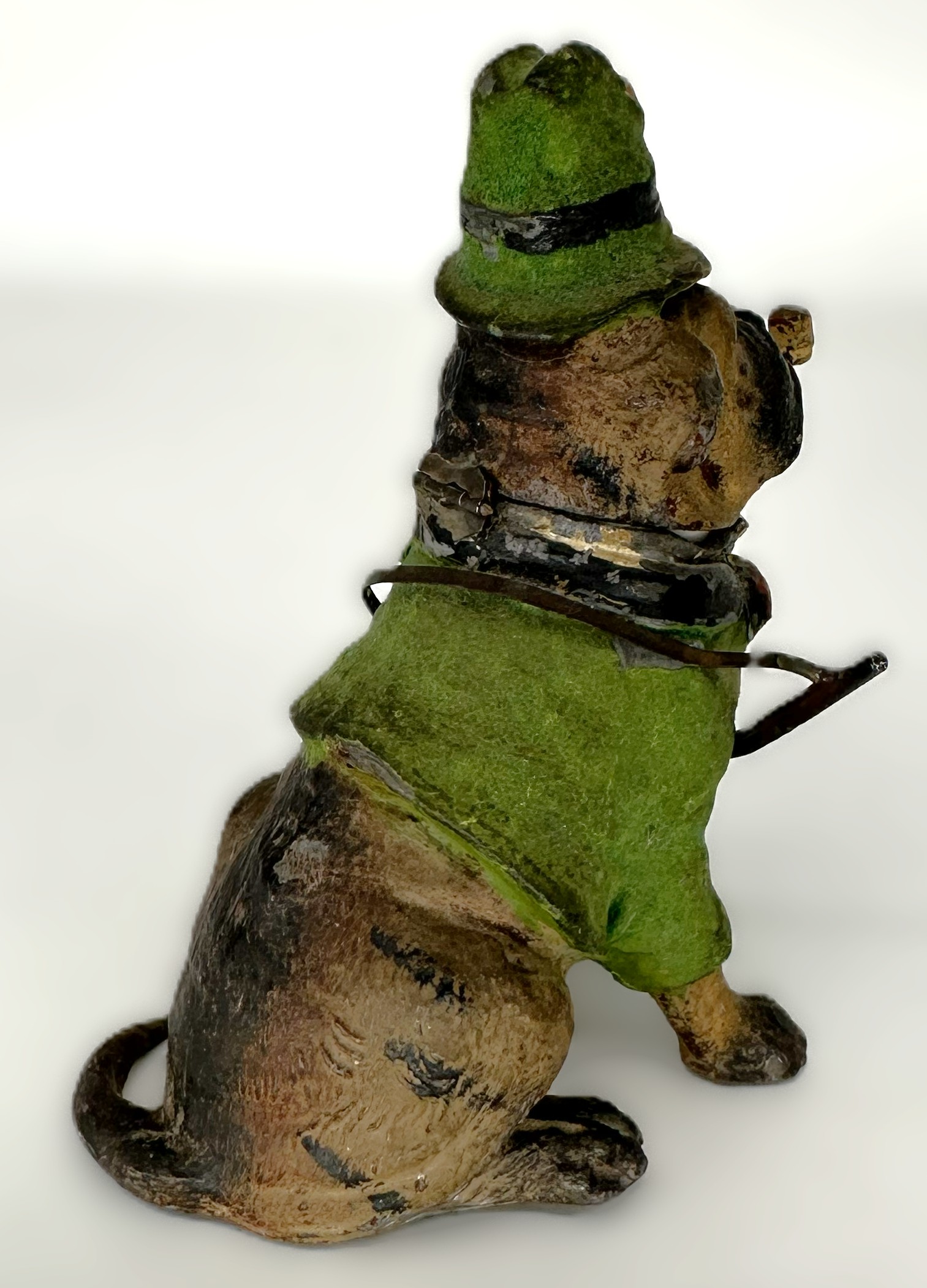
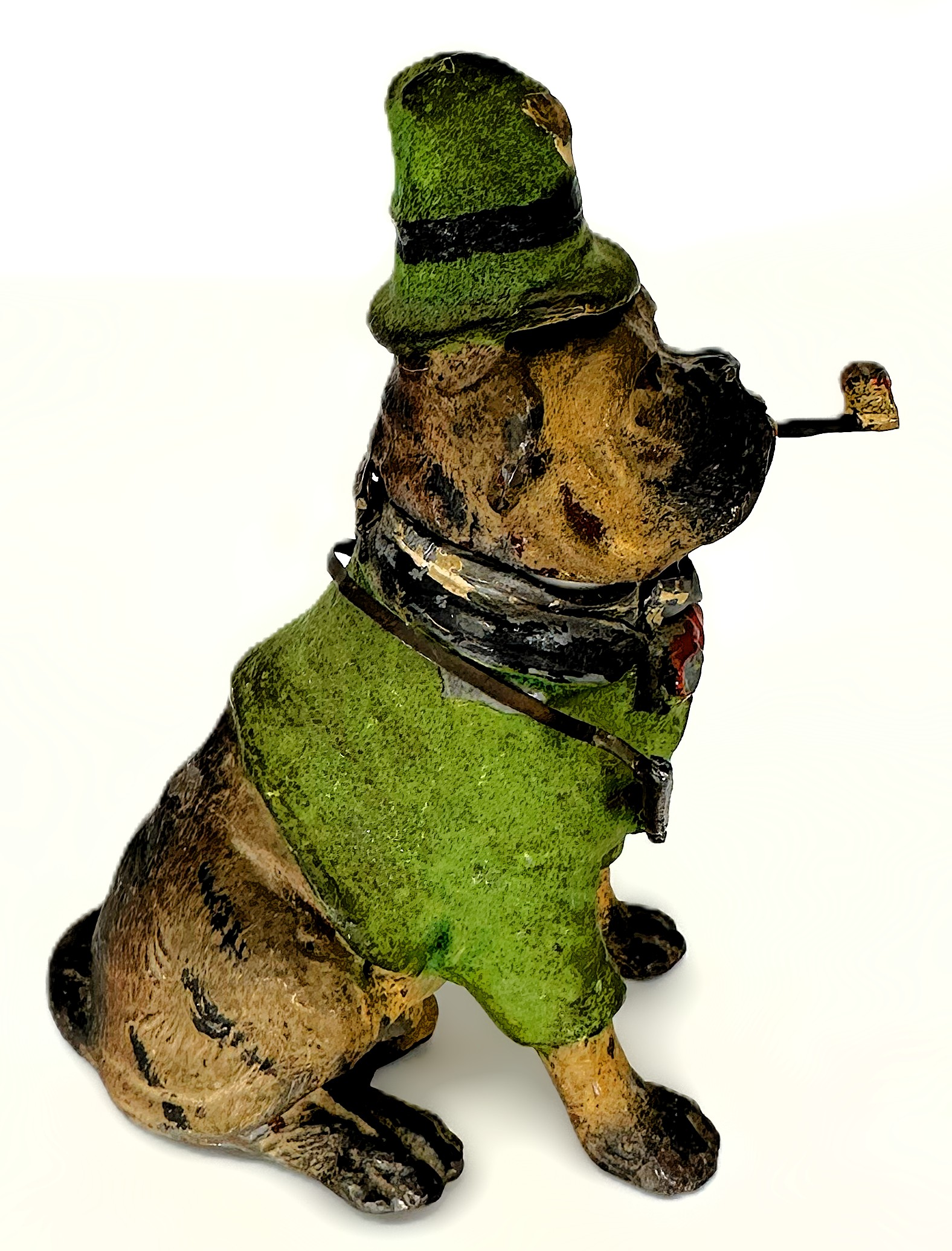
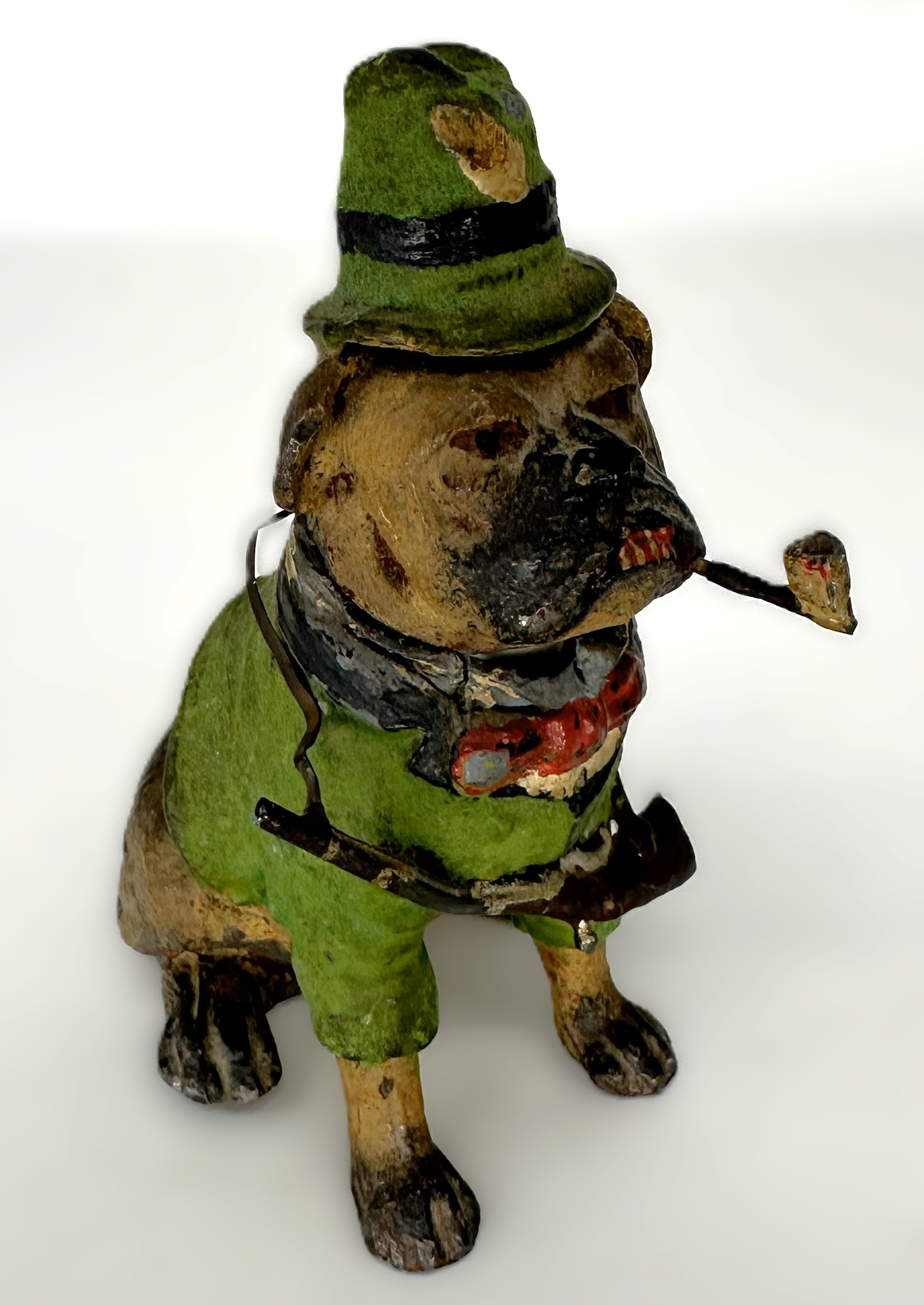
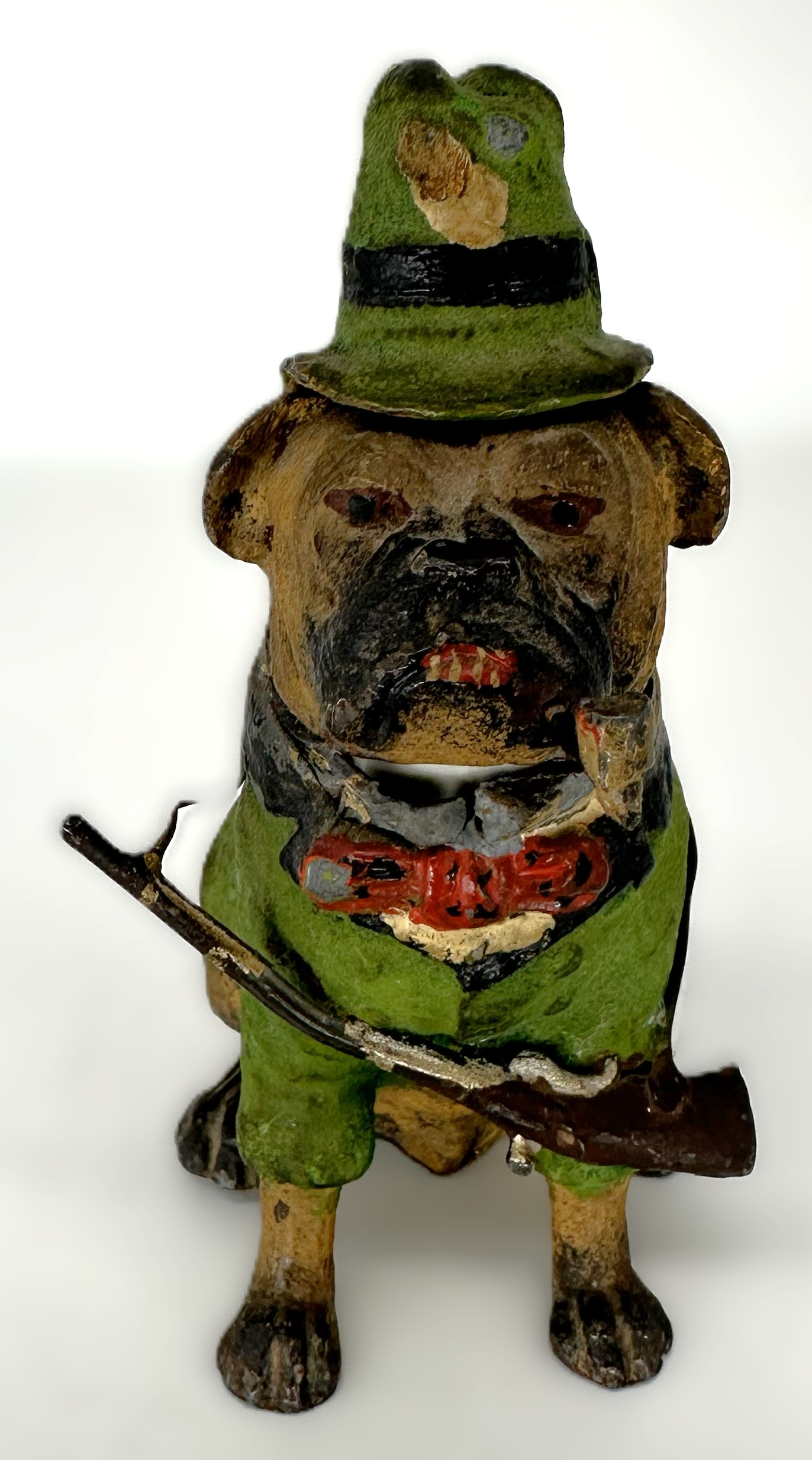
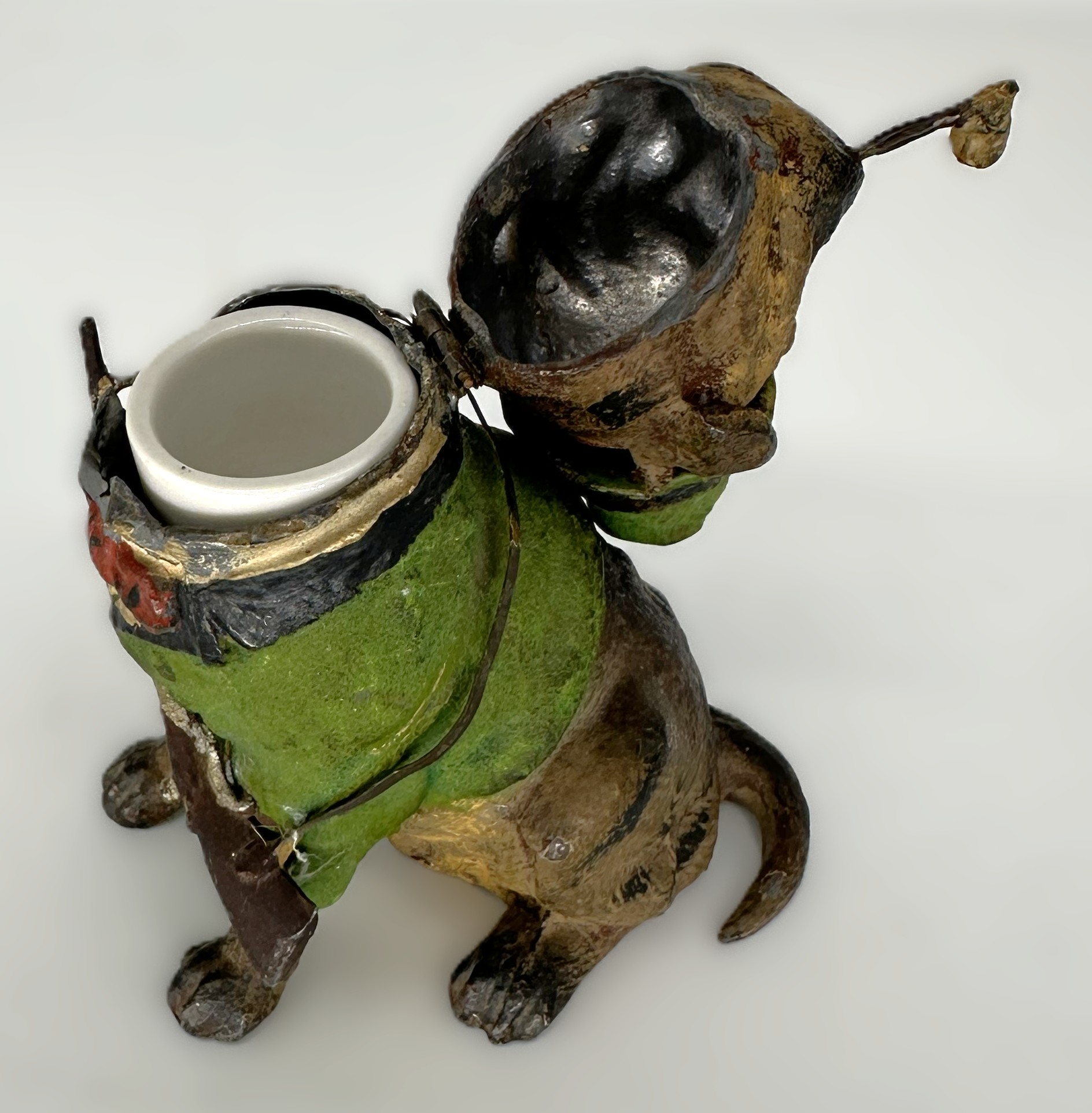
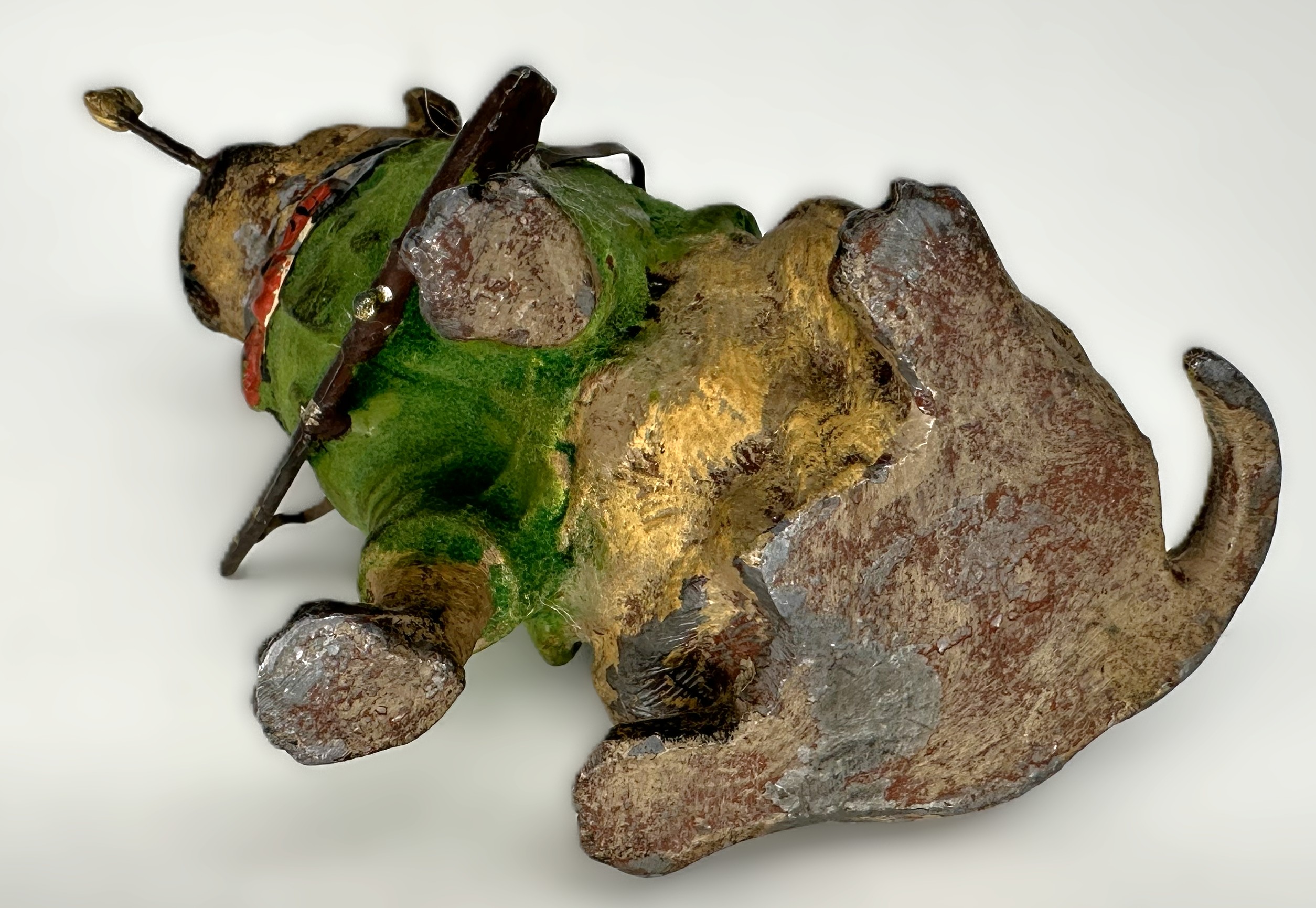


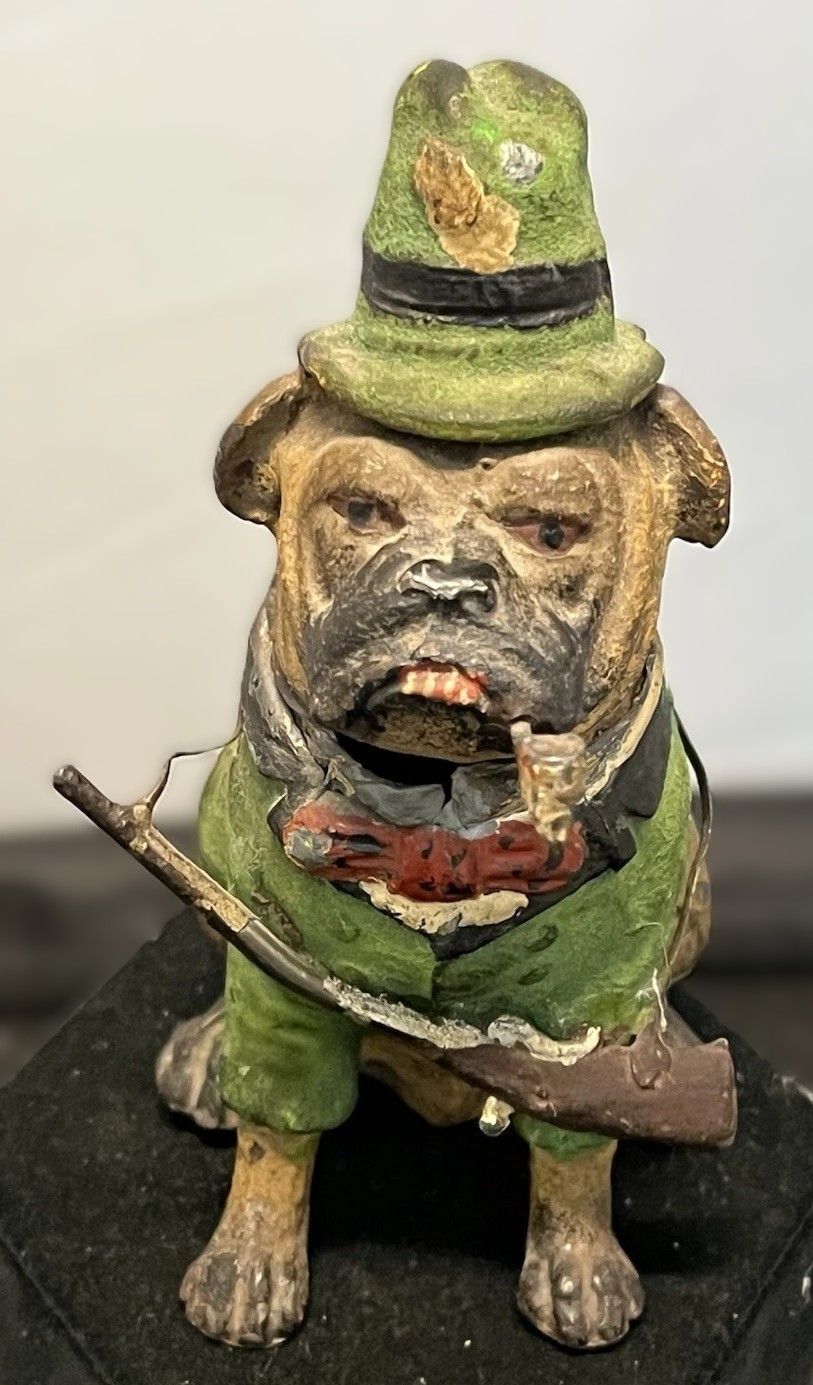

Hunter Bull Dog Smoking a Pipe
| Categories | Figural - Animals & Living Creatures |
| Type | dog |
| Material | Spelter |
| Markings | Unmarked |
| Manufacturer | Undetermined |
| Origin | Undetermined |
| Date or Era | circa 1900 |
| Measuring | 3” x 2 ¼” x 4 ¾” high |
This novelty inkwell is an example of anthropomorphic art from the turn of the century, specifically from a series of “costume” bulldogs that were popular. See also this Inkipedia listing: Dog – Sailor Bulldogs Smoking – The Society of Inkwell Collectors (SOIC)
Physical Description
- Subject: A seated bulldog portrayed with human-like characteristics. He is smoking a pipe and has a rifle (or musket) slung across his front.
- Material: It is made of spelter (a zinc-based alloy used as a more affordable alternative to bronze) and decorated with cold painting, a technique where enamel paint is applied to the metal without firing.
- Functionality: The dog’s head is hinged at the neck. When tilted back, it reveals a white ceramic inkwell insert.
The Hat: Tyrolean / Alpine
The hat is a Tyrolean hat (also known as an Alpine or Bavarian hat).
- Traditional Features: It features the characteristic tapered crown and a narrow brim.
- Hunting Context: In the 19th and early 20th centuries, this style was the standard headwear for foresters and hunters in the German and Austrian Alps.
- Details: On this piece, the green paint and the “brush” or “feather” detail (the Gamsbart) on the side are classic indicators of a hunter’s Alpine cap.
Maker and Origin
Identifying the exact maker is difficult because these pieces were rarely marked, but there are two primary theories:
| Attribution | Evidence |
| Georg Heyde & Co. (Germany) | Some collectors attribute this series of “costume bulldogs” (including sailors, hunters, and soldiers) to this Dresden-based toy company. They were famous for cast metal figures and novelties. |
| Austrian (Vienna) | Due to the cold-painted technique and the specific Alpine theme, some suggest an Austrian origin, as Vienna was the world center for high-quality cold-painted metal novelties during the late 19th century. |
Historical Context
These inkwells date to circa 1900. They belong to a wider category of “Whimsies” or novelty desk ware that appealed to the Victorian and Edwardian fascination with dogs and personified animals.
Estimated value: $225
Content disclaimer. The information posted is the owner’s best knowledge and may not have been vetted by the SOIC. We welcome comments, corrections, and additions, working to make our website information comprehensive and accurate.
Join the Society of Inkwell Collectors (SOIC) – it’s free!
Founded in 1981 as a non-profit organization,
we are documenting inkwells (and accessories).
We’re here to help and inform!