

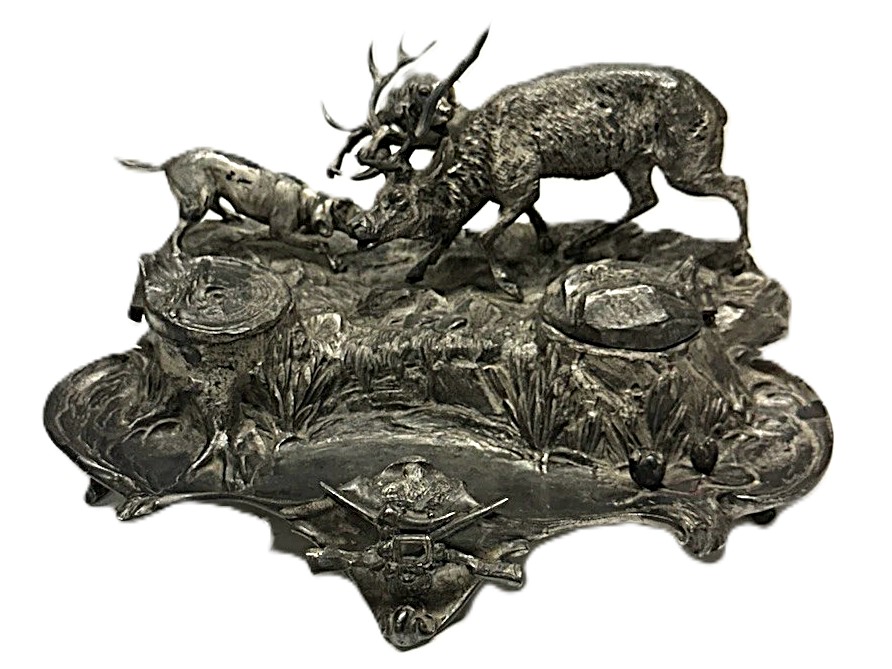
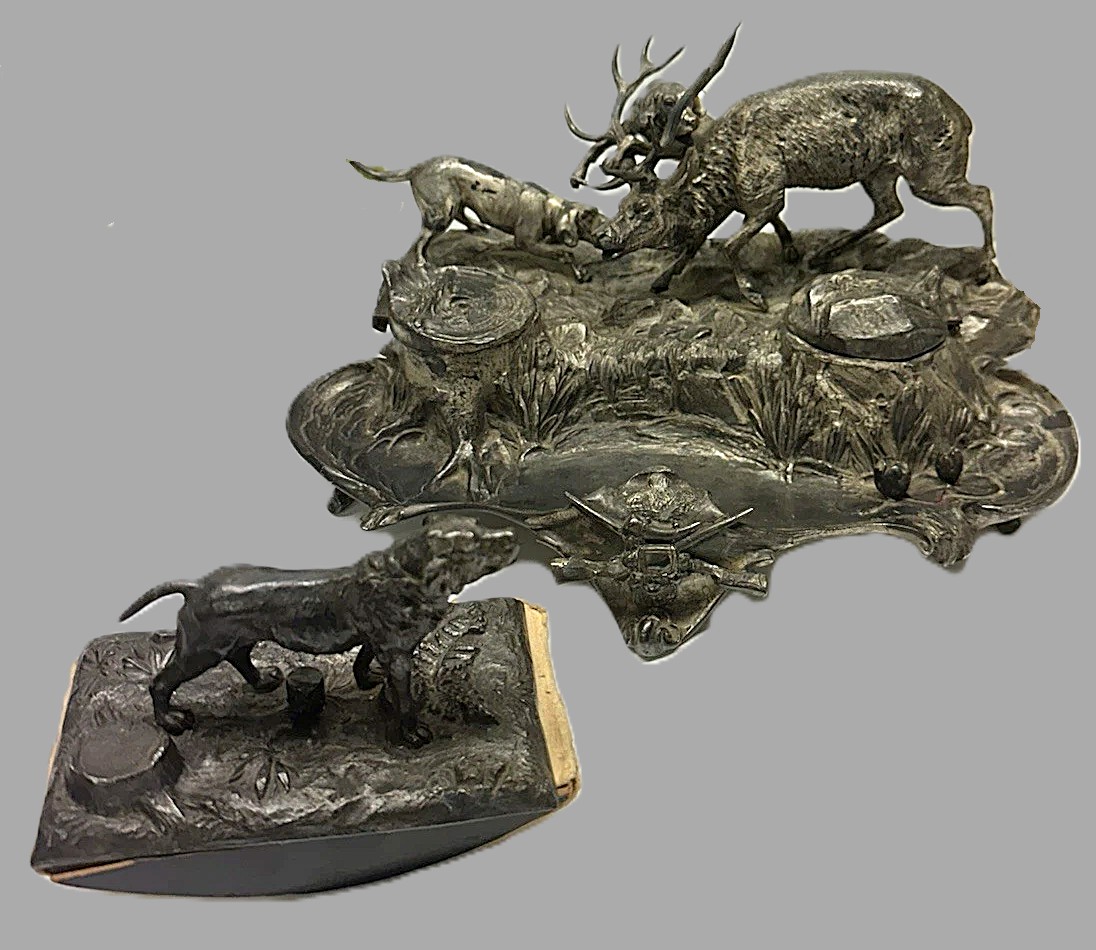
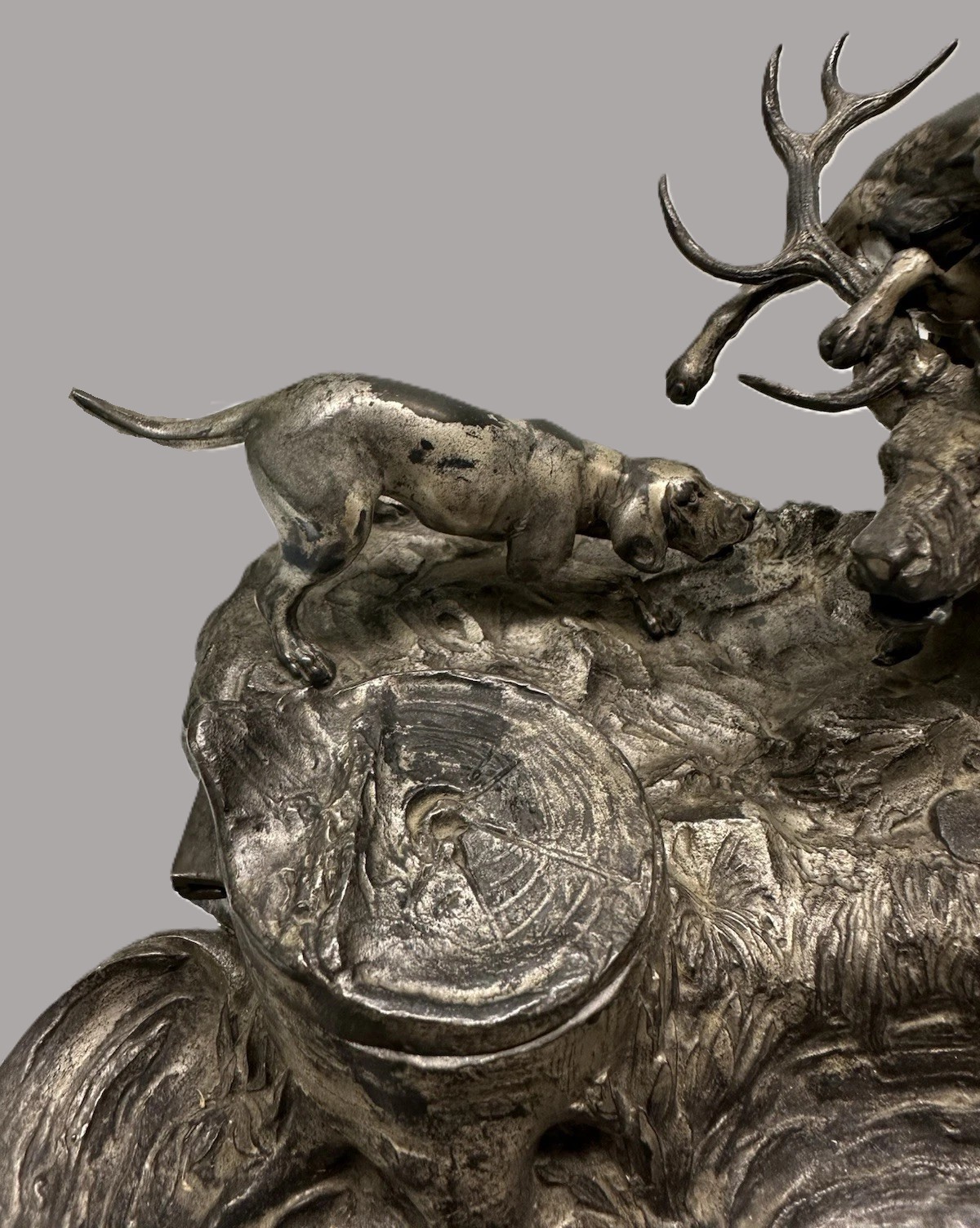
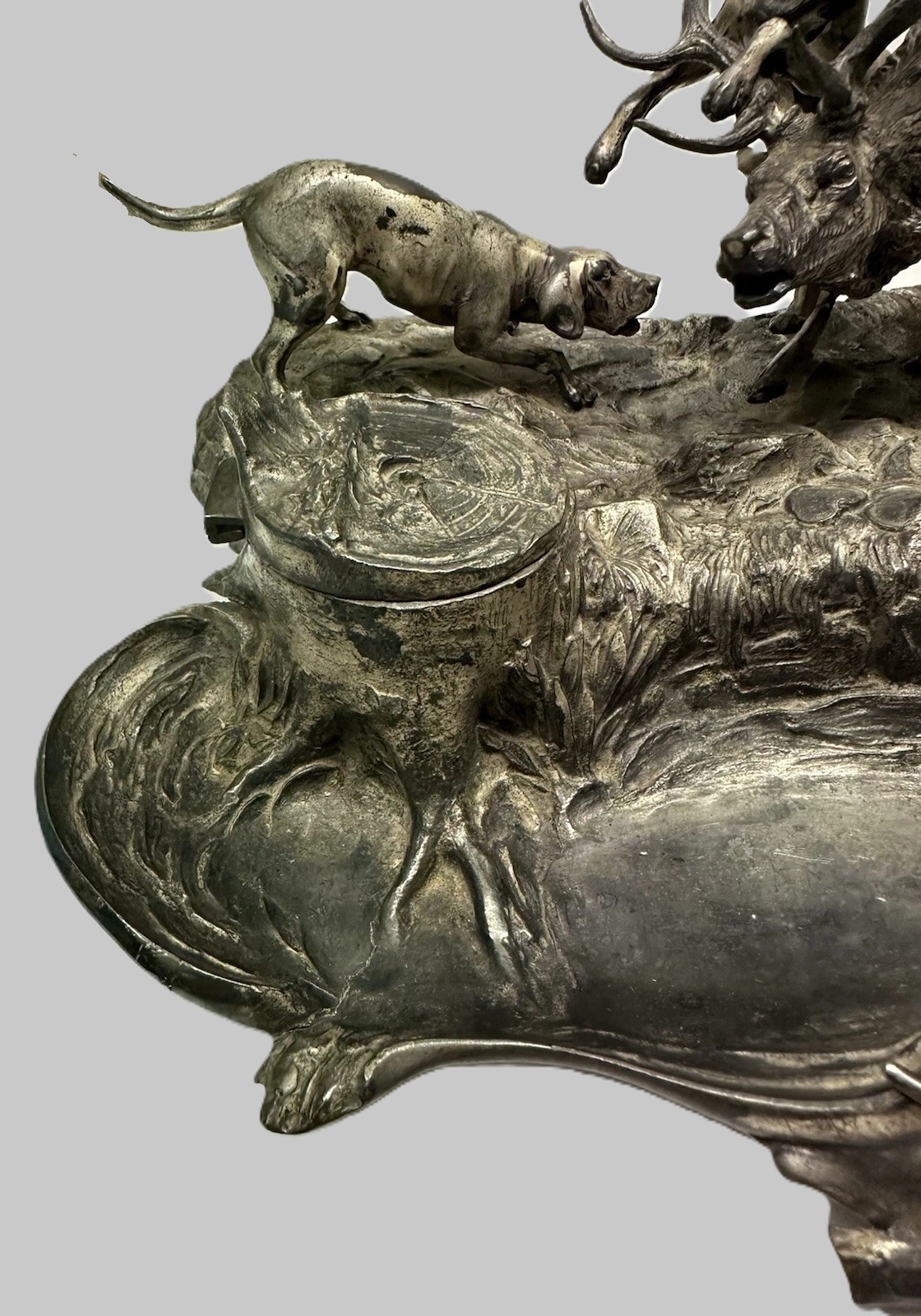

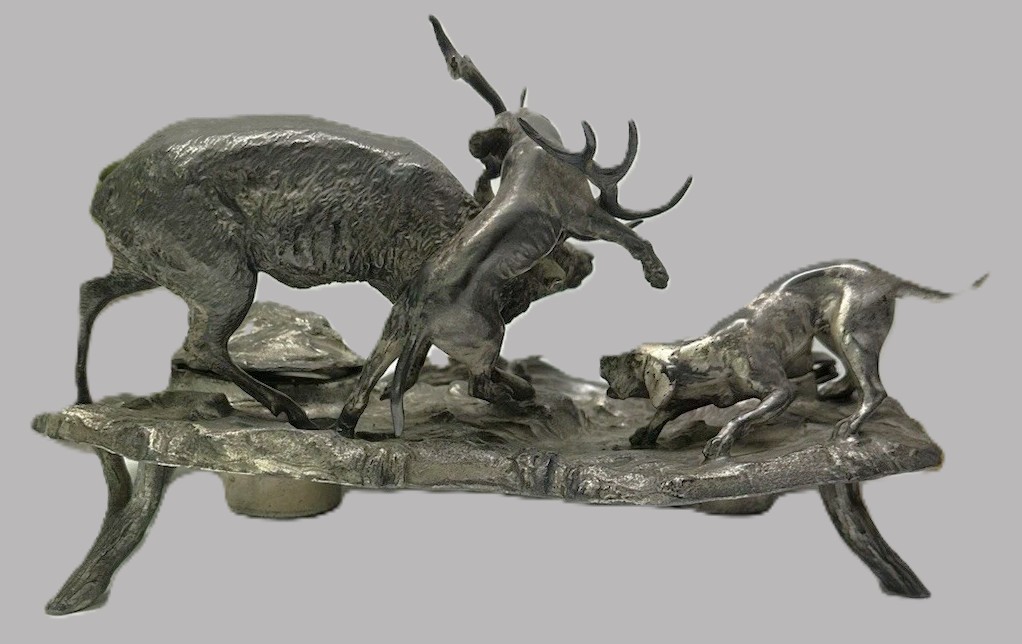


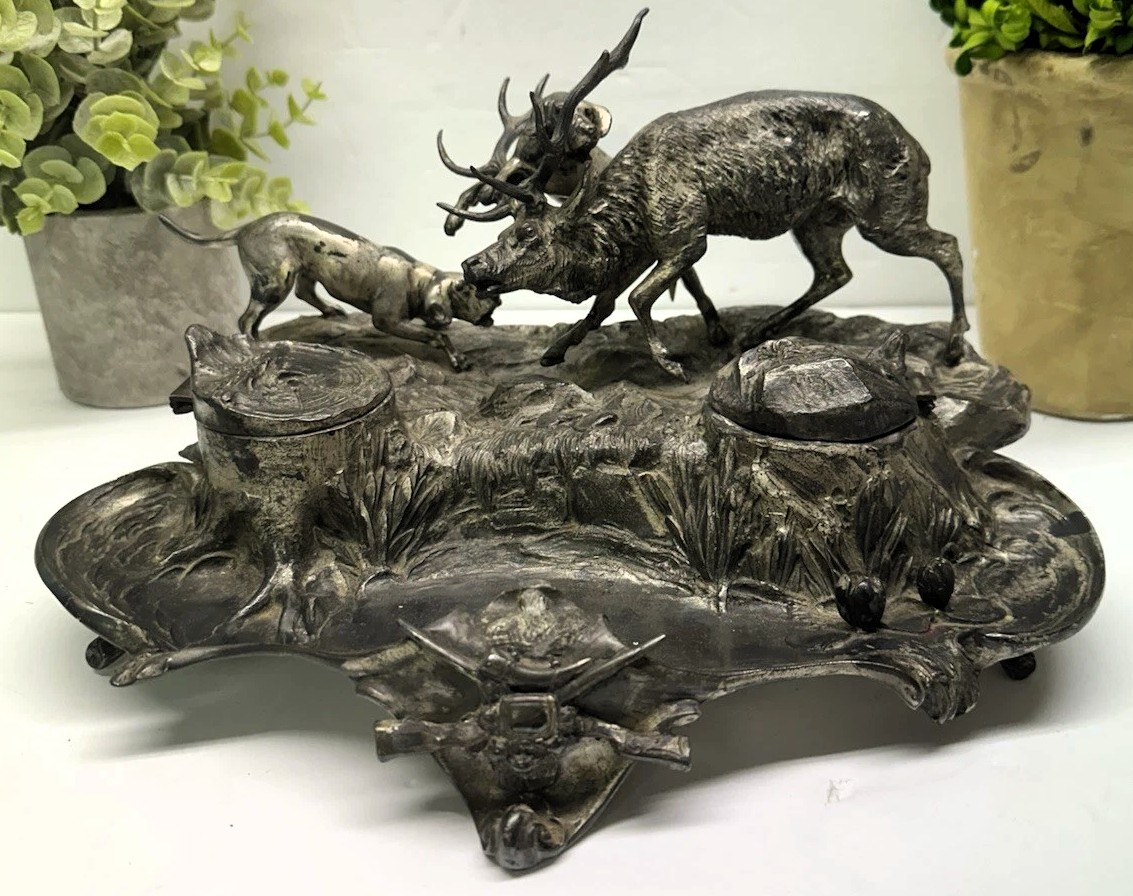
Hunt Scene – Two Dogs and a Stag
| Categories | Figural - Animals & Living Creatures |
| Type | dog, Hunting, Stag |
| Material | Spelter |
| Markings | Unmarked |
| Manufacturer | Undetermined |
| Origin | Undetermined |
| Date or Era | circa 1900 |
Manufacturer and Origin
This double inkwell is attributed to the foundries of France or Germany, produced during the late 19th or early 20th century (circa 1890–1910).
While many companies produced hunting scenes, the design of this piece matches the output of European manufacturers who specialized in “Art Spelter” or “Regule,” a white metal alloy that was bronzed or silvered to give the appearance of fine metal at a more accessible price point.
Revised Narrative
- Artistic Movement: This piece belongs to the Animalier school, a 19th-century French artistic movement characterized by the realistic and often dramatic depiction of animals.
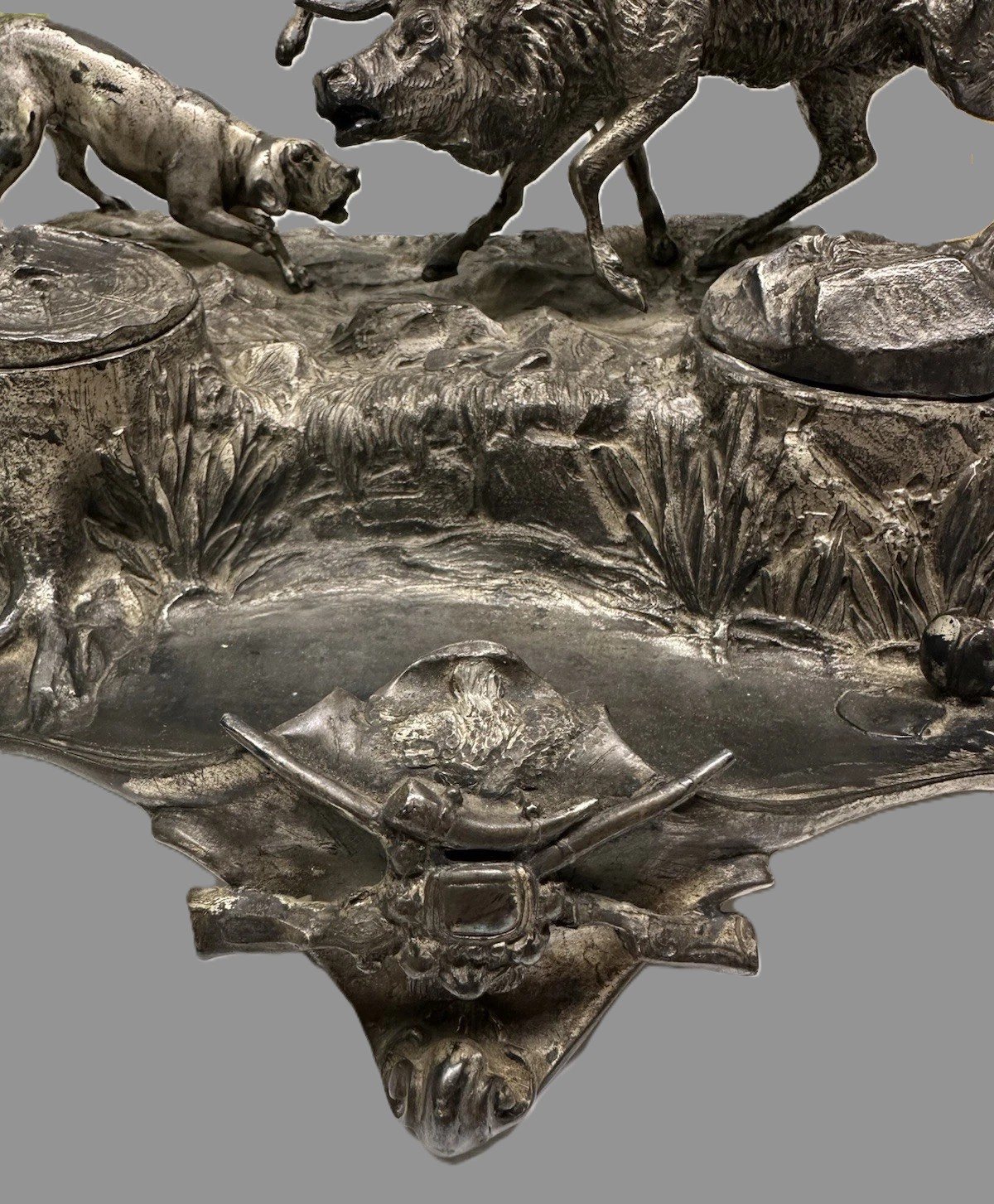
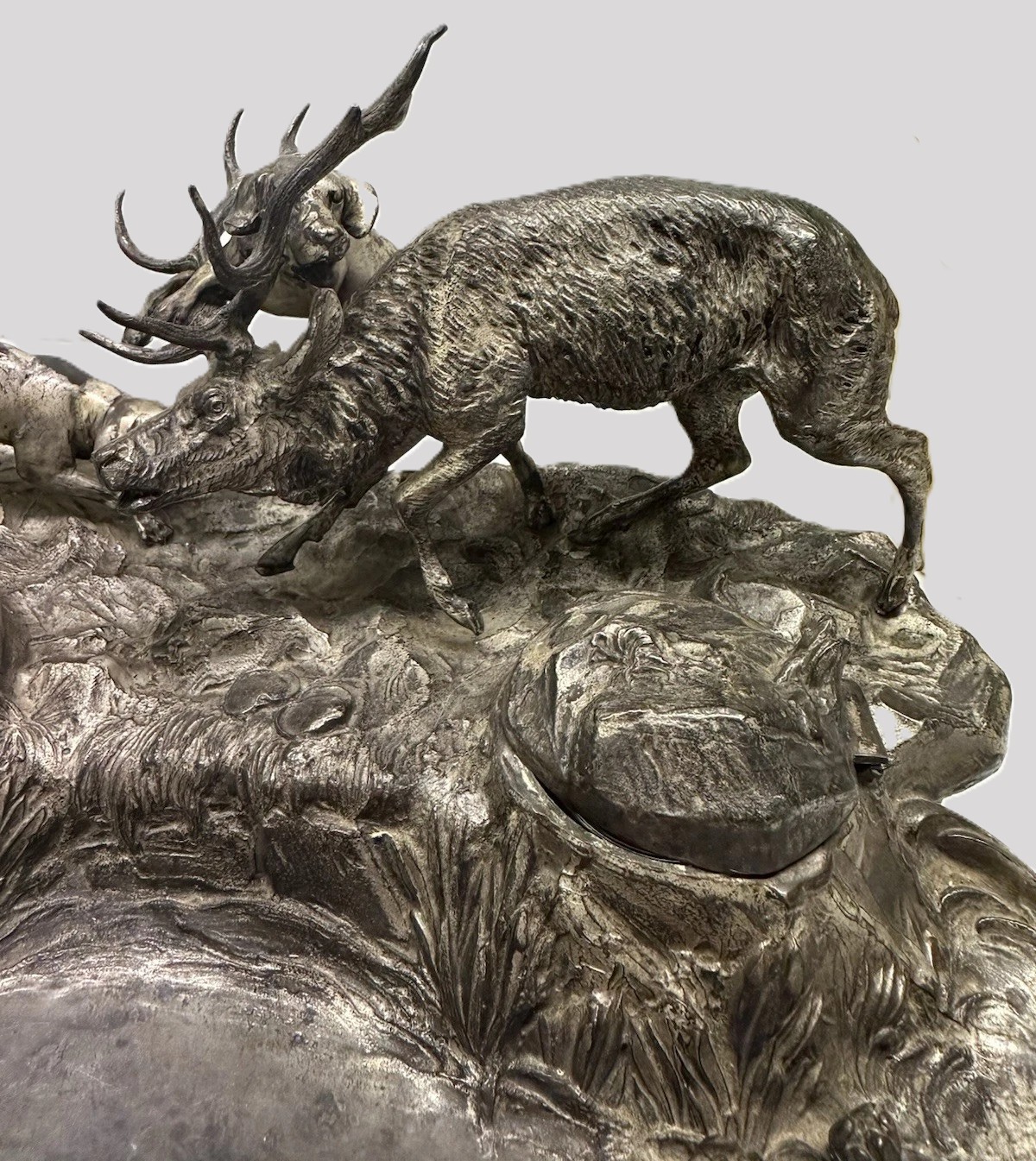
- The Scene: The central group—a stag being pulled down by two hounds—is a classic European “Chase” (The Hunt) motif. One dog is latched onto the stag’s neck, a common trope in European sculptures depicting the “hallali” or the moment the stag is caught.
- Stylistic Markers: The inkwells are designed as tree stumps.
- The “Hunter’s Trophy” badge on the front—featuring the hunting horn, game bag, and crossed firearms—is a standard heraldic device in Continental European hunting culture.
Construction Details
- Metal: Silvered spelter (zinc alloy).
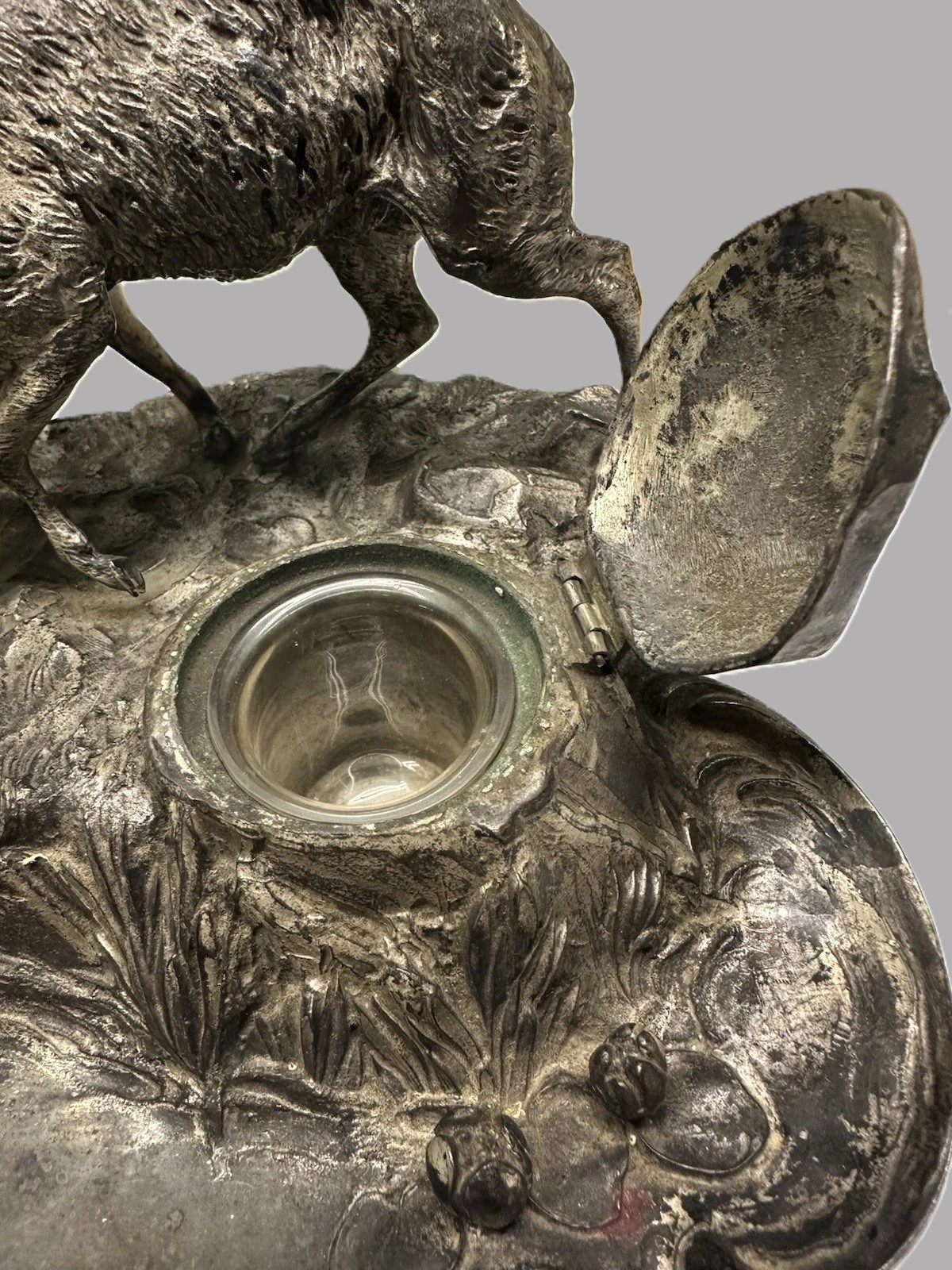
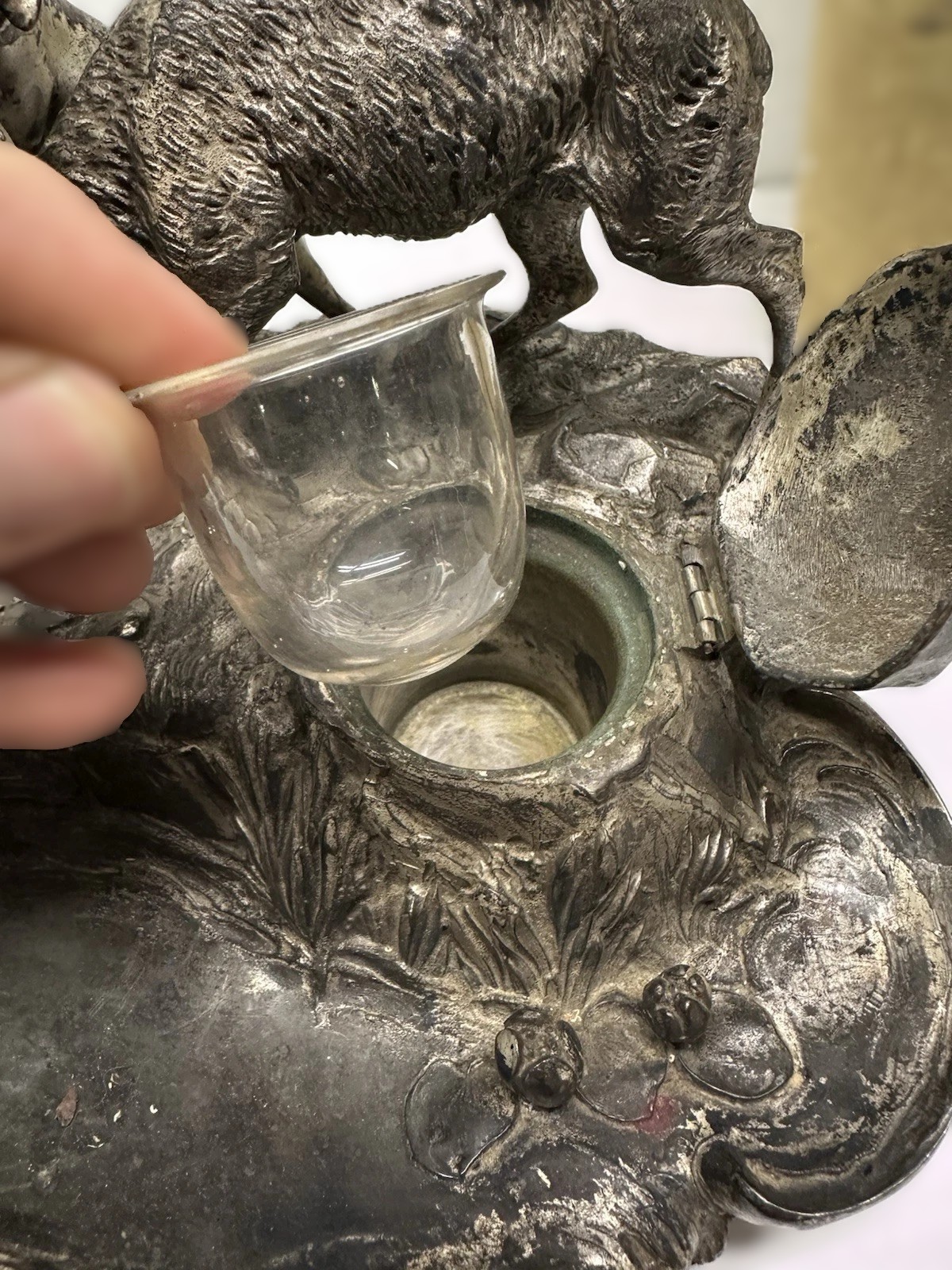
- Lid Detail: The lids open on integrated hinges and have a textured surface designed to blend into the “mossy” ground of the forest scene.
- Glass Liners: The presence of a clear glass liner is typical for European sets of this era.
This inkstand, along with a dog-themed rocker blotter, sold for $276 in December 2025.
Content disclaimer. The information posted is the owner’s best knowledge and may not have been vetted by the SOIC. We welcome comments, corrections, and additions, working to make our website information comprehensive and accurate.
Join the Society of Inkwell Collectors (SOIC) – it’s free!
Founded in 1981 as a non-profit organization,
we are documenting inkwells (and accessories).
We’re here to help and inform!