





Horse Head in Relief – Jennings Brothers
| Categories | Figural - Animals & Living Creatures |
| Type | Horse |
| Material | White metal |
| Markings | "JB" and "513" |
| Manufacturer | Jennings Brothers |
| Origin | United States |
| Date or Era | circa 1900 |
| Measuring | 3 ½” x 3” x 2 ¾” high |
Description
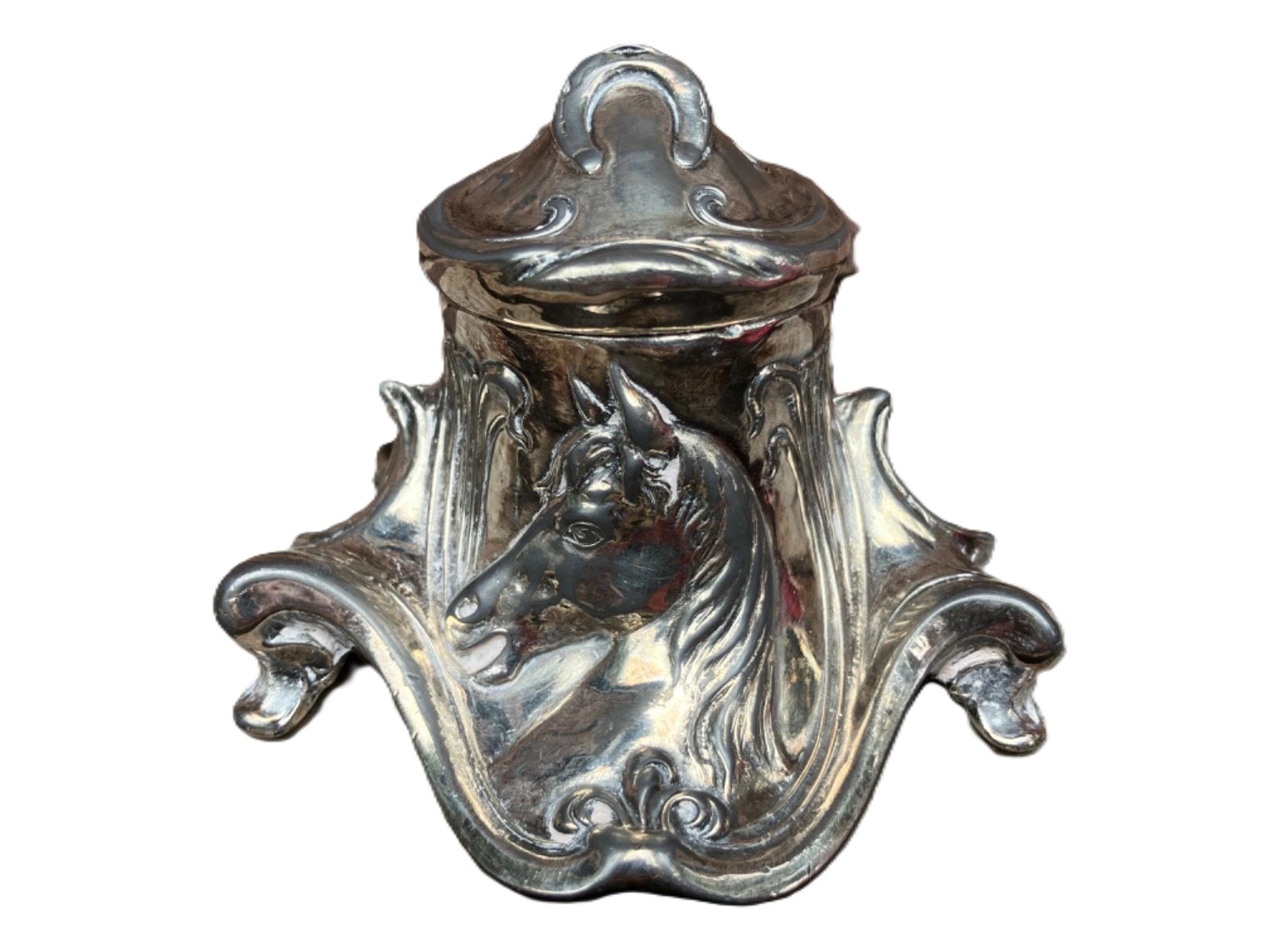
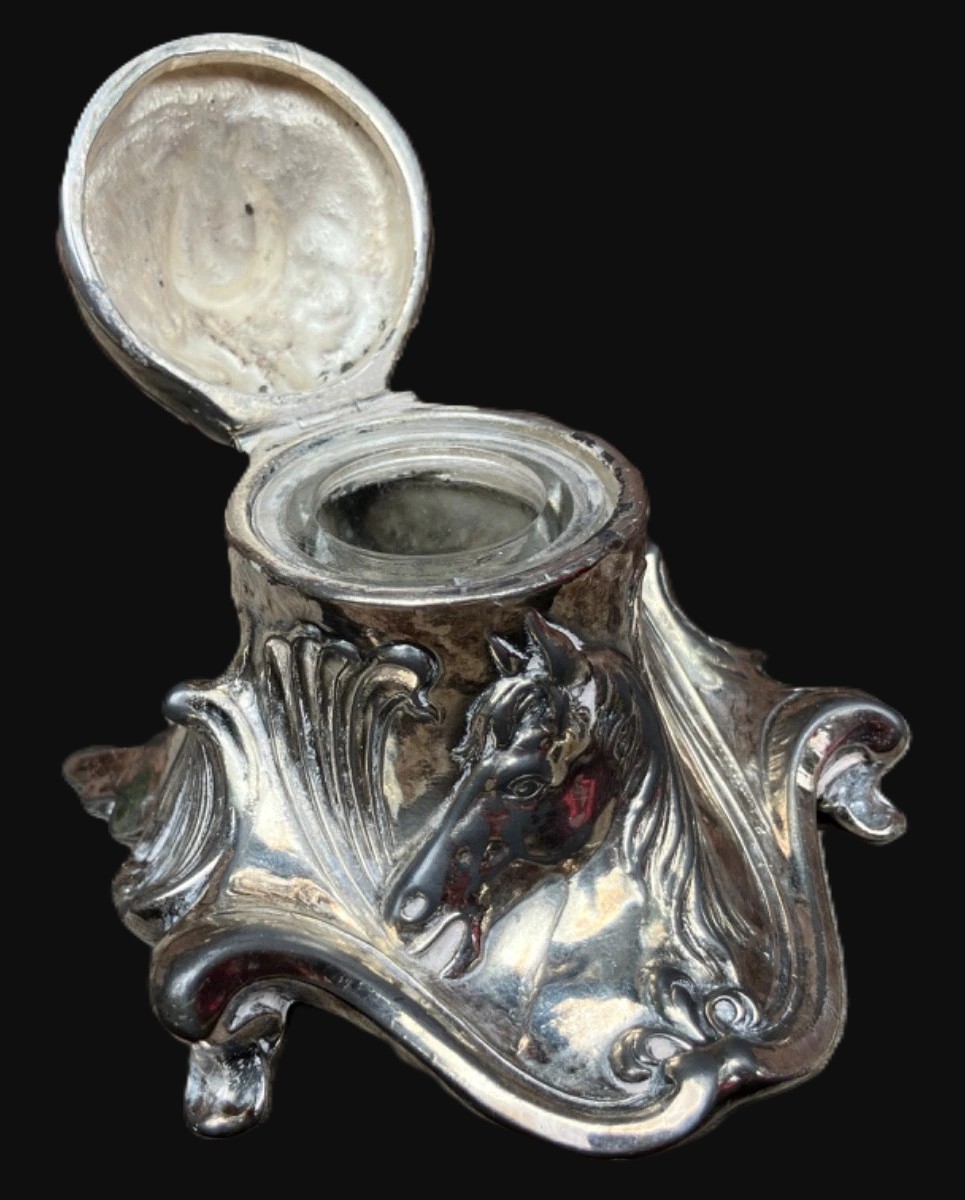
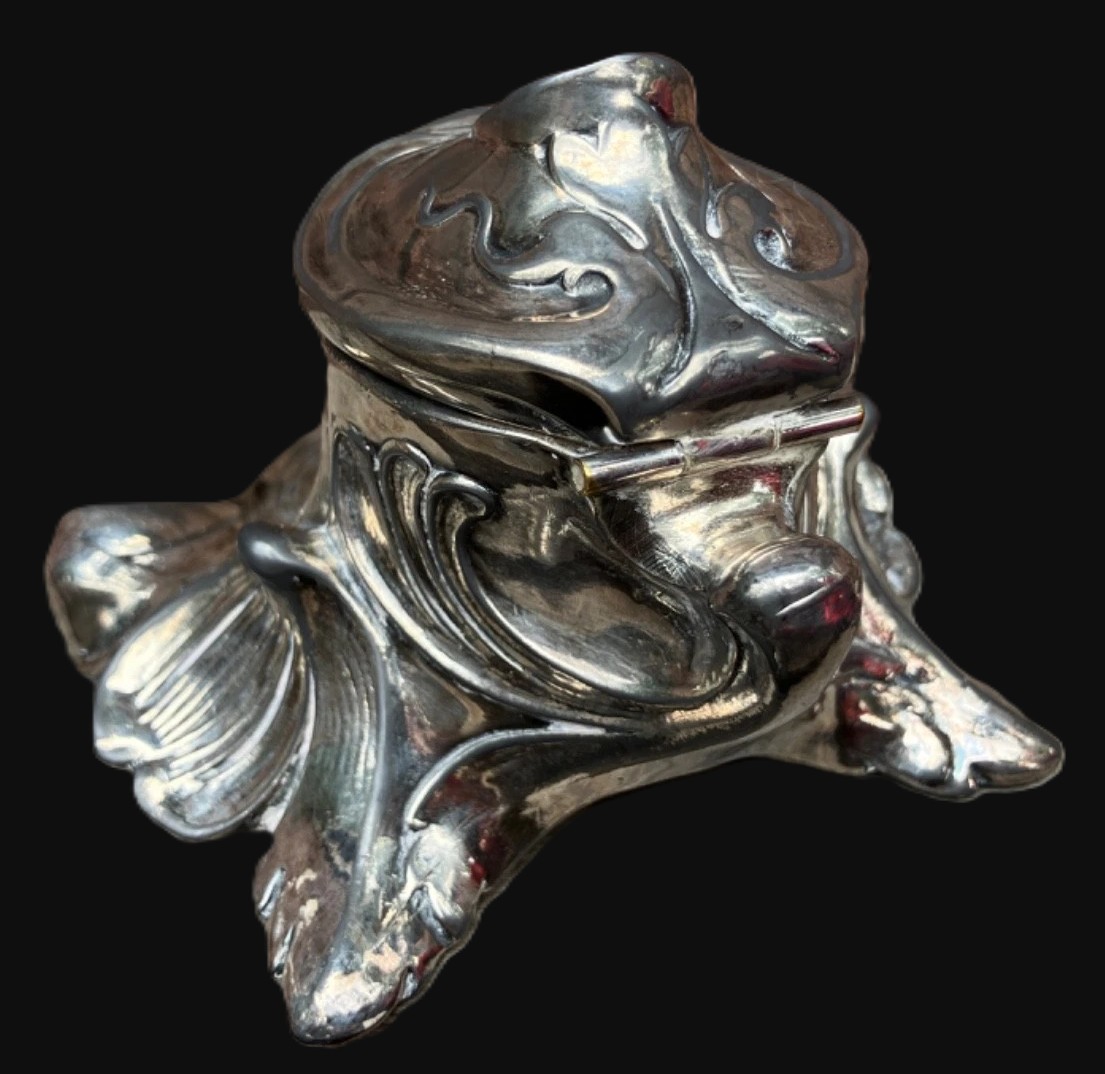
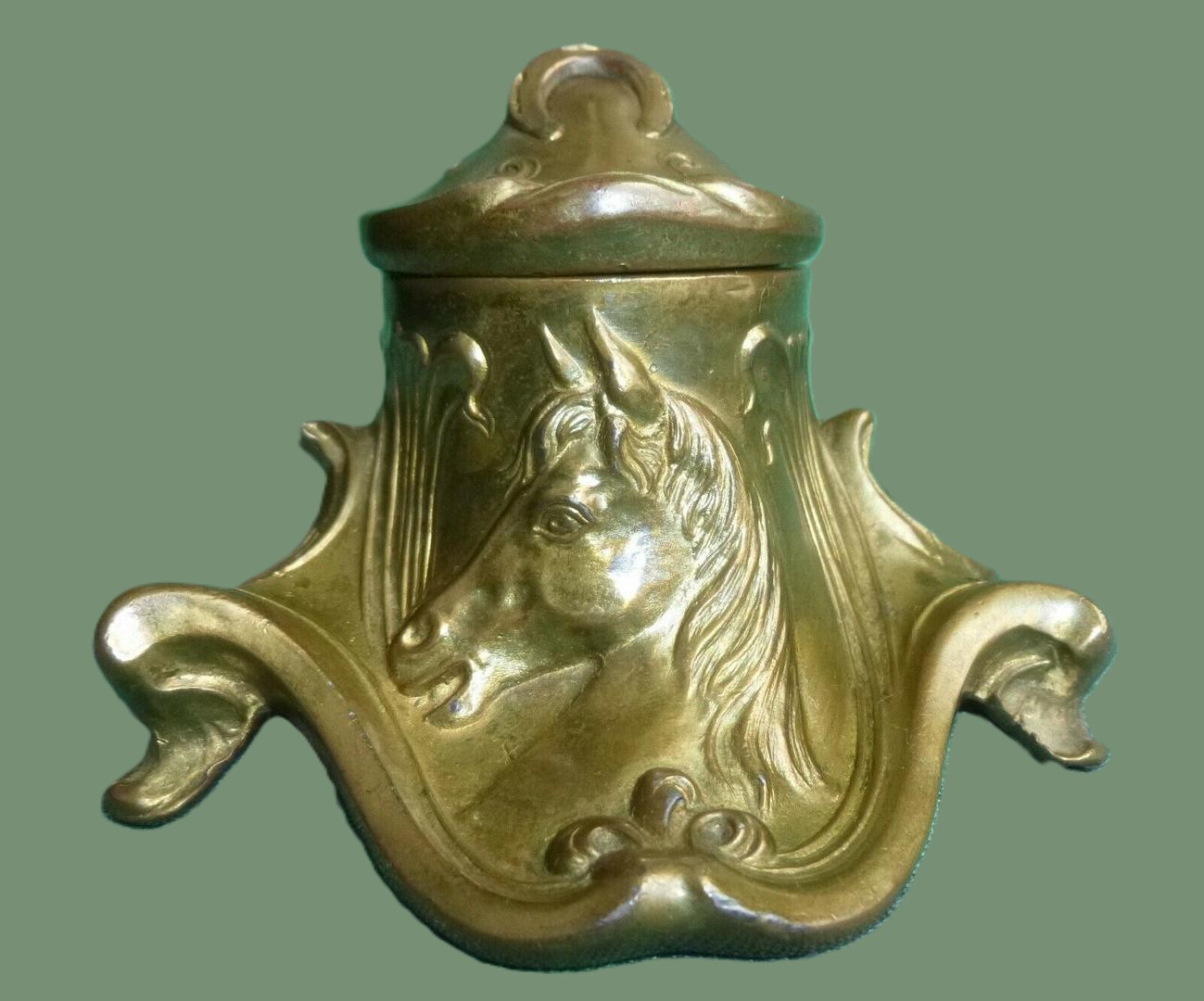
Jennings Brothers made this inkwell in different finishes (silver, brass, bronze). Three examples are pictured.
- Horse Head Relief: The front face features a highly detailed, embossed relief of a horse’s head in profile. The horse has a flowing mane, framed by stylized, sweeping Art Nouveau curves that suggest water or wind.
- Horseshoe Lid: The hinged lid is dome-shaped and topped with a unique horseshoe-shaped finial, which serves as a handle. The lid opens to reveal a clear, cylindrical glass ink reservoir seated within the metal body.
- Ornate Base: The body flares out into three distinct, scroll-like feet. The back of the piece features “whiplash” curves and shell-like motifs characteristic of the Art Nouveau movement.
- Manufacturer Markings: The underside is stamped with the pattern number “513” and the “JB” initials, identifying it as a Jennings Brothers production.
Production Date & History
The pattern number 513 found on the underside of this inkwell is a specific catalog reference used by the Jennings Brothers Manufacturing Company to track their cast metal designs.
The “513” Pattern Context
In the late 19th and early 20th centuries, metalware foundries like Jennings Brothers (JB) used a numerical system to organize their vast inventory of desk accessories, bookends, and figurines.
- Release Date: Based on the sequential numbering of JB pieces, pattern 513 belongs to their early production period, specifically between 1898 and 1905.
- The Equestrian Series: This inkwell was part of a popular “Equestrian” or “Sporting” line. During this era, horse-themed decor was highly fashionable for men’s libraries and studies. The horseshoe handle on the lid was a common Victorian/Edwardian symbol for “Good Luck,” often paired with the horse relief to create a cohesive theme.
- Art Nouveau Elements: The number 513 corresponds to the specific mold for this “flared base” design. You can see the Art Nouveau influence in the “whiplash” curves that form the feet and the shell-like protrusions on the back, which are more elaborate than the strictly functional designs of later Art Deco pieces (numbered in the 2000s).
Production Quality
Jennings Brothers was unique because they didn’t just mass-produce cheap trinkets; they employed fine artists to sculpt the original master models (often in wax or clay).
- The Casting: The detail in the horse’s mane and the texture of the relief suggest it was cast using the “French bronze” method, which JB mastered to give their items the weight and appearance of solid bronze at a more accessible price point.
- The Markings: The “JB” mark on the bottom is often accompanied by the pattern number to help retailers reorder specific designs from their trade catalogs.
The Jennings Brothers Manufacturing Company was founded in 1890 in Bridgeport, Connecticut. They were renowned for producing high-quality metal decorative arts, often employing skilled artists to create the initial wax molds.
Sold for $85 in January 2026
Content disclaimer. The information posted is the owner’s best knowledge and may not have been vetted by the SOIC. We welcome comments, corrections, and additions, working to make our website information comprehensive and accurate.
Join the Society of Inkwell Collectors (SOIC) – it’s free!
Founded in 1981 as a non-profit organization,
we are documenting inkwells (and accessories).
We’re here to help and inform!