

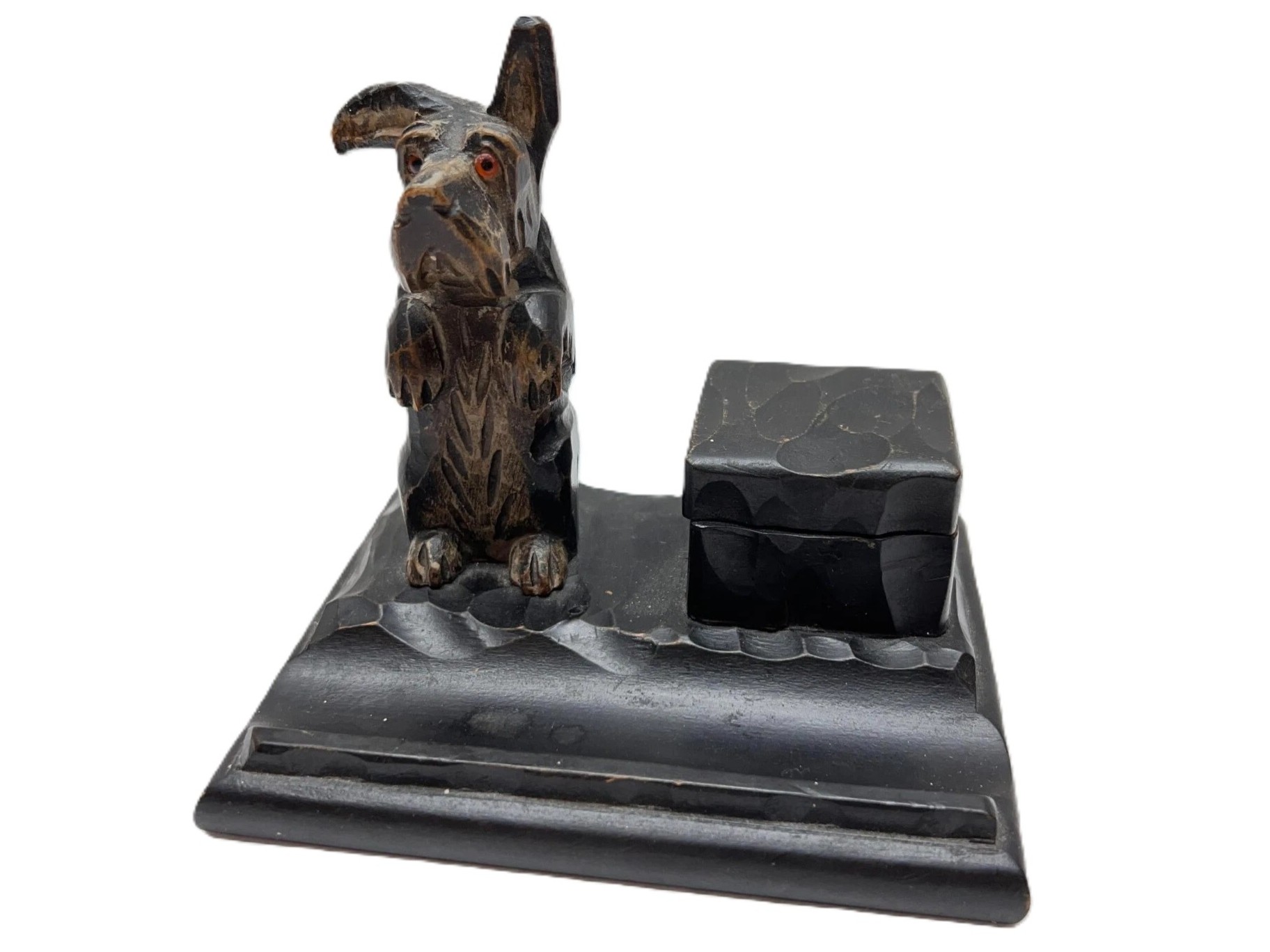
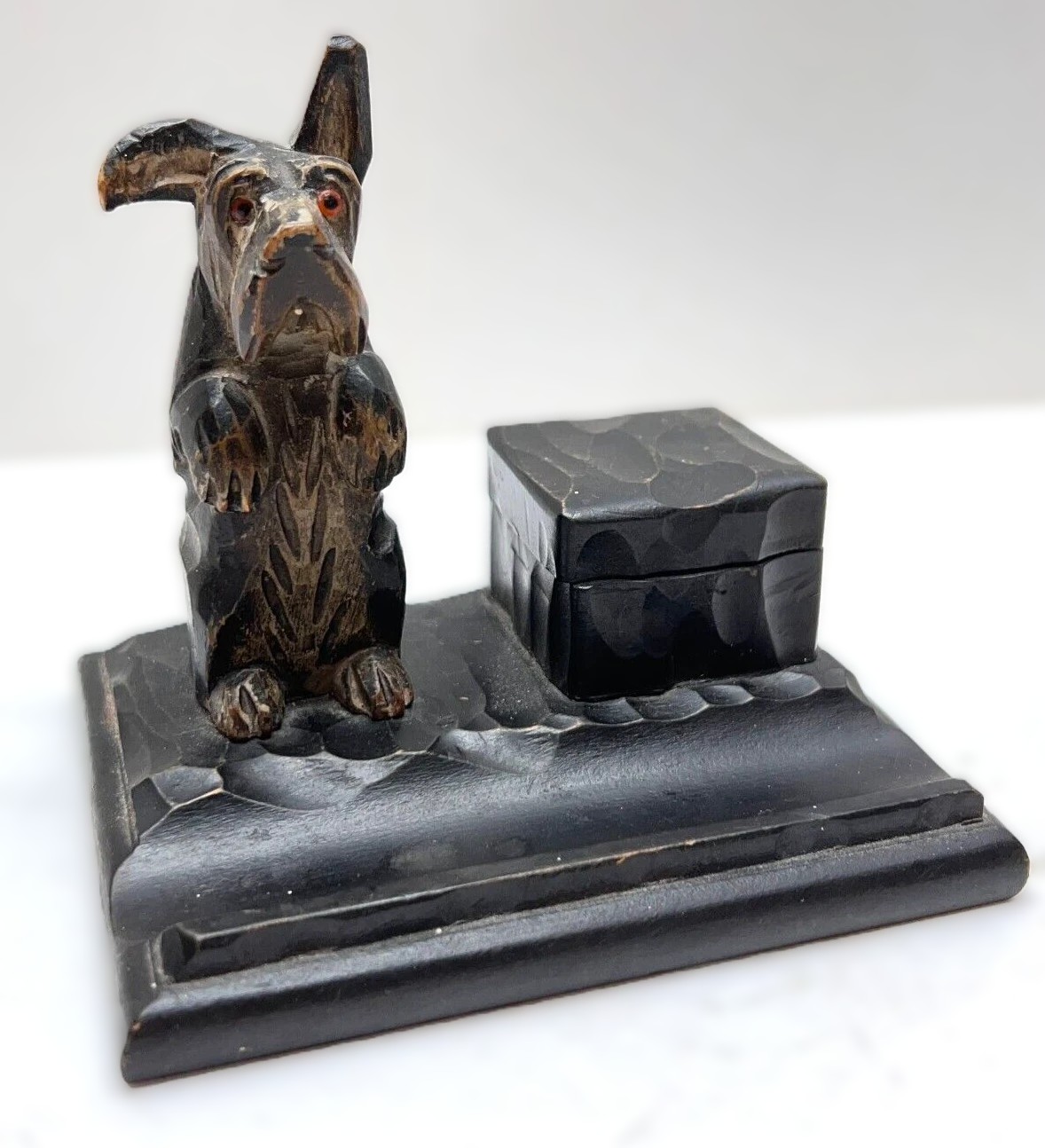
Hand-Carved Wooden Inkstand with Scottie Dog
| Categories | Figural - Animals & Living Creatures |
| Type | dog |
| Material | Wood |
| Markings | Unmarked |
| Manufacturer | Black Forest |
| Origin | Switzerland |
| Date or Era | circa 1920 |
| Measuring | 5” x 4” x 4 ¼” high |
Description
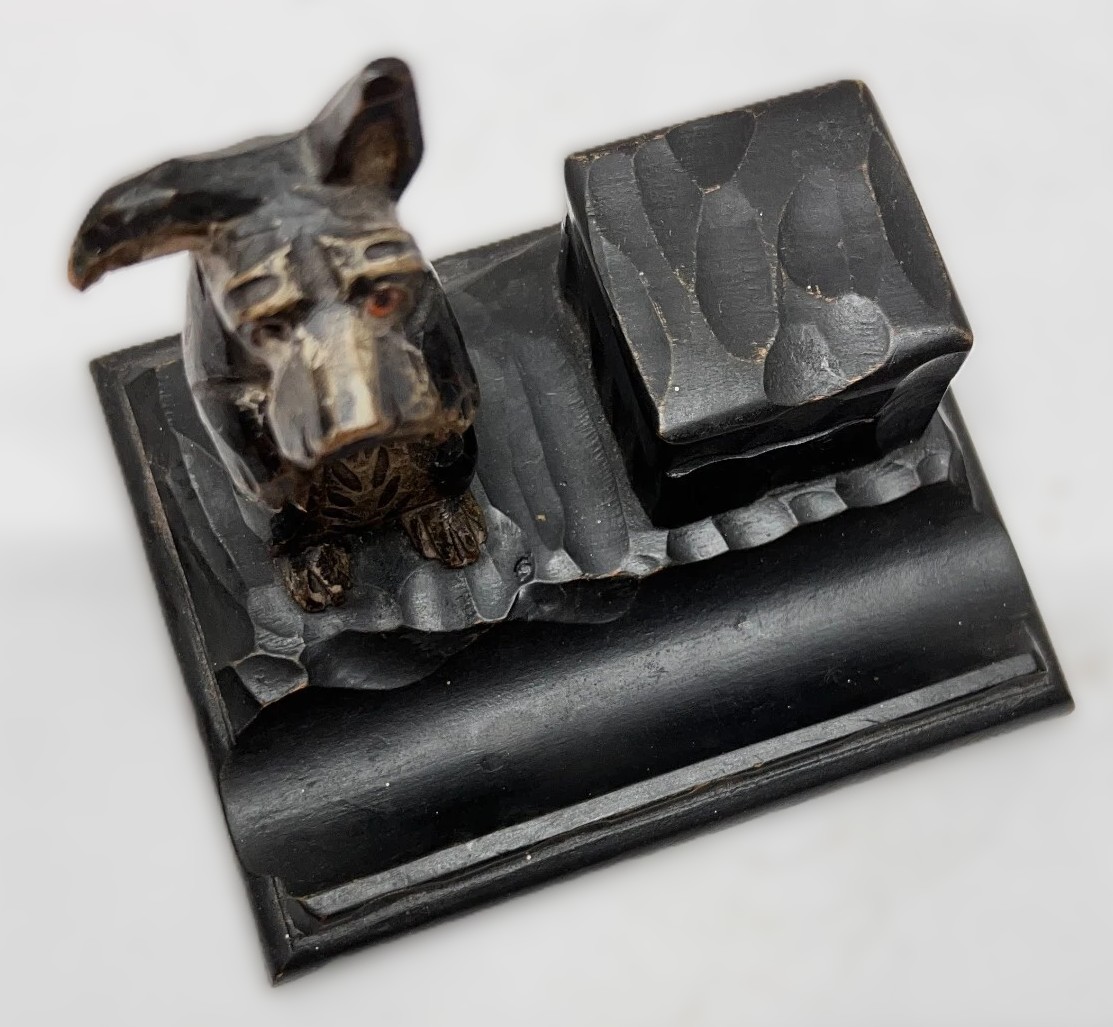
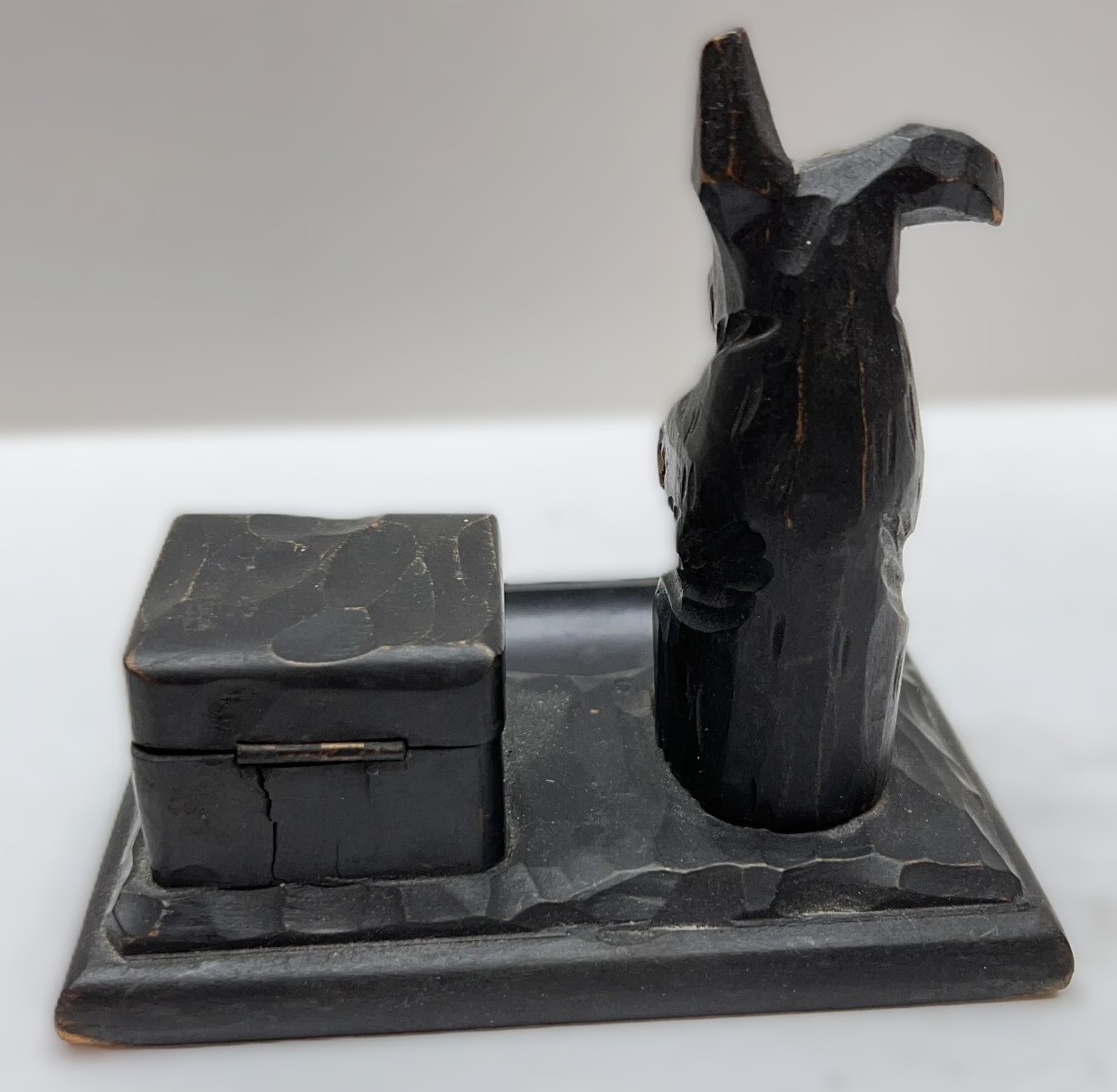
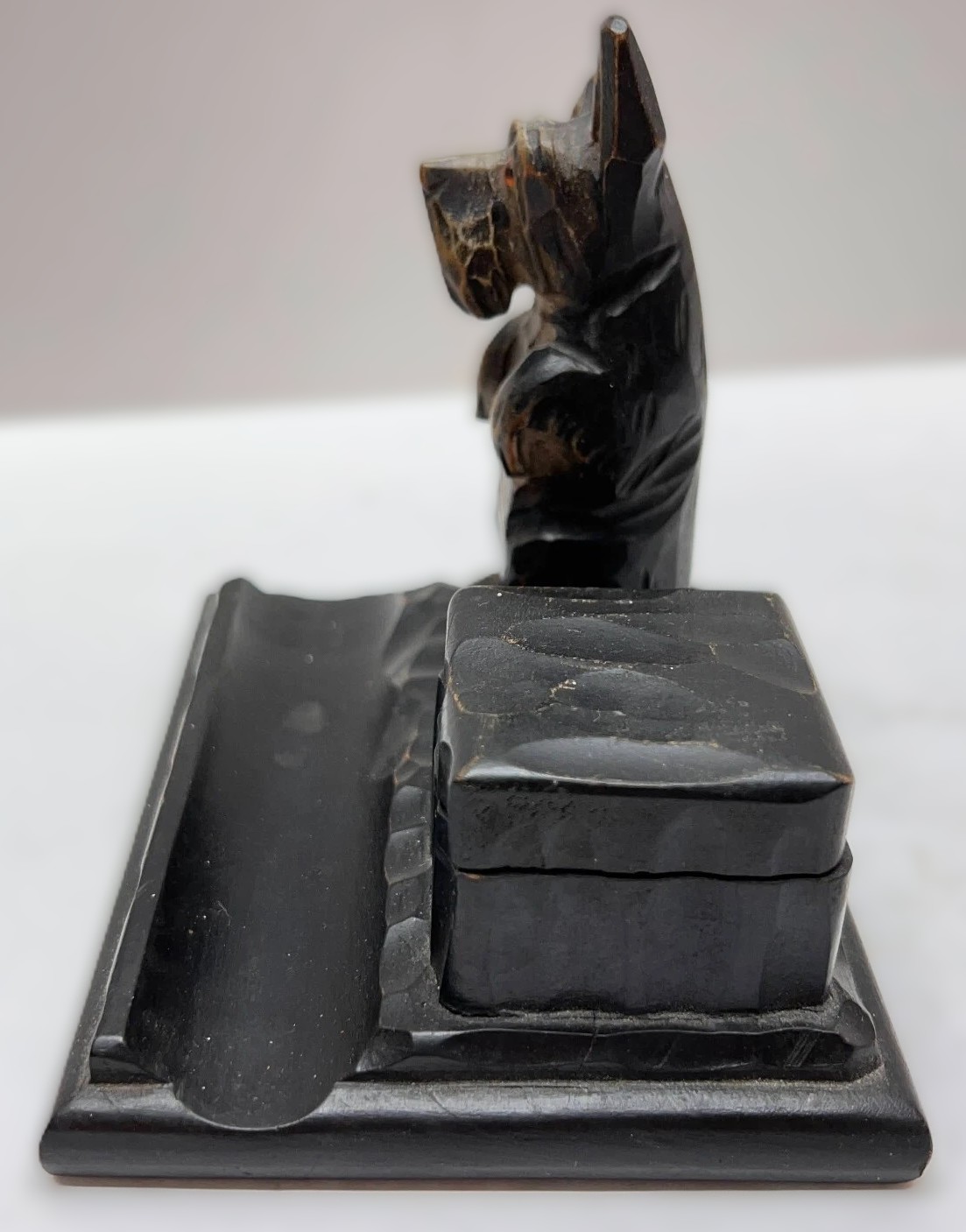
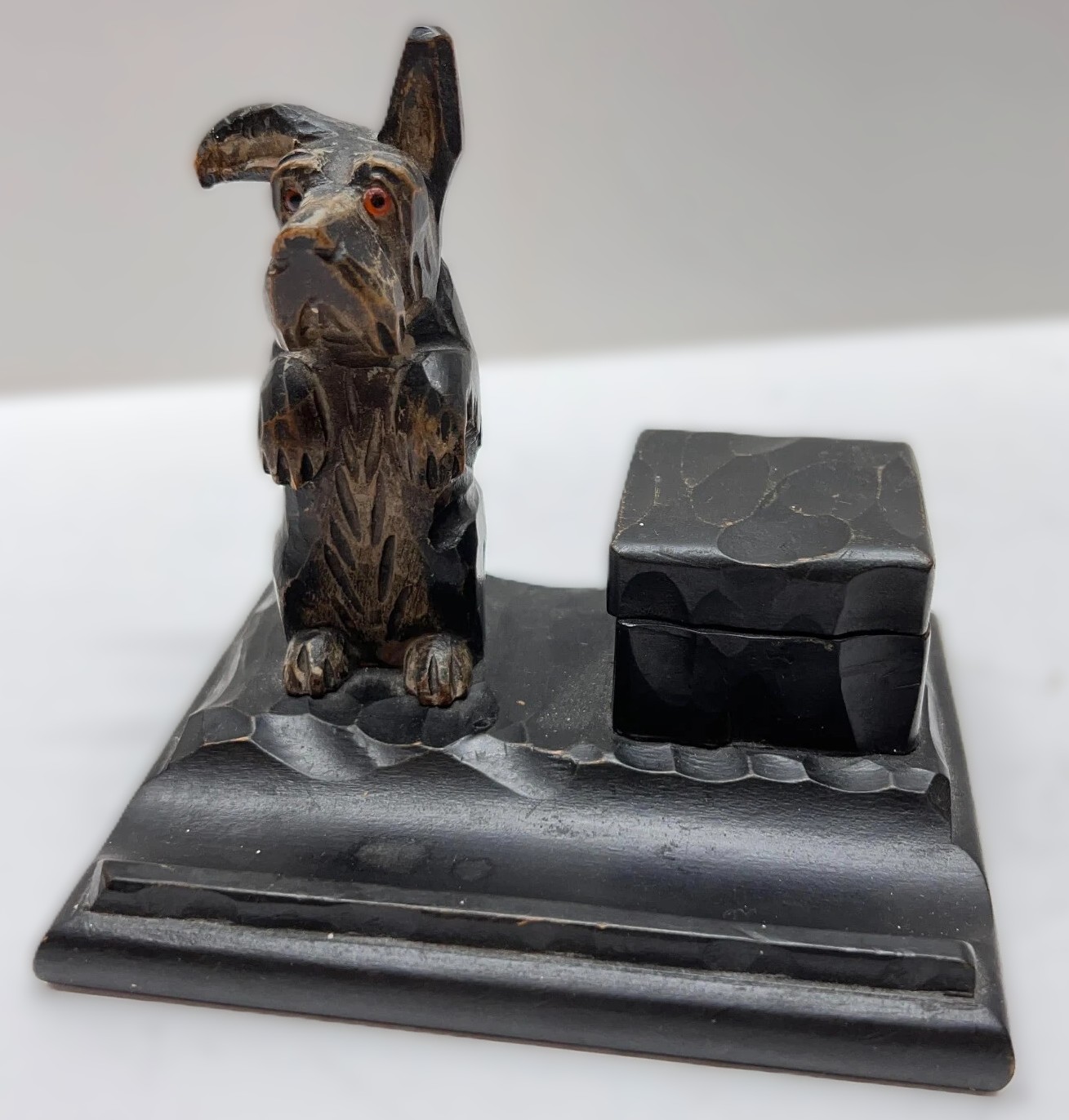
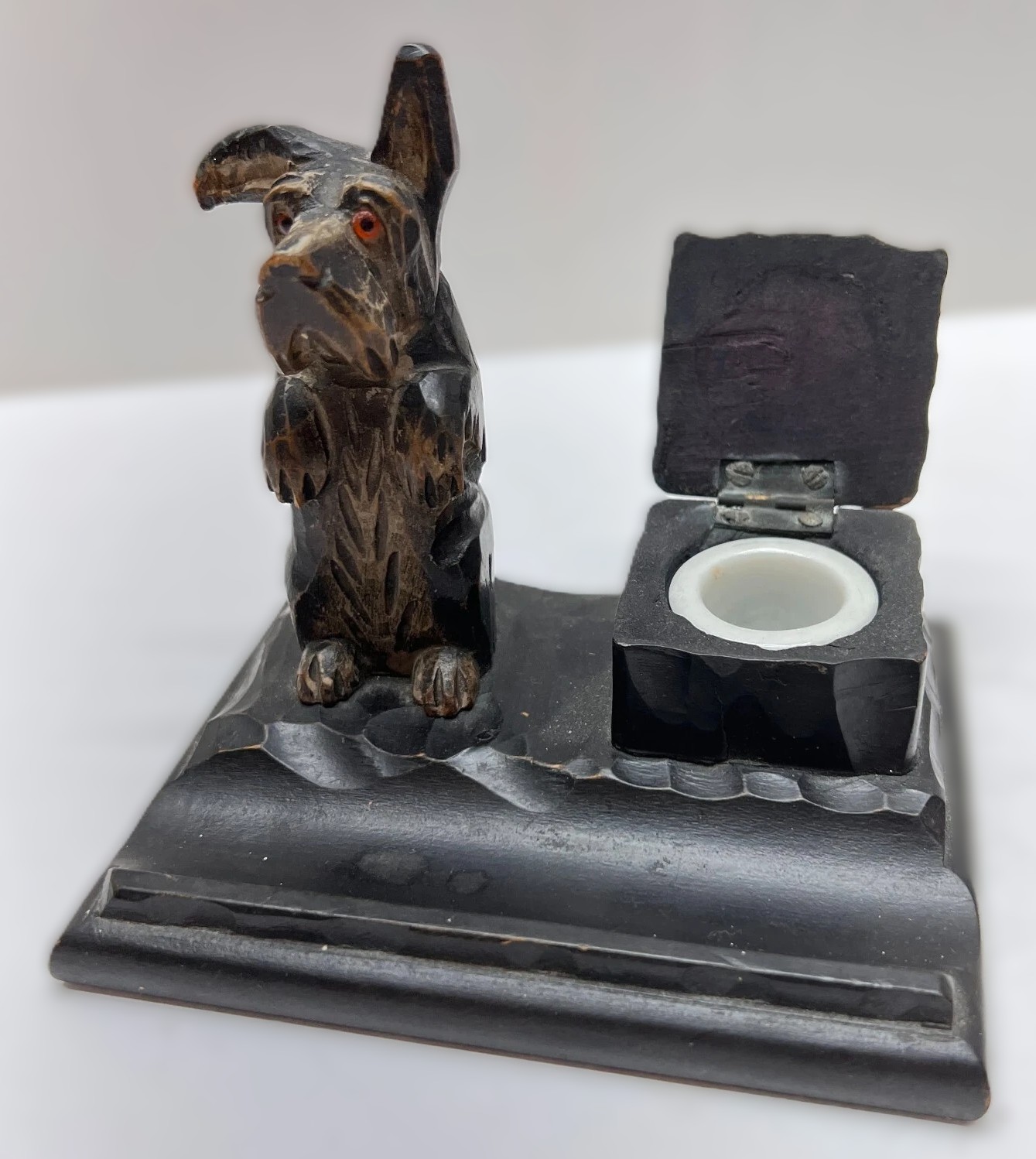
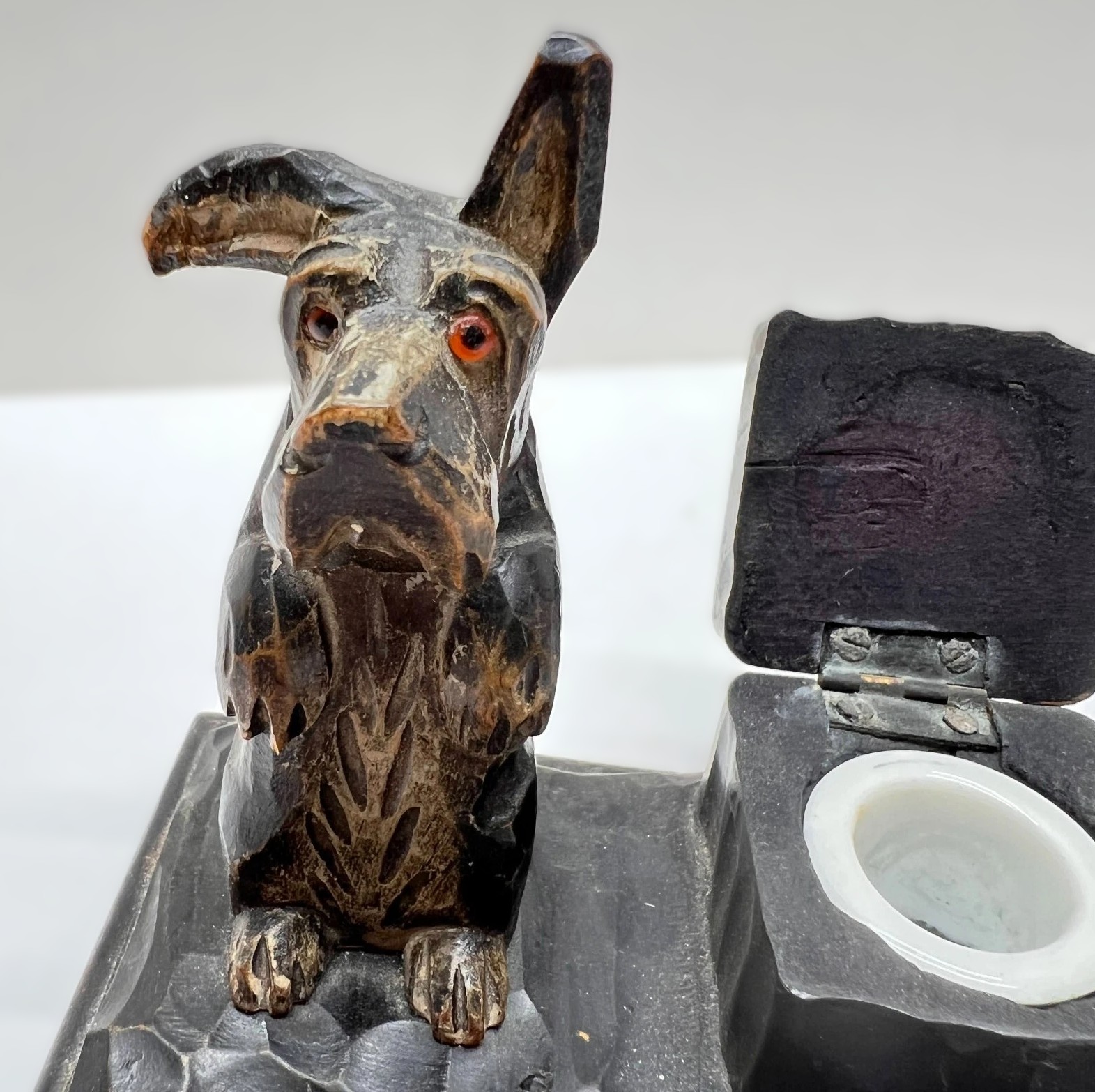
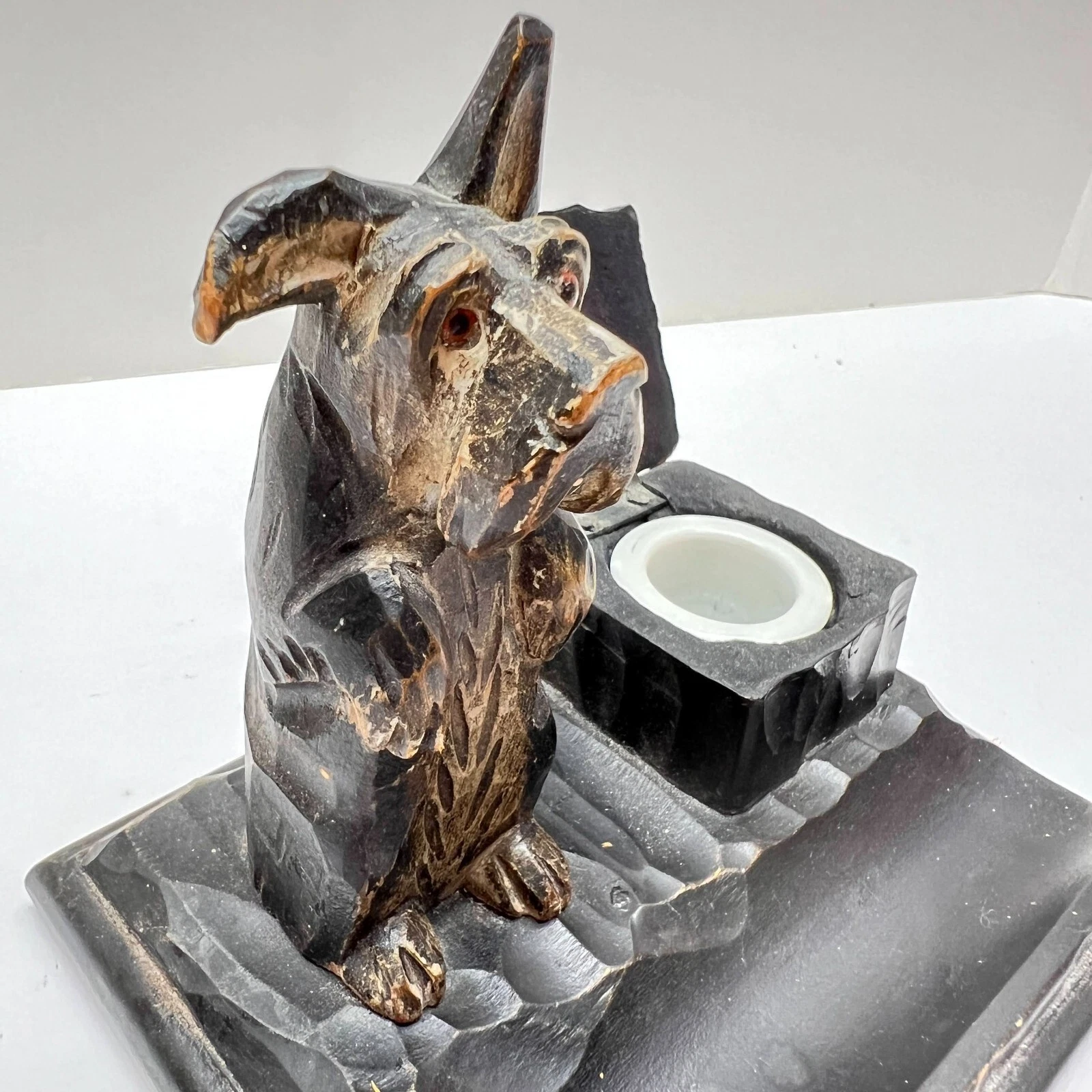
This is a hand-carved wooden inkstand featuring a Scottish Terrier in a begging posture, sitting up on its hind legs. The dog is detailed with texturing to simulate its wiry coat and features inset amber glass eyes with dark pupils.
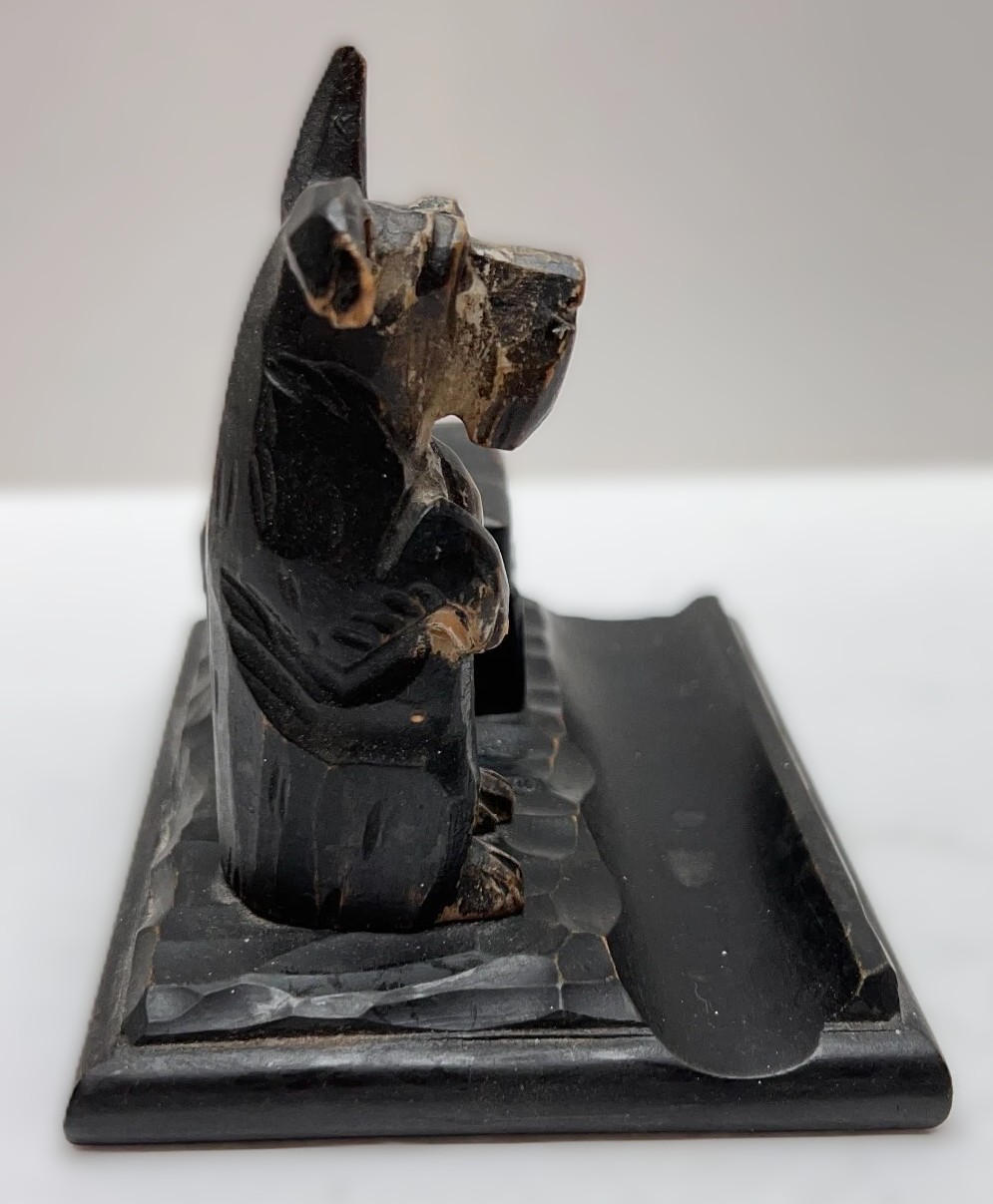
The dog is mounted on a rectangular base with a rusticated, carved surface designed to look like natural, uneven ground. Across the front edge of the base is a smooth, scooped horizontal channel designed to rest a dip pen. To the right of the dog is a square block serving as the inkwell. It has a hinged lid attached with a small metal hinge, which opens to reveal a white ceramic insert.
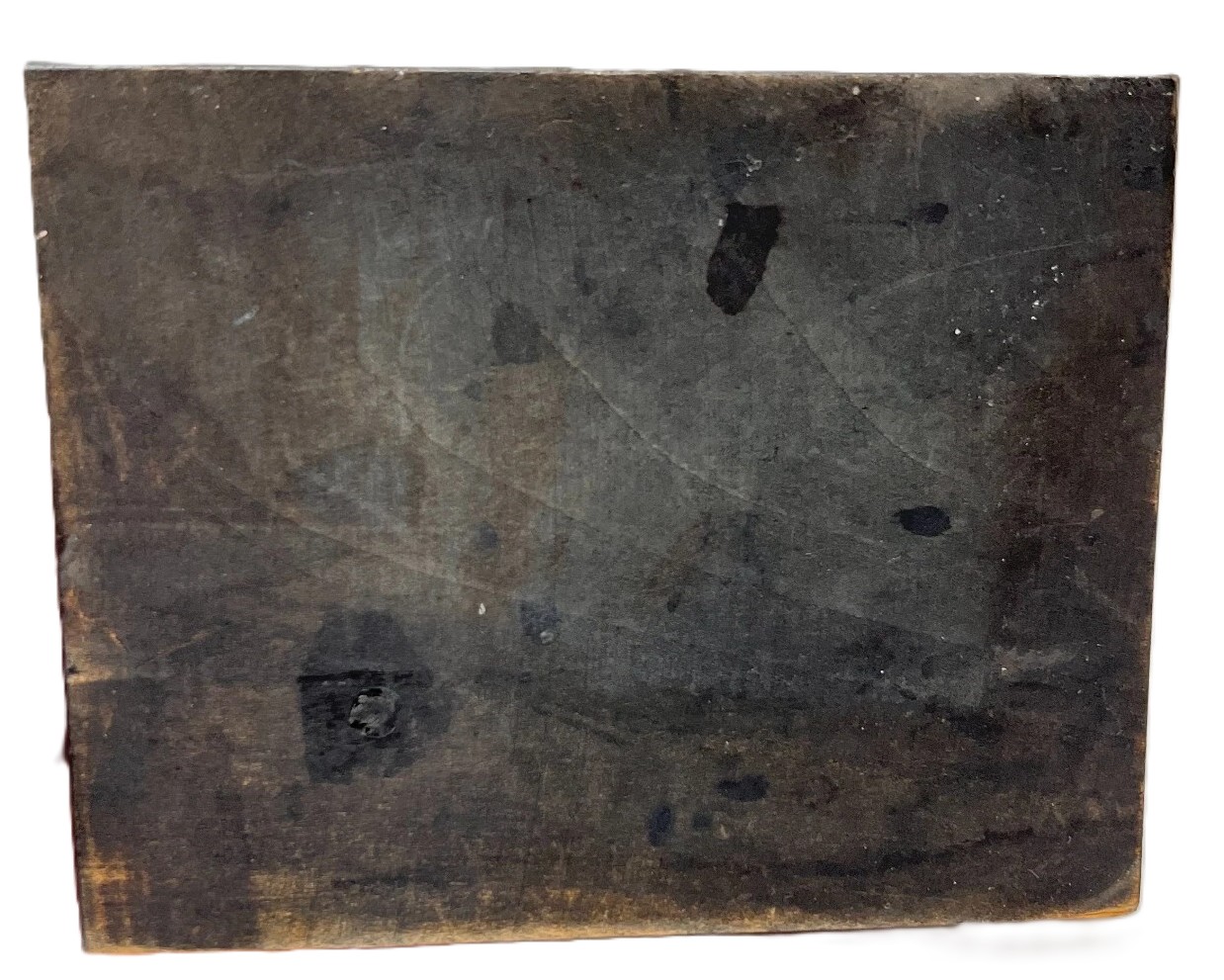
The entire piece has been finished with a dark stain. Over time, this dark finish has worn away on the high points—such as the dog’s nose, ears, paws, and the sharp corners of the base—revealing the much lighter natural wood underneath. The flat, uncarved underside also shows this plain, aged wood.
Where was it made?
This inkstand is a classic example of “Black Forest” carving. Despite the name suggesting a German origin, the vast majority of these intricate animal carvings were actually produced in the Brienz region of Switzerland. Swiss carvers produced highly sought-after wooden bears, dogs, and other woodland creatures from the late 19th century through the mid-20th century.
When was it made?
It was most likely made in the 1920s or 1930s. While Black Forest carvings were popular earlier, the Scottish Terrier motif specifically experienced a massive surge in worldwide popularity during the 1920s and 1930s.
What type of wood was used?
Carvings in this specific style were traditionally made from Linden wood (commonly known as basswood in the United States). Linden wood has a very fine, tight, and uniform grain that makes it easy to carve intricate details without the wood splitting or splintering. The pale color of the raw wood visible on the bottom of the base and on the dog’s worn snout is consistent with linden wood, which was historically stained dark to mimic walnut or simply to provide a striking visual finish.
Sold for $45 in June 2026
Content disclaimer. The information posted is the owner’s best knowledge and may not have been vetted by the SOIC. We welcome comments, corrections, and additions, working to make our website information comprehensive and accurate.
Join the Society of Inkwell Collectors (SOIC) – it’s free!
Founded in 1981 as a non-profit organization,
we are documenting inkwells (and accessories).
We’re here to help and inform!