


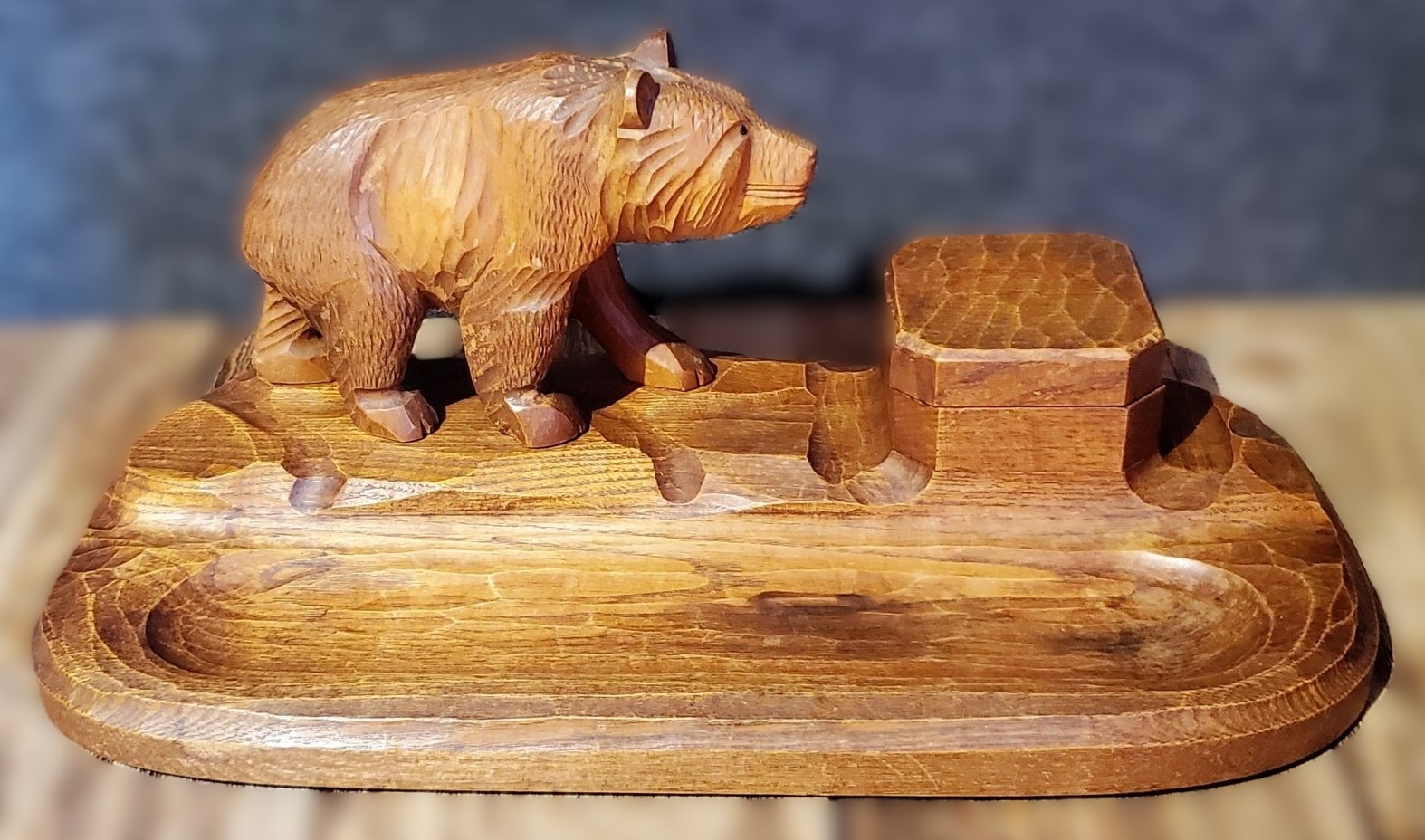
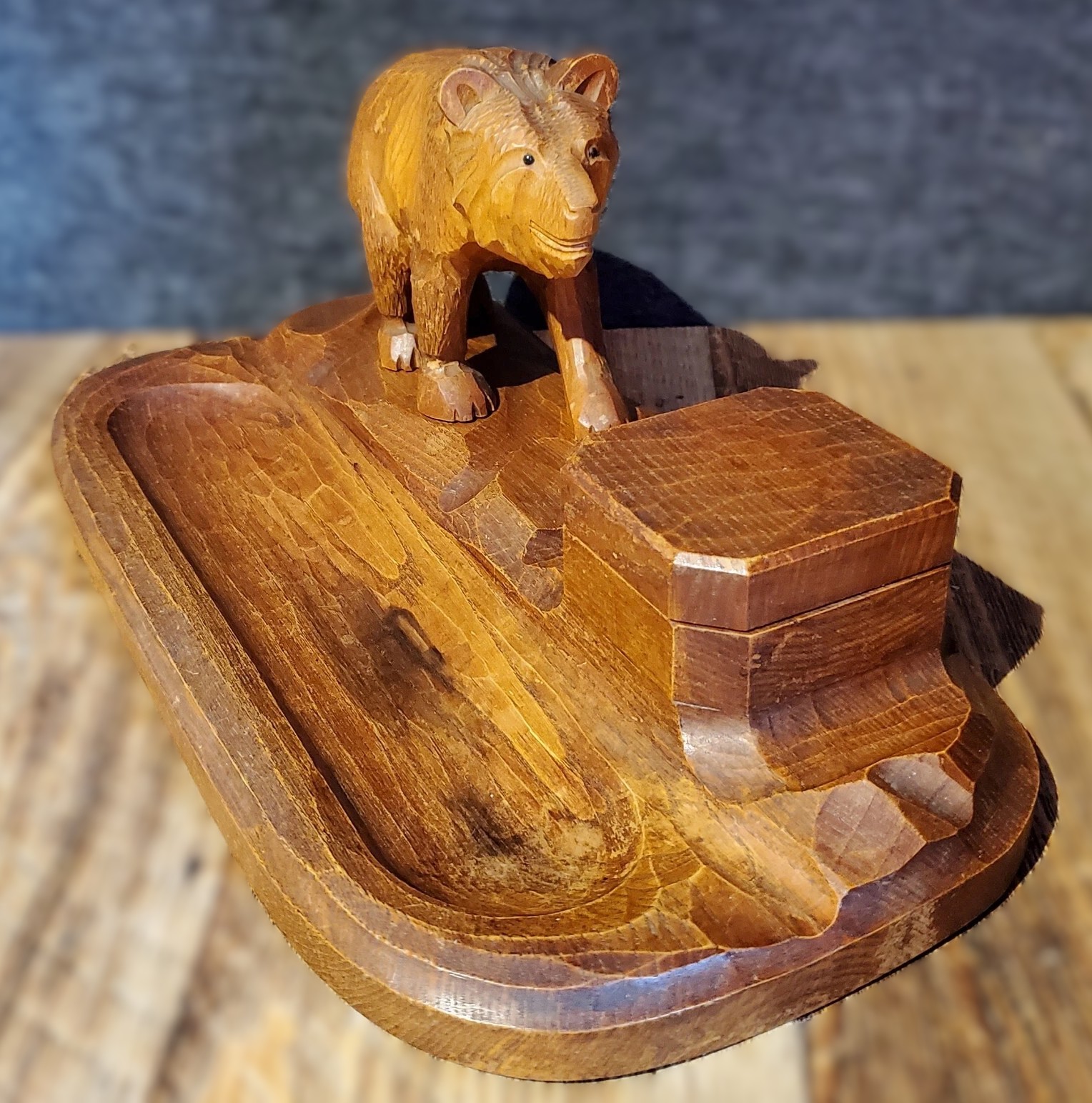
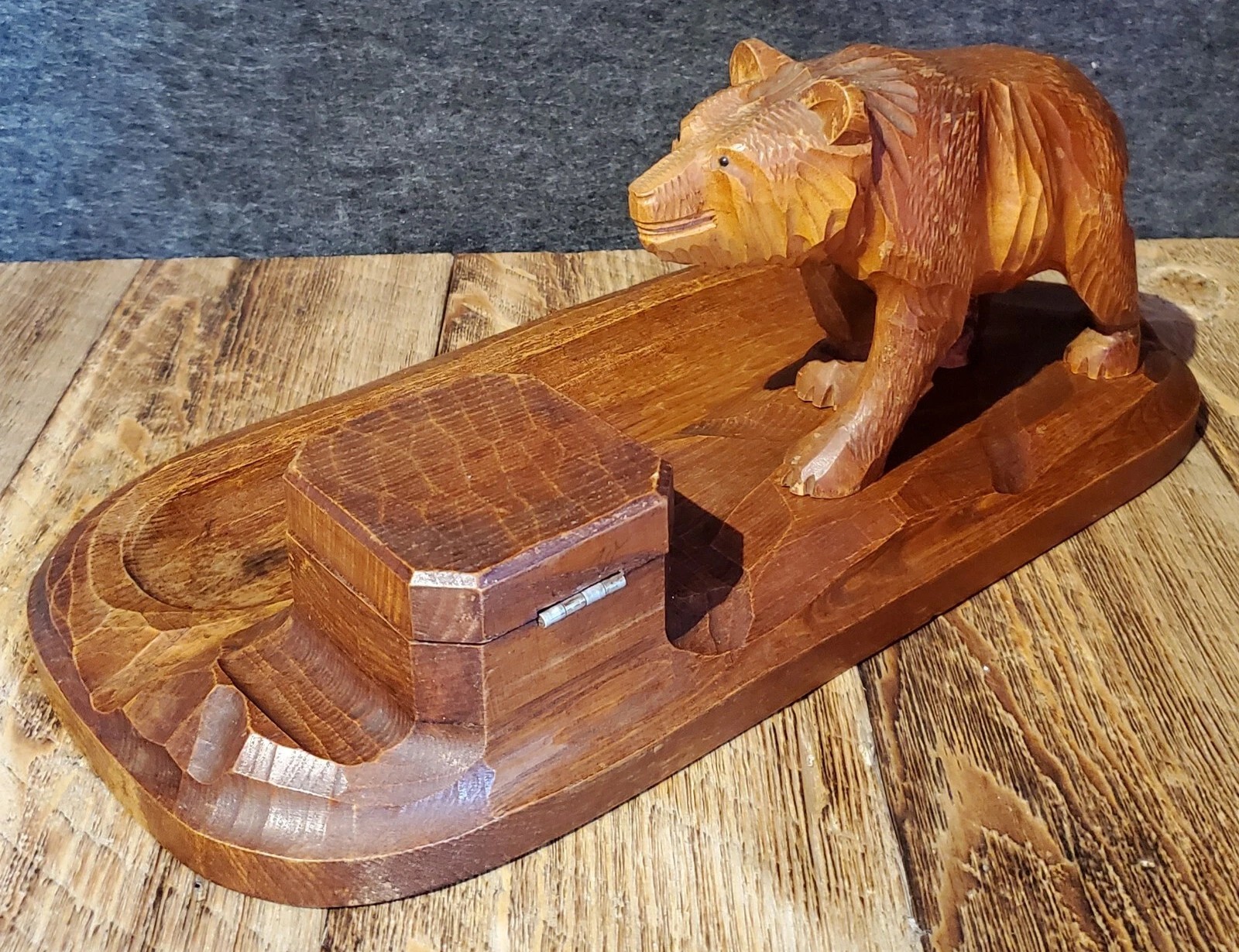
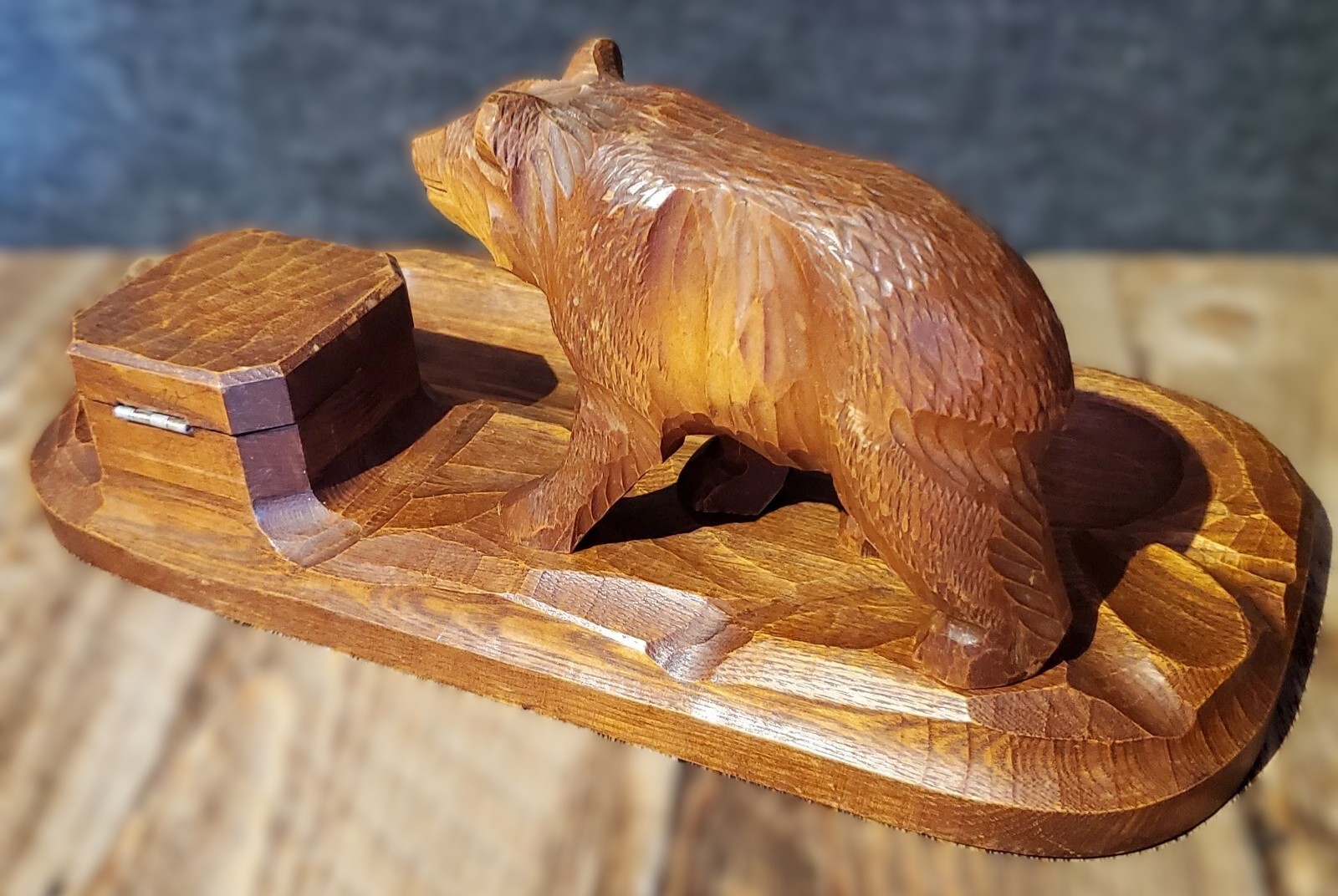
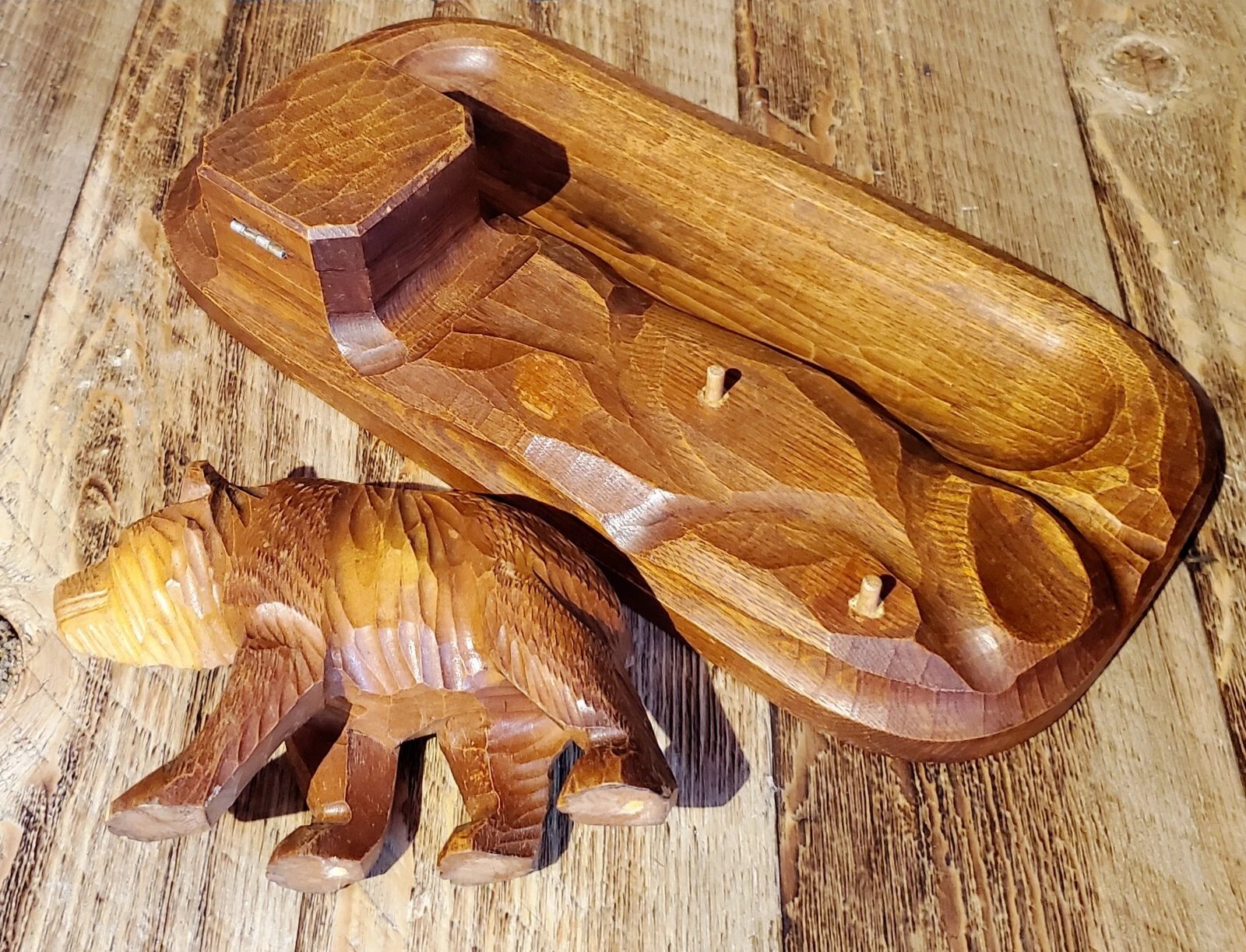
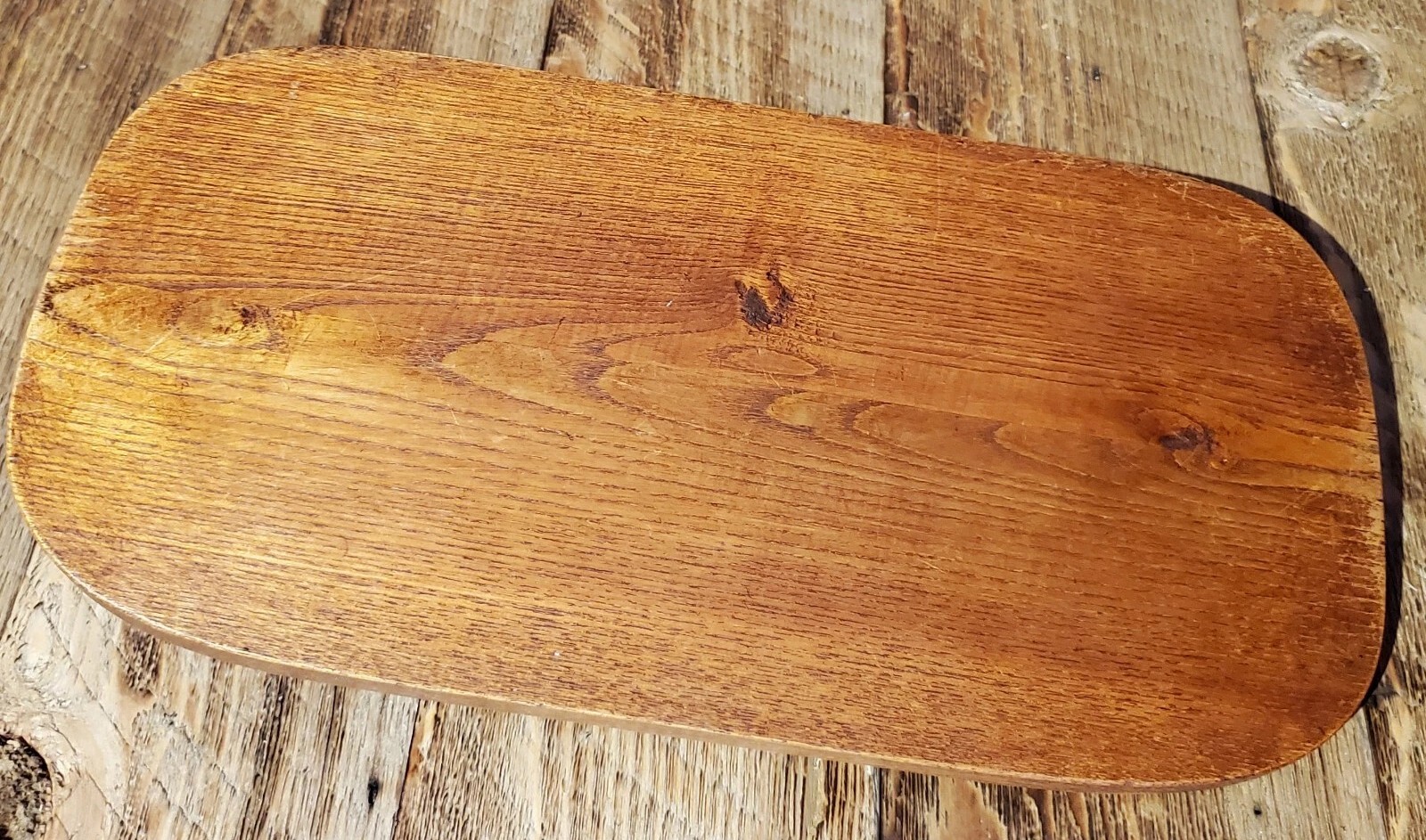
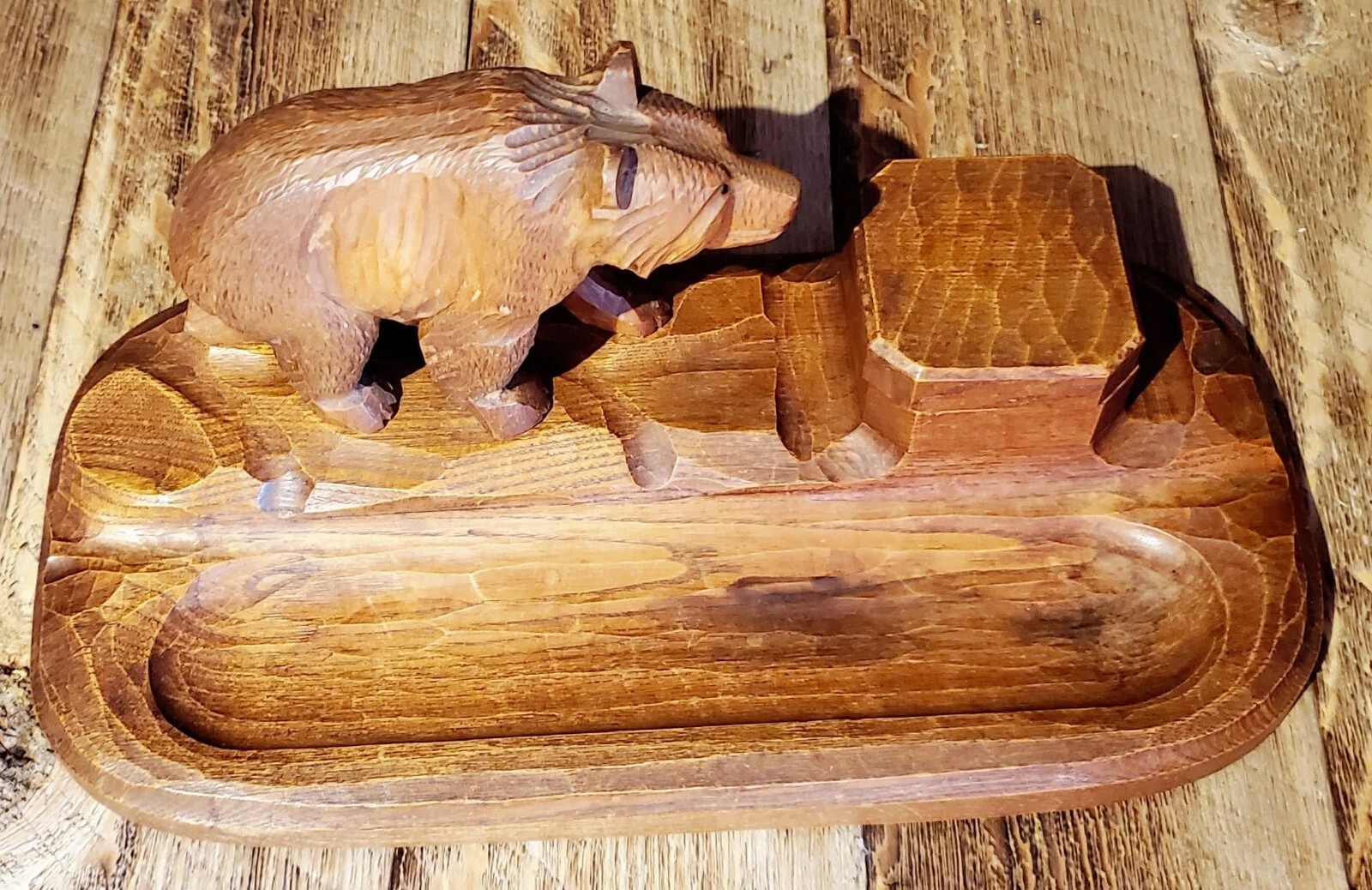
Hand Carved Black Forest Inkstand with a Bear
| Categories | Figural - Animals & Living Creatures |
| Type | Bear |
| Material | Wood |
| Markings | Unmarked |
| Manufacturer | Black Forest |
| Origin | Switzerland |
| Date or Era | circa 1900 |
| Measuring | 12 ½” across |
This is a classic example of Brienz woodcarving, a tradition often called “Black Forest” despite originating in the Bernese Oberland region of Switzerland.
Details
- Origin: It was made in Brienz, Switzerland. While these are commonly called “Black Forest” (Schwarzwald) carvings, the industry was centered in the Swiss town of Brienz. The name confusion likely arose because Victorian tourists often bought them while traveling through the Black Forest region of Germany on their way to Switzerland.
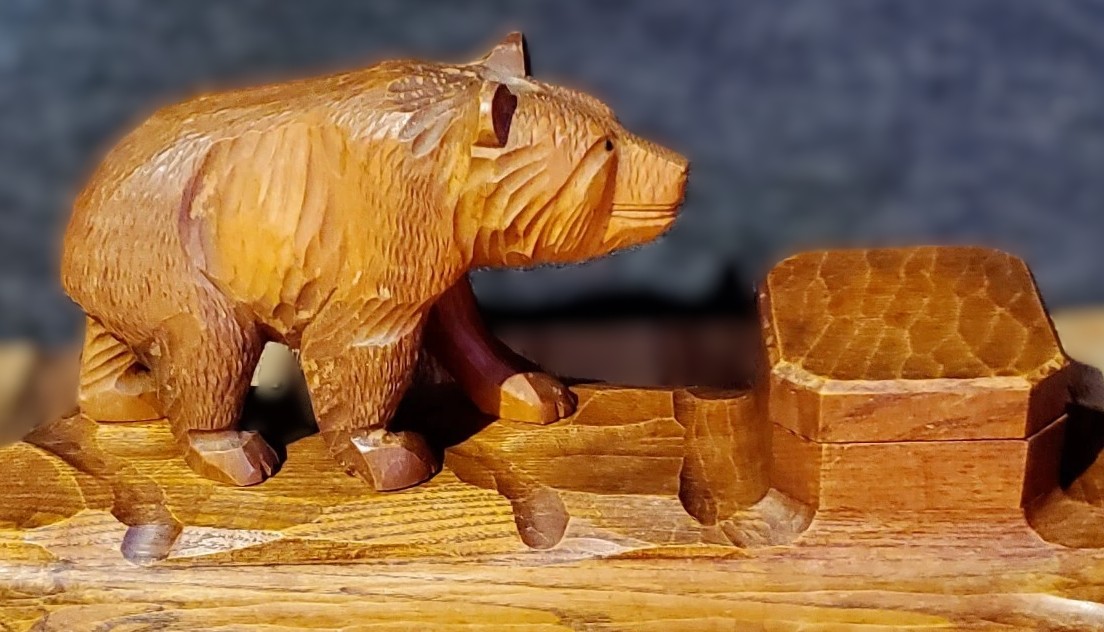
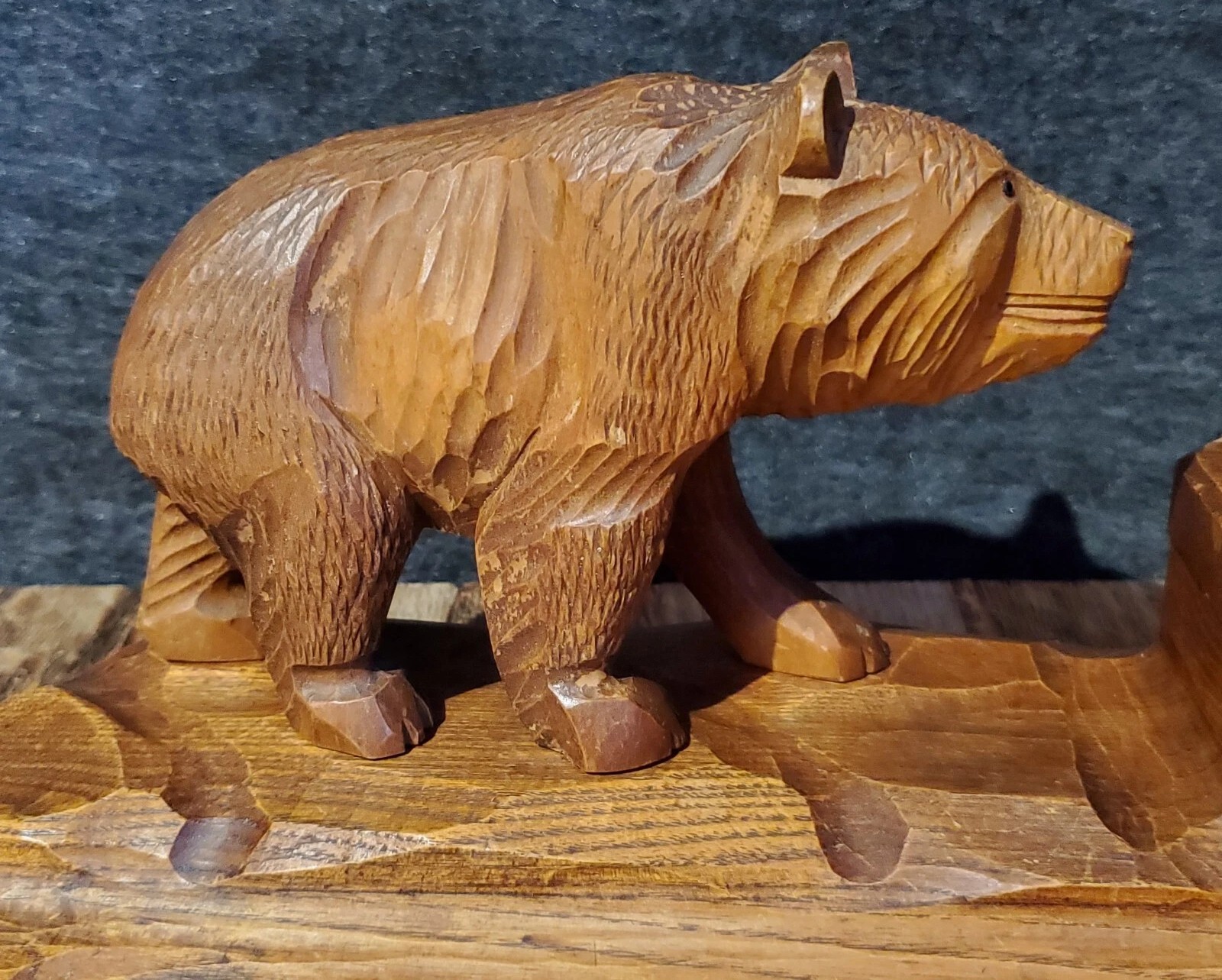
- Wood Type: Most likely Linden wood (also known as Lime wood or Basswood). Linden was the preferred choice for Brienz carvers because its soft, fine grain allowed for the intricate “faceting” (the visible chip-marks) that give the bear its texture. Walnut was also used, but it is typically much darker; this piece has the warm, honey-toned patina characteristic of aged Linden.
- Age: This inkstand dates to roughly between 1880 and 1910. This was the golden age of the Brienz carving industry, when these functional desk accessories were highly popular souvenirs for “Grand Tour” travelers.
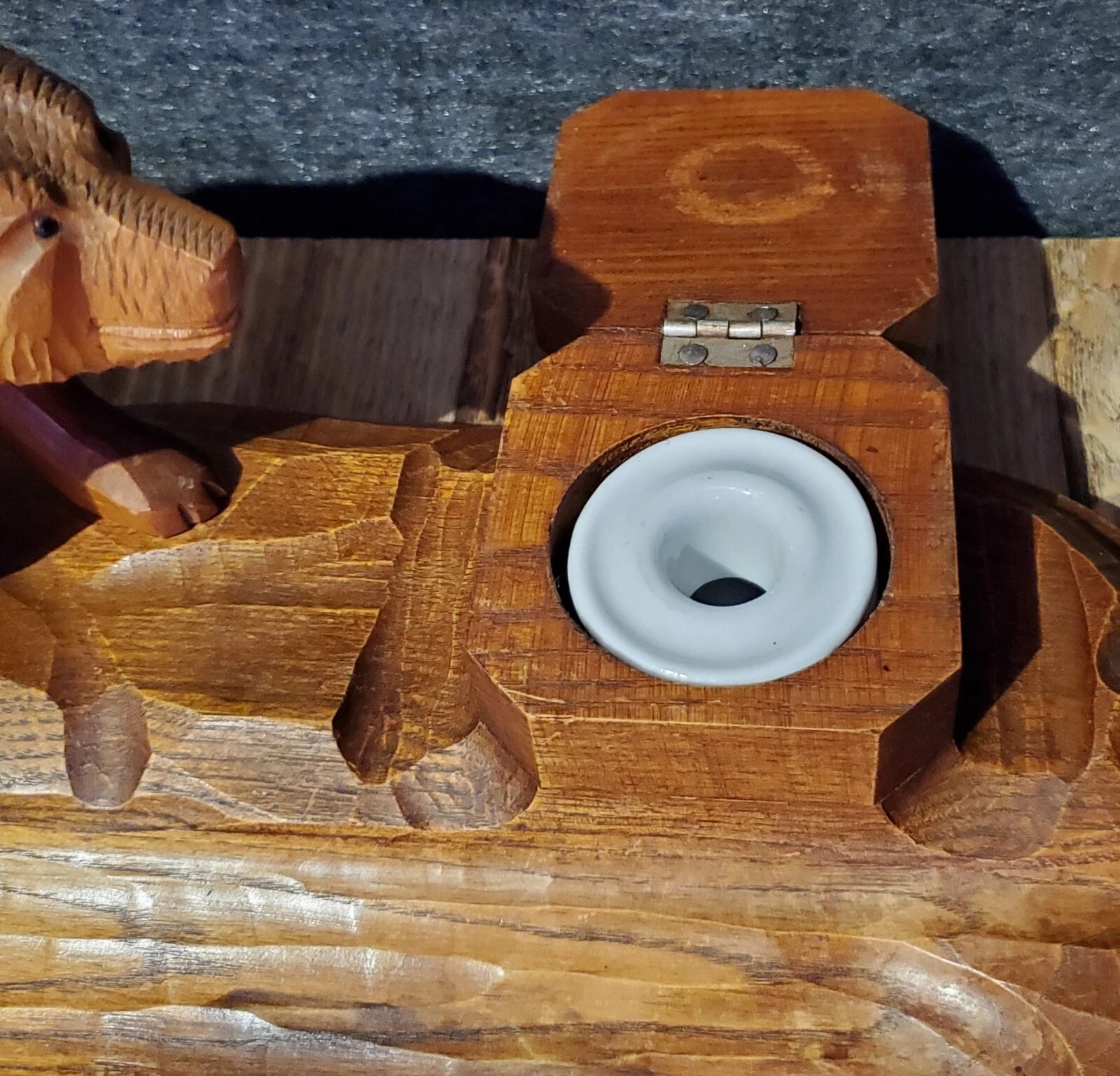
- Construction: The Bear: The small black glass eyes are a signature feature of authentic 19th-century pieces. The fact that the bear is detachable via wooden pegs is a hallmark of traditional construction.
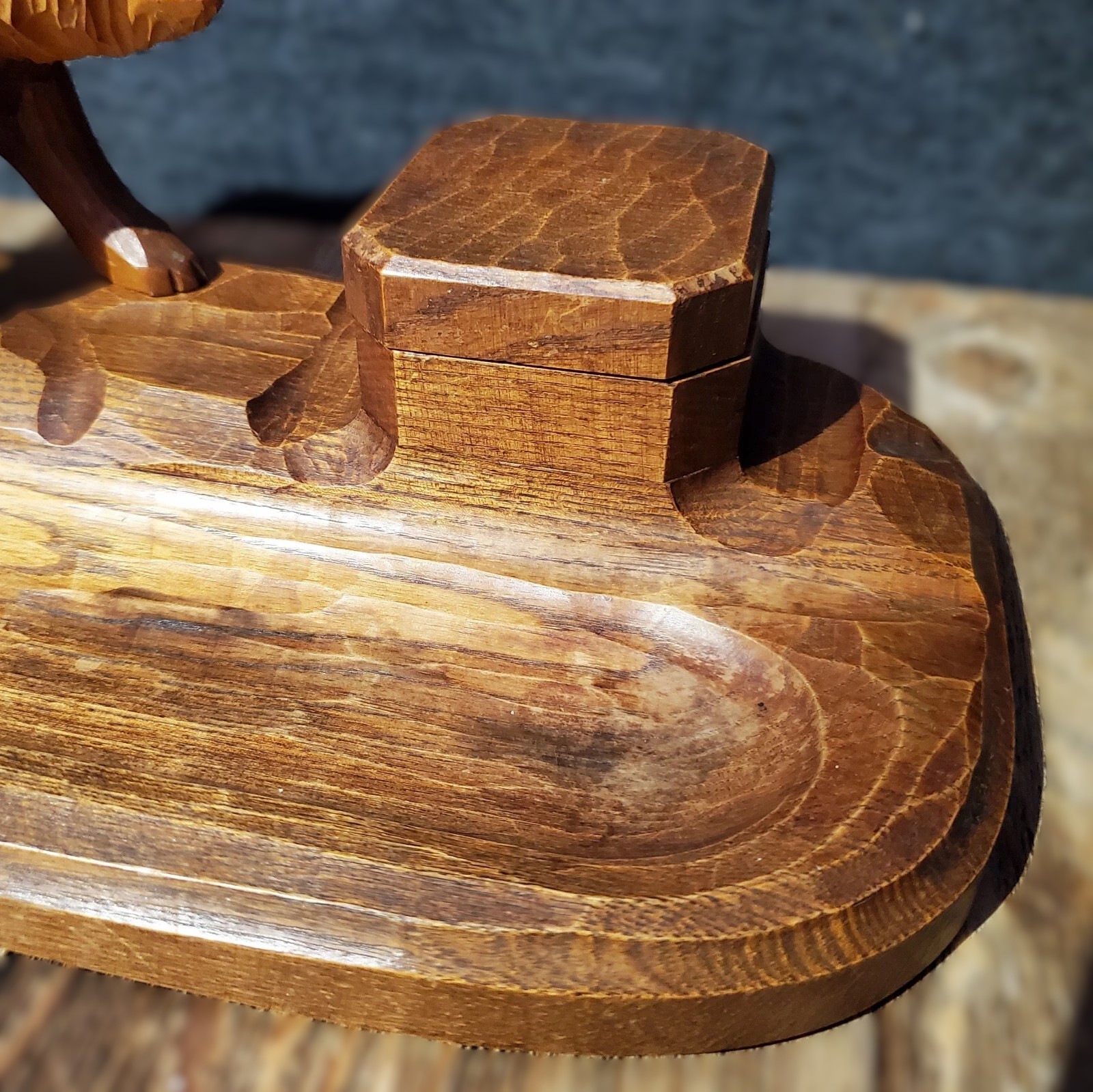
- The Inkwell: The square holder contains a porcelain insert.
- The Tray: The long depression in the front is a dedicated pen tray, designed to hold dip pens or quills.
Note
The carving style on this piece is known as “naturalistic.” You can see the skill in the way the carver used a chisel to create the “fur” with individual, confident strokes. This “chip-carved” look is much more desirable than the smooth, sanded finishes found on later, mid-century mass-produced versions.
Sold for $263 in March 2026
Content disclaimer. The information posted is the owner’s best knowledge and may not have been vetted by the SOIC. We welcome comments, corrections, and additions, working to make our website information comprehensive and accurate.
Join the Society of Inkwell Collectors (SOIC) – it’s free!
Founded in 1981 as a non-profit organization,
we are documenting inkwells (and accessories).
We’re here to help and inform!