

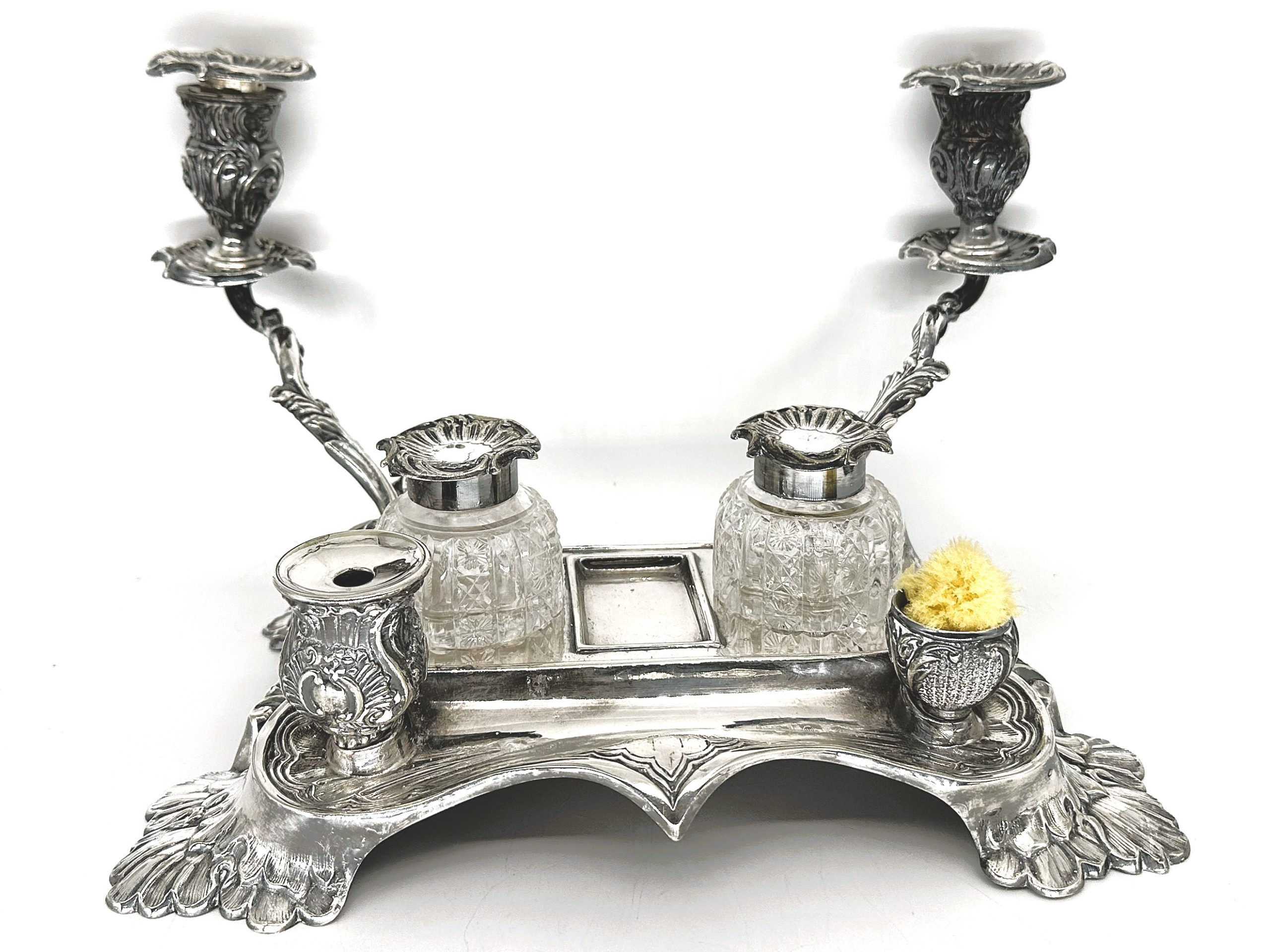
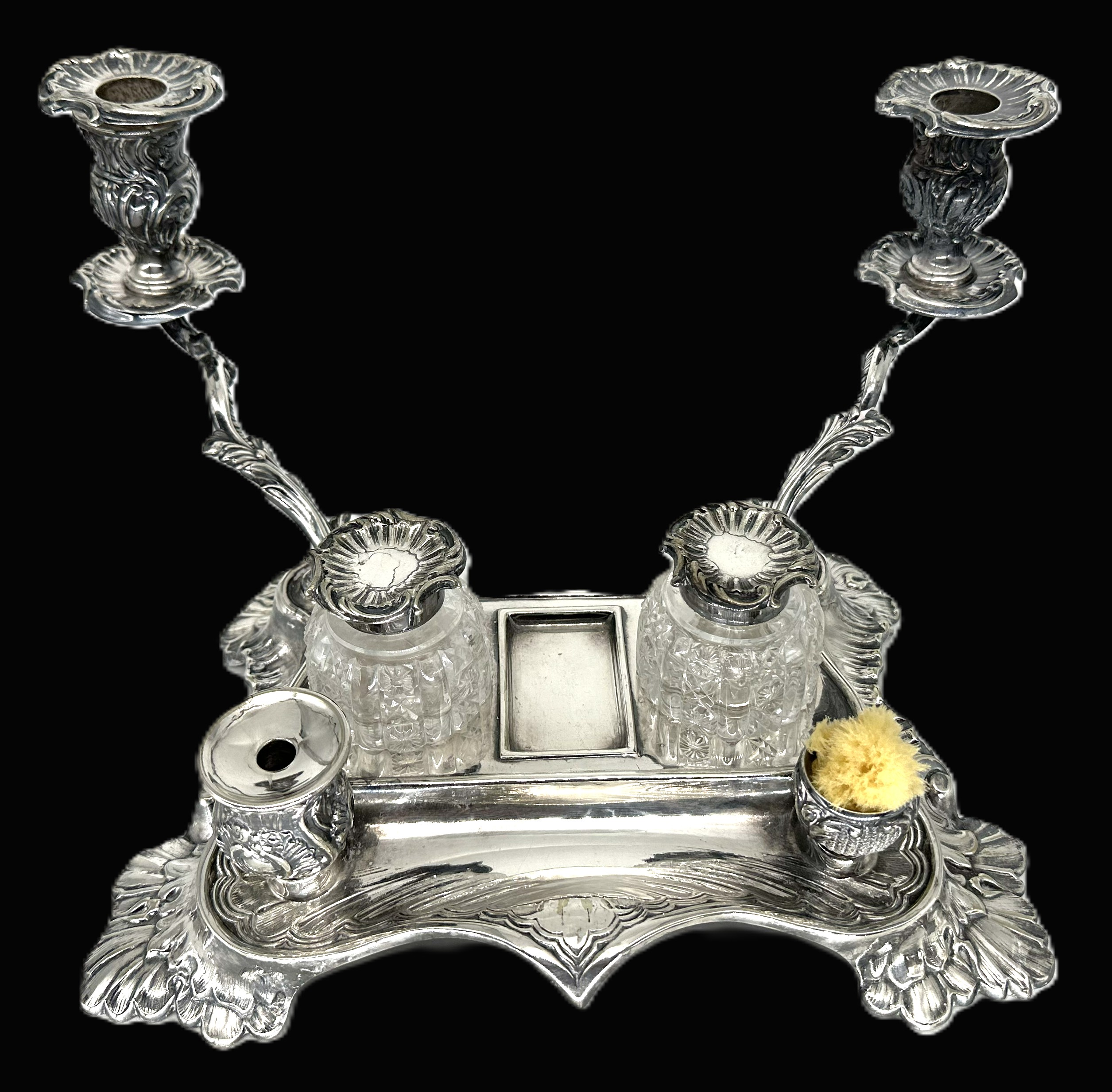
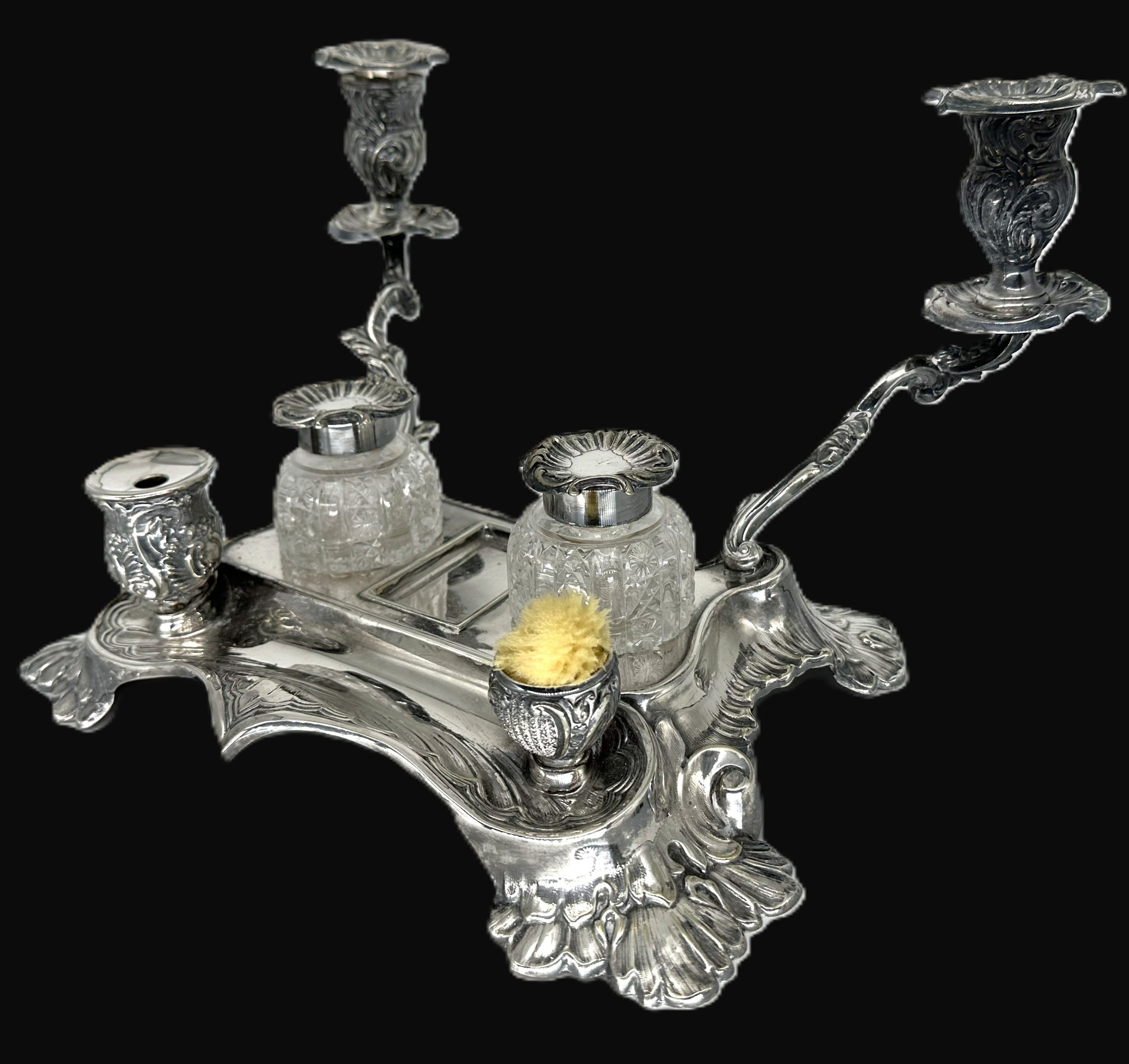
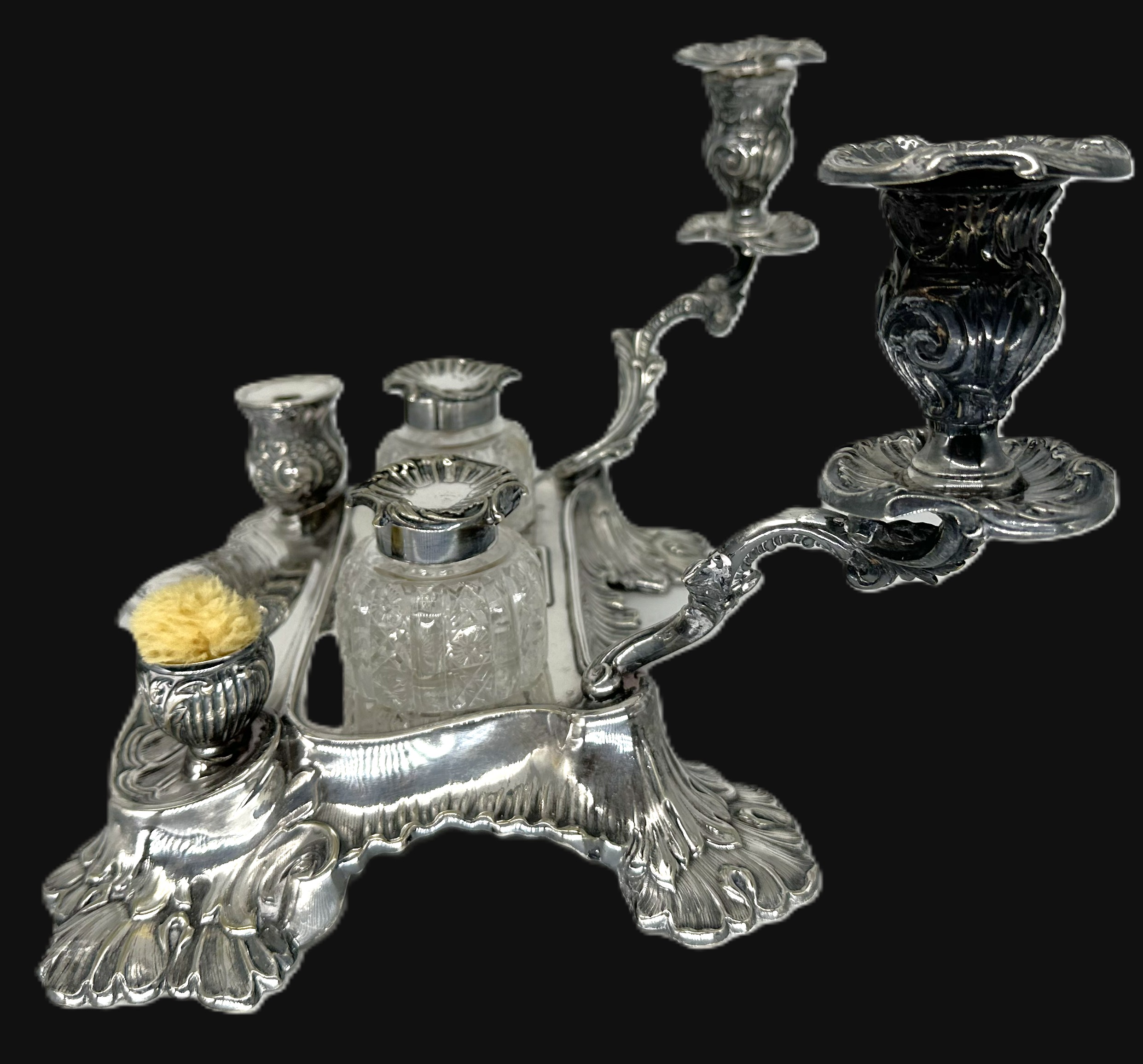

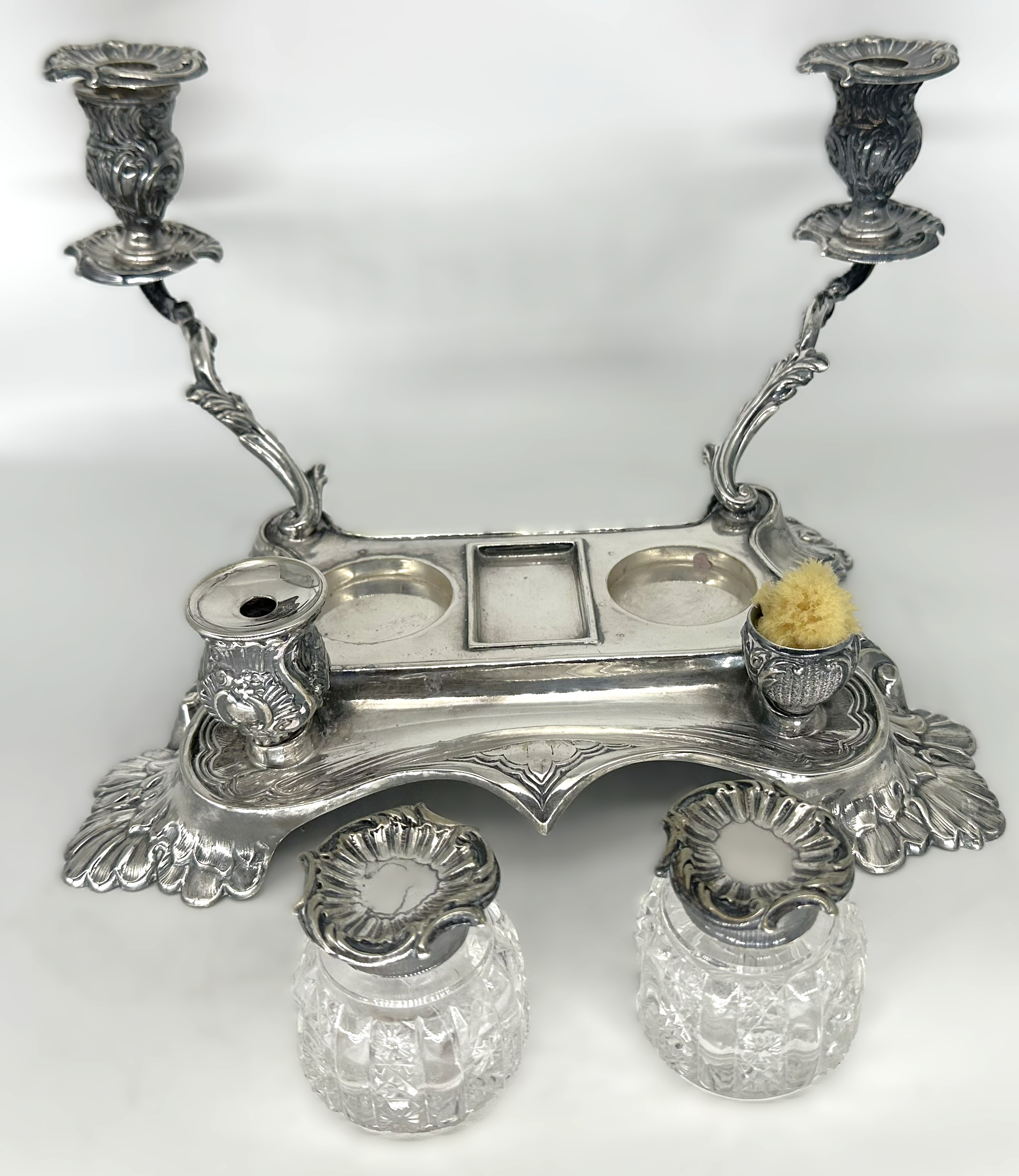

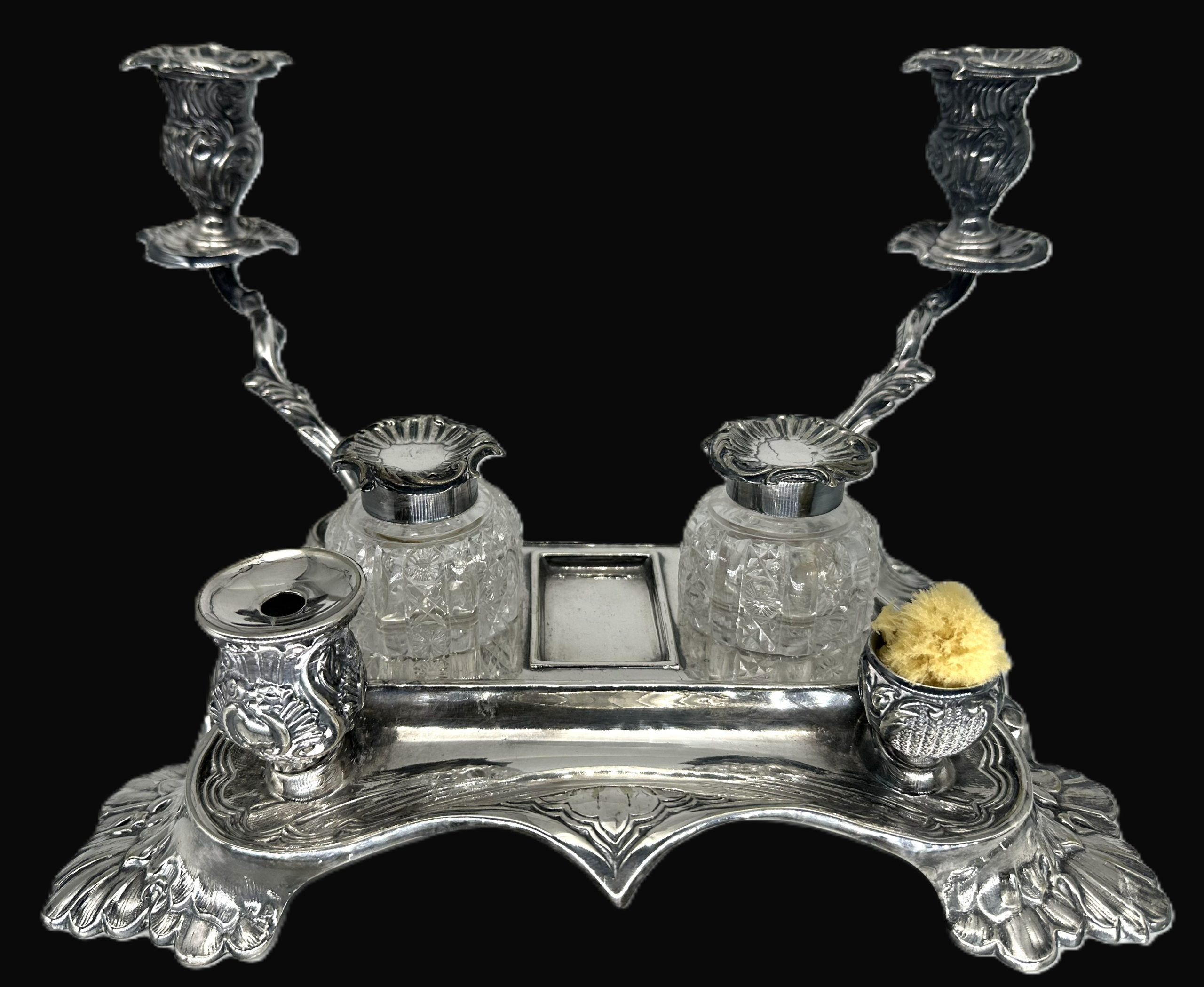
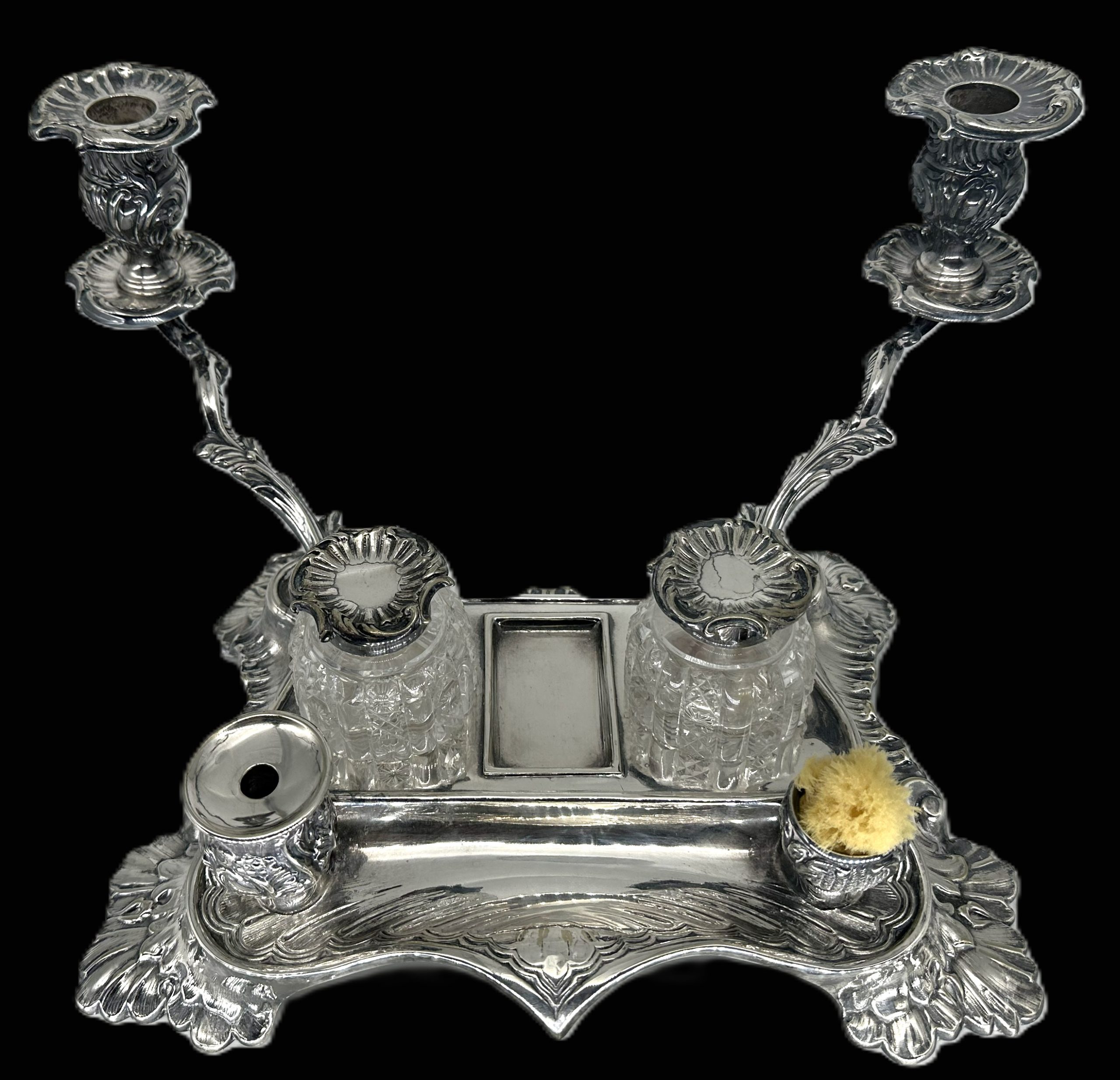
Grand Victorian Silverplated Inkstand
| Categories | Silver |
| Type | Standish |
| Material | Silverplate |
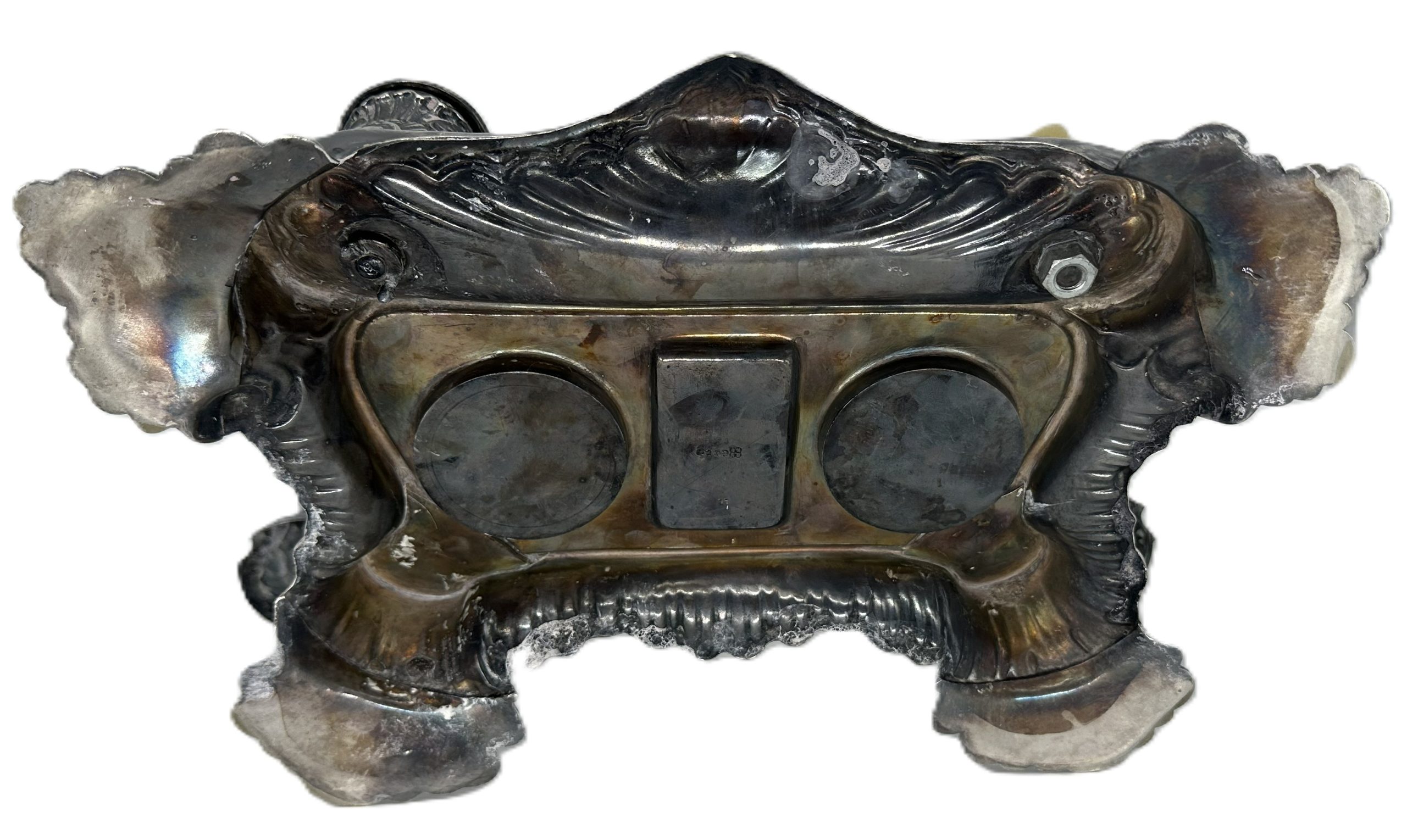
| Markings | See Narrative |
| Manufacturer | Undetermined |
| Origin | England |
| Date or Era | circa 1890 |
| Measuring | 12” x 8” x 8” high |
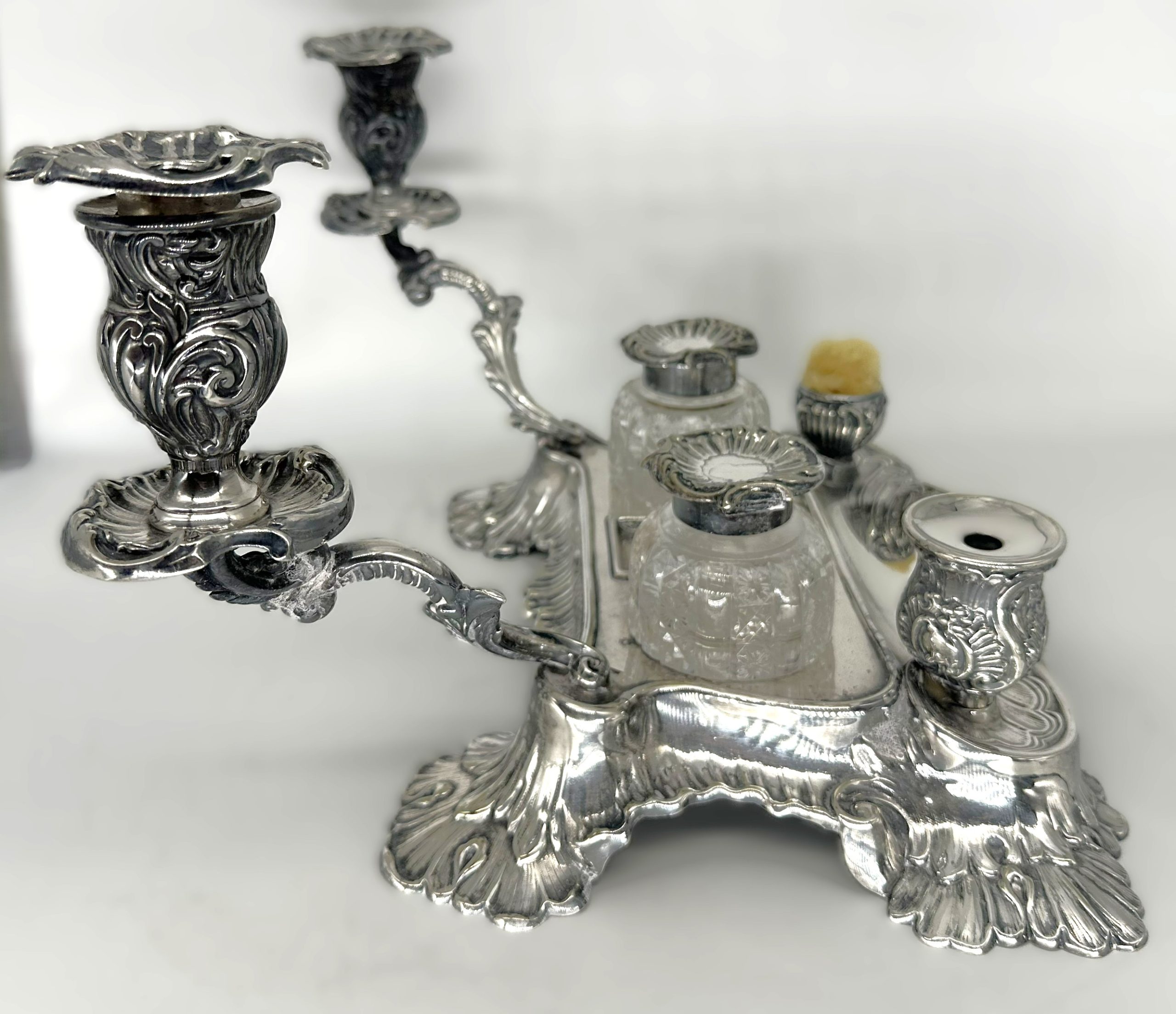
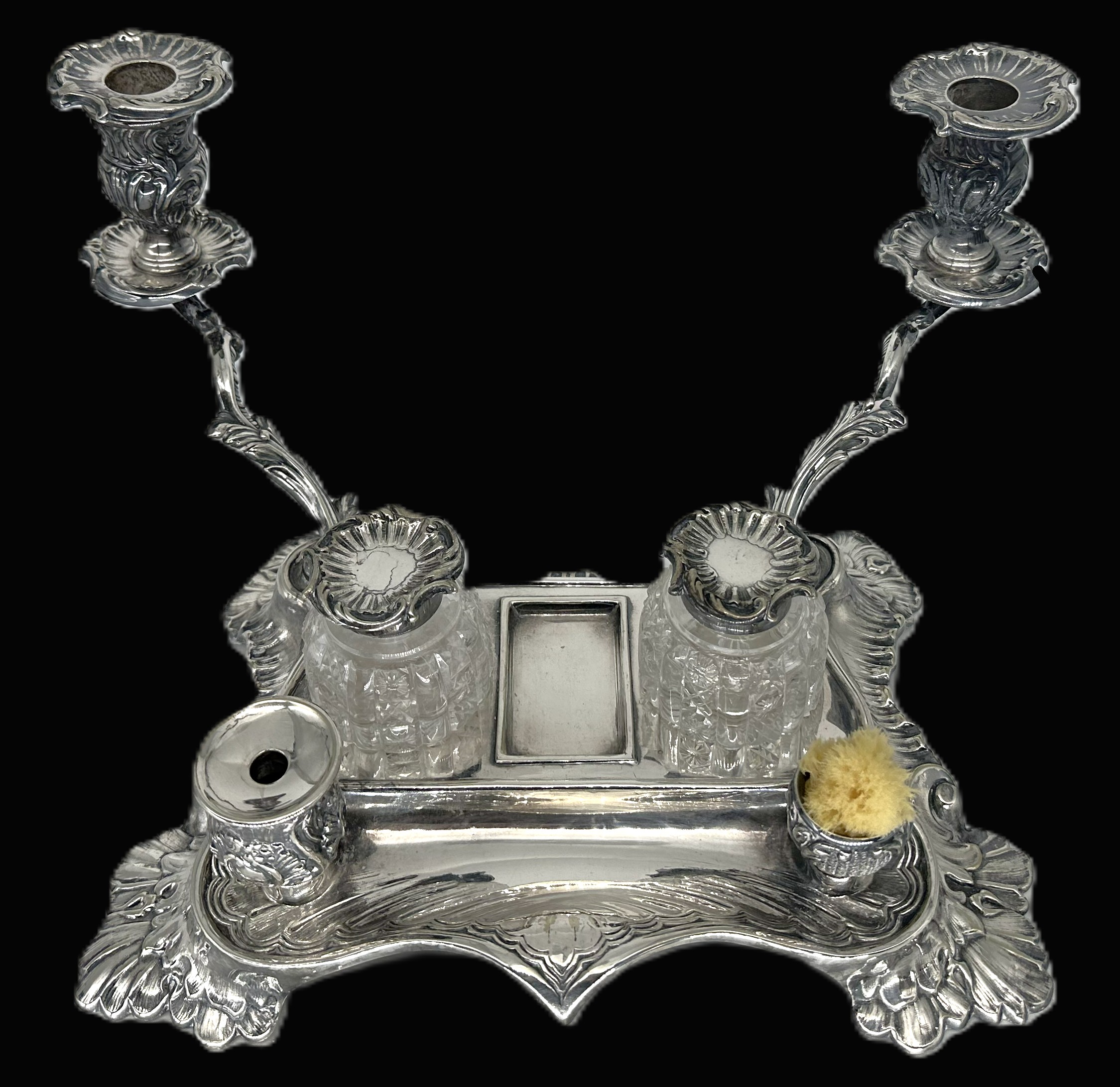
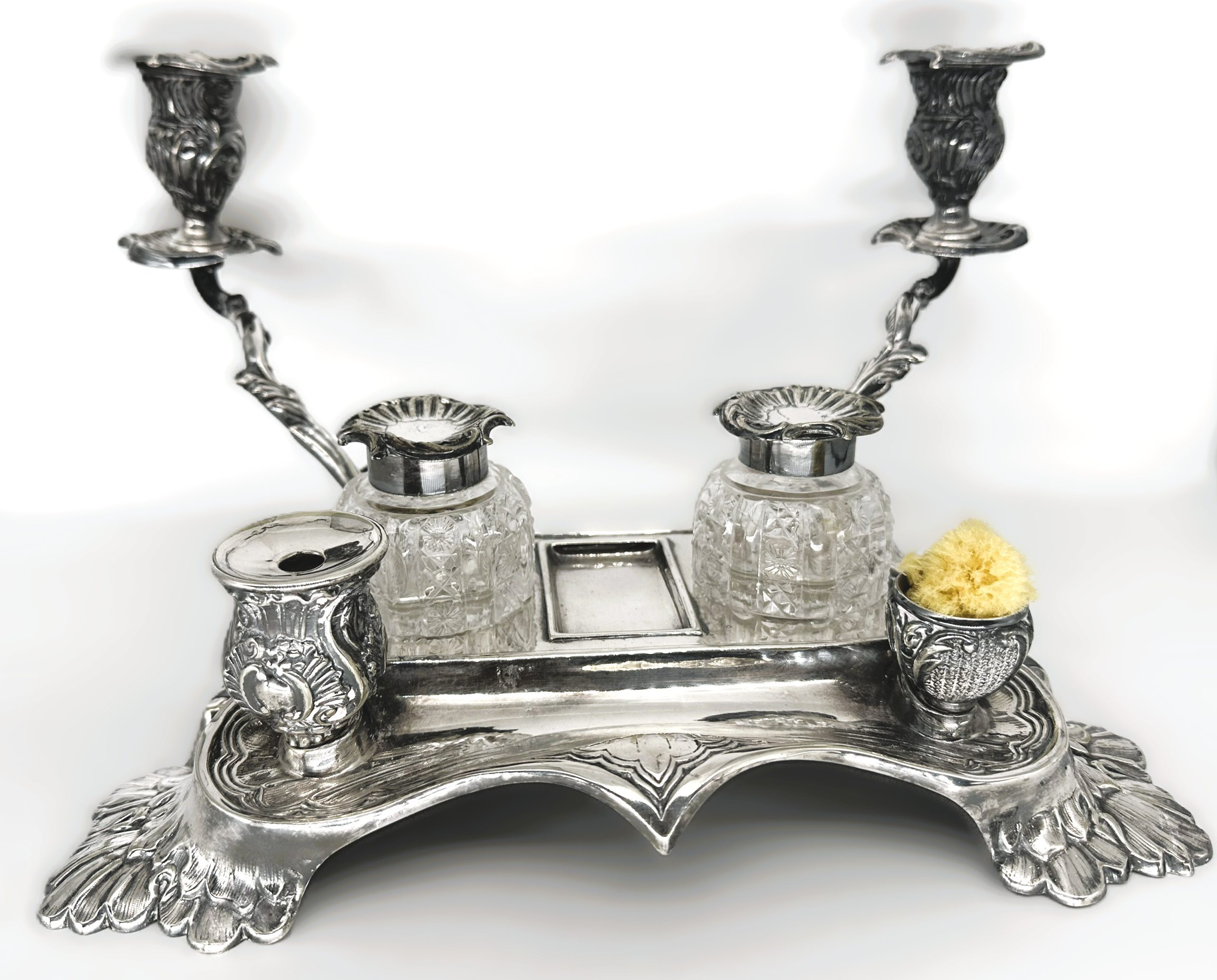
This Victorian silverplated inkstand in the ornate Rococo Revival style, likely dates from the late 19th century (circa 1880–1895).
Description
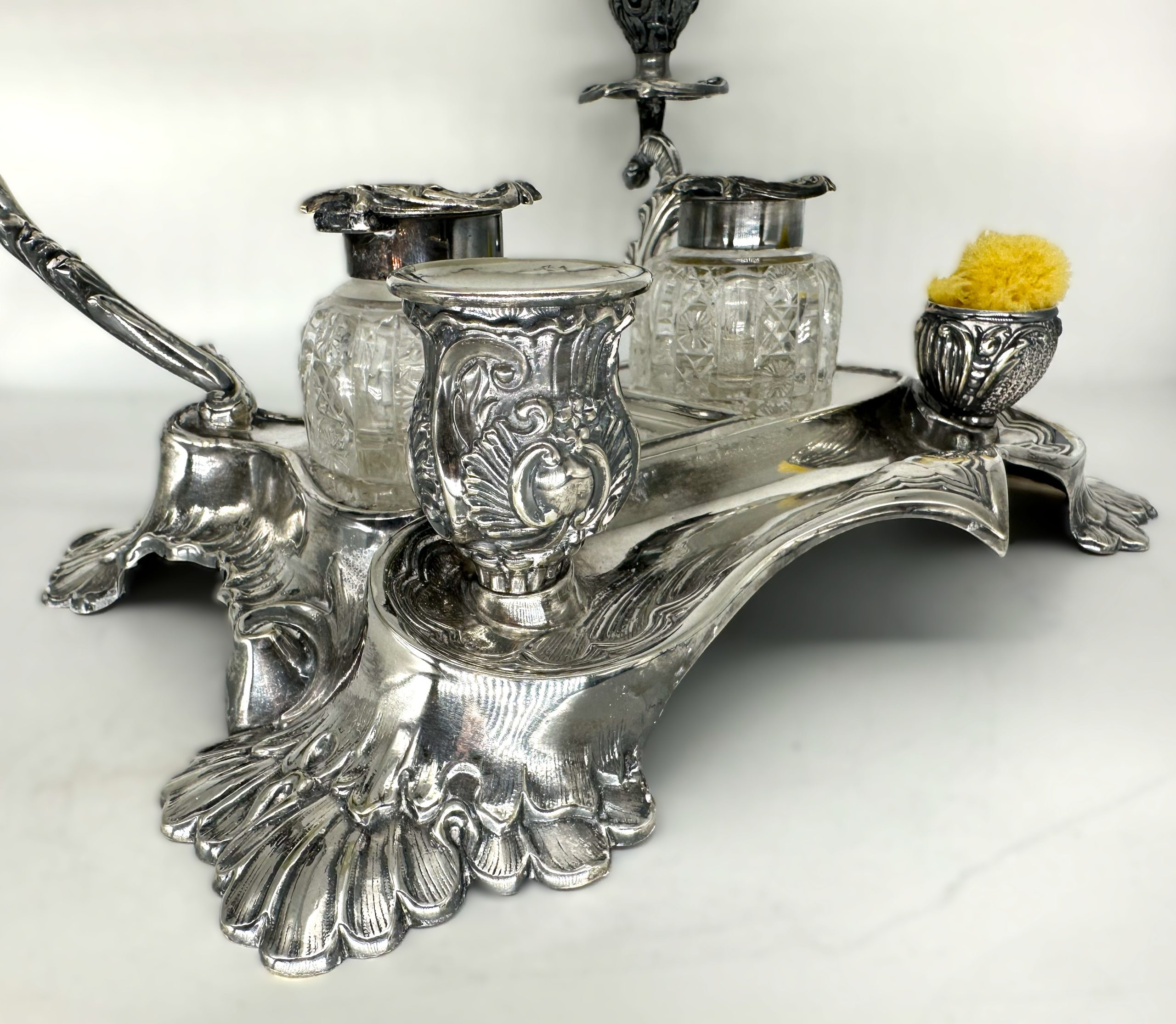
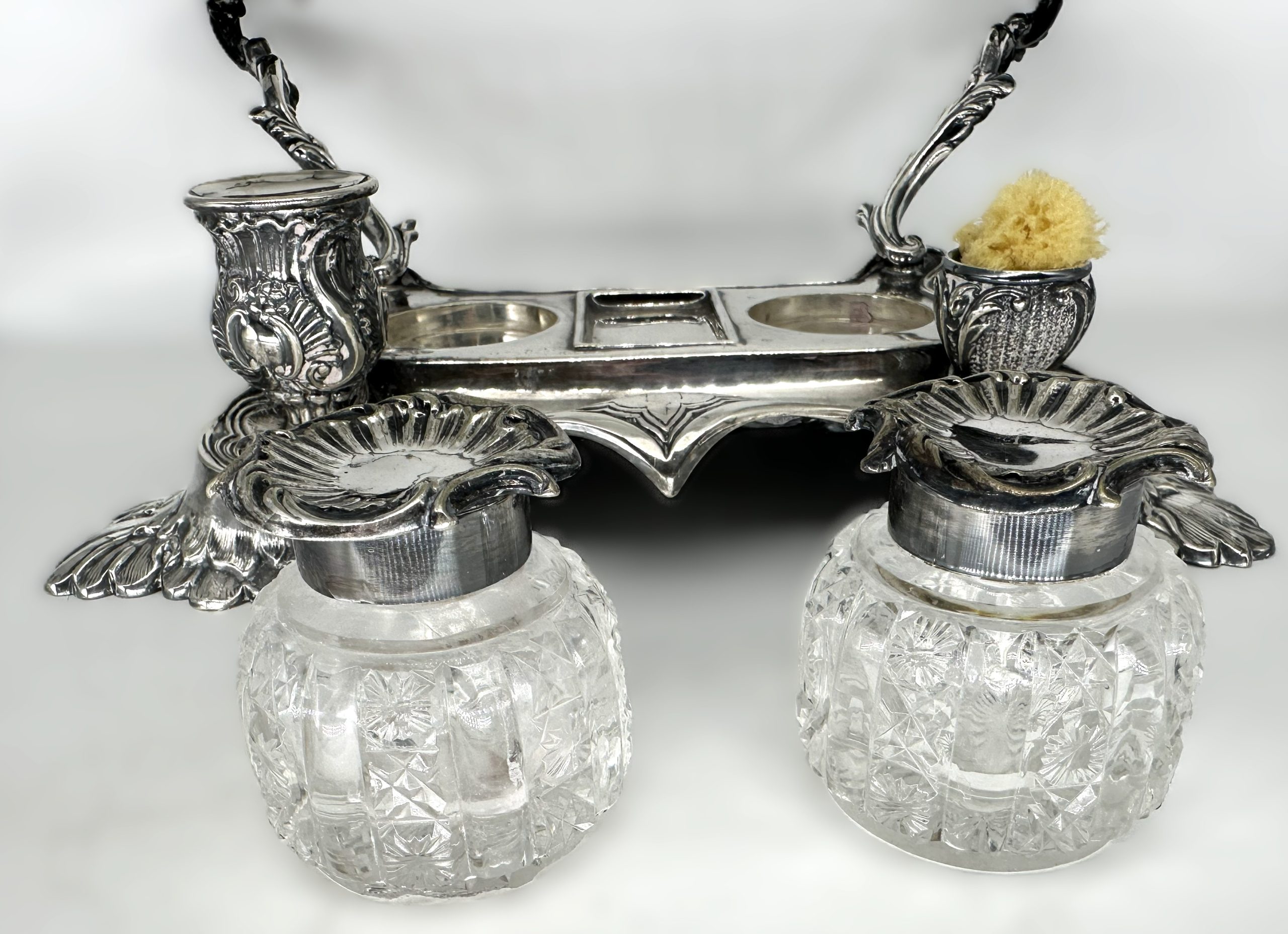
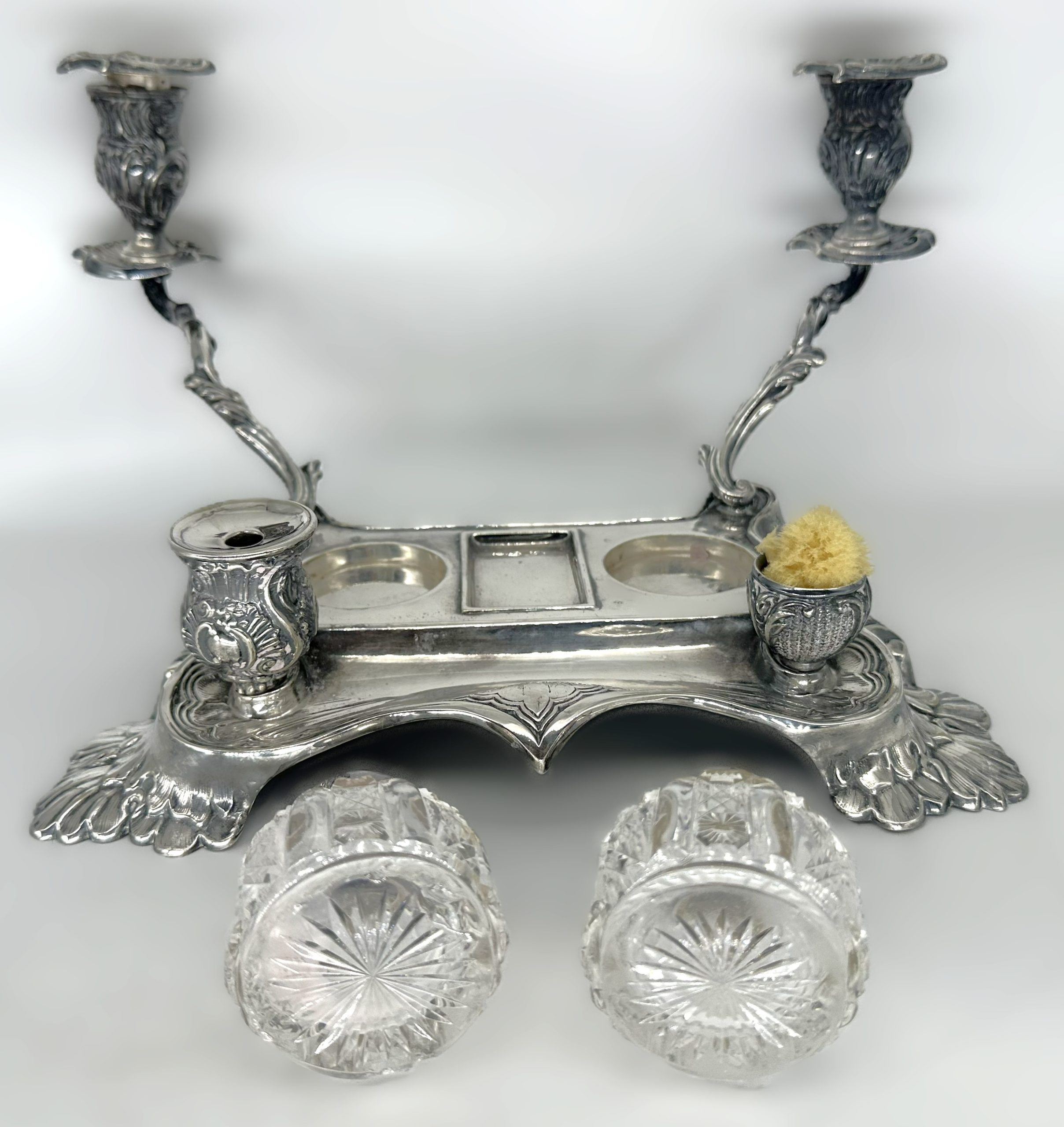
The inkstand features a heavily chased and scrolled base with classic Rococo motifs, including acanthus leaves, C-scrolls, and shell-patterned corners. It is a “complete” writing set, designed for a formal desk.
- Candle Holders: Two fixed, ornate candlesticks with removable nozzles (bobeches). These provided light while writing and for melting sealing wax.
- Inkwells: Two central cut-glass (crystal) inkwells with diamond/hobnail patterns. They feature silverplated hinged lids with scalloped edges.
- Central Tray: A small, rectangular area is found between the inkwells. This held writing paraphernalia.
- Front Vessels:
- Front Left (Hole): This is a pen holder.
- Front Right (Sponge): This is a stamp moistener. The vessel holds a small natural sponge; the writer would dampen the sponge with water to moisten stamps or envelope flaps without licking them. (Note: While sponges were sometimes used as “pen wipes” to clean nibs, their primary purpose in this specific cup-vessel form was moistening.)
- Pen Rest: The long, curved horizontal groove in front of the inkwells serves as the pen tray for resting dip pens.
Deciphering the Marks
The markings on the underside are pseudo-hallmarks, designed to mimic the appearance of British sterling silver hallmarks to imply high quality.
- The Cartouches: You see five distinct stamps.
- The first is a Maker’s Mark/Logo (a crown or a shield).
- The letters appear to be U, T, S, and B.
- The “92”: This is likely a Pattern Number or a Model Number used by the manufacturer. In some European silverplate, “92” can refer to the silver content (92 grams of silver used to plate the set), but given the English style of the pseudo-hallmarks, it is most likely a production number.
- The Small “H”: There is a small “H” stamped separately near the leg. This often refers to the specific workman or plater responsible for the piece.
Origin and Age
- Maker: The combination of these specific pseudo-hallmarks (the Shield/Crest logo followed by the letters) is characteristic of British silverplate manufacturers from Sheffield or Birmingham, such as Deykin & Sons or Barker Brothers, though many smaller firms used similar “trade” marks.
- Age: Circa 1880–1890. The heavy, ornate Rococo Revival style was at its peak during this time, just before the simpler Arts & Crafts or Art Nouveau movements gained traction.
- Origin: England
Estimated value: $125
Content disclaimer. The information posted is the owner’s best knowledge and may not have been vetted by the SOIC. We welcome comments, corrections, and additions, working to make our website information comprehensive and accurate.
Join the Society of Inkwell Collectors (SOIC) – it’s free!
Founded in 1981 as a non-profit organization,
we are documenting inkwells (and accessories).
We’re here to help and inform!