

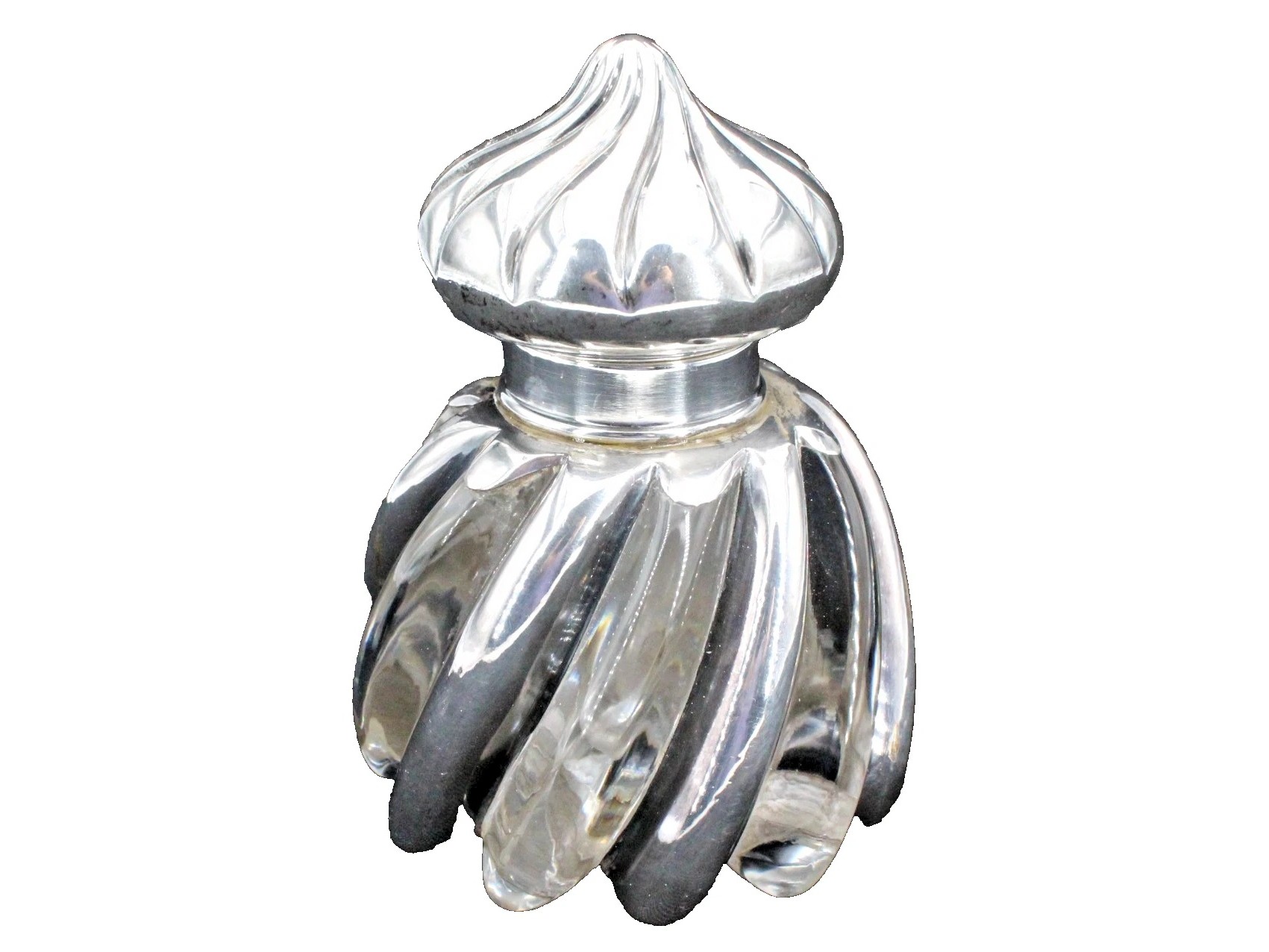


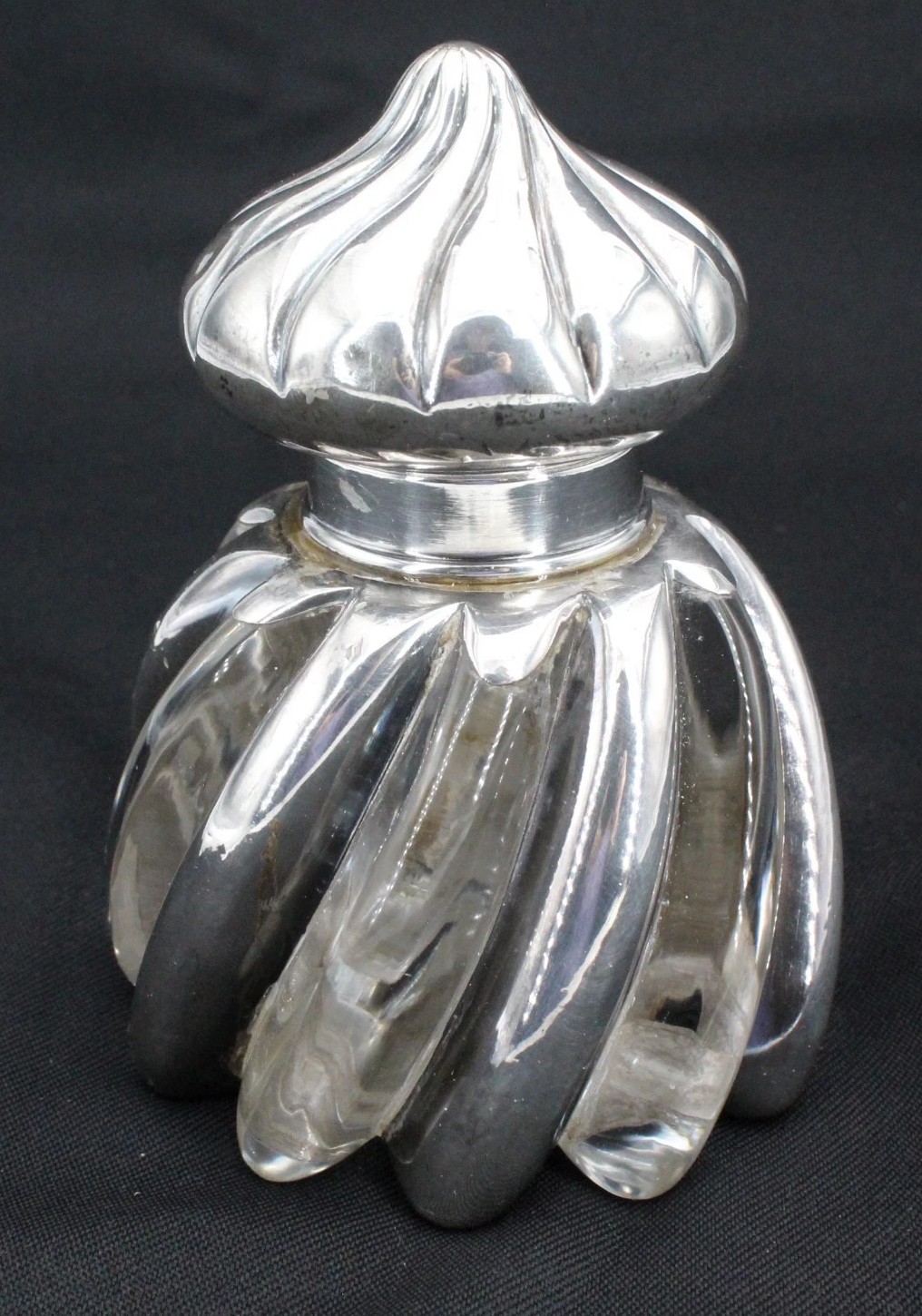
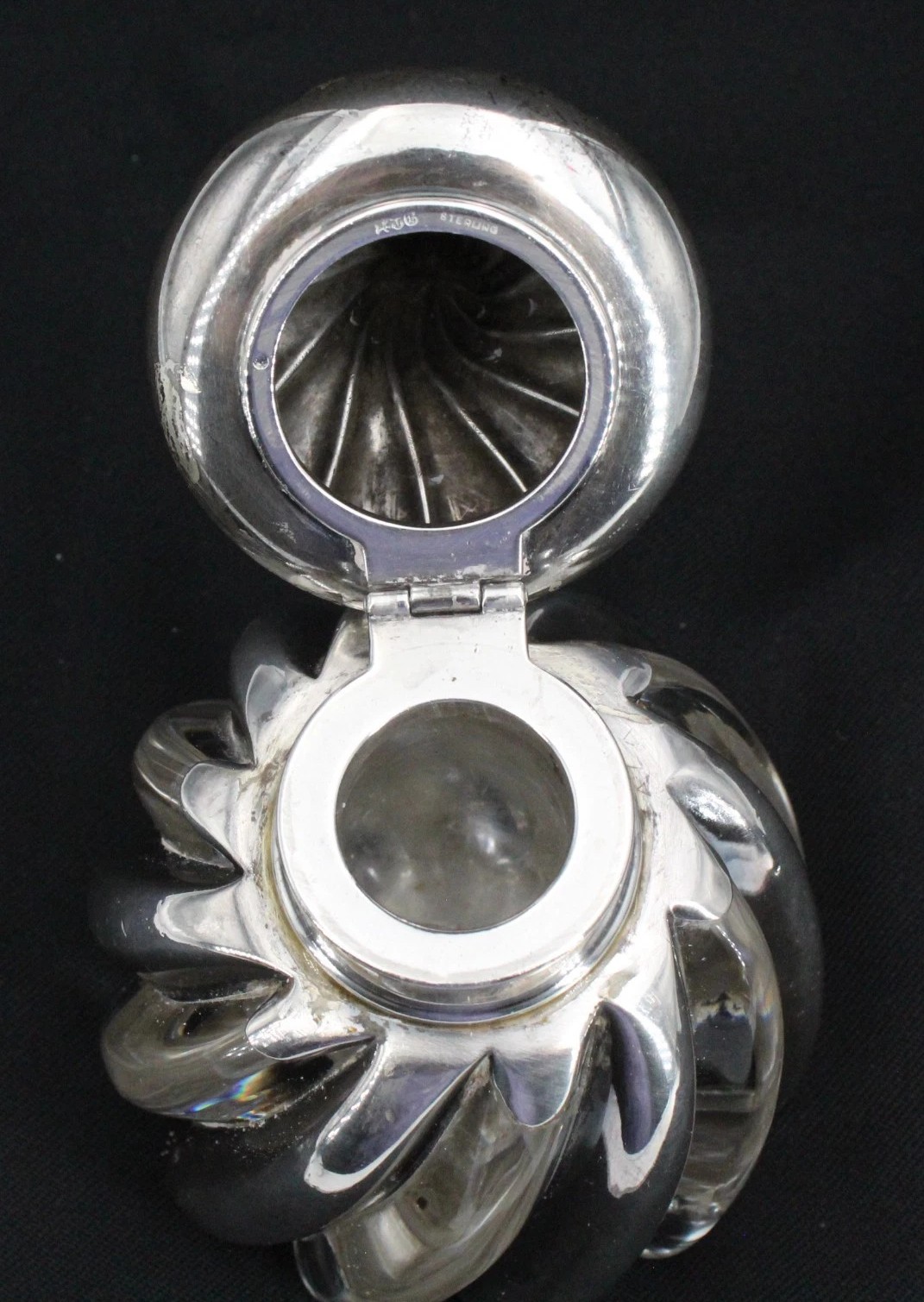
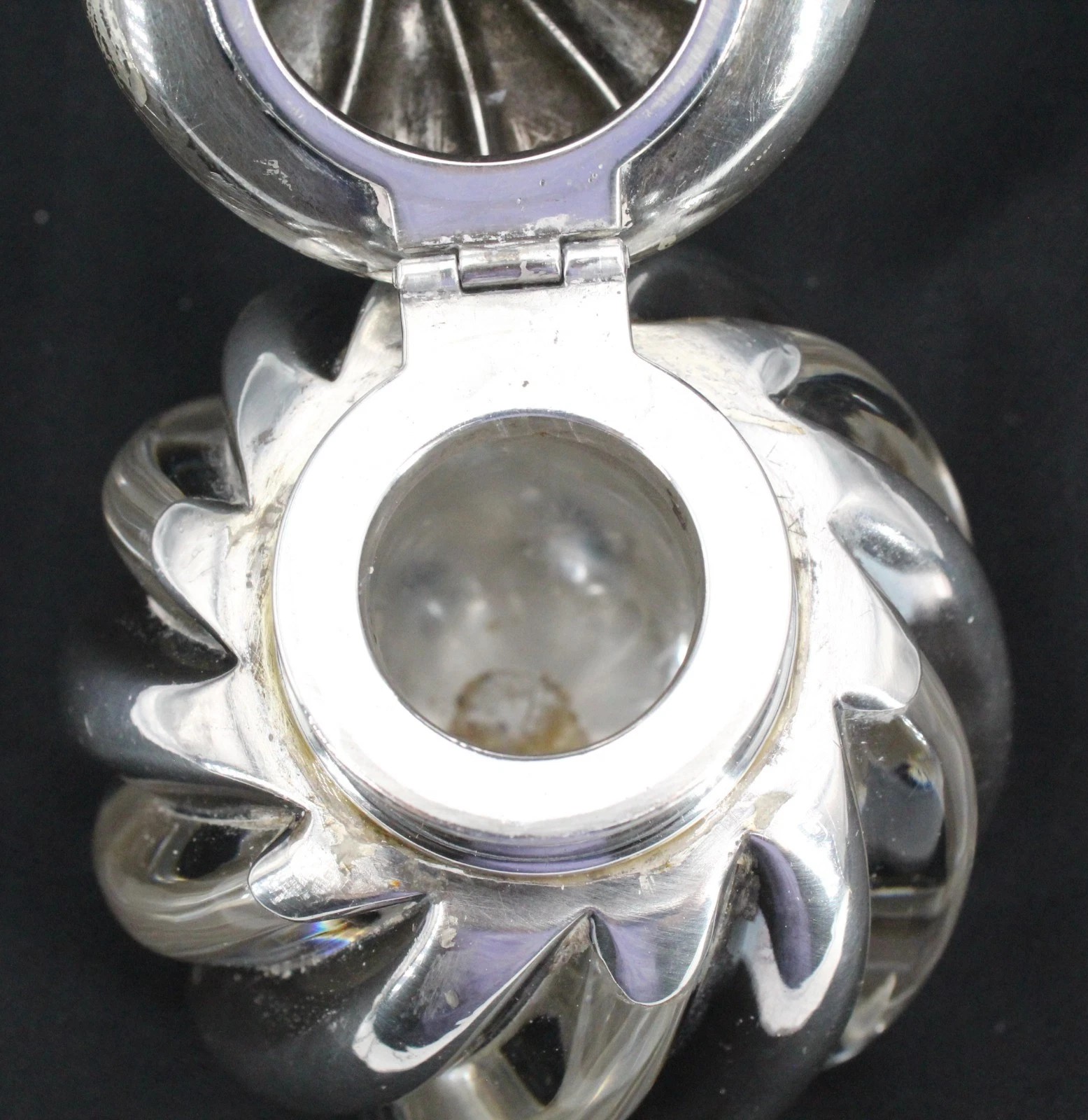
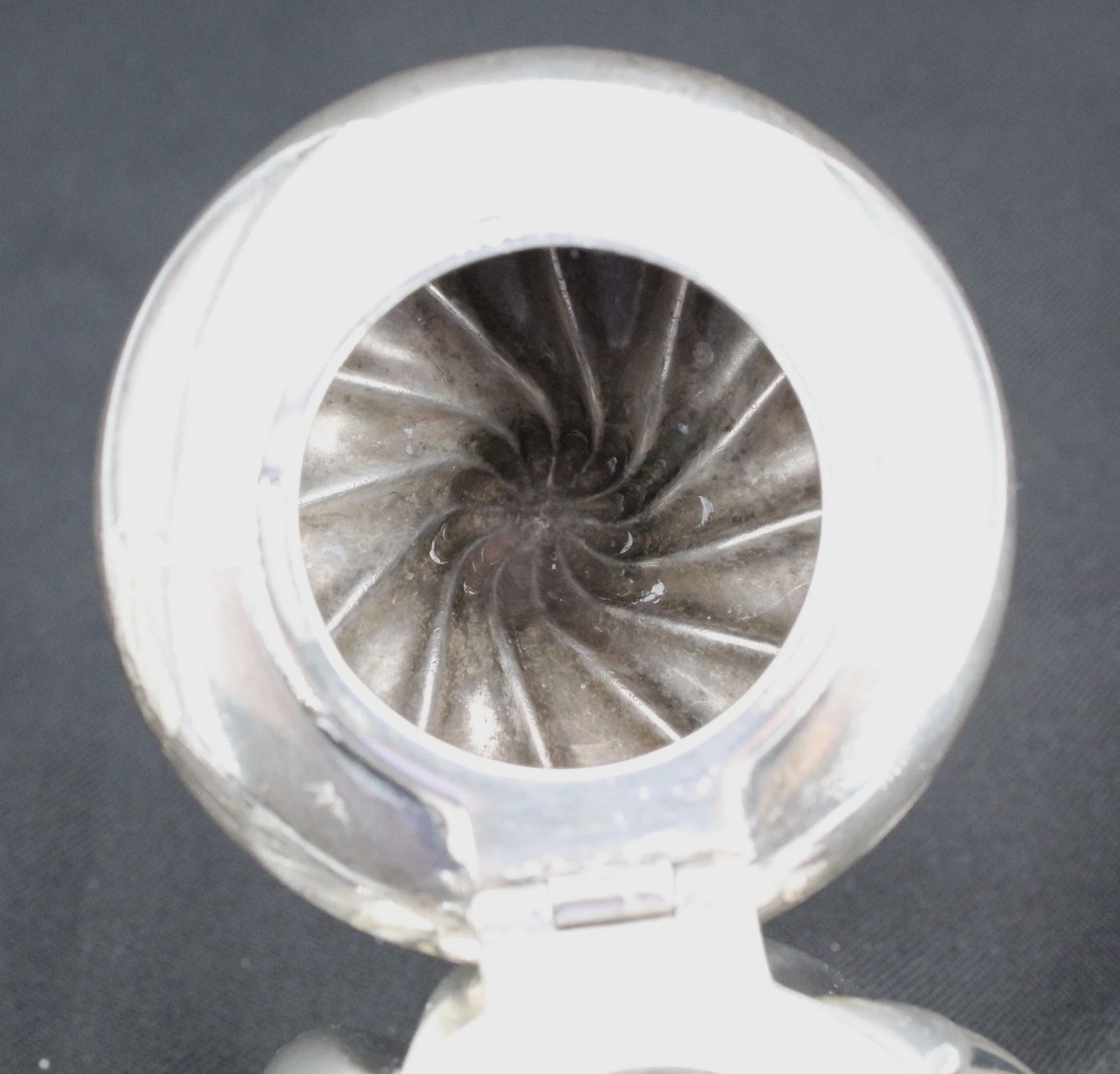
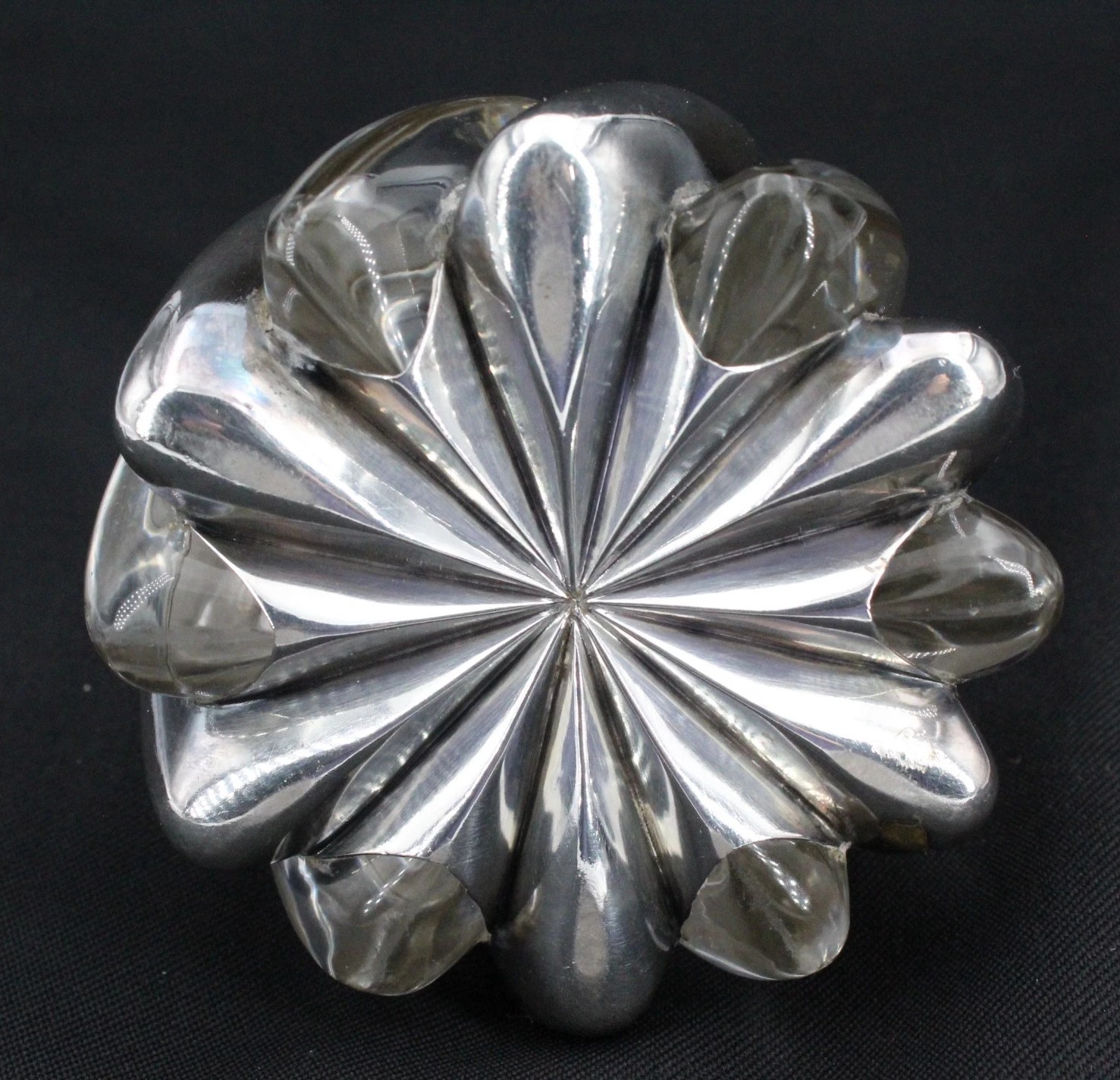
Gorham Swirl Pattern Inkwell
| Categories | Glass - Non-figural, Silver |
| Material | Glass, Silver |
| Markings | See Narrative |
| Manufacturer | Gorham |
| Origin | United States |
| Date or Era | circa 1880 |
| Measuring | 3 ½” wide at the base; 5” high |
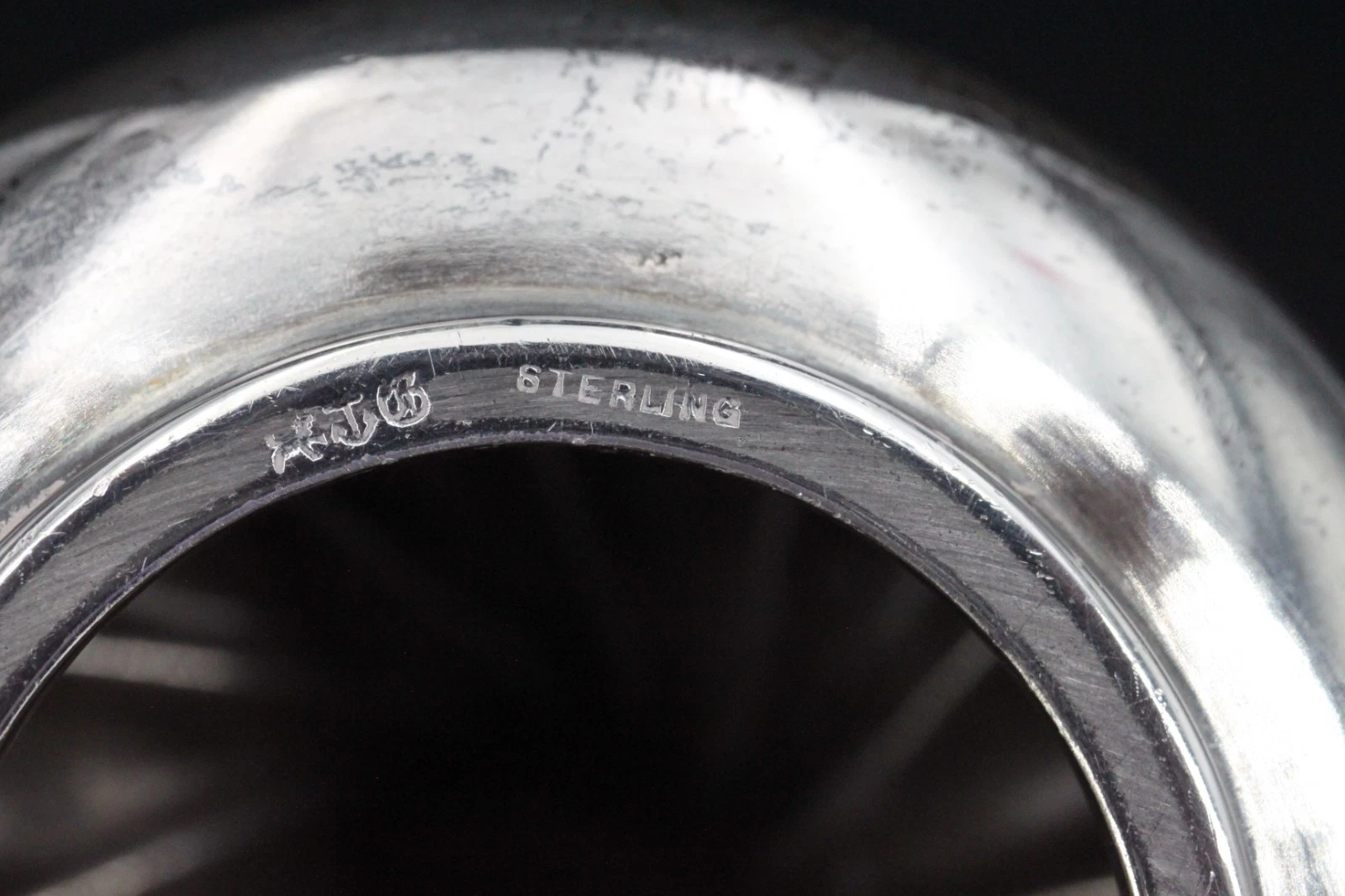
This is a striking example of late 19th-century American silver craftsmanship. While the marks on the lid look like British hallmarks at first glance, they are actually the “pseudo-hallmarks” of one of America’s most prestigious silversmiths.
Identification of the Marks
The marks on the inner rim of the lid belong to the Gorham Manufacturing Company of Providence, Rhode Island.
Gorham used these specific symbols to evoke the prestige of English silver:
- Lion (facing right): Gorham’s trademark symbol. Note that it faces right, whereas the British “Lion Passant” faces left.
- Anchor: Represents the port of Providence, Rhode Island (where Gorham was based).
- Gothic “G”: Standing for Gorham.
- STERLING: Confirms the silver is $.925$ purity.
Maker and Origin
- Maker: Gorham Manufacturing Company.
- Location: Providence, Rhode Island, USA.
- Date: Circa 1870–1890. Gorham began using this specific “Lion-Anchor-G” mark in the mid-19th century. The heavy, swirling “twist” or spiral pattern is characteristic of the late Victorian era’s move toward more fluid, dynamic designs that eventually led into the Art Nouveau movement.
Description
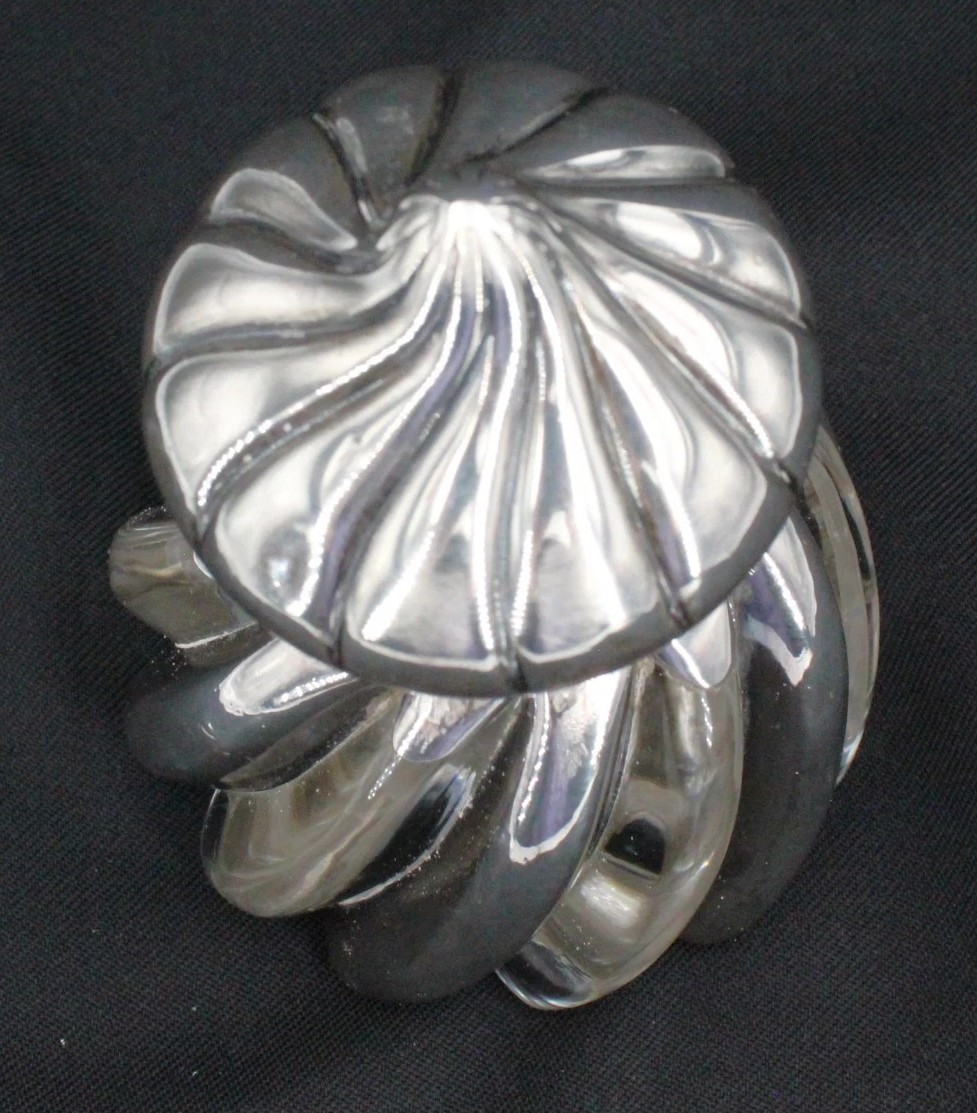
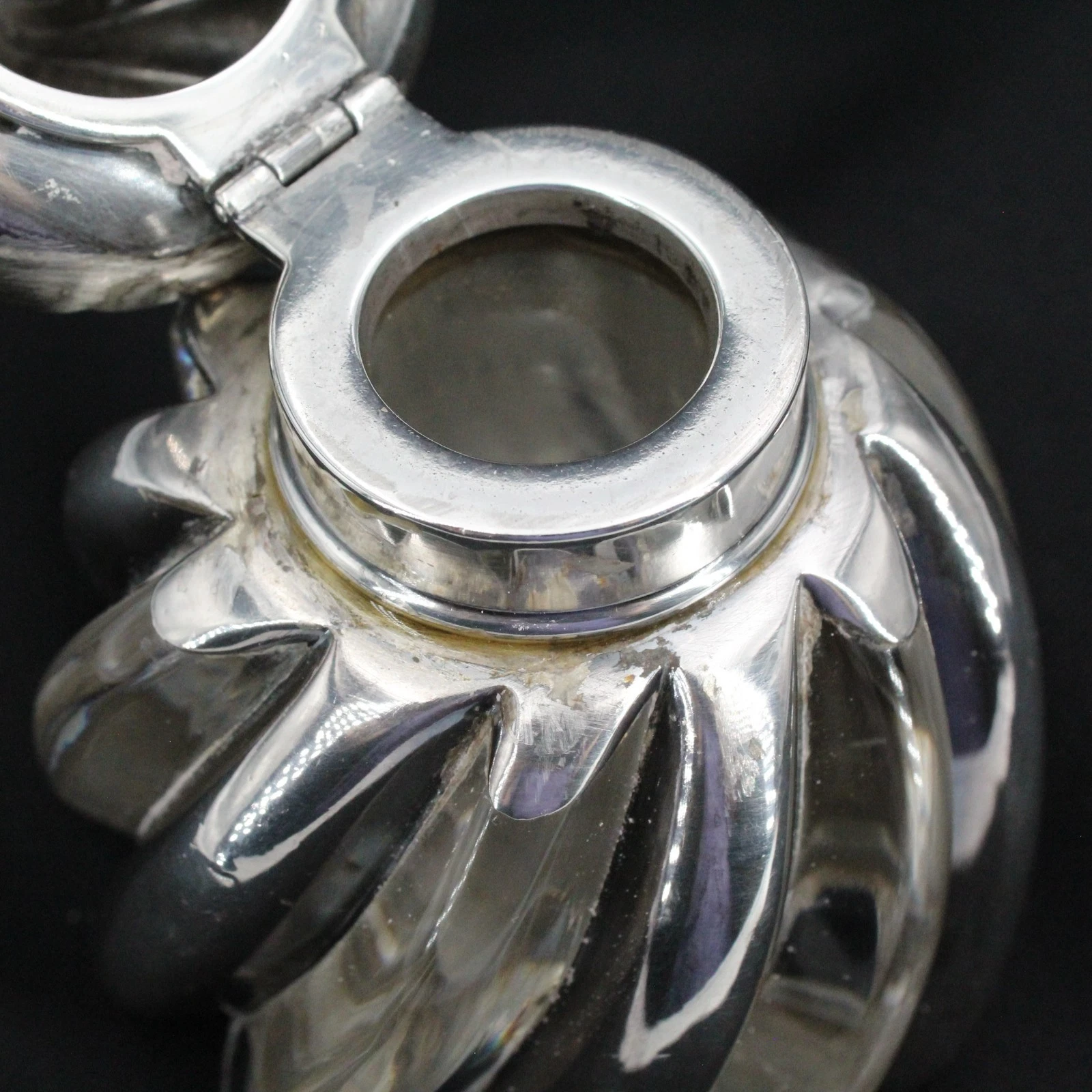
This is a swirl-pattern crystal inkwell with a sterling silver overlay and hinged lid.
- Body: The crystal base is deeply cut with a spiral “swirl” pattern. The silver overlay (often referred to as “silver deposit”) is meticulously applied to the glass, alternating with the clear crystal to create a seamless, ribbed effect.
- Lid: The hinged lid is solid sterling silver and continues the spiral motif, terminating in a decorative, pointed finial that mimics the shape of a meringue or a whipped swirl.
Historical Context
Gorham was the premier American silversmith during this period, even outfitting the White House. Their “swirl” designs were part of a broader trend in the 1880s for “Japanese-influenced” or “naturalistic” forms, where movement and light were emphasized through curved, reflective surfaces.
Sold for $119 in January 2026
Content disclaimer. The information posted is the owner’s best knowledge and may not have been vetted by the SOIC. We welcome comments, corrections, and additions, working to make our website information comprehensive and accurate.
Join the Society of Inkwell Collectors (SOIC) – it’s free!
Founded in 1981 as a non-profit organization,
we are documenting inkwells (and accessories).
We’re here to help and inform!