

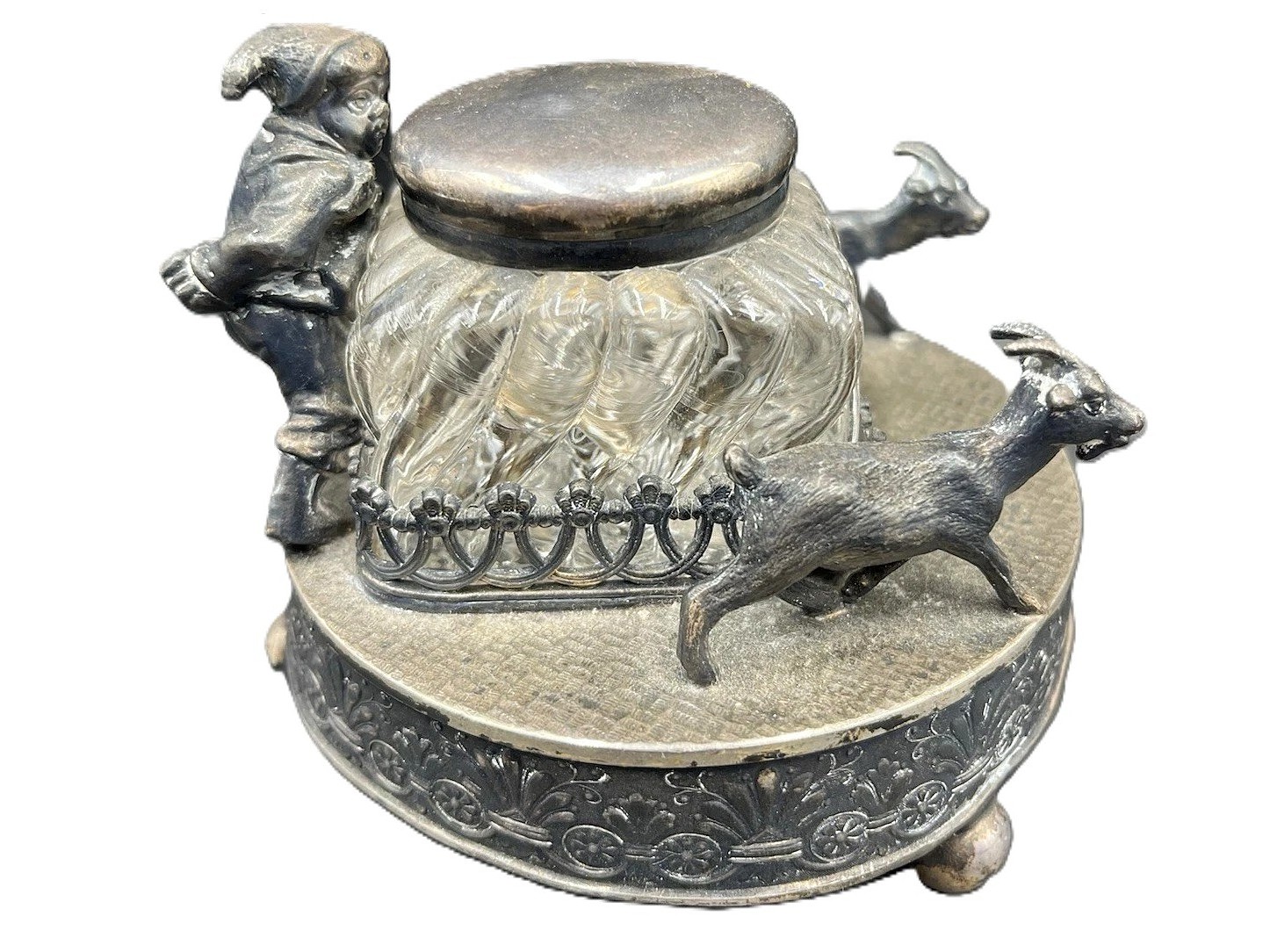
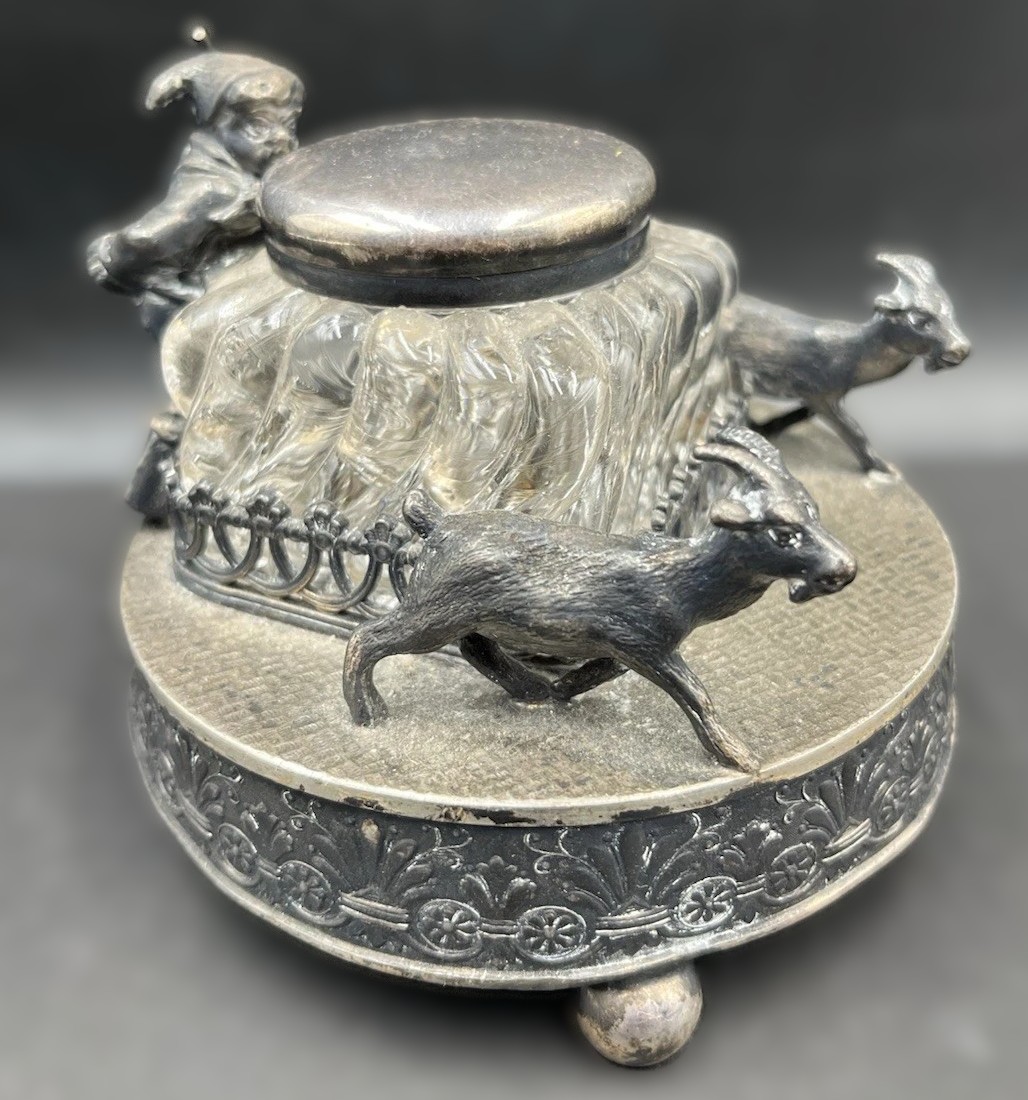


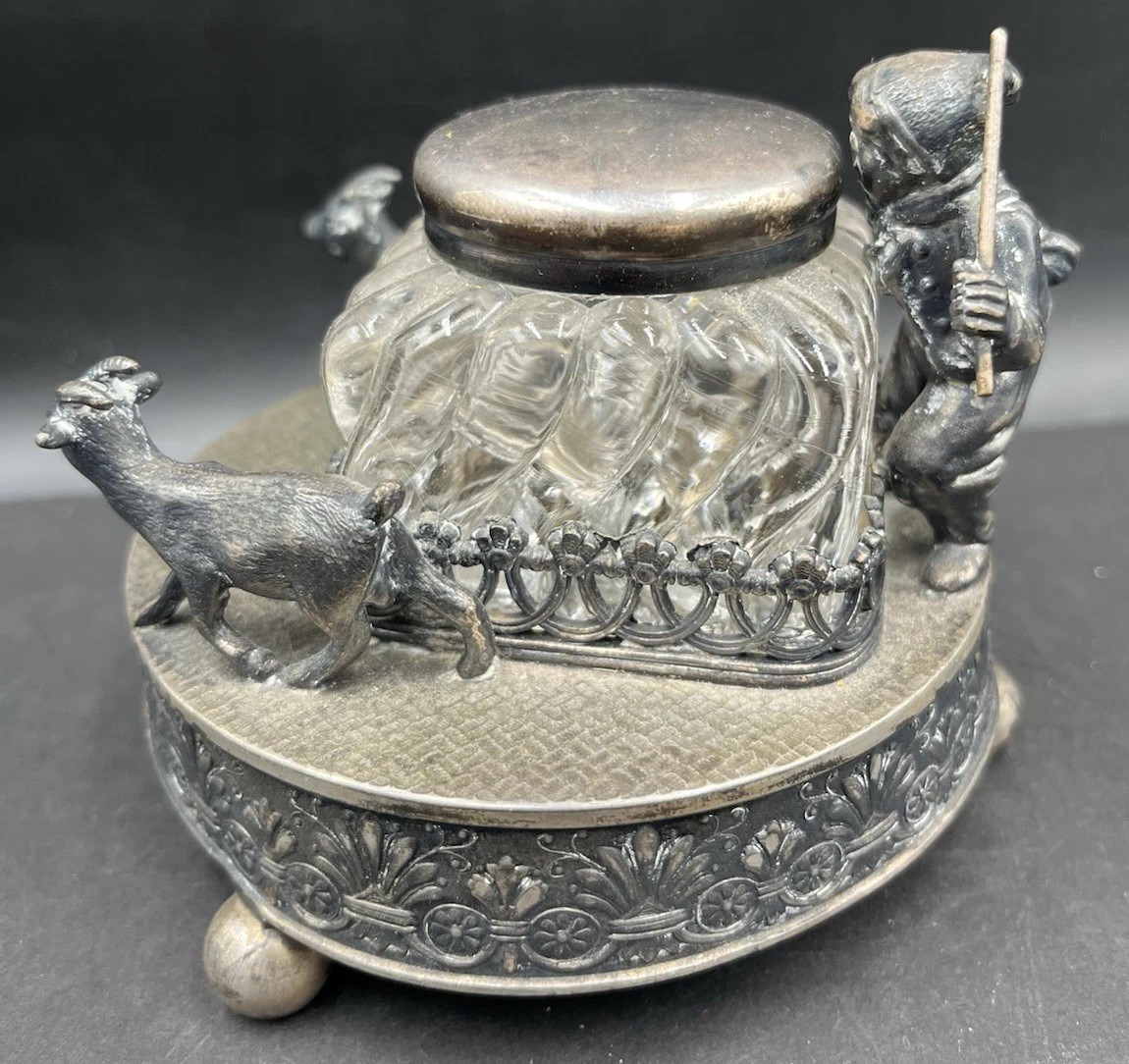


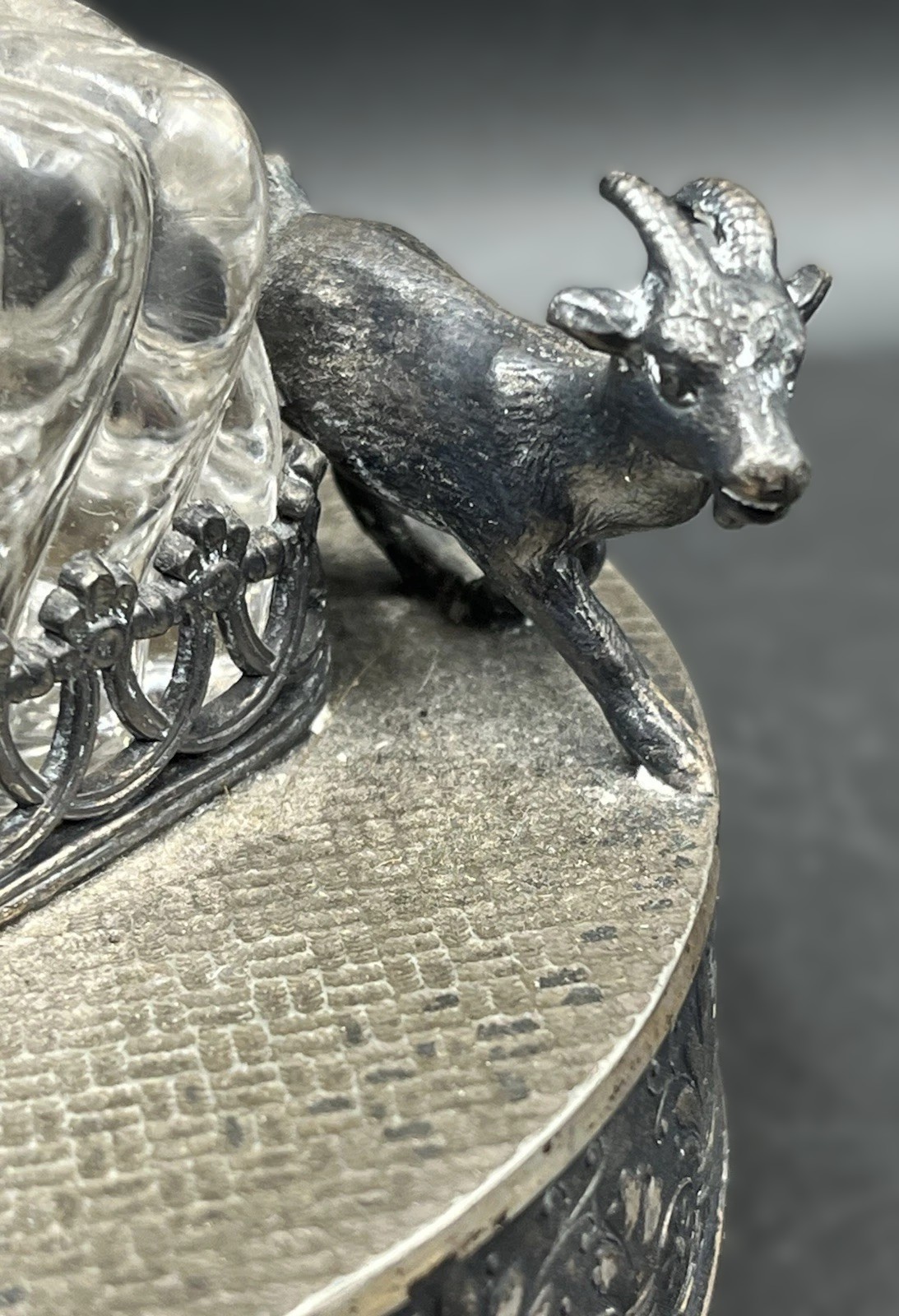
Goats and Goatherder Inkstand
| Categories | Figural - Animals & Living Creatures, Figural - Mythology; Literature; Religion; Fictional |
| Type | Goat, Dwarf / Gnome |
| Material | Silverplate |
| Markings | See Narrative |
| Manufacturer | James W. Tufts |
| Origin | United States |
| Date or Era | circa 1890 |
| Measuring | 5” diameter; 4” high |
This Victorian-era inkstand is a whimsical example of novelty silverplate, designed with a rustic, pastoral theme that was popular in late 19th-century American decorative arts.
Physical Description
- The Base & Mounts: The inkstand features a circular, silverplated base with an ornate, repeating floral and scrollwork frieze around the lower edge. The top surface of the base has a textured “basketweave” or “cobblestone” pattern.
- The Glass Well: At the center sits a large, clear glass ink reservoir with a heavy, swirling or “ribbed” pattern. It is secured by a low, decorative silverplated “fence” or gallery.
- The Lid: The well is topped with a simple, domed silverplated lid that is not attached to the glass.
- The Animals: Two cast-metal goats are positioned as if running or frolicking around the glass inkwell.
The Figural Character
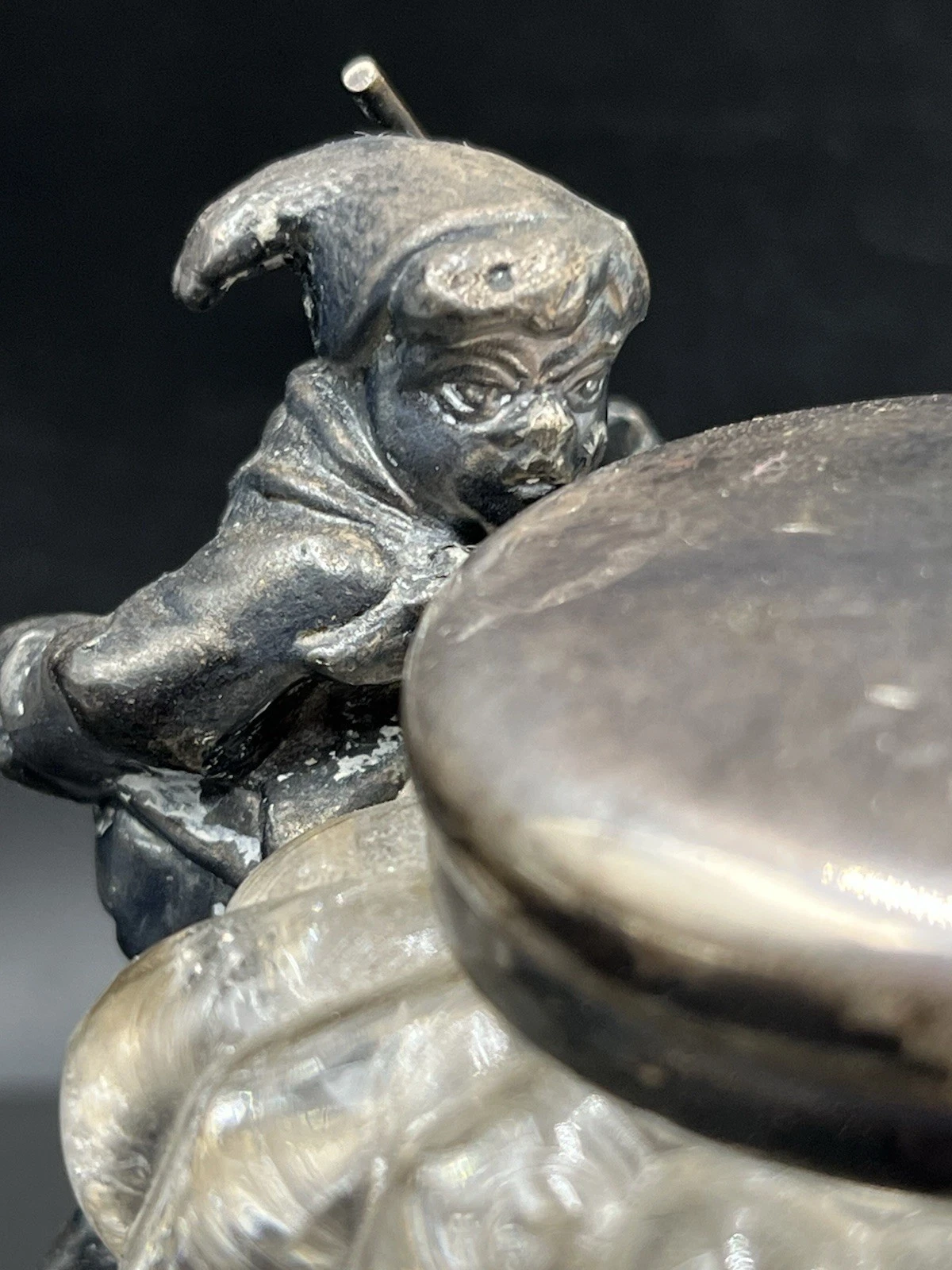
The figure standing behind the inkwell, holding a staff or stick, is a Goatherder.
- Identity: While he has the proportions of a young boy, his costume—particularly the pointed, floppy cap and the somewhat exaggerated facial features—is very similar to the “Gnome” or “Brownie” characters popularized in the illustrations of Palmer Cox during the 1880s.
- Function: He is depicted in the act of “driving” or herding the goats around the central well.
Maker & Mark
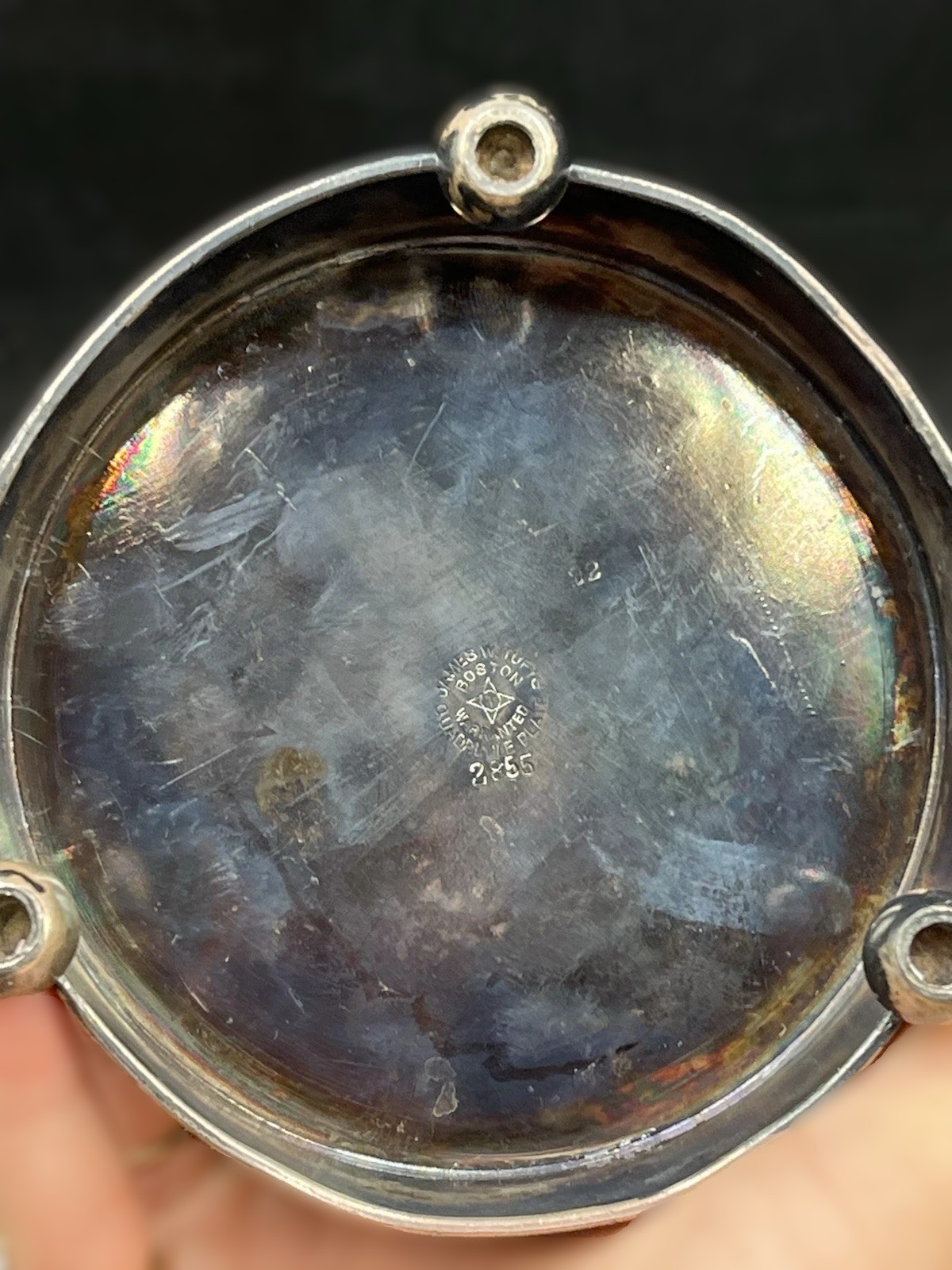
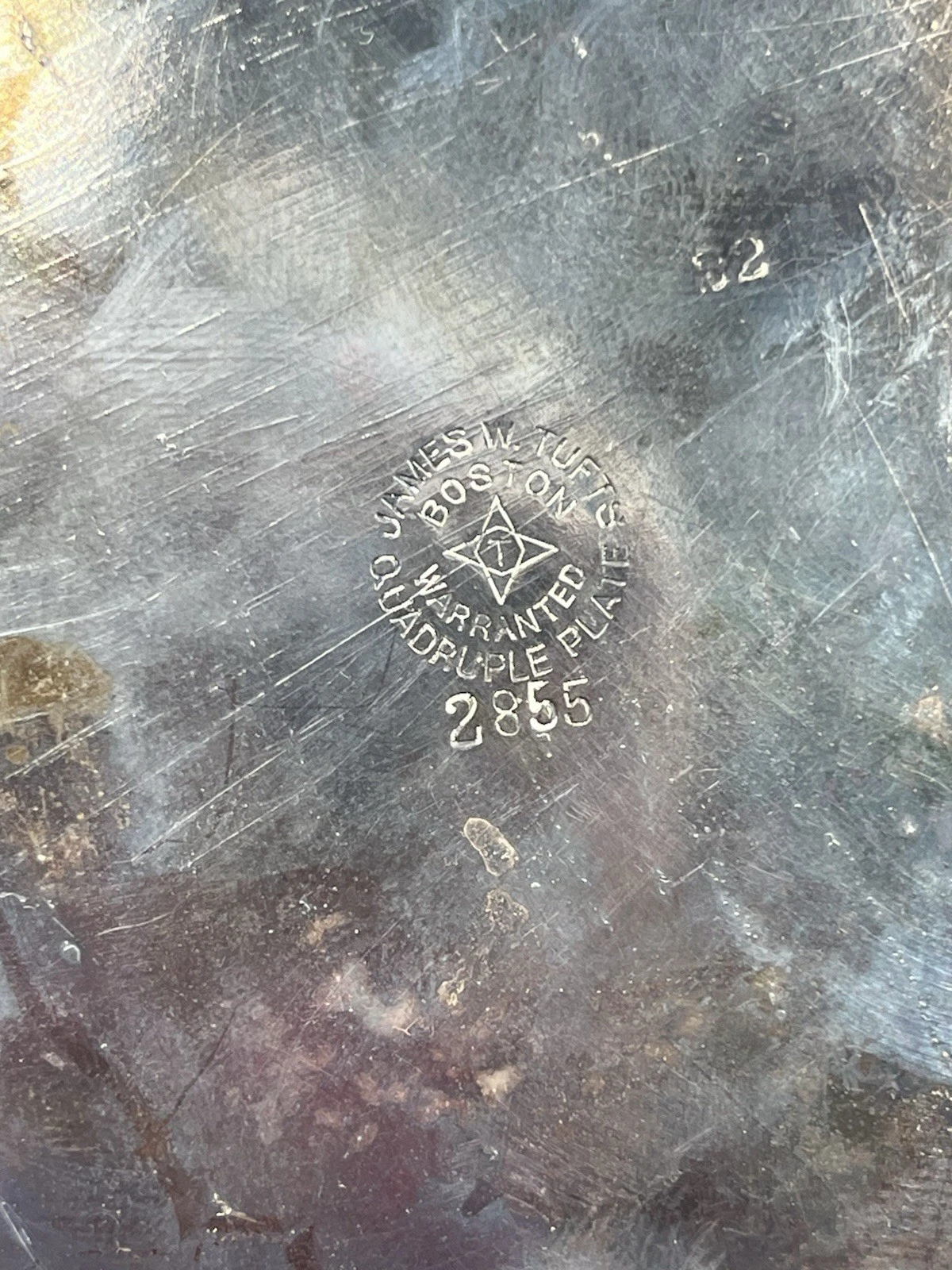
The underside of the base contains a clear manufacturer’s mark:
“James W. Tufts / Boston / Warranted Quadruple Plate / 2855”
- The Maker: James W. Tufts was one of the most prominent American silverplate manufacturers of the late 19th century. Founded in Boston in 1875, the firm became famous for its highly creative and sometimes humorous Victorian “novelty” pieces.
- Quadruple Plate: This term was a marketing standard used by American manufacturers to indicate a high-quality plating process, theoretically using four times the amount of silver used in standard plating.
- Pattern Number: The number 2855 is the specific catalog or pattern number for this “Goat and Herder” design.
Estimated Age
This inkstand was made between 1880 and 1895. James W. Tufts reached the peak of its popularity for these types of figural desk accessories during the mid-to-late 1880s, before merging into the American Silver Co. in the late 1890s.
Sold for $100 in December 2025
Content disclaimer. The information posted is the owner’s best knowledge and may not have been vetted by the SOIC. We welcome comments, corrections, and additions, working to make our website information comprehensive and accurate.
Join the Society of Inkwell Collectors (SOIC) – it’s free!
Founded in 1981 as a non-profit organization,
we are documenting inkwells (and accessories).
We’re here to help and inform!