

Inkipedia
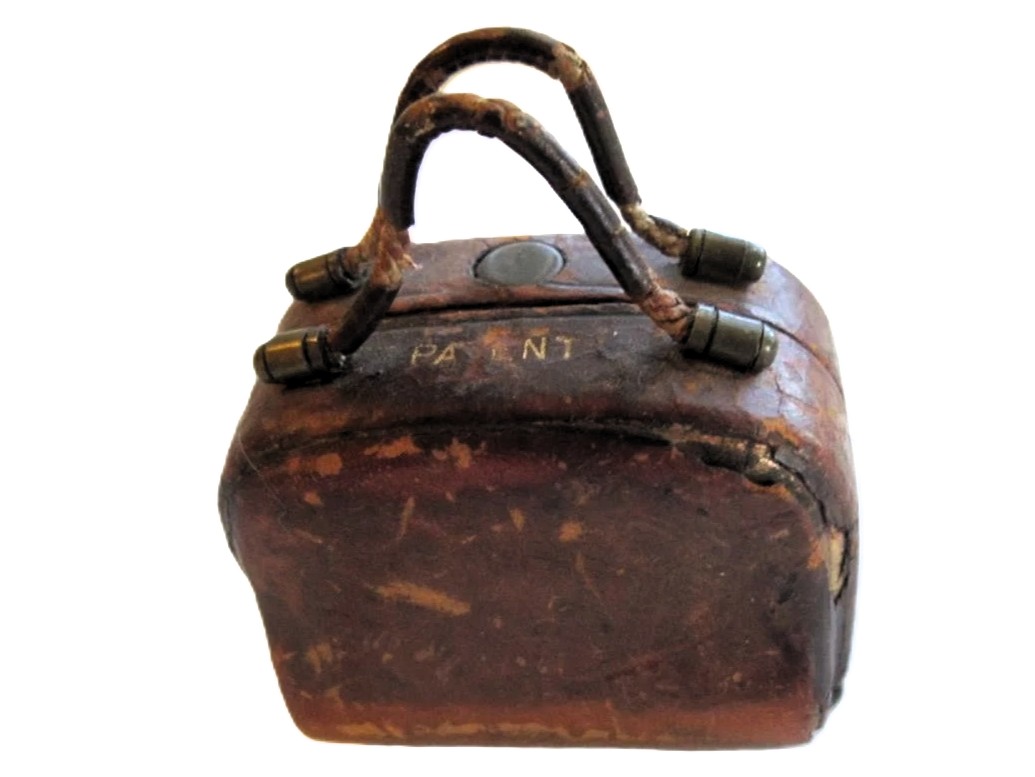
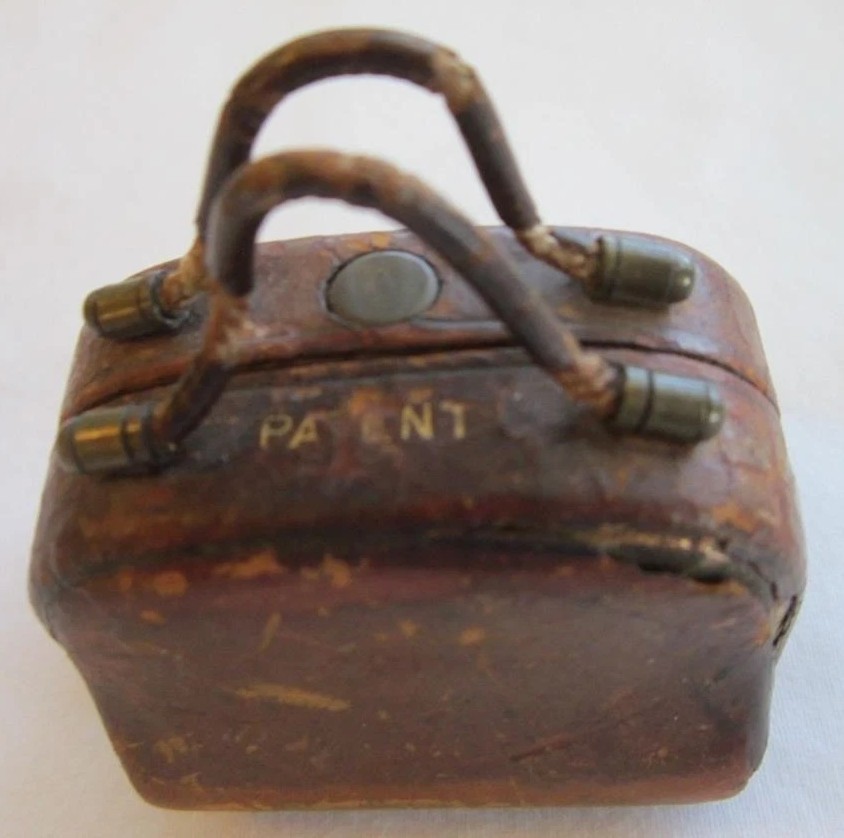
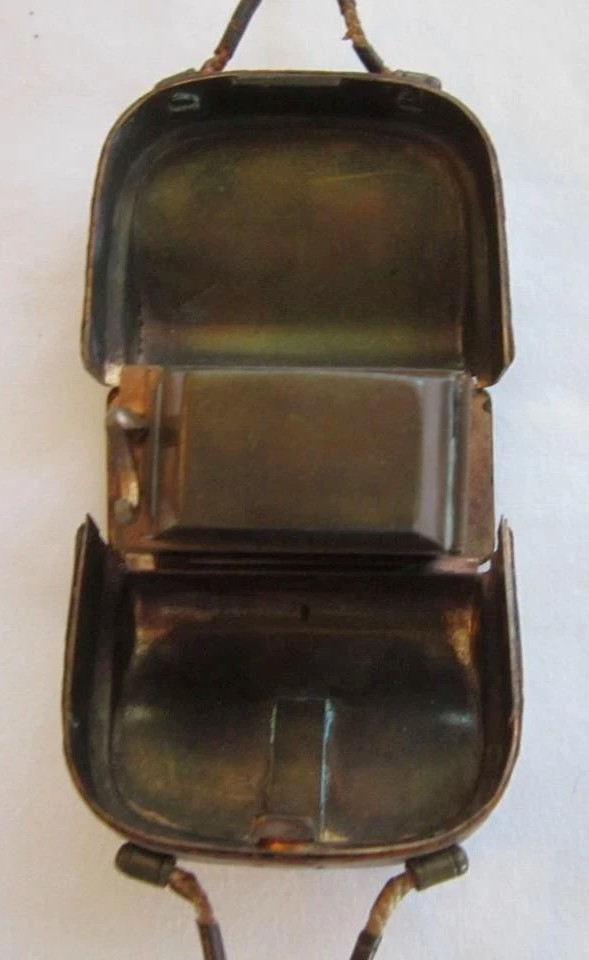
Gladstone Travel Bag
| Categories | Figural - Inanimate, Novelty, Travel |
| Material | Brass, Glass, Leather |
| Markings | See Narrative |
| Manufacturer | Undetermined |
| Origin | England |
| Date or Era | circa 1890 |
Description
This piece is a Victorian novelty traveling inkwell modeled after a classic Gladstone travel bag (or portmanteau valise).
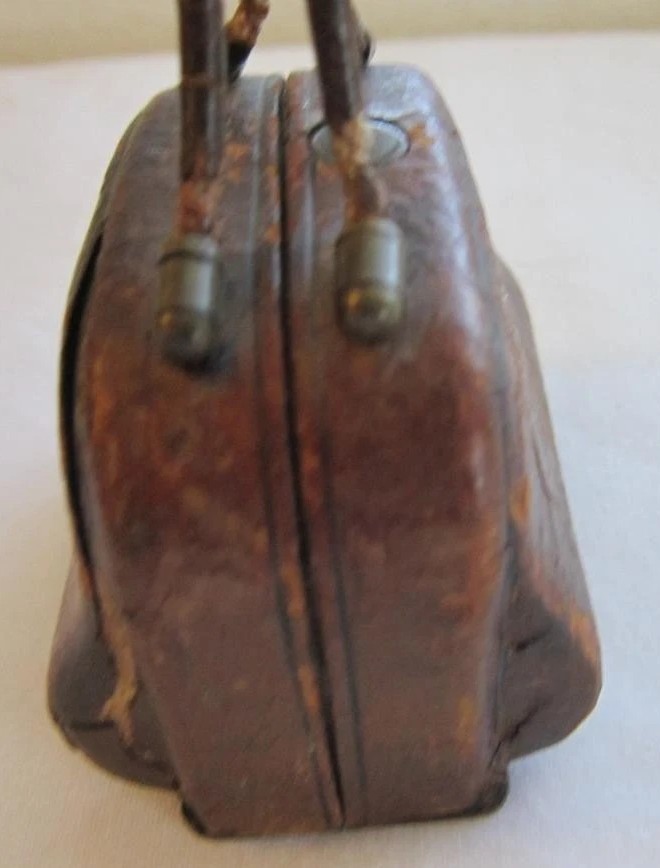
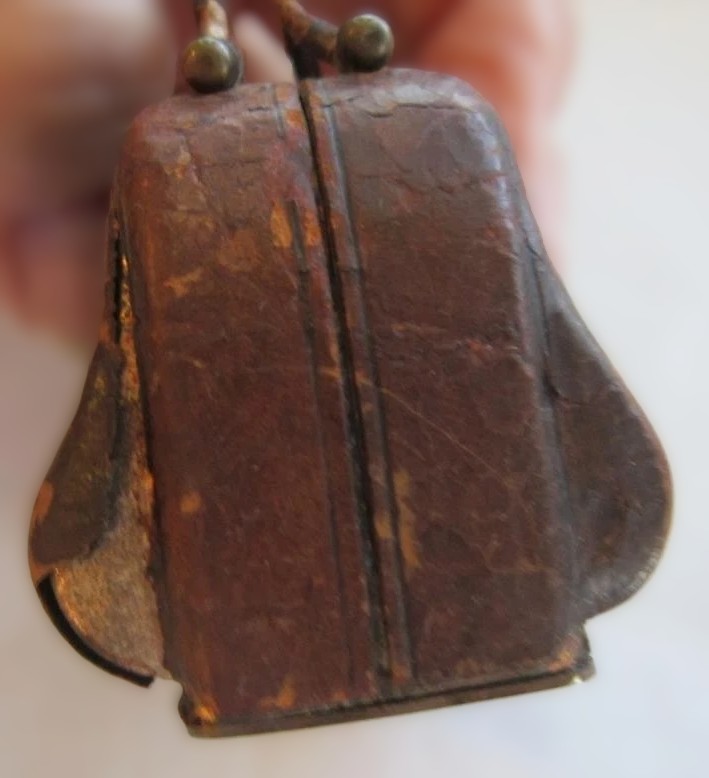
- Construction: The outer carcass is made of pressed brass/sheet metal clad in textured brown leather, complete with twin arched leather handles fixed with brass barrel mountings.
- Markings: The word PATENT is gilt-stamped/embossed across the leather on the top shoulder next to the closure button.
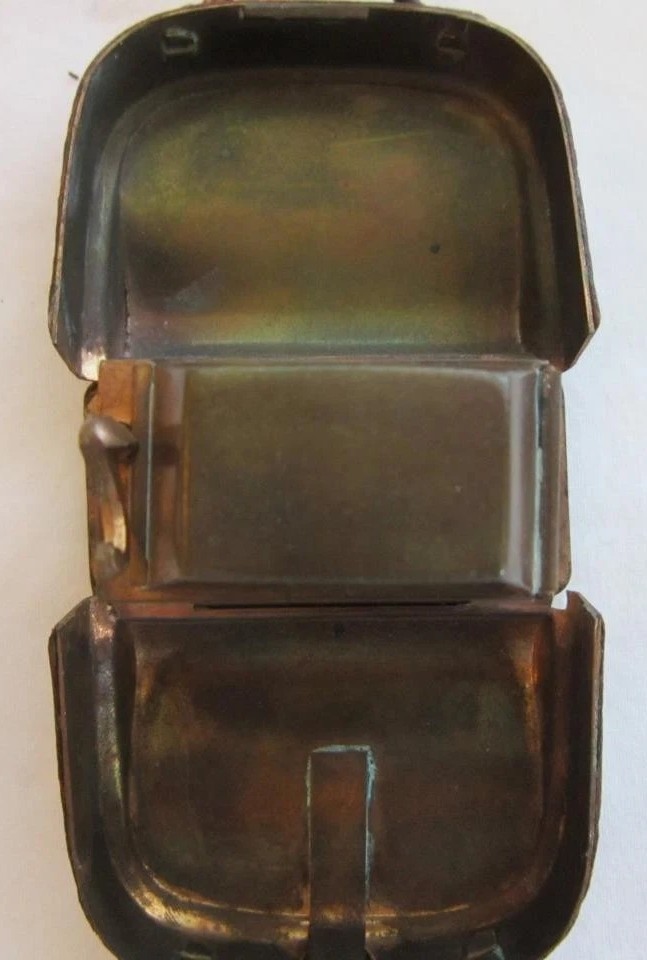
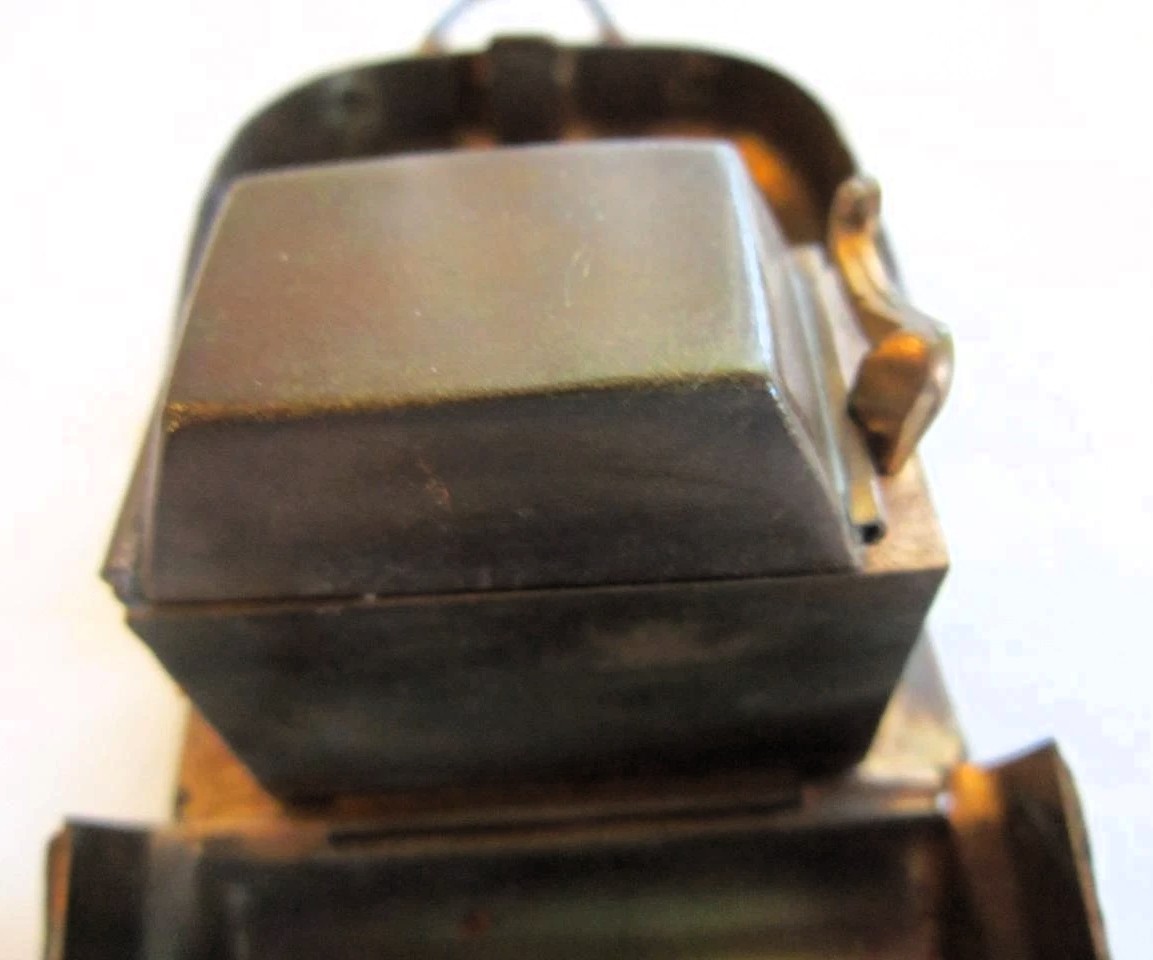
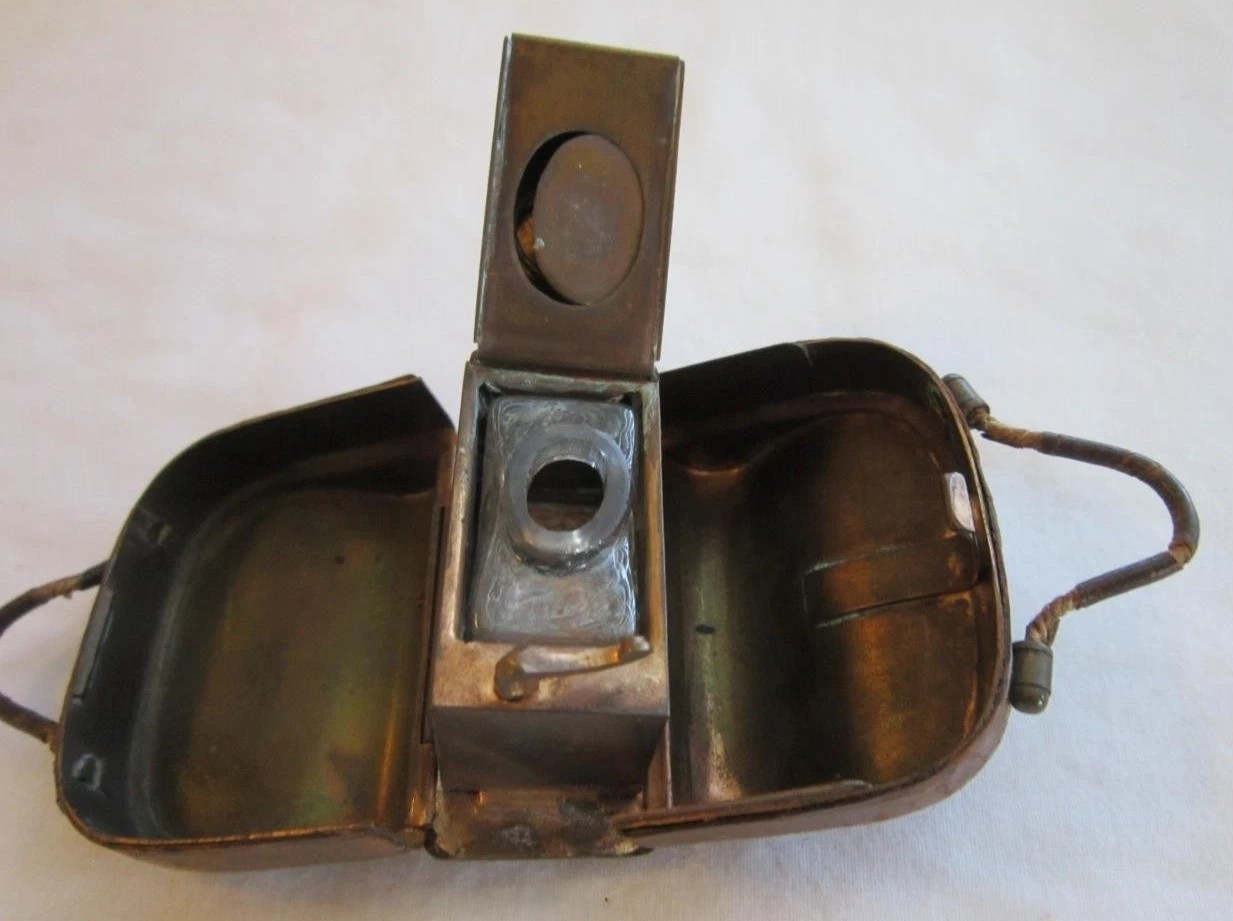
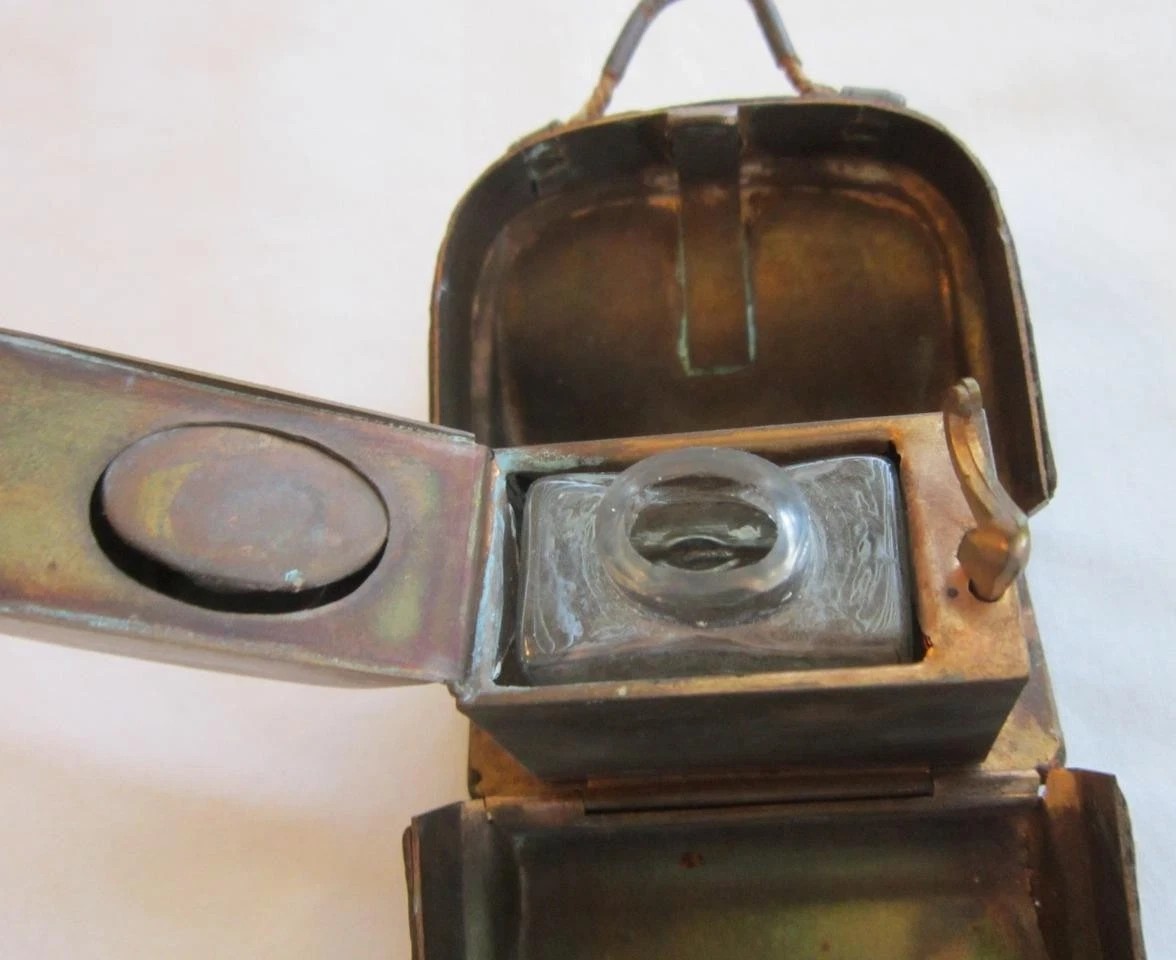
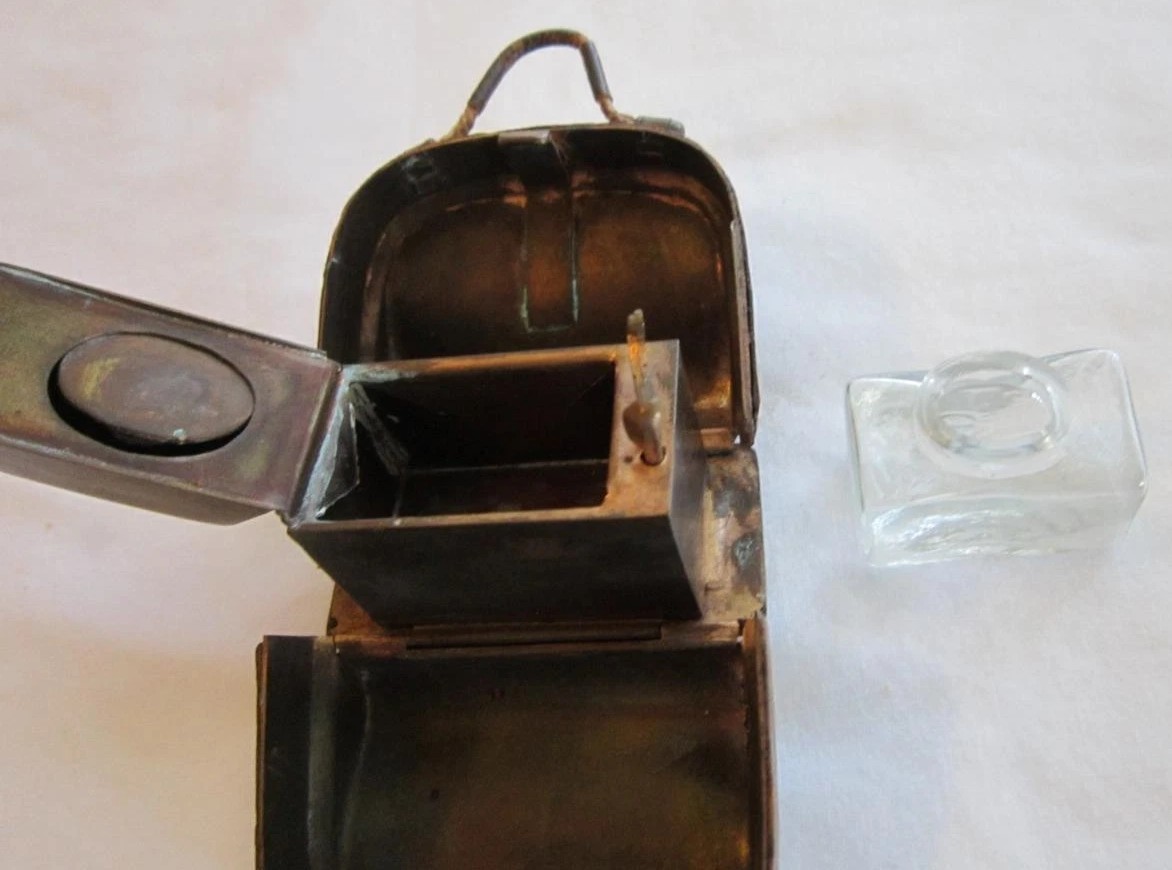
- Interior: The core features a fixed brass compartment that secures a removable, thick-walled rectangular clear glass ink reservoir.
How It Opens & Operates
- Outer Shell Release: Press the circular brass push-button situated at the top center between the handles. This disengages the internal clasp, causing the two clamshell halves of the bag to fall open to the left and right on lower hinges.
- Inner Lid Release: Inside sits the central brass ink box. A small, curved brass cam/swivel latch on the right side locks the lid down. Swiveling or lifting this latch releases the spring-loaded lid to flip upright.
- Leak-Proof Seal: The underside of the inner lid contains a spring-cushioned disc with an internal gasket (traditionally leather or hardened India rubber). When latched shut, this disc compresses firmly against the raised glass neck to prevent ink from leaking during transit.
Origin, Maker, and Date
- Origin: England (United Kingdom). During the late Victorian era, British manufacturers dominated the novelty campaign and traveling desk accessory market.
- Maker: Unmarked British Manufacturer (likely Birmingham or London metalworkers). Pieces stamped solely with “PATENT” were typically produced by trade hardware manufacturers for retail by luxury stationers and outfitting companies (such as Army & Navy Co-operative Society, Thornhill, or De La Rue).
- Date: Circa 1880–1900 (Late Victorian Period). This coincided with the height of popularity for novelty leather-covered brass campaign inkwells.
Sold for $75 in July 2026
Content disclaimer. The information posted is the owner’s best knowledge and may not have been vetted by the SOIC. We welcome comments, corrections, and additions, working to make our website information comprehensive and accurate.
Join the Society of Inkwell Collectors (SOIC) – it’s free!
Founded in 1981 as a non-profit organization,
we are documenting inkwells (and accessories).
We’re here to help and inform!