

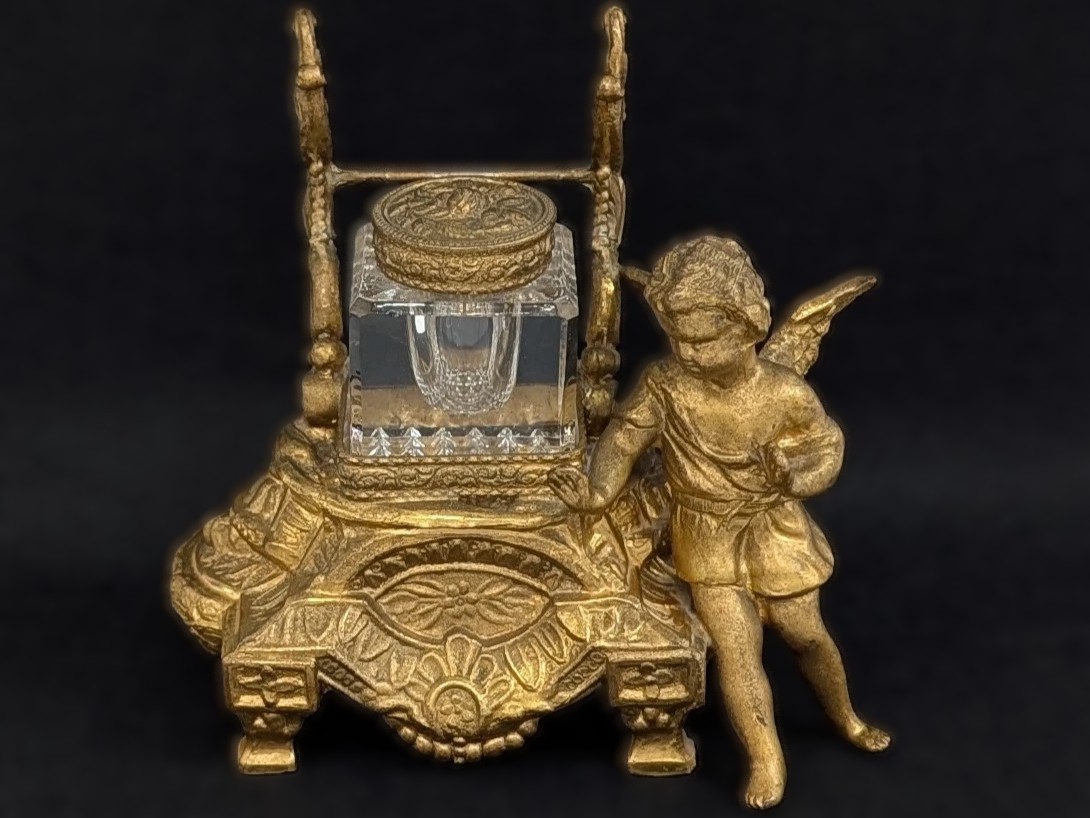
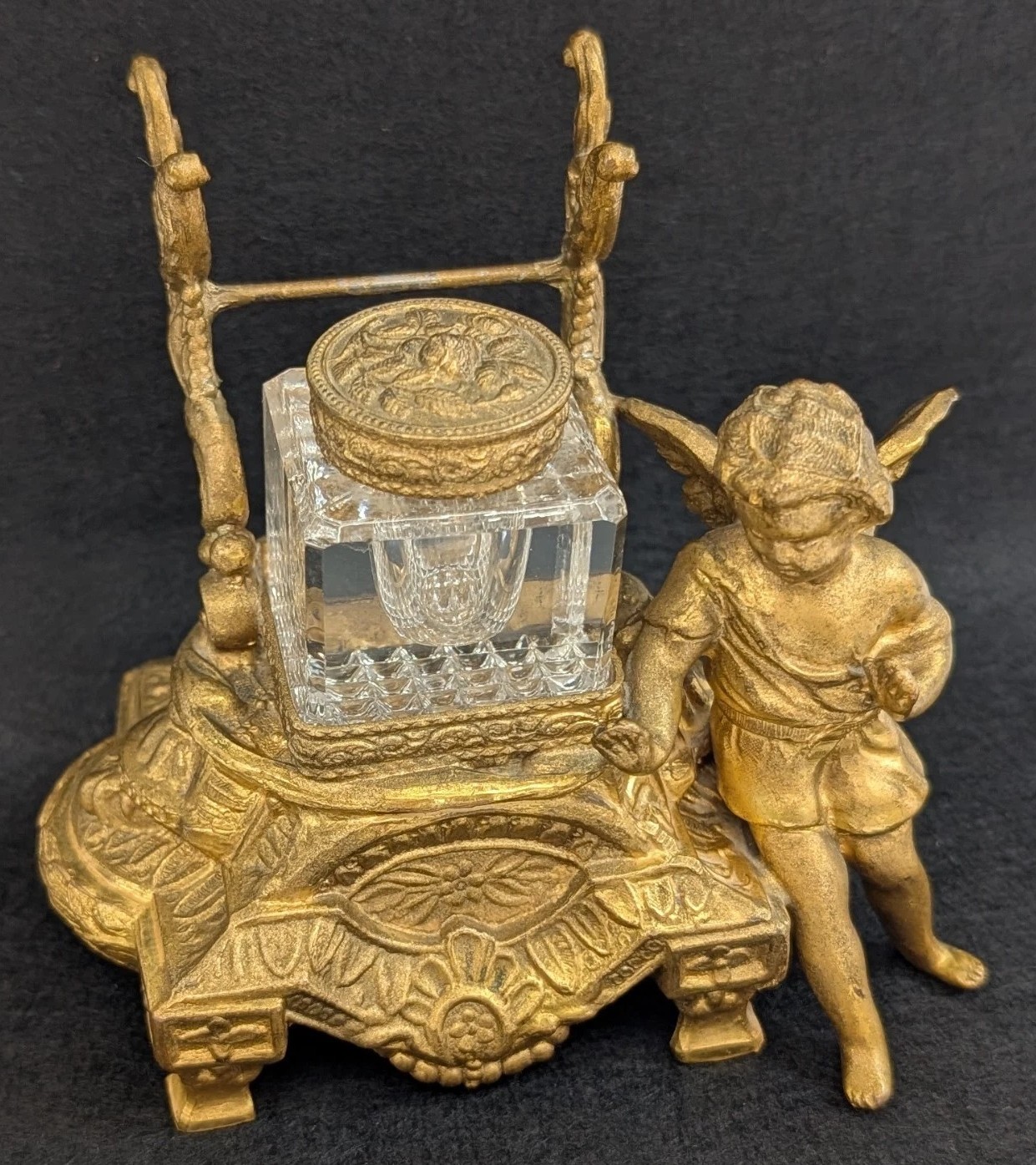
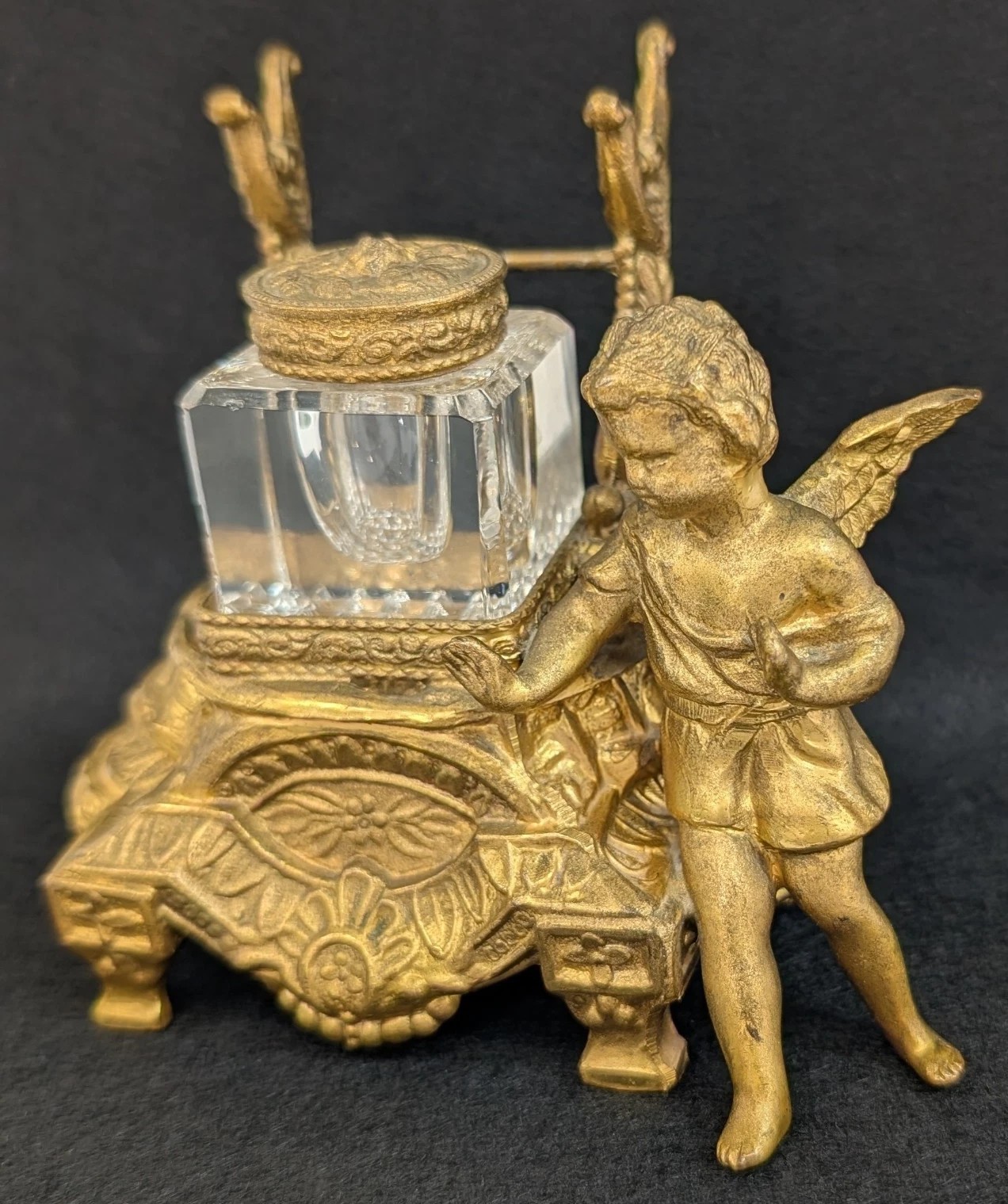
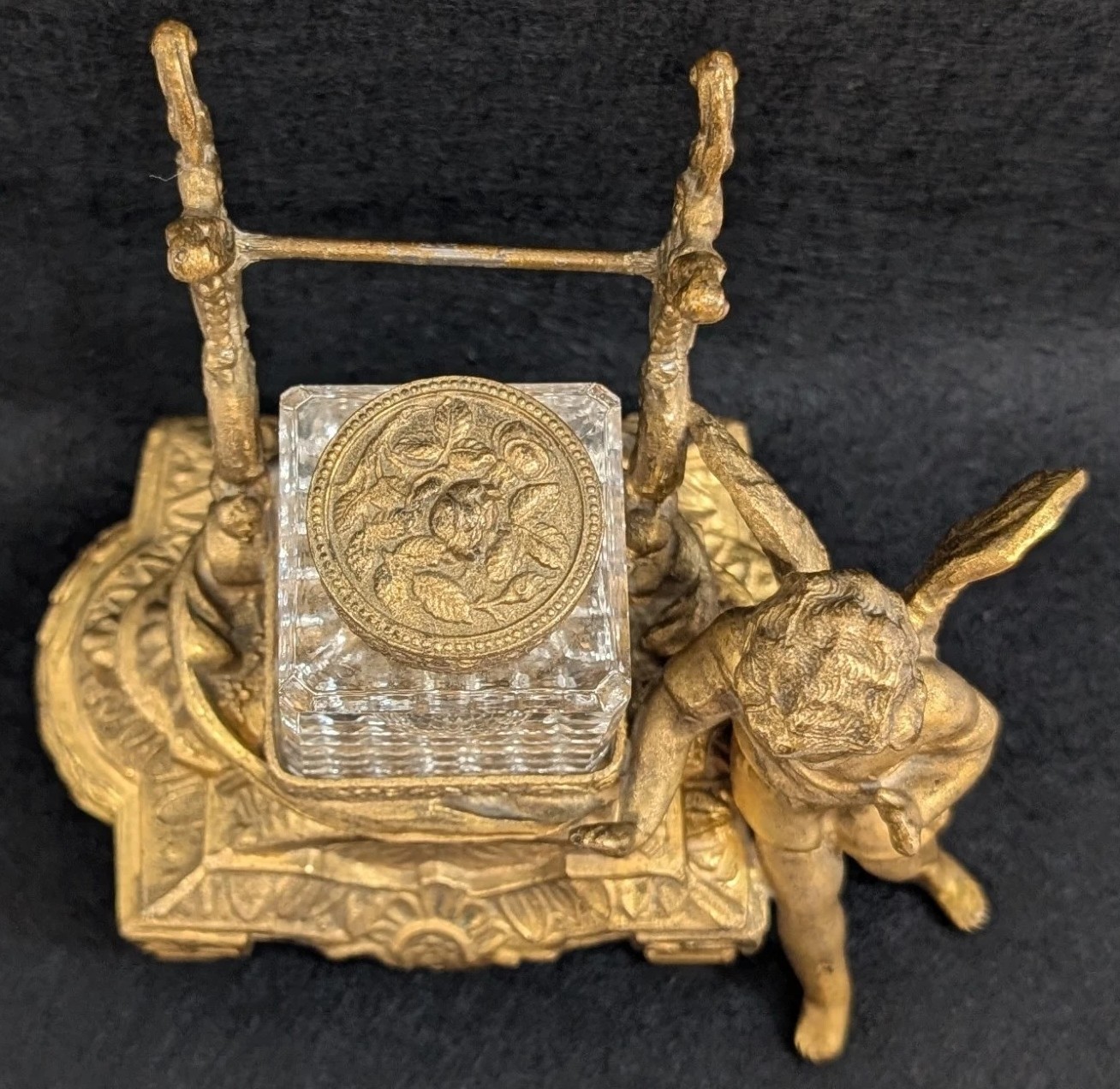
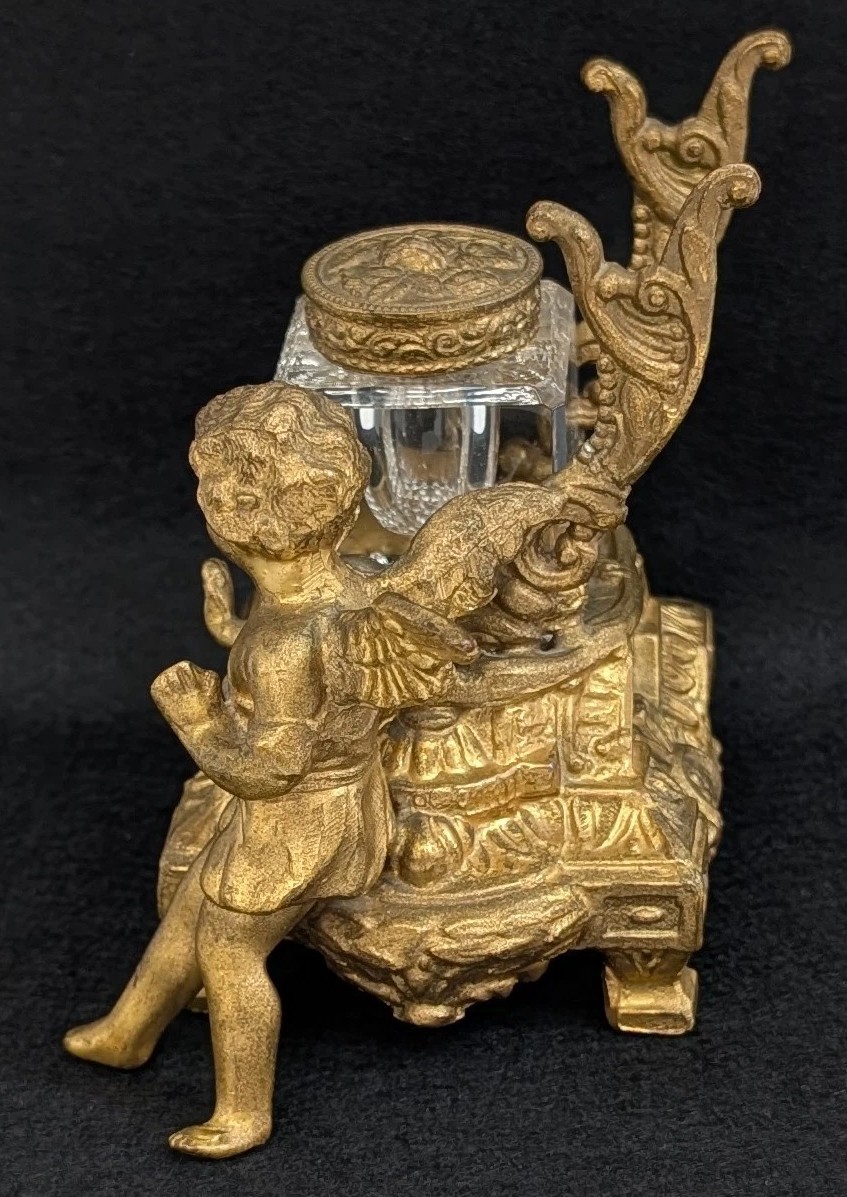
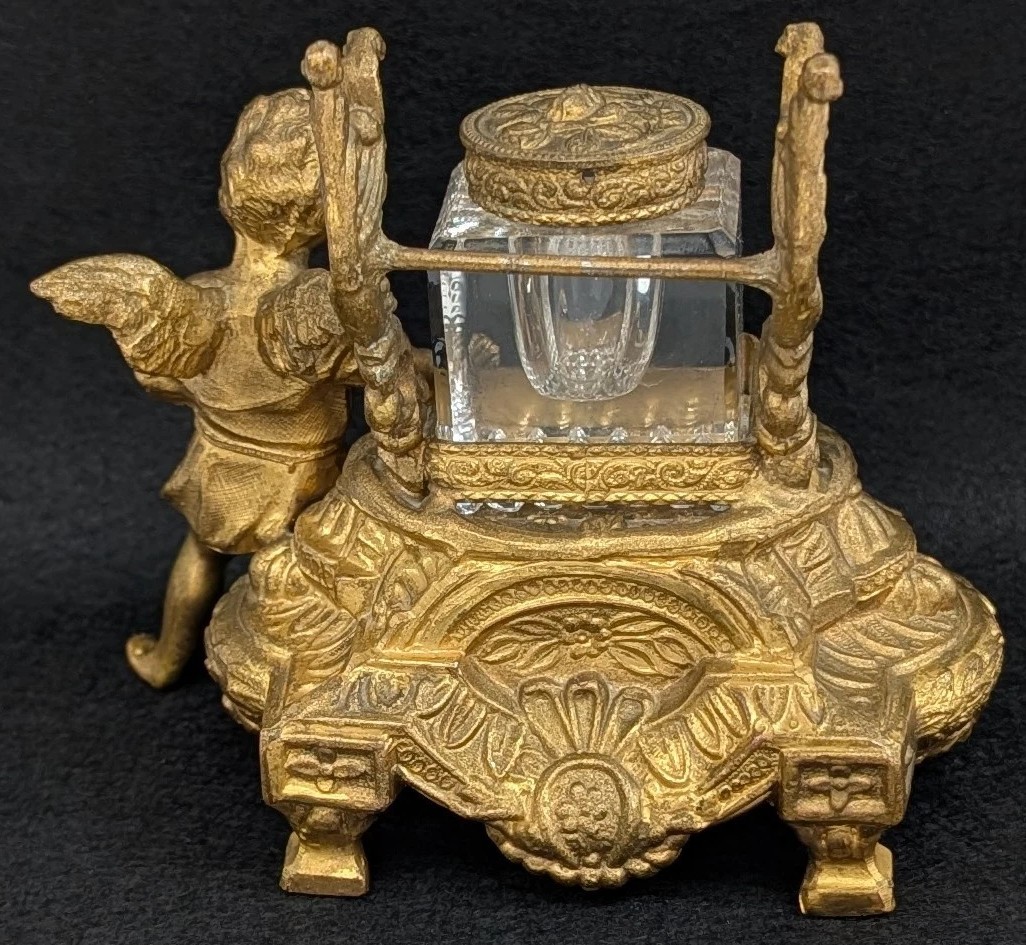
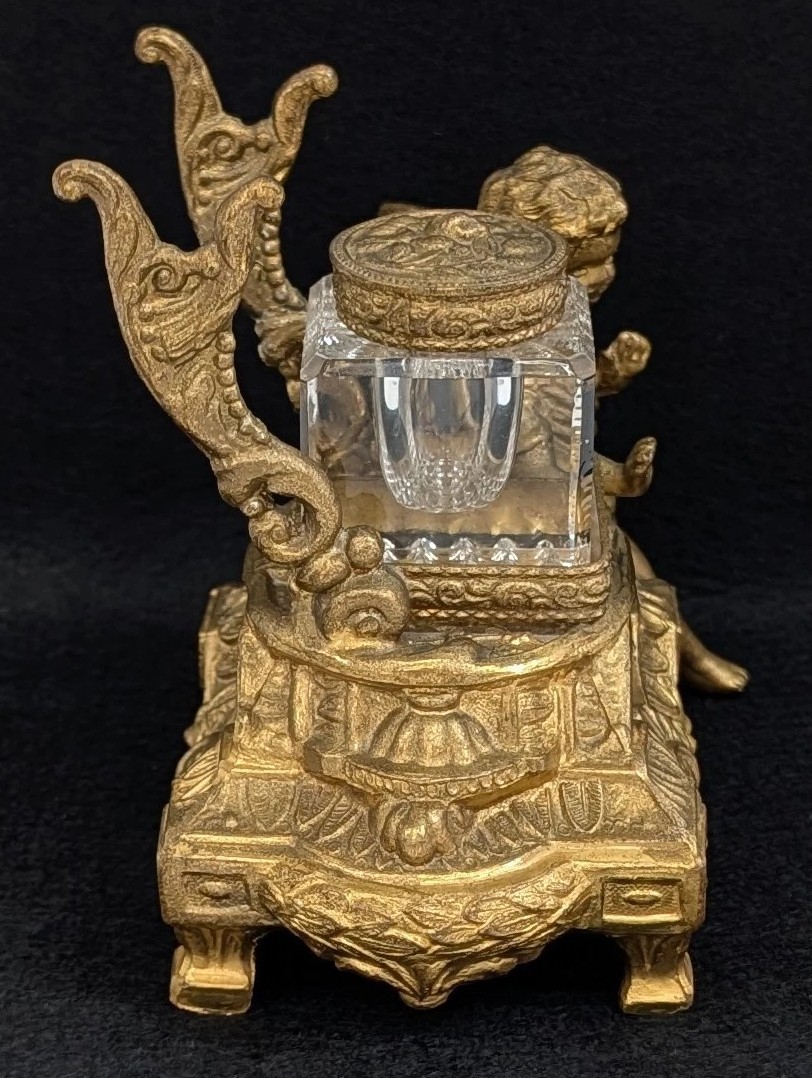
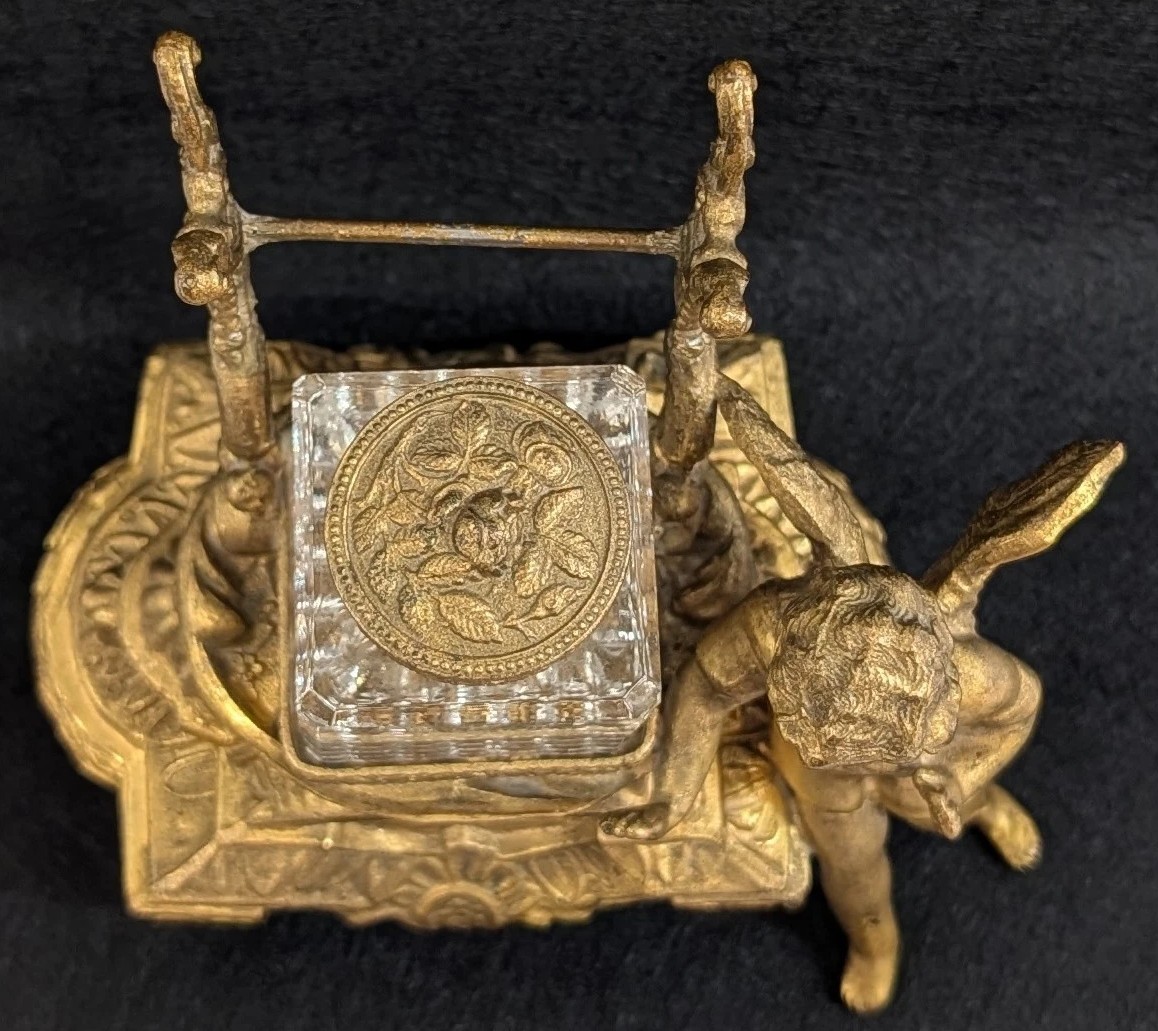
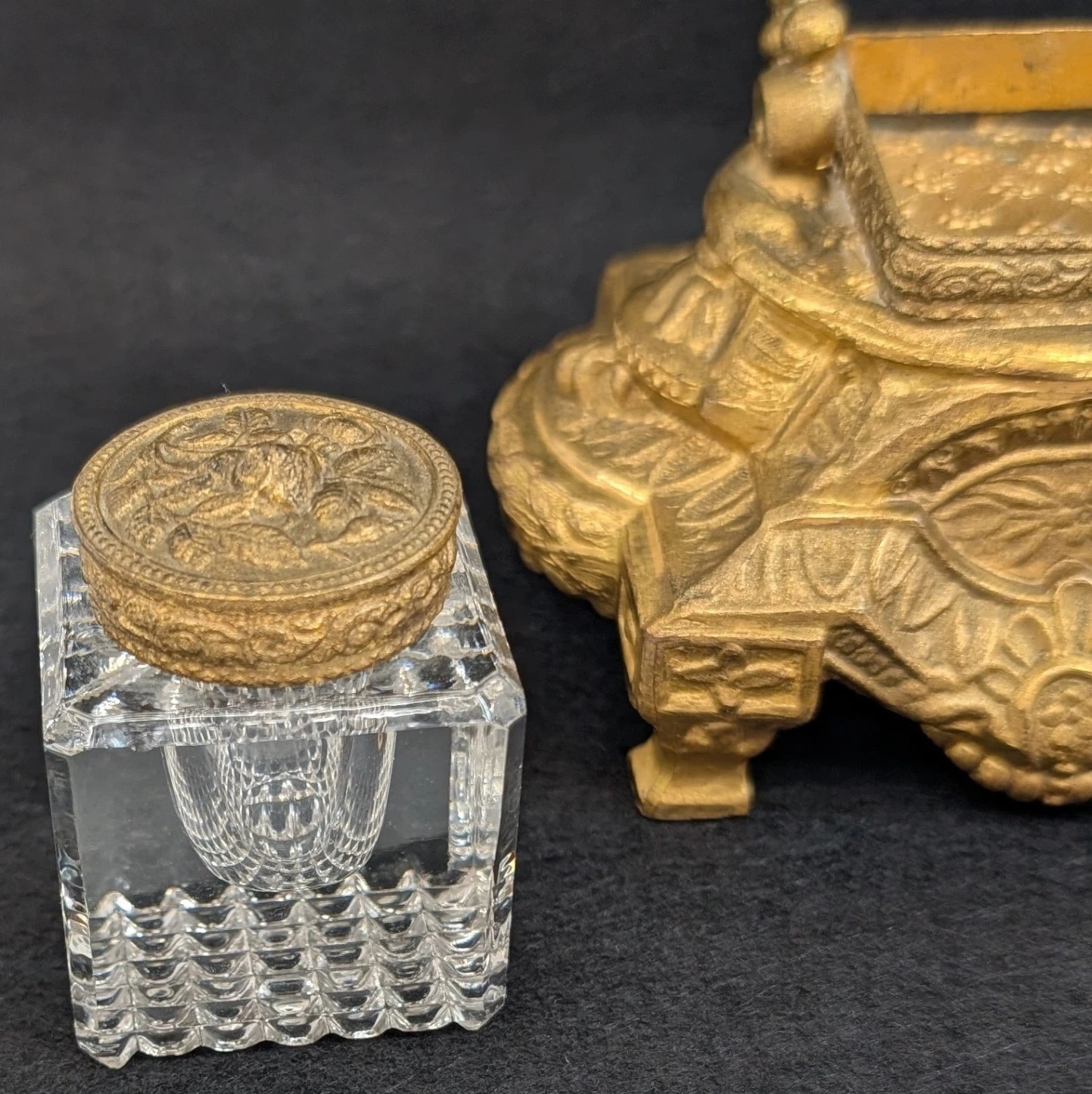
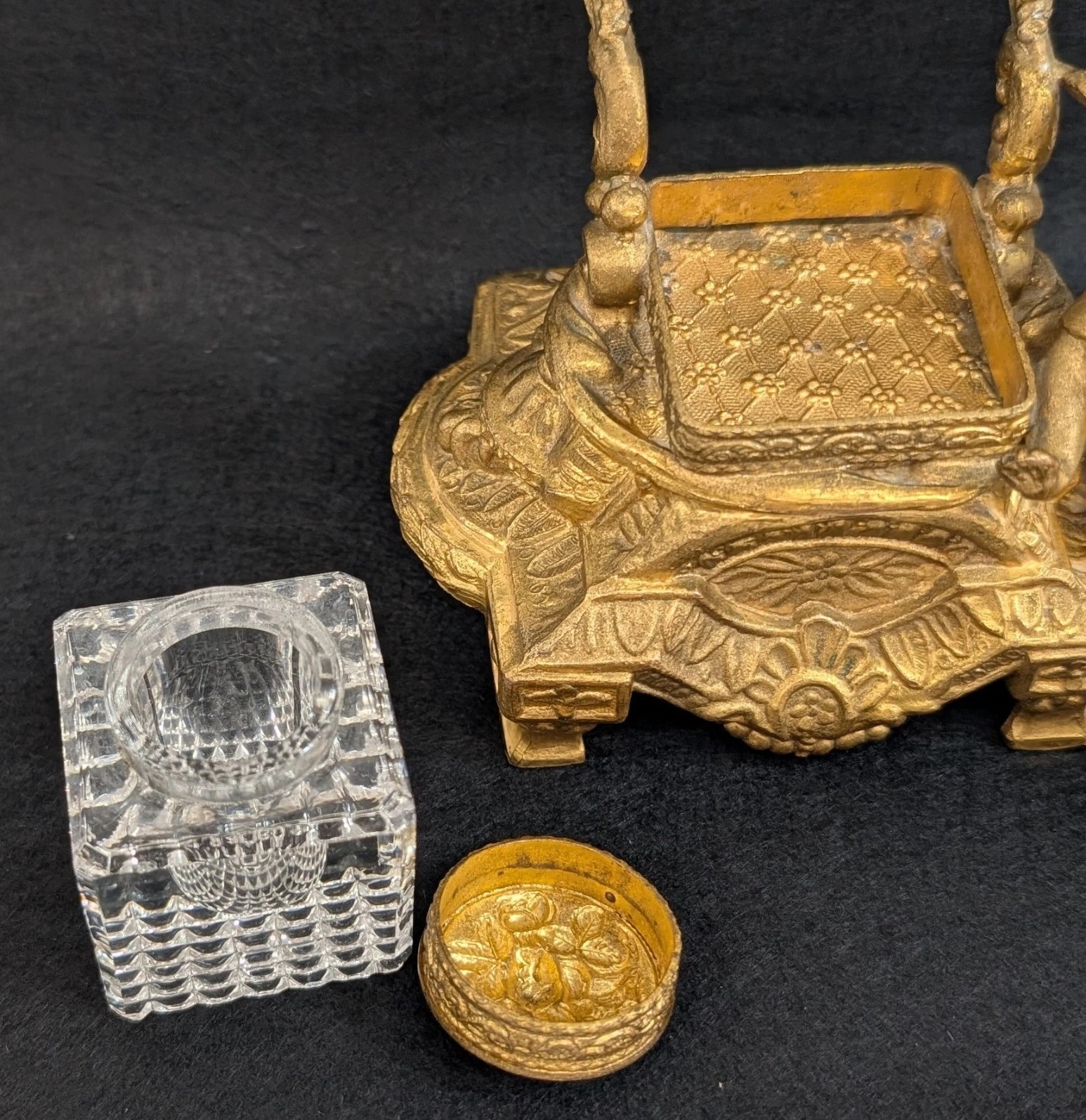
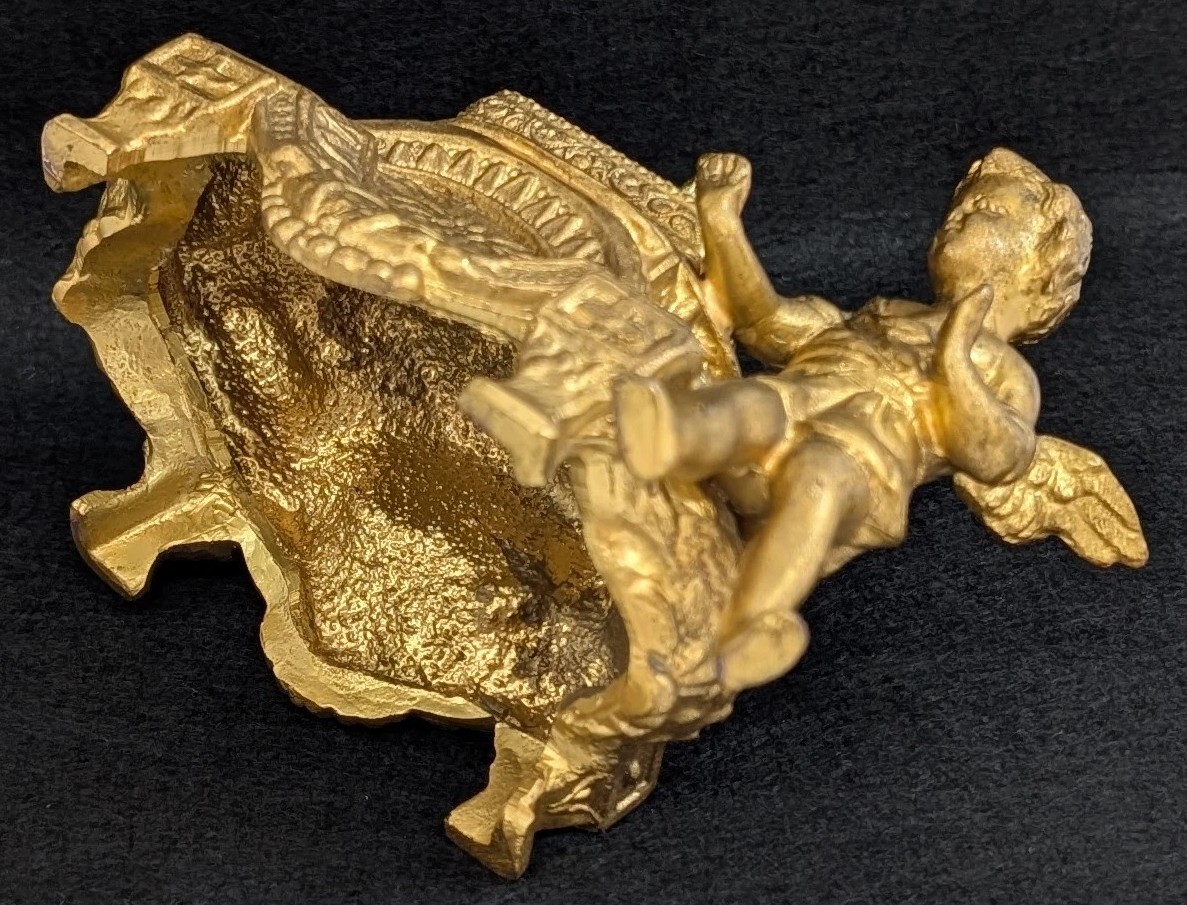
Gilt Cherub Inkstand
| Categories | Figural - Mythology; Literature; Religion; Fictional |
| Type | Cupid / Cherub / Angel |
| Material | Gold Gilt Finish |
| Markings | Unmarked |
| Manufacturer | Undetermined |
| Origin | Undetermined |
| Date or Era | circa 1870 |
| Measuring | 4 ¾” x 3” x 4 ¼” high |
Description
This mid-to-late 19th-century inkstand is made of a cast gilt white metal (spelter or brass base with a bright gold-gilded finish) frame and a cut-glass inkwell.
- The Base & Frame: The ornate, stepped base features classical neoclassical and Rococo revival scrollwork, raised on four decorative bracket feet. A figural cherub (putto) in a draped tunic clings to the right side, with one hand resting against the base and the other gesturing. Attached to the rear of the base is an upright structural pen rack formed by two scrolling, fluted pillars joined by a horizontal metal crossbar. The floor of the inkwell recess has a textured, quilted dot-and-diamond pattern.
- The Inkwell: A removable, square-cut glass inkwell featuring a block-cut hobnail pattern across its bottom.
- The Lid: The inkwell features a lift-off (non-hinged) gilt metal lid embossed in high relief with a detailed floral motif depicting roses and foliage.
Attribution, Origin, and Dating
- Maker: Unmarked (no visible maker’s cipher or foundry stamp is present on the visible exterior or underside, which is typical of many unmarked commercial decorative castings of the period). However, the style, construction, and use of gilt white metal (spelter) with high-relief floral stamping and cherub figures closely align with mid-19th-century French and English novelty desk accessory manufacturers, as well as period American metalworking firms influenced by European designs.
- Place of Manufacture: France or England (Continental Europe), where the pairing of cast spelter figural putti, fire- or gold-gilt finishes, and cut-glass inkwells was popular during the mid-Victorian era.
- Date of Manufacture: Circa 1860–1880 (Late Victorian / Napoleon III period).
In 19th-century decorative arts, the widespread popularity of cherubs (more accurately known artistically as putti or amoretti) was driven by a rich blend of classical symbolism, aesthetic trends, and cultural attitudes toward the act of writing.
- Associations with Correspondence and Romance
In classical mythology, winged infant figures were direct descendants of Eros and Cupid—the attendants and agents of Venus, the goddess of love. Because a major function of 19th-century private correspondence was the writing of romantic letters, billet-doux, and personal notes, desk accessories adorned with cherubs served as thematic symbols of affection, passion, and emotional connection. Having a putto playfully guarding or interacting with an inkwell visually reinforced that the contents being written were matters of the heart.
- The Classical Revivals (Renaissance, Baroque, and Rococo)
The Victorian era was defined by a rapid succession of historic revival styles, frequently looking back to the exuberant decorative grammars of the 17th and 18th centuries.
- The Renaissance & Baroque Revival: Sculptors and foundries heavily borrowed from Italian Renaissance and French Baroque motifs, where putti were ubiquitous as joyful symbols of life, intellectual pursuit, and divine inspiration.
- The Rococo Taste: The mid-19th century experienced a massive revival of French Rococo design (especially during the Napoleon III period in France), which favored asymmetrical scrolls, lush natural flora, and lighthearted, whimsical mythological figures over rigid austerity.
- Transforming Utilitarian Objects into “Fine Art”
Writing desks in middle- and upper-class Victorian homes were focal points of domestic culture and refined leisure. Manufacturers of desk sets sought to elevate functional, everyday utility items—such as inkstands and stamp boxes—into miniature works of art. Figural bronze, brass, and spelter castings featuring three-dimensional characters like cherubs transformed a mundane office tool into a charming conversation piece that signaled the owner’s cultural sophistication and taste.
- Humanizing the Desk Space
Victorian domestic interiors leaned heavily into sentimentality, narrative storytelling, and whimsy. Unlike cold, purely industrial items, figures with human or semi-divine child-like forms injected life, personality, and a sense of theatrical play into the study or parlor. A cherub leaning against an inkwell or peering over a pen rack felt dynamic, as though caught mid-mischief in a private workspace.
Sold for $186 in October 2026
Content disclaimer. The information posted is the owner’s best knowledge and may not have been vetted by the SOIC. We welcome comments, corrections, and additions, working to make our website information comprehensive and accurate.
Join the Society of Inkwell Collectors (SOIC) – it’s free!
Founded in 1981 as a non-profit organization,
we are documenting inkwells (and accessories).
We’re here to help and inform!