

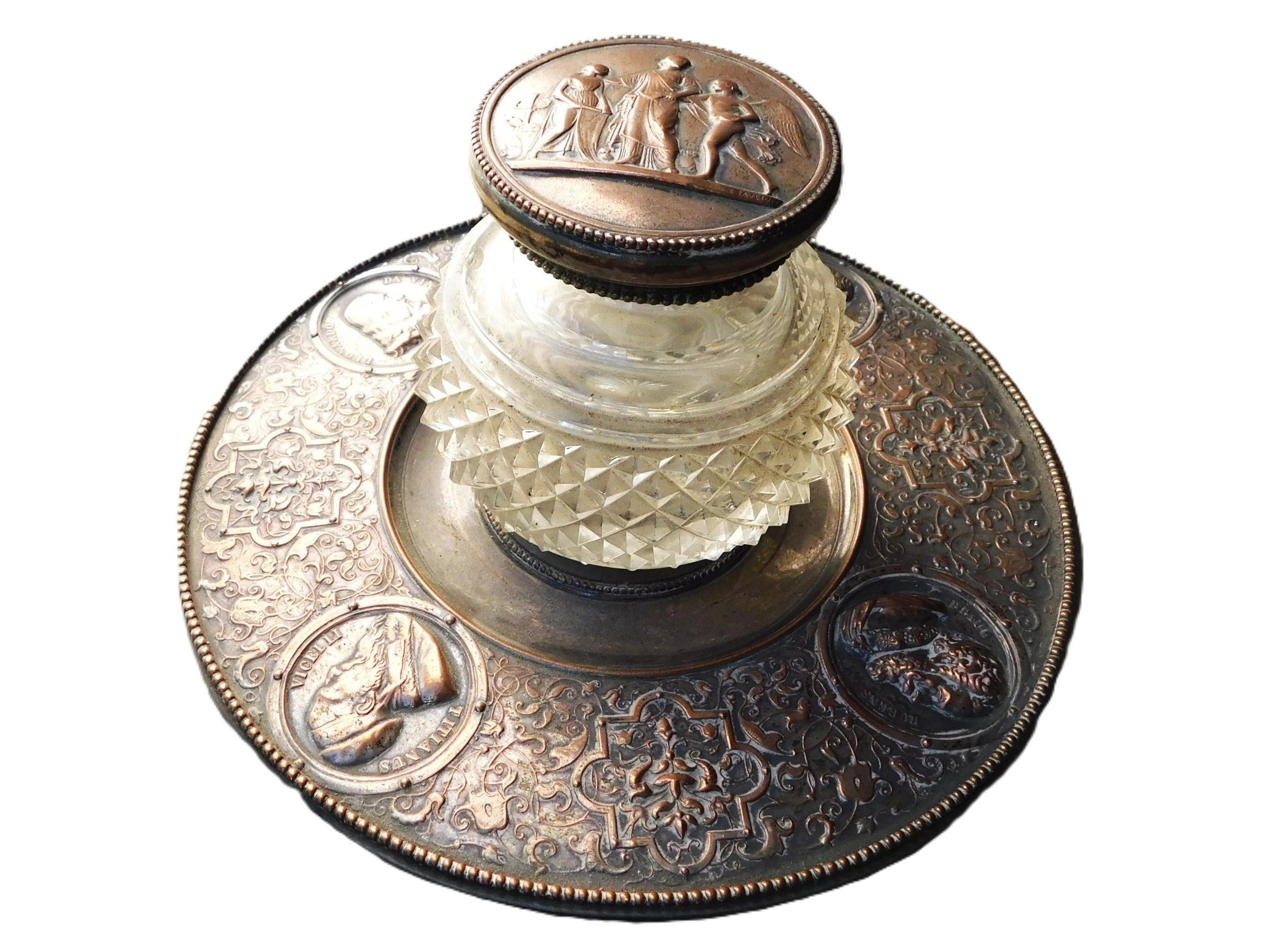
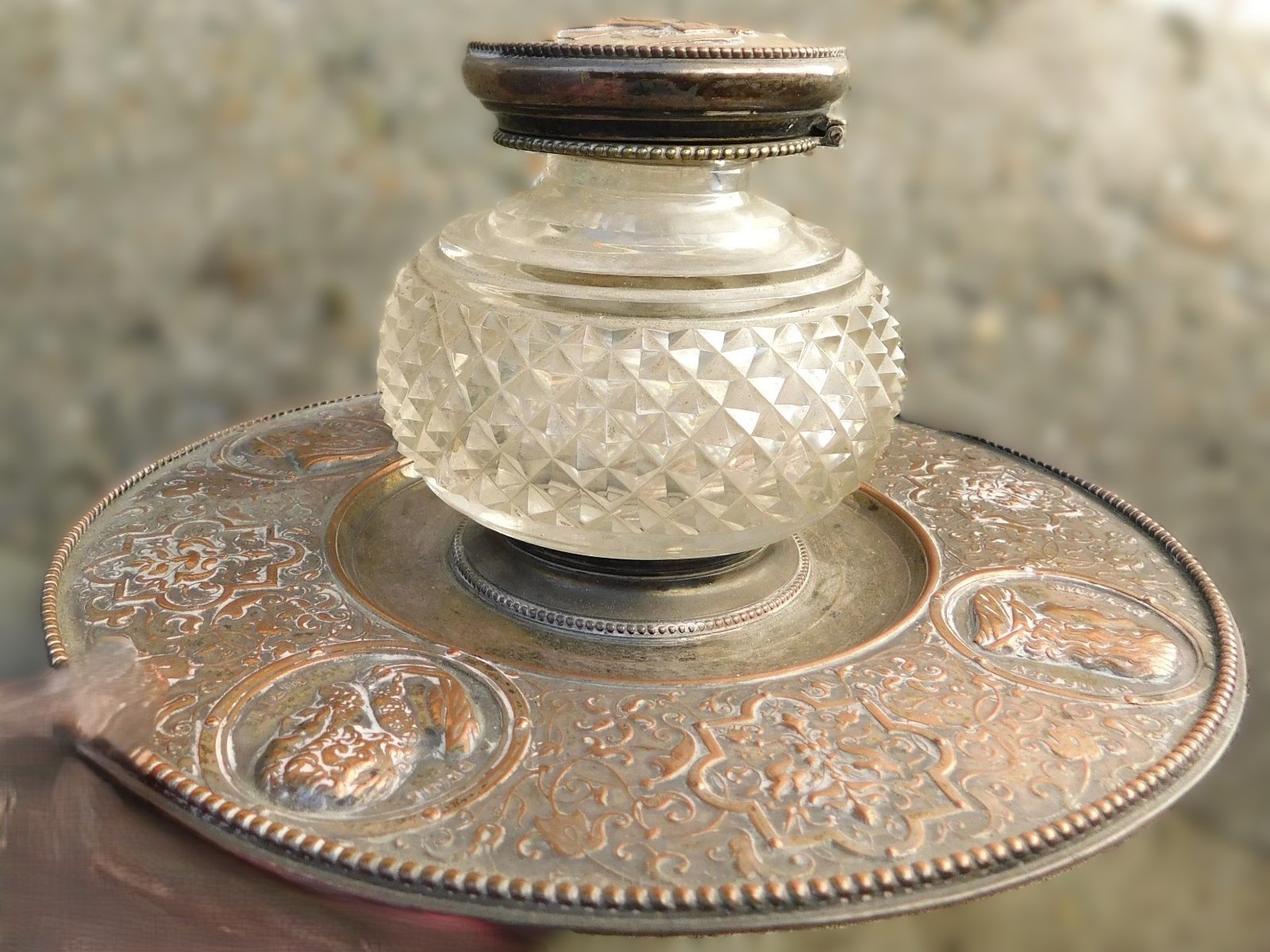
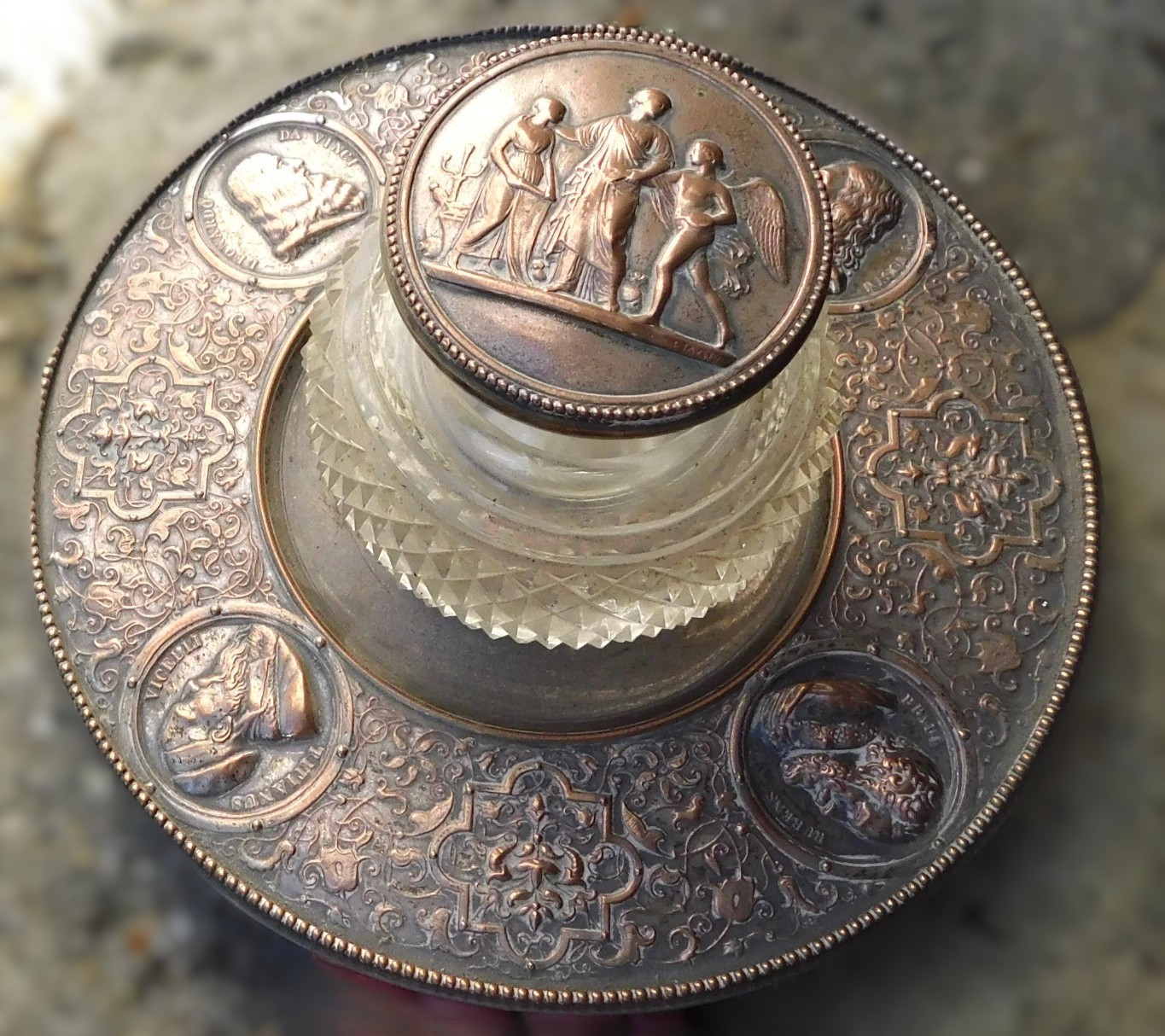
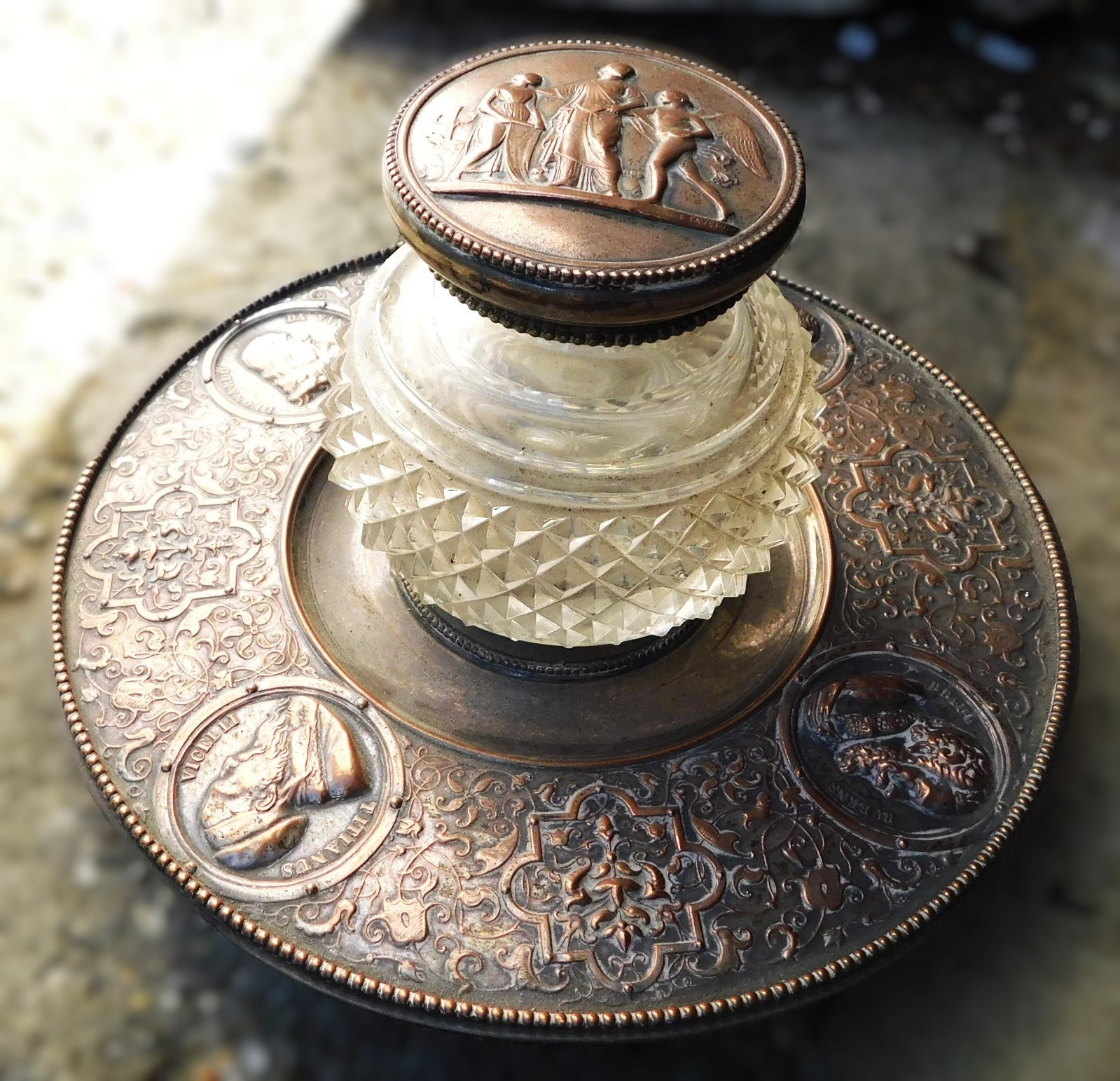
Elkington & Co. Inkstand with Renaissance Masters
| Categories | Figural - Mythology; Literature; Religion; Fictional |
| Material | Silverplate |
| Markings | See Narrative |
| Manufacturer | Elkington & Co |
| Origin | England |
| Date or Era | circa 1870 |
| Measuring | 8 ⅝” diameter |
Description
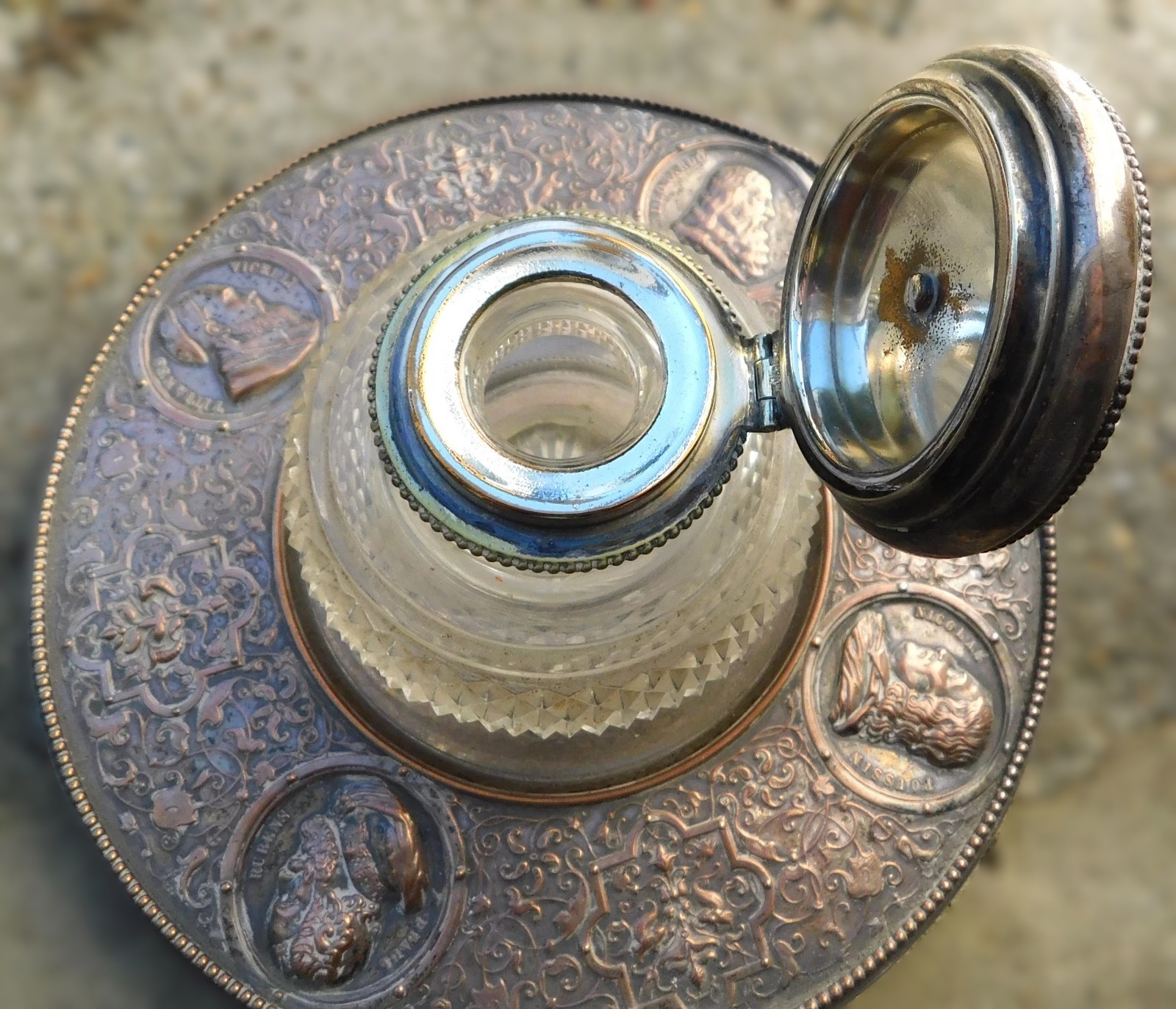
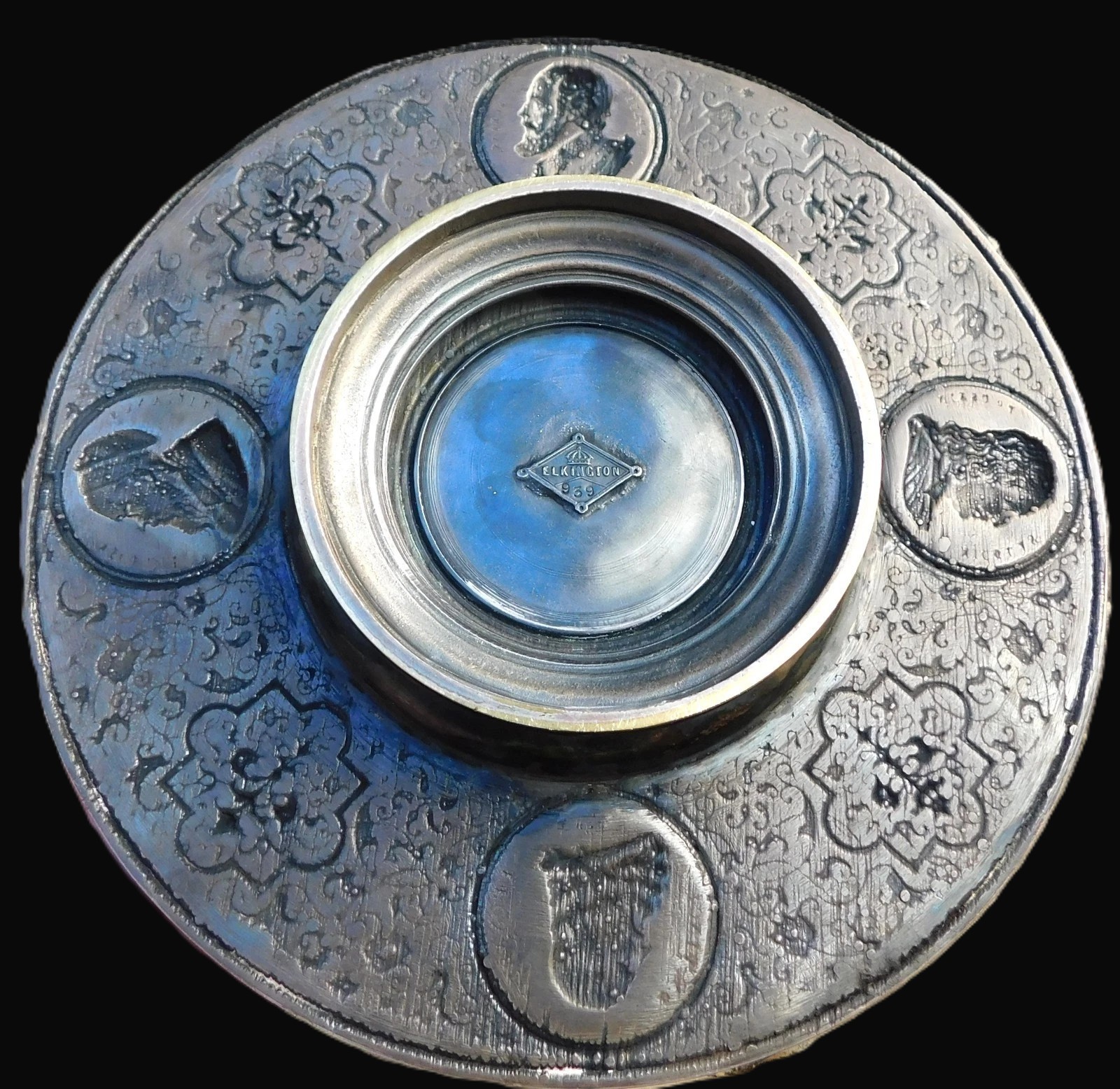
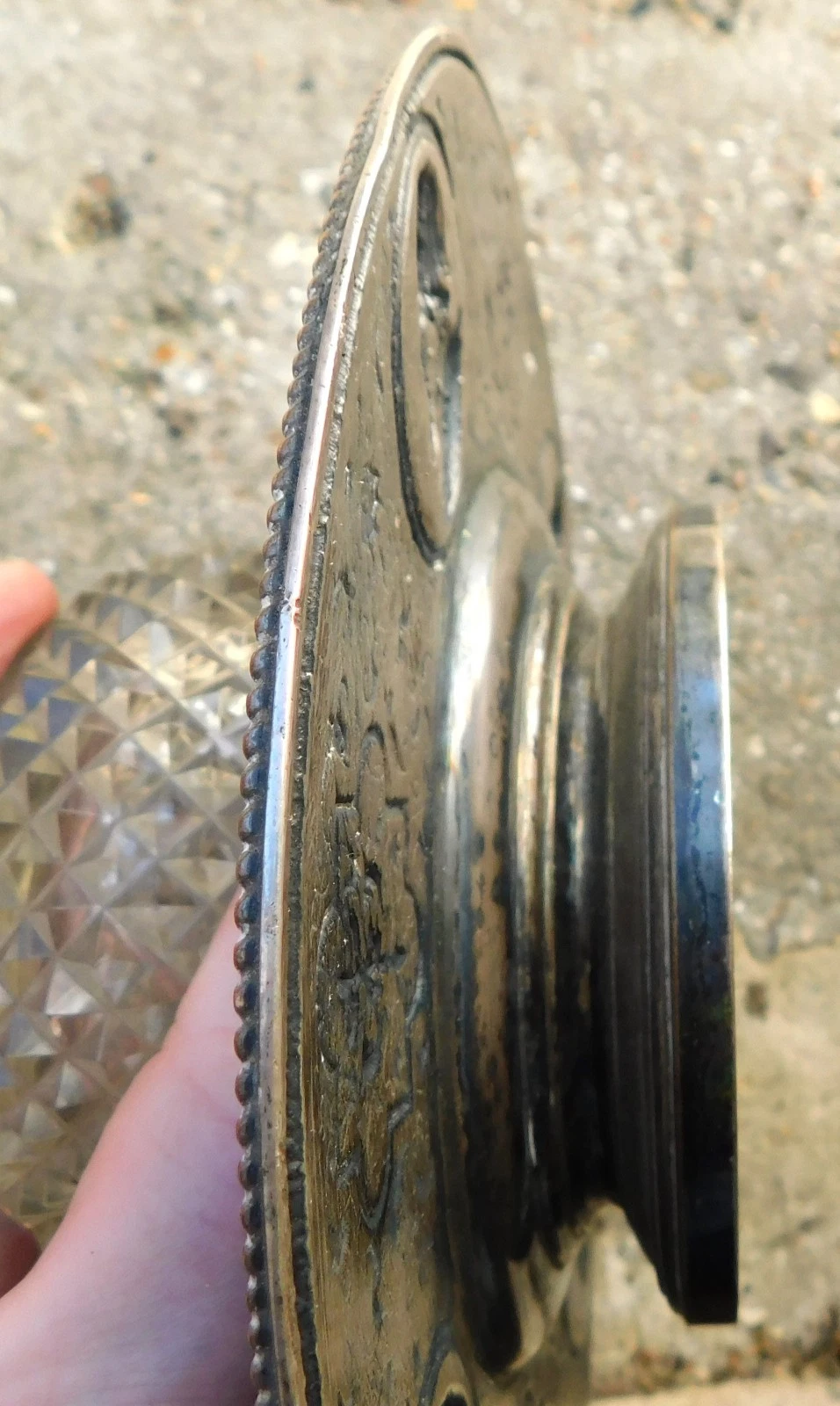
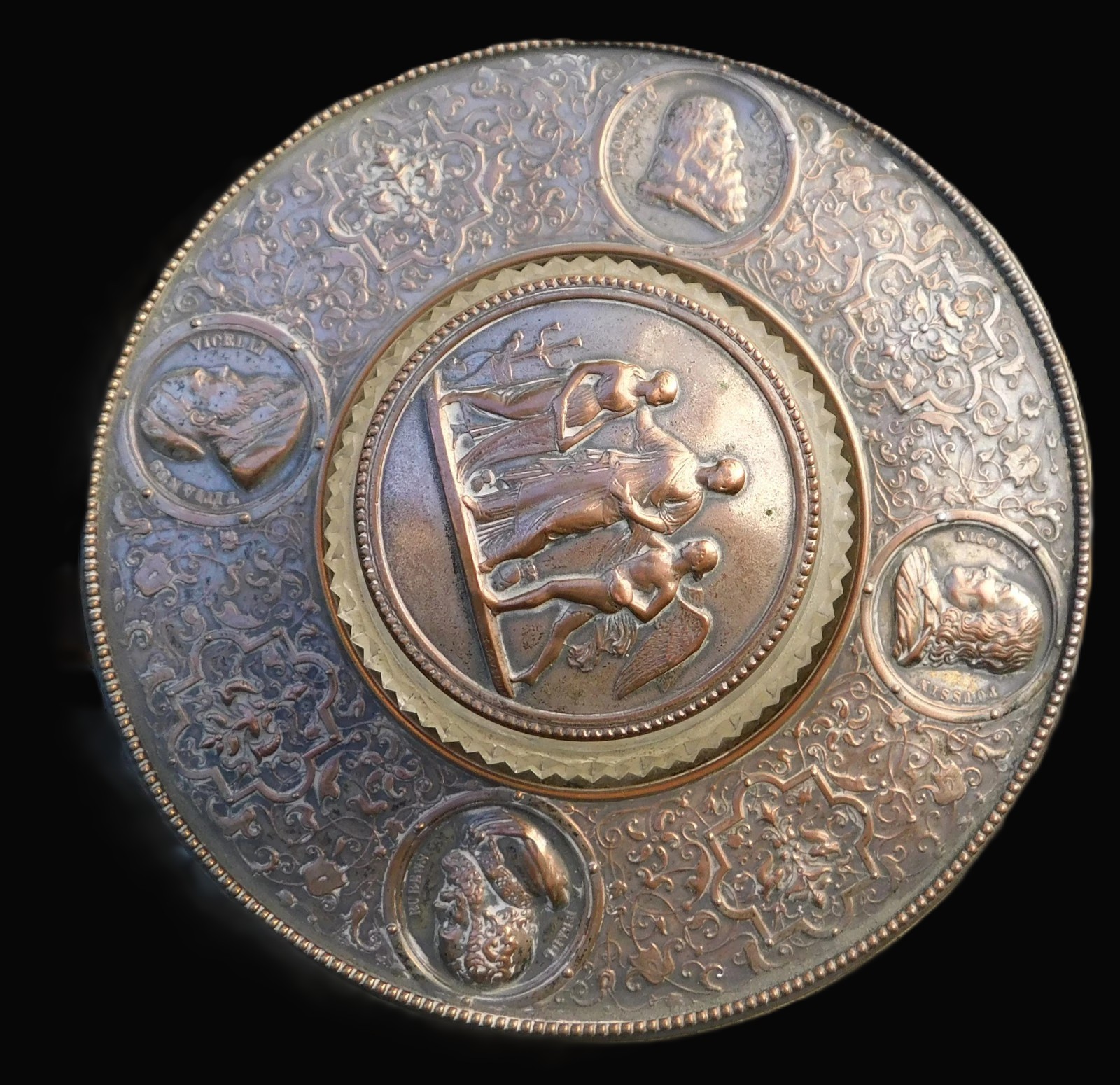
- Form & Structure: This circular standish made in the Renaissance Revival style features a broad, low-profile circular base with a raised, tiered central well housing a diamond-cut lead crystal inkwell with a faceted body and a hinged, silver-plated mount and lid.
- Surface Ornamentation: The wide rim of the plateau is textured, featuring an intricate engraved background of scrolling foliate arabesques and quatrefoil/moorish-inspired star medallions. A fine beaded border runs along the outer perimeter.
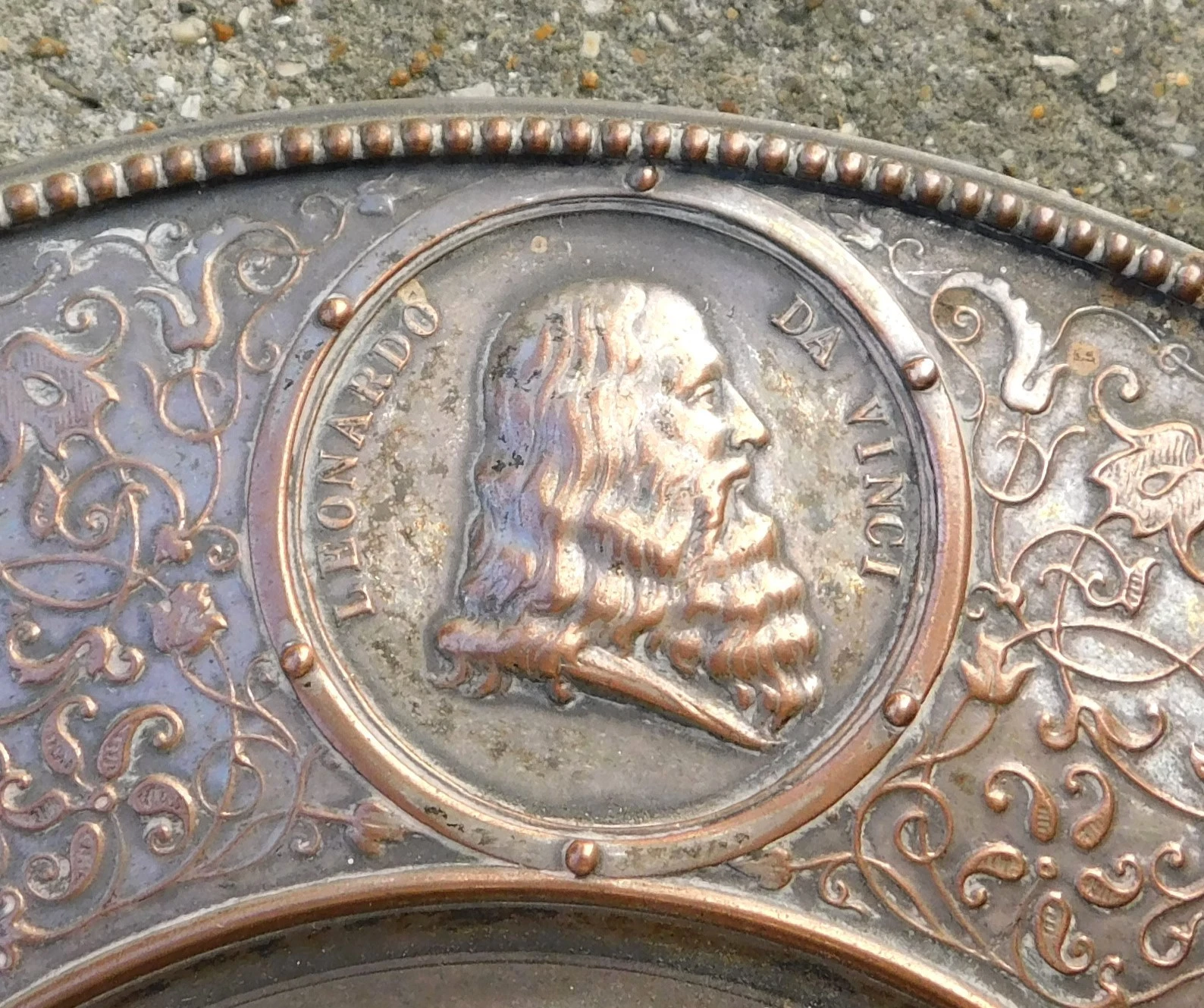
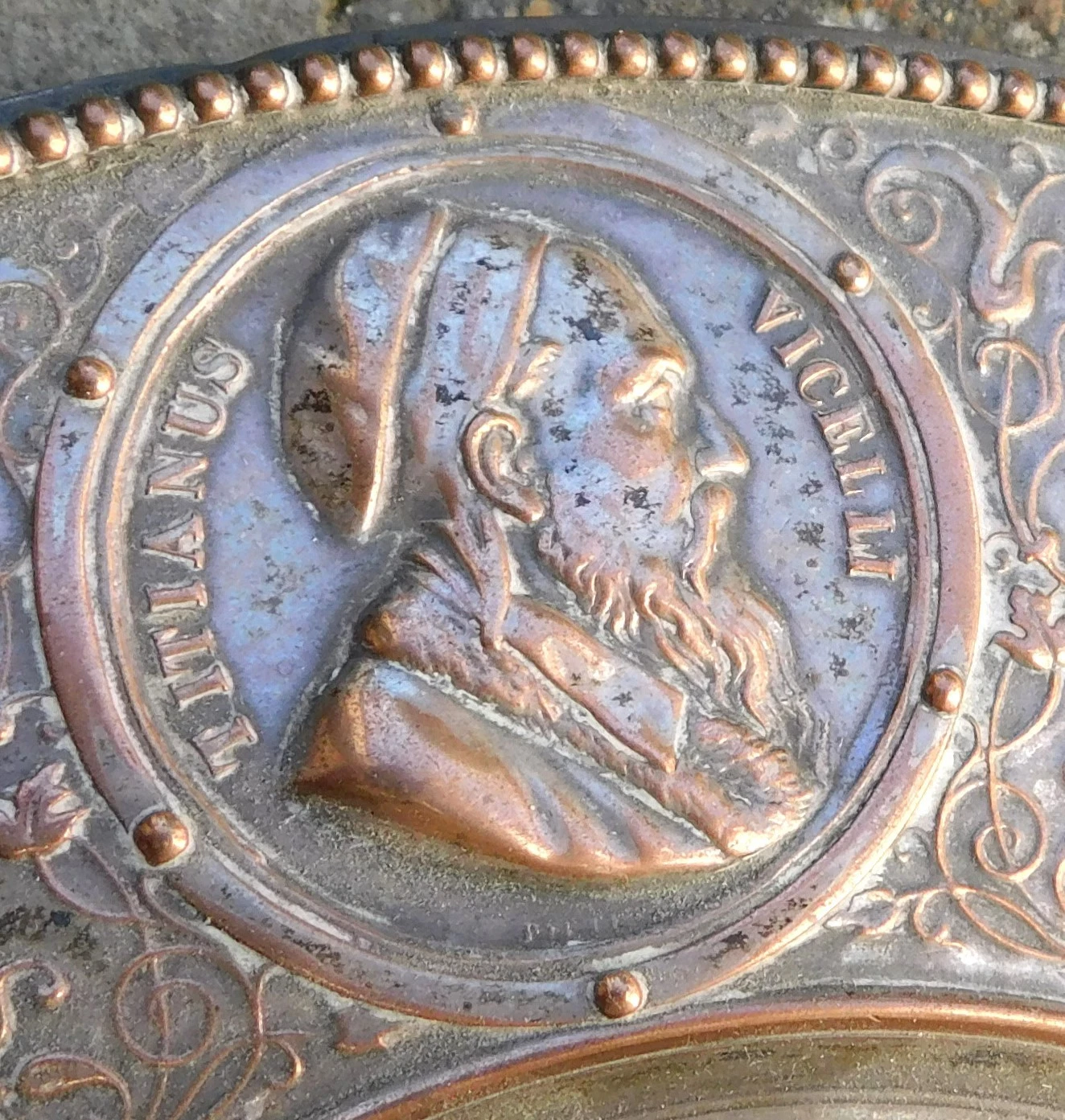
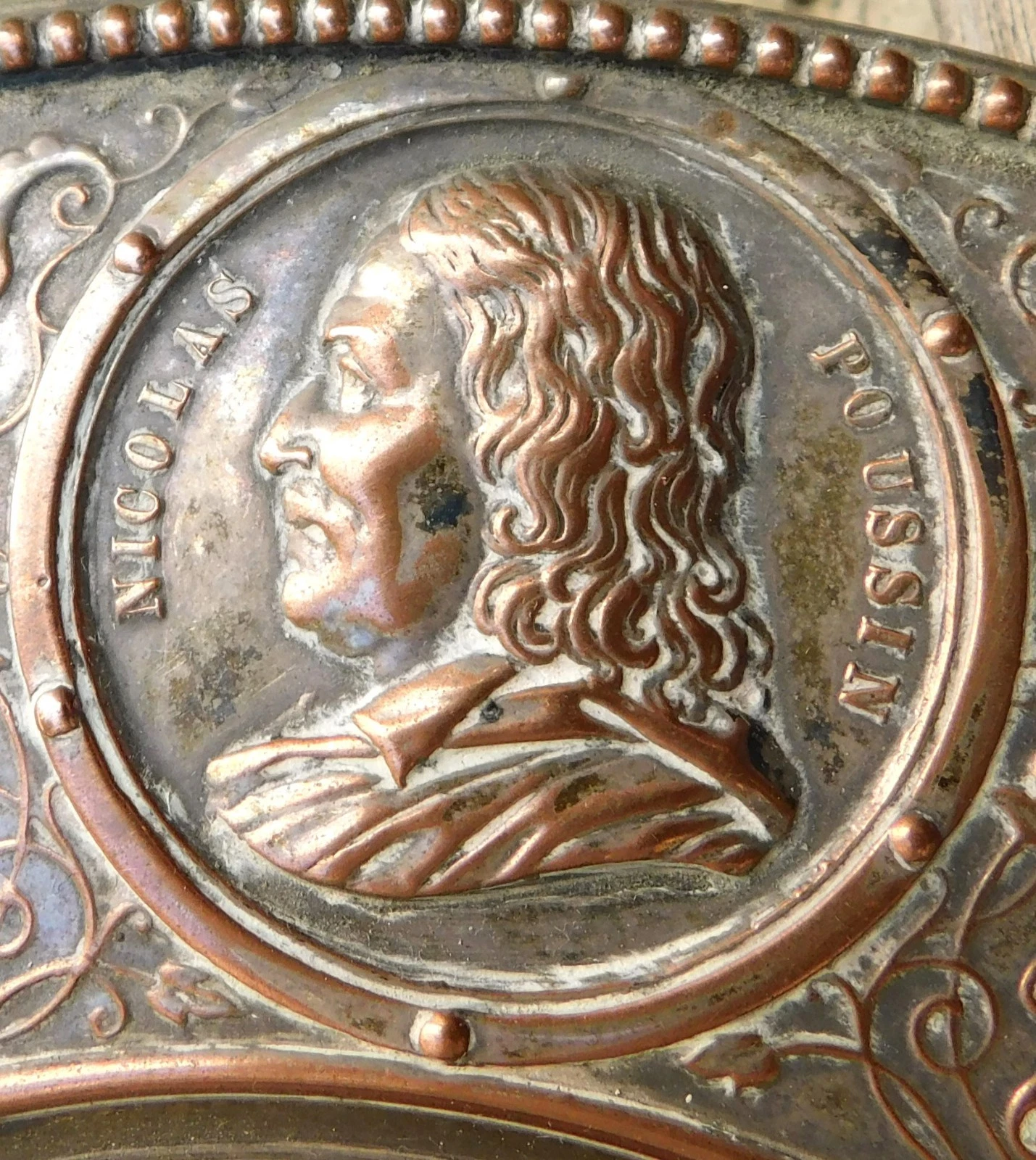
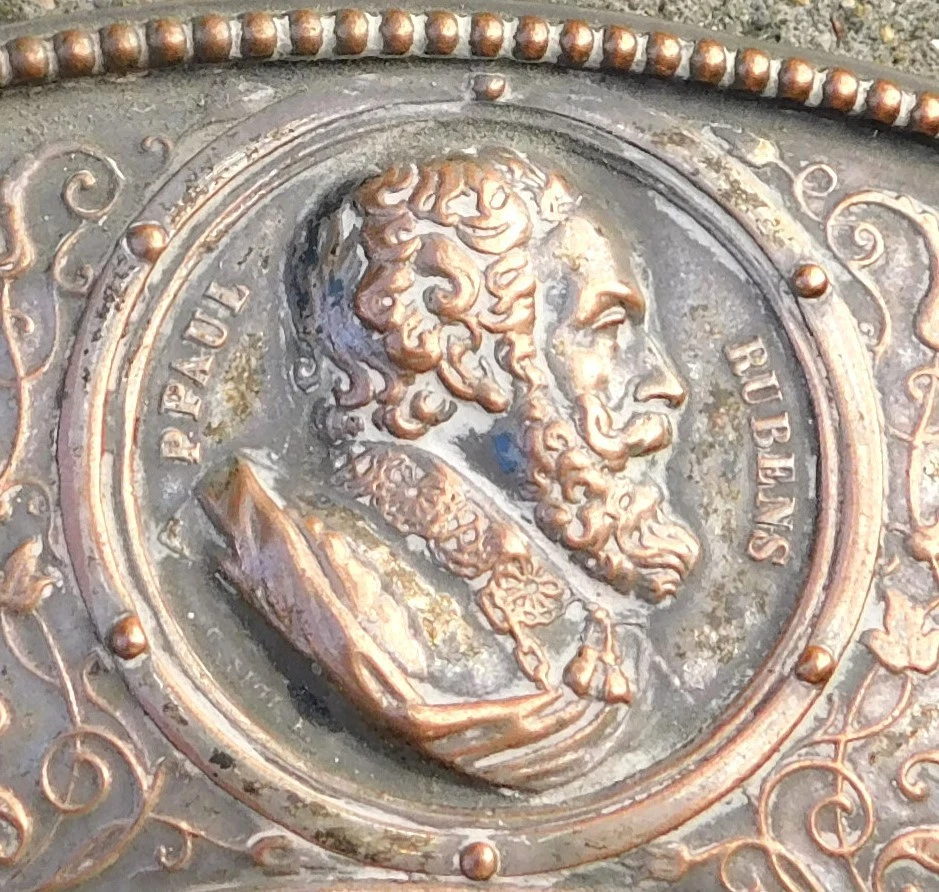
- The Four Rondels: Set symmetrically into the rim are four circular raised portrait medallions (rondels), framed by raised beaded borders and secured with visible pins. Each medallion depicts the profile bust of a legendary historical artist or master, complete with their name rendered in raised capital letters.
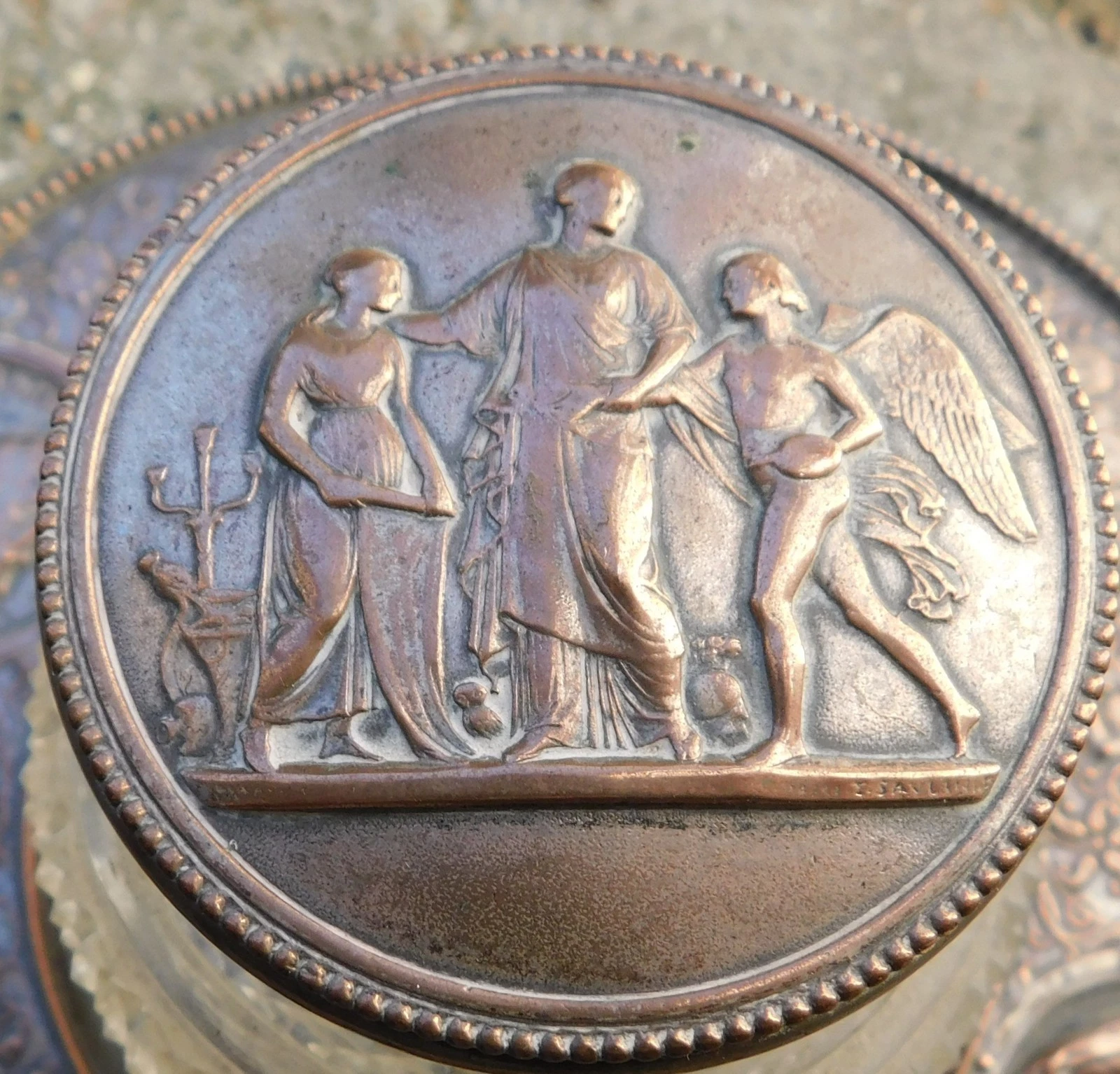
- The Lid Motif: The flat circular lid of the inkwell features a finely cast classical mythological scene in high relief, depicting three classical figures (including a winged figure akin to a putto or Mercury/Cupid) in an idealized landscape with architectural and sculptural elements.
Dating via the Elkington Date Letter / Pattern Number
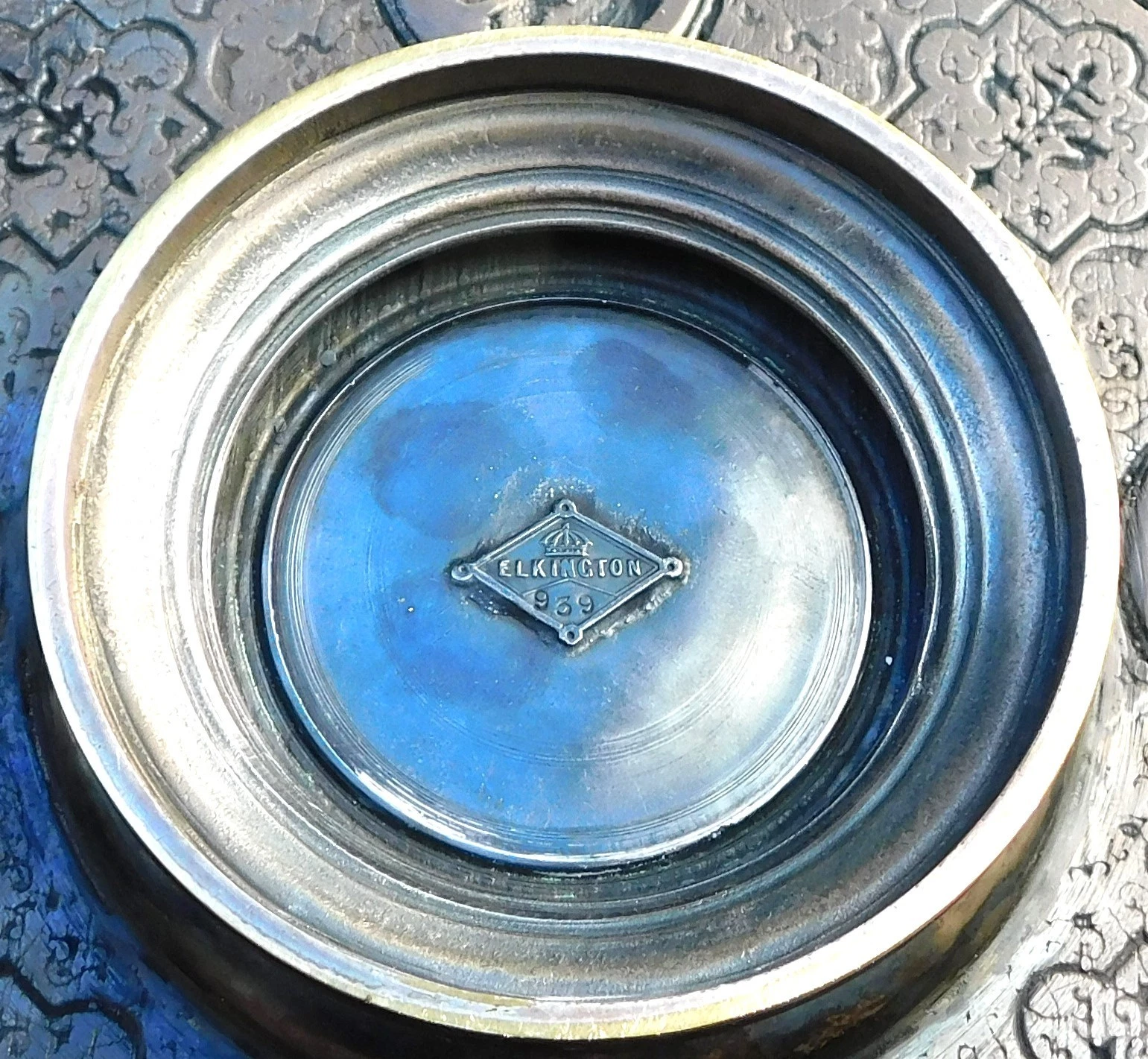
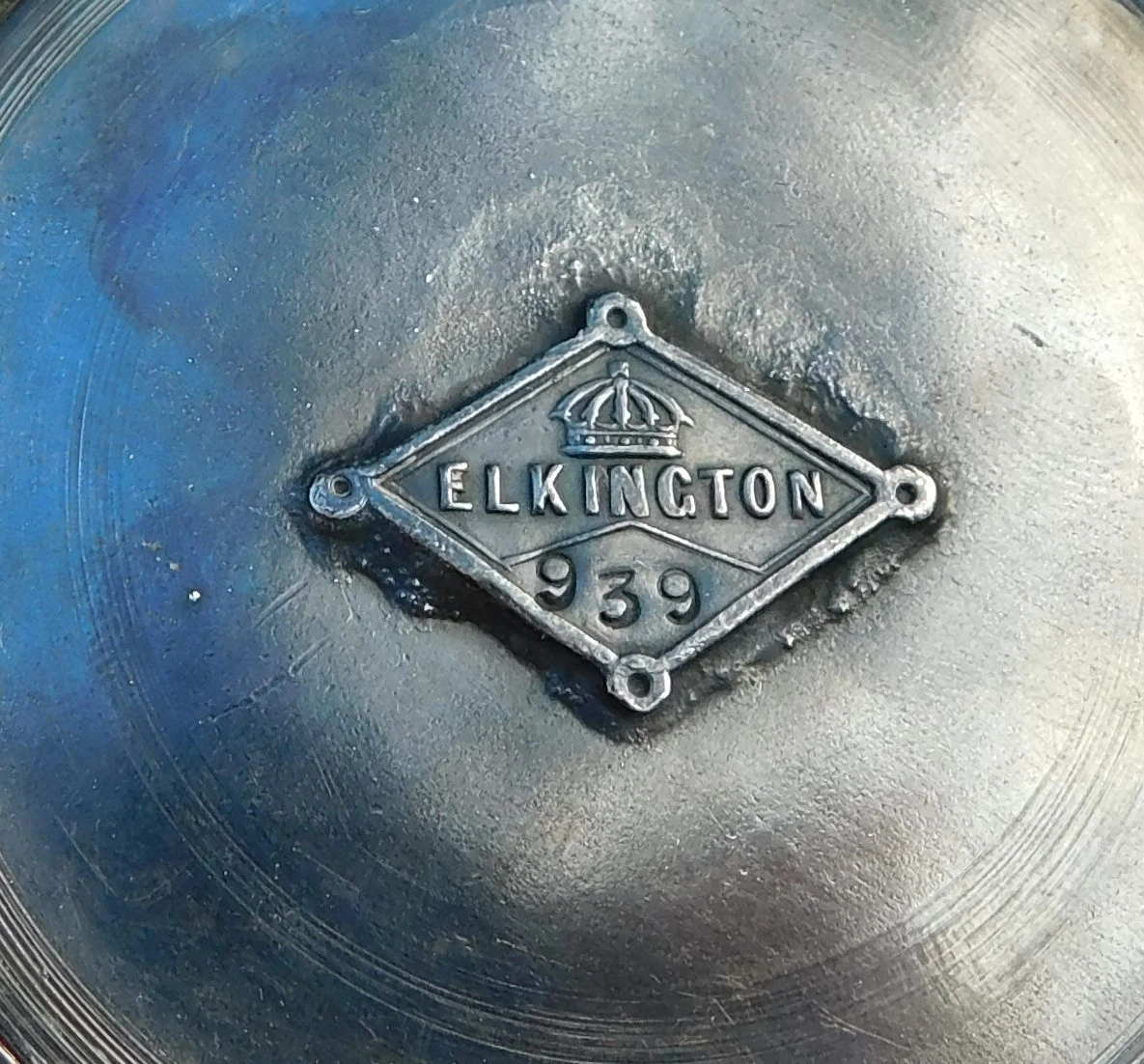
- The Patent Mark: On the flat undersurface within the central well collar, the piece bears the classic Elkington & Co. crown-and-shield trademark, accompanied by a diamond-shaped British Patent Office registry mark (used to protect ornamental designs registered under the 1842/1884 Acts) and the design/pattern number 939.
- Dating Analysis: In Elkington’s production system, numerical sequences and registration marks indicate the design’s introduction or batch registration. The diamond registration mark and Elkington’s Gothic/Crown marks place this piece squarely in the mid-to-late Victorian era (circa 1860s to 1880s), during the height of the firm’s Renaissance Revival and “Art Manufactures” phase where they actively reproduced classical and historicist medals and plaques.
The Four Masters:
The four masters chosen for the rondels represent the pinnacle of European fine art across the Italian Renaissance and the Baroque periods:
- Leonardo da Vinci (1452–1519):
- Accomplishments: The quintessential “Renaissance Man,” polymath, painter, and sculptor who created the Mona Lisa and The Last Supper, revolutionizing painting through sfumato (shading) and deep anatomical study.
- Titian / Tiziano Vecellio (c. 1488/90–1576):
- Accomplishments: The most important member of 16th-century Venetian school, renowned for his revolutionary, fluid brushwork and supreme mastery of vibrant, luminous color in mythologies and portraits.
- Nicolas Poussin (1594–1665):
- Accomplishments: The leading painter of the classical French Baroque style, celebrated for his clarity, logic, line over color, and noble history paintings deeply inspired by ancient Greece and Rome.
- Peter Paul Rubens (1577–1640):
- Accomplishments: The Flemish master of the Baroque, internationally acclaimed for his exuberant, dynamic compositions, rich color palettes, and monumental historical, mythological, and religious works.
Why These Four Were Chosen:
This specific quartet represents a carefully curated pan-European pantheon of artistic greatness spanning Italy, Flanders, and France. Rather than sticking to a single school, the selection honors the foundational architects of Western pictorial tradition: Da Vinci (intellectual mastery and draftsmanship), Titian (color and Venetian brilliance), Rubens (Baroque energy and flesh tone), and Poussin (classical rigor and intellectual composition). Together, they embody the ultimate ideals of the Academy of Arts, making them the ideal decorative motif for a scholar’s or statesman’s desk.
History of the Elkington Company
- Founding & Innovation: Founded in Birmingham, England, by brothers George and Henry Elkington in the 1830s, the company forever changed the silver and decorative arts world.
- The Invention of Electroplating: In 1840, the Elkingtons secured the patent for commercial electroplating (depositing silver or gold onto base metals via an electrical current). This revolutionary process allowed the middle and upper classes to enjoy magnificent, heavy silver-gilt and bronze-finished display items at a fraction of the cost of solid sterling silver.
- Royal Warrants & International Prestige: Elkington & Co. became silversmiths to the British Royal Family and produced monumental works for museums, international exhibitions, and state banquets. By the late 19th century, they were widely recognized as the global gold standard for high-end electrotyped art metalware, electro-bronze sculptures, and revivalist decorative pieces.
Sold for $100 in October 2026
Content disclaimer. The information posted is the owner’s best knowledge and may not have been vetted by the SOIC. We welcome comments, corrections, and additions, working to make our website information comprehensive and accurate.
Join the Society of Inkwell Collectors (SOIC) – it’s free!
Founded in 1981 as a non-profit organization,
we are documenting inkwells (and accessories).
We’re here to help and inform!