

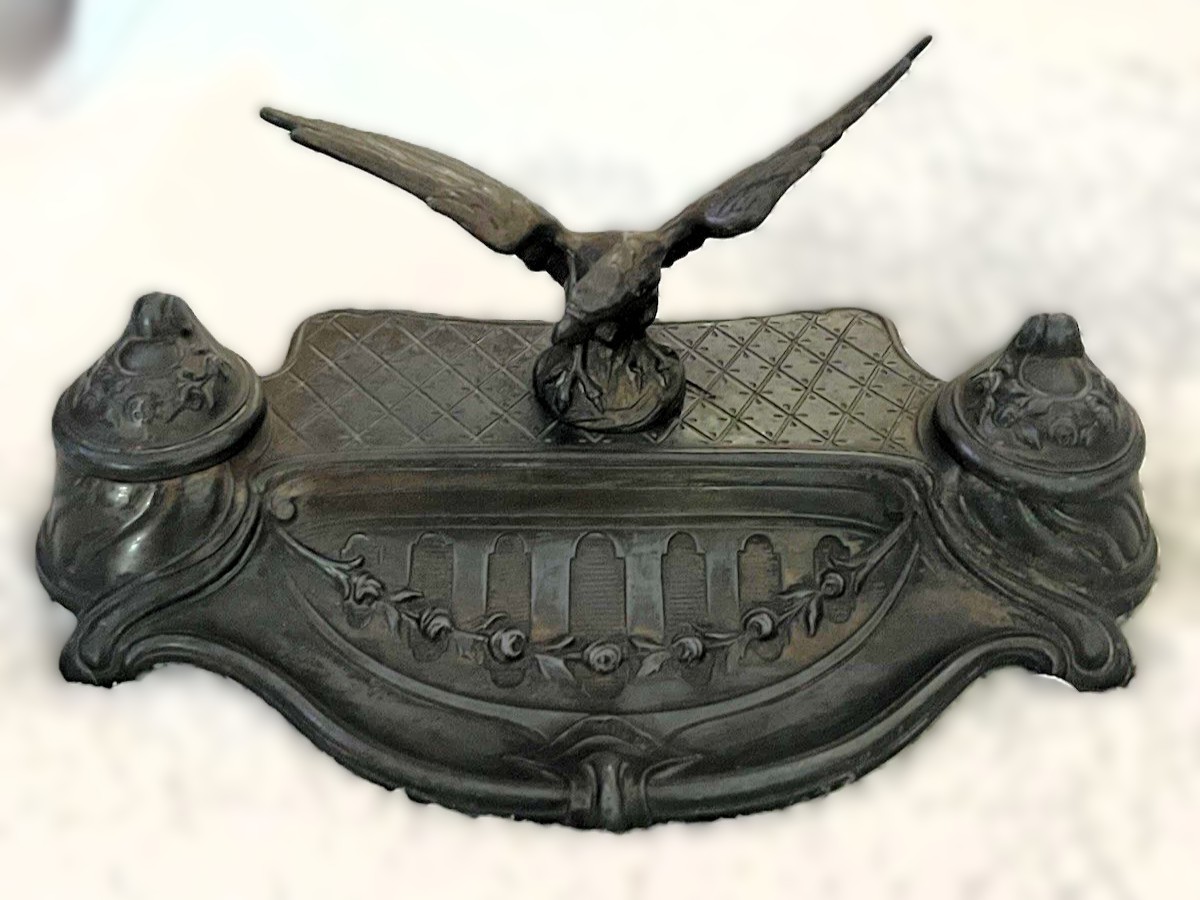
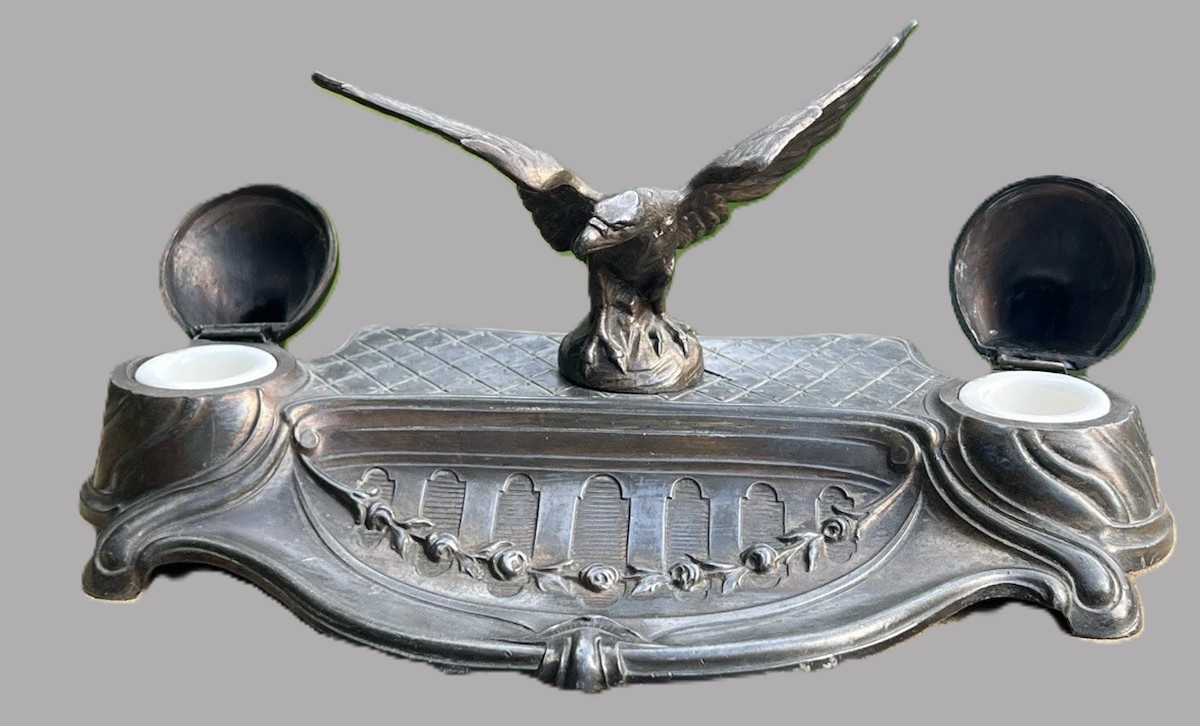
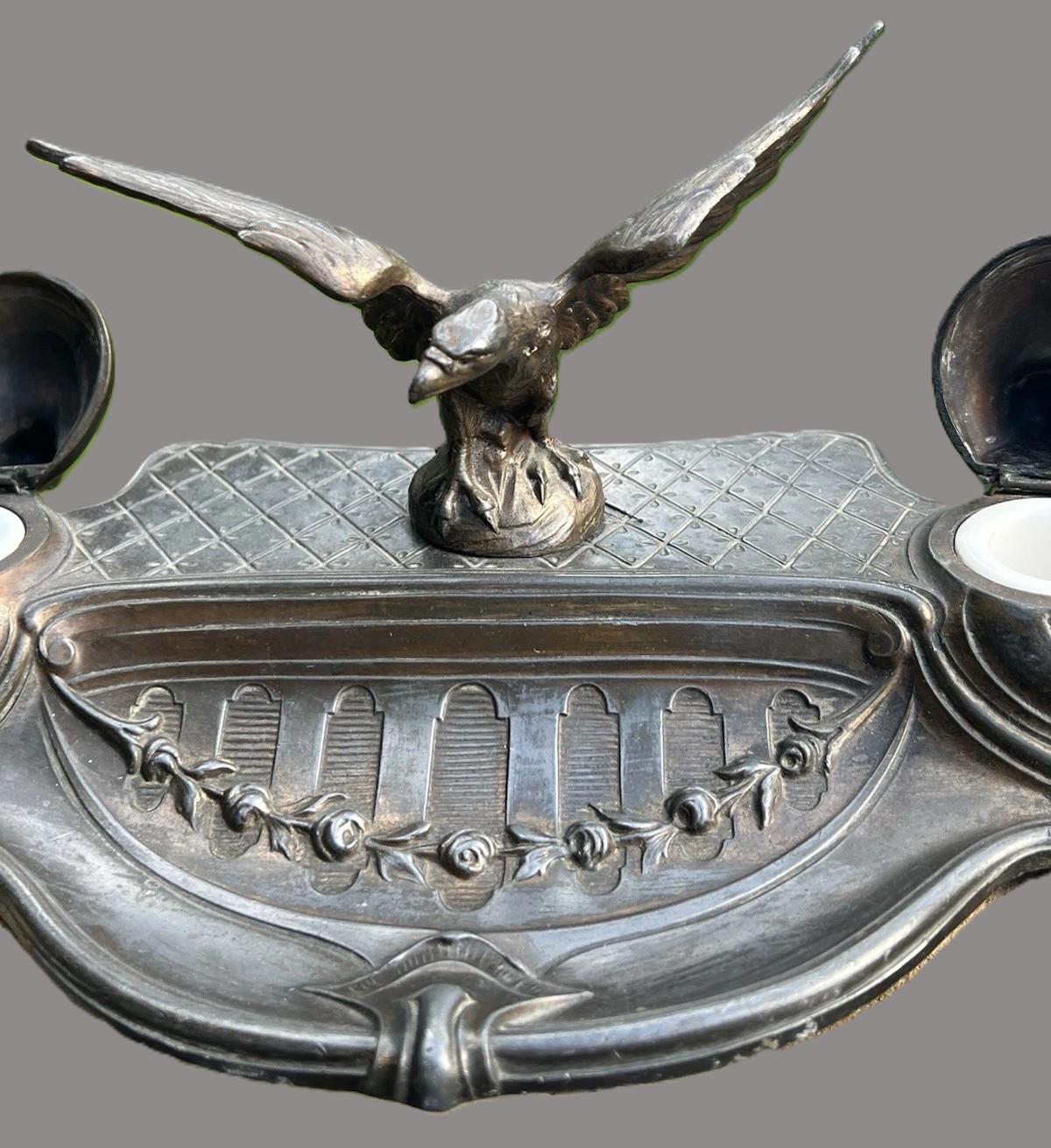
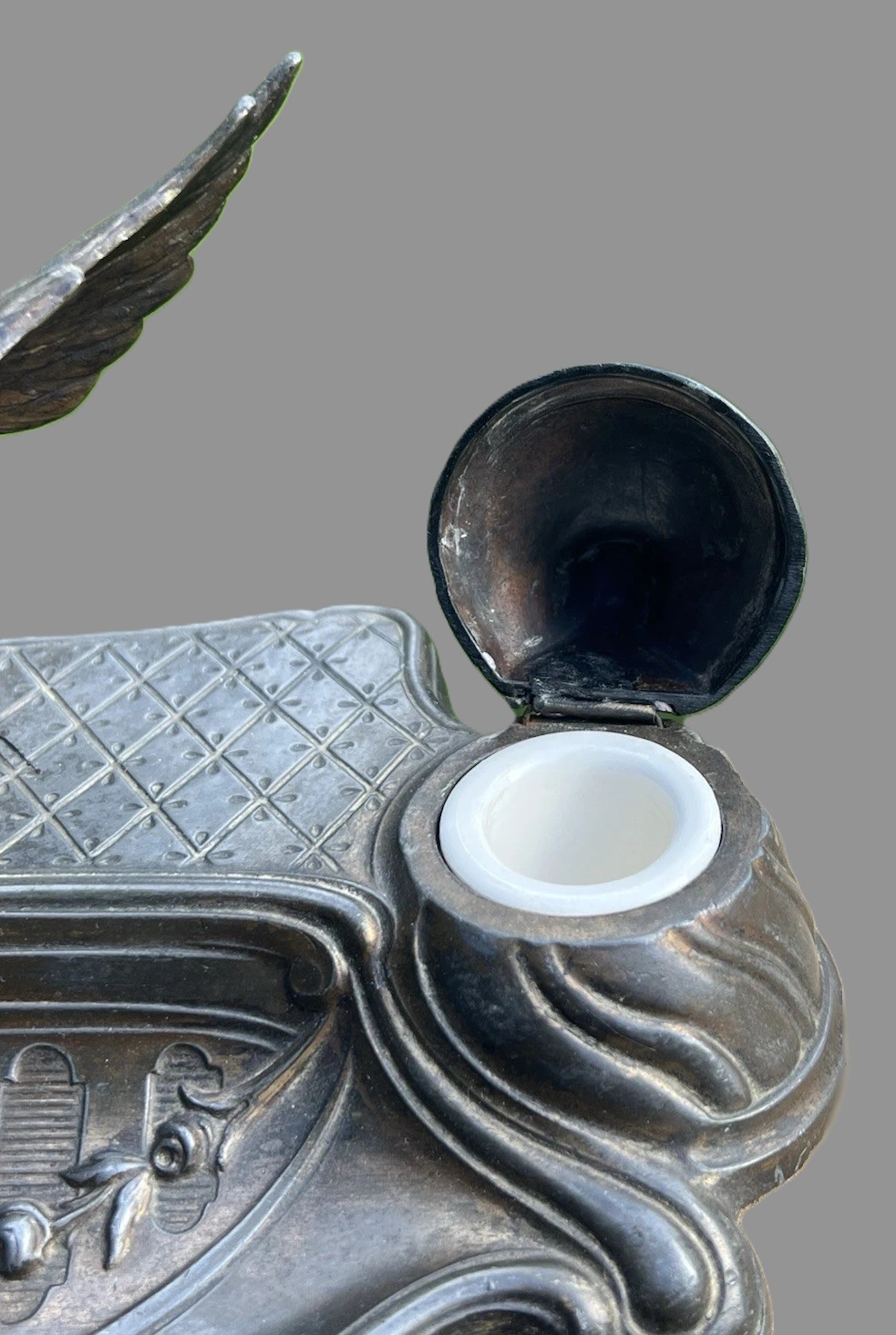
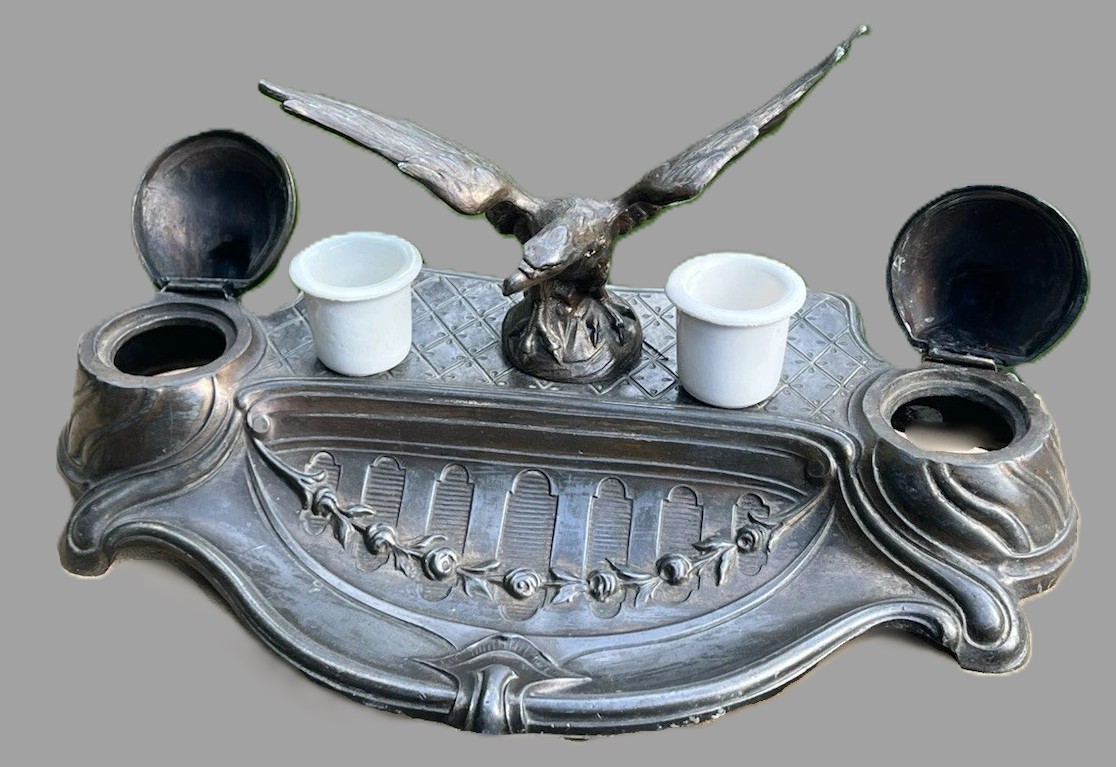
German Double Inkstand with Spread-Wing Eagle
| Categories | Figural - Animals & Living Creatures |
| Type | Eagle |
| Material | Spelter |
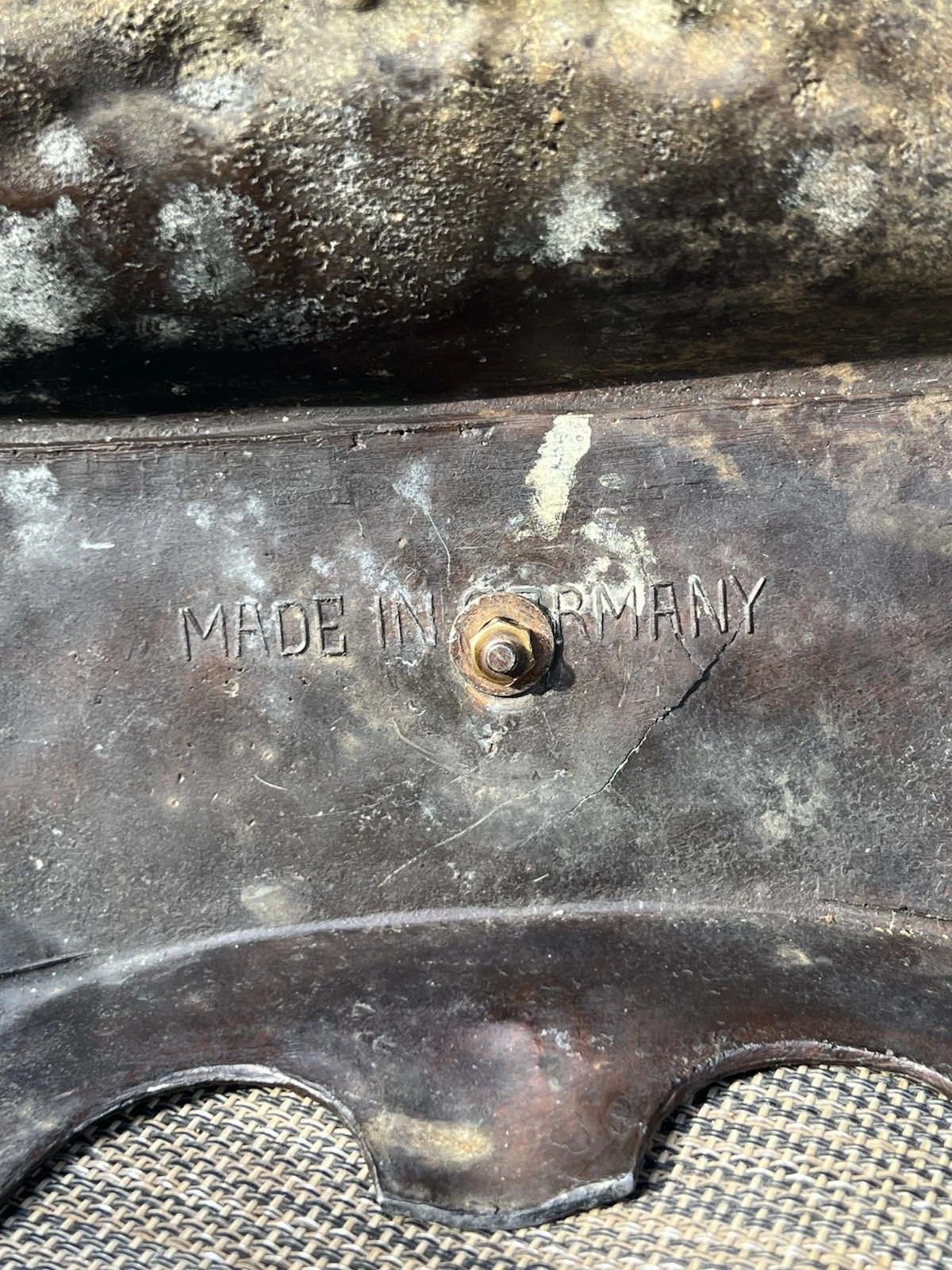
| Markings | “MADE IN GERMANY” |
| Manufacturer | Undetermined |
| Origin | Germany |
| Date or Era | circa 1910 |
Date: c. 1900–1915
Origin: Germany
Materials: Spelter (pot metal) with patinated finish, original white ceramic inserts.
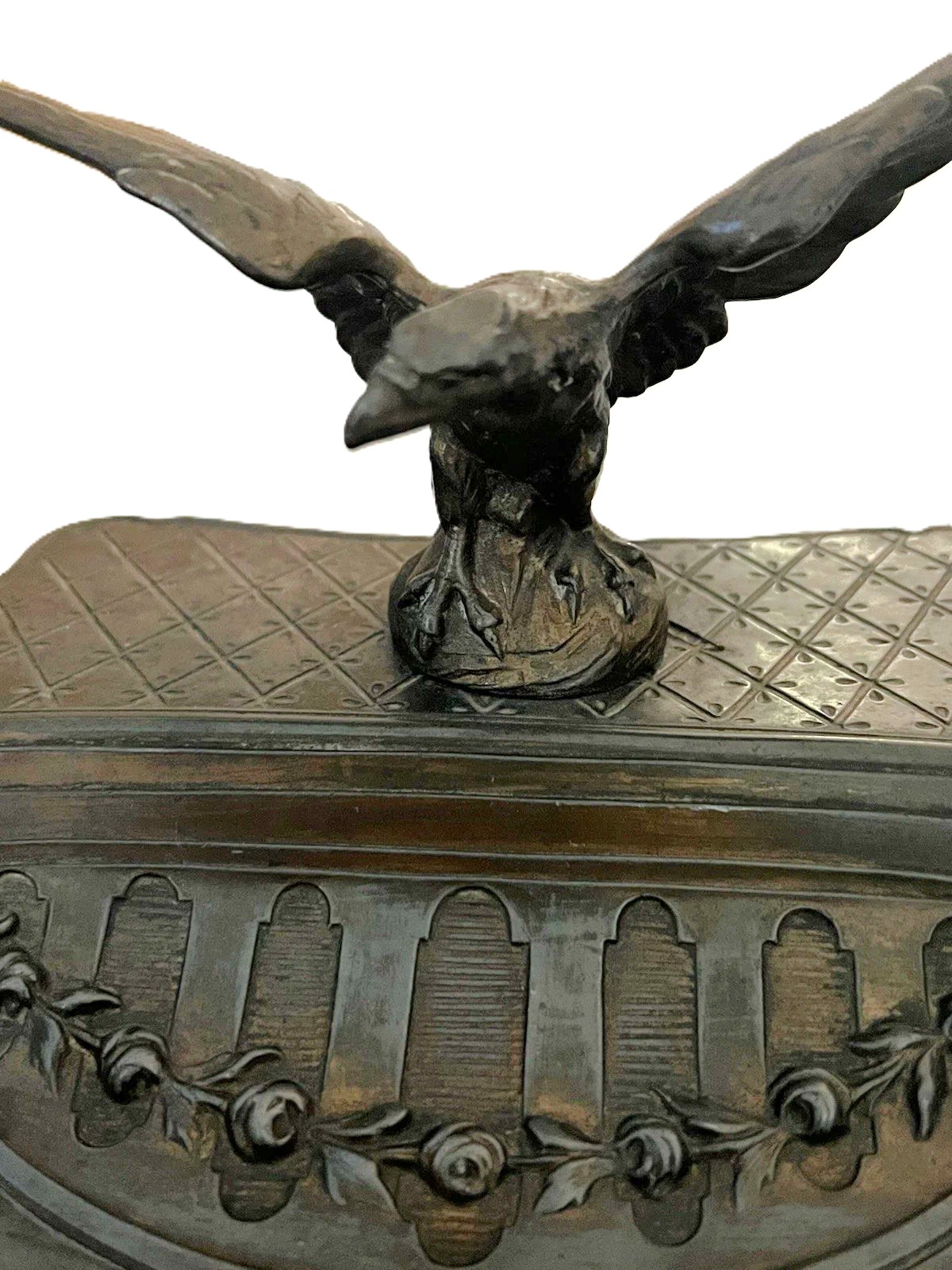
Description: A substantial double inkstand manufactured in Germany during the early 20th century. Cast in spelter with a dark patinated finish, the inkstand features a commanding central figure of a majestic eagle with wings fully outstretched, perched atop a rocky crag. The rectangular central deck is embellished with a diamond-grid pattern, fronted by an integrated pen tray decorated with an archway arcade and a trailing garland of roses in high-relief.
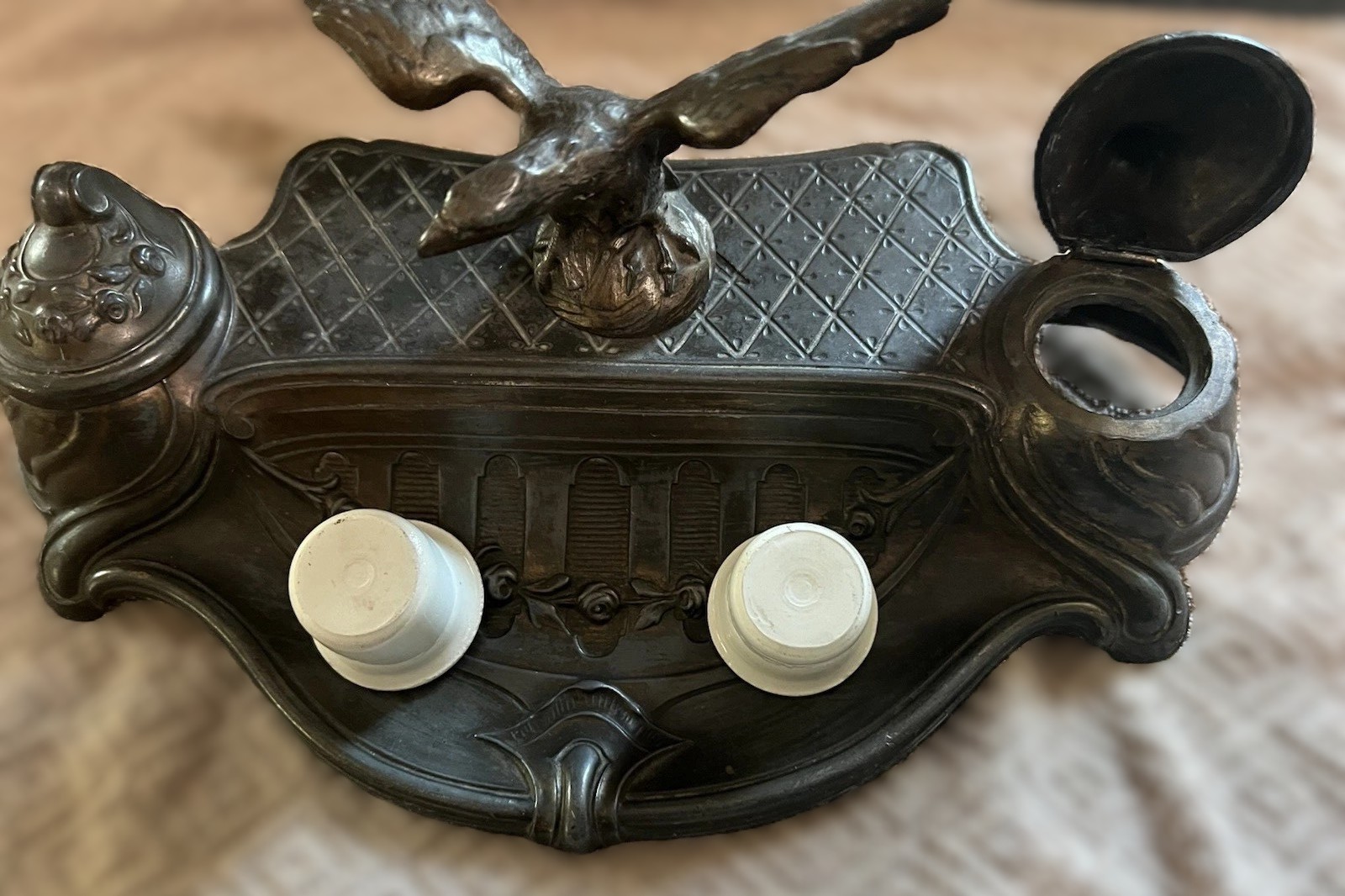
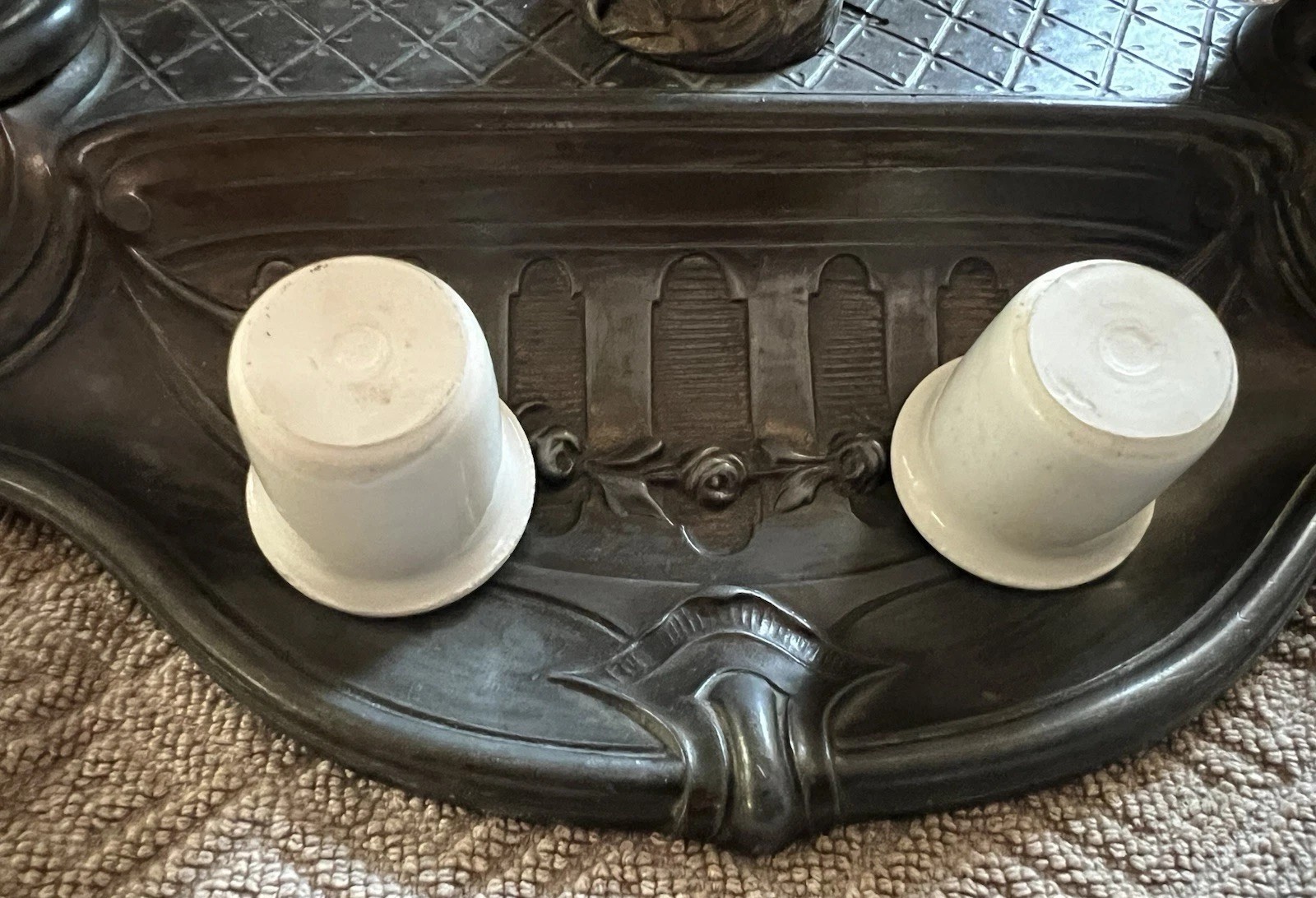
Flanking the central sculpture are two lidded inkwells styled with organic, swirling Art Nouveau motifs, both housing their original removable white ceramic inserts and hinged lids. The underside is cleanly cast with the “MADE IN GERMANY” export mark.
Material
- The Body: Made of spelter (also referred to as pot metal or white metal base alloy, often electroplated or given a patinated finish to resemble bronze, antique silver, or gunmetal). Spelter was extensively used in Germany, France, and Austria during the late Victorian and Art Nouveau periods for decorative desk accessories, figurines, and statues because it captured fine details at a lower cost than brass or bronze pieces.
- The Inserts: The two cylindrical white inserts are original glazed ceramic (porcelain/pottery) liners.
Age Estimation
The inkstand dates from roughly 1895 to 1915 (the late Art Nouveau / Jugendstil period, stretching just prior to World War I).
The use of the stamp “Made in Germany” on the underside is a primary dating clue. Following the McKinley Tariff Act passed by the United States in 1891 (and subsequent strict enforcement laws internationally), goods exported to English-speaking markets had to be clearly stamped with their country of origin. This specific style of clean, raised lettering stamped or cast directly into the metal frame points squarely to the turn of the 20th century (c. 1900–1910).
Sold for $200 in August 2026
Content disclaimer. The information posted is the owner’s best knowledge and may not have been vetted by the SOIC. We welcome comments, corrections, and additions, working to make our website information comprehensive and accurate.
Join the Society of Inkwell Collectors (SOIC) – it’s free!
Founded in 1981 as a non-profit organization,
we are documenting inkwells (and accessories).
We’re here to help and inform!